A Daily History of Holes, Dots, Lines, Science, History, Math, Physics, Art, the Unintentional Absurd, Architecture, Maps, Data Visualization, Blank and Missing Things, and so on. |1.6 million words, 7500 images, 4.9 million hits| Press & appearances in The Times, Le Figaro, Mensa, The Economist, The Guardian, Discovery News, Slate, Le Monde, Sci American Blogs, Le Pont, and many other places… 5000+ total posts since 2008.

  • Poe and the Internet, 1845

    JF Ptak Science Books LLC  Post 841  Blog Bookstore

    In one of his essays1 Edgar Poe wrote about the power of
    writing for what he saw as a revolutionary form of information distribution—anastatic
    printing.  He was wrong about its instant
    application in releasing the writer from the habits, time, expense and editing
    of the printing process; he was wrong that it was the greatest achievement
    since Gutenberg; and he was wrong about most everything else about the (real)
    process.  He was right though in his vision
    for the distribution of information.  I’m
    participating in this vision right now, except there was no way that even the
    supremely gifted Poe could have envisioned the way in which information was
    being shared on 20th November 2009. 

    Anastatic printing was a simple way of reproducing
    handwritten documents for a mass audience. 
    The problem was though that the process tended to destroy the
    original.  Highly problematic.  But Poe wasn’t interested in those aspects of
    the technical problems of the process—it was the possibility of relatively
    immediate distribution of the written word that had his attention.  He wrote:

    “The tendency of all this to cheapen information, to
    diffuse knowledge and amusement, and to bring before the public the very class
    of works which are most valuable, but least in circulation on account of
    unsaleability — is what need scarcely be suggested to any one. But benefits
    such as these are merely the immediate and most obvious — by no means the most
    important.”

    And so materials saleable and unsalable would have equal
    access to a reading public, which is an enormous concept, to think that all
    sorts of information could be made accessible regardless of the tastes of the
    buying public.  Exceptionally low
    production costs would also make dissemination feasible for and to a wider
    range of people—since the cost of production would be lower the cost of the final
    product could/would be as well, making things within the reach of the working
    poor (perhaps).  This also means that
    anastatic printing could also give voice to the working poor as well—a class of
    writer little know before the time of Dickens. 

    Better yet if the manuscript was actually legible.  In Poe’s mind, the importance of legibility
    and prettiness was of a high order since your manuscript was the final product.
     Poe writes:

    “This consideration will lead to the cultivation of a neat
    and distinct style of handwriting — for authors will perceive the immense
    advantage of giving their own manuscripts directly to the public without the
    expensive interference of the type-setter, and the often ruinous intervention
    of the publisher. All that a man of letters need do, will be to pay some
    attention to legibility of MS., arrange his pages to suit himself, and
    stereotype them instantaneously, as arranged. He may intersperse them with his
    own drawings, or with anything to please his own fancy, in the certainty of
    being fairly brought before his readers, with all the freshness of his original
    conception about him.”

    Again, Poe was wrong about the medium but would be right
    about the message.  Perhaps his mind was
    filled then with the very-new telegraph, imagining instantaneous communication
    over distances and carrying that development sci-fi-forward.  The telegraph (1837-1845) followed by the
    telephone (1876) and then wireless telegraphy (1898) and television (1905-1927)
    all would have enormous impact on our description of reality.  But no technological change would encompass
    Poe’s vision until 1979 (+) with the development of the internet.  Poe’s technology was wrong, but his thought-prognosis
    was pretty spot-on.
    1.  “Anastatic Printing”, in the Broadway Journal, April 12, 1845.

  • Vermeer of the Tars: Found Art in Photographs, 1918

    JF Ptak Science Books LLC  Post 842 


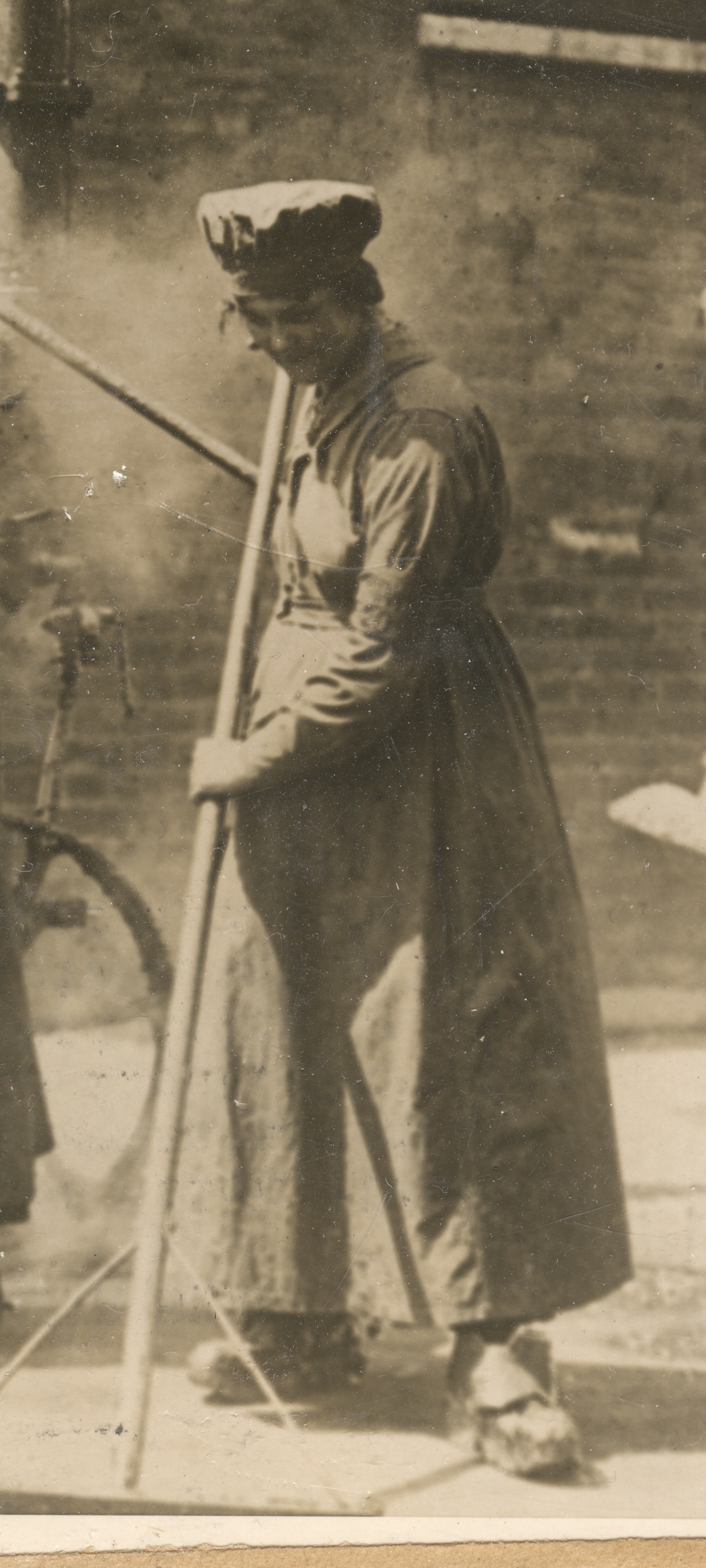
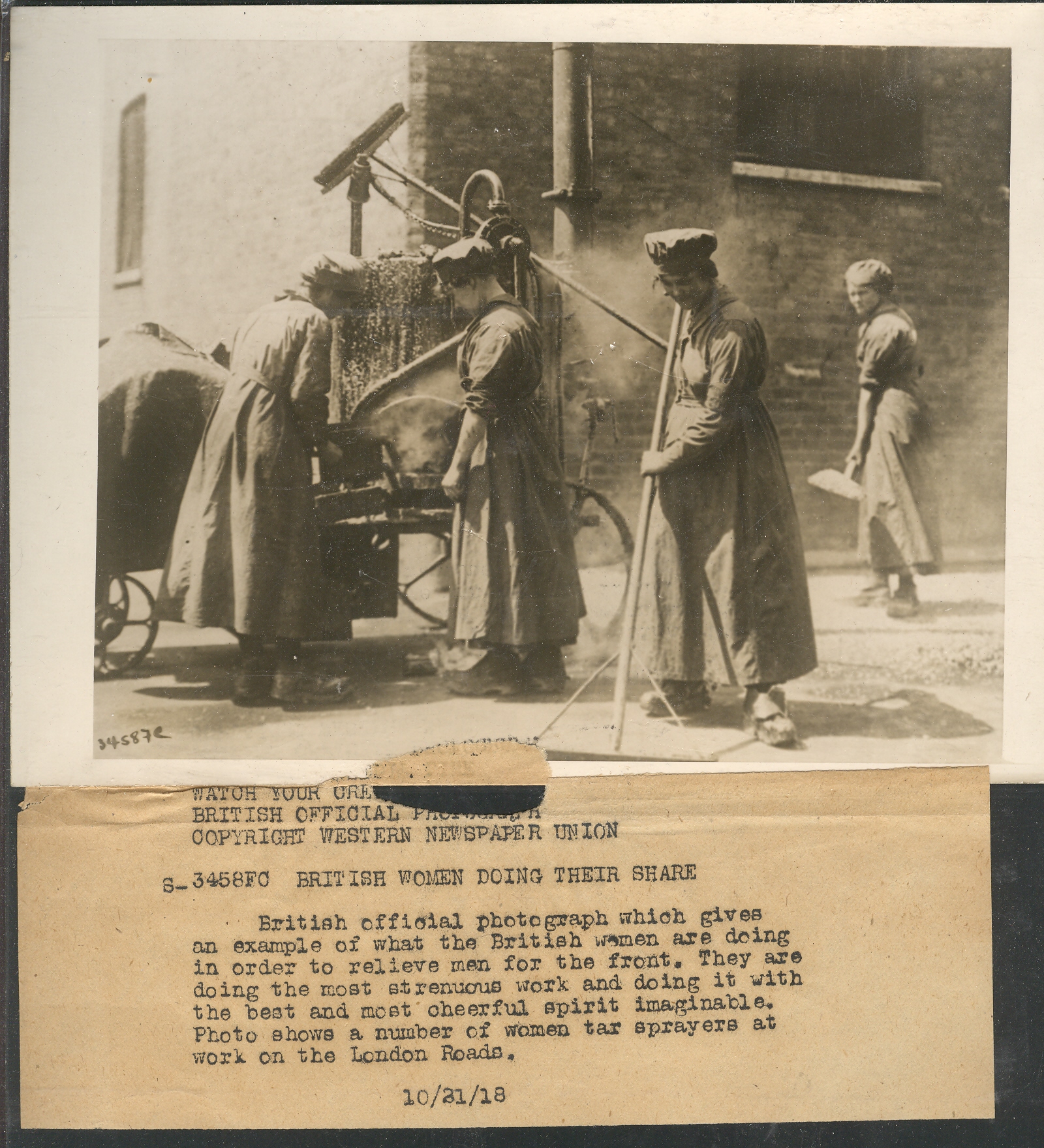
    0 ebay nov 20 WWI Vermeer In England, women
    were welcomed to the (paid) workforce during the years of the First World War
    (1914-1918)—their employment in traditionally male positions enabled those they
    replaced to go out to the front and die for their country.  Thus the women
    seen here in the News Photo Service Agency photograph (taken in 1918), working
    at spraying tar in the streets of London, were appreciated,
    and tolerated.  For women in England the War blasted away the contrivances of
    formally scheduled employment:  something like 12% of fall women in England were
    working as servants and house cleaners.   Come the War, women were
    offered jobs of revolutionary stature in a wide range and variety of
    work.  The Civil Service employment for women went from 33,000 in 1911 to
    102,000 in 1921, and trade union membership rose 160% (357,000 in 1914 to
    1,000,000 in 1918 (with men showing a 44% increase at the same time); for the
    most part, though, employers took advantage of the situation, and the women
    still generally earned less than half of the salary as comparable male workers
    did (or the men they replaced). 

    When the end of the War came, so did the appreciation for the women
    replacement workers—there was bitter feelings in the post-war period because of
    the weak British economy and a scarcity of jobs.  So the women who took
    the jobs of men to help the country’s war effort and free up hundreds of
    thousands of men for war service became an atavistic action, “taking” the jobs
    of men who had gone out to fight for their country. This of course cost many
    women their jobs, but the damage had already been deeply done to the pre-1914
    British world of the sexual politics of business-being-done, though it would
    take World War II to really ingrain the appearance of women in the workforce
    into the national psyche.

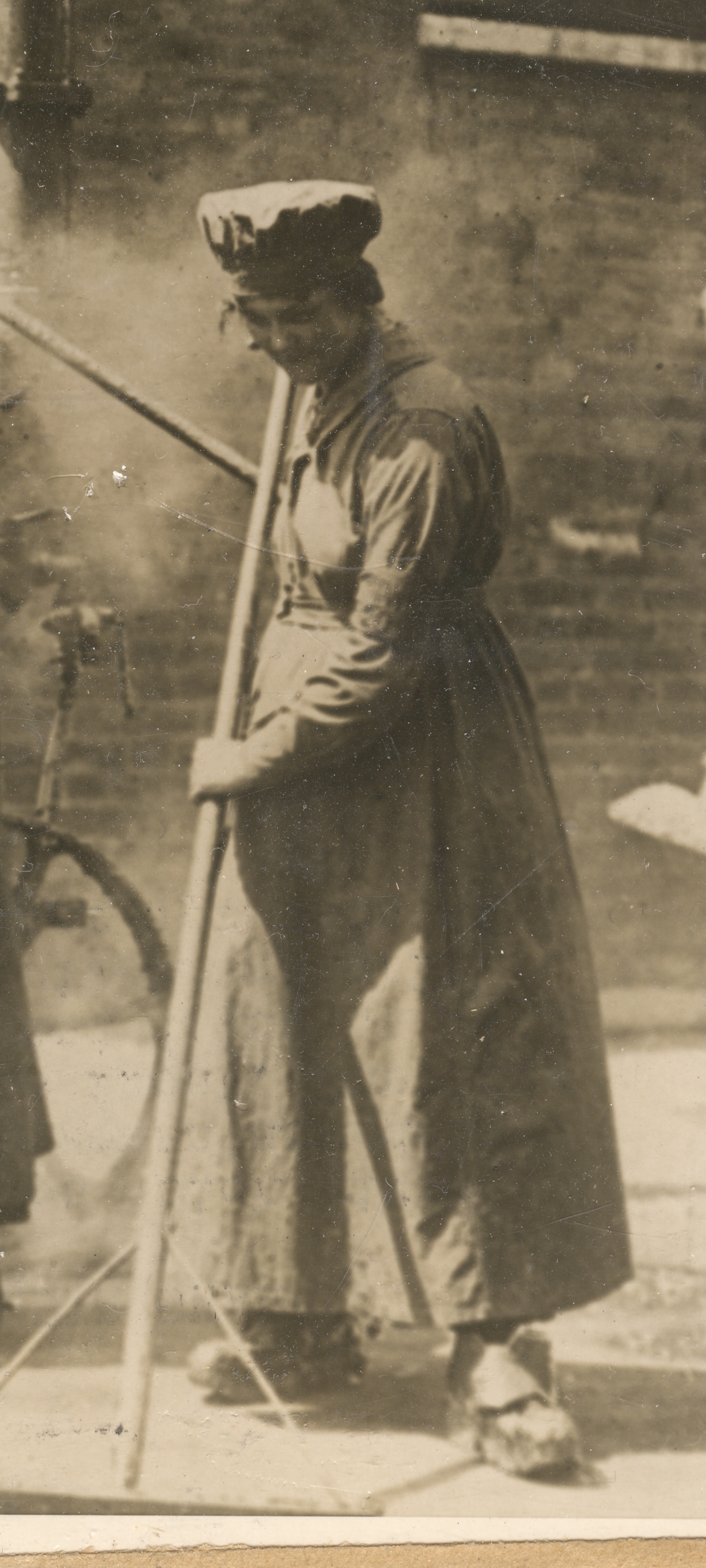
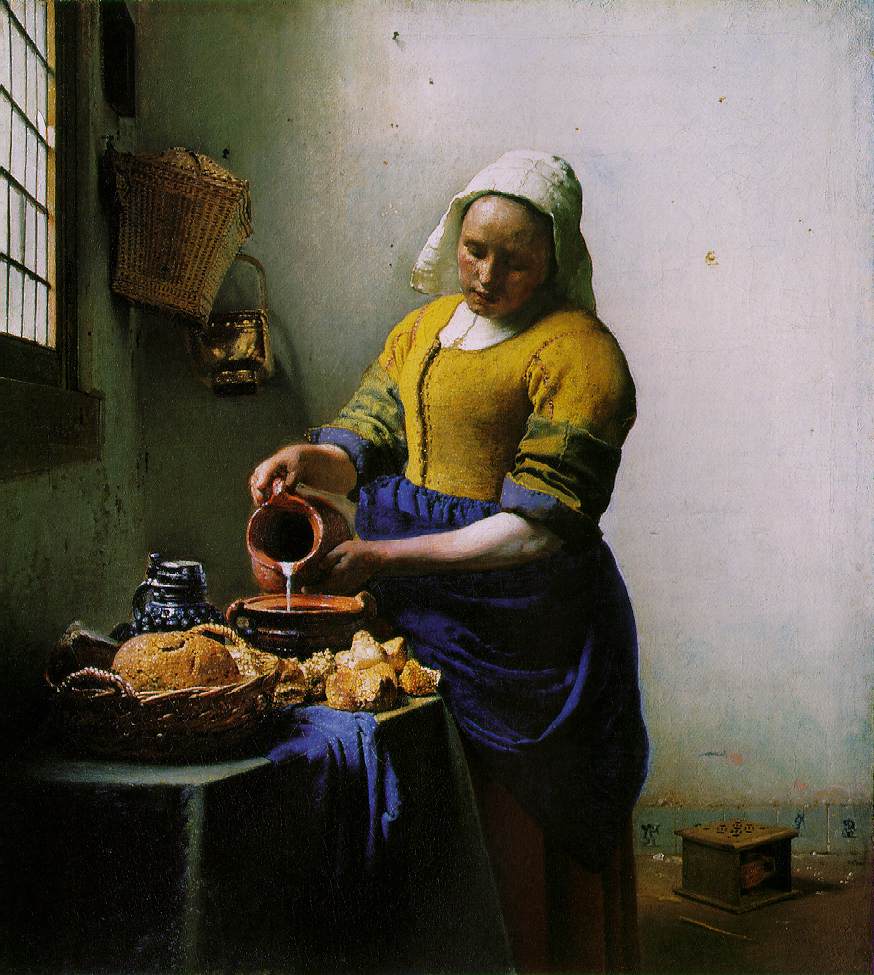
    I’ve liked this photo for a long time, seeing things differently in it over the years.  It struck me just yesterday that the woman in foreground-right–whose close-up reminds me too of a Madonna, a Mona Lisa of the Tars–looks like a Vermeer character from 400 years ago.  Or at least the position of her body does.

    0 ebay nov 20 WWI Vermeer 001 

    0 ebay nov 20 WWI Vermeer 001 0 blog nov 20 vermeer water

  • AirplaneTrainer: Sailors in the Air, 1911

    JF Ptak Science Books LLC  Post 843

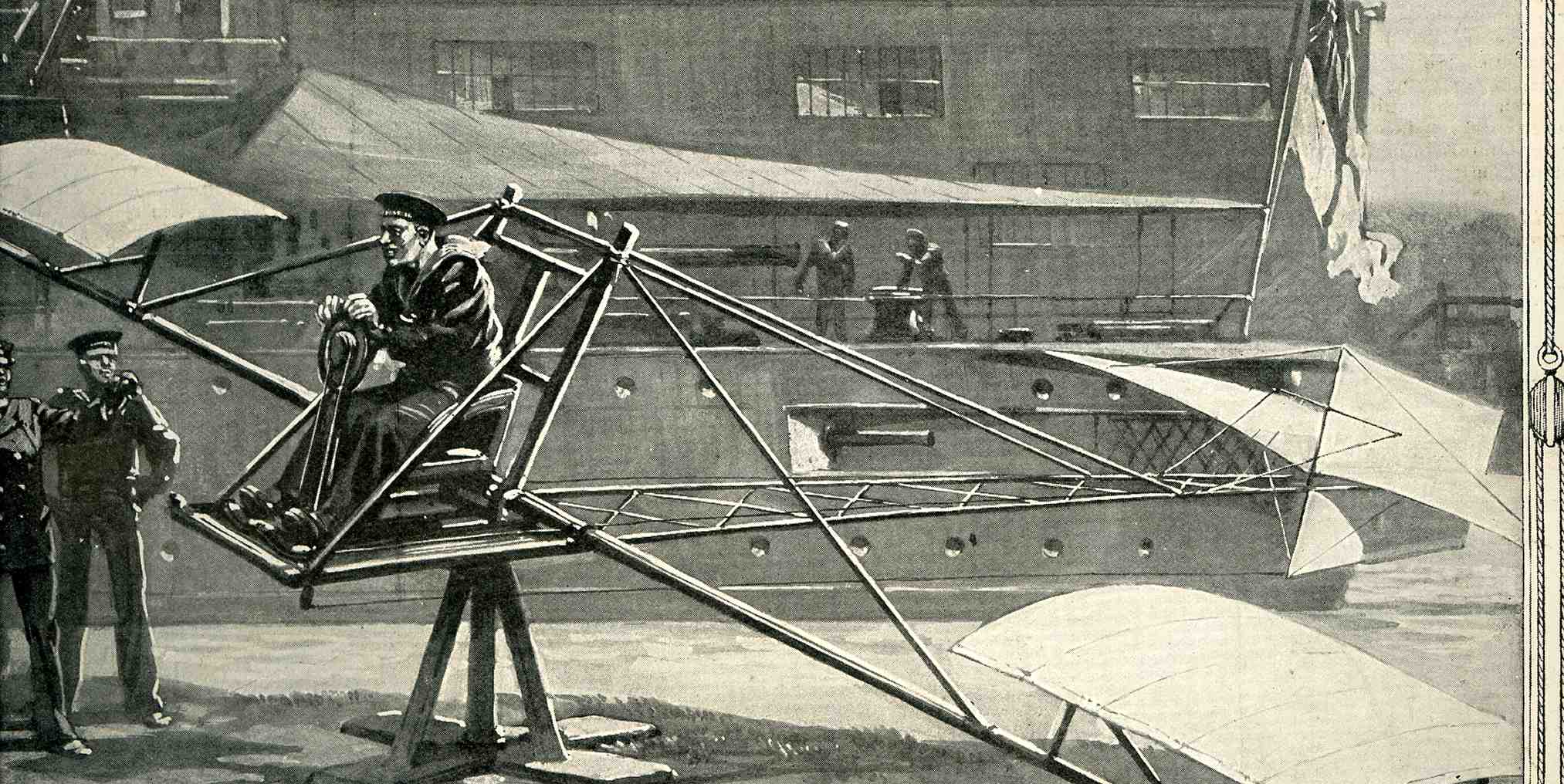
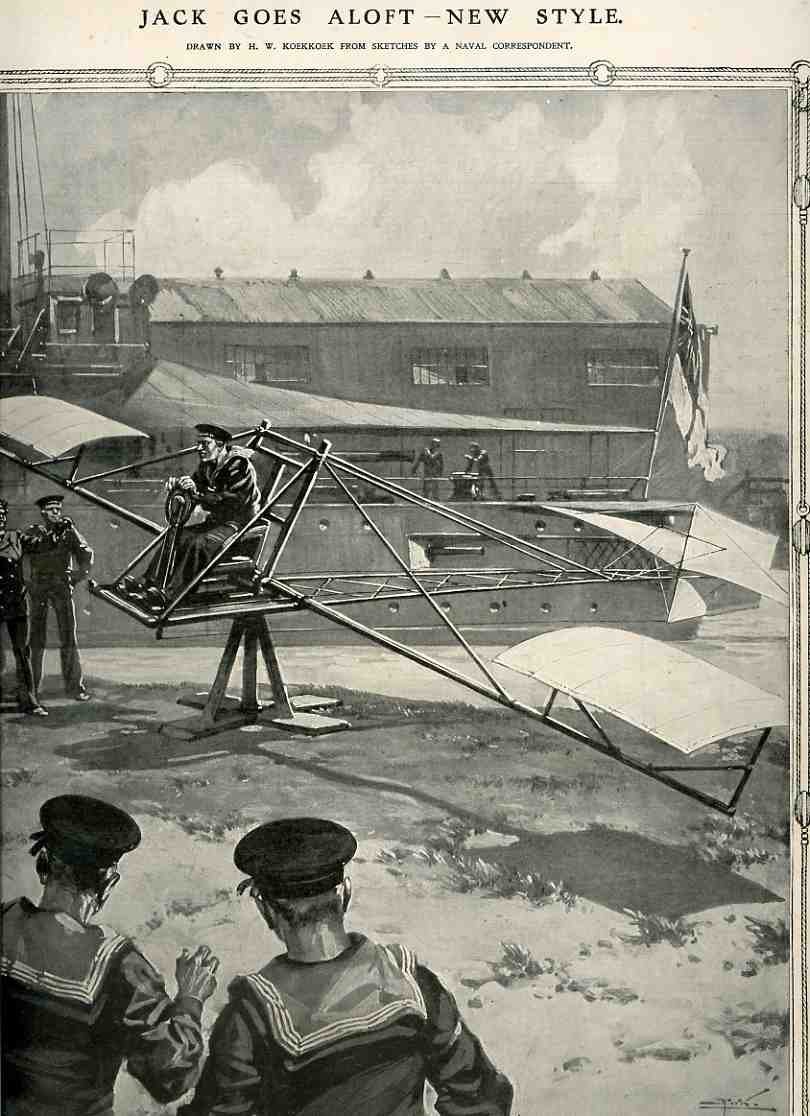
    Just three years after the Wright Brothers arrived in Europe to revolutionize European flying, and following an order of magnitude series of advancement and achievement, the British Navy was already beginning to train classes of sailors as aviators in  dynamic flight-free devices. This idea of simulating flight enabled the training (and more importantly, the selection) of aviators before anybody actually got into a plane, speeding the process of determining who was fit for flight and who was not, quickening the British pace to form a fighting force in the air.
    00-blog--Oct 28 sea plane trainer951

    This interesting graphic appeared in The Illustrated London News for 29 July 1911, and was entitled “Jack Goes Aloft–New Style…Trying to Keep a Stationary Machine Steady in a Wind; Sailors Practicing with a Dummy Aeroplane”.  This was five months before the establishment of the Royal Naval Flight School, but more importantly, just a few months after the historic flight of Eugene Ely, who took off in his aircraft from the deck of the USS Pennsylvania in the Mare Island Navy Yard–of more profound interest perhaps is the fact that Ely landed his plane on the same restricted deck space. (In a way the primitve stopping mechanisms use by Ely are sort of in use today. ) I am sure that few naval people missed the significance of this event–I know that across the ocean Winston Churchill was instantly at work on the idea of using aircraft on ships. But it seems that after all of the initial successes in the U.S. that when everything was said and done, the Brits took the lead in modernizing their navy to include aircraft. 

    00-blog--Oct 28 sea plane trainer950

  • Relief as Pleasure–William Burroughs and the Sleep Cure

    JF Ptak Science Books LLC  Post 846  Blog Bookstore

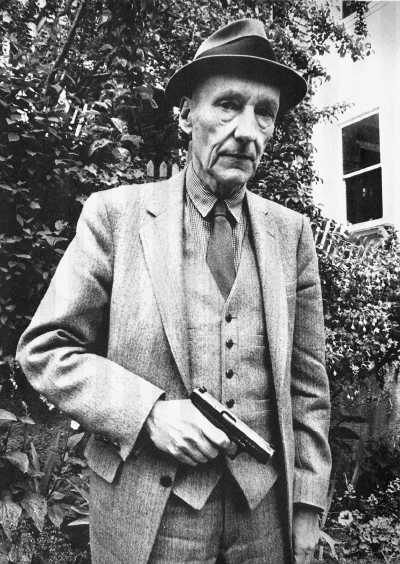
    William_S._Burroughs_1179258258051597 William Burroughs—one of America’s
    great 20th century humorists (closer to Bierce/Mencken than
    Thurber/Woollcott, like Twain with a rainbow coalition of nasty addictions and outré
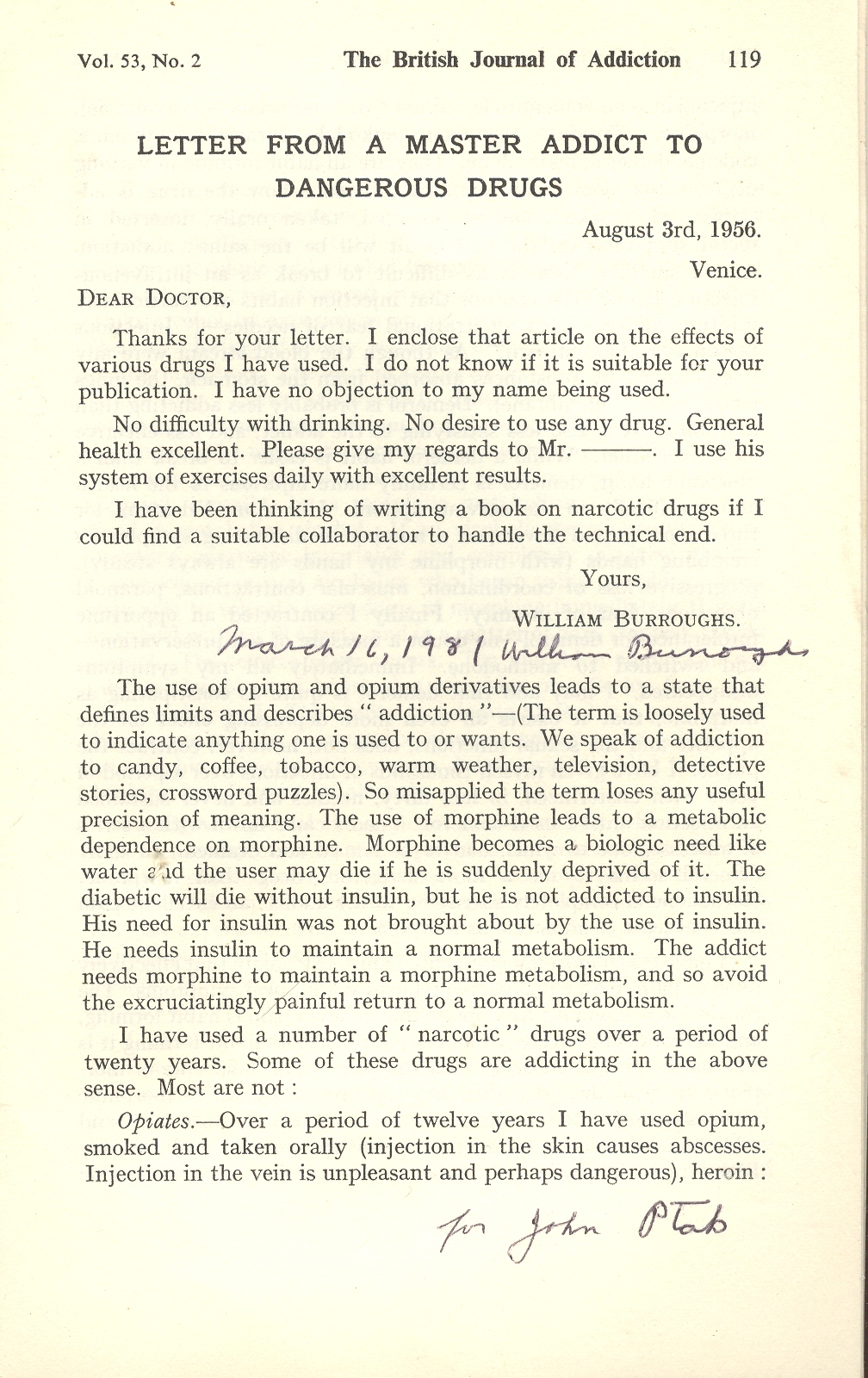
    social habits)—wrote this cookbook article of drug addiction in the British Journal of Addiction in
    1956.  Considering it is only twenty-two
    pages long, it is an Encyclopedia Brit-burroughanica for its quick
    contents. 

    “Letter from a Master Addict to Dangerous Drugs” is crisp
    and concise, a clinical horror story of addiction and cure.  I say “and cure” because of the low trials
    Burroughs went through in some of the ten attempts/cures he experienced to
    clean himself up.  (Burroughs had already
    been using narcotics for twenty years by 1956. 
    By a mixture of good genetics and miracles Burroughs (1914-1997)  made it to his 83rd year.)  Burroughs describes one of the treatments,  the “prolonged sleep” cure, (excerpted below),
    in singular terms, revealing a particularly gruesome adventure into lost
    health:

    “Prolonged Sleep.–The theory sounds good. You go to sleep
    and wake up cured. Industrial doses of chloral hydrate, barbiturates,
    thorazine, only produced a nightmare state of semi-consciousness. Withdrawal of
    sedation, after 5 days, occasioned a severe shock. Symptoms of acute morphine
    deprivatio00 blog Nov 23 burroughsn supervened. The end result was a combined syndrome of unparalleled
    horror. No cure I ever took was as painful as this allegedly painless method.
    The cycle of sleep and wakefulness is always deeply disturbed during withdrawal.
    To further disturb it with massive sedation seems contraindicated to say the
    least. Withdrawal of morphine is sufficiently traumatic without adding to it
    withdrawal of barbiturates. After two weeks in the hospital (five days
    sedation, ten days “rest”) I was still so weak that I fainted when I
    tried to walk up a slight incline. I consider prolonged sleep the worst
    possible method of treating withdrawal.”

    If as Burroughs says, all pleasure is nothing but
    relief, then this cure didn’t offer any, and certainly must rank high in the Bad Ideas Department of Caustic Non-Cures.

  • Blank and Empty Series: Oliver Cromwell’s House

    JF Ptak Science Books LLC  Post 847  Blog Bookstore

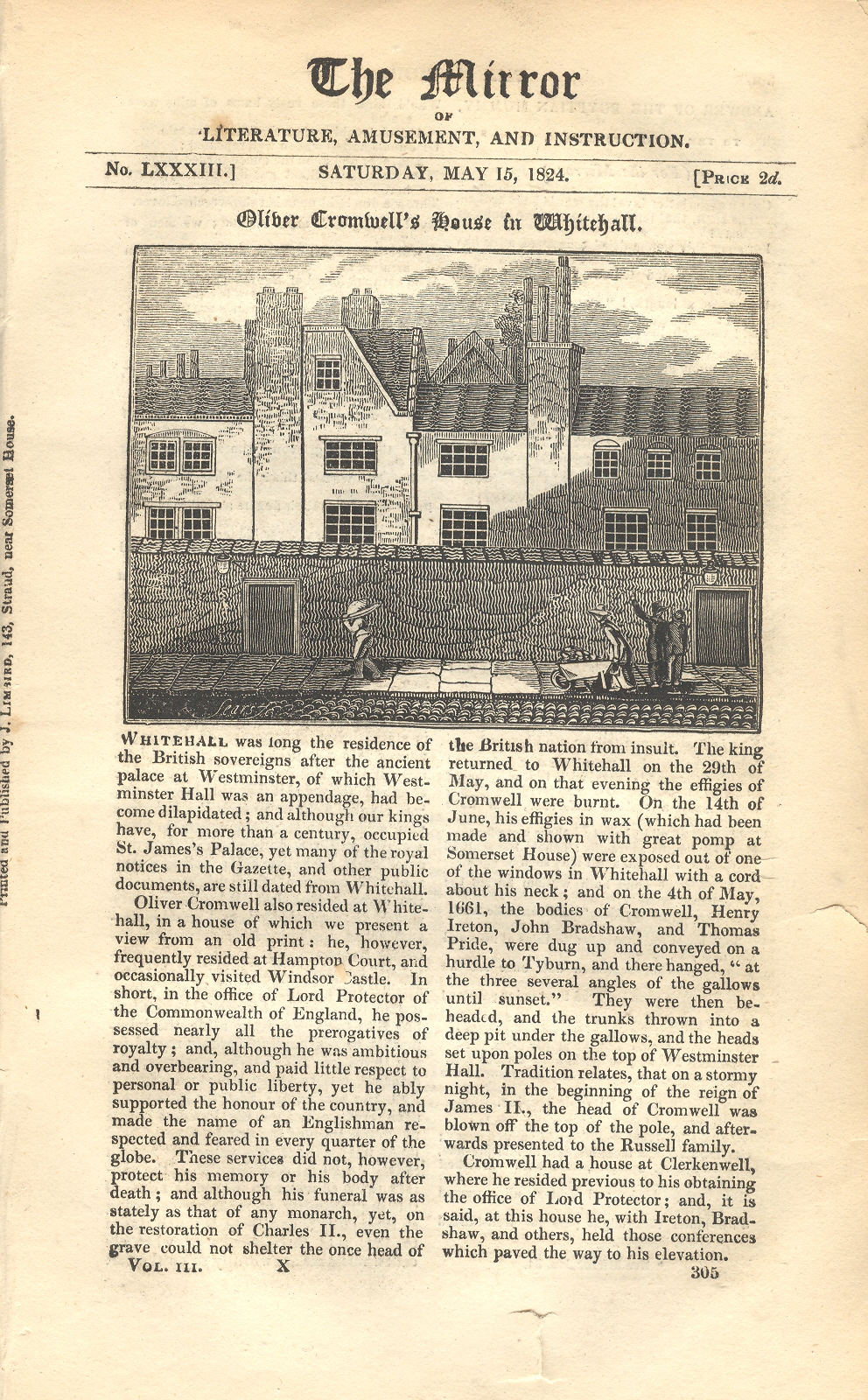
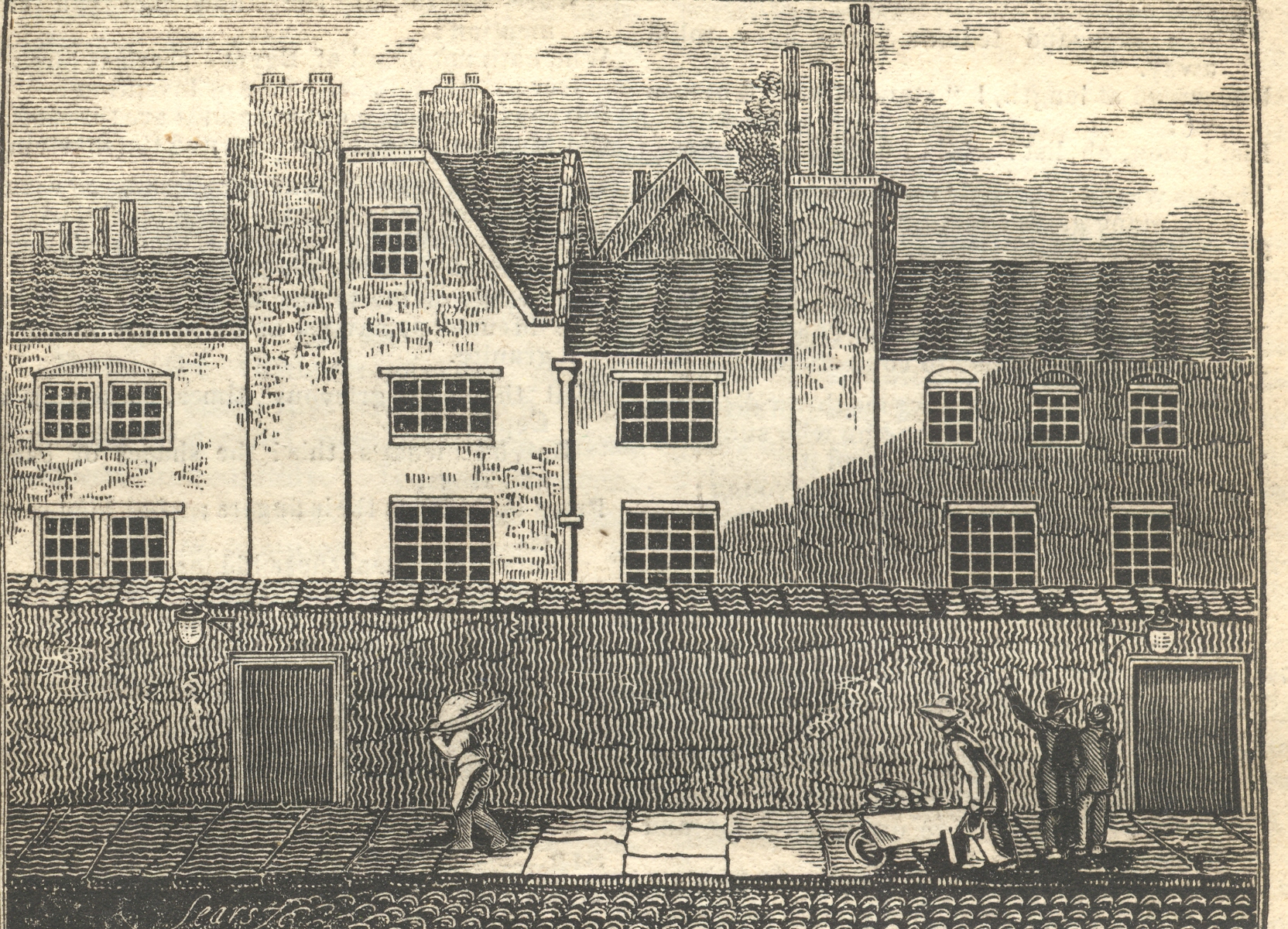
    00 blog Nov 23 cromell And so it came to pass under the vengeful gaze of the restored
    Charles II  that the nicely-buried Oliver
    Cromwell was dug up from his monarchial pit, brought to the light, and then
    hanged, and once twice-dead, was beheaded. 
    To make matters worse for Cromwell, his body was tossed into “a deep pit
    under the gallows” and his head displayed on a spike at Westminster Hall.  I guess that his eyes at that point would’ve
    been happy to see some more comfortable dirt. 


    I’m just relating that story as part of the impression I got
    from this 1824 woodcut of Cromwell’s house at Whitehall. 
    It is an odd, forbidding scene: 
    walled, dark, and with several uncomfortable characters, it feels cold
    and empty, as empty-looking as a house could be. Perhaps that is a butcher with a slab of meat, and a dry-goods hawker with a wagon-full o fgoods, and a pair of drinkey buddies.  Maybe not–but whatever they’re doing and whomever they are, its just a little David-Lynch-odd.

    00 blog Nov 23 cromell 001

  • Out of Context Department: Artists Taken by the Devil, 1620

    JF Ptak Science Books LLC  Post 848  Blog Bookstore 

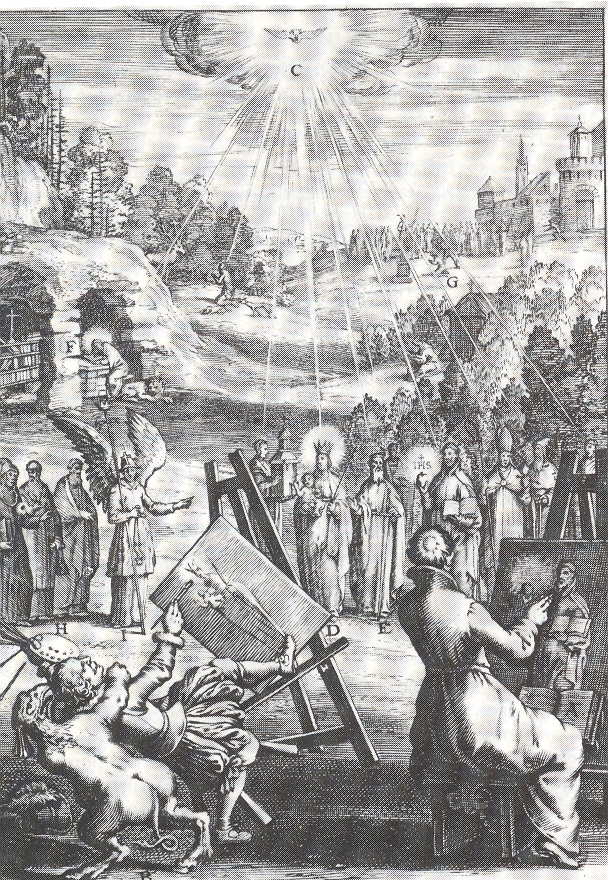
    Mark Twain said that Adam only took the apple not because it was delicious or attractive but because it was forbidden.  I wonder why this operative of Satan was so interested in this artist (pictured below), who was seemingly and boringly making his way through a standard portrait of an imagined vision of the Holy Mother. She and the other holies (some of whom appear to be “simply” human and clerical compared to the rest of the iconic foundations of Christianity) are being bathed in pure holy light; an angel at left, seemingly with nothing else to do, unnecessarily points to the main attraction, making sure that the artists knew that it was the folks with the halos who were to be painted. .  [It would be surreal and interesting to imagine a short sequence in which we see these two artists working busily on their unseen canvases, sweating as the oils fly, recording the celestial scene before them, golden and glowing people illuminated by the light of the creator; finished, the artists reveal their work, one painting the holy congress, while the other turns his  godless landscape canvas featuring the odd tower at right-rear. “I could never paints hands” he might’ve said.]

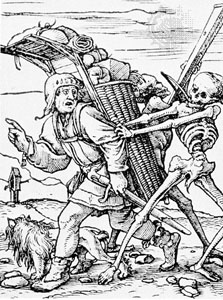
    ++ blog ++ nov 15 artist The engraving is the work of Bortius a Bolwert (1580-1643 and a pupil of the much better-known Abraham Bloemaert) for A. Suquet’s morality and Heaven/Hell peepbook, Den wech des eeuwich levens…which was printed in 1620. I don’t know what the original message was for this image, unless it was something simple, some punishment for a less-than-pure artist painting purity; perhaps the devil took the artist at death, showing the reader that not only is death available to call at any time, but that the devil was right there, too, to whisk you away to the lake of fire even while your oily hommage to the creator was wet on your easel.  It might well simply be in the dance of death tradition–so beautifully and haltingly executed by people like Albrecht Durer–showing Death visiting people of all ranks and professions, the moment of extinction coming at the time most perfectly illustrating the deathee’s station of life. 

    Also appearing under such titles as Ars moriendi, Memento mori, Vanitas, Dancs Macabre,  the Skeleton Dance,  la Danza de la Muerte, Totentanz, and the Chorea Machabæorum, among others, the idea of the Dance of Death existed as morality plays and in literature for many centuries.  In the years before printing in Europe, there were many versions of time’s massacre in frescoes in churches and chapels all across Europe (see here for an interesting chronological listing) as well (of course)as in myriads of manuscripts.  In addition to Durer, some of the early post-Gutenberg masters of this genre included Konrad Witz,  (1460); Bernt Notke,  (1463); Hans Holbein the Younger (1538),  Daniel Nikolaus Chodowiecki,r Johann Elias Ridinger.  (See here for an introduction to and explanation fo the Holbein cycle.) Holbein pedler
    In music too the Dance of Death scenario is seen many times:  the Danse Macabre (by Camille Saint-Saëns, 1874); Songs and Dances of Death, (by Modest Mussorgsky, 1875); Dance of Death in Symphony No. 4, 2nd Movement (by Gustav Mahler, 1901); Mattasin oder Toden Tanz, (by August Nörmiger, 1598);  (Dance of Death), in Ballad of Heroes, (by Benjamin Britten, 1939); Dance of Death, in Trio in E Minor, op. 67 (by Dmitri Shostakovich, 1944); Totentanz ( by Franz Liszt, 1849 AND Felix Woyrsch in 1905 AND Arnold Schoemnber in 1914 AND Wilhelm Kempff in 1931, and on and on.  I didn’t mean to go on about this, but just wanted to make the point that the Looming Nature of Death really was so in Medieval and Renaissance Europe–and where death as waiting at virtually every turn, the Devil wasn;t too far behind. 

    (Also, see Bibliodyssey for a wonderful woodblock book of the dance of death.)

    ·Posted by :

    ·in:

    —
  • Bad Ideas Department: Really Big, Really Bad–Mussolini’s Monster.

    JF Ptak Science Books LLC  Post 849  Blog Bookstore

    “Building
    skyscrapers is the nearest peace-time equivalent of war. In fact, the analogy
    is startling, even to the occasional grim reality of a building accident where
    maimed bodies, and even death, remind us that we are fighting a war of
    construction against the forces of nature.”
    -Col. William A. Starrett, Skyscrapers and the Men Who Build
    Them
    (1928)

    Indeed!  I wonder if Starrett (whose book, or at least
    its cover, is beautifully designed and a roaring bore to read) had this
    proposed building (below) in mind—if so, we could’ve skipped right past WWII
    and declared WWIII. 

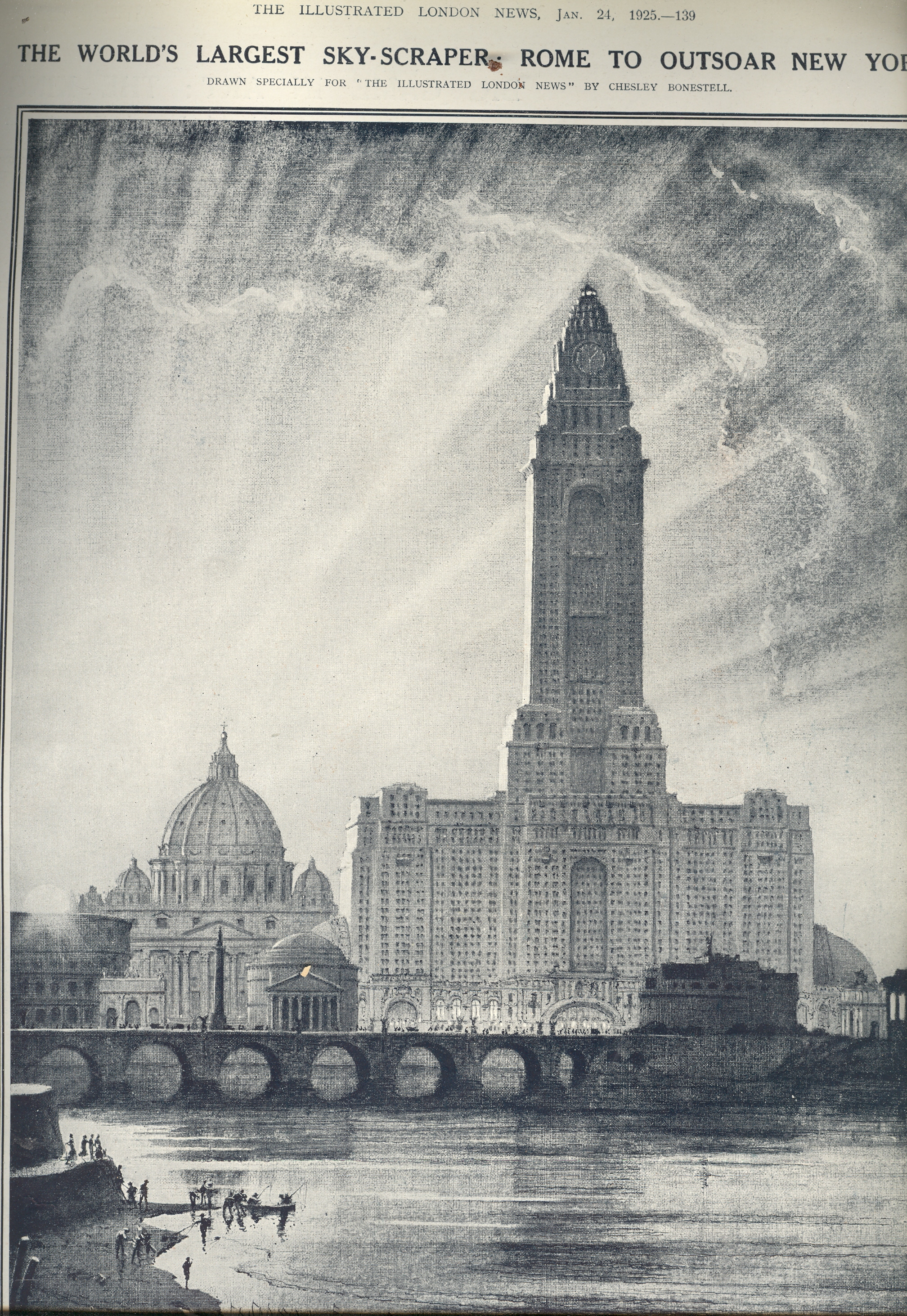
     00 blog nov 23 rome

    It’s a good thing
    that the Roman skyline isn’t punctured here and there by skyscrapers—especially
    those that would’ve been built during the Fascist era.  Take, for example, this planned 1100-foot
    monster, proposed in 1925, in the third year of Mussolini’s government.  This is an idealized cityscape of course,
    created to show height comparisons with famous buildings, but this thing
    (looking very much like Moscow
    University
    ) would’ve
    created a hole in the sky and thrown a suffocating, shadowing presence all over
    the city.  Granted it isn’t as monstrous
    as many of the international style buildings could’ve been had they been a fifth
    of a mile high–that work was left to the cobbled hand of Philip Johnson in
    America—but it is still horrible enough all on its own.  More horrible to think that it could’ve
    swallowed whole the seven biggest buildings in Rome, and was taller than the seven greatest architectural
    wonders of the ancient world stacked one on top of the other. 

    It is curious to
    note that this spaceship-like building was drawn for The Illustrated London News (24 January 1925) by Chesley Bonestell
    (1888-1986), an artist and designer, and known as “the Father of Space Art”.  The best thing that this building could’ve
    done was to light its afterburners and take off. 

  • Found Images Within Images: Dropping Your Hat in the Punic Wars

    JF Ptak Science Books LLC  Post 850  Blog Bookstore

    There is a
    particular class of illustration in which, among the secondary figures of the
    image, there is a small happening, an everyday trifle, that has been captured by
    the artist and included in the overall communication for no necessary
    reason. (for example, see here and below1). I’ve written about this a little
    before on this blog in posts about finding images-within-images: the
    unecessaries among the unnecessaries, the bits and pieces of everyday human existence
    that in and of itself is not worth commentary but which nearly everyone
    experiences.  Small bits, they are, of a
    tremendous human nature, the things that are done in private, or are so
    universal but inconsequential that they are shocking to see when illustrated in
    print.

    ++ Nov 24 dropped

    Titus Livius (59
    BCE-17 ACE), better known to the English-speaking world as Livy, was a superior
    among superiors of Roman historians, writing on the history of his city and
    country.  His work, Romische Historie…,
    published in Mainz by Johann Schoeffler 1450 years later in 1514, was one of
    the most beautifully illustrated books ever produced in that city.  This is a considerable statement, as Mainz was the birthplace/hotbed
    of moveable type printing, being home to Johann Gutenberg and a number of other
    early presses. 

    And in looking at
    this fantastic work by Livy, I am a little embarrassed to find this spectacular
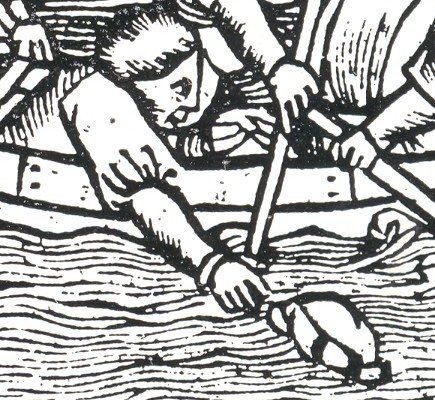
    bit of human tendency displayed in this woodcut depicting a naval engagement
    during the Punic Wars.  It is a beautiful
    thing, this scene of warfare depicted on tranquil seas and ribbony waves,
    determination in every face.  But what I
    noticed in the small boat at bottom right is a man reaching out into the water—not
    for a dropped oar, or to help a man overboard, or to catch his falling
    sword. 

    ++ Nov 24 dropped det
    He was reaching for
    his dropped hat. 

    I have reason to
    doubt that during the Punic Wars there may have been an unwritten chapter, “On
    the History of Dropped Hats During Warfare”. 
    Surely soldiers dropped their hats during the history of roman conquest,
    but I’d say that retrieving the headgear was more important at the Battle of
    the Bulge in protecting your noggin from badly splintering trees traveling at
    you at 180 mph and other such places than a wool cap dropped from a ship in pitched
    battle two hundred meters from shore. 

    I like this so
    because it is probably the first reaction that most of us would have—just a
    habit, battle raging or not—and just utterly human.  Just a little piece of back-history that
    doesn’t go anywhere and is lost to experience. 
    I’m sure that Herr Gutenberg dropped his hat at odd times, as did the
    unknown artist of this print.  Just an
    odd bit, like the first things printed on Gutenberg’s press being religious indulgences
    for people paying their way past Purgatory (and worse).  The fact that the indulgences preceded the
    great bible by several years doesn’t really matter, and neither does retrieving
    a dropped hat in a sea battle—but they do make interesting stories.   

    1.  Some other Found Images posts:

    Found Images: Penny Lane and the Inexpensive Treat, London, 1896

    Found Images of the Great Wheel, 1895

    Finding Hidden Images in Antique Prints: 18th
    Century Forensic Social X-Rays of Florence
    by Guiseppe Zocchi


  • Emerging Patterns and Hidden Visible Art

    JF Ptak Science Books LLC  Post 851  Blog Bookstore

    Even when I know
    that this picture is coming, when it is rounding the bend, I still can’t see it
    for the portrait it is supposed to be. 
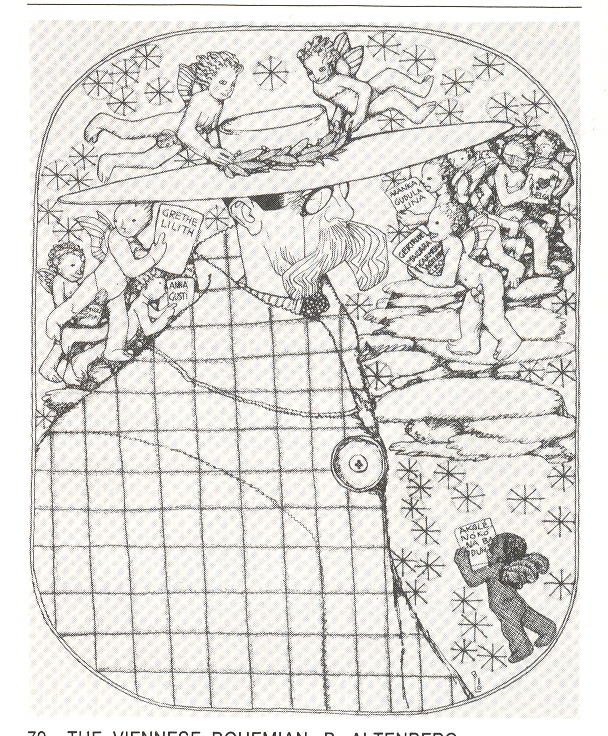
    The lithograph is by Berthold Loeffler (1874-1960), a prolific Viennese
    designer, artist and
    professor at Kunstgewerbeschule (1907-1935) whose prodigious
    commercial

    ++ Nov 24 altenberg

    output covered about every other letter of the artistic alphabet.  This work is a portrait of his mostly-forgotten
    fellow-Viennese writer, Peter Altenberg1 for the Kabaerett Fledermaus of
    1909.  The portrait is all squares and
    one big button to me, and I have to consciously look for the rest of the
    picture in spite of knowing that the stuff is there. 

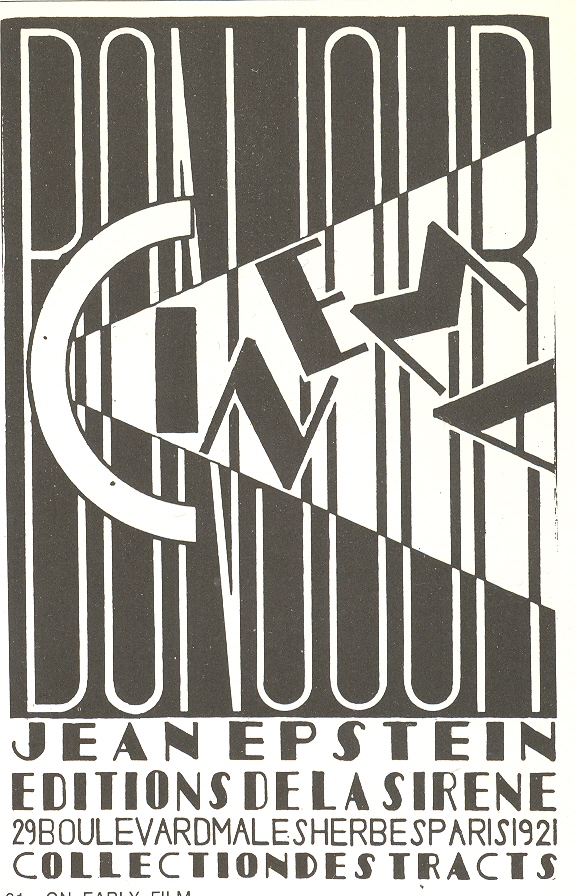
    It is an unusual picture of emergent art—for me not quite
    like, for example, the cover of the pamphlet Cinema by J. Epstein, where the letters are a jumble for just a
    moment and then snap into view.  The
    Loeffler portrait is much more densely hidden in a much more straightforward
    manner, and fools my mind every time. 

     Notes++ Nov 24 cinema

    1.Altenberg is probably a product of his time, or a time of
    his product.  Described as the bohemian’s
    bohemian, he lived an outre lifestyle in little cafes and bars, wearing capes
    and broad-brimmed hats, and was evidently something of an effeminate womanizer
    with a very deep interest in very young girls. 
    There you go.  Altenberg stood
    quite high in that world, as Alban Berg put some of his postcard-poetry to
    music in his Five songs on picture postcard texts by Peter Altenberg,
    which caused a near-riot in its premier, abruptly stopping the performance
    which would not see the light of day again for another 40 years.

    ·Posted by :

    ·in:

    — —
  • Objects from the Last Full Measure, 1944

    JF Ptak Science Books LLC  Post 852

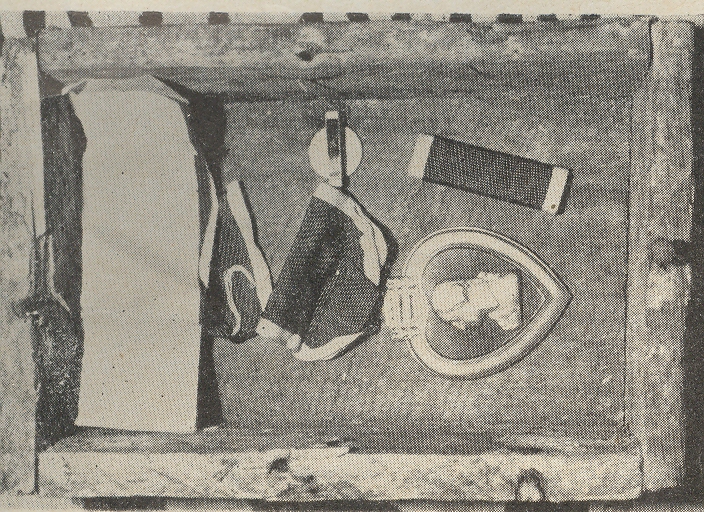
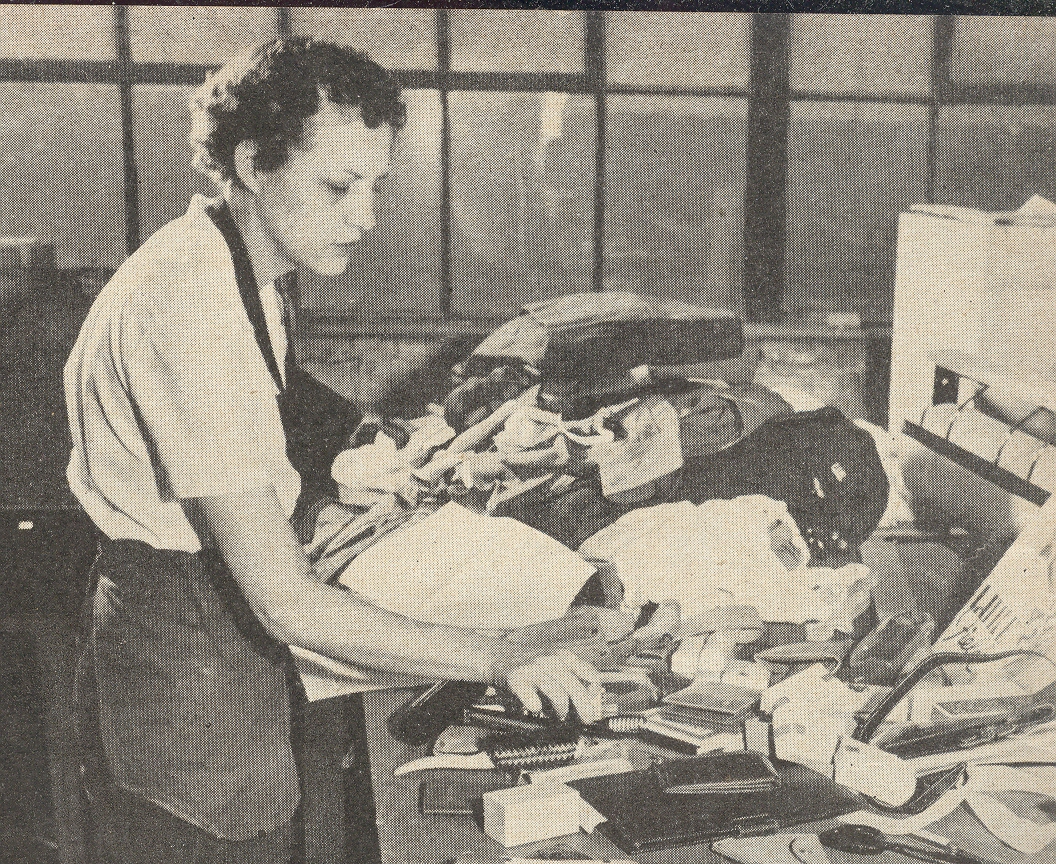
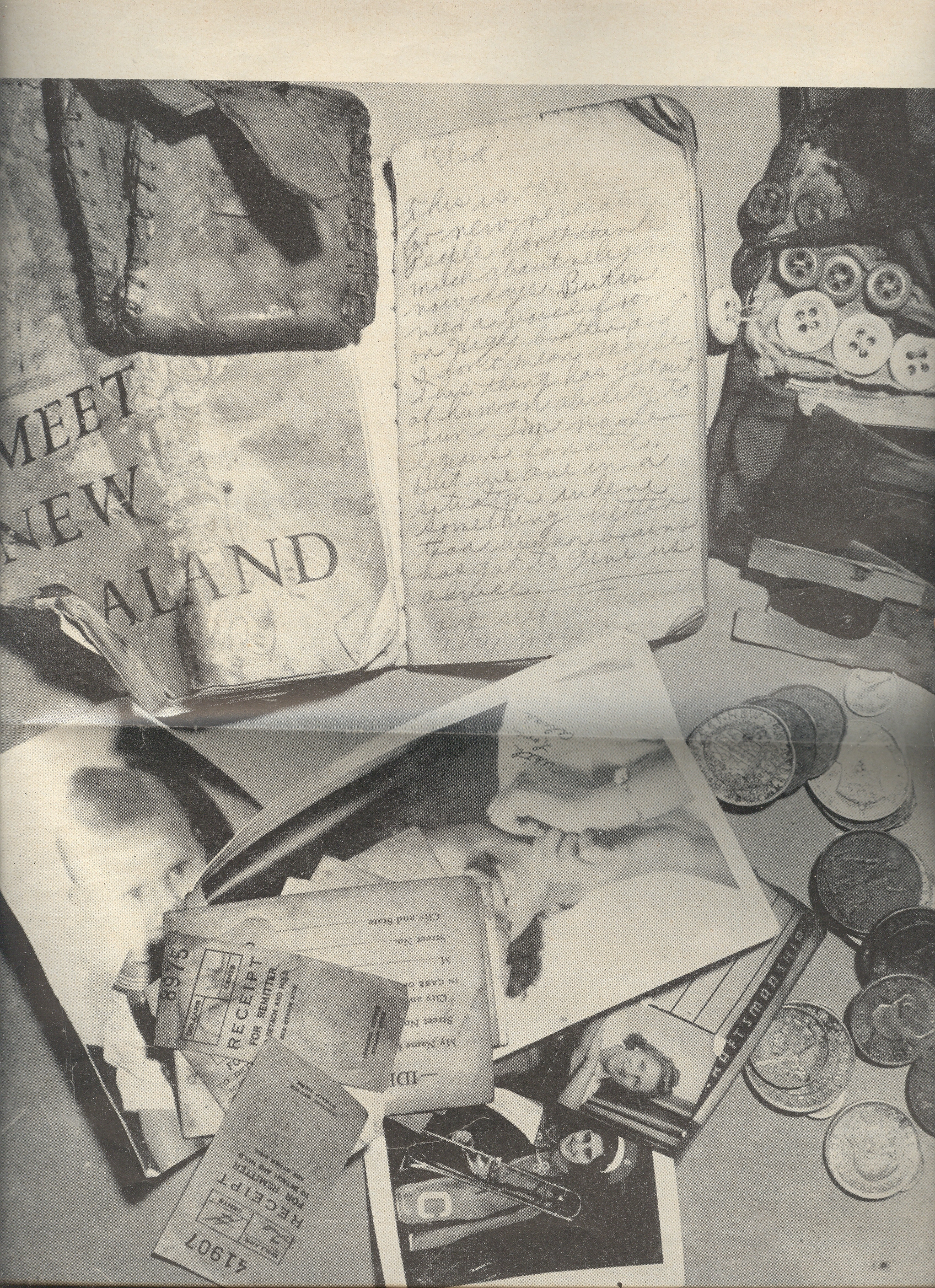
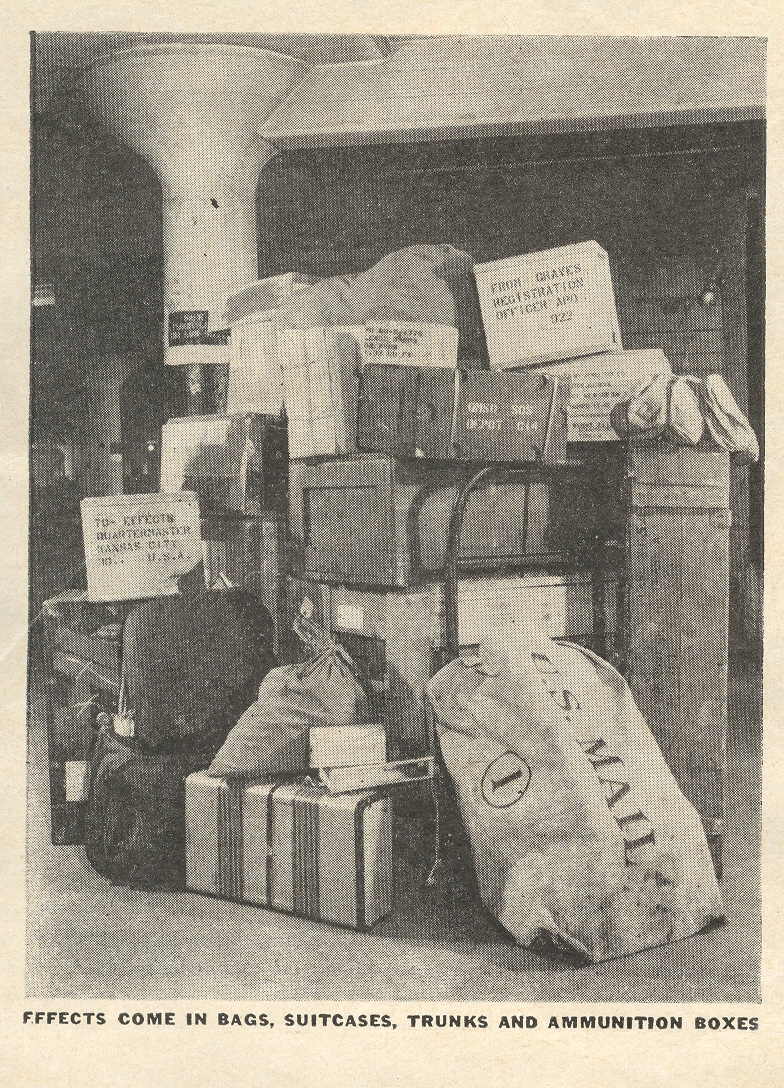
    ++ Nov 25n purple The material documented in this 17 April 1944 LIFE magazine article are the effects
    of dead soldiers.  It was surprising to
    see this sort of coverage, given the place and the time: I do not think that we
    will see photographs like this for our currents wars.  The title of this short photo essay—the
    shockingly stunted and bald “Dead Men’s Things”—should certainly have been
    something else with more dignity than a movie title for a schlock Hollywood
    B-production of the ‘50’s.The article is weirdly disjointed and heavy handed
    considering the great and respectful duty at hand. ++ Nov 25n lady I’m not saying that the writer didn’t
    understand the enormity of the situation, as the article puts it quite
    well:  “To the people who go there, it
    seems a more sacred place than a cemetery and the ordinary things it handles
    seem the best kind of memorials to men who will never return…”  The clumsy manner in which the whole deal is
    presented was probably a series of unfortunate errors by a time-pressed
    editor. 

     ++ Nov 25n dead men big

    The story of the belongings of the killed servicemen goes
    like this: the effects were collected by the quartermaster corps in a small village
    in France, stored in 11
    buildings and 150,000 square feet of storage, and then sent to the Army Effects
    Bureau1 in Kansas City, Missouri. 
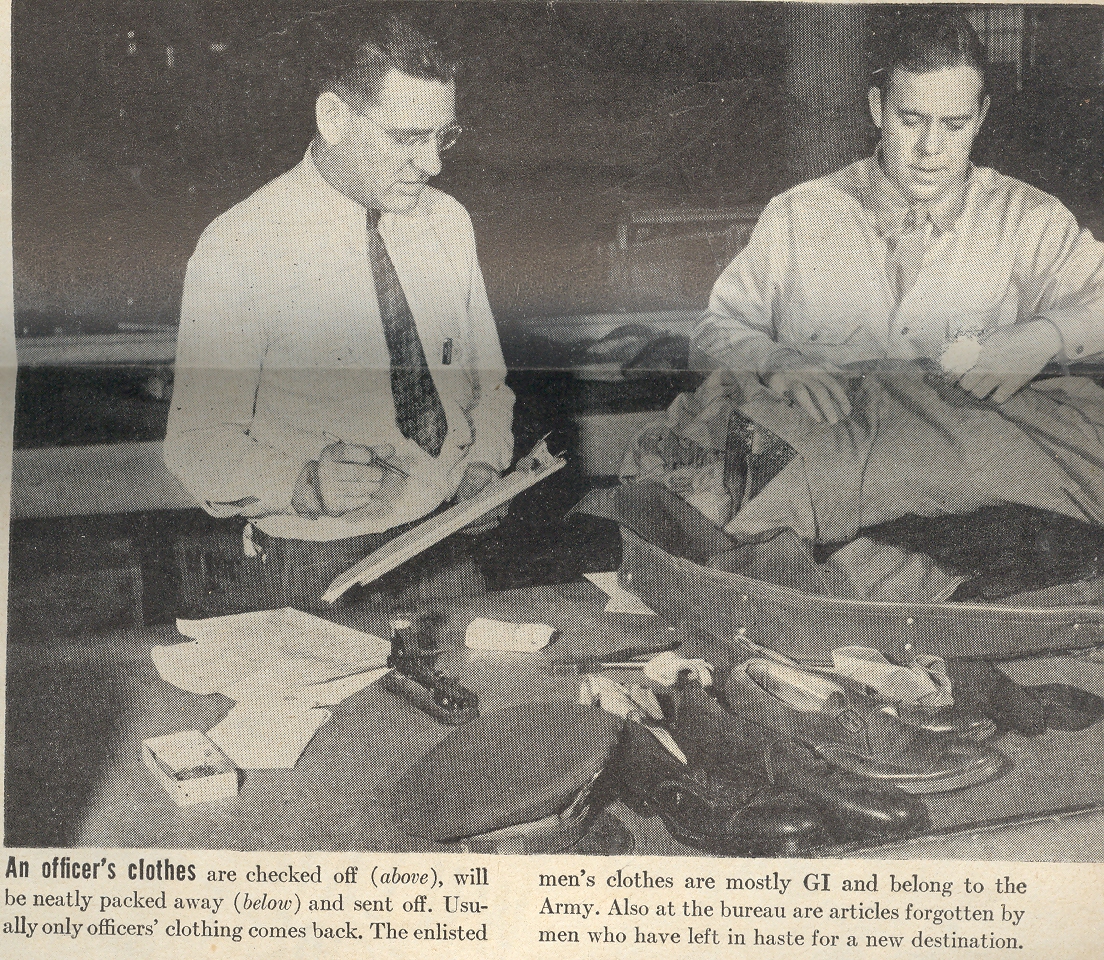
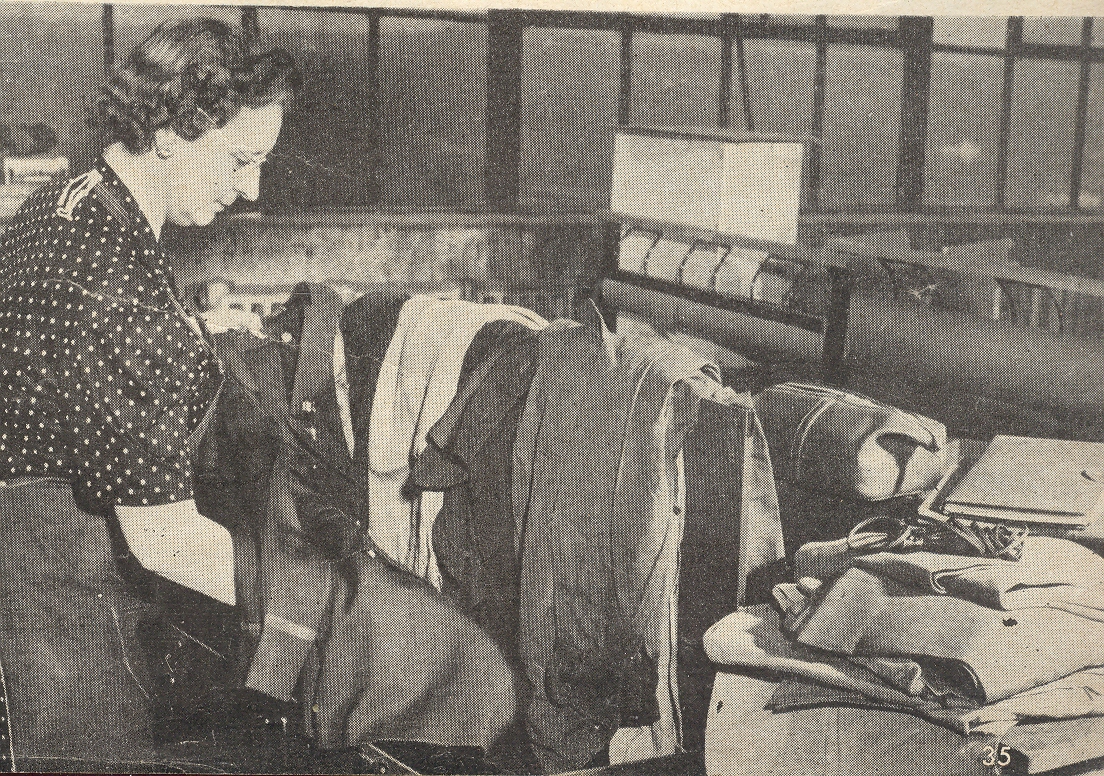
    From there the material was further sorted and checked and
    double-checked, and checked again, and then sent on to the next of kin. 

     ++ Nov 25n 2 guys

    It sounds like an overwhelming job, helping in the attempt
    to deliver the high honor of restoring the last objects carried by a dead son
    into battle to his parents.  The thing I
    can’t get out of my mind is the continuous rising tide of bags and boxes coming
    in from Europe, all intimate reminders of
    great loss.

    ++ Nov 25n 2nd lady  

    1.  “The job of the Commanding Officer, who is
    the Effects Quartermaster (Continent), is to receive and safeguard thousands
    of’ packages of irreplaceable
    personal property until they can be returned to the owner or forwarded to the
    Army Effects Bureau at Kansas City for disposition. Q-290 serves as a holding
    and reconsignment depot in transmitting the property of casualties from the
    unit in the field back to the owner, or in forwarding property of deceased to
    the U. S.”

    ++ Nov 25n luggage

    “When a soldier becomes a casualty (either
    deceased, hospitalized, captured, interned, or missing), his unit commander
    collects all personal property, inventories it, removes government property,
    and forwards all the personal items to Q-290, marked with the owner’s
    identification and status. If the owner is deceased, the property is documented
    and forwarded immediately to Army Effects Bureau, Kansas City, for transmission to the next of
    kin. If the owner is hospitalized, the property is placed in storage
    indefinitely, subject to disposition instructions from the owner. If the owner
    is missing, captured, or interned, the property is stored so that he may claim
    it upon return to duty.”– From documentation on the website of the Army Quartermaster
    Museum
    .

  • Foot of God, Pt 2: Continuing Thread on Odd Things in the Sky

    JF Ptak Science Books LLC  Post 853  Blog Bookstore

    ++ Nov 26 foot god

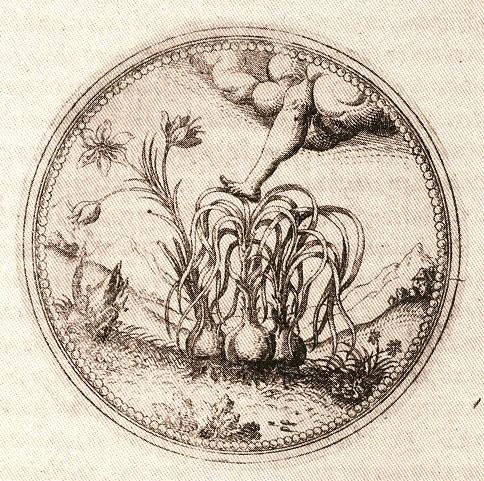
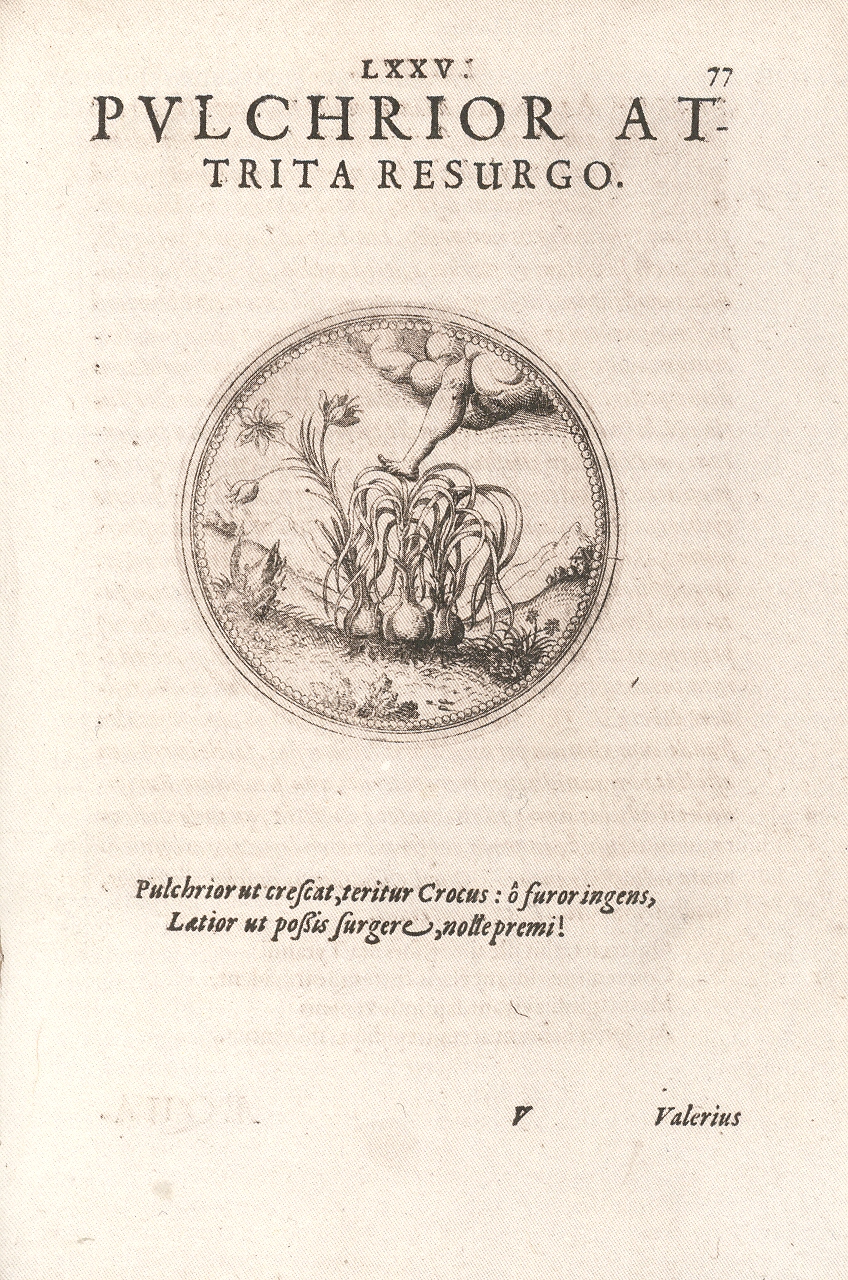
    I am going to indecently
    add to my “foot of god” series with this metal engraving from the accomplished
    Joachim Camerarius1’ Symbolorum et
    Emblematum…
    (published in four volumes at Nuremberg from 1590 to 1605).  There is so much to offer from these books, I
    freely admit, but I’m afraid that I’m stopped at this foot-from-the-sky
    image. 

    ++ Nov 26 foot god

    The engravings, executed
    by Hans Sibmacher, were among the first executed in metal, and the book itself
    was the first of its kind to present botanical emblems. (The other three
    volumes contained emblems for animals of land-sea-air.) They are splendid and
    concise, and filled with soft detail. 
    And still I’m left with the foot. 

    The legend is mostly a
    mystery and doesn’t help me with the foot—it says something about beauty and
    growth and madness and reward—and the saffron crocus.    This plant has been a commodity for
    thousands of years, used for therapeutics and dyeing and spice.  It takes quite a lot of these plants to
    produce a gram of powder—about 150. 60,000 plants are necessary to produce a
    pound of saffron, which is getting to be quite pricey.  Given this, saffron was very often imitated
    and counterfeited—a crime taken quite seriously in many places, and perhaps
    none more so in Bavaria where (in 1444) a conviction meant death.

    ++ Nov 26 eyes in sky

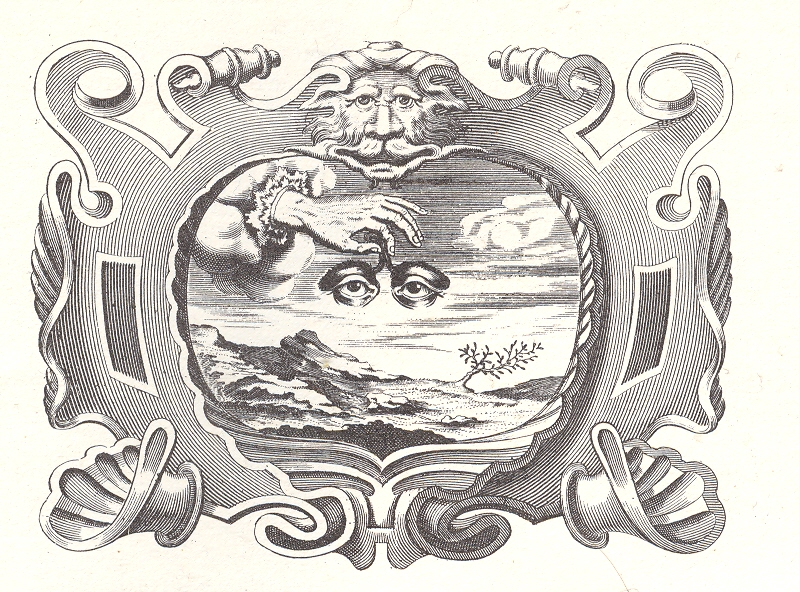
    And as long as we’re
    talking about odd antiquarian images the sky, I’d like to point out the work by
    the Jesuit Franciscus Nerrincq
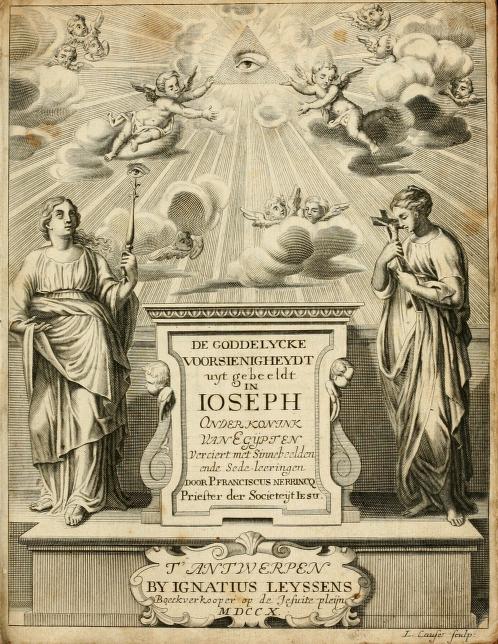
    (1638-1712), De goddelycke voorsienigheydt2, in which there
    are several odd eyes that burn their way through the atmosphere.   Eyes/eye of the creator occur frequently in
    religious presentations and emblems, but not so very often as hands holding a
    pair of eyes.  I know all of this is very
    heavy stuff in the history of Christian iconography and the progression of
    emblemata, but I’d rather deal with the images out of context here and have
    them stand on their own without interpretation. 
    ++ Nov 26 eye title page

    NOTES

    1.From the Encyclopedia Britannica, 11th
    edition, volume 5:  JOACHIM CAMERARIUS
    (1534-1598), German botanist and physician, son of the
    classical scholar of the same name, was born at Nuremberg on the 6th of November 1534. After finishing his studies in Germany he visited Italy, where he graduated as doctor of medicine. On his return he was invited to reside
    at the courts of several princes, but preferred to settle in his native town of Nuremberg, where he had a botanical garden and formed extensive collections. He
    wrote a Hortus Medicus (1588) and several other works. He died at Nuremberg on the i 1th of
    October 1598.

     2.  De goddelycke voorsienigheydt uytgebeeldt in Joseph
    onder-coninck van Egypten : verciert met sinne-beelden ende sede-leeringen
    .  The entire book can be seen here.

    The University
    of Utrecht
    emblem
    collection
    is extensive and easy to navigate—there is drop-down box for
    available titles, and once selected, the book comes up with biblio info on the
    right and a drop-down of thumbnails for the entire book at left.  It is a joy to navigate. 

Recent Posts

Archives

Categories