A Daily History of Holes, Dots, Lines, Science, History, Math, Physics, Art, the Unintentional Absurd, Architecture, Maps, Data Visualization, Blank and Missing Things, and so on. |1.6 million words, 7500 images, 4.9 million hits| Press & appearances in The Times, Le Figaro, Mensa, The Economist, The Guardian, Discovery News, Slate, Le Monde, Sci American Blogs, Le Pont, and many other places… 5000+ total posts since 2008.

Category: History of Memory

  • “Talking Photographs” (1878)

    JF Ptak Science Books  Overall Post 5135 (Updating and revising an earlier post from 2011)
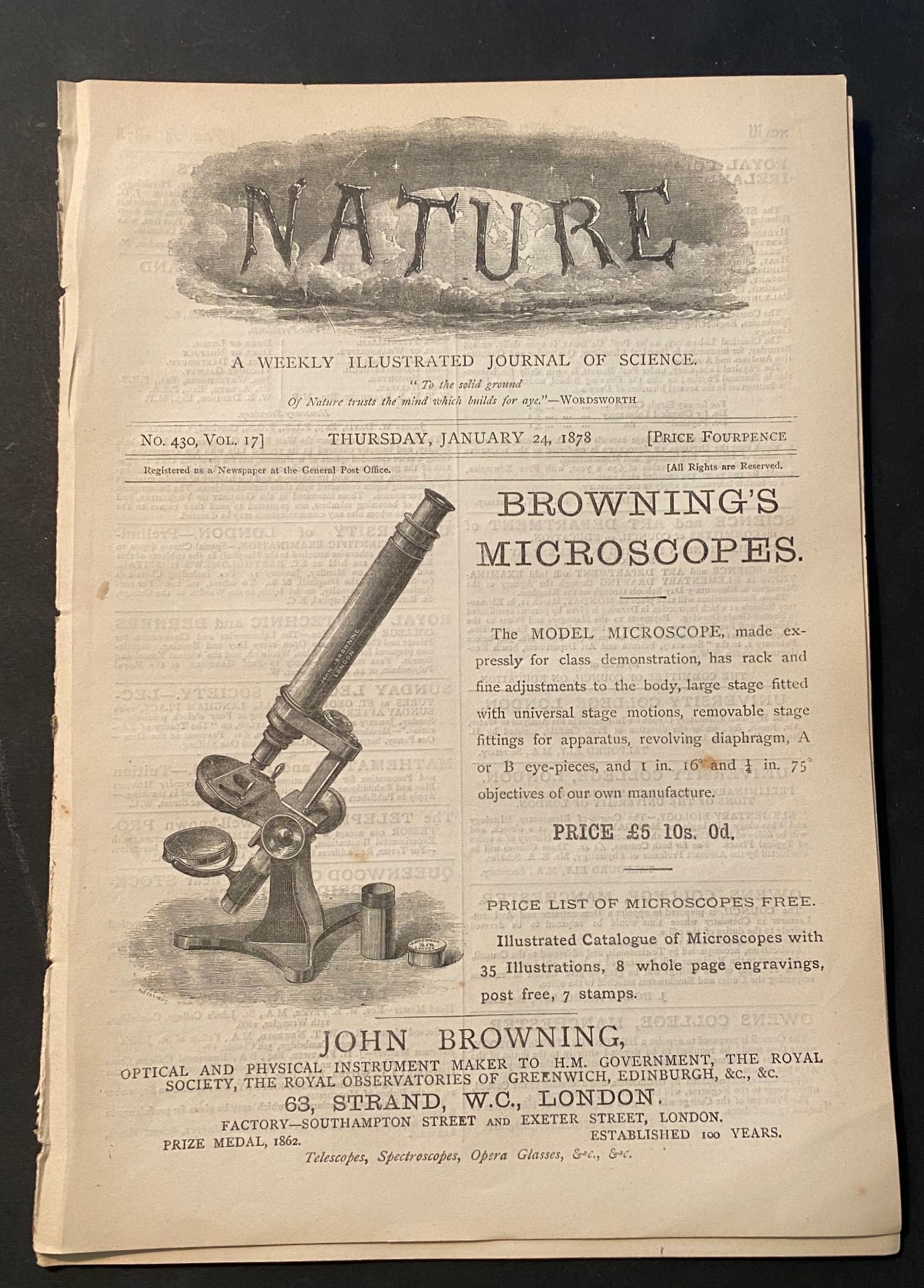
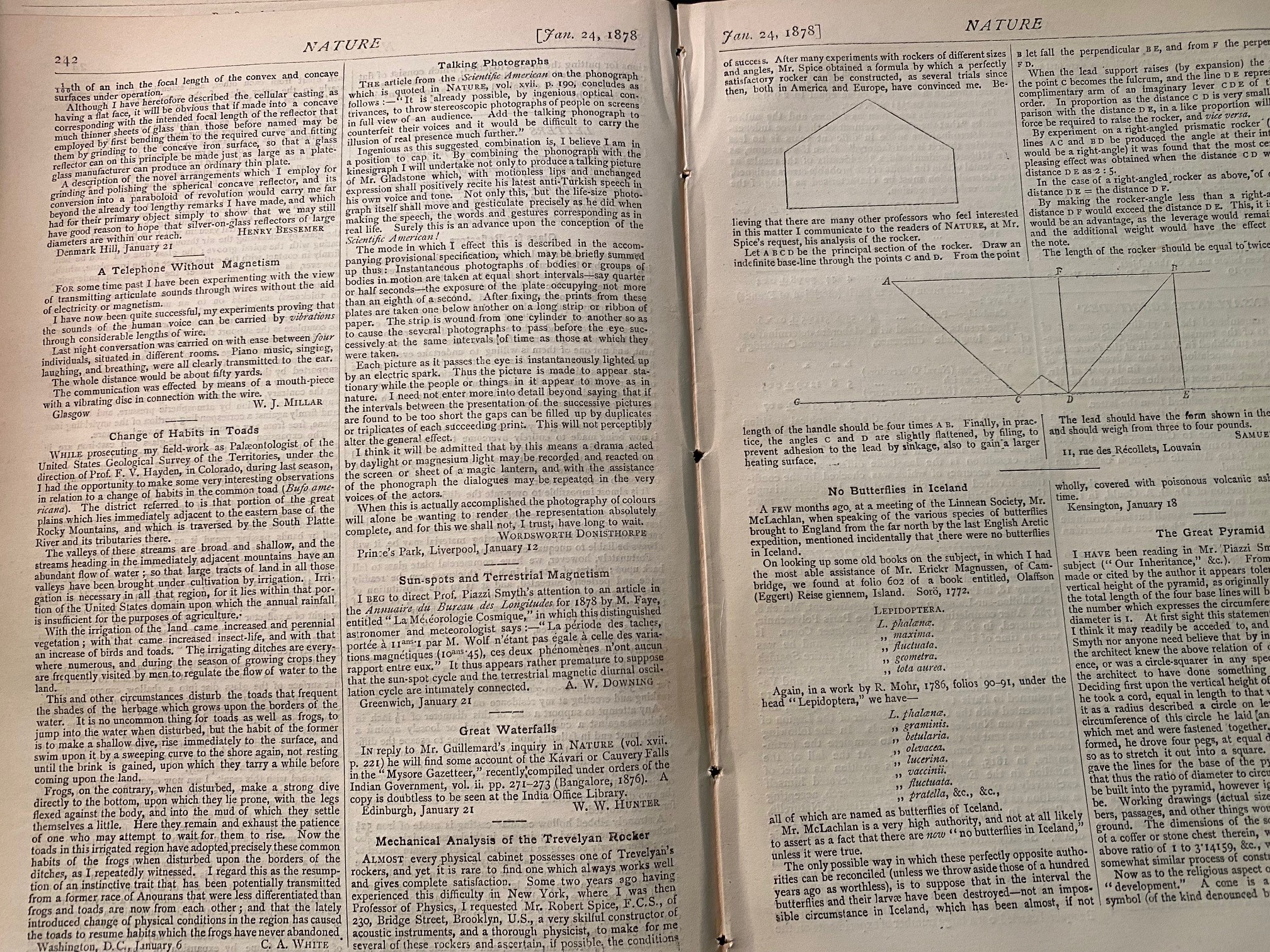
    IMG_6041There appeared in the wonderful pages of Nature (for 24 January 1878) a short but interesting technical communication from the probably/improbably-named Wordsworth Donisthorpe (1847-1914): “Talking Photographs”.1  It is a letter to the editor, really, about an invention that is deeply related to the earliest stages of motion pictures–it was among the first papers that coupled sound with the moving images, appearing eleven years before the first successful demonstration of a motion picture (1889).  

    “…Donisthorpe was an English individualist anarchist and inventor, pioneer of cinematography and chess enthusiast…” (Photography News). He invented a language (“Uropa”), was an ardent Darwinist, maths wrangler Trinity 1882, non-practicing Barrister, political fringe-elementist, and helped to found the British Chess Association, among much else. 

    With his device called the “Kinesigraph” (patented with his cousin William Crofts who whose sister was married to Darwin’s son Francis) which was based somewhat on the wool-combing machines that their fathers helped to invent and improve, the pair stepped into the instant future of the motion picture.
    IMG_6042

    As I said, Donisthorpe introduces a lot in this very short letter. He states:

    “By combining the phonograph with the kinesigraph I will undertake not only to produce a talking picture of [Prime Minister] Mr. Gladstone which, with motionless lips and unchanged expression shall positively recite his latest anti-Turkish speech in his own voice and tone. Not only this, but the life-size photograph itself shall move and gesticulate precisely as he did when making the speech, the words and gestures corresponding as in real life.” He states further: “It is already possible, by ingenious optical contrivances, to throw stereoscopic photographs of people on screens in full view of an audience.” And then, taking advantage of the newly invented Edison phonograph, continues: “Add the talking phonograph2 to counterfeit their voices and it would be difficult to carry the illusion of real presence much further.”

    *Lastly, I’ve included this in the “history of Memory” category because of the vast amount of memory that these inventions were able to store. Up to this point, before the introduction of the means to record sound and motion, people depended on static portrayals of these memories that were also subject to change and interpretation. With the phonograph and motion picture cameras continuous motion and audio sources are saved for as long as the media survives.  

    Notes:

    1. DONISTHORP, Woodsworth. “Talking Photographs”, in Nature, volume 17, no. 13. 24 January 1878, page 243 in the complete weekly issue of pp 237-256.
    2. What Mr. Donisthorpe is talking about in the pages of the Scientific American is really the back-door entry to an even bigger topic: the first announcement of Thomas Edison’s phonograph as it appeared on the back of the first  page in the last issue for the year, 29 December 1877.  “A Wonderful Invention–Speech Capable of Indefinite Repetition from Automatic records” was the article by Edward Johnson on the introduction of Thomas Edison’s phonograph. It is one and a half columns long, but contains a very compact 1500 words.  

  • “Children Who Work on the Nation’s Crops” (1942)

    JF Ptak Science Books  Quick Post   Overall Post 5128

    IMG_5329

    This is a substantial indictment and attack on the loose laws (where they actually existed) regarding child labor in the United States, specifically regarding kids working in the fields.  If you scroll down you can see what laws were applicable to what states, and there were plenty of states that had virtually no regulations on children laboring in the fields, being part of a migratory family.  I’ve reproduced here some of the most significant bits from the pamphlet as well as all of teh photos–the photo images aren’t exactly Jacob Riis, but they’re getting there. In any event Ms. Zimand was making a very strong case and presenting an embarrassing expose on the use of child labor in the U.S. just at the beginning of the U.S. overt military involvement in WWII.  


    [Source: ZIMAND, Gertrude Folks. Children who work on the nation’s crops. New York City, National Child Labor Committee [1942] [National Child Labor Committee. Publication no. 384., 9″x 6″, 19pp. Photo illustrations.]


    IMG_5331


  • The First Microscopical Images of Captured-and-Reproducible Sound? (1878)

    JF Ptak Science Books   Quick Post

    Only months into the invention of the phonograph by Thomas Edison (at Menlo Park in December of 1877 and patented in January 1878) Alexander J. Ellis reviewed a version of it constructed in London by Mr. Stroh, and found it, well, wanting.  Ellis (1814-1890) was a product of Eton, Cambridge, Trinity, and was a gifted mathematician, philologist, and a groundbreaking ethnomusicologist, and did see some limited utility of the machine to restricted areas of his research. In the short note he wrote for Nature in their April 18, 1878 issue1, he mostly found that the phonograph was generally flawed in its reproductive capacity, and did not venture far from this interpretation so far as the possible applications of the machine was concerned, which seems iconically short-sighted from my perch here in the future. Even though Ellis recognized that “the effects produced are sometimes startling (as in cries, coughs, laughter, music), the philosophy of the process (making a permanent impression of a very complex compound vibration, and using it as a mould to reproduce that vibration is exceedingly attractive, but at present the instrument–at least the one that I saw…” he concludes that the status of the invention “…has not risen beyond a lecture illustration or a philosophical toy”.  

    Nature 1878 Perifser Frazer

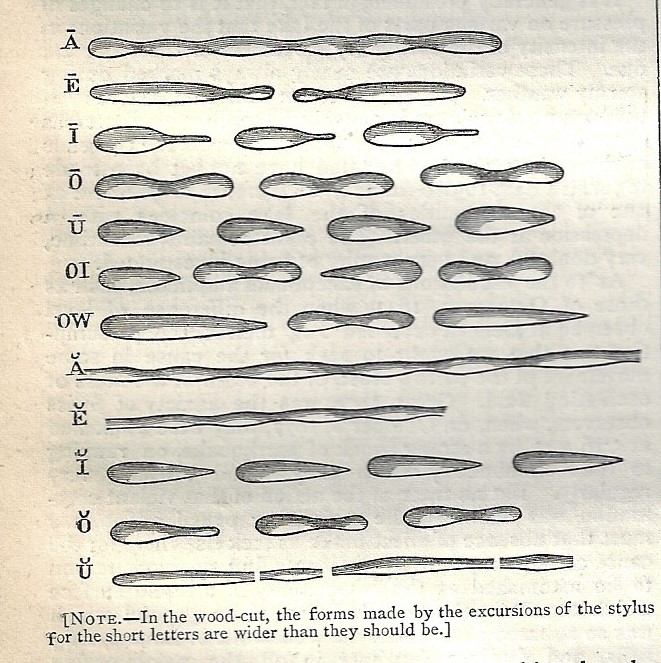
    Five weeks after this article and about four months following the patenting a visually-arresting article appeared in Nature which contains what I am assuming to be the first microscopic images of recorded and reproducible sound. I know that is a pretty deep qualification, but I think that’s its accurate. The article appeared as “Examination of the Phonograph Record under the Microscope” by Persifor Frazer2, who investigated what the impression of the stylus looked like as known sounds are recorded on tin foil. And so this remarkable image, showing what vowel and some dipthongs “look like”.  

    Notes:

    1. Persifer Frazer,   “Examination of the Phonograph record under the Microscope”,  an abstract of a paper presented at the Franklin Institute April 17, 1878, by Persifor Frazer, Nature, May 23, 1878, p. 102, in the weekly issue. 
    2. Persifor Frazer was of the Philadelphia Frazers, of long and interesting lineage. A Gettysburg vet, he was in professional life mainly a geologist; he did become expert in handwriting and the detection of forgeries using photographic means.  

  • When the Words Feel Like the Bad Paper They’re Written On–Trashing Frederick Douglass (1895)

    JF Ptak Science Books  

    1895 was a great big year in science–there were major contributions by Cantor, Poincare, Ramsay, and Perrin, among others, though the biggest of them all was the semi-accidental discovery by Roentgen of X-rays, a monument in the pursuit of further/deeper.

    My own little 1895 discovery last night may be a well-established bit but was unknown to me, and it proved to be the opposite of further/deeper. I was trying to squeeze some life out of what looked like a pamphlet as dry and brittle as the bad newsprint it was made of:  History of the General Assembly of North Carolina, January 9-March 15, 1895, Inclusive (printed by E.M. Uzzell in Raleigh, 1895), which sounds just flat-out anti-interesting (especially with the very specialized time period).  It turns out that the 160-page work is written in a easy, journalismo sub-Menckian way, with a nod to humor here and there and a dose of familiarity, a good narrative style that was useful and breezy.

    And as I hunted for some sparkly point in the daily comings and goings of the legislature, I ran right into the dark void.

    The hole was a short report, “The Douglass Infamy”, which was an infamy of its own. Over the few pages of the article/review it discussed the  “humiliation of the white people of the south” caused by the General Assembly of the legislature choosing to suspend and adjourn their meeting out of respect  for Frederick Douglass, who had suddenly died during the session. The author referred to the action as “an offense against the dignity and sentiments of this proud State” (“State” is capitalized, “Negro” is not),  Douglass to as “the miscegentionist” straight-away after condemning the act of respect due the man, and was an “…author of many malignant and untruthful aspersions on the whites”,  and referred to his as “an inferior race, incapable of civilization except for that under the whites”.  Closing down the government was a “humiliation to white people” and disgusted some legislators to the point where they denied that the action had taken place. I think this was because it elevated Douglass to a level of equality, which just would not do: “The whites of North Carolina…regard any approach by the Negro to social equality with…abhorence [sic]”. 

    The was a significant amount of hateful nonsense in this entry, railing against Douglass, who in their view wrote terrible untruths about white people and who was “also guilty of miscegenation”, having married a white woman.  

    “Thoughtful Democrats who have looked beyond the present moment and who have preferred to bear such party ills as they had, if such there were, rather than fly to others they knew not of, predicted that the fusion with Republicans of any considerable number of those who were formerly Democrats meant Republican domination, and that Republican domination meant, in one form or another, negro [sic] domination. The Douglas incident reveals the animus of that party and is a menace of its aims. (After the official declaration of the Fusionists, the General Assembly did not adjourn in honor of the birthday of Robert E. Lee, a legal holiday, but did adjourn out of respect for the memory of Frederick Douglas.)”

    Finding this article was not surprising, really, though it was unexpected to some degree; there were a few other bits in the pamphlet similar to this, so the article did not stand alone. The part that is so amazing is that it the “Douglass Infamy” was just part and parcel of a documentary and interpretive  report on the action of the state legislature for a few months in 1895; and yet, there was this hateful business, taking up as much space and brain waves as noting that it was a cloudy day.  

    ·Posted by :

    ·in:

    — —

  • History of Piles: To the Victor, the (Pointy) Spoils (1919)

    JF Ptak Science Books   Quick Post 

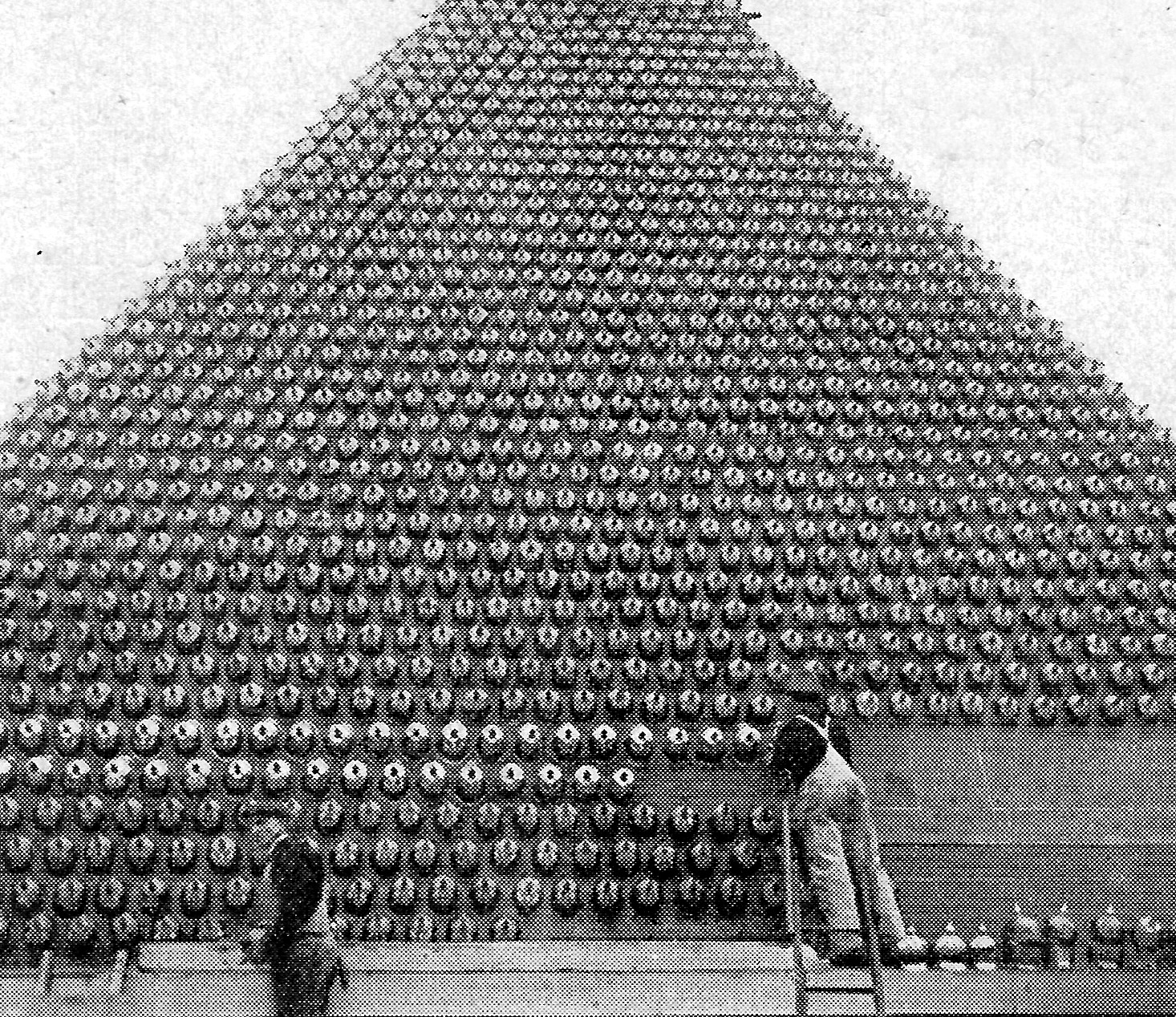
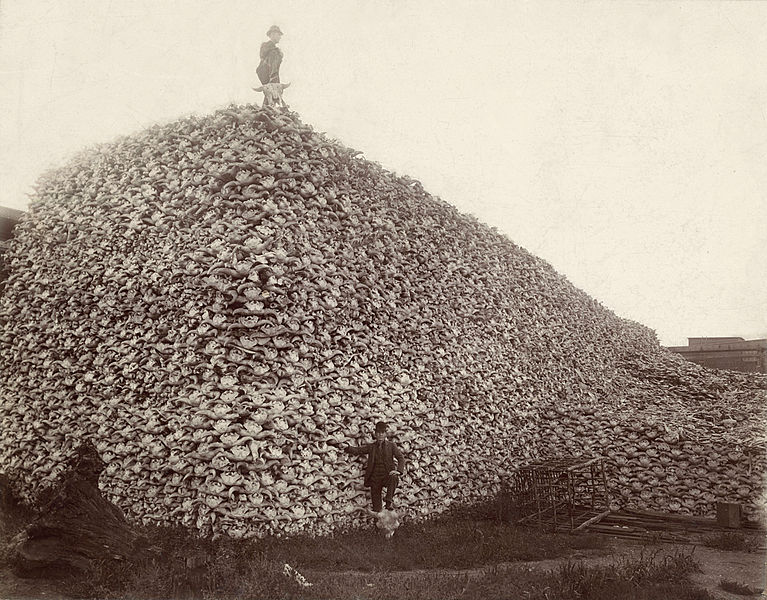
    “To the victor, the (pointy) spoils” was found in  Illustrated World in their June 1919 issue. (As it runs out, the word “pointy” is a lot older than I thought, the OED finding it in   K. Digby Two Treat. i. xv. 130, from  1644: I haue seen some very high, and pointy spire steeples do the like.)  It seems as though the captured “Hun” helmets with spikes were collected and pyramided for a war relief benefit/fund-raiser. I guesstimate that it took around 2,000 helmets to complete this display–it also reminds me quite a bit of a famous photo of buffalo skulls piled 20 feet high, waiting to be loaded onto a train car in about 1870 to be hauled away for processing into fertilizer. There’s nothing in common between the two besides the composition and the pointy parts, as the buffalo were slaughtered for many reasons all of which are terrible and none of which had to do with war, where the German helmets came from. 


    WWI Project Hun Helmet 1919 detail


    Buffalo skulls

    [Source: Wiki Commons]


    ·Posted by :

    ·in:

    —

  • An Earthquake–Not! Adventures in Advertising, 1869

    JF Ptak Science Books   Quick Post

    Earthquake ad details 1869464


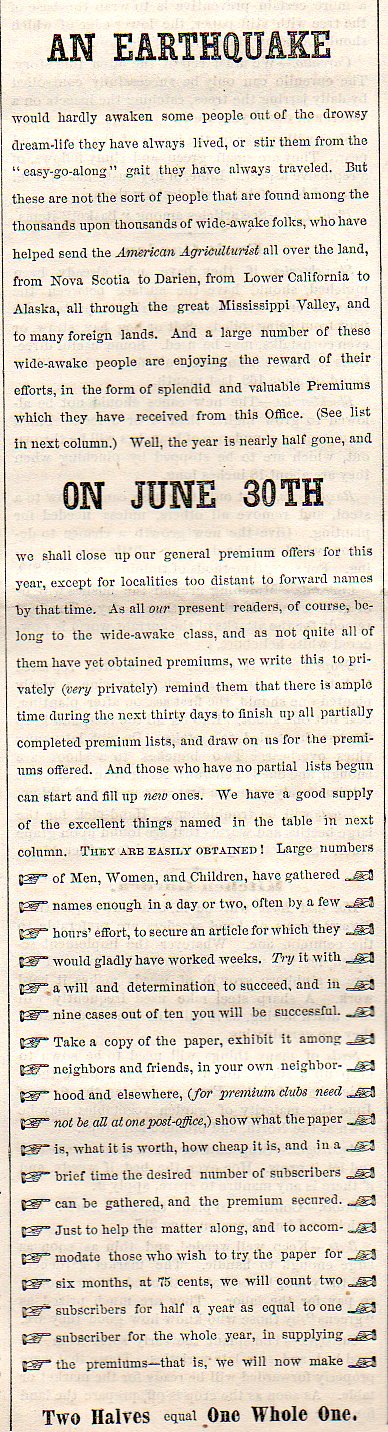
    Earthquake ad 1869464In 1869 there weren’t yet catchy tunes or jingles to help you remember the name of a product that you didn’t need though purchased because of some subliminal twitch, and there weren’t many images of a well-turned ankle stretched over the bottom rung of a farm-intended three-horse equalizer, and the colorfully pulsating repetitive splash imagery wasn’t close yet to being part of The Daily Life of the Average Person–what certainly did exist was the misleading/phony bait-and-switch lede, which today I guess would be called “click bait”.   Here’s a great example of that, not-so-deeply-nestled in the back pages of the June 1869 issue of American Agriculturalist. The column seems to announce AN EARTHQUAKE perhaps on JUNE 30TH–but all it is is an advertisement for becoming a subscriber, and it turns out to be that the journal is a very useful farmer’s friend.  The ad did however try to grab the attention of the passing reader–and it was still working, 147 years later.  


  • On Taking Someone to Task for Not Acknowledging Having Used Someone Else’s Work (1875)

    JF Ptak Science Books  Quick Post

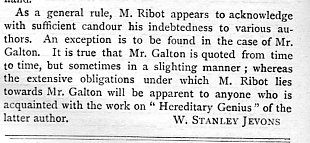
    The brilliant and versatile W. Stanley Jevons–logician, economist, computer pioneer–was a very busy man who packed a lot into his 46 years. Some of published output included numerous journal articles, and some of those contributions included book reviews, including this one, on Theo. Ribot’s Heredity, a Psychological Study of it Phenomena, Laws, Causes, and Consequences, which was published in 1875, with the review appearing in the April 29, 1875 issue of Nature. This one popped into view not so much for its broad consideration, but for the zinger at the end, prodding Ribot for not having included an acknowledgment to Sir Francis Galton, whose work he quotes from and relies upon in his book–it is a fairly soft rebuke but not without its spikes:

    Jevons ribot014

    ·Posted by :

    ·in:


  • Sound Landscapes of Lost Acoustics

    JF Ptak Science Books   Quick Post

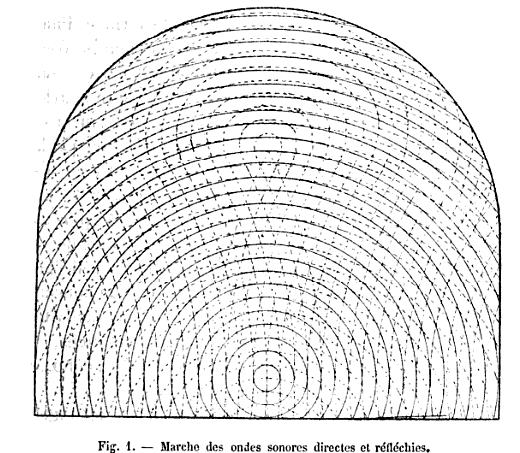
    There’s a LOT of artistic license in this title, but I like the idea of these acoustical plans as containers of what things sounded like in the halls and auditoriums that no longer exist. This is a big leap of faith given that the work that went into these images was conducted before the first truly scientific/mathematically rigorous architectural acoustics existed.  But I like tot think of them as reconstructions of sound in a particular environment. The drawings are also beautiful, inn their way.

    Image source: Theodore Lachez,  Acoustique et Optique des Salles de Reunions, printed in Paris in 1879. This is the second edition, with 116 text illustrations in the 518pp–these are almost entirely images of plans or elevations of music halls (for the study of seating and the room’s acoustics, etc.).  This edition also contains sections on the acoustics of “sales de debats parlementaires” and an examination of the “singular and curious” acoustics of the new Paris opera house. 

    The book is for sale on the blog’s bookstore; and/or you can have a look at it in full text online, here, at Google Books: https://books.google.com/books?id=MjoIAAAAIAAJ&pg=PA315&source=gbs_selected_pages&cad=3#v=onepage&q&f=false

    Acoustics


  • Early Steps in the History of Photographic Self-Interest: the Photo Booth Pre-Selfie

    JF Ptak Science Books   Post 2562

    Before $999 selfie sticks, and before cell phones, there still was life! The agitations of great need for making self portraits has existed no doubt before this semi-delusional time, except of course there wasn’t immediate and total access to the possibility of addressing the somewhat narco-curiosity to self aware recording. Nowadays you can have your own broadcasting service all about yourself all of the time and share it to yourself or to anyone else who can find your conceptual conceit–in the past, not so much so.  

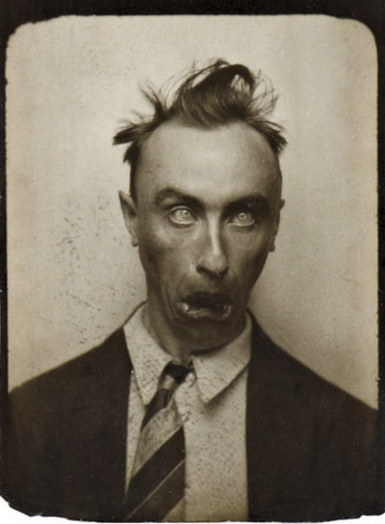
    The antiquarian notation of the idea of the selfie finds itself in the invention of the photo booth. It is perhaps the first true invention that could address this notion of photographic self-allegiance, except that you can’t fit it into your pocket like a cell/sel(f) phone because you fit inside of it.  But it certainly was the only way that you could halfway address an instant need for making a photo of yourself, and do so without undue muss or fuss, and to be able to do it on your own.

    The photo booth was the early version of radical expression of photographic self-interpretation made possible by a hands-free invention.

    The results of the photo booth (around since about 1890 but not fabulously well accepted and ubiquitous until Mr. Anaotl Josepho with his Photomata in 1925) can be charming, and revealing, and be all that you wished it to be, or not.  I’ve collected some examples (below) from the 1930’s-1950”s–the results can be mixed, but almost always interesting.  

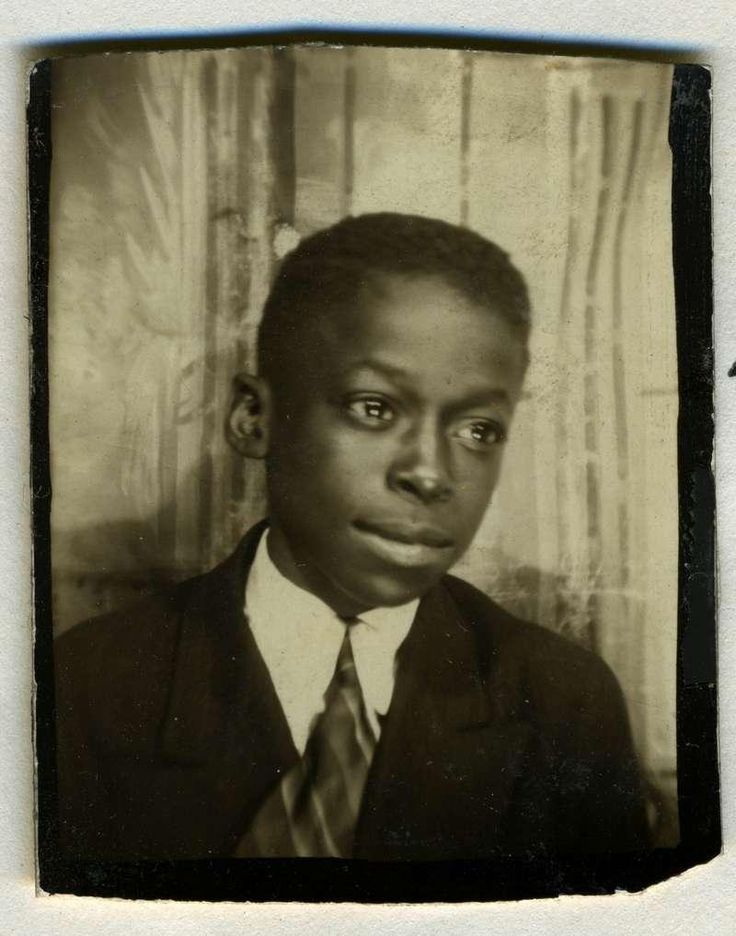
    The young Miles Davis is terrific. 

    Selfies miles davis

    Miles Davis, aged 9. [Source, Pinterest: https://www.pinterest.com/pin/31454897367684842/]

    For an interesting piece on artistic photo booth self portraits by artists, see Jonathan Jones on the Surrealists and the first photobooth in Paris, 1928, in The Guardian, here: http://www.theguardian.com/culture/2004/jun/16/1

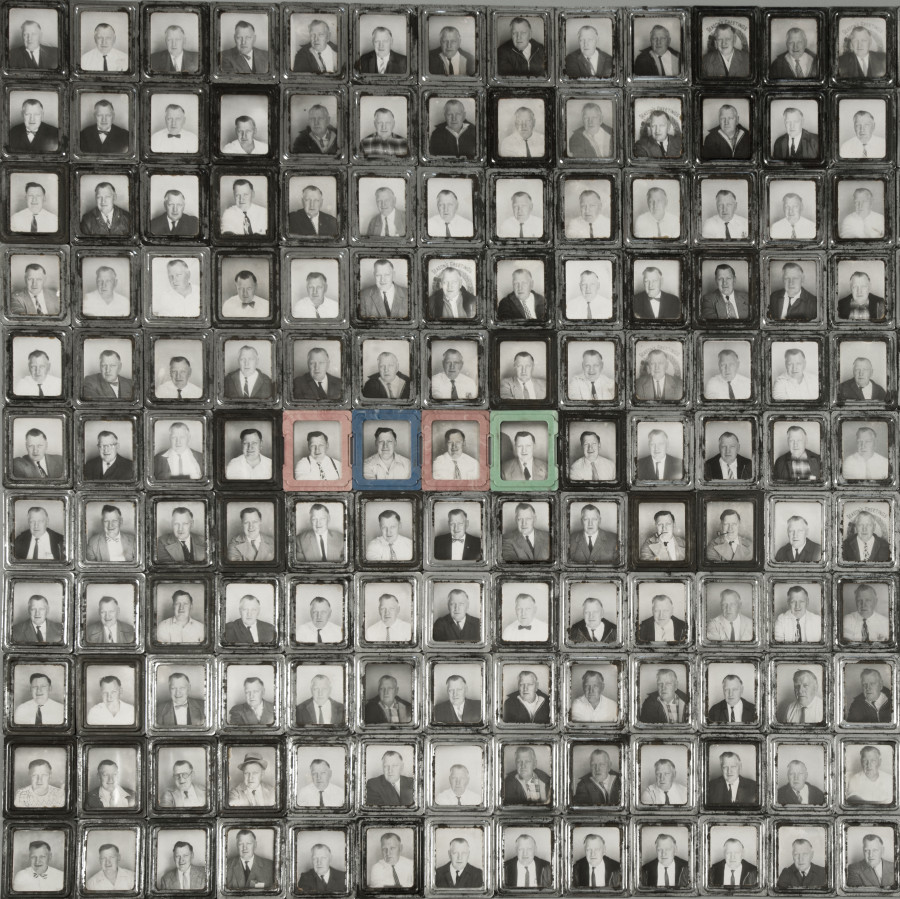
    This is fascinating: 445 photo booth images of/by one unidentified man:

    Selfies 445

    •  See the article by Pricilla Frank, “Exhibition Features 445 Vintage Photobooth Portraits From A Single Unknown Man” in the Huffington Post, here: [http://www.huffingtonpost.com/2014/04/04/445-photobooth-portraits_n_5077544.html]

    Selfies Tanguy

    Yves Tanguy [Source, PBS, here: https://pbs.twimg.com/media/CO-mBeXUEAASyM8.png]


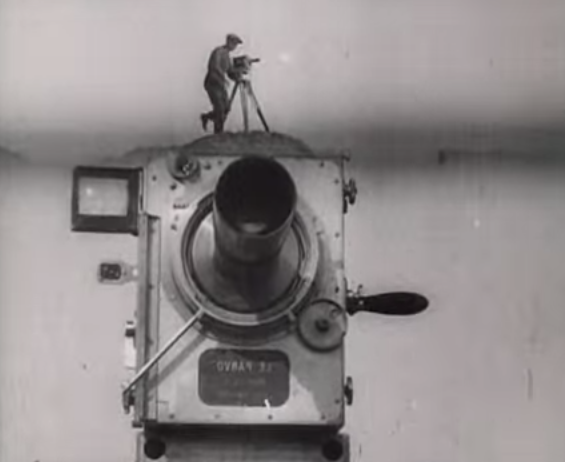
  • The Man with a Camera, Soviet Union, 1929

    JF Ptak Science Books   Post 2500

    So. Welcome to Post #2,500. As it turns out this was in line as a continuation of an earlier post and is not entirely fresh for today, but so it goes.  Post 2,500 is also overall the 3,751st post to this blog, which began in January 2008. The numbered posts all usually have at least 400 words, or a bunch of time-consuming pics; there are also 1,351 “Quick Posts”, which are the little guys, 100-400 words long.  (There are also another 1,500 posts in the books-for-sale section, but that’s a separate issue.) 

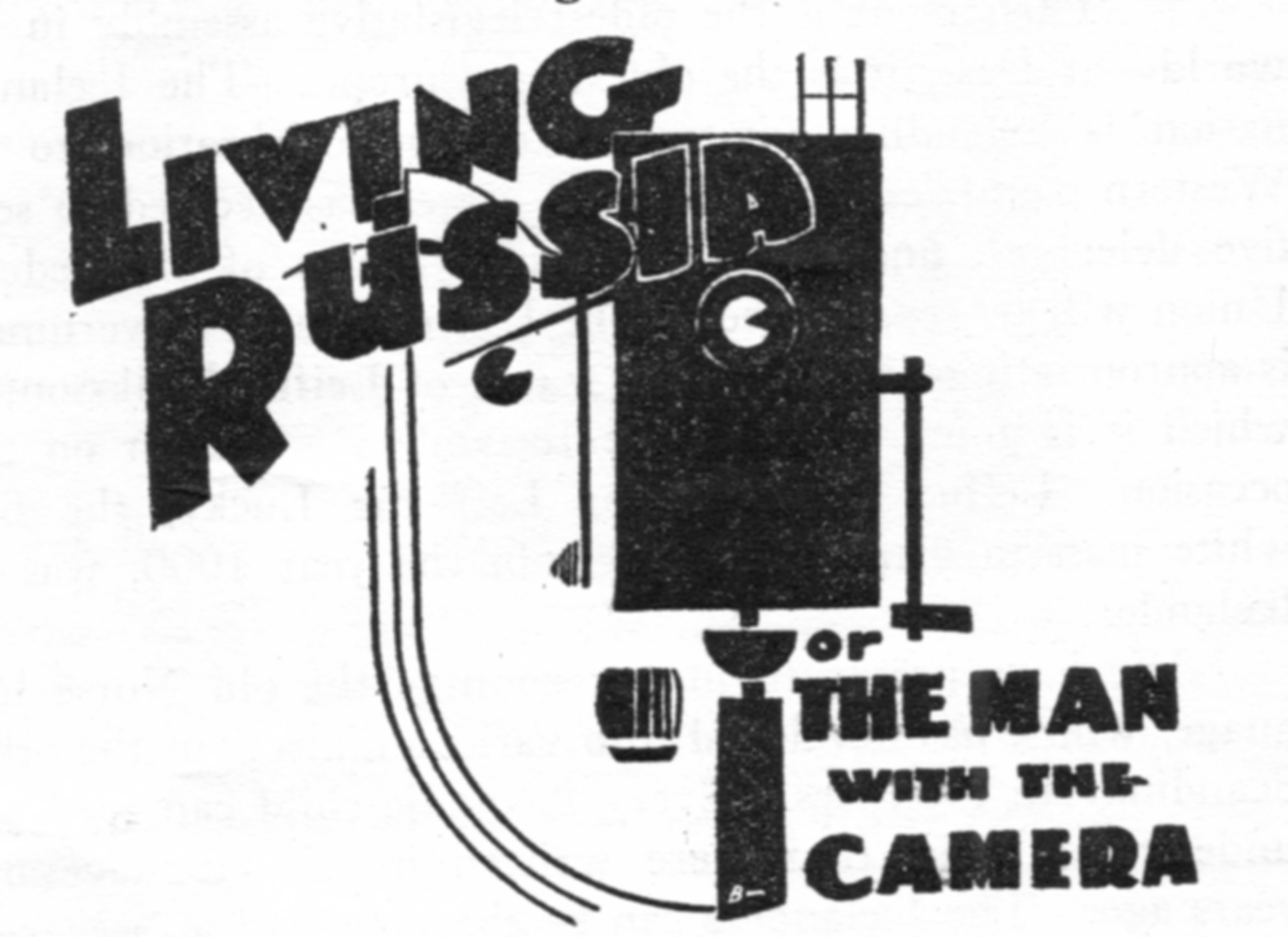
    Man with camera235

    The man with the camera was David Abelevich Kaufman (Vertov) (1896-1954), who made it along with his editor-wife Elizaveta Svilova (who worked on a number of films, mainly propaganda from the looks of it, though I would really like to see The Fall of Berlin, 1945, and also her film about Auschwitz).

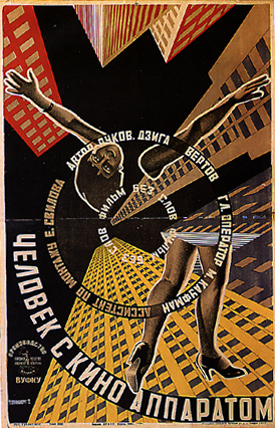
    Poster man with a camera

    The film was evidently a ground-breaker1–Roger Ebert points out one facet of the work, the average shot length, which is by far shorter here than anywhere previous works, meaning that there was more editing and selection done than normally:  “In 1929, the year it [Man…] was released, films had an average shot length (ASL) of 11.2 seconds. “Man With a Movie Camera” had an ASL of 2.3 seconds. The ASL of Michael Bay’s “Armageddon” was — also 2.3 seconds…”)  

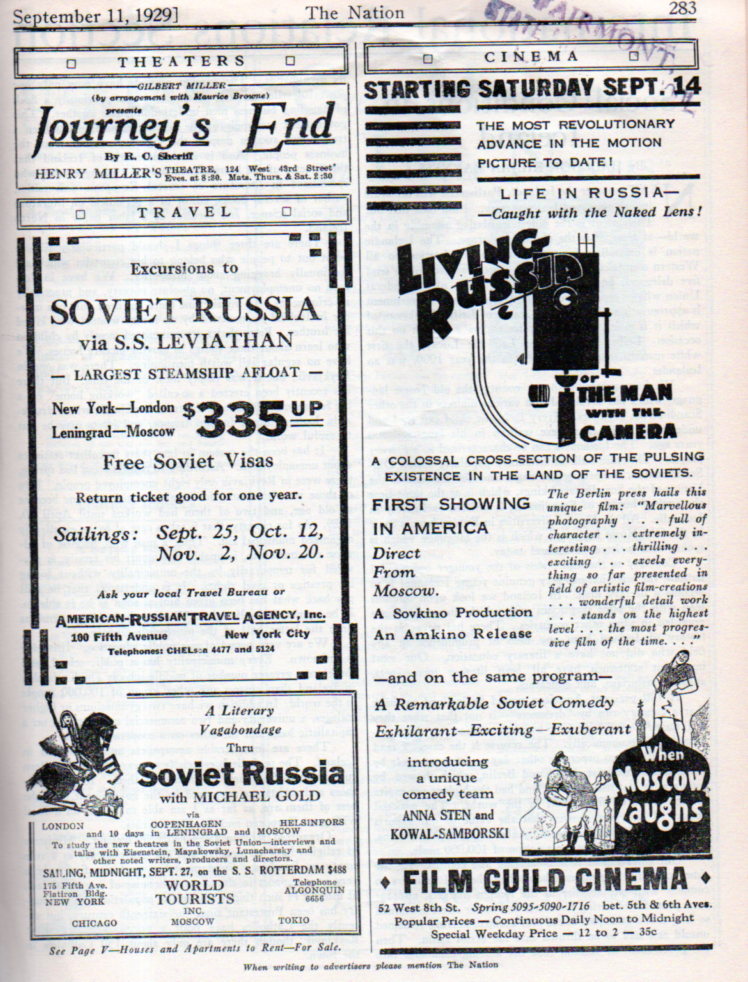
    Here’s an interesting ad for a U.S. release of the movie, appearing here in the same year that it was made, and appearing in the pages of the old-time old-school leftie magazine, The Nation, which was already 64 years old at that time.  It appeared alongside other ads featuring excursions to the Soviet Union for those interested in Russia culture and for the others who were still admirers of what was supposed to be The Union. 

    Man with camera234

    I’ve included a link to the film (below) but honestly what attracted me to it was its poster, created by the indomitable and prolific Stenberg Brothers. Not only does the poster seem to me to be a masterpiece and iconic, it also uses an unusual perspective–straight up.  I’ve done several posts here on the perspective of looking straight down and straight across, but there have been very few opportunities to write something about looking straight up (in the antiquarian image world).  But here it is, in all of its glory.   

    The full movie, here:

    Man with a Movie Camera

    [Source: http://en.wikipedia.org/wiki/Man_with_a_Movie_Camera]

    Notes:

    1. Studio Daily lists Man with a Movie Camera as the 8th best movie ever made.  http://www.studiodaily.com/2012/08/sight-sound-revises-best-films-ever-lists/

    ·Posted by :

    ·in: