A Daily History of Holes, Dots, Lines, Science, History, Math, Physics, Art, the Unintentional Absurd, Architecture, Maps, Data Visualization, Blank and Missing Things, and so on. |1.6 million words, 7500 images, 4.9 million hits| Press & appearances in The Times, Le Figaro, Mensa, The Economist, The Guardian, Discovery News, Slate, Le Monde, Sci American Blogs, Le Pont, and many other places… 5000+ total posts since 2008.

Category: Photography, history

  • Two Uncommon Crowd Scenes, 1932 and 1945.

    JF Ptak Science Books   Quick Post  (Overall Post 5152)

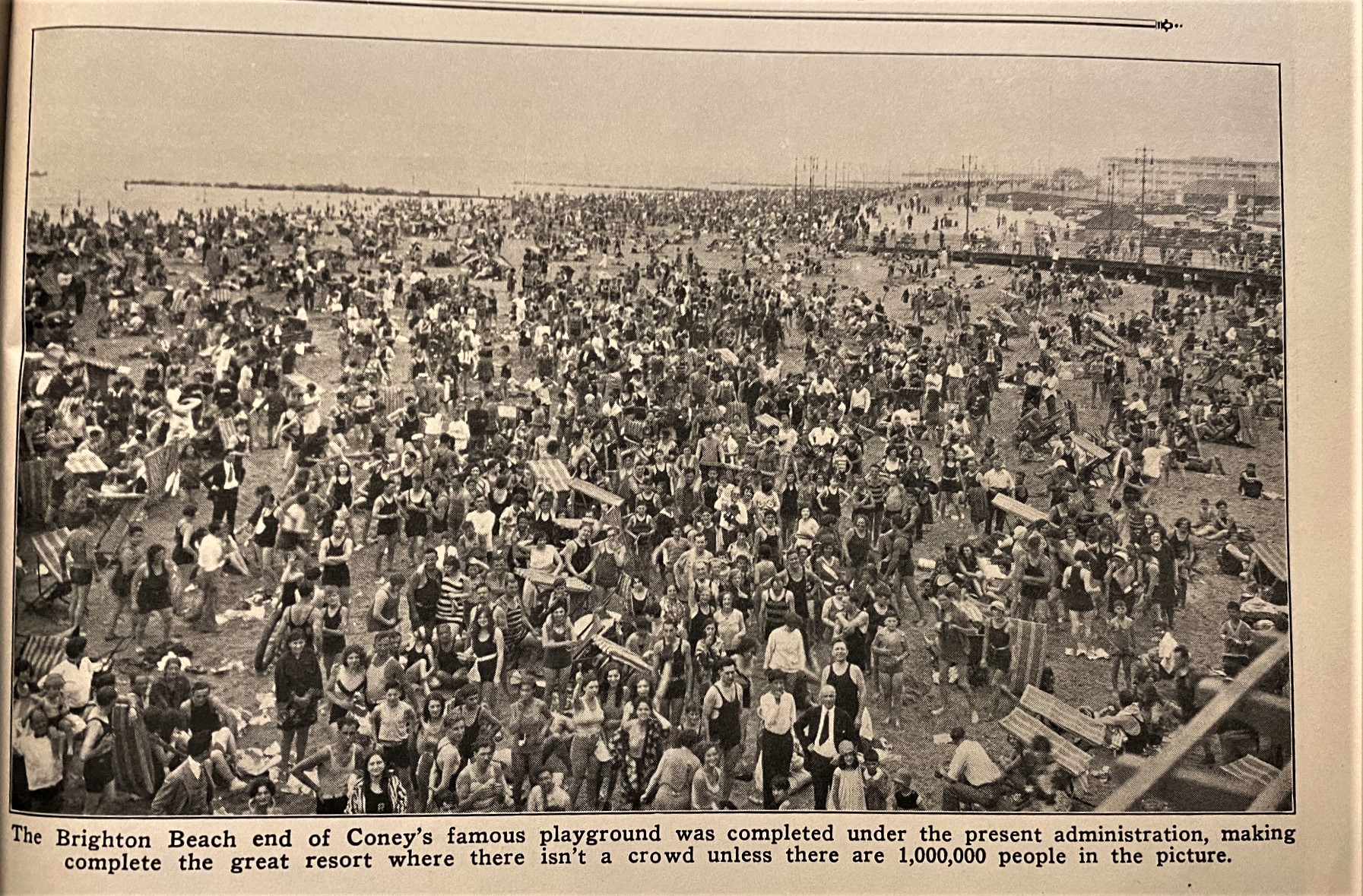
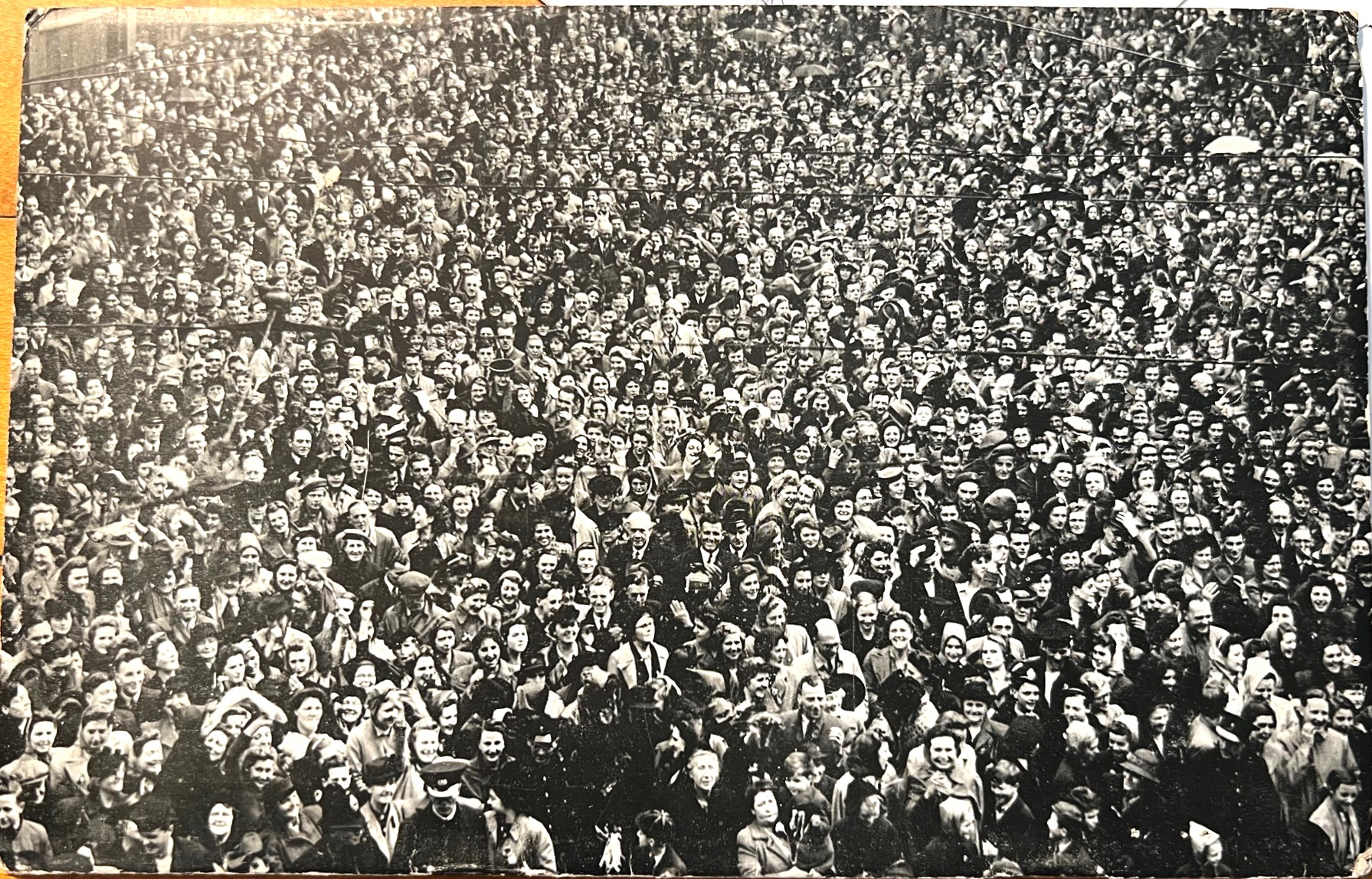
    It seems to me that these two photos may be of some interest to folks given how utterly jammed the scenes are with people and that their sources are pretty obscure.  The photographer for each is not identified, which is a shame.  

    IMG_0974[Source:  Your City, a Handbook of the Citizens of Liverpool, October 1945.]

    And also  this pre-Weegee  scene  of  Coney  Island, the caption stating that there were one million people on the beach.

    IMG_0793 (1)[Source:  New York, the Wonder City, 1932.]

    ·Posted by :

    ·in:

    —

  • One of the Earliest X-Rays of “Dots”: Medical Imagery, 1896

    JF Ptak Science Books  Quick Post--History of Dots series

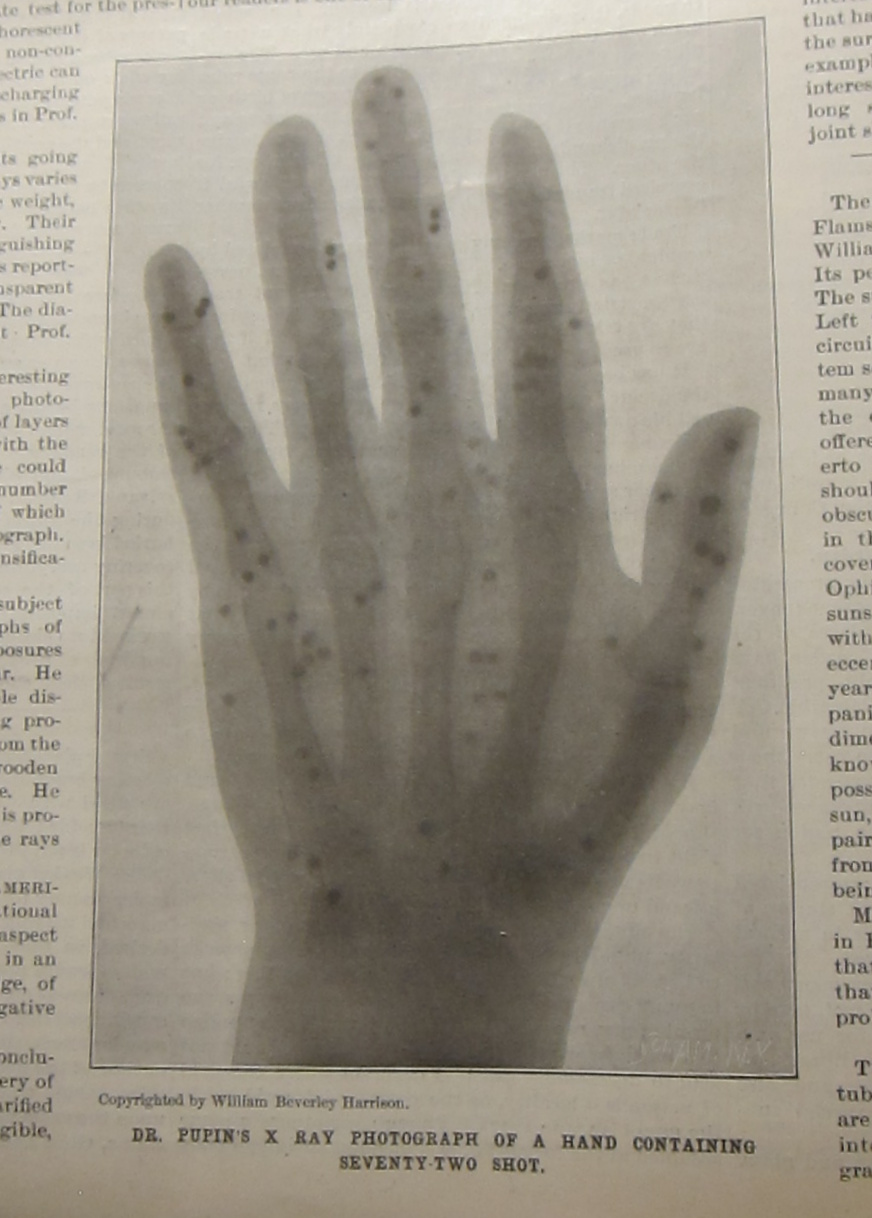
    In the long line of the history of “firsts” in photography are a number of sub-categories, and subs- to those subs, an example of which is scene in the pages of Scientific American for 1896. Here we have the history of photography=>medical photography=>clinical applications of X-rays=>X-ray photographs=>X-ray photographs of gunshots, or some such thing. Anyway, here in the March 21 1896 issue of the great magazine is one of two articles on the X-ray, the second of which features what may be one of the very earliest–if not the earliest–images made of a human limb peppered with rifle/field canon pellets. This comes only two months or so following the discovery and first imagery using  X-rays by Wilhelm Roentgen (1845-1923) made November 8 1895, the experimental results published soon after on January 8 1896 in his paper “Ueber eine neue Art von Strahlen” in the Würzburg Physico-Medical Society.

    The interest in X-rays was spectacular, with more than 1000 papers published on the subject in 1896 alone. This is understandable given the revolutionary nature of the announcement plus the relative ease and simplicity of equipment necessary to produce results.  The Roentgen paper was translated and printed in Nature (for the first time in English) almost immediately on January 23 1896, and it was the very next issue in which advertisements appeared for the relatively cheap necessaries (Crookes tubes etc.) for interested parties to produce their own X-rays at home. Absolutely everyone was interested in this discovery. (For the Scientific American there were 9 articles on the X-ray for January-June, 1896, with the first appearing on February 3; for July-December there were 33.) 

    The image below was made by Columbia University’s Michael Pupin, and was one of the earliest general clinical uses of the new discovery, following what was probably the first medical use (at least in the U.S.) by Frank Austin (Dartmouth) in February 1896. The extraordinary development had an epochal impact on medicine, as now for the first time in the history of the planet a person could see inside a person/living being without cutting them open and poking around.  The X-ray was soon put into use on the battlefield six months later, at about the same time that some of the pioneers (E. Thomson, Morton, Tesla) began to report exposure burns (as some of their photographic exposures using X-rays were 20 minutes long…) 

    (By the way this is the man for whom Pupin Hall was named–this place became ultra famous in my mind, anyway, for the seminal work done their in cutting edge areas by Peagram and Fermi and Urey and Rabi and Dunning, among many others. Also Pupin was awarded the Nobel Prize for Literature in 1924 for his scientific memoir/autobiography, a highly unusual feat for such a subject.) 

    Sci Am 1896 x-ray


  • A Very Early (First?) Description of a Panoramic Daguerreotype (1845)

    JF Ptak Science Books  Quick Post

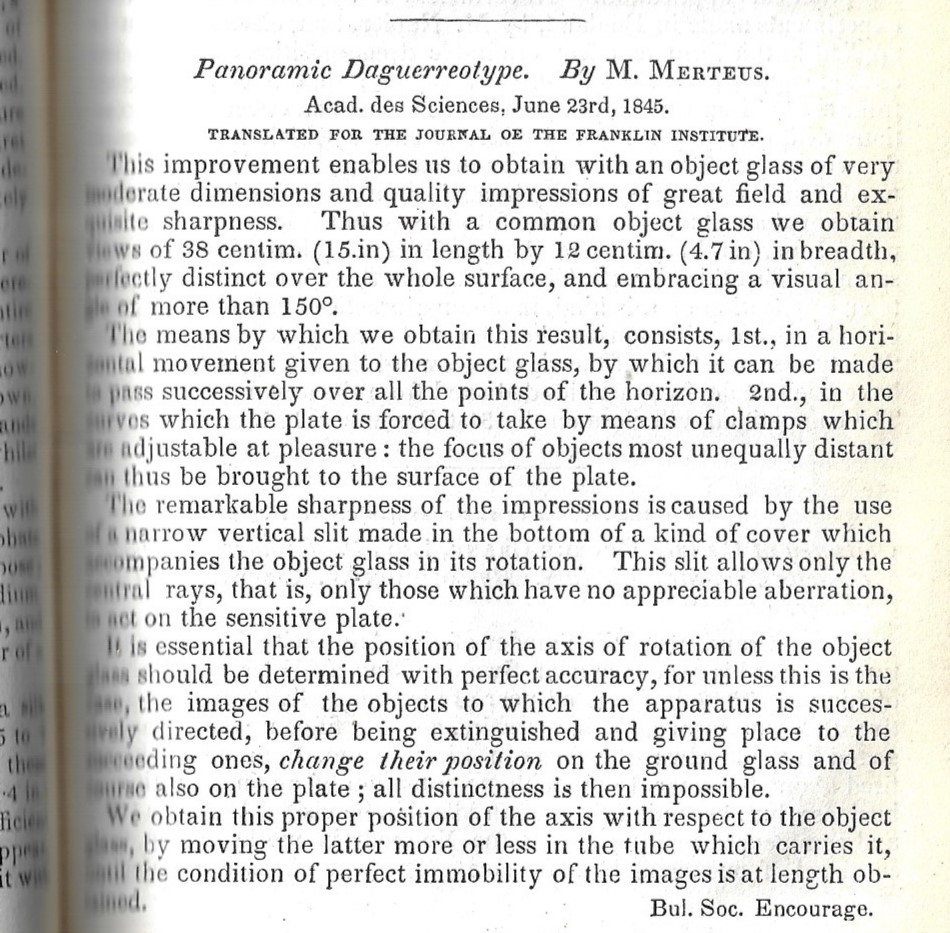
    Just five years after the announcement of Daguerre’s invention of photography, and just four years after the beginning of the early photo craze, there appeared in the Comptes Rendus in mid-1845 a paper by Friedrich von Martens (1809-1875) on an expansive use of the new media: the panorama.  It was certainly the first paper to appear in this journal on the subject; when I checked a likely U.S. source on the subject (Journal of the Franklin Institute, 1846) I found only one mention prior to 1865: a translation of the Martens paper (recorded though as “Merteus”). This seems a little obscure but not unimportant, as Martens may have been either the second (and possibly first) to perfect a panoramic camera, patenting his “Megaskop Kamera” in 1844.

    • I’ve decided to share the Martens paper in both the original and the American translation: 

    JFI 1846 panorama

    • Here’s the text version of the original article, from the Comptes rendus de l’Academie des Sciences..., Paris, June 23, 1845:

  • The Skinniest Early Description in the USA of the Invention of Photography (1839)?

    JF Ptak Science Books   Post 2801

    Among the earliest and lengthiest mentions of the newly-announced Daguerre invention of photography in the U.S. was “Pencil of Nature—A New Discovery”  that appeared 13 April 1839 in the Corsair: A Gazette of Literature, Art, Dramatic Criticism, Fashion and Novelty. There’s a lot in there on the effects of what the new process might be more so than any real description of what the magical new process was. It would take several months for that to appear, and one of the first to do so, to provide some real detail on what was still a rather mysterious event and process, appeared in the National Intelligencer on 25 September 1839 (which was based on the 23 August 1839 London Globe account).

    The Corsair article starts out bemoaning “progress”, in a way, setting the reader up for the next step of the democratization of art, which would meanwhile send the world of engraving (and engravers), lithography, sketchers, painters, and so on, who would all be replaced by the new invention of Daguerre.

    • “We know not how it is, but just as we are going to have something good in this world, up starts a mischief to mar it or to vilify it. There is not a real panacea, but has its rival. Engraving, set upon a firm basis, one would have thought might have been supreme. No such a thing—her illegitimate sister, Lithography, sets up her claim, and by means of cheap publications, calls in the masses, who naturally prefer the inferior article; and here commences the democracy of art.”

    And just like any advancement in anything—from water delivery systems in towns and cities that would replace the water-fetcher to the lineman working on some U.S.-built car being replaced by robotics, and etc.–the author sees the fate of the artisan in light of photography:

    • “Here is a revolution in art; and, that we may not be behindhand in revolutions, for which we have so imitative a taste, no sooner does one start up in Paris, but we must have one in London too. And so Mr. Daguerre’s invention is instantly rivalled by Mr. Fox Talbot’s. The Dagueroscope and the Photogenic revolutions are to keep you all down, ye painters, engravers, and, alas! the harmless race, the sketchers.” –Source: Gary Ewer, http://www.daguerreotypearchive.org/texts/P8390015_PENCIL_CORSAIR_1839-04-13.pdf

    It is interesting to see the variety of titles given to the earliest articles and notices of Daguerre from January through August 1839—granted for most of that time there were very few details of the process until late summer 1839 at which time the article titles became more directed and less fanciful. The following is a selection of the articles that appeared at this early stage—all of the work putting together the remarkable list of linked publications that these titles are taken from is that of Gary Ewer at the Daguerreotype Archive, here: http://www.daguerreotypearchive.org/1839.php

    • “The Daguerotype” [sic]
    • “Fixation of Images”
    •  “Chemical and Optical Discovery”
    •  “The New Art
    • “Clericus”
    • “Remarkable Invention”
    • “Extraordinary Chemical and Optical Discovery”
    • “New Discovery—Engraving, and Burnett’s Cartoons.”
    • “Self-Operating Processes of Fine Art”
    •  “Sun-Painting”
    • “The Daguerrotype” [sic]
    •  “Photogenic Drawings”
    • “Daguerre’s Photogenic Paper, and Fixation of Images”
    • “Pencil of Nature—A New Discovery”
    •  “New Discovery in the Fine Arts—The Daguerroscope” [sic]
    • “The Daguerrotype, or Solar Engraving”
    •  “The Daguerre Secret”
    • “The Pencil of Nature”

  • The First Mention of a Photograph of a Face? (1840)

    JF Ptak Science Books  Post 2800

    “An Account of some Experiments made in the South of Virginia on the Light of the Sun…”, published in the Philosophical Magazine (London) in 1840, is a very early photographic  effort by John Draper on the effects of solar light on different material and media, including silver solutions. This is the first appearance of the work in Great Britain and Europe, having appeared in a much longer (32pp) version in the Journal of the Franklin Institute from 1837. Draper remarks that his works in photography were not much read in England, having been published in the U.S., and thought to bring this paper in particular to the attention of the Philosophical Magazine: He writes in the paper that “Most of these have been published in the Journal of the Franklin Institute of Philadelphia; but as they do not appear to have been noticed in England, I will ask the favour of a page or two of your excellent Magazine, to give my testimony on a subject, which now appears to excite so much interest.”

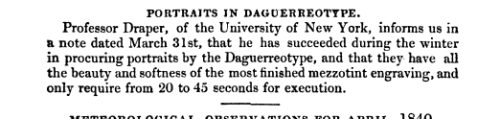
    Of perhaps greater interest here is the announcement in the June 1840 issue in this same volume of Draper’s success in producing human portraits by the Daguerre process. It is a short notice (only five lines, appearing on page 535) and even though it is stated that the Draper paper was received on March 31st it still somehow did not make it into the May issue of the journal–this in spite of this being the first official announcement of a human portrait being made in photography. This is slightly complex because even though Draper’s portrait of his sister, Dorothy, was long recognized as being the first photographic portrait, it seems as though he was beaten to the punch by Alexander Wolcott (and/or Robert Cornelius?), though it was Draper who made the announcement  of a successful portrait (in general) and thus the first overseas notice of the success. (Draper did make the first photograph of the Moon later in 1840…) 

    Photography face draper

    ·Posted by :

    ·in:

    —

  • Found Art: Found Documentary Photos in an Obscure Publication (1931)

    JF Ptak Science Books   Quick Post

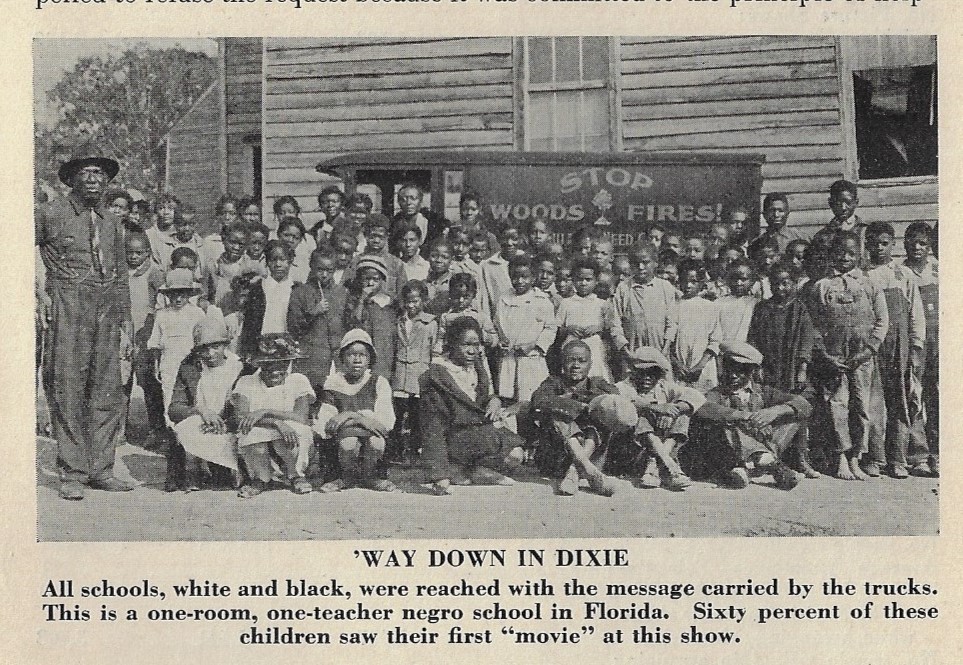
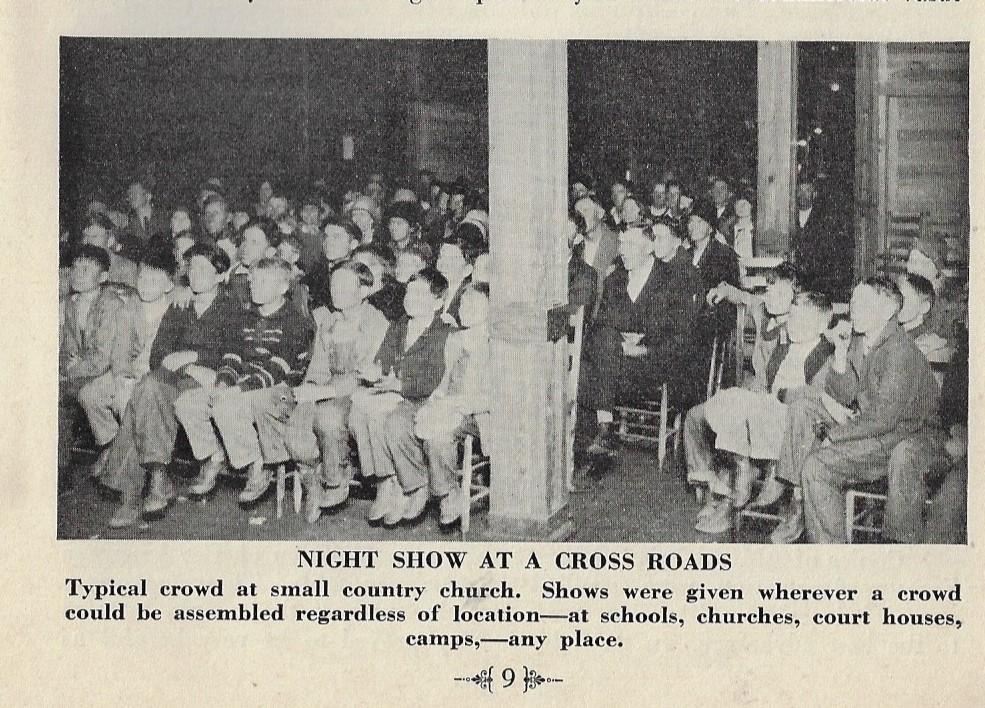
    The catalog description for the slim 1931 pamphlet,  The Southern Forestry Educational Project Final Report (American Forestry Association of D.C.) 1937, doesn’t exactly make the generally-curious reader generally curious. As it turns out it packs a lot of data and info into its thirty-two very tight and crisply-written pages–better yet are the photo illustrations, which were a real surprise, and have for the most part nearly every measure of what documentary photography would become in just a few years under the Farm Security Administration. American Forestry sent trucks out into the deep parts of Mississippi, South Carolina, and Georgia to host community meetings in which there were lectures and movies on forest use, maintenance, and fire prevention–for many first movie experience. All tolled from 1928 through 1931 there were 7,370 lectures and “picture shows” given to some 1.1 million attendees, which sound like pretty big numbers to me.  

    [The analysis shows that of the 4,606 picture shows only 504 were given at “Negro schools”; of the 2,764 lectures 1,200 were given to audiences at schools for African Americans.]


    Forest Service Dixie _3_
    Forest Service Dixie _3_

    Forest Service Dixie _3_


  • Dark Lightning? (1899)

    JF Ptak Science Books   Quick Post

    Nature 1899 Dark Lightning _2_


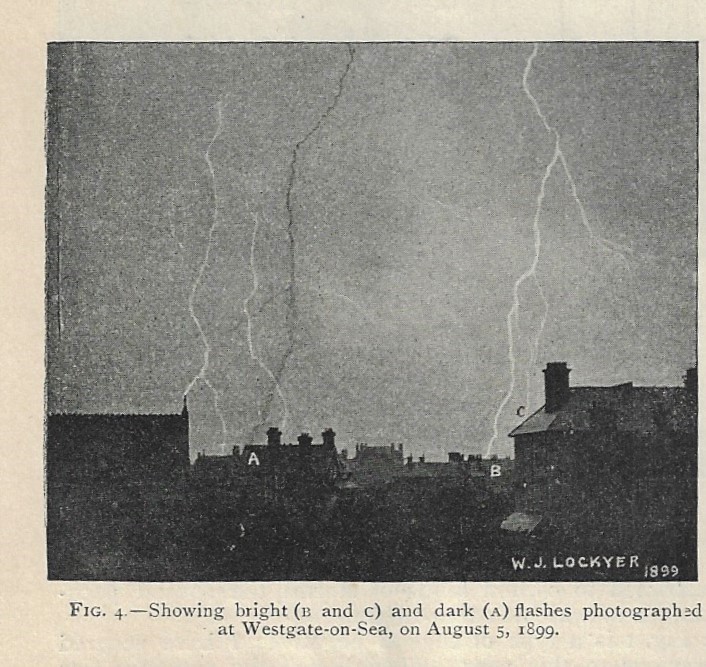
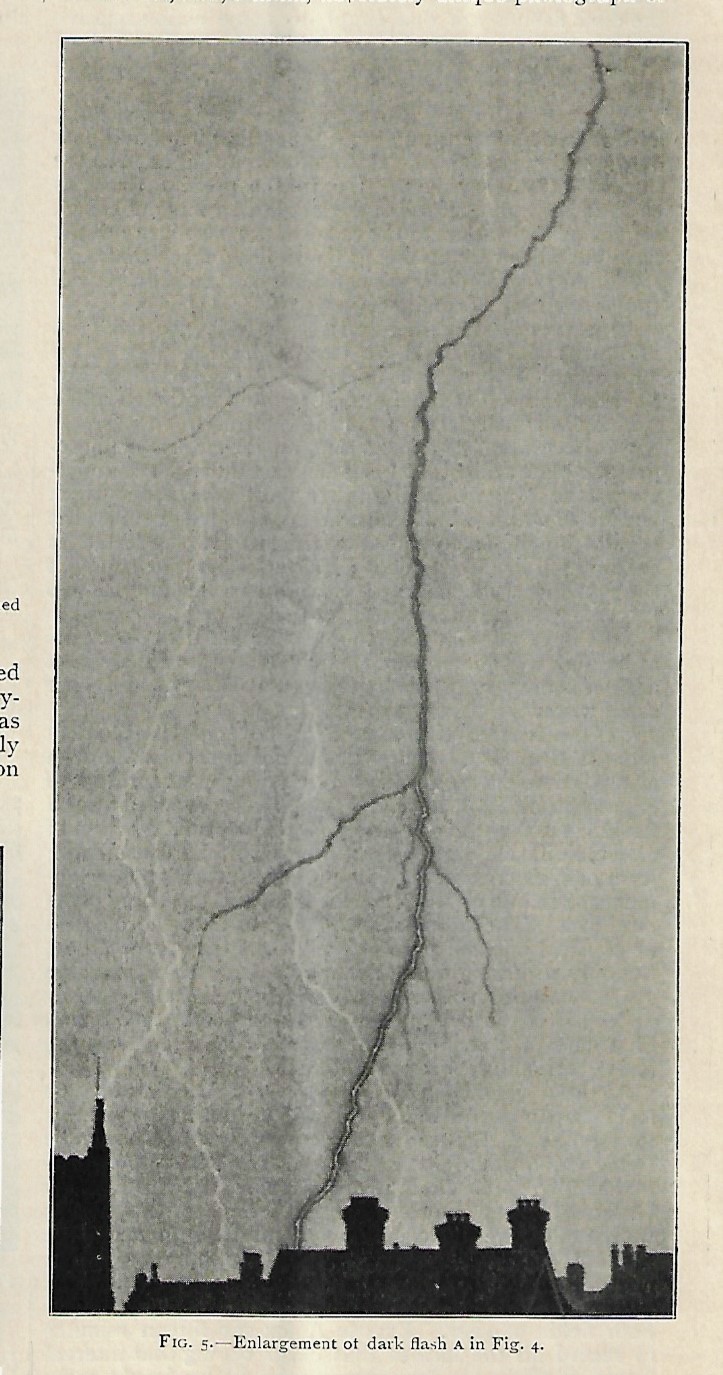
    William Lockyer experimented with photography and lightning to test an explanation of the apparent appearance of “dark lightning”–it is an interesting go and a great phrase that sounds like the name of a Marvel superhero. (William J.S. Locker, Dark Lightning Flashes”, in Nature, vol 60, no. 1563, pp 570-574 in the weekly issue of pp 565-588.) His evidence supports the hypothesis that the phenomenon had a photographic/chemistry cause rather than a physical one. The images he produced back there at the turn of the century were remarkable and beautiful. 

    From the paper:

    “IS there such a phenomenon as dark lightning? This is a question that has often been raised, and as yet no satisfactory answer has been given. If dark flashes do really occur, then they should probably be both seen and photographed, and the former, one would think, would be the more simple way of recording them.”

    “If the lens of the camera be covered the moment after a flash has occurred the developed image will always come out bright, feebly or strongly, according to
    circumstances. If, however, the plate be exposed after a flash has acted upon it, either to the continued action of a feeble diffused light or to the powerful glare arising from one or more subsequent flashes, then on development the image of the original flash will probably come out black. The effect is therefore not a meteorological or physical one, but purely chemical. It can be obtained, not only with a lightning flash, but also with a machine spark, or even with an ordinary flame. It is merely necessary that the plate should be exposed to the action of a certain amount of light after it has received the impression and before development.”


    Nature 1899 Dark Lightning _2_

    ·Posted by :

    ·in:

    —

  • Time, Motion, and Awe in Regards to Moving Pictures

    JF Ptak Science Books   (This is a revision and expansion of a post from 2012.)
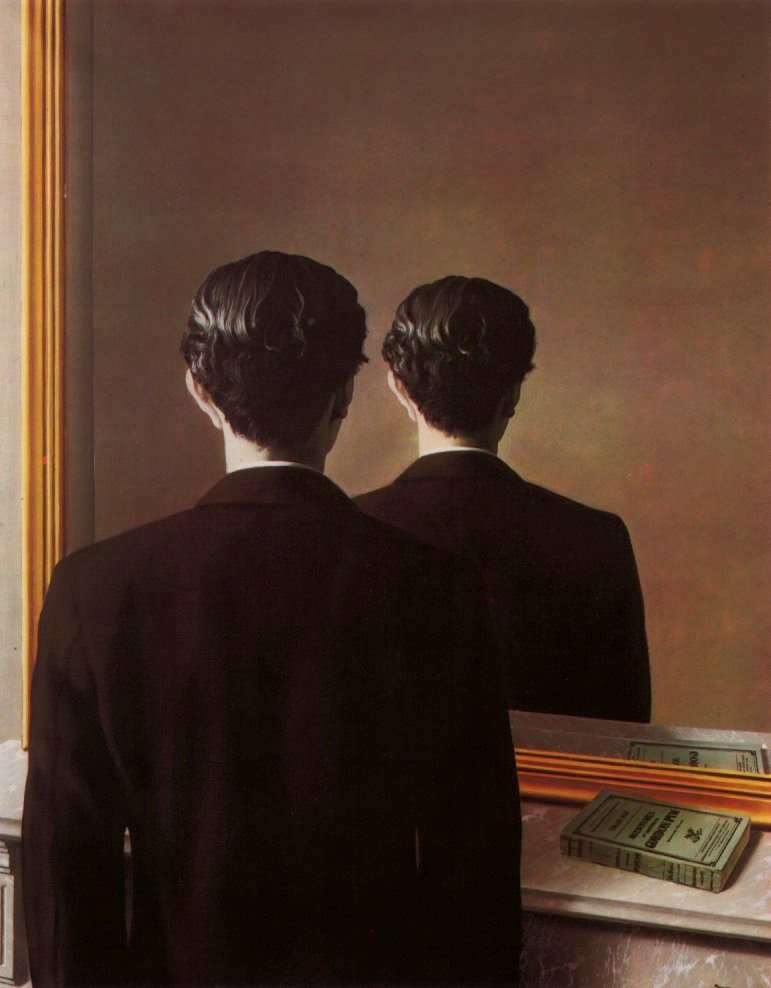
    Backwards--magritte

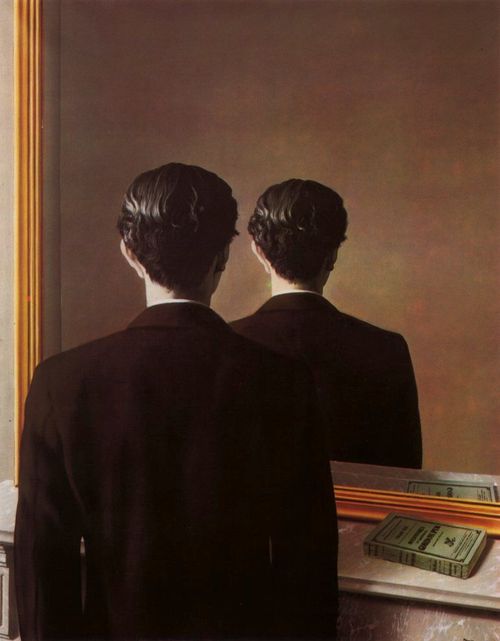
    Leonardo wrote backwards and from right to left, Benjamin Button lived backwards at the hands of Scott Fitzgerald, Rene Magritte’s man in the mirror saw the back of his head, Ignatz the Mouse I am sure saw the back of his head looking around the world with the world’s most powerful telescope, rugby passes are all done backwards, paper images of vue optiques appear backwards, lightning for all intents and purposes starts backwards from the ground up, reverse mathematics are worked from theorems to axioms, the Chicago River (1900) was engineered to flow backwards for the foreseeable future, while the Mississippi River famously flowed backwards for just a bit in the New Madrid earthquake of 1812. 
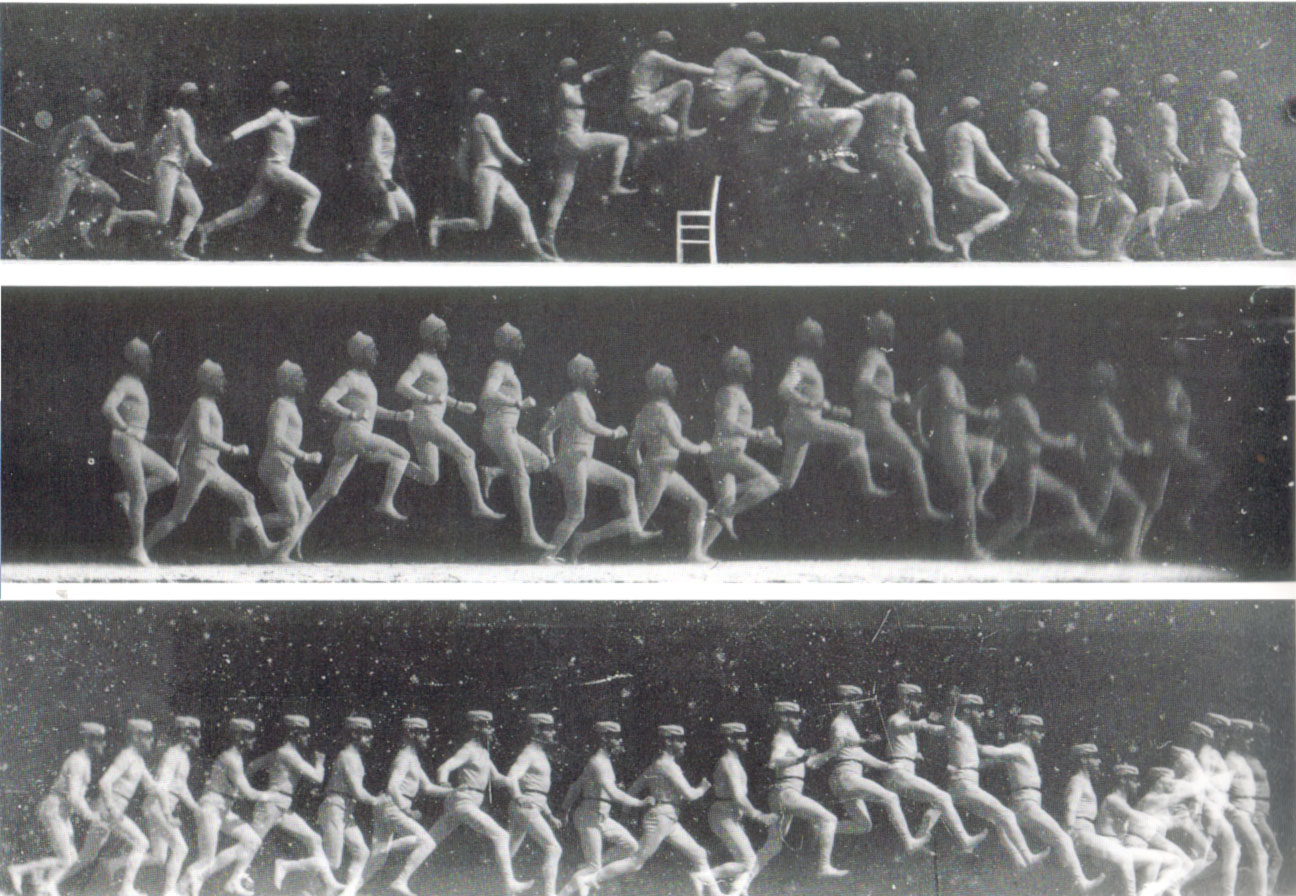
    Backwards--marey12

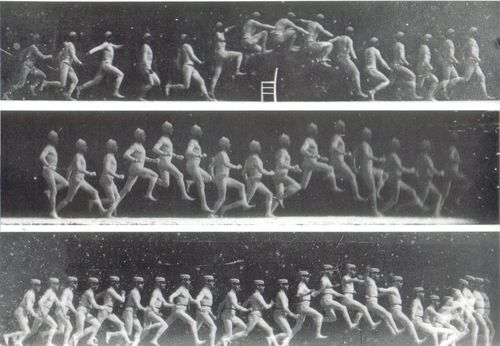
    I can only imagine what audiences must have felt when they saw the first moving pictures played backwards–seeing them played forwards was a novel-enough (and revolutionary) idea, but the simple idea of reversing the direction of the film would have proved to be equally fascinating.  Imagine the first time you witnessed a staged train wreck on film, back there in 18951, and imagine being able to see it played over and over again, until you were filled.  I’m not so sure that there were even any still photographs of a train wreck as it occurred to this point, even with advances in film speed and lens, so seeing the even unfold in front of you at leisure must have been overwhelming.  Now imagine these same folks seeing the event and watching the locomotives reconstitute themselves.  It would have been an extraordinary event.  Even observing the Marey sequences (above) and seeing what actually happens when a person bends over to pick up a pail of water would have revealed almost as much in new detail as when Galileo was in the middle of his earliest observations. 

    In a way the chance of controlling the direction telling of a story and seeing it displayed via moving images, and being able to see them backwards, may well have seemed a form of third-person time travel.  This came on the heals of what is for all intents and purposes the first time travel novel in  H.G. Wells’ (also in) 1895 The Time Machine (appearing earlier as “The Chronic Argonauts,” in 1888)2 and Mark Twain’s 1889 but much earlier than the first motion picture to use the idea of time travel (which was in 1921 and based on Twain’s work).  Being able to show a motion picture, and then stop it at will, and then reverse the order of time to begin everything all over again–visually–must have seemed a magnificent advantage. 

    And so to this end I’ve got the following few questions for which I have no firm answers:

    1. When was the first time people saw moving images of a of a currently deceased person? That is, when did the first dead person become “reanimated” by virtue of their images being captured by a motion picture? This question could be asked of the first viewing of a photograph of a dead person, and also the first experience of listening to a now-dead person whose voice had been recorded by an Edison machine, but I think the moving picture element is much more powerful. 

    1. When exactly was the first viewing of backwards motion, of seeing action in reverse?

    2. When was the first viewing of a continuous moving picture in which motion was purposely interrupted ?

    I’ve probably overlooked some long list of “firsts” in film, somewhere, but for now these questions are still questions. If anyone out there has answers, I’d love to hear them. 

    Notes:

    1.  It is interesting that this very early motion picture , made by the great scientist-brothers Lumiere, l’Arrivee d’un train en gare, was produced in the same year as the Wells book.  Just two years later, the Lumiere Brothers published a catalog of their available movie strips, numbering 338 productions.  In 1898, after six catalogs, there were over a thousand strips.  This is remarkable, especially considering that there wasn’t a cinema industry yet.  The Lumieres are an interesting pair of people (both of whom survived their invention by about a half-century), making perhaps the most important discoveries in the history of cinema, and continued to be interested in other fields throughout their lives.  The cinema-industry part of their work didn’t seem to interest them all that much. 

    The history of moving images is complex and long.  I’m not saying at all that it begins with the Lumieres, or with Edison, as the pre-1900 field is well sprinkled with different and interesting attempts at fooling our eye–Chronophotograposcopes, Counterfivoscopes, Phantasmagorias, Klondikiscopes, Vileocigraphiscope, and so on, are just a few examples of the many attempts at locating the seat of photographic motion in the brain.  There are very early efforts, principally by J.A.F. Plateau (1801-1883) who rediscovered in 1829 the “persistence of vision” effect in which the eye will see a continuous stream of images if presented with a flow of static pictures at 16 frames per second over a one second period, which of course is the basis for the rest of everything that was to come.  There’s much more, but I wanted to at least point out these few important bits. 

    2..  I’m not sure what to  with Mr. Dickens, if he fits in this order with the time traveling Scrooge in A Christmas Carol (1843), or not.  Perhaps he does, and if so, then he precedes Mr. Wells, though the latter’s time traveler is outfitted with a machine and a scientific basis for the belief in it.  At the very least he is worth mentioning in the same moment.

  • POWs in WWI (1916-1918)

    JF Ptak Science Books  Post 2789

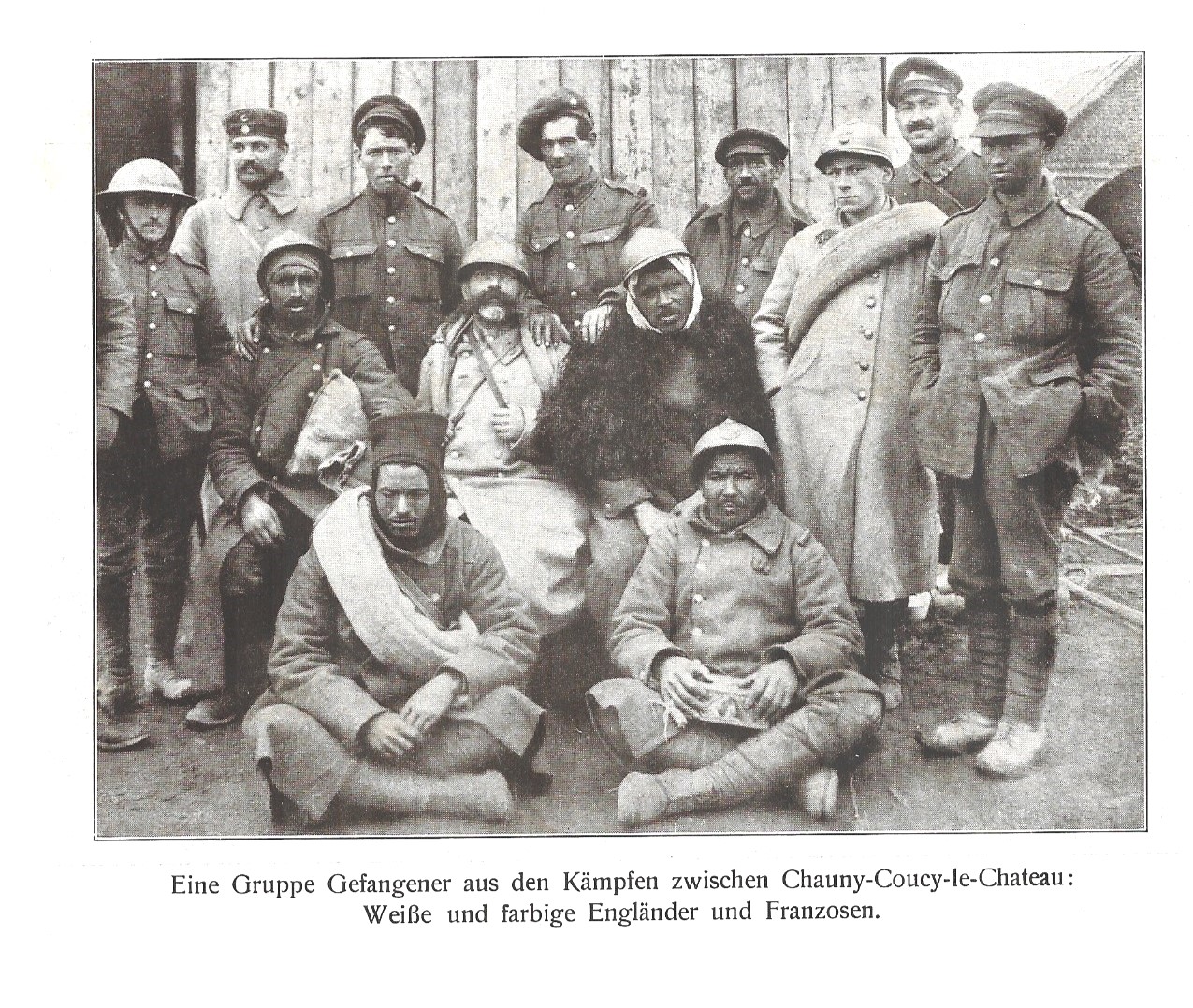
    This extraordinary photograph shows prisoners of war taken by the German army near Chauny-Coucy-le-Chateau and published in the unblinking photographic history of WWI by Hermann Rex called Der Weltkrieg in Seiner Rauhen Wirklichtkeit (printed by Herman Rutz in Oberammergau eight years after the end of the war). It is unusual to my experience to see a work like this with such an unofficial character to it. During the War the U.S. population was mostly given approved photos of the conflict, passed through censors and for the large part made by photographic pools (with ready-made captions for publication). The German side of photos in the popular press seems to me to have been grittier–this is hardly an academic appraisal, though I have leafed through every page of the war years for several journals like The Illustrated London News and Illustrirte Zeitung (Leipzig), and that is the general sense that I take away with me. The work by Herr Rex is about 600pp long, and if you work your way through the whole thing in an hour, it is a somewhat exhausting experience. Unlike most work that was done during the war, this book has a definite you-are-there quality to it, and is in many parts aggressively observational.

    The 13 soldiers were British and French including several French Colonial soldiers (differentiated by Rex as “weisse und farbige “)–they represent  .0000016% of the 8,000,000 prisoners taken on all sides during the course of the war):

    WWI Photos Rex prisoner

    Also, here’s the very striking cover for this book–its one you won’t soon forget:

    WWI Rex cover (1)

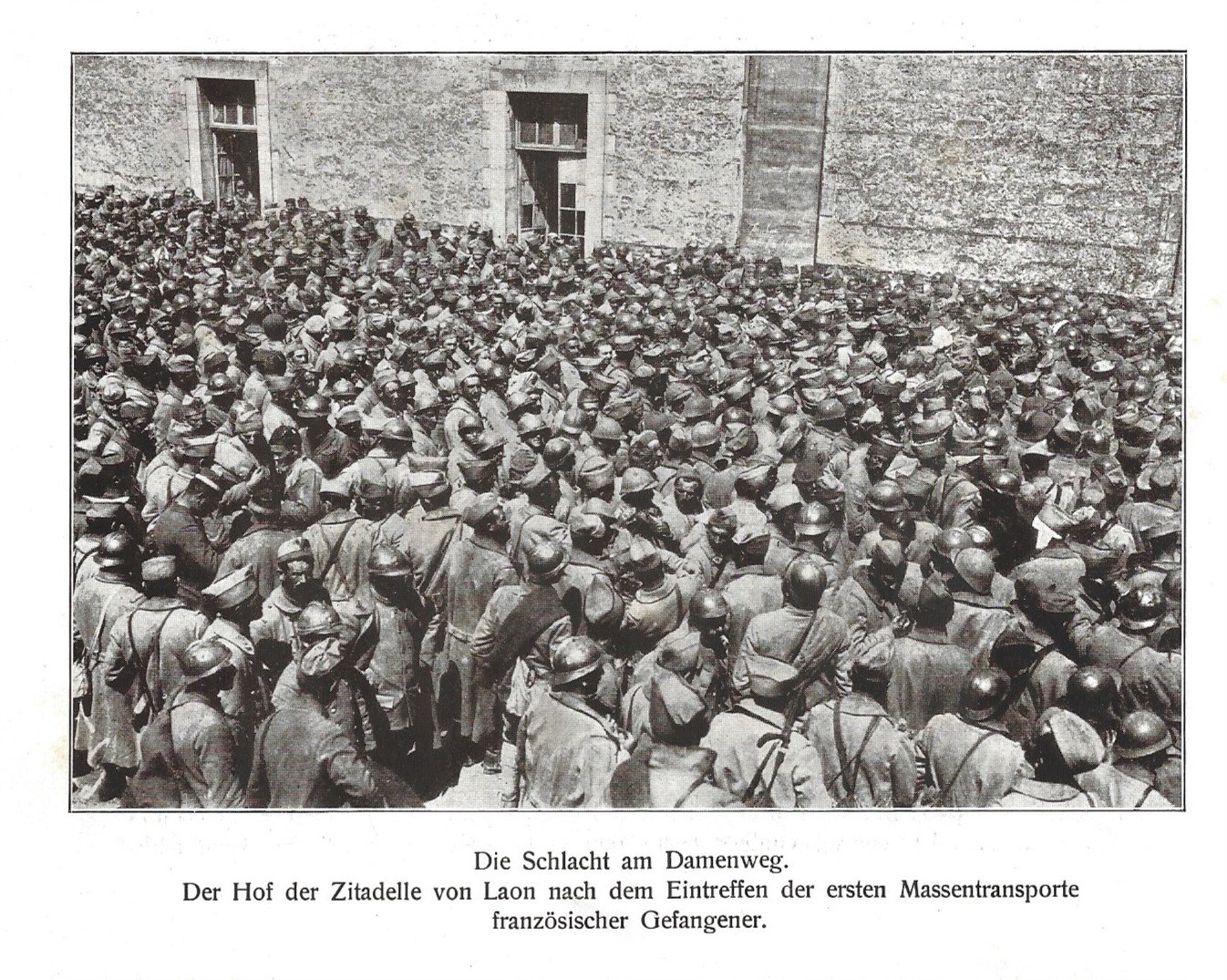
    Another image from the same source shows the movement of a large number of French prisoners–another photo of dense humanity:

    WWI Photos rex prisoners mass French

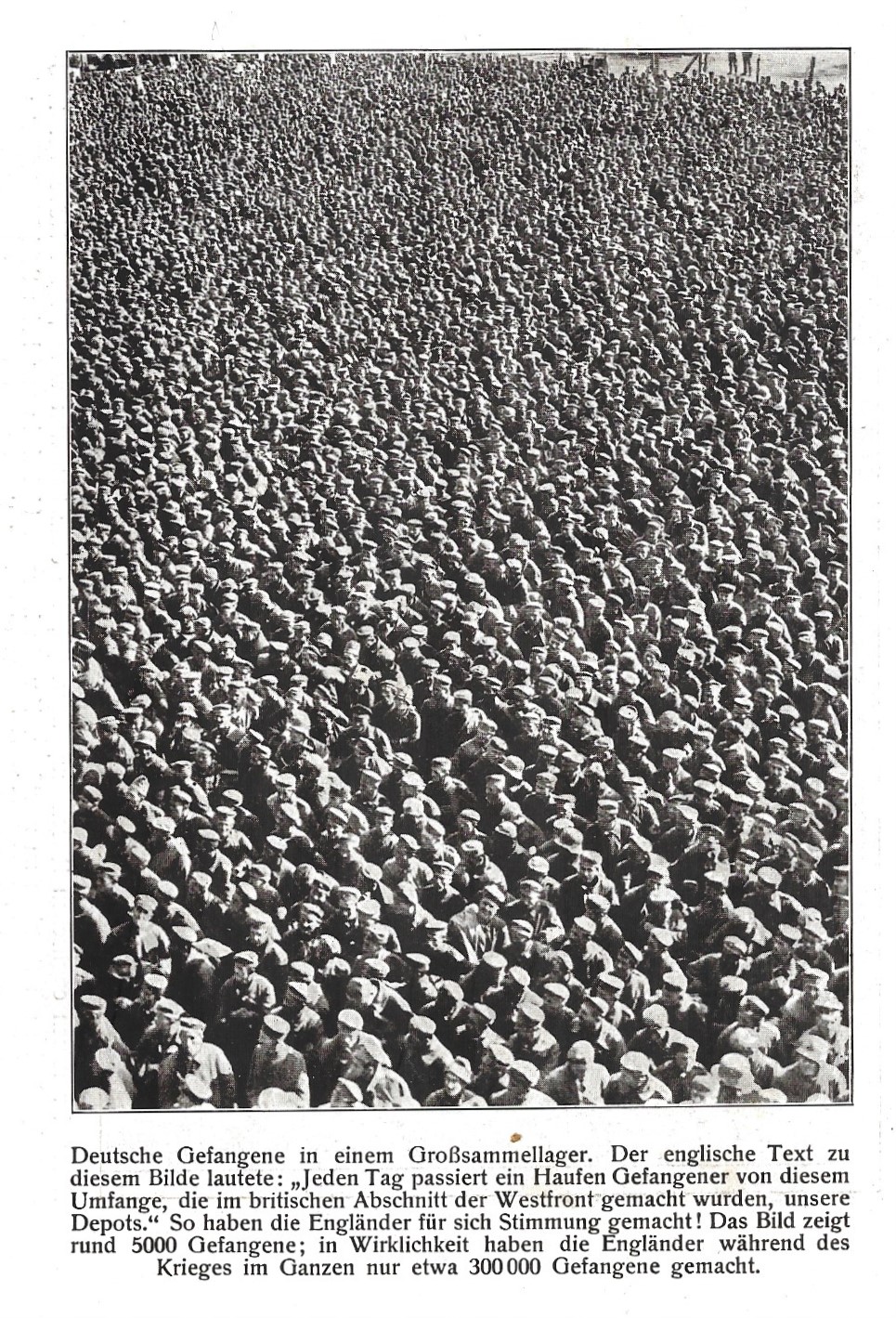
    And this extraordinary photo showing 5,000 German prisoners (or .000625% of the total number of POWs 1914-1918): 

    WWI Photos Rex German prisoners

    This is not a war-as-glorious sort of book, though I’m not so sure that it is necessarily/overtly an anti-war Johnny Got his Gun book, either; at least not so much as Ernst Friedrich’s definitely anti-war book Krieg dem Krieg! (“War Against War!”) that appeared on the 10th anniversary of the beginning of the war and which was badly received by Weimar officialdom. The 200 or so photos in the Friedrich book are exactly those that would never have been published during the war, especially in the ending sequence that shows very disturbing facial wounds. The overall effect of Rex’s book–not nearly at the same level of Friedrich’s–is very effective, and definitely does not fill you with the spirit to sit down and wrap up your leggings to join your comrades in a trench. 

    ·Posted by :

    ·in:

    —

  • Five Good Questions on Mr. Daguerre’s Process (1849)

    JF Ptak Science Books  Quick Post

    Antoine Francois Jean  Claudet, (1797-1867), began experimenting with Daguerreotype in 1840, and soon became photographer in ordinary to the Queen, being among the very first to practice Daguerrian portraiture in London. . He was very innovative and successful, and contributed many inventions and improvements in the cause of early photography, and was one of the first to use the collodion process.  

    In an article published in the Philosophical Magazine in 18491 Claudet asks some still-fundamental questions about photography that he feels are still unanswered. Asking questions out loud (so to speak) doesn’t happen that often in scientific and tech publications like this, and when they do, it is worth taking a moment to notice them.

    Claudet asks and answers the following important questions:

    • “Although the Daguerreotype process has during the last ten years been investigated by a great number of philosophers, and brought to a considerable degree of perfection by a still greater number of practitioners, it may appear surprising that the principal phaenomena upon which this new art is founded, are still enveloped in a mysterious darkness.
    1. What is the action of light on the sensitive coating?
      2. How does the mercurial vapour produce the Daguerreotype image?
      3. Which are the particular rays of light that impart to the chemical surface the affinity for mercury?
      4. What is the cause of the difference in achromatic lenses between the visual and photogenic foci? why do they constantly vary?
      5. What are the means of measuring the photogenic rays, and of finding the true focus at which they produce the image?

    ·Posted by :

    ·in:

    —