A Daily History of Holes, Dots, Lines, Science, History, Math, Physics, Art, the Unintentional Absurd, Architecture, Maps, Data Visualization, Blank and Missing Things, and so on. |1.6 million words, 7500 images, 4.9 million hits| Press & appearances in The Times, Le Figaro, Mensa, The Economist, The Guardian, Discovery News, Slate, Le Monde, Sci American Blogs, Le Pont, and many other places… 5000+ total posts since 2008.

Category: Photography, history

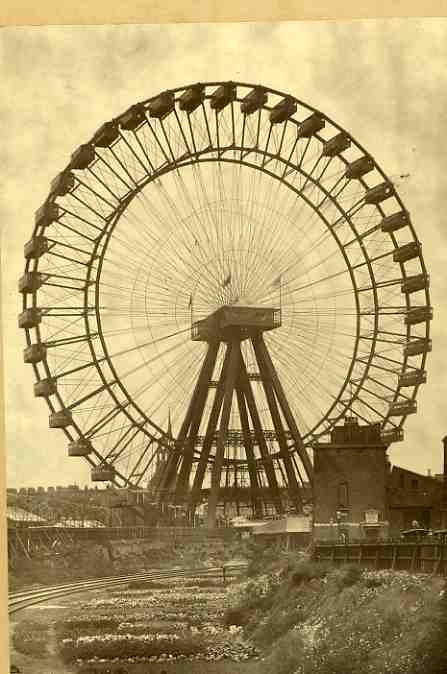
  • Found Images: The Great Wheel, 1895

    JF Ptak Science Books LLC  Post 442

    0 blog dec 27 great wheel320

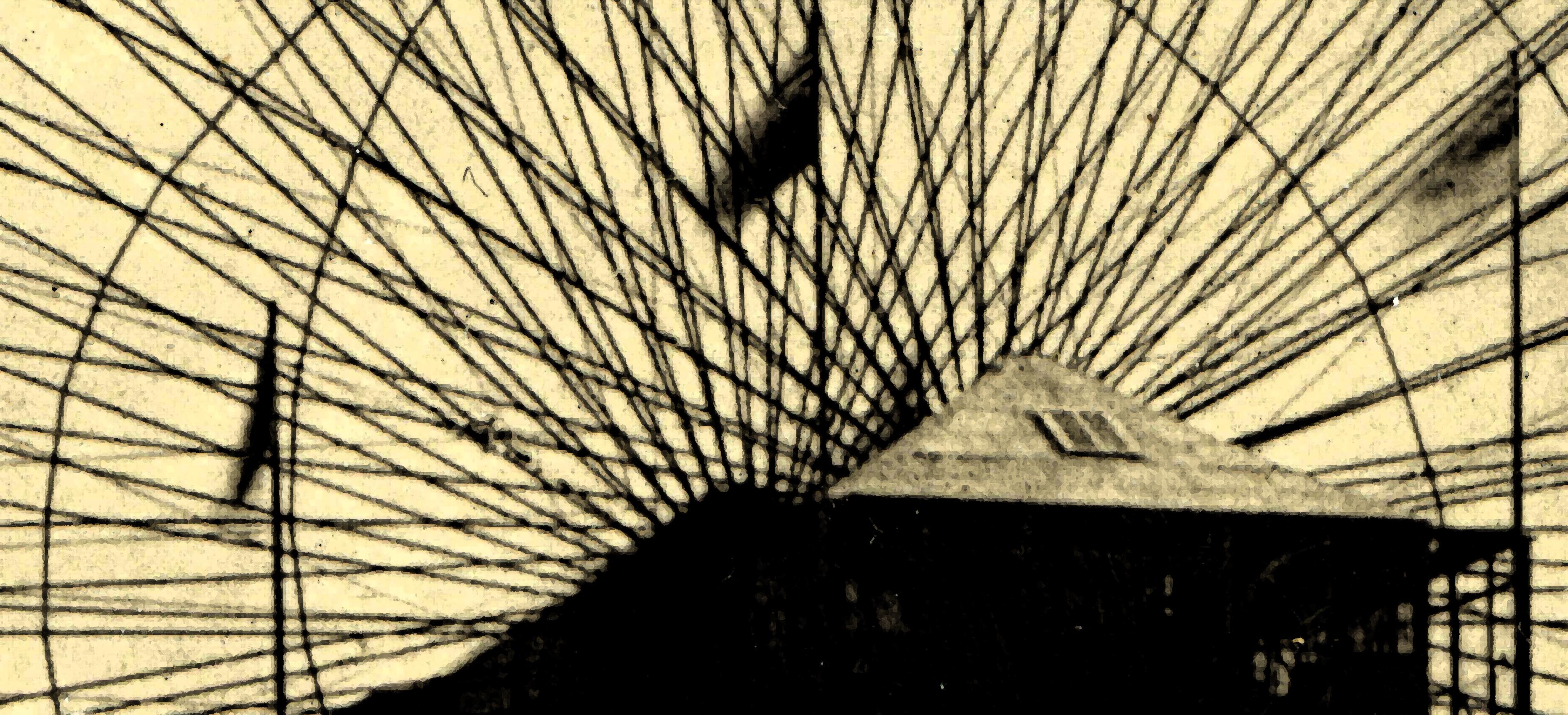
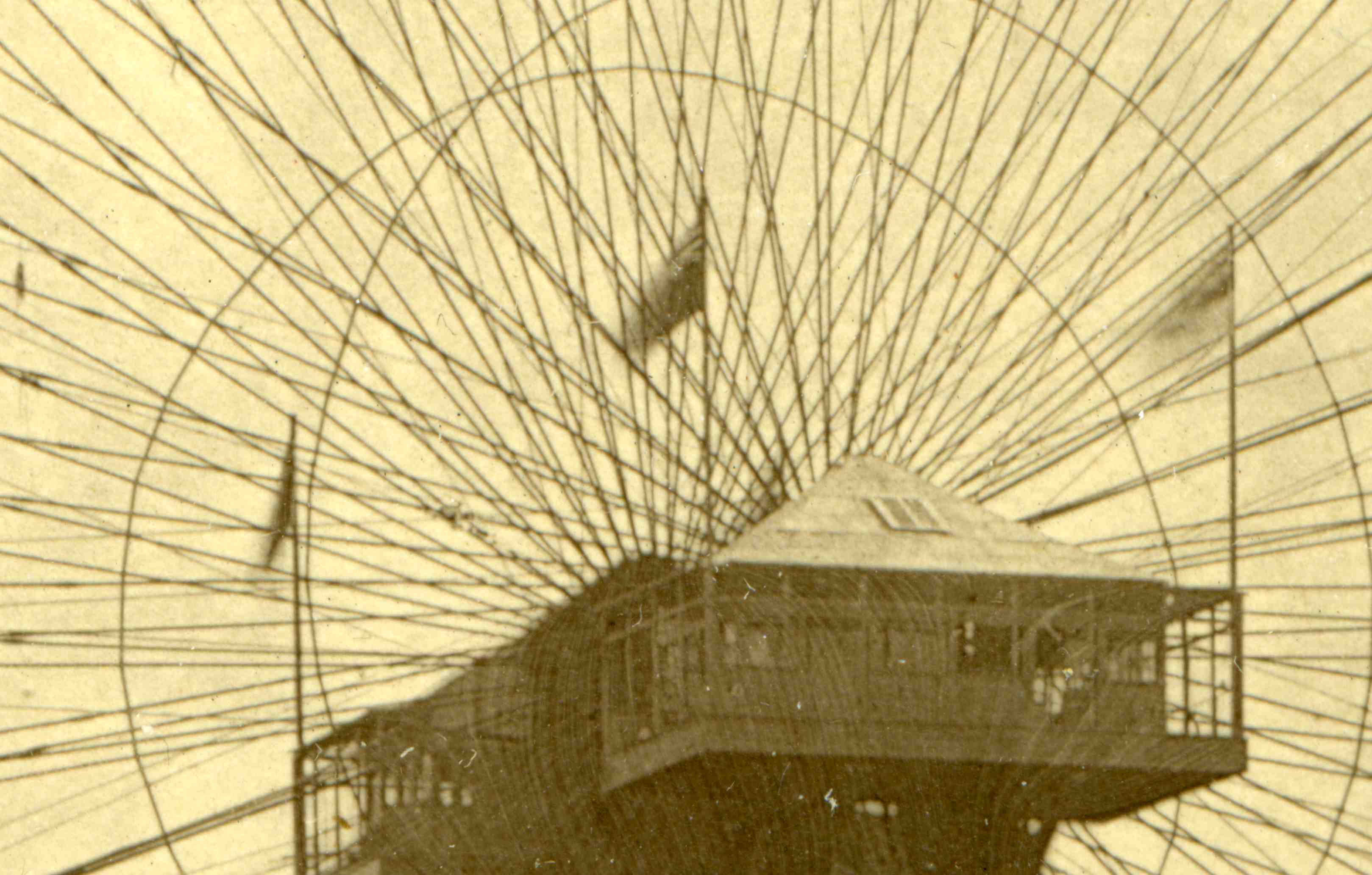
    The Great Wheel appears in Views of London, New Series, “photographed, printed and published by the London Stereoscopic & Photographic Co., Ltd., of Regent Street, London, and printed in 1896.  The “Great Wheel” was the Great Wheel at Earl’s Court, built in 1895, and was a copy of the great wheel constructed for the International Exposition at Chicago in 1893.  This enormous all-steel tension-supported wheel held 1600 people who enjoyed a twenty-minute ride once-around the 300-foot-tall structure.  It was a fantastic piece of architect.

    The photographic reproduction process for the London Views book was by Woodburytype, which is quite fine, and which also allowed for a 3200 dpi scan which allowed for some nice detail to be pulled up in enlargement. 

    0 blog dec 27 great wheel detail frescoe

    0 blog dec 27 great wheel detsil321


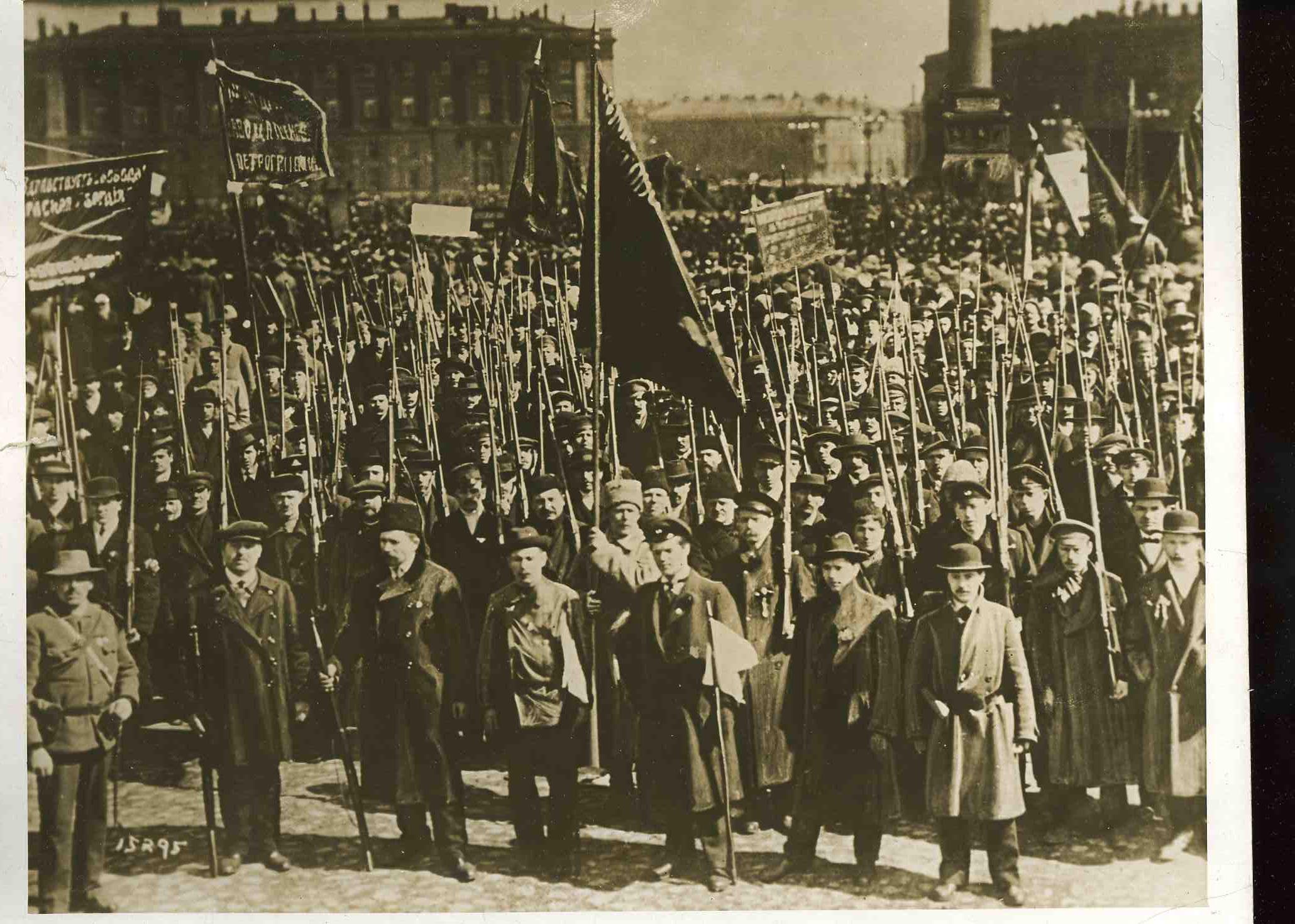
  • “The Fall of the Bolshevik Regime”, Kereneky in Petrograd 1918

    JF Ptak Science Books   Post 435

    0 blog kerens=ky 18 dec285

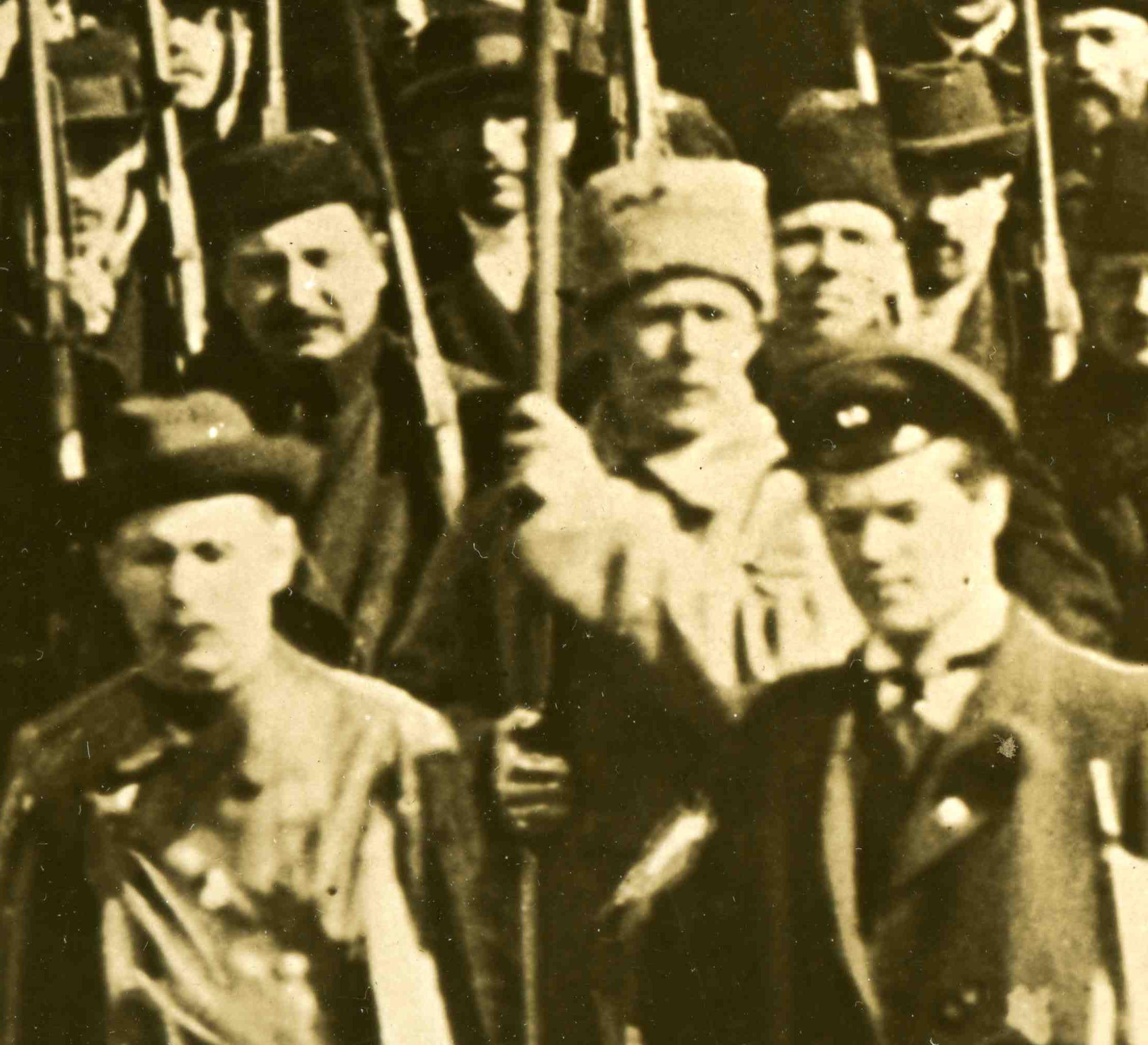
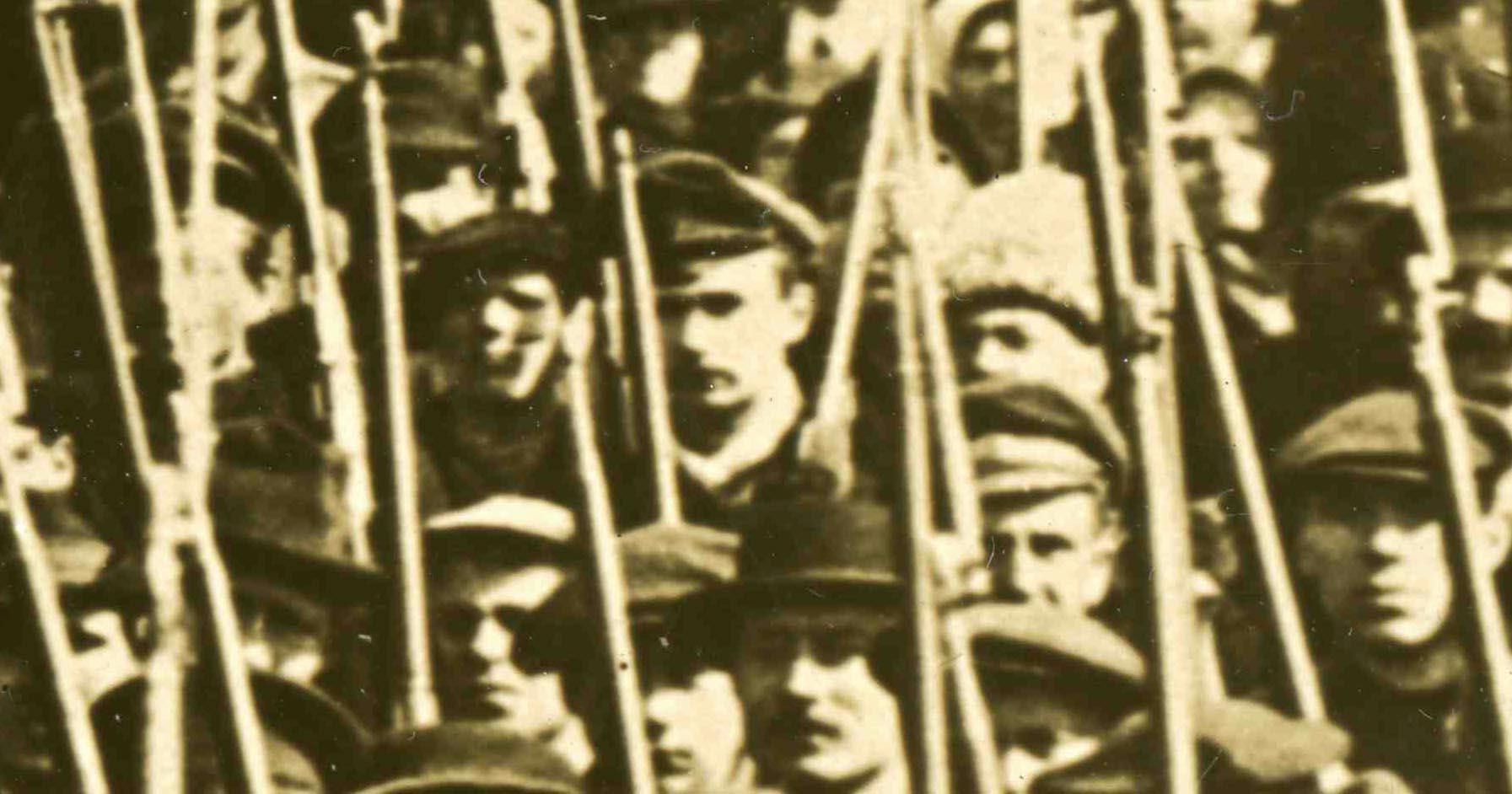
    This photograph–a picture of hope soon dissipated–shows the 1918 portion of the Russian Revolutions of 1917 at just about the time of its, well, “completion”, beginning the period of the Russian Civil War, which would last until the creation of the USSR in 1922.  (The photo is also part of a News Photo Service archive I purchased some years ago in, and was originally released by the Western Newspaper Union.) Alexander Kerensky, who according to the stamped caption of this photograph, was leading an army of “200,000 marching on Petrograd” in order to overthrow “Lenine [sic] and Trotsky” and the “Bolsheiki Revolution”.  Kerensky (1881-1970) was elected second Prime Minister of the Russian Provisional Government under Lenin following the February (1917) Revolution.  A complex of war (WWI) and domestic/social/political directed chaos led Kerensky and Lenin to opposing paths, and, following the October 1917 revolution, the winner was clear.  Kerensky, according to the data on the photo, was a “David” leading an army in opposition deposed to toppling  the Bolsheviks “next week”.  Things did not go as planned, or almost nothing did, and Kerensky’s army drifted, walked and ran, via indifference, fear and belief to the side of the Bolsheviks.  About the only soldiers who stayed loyal to Kerensky was the 1st Petrograd Women’s Battalion, a unit of the 1st Russian Women’s Battalion of Death. (This was the first all-female combat unit in Russia, and although starting out with about a force of 2,000, quickly wasted away under the rigorous and harsh command of its commander, Maria Bochkareva*, down to about a fighting group of 300.)  Kerensky fled the country and began a long series of travels, though ultimately settling in the United States, dying in NYC in 1970 (making him one of the longest surviving principal participants of the Revolutions).

    St. Petersburg/Petrograd has a long and important history in the formation of the Russian nation—established in 1703 as the capital of the Russian Empire and remaining so for more than 200 years, it was also the seat of the 1905 Revolution as well as the February and October revolutions of 1917.  Another bit of full-circle was that Kerensky and Vladimir Ilyich Ulyanov (Lenin) were both born in the not-large town of Simbirsk (now called Ulyanovsk).  Kerensky’s father, as it turned out, taught Lenin at the Kazan State University, a great institution of higher learning featuring non-other than the principal founder of non-Euclidean geometry, Nikolai Lobachevsky, as its rector for almost twenty years (1827-1846). 


    0 blog kerens=ky 18 dec286

    *This interesting, severe, passionate woman through intrigue and loss wound up fleeing the Soviet Union in 1918, winding up in NYC and ultimately meeting with Woodrow Wilson, appealing for American support and intervention to halt the Bolsheviks.  She made the same appeal directly to George V, before winding up back in the Soviet Union, where, in 1918, she was captured.  She was ultimately tried and convicted of being an enemy of the people, sentence to death, and then killed by the precursor to the KGB, the Chaka. 

    0 blog kerens=ky 18 dec287


  • A Pie Line and Sugar Angel, 1918: U.S. Troops in Paris

    JF Ptak Science Books LLC  Post 431

    0 ebay 16 pie line280

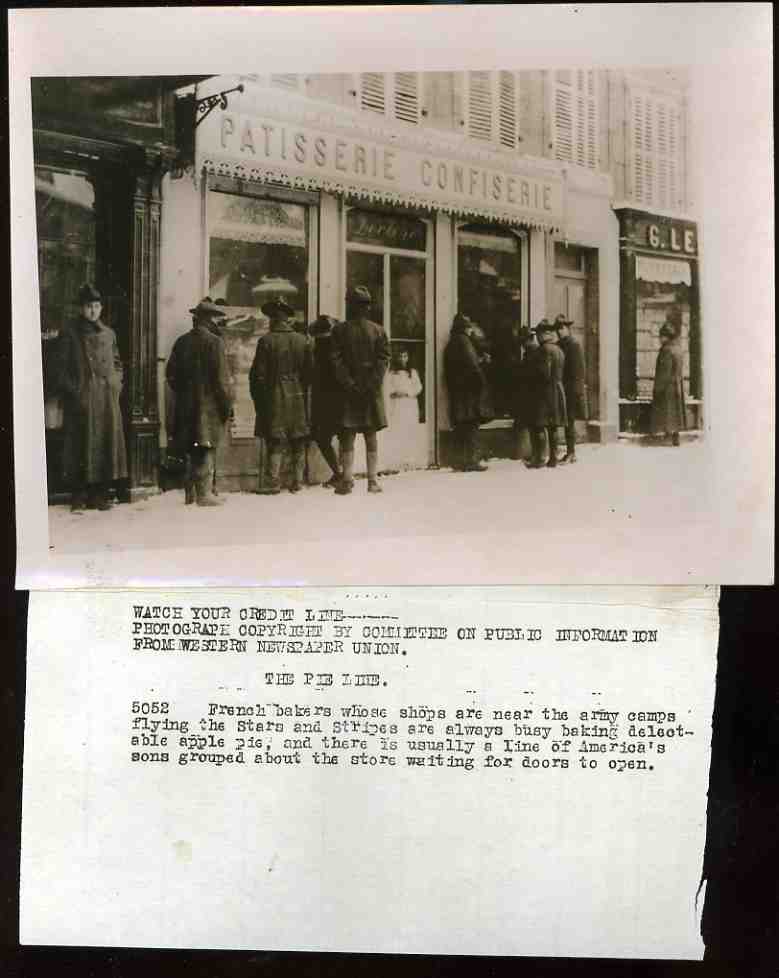
    There’s definitely an angelic figure in this photograph, an image  made showing American Doughboys lining up in front of a bakery/candy store (high-sugar delivery transport systems enhancer) in Paris in 1918.  This photograph is a News Photo Service item, produced by the Western Newspaper Union, which would send photographs (and their captions) on demand  to newspapers and magazines requesting a scene, say, of American soldiers waiting patiently in line for apple pie at a Parisian bakery.  The caption says that “America’s sons (were) grouped about the store waiting for doors to open” so that they could have at the apple pie. They are waiting for something, to be sure; it doesn’t seem quite right that a bakery would not be open during daylight hours (though the shutters on the upper floors are closed still) in the winter (I see snow), but then again I’m not an expert on the hours kept by small business in Paris during WWI. 

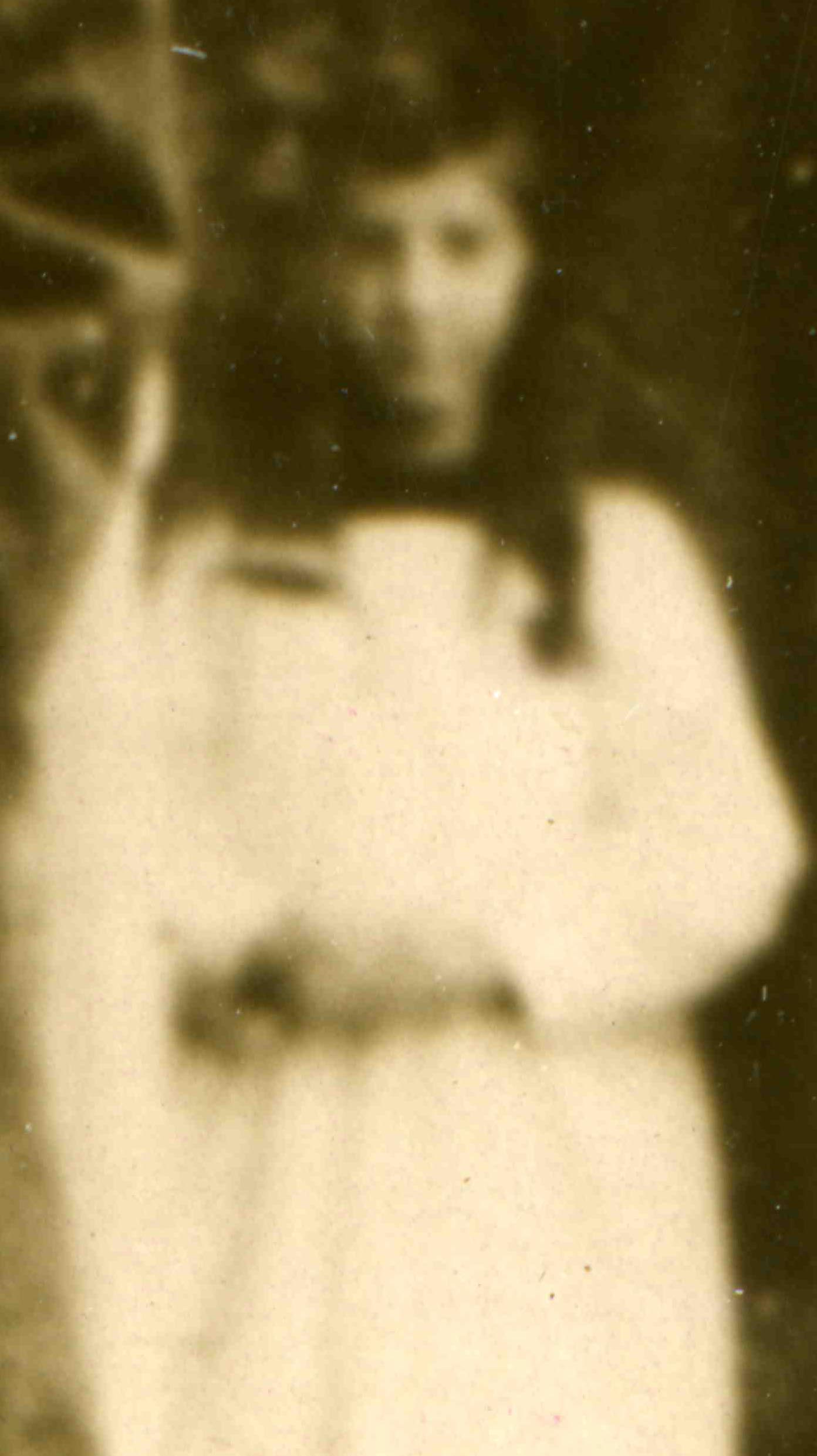
    I am taken with the figure of the small girl in the windowed-door of the bakery, standing there with her hands clasped, framed by the window pane, dressed in flowing white.  Is the place really closed, or did the soldiers simply have no money for these treats, the little girl standing there in the unlocked doorway wondering why all of these soldiers just don’t come inside?  Were the men paid in scrip with no value in the streets of the
    city?  The good news is that these men were alive, and it may have been
    November or December of 1918, which means that the killing of millions
    and millions of soldiers and civilians had just about come to an end,
    so they could probably stay living,  safely making their idle if not
    penniless way around the snowy streets of Paris, wanting and waiting to
    go home.

    0 ebay 16 pie line281


  • Where to Be and Where to Look Part 1: de Gaulle and FDR

    JF Ptak Science Books LLC  Post 425
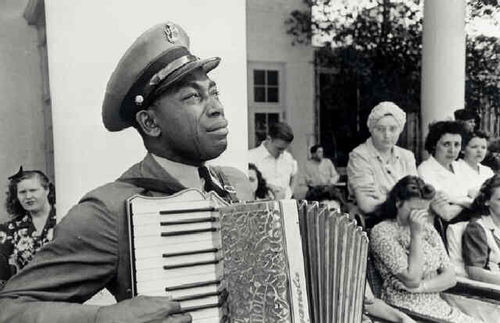
    0 ebay clark
    Many years ago I went to the house of a man with books to sell.  The
    house was terrific, with a view of the Potomac and just outside the
    district line–a hard thing to accomplish in housing in Washington. 
    The elderly gent’s house was open, airy and basically wallpapered with
    large format, very big photographs.  Many of the photographs I
    recognized–and of those, many were iconic images.  I said something
    simpy like, “so I see that yo collect historic photographs.”  “No, I
    don’t” he said.  In that moment I thought he was just being a wiseacre
    with me, He quickly said, “I took them”. 

    Ho-ly Crap, I thought.

    I honestly didn’t know what to say–I had seen so many of them in my life, and so often, that like a lot of things, these images were just there, part of the cultural landscape.  And here was the man who took them.  After I got over my shock and came to a sense or two, I interview hi a little.  The man behind the camera’s name was Ed Clark.

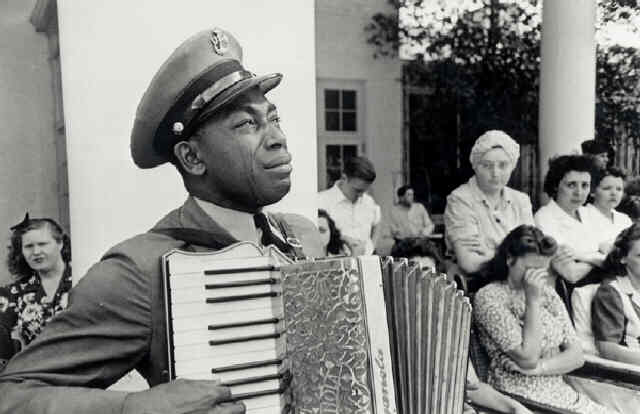
    Ed (1912-2000) was about 80 when I met him, and he was selling some books because he was getting ready to leave DC and head back home to Nashville.  He was very quick with strong recall.  I asked him about his ultra-famous photo of CPO Graham Jackson, preserved forever, who on 23 April 1945 in Warm Springs, Georgia, was playing Dvorak’s Going Home as Franklin Roosevelt’s casket was being taken to the train for a last ride to D.C.  Jackson was at Warm Springs to perform for Roosevelt when the President died on the 23rd.  I wondered about where the rest of the crowd was, and particularly, where the rest of the photographers were, at that moment  After all, FDR was about the most famous man in the world, and perhaps the most important, when he died in the last stretch of WWII.  Surely there must’ve been tons more photojournalist there to record the scene of FDR’s body being removed.  “There were” Ed said.  I asked him where they were.  He explained that they behind him, which would’ve been in front of him, actually–he was at the rear of the crowd, with every other photographer pointing their cameras forwards, recording the movement of FDR’s body.   Ed said that he turned around (“because that picture was already being made”)and found the rest of the crowd, the people who were already there at Warm Springs, watching from a respectful distance.  And it was at that point that CPO Jackson started to play his accordion, the music being one of FDR’s favorite pieces.  “They weren’t looking the wrong way”, Ed Clark said, “just not the right way”.  And Ed made the photo that everyone else missed, because they’re faced the obvious.
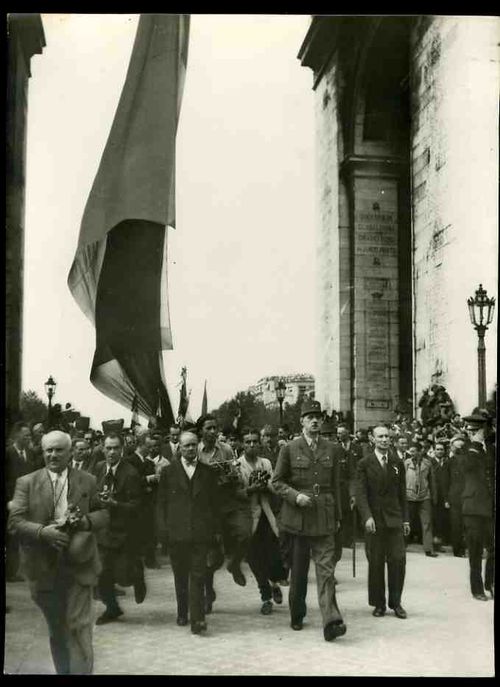
    0 ebay 12 where not to belia260

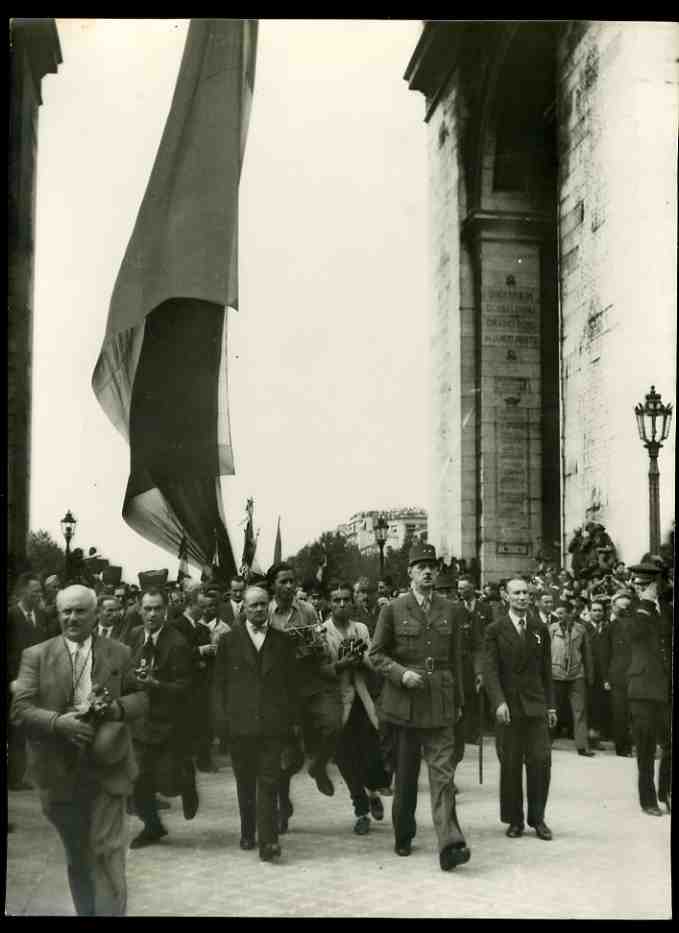
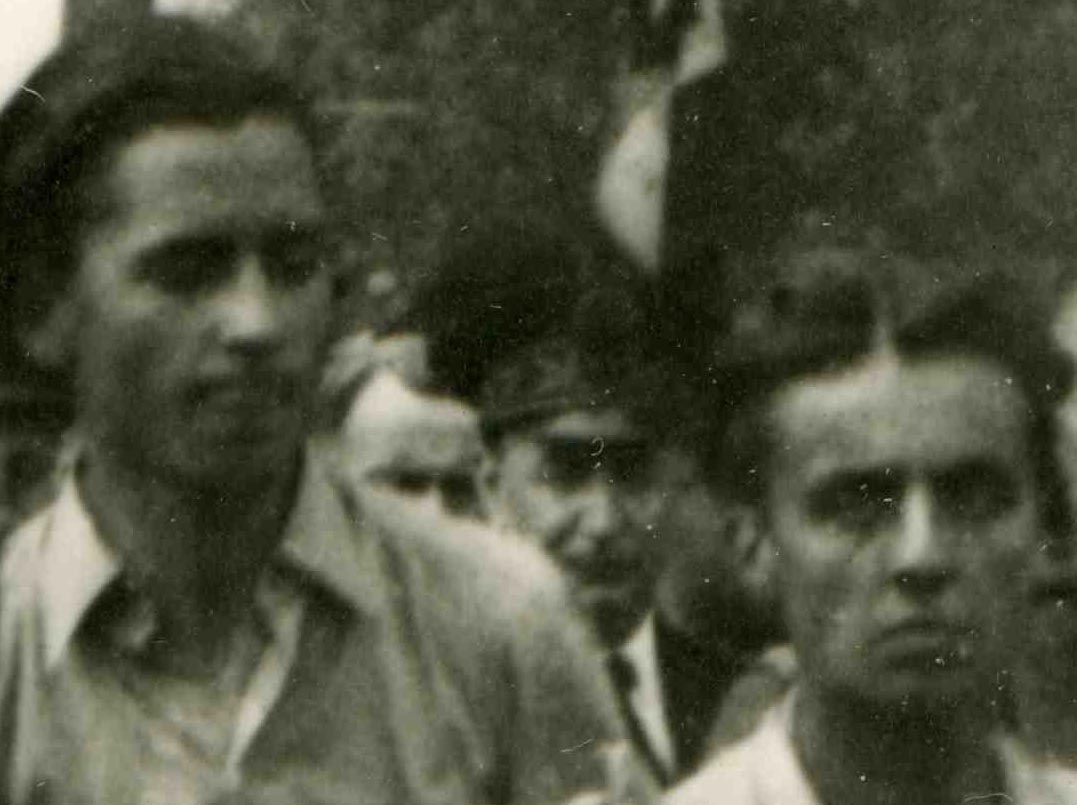
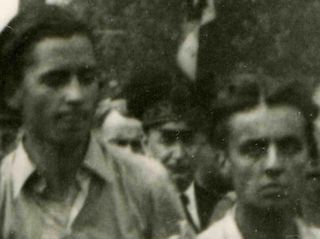
    This second picture captures both the moment and the photographers whop were missing it.  The scene is of course General De Gaulle making his triumphant return to the liberated city of Paris, walking back into the city through the Arc de Triomphe on 25 August 1944.  I am also completely certain that the picture was taken by another LIFE photographer (Ed Clark having worked their for years contributing many photo-stories and covers), Ralph Morse (my original doesn’t have any identification on the back, though it certainly looks like the others Morse made at that moment).  Morse caught De Gaulle in mid stride at the half-way point through the Arc.  And you can see the look of pain in the faces of the other scrambling photographers who must’ve been just coming to the realization that they were in the shot they had been desperately wanting to make since 1940. Their sinking feeling is pretty visceral.

    Perhaps being in the “wrong” place is just someone else’s perception until you prove them wrong.  After all, there must be some right place right time, wrong place right time, right place wrong time, wrong place wrong time hierarchy, no?–that is, until you’re smart enough to realize that there’s no such thing as “wrong”. 
    0 ebay 12 where not to belia261


  • A Wartime Census of War Dogs: Verdun, 1916

    JF Ptak Science Books Post 405

    0--blog---dec 2 dog census172

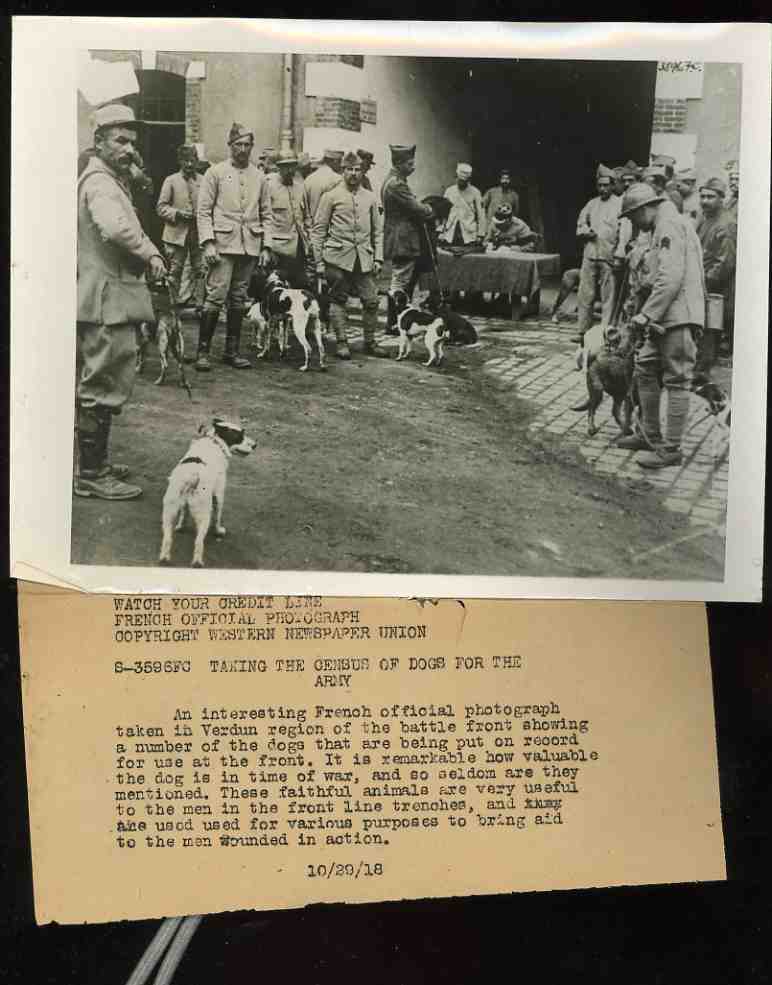
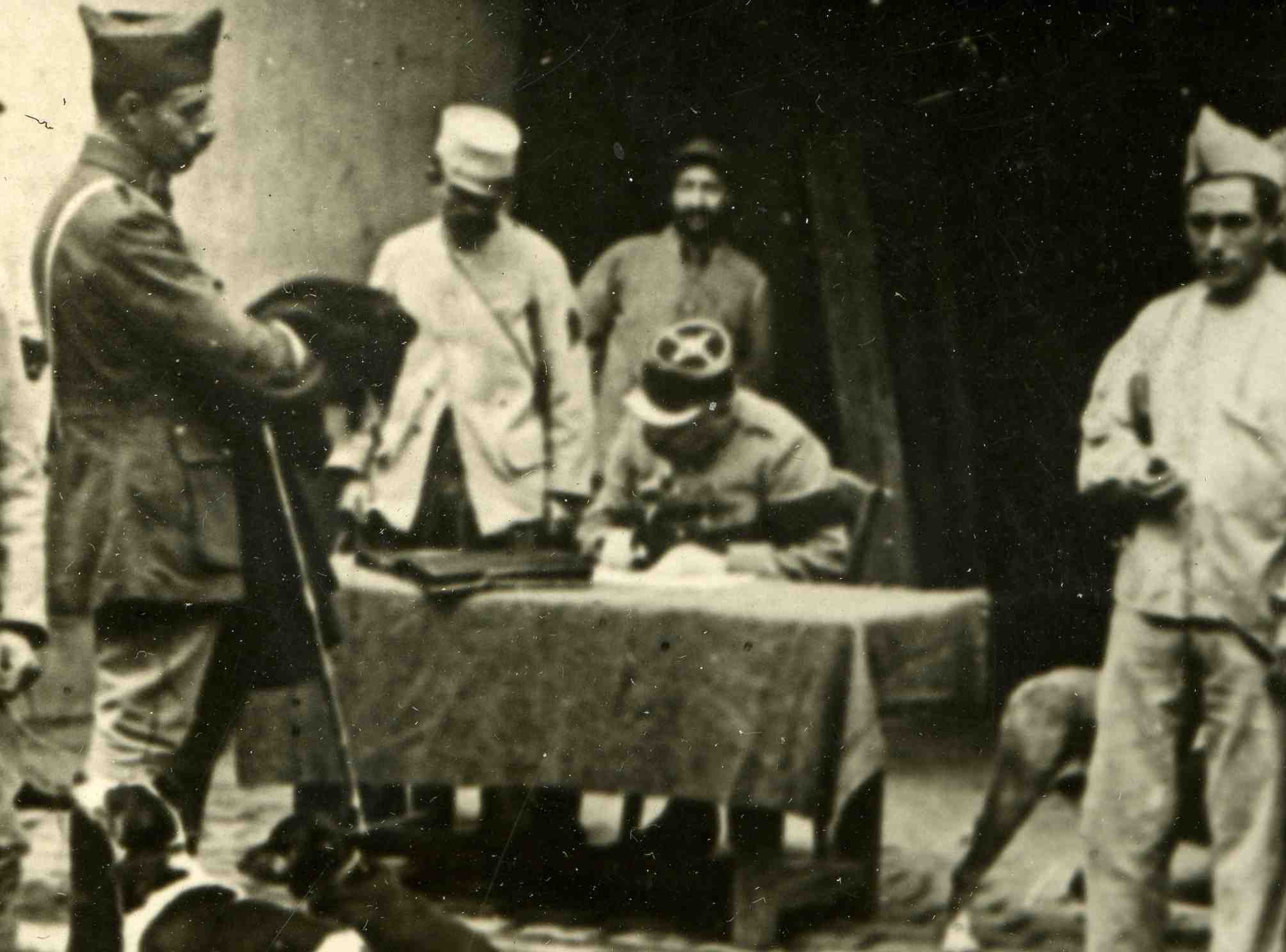
    I wonder what the French officer sitting behind the table at the center background thought about at night, after his day was done.  I wonder what it was that went through his head, his eyes fluttering, as he slipped into sleep?  As the accompanying caption of this photo states, this was a census of dogs, a census of army dogs in the French army, taken at “the battle front” of Verdun, and dated 10 October 1918.  Did he think of his duties expended throughout the day, and weeks and months?  Counting dogs as a war effort may have been a hard thing to consume.  Perhaps this officer had already seen his share of war, perhaps he had fought from 1914 and onwards, this position being relatively benign, a reward for years of impossibly difficult service in a bloody war. Or perhaps not.

    “Taking the Census of Dogs for the Army”, an official French war photograph and copyrighted and distributed by the Western Newspaper Union (a news photo service supplying photographic images for newspapers around the country), gives us a peek at what had been an largely untold story about digs in war.  As it turns out, the French started early on in the war training and using dogs to track and aid wounded soldiers on the battlefield; the Germans did so too, their dogs rescuing some 6,000 wounded soldiers by war’s end.  And this continued a story of dogs in wars that’s at least 2,000 years old.

    0--blog---dec 2 dog census173 .  The photograph, though dated 1918, was taken in 1916, during the horrific Battle of Verdun.  IT was yet another enormous battle at Verdun, which had seen more than its fair share of military action over the centuries, owing to the city’s strategic location on the Meuse River.  The men in the photo look worn, as well they should–evidently, owing to replacements and rotation, something like 70% of the entire French army fought in this battle, with 24 French divisions fighting there.  The French lost 161,000 men dead and 101,000 missing, with 216,000 wounded; the Germans lost about 142,000 dead and another 187,000 wounded.  That’s coming up close to 3/4-million men in one battle over several months in 1916, most of which were the victim of the 30 million rounds of artillery shells.


  • The Face of War: the Child-Soldier, 1918

    JF Ptak Science Books LLC  Post 361

    000-ebay--Nov 7war trench013
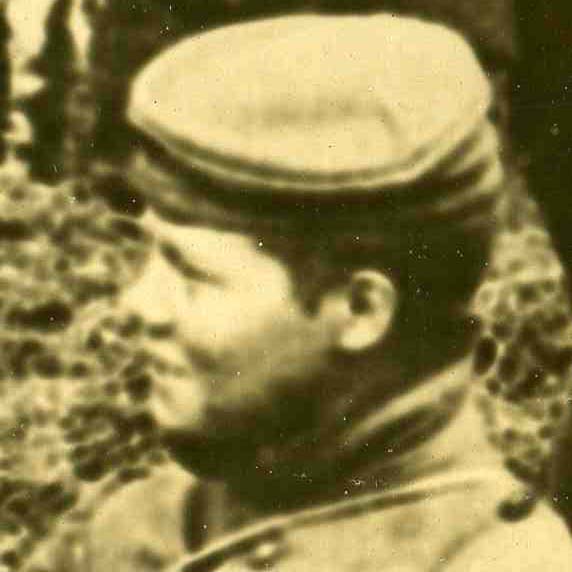
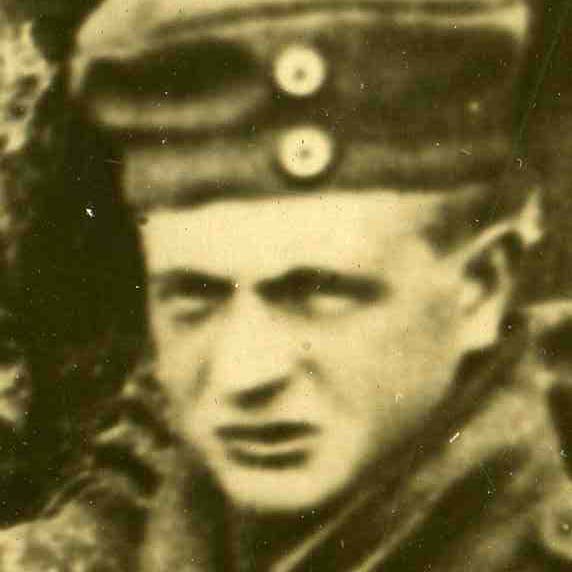
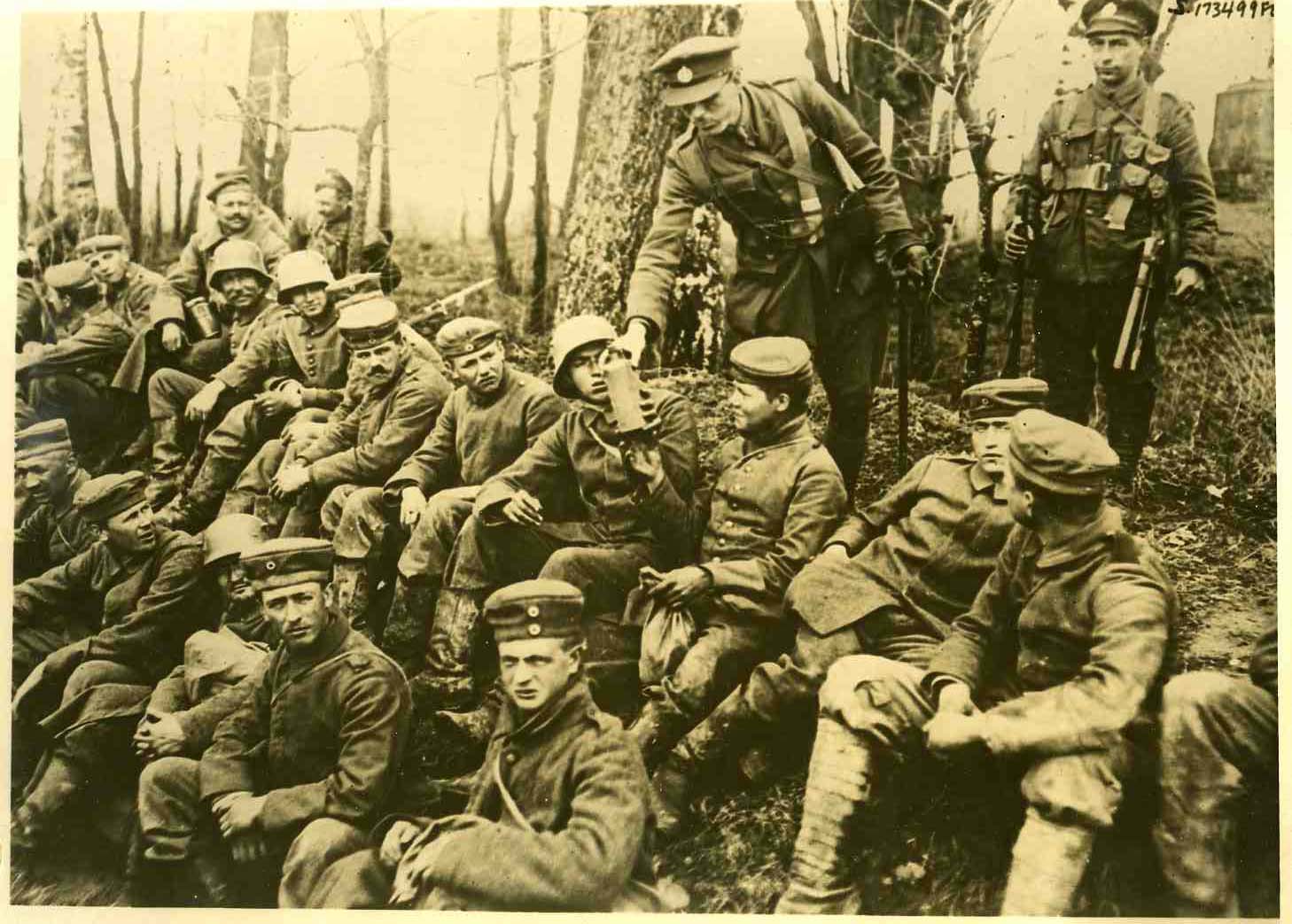
    This is a picture of a captured German soldier, somewhere in France in the middle of 1918, months away from the finale in November.  His tunic is still clean, his buttons as shiny as his baby-fat face, happy to be receiving something–a canteen?–from the British officer, an object of strict attention.  Except that the more our dour soldier to his right has his fingers around the thing and will probably take it from the boy, who looks not only young, but small.  As a matter of fact, most of these soldiers look very young, too young:  sopranos. 

    As the soon-to-be-defeated experience in every war, as the ranks of suitable, able-aged soldiers slim and shrink, the military hand grabs up whatever is available, or left.  I guess this makes sense as most folks in the industrial world didn’t debate child labor laws–with energy, anyway–until the 1920’s.  If you an work in a cotton mill at 8 or 10 or 12 years of age, why not get these workers to carry guns?  The answer is that they’re not capable, for the overwhelming majority, and would make a

    000-ebay--Nov 7war trench014
    000-ebay--Nov 7war trench012 poor soldier, possibly costing more effort and life on his own side
    than on the enemy’s.  But at the tail end of a brutal conflict like
    WWI, the grim matter is that general conscript had been gobbled up and
    fed into the grist mill that had already cost millions of lives. This
    phenomenon is not just a WWI problem, and not an old problem, either: 
    you could construct an alphabet of abusers, and apply it by century: 
    Burundi, Chad, Ivory Coats, Rwanda, Somalia, Sudan, Burma, China, Sri 
    Lanka, Columbia, the Soviet Union, the United States, all pressing
    children into the front line, or as drummer boys, powder boys, cannon
    fodder, mine-clearers, and on and on. Run out of men, and the
    13-year-old boy was next in line, the face filling out any sort of
    uniform at any point in time.


  • The History of Stopping Time #1: A.M. Worthington, Ernst Mach and Doc Edgerton

    JF Ptak Science Books LLC Post #88
    Blogstopping_thing_splash087
    This will be the first out-of-sequence post looking at the intervals of stopped time (random or not), and how people and cultures were able to stop or save time, and how they could arrange to segment and store time over thousands of years.

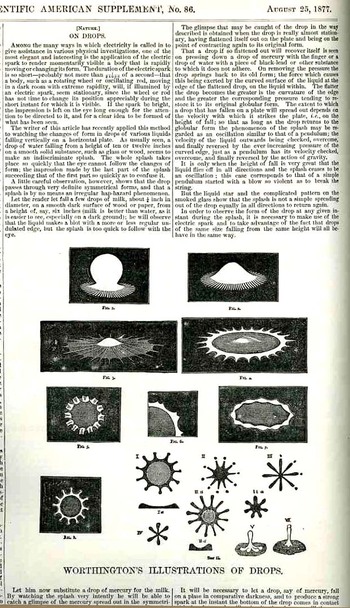
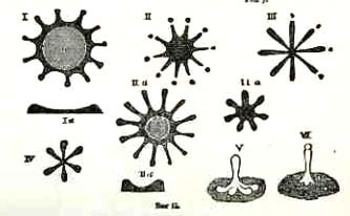
    The first entry is from the Scientific American from August 25, 1877 and records the experiments of A.M. Worthington. They are perhaps one of the first revelations on the quiet residence of energy in something as simple as a drop of water or mercury.  Much in the same way Robert Hooke revealed the microscopic universe to unsuspecting readers, so too did Worthington, in his way, reveal the explosive world of small, fast, and lost events. Worthington’s style is of course exceptionally restrained and free of exclamation, even while describing the first time any human has witnessed these events, like so: “…watching the changes of form of drops of various liquids falling vertically on a horizontal plane…the whole splash takes place so quickly that the eye cannot follow the changes of form…”   This report, “On Drops” follows Worthington’s own earlier effort of 1876 and 1877 “A Second Paper on The Forms Assumed by Drops of Liquids falling vertically on a Horizontal Plate” (Proceedings of the Royal Society, 174 and 177), chronicles his brilliant adventure in the newly discovered world of fast time—a world he was pretty much creating as he moved along.  (A particularly good description of the experiment as well as an image of the apparatus can be found on Martin Waugh’s lovely and arresting site—he is one of the leading modern practitioners making art in
    Blogstopping_thing_splash087_detail

    this genre of high-speed photography:  liquid sculpture calls it.)  )   It is particularly powerful to note that the illustrations here are drawings of the phenomena of his study of splashes—drawings, not photographs.  The photos by Worthington (On A Splash from a Drop of Milk) would not appear until 1894. (An entire book is dedicated to this subject by Worthington, who published, in 1904, the wonderful A study of Splashes.)  This means, I guess, like the heroic chroniclers of snowflake forms and such that he ran many, many experiments and painstakingly observe red different parts of the splashes and recorded them by hand.  Worthington wouldn’t be able to photographically record the images of his splashes until later after the application of inventions and advances by C.V. Boys and Lord Rayleigh.  Until that time his audience would have to depend upon his tenacious observational powers—or try the experiment themselves and make their own observations, as Worthington provided all the necessary data for his experiments to be replicated, of course.
    Blogstopping_thing_bullet_2gs086
     

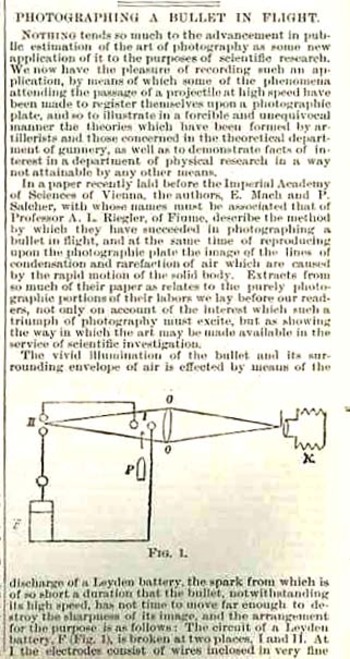
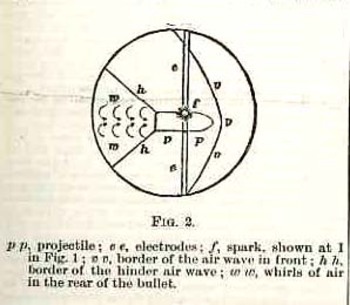
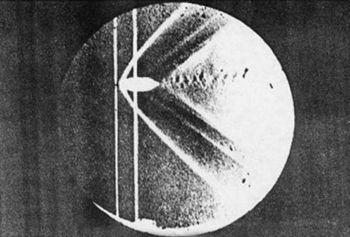
    The next paper relates the success of Ernst Mach and P. Salcher in creating an apparatus to illuminate and photograph a bullet in flight—this was again found in the Scientific American, but for 24 September 1887 (supplement 612).  Unfortunately, their results are rendered only by a drawing, even though the half-tone was available by this point to provide a high-quality reprint of a photograph, it took Scientific American another few years to start employing that breakthrough method.  (I’m not sure why this was so.)
    Blogstopping_things085_blluet_det_2

    The results were made available in the original Austria edition of his publication from which this article is drawn.  This paper “Photographische Fixierung der durch Projektile in der Luft eingeleiten Vorgange” presented to the Academy of Sciences in Vienna in 1887, was revolutionary in more ways than one, as it was really about the visualization of flow over objects, and in particular, the movement of media as a bullet traveled at supersonic speeds—and to which Mach would donate his name for the description of units of supersonic speed.  (The term was first publicized in 1929 when Swiss engineer Jakob Ackeret used Mach’s name for the first time in the description of these speeds.)
    Sudden_mach

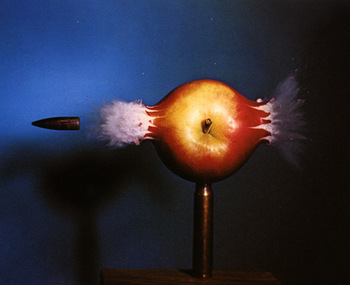
    This last photo is included just because of its sheer beauty—it is far in advance and way out of the continuum for a discussion like this, but this effort, produced by Harold Edgerton, just must stay.  This is the titanic blast of ingenuity that was the intellectual successor to the earlier works listed above, but the technical advancement is just so fabulously great that the earlier scientists could simply not imagine them.  This image was as much science fiction to them as their images were to scientists considering these ideas right there at the birth of photography in 1839.) Harold “Doc” Edgerton, 1893-1990, who would form EG&G and serve MIT for many years owned this field of photography for many years—time stopped for the venerable Edgerton right after he paid for his lunch at the faculty club at MIT. Failing life with a heart attack at  87.)
    Suddennessedgerton

    For an interesting look at videos of various sorts of splashes see the North Carolina School of Science and Math HERE.


  • Blank & Missing People—Pelerin, Schoen and Marey and Picturing Absent and Empty People for the Study of Perspective.

    JF Ptak Science Books  Post #85
    Blogmissing_people076

    In some of the elementary thinking on perspective in the history of art and science there is a certain amount of subtraction that must occur before addition and advancement can be made—these experiments have resulted in some very unusual-singular even—images, which when viewed apart from their proper context and considering the times in which the images were made make them seem revolutionarily modern. 
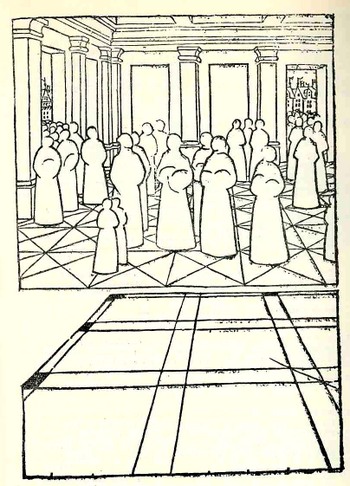
        Take for example the extraordinary work of Jean Pelerin (also called “Viator”) in his De artificiali perpectiva, a very rare woodcut-illustrated book printed n Nurenberg in 1509. In illustrating what he referred to as his “three point perspective” Pelerin removed much of the gothic-tradition bric-a-brac that is so heavily favored in these early books and replaced them with outlines from his rather astonishingly expressive notebooks, and replacing people, individual humans, with what may be the first “almost-entirely-absent” human forms. These roundish, ghost-like figures are just meant to hold the outlines of space, meant to function in the role of a simple comparative unit. This works quite well as an artistic technique—a solicitation tool which I think gives his reduced, “empty” humans an incredible, ethereal look unlike any other in the history of the first 60 or so years of printing.  It is difficult to imagine what the observer of these images back there in 1509 was thinking when they looked at these figures, and perhaps removed them from their textural context—it  would have been a unique visual experience for them
    .Blogmissing_peopl_2e077_2

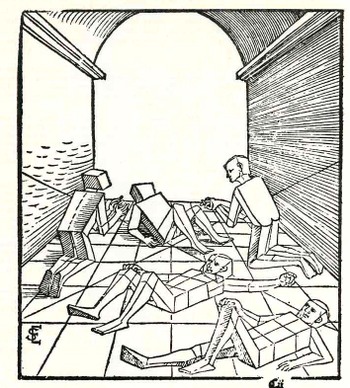
    Just a little while latter Erhard Schoen, in his Unnderweissung der proportzion und stellung der posssen liegent und dtehent, printed in Nurenberg (as well!) in 1538, presented another unique way of representing the human form in model for the sack f studying perspective.  He used simplified geometric form to stand in for the curvy humans, replacing them with proportional stacks of boxes which would more easily explain to the younger reader how to represent the human body n space and in proportion to other things.  Again like the Pelerin, I think that these were monumentally combative images showing humans in a radical, previously unknown way. 

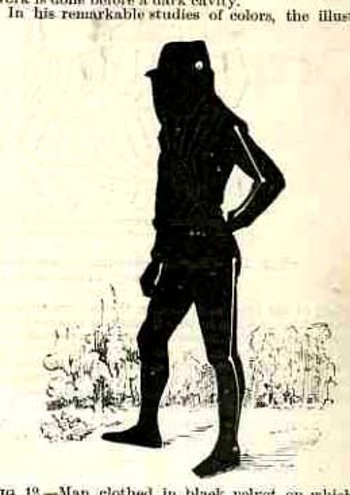
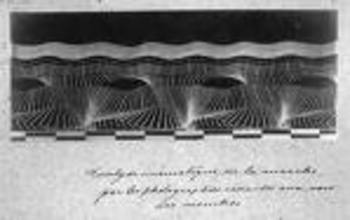
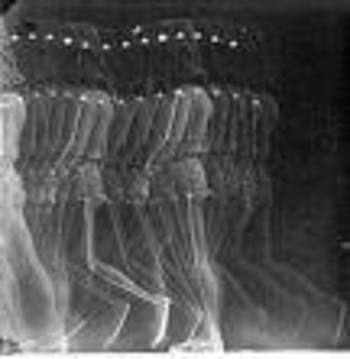
    Dashing into the 19th century we find another superb image of the empty man from Etienne Marey in his photographic and moving-photographic studies of motion.  This is actually a little odder, as the man in this image can be either completely empty or the convex, being completely filled up.

    Blogmissing_menmarey084
     

    Blogmssing_marey_2

    Marey would fit sensors at moving/jointed parts of the human body, affixed to a black-cloth-wearing experimental helper.  The point was to collect simply *movement* images and not necessarily-at this point at least—the parts of the body responsible for the movement.  At this time Marey was interested in the effects of motion, and used his empty man to do just that.

    Blogmissingmarey_one


  • Things That Almost Were But Weren’t–Photography in 1839 and Television 1924

    JF Ptak Science Books  

    Here are two examples of Things That Almost Were But Weren’t:  Photography (1839) and Television (1928). The first item contains a woodcut of a heliotype (being the first image of a photograph produced by non-photographic means); the second displays the method for receiving images of radio shows but is not a television. 

    First:  The first published non-photographic image of a non-photograph or “sunpicture”) from a collection of papers on the basics of photography, published early in the birth-year of photography, 1839.  


    .

    Golding Bird’s  (1814-1854) “A Treatise on Photogenic Drawing”, published in  The Mirrour,  London, 1839, contains five1 significant and extremely early papers on the photographic process (appearing in The Mirrour numbers  945, 946, 947, 949 & 950, April 20-May 25, 1839). [A much larger, more detailed image is available here; I didn’t want to lay the book flat on the scanner to get a more detailed image of the copy here at hand.]

    Bird photograph148_edited-1

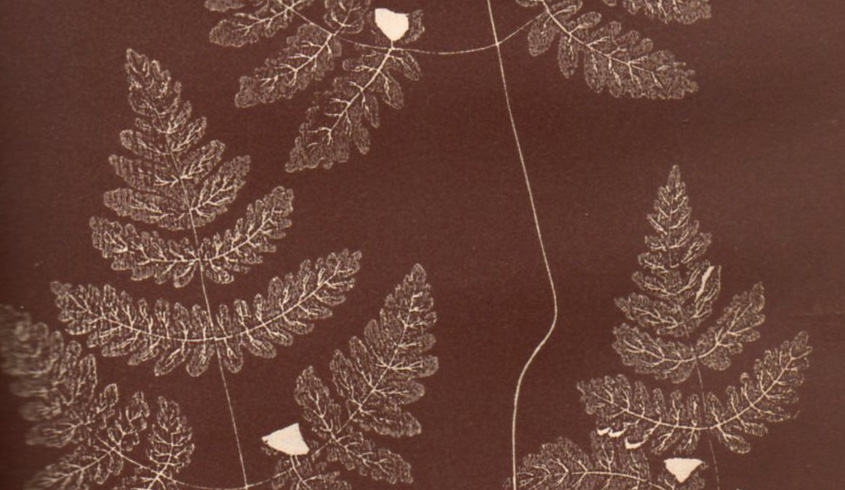
    It is page 241 (issue no. 945, Saturday April 20) that really peaked my imagination–it contains the first facsimile woodcut of a photogenic drawing, which is essentially the first publication of an image produced by any sort of photographic process. (The image is referred to as “iconic”2 by the Metropolitan Museum of Art, this via the wonder Luminous Lint blog for historical and contemporary photography, here.  The process here is the ‘sun picture”, and while not exactly considered a photograph per se, it is a photographic process, making this the first image of a non-photographic photograph.  It predates the first mass-published photograph by four years and the first (entirely) photographically illustrated book (The Pencil of Nature) by six years.  The sun picture, or heliotype, was first described in print in 1801 by both Thomas Wedgewood and Humphrey Davy, and although the process was at least 39 years old at this time there are no recorded published images produced by that process. (The woodcut is much larger than usual for The Mirrour, and is also of a unique brown/red color, and of a different hue than any other woodcut that we have seen in any of the issues of the first 45 years of this publication. I was concerned at one time that this image was a photographic process of some sort, but it isn’t, and I’m convinced that it is a woodcut–a very unusual species of woodcut for this publication, but a woodcut nevertheless.)