A Daily History of Holes, Dots, Lines, Science, History, Math, Physics, Art, the Unintentional Absurd, Architecture, Maps, Data Visualization, Blank and Missing Things, and so on. |1.6 million words, 7500 images, 4.9 million hits| Press & appearances in The Times, Le Figaro, Mensa, The Economist, The Guardian, Discovery News, Slate, Le Monde, Sci American Blogs, Le Pont, and many other places… 5000+ total posts since 2008.

Category: Photography, history

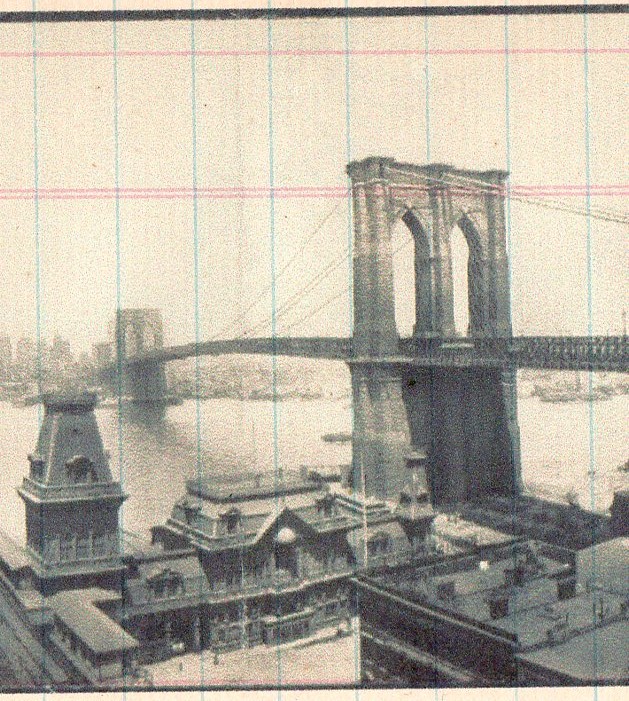
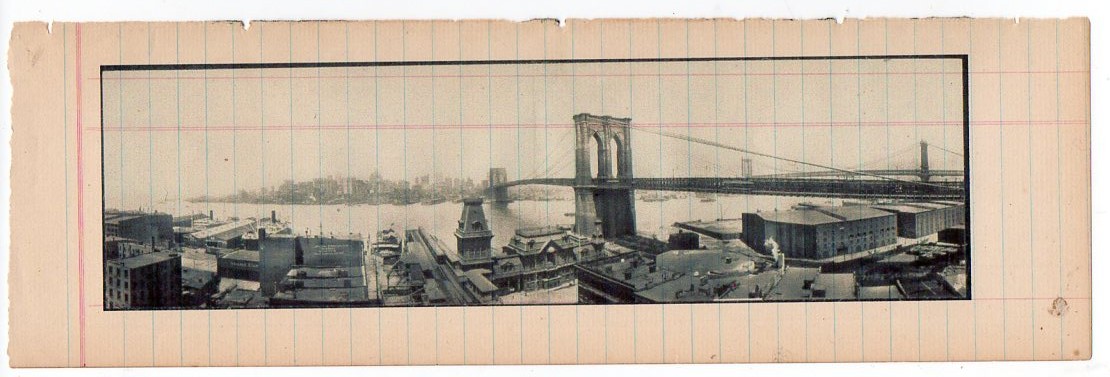
  • Manipulated Art 2–Panoramic Brooklyn Bridge, Boxing Scene and such on Accounting Paper, 1880

    JF Ptak Science Books

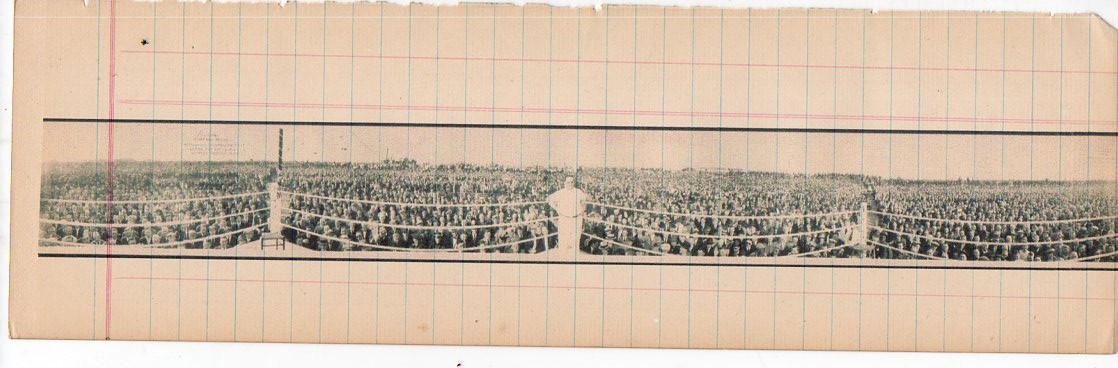
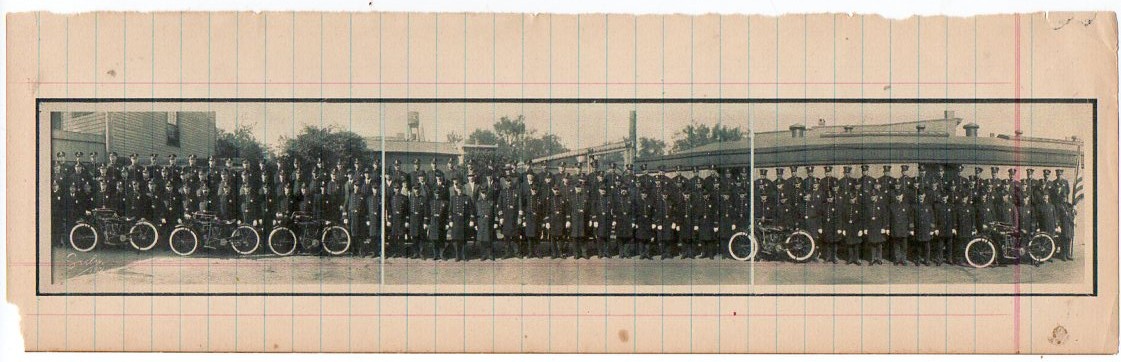
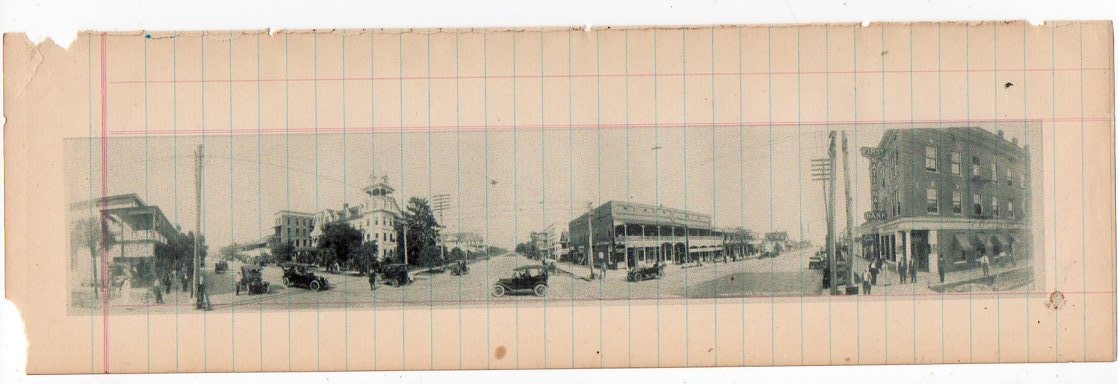
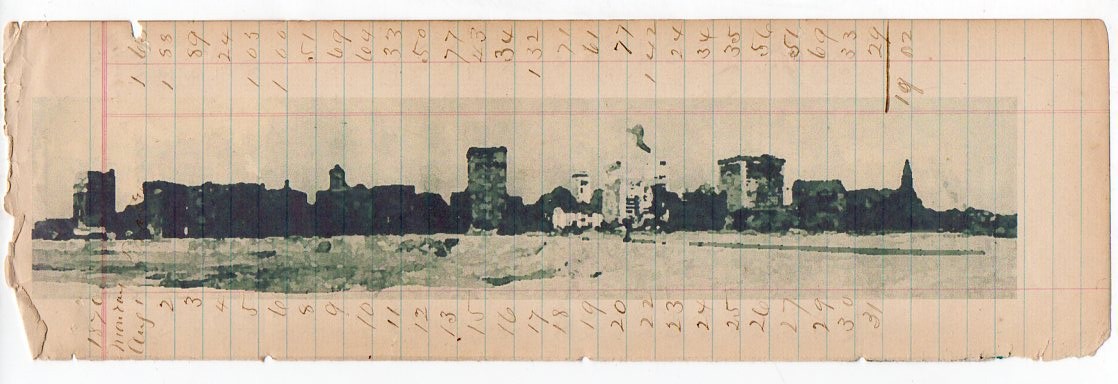
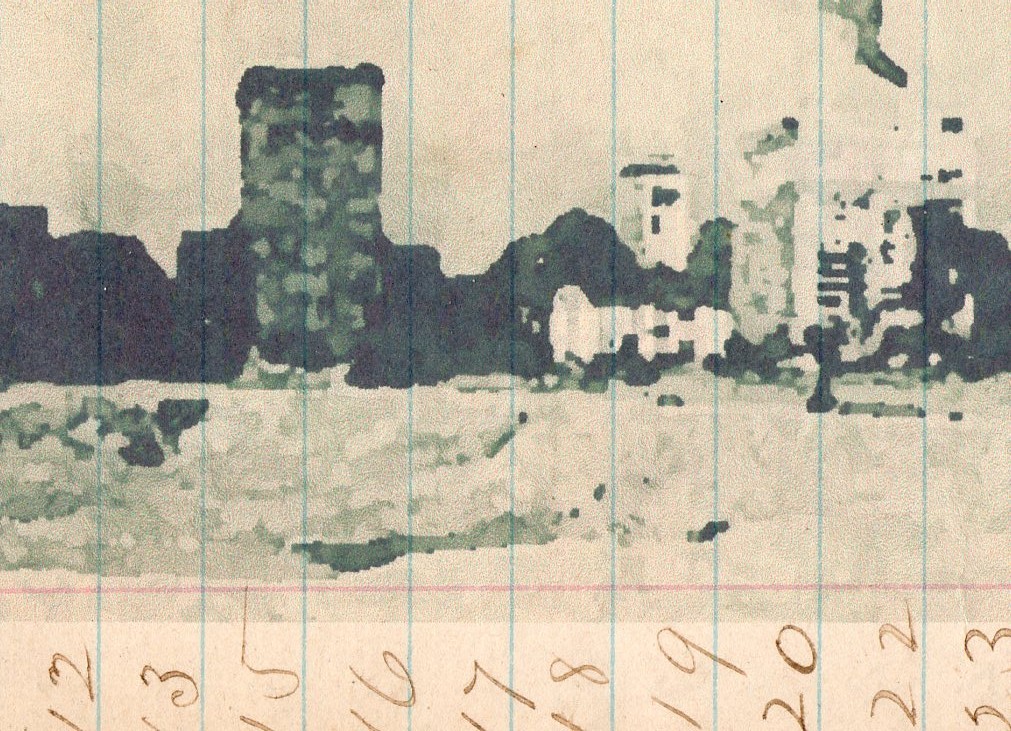
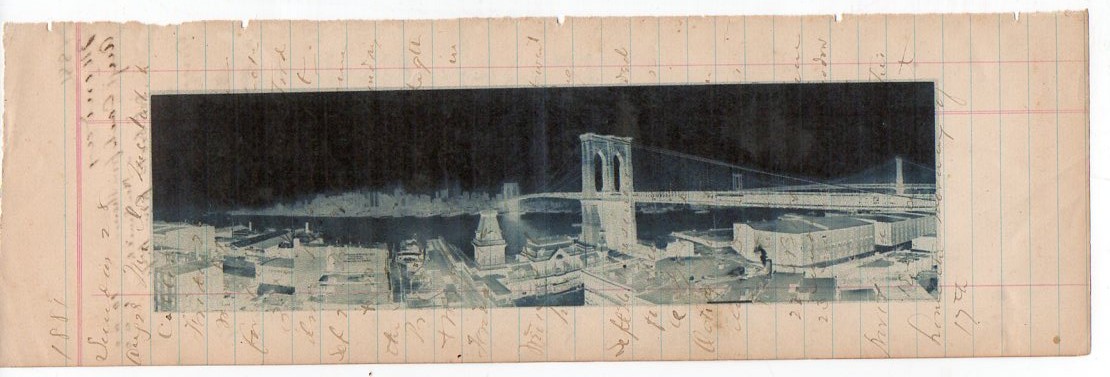
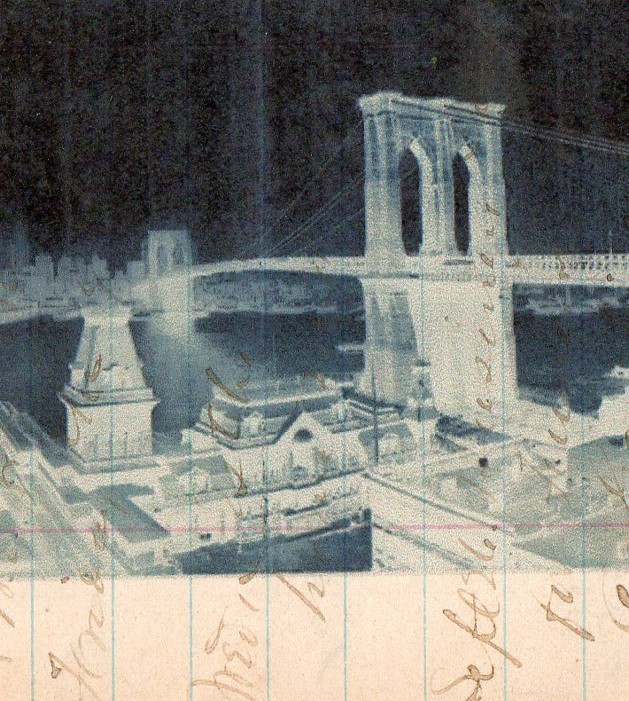
    Continuing a series of small experiments I’ve printed some classic panoramic images on some rather beautiful tabulating paper, taken from an 1880’s ledger. All are available from our blog bookstore.

    Manipulated-real bb pos895

    And the detail:

    Manipulated-real bb pos det898

    Boxing scene with mamoth crowd, ca. 1910.

    Manipulated--boxing 890
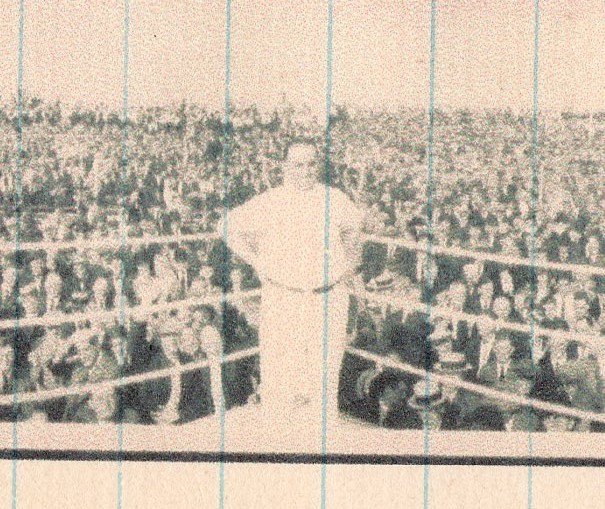
    And the detail:

    Manipulated--boxing det889

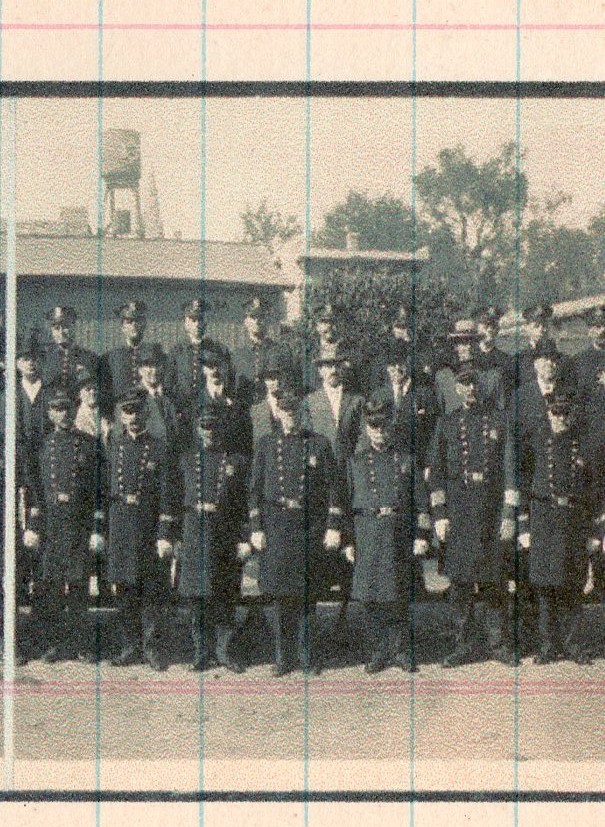
    Police officers, ca. 1900:

    Manipulated--police887
    And the detail:

    Manipulated--police det888
    Spartanburg, South Carolina, 1920:

    Manipulated-spartanburg892
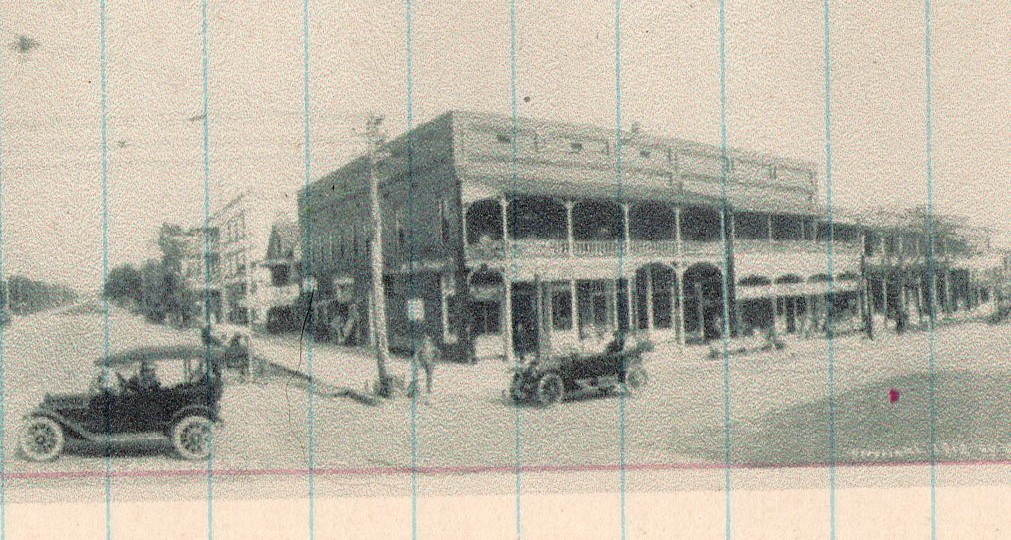
    And the detail:

    Manipulated-spartanburg det893
    Andthe New York City skyline, ca. 1905:

    Manipulated-brooklyn bridge891
    And the detail:

    Manipulated--brooklyn bridge det894
    The negative Brooklyn Bridge:

    Manipulated-real bb neg896

    And the detail:

    Manipulated-real bb neg det897


    ·Posted by :

    ·in:

    —

  • First Photograph of a Smell, Revisited

    JF Ptak Science Books

    It leaves me with such a cozy feeling to not find what I think is an obvious-but-odd phrase in Google.Dsc04716

     And that’s what happened with “the first photograph of a smell” (or “photograph of a smell” or odor, for that matter),  as shocking to the senses as it might be.

    There are long and interesting lists of firsts in photography: the first color photograph (Maxwell, 1867, but impermanent), the first photograph of a human face, the first photograph of the moon, the first photo of a planet, and so on, tirelessly, until we see how many derivations of “firsts” there are. (We can go from first photo of human to first photo of a human face to first photo of a human in motion to the first photo showing human hands to the old human recorded by photography tot eh first photo of a couple to the first photo of a human with a tool and on and on.) There is a shorter list of “first photographic non-photograph of a photograph” (?!) that I wrote about in an earlier (illustrated) post, but we won’t go there today.

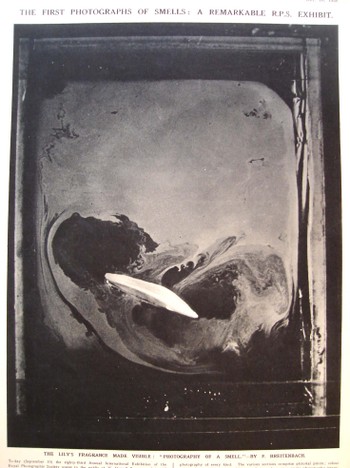
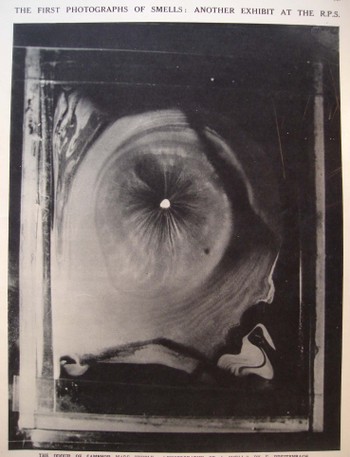
    Here is a “first” though that I think hasn’t been dealt with too terribly much: the first photograph of an odor.

    These beautiful images appeared in the 10 September 1938 issue of The Illustrated London News and were exhibited at the 83rd Annual International Exhibition of the Royal Photographic Society, and were made by H. Devaux (who evidently, according to the snippet of an obituary that I can see from Science magazine, was a plant physiologist and “pioneer of surface physics“Dsc04717
    who died in 1956). The note accompanying the photographs read: “The emission of an odor involves volatillisation of material. If an odiferous material is enclosed in a cell a few millimeters above a clean mercury surface, it is possible to collect on the surface of the mercury a monomolecular layer of the volatillising or odoriferous substance. If the mercury surface initially is covered with talc powder, the gradual formation of the monomolecules layer may be observed as the talc is gradually pushed away from the point immediately below the specimen of material.”

    The photos are that of the odors of a lily and of camphor. I don’t know which is which, and a good story could be made up for either photo belonging to either item. Needless to say, these images are as gorgeous as they are unexpected, especially considering that they were made in 1938.

    {Both images are avaialble for purchase from our blog bookstore.]

    FOOTNOTE:

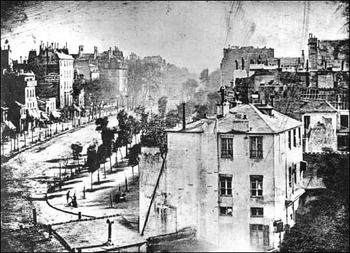
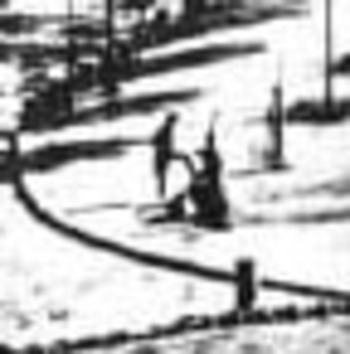
    I’d just like to add here the first photograph of a human being–well, actually, it is the first photograph that just happens to capture a human in the emulsion (discussed Blogoldest_human_photo_2 very nicely on the Doug’s Darkworld  blogsite.  Since the  exposure time was so terribly long for this image to be made, the moving people and horses and carriages on the street, all of the city-life bits, were necessarily spectral, invisible, to the photograph.  Only the stationary items were captured, and the only people captured here were two figures in the foreground, doing something or other that made them still for at least five minutes–long enough for their anonymous but famous photonic impressions to be captured.   Mr. Doug and others seem to think this is a man getting his boots shined–I agree.
    Blogoldest_human_photo_detail


  • Mr. Mole, the Stationary Busby Berkeley of Mass Crowd Installation Photographs, 1918

    JF Ptak Science Books Post 1185

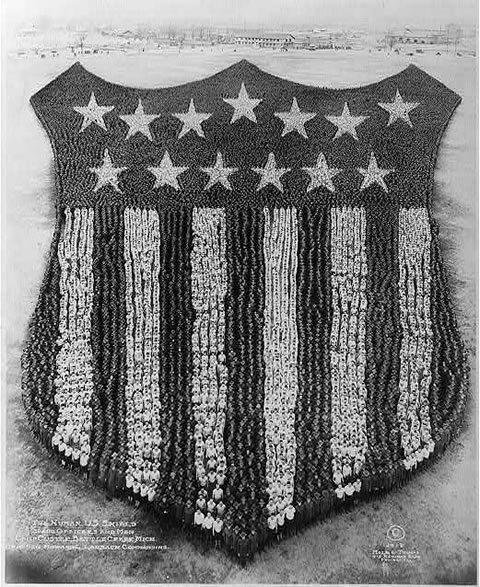
    I’ve long enjoyed these massively organized, captured moments of time and effort–large caliber photos of concentrated efforts of tens of thousands of people, all of their motion and utility directed to produce this one moment in time.  Perhaps the greatest practioner of this artform was Arthur S. Mole (1889-1983), the stationary Busby Berkeley of Big Organized Crowd Efforts (BOCE).  (He led an interesting life, coming from Scotland with his family to be part of a Utopian community led by John Alexander Dowie–a faith healing visionary, self-reported precursor to the second coming of Christ, and leader of the Christian Catholic Apostolic Church–at City Zion, Illinois. Dowie was a problematic man not without good and interesting qualities, though his to-the-death prayer duel with a rival visionary is an interesting story to be left for another time.)

    I’ve always enjoyed this photograph  in particular–it was made from a 70′-tall platform with a 11×14″ view camera using a wide angle and a deep oblique angle, along with 30,000 soldiers from Camp Custer, Michigan.   It was made in 1918 by Mole, along with the evident and very capable choreography of John D. Thomas, who was the Doctor of Persepctive and Motion for the pictures.

    [Note: most of the images below are extremely clickable/zoomable.]

    Arthur-mole-human-us-shield

    Most of the soldiers are used to make the field at the top of the stripes–so near as I can tell (from the resolution image that I had to work with), there are about 300 men in each stripe (except for the outer two), meaning that there between 3,000 to 5,000 in the collected stripes, which puts something like 25,000 troops in the stars and their field. The middle stripe I reckon to be 150′ long; my guesstimate for the star field is 600′ deep and 1250′ wide, making a triangular collection of men 750’x1250′. That takes a little bit of planning to accomplish to ensure that everything is kept in perspective, and which also means that a lot more folks are needed at the top of the constructed image than at the bottom.

    Another excellent example is this photo made of the U.S. Marine Corps emblem using 6,000 marines at Paris Island in 1920.

    http://redtreetimes.files.wordpress.com/2010/05/arthur-mole.jpg


  • Gliders, Flight & Photography in the 1850’s & 1860’s

    JF Ptak Science Books  Post 1075

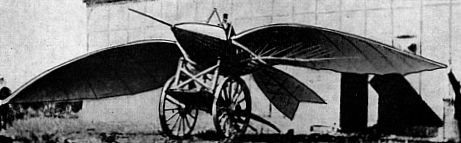
    The field of “photographic firsts” has always been interesting to me–the first photograph of the Moon, the first of a person the first portrait, the first color photo, the first engraving of a photographic image, and so on–and so I came to wonder about the first photograph of an airplane, or aircraft.  What I found was this monster, built by Jean-Marie le Bris, evidently the first image ever made via photography of a fixed-wing aircraft:

    Esterno--first photo

    The photograph (made in 1857, 18 years after the invention of photography) looks very reworked and strains the imagination some, but it shows the glider of Jean-Marie le Bris, who actually achieved gliding flight in the aircraft.  I am sure that the glider used those enormous wheels for land transportation and were not an integral part of the craft. 


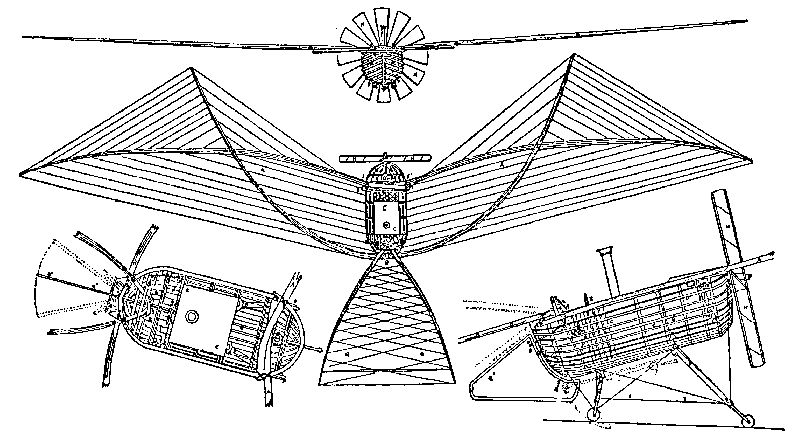
    Esterno--1857dutem

    It was in that same year that Felix du Temple and his brother constructed and flew a small, steam-powered monoplane aircraft model (schematics above), which looked like a bird from the plan perspective and a beetle from the elevation.  The view of the model head-on seems remarkable to me, showing very little in the way of profile.  

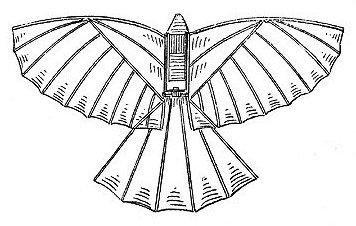
    Ferdinand d’Esterno produced a lovely design of a possible aircraft in his 1867 pamphlet, Du Vol de Oiseaux (“Onthe Flight of Birds”) , a glider that looked manageable and full of possibility, all based on his relentless study of the flight of birds.  Esterno reasoned that all of the heavier birds excelled in soaring flight, and since this was the case, there was hope for man to fly as well. 

    Esterno_Soaring_Machine

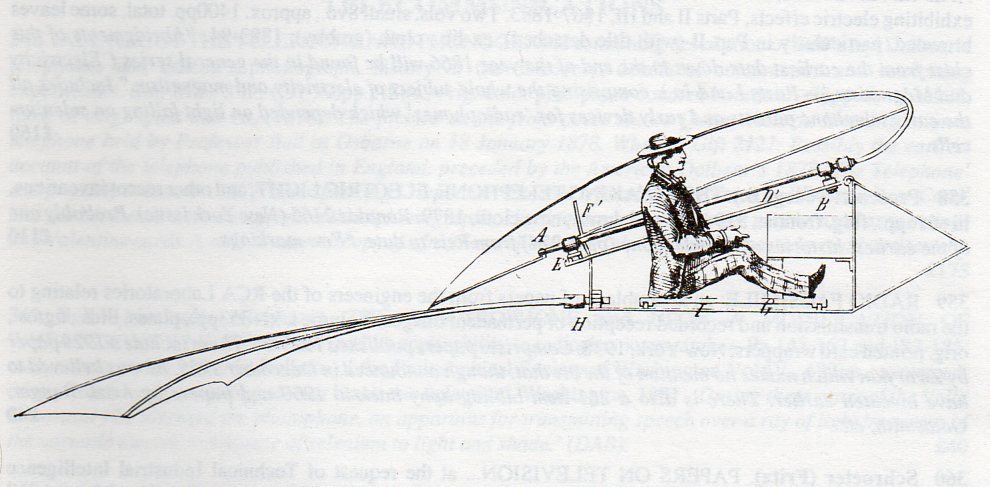
    Esterno’s glider was interestingly outfitted with a movable seat for the pilot–something that would be able to change the center of gravity, the flier’s chair connected to the very broad tail section–controlling a rather elegant, rather light-for-its-era (330 pounds) craft with 215 square feet of wing surface.  (See Flymachines.org for a nice description of this and other early aircraft.)  I think what I like most about the Esterno machine–an idea that never progressed beyond the drawing stage–is its compactness and lovely lines, especially as we can see in the cross-section below:

    Esterno--schematic179

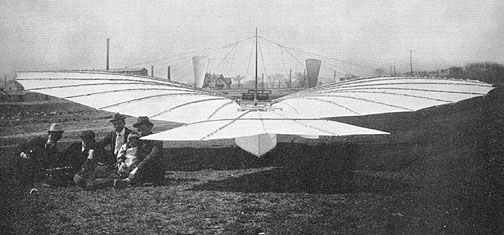
    As the author(s) of Flymachine.org and other sites and books have pointed out, though Esterno’s plans never got out beyond the pages of his pamphlet, he did have an influence on other later fliers, most notably Gustave Whitehead (1874-1927) and the Wright Brothers.  It was whitehead’s work which from my perspective most closely resembles Esterno’s as we can see below in this ca. 1901 photograph, the greatest difference of course being the two engine-driven propellers.

    Esterno

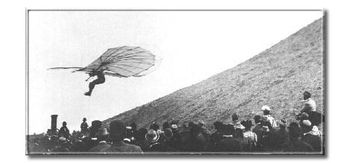
    But it was Otto Lilienthal who was one of the most important figures in the development of
    flight in the nineteenth century, making the first heavier than air
    gliding flights in what looked quite a bit like bird wings.  (Wilbur Wright said of him; “Of all the men who attacked the flying problem in
    the 19th century, Otto Lilienthal was easily the most important. … It
    is true that attempts at gliding had been made hundreds of years before
    him, and that in the nineteenth century, Cayley, Spencer, Wenham,
    Mouillard, and many others were reported to have made feeble attempts to
    glide, but their failures were so complete that nothing of value
    resulted” as found in  The Aero Club of America Bulletin, September 1912, and
    also in the article on Lilenthal in Wiki.)   )  He would die in 1896 in
    a gliding accident, falling to a crumpled death.  We see him in a more successful moment in this fantastic photo:

    Esterno--lilienthal

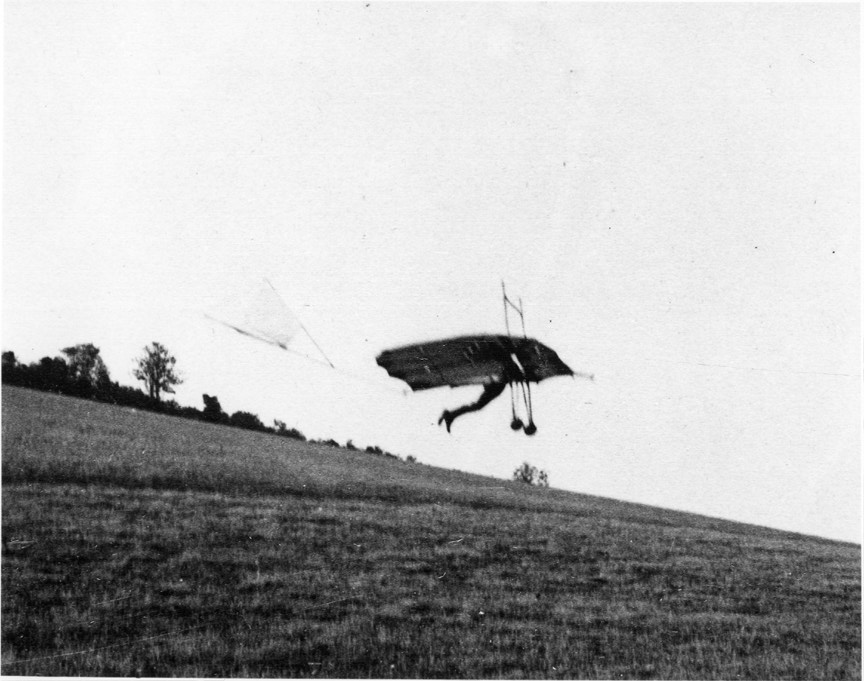
    Lilienthal also influenced the English aviator Percy Pilcher (1866-1899) whose four interesting gliders ( named theBat,
    the Beetle, the Gull, and the Hawk) led to his engine powered glider–a design left not completed due to Pilcher’s own fatal gliding accident in 1899.

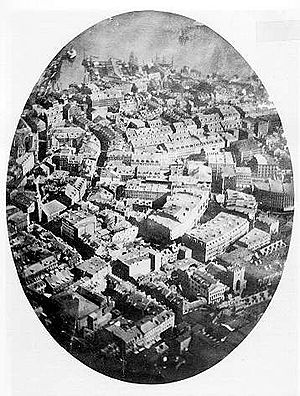
    But getting back to photographic “firsts” and aviation, the earliest surviving aerial photograph was made by James Wallace Black (1825–1896) whose tethered balloon image of Boston (below) is a splendid 160-year-old image of the city; the first first in this category actually belongs to Gaspard-Félix Tournachon (more popularly known as “Nadar”) but that work hasn’t survived.

    Boston 2


  • Picture Posts–American Photo Series

    JF Ptak Science Books LLC  Picture Posts

    A few images that I’ve put aside in the America series:  general picture dump. Sorry, but I didn’t have any notes with them…

    00237r 


  • Sports Photos, 1890-1940, Mostly Women (Picture Dump)

    JF Ptak Science Books LLC
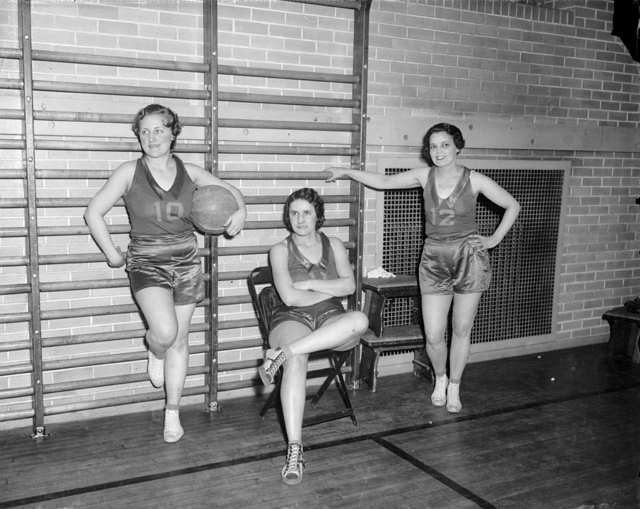
    Here’s a few interesting images I’ve collected and just want to make a picture post of them.

    Baskball sweating 


  • Window Shopping with Berenice Abbott, 1935

    JF Ptak Science Books LLC  Post 883  Blog Bookstore

    I enjoy antiquarian window shopping, browsing photos or
    engravings that depict goods for sale– especially if the prices are posted. I
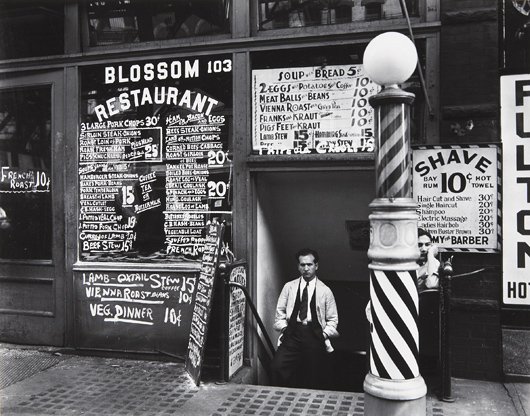
    came back to this deep-in-the-Depression-fantastic photo made in 1935 by Berenice
    Abbott (Springfield, Ohio, 1898-1991). Blossom
    Restaurant, NYC
    was part of Abbott’s effort funded by the WPA, this time as
    a part of her Changing New York Project, and captures the restaurant and
    neighboring barber shop at 103 Bowery. 
    The two businesses actually occupied the first floors and basement
    (respectively) of the Boston Hotel, a standard flop house in a tough and
    distressed part of the city that rented beds by the day, with 249 small
    door-less cubicles offering a decent place to spend the night for 30 cents1. 

    Abbott

    30 cents seems to be the going rate for a bunch of things
    going on in this  picture—30 cents for a
    night in the hotel, 30 cents for the better offers of Morris Gordon’s
    restaurant. 30 cents for a haircut and shave, 30 cents for a “women’s hair
    bob”2 and so on.  Which seems about
    right—a fancy haircut and a decent better-than-average dinner for two will
    probably cost about the same, today. 

    If you were really on a tight budget, 30 cents would buy you
    three vegetarian dinners, or 6 offerings of bread and soup, or three visits to
    the table of meatballs and bans, or pigs feet and kraut. 

    The price of a stick-to-your-ribs meal of sirloin and
    potatoes and a pot of coffee also cost about the same as a gallon and a half of
    gasoline (which cost about 20 cents). 
    The same amount of gas today would get you a serving at McDonalds, or
    something on that order, and perhaps even a happy take-away for the kids.
    Perhaps the two even out. 

    30 cents might get you a loaf of bread, and wouldn’t quite get
    you a dozen eggs.  Now this is
    remarkable, because if you adjust all of this according to modest CPI measures,
    the average cost of a dozen eggs in 1935 was 37 cents, or (according to the US
    Census website generating 1935 to 2009 prices adjusting to CPI) $5.84.  The bread would cost $4.74 in 2009 dollars,
    which means that the staples today—milk, bread, butter, eggs, were more
    expensive in 1935 than today.  Ditto
    gasoline, which cost 19 cents a gallon, or $3 today—actually this would be much
    more expensive in 1935 as the mileage the cars were getting then (and the
    octane) was much lower, so the cost of running an automobile was considerably
    higher.   The cost of the car itself,
    though, still favors the ‘thirties for modest transportation, which came in at
    about 600 dollars, or just over $9000 in 2009 dollars3. 

    The 3-cent first class postage stamp of 1935 was more
    expensive than first class postage in 2009: 
    47 cents versus 44.  When you look
    at the increases and bitty spikes of the cost of a first class stamp over time
    the whole thing looks pretty flat. 

    The average salary for a family of four in 1935 was about
    1500/year, which oddly enough is about the same for the poverty guideline level
    for 2009 established by the Department
    of Health and Human Services (about $23,000). 
    Minimum wage legislation didn’t begin until 1938, but if you take a look
    at one of my earlier posts here on the history of this idea 
    you’ll see that the recent history of legislating  a meaningful level of acceptance for a base
    living wage is mainly disgraceful, with relatively little accomplished (in
    adjusted economic terms) for half a century. 
    (The new minimum wage brings us to about a mid-way point as the highest
    minimum wages paid in the 71-year history of the program.)

    And so I thank Ms
    Abbott again for her beautiful social commentary, and a happy 75th birthday
    to this photograph. 

    Notes

    1.A fantastic website and resource for changing aspects of
    NYC can be found here, at Frank Levere’s Changing New York site. http://www.newyorkchanging.com/

    2. I wrote a little bit about the appearance of women-only
    hair salons in my post “The Staggering Beauty of Barber Shops” https://historyofideasblog.com/thesciencebookstore/2009/02/the-staggering-beauty-of-barber-shops-naive-surreal-department-22.html


    3. Other bits of what stuff
    cost in 1935:

    Flour (5 lbs)     25.3 cents

    Bread (lb)         8.3

    Round steak (lb)  36.0

    Bacon (lb)        41.3

    Butter (lb)       36.0

    Eggs (doz.) 37.6

    Milk (1/2 gal.)   23.4

    Oranges (doz.)    22.0

    Potatoes (10 lbs) 19.1

    Coffee (lb)       25.7

    Sugar (5 lbs)     28.2

    Car: $580

    Gasoline: 19 cents/gal

    House: $6,300

    Bread: 8 cents/loaf

    Milk: 47 cents/gal

    Postage Stamp: 3 cents


  • Vermeer of the Tars: Found Art in Photographs, 1918

    JF Ptak Science Books LLC  Post 842 


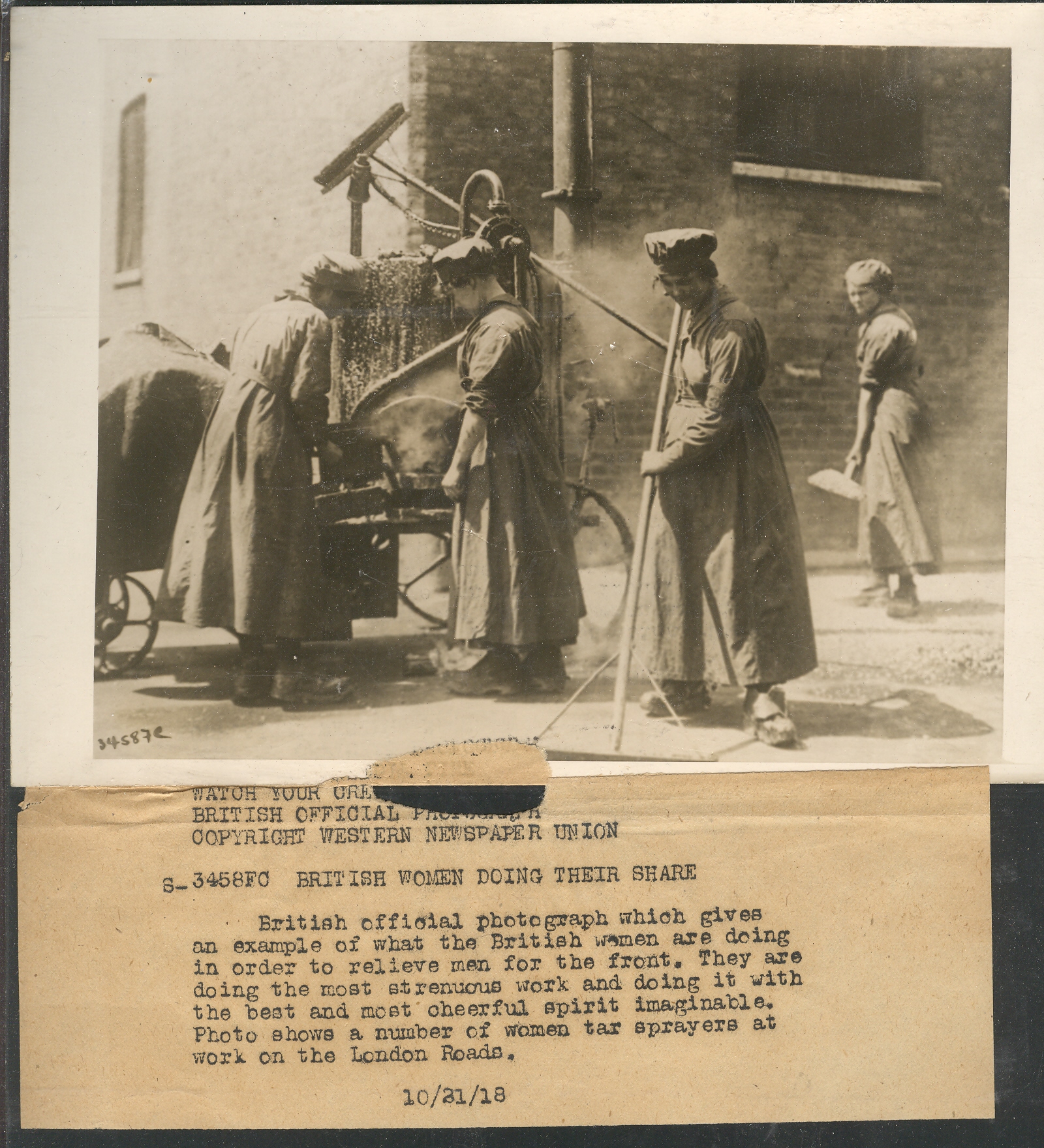
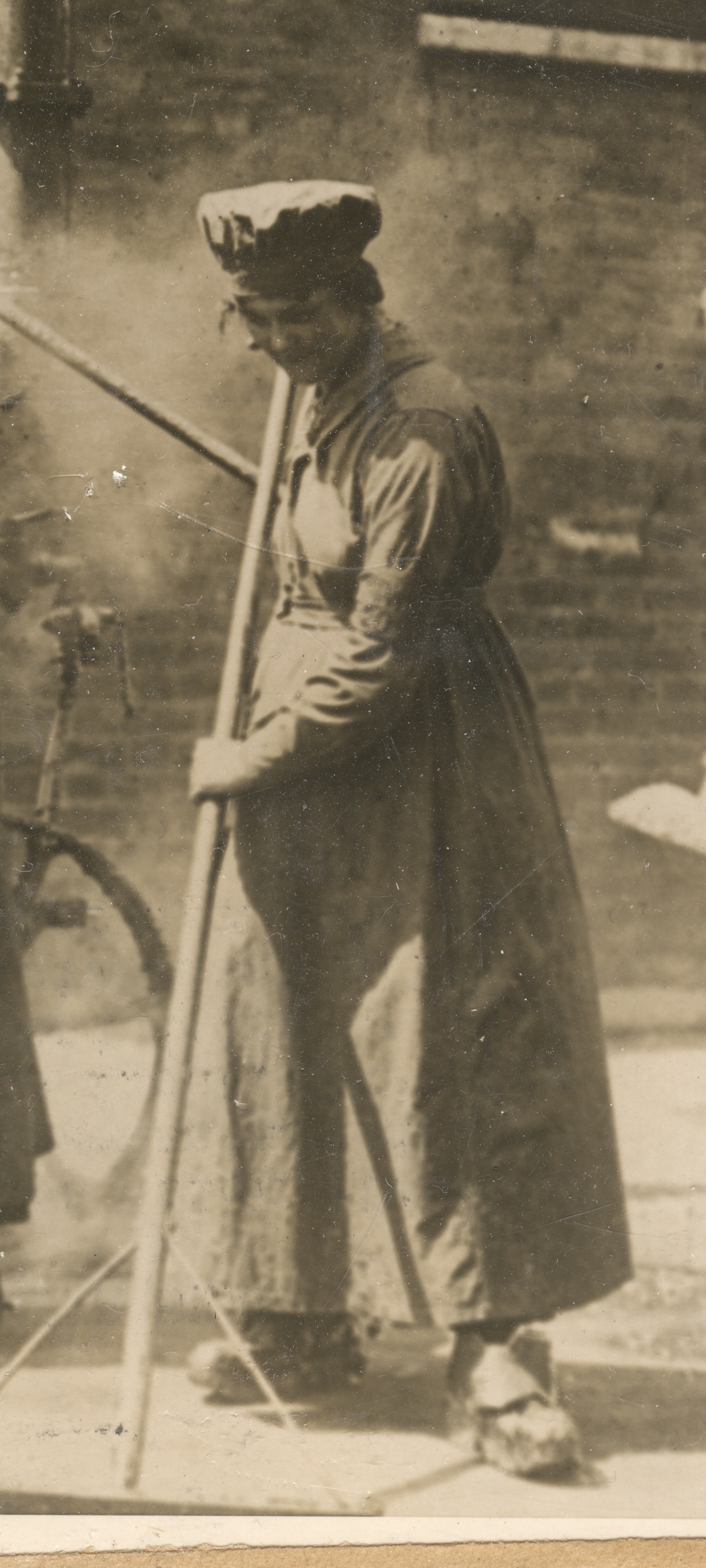
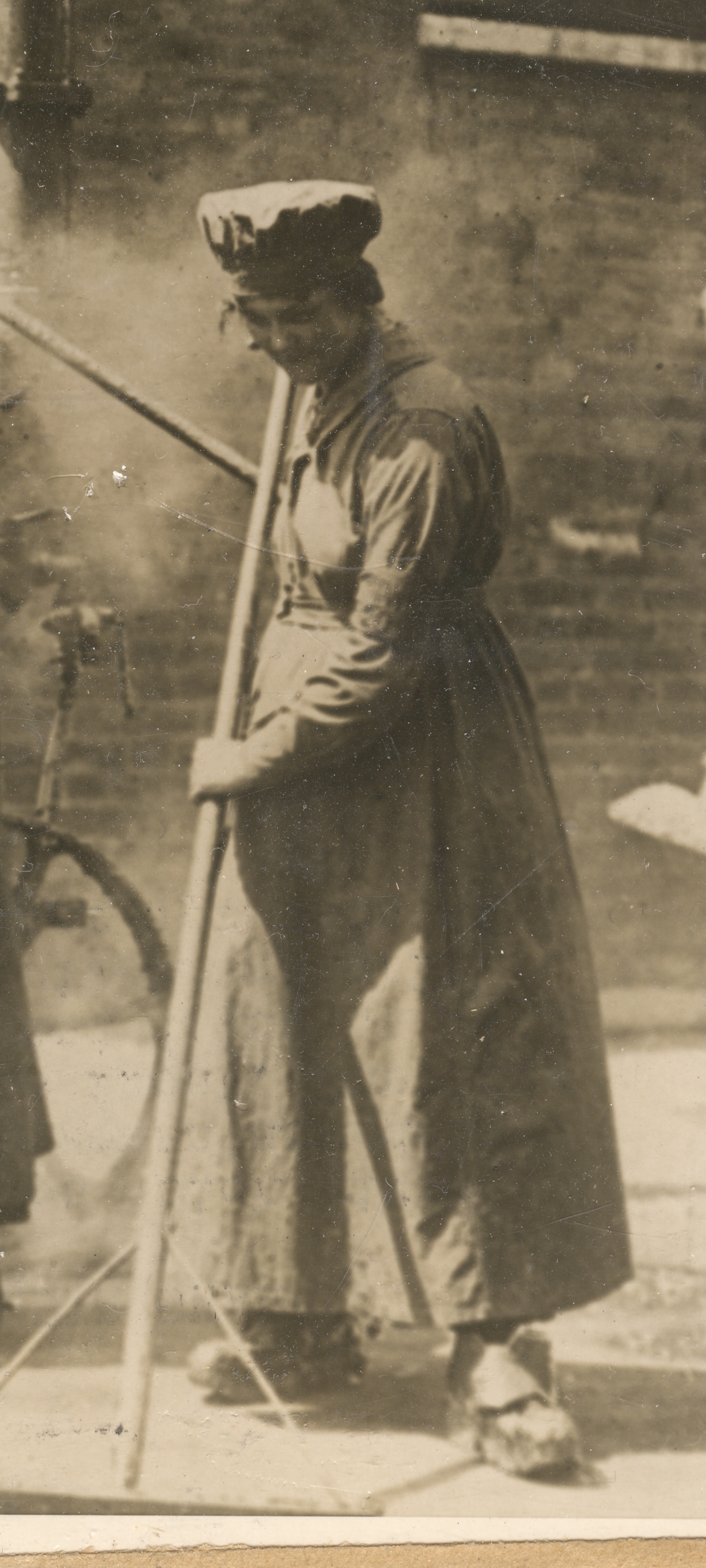
    0 ebay nov 20 WWI Vermeer In England, women
    were welcomed to the (paid) workforce during the years of the First World War
    (1914-1918)—their employment in traditionally male positions enabled those they
    replaced to go out to the front and die for their country.  Thus the women
    seen here in the News Photo Service Agency photograph (taken in 1918), working
    at spraying tar in the streets of London, were appreciated,
    and tolerated.  For women in England the War blasted away the contrivances of
    formally scheduled employment:  something like 12% of fall women in England were
    working as servants and house cleaners.   Come the War, women were
    offered jobs of revolutionary stature in a wide range and variety of
    work.  The Civil Service employment for women went from 33,000 in 1911 to
    102,000 in 1921, and trade union membership rose 160% (357,000 in 1914 to
    1,000,000 in 1918 (with men showing a 44% increase at the same time); for the
    most part, though, employers took advantage of the situation, and the women
    still generally earned less than half of the salary as comparable male workers
    did (or the men they replaced). 

    When the end of the War came, so did the appreciation for the women
    replacement workers—there was bitter feelings in the post-war period because of
    the weak British economy and a scarcity of jobs.  So the women who took
    the jobs of men to help the country’s war effort and free up hundreds of
    thousands of men for war service became an atavistic action, “taking” the jobs
    of men who had gone out to fight for their country. This of course cost many
    women their jobs, but the damage had already been deeply done to the pre-1914
    British world of the sexual politics of business-being-done, though it would
    take World War II to really ingrain the appearance of women in the workforce
    into the national psyche.

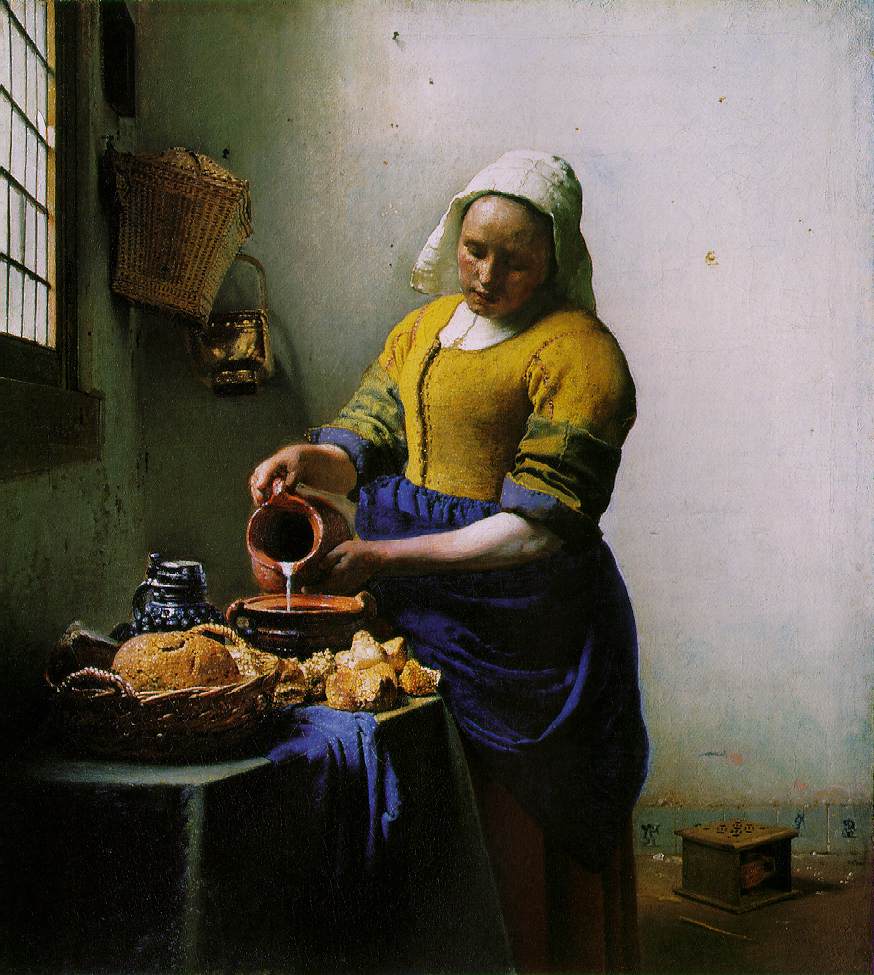
    I’ve liked this photo for a long time, seeing things differently in it over the years.  It struck me just yesterday that the woman in foreground-right–whose close-up reminds me too of a Madonna, a Mona Lisa of the Tars–looks like a Vermeer character from 400 years ago.  Or at least the position of her body does.

    0 ebay nov 20 WWI Vermeer 001 

    0 ebay nov 20 WWI Vermeer 001 0 blog nov 20 vermeer water


  • The Best Dollar the Government Ever Spent? The Migrant Mother, 1936

    JF Ptak Science Books LLC   Post 837  Blog Bookstore 

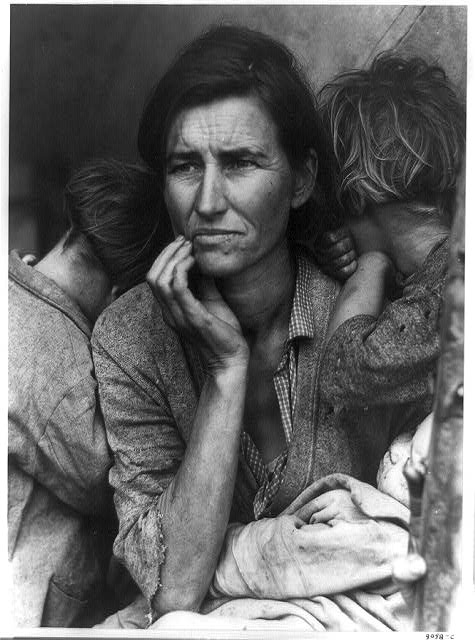
    Lange 5 photos On of the great innovations in a sea of great things accomplished during the Franklin Roosevelt administrations was the formation of the Farm Security Administration, a division of the government established to help farmers through the devastating Dust Bowl and Great Depression.  A subset of the FSA was a photographic unit which was set up to document the progress made by the FSA (and provide, I am sure, for some much-needed good news, a hearts-and-minds campaign).  This division was headed by Roy Emerson Stryker, who wound up hiring a collection of dream-team photographers unlike any ever assembled for a single purpose.  Esther Bubley, Marjory Collins, Mary Post Wolcott, Arthur Rothstein, Walker Evans, Russell Lee, Jack Delano, Gordon Parks, Charlotte Brooks, John Vachon, Carl Mydans, Dorothea Lange and Ben Shahn were sent out all across the country and wound up with the greatest and most beautiful photographic history ever assembled.  There were about 77,000 images made, and I recall reading (somewhere) that the total budget for the Stryker group for the years 1936-19421 was about $100,000, meaning that each completed image cost just over a dollar apiece.  
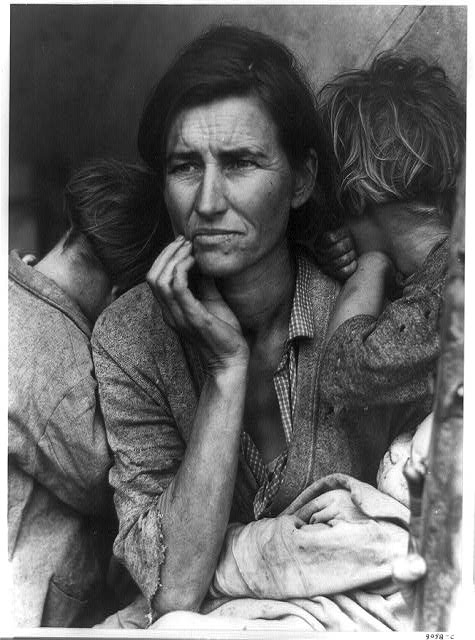
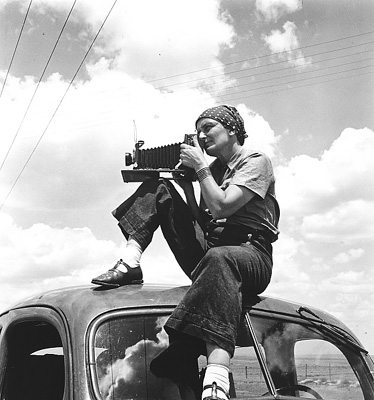
    Lange--migrant One of the most compelling of all of these images was from a series made by the new-hire Dorothea Lange (1895-1965)  in 1936.  On the tail end of a month-long road trip she was nearing the end of her day when she spotted a hand-lettered sign reading “Pea-Pickers Camp” by the side of the road near Nipomo, California.  She briefly considered stopping but went ahead, and for the next 20 miles of hard road continuously questioned her decision.  Unable to shake her better judgment, she turned around and drove back to the turn-off for the camp.  Lange drove down the dirt road and found a ramshackle assembly of tents, one of which contained an exhausted mother sitting forlornly with her children, sheltered in a tent fashioned to the rear of the woman’s tireless car.  Lange spent only 10 minutes with the woman, making five exposures.  She learned that “the crops had frozen, and the woman and children were living on vegetables scavenged from the fields, and the few birds that the children managed to catch.  The mother could not leave; she had sold the tires from her car”. 

    Her photograph created an American Madonna in her Migrant Mother.

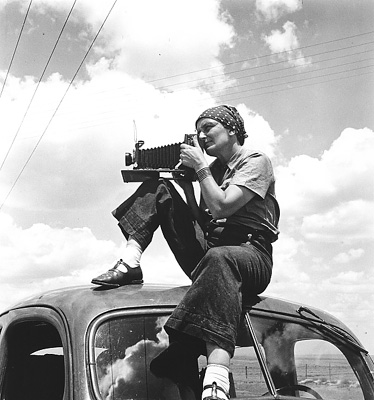
    George P. Elliott, writing in the introduction for the Lange retrospective at the Museum of Modern Art (New York), grasped the essence of the image:
    Dorothea_lange portrait

    “For an artist like Dorothea Lange who does not primarily aim to make photographs that are ends in themselves, the making of a great, perfect, anonymous photograph is a trick of grace, about which she can do little beyond making herself available for that gift of grace”.

    Lange describes her encounter as follows:

    “I saw and approached the hungry and desperate mother, as if drawn by a magnet. I do not remember how I explained my presence or my camera to her, but I do remember she asked me no questions. I made five exposures, working closer and closer from the same direction. I did not ask her name or her history. She told me her age, that she was thirty-two. She said that they had been living on frozen vegetables from the surrounding fields, and birds that the children killed. She had just sold the tires from her car to buy food. There she sat in that lean- to tent with her children huddled around her, and seemed to know that my pictures might help her, and so she helped me. There was a sort of equality about it”. (From: Popular Photography, Feb. 1960).  Lange’s field notes of the images read: “Seven hungry children. Father is native Californian. Destitute in pea pickers’ camp … because of failure of the early pea crop. These people had just sold their tires to buy food.”

    Roy Emerson Stryker, who was in charge of the photography project (History Section) for the FSA said of this image:

    “When Dorothea took that picture, that was the ultimate. She never surpassed it.  To me it was the picture of Farm Security. She has all the suffering of mankind in her, but all the perseverance too.  A restraint and a strange courage”.

     NOTES

    1.  The photographic history unit of the FSA morphed into a propaganda arm for the Office of War Information (OWI) in late 1942.

    2. Florence Owens Thompson (1903-1983)  is the real name of the Migrant Mother.

    3.  The Library of Congress files for the series of photos

  • People Out of Place: Mailrooms and Traffic Islands, Military, 1918

    JF Ptak Science Books LLC Post 824  Blog Bookstore

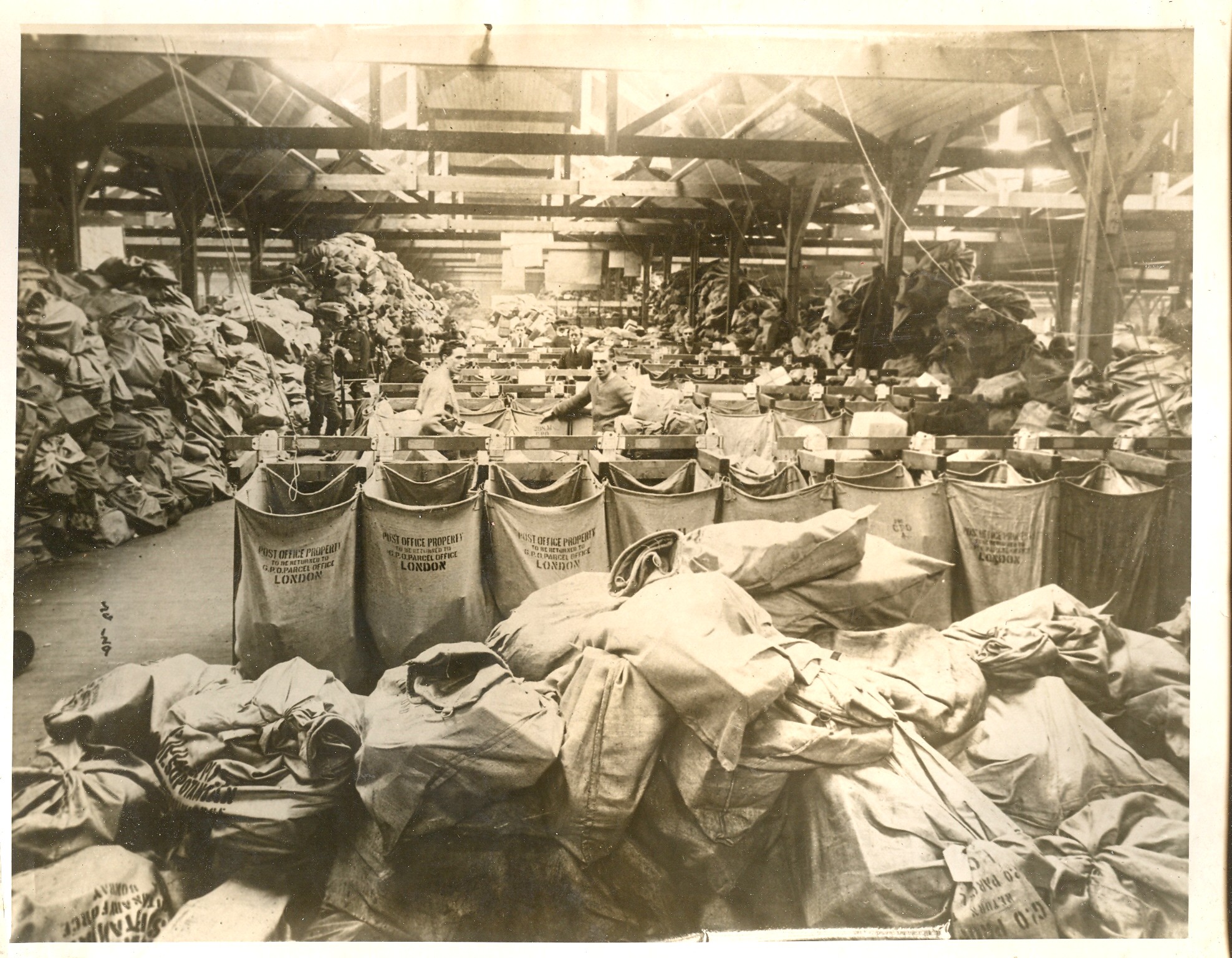
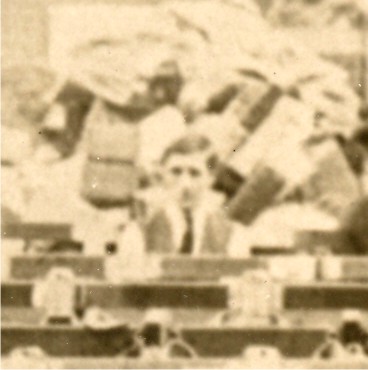
    This is the U.S. Army mail depot at Regents Park, London, braced for and under siege by  Christmastime mail in 1917. It strikes me that there are not a million items in this photo–at this time in the war there were something like 35 million people in the services for all countries dedicated to the war effort, which is approximately half the number that served in total.  If these letters in this picture were bodies, I reckon that there would be five more rooms like this necessary to tell the visual picture of the war dead and wounded.  This aside, I initially focused on the guy in the rear with the white shirt and tie, standing there pretty much overwhelmed by the task of moving all of that stuff…and perhaps with the idea that much of the mound would wind up being undeliverable because the recipient was killed.  I wonder if that mail was returned, or not?

    WWI photo Xmas mail 


    WWI photo Xmas mail detail

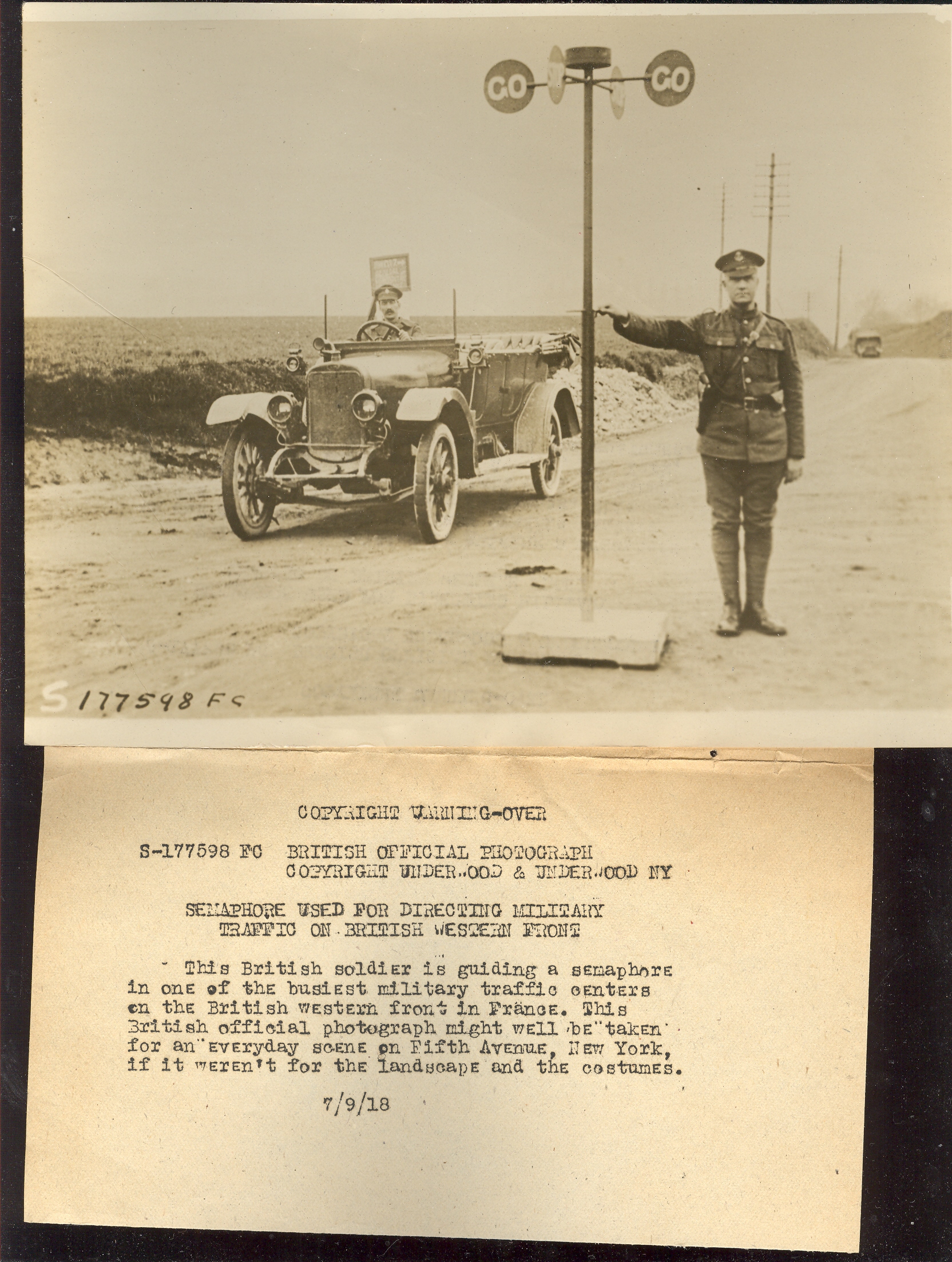
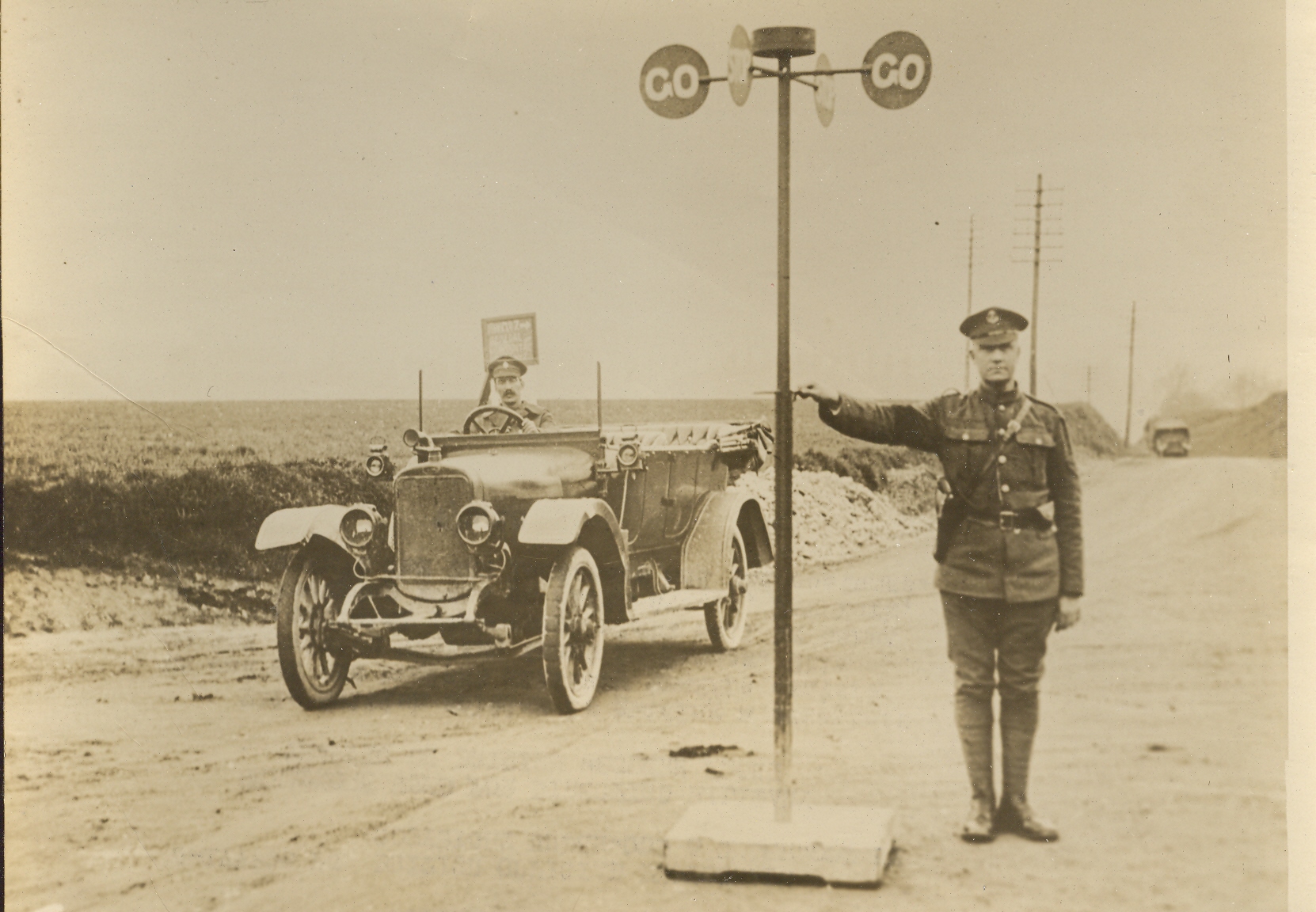
    On the other end of the spectrum is this bizarrely-titled photo of a
    British soldier “guiding” a traffic signal device…the description
    says that this is the busiest intersection in all of British-occupied
    France.  Maybe so, but not at this particular time.  Perhaps the
    photographer should’ve waited a bit to get a different sort of picture
    to make his point, rather than settle for this lonely (if not
    beautifully arranged) situation.

    WWI photo traffic


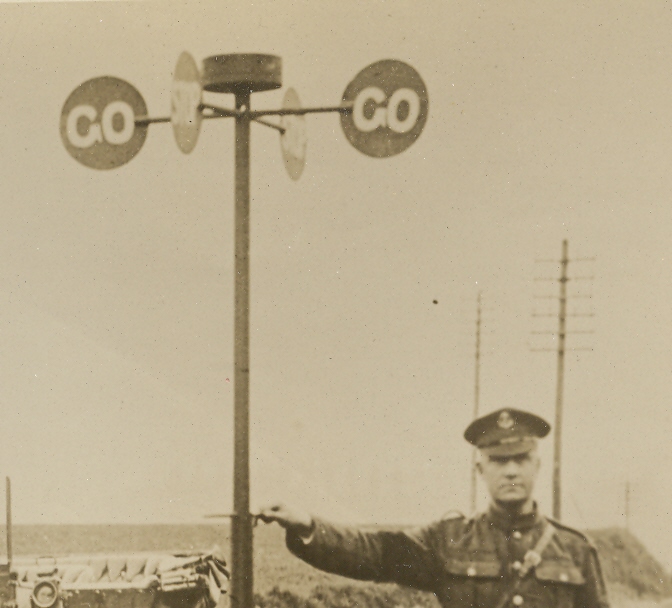
    Here’s the image without the accompanying text, which was supplied for the end-user of the photo by the news service photography supplier. 

    WWI photo traffic detail 

    WWI photo traffic detail 001

    ·Posted by :

    ·in:

    — —