A Daily History of Holes, Dots, Lines, Science, History, Math, Physics, Art, the Unintentional Absurd, Architecture, Maps, Data Visualization, Blank and Missing Things, and so on. |1.6 million words, 7500 images, 4.9 million hits| Press & appearances in The Times, Le Figaro, Mensa, The Economist, The Guardian, Discovery News, Slate, Le Monde, Sci American Blogs, Le Pont, and many other places… 5000+ total posts since 2008.

Category: Photography

  • Two Uncommon Crowd Scenes, 1932 and 1945.

    JF Ptak Science Books   Quick Post  (Overall Post 5152)

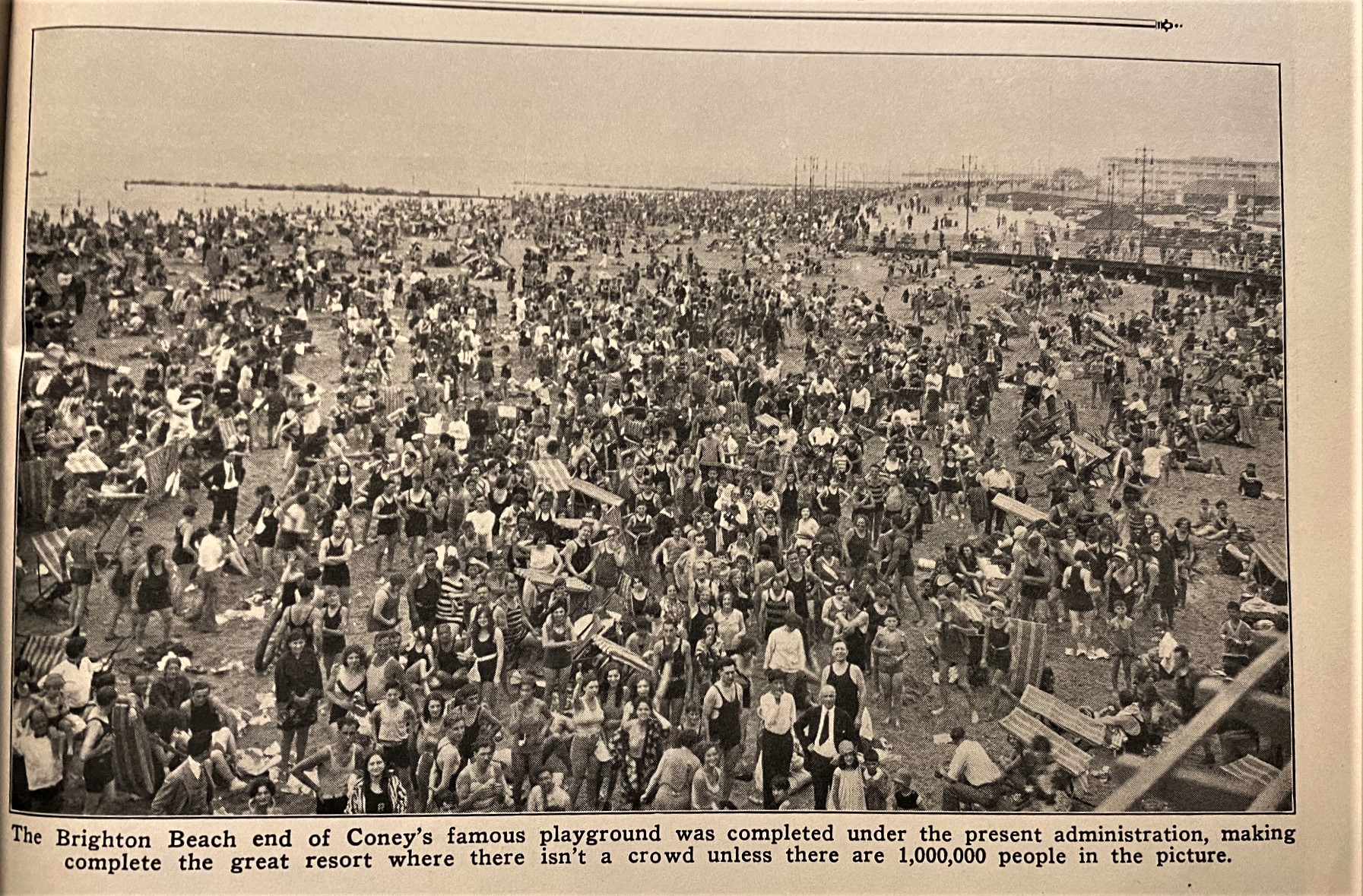
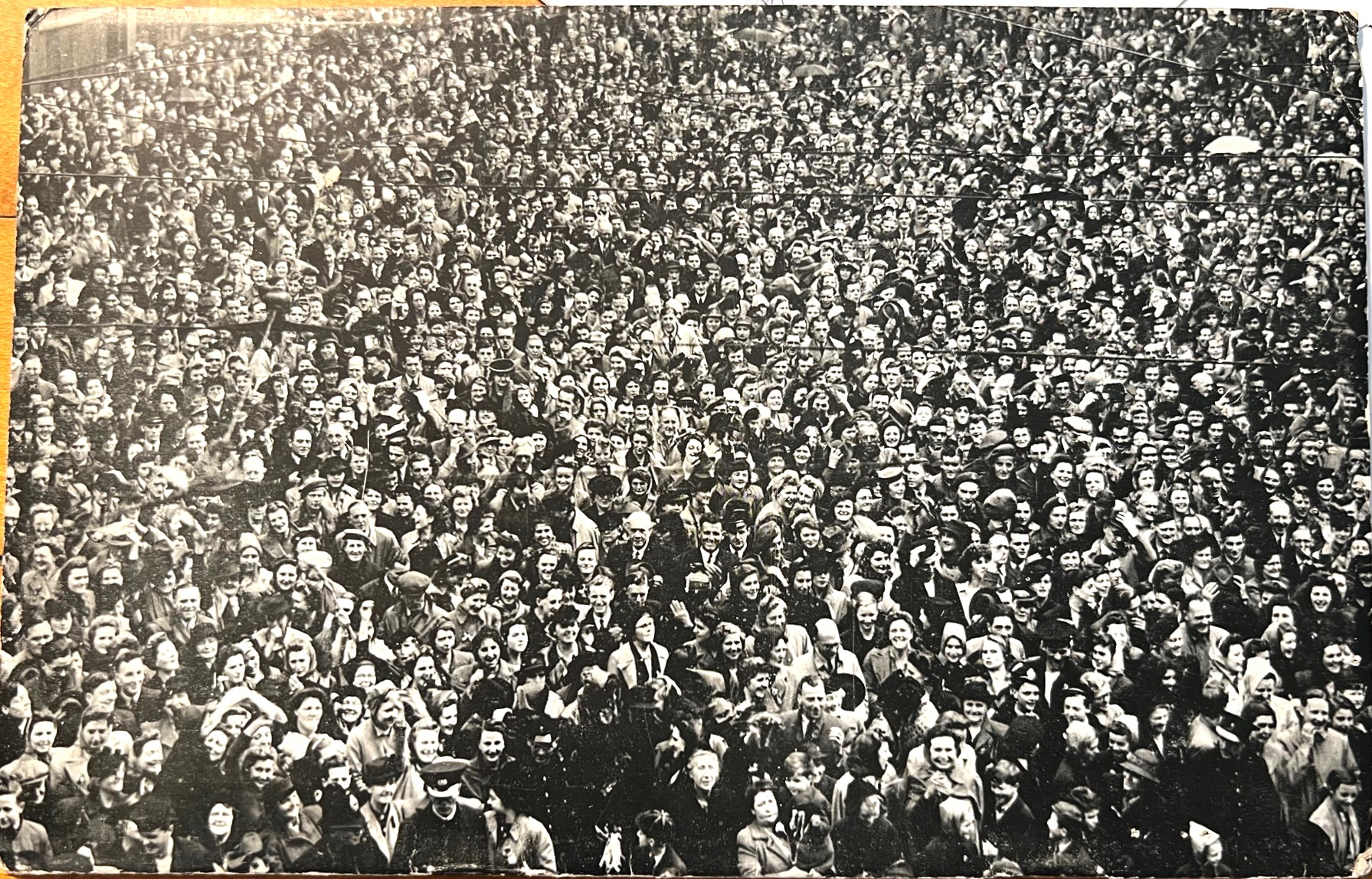
    It seems to me that these two photos may be of some interest to folks given how utterly jammed the scenes are with people and that their sources are pretty obscure.  The photographer for each is not identified, which is a shame.  

    IMG_0974[Source:  Your City, a Handbook of the Citizens of Liverpool, October 1945.]

    And also  this pre-Weegee  scene  of  Coney  Island, the caption stating that there were one million people on the beach.

    IMG_0793 (1)[Source:  New York, the Wonder City, 1932.]

    ·Posted by :

    ·in:

    —

  • Patriotic Snow Parade, 1917/1918

    JF Ptak Science Books    Overall Post 5147

    WWI--great imagessnow parade059


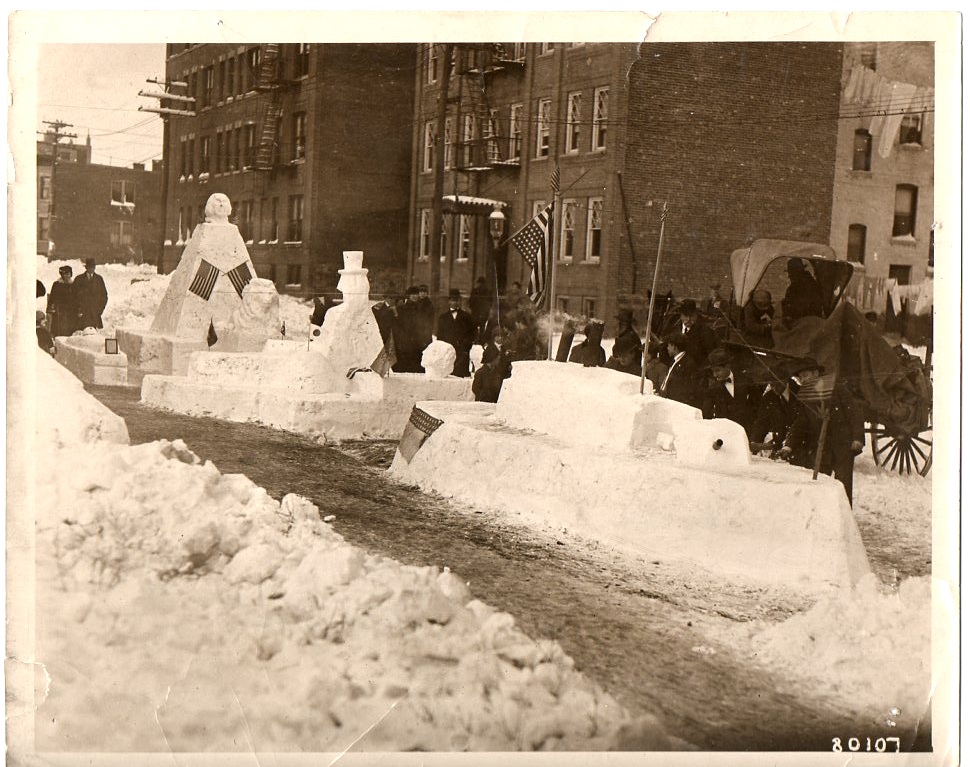
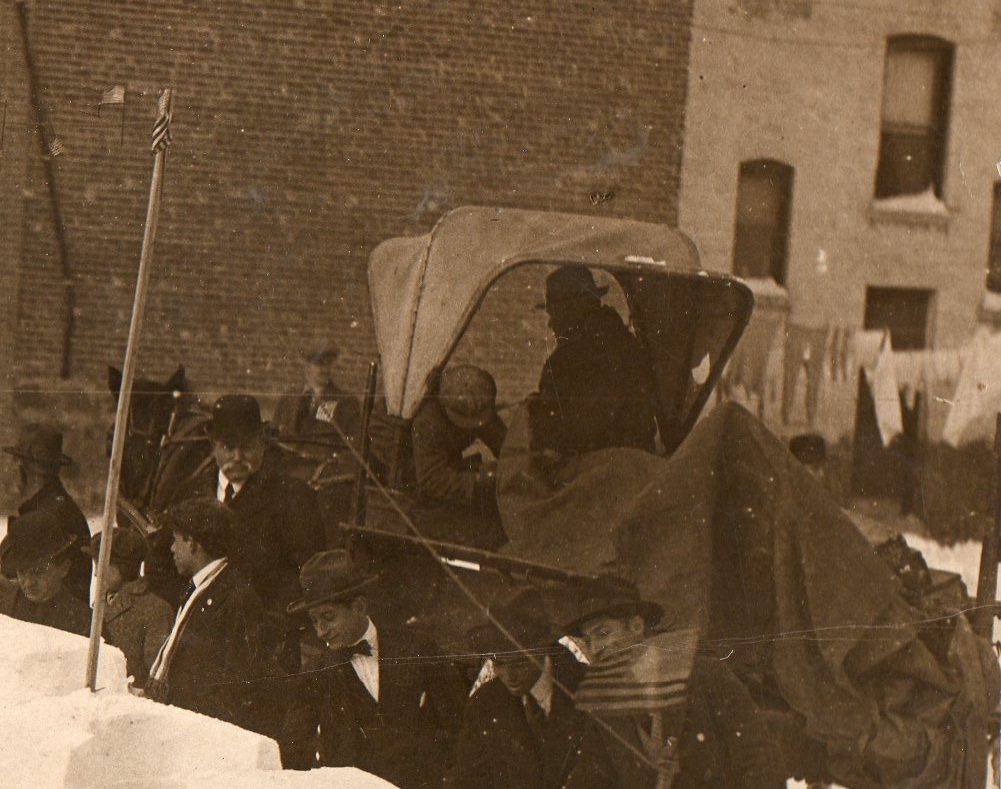
    This news photo service image–stamped “Hearst-Pathe News Agency” on the back–is from the winter of 1917/1918 and shows a patriotic snow parade somewhere in the United States.  The snow looks prodigious, judging from the piles in the foreground and also the accumulated snow on the windowsills, and I imagine that all of the snow floats were sculpted mainly out of exiting snow in the street.  It is a delightful scene, to me, and hosts a variety of smaller, lovely images in vignette. For example:

    WWI--great imagessnow parade060

    The man in shadow and sleeping/relaxed figure (boy) in the buggy complement the white-mustachioed bowler-wearing man to the left; the men looking on in the foreground are interesting, too–plus there’s that laundry in the background.  Given that the laundry is out (and wasn’t just left out during the storm) and that no one seems to be particularly bundled up against cold, I’m going to guess that there was a break in the weather that pushed the temperature higher than normal, with almost everyone taking advantage of the warm snap, as people do everywhere, all the time. (Or maybe not this at all, and that they’re northern folks, and are used to the cold.) 

    I also like the tiny American flag on the tall pole at left.

    ·Posted by :

    ·in:

    —

  • Interesting Photo of a Communist Demonstration, NYC, 1936

    JF Ptak Science Books  Quick Post

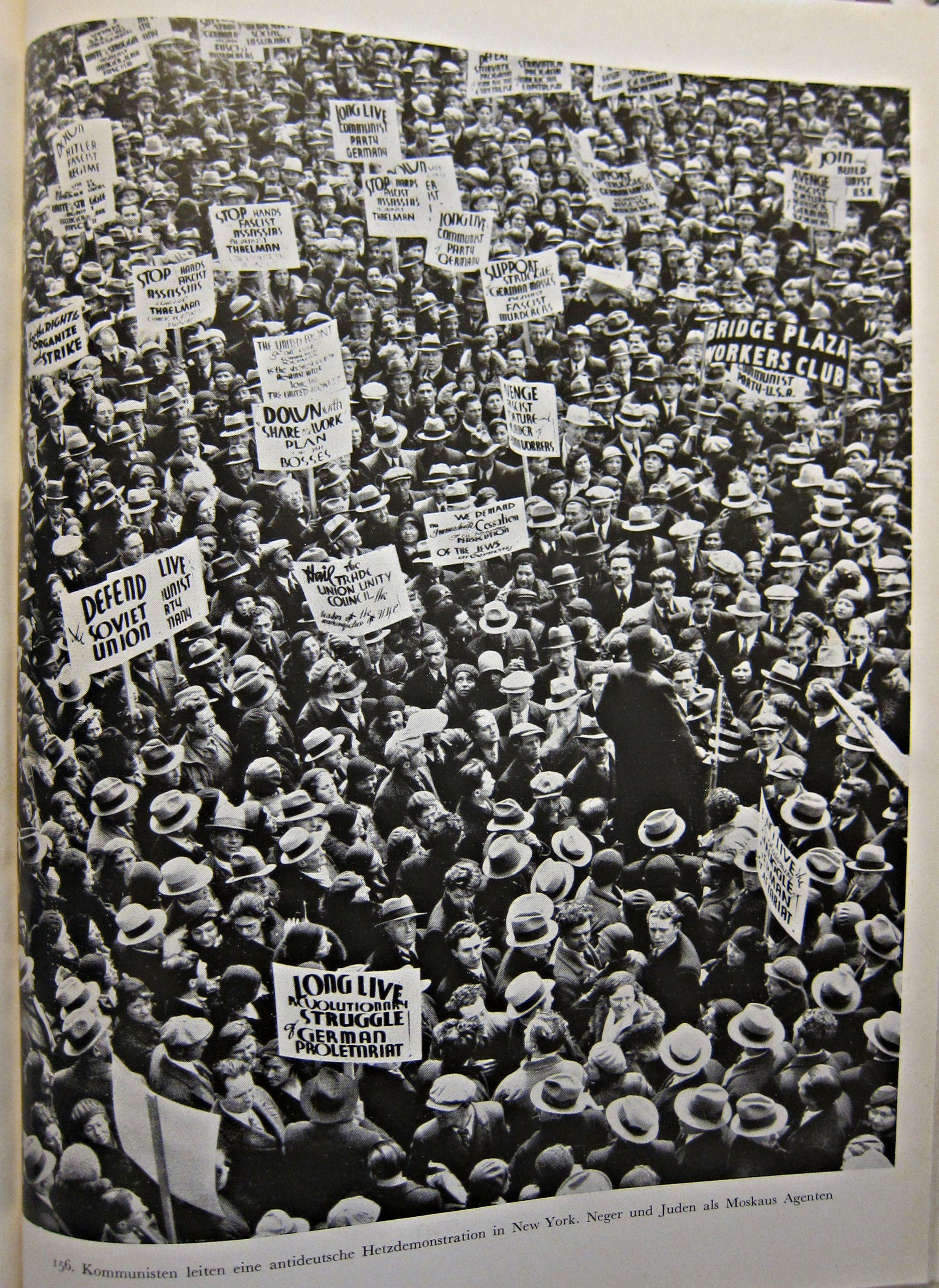
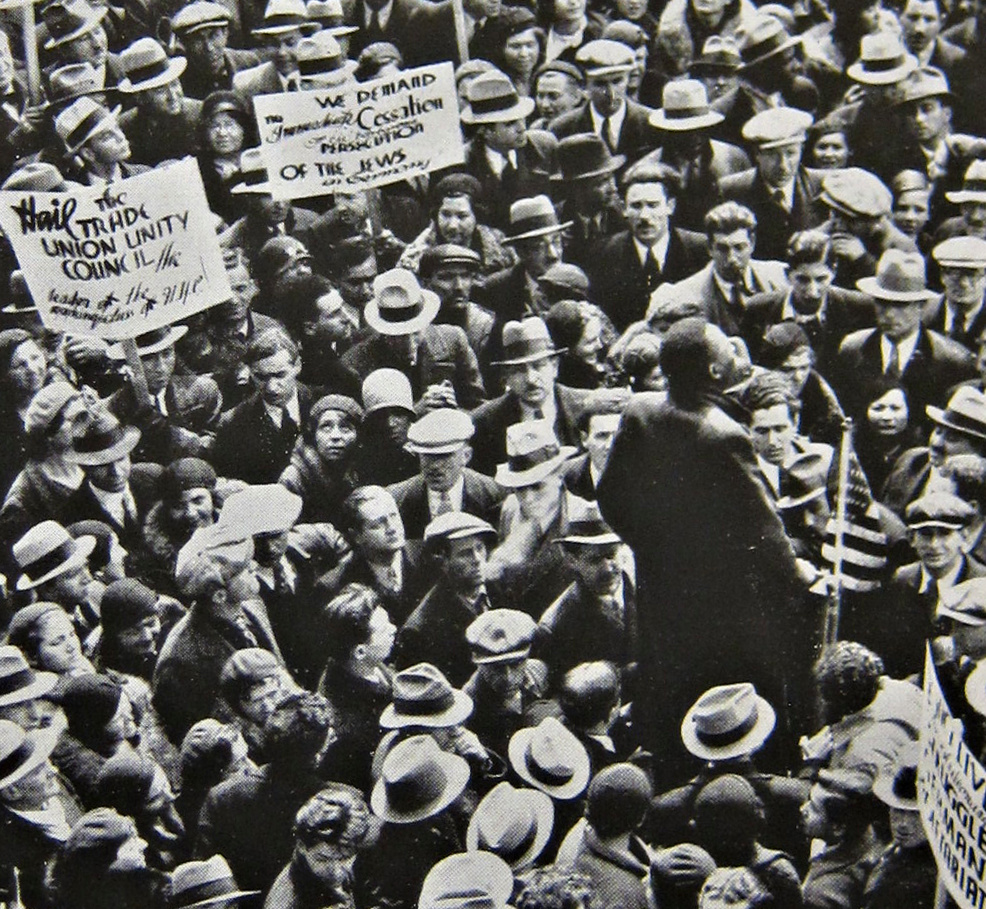
    This evocative crowd scene appears in a piece of Nazi propaganda in 1936 and supposedly (and likely) depicts a Communist demonstration in New York City.  The Nazis of course hated the Communists and much else, and the work in which this appears–Die Weltbolshewismus–is particularly grisly and nasty, illustrated with 100+ photo images as impacting as this one.  Of interest to me were the placards, one of which calls for the “immediate cessation of persecution of the Jews in Germany”, which in 1936 is not a common expression or realization. The speaker here also appears to be Black, addressing a sea of white faces. (No doubt that this was the point of the non sequitur sentence fragment in the legend identifying “Negroes and Jews” as agents of Moscow.)

    Commie 1936

    And a detail:


    Commie 1936 detail


    ·Posted by :

    ·in:

    —

  • Munitions Train, France, 1918

    JF Ptak Science Books  Quick Post    

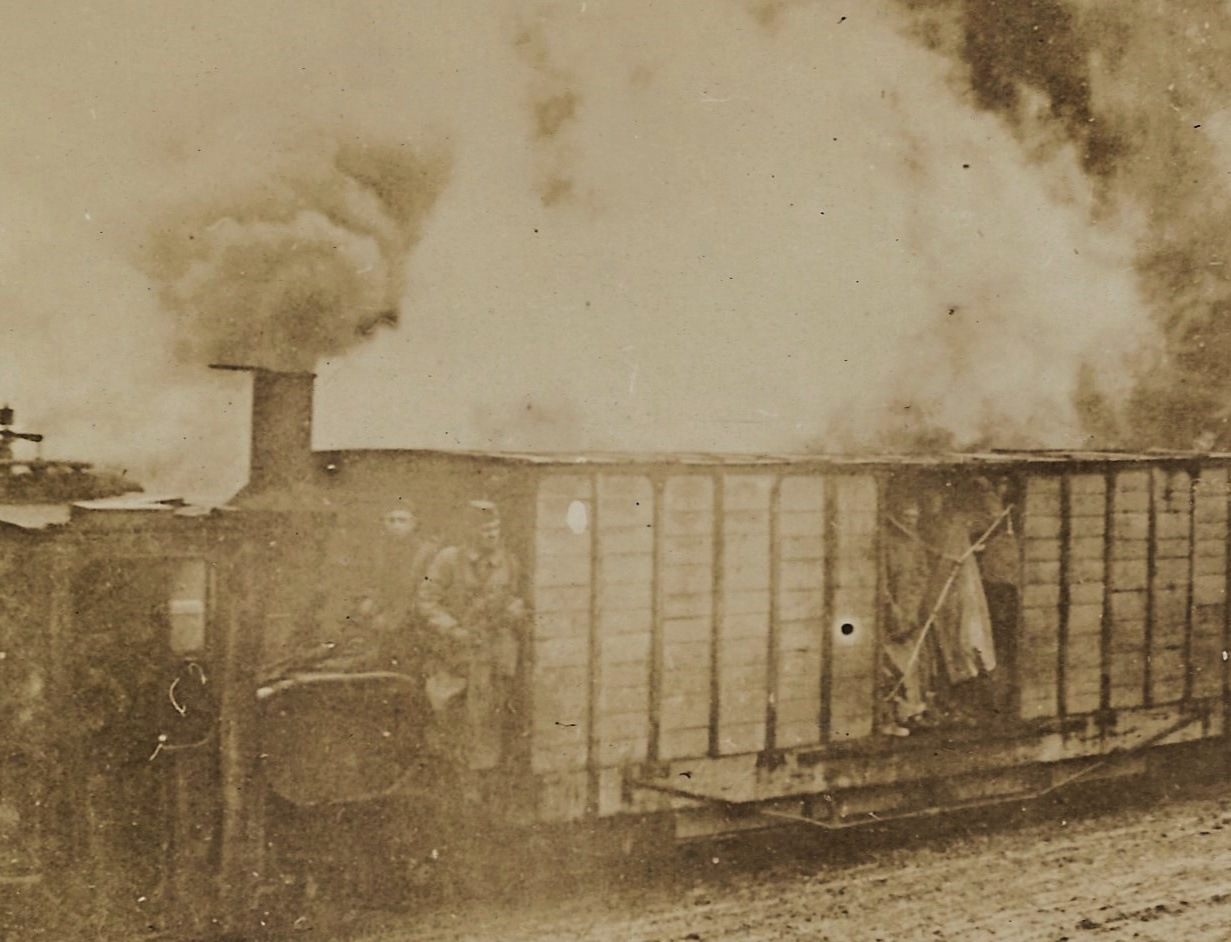
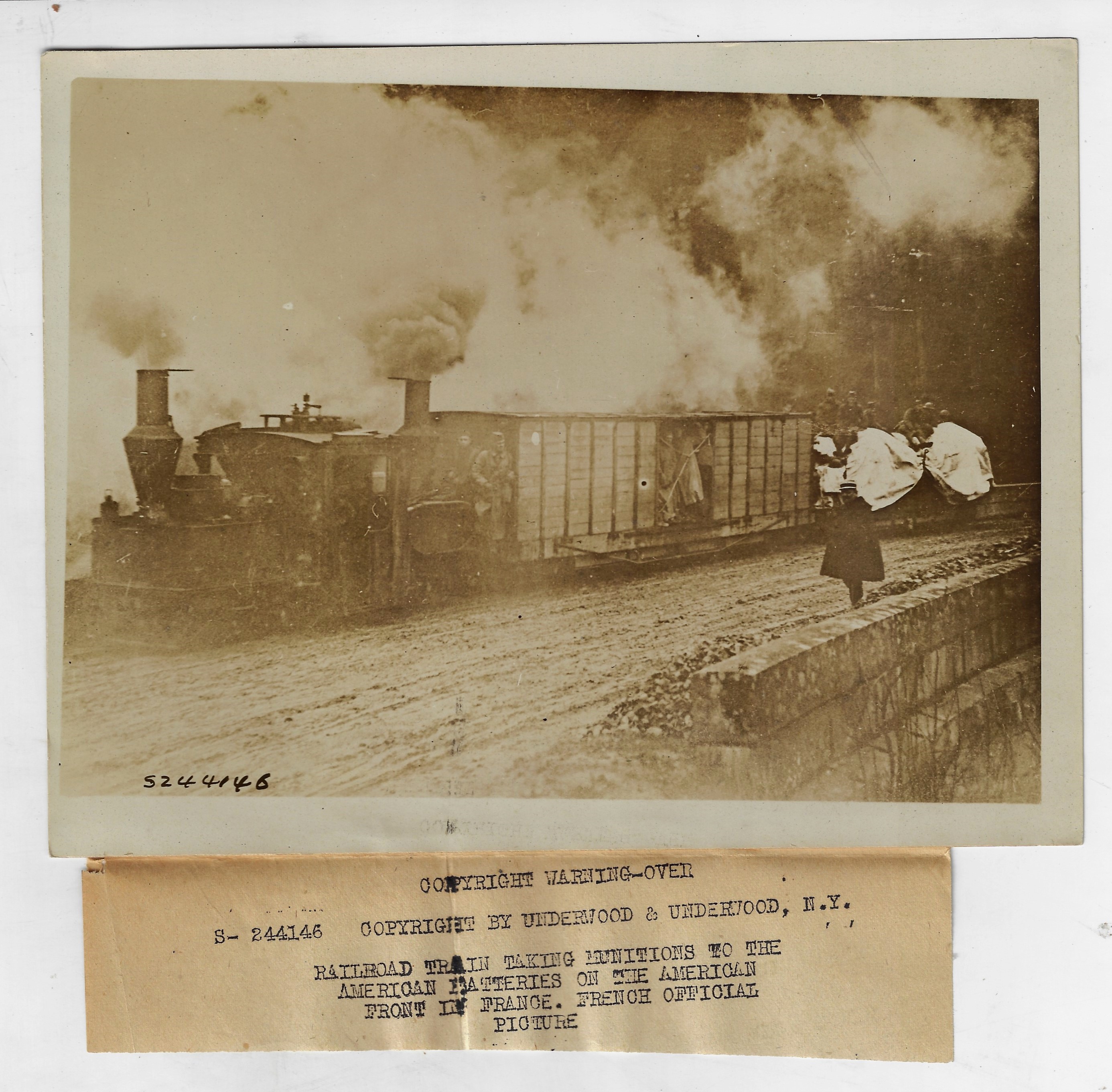
    This is a New Photo Service image by Underwood & Underwood of a laboring narrow gauge train making its way along to the front with two cars full of munition and men, on its way to U.S. batteries at the front in France, 1918.  

    (The original wasn’t robust enough to pull much detail in the faces of the troops in the railway car doorway…I also couldn’t tell what they were standing on…)WWI Photos train munitions_detail_
    WWI Photos train munitions_detail_

    ·Posted by :

    ·in:

    —

  • Front Line Field Medical Station, Italy, June 1918

    JF Ptak Science Books  Quick Post

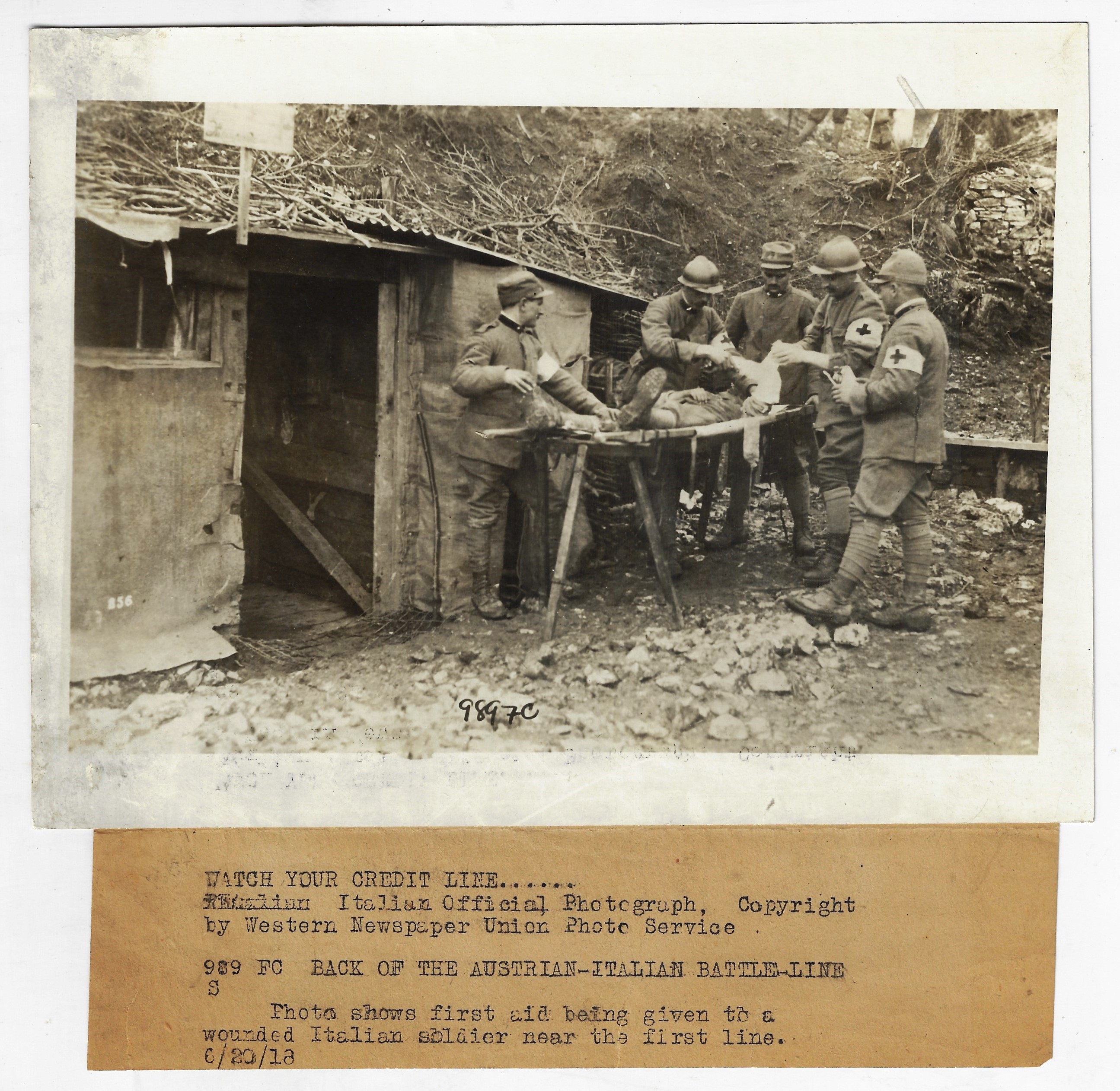
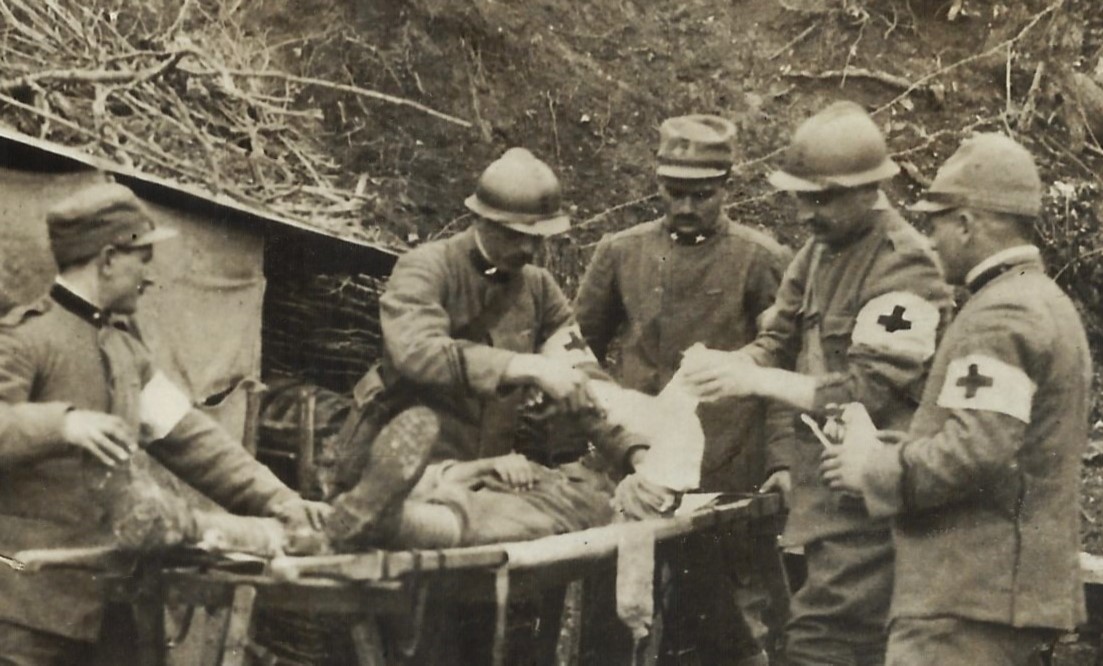
    This is another interest image from my WWI News Photo collection–a front line Italian medical/triage post on the Italian-Austrian front, June 1918.  It is bare-knuckle bare, very rudimentary, though the soldier is receiving the attention of five medical personnel. What attracted my attention was the fifth medical aid, standing at the foot of the soldier, placing two calming hands on the soldier’s leg and foot, delivering calm and sympathy.  

    WWI Photo field hospital _1_

    Western Newspaper Union Photo Service, Itaian Official Photograph

    WWI Photo field hospital _2_

    ·Posted by :

    ·in:

    —

  • Found Portraits: Camouflage at the Front, 1918

    JF Ptak Science Books   Quick Post

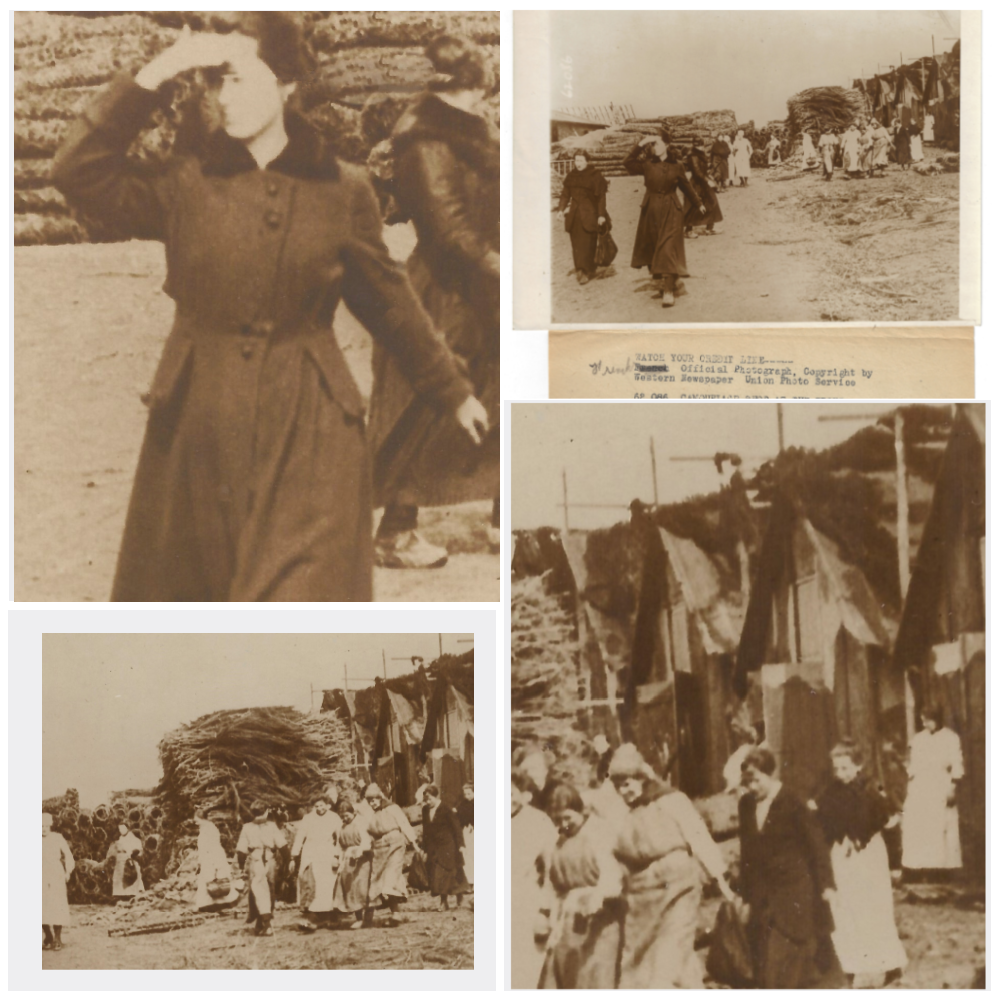
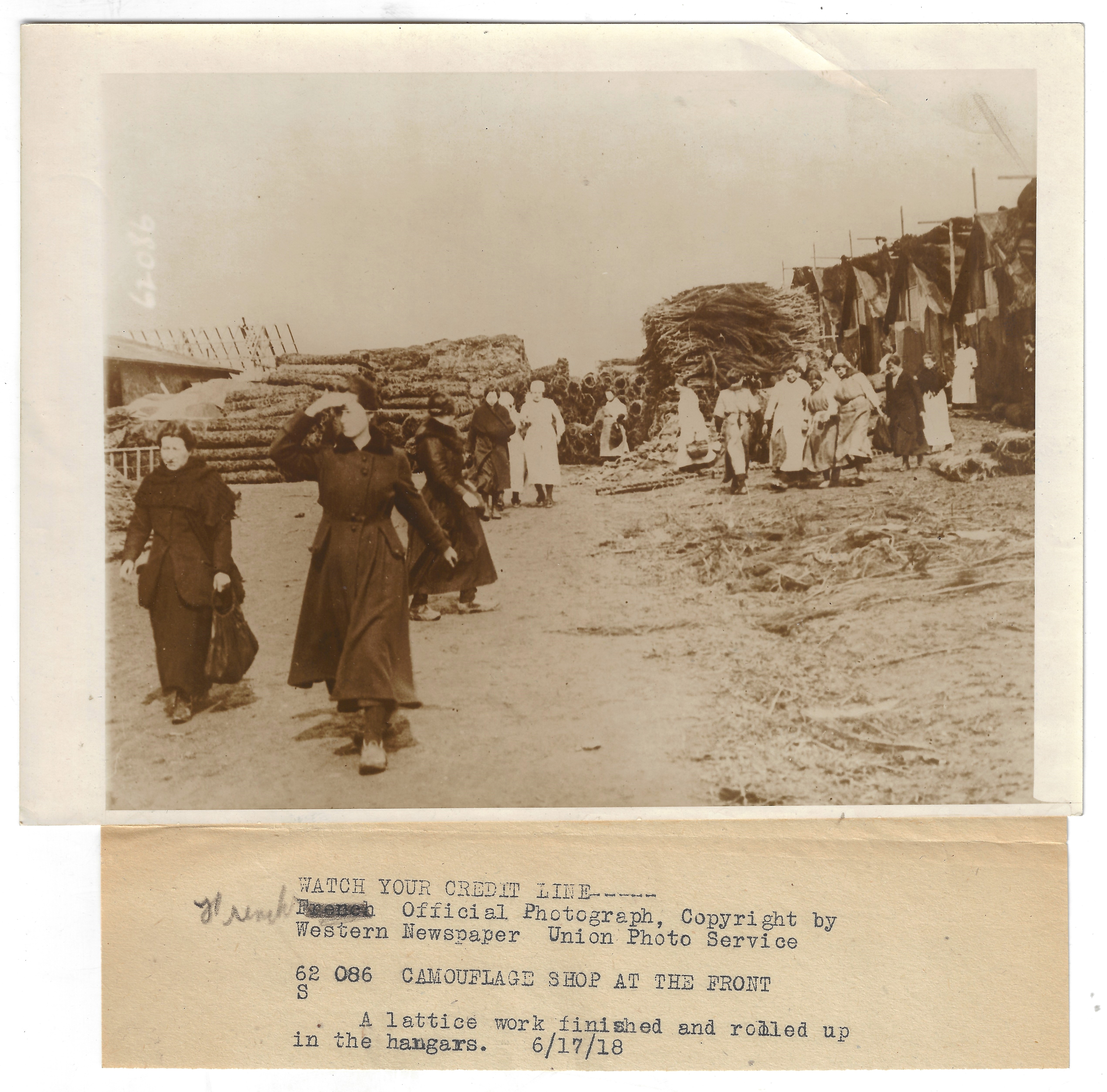
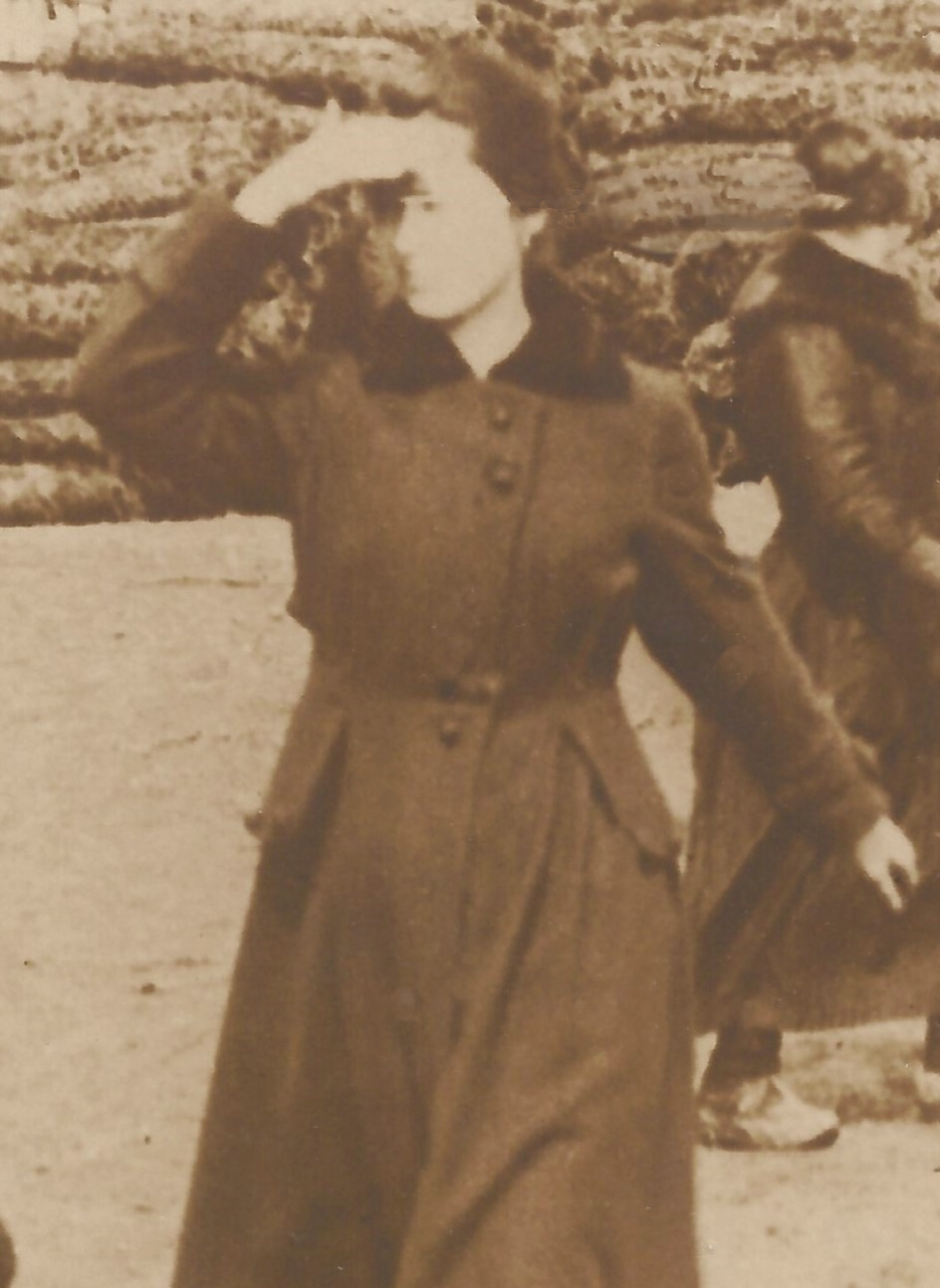
    WWI Photos camouflage detail _5_Just a few days ago I made a post here about camouflage (“Art & Artists as Wartime Magi–Making Things Disappear, 1918”, and now comes another, a WWI news service photo, “Camouflage Shop at the Front”.  Camouflage imagery has been relatively scarce in my experience with WWI photographs, particularly one like this, with women workers at the front (“A lattice work finished and rolled up in the hangars, 6/17/18”), shown at shift change or lunch break. Women were heavily involved in the production of camouflage during WWI (as with the U.S. Women’s reserve Camouflage Corps), with some netting and uniform designs being produced in domestic settings and then sent to the front. 

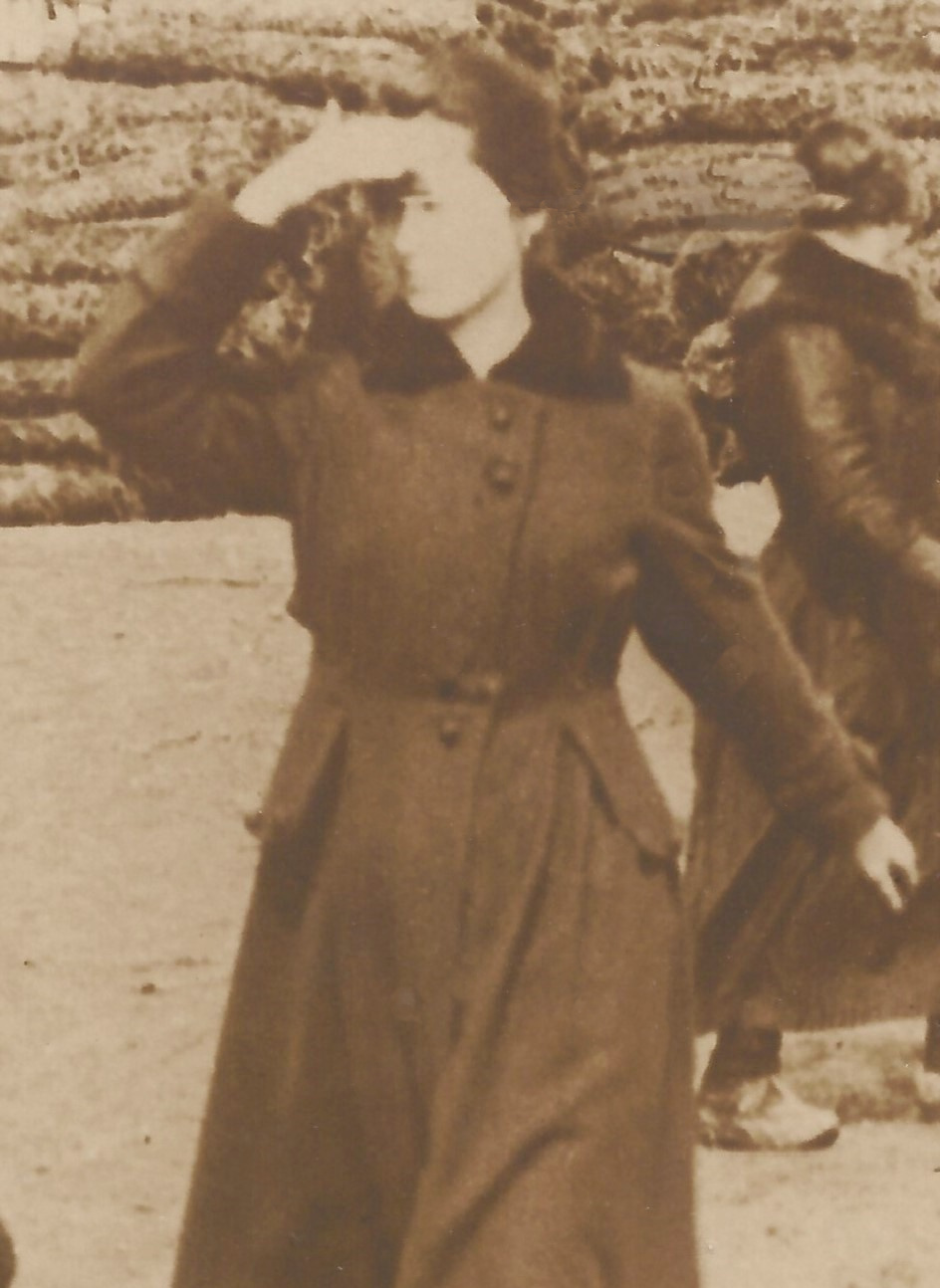
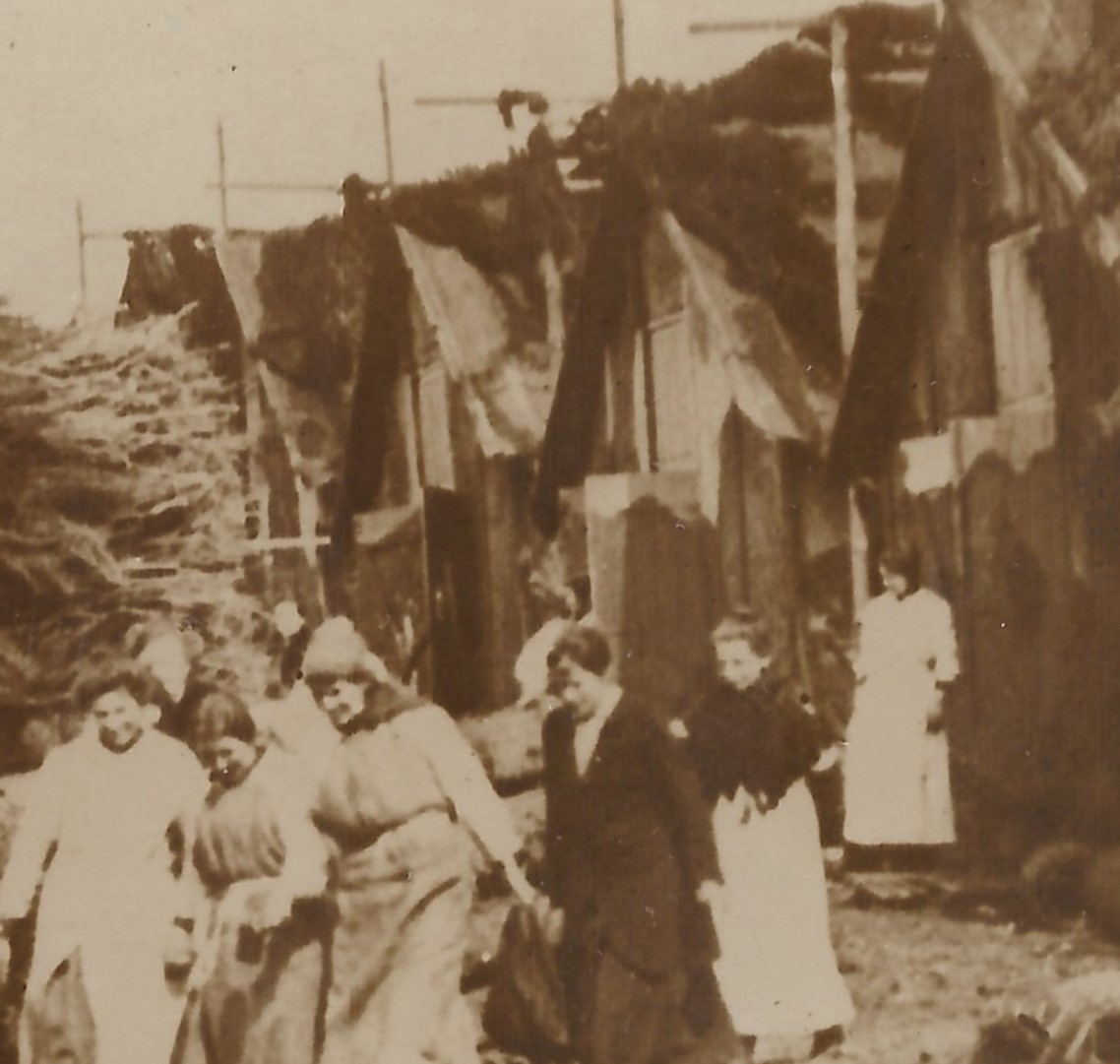
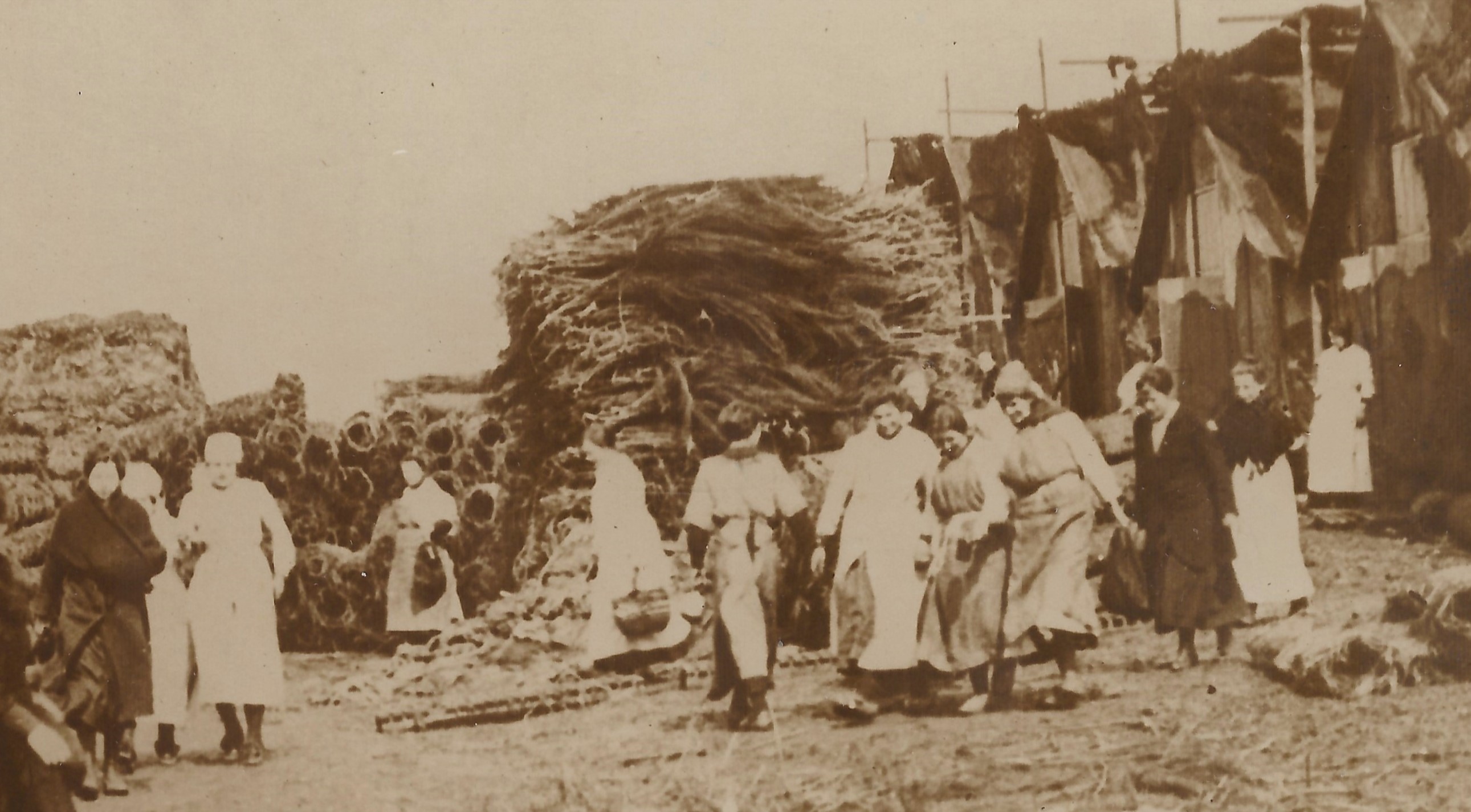
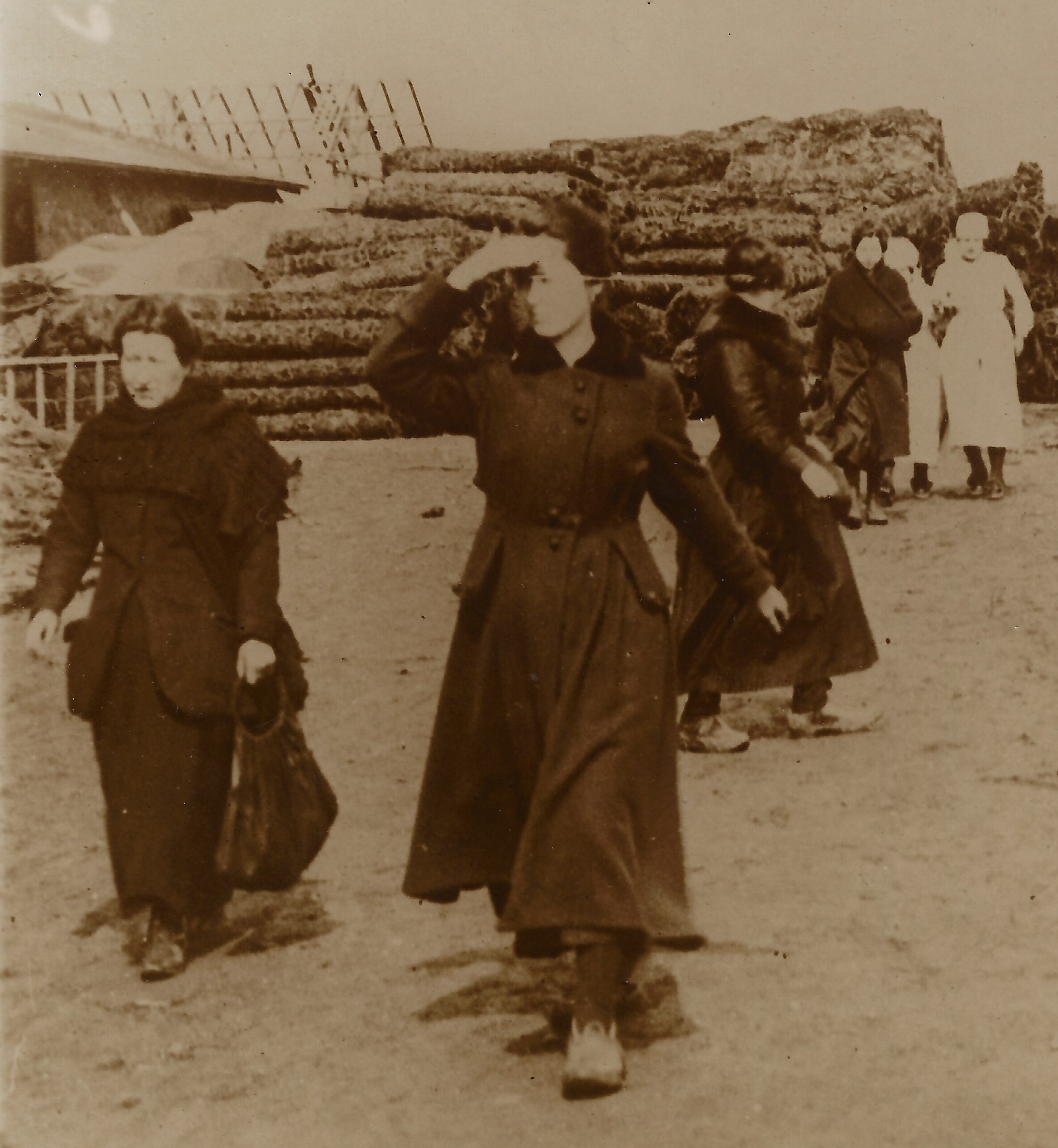
    What draws me in here, in this photo, is the woman at front-left: she seems tallish and ramrod-straight…and I like the long swing of her left arm. I imagine that it is lunch since there are no shadows to speak of and it was obviously sunny, and at some point of the 17th day of June 1918, these workers were on their way to a break. (I suspect that the date wasn’t very accurate for when the photo was made, as everyone here is wearing pretty heavy clothing for June, somewhere in north-eastern France or Belgium.  They were constructing camouflage made of rags and natural bits, piles of which you can see in the detail. The “hangars” are small ganged huts covered by camouflage netting.

    In any event I share this as I don’t easily see another example online quite like this one. 

    Collage of the full image and detail:WWI Photos camouflage  collage

    The full image, along with the suggested caption to be used on publication (supplied by the photo news agency):

    WWI Photos camouflage detail _2_

    The hangars:

    WWI Photos camouflage detail _2_Camouflage bits:

    WWI Photos camouflage detail _2_
    WWI Photos camouflage detail _2_

    ·Posted by :

    ·in:

    — —

  • Art & Artists as Wartime Magi–Making Things Disappear, 1918.

    JF Ptak Science Books   Quick Post

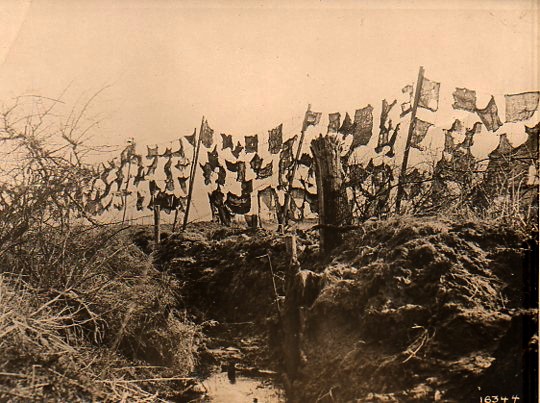
    Its a little difficult to think of Ellsworth Kelly, Jacques Villon, Grant Wood, Laslo Moholy-Nagy and Thomas Hart Benton as painters-for-war.  But its true, and true for many of hundreds of other artists in the 1915-1918 era. Its not as though they were in the trenches gunning down the enemy or lobbing hand grenades into the swirling gun smoke. They werecamofleurs, camouflage1 experts, artists employed as magicians, Wartime Magi, employed/drafted to make ships and such disappear. 

    WWI Photos camouflage _1_

    Ever since it was (sort of) first noticed in 1915 that designs odd to the environment, stark geometric patterns and such, were capable of fooling the eye, people with  design capacity were pressed into service, rendering offensive and defensive instruments of war optically semi-impervious with variations of the then-five-year-old modern nonrepresentational art. That must’ve been a very odd position to wake up to every morning. 

    WWI Photos camouflage _2_

    Of course the idea of camouflage in the animal world is probably 250 million years old–animals and insects have been blending into their environment for eons, and I’m sure too that early hominids did their fair share of walking behind brush.  But the idea of hiding great amalgamations of very heavy metal with paint is really quite modern.

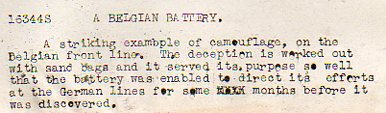
    In this photograph, the camouflage is more a more futuristic conception of art than the abstract and cubist approaches that were taken during the war, this looking more like assemblages of found material more than anything else.  And, according to the text that accompanied the photograph (which comes from 1918, from the Underwood & Underwood news photo service agency), the camouflage–empty sandbags thrown on a barbed wire fence) successfully concealed a gunnery emplacement for months on end. 

    Notes

    1. A fine bibliography on camouflage appears here, at Leonardo Online.

    • The definition of “camouflage” from the Oxford English Dictionary shows that it is a young word, in English:
    • (n) The disguising of any objects used in war, such as camps, guns, ships, by means of paint, smoke-screens, shrubbery, etc., in such a way as to conceal it from the enemy; also, the disguise used in this way; freq. attrib.
    • 1917    Daily Mail 25 May 4/4   The act of hiding anything from your enemy is termed ‘camouflage’.
    • 1917    Daily Mail 16 July 5/3   The King paid a visit to what is called a camouflage factory.

    • 1922    C. E. Montague Disenchantment viii. 108   A French aerodrome across which the French camouflage painters had simply painted a great white high-road.

    ·Posted by :

    ·in:

    — —

  • Beauty and Confusion in the Details: Grenade-Throwing and Rifle Practice (1918)

    JF Ptak Science Books   Quick Post

    Here are another couple of enjoyable, interesting, and somewhat endlessly mine-able images from an archive of WWI news photo service agencies, all of which are from 1918.  Photographs were made by pools of photographers working for several different photographic news agencies. The content of the images were generally secured and approved by the Committee for Public Information (CPI), which came into existence by executive order under President Woodrow Wilson on April 13, 1917, and which was charged with the task of wining the hearts and minds of the people of the U.S., to gain public support for the war and for American participation.  

    The way that many newspapers obtained the war images that they published in their papers was via a semi-centralized pool of war images.  The newspaper would request, say, a photo of German prisoners, and would contact one of these photographic agencies—for example, say, the Central News Photo Service of 26-28 Beaver Street, NYC—and purchase the rights for republication, and then print it in the newspaper along with the story.  In almost every case the photo would be accompanied by a caption mimeographed onto an attached piece of cheap paper, or have the information stamped on the reverse.

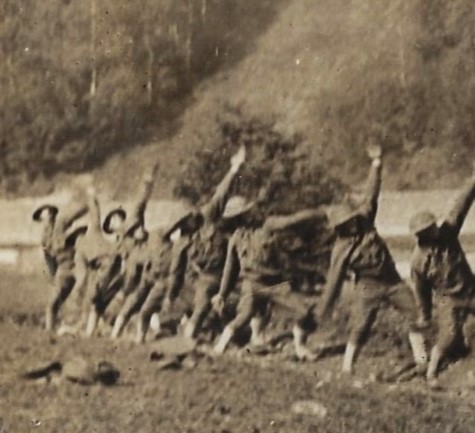
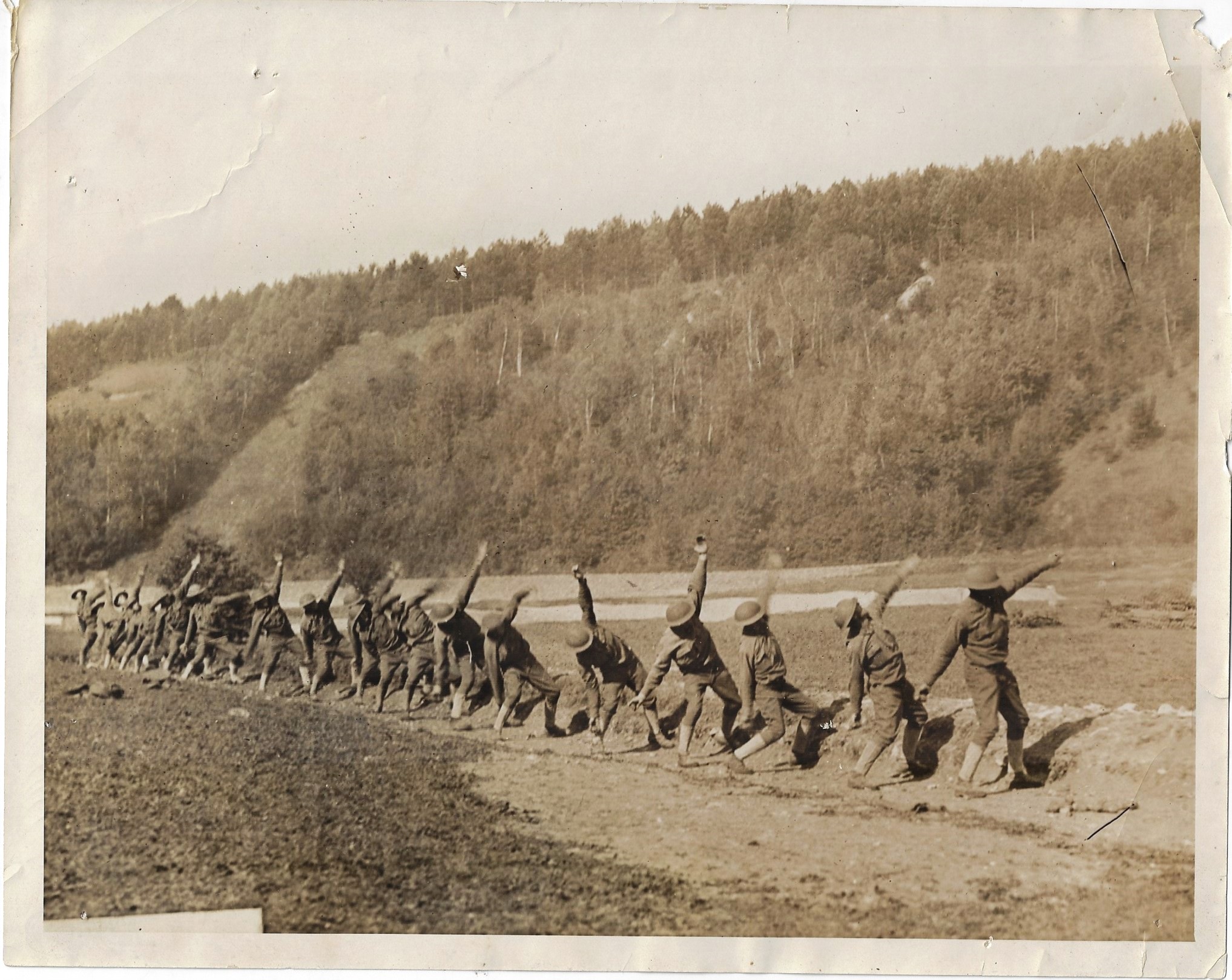
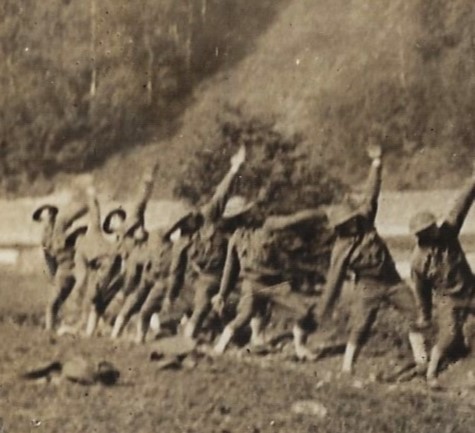
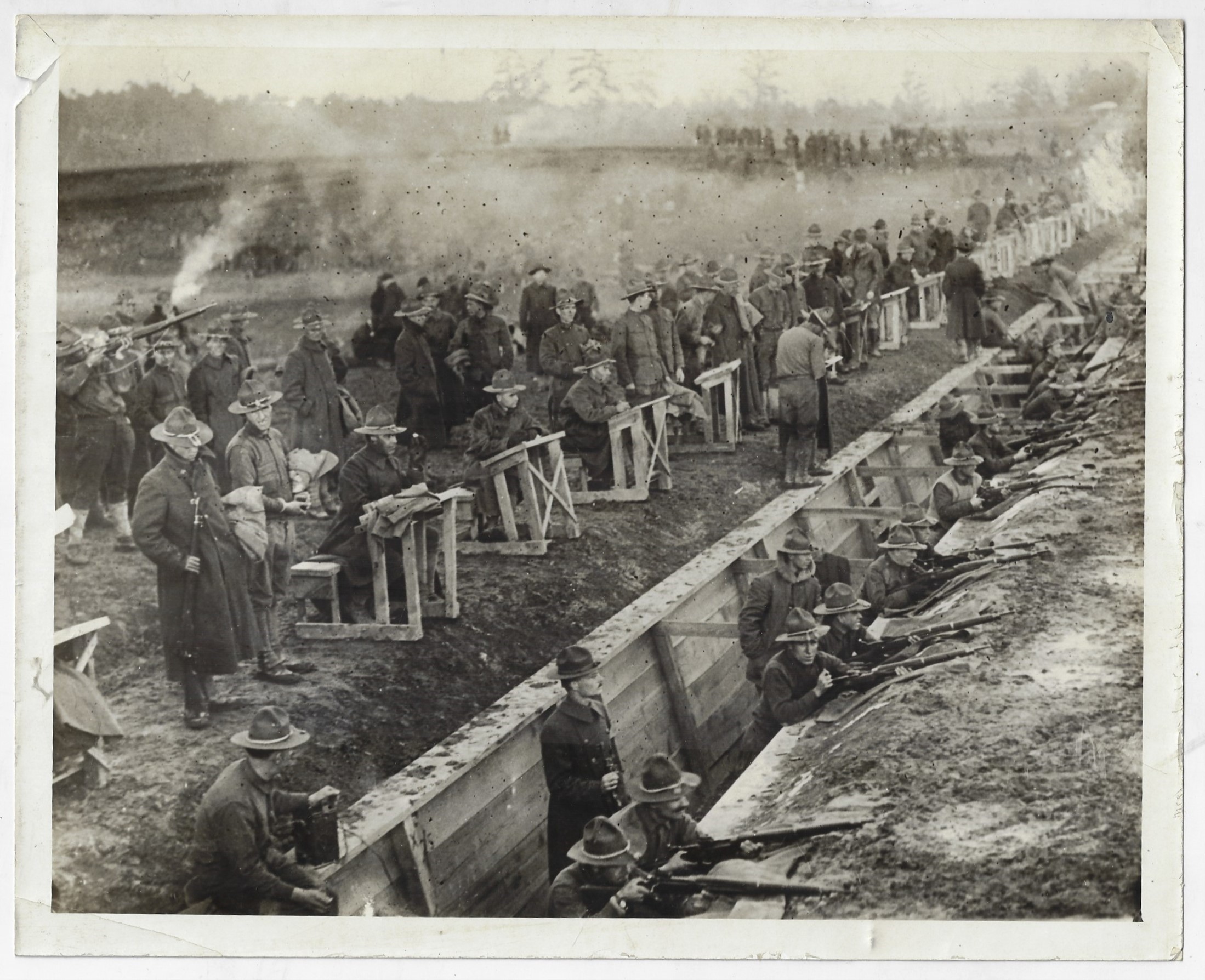
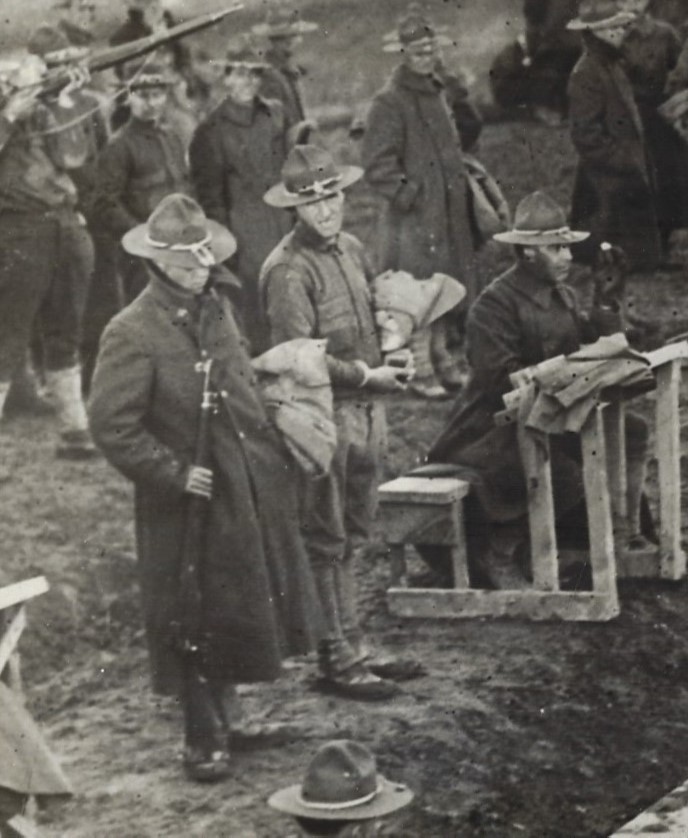
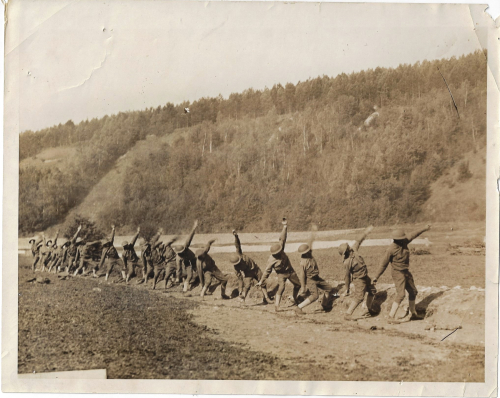
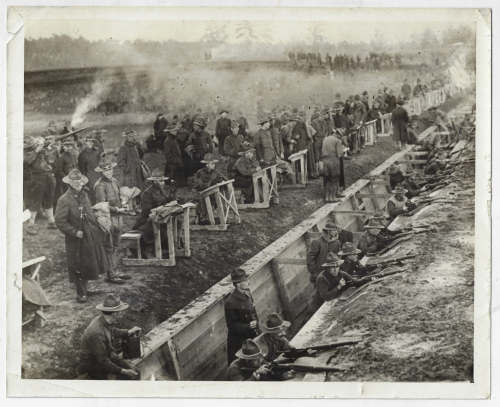
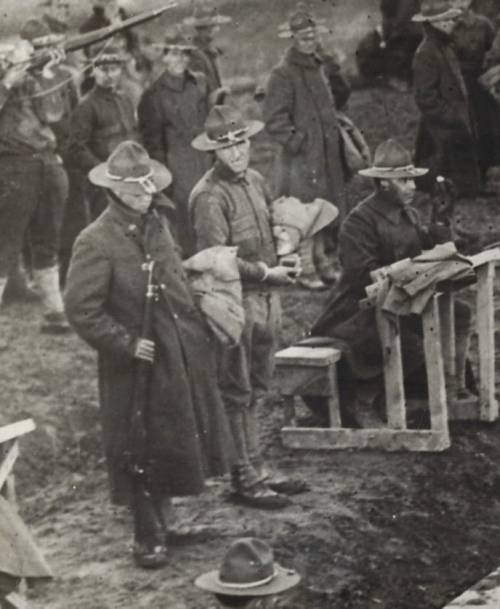
    I’d like to share the following two images of U.S. soldiers practicing their trade–the top features grenade throwing, and the bottom shows a pit at a rifle range.  The Doughboys heaving the grenades were doing so according to plans and design, and in spite of its apparent awkwardness, must’ve worked well. The detail image is challenging for sure, the soldiers seeming to be just about entangled among themselves. 
    WWI photos hand grenade

    asns

    WWI Photos hand grenades _2_

    The scene in the rifle pit seems more orderly if not somewhat  more distressed:
    WWI Photos rifle practice

    And as usual with these large group photos, there are many smaller fine images waiting in the detail:
    WWI Photos rifle practice

    ·Posted by :

    ·in:

    —

  • The Domestic Front, WWI (1918)

    JF Ptak Science Books  Quick Post

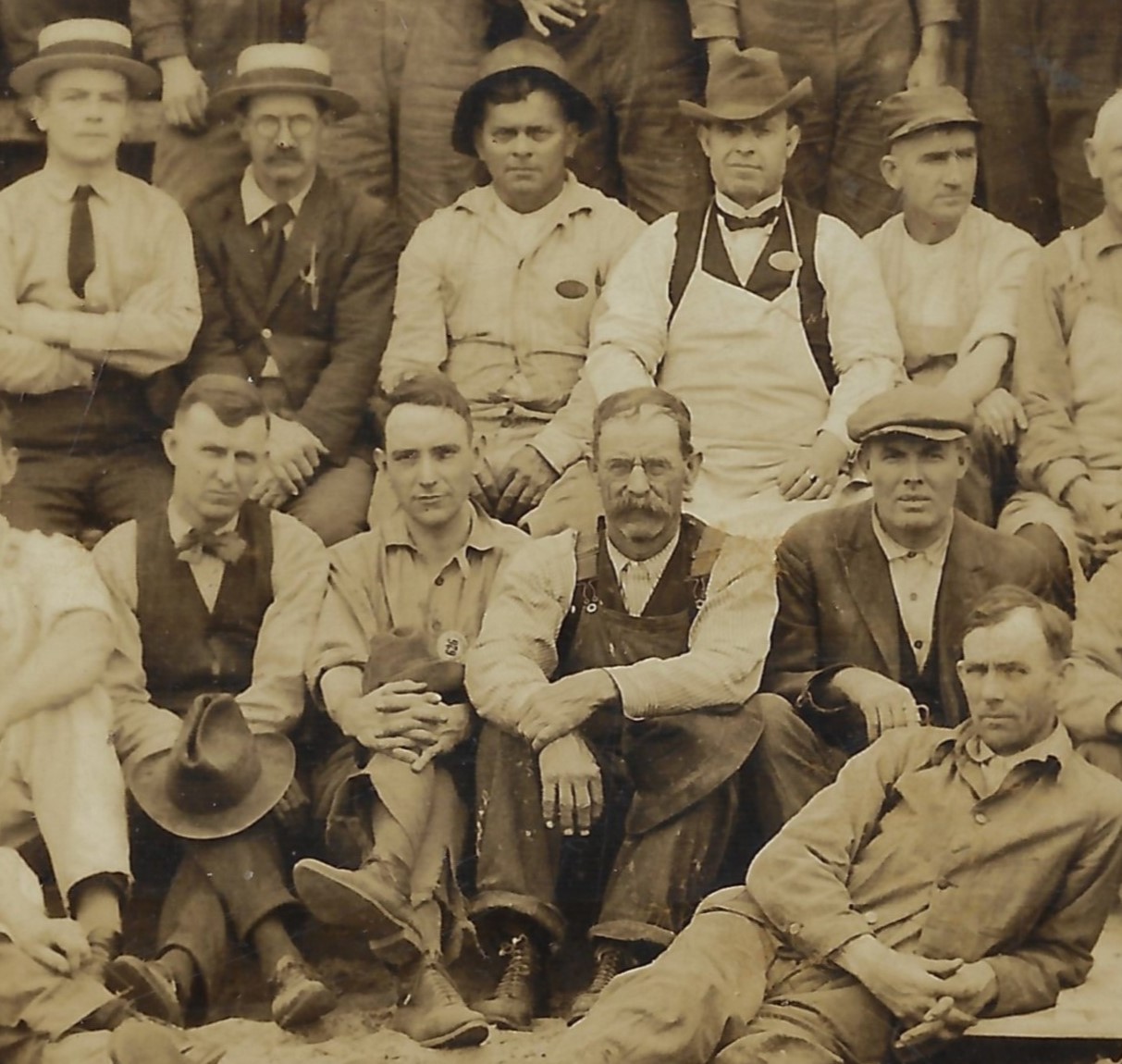
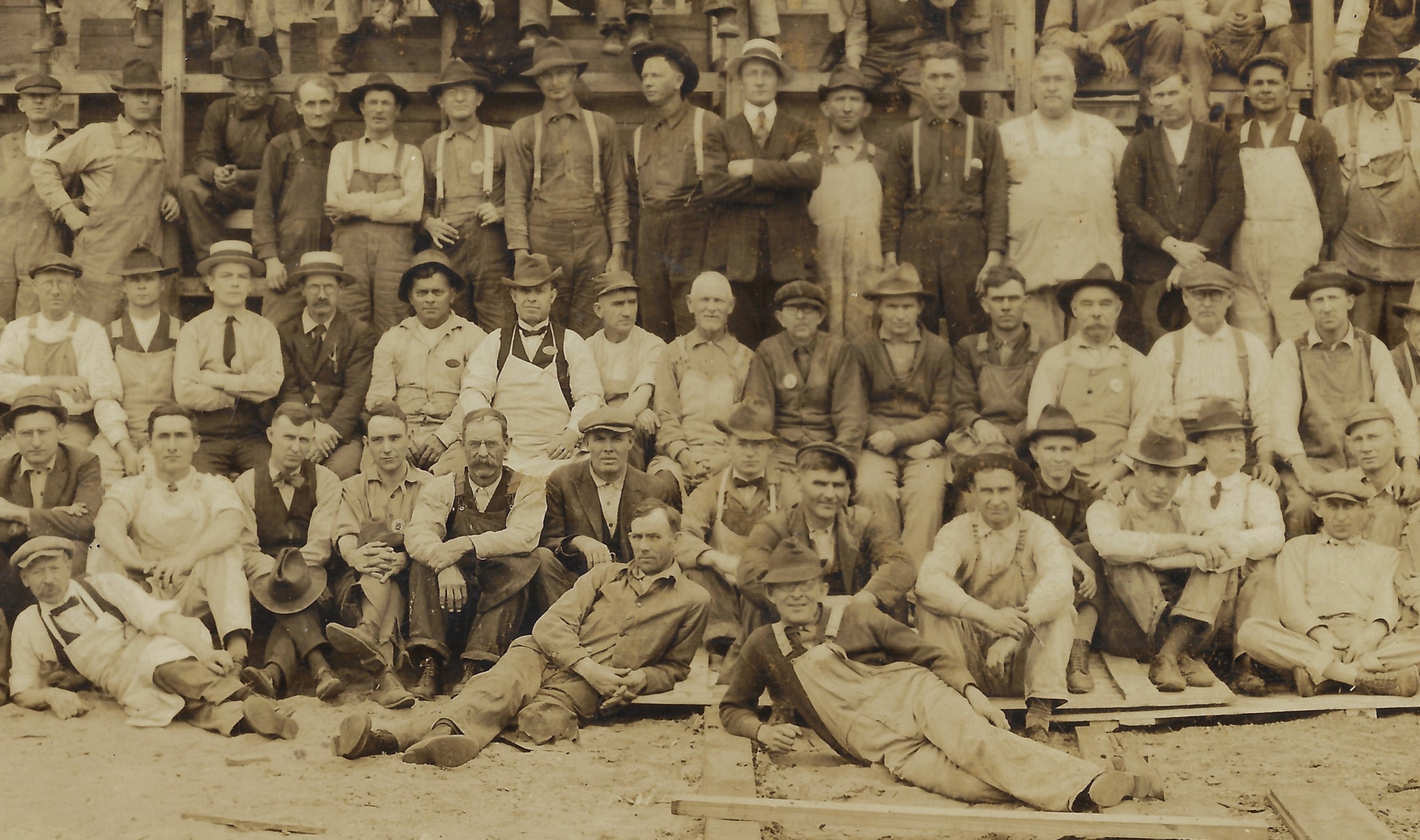
    This is yet another fantastic image from the small (800-item) News Photo Service archive here.  I’d say only 15% of it focused on the domestic end of the war, and there were very few posed images of them–this was an entirely unusual image, so far as this archive is concerned.  Every face a story, here, and I don’t have any doubt that someone could dive into this photograph and make up a character for each one of these men, none of whom are identified. Id like to say that this was a woodshop for aeroplanes, as that is how the image struck me on first exposure, but I have no proof of that. That said, identified or not, this is a terrific photo.  

    WWI Photos Group Large Aero _1_


    WWI Photos group large aero 3

    ·Posted by :

    ·in:

    —

  • The Return of the Tall, Skinny Ladder (1885)

    JF Ptak Science Books  Quick Post 

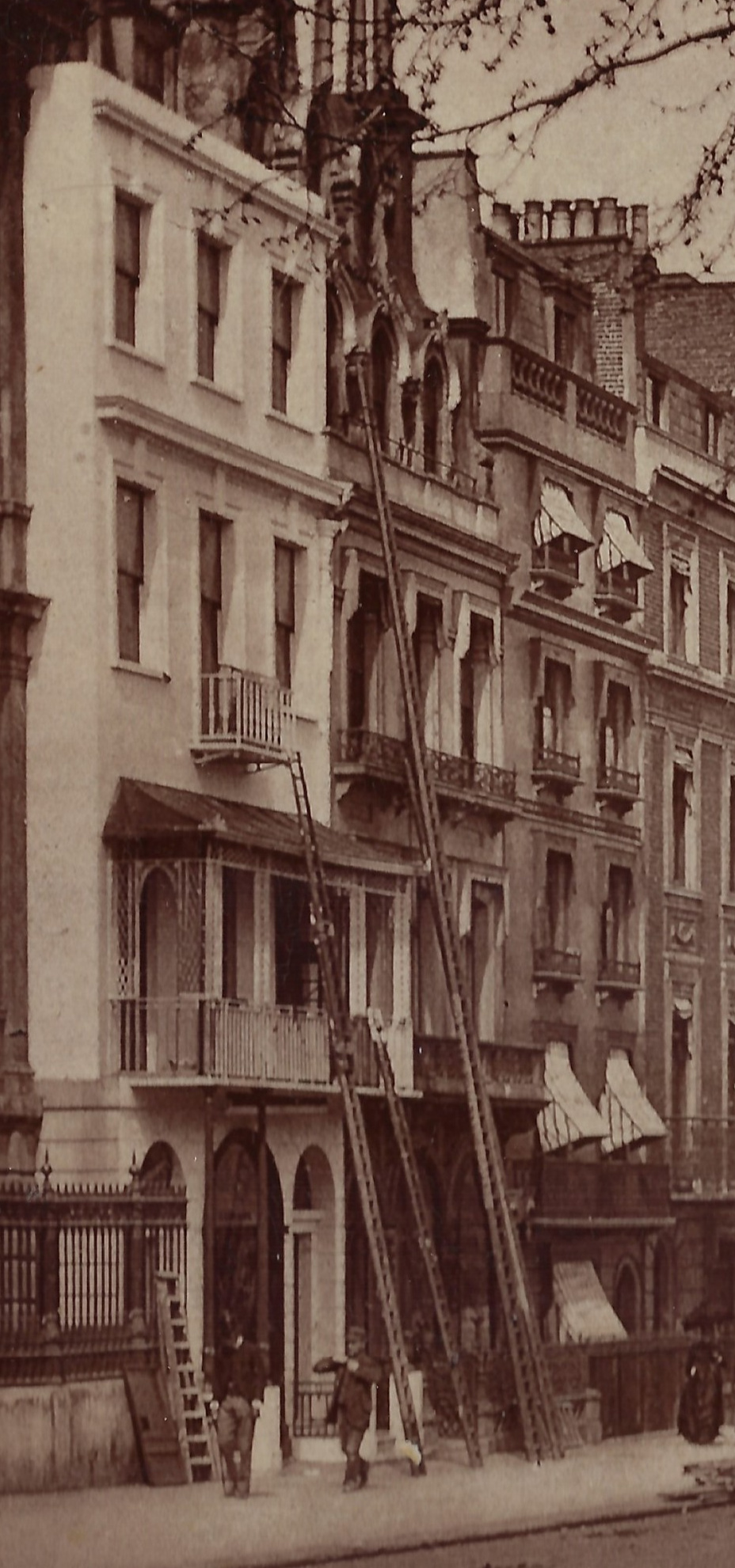
    Here’s an unexpected and fine detail, found in the 19th century photograph described below: 

    Picadilly

    There’s a seldom-used category on this blog concentrating on the concentrated viewing of antique images–that is, using your paper microscope to find the bits and bobs within complex imagery. Sometimes the found landscapes and portraits are purely serendipitous, and other times–mainly in engravings and woodcuts–there are details manufactured by an amused and perhaps bored artist, looking for a little entertainment and fun by burying an unusual vignette or detail in the mass of a large image. Today’s example is simply a photograph of the busy Westminster road, Piccadilly, made around 1880-1885–the image is fine enough to withstand some relatively deep probing, even with a  3200 dpi scan.  The image as it stands is very attractive, but once you start a strong look at it there’s a lot more going on.  (This works out even better under a microscope, but I don’t have an optical attachment for it for my camera.)

    Picadilly

    For example, its easy to overlook the street sweepers (at lower right), the pair of them working side-by-side in the midst of the bustling road traffic:

    ·Posted by :

    ·in:

    —