A Daily History of Holes, Dots, Lines, Science, History, Math, Physics, Art, the Unintentional Absurd, Architecture, Maps, Data Visualization, Blank and Missing Things, and so on. |1.6 million words, 7500 images, 4.9 million hits| Press & appearances in The Times, Le Figaro, Mensa, The Economist, The Guardian, Discovery News, Slate, Le Monde, Sci American Blogs, Le Pont, and many other places… 5000+ total posts since 2008.

Category: Photography

  • People in the NYC Skyline (1937)

    JF Ptak Science Books  Quick Post

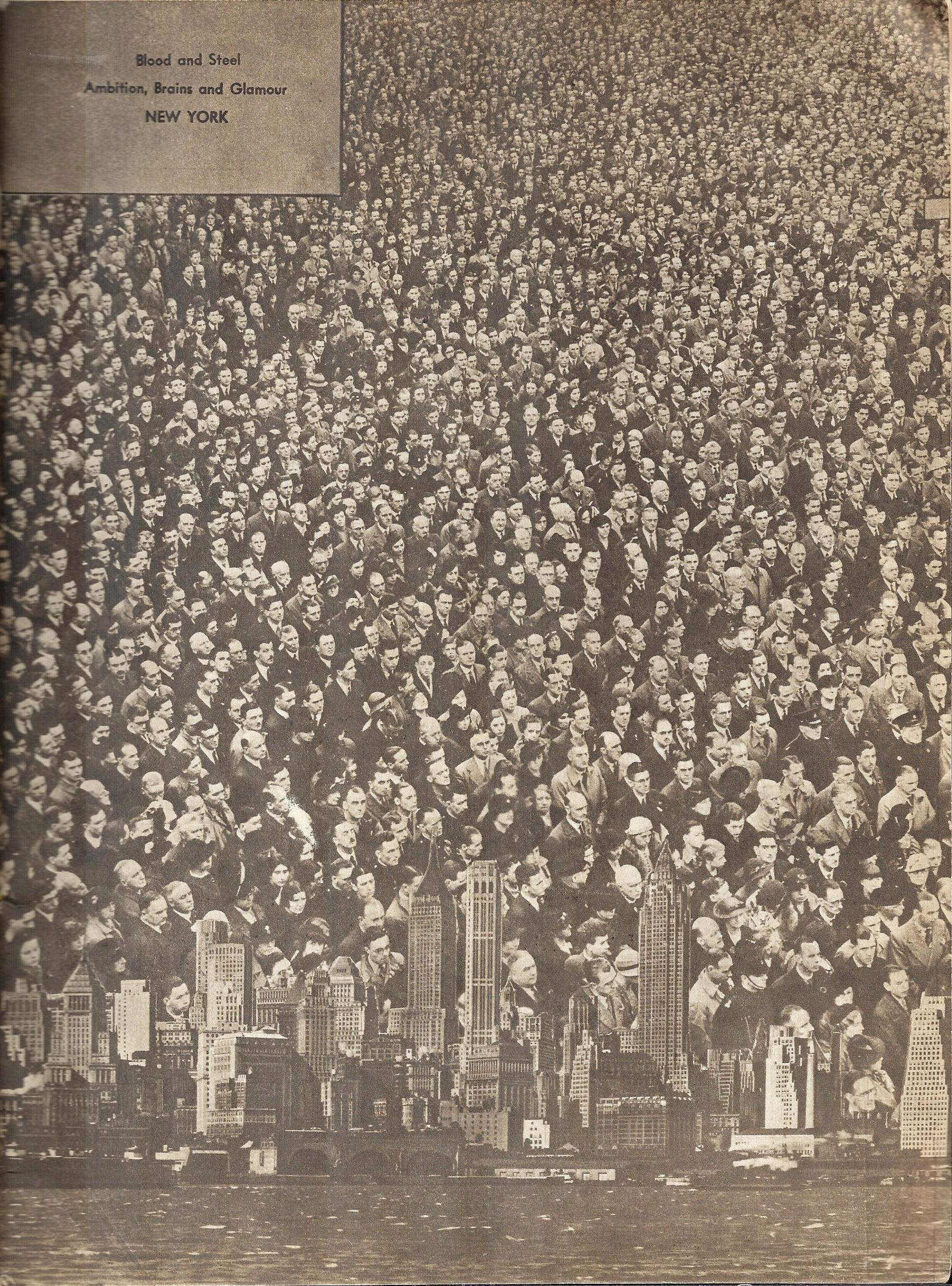
    There are many photographic souvenir publications for New York City, but there are very few that are so interested in including people in their many city landscape images as Illustrated Souvenir of New York (1937). It is attractively bound–or at least it has a more complicated binding than most of these publications–which was something that attracted my attention. In any event, it turns out that there are quite a few unusually-social images for a publication meant to concentrate on tourists’ high points of a visit to NYC, a few of which I’m including below.

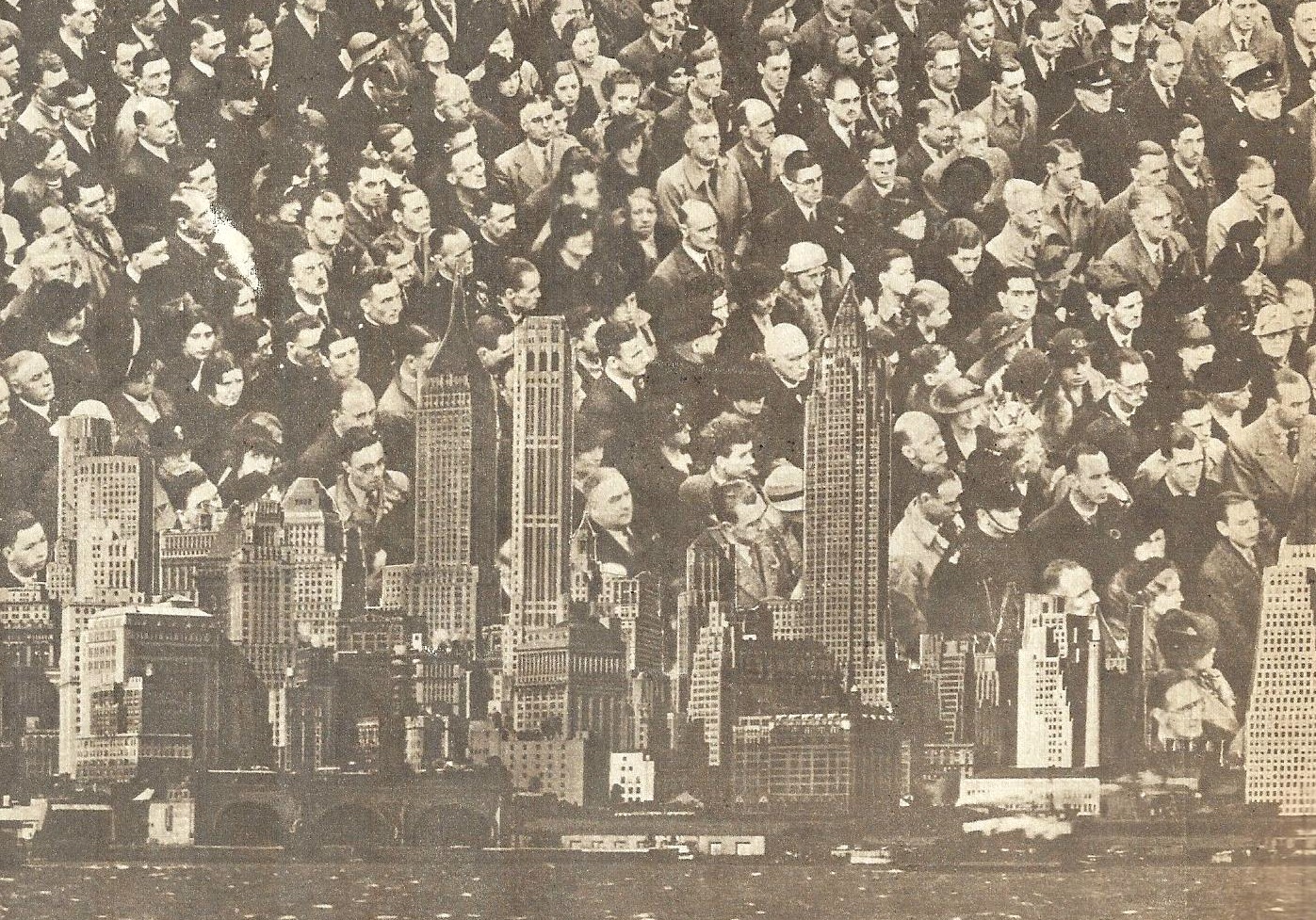
    One of my favorites from the series is a montage of people in the Manhattan skyline–this seems a little unusual for the period, though I’ve encountered this sort of image before (a few examples of which you can find on this blog by searching people/skyline). The title for the image is a little odd –“blood and steel, ambition, brains and glamour New York”–and has a bit of a train-wreck flavoring, along with a taste of Prussia (as in the “Blut und Eisen”/”Blood and Steel” speech of von Bismarck in 1862):

    NYC People in skyline detail

    [Detail]

    NYC People in skyline

    ·Posted by :

    ·in:


  • High Above Brooklyn, Looking at Manhattan (1938)

    JF Ptak Science Books   Quick Post

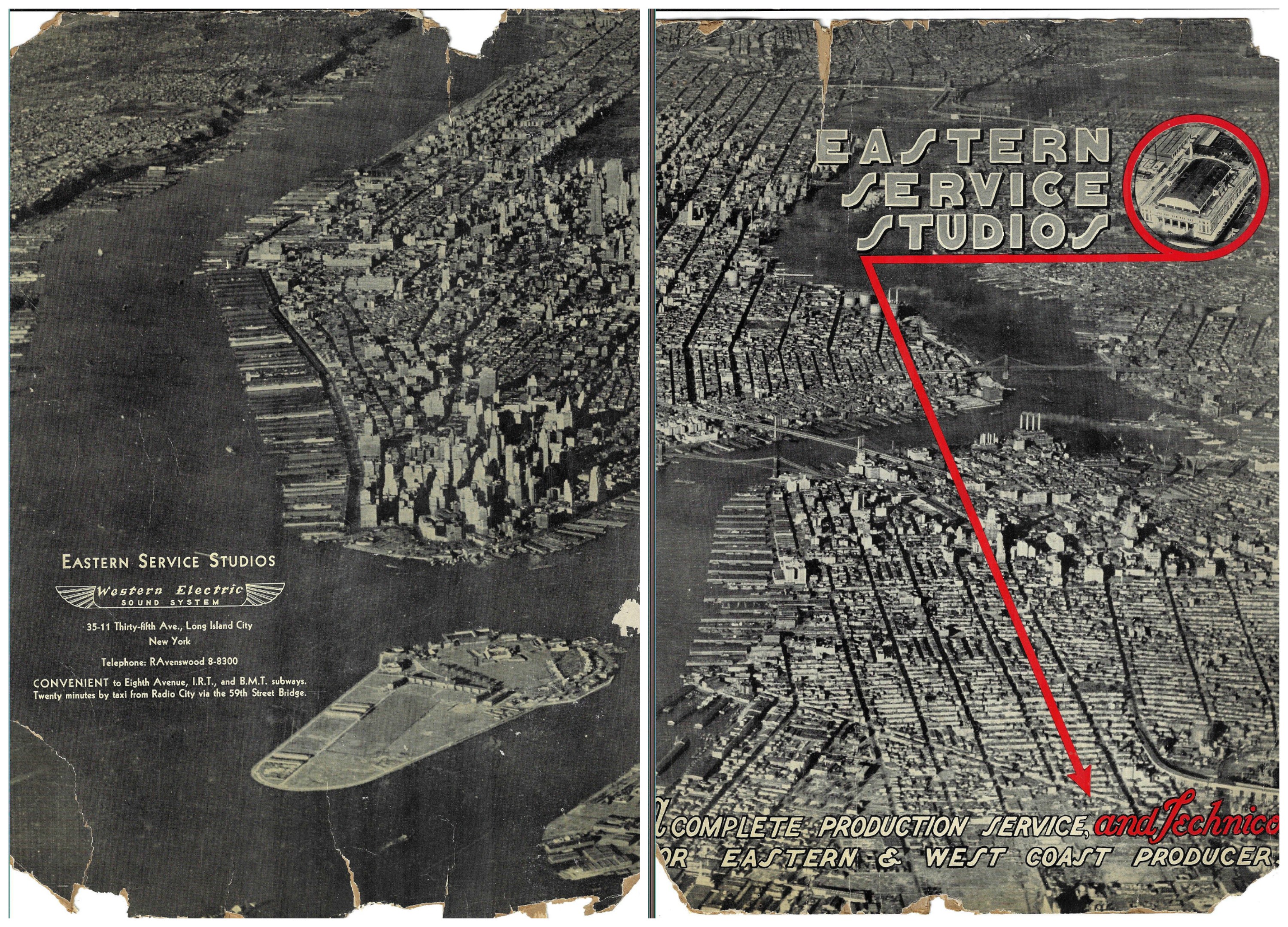
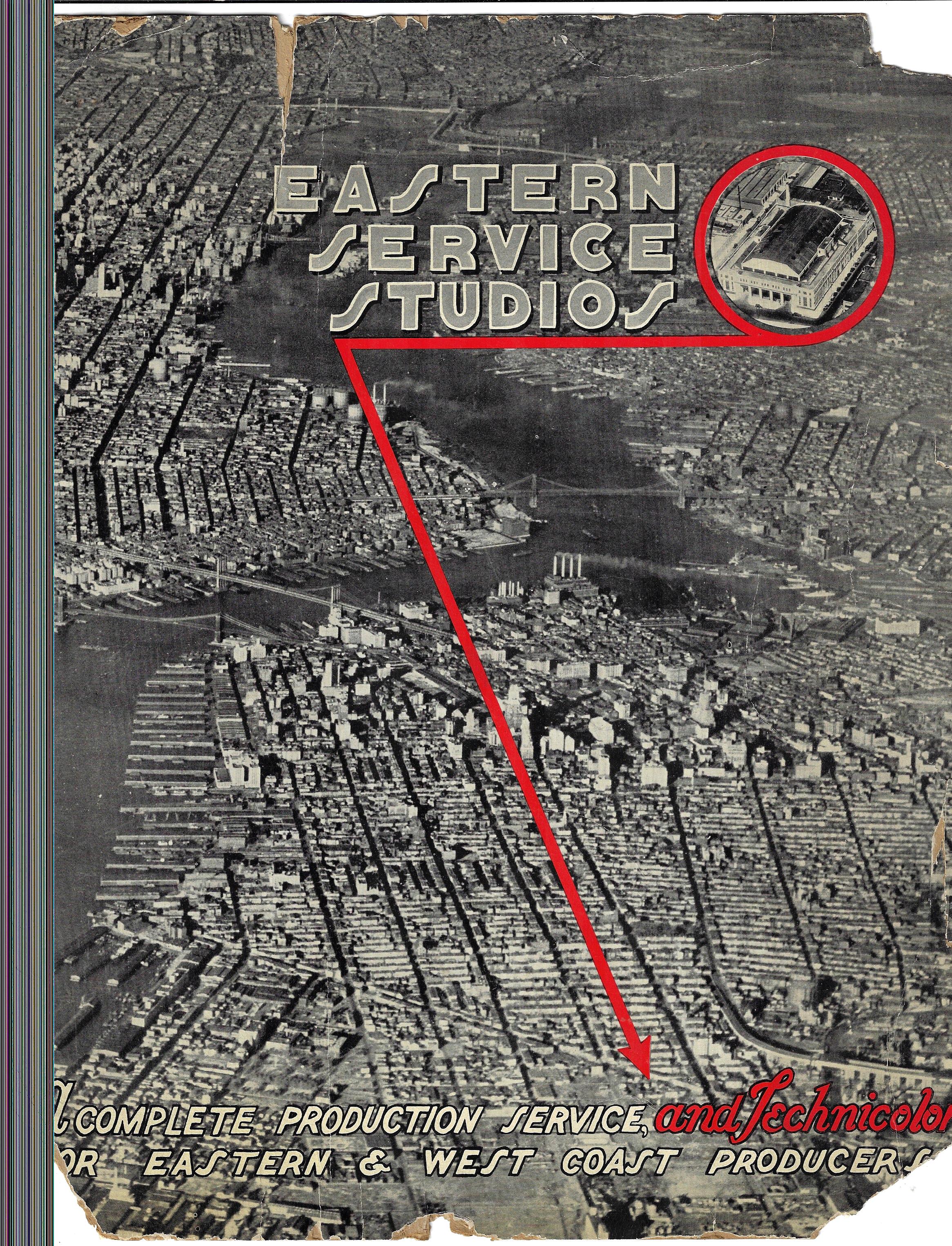
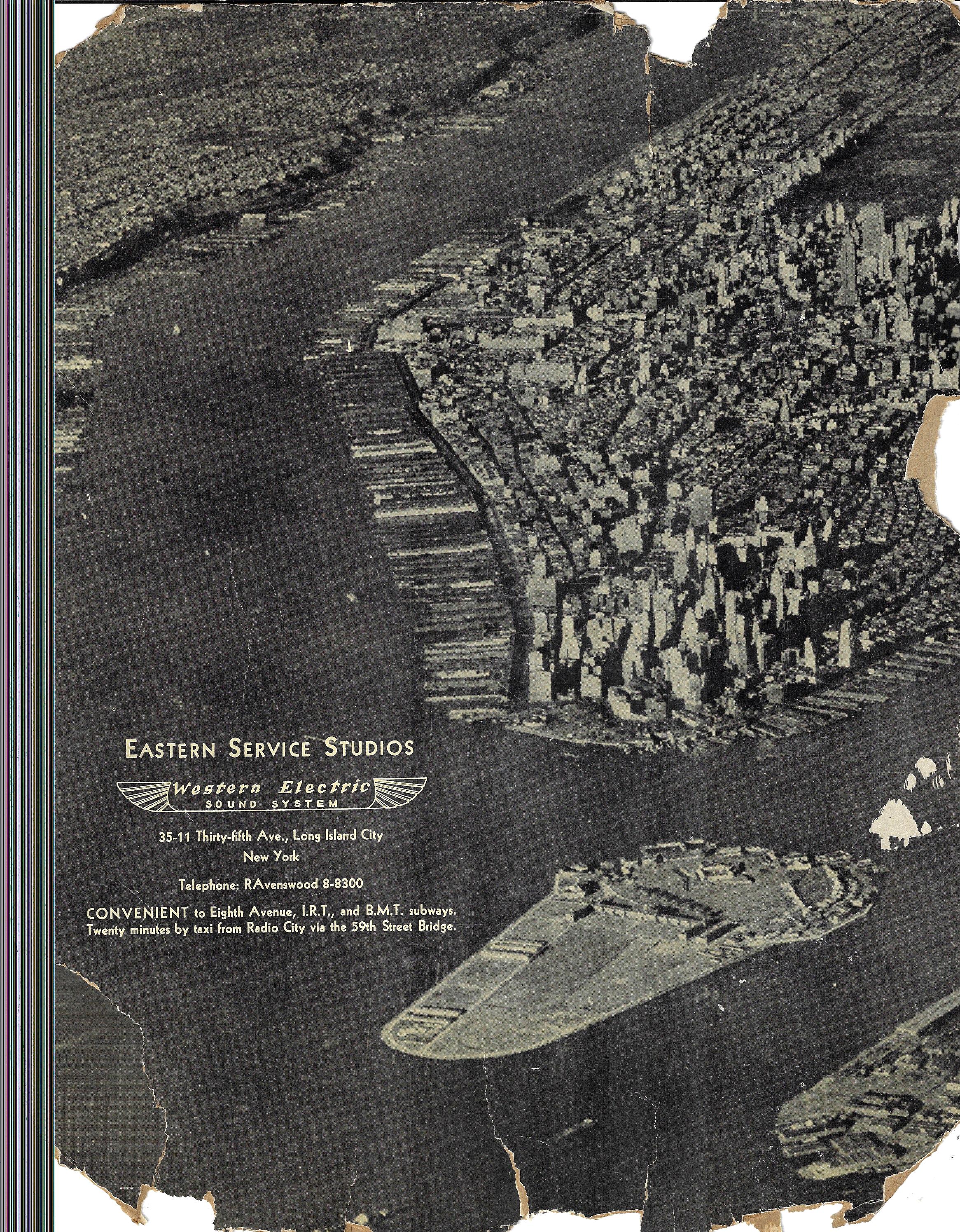
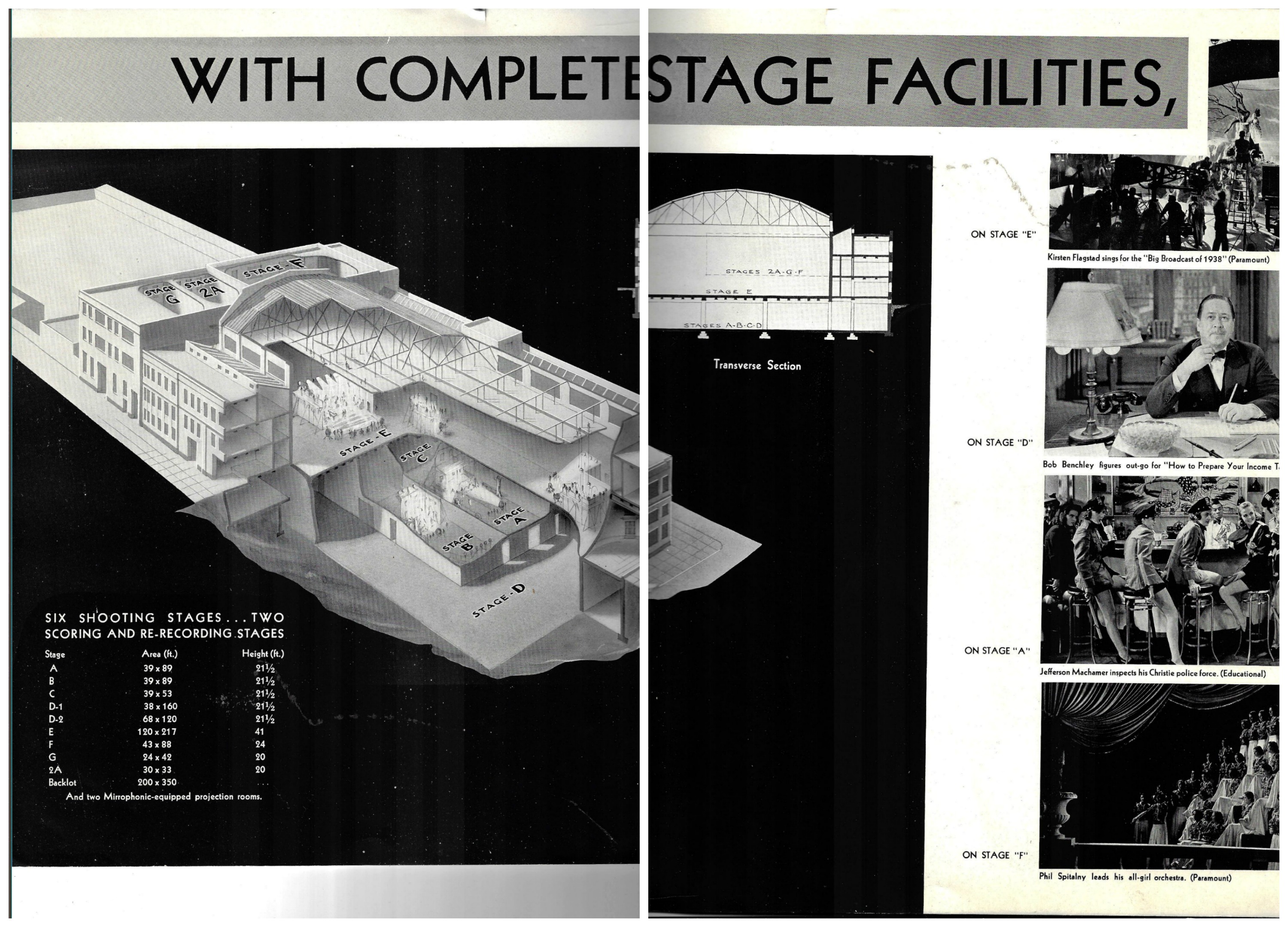
    As much as I like the history of the film industry in NYC in the early days (and then of television in the 1940s and 1950s) this post will not address that–I’m simply interested here in the cover art of NYC on this 1938 pamphlet about Eastern Service Studios. The place has a long and fine history–built by Paramount in 1920, it is still in service today as Kaufman Studios, in Long Island City…there’s plenty on the place online, detailing the history of production there from the first two Marx Brothers  movies through Law & Order.  But as I said, it is the cover that really interest me, as they’re almost an artwork on their own. The pamphlet is huge, 15×10″, making the photograph of the city front and back about 20″ long–it is a large piece.

    What we see is a view of New York City from about the Brooklyn Navy Yard and Brooklyn Heights,  at bottom and just north of Green-Wood and west of Prospect Park/Grand Army Plaza; in the East River we see the Brooklyn, Manhattan, and Williamsburg Bridges, and as we move a little to the west, we see all of Manhattan, all the way up to east Harlem and Randall’s Island, and then some. It is a marvelous photo. Unfortunately, the covers of the pamphlet are big/thick cardboard, making them very crumbly, and so the chips and missing pieces. Still, it is an aggressively interesting work.  

    Eastern Service montage


    The images in detail:

    Eastern Service Stuido _1_

    Eastern Service Studio _2_

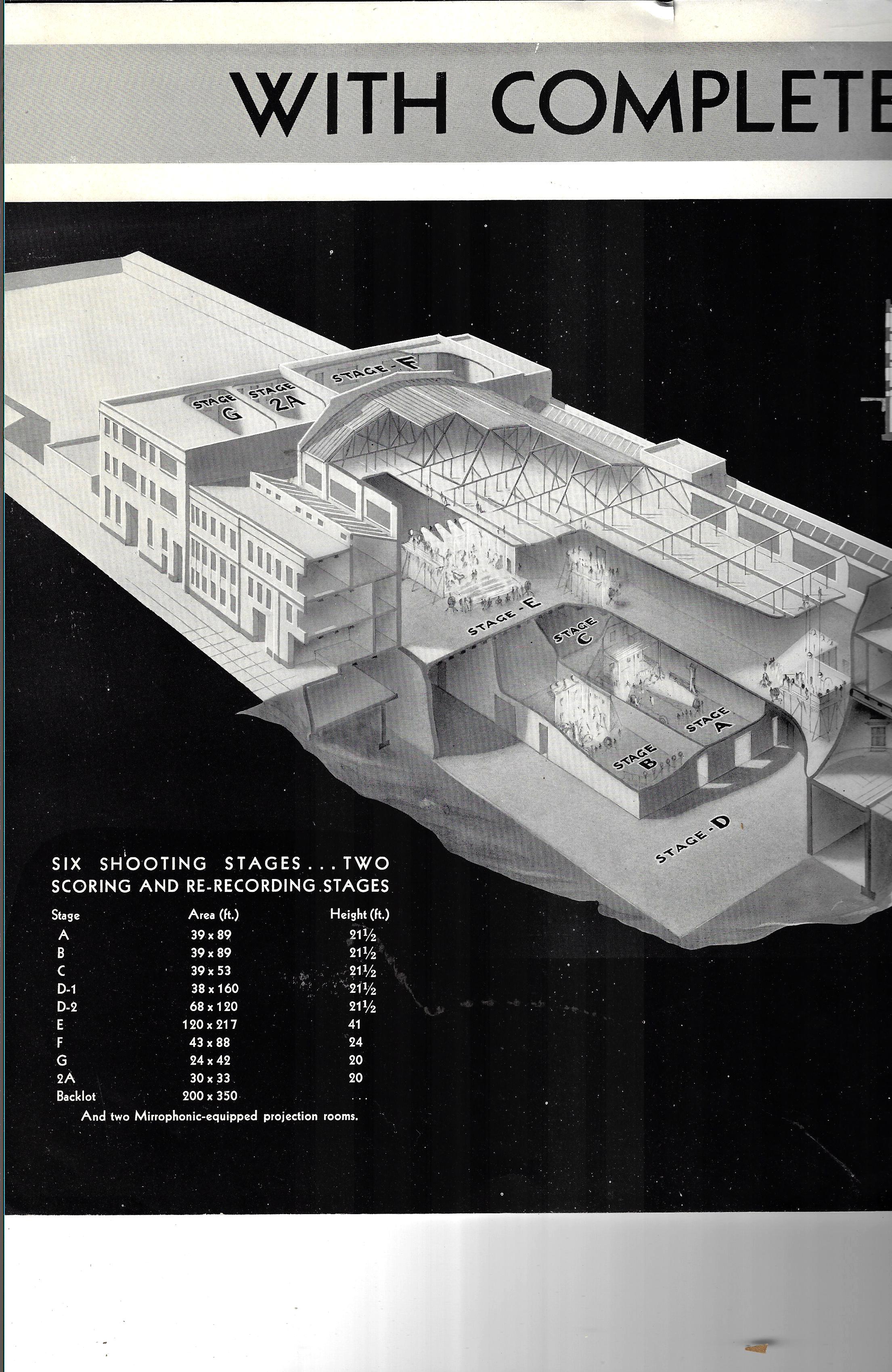
    And the stages at the studio:

    Eastern service studio stage montage

    Eastern service studios _3_


  • Delight is Where You Find It: Wagon Axle Catalog for 1905

    JF Ptak Science Books   Post 2682

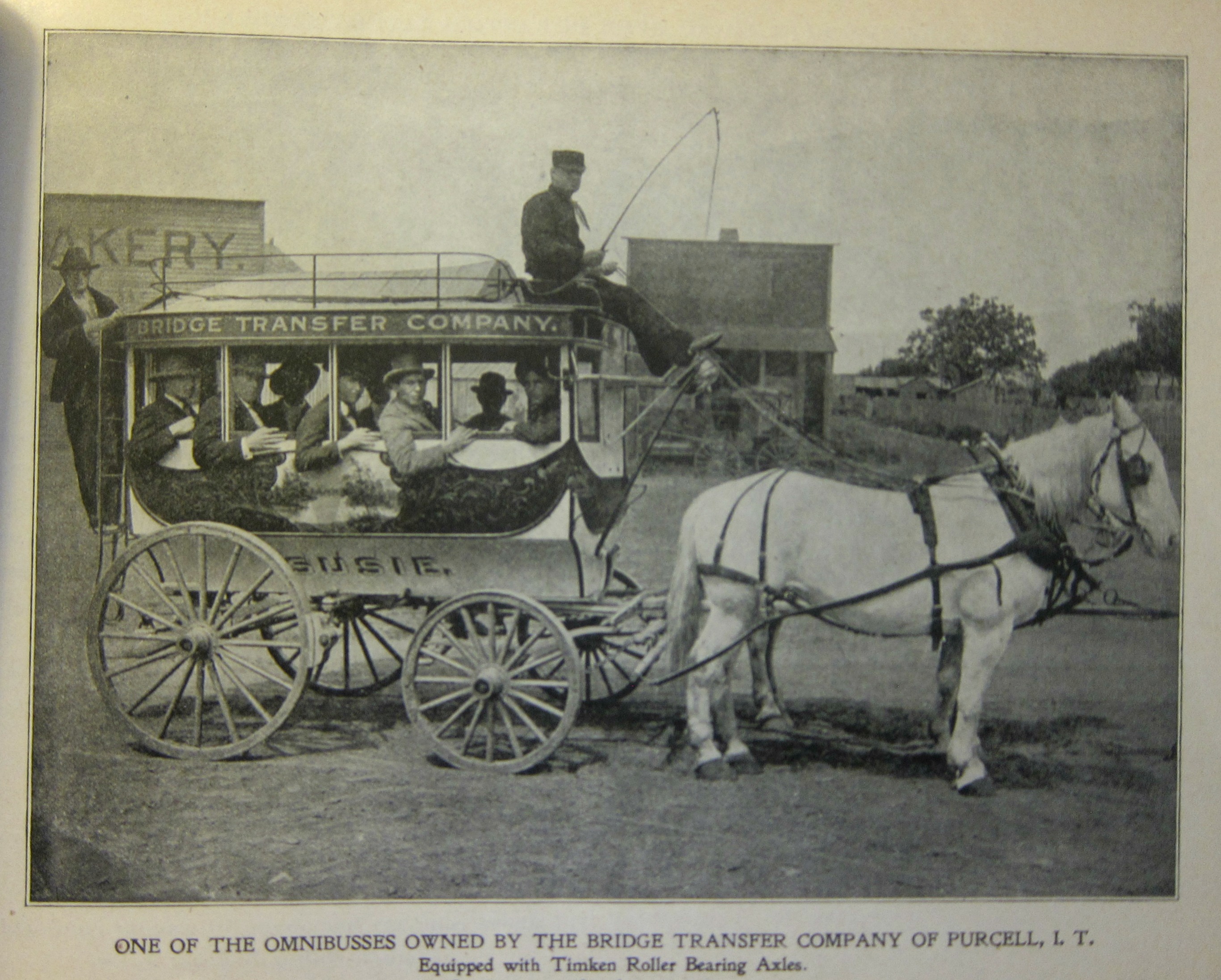
    The short story here is that less friction makes for happier conveyance and easier hauling. And evidently the founder of the Timken Roller Bearing Axle Company, Henry Timken, figured that out in the early 1890’s1, rolling his engineering insights and acumen and successful experimentation and founding his eponymous company in 1899 (and which exists as an international entity today). There’s great beauty in a fine idea, and in well-engineered parts and machinery, and no doubt the Timken axle is one of these–but what drew my attention to this catalog were the wagons and carts that benefited from the engineering. There is a superior sense of place in some of these images, an unexpected and quiet beauty found in the pages of a manufacturer’s catalog:

    Timken coaches _1_

    [Image source: Timken Roller Bearing Axle Company, Catalogue No. 5, published in Canton, Ohio, ca. 1902 (not later than January 1905).  7×9.5″,  unpaginated though 42pp long, including 9 plates of photos (some of which are above), plus 3 plates of drawings. Printed wrappers.  Provenance: Library of Congress, with their surplus stamp on the back. There are no copies of this title located in WorldCat/OCLC; there is another version, entitled “Carriage and wagon axle department, Timken Roller Bearing Axle Co., manufacturers of Timken roller bearing axles for all kinds of carriages and wagons …” ca. 1908, that is located in two locations: the Hagley Museum, and the Henry Ford Museum. I can find no other library of museum holdings.]


  • On the Job in 1874

    JF Ptak Science Books  Quick Post

    NYC arch lonesome cop

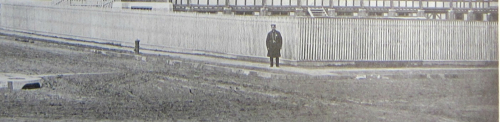
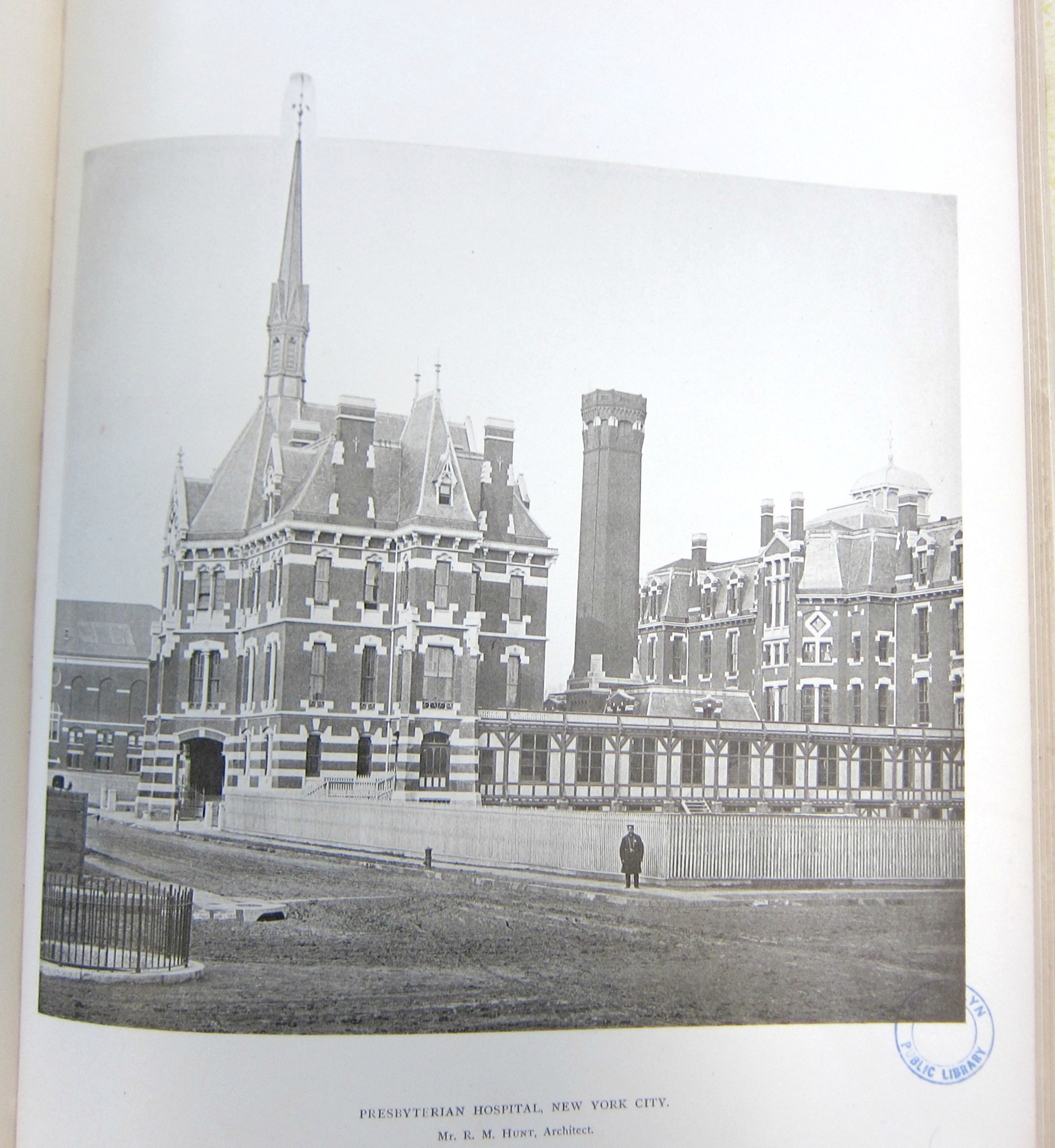
    This post really doesn’t have anything to do with anything–it is just an interesting image of a newly constructed building capturing a sense of  its solemn activity ornamented in heaviness, intersected by one guy (perhaps a watchman) who is standing there at the intersection of Nothing & Everything.  [Source: New York Sketchbook of Architecture, James Osgood, NY, 1874.]

    NYC architecture


  • Women In The Sub-Kingdom Of Pants 1918

    JF Ptak Science Books   Quick Post

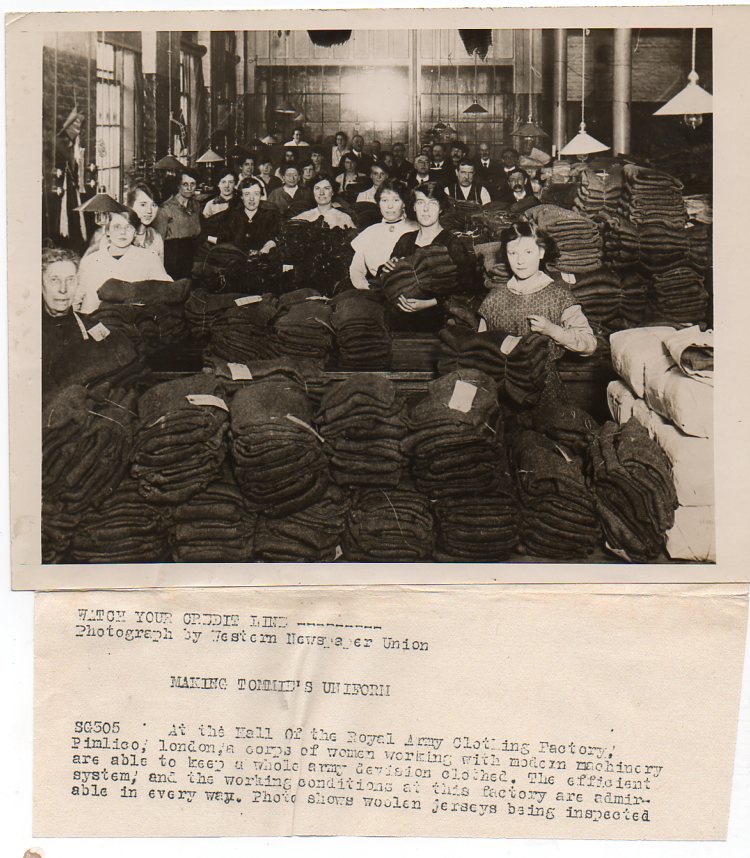
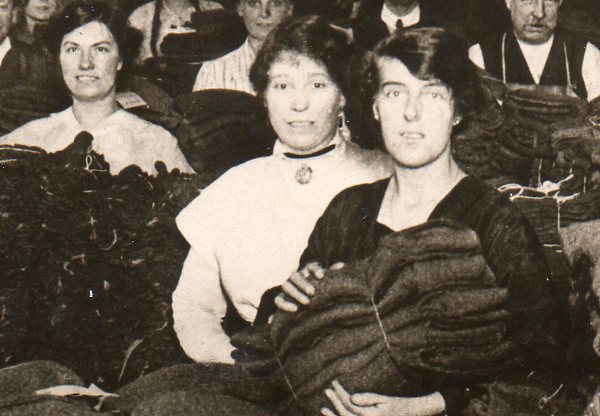
     This is a photo of a tiny piece of the army behind the army–in this case women preparing clothing for the British Expeditionary Force in 1918.  The trousers that they are handling in this image represent–in an offhand calculation–about one one hundred thousandth of one percent of the trousers that just the BEF would have worn. .00001, or some such number. When the photograph was made in late 1918, the U.K. had about four million men in uniform, which was not the total of all those who served; in the end, nearly 2.6 million U.K. soldiers were killed or wounded from 1914-1918. It took millions of people in a vast coordinated effort to support a n army of this size, and so far away. 

    WWI--e--women pants683

    Source:  part of the 500+ image collection of news photo service photographs, many of which would have the paper description attached to the image for inclusion as a caption to the image when it was published in a magazine or newspaper.

    WWI--e--women pants det682

    ·Posted by :

    ·in:

    — —

  • Color as a Secret Weapon–Air Recon, Camouflage, and Color Film (1939)

    JF Ptak Science Books   Quick Post

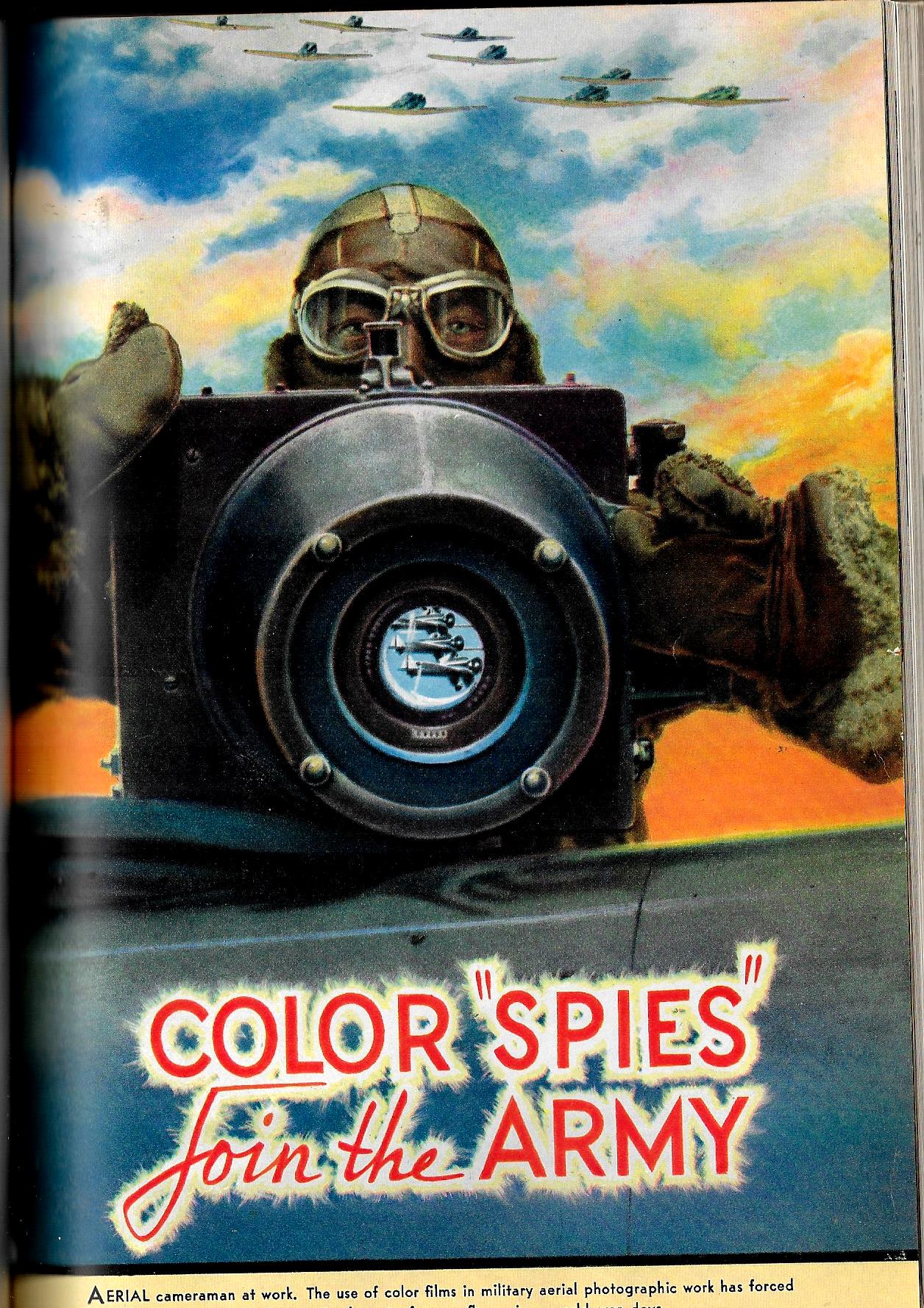
    Here’s something I never thought of before–how color air recon photography changed the application of camouflage.  Aerial photography used to reveal the hidden segments of an enemy’s position was almost exclusively limited to black and white film in the two decades or so following WWI. Color films were far slower and evidently not suited to the task until the late 1930’s–therefore, it seems, camouflage was prudently directed to disguise objects from aerial surveillance with those limitations in mind.  As this cover for an article in Popular Mechanics suggests, all that changes with the invention of faster color film that made the b+w film obsolete, and changed the way camo was used to confront mile(s) high observation.  (I also suspect that this was available to the U.S. armed forces well before this article was published…)

    Camouflage aerial recon

    [Popular Mechanics, April, 1929, page 497.]

    ·Posted by :

    ·in:

    — —

  • Found Art in Tin, ca. 1865

    JF Ptak Science Books   Quick Post

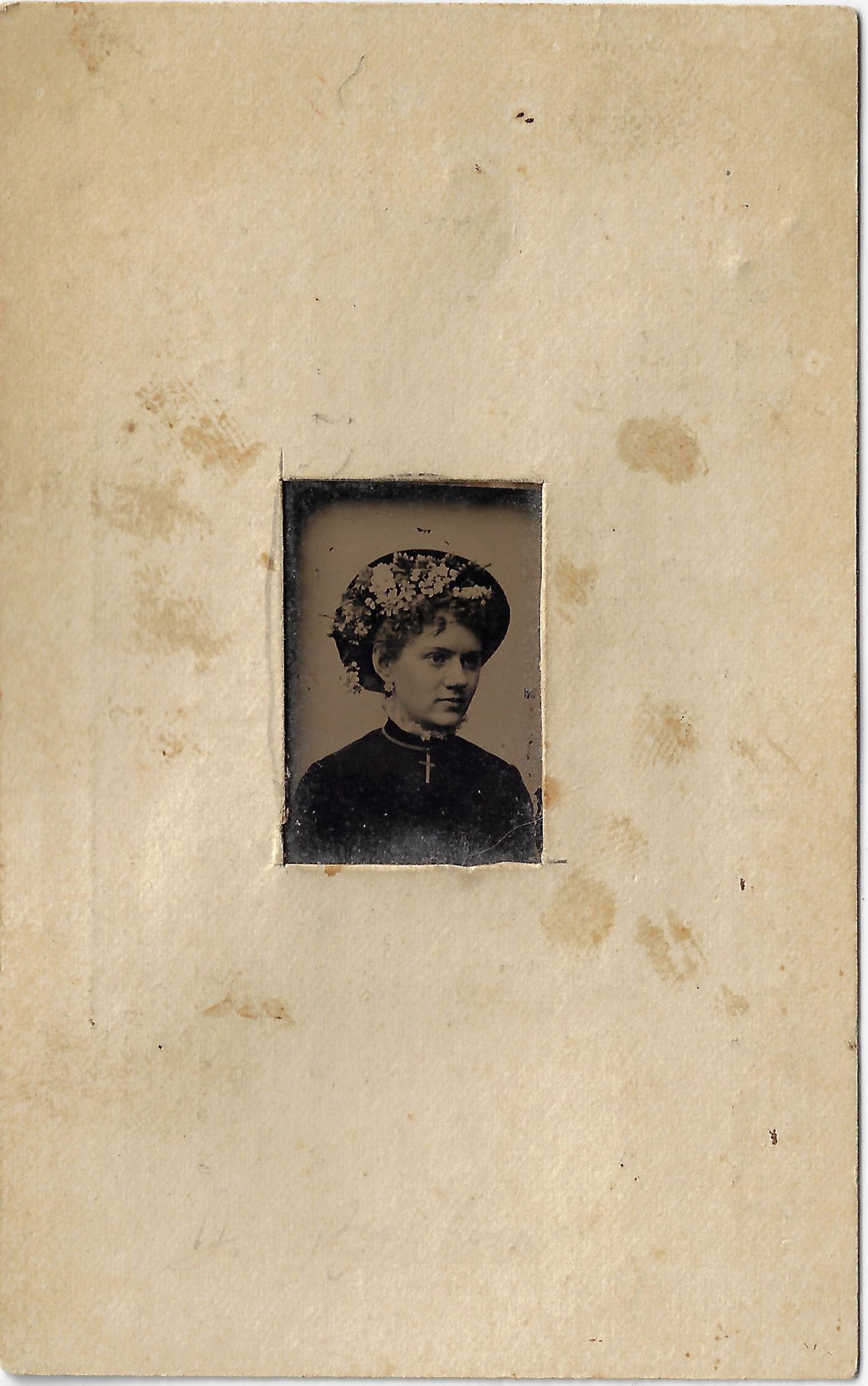
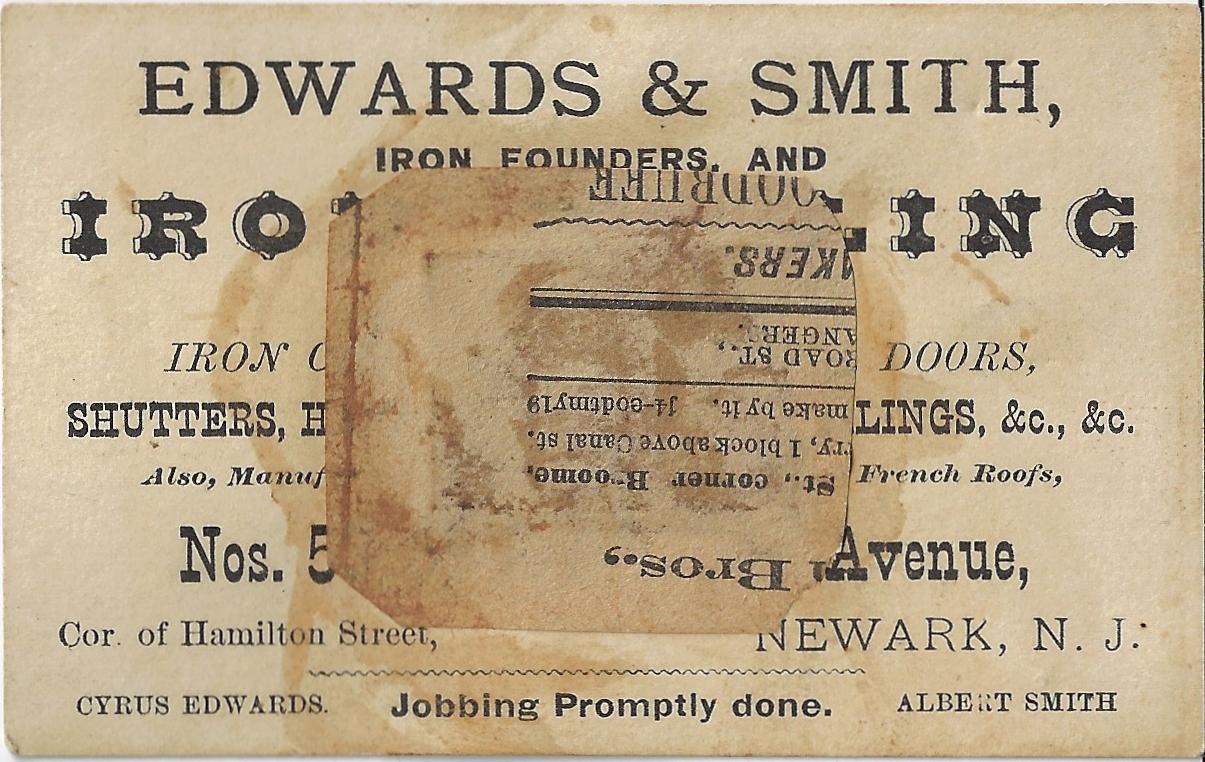
    I found this tiny photograph (nearly coverable by a U.S. quarter) quite some time ago, part of a collection of titles that I thought I would turn into an imaginary 19th century mug book, complete with biographies and crime chronologies. It hasn’t happened yet, though I do enjoy looking closely at this images, and their housing.  This photo is a tintype–a process invented in the early 1850’s beginning life called melainotype and then ferrotype before coming to be called tintype–which I think was made in 1865-1875, and has a home-made mat that measures 2.5 x 4″ and with the photographic image 1 x 3/4″. While the image of the woman with her hat is interesting in itself, there is a certain distraction of interest in the mat, with its slightly uneven opening cuts and the remnants of the penciled guidelines.  The photo is held in place against the mat by two pieces of advertisements–and truth be told I like that nearly as much as the photo on the other side.  The Mona Lisa is what it is, of course, but the back of the Mona Lisa’s frame and backing is fascinating in itself. 


    Photo tiny matted detail_0001


    Photo tiny matted back_0001


    ·Posted by :

    ·in:


  • Nabokov in Black & White

    JF Ptak Science Books  Quick Post

    Nabokov VN


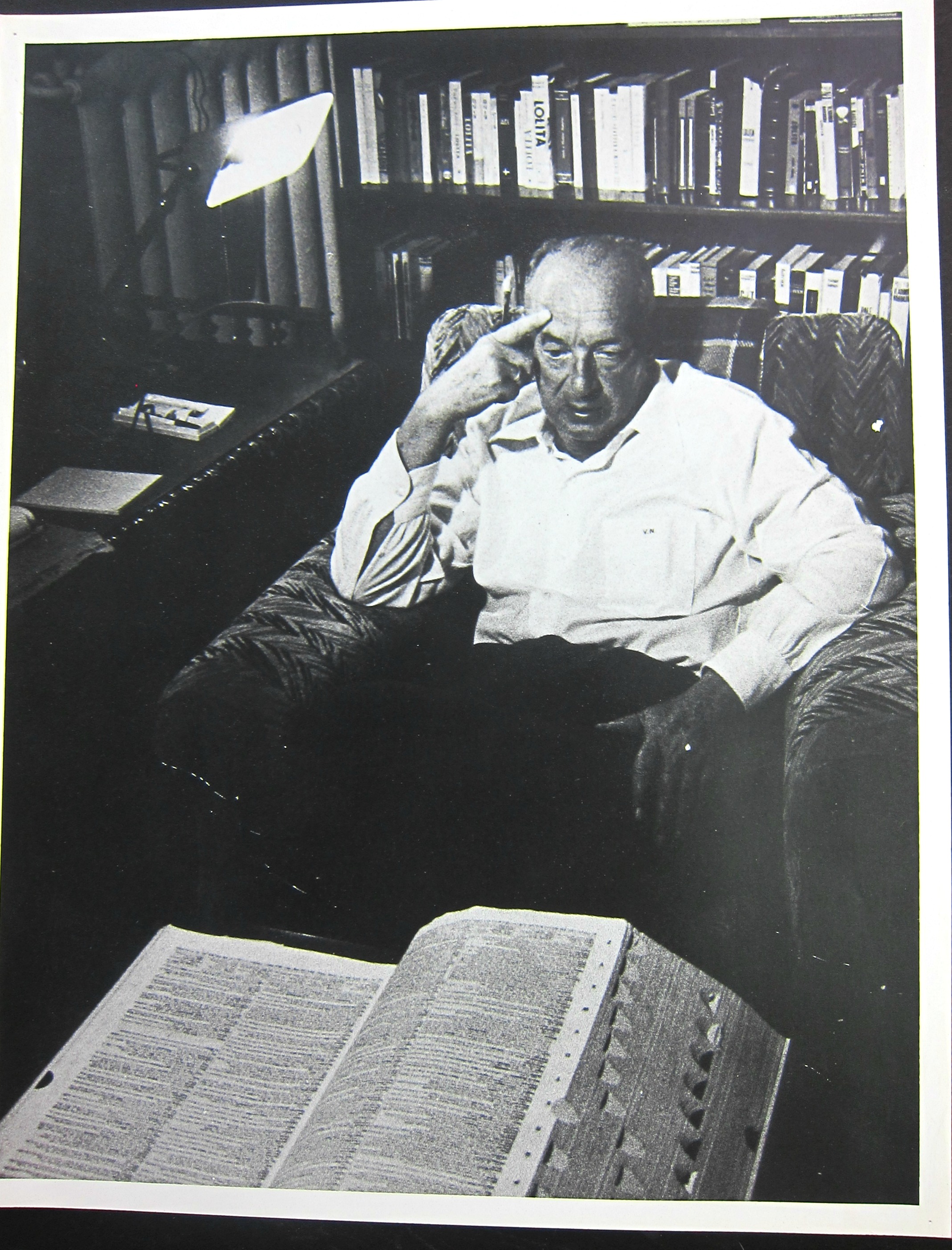
    The odd thing about seeing Vladimir Nabokov in black & white is that he had such an enormous relationship with color, though perhaps the man had the capacity to add color where it wasn’t and then interpret the missing colors as they should or could before passing them on through his synesthesia machine. In any event, I just wanted to post this picture and share–this is an original of some sort (large, at 11×14″) and though I must say I don’t know all that much about him this image seems to be an uncommon one…or at least I don’t recall seeing it before:

    Nabokov photo

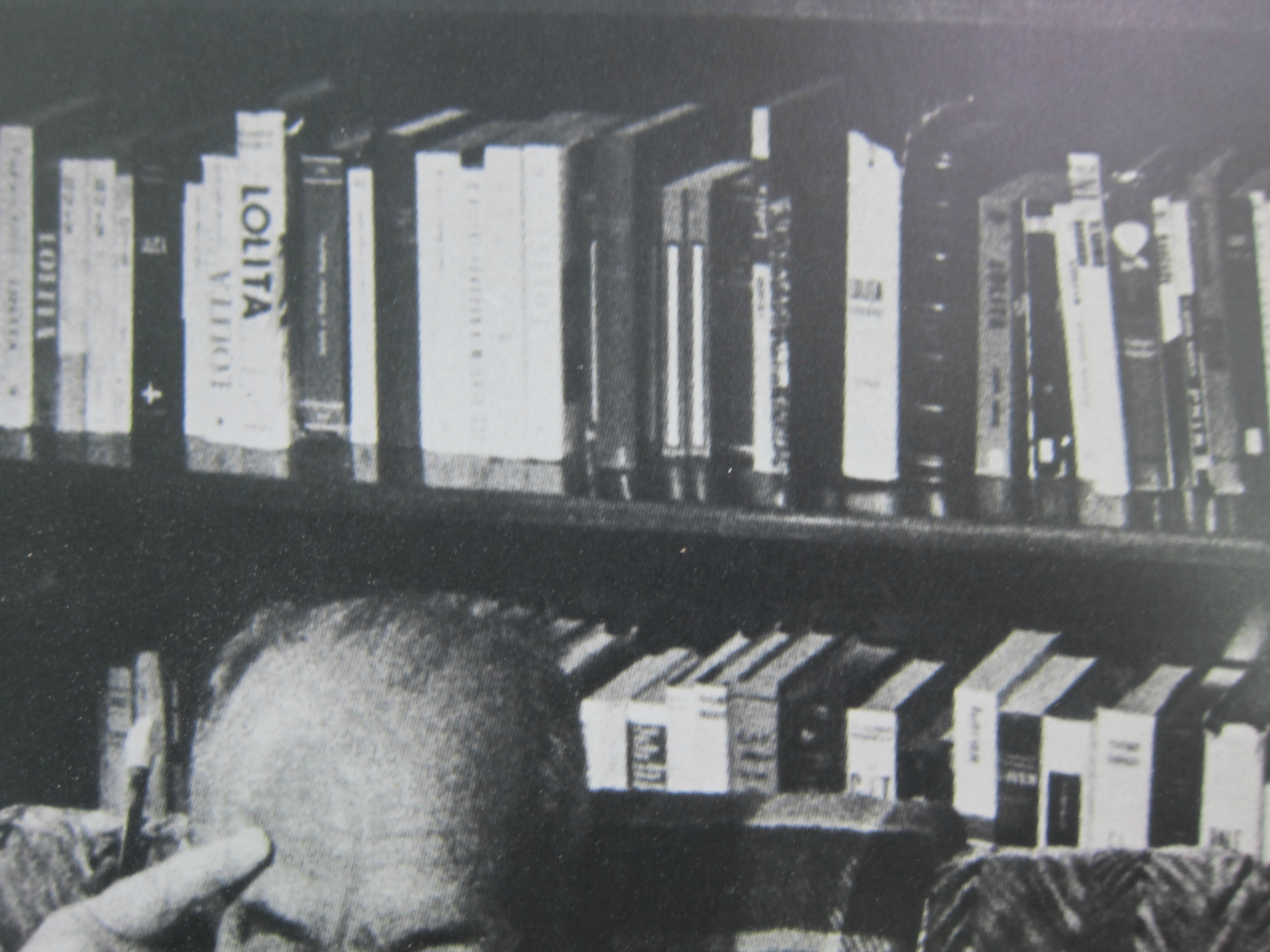
    I can’t make out what page the 2nd Webster’s is open to, but it really doesn’t matter.  It is interesting to see his collection of Lolita in the background: 

    Nabokov detail


    In any event, here’s a bit from Speak, Memory, in which Nabokov describes aspects of his synesthesia with color and sound (the quote found originally on the Fury Factory blog, here: https://furyfactory.wordpress.com/2011/06/15/nabokov/):

    “…I present a fine case of colored hearing. Perhaps “hearing” is not quite accurate, since the color sensations seem to be produced by the very act of my orally forming a given letter while I imagine its outline. The long a of the English alphabet (and it is this alphabet I have in mind farther on unless otherwise stated) has for me the tint of weathered wood, but the French a evokes polished ebony. This black group also includes hard g (vulcanized rubber) and r (a sooty rag being ripped). Oatmeal n, noodle-limp l, and the ivory-backed hand mirror ofo take care of the whites. I am puzzled by my French on which I see as the brimming tension-surface of alcohol in a small glass. Passing on to the blue group, there is steely x, thundercloud z, and hucklberry k. Since a subtle interaction exists between sound and shape, I see q as browner than k, while s is not the light blue of c, but a curious mixture of azure and mother-of-pearl. Adjacent tints do not merge, and dipthongs do not have special colors unless represented by a single character in some other language (thus the fluffy-gray, three-stemmed Russian letter that stands for sh, a letter as old as the rushes of the Nile, influences its English representation).

    ·Posted by :

    ·in:


  • Ghost Vision and the Coming of T.V.

    JF Ptak Quick Post

    Joseph Plateau, “On a New and Curious Application of the Permanence of Impressions on the Retina”, in Philosophical Magazine, volume 36, January-June 1850, pp 434-436; followed immediately in a much longer paper, “Second Paper on a New and Curious Application of the Permanence of Impressions on the Retina”, pp 436-452, with two plates.

    Plateau

    From: An Annotated Bibliography of Flicker Fusion Phenomena…1740-1952, by Carney Landis, p. 
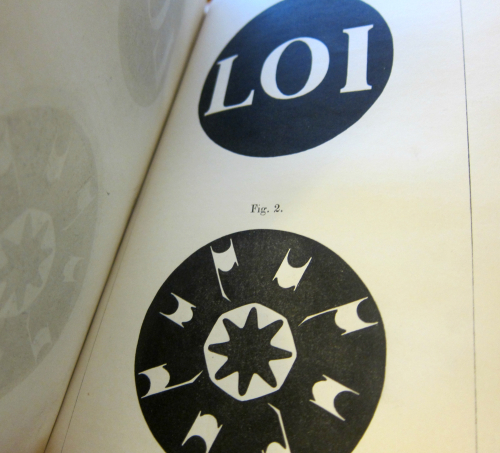
    PlateauPlateaun (1801-1883) was the inventor of the Phenakistoscope in 1829, and contributed often (especially with considerable papers in 1835 and 1836) on the issue of persistence of vision. Here he writes of that and the flicker effect, which is the optical illusion in which individual sequential units of images are viewed as a continuous motion of images, which is a trick of the visual system and makes such this as the movies and cartoons and animated shows possible.  It is a terrible irony that this great writer on physiological optics would be blind or nearly so by the 1840’s, this a result of an experiment conducted requiring him to stare at the sun for nearly half a minute.

    “Plateau studied in great detail the phenomena of accidental colors and irradiation, both of which he considered as arising from a similar cause related to the persistence of the image on the retina. Accidental colors are those that appear after staring for some time at a colored object and then at a black surface, or closing one’s eyes and pressing one’s hands over them. An image of the object appears, usually in complementary color and slightly diminished in size. Plateau’s results include his discovery that accidental colors combine both with each other and with real colors according to the usual laws of color mixture. In irradiation luminous objects on a dark background appear enlarged, a factor clearly of interest to astronomers, among whom the question of the extent of the enlargement was causing controversy. Plateau showed that enlargement occurs regardless of the distance from the object and—explaining the varied experiences of the controversialists—that the mean amount of enlargement from the same source varied considerably from one individual to another.”–Dictionary of Scientific Biography

    Also in this volume: J. Locke, “On the Phatascope”, pp 453-457, “instrument for giving single vision with two eyes” (–Living pictures; their history, photoproduction and practical working. With a digest of British patents and annotated bibliography, Henry Hopwood, 1899.)

    Among the many other articles in this volume is William Fishburn Donkin’s “On the Geometrical Interpretation of Quaternions”, pp 489-502. (See Alexander MacFarlane’s Bibliography of Quaternions..., 1904, full text here: http://ow.ly/kFRy304gfVD

    Notes:

    • See The History of Discovery of Cinematography timeline, which is especially interesting for the pre-1850 entries http://precinemahistory.net/1850.htm


  • A Unique Bird’s Eye Panorama of Washington, D.C., ca. 1914

    JF Ptak Science Books   

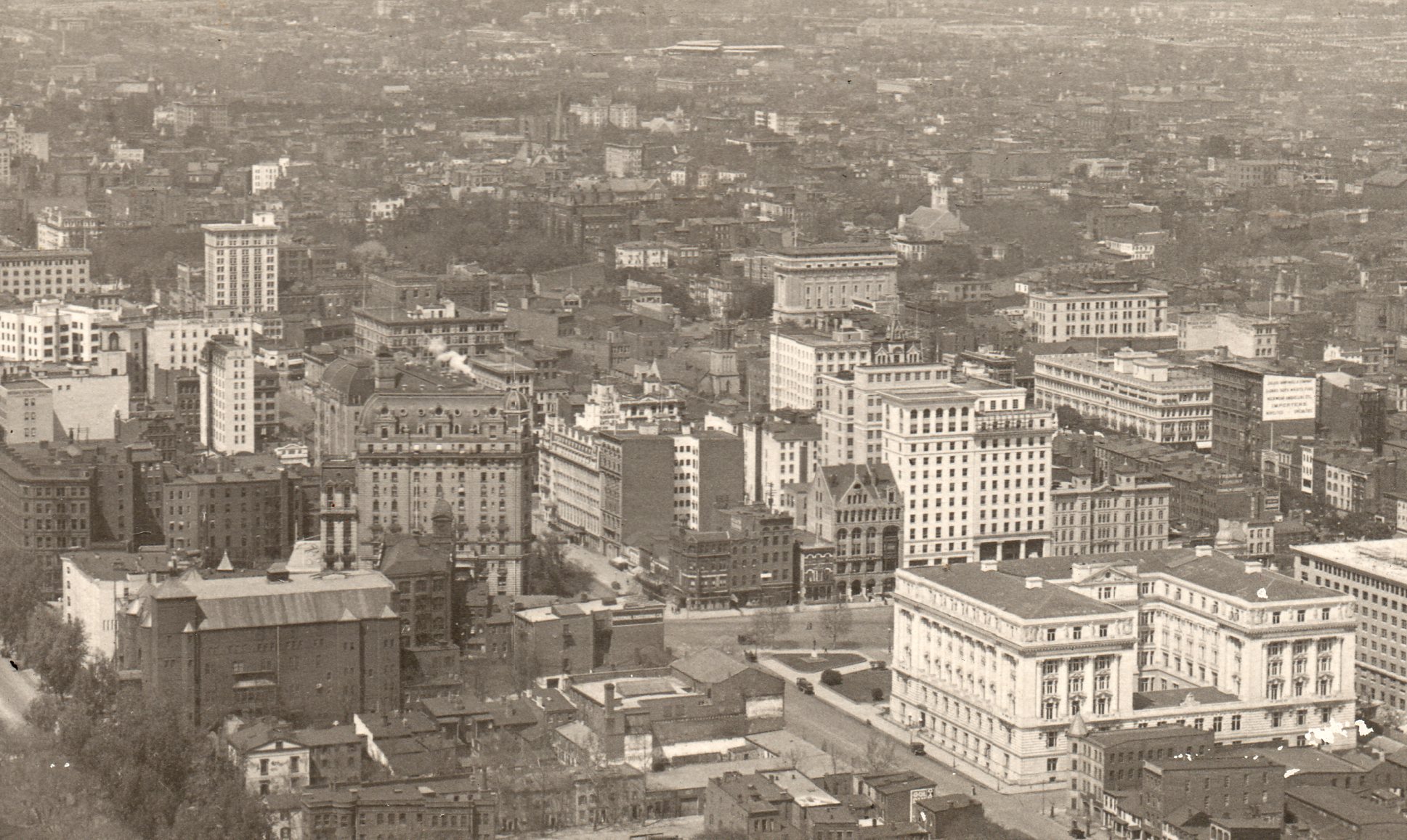
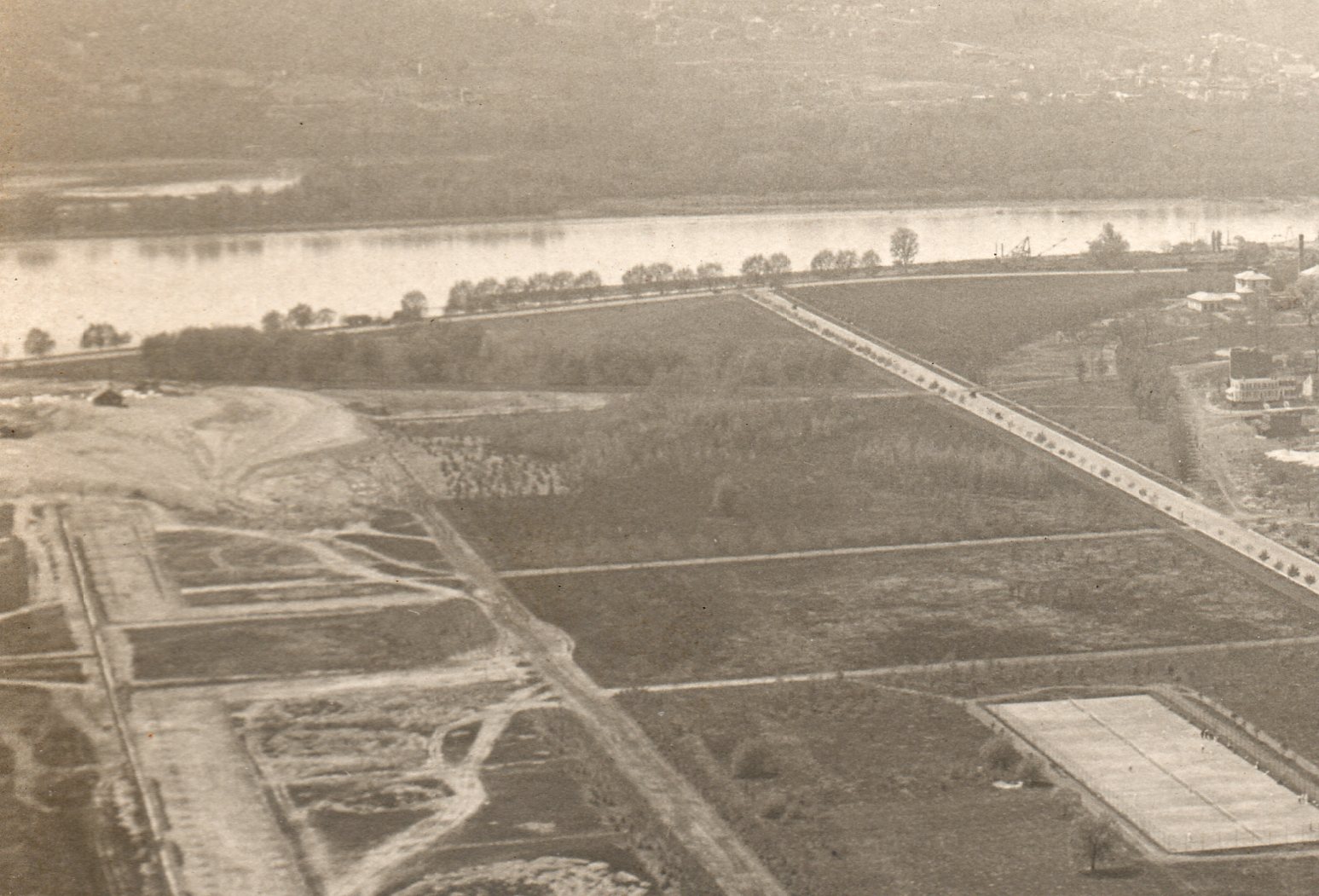
    Original Panorama-Style Montage View of Washington, D.C., ca. 1914.  These images were taken from the Washington Monument, and perform nearly a 360-degree perspective of the city.  The major and obvious clue for the date of these photos is the Lincoln Memorial–rather, where the Lincoln Memorial would be.  Photo #2 shows the beginning of construction, which began in 1914 and which would take until 1922 to complete.  Each is 80x135mm, or 80×1145 mm all together, or 3.25″ x 38.5″ (actually, about 30″ long once overlap is considered).

    Detail from photo #5:

    Wash DC pano _4 detail_578


    And a detail of photo #2, showing the site of the Lincoln Memorial:

    Wash DC pano lincoln detail582

    ·Posted by :

    ·in: