A Daily History of Holes, Dots, Lines, Science, History, Math, Physics, Art, the Unintentional Absurd, Architecture, Maps, Data Visualization, Blank and Missing Things, and so on. |1.6 million words, 7500 images, 4.9 million hits| Press & appearances in The Times, Le Figaro, Mensa, The Economist, The Guardian, Discovery News, Slate, Le Monde, Sci American Blogs, Le Pont, and many other places… 5000+ total posts since 2008.

Category: Photography

  • A Lovely and Lonely Plainness, by Margaret Bourke-White

    JF Ptak Science Books  Post 2814

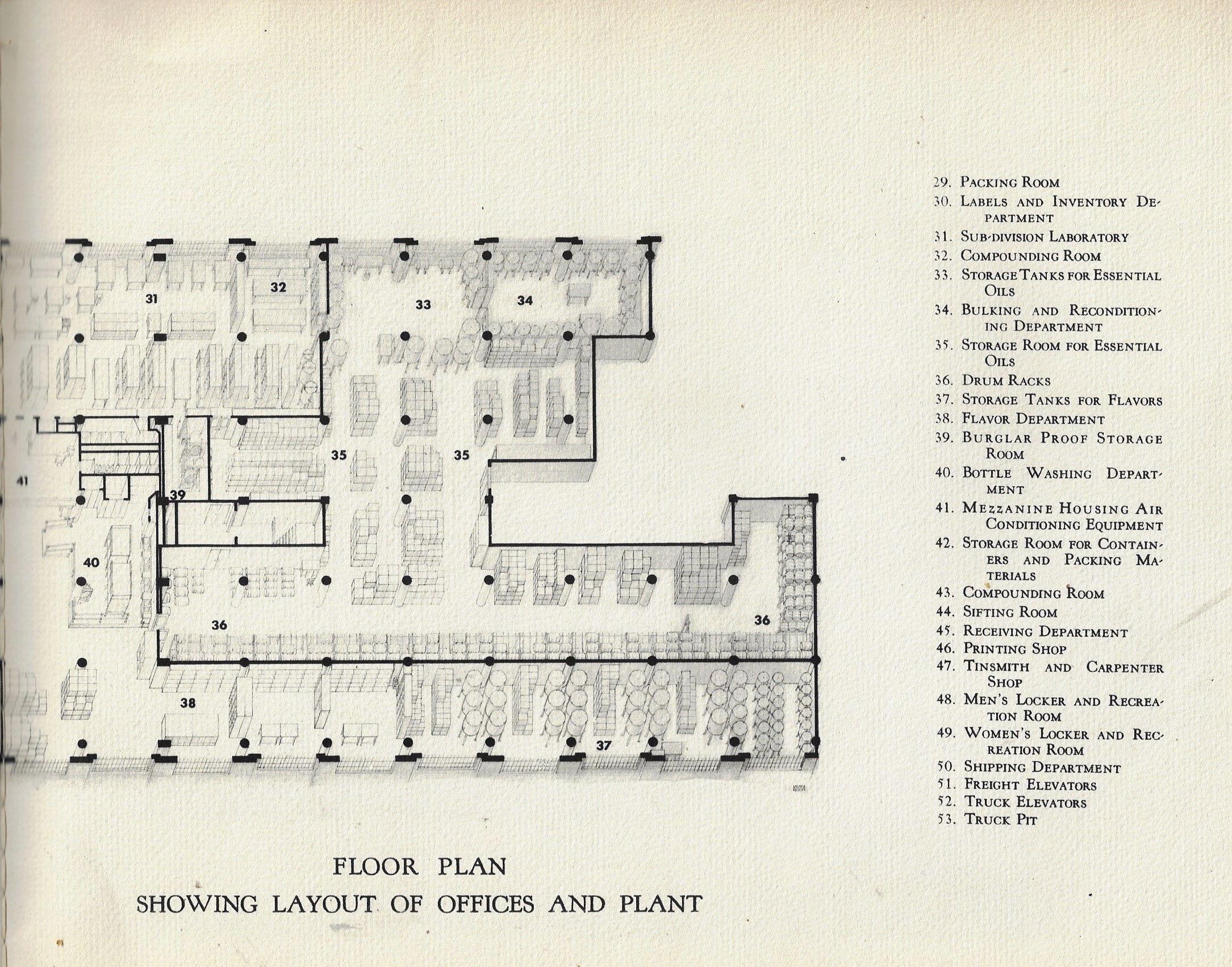
    I happened upon some photographs by the great Margaret Bourke-White yesterday in a most unexpected place–an upper-end oversize pamphlet advertising the perfume and oils business of Fritzsche Brothers of NYC. No disrespect to Fritzsche–which was in its 65th year of business–but it was a surprise to see the work of a pioneering and iconic photographer like Bourke-White in such a relatively common setting. Of course photographers need to pay the bills, too, and I’m sure that Bourke-White was well paid for her ultra-competent and accomplished business and industrial assignments. She was probably very well paid considering that she already had a national audience, being the first photographer for the new Fortune magazine, with her photo essays appearing there beginning in 1930. 

    The Fritzsche pamphlet was published in 1937, just a year or so before she made her first LIFE magazine cover.  She had a tremendous run between 1935-1950, and seemed to be everywhere, seeing everything. She was the first U.S. war photo-correspondent covering WWII and Korea; she was at concentration camps in 1945 and with Stalin in 1944 and Gandhi in 1949, and was a superb documentarian of the human experience during the Great Depression–even her first assignment at Fortune found her making photographs of the bank vault at the First National Bank of Boston coincidentally on the evening of Black Tuesday, 1929. 

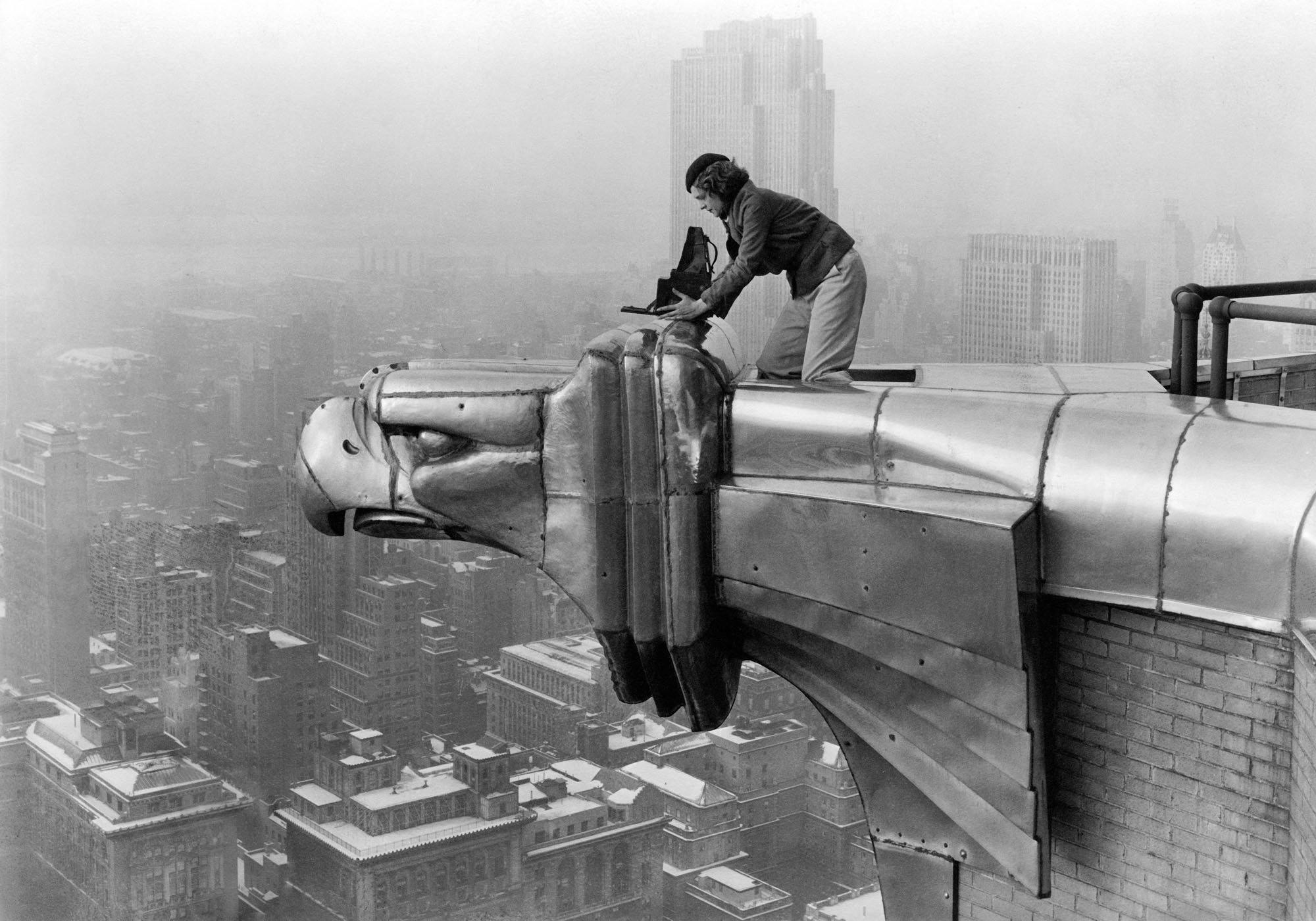
    Here’s a photo of Bourke-White at work (from her first-photographer-at-Fortune-magazine days). and one of her most recognizable works made during the Great Depression:
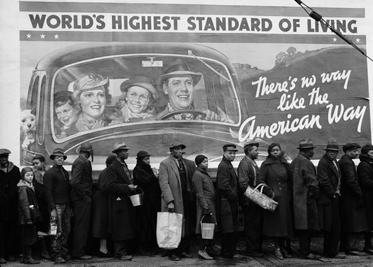
    Bourke-white _1_ atlantic

    Bourke-White _2_ Kentucky flood wikicommons


    And then here she was in the relatively bland pages of the Fritzsche promo, making images of reception areas, loading docs, labs, a library, some VP studiously at work at a small desks…however when you look closely at the rooms she was working in you can appreciate that it was a difficult assignment, and that lighting was a problem, though it was one that she solved.  The odd thing is that everything in these photos is sort of the same, that a general blankness/blandness has taken over, all of the people with similar expressions, and then something else…that in this very large collection of offices there’s absolutely noting on the walls except for an occasional clock here and there. Other than that exception, there are no wall decorations. Given that the company is chemically decorating the air around people, it strikes me as a little odd that the physical surroundings was such a collection of nothing.  Here’s the reception area as an example of the environment’s assertive blandness:
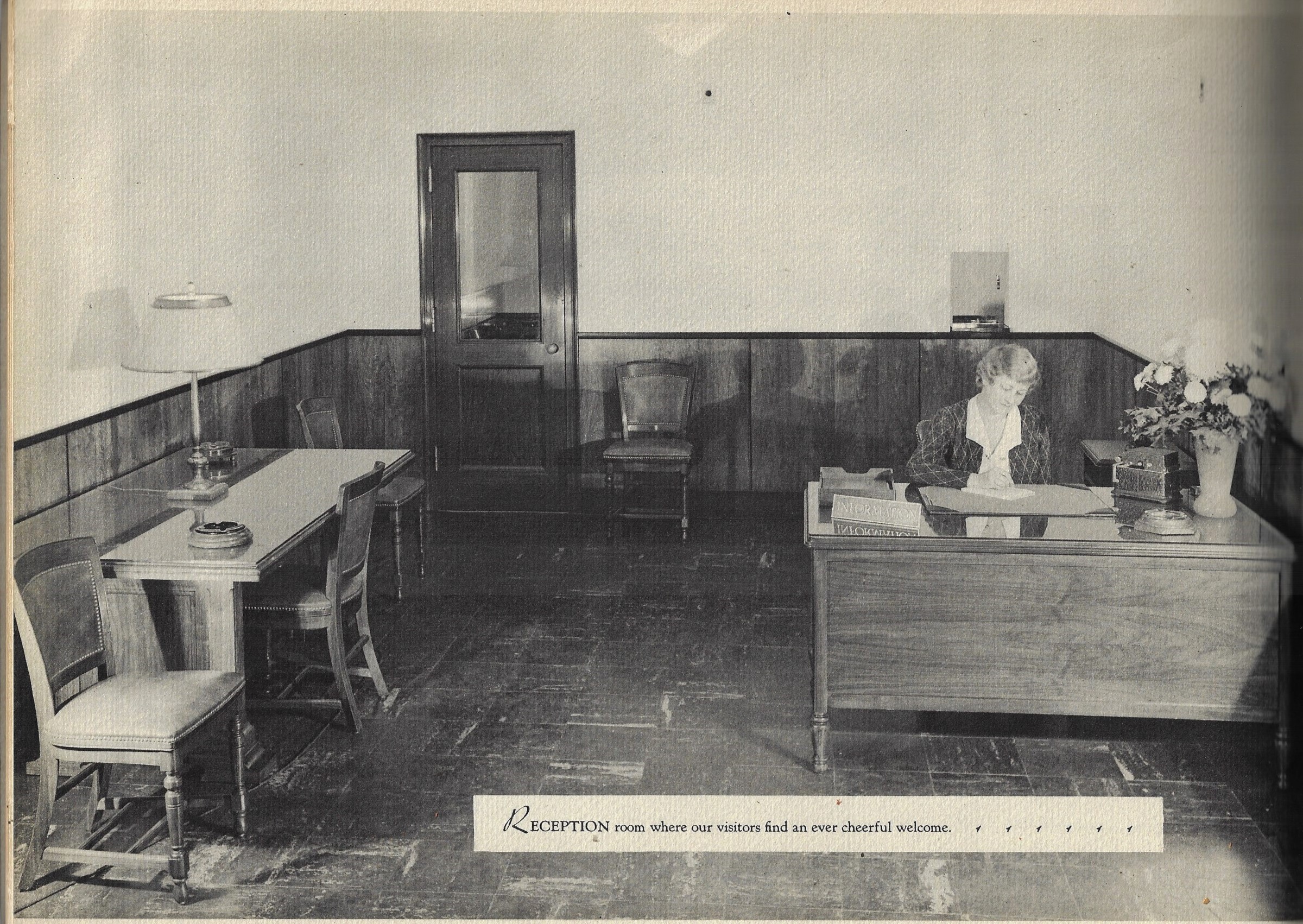
    Fritzsche _3_

    There are 22 such photos of hollow spartanness, well-lighted. And very tidy.

    Here’s another:
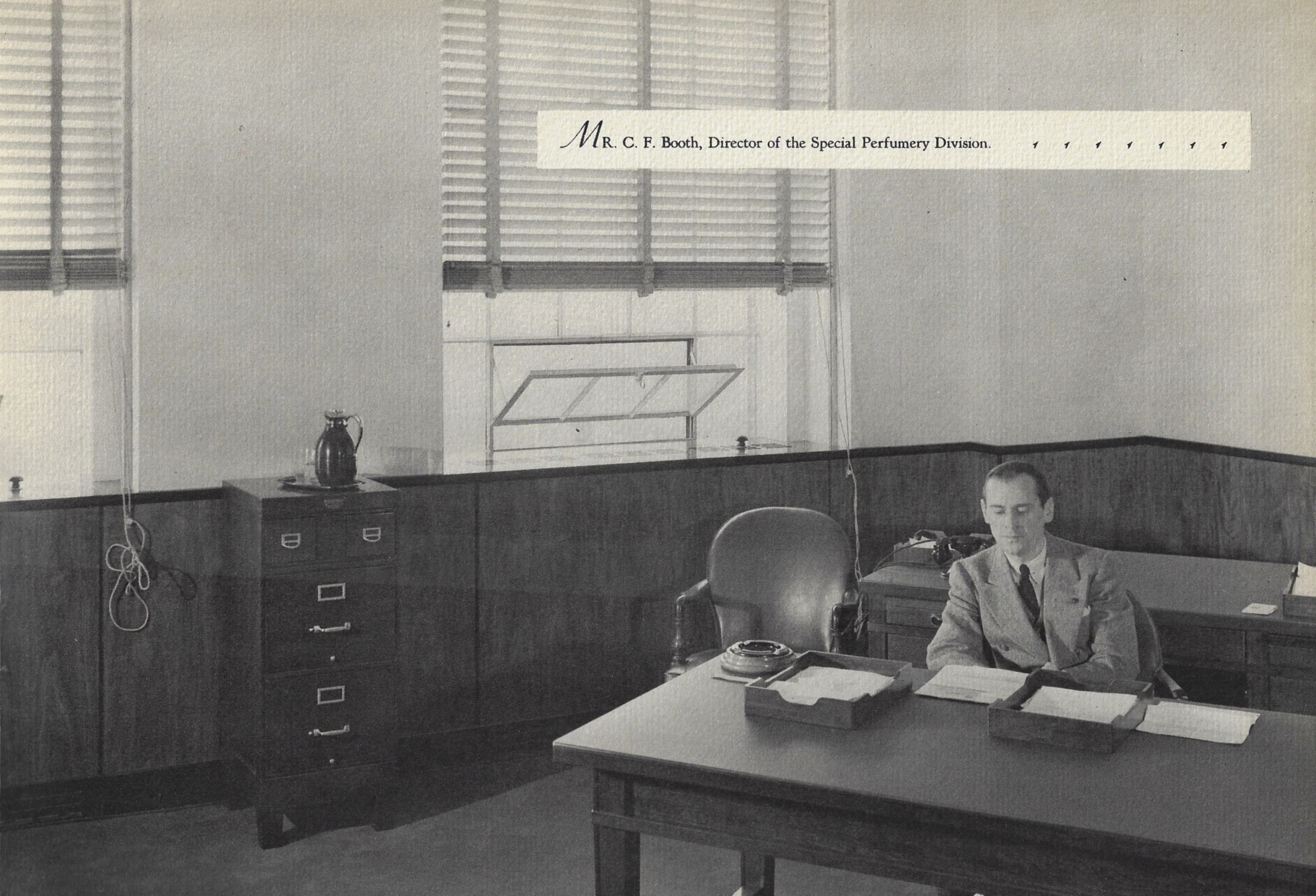
    Fritzsche _4_

    The blank walls become even more oppressive when you consider the number of walls in the place: 
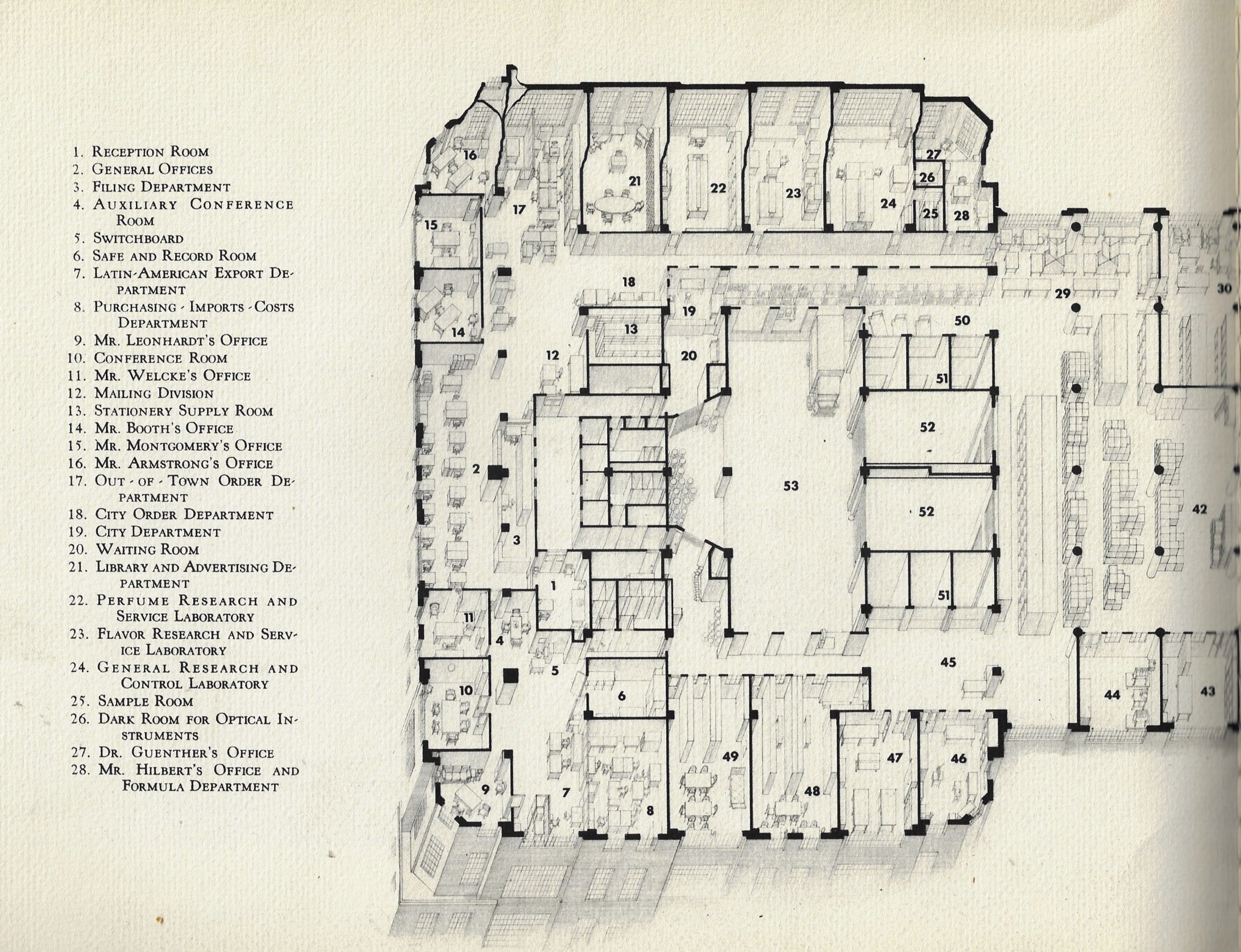
    Fritzsche _2_

    Fritzsche brothers _1_


    I guess Bourke-White did as well as could be done with what there was…
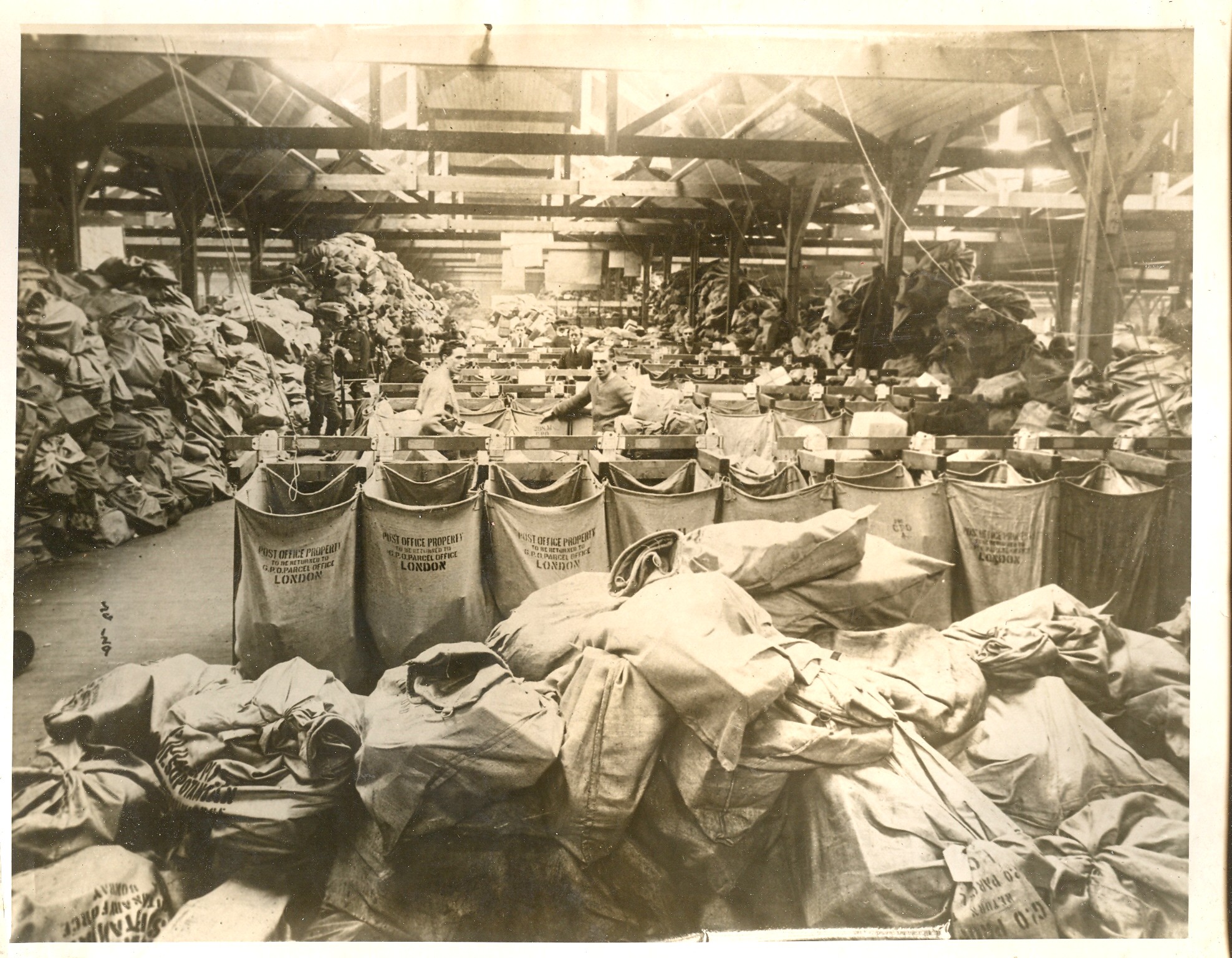


  • Christmas Mail, December 1917

    JF Ptak Science Books  Quick Post

    This is the U.S. Army mail depot at Regents Park, London, braced for and under siege by  Christmastime mail in 1917. It strikes me that there may be a million items in this photo–at this time in the war there were something like 35 million people in the services for all countries dedicated to the war effort, which is approximately half the number that served in total.  If these letters in this picture were bodies, I reckon that there would be five more rooms like this necessary to tell the visual picture of the war dead and wounded.  This aside, I initially focused on the guy in the rear with the white shirt and tie, standing there pretty much overwhelmed by the task of moving all of that stuff…and perhaps with the idea that much of the mound would wind up being undeliverable because the recipient was killed.  I wonder if that mail was returned, or not?

    WWI photo Xmas mail

    ·Posted by :

    ·in:

    —

  • On Looking for One Thing and Finding Another (1878). What Does Criminality Look Like?

    JF Ptak Science Books   Quick Post

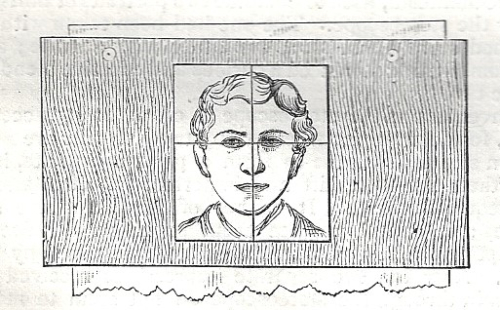
    Galton faceSir Francis Galton’s “Composite Portraits” article in May 23, 1878 volume of Nature (pp 97-100) came early on in the prehistory of cognitive and computational aspects of “facial recognition”, though more like an analog development for a later digital environment. In this paper he discusses his attempts to see the face of criminality before crime was committed. Galton put together and projected a number of portraits of criminals to see if a fundamental picture of criminality arose–what he found was the opposite, and poetic. He started with a first set of eight portraits of people convicted of murder, manslaughter, or robbery accompanied by violence. What he found I’m sure must’ve been surprising to him: the composite of the eight were “much better looking” than the individual components, and that the “special villainous irregularities…have disappeared”. It was the “common humanity that underlies each of them (that) has prevailed”.

    Galton continues to state that the composite “represents not the criminal, but the man who is likely to fall into crime”.

    There is then a fair amount of discussion of the many uses of the composite photograph, though I think for our purposes we can stop right here.

    [A sample composite image, above.]


    ·Posted by :

    ·in:

    — —

  • The Skinniest Early Description in the USA of the Invention of Photography (1839)?

    JF Ptak Science Books   Post 2801

    Among the earliest and lengthiest mentions of the newly-announced Daguerre invention of photography in the U.S. was “Pencil of Nature—A New Discovery”  that appeared 13 April 1839 in the Corsair: A Gazette of Literature, Art, Dramatic Criticism, Fashion and Novelty. There’s a lot in there on the effects of what the new process might be more so than any real description of what the magical new process was. It would take several months for that to appear, and one of the first to do so, to provide some real detail on what was still a rather mysterious event and process, appeared in the National Intelligencer on 25 September 1839 (which was based on the 23 August 1839 London Globe account).

    The Corsair article starts out bemoaning “progress”, in a way, setting the reader up for the next step of the democratization of art, which would meanwhile send the world of engraving (and engravers), lithography, sketchers, painters, and so on, who would all be replaced by the new invention of Daguerre.

    • “We know not how it is, but just as we are going to have something good in this world, up starts a mischief to mar it or to vilify it. There is not a real panacea, but has its rival. Engraving, set upon a firm basis, one would have thought might have been supreme. No such a thing—her illegitimate sister, Lithography, sets up her claim, and by means of cheap publications, calls in the masses, who naturally prefer the inferior article; and here commences the democracy of art.”

    And just like any advancement in anything—from water delivery systems in towns and cities that would replace the water-fetcher to the lineman working on some U.S.-built car being replaced by robotics, and etc.–the author sees the fate of the artisan in light of photography:

    • “Here is a revolution in art; and, that we may not be behindhand in revolutions, for which we have so imitative a taste, no sooner does one start up in Paris, but we must have one in London too. And so Mr. Daguerre’s invention is instantly rivalled by Mr. Fox Talbot’s. The Dagueroscope and the Photogenic revolutions are to keep you all down, ye painters, engravers, and, alas! the harmless race, the sketchers.” –Source: Gary Ewer, http://www.daguerreotypearchive.org/texts/P8390015_PENCIL_CORSAIR_1839-04-13.pdf

    It is interesting to see the variety of titles given to the earliest articles and notices of Daguerre from January through August 1839—granted for most of that time there were very few details of the process until late summer 1839 at which time the article titles became more directed and less fanciful. The following is a selection of the articles that appeared at this early stage—all of the work putting together the remarkable list of linked publications that these titles are taken from is that of Gary Ewer at the Daguerreotype Archive, here: http://www.daguerreotypearchive.org/1839.php

    • “The Daguerotype” [sic]
    • “Fixation of Images”
    •  “Chemical and Optical Discovery”
    •  “The New Art
    • “Clericus”
    • “Remarkable Invention”
    • “Extraordinary Chemical and Optical Discovery”
    • “New Discovery—Engraving, and Burnett’s Cartoons.”
    • “Self-Operating Processes of Fine Art”
    •  “Sun-Painting”
    • “The Daguerrotype” [sic]
    •  “Photogenic Drawings”
    • “Daguerre’s Photogenic Paper, and Fixation of Images”
    • “Pencil of Nature—A New Discovery”
    •  “New Discovery in the Fine Arts—The Daguerroscope” [sic]
    • “The Daguerrotype, or Solar Engraving”
    •  “The Daguerre Secret”
    • “The Pencil of Nature”

  • The First Mention of a Photograph of a Face? (1840)

    JF Ptak Science Books  Post 2800

    “An Account of some Experiments made in the South of Virginia on the Light of the Sun…”, published in the Philosophical Magazine (London) in 1840, is a very early photographic  effort by John Draper on the effects of solar light on different material and media, including silver solutions. This is the first appearance of the work in Great Britain and Europe, having appeared in a much longer (32pp) version in the Journal of the Franklin Institute from 1837. Draper remarks that his works in photography were not much read in England, having been published in the U.S., and thought to bring this paper in particular to the attention of the Philosophical Magazine: He writes in the paper that “Most of these have been published in the Journal of the Franklin Institute of Philadelphia; but as they do not appear to have been noticed in England, I will ask the favour of a page or two of your excellent Magazine, to give my testimony on a subject, which now appears to excite so much interest.”

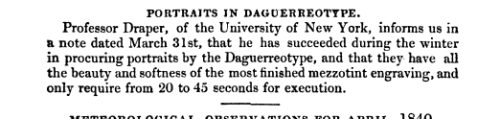
    Of perhaps greater interest here is the announcement in the June 1840 issue in this same volume of Draper’s success in producing human portraits by the Daguerre process. It is a short notice (only five lines, appearing on page 535) and even though it is stated that the Draper paper was received on March 31st it still somehow did not make it into the May issue of the journal–this in spite of this being the first official announcement of a human portrait being made in photography. This is slightly complex because even though Draper’s portrait of his sister, Dorothy, was long recognized as being the first photographic portrait, it seems as though he was beaten to the punch by Alexander Wolcott (and/or Robert Cornelius?), though it was Draper who made the announcement  of a successful portrait (in general) and thus the first overseas notice of the success. (Draper did make the first photograph of the Moon later in 1840…) 

    Photography face draper

    ·Posted by :

    ·in:

    —

  • A Very Early (First?) Description of a Panoramic Daguerreotype (1845)

    JF Ptak Science Books  Quick Post

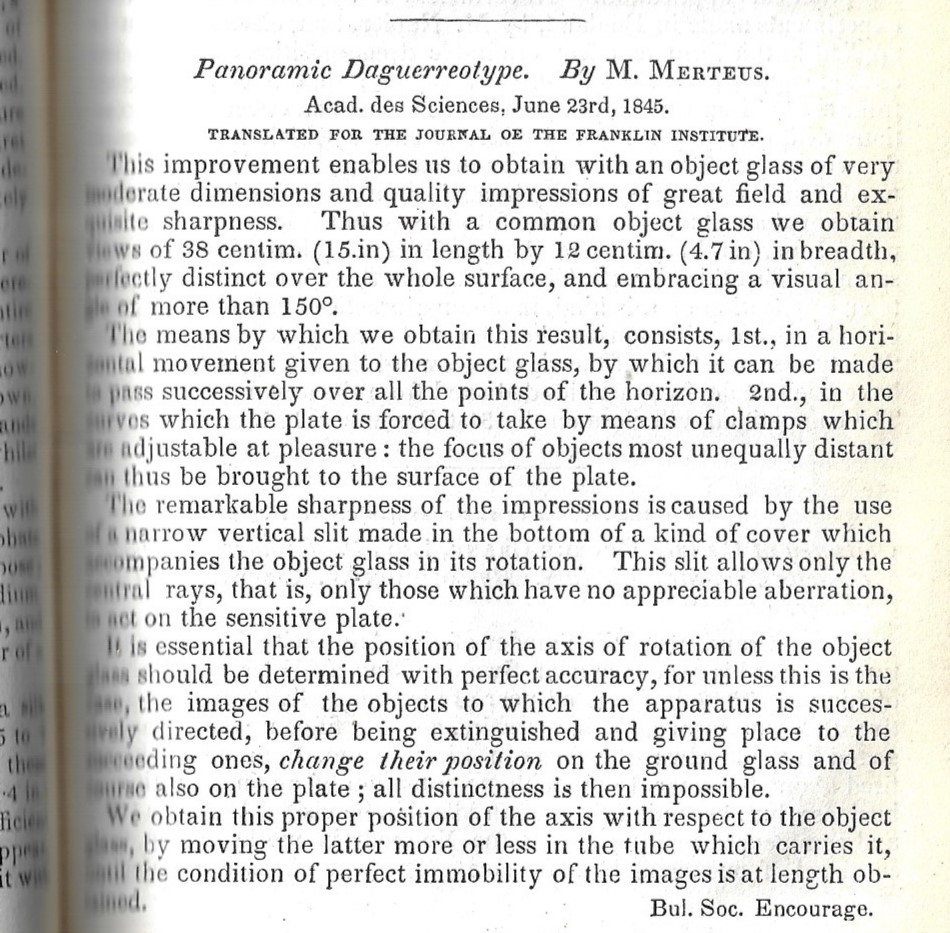
    Just five years after the announcement of Daguerre’s invention of photography, and just four years after the beginning of the early photo craze, there appeared in the Comptes Rendus in mid-1845 a paper by Friedrich von Martens (1809-1875) on an expansive use of the new media: the panorama.  It was certainly the first paper to appear in this journal on the subject; when I checked a likely U.S. source on the subject (Journal of the Franklin Institute, 1846) I found only one mention prior to 1865: a translation of the Martens paper (recorded though as “Merteus”). This seems a little obscure but not unimportant, as Martens may have been either the second (and possibly first) to perfect a panoramic camera, patenting his “Megaskop Kamera” in 1844.

    • I’ve decided to share the Martens paper in both the original and the American translation: 

    JFI 1846 panorama

    • Here’s the text version of the original article, from the Comptes rendus de l’Academie des Sciences..., Paris, June 23, 1845:

  • Found-Semi-Documentary Photography (Georgia, 1898)

    JF Ptak Science Books   Post 2795

    Sometimes “surprises” are quick to come to recognition, and sometimes they are slow, and sometimes they do a fast-creep into existence. The following surprise is a combination of the three—it may not have developed into the “something” I thought it nearly was, or is, but given the initial shock in seeing them, there probably is a “there”, there.

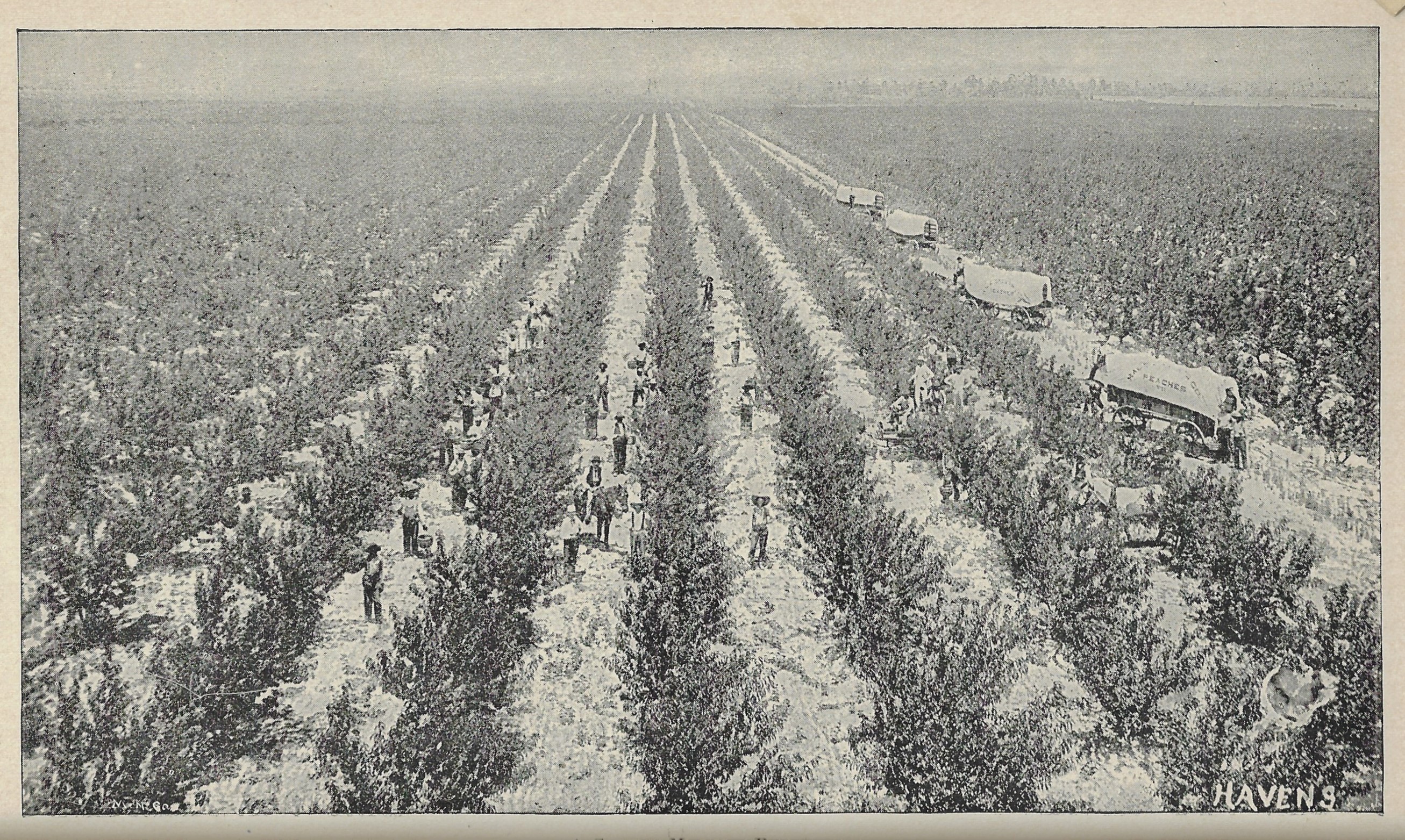
    I’m speaking of the illustrations for what is mostly a benign work, Georgia, its Resources, Condition and Opportunities, Preliminary Pamphlet, which on the face of it has very high potential for boredom and nothingness. It was published though in Atlanta in 1898, which gives it some hope—it also had in a sub-sub-heading that it was sponsored by the “Georgia Immigration and Investment Bureau”, which breathes some life into the thing.

    On opening the pamphlet immediately gave up its prize—photographs. And this was the first photo I saw:

    Georgia resources _3_

    Now I know this is supposed to be a propaganda piece for the state to attract money and people to come to Georgia, showing the abundances and state of agriculture as they were in 1898, which should have put a bright coat of shining sheen over whatever was to be pictured–but a photo like this had a very photo documentary effect, far more so than the photographer or editor ever intended it to be. It was a pride photo back in 1898, not an unblinking-photo-eye.

    But the mystery is also the insight, something for us to consider 121 years into the future of these scenes which displayed what was supposed to be the Happy Normal. So the “Square Mile of Peaches” photo showing abundance seems to have the feel of an abundant silent crisis receding in its own mist, sinking into the short horizon.

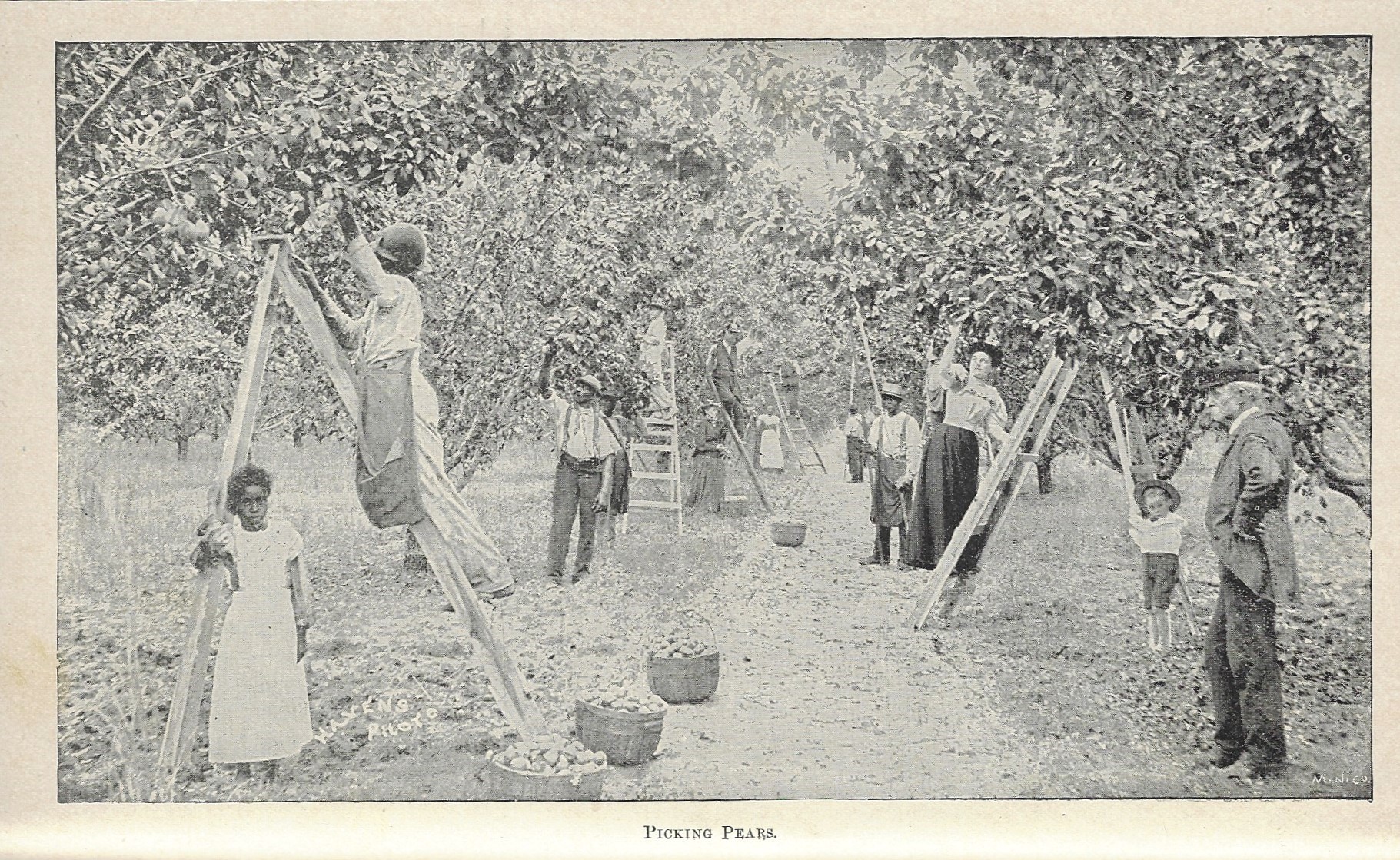
    And this:


    Georgia resources _2_

    What I wonder was the message in showing the formal but informal arrangement of the white and black people working together picking pears? “Integrated” is certainly not the word to use here—no doubt it was more like an agreement to perform some sort of work where the races were in close proximity with all race rules observed and maintained.

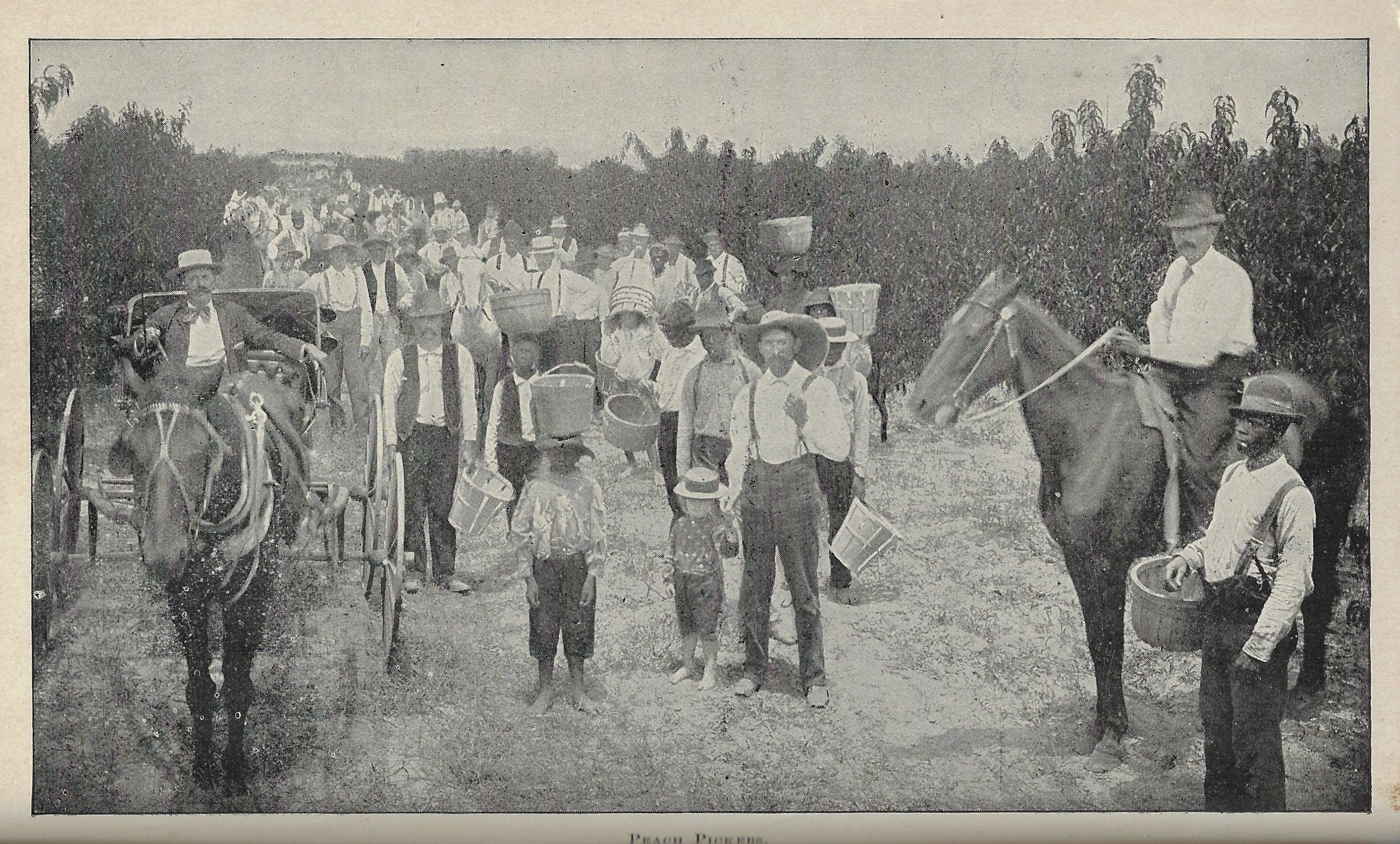
    There were many photos lie this in the pamphlet—of the thirty or so in the pamphlet only these three emerge to tell a story differentiated from the work they illustrated.

    They are Found-Semi-Social-Documentary images, sort of…I’m not sure, really what they are. They were certainly very different from what I expected, and in memory remind me a little of Annan, Mayhew, Hines, Riis, Parks, and Lange, but only by accident. They reveal something that is beyond the quickly posed environment.

    They are a little mysterious in interpretation—and they were certainly a surprise.


    Georgia resources _2_


  • The Dimming of the Harsh Light and the Beauty of Manual Work

    JF Ptak Science Books  Quick Post

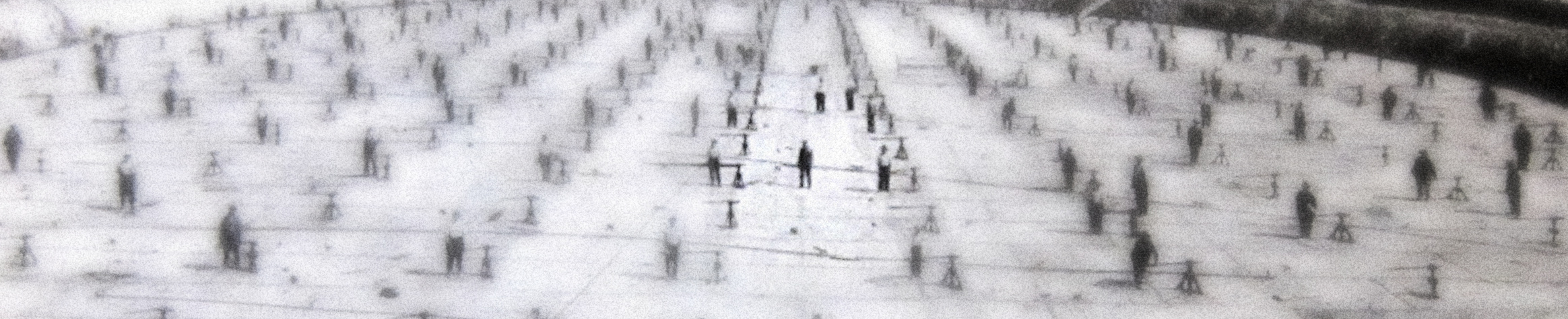
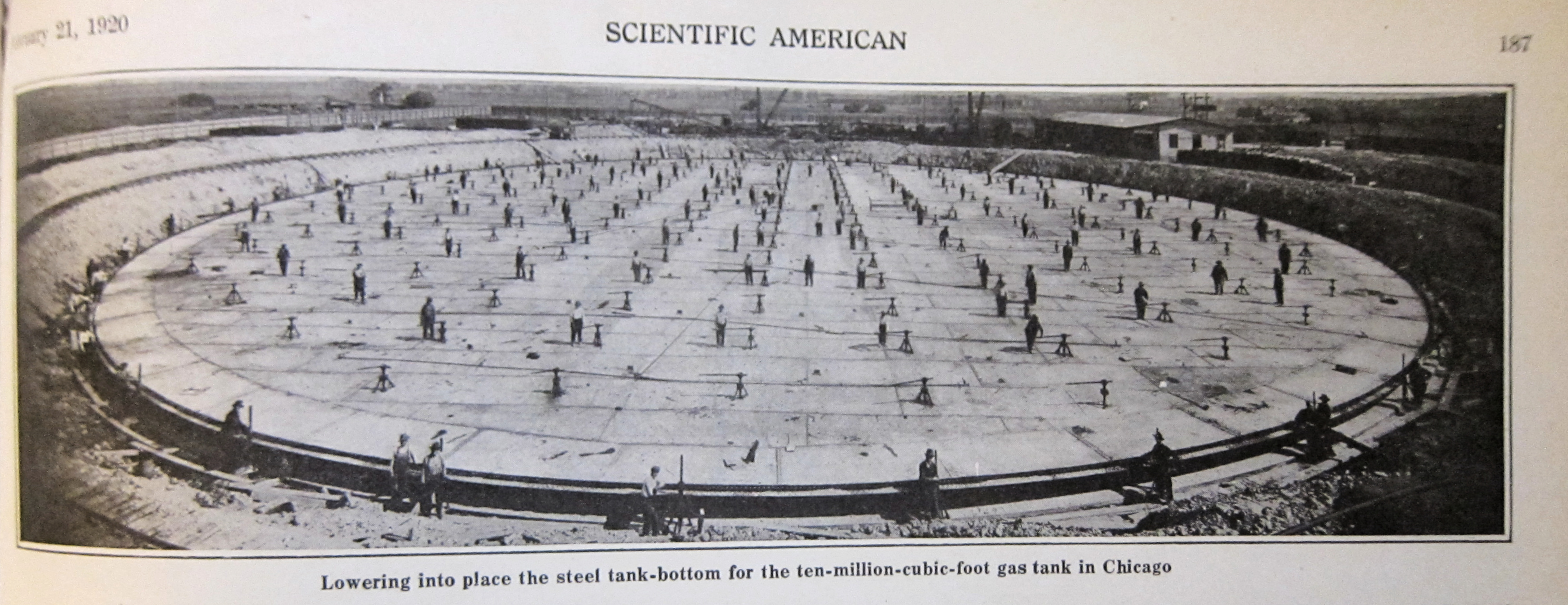
    This slightly altered detail is from the central perspective of a photo of workers completing the base for a 10 million cubic foot gas tank1 in Chicago, and appeared in the Scientific American on 23 January 1920. It is a great photo of the beginnings of a considerable project, and the full image (below) stands on its own as a visual accommodation of a segmented space soon to be occupied by something enormous. That said, the guy in the middle of it all caught my attention in all of this. Was he a standard laborer out of position amidst the 200-odd other people there as the shot was being made, wondering where it was he was supposed to be? Or was that a foreman, or somebody else with the freedom to walk around as the great mass fell into position to take care of the job at hand? 

    Notes

    1. It was a big tank: 10,000,000 cu ft is about 75,000,000 gallons, weighing in at about half-a-billion pounds, which is a lot. By spacing out the guys on the perimeter of the base I make it that the circumference of the structure was about 400′. 

    Sci Am 1920 tank base man


    Sci AM 1920 tank base


  • Dark Lightning? (1899)

    JF Ptak Science Books   Quick Post

    Nature 1899 Dark Lightning _2_


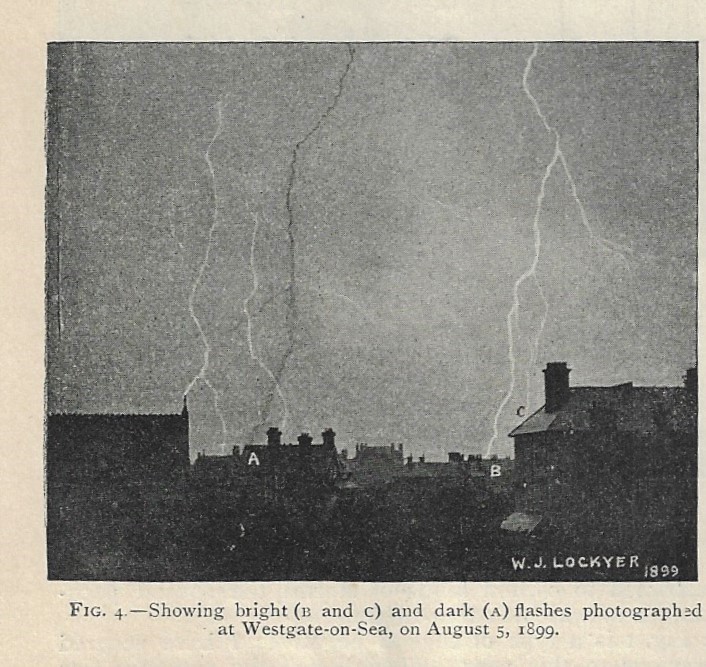
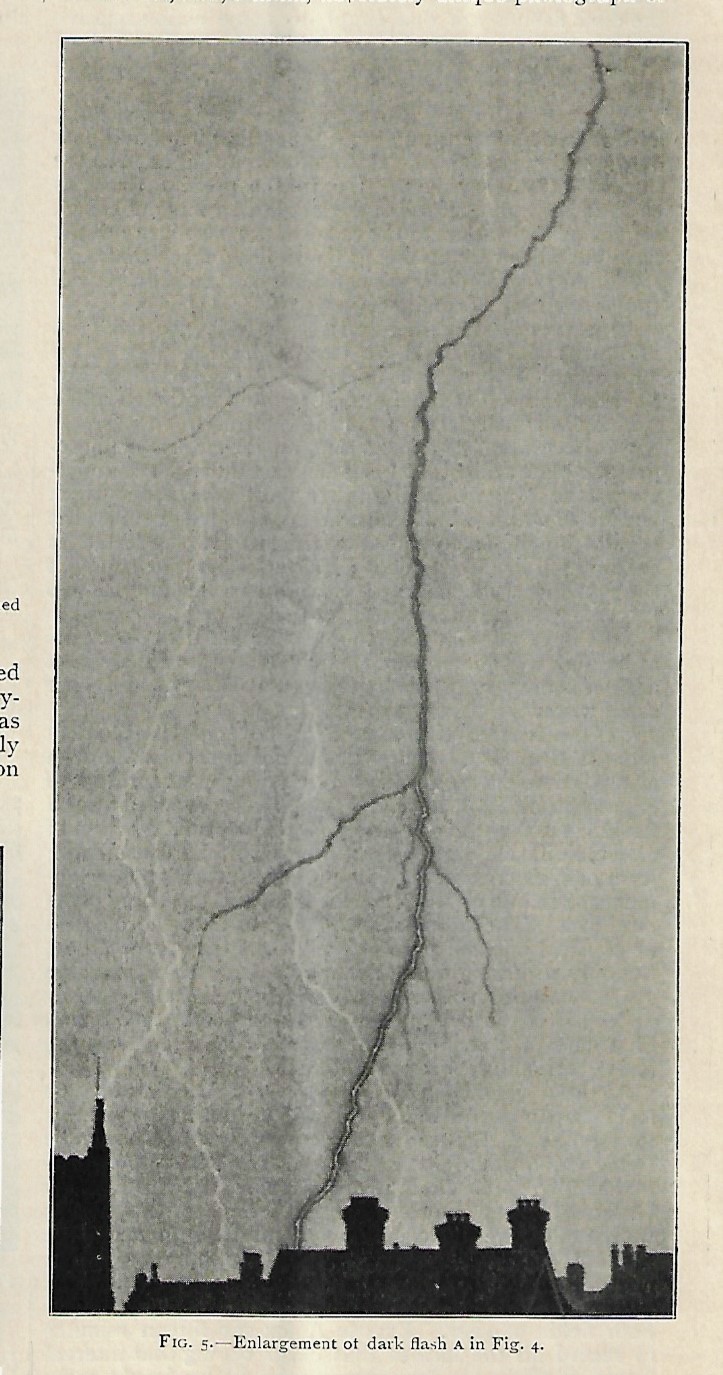
    William Lockyer experimented with photography and lightning to test an explanation of the apparent appearance of “dark lightning”–it is an interesting go and a great phrase that sounds like the name of a Marvel superhero. (William J.S. Locker, Dark Lightning Flashes”, in Nature, vol 60, no. 1563, pp 570-574 in the weekly issue of pp 565-588.) His evidence supports the hypothesis that the phenomenon had a photographic/chemistry cause rather than a physical one. The images he produced back there at the turn of the century were remarkable and beautiful. 

    From the paper:

    “IS there such a phenomenon as dark lightning? This is a question that has often been raised, and as yet no satisfactory answer has been given. If dark flashes do really occur, then they should probably be both seen and photographed, and the former, one would think, would be the more simple way of recording them.”

    “If the lens of the camera be covered the moment after a flash has occurred the developed image will always come out bright, feebly or strongly, according to
    circumstances. If, however, the plate be exposed after a flash has acted upon it, either to the continued action of a feeble diffused light or to the powerful glare arising from one or more subsequent flashes, then on development the image of the original flash will probably come out black. The effect is therefore not a meteorological or physical one, but purely chemical. It can be obtained, not only with a lightning flash, but also with a machine spark, or even with an ordinary flame. It is merely necessary that the plate should be exposed to the action of a certain amount of light after it has received the impression and before development.”


    Nature 1899 Dark Lightning _2_

    ·Posted by :

    ·in:

    —

  • Five Good Questions on Mr. Daguerre’s Process (1849)

    JF Ptak Science Books  Quick Post

    Antoine Francois Jean  Claudet, (1797-1867), began experimenting with Daguerreotype in 1840, and soon became photographer in ordinary to the Queen, being among the very first to practice Daguerrian portraiture in London. . He was very innovative and successful, and contributed many inventions and improvements in the cause of early photography, and was one of the first to use the collodion process.  

    In an article published in the Philosophical Magazine in 18491 Claudet asks some still-fundamental questions about photography that he feels are still unanswered. Asking questions out loud (so to speak) doesn’t happen that often in scientific and tech publications like this, and when they do, it is worth taking a moment to notice them.

    Claudet asks and answers the following important questions:

    • “Although the Daguerreotype process has during the last ten years been investigated by a great number of philosophers, and brought to a considerable degree of perfection by a still greater number of practitioners, it may appear surprising that the principal phaenomena upon which this new art is founded, are still enveloped in a mysterious darkness.
    1. What is the action of light on the sensitive coating?
      2. How does the mercurial vapour produce the Daguerreotype image?
      3. Which are the particular rays of light that impart to the chemical surface the affinity for mercury?
      4. What is the cause of the difference in achromatic lenses between the visual and photogenic foci? why do they constantly vary?
      5. What are the means of measuring the photogenic rays, and of finding the true focus at which they produce the image?

    ·Posted by :

    ·in:

    —