JF Ptak Science Books Post 2814
I happened upon some photographs by the great Margaret Bourke-White yesterday in a most unexpected place–an upper-end oversize pamphlet advertising the perfume and oils business of Fritzsche Brothers of NYC. No disrespect to Fritzsche–which was in its 65th year of business–but it was a surprise to see the work of a pioneering and iconic photographer like Bourke-White in such a relatively common setting. Of course photographers need to pay the bills, too, and I’m sure that Bourke-White was well paid for her ultra-competent and accomplished business and industrial assignments. She was probably very well paid considering that she already had a national audience, being the first photographer for the new Fortune magazine, with her photo essays appearing there beginning in 1930.
The Fritzsche pamphlet was published in 1937, just a year or so before she made her first LIFE magazine cover. She had a tremendous run between 1935-1950, and seemed to be everywhere, seeing everything. She was the first U.S. war photo-correspondent covering WWII and Korea; she was at concentration camps in 1945 and with Stalin in 1944 and Gandhi in 1949, and was a superb documentarian of the human experience during the Great Depression–even her first assignment at Fortune found her making photographs of the bank vault at the First National Bank of Boston coincidentally on the evening of Black Tuesday, 1929.
Here’s a photo of Bourke-White at work (from her first-photographer-at-Fortune-magazine days). and one of her most recognizable works made during the Great Depression:
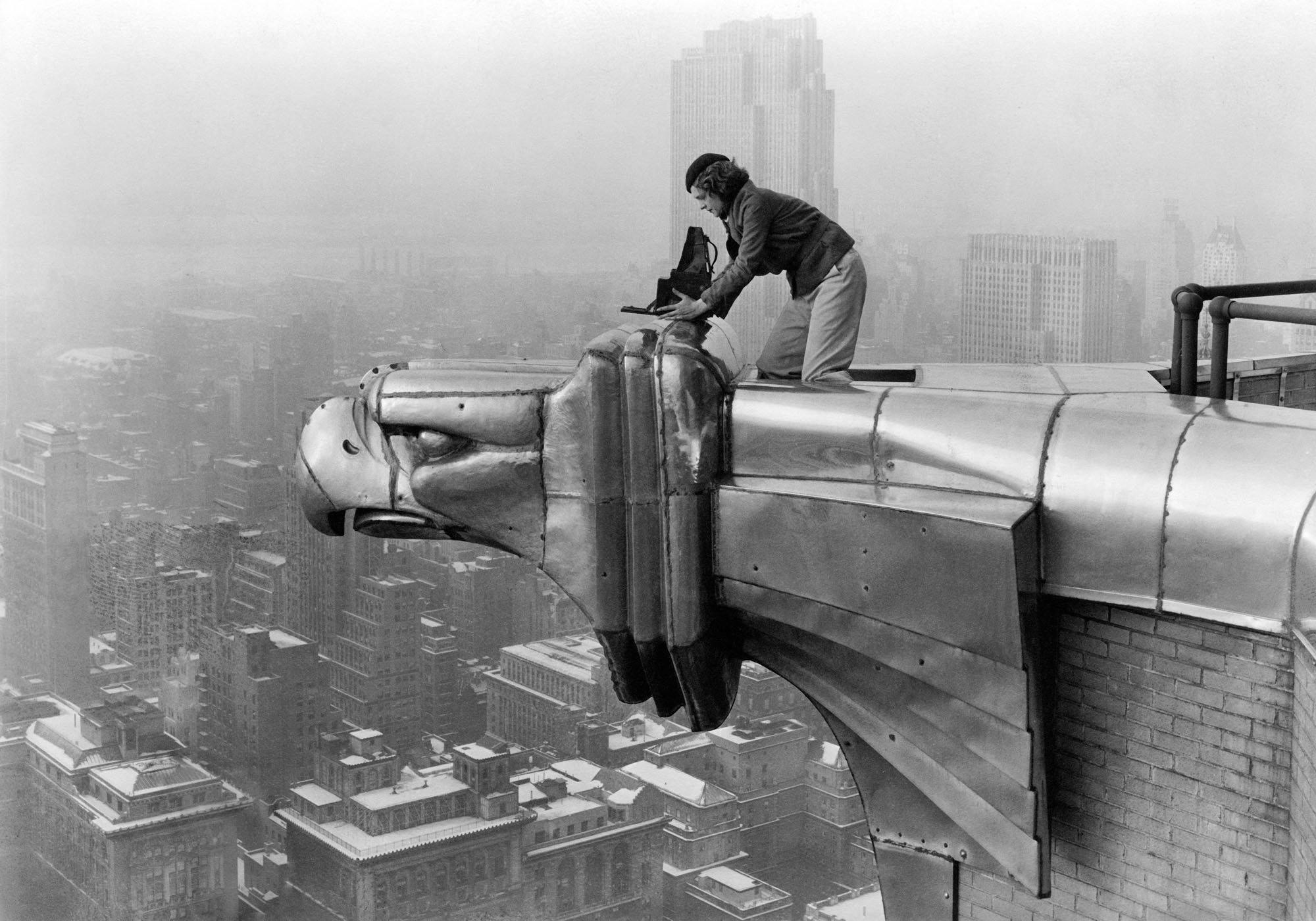
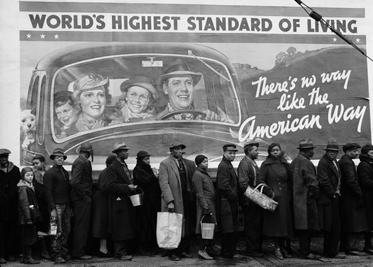
- (Sources: The Atlantic, https://www.theatlantic.com/photo/2019/08/photography-of-margaret-bourke-white/596980/ and Wikicommons.)
And then here she was in the relatively bland pages of the Fritzsche promo, making images of reception areas, loading docs, labs, a library, some VP studiously at work at a small desks…however when you look closely at the rooms she was working in you can appreciate that it was a difficult assignment, and that lighting was a problem, though it was one that she solved. The odd thing is that everything in these photos is sort of the same, that a general blankness/blandness has taken over, all of the people with similar expressions, and then something else…that in this very large collection of offices there’s absolutely noting on the walls except for an occasional clock here and there. Other than that exception, there are no wall decorations. Given that the company is chemically decorating the air around people, it strikes me as a little odd that the physical surroundings was such a collection of nothing. Here’s the reception area as an example of the environment’s assertive blandness:
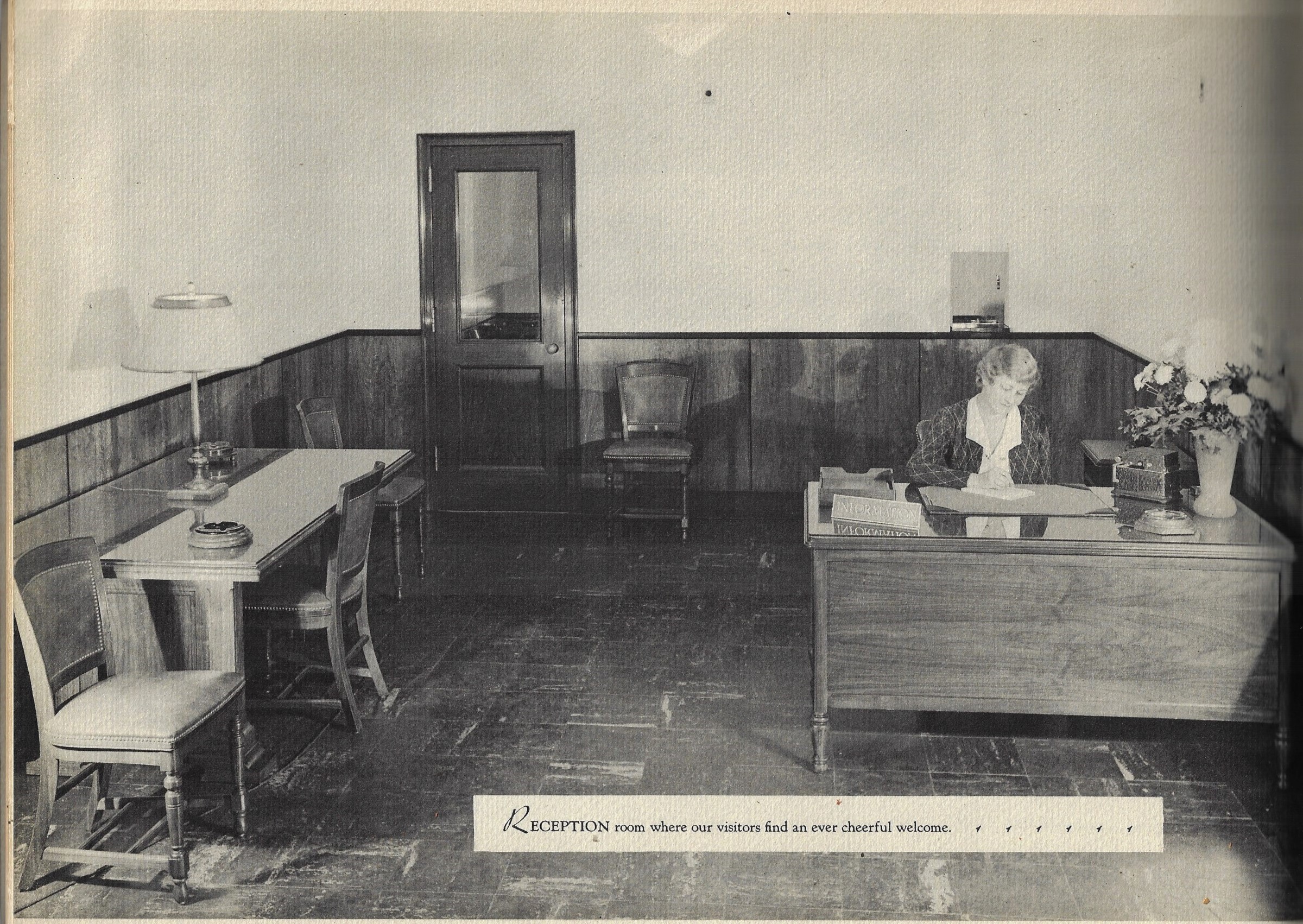
There are 22 such photos of hollow spartanness, well-lighted. And very tidy.
Here’s another:
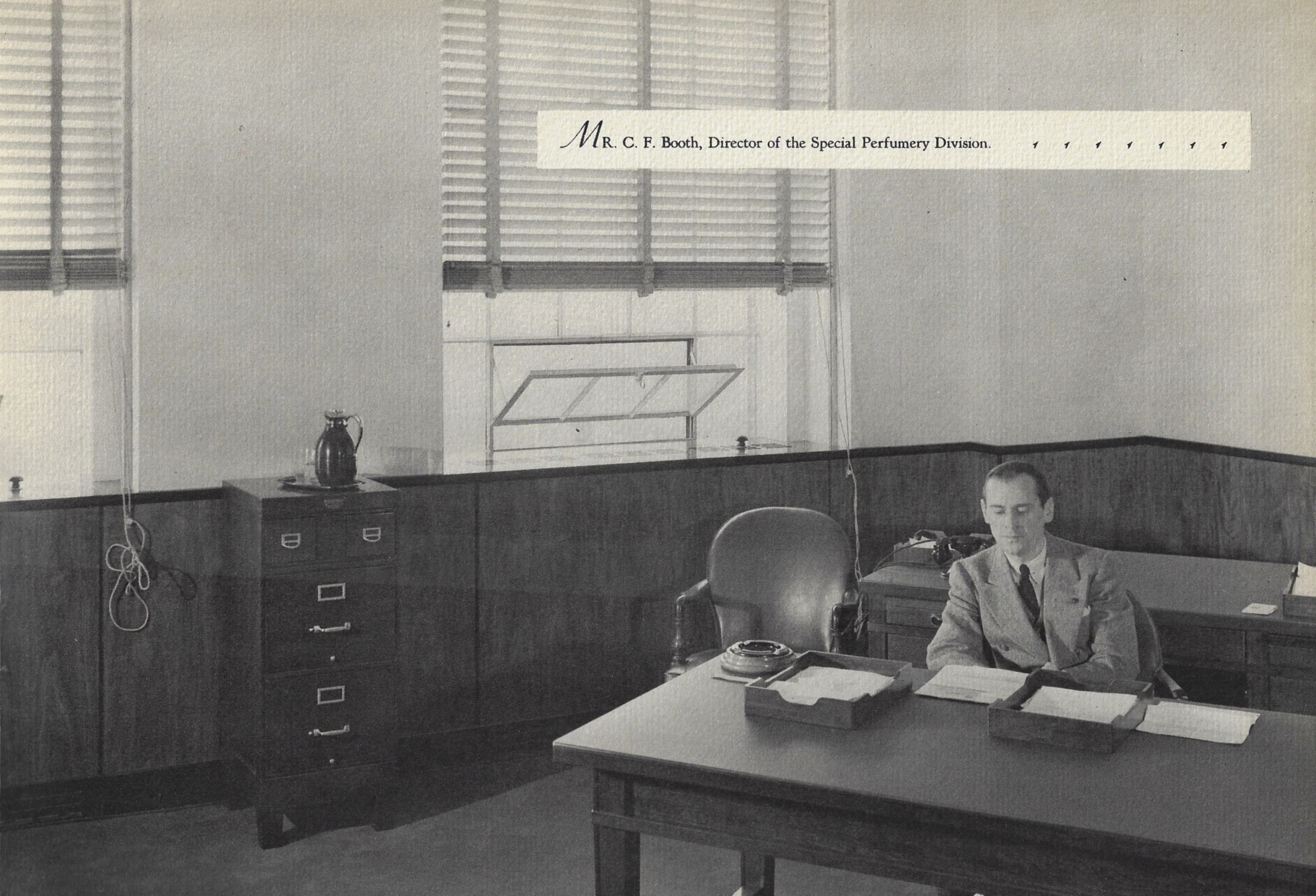
The blank walls become even more oppressive when you consider the number of walls in the place:
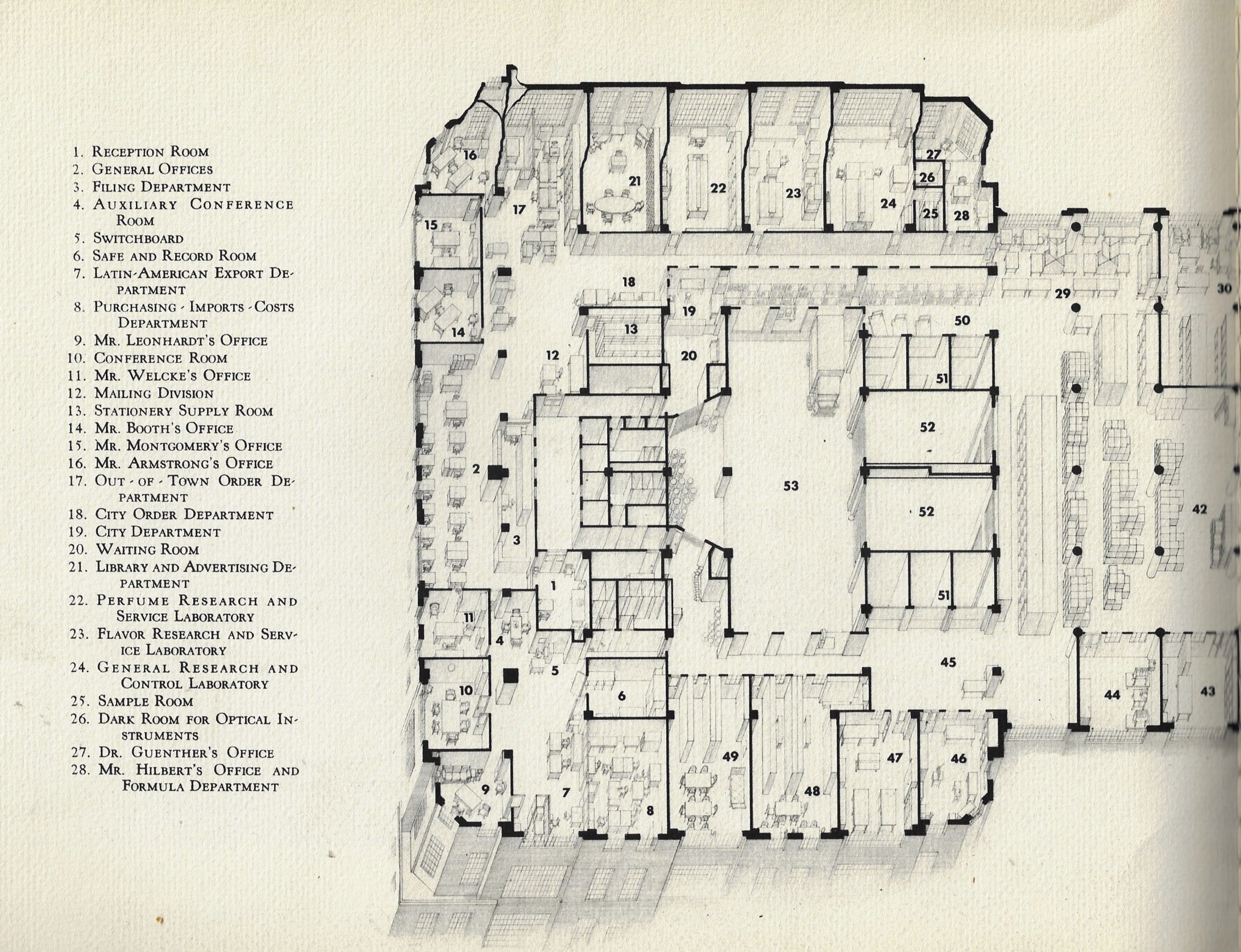
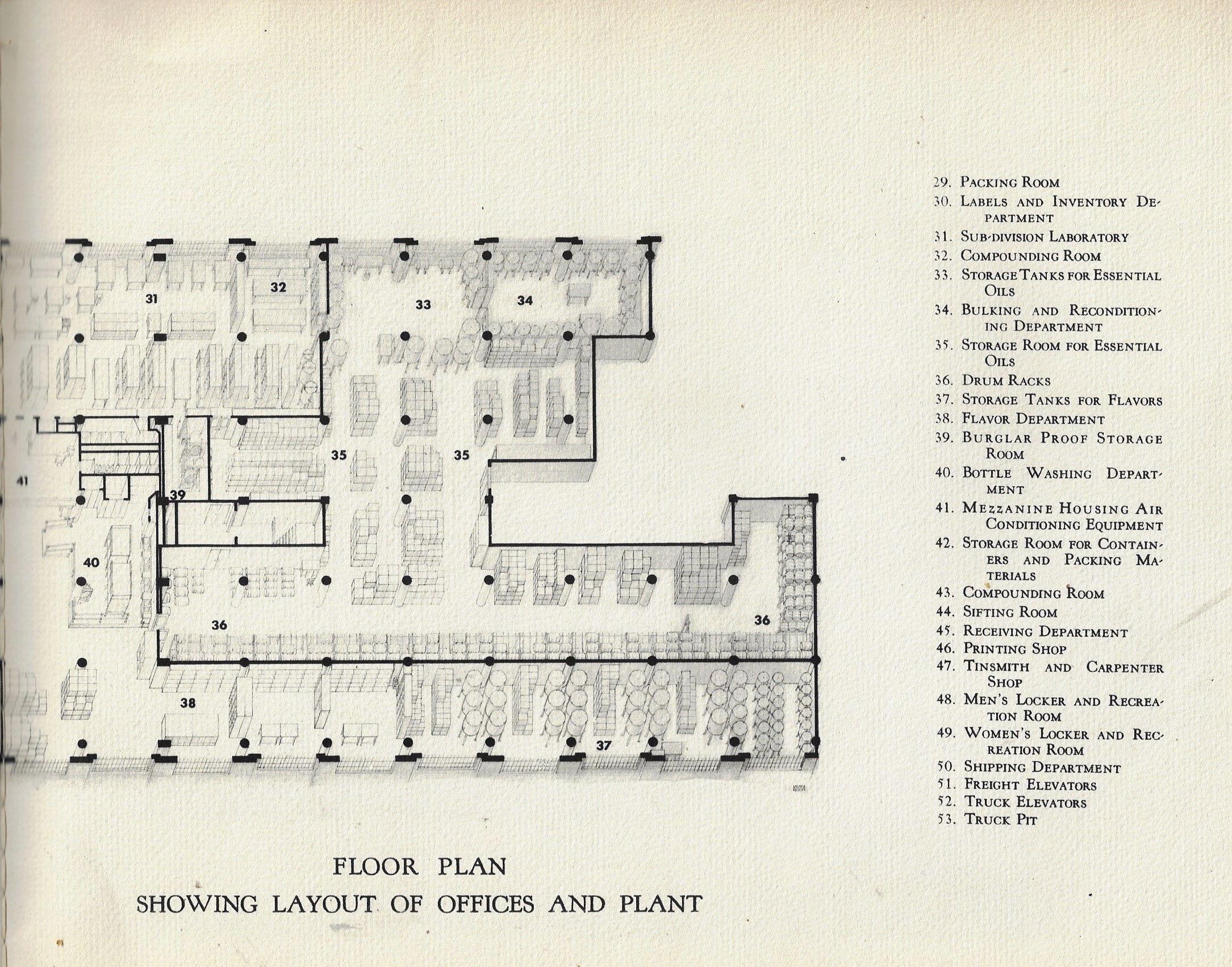
I guess Bourke-White did as well as could be done with what there was…