A Daily History of Holes, Dots, Lines, Science, History, Math, Physics, Art, the Unintentional Absurd, Architecture, Maps, Data Visualization, Blank and Missing Things, and so on. |1.6 million words, 7500 images, 4.9 million hits| Press & appearances in The Times, Le Figaro, Mensa, The Economist, The Guardian, Discovery News, Slate, Le Monde, Sci American Blogs, Le Pont, and many other places… 5000+ total posts since 2008.

Category: Strange Things in the Sky

  • Cross-Section of an Arctic-Exploring Balloon, 1890

    JF Ptak Science Books  Quick Post  Overall Post 5153

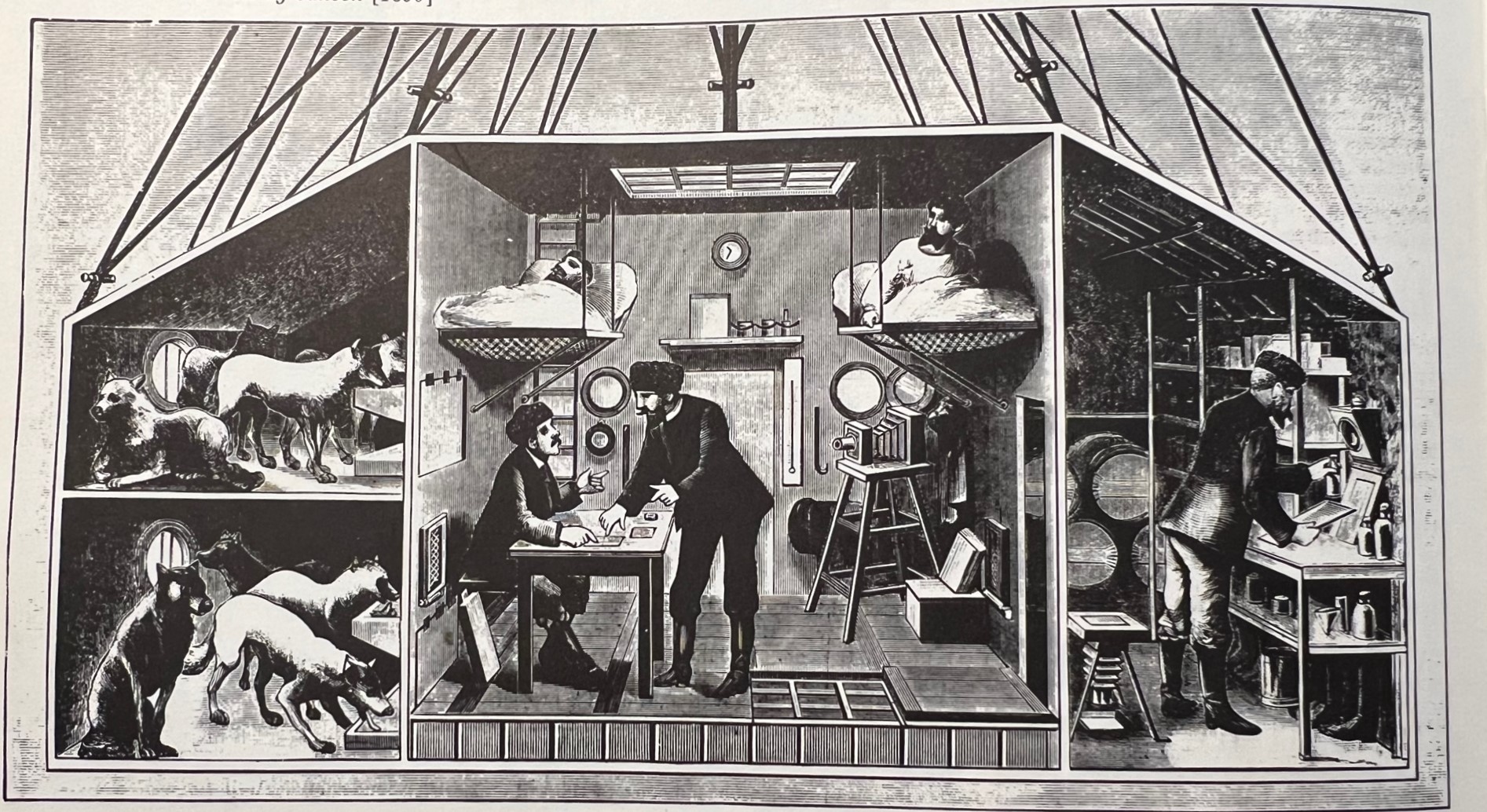
    Answering the great North Call, to reach the North Pole, has been a quest for hundreds of explorers reaching back hundreds of years The image here depicts one iteration from 1890 of an attempt utilizing a 100′ diameter balloon. The pilot adventurers here were Georges Besancon (1866-1934) Gustav Hermite (1863-1914), whose aims were to pilot the 17.5 ton aircraft (complete with a darkroom) to the Pole—and as you can see in the cutaway view of the balloon car, their’s was an ambitious project. But their attempt to fly over the Pole was not to be, as they couldn’t raise the funds to put it all together. They did however concentrate on atmospheric research using balloons and became leaders in that brand-new field, and were successful in establishing the use of balloon in this area. (The attainment of the North Pole came probably in 1909, generally regarding Robert Peary (b. 1852) reaching it in 1909…though Frederick Cook may have done so in 1908. And perhaps it was Matthew Henson, who may have stood at the coordinates before Peary. And so on. Two things seem to be certain in the uncertain list of “firsts” and the North Pole: the first over the Pole was probably Roald Amundsen in 1926, though Richard Byrd flew over the Pole in a Fokker-tri-motor at about the same time. It is a definite thing though that the first under the Pole was the USS Nautilus in 1958.

    IMG_1303

    • [Source: Scientific American, volume 91, 1890.]


  • An Episode in Antiquarian Depiction of Upside Down Things (1506)

    JF Ptak Science Books   Overall Post 5150

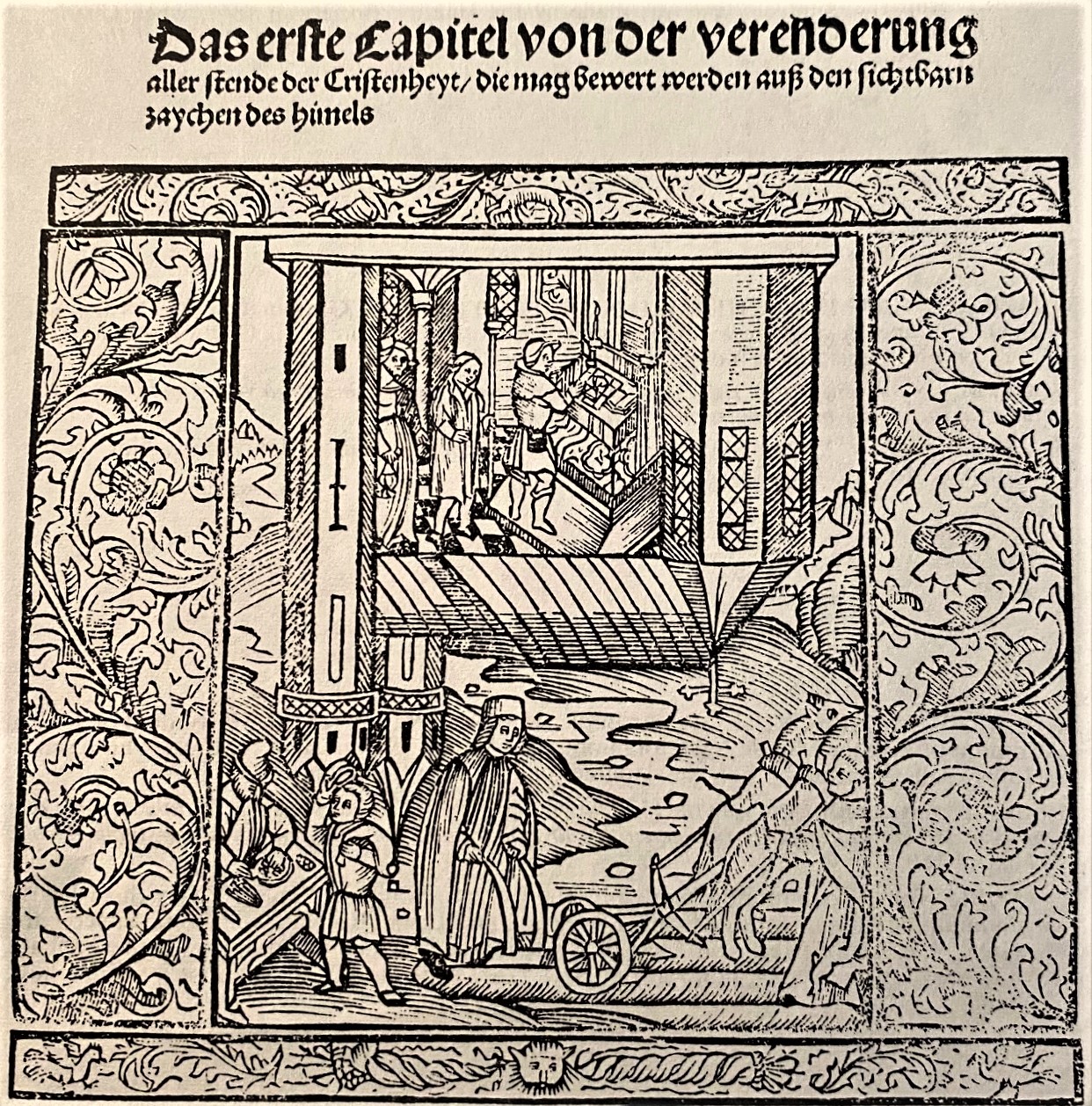
    The subject of this woodcut is well out of my range, even on a better-than-beyond-my-means day, but the imagery 
    is very sharp, and contrasting, and very unusual. I'd say that of the 5000+ posts on this blog that fewer than a
    dozen might be in the established but underused category, The Department of Upside Down Things.
    This image would be one of its stars, as the upside down part isn't immediately obvious to my eye given the
    somewhat complex construction of the woodcut.
    IMG_9895But then, there it is: the upside down cathedral.
    The illustration is from a work by Joseph Grunpeck (1476-ca.1530+), a man with range in religion/theology and
    medicine, and author of one of the earliest works on "the French disease", syphilis. In this work he is writing,
    I think, from a humanist standpoint on a coming change in Christianity, and in the image depicts the changing
    world, showing clerics in the field while in the upside down cathedral we see the farmer and the peasant...the classes
    have changed sides, or perspectives, or are equal, or some such. As I said, this is a very weak area for me, but
    thought that I would at least share this interesting illustration, even if my interpretation is wrong--it is or it isn't.
    [The legend reads: "Veränderung aller Stände der Christenheit , die mag bewährt werden aus den sichtbaren
    Zeichen des Himmels".]

    ·Posted by :

    ·in:


  • Extra-Earths Redux (and Turbines in Space!) 1955

    JF Ptak Science Books  Quick Post

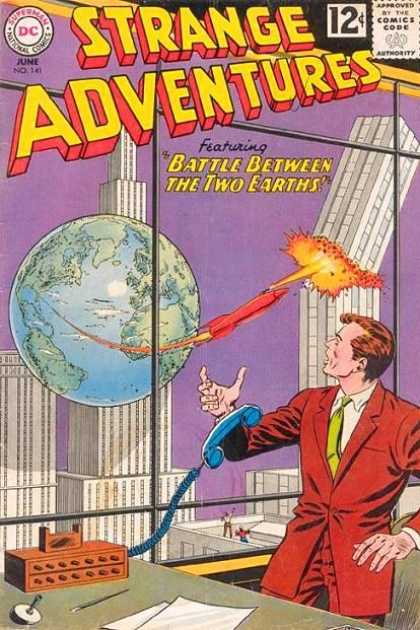
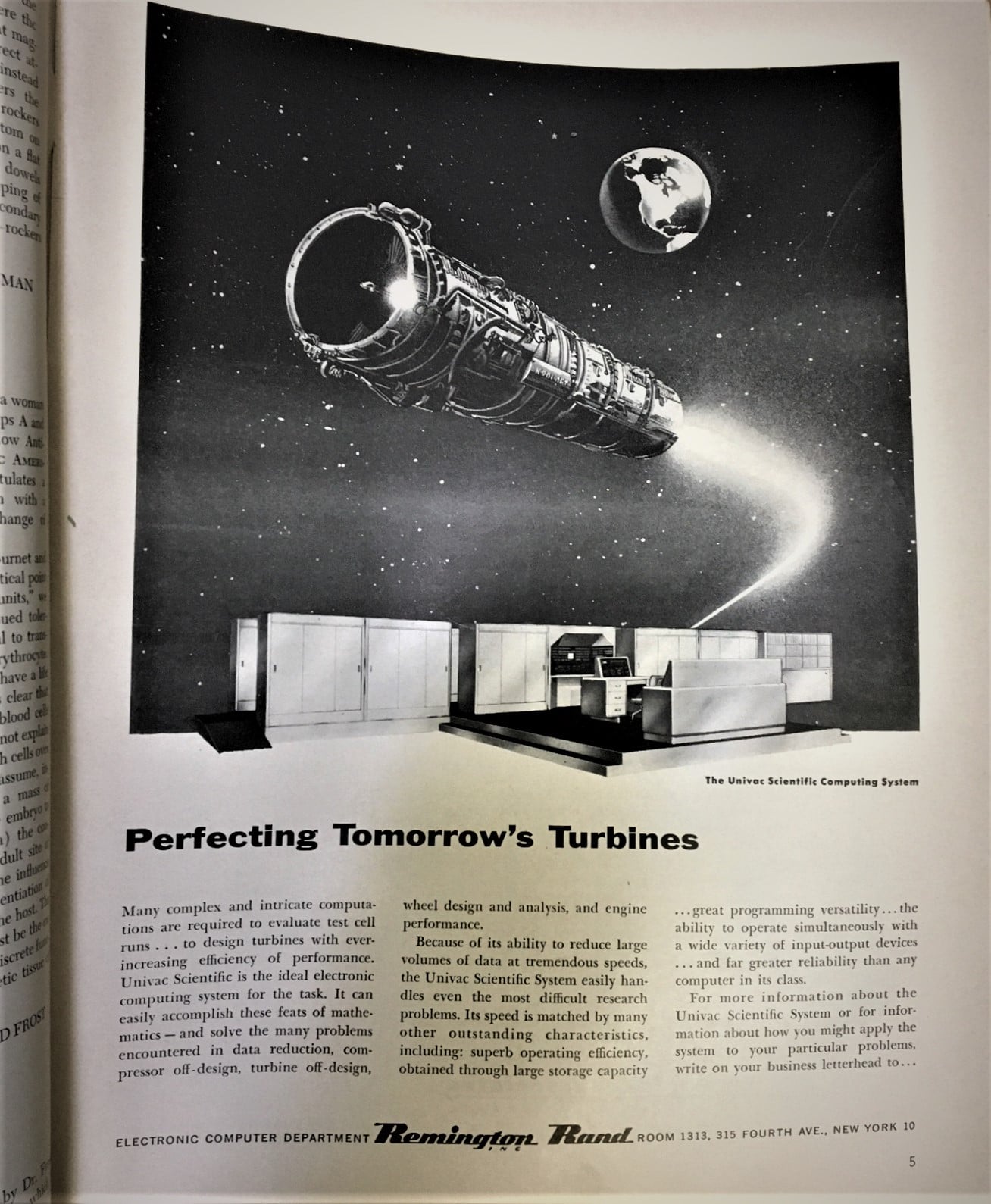
    Extra earth battle of two earths“Extra-Earths”  is a very modest category on this blog with only five posts–they do not take up much space in the bulk of the 2,780 full posts and 2,400 “quick posts”.  The subject rarely comes up, and no wonder! How many times do you see an image of Earth from Earth–and why would this be happening?  Obviously the Earths that I am interested in pop into existence in the science fiction/comics/Outsider Logic worlds. There are some who use “extra Earths” as a unit of measure, as in “the global resources consumed would be the equivalent of an extra Earth’s production” or some such thing–those don’t work for me here, as I am just interested in the visuals of the extra of two Earths.  

    For example, in an earlier post, “The Battle of the Extra Earths: Mini-Extra-Earth Vs. Full-Sized-Standard-Earth (?)”, there is a full-on frontal assault by an Earth-mini, or some such thing (I have not read the story because, frankly, there is only just so much time to burn on these things and I was just interested in the artwork.)

    Today’s example is more-or-less an Extra-Earth and it is close enough for me: this one appears in the September 1955 issue of Scientific American and is a big full page ad for Remington Rand’s UNIVAC. This computer was only about five years old or so at this point and Remington Rand was selling it for computing complex engineering bits, as with that screaming turbine. I assume that the turbine–which is inoperable in outer space of course–is coming from that Earth of the black seas, or something, and that by a very long stretch the UNIVAC has to be somewhere so I guess it could be another Earth. Yes, this really doesn’t fit, but it is close enough for me. (Also the business-end of the UNIVAC is not what looks like a monitor facing the machine’s main component-it is the longish podium-lookng piece opposite that “monitor”, which would be the “supervisory control panel”. 

    Sci Am 1955 TUrbine UNIVAC

    I’m told by our son Feliks that there is a “Counter Earth” in the Marvel universe, where there is an “Extra Earth” on the other side of the Sun, neither Earth ever in line of sight to one another…that seems to be another category of its own, too: things that exist but are invisible because they are on the other side of something, like the bizarro story of Nazis escaping to the far side of the Moon. But that’s another story. 

    • To see the other Extra-Earth posts, just enter the term in the site’s Google search box.  

  • A World of Untranslatable Colors and no Color Vocabulary (1638)

    JF Ptak Science Books  Post 2837
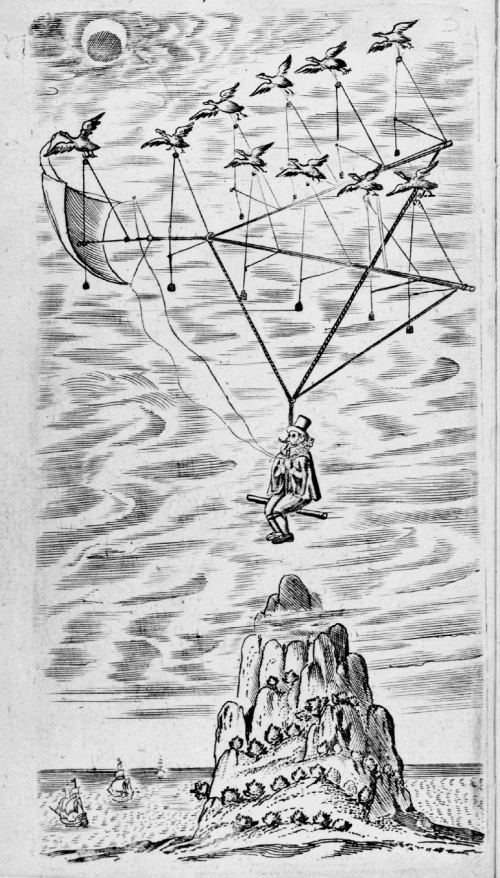
    Godwin (1)There was something that caught my eye as I paged through an online copy of Francis Godwin’s The Man in the Moone or A Discourse of a Voyage Thither by Domingo Gonsales (1638), something beside this work being about the first English language trip to the Moon. There were other earlier trips made to our friendly neighbor before Godwin (whose work was published posthumously) like the late Greek Lucian first century ACE).  And there were contemporaries who wrote in other languages, like Cyrano and Kepler (Somnium, 1638); Aphra Behn’s farce (The Emperor of the Moon 1687) and Margaret Cavendish  (The Blazing World 1688); and John Wilkins (The Diversity of a World in the Moon, (1638) to name a few…and then there’s the wide world of the plurality of worlds, like the wonderful Fontenelle…and of course later there were trips to the Moon made by Verne and Wells, and so on.

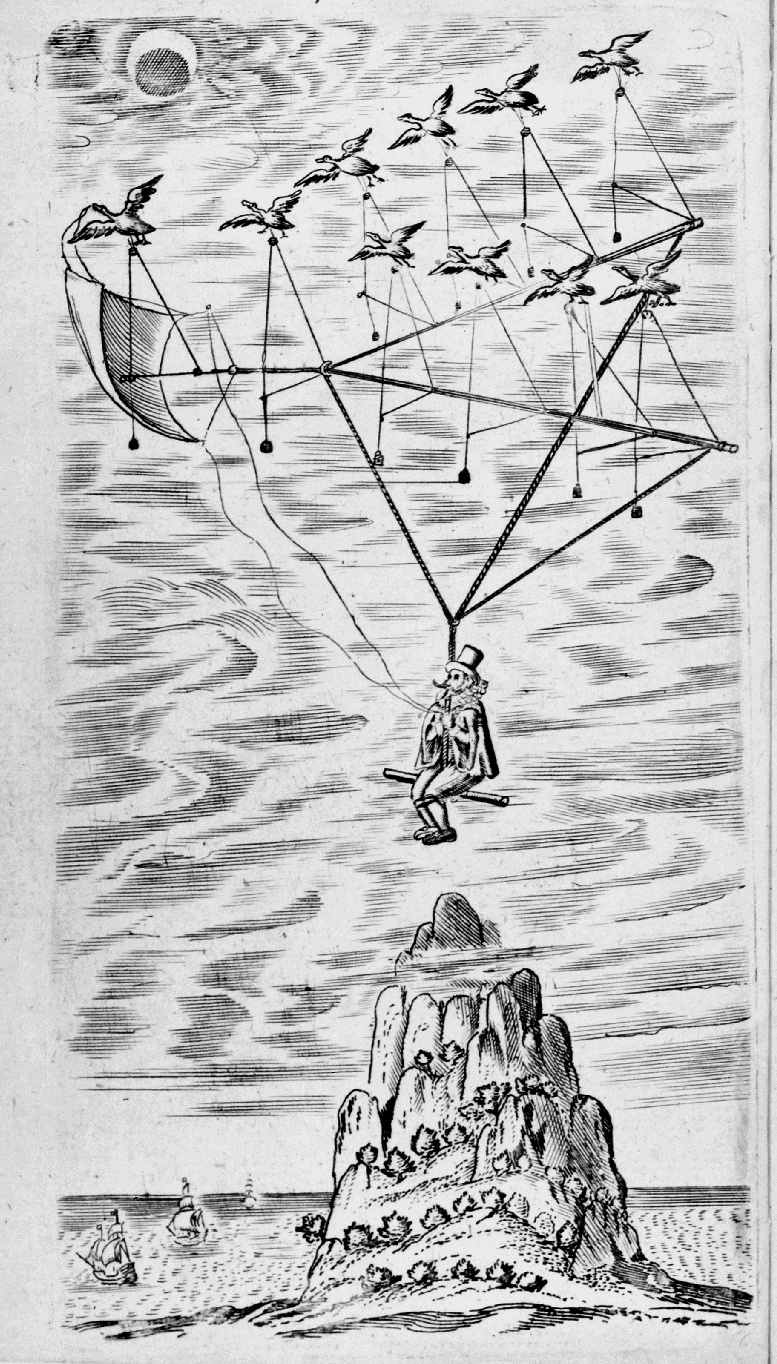
    Godwin’s book is short and quick, deceptively simple but not so—there’s a bit of introduction where we are shown a little bit of the influence of Galileo’s Sidereus (1610), and the frontis depicts the flying machine by which the intrepid traveler, Senior Gonsales flies off to the Moon. This is a craft powered by a sort of wild swan, which struggles mightily to free itself of the Gilbertian great magnet, but once free of that, the “flight” took twelve days. Our traveler may also be the first one to get to the Moon by accident: he flees a fiasco in which he kills someone in a duel winds up in St. Helena, and then has a problem with the British fleet off Tenerife, from which he flies off again with his bird machine…he hadn’t intended to go to the Moon, but that is what happened.  

    Here’s what I found so interesting: once he gets there, Gonsales tries to describe clothing and—even more fascinating—he tries to find words for colors that he has never seen before. Marvelous.

    “[T]heir colour and countenance [was] most pleasing, and their habit such, as I know not how to expresse. For neither did I see any kind of Cloth, Silke, or other stuffe to resemble the matter of that whereof their clothes were made; neither … can I devise how to describe the colour of them ….

    It was neither blacke, nor white, yellow, nor redde, greene nor blew, nor any colour composed of these.

    But if you ask me what it was then; I must tell you, it was a colour never seen in our earthly world, and therefore neither to be described unto us by any, nor to be conceived…. Only this I can say of it, that it was the most glorious and delightfull, that can possibly be….”

    And that, I’m afraid, is where I left off. As I’ve said elsewhere on this blog I only give each one of these post an hour’s time maximum, and after my fumbling around in the Godwin, I’m about at my limit. This much-studied book deserves a lot more than what I can give it here in 700 words, but this will have to do for now, for me. The bottom line here is that I don’t think that I’ve ever read anything by anyone before, say, 1920 and the real birth of the sci fi genre (with which I’m am not very familiar) that tries to describe a color that was without description. 

    [Image source: Wikipedia Commons.]

    Oh, before I go, Godwin also introduces us to the imaginary language of the Lunarians, which he describes as being beautiful, and very expansive, as the vocabulary can change given its tone. (He also notes that only one language is spoken on the Moon, which he credits as an advantage over the terrestrial polyglot.) This is also part of a long history of imaginary languages in early literature (for example, More’s Utopia and Rabelais’ Gargantua…)  The Lunar world is a Utopia, and evidently part of that blissful state is maintained by trading out ill-behaved Lunarian children with well-behaved children of Earth. 

  • A Sober Appraisal of “the Flying Saucer” (1948)

    JF Ptak Science Books  Quick Post

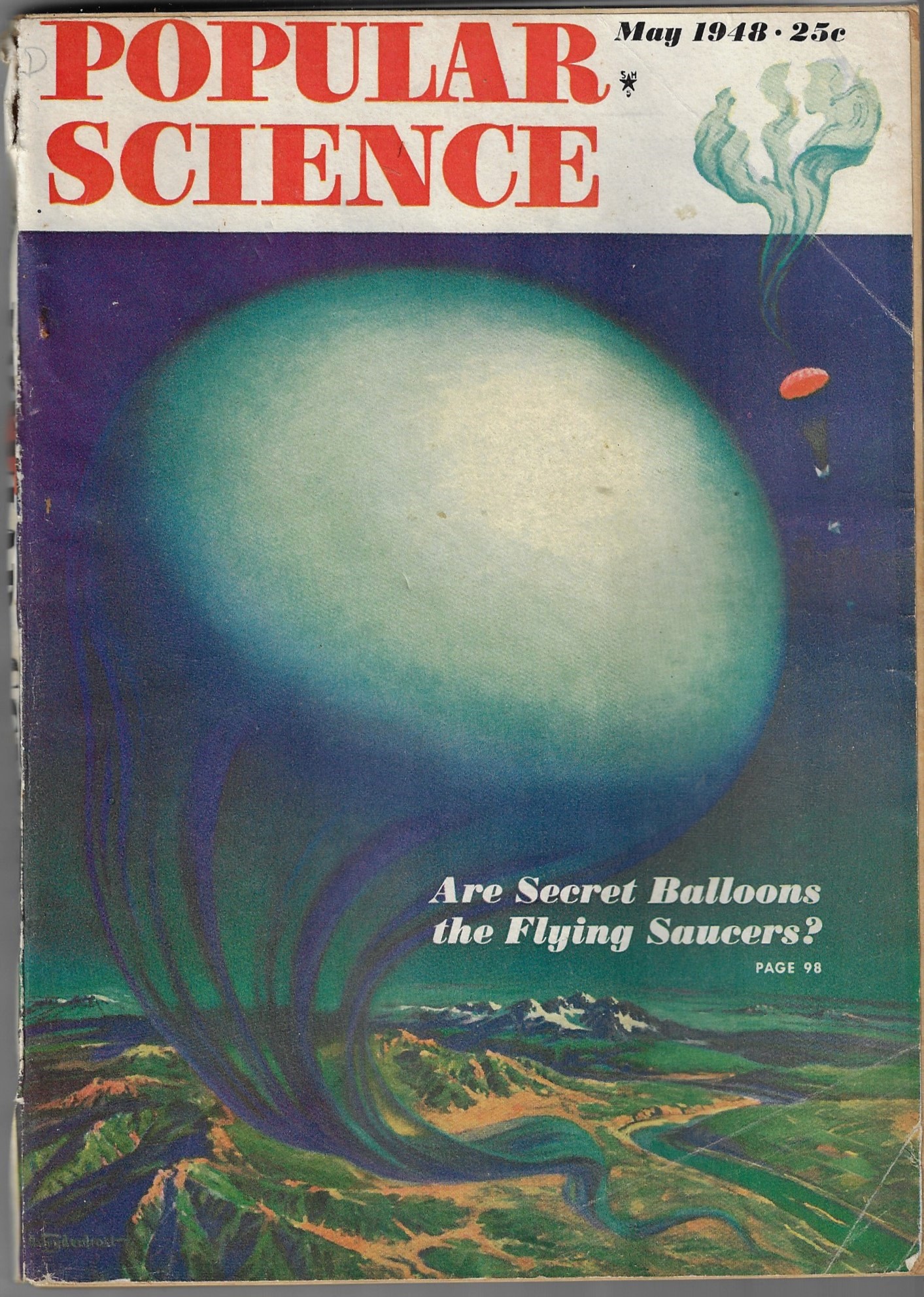
    Pop Sci 1948 flying saucersThis slightly engaging cover of Popular Science offers its readers a sober appraisal of the still very popularly new phenomenon of “the flying saucer”. Not “flying saucer” plural–”the” flying saucer phenom, complete at this point with a definite article…I have no idea when the “the” disappeared. In any event it is a pretty good explanation, though there is no mention here of “The Battle of Los Angeles”, when in 1942 aircraft batteries and searchlights blazed away into the high night air trying to stop a supposed Japanese attack. Six people on the ground were killed by shrapnel and debris, with no damage to anything flying overhead reported. There were some wild theories about what the “attack” was, along with accusations of cover-ups and political/economic conspiracies, and that seems to have been the extent of the matter. In any event, Pop Sci takes up the case of the weather balloon as a general explanation to people seeing intelligent life forms scooting around in our sky but not bothering to stop and say “hello”.

    Just in case anyone is interested, here’s the Oxford English Dictionary entry for “flying saucer”:

    –flying saucer  n. the fanciful name given to various unidentified disc- or saucer-shaped objects reported as appearing in the sky.

    • 1947   Times 8 July 4/4   During the past fortnight reports that dish-like objects, nicknamed ‘flying saucers’, have been seen travelling through the air at great speed..have come from the United States and Canada.
    • 1948   Jrnl. Brit. Interplanetary Soc. 7 199   I haven’t examined the details carefully, but the ‘flying saucers’ bear all the hall-marks of mass-suggestion.
    • 1953   D. Leslie & G. Adamski Flying Saucers have Landed i. i. 13   Ever since the cliché ‘flying saucer’ was coined, the greatest and most exciting mystery of our age has been automatically reduced to the level of a music hall joke.
    • 1965   New Society 9 Sept. 14/2   When Kenneth Arnold saw something from his airplane near Mount Rainier in June 1947, he gave them the happy name of flying saucers.

  • A Stupendously-Dense Giant Atom Non-Bomb Threatens the Earth (1943)

    JF Ptak Science Books   Quick Post   (Another entry in the neglected “Strange Things in the Sky” category.) 

    Giant atomThe story “The Giant Atom” in Startling Stories was pretty striking to me, as it was published in December 19431 and (I thought) was illustrated with what looked like the first milliseconds of a nuclear explosion, except the reality of that event was still more than half a year away. There are a number of prescient atomic bomb stories written in the 50 years or so preceding the real one, and I thought that this one might be an odd, back-door entry to the little sub-genre. So before I got into the story I checked out the author, Malcolm Jameson, and found that the story was re-issued later as “The Atomic Bomb”, which ignited curiosity enough to at least start to read it to see if this was indeed an “atom bomb” story written in 1943.

    Possible evidence to the contrary, it seems as though this turgidly-written story was indeed about a gigantic blob-like atom. I can’t get to the details because the prose covered stuff up like a syrupy metal brick:  “Anything that is as small as four or five feet in diameter and weighs five or ten thousand tons is pretty dense, general.” 


    • Um. Yes.  It works out that this 5′ sphere would weigh about 3,000 average-sized cars, or 1/4 of the weight of the 887′ USS Missouri, something like 11,000 pounds/litre, or 11 pounds (4,983 grams) cm3 .  Osium, the densest metal, weighs in at 22 grams cm3.  That’s quite something. For another perspective, I believe a neutron star would weigh about 4×10⁷ pounds. 
    • Another way of looking at this, since the idea of the 4,000-lb bomb is introduced here, is via ordnance. The first 1000 plane bombing mission by the RAF occurred May 30, 1942 over Cologne, where the total amount of ordnance dropped equaled about one-third of the weight of the sphere. Cologne received 34,711 tons of ordnance from all Allied bombing missions during the war, about three times the weight of the sphere, doing vast damage and killing 20,000 civilians, or about 1.7 tons of ordnance per death.  So. The atom was heavy.

    The atom seems to have started out small and grew, though even at the beginning “a large formation of bombers dropping 4,000-pound bombs” had no effect on it. (Note: this was at just about the time when the Brits announced the introduction of a 4,000-pounder into its arsenal–about the largest bomb at the time.) 

    “Only Steve Bennion, Inventive Genius, and His Lovely Assistant, Kitty Pennell, Stand Between the Earth and Destruction When a Flaming Monster Threatens to Devour and Destroy Civilization!” it says, somewhere, of the “flaming monster” atom. How disappointing. 

    There’s too much going on in this work in too many (128!) pages, and I can’t be sure from a five minute browse that I know what the real story is.  It does seem as though some sort of giant atom comes to Earth and threatens the planet, somehow, and seems to grow quite a bit from the 4- or 5-foot diameter sphere to something much larger later on. There is some talk of “New Eden” and space ships and lifting the atom into the cargo bay of the space ship “New Hope”. As I said I thought that since this story would be re-titled (re-written?) as “The Atomic Bomb” that it had something to do with the bomb, though it seems not to, except for somehow weaponizing a cyclotron. Anyway I can’t go any further here because the story just isn’t interesting enough, though the cover art opens up some interesting twists of interpretation.  

    Notes:

    1.  Startling Stories, December 1943 [vol. 10, no. 2 “Winter Issue”] [New York and Chicago: Better Publications, Inc.] 

    Text source: https://gutenberg.ca/ebooks/jamesonm-giantatom/jamesonm-giantatom-00-h.html#chap05

    Image source: Parigi Books, where you can purchase the original, at  https://www.parigibooks.com/pages/books/27413/malcolm-jameson/the-giant-atom-in-startling-stories-winter-1944

    ·Posted by :

    ·in:


  • Target Earth Redux and the Surprise Appearance of the Evidently Rare Phrase, “Earth is My Target”.

    JF Ptak Science Books  Quick Post

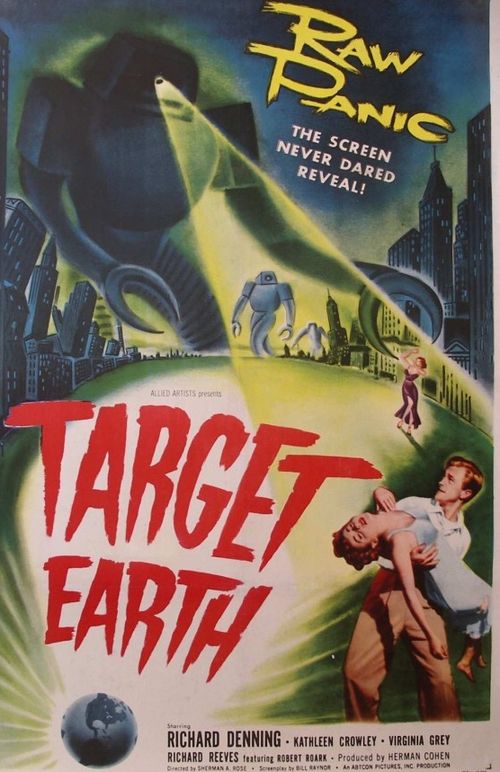
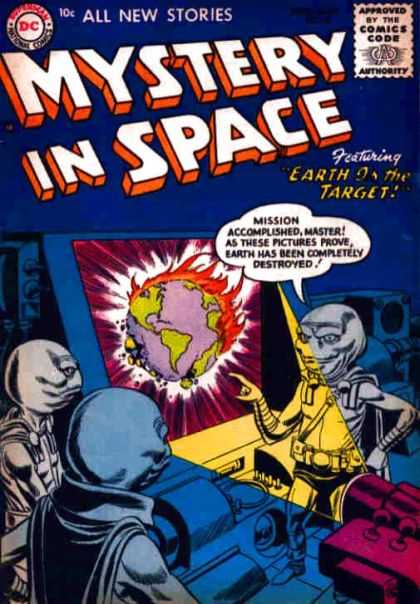
    Not too much to say on this pair, except to say that you don’t often find “Earth” and “Target” together like this. Surprisingly, “Earth is my target”, the cover story for the pictured Mystery in Space comic book,  has exactly one hit on Google. Somehow with all of the Outer Space Space Monsters from Outer Space appearing in movies and comics in the 1950’s that the phrase would’ve become a little second-hand, but apparently not.  This comic has the double-find of also showing the Earth being destroyed, which is a scene that you really don’t see until the end of the 19th century (excepting the raw canvas painted via Biblical gloom which has been around for a long time). The other image, which is a movie poster for an $85,000 sci fi film from 1954 named Target Earth, is about the evacuation of a Major City as an attack by Venusian Robots comes near. (I’ve just had a sneak peek at the movie and I can tell you that very little money was spent on the robotic visitors from Venus–those buggers were very slow, wobbly, and about 5’10” tall, not much inspiring “raw panic the screen never dared to reveal”. The film is only about 40 minutes long, which may be 40 minutes too long, or 40 minutes too short.)

    “Earth is My Target” (comic book) & “Target Earth” (movie):

    Earth destroyed

     Earth destroyed 2

     Image source for movie poster: http://www.monsterbashnews.com/Movie%20Night/Target%20Earth.html


  • Morse Code to Mars, 1921

    JF Ptak Science Books   Post 2750

    “Blapo”

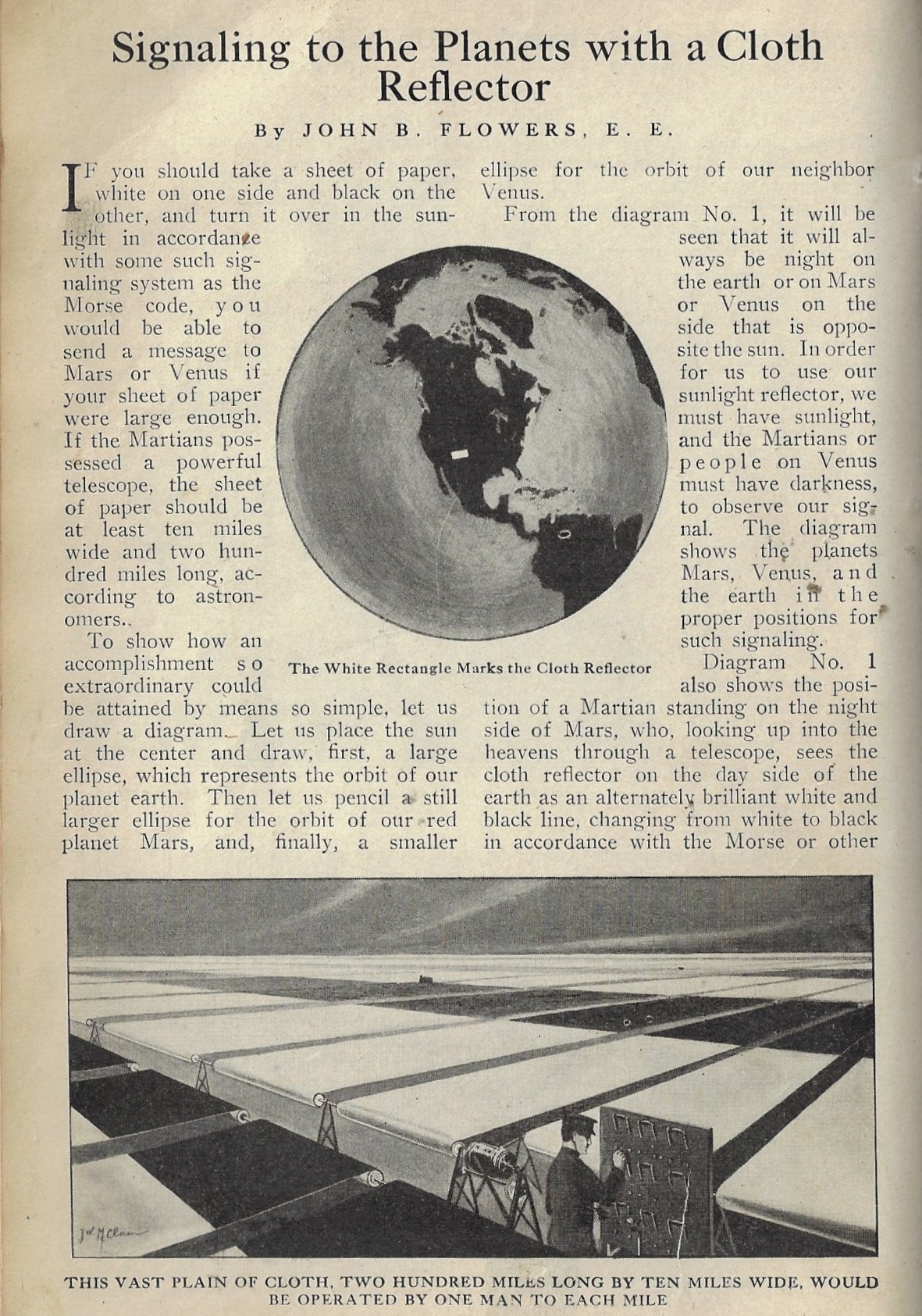
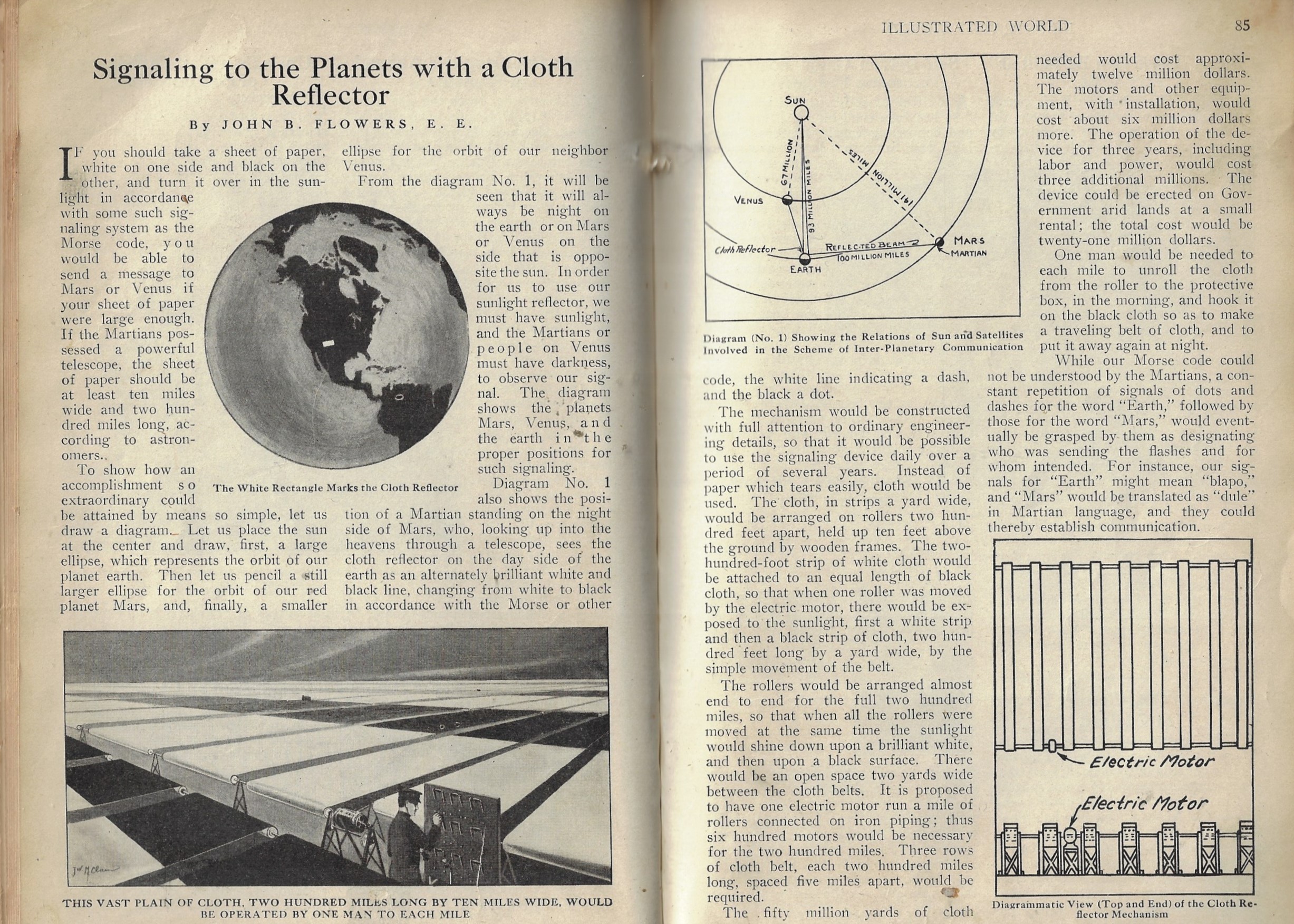
    A provocative article appeared in the somewhat obscure magazine Illustrated World suggesting a gigantic apparatus for signalling to possible observing beings on Mars. John B. Flowers, author of “Signaling to the Planets with a Cloth Reflector”, reported on a remarkable structure suggesting a possible way of communicating with intelligent life on the other planets–principally, it seems, Mars.  The briefest background here shows that the most popularizing idea of life on Mars came about as a mistranslation/interpretation  of astronomer’s Giovanni Schiaparelli’s observing term “canali” to be “canals/channels”, meaning an intelligent life form existed on the planet capable of constructing large technological forms. This idea was given full flight by Percy Lowell in his 1895 book Mars, followed just two years later by H.G. Welles’ War of the Worlds. 

    The uncredited idea in the Flowers article  called for a a series of connected mechanisms holding white sheets over a 200 x 10 mile (!) section of Federal desert lands, the movements of the sheets conducted by 600 large motors, making use of the segmented sheets to send messages via Morse code. The $21 million plan would repeat “Earth” and “Mars” over and over again until a response was heard. It was the hope that the Martians receiving the message would figure out the the dots/dashes related to Earth/Mars, finding that “Earth” was equal to their word for Earth (“Blapo”, for example) and “Mars” for (again, for example) their “Dule”.  And so on.  The article is only two pages long and for what its worth it spends a fair amount of space on the description of the apparatus, and a little on what it was that would be transmitted. There isn’t a word spent on what the consequences might be if the Martians returned the favor. 

    That said, the idea of life on Mars had mostly lost its pinkish pulse by 1920, though people still were still tinkering with ideas of how to communicate with alien forms of life over vast distances. Camille Flammarion, for example, advocated turning desert land into a massive Las Vegas, heating up the desert with millions of light bulbs and then using them to flash signals who-knows-where. Harvard’s William Pickering advocated an enormous mirror to reflect sunlight back into space somewhere, and R.W. Wood floated a similar idea to what is described by flowers, except the opposite, using black cloth over white sand. Over the next twenty years, into the 1940’s,  the interest seems less in communication than with the visiting the place.

    Notes

    • For a contemporary description of these ideas see “Hello Mars, this is Earth! Will the Martians Answer Us?”, in Popular Science Monthly, 1919, July-December, pp 74-5, full text here:  https://babel.hathitrust.org/cgi/pt?id=uc1.d0002769792;view=1up;seq=345
    • Also: here’s a good article (with the same title as the above but written in 2012) by Matt Novak in Smithsonian dot com exactly on this Pop Sci Monthly 1919 article. Well done! 


    Illus World Morse Code to MArs


    Illus World 1925 Morse to Mars 2pp


  • Strange Things in the Sky Department

    JF Ptak Science Books    Strange Things in the Sky Department  

    In the 30 or so posts I’ve made in this department I have yet to deal with anything having to deal with birds. This is understandable since they’re the ones who have been up in the air for 200+ million years (or at least late Jurassic), while humans have been in the air for only about .0001% of that time in our controlled falling.  

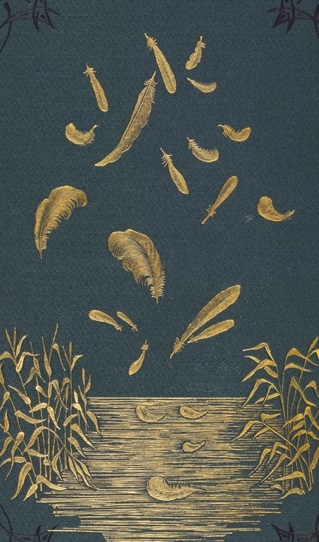
    Feathers detail

    [Source: Allan Hume, Stray Feathers, a Journal of Ornithology for India.…1879, American Museum of Natural History, here.]

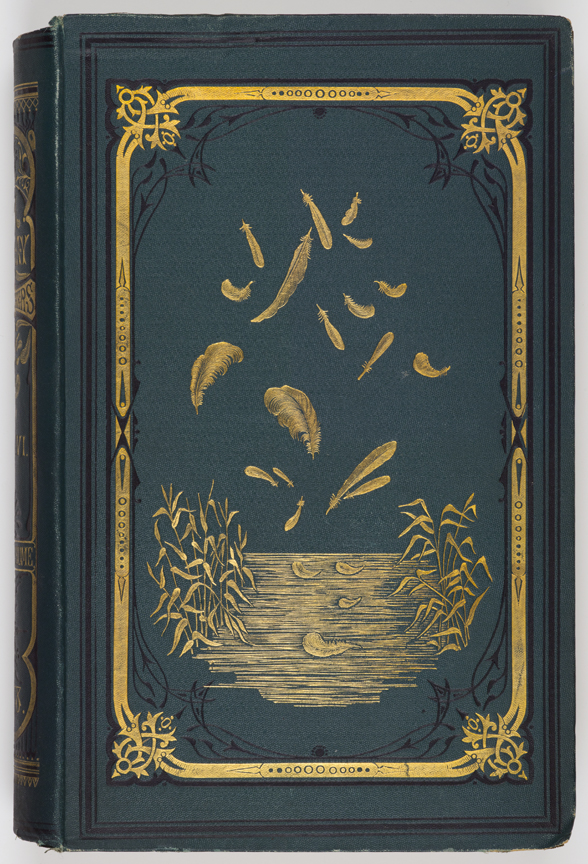
    But it still struck me as odd, these feathers in the air, and very uncommon to my decades+ experience of Looking At Pictures. They are simply a gilt-stamped decoration in a book cover, a piece of arresting design, for an ornithological journal (see below)–still, it is an unusual image, in-context or not. 

    I imagine that if you were resting on this little body of water from the journal cover and one of those feathers happened to fall on you that it would be quite the experience.  But there was a time when receiving a feather meant something far worse than an unusual natural history experience. That was the other thing about this unusual book cover decoration–it reminded me of a piece I read a few years ago (found again!) by Francis Beckett of The Guardian who tells a very difficult story about his grandfather receiving a white feather from a complete stranger on the street during WWI.  The brief story here is that his grandfather tried to enlist in 1914 but was not accepted because of poor eyesight and also being the father of three girls; but, while out and about in 1916 he was handed a white feather from a woman on the street, a complete stranger–that feather at the time being a symbol for cowardice.  Evidently the grandfather went the next day to enlist, and after millions of deaths the eyesight/children issue two years earlier was no longer an issue–he was accepted,  and fought for two years before being killed in 1918.  Beckett’s grandmother held the white feather woman responsible for her husband’s death.  

    The feather has meant many things to many cultures for thousands of years, and nearly all of it was good:  ascension, lightness of being, virtue, glory, flight, and so on, mostly having to do with cosmic connectivity.  On the other hand using the white feather for taking flight from duty and cowardice was a devastating thing.  

    And the full image:

    Feathers

    [Source: Allan Hume, Stray Feathers, a Journal of Ornithology for India.…1879, American Museum of Natural History, here.]

    ·Posted by :

    ·in:


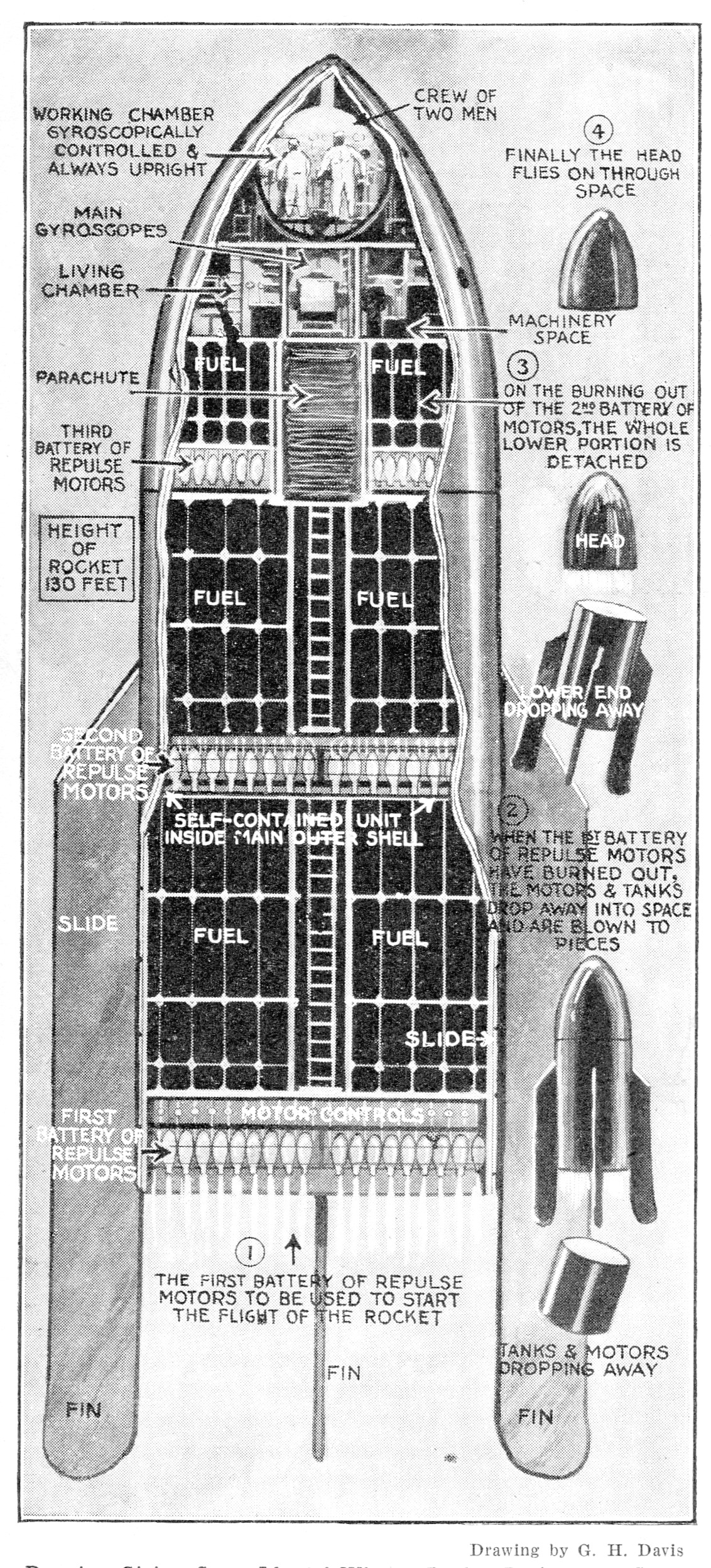
  • “Finally the Head Flies Through Space”–the Berlin Rocket Field, 1932

    JF Ptak Science Books   Post 2605

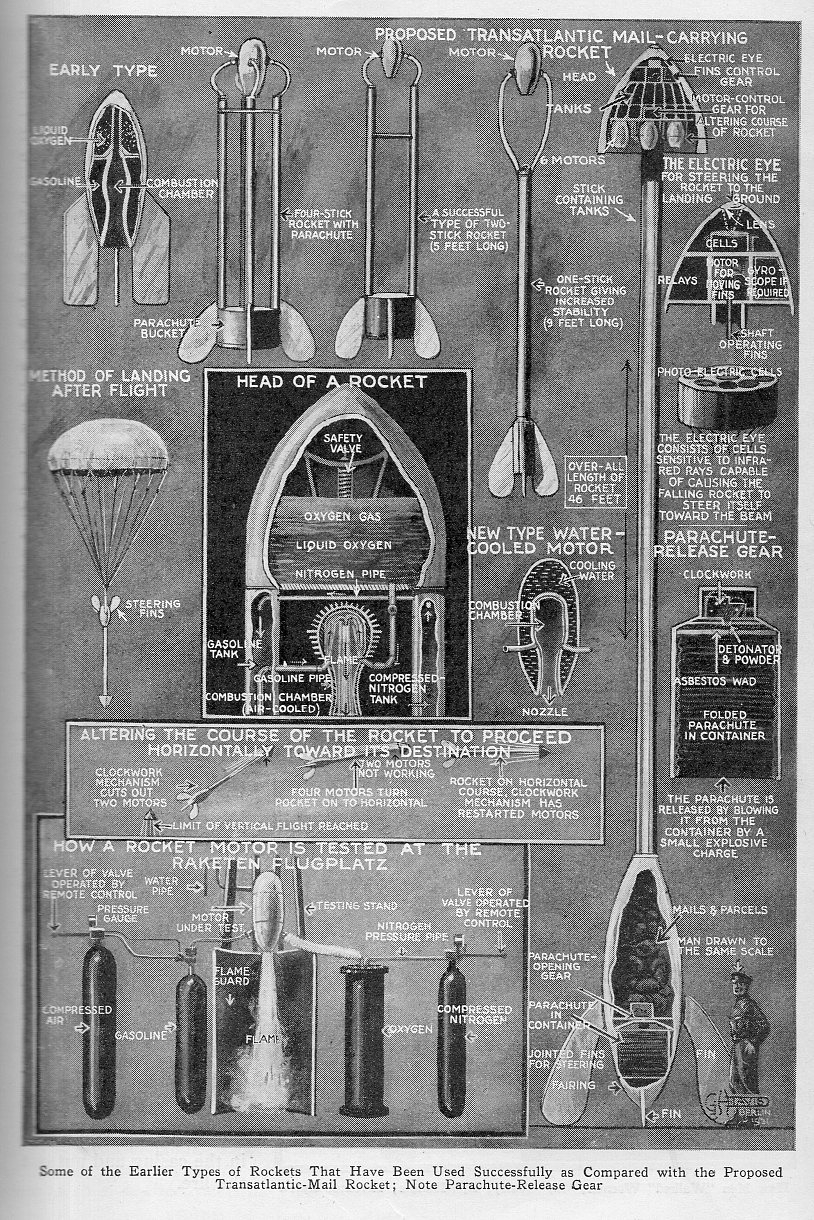
    This interesting schematic was drawn by one of my favorite technical artists, G.H. Davis, who generally worked for the Illustrated London News, though he appears in this article in the March 1932 issue of Popular Mechanics.  Davis was exceptional and prolific and produced (I guess) hundreds of drawings like this one, below.  “From Europe to New York by Rocket?” is mostly about delivering trans-Atlantic mail in twenty-five minutes rather than people, though that is mentioned somewhat, along with a scant reference to the possibility of interplanetary travel.  Mostly the article is based on Davis’ trip to the Raketen Flugplatz–the Rocket Airfield–a 300 acre former munitions/weapons site pockmarked with highly-useful bunkers in the Reinickendorf suburb in northeast Berlin, which is today very nearby the Berlin airport.  This was the world’s first such aerodrome, and it was staffed by the amateur rocket club of Germany which composed of such names as Nebel (who named the Raketen Flugplatz), Ritter, von Braun, Riedel, Heinish, and Oberth, among many others.  The place was opened in 1931 and saw the development of the liquid fueled rocket in Germany.  The place was short-lived though its influence was long-felt, the facility closed down over an unpaid water bill in 1933–it was at that time, anyway, where the Wehrmacht assumed control of rocket development in Germany and amateur exploits/testing was forbidden.  Six years later the Nazis went to war, and shortly after that appeared the V-weapons that so terrorized Europe and Great Britain, killing tens of thousands and leaving hundreds of thousands homeless, not to mention the thousands of slave workers who were killed in the process of production. 

    Rocket 1932 147

    But for 1932, when this article appeared and when Davis happily toured this facility, liquid-fueled rockets (introduced by Robert Goddard in 1929) seemed to hold the key to the future of rocket/space travel.

    Here’s Davis’ cutaway of a proposed rocket–it is not named nor is its purpose described, though it is not a rocket built for mail delivery, which was the discussion on this page of the  article–this is clearly far too massive (seemingly 100+ feet tall) for that, and also has sleeping quarters for the (standing) crew in the nose.  

    There are a few photographs of the team at the team at the Raketen Flugplatz, though no one is actually named–there is this photo which I’ve seen before and recognize, and I’d like to point out that aside from depicting Kurt Heinish (1910-1991) and Klaus Riedel (1909-1944) it also shows Heinish handling what I think is liquid nitrogen with basically no protective gear at all, save for some gloves.  

    Rocket 1932 148