A Daily History of Holes, Dots, Lines, Science, History, Math, Physics, Art, the Unintentional Absurd, Architecture, Maps, Data Visualization, Blank and Missing Things, and so on. |1.6 million words, 7500 images, 4.9 million hits| Press & appearances in The Times, Le Figaro, Mensa, The Economist, The Guardian, Discovery News, Slate, Le Monde, Sci American Blogs, Le Pont, and many other places… 5000+ total posts since 2008.

Category: Magnifcent Mundane

  • The Beautiful Ephemeral: the Perfect Desktop, plus Ads for Pencils and Matches (Japan, 1955)

    JF Ptak Science Books  Quick Post (Part of the “Magnificent Mundane” series) 

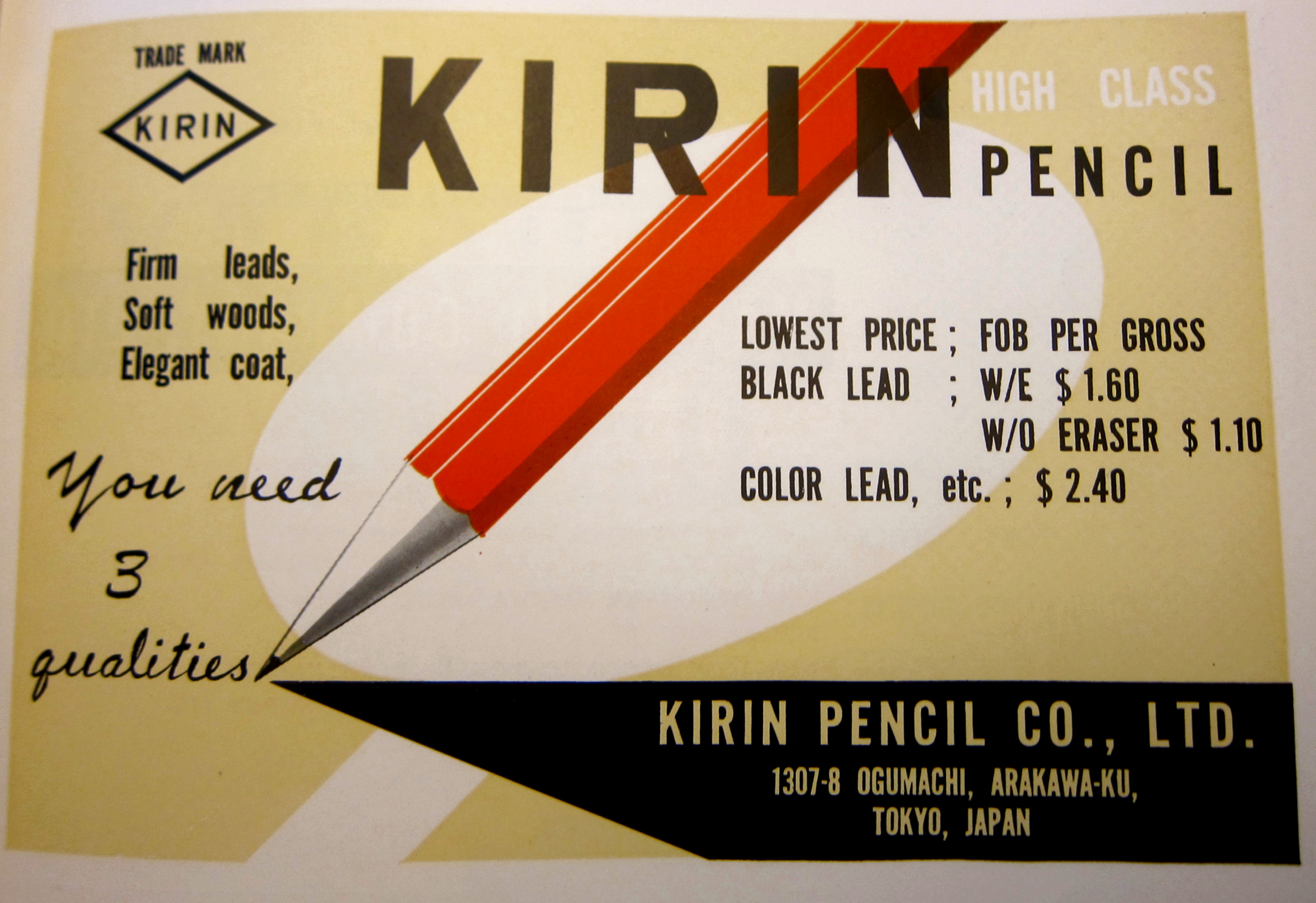
    The Japan External Trade Recovery Organization’s General Merchandise of Japan was an “effort is made to introduce every category of general merchandise” being made in the country in 1955.  Ten years after the war the country was still of course recovering from its devastating defeat, though the national economy did make tremendous progress back to some sort of normalcy during that time, particularly during the ‘fifties. This is not a Sears catalog, though, as it weighs in at 110 (thick) pages plus 30 pages of advertisements. The merchandise does spread out wide, if not very deep at all, and it makes for an interesting browse to see what sorts of goods were being manufactured and sold overseas so soon after the war.  What caught my eye (following ads for tribal table art, “Japanese-style lanterns”, cigarette lights, reed organs, toys, glasses, shoes, scissors, wooden bowls, eyeglasses (two varieties), and so on were the ads for pencils. There were at least four of them, three of which are visually striking. (And speaking of that, there’s also a great ad for matches.)  On the “Pencils of Japan” page there is also a peep into perfection, showing an office desktop outfitted with goods manufactured in Japan. There’s not much, but the necessaries are there, and it is very tidy in a geo-Spartan way (and nothing like my own desk). In any event, I share the “Pencils of Japan”:
    Japan merch 1955 pencil _1_

    Japan merch 1955 pencil _1_

    ·Posted by :

    ·in:

    —

  • The Beauty of the Nuts-and-Bolts of Bolts and Nuts (1864)

    JF Ptak Science Books  Quick Post 

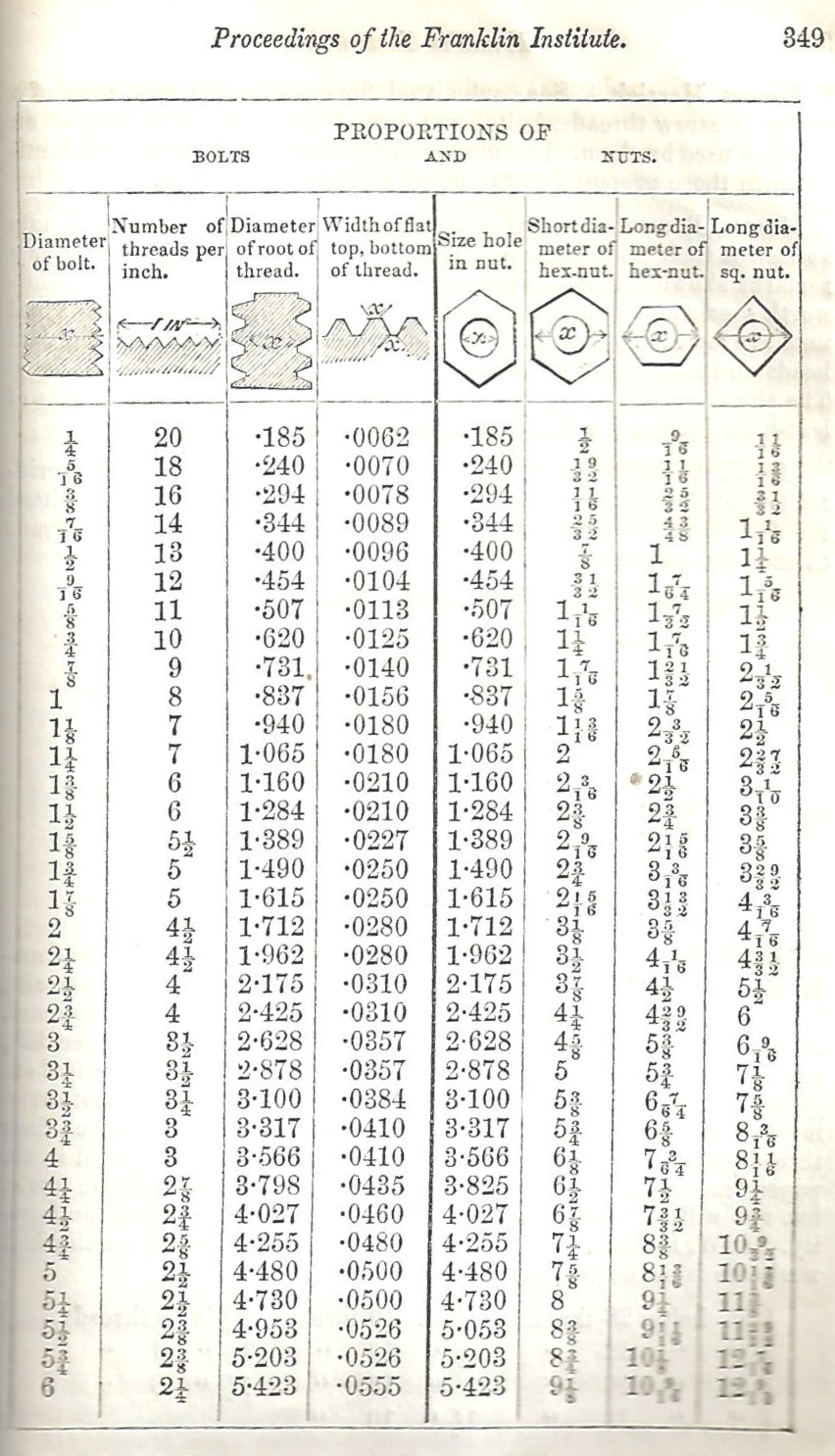
    JFI 1864 bolts (1)So, at first glance, this chart may look like a simple statement of nut and bolts specs. The importance of this chart is its commonplace appearance, and the overt statements about what all of these size and parameters should be, establishing a common denominator, a standard. Even though nuts and bolts had been around for at least 400 years when this chart appeared in the Journal of the Franklin Institute in 1864 (and threaded bolts and screws long before that), the idea of standardization of this hardware really hadn’t taken place until Joseph Whitworth gave the idea life in 1841. The nut and bolt industry was well underway, except that for X manufacturers there could be X-number of varieties of nut and bolt sizes from one location to another (near or far), which made things difficult for the end-user, as they could basically be using a proprietary design with their hardware. Standardization made it possible to buy a certain size nut in one country and mate it with the necessary bolt from another country (etc.) with the capacity of knowing that one will fit the other, which is a big deal. In any event, here’s a table of a U.S. attempt to codify those dimensions. 

            [See: W.R. Wilson,  The History of the Nut and Bolt Industry in America, 1905.]


  • Target Earth Redux and the Surprise Appearance of the Evidently Rare Phrase, “Earth is My Target”.

    JF Ptak Science Books  Quick Post

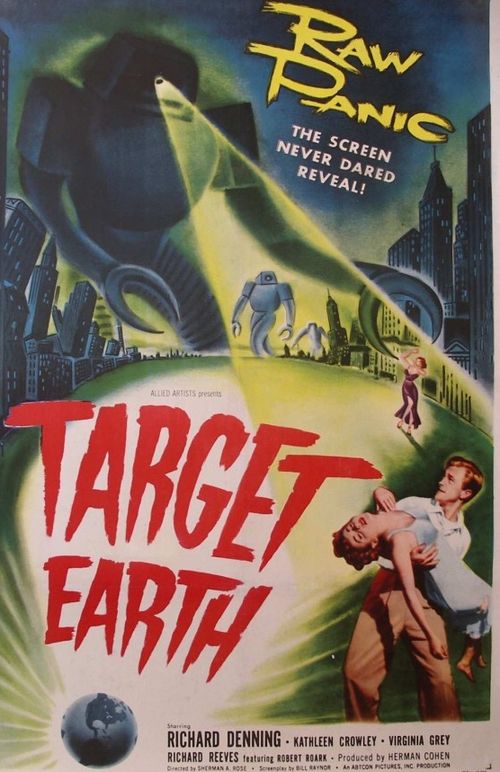
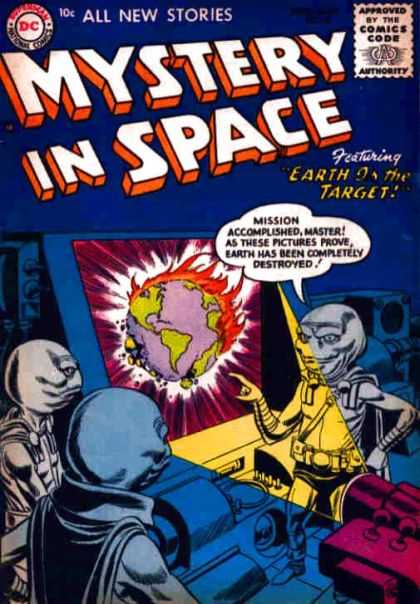
    Not too much to say on this pair, except to say that you don’t often find “Earth” and “Target” together like this. Surprisingly, “Earth is my target”, the cover story for the pictured Mystery in Space comic book,  has exactly one hit on Google. Somehow with all of the Outer Space Space Monsters from Outer Space appearing in movies and comics in the 1950’s that the phrase would’ve become a little second-hand, but apparently not.  This comic has the double-find of also showing the Earth being destroyed, which is a scene that you really don’t see until the end of the 19th century (excepting the raw canvas painted via Biblical gloom which has been around for a long time). The other image, which is a movie poster for an $85,000 sci fi film from 1954 named Target Earth, is about the evacuation of a Major City as an attack by Venusian Robots comes near. (I’ve just had a sneak peek at the movie and I can tell you that very little money was spent on the robotic visitors from Venus–those buggers were very slow, wobbly, and about 5’10” tall, not much inspiring “raw panic the screen never dared to reveal”. The film is only about 40 minutes long, which may be 40 minutes too long, or 40 minutes too short.)

    “Earth is My Target” (comic book) & “Target Earth” (movie):

    Earth destroyed

     Earth destroyed 2

     Image source for movie poster: http://www.monsterbashnews.com/Movie%20Night/Target%20Earth.html


  • The Medium is the Mess

    JF Ptak Science Books  Post 2716

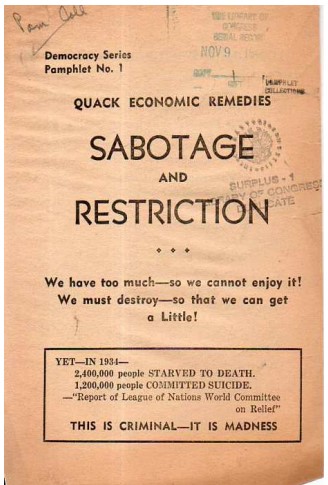
    This is an interesting pamphlet (printed ca. 1933/4) that makes a lot of good points in what seems to be
    our current post-salient world, except that the author’s presentation makes it all look kooky, borderline,
    Outsider-y, and therefore dismissable. But the good points are there, and no doubt a lot of the
    numbers seem as though they can be true–it is just that the presentation is about as actionable as
    listening to some guy sitting in a shopping cart under the overpass and wearing cardboard box signs
    while delivering his message in bolts of screams–the medium really can be the message, or the mess.
    And this is just a mess, true or not, which was too bad.

    Medium is the mess

    (This is another one of those pamphlety works that seem as though they were very popular–and
    perhaps so, except that its popularity did not translate into any sort of existing longevity–there is only
    one copy of this work located in WorldCat/OCLC, and the only two online references to the pamphlet
    are for the listings for in the the library found by WorldCat. So, popularly, this work is no longer
    “around”. It is interesting to note that for the few dozen Google hits on “Quack Economic Remedies”
    there are several referring to presidential programs, with those including a wide range of politics, and
    include Obama, Nixon, and Wilson.)
    63 / 93
    • Item: 7×5″, 4pp. WorldCat/OCLC locates only 1 copy

    ·Posted by :

    ·in:


  • A Glorious Episode in Outsider Literature–“the Great Scope Ever to be Attempted in a Work on Paper”, and a Peep into the Year One Billion A.D…

    JF Ptak Science Books    Post 2691

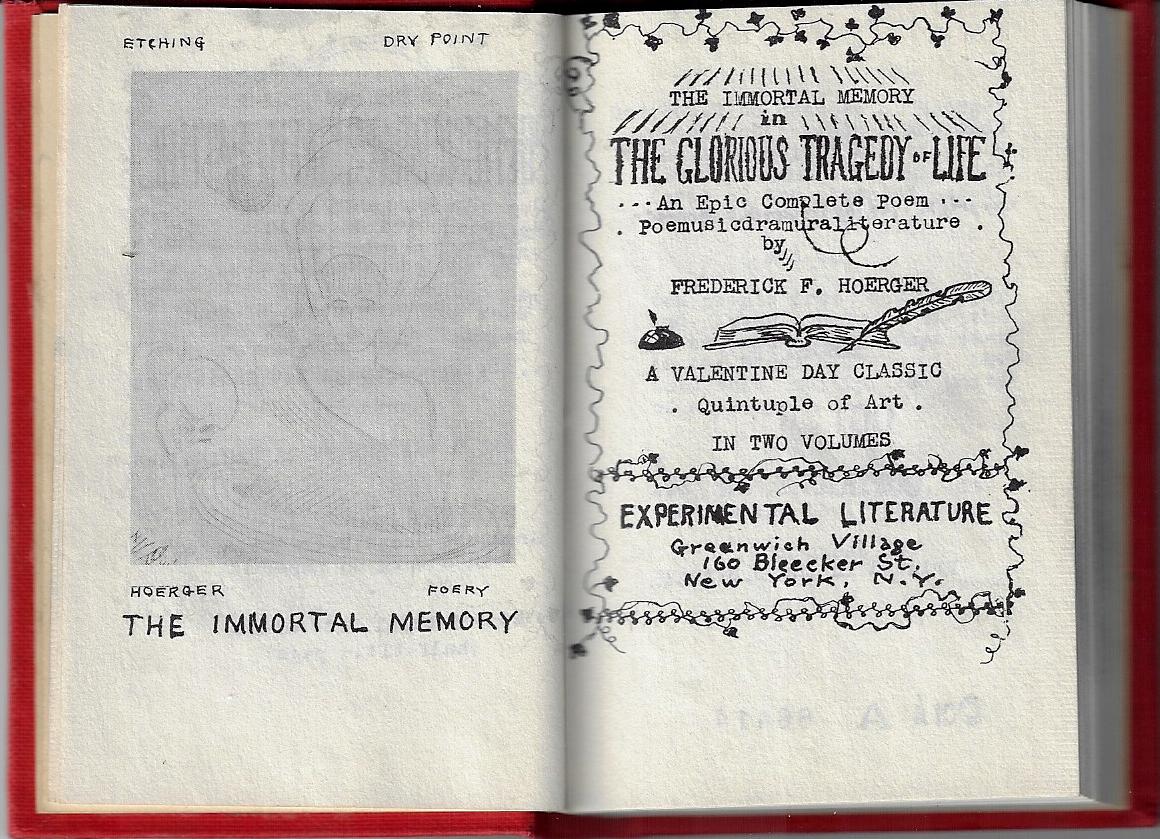
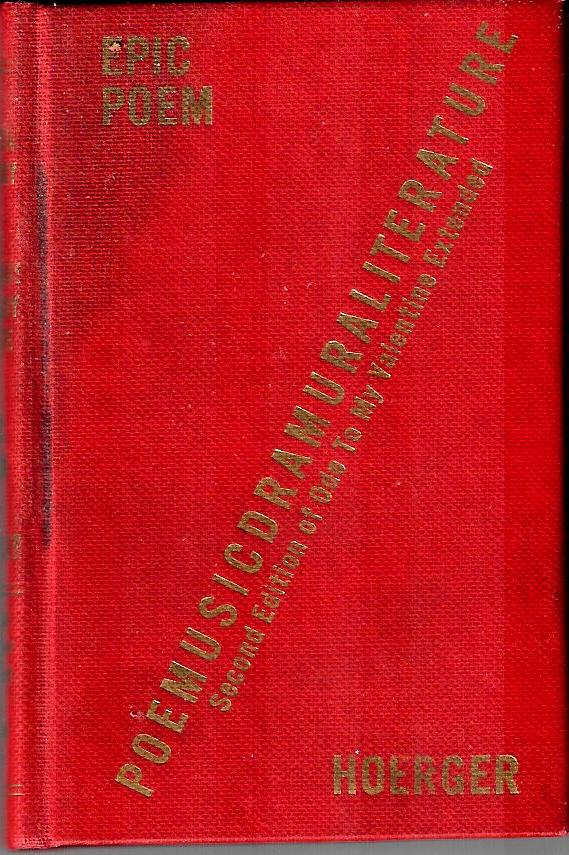
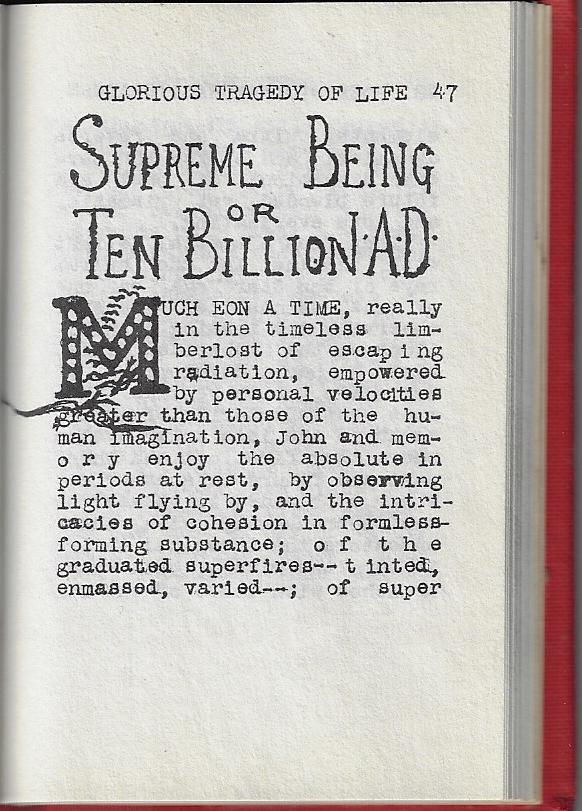
    There are some things that stand to be admired simply because exist. They may be mundane, but they are the magnificent mundane, brought to life by sheer force of will. Such I think is the case of Mr. Hoerger’s Poemusicdramuraliterature Epic Poem the Immortal memory in the Glorious Tragedy of Life (1946). The work is billed as a “Valentine Day Classic, quintuple of Art”, the “greatest scope ever attempted in a work on paper”.  It is a big claim made by a little book–bound in red cloth, it measures 4″x2.5″ and is 86 pages long, though the word count for all of the little pages only makes it to about 8000 words, or about 20 type pages. I don’t think that the book ever actually catches up to itself, as for what I can see of it, it is always one step ahead of itself and one step behind.

    Outsider poemliterature _1_

    (I’m guessing that Mr. Hoerger could have lived at 160 Bleeker Street–it is the Mills Building No. 1, and was built in 1910, where today you could easily spend 4.5k/month for a one-bedroom place…unless the printer for this book was in the basement, and Mr. Hoerger lived elsewhere. This copy by the way came to me via the Library of Congress and is one of the Copyright Deposit copies. There are at least five other works copyrighted by Mr. Hoerger; Highroad Number Z, Vintage One (1941),  Immortal Aid (1946), The Daze of Forty-Nine (1958), and Deep Surprise, post-Abstraction, Space-age Understatement (1961).)

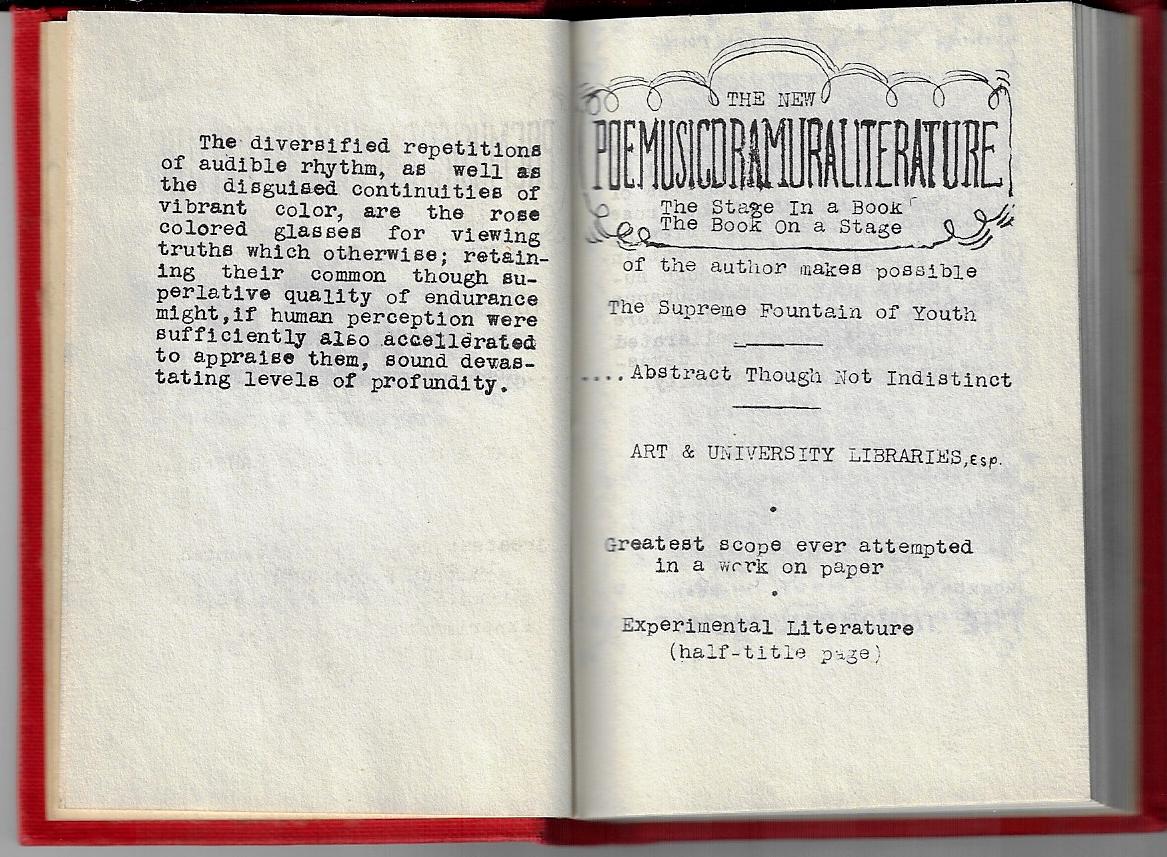
    We are reminded of the new sort of “work on paper” this is on the half-title page (identified so), as well as the non-sequitur “art & university libraries, esp”, which seems like an enormous emotion of some unidentifiable sort that the author brings to bear on the possible reader:

    Outsider poemliterature _2_

    The extraordinary cover:

    Outsider poemliterature _3_

    And a sample of the writing, which is, at the very least, quite something; it seems a major attempt at producing and communicating ideas that are just too far in an unreachable zone for me, though I have to give credit to the author for his imagination and for completing a project.  

    I should point out that in the last section of the last page reproduced here something is “calibrated” at “50 septillion light years”, which is a pretty big number in the scale of the base -illions, especially when you think about the universe being “only” 13 billion years old–that means that the width of the universe in 26 billion light yeas wide  or 156 billion light years in the altogether or some such, but 26,000,000,000 is crushed by the 50,000,000,000,000,000,000,000,000 light years being discussed here. Of course there’s also the fast-forward to the future part, introducing the year 1,000,000,000. That would be impossibly far into the future, considering that Homo sapien has been around for 150,000 years or so, and that there have been about 7,500 generations in that time. The Year Ten Billion would entail 400 million generations (and that’s assuming that we haven’t started to “live” forever after the year 3000 or 2500 or whatever) since we have been brought to our present medical modernity in the scant eight or nine generations since Joseph Lister invented the idea of sterilizing operating instruments, and considering again that we are just three or so generations removed from DNA (1953) and the first successful heart transplant (1967) and how far the replacement of human bits has come since then, it is impossible to say where medicine might be in a 50 generations or a thousand years, let alone in ten billion years. 

    I do have to commend the author for thinking big. And: he does make you think. 

    Outsider poemliterature _4_


  • The History of Being Horizontal–on Lying Down and Being Flat

    JF Ptak Science Books    (Expanding an earlier effort, Post 1870)

    • See also an earlier post to this blog relatign to this topic: Post-Renaissance People-in-Bed-in-Title-Pages,  https://historyofideasblog.com/thesciencebookstore/2012/08/post-renaissance-people-in-bed-in-title-pages.html
    0--blog---Nov 24--skinny114


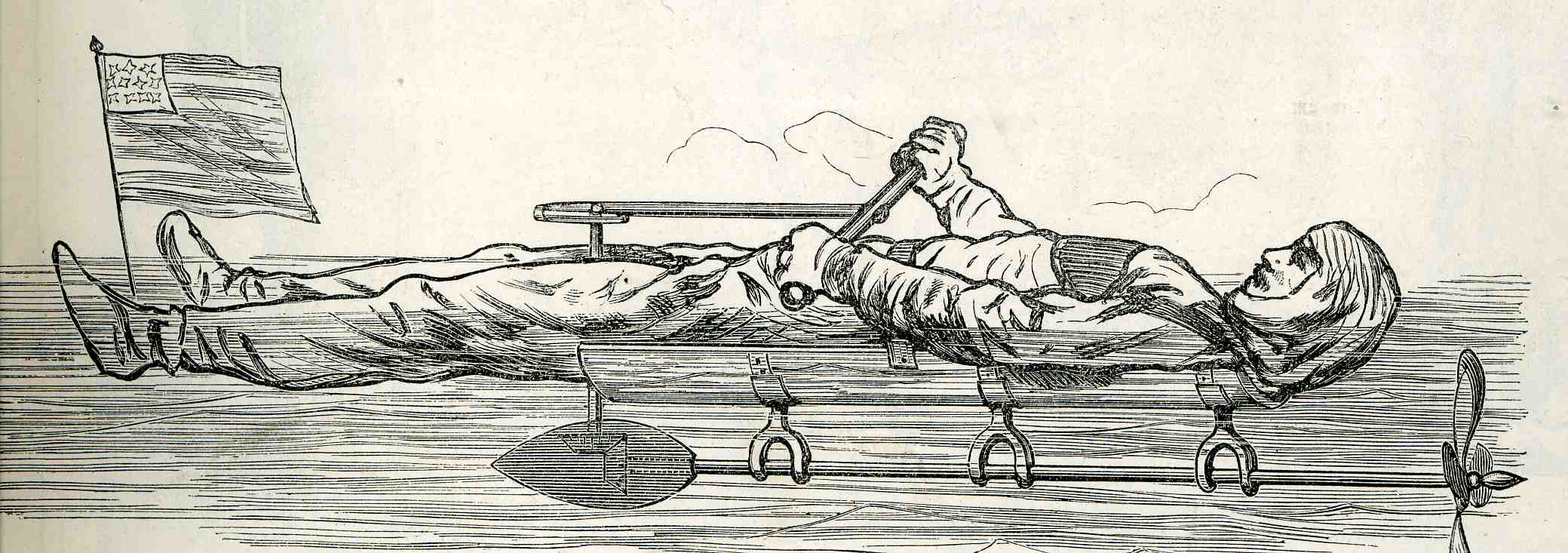
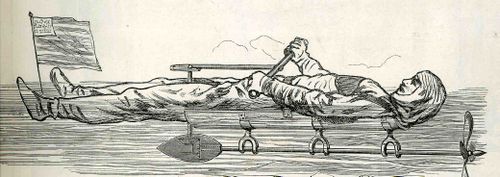
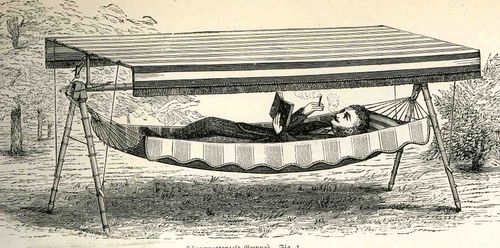
    I don’t have much to comment on in these images, just that they are striking and came to me in short order, and that they are all pretty narrow things.  They could fall easily into aSkinny category, or perhaps better still, they might slide nicely into the prototype for a series of posts on The History of Lying Down.  Or perhaps a combination of the two, or one being a sub-category of the other.  Certainly a history of humans lying down would be fairly massive, but scaling it down to late 19th century images of skinny and lying down might narrow the field a bit. 

    The first, (above),  is from Illustrirte Zeitung (Leipzig), and published in 1878; it depicts an American effort at simplified swimming, though sometimes when you simplify an already-simple thing, the results are fairly complex.  I haven’t much of an idea about how this would make sense, seeing that the body’s strongest muscles are not being used at all; further, judging by the flag, this guy is moving feet-first, and the whole procedure, despite body suit, look as though it would be terrifically cumbersome and bloaty.  And with the geartrain, plus the weight of the driveshaft and propeller, I don’t know how anyone would keep afloat.  Or how someone would keep their neck in that position for any period of time. In the world of Good Ideas, this would be an Anti-Good Idea. 

    0--blog---Nov 24--skinny116

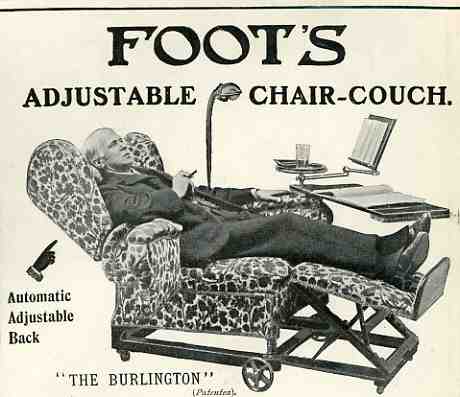
    Foot’s Adjustable Chair Couch, which I found in The Illustrated London News for September 1902, was remarkable for its cushion-y formlessness, accepting the reader to itself like a body with a goiter.  There’s just something terribly wrong with it, reminding me somehow of undeserved and needlessly- rewarded comfort–too much comfort foully a perfectly reasonable invention like The Chair. 

    Next is this skinny, low, light semi-automated shaded hammock; little, narrow, and maybe comfortable to fit a 120-pound person.  This appeared in the Illustrierte Zeitung, again, for 1892.
    0--blog---Nov 24--skinny115


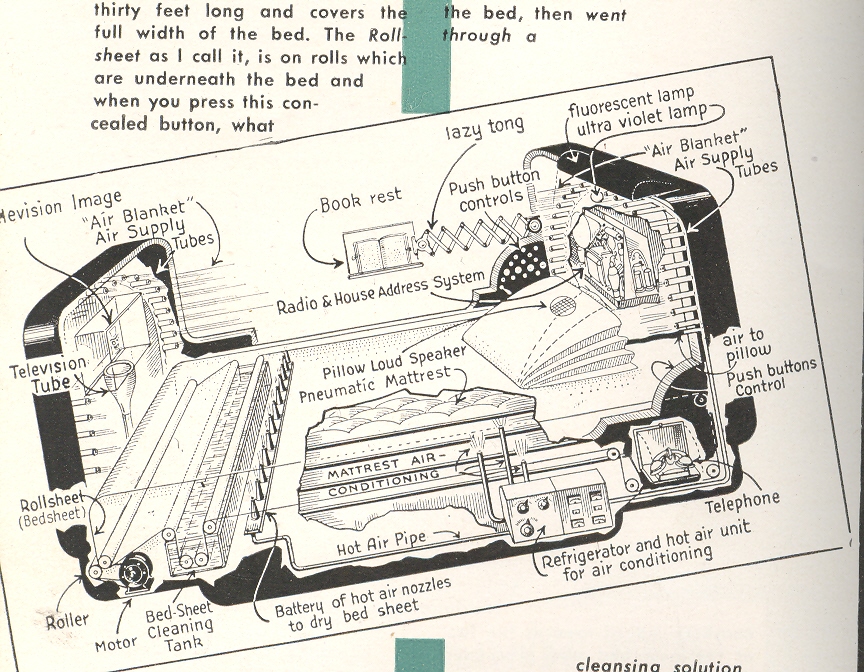
    And for the 20th century contribution, there is this overflowing fabulosity from Hugo Gernsback–this is the only-tongue-in-check effort amongst these entries.  The “electronic bed” appeared in a small 1945 pamphlet called Bizarre, and it is just that, and is certainly not hiding behind any lesser or ambiguous title.  It seems to be a parody of  small magazines and their advertising sponsors,  and copyrighted by the very far-reaching Gernsback, who in 1926 started the first magazine dedicated to the genre of science fiction (Amazing Stories) and for whom the World Science Fiction Society’s annual award for Science Fiction Achievement is named (the “Hugo”).  Gernsback evidently had a taste for cheeky parody, producing similar magazines to this called Quip, Forecast, Jolliers, Tame and Newspeep.
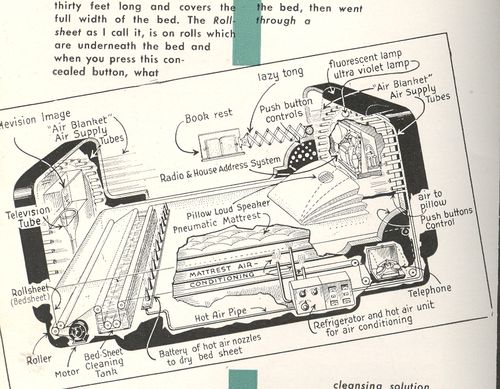
    Bed electronic


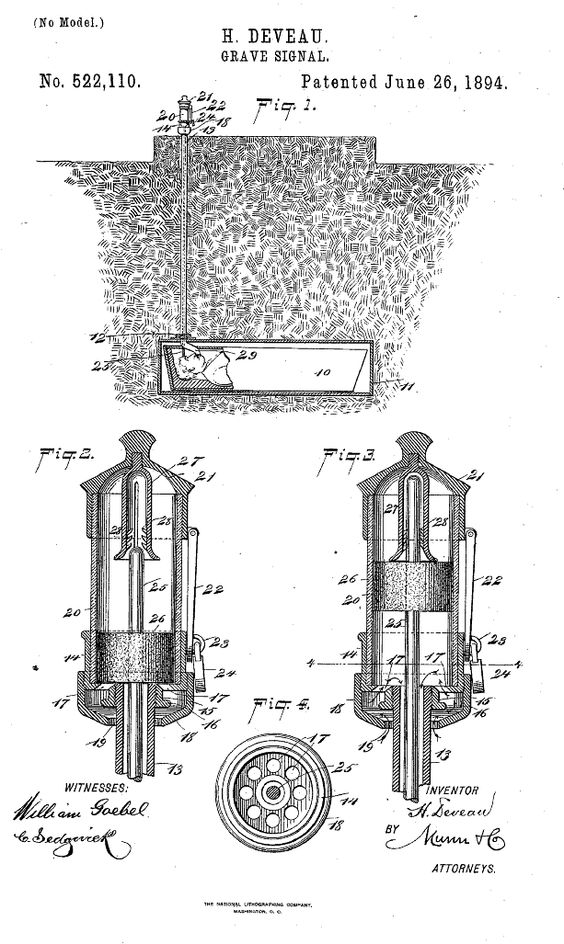
    There is good lying down, and there is “bad”–that is, the lying down that we don’t want to do, the lying down that we try all of our lives to postpone; that is, the lying down for the Big Sleep.  Since it was difficult to absolutely diagnose death in some cases before the 1950’s, there were some people who went to extreme measures to ensure that if they were buried prematurely that they would have some recourse int eh situation–for example,with the patent granted below, a buried person could activate a signal from the grave with very minor movements of the mouth, thus hopefully alerting some passerby to the fact that the dead isn’t:
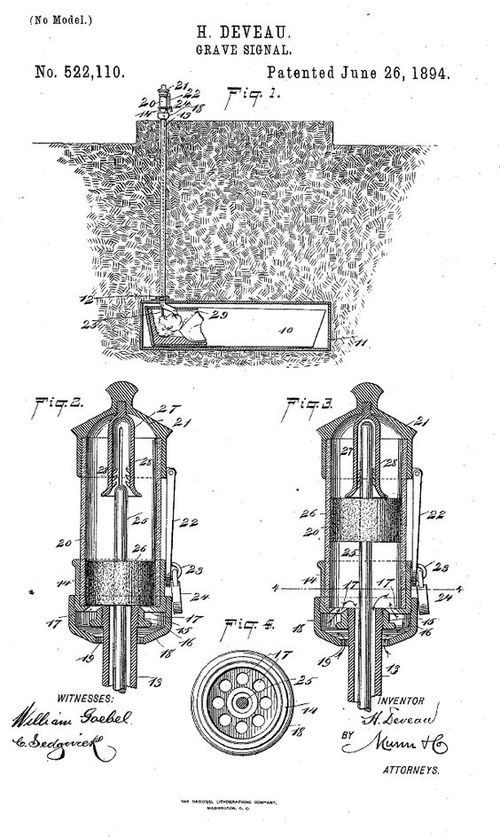
    Bed coffin signal

    There are endless varieties of lying down–these are just five examples. The world is full of possibilities that are good, bad, and indifferent. Some are very bad (like the restraint beds for the institutionalized insane in the 19th century) and near-bad (the sleeping accommodations of 18th century sailors), and of course the fantastic Renaissance beds of the rich and famous, and so on.  


  • Guinness (the Grace of the Gods) and the Battle of Britain (1941)

    JF Ptak Science Books  Quick Post

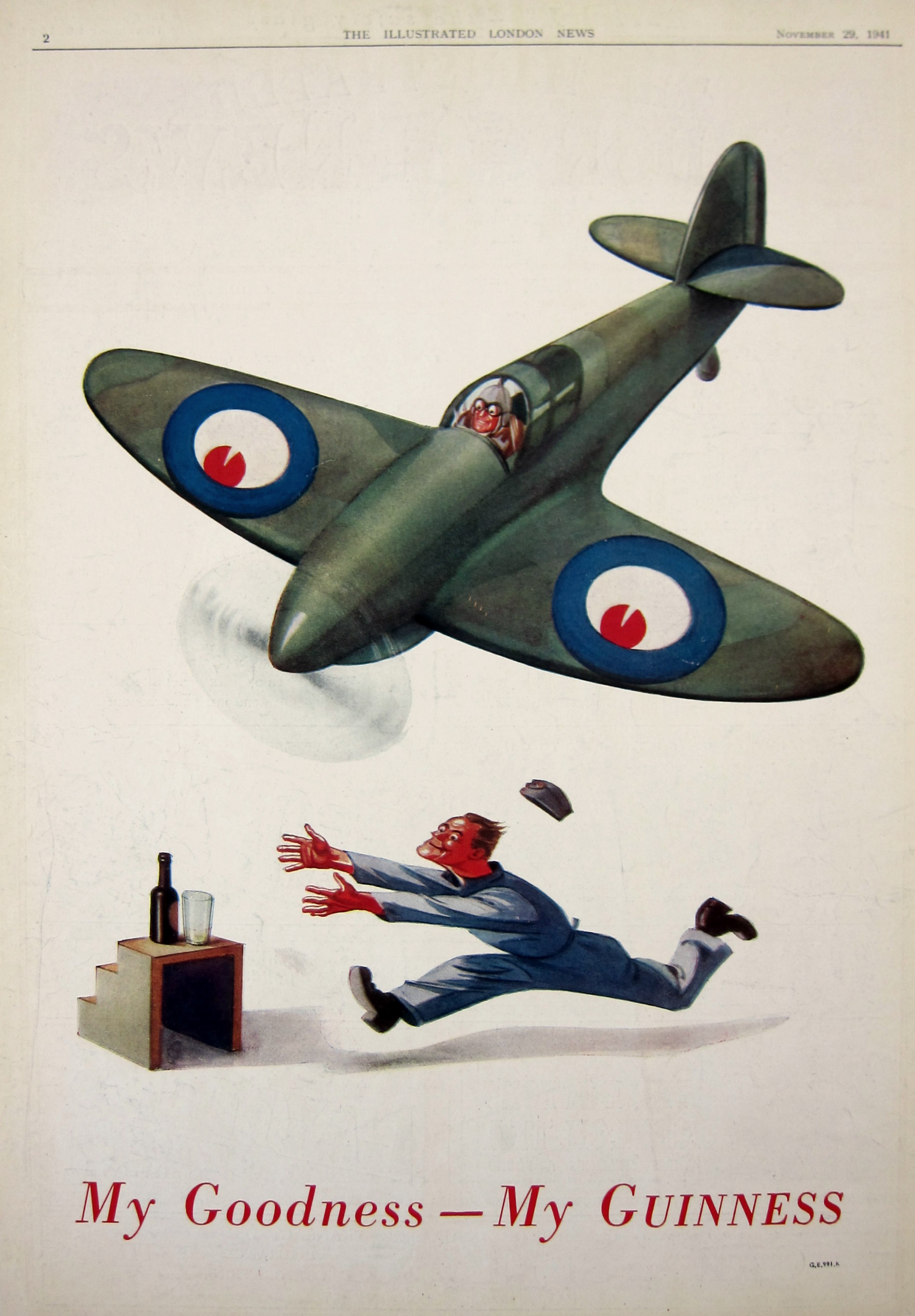
    It is interesting to see this ad for the beverage that is the grace of the gods, using the Spitfire as a comedic backdrop to the stout. The ad appeared in the Illustrated London News on November 29, 1941,  a year and a month past what is recognized as the end of the Battle of Britain (July 10, 1940-October 31, 1940).  The facts and figures on the battle read less than the actual scope of the victory by the Brits in their defense of the U.K. by the R.A.F. On the British side there were 1542 RAF killed (Fighter/Bomber/Coastal Commands) with 1547 aircraft destroyed; the Germans lost 2698 killed, 967 captured , 638 missing, with a loss of 1887 aircraft.  The civilian deaths and wounded was high: 90,000 casualties including 40,000 killed.  It was a decisive victory for the U.K. and a costly loss for the Nazis.  

    This is what Winston Churchill famous said at the beginning of the great trial:

    “What General Weygand has called The Battle of France is over. The battle of Britain is about to begin. Upon this battle depends the survival of Christian civilization. Upon it depends our own British life and the long continuity of our institutions and our Empire. The whole fury and might of the enemy must very soon be turned on us. Hitler knows that he will have to break us in this island or lose the war. If we can stand up to him, all Europe may be free and the life of the world may move forward into broad, sunlit uplands. But if we fail, then the whole world, including the United States, including all that we have known and cared for, will sink into the abyss of a new Dark Age made more sinister, and perhaps more protracted, by the lights of a perverted science. Let us therefore brace ourselves to our duties, and so bear ourselves that, if the British Empire and its Commonwealth last for a thousand years, men will still say, “This was their finest hour”.  — Winston Churchill, June 18, 1940   For the full text see: http://www.winstonchurchill.org/resources/speeches/233-1940-the-finest-hour/122-their-finest-hour

    In any event, the comfort level was high enough for the Guinness folks to use a Spitfire in their ad:

    Guinness SPitfire

    Here’s the entire (30 minute) speech–the part I quote above is the last paragraph of the speech:


    ·Posted by :

    ·in:

    —

  • Before-and-After on the Mean Streets of NYC (1893-6)

    JF Ptak Science Books   Quick Post

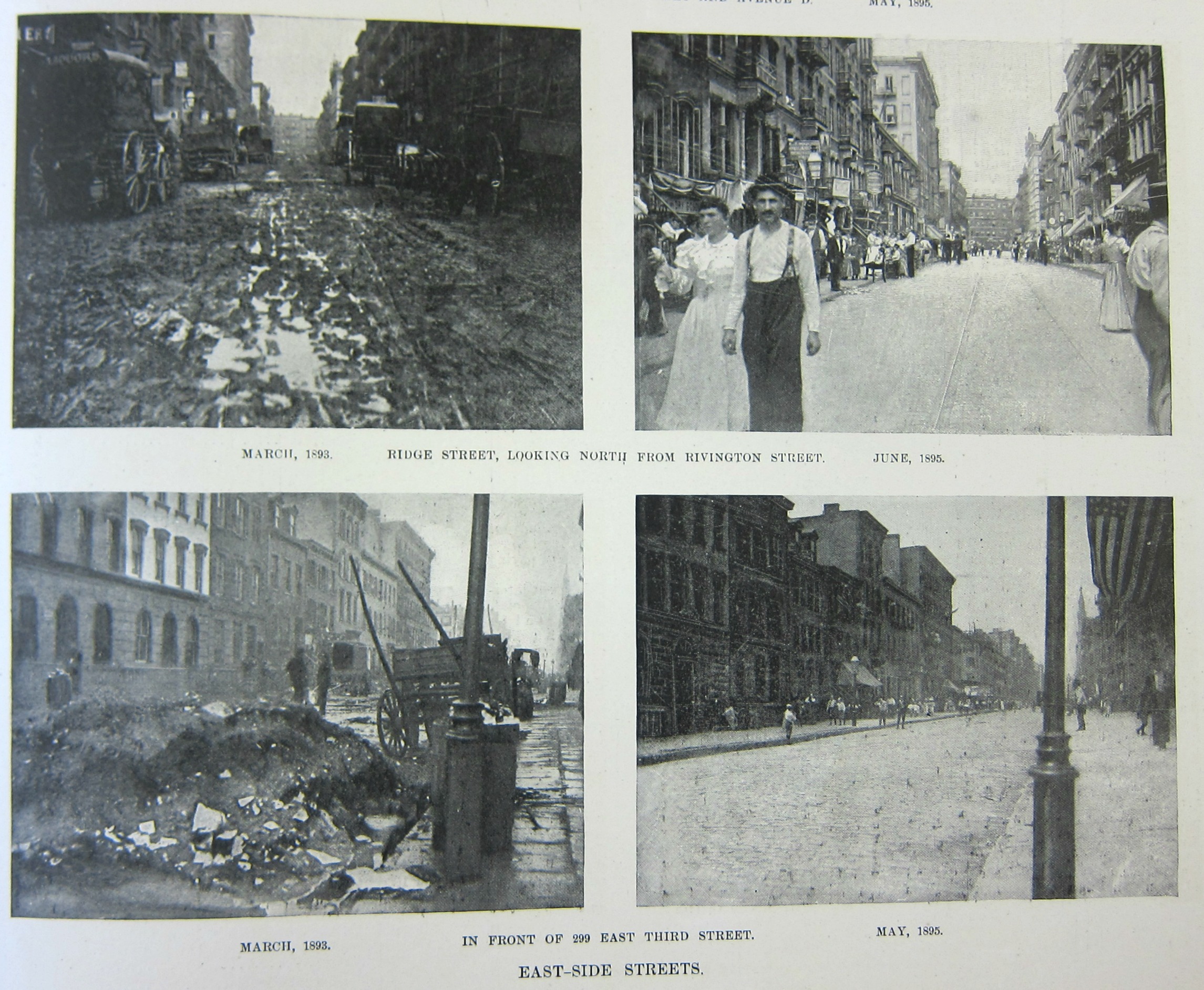
    NYC Street before and after 1 of 4


    This is one of four images from the May 25, 1895 issue of Harper’s Weekly, and they show eight different views of before-and-after photos of filthy city street cleaned up and maintained by the Civil War vet Colonel George E. Waring. Waring (1833-1898) was also an engineer and a sewer pioneer, and was responsible for instituting a real department of sanitation in New York City. To that end he hired some 2000 men and put them in white uniforms to perform their functions–the uniforms gave the workforce a dignity and also made the population at large aware that there was a serious and dedicated effort to clean the city–it was a brilliant success.

    This story is told in the six pages (located below) from the great social observational/photo-documentarian Jacob Riis’  The Battle with the Slum (1902) describing Col. Waring’s efforts to clean the streets of Lower Manhattan. Riis is vicious with his treatment of the Tammany political machine for not undertaking any real effort to reduce the amount of street waste/filth, and heaped much praise on Waring, who he declared as the first to open the slums up to the light. That is just about right, and probably understates the case somewhat, as he was responsible through these efforts in saving the lives of thousands of people and improving the living condition for most of the city, in general.

    Evidently the photos from Harper’s are sometimes credited to Riis, though evidently it seems that the experts say he only used these images made by someone else for his 1902 book. No matter–Riis did much else.  


  • Fistfights and Beggars: Found Street Life in Old Prints (1757)

    JF Ptak Science Books   Post 2570    Zoomology Series

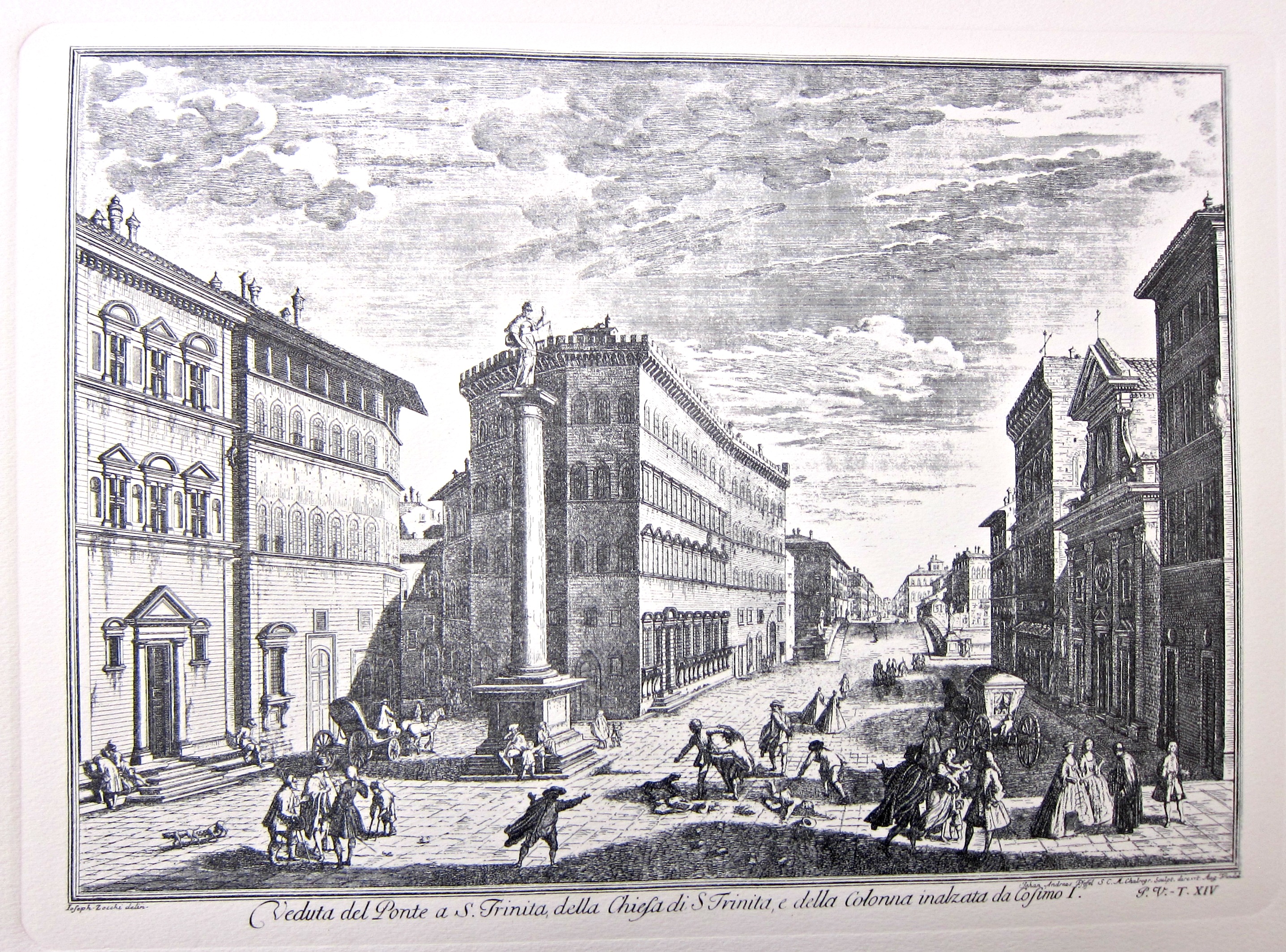
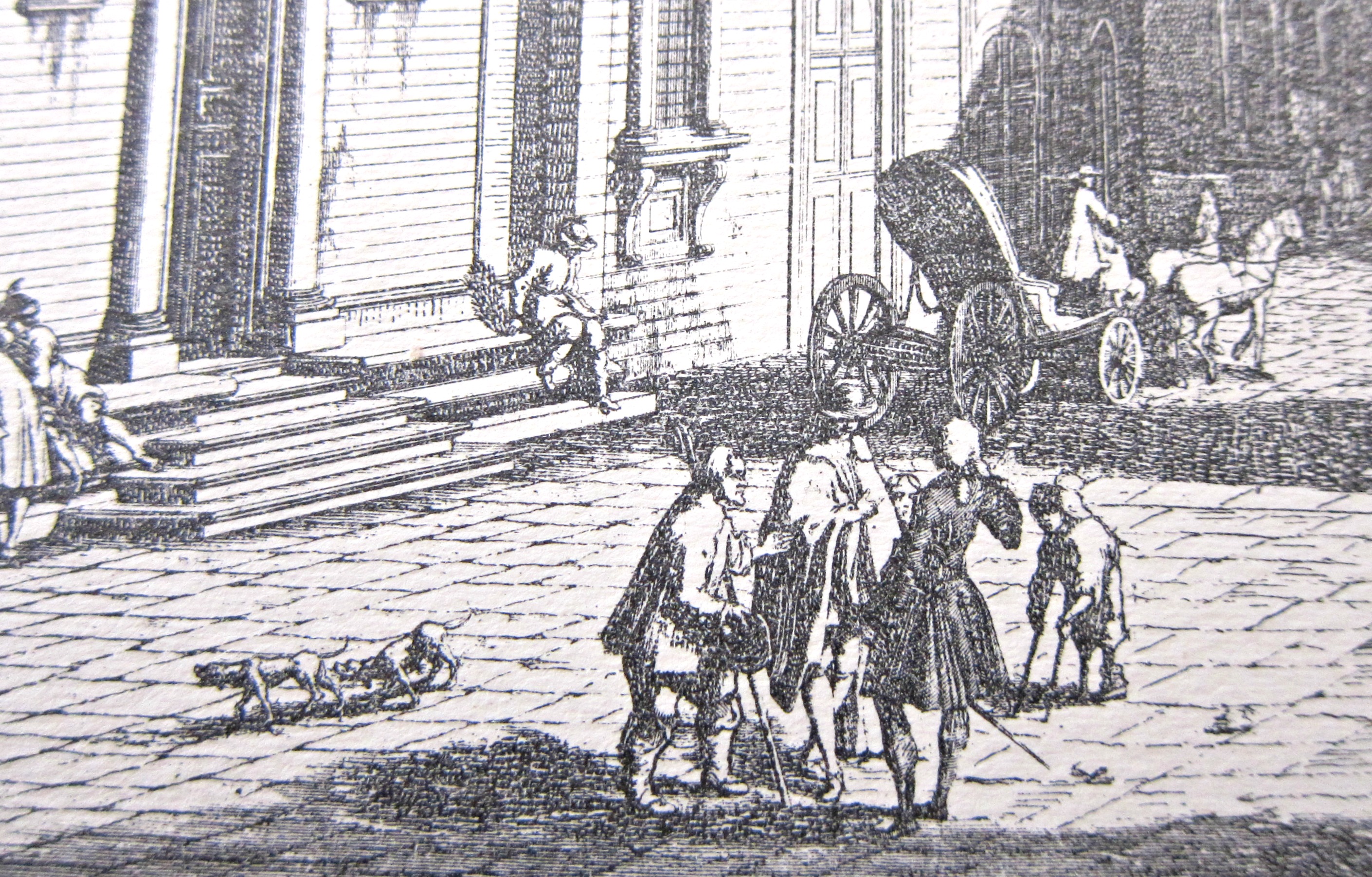
    I’ve written a number of times on this blog on using the “paper microscope” on finding small images hidden in plain sight within larger images in antiquarian prints. The image below is by Giuseppe Zocchi (1711-1767) (commissioned by the Marchise Andre Gerini at mid century to record the greatest of Florentine landmarks) and is entitled  “Veduta del Ponte a S. Trinita, della Chiesa di S. Trinita e della colonna inalzata da Cosimo I..” and appears in his Scelta di XXIV Vedute delle principali contrade, piazze, chiese, e palazzi della Città di Firenze in 1757.  The print displays the buildings and obelisk just down the way from the bridge whose name occupies the beginning of the image’s description, the ponte Santa Trinita, a fabulous renaissance structure built a hundred years earlier.  All we see of teh bridge though is is decking, though we do see a huge rise, which gives us a hint of teh bridge’s nature–it turns out that this is the oldest elliptic arch bridge in the world.  While the architecture is beautiful and teh perspective intersting, teh characters populzting the foreground are sometimes even more interesting. In general figures like this were used to take up empty bits of space and to provide perspective, and were depicted in the standard ways in which walking/riding humans are represented. In this case, however, there is a lot of social drama going on amidst the simple space fillers. 

    Zocchi d

     For example, in the bottom-left corner, we see doggies doing what doggies do, and also a disabled short person approaching a group of gentlemen in conversation:

    Zocchi c

    ·Posted by :

    ·in:

    —

  • Deadly Dead Ideas: the U.S. Thinks About the Great War, 1915

    JF Ptak Science Books   Quick Post

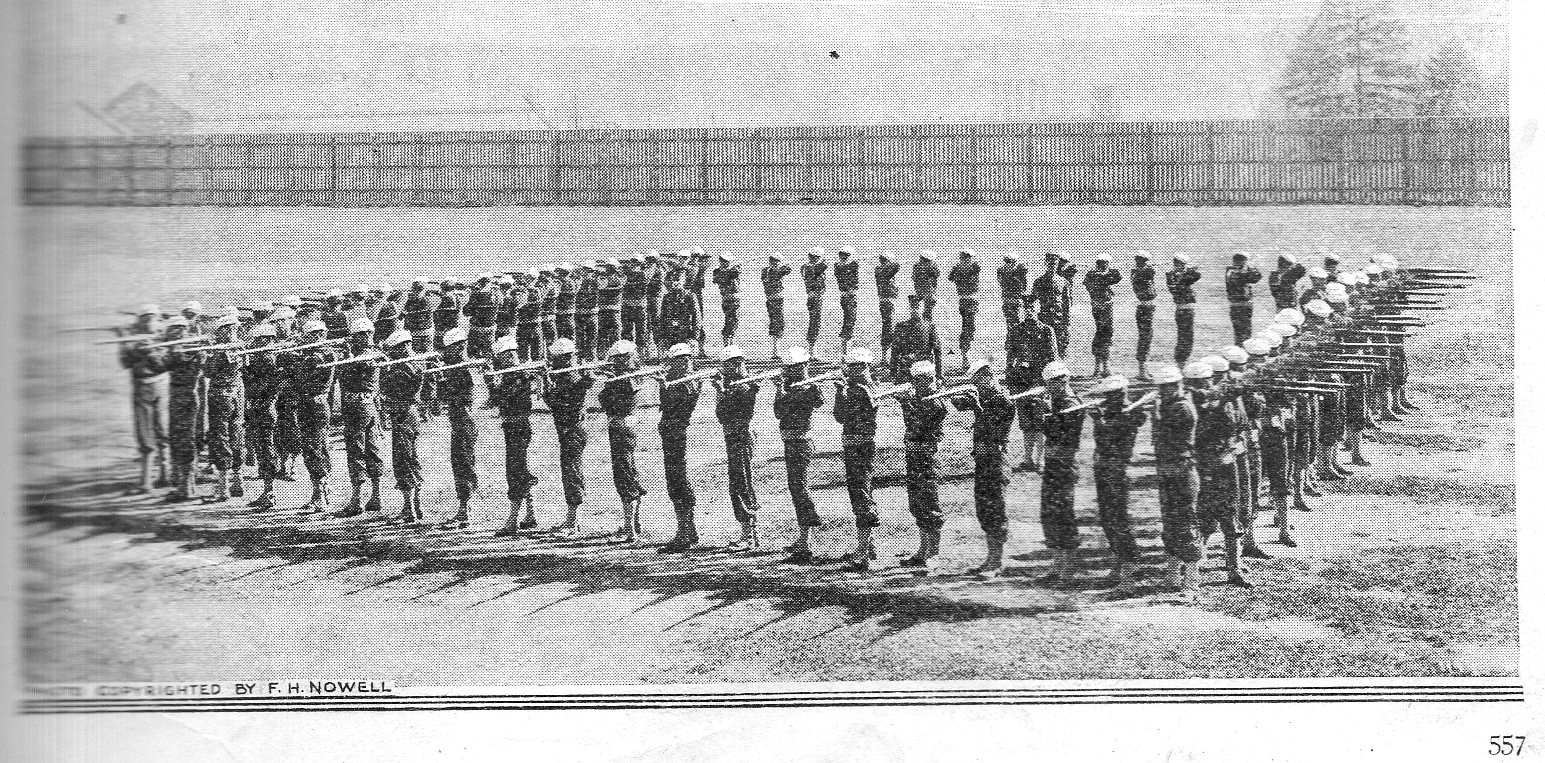
    Hollow square790

    My browsing came to a sudden halt when seeing this small inset photo in an article in Popular Mechanics for October 1915.  “My Four Years in the Navy” was a fairly long feature piece, and it showed a series of rather crowded images of life at sea with overtones of “readiness” should something happen to bring the U.S. into the year-old WWI.  It was the picture at the bottom of p. 567 that gives you great pause–first of all, the sailors are armed and on land, but they’re also forming a “hollow square”, a defensive position used when a large force attacks a smaller one.  The tactic has been around at least since Roman times and used steadily through the early 19th century (especially it seems during the Napoleonic Wars), but it gradually wore away from the face of battle, and was hardly employed in the late 19th c, except against irregular forces (like against warriors in the Zulu Wars). What made it an antique notion was the machine gun, and tank–mostly though it was rapid-fire assault weapons the crushed the square, the collection and stacking of soldiers close together (and in layers) made them easy targets to an opponent with such weapons).  Nobody was using this technique in the Great War, but there they were, these poor sailors, demonstrating the formation to fight against hundred-year-old ghosts.  The U.S. was nowhere near being ready to fight in WWI in 1915.