A Daily History of Holes, Dots, Lines, Science, History, Math, Physics, Art, the Unintentional Absurd, Architecture, Maps, Data Visualization, Blank and Missing Things, and so on. |1.6 million words, 7500 images, 4.9 million hits| Press & appearances in The Times, Le Figaro, Mensa, The Economist, The Guardian, Discovery News, Slate, Le Monde, Sci American Blogs, Le Pont, and many other places… 5000+ total posts since 2008.

Category: Magnifcent Mundane

  • On Unusual Collections: Roads

    JF Ptak Science Books

    In my time I’ve encountered interesting people with advanced, iconic and unusual collections:  there’s one fellow with a superb collection of (better than 30,000) cds with basically nothing to play them on (but of course he knew all  of the music, and listening was almost but not quite secondary); then there’s another with an audio outfit worth better than a quarter million with literally almost nothing to play on it.  Then there was the delightful guy in the salvage business who collected cornerstones (!) and giant iron puddlers.  And of course the bee collector with dozens of thousands of specimens.  Oh yes!  And there was that time when I had a meeting with a man on something (on the day the Challenger exploded) unrelated to the spectacular collection he showed to me:  the world’s largest, privately-owned 19th century mechanical toys.  It was really just unbelievable.  So was the man, who in the course of the day, as we sat watching the Challenger story unfold, performed on of the most amazing feats I’ve ever seen in my life. 
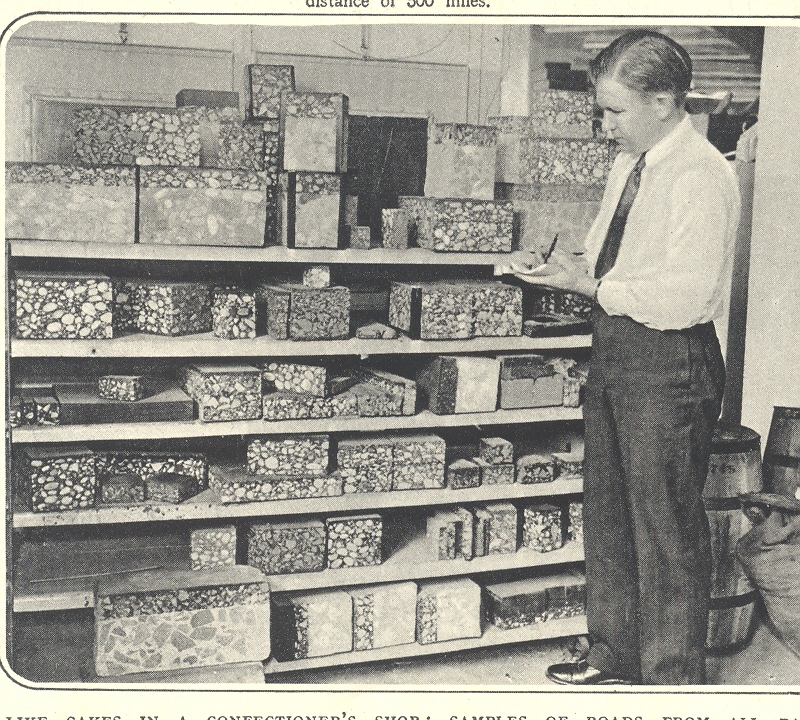
    Road samples

    My collecting bits are simpler: I collect dirt and antiquarian artwork by children, among other simple things.   Also, once upon a time I owned a very large collection of lower gastrointestinal dissections as well as gorgeously prepared wet dissections of salivary glands. 

    And so it was that when I came upon this unusual image in The Illustrated London News for 21 May 1932 I felt a certain tenderness.  This is a picture of a road collection, located somewhere in the U.S.,  and includes shelf upon shelf of cross sections of roads.  They happen to look like cubes of fat to me.  (We’ll leave the bags of eyes story for another time.)  I understand the need  for  such a collection for engineering purposes; I just happened to like the idea (and the picture) of A Road Collection, and have it undisturbed by any explanation or insight.  Just a collection of roads. 


  • Some Famous Military Pigeons

    JF Ptak Science Books  Post 2124 

    Follow Me on Pinterest


    Several years ago I purchased part of an archive of David Katcher, who was the founding editor of the journal Physics Today.
    Before that, several years before that, in 1945, David Katcher was Lt.
    Katcher, serving as a correspondent/writer in the public relations
    office of the U.S. Army Headquarters of the Western Pacific (GHQ
    USAFPAC). There’s a 6-inch stack of paper here with what seems to be his
    (and associated) mimeographed offprints of the daily grind of running
    the PR department of the Army in the Philippines, which, taken as a
    whole, is pretty interesting, showing the concerns and trials of the
    Army in reestablishing the government and infrastructure of the
    country.  Some of the individual reports/publications are stand-alone,
    straight-up fabulously interesting things, and so far as I can
    determine, have not been published anywhere else.  These two examples
    are both related to the subduing of the last remnants of the Japanese
    Army still fighting in the dense nether lands of northern Luzon, the
    Philippines, fighting after the surrender had been made (14 August 1945)
    and  signed (formally, on the USS Missouri, 2 September) , fighting after the war had ended.

    And in all of this comes this unexpected item, dated 1 October 1945, from “Headquarters. United States Army Forces Western Pacific, Public Relations Office, APO 707, General Release 56–Manila” and which–in the midst of the end of the war and the dropping of two atomic weapons–concerns a brave and battle-distinguished and heroic pigeon, “Blackie Halligan”. 

    “Blackie carried a number of messages to this location, one of which was
    extremely important because it gave the location of some 300 Japanese
    troops. He carried out this message despite being badly wounded. Word of
    his accomplishment reached General Patch, Commander of the American
    Division, who made a special trip to the loft where he decorated
    Blackie. Later, Blackie saw action at other islands in the Pacific.”–CECOM Historical Site, U.S. Army, source.

    Sometimes, in the midst of great loss in the throes of great victory, in the balance of stories great and true and tried, the small story of sacrifice may be the perfect antidote for large needs. 

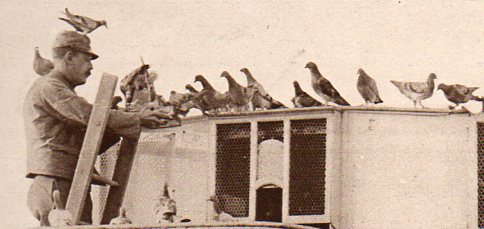
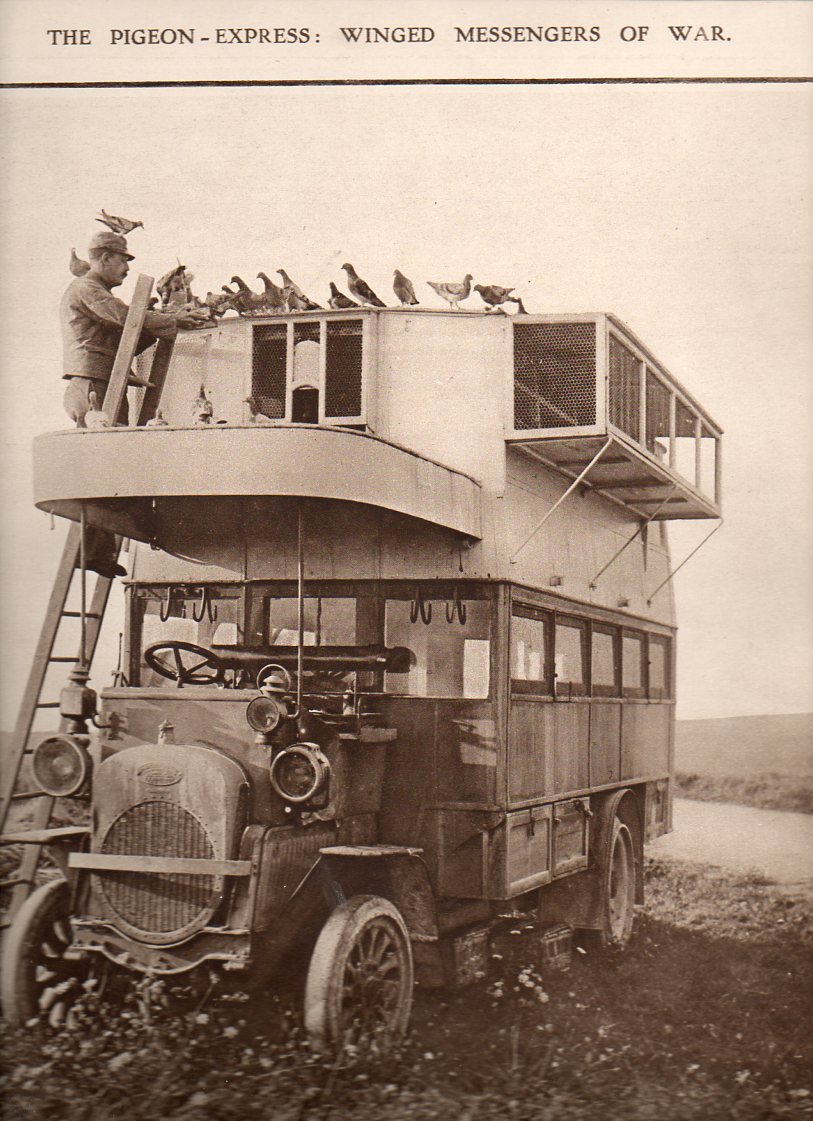
    There is of course a long history to the pigeon in war, and frankly I was surprised to find this story in 1945. Most of the famous pigeons of war come from the First World War:(the image below coming from The Illustrated London News for 2 October 1915):

    WWI--e---pigeon truck det644

    WWI--e---pigeon truck643

    ·Posted by :

    ·in:

    —

  • A Census of “Prefer” in “Bartleby the Scrivener”

    JF Ptak Science Books   Quick Post

    I wonder if Bartleby is more a “structure of words” than was famously said of Molly Bloom?

    The question just came up from Patti about what Bartleby’s classic rejoinder was in Herman Melville’s  (1819–1891) classic noirish “Bartleby, the Scrivener…” (1853)–was it “I would prefer not to” or “I prefer not to”?    

    Instantly I thought the former, but then, well, I wasn’t sure if it wasn’t the later.

    This is one of those instances that shows how magnificent the internet is:  I was able to conduct a quick census of Bartleby’s own spoken variations on this phrase in like ten minutes.  And the results are conclusive but a little complicated.   

    As  pure stand-alone phrases, “I would prefer not to” and “I prefer not” are used three times each.  However, there are variations on this theme, each used only one time by Bartleby:  “I would prefer not”, “I prefer not to”, “I would prefer not to go”, “I would prefer not to make any change”, “I would prefer not to be a little unreasonable”, “I would prefer to be left alone”, “I would prefer not to take a clerkship”, “I would prefer to be doing something else”, “I would prefer not to make any change at all”, and then “I prefer to give no answer” and the fatal “I prefer not to dine”. 

    So.  When comparing the use of “would” in the “not” and “not to” and all of the other extensions on the theme, “would” does come out on top, in general, 12 times to 6. 

    I have no preference for either phrase.


  • Magnificent Mundane Daily: Maps of Shoe-Related of Cow-dom

    JF Ptak Science Books   Quick Post

    And so starts a new series for this blog, a series dedicated to the quiet magnificence of near-nothingness, sublime bits of subtle interest.  It is bold antique regularity that will be surfaced here, stuff that once upon a time was necessary and new, but now has an abstract out-of-context beauty that transcends its earlier commonness. 

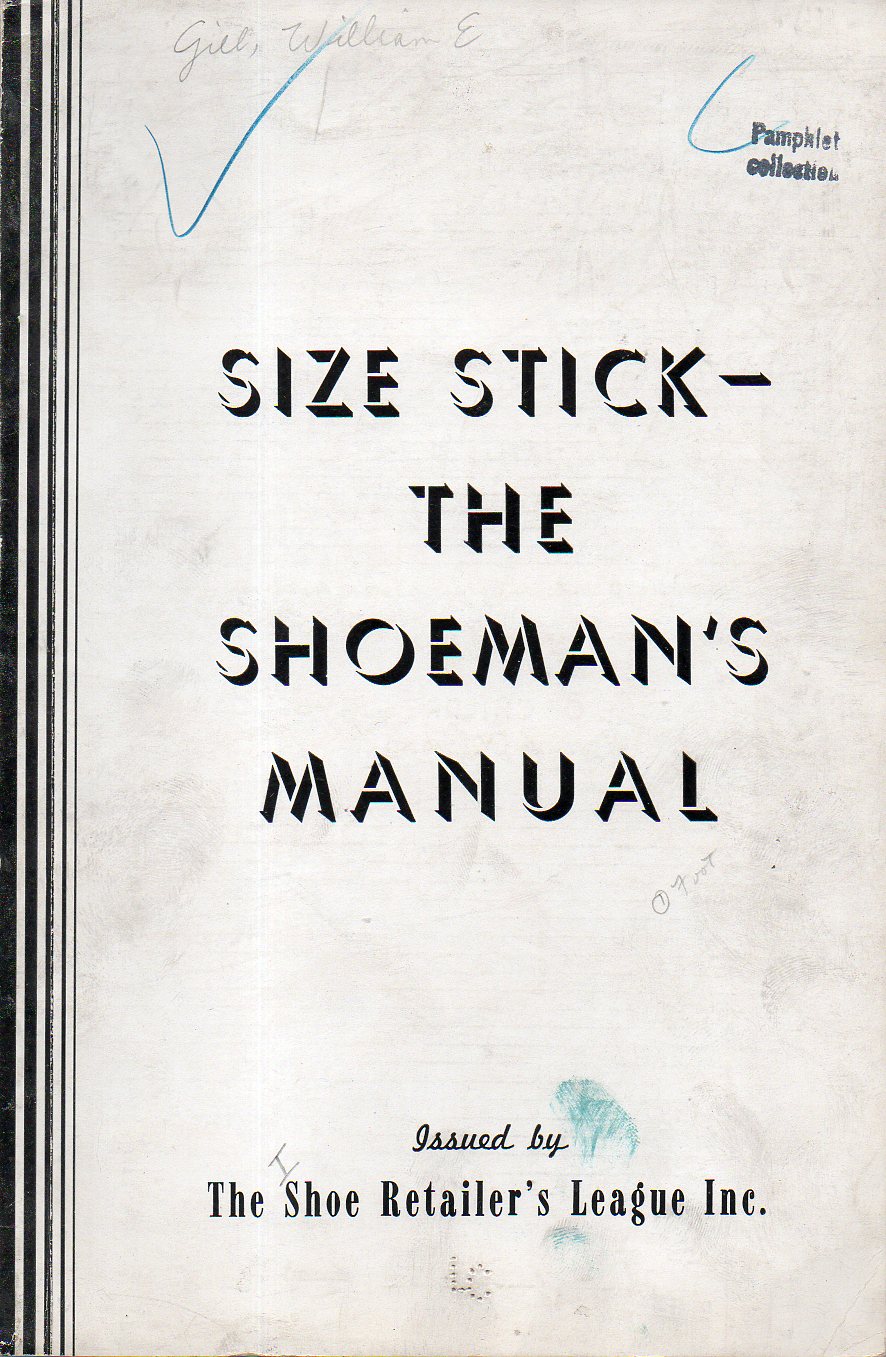
    For example, the unexpected title of this 95-page, well-constructed pamphlet distributed by the Shoe Retailer’s League Inc.:

    Map cow582

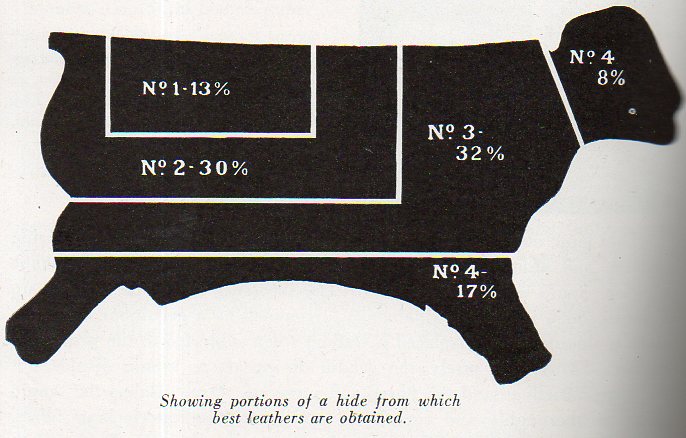
    offers a few unexpected carto-bombs.  In addition to all manner of shoes and shoe salesmanship information there are the following two maps of the applied cowdom:

    Map cow581
    being a map of shoe-useful parts of the cow; and, secondly,

    Map cow580

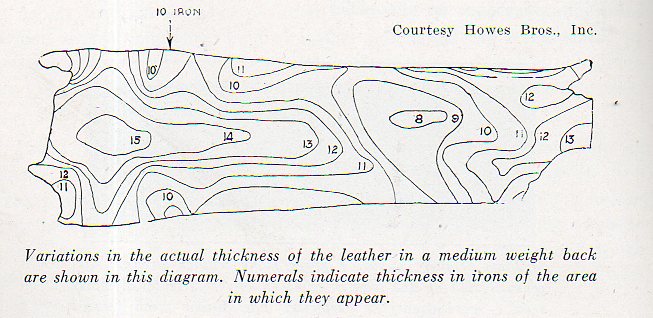
    which portrays a geology of the thickness of the shoe-useful parts ot eh cow and a corollary of the above.

    I’ve never seen either map before.