A Daily History of Holes, Dots, Lines, Science, History, Math, Physics, Art, the Unintentional Absurd, Architecture, Maps, Data Visualization, Blank and Missing Things, and so on. |1.6 million words, 7500 images, 4.9 million hits| Press & appearances in The Times, Le Figaro, Mensa, The Economist, The Guardian, Discovery News, Slate, Le Monde, Sci American Blogs, Le Pont, and many othr places… 5000+ total posts since 2008. Contact johnfptak at gmail dot com

Category: Social History

  • “Whether Slavery was Right or Wrong…” On the Future of the Freed Slaves in the U.S. (Nashville, 1867)

    JF Ptak Science Books  Post 2528–expanded 

    De Bow’s Review in 1867–in the dire straights of the antebellum South, in the doom and despair of the just-finished war–lashed out like a wicked Alex Jones conspiratorial wingnut against the Northern states and anyone who comforted them.  Published in Nashville, all I have of the magazine presently is this loose issue for November 1867, and in spite of the energetically positive view depicted on the cover of the magazine had little to do with what you found in the writing inside.  
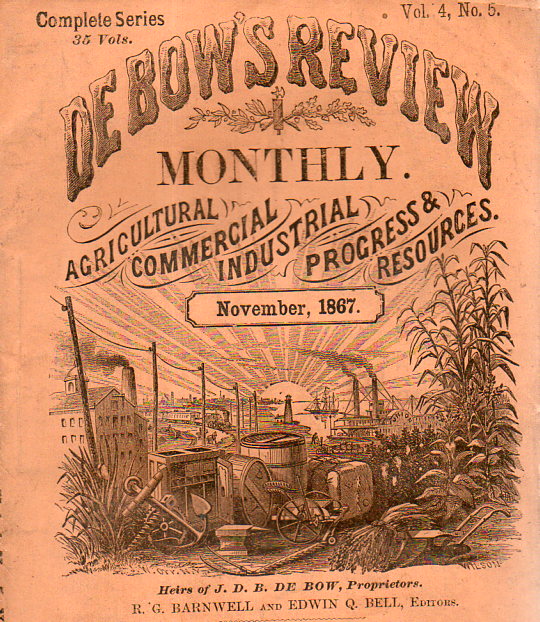
    De Bow175

    The leading article is an odd one, yelling about Great Britain manufacturing the cause of anti-slavery in the United States, which pretty much is made abundantly clear in the title,  “Black Republicanism, the Dupe and Agent of British Policy in Respect to American Interests”. The “scheme of so-called Negro Emancipation…is a British Invention” crushing the U.S. which “suffered immeasurably” under the Abolition Program, “the fatal deadfall of the abolition trap“, all of which in the end will “crush the innards out of the “Black Republican Yankee”.  It was the Brits according to the writer of this article who FORCED THE UNITED STATES TO ABOLISH SLAVERY” [caps in the original]. 
    ·Posted by :

    ·in:

    —

  • Presidential Yard Sale/Give (1913)

    JF Ptak Science Books  Quick Post

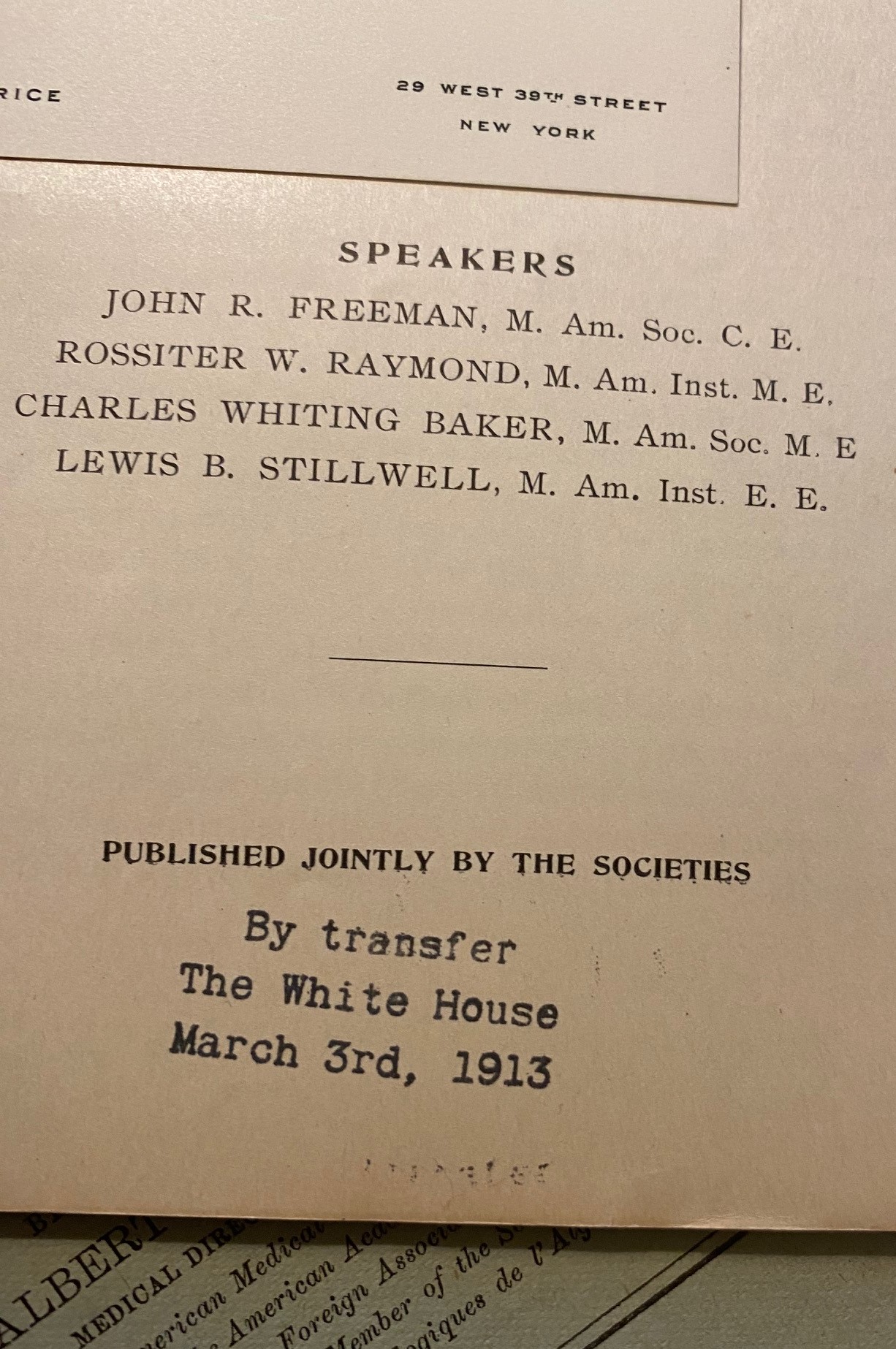
    IMG_2421 (1)This is just a small and short post about an unusual bit/bob from the White House. William Howard Taft to me was Mr. In-Between: he was the president between Roosevelt and Wilson, and he was in there about in between half the bad-ish and half the good-ish presidents, squarely in the middle, I think. He was also Chief Justice of the U.S. Supreme Court, where he was probably a better justice than he was a president, which would put him among the accomplished of his brethren. I remember him mostly for wanting to try to hang on to his chief justice role at least until Herbert Hoover was out of office–he found Hoover to be too liberal for his tastes, memorably referring to the not-Liberal president as “Bolsheviskii”, which has a certain “wow” factor to it. But what I’m drawing your attention to is the pamphlet Conservation of Natural resources–Meeting of Engineers, printed in 1909. The interesting part is that this was transferred out of the White House library on March 3, 1913, Taft’s last full day in office, which makes it sound as though there was a bit of shelf cleaning going on right to the bitter end before Wilson came in, making this a curious tiny bit of ephemera.

    ·Posted by :

    ·in:

    —

  • Capitalism as the Destroyer of Youth

    JF Ptak Science Books  Quick Post

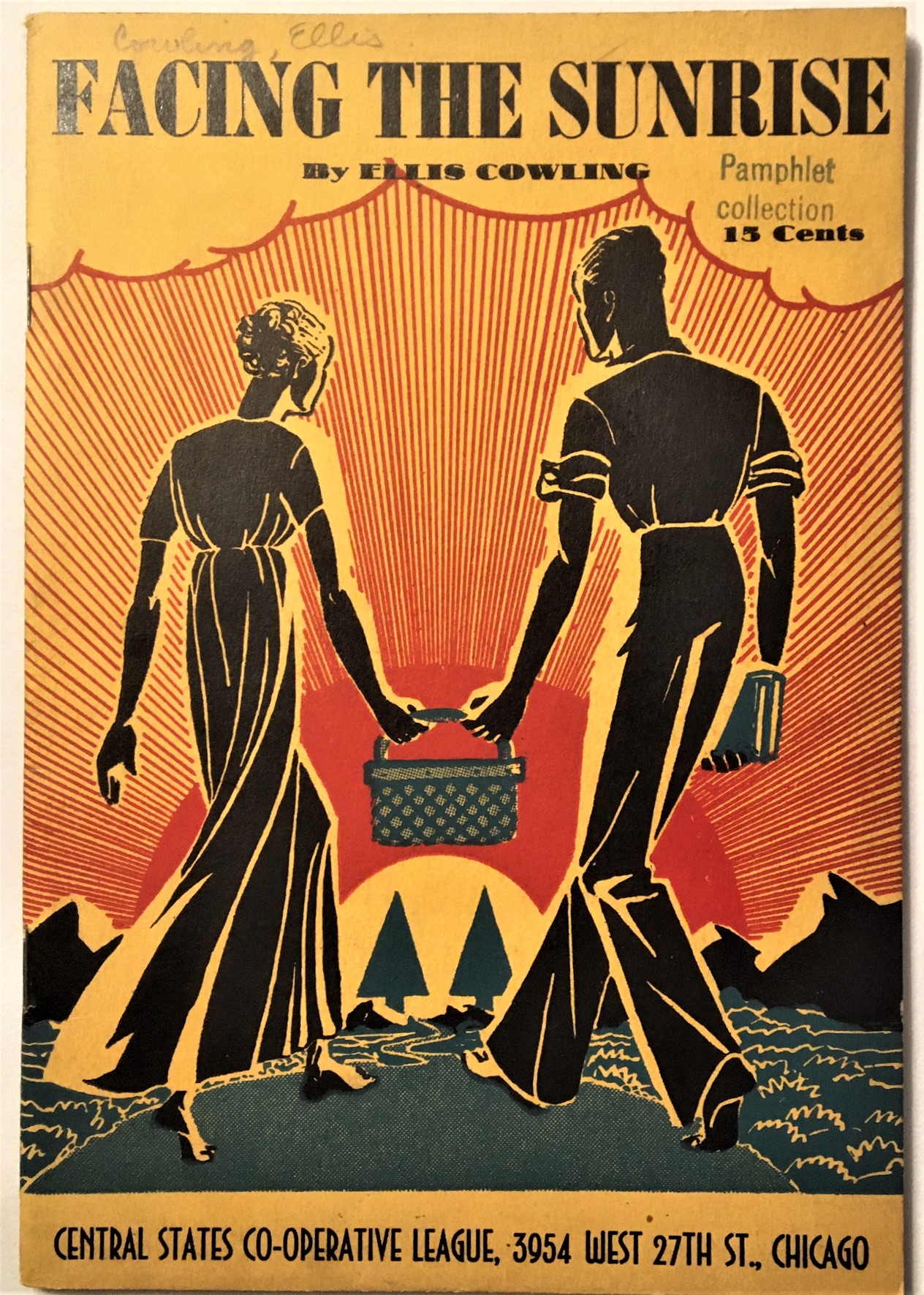
    I just couldn’t resist sharing the cover design for this 1937 pamphlet, as Dick and Jane walk into the purifying light of an atomic sunset.  Well, not quite that, as they were walking the other way into the Purity-of-Essence of a Communist/Cooperative deep red sunrise:

    IMG_2039

    The Cooperative Movement indicts Capitalism for the first half of the pamphlet:

    • Education: “capitalism is robbing youth both of its chances for education…”
    • Romance: “With other things it wrecks, Capitalism is wrecking marriage and home life”. 
    • Good Time: “Modern civilization is not  giving youth what it wants”. 
    • Art: “…increasing insecurity of our times simply means that youth’s chances of being artistically creative are growing less and less”.
    • “Profit system”: “Youth facing life under capitalism does not have a very cheerful outlook”.

    On the other end of the equation, the Cooperative movement promised abundance, increases employment, makes romance and good time possible, encourages creative effort, and advances practical Christianity.  It was 1937, and the Great Depression had its downs and ups but mostly down, deep into 1937/8/9, and people were looking for solutions everywhere. The New Deal may have been part of that, though by 1937 it was mostly being taken off-the-books, and there were plenty of conservative and more-rightist Republicans and Dixiecrats who thought of the FDR acronymic programs as just this side of Socialism–which is all fine and good, though those guys should also remember that FDR did more to save Capitalism than just about anyone in this country, ever. So: yin-yang.


  • When the New Deal of FDR Was Just Another Capitalist Ploy (1934)

    JF Ptak Science Books  Quick Post

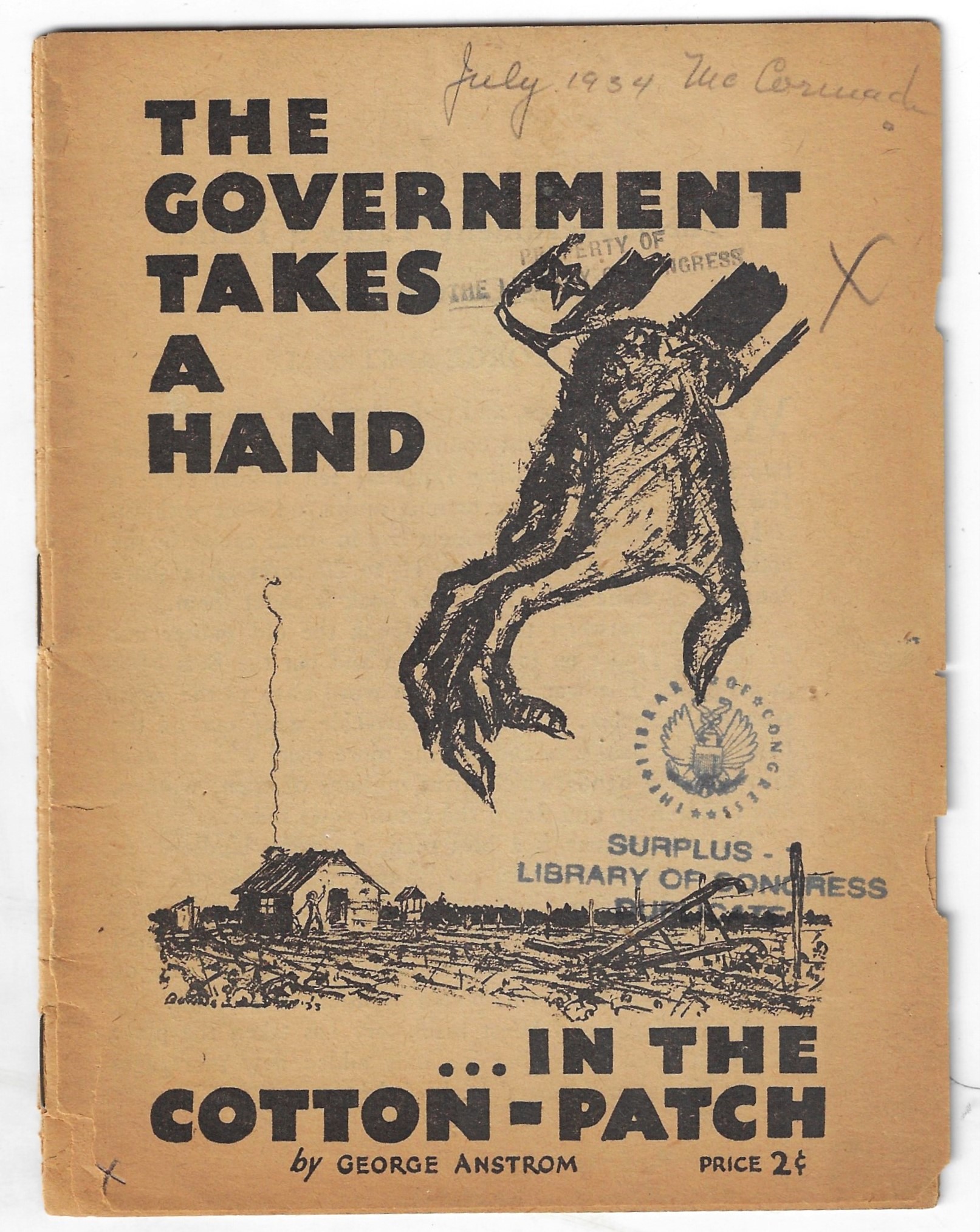
    Harold Ware, 1889-1935, son of activist and Communist Ella Reeve Bloor, early member of what would be the Communist Party of the United States and suspected spy for the USSR, gave Franklin Roosevelt a very grabby and animalistic (in the bad sense of the word) hand for attacking/taking the goods of the poor working class…amidst much else. This occurs on the cover of his 1934 pamphlet–sold for 2 cents and written “George Anstrom”–The Government Takes a Hand, which was an indictment of the enforcement of class and racial conflict in the working classes of the United State. In particular Ware takes aim at the cotton workers and their plight. I’ve included some of what he wrote (below) as there’s a lot of it that makes pretty good sense, and much of it which is correct. He does however take a dim view of the New Deal  and of the agricultural relief action of 1933/4, which Ware maintained was the theft of what little belonged to cotton workers.  In any event, here’s a sampling from Ware’s work:: 

    Cotton-patch“The Wall of Race Prejudice Set Up by the Bosses

    Across narrow country roads white tenants and croppers see Negro neighbors pulling cotton like themselves. But more than that road separates them. Between them rises an invisible wall——the barrier of race prejudice-—deliberately set up by the boss class and its government agencies. That wall is built of fairy tales of white supremacy to keep the white toilers from uniting with the Negro masses against their common exploiters. From the cradle to the grave the poorest white child is taught to look down on, hate and fear his Negro neighbors.”

    “Any sign of protest from Negroes is met with instant terror. Boss inspired Ku Klux Klan raids and lynching parties are the order of the day. The Negro share croppers of Camp Hill, Alabama, organized and fought back against a lynch gang in 1931. They won their demands through organized struggle. But the bosses create a general scare of “Negro rebellion” to justify their chain gangs and other forms of suppression.”

    ·Posted by :

    ·in:


  • A Group Photo of “Dope Fiends”, 1939.

    JF Ptak Science Books   Post 2892

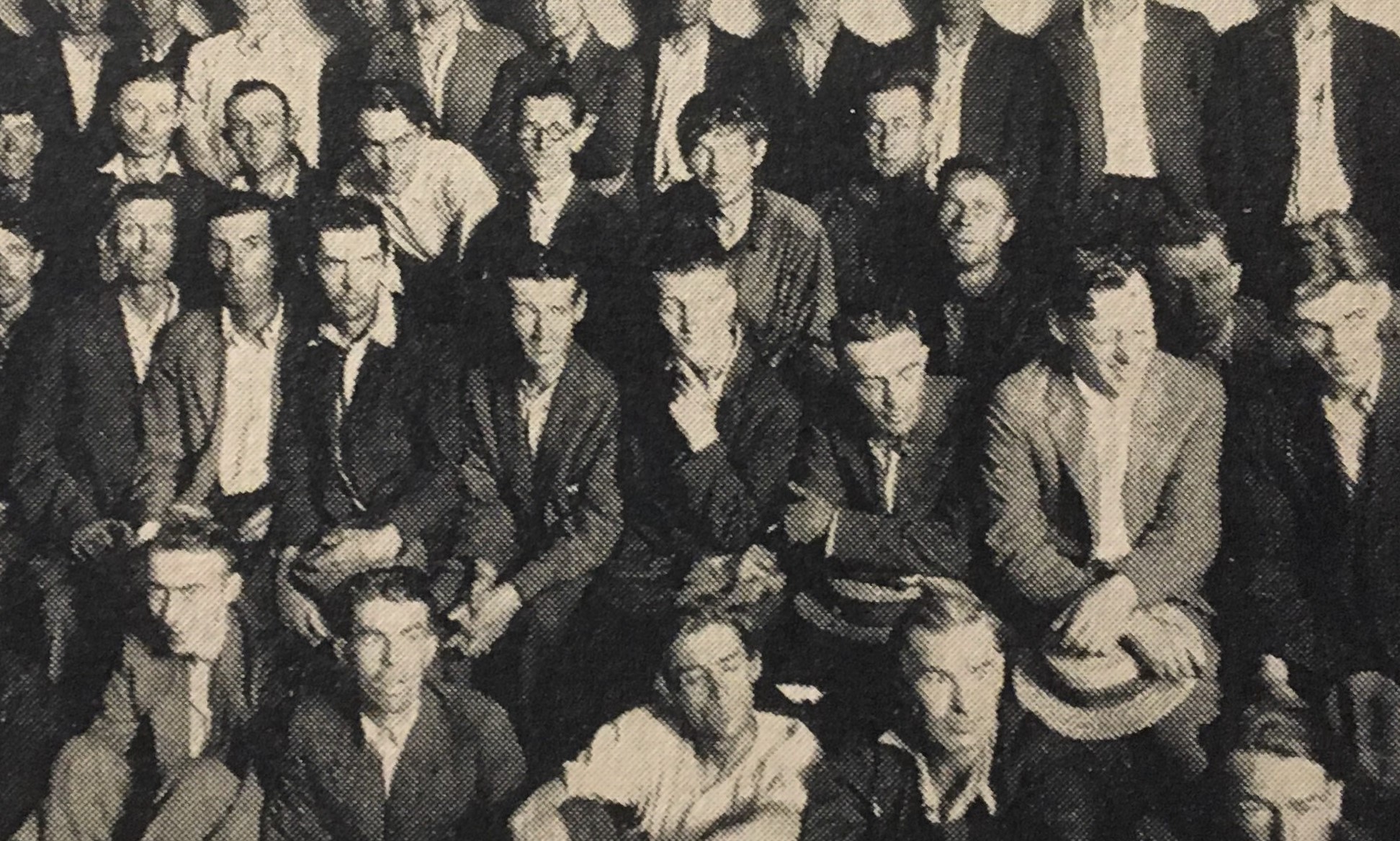
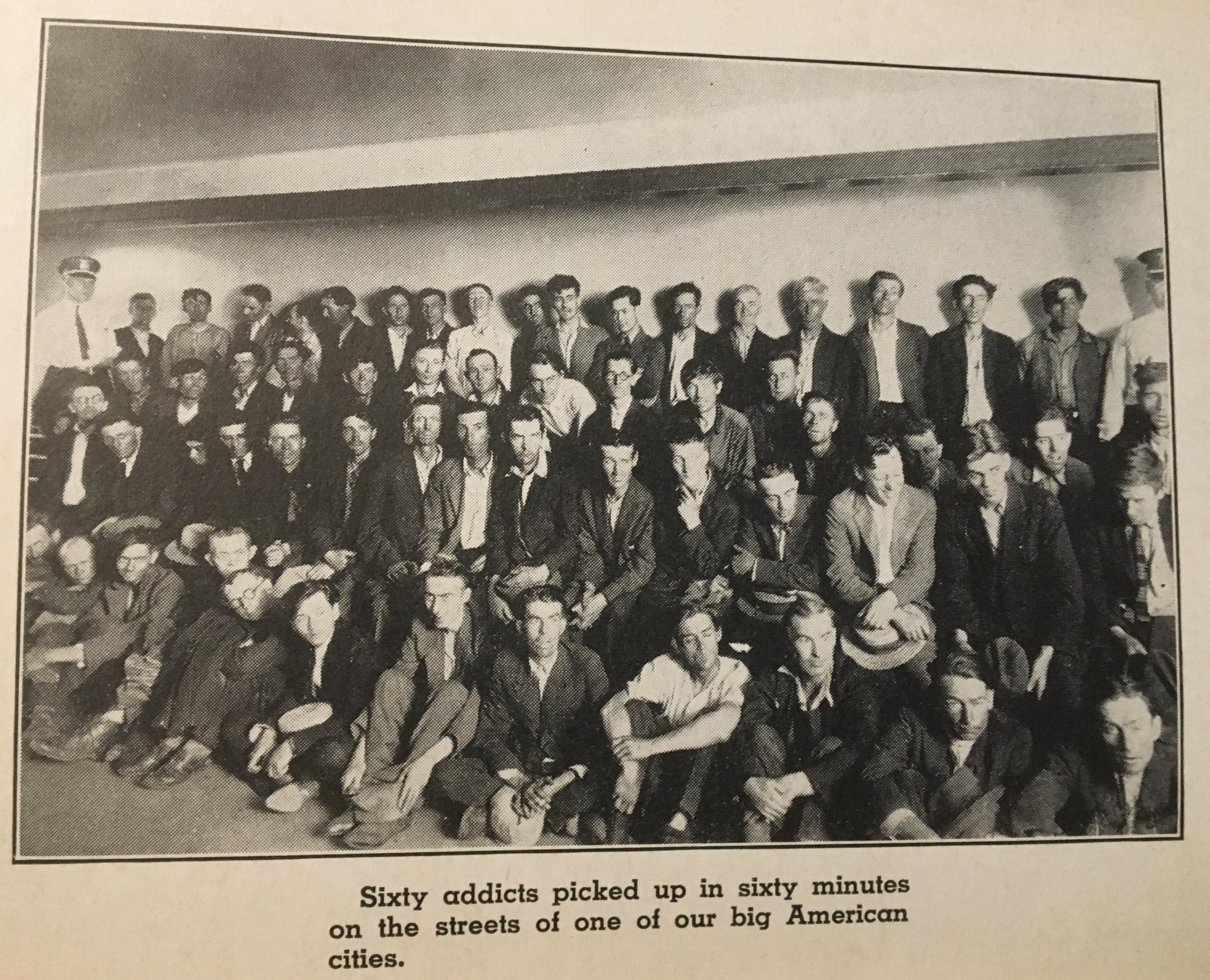
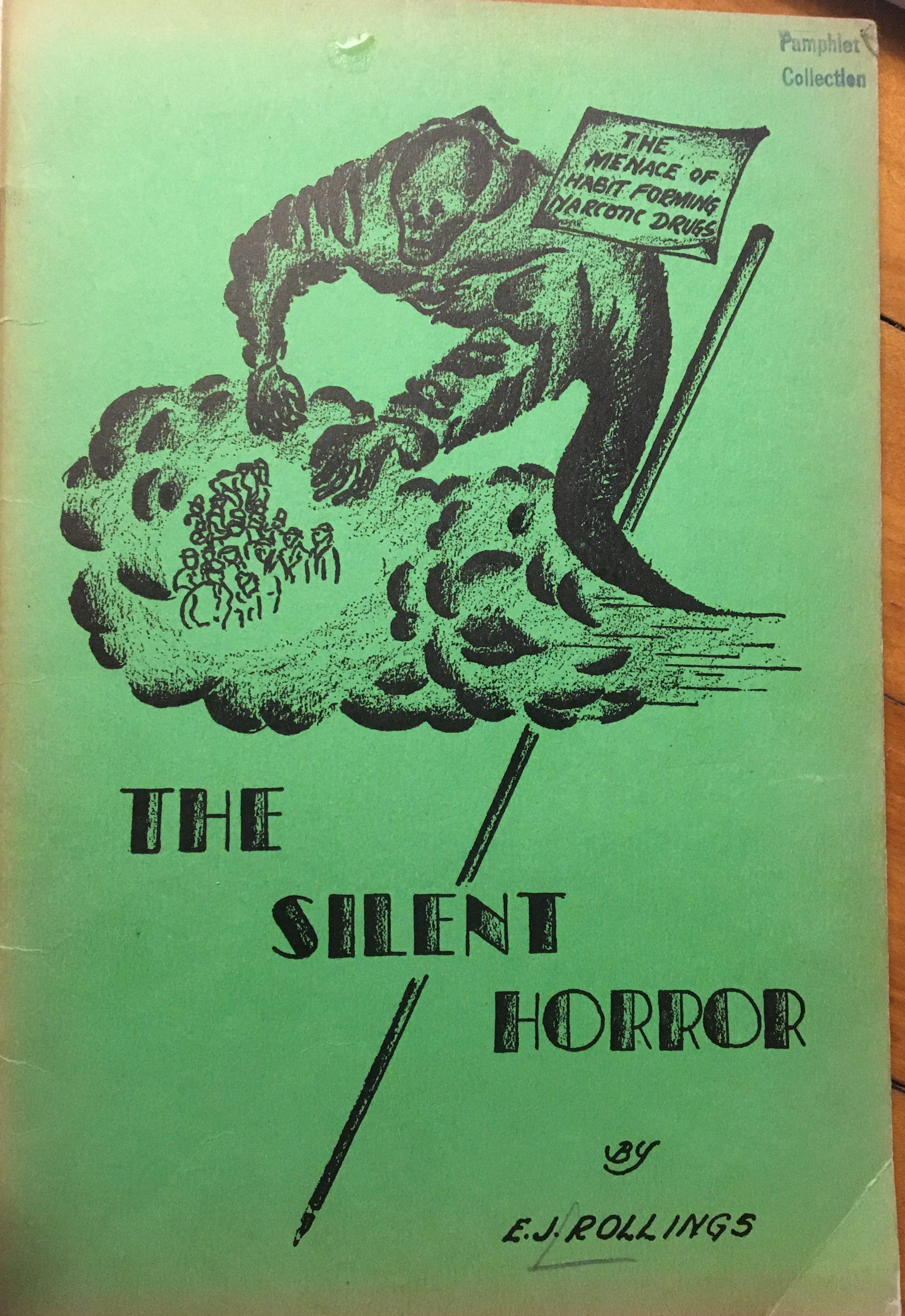
    This Ken-Burns-Moment is brought to you by an interesting and unusual photo of Big City drug addicts. “60 addicts picked up in 60 minutes” bloats the caption in Elmer James Rolling screechy pamphlet called  The Silent Horror.1 There’s a wide variety of emotion going on here in this group of 60 men, and not much of that seems to sense trouble or jail. Some of the folks look to be downright jovial, making the best of a difficult situation (assuming they knew what was going on):

    IMG_2036

    IMG_2038It turns out that as loud and unreferenced and populist this work was, or is, there are very few copies of it that made it into its future from 1939. (As a matter of record I couldn’t find another copy of the thing in the stupendous WorldCat.) It was published by the Defender Press in Wichita, Kansas, which at the time had over 100,000 residents, some of whom you would have expected to buy this pamphlet–since it has some amount of scream-preaching going on in its pages, I’d figure that it had some street appeal, though none of that interest meant enough to anyone to put a copy in a library, somewhere. 

    Rollings contributed at least four other narcotics-related works (“Your Girl or My Boy May be Next”, “Marijuana—the Weed of Woe”, “Junk, Junk Peddler and Junkers”, “Perils of the Poppy” and “I Saw Him Die”. There were a few other short works non-drug-related, including something on cowboy songs and also a book on bible prophesy.  

    Rollings’ major headings deal with the shades and players of narcotics: “Opium, the King of Dope”; “Crown Prince, Morphine”; “Cocaine, the Princess of Perdition”; “Marijuana, the Dutchess of Despair”; and the “Dope Peddlers and Addicts” round out this polemic.

    Here’s an excerpt from the book to give you an idea of what was going on in its pages:

    IMG_2037 (1)“An eighteen-year-old boy in a Midwestern city smoked two “reefers” and an hour later choked his sweetheart to death because she refused his shocking, lustful advances, born in a marijuana-crazed brain… A sixteen-year-old boy shot his mother and father to death with his father’s shotgun after smoking several “Mary Anns” given to him by a new friend whose acquaintance he made by chance. He could neither explain nor remember the killing when the effects of the drug had worn off and sobbed himself into hysterical grief when told of his crime. And so, on and on, runs the record of thievery, forgery, banditry, kidnapping, brutal murder, degeneracy, and rape, all chargeable to this paralyzer of conscience and inflamer of depravity — Marijuana! “

    And so, there’s the deal on this pamphlet–still the most interesting aspect of it to me is that one addict photo…

    Notes.

    1. Published in Wichita, Kansas by the Defender Press, 1939. 8.5”x 5.5”, 45pp. Cover art plus four photos. Green wrappers. Provenance: Library of Congress, with their surplus stamp on rear wrapper and a tiny “Pamphlet Collection” on front cover.

    ·Posted by :

    ·in:

    —

  • A Sociological Map Made for and by Hoboes (1870)

    JF Ptak Science Books   (An earlier post, expanded)

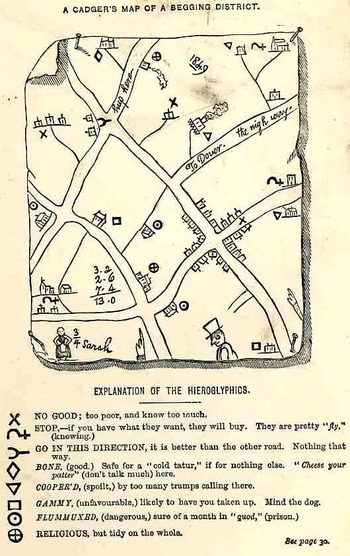
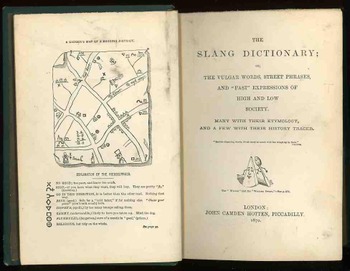
    Hobo mapThis is the frontispiece to the delightful work with the luscious title of The Slang Dictionary; or, the Vulgar Words, Street Phrases and Fast Expression of High and Low Society… printed in London by John Camden Hotten, in 1870.  It is a hobo or “cadger” (“a  mean or vulgar fellow who would rather live on other people than work for himself”)  map (or the map of “a tribe of vagabonds”) of Maidstone, in Kent, drawn by a “screever” (a sidewalk chalk artist who normally would draw religious images for money), and showing the various chalked and etched signs that the hoboes (“and other mendicant marks”)  would leave for one another, being a key to the town, for what was practicable, safe, dangerous, and the like.

    Recorded antiquarian hobo and tramp symbols like these are really quite rare, given their ephemeral nature to begin with; of course the need to record these obscure signs by polite society was not on a high order.  There are many indications that signs such as these existed, but not many illustrations.  For example in the book The Triumph of Wit; or, Ingenuity Display’d in its Perfection, edited by John Shirley. (1724), as well as works by Holyland and Borrow there is a description of English gypsies and their travels, and a short description of their use of boughs and sticks, set out for each other, so that a duplication of effort by different bands or families would not occur.

    (The figure of the woman, wonderfully named “3/4 Sarah”, probably connects this Sarah to a sort of popular dance.)Bloghobo_a199_2

    Hotten also published the following interesting and title-bending work in 1874:  THE ORIGINAL LISTS OF PERSONS OF QUALITY;  EMIGRANTS; RELIGIOUS EXILES; POLITICAL REBELS; SERVING MEN SOLD FOR A TERM OF YEARS; APPRENTICES; CHILDREN STOLEN; MAIDES PRESSED; AND OTHERS WHO WENT FROM GREAT BRITAIN TO THE  AMERICAN PLANTATIONS 1600-1700, WITH THEIR AGES, THE LOCALITIES WHERE THEY FORMERLY LIVED IN THE MOTHER COUNTRY, THE NAMES OF THE SHIPS IN WHICH THEY EMBARKED, AND OTHER INTERESTING PARTICULARS.


  • “Why Bother About the Government?” (1932)

    JF Ptak Science Books   Quick Post    

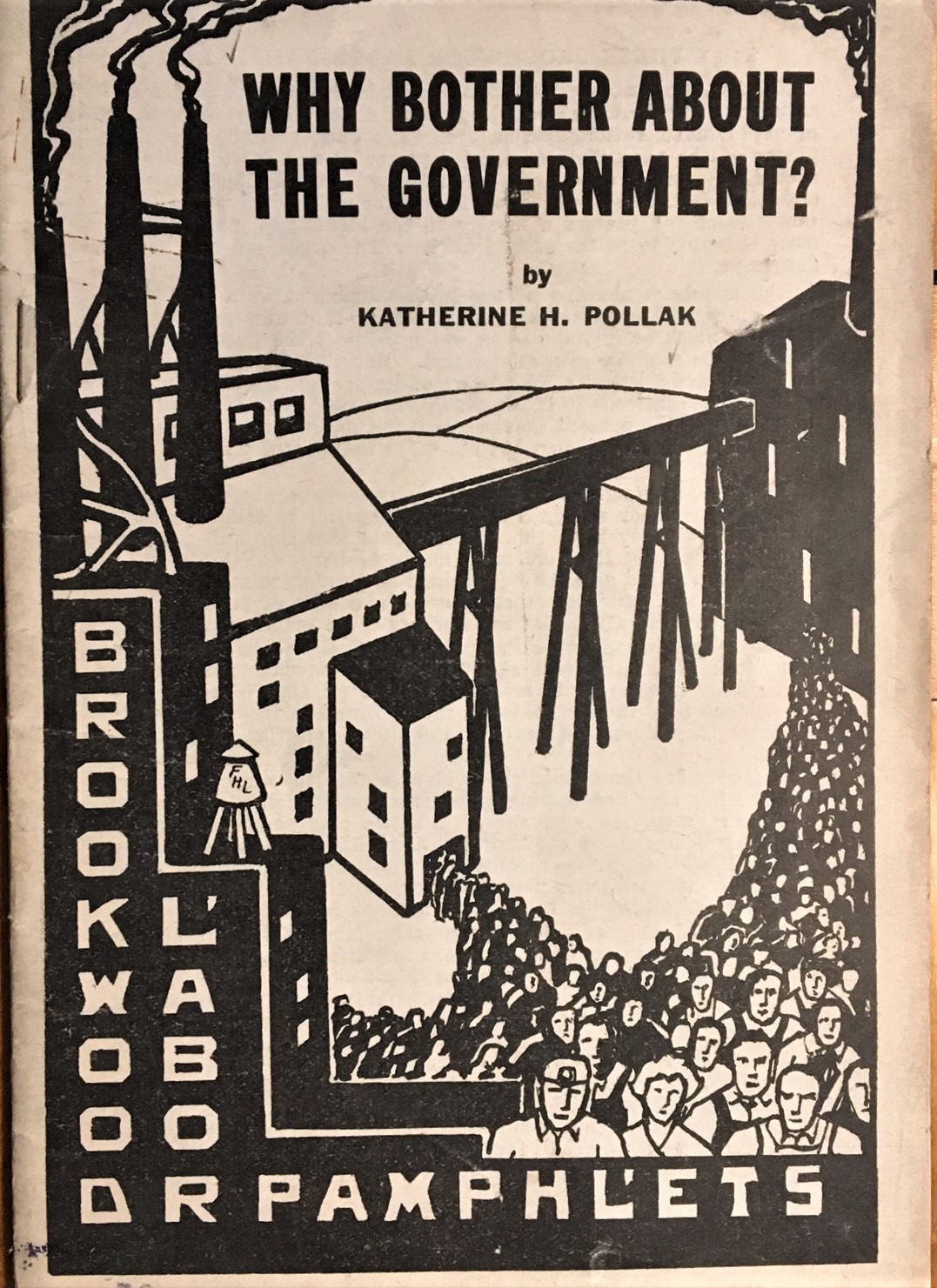
    Why Bother _1_Katherine Pollack’s 1932 Why Bother About the Government, the third installment of the Leftist Brookwood1 Labor College pamphlet series, is a bit of a Socratic polemic about the problems and advantages of government, owners of the means of production, workers, and labor organizers…coming down firmly in the square of very-pro forces of organized labor.

    Offhand I am not finding anything about Katherine (Heilprin) Pollack2, though there is quite a bit about Brookwood (see below for an intro) and its captain, A.J. Muste.

    Also I can’t find much about the cartoonist whose work attracted me to this pamphlet to begin with, Herbert Heasley, though his work has a certain 1930’s feel to it.  I’ve included his three drawings, below. 

    Why Bother _3_

    ·Posted by :

    ·in:


  • Public Humor Displayed: London Signboards (1866)

    JF Ptak Science Books   Post 2883

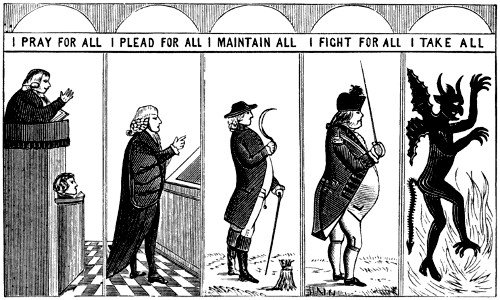
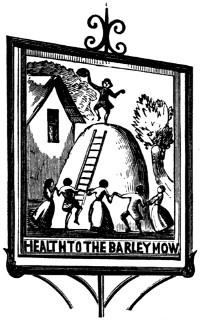
    What is the first stop for looking at—hold on to your seat!–socio-descriptive stationary public humor? I do not know, though I have found an example of the history of such a thing in a book written by the author of which I wrote about on this blog earlier (in post 2882) named John Camden Hotten, who contributed a fine effort in the history of cant and slang. All I’m really talking about here are intentionally funny signs, advertisements and store/shop/business signs that identify what goods/services are offered, or the name of an establishment, that sort, but in there is another story of humor and sarcasm in the display of the name—sometimes it is the name itself but it seems mostly that the funny part of it all are the parable-like qualities of the elements that visualize the name. Hotten’s contribution to this genre of humor is a wonderful catalog called The History of Signboards, from the Earliest Times to the Present Day (1866), which is, at it states, a history of advertising and shop signs, some of which are lovely, some are bizarre, many are funny,  all of which make this book an irresistible browse.

    Signboards 4

    Signboards _6_

    Here are a few examples of the legends of such signs:

    Barber:

    “I devote my razors to all faces,
    And defy the criticism of faithful mirrors.”

    Public Houses:

    “You gentlemen, and yeomen good,

    Come in and drink with Robin Hood.

    If Robin Hood be not at home,Come in and drink with Little John.”


    And:

    “Your head cool,Your feet warm,

    But a glass of good gin Would do you no harm.”

    An inn:

    “Stay, Traveller, a while and view

    One that has travelled more than you,

    Quite round the Globe in each Degree,

    Anson and I have plow’d the Sea;

    Torrid and Frigid Zones have pass’d,

    And safe ashore arriv’d at last.I

    n Ease and Dignity appear He—in the House of Lords, I—here.”

    Hotten has hundreds and hundreds of examples, and he tells the story in an odd manner, with a lilt of an 18th century antiquarian more so than a Victorian. Here’s the link for the full text with illustrations available at Project Gutenberg, and I do recommend even just a quick browse, as there is only so much I can do in a one-hour post like this. 

    ·Posted by :

    ·in:

    —

  • On the Souls of Toys (1892)

    JF Ptak Science Books  (Expanded earlier post)

    Fact:  toys have souls.  Or, if we can establish that in this case a “fact” can be so identified, then a “fact” this must be.

    Toys 6 det325
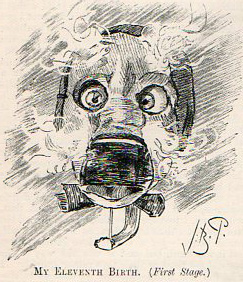
    I’ve stumbled onto a remarkable short story in Punch’s Almanack for 1892 (as part of Punch, or the London Charivari) called “The Evolution of a Toy Soul, or Nursery Karma”.  This piece establishes that toys have souls, that they have an inner, thinking, emotional existence which is capable of Karma and reincarnation, a life of their own–lives of their own. Cognizant, penetrative, analytical.  And a toy.

    The story is told partially in the first person, in the voice of a toy who recounts its long series of births and rebirths–eleven (so far) in all–and its (his or her’s) long experiences.  And this all more than a hundred years before Toy Story.  I don’t know this literature very well, not really, but so far I have not found other “toys have souls” stories, nor have I been able to find out anything about this particular toy story, with searches done in JSTOR and Google and a host of other repositories turning up nothing at all.  Its a puzzling thing, really, because it is a wonderful story.

    In a brief summary, our toy soul starts out it life (“my first birth”) as a rubber ball (“the body in which I first became conscious of my existence”).  The toy soul figures too that it must be its first body, because there is no lower entry point in toydom, except, as is noted, for a brick, which happens to be not-really-a-toy. 

    “My Second Birth” find the toy soul returned to the nursery as a Ninepin, a Ninepin King, who lives part of its life in the hands of a (“quite mad”) human child who dresses the Ninepin in dolls clothes and fabric.

    “My Third Birth”:  “the law of Karma has mysteries which are hid even from the initiated, and I am still at a loss to explain how it came about that I was next incorporated in an Organ Top”, which was basically a spinning top that produced a melody of some sort.

    “My Fourth Birth”:  “I was advanced at a bound” in Karmic hierarchy by being held in the form of a fur monkey with bead teeth and glass eyes.  Here our toy soul has a recollection of its earlier self as a musical top, as it leaves with the monkey a “chronic melancholy”, who takes care (as it were) of a sick girl for a long period of time, and then in the end is given over to a careless boy, and ends up burning in a fireplace.


  • A Sympathetic Pamphlet on the Plight of U.S. Japanese, 1944.

    JF Ptak Science Books   Post 2880

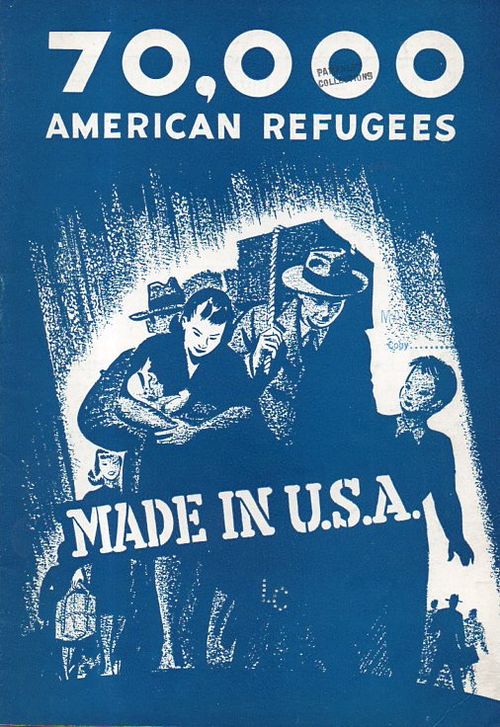
    70 000 JapaneseThis pamphlet, 70,000 American Refugees, Made in U.S.A., by Truman  B. Douglass1, was a sympathetic appeal to the deeply grave situation legislated to 140,000 Americans. They were Americans of Japanese descent, many of them U.S. citizens, who by Executive Order 9066  were ordered to stand down from their lives for the sake of national security and be removed to distant and remote internment/concentration camps  in May 1942, mostly for the duration of the war.  There weren’t that many appeals for the primacy of the rights of these people at this time–the war for the United States was newly begun via the Japanese attack on Pearl Harbor five months earlier–and the understanding was to protect the security of the country via the segregation and housing of what were seen to be the potential enemies in the existing Japanese-American population living on the U.S. west coast.

     Franklin Roosevelt’s  February 1942 Executive Order 9066 (issued 19 February 1942) to imprison more than 140,000 Americans (70,000 of whom were U.S. citizens, including children) for the duration of the war was the legal bombshell that gave the War Department the authority to authorize the removal of the Japanese  to theoretically prevent those people from engaging in sub rosa and fifth column activities and wartime terrorists fighting for Imperial Japan.

    Given that this pamphlet was in it third edition just a few months past its first appearance in October 1944 says that there was at least some interest in this political/moral anti-Executive Order 90662 position, though how much of that is from a popular groundswell of support it is not possible to say. (Also “edition” could mean “printing”, and the print run may have only been a few thousand at a time). That said I imagine that the print runs of this pamphlet were rather small given that there are only ten copies of all three editions in the collections of libraries worldwide.  And since there are many collections that should have this pamphlet but don’t–copies are found in California State University Northridge, California State Irvine, Yale, Wisconsin Historical, Cornell, Berkeley, Davis, Huntington, according to WorldCat–and no copies seem to pop into the rare book market very often at all, I suspect that not many copies were printed per edition, which means that there was a repetitive demand for the pamphlet that exhausted small print runs, which means maybe there were 2000 copies printed…not exactly “groundswell” support for what was an unpopular position).  

    The story of the removal and control of the American Japanese population is complex and deep and has been addressed in many places in print and online (and even on this blog several times), and it is not my intent to address that issue in this post.  I want to highlight what must have been a largely high-minority and mostly lonely voice of consideration and caution

    Full text available via the California Digital Library. 

    Notes:
    1.  The printing and publication information for the pamphlet:  “The Citizens Committee for Resettlement, 6501 Wydown Blvd., St. Louis 5, Missouri, 25 cents. May also be ordered separately at cost indicated. Reduced price in quantities. Community Preparation for Resettlement of Japanese Americans, published by The Committee on Resettlement of Japanese Americans, The Federal Council of Churches”.  

    ·Posted by :

    ·in:

    —