A Daily History of Holes, Dots, Lines, Science, History, Math, Physics, Art, the Unintentional Absurd, Architecture, Maps, Data Visualization, Blank and Missing Things, and so on. |1.6 million words, 7500 images, 4.9 million hits| Press & appearances in The Times, Le Figaro, Mensa, The Economist, The Guardian, Discovery News, Slate, Le Monde, Sci American Blogs, Le Pont, and many othr places… 5000+ total posts since 2008.

Category: Social History

  • “Why Bother About the Government?” (1932)

    JF Ptak Science Books   Quick Post    

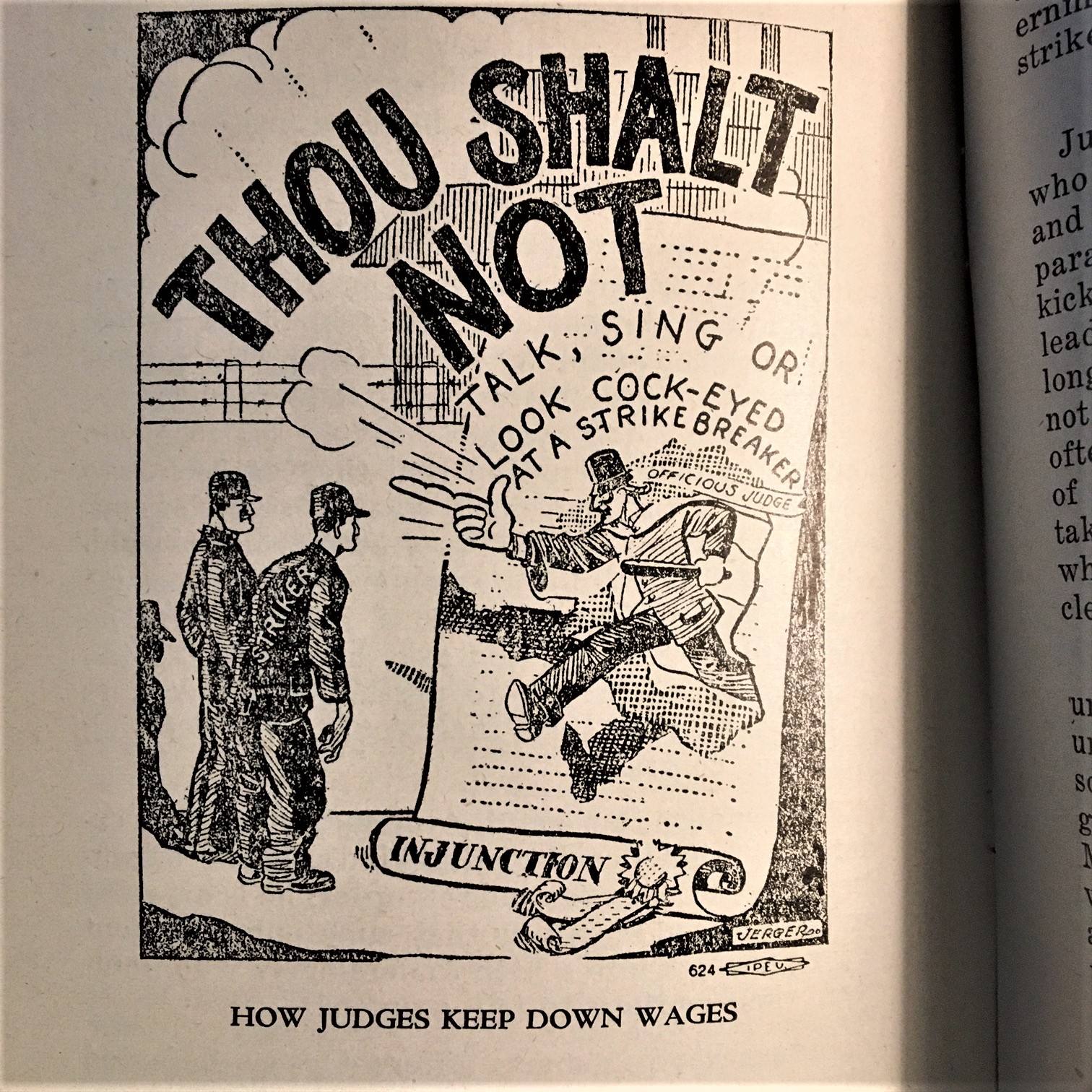
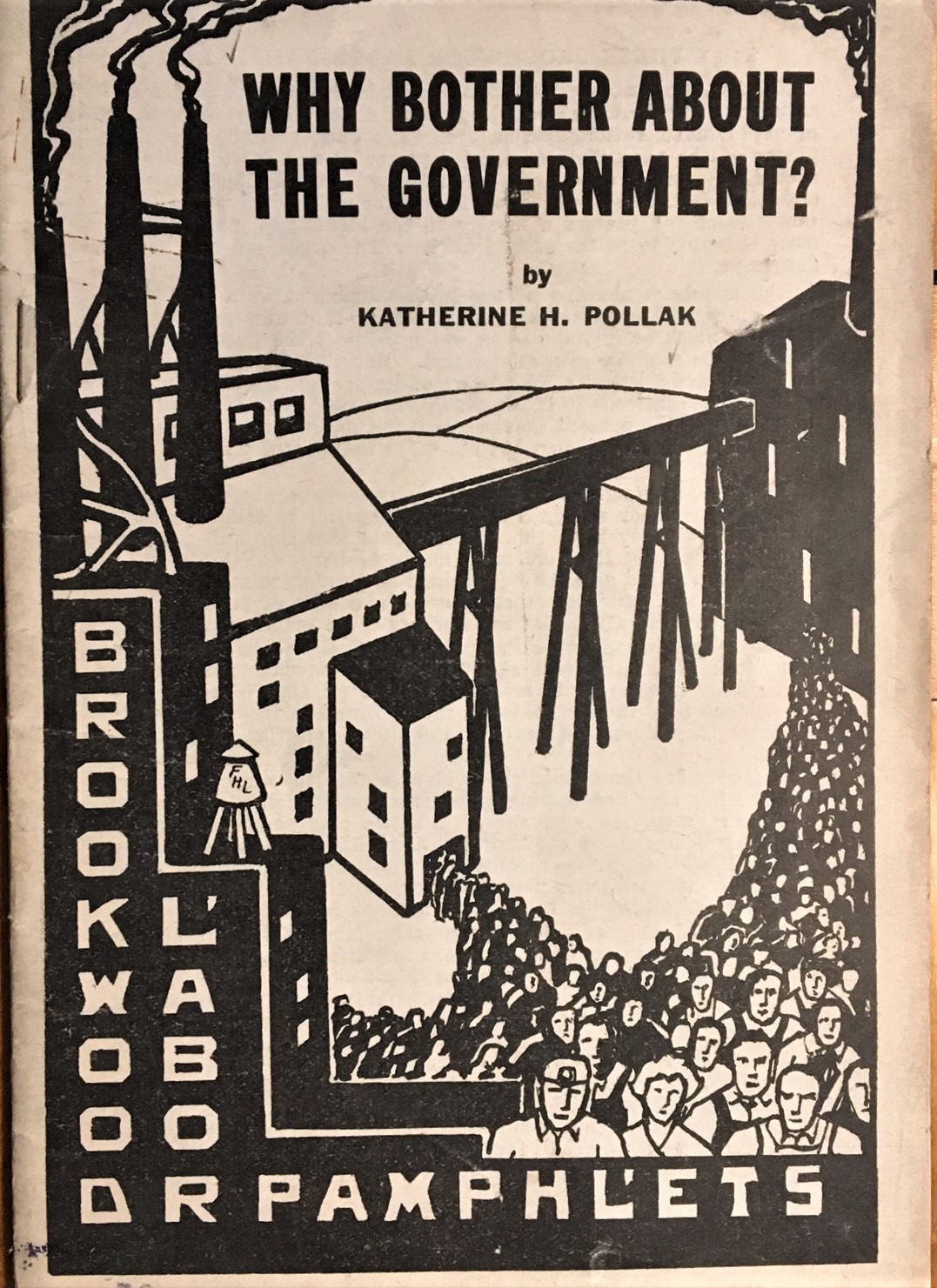
    Why Bother _1_Katherine Pollack’s 1932 Why Bother About the Government, the third installment of the Leftist Brookwood1 Labor College pamphlet series, is a bit of a Socratic polemic about the problems and advantages of government, owners of the means of production, workers, and labor organizers…coming down firmly in the square of very-pro forces of organized labor.

    Offhand I am not finding anything about Katherine (Heilprin) Pollack2, though there is quite a bit about Brookwood (see below for an intro) and its captain, A.J. Muste.

    Also I can’t find much about the cartoonist whose work attracted me to this pamphlet to begin with, Herbert Heasley, though his work has a certain 1930’s feel to it.  I’ve included his three drawings, below. 

    Why Bother _3_

    ·Posted by :

    ·in:


  • FDR and the Three Stooges: Presidents in Movies and Movies as Presidents.

    JF Ptak Science Books  (The First Entry in the Department of Two Eric/Eriks)

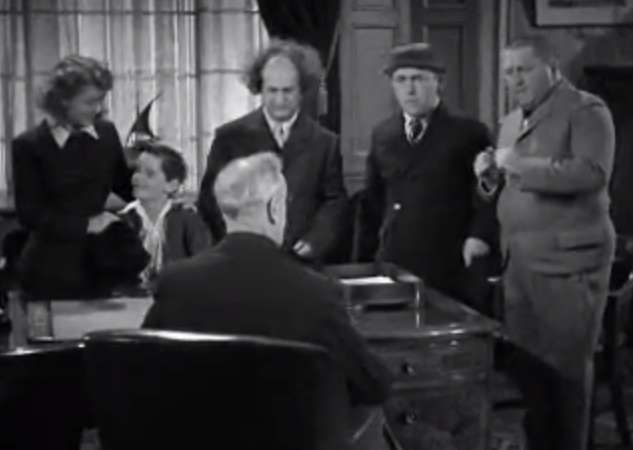
    My polymathic friend Eric Sacharaow clued me into a wonderful image in the history of motion pictures: an encounter between The Three Stooges and Franklin Roosevelt. It occurs at the end of a movie short The Boys made in 1937 (which was evidently shot in four days) called Cash and Carry, in which (after hijinx [is this a Scrabble word?]) they pursue a hidden treasure to fund a crippled boy’s operation and wind up tunneling into a federal gold vault. They are caught, other stuff happens, and then they are in the Oval Office (for some reason located in the U.S. Capitol building), where they wind up being heroes of some sort. They appear with an actor playing the role of FDR with the president sitting with his back to the camera, the other actors facing towards the camera, speaking to the seated president. The Stooges are absolve because their pursuit was pure, with FDR announcing “executive clemency”, to which Curly responds, “Oh no, not that!”.
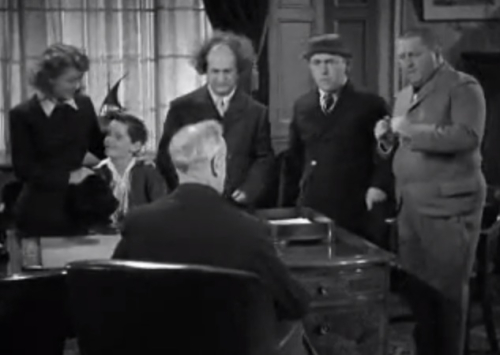
    FDR three stooges

    Anyway, the first interesting tidbit is that FDR appears seated but still holding a cane—this is highly unusual because even though he had been left with paralyzed legs from infantile paralysis (polio) in 1921 most US Americans did not know that he was living his daily life in a wheelchair. (FDR virtually never mentioned his legs in public, except at the very end, after Yalta—and then it was self-deprecating.)

    The big deal here, though, was that this was the first depiction of FDR in a movie, and he does so with none other than the Three Stooges. Odd but true. (And for some reason, another very odd first appearance occurs for LBJ, who winds up depicted for the first time in a movie in the magnificently bad Batman, the Movie in 1966.)

    I know this because I found a fascinating list compiled by the writer Erik Lundegaard https://eriklundegaard.com/item/why-is-fdr-hanging-with-the-three-stooges-everything-you-didn-t-want-to-know-about-screen-portrayals-of-us-presidents-and-didn-t-ask listing all of the depictions of U.S. Presidents in films, showing their first appearance (with year and film and the actor portraying the president), as well as a numerical census of the numbers of movies the presidents appeared in. My hat is off to Mr. Lundegaard, because this must’ve been a challenging research project.

    I’ve reproduced the bare essentials from his list (below). Again, this is not my work, all credit to Erik Lundegaard:

    The list (president/total number of appearances in films/year of first appearance):

    Washington, 154, (1909); Adams , 5 (1911); Jefferson, 125, (1911); Madison, 27, (1937); Monroe  (1918); John Quincy Adams,  8, (1911); Jackson, 47, (1918); Van Buren,  4, (1936); Harrison, 7, (1942); Polk , 8, (1939); Taylor, 8, (1912); Fillmore, 4, (1939); Pierce, 2, (1944); Buchanan, 1, (2000); Lincoln, 327, (1911); Andrew Johnson, 6, (1922); Grant, 94, (1913); Hayes, 7, (1940); Garfield, 7, (1939); Arthur, 3, (1932) ; Cleveland, 4 (1939); B. Harrison, 2 (1952); McKinley, 11, (1936); T. Roosevelt,  86, (1917); Taft, 5, (1978); Wilson, 31, (1913); Harding, 5, (1975); Coolidge, 5, (1955); Hoover, 8, (1979); Franklin D. Roosevelt, 97, (1937); Truman, 34, (1947); Eisenhower, 37 (1955); Kennedy, 86, (1957); Lyndon B. Johnson, 32, [Batman: The Movie!] (1966); Nixon, 81, (1968); Ford, 15, (1975); Carter, 23, (1976); Reagan, 46, (1976); G.H.W. Bush, 27, (1986); Clinton, 74, (1992); George W. Bush, 112, (2000); Obama, 80, (2007).

    Some presidents don’t break into film for a long time after their final year in office. This is understandable of course for the earliest period of the presidency, as the very first depiction of a president occurs in 1909—and that was GW, 112 years after his final year in office. So the function of appearance or not in films of the first flux or so presidents was a function of technology rather than anything else. Once you get into the meatier part of the presidency, the psych and popular factors come into play, which explains why it took 120 years after his final year for James Madison to be depicted in a film. He is followed by W.H. Harrison (101 years), van Buren (100), Pierce at 97 years, Fillmore (72), and B. Harrison (63). On the other end of the continuum, JFK is depicted in a film before he was president (1957); Wilson appears in the first year of his presidency (1913) and FDR in his fourth (1937). Once we reach Ike all of the presidents make appearances in film during their administration (many for the first time on Saturday Night Live).

    In 2016 we did the opposite, electing a tv show of nothing but commercials to the presidency.

    And that, as they say, is Show Biz.
    ·Posted by :

    ·in:


  • On the Early Imagery and Definition of the “Cowboy”

    JF Ptak Science Books   Post 3836

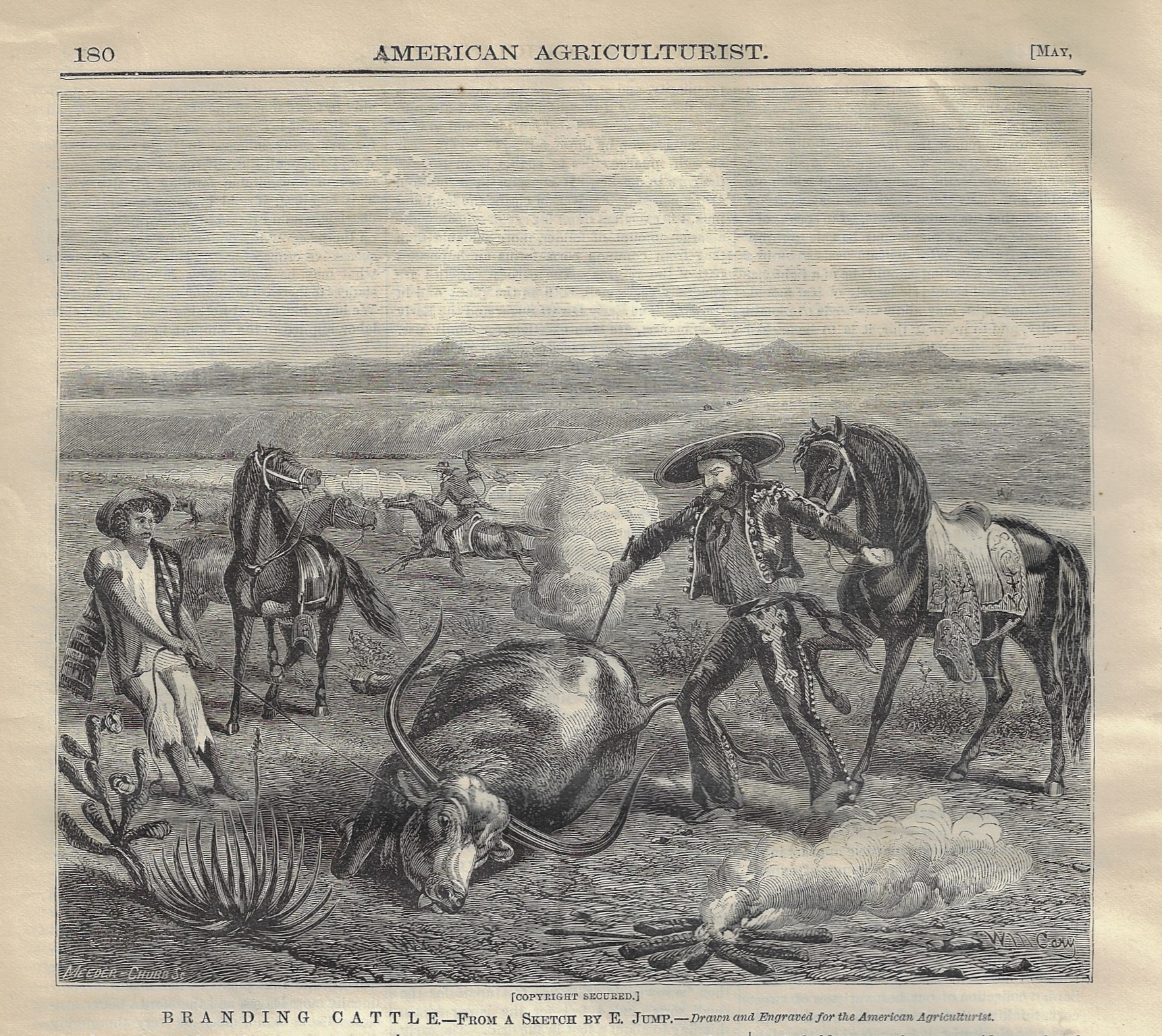
    I just came upon a very early image of a cowboy, finding it in an unusual publication, American Agriculturalist. It is vacquero in a branding scene, and even though the word “cow boy”/”cowboy” has a longish history and easily researched, finding the earliest image of the cowboy is a more complicated matter.  Images of cowboys begin to appear commonly by the late 1880’s, but once you get before 1880, the cowboy in art/representation gets more and more difficult to locate. It seems as though the among the earliest images is “El lazo”, showing a gaucho chasing a cow, which was illustrated by “J.D.” and printed in 1841. An image of cowboys branding cattle in Texas appears 26 June 1867 in Frank Leslie’s Illustrated Newspaper, and then I’m not coming up with much else in the pre-1870 era. Which takes us to the work illustrated below by the Frenchman Edward Jump (1832-1883) and his vacquero. (I’m sharing this hoping that someone will have some references for a timeline of the depiction of the cowboy…if that is you, please let me know).

    Cowboy 1870

    In the meantime, I’ve done the easier task in looking at the history of the word “cowboy”, as follows. 

    The word “cowboy” (“cow-boy”, “cow boy”) was little seen in the U.S. in the decades before the great surge in cattle drives—prior to the 1870s. The word most commonly associated with America’s greatest folk heroes actually got its beginning in Ireland, and was commonly used in Britain from 1820-1850 where its meaning was quite literal, applying to the young boys tending the cows owned by a family or community. An earlier use by Jonathan Swift in 1725 also refers to nothing more than a boy tending cows. 

    The word “cowboy” is first seen in the U.S. in the New Orleans Picayune, not referring to a man, but to a race horse instead. The word—referring to humans—breaks into printed use in the U.S. at about the same time the great drives were ending. Perhaps the first mention in print of the human cowboy comes hyphenated in Wilkes’ Spirit of the Times magazine in 1866. By 1877, only 11 years later, the great national character, Texas Jack (a scout brought along by Buffalo Bill Cody to his Wild West shows whose real name was John Burwell Omohundro, Jr.), laments the passing of the long drive and the cowboy in the same journal:

    “The cow-boy…how often spoken of, how falsely imagined, how greatly despised, how little understood!”

    ·Posted by :

    ·in:

    —

  • Early References to the Holocaust and Auschwitz (1943)

    JF Ptak Science Books  Post 2835

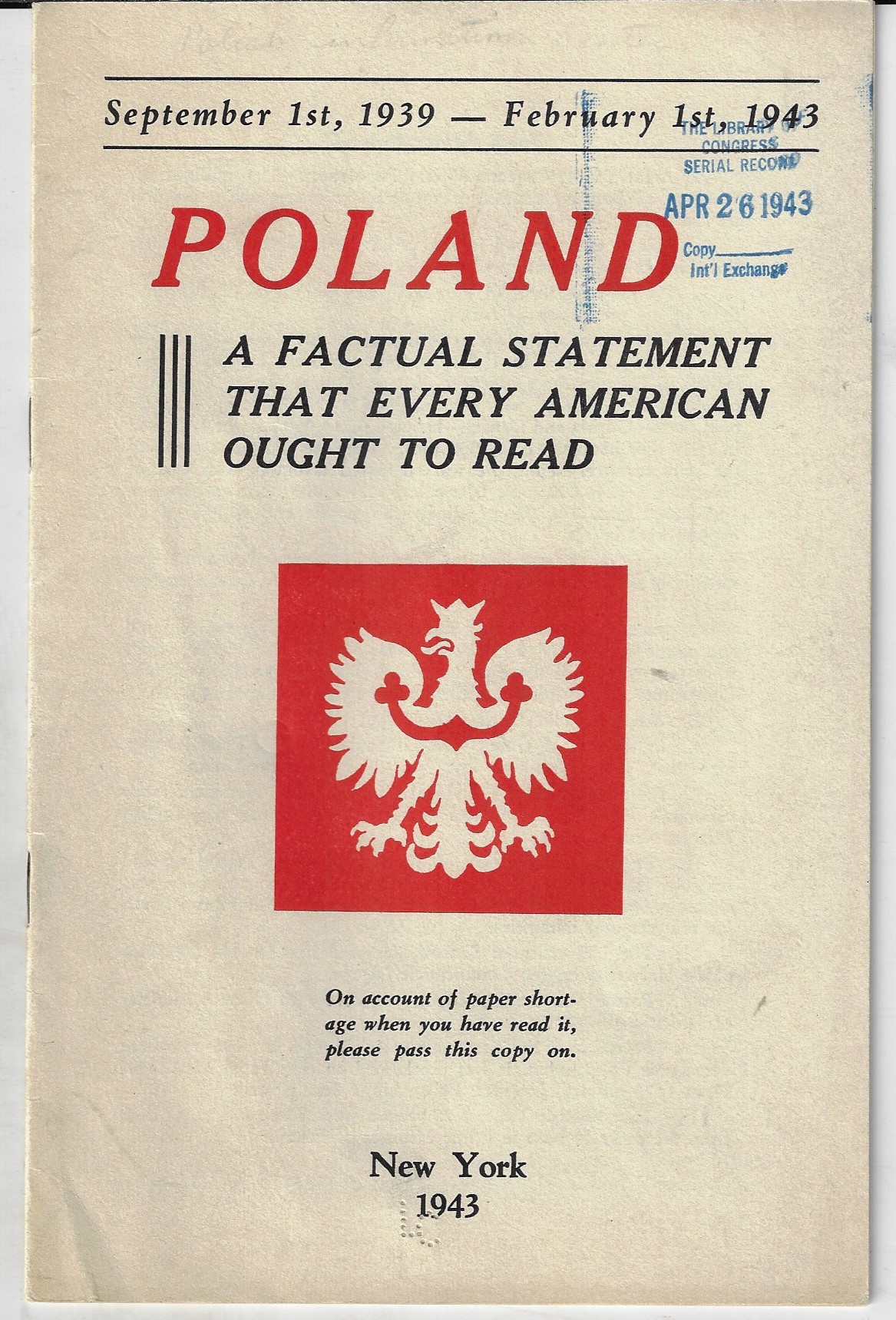
    Poland  factual statementPoland, a Factual Statement that Every American Ought to Read (published by the Polish Information Center, 151 East 67th Street, NYC) sounds like a semi-dry academic pamphlet, waiting to be ignored. But it was printed in 1943, and the audience then would no doubt have been interest in what the hell was going on there.  It turns out that there is some extraordinary reading to be done in its quick sixteen pages, not the least of which is a notice of the murder of a million Jews and a description of camp life in Auschwitz (Oswiecim). As there are only five copies of the work located in libraries worldwide (according to WorldCat/OCLC) I thought I’d reproduce its most significant section , the “German Reign of Terror” (pp 12-15). This leads with these numbers of crimes committed by the Germans: To forced labor in Germany (1,000,000 Poles); to the Government General (700,000 Poles); shot and murdered (1,200,000 Poles), starved to death (about 500,000 Poles). “It staggers the imagination to think that every tenth human being in German occupied Poland had already been shot or hanged tortured to death, starved…or deported to Germany.”

    There are other stories of mass executions, as well as a short description of Auschwitz: “More than 60,000 Poles have been murdered in the concentration camps of the Government General and the Reich. Oswiecim is the most gruesome on Polish territory. It was set up in July 1940 and consists of ten barracks, each of which is supposed to contain 400 prisoners, but actually houses 1,000 men. Prisoners wear thin cotton uniforms in winter as in summer. They were only given shoes on October 15 and had no caps before December. On arrival they had to fill out answers to 32 questions about their life, family, health, wealth and political activities. Two weeks suffice to break men above 45 years. Younger men lose their vigor and youth within half a year…”

    And this: “The Jewish population is closed up in ghettos and suffers no less than the Poles. Particularly in the last six months the Jewish population has suffered an unheard of persecution amounting to a process of willful extermination. Losses in Jewish population up to 1943 exceed one million persons killed.”

    • Note: I don’t know enough to speak about the obvious demarcation in this report between “Poles” and “Jews” except to say that it exists in the text and that I’m aware of it.  

    And so, here is the scan of the “German Reign of Terror” section:

    German Reign of Terror

    In his message to Poland broadcast on May 3rd, 1941, Prime Minister Churchill said: “Every day Hitler’s firing parties are busy in a dozen lands. Monday he shoots Dutchmen, Tuesday Norwegians, Wednesday French and Belgians stand against the wall, Thursday it is the Czechs who must suffer, and now there are the Serbs and the Greeks to fill his repulsive bill of execution. But always, all of the days, there are the Poles.”

    Let us be frank: for many reasons the world still is not fully aware of the enormity of Polish suffering nor does it realize the importance of Poland’s contribution to the Allied fight for common victory.


    ·Posted by :

    ·in:

    —

  • Wondrous and Weighty Pen Names Used by Ambrose Bierce

    JF Ptak Science Books  Quick Post

    I used fifteen minutes of my life to collect some of the most outrageous/anti-subtle subtle, non sequitur , and just plain odd pseudonyms used by the great Ambrose Bierce in his long and wide writing career, ending with him disappearing into a Mexican sunset in 1914 (or so). Many of them are taken from various iterations of The Devil’s Dictionary.  There are many others. 

    The partial list: Agb, Anita M. Bobe, Conmore Aple Brun, Bnashi Basouk, Oogum Bem, Hamin Benjarrison, Joel Ffrad Bink, A. Brute, Salder Bupp, Choggins, Clementina, Clericus, Purzil Crofe, Ambat Delaso, Arion Spurl Doke, Etcetera, Almira Faircheek, Booley Fito, Aramis Loto Frope, Bissel Gip, Boot Gish, Dod Grile, Hestiba, Jamrach Holobom, Gat Huckle, Ignotus, Infallible, An Insulted Giant, Jebel Jocordy, Little Johnny, Opoline Jones, A Mandarin of the Order of the Golden Teapot, Atla Mipo, Jupiter Muke, N.P. Nopput, Naramy Oof, Orm, Pludge, Phela Orm, Pylades Nupkins, Phrytz, Bogul S. Purvy, Jobo Rem, Doddington Pry, Samboles, Dr. John Satan, Dudley Spink, Statanella, J. Milton Sloluck, Theophilus Smallbeer, Venable Strigg, Sukker Uffro, Barlow Vode, and many others. Oh: and John Smith.

    ·Posted by :

    ·in:


  • Newspaper Report on the Largest Slave Auction in U.S. History (1859–“the Weeping Time”)

    JF Ptak Science Books  Post 2830

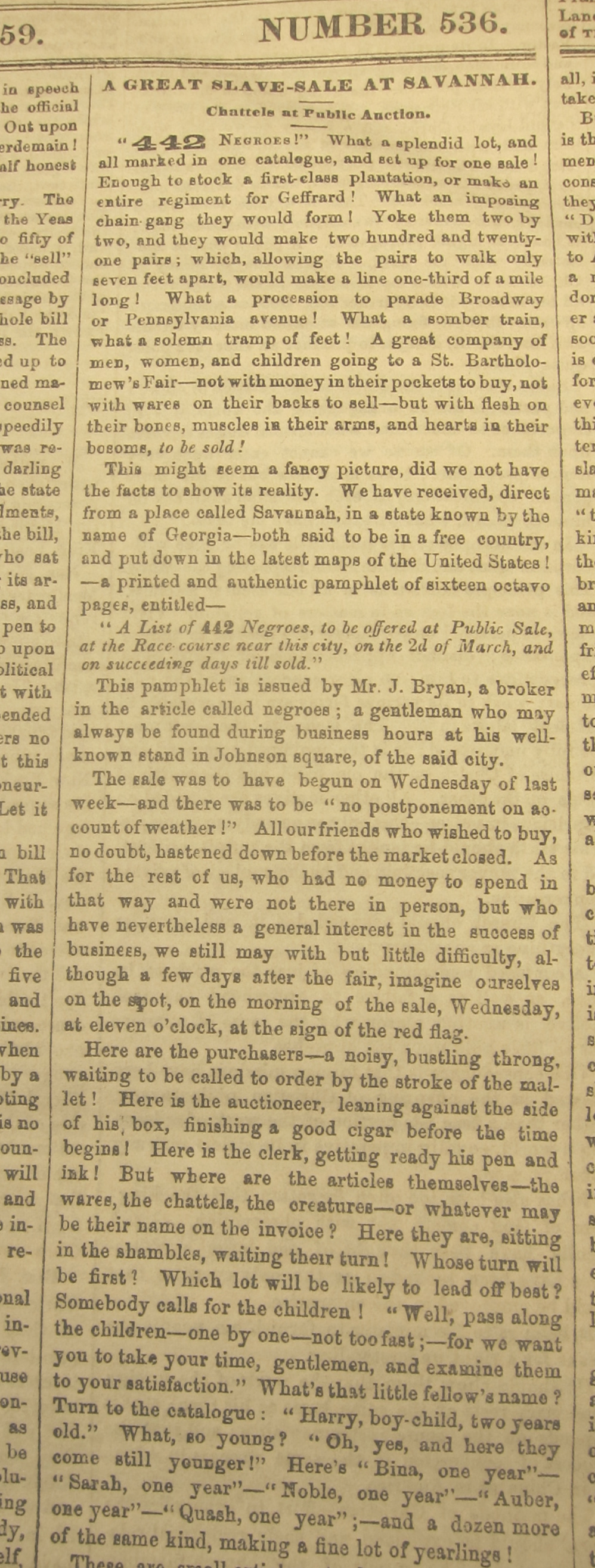
    One of the most striking news items I found while browsing a volume of  the newspaper The Independent1 was on the front page of the very first issue of this volume–a very strong, emotional, reaching-for-irony anti-slavery article reporting on the largest single slave sale in the history of the U.S

    The publisher, Joseph H. Richards, was one of three people (including Pettengill and Tubbs) who in mid-1859 conceived and implemented the idea of bringing Abraham Lincoln to NYC to deliver a paid lecture. After much correspondence and delay Lincoln would lecture at what would be known as his famous and campaign-heightening Cooper Union speech in late February 1859. The newspaper was an eight-page weekly and was very strongly anti-slavery, its pages filled with Abolitionist writing. Henry Ward Beecher was given space for a sermon/lecture in nearly every issue for the volume that I have—Harriet Beecher Stowe and John Greenleaf Whittier were listed as special correspondents in the masthead.

    The article, “The Great Slave Sale at Savannah2”(the sale itself also referred to as “the Weeping Time”) appeared on 10 March 1859, about a week after the two-day event was held in a driving rain at the Ten Broeck Race Course, about two miles west of downtown Savannah. The slaves were the “property” of Pierce Mease3 (1810-1867), a profligate Georgia aristocrat who led himself to ruin, the slave sale intended to restore his economic condition. The sale was held at a race track 

    I imagine that The Independent sent an undercover correspondent (much like for Horace Greeley did for the New York Tribune) to cover the event—or perhaps not; I can’t tell for sure….there is enough detail to make you think that this was information not taken from some other newspaper source; I just can’t tell. In any event these reporters would not have been welcomed at the auction, and could have been dealt with as spies or infiltrators, or worse.

    The pseudonymous reporter (the article signed “T.T”) notices the details of those in charge of the proceedings, some of the aspects of the crowd, though mostly the descriptions are focused on the poor people waiting to be sold…and then, mostly that on the children, and the infirmed.

    I’ve reproduced the article below–so far as I can tell this has not been reproduced anywhere else.

    “The event was reported extensively in the Northern Press and reaction to the sale deepened the nation’s growing sectional divide”, states a respectful if not understated and mundane historical marker (placed 149 years later) at the sale’s location, the text attributed to the Georgia Historical Society. At least the state of Georgia chose to officially recognize the place and donated a small remembrance park to it, which is still steps ahead of, say, Washington D.C. where at least two of the “slave pens” that were very nearly on the National Mall are still not officially recognized by a marker.  

    Notes:

    1. The Independent1, March 10, 1859. “The Independent was founded by the Broadway Tabernacle Church as an anti-slavery newspaper. The original Broadway Tabernacle, now known as Broadway United Church of Christ, was founded as the Second Free Presbyterian Church, organized in 1832 by Lewis Tappan for Charles Grandison Finney, a famous evangelist / revivalist from western New York.”–Wikipedia
    2. “The Great Slave Auction (also called The Weeping Time) was a March 2 and 3, 1859 sale of enslaved Africans held at Ten Broeck Race Course, near Savannah, Georgia. Slaveholder and absentee plantation owner Pierce Mease Butler authorized the sale of approximately 436 men, women, children, and infants to be sold over the course of two days. The sale’s proceeds went to satisfy Butler’s significant debts, much of it from gambling. The auction is regarded as the largest single sale of enslaved people in U.S. history.”-Wikipedia
    3. . “… inherited two plantations in the Sea Islands of Georgia from his wealthy Southern family; one on Butler Island, and another on St. Simon Island. Both lands were worked by slaves.” https://digitalcommons.lasalle.edu/slaveowners_civil_war/1/

    There’s a fine article by Kristopher Monroe in The Atlantic about the event: https://www.theatlantic.com/business/archive/2014/07/the-weeping-time/374159/

    Full article, follows:


    Great Slave Sale _1_

    ·Posted by :

    ·in:


  • Advertising in the Newspaper of the Manzanar Japanese Relocation Camp (1944)

    JF Ptak Science Books  Post 2829

    The Manzanar Free Press is a remarkable publication, issued by the “internees” of the Japanese Relocation Center/Concentration Camp, Manzanar, near Lone Pine, California. It was located in a beautiful and desolate-mountainous AnselAdams-scape made of the Inyo and Sierra Nevada mountains, and was one of 10 camps (plus another two dozen other facilities including isolation centers, temporary camps, and other smaller areas managed by the Department of Justice and U.S. Army) that held nearly 120,000 people of Japanese descent (62% of them U.S. citizens) who were forcibly removed and imprisoned via the U.S. Executive Order 9066, issued by President Franklin Roosevelt on 19 February 1942. The area covered by the evacuation decree was quite large: half or so of Washington and Oregon states, all of California, and the bottom third or so of Arizona.

    Manzanar was a semi-dead town 220 miles NE of Los Angeles, located in high desert with huge swings of temperature and unrelenting and challenging weather—semi-killed by the city of Los Angeles, which purchased the water rights to the region in 1929, forcing out the remaining inhabitants.  Manzanar had a peak population of about 11,000 before the Japanese were returned to what remained of their previous lives. And it was here that thousands of the unfortunate people of Japanese decent lived for several years.

    What struck me on this go-round with the camp newspaper were the advertisements, which for reasons unknown didn’t register with me in the other times I went browsing. (There are many of them available online via the Library of Congress https://www.loc.gov/resource/sn84025948/1944-01-29/ed-1/?sp=3&st=text.) It has the feel of a small town daily, with all of the trimmings—except this was a concentration camp (U.S. Style), so it was hardly an “average” publication, though it was filled with basic/domestic/social/small-town “average” news from camp baseball to the newest shipment of non-rationed goods. And again, like any small town newspaper, there they were, the ads, usually a dozen or two in the newspaper’s twelve pages (the first half in English, the second in Japanese).

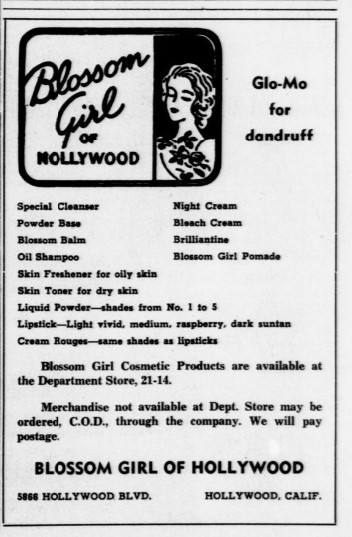
    Manzanar ad Blossom girl

    Who advertised what?  It just seemed extraordinary, and contrary, to see the ads in there, all of which combined gave the enterprise a feeling of everyday normalcy to a decidedly not-normal situation, with people gathered up,completely uprooted, losing businesses and property and of course freedom.  For the issue of January 29, 1944, we have the following advertisements:

    • The Los Angeles Fish & Oyster Company was there (“supplying fresh fish to the canteen”);
    • The Utah Nippo (which is one of only four Japanese newspapers published in the Continental U.S. through the course of WWII. http://encyclopedia.densho.org/Utah_Nippo_(newspaper)/ Does that mean that people received copies of the newspaper in the mail, or was it just posting its name because it made monetary contributions to the Manzanar paper?)
    • LB Woolens and Trimming (from L.A.);
    • Showa Shogu Brewing Co. (Glendale, Arizona);
    • Dorfman Hat & Cap Co. (Oakland);
    • Lone Pine Lumber and Supply (an ad for ready-pasted wallpaper), Lone Pine, CA.;
    • Sears (for delivery of canned goods and such);
    • Josephs Lone Pine (a general store “orders taken for non-rationed items”);
    • Freeman, Los Angeles Barber & Beauty Co. offering “Southern California’s Leading Pomade”):
    • Hotel Montezuma (Santa Fe, NM–I have no idea what this one was all about);
    • Western Trunk Line, Lone Pine Depot;
    • Hand-Knit Yarns (Peter Pan Yarns, NYC)’;
    • and interestingly, Audiofilms Co., advertising their next film, Boy Slaves (starring. Anne Shirley, Alan Baxter Roger Daniel. According to IMDb “A runaway follows the leader of a gang of boys, and they all wind up working in a turpentine camp”. Oddly enough, the tagline for the “b” film was “SOLD – Human Beings, In This Modern Age, Actually Sold Into Slavery!”)

    And there was Blossom Girl, of Hollywood (pictured at left).

    There was one ad placed by one of the internees: Mastercraft Cleaning and Laundry, located at “Ironing Room 10”.

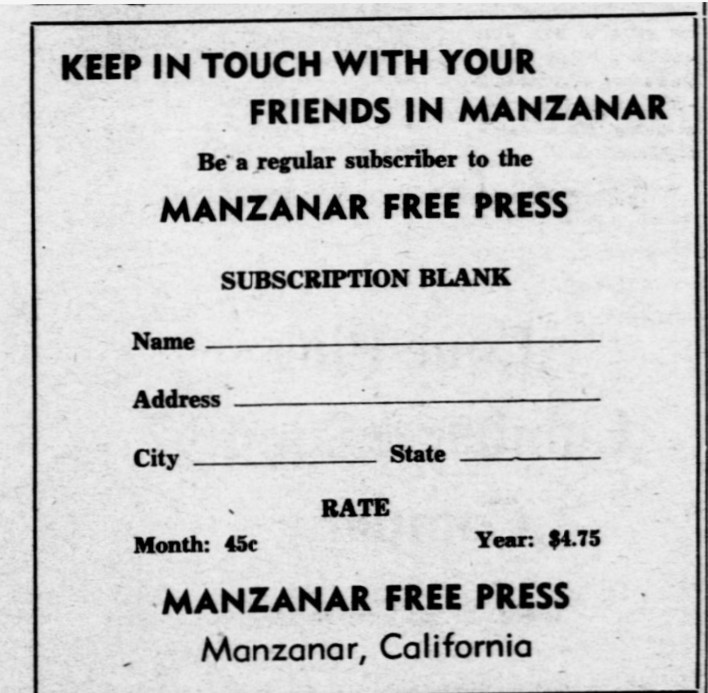
    And then there was this small placement, simple, but powerful in it innocence:

    Manzanar ad for newspaper
    The Japanese people at Manzanar and the other camps made extraordinary efforts to create a society and civility and reasonableness in the depths of an unreasonable situation in which much of their society had been ripped apart. Superb effort. As Charlie Goodnight inscirbed on Bose Ikard’s tombstone; “splendid behavior”.  

    “Manzanar” means “apple orchard” in Spanish; there were no apples here in 1944. 

    ·Posted by :

    ·in:


  • Blindfolded Chess Players, Dropped Cats, and Channels that aren’t Canals (1894)

    JF Ptak Science Books   Quick Post

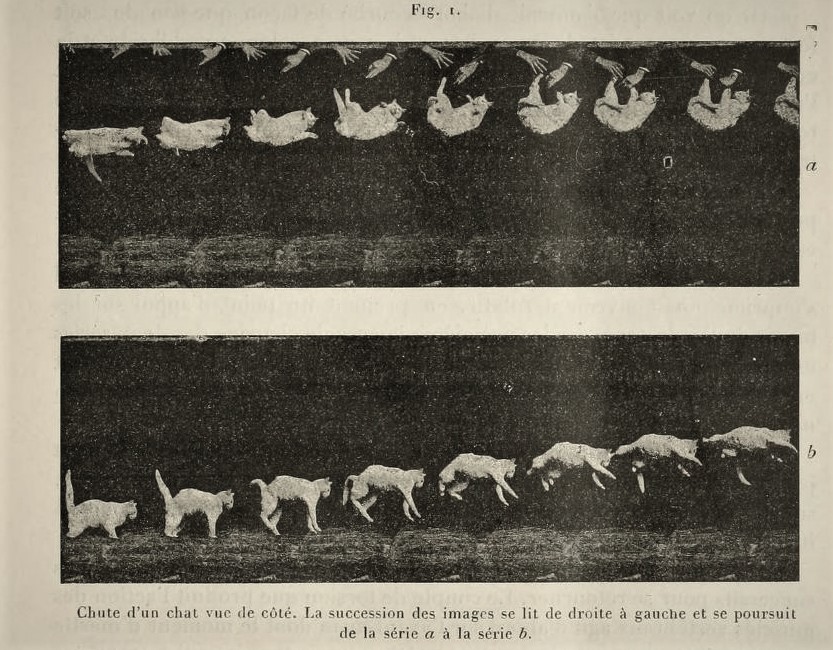
    Okay, here’s another entry in an occasional series on antiquarian sci journal issues with multiple interesting bits in them. The example today is a slender (23pp) but crammed (1500 words per page) weekly issue of the venerable journal Nature (volume 51,  22 November 1894)–it initially raised my interest for a two-pager Francis Galton paper on synesthesia and super-abilities entitled  “Psychology of Mental Arithmeticians and Blindfold Chessplayers”.  This irresistible paper shared space with a famous paper by another great 19th c polymath, Etienne Marey,  “Photographs of a Tumbling Cat”, being a full page (four strips) of “chronophotography” of a cat being dropped upside-down showing the progress of how the cat rights itself in a short distance to landing on its feet. Marey (along with Edweard Muybridge) helped create and establish the motion picture–this paper came a dozen years or so after his groundbreaking work appeared in the 1880 and 1882 volumes of the Comptes Rendus…de l’Academie des Sciences (Paris). 

    Marey cat 1894

    • [Source: this image is from an already-scanned version from an issue of the Comptes rendus but is identical to the top half of the Nature image.]

    This Nature issue isn’t done yet! There’s also the article “Schiaparelli on Mars” (pp 87-90) including a full page of about 2000 words on “The Canals or Channels”,  though the editor  points out in a footnote that “canale” in the original Italian version should be translated as “channel” or “strait”, and not canal, a sentiment that didn’t have enough impact in preventing the avalanche of the Martians-on-the-loose syndrome that was building steam. This was also right about the time that astronomers as a whole began to doubt the existence of Martian seas (first brought into the conversation by Secchi in 1858). 

    Anyway, there it is, a wonderful Victorian super-issue of beautiful Nature. (Oh yes, there’s also two book reviews of works on (Hamilton and Taits) quaternions.  

    The full text is available at Hathi Trust:  https://babel.hathitrust.org/cgi/pt?id=uc1.c2754927&view=2up&seq=112


  • The Drug Menace to Japan from the U.S., 1923

    JF Ptak Science Books  Quick Post

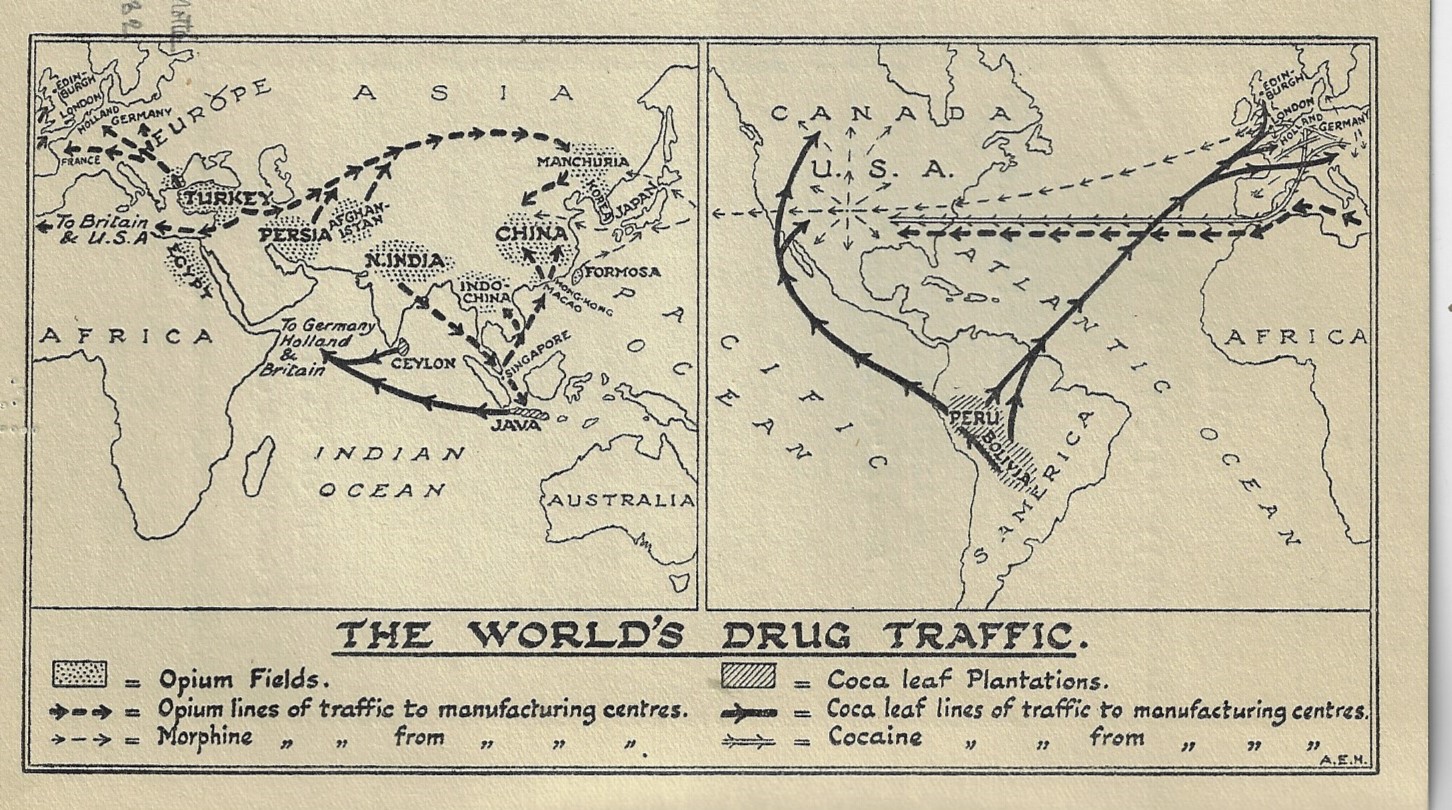
    Here’s a bit of a quick factoid on the international drug trade in 1923, taken while on a stumblethru  in Basil Mathews’ The World “Dope” Menace and the League of Nations (London, the League of Nations Union, 1923).  This is a very slim (24pp) and compact work but it does have a significant amount of dpo (data per ounce!) impact, particularly when it came to Mathews’ short sober and clinical appraisal of the amount of narcotics being smuggled and consumed in Hong Kong, China, Japan, French Indochina, Ceylon, and Mauritius.  The man has the numbers, and those numbers that struck me the most were those concerning Western shipments of morphine (and etc.) to Japan. He lists them out so, the counties’ exports to Japan: England 10,000 lbs, France 8,000 lbs, Germany 2.800 lbs, Belgium 2800 lbs, Switzerland 4400 lbs, Holland 250 lbs,  and (the big surprise for me) the USA with 18,500 lbs of nasty export. 

    World Dope menace map

    The numbers were even more brutal for the China trade, with Mathews stating “In cold literal fact men in Britain and America and Japan have grown rich by debauching of China’s morphino maniacs who are now innumerable.” And  to drive home the human aspect of the drug trade, Mathews continues: “The seriousness of morphine addiction can be understood from the opinion of an expert authority who says Morphine is not only ten times more deadly than opium but is more seductive and overwhelming in results. The addict becomes an absolute slave entirely powerless for not only are his will and moral fibre entirely rotted by the drug itself but he becomes the victim of the most dreadful tortures directly that he is robbed of his doses nervous tortures so terrible that they often drive him mad and end in death.”

    Mathews concludes that the drug trade is a major menace to the League and Nations and for international stability as a whole–he makes a pretty remarkable case for cease-and-desist back there in 1923.  

    ·Posted by :

    ·in:


  • Russland (Nazi Propaganda, 1936)

    JF Ptak Science Books  Post 2822

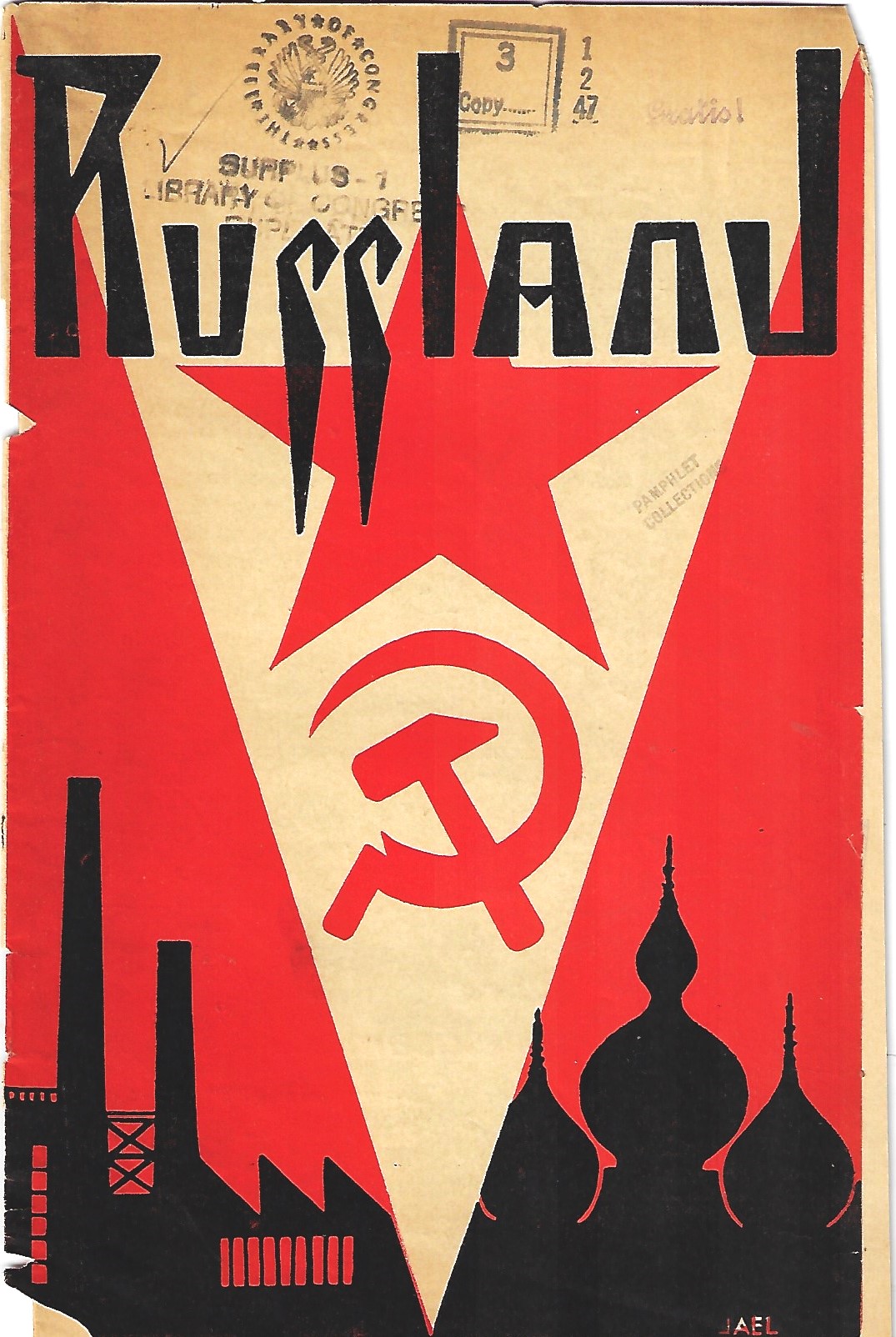
    This is a nasty piece of Nazi anti-Soviet/Communist propaganda, published as #43 in a series called “Silvaniadruck” in 1936. It is a nonstop attack on the Soviet system and also on the Russian people. The pamphlet is only 24 pages long but it certainly feels like more, especially if you could weigh vindictiveness and diatribe. It is composed of 12 sections ranging from the new economic policy of the country, to the right of the Soviet citizen, religion, family, church, and education, and the period of 1918-1921, though the sections I wanted to try to read and share were on the Famines (“der Hunger”) and the “Terror.“

    Books covers russland