A Daily History of Holes, Dots, Lines, Science, History, Math, Physics, Art, the Unintentional Absurd, Architecture, Maps, Data Visualization, Blank and Missing Things, and so on. |1.6 million words, 7500 images, 4.9 million hits| Press & appearances in The Times, Le Figaro, Mensa, The Economist, The Guardian, Discovery News, Slate, Le Monde, Sci American Blogs, Le Pont, and many other places… 5000+ total posts since 2008.

Category: Social History

  • Scientific Appraisals of Curving a Baseball, 1877

    JF Ptak Science Books   Quick Post

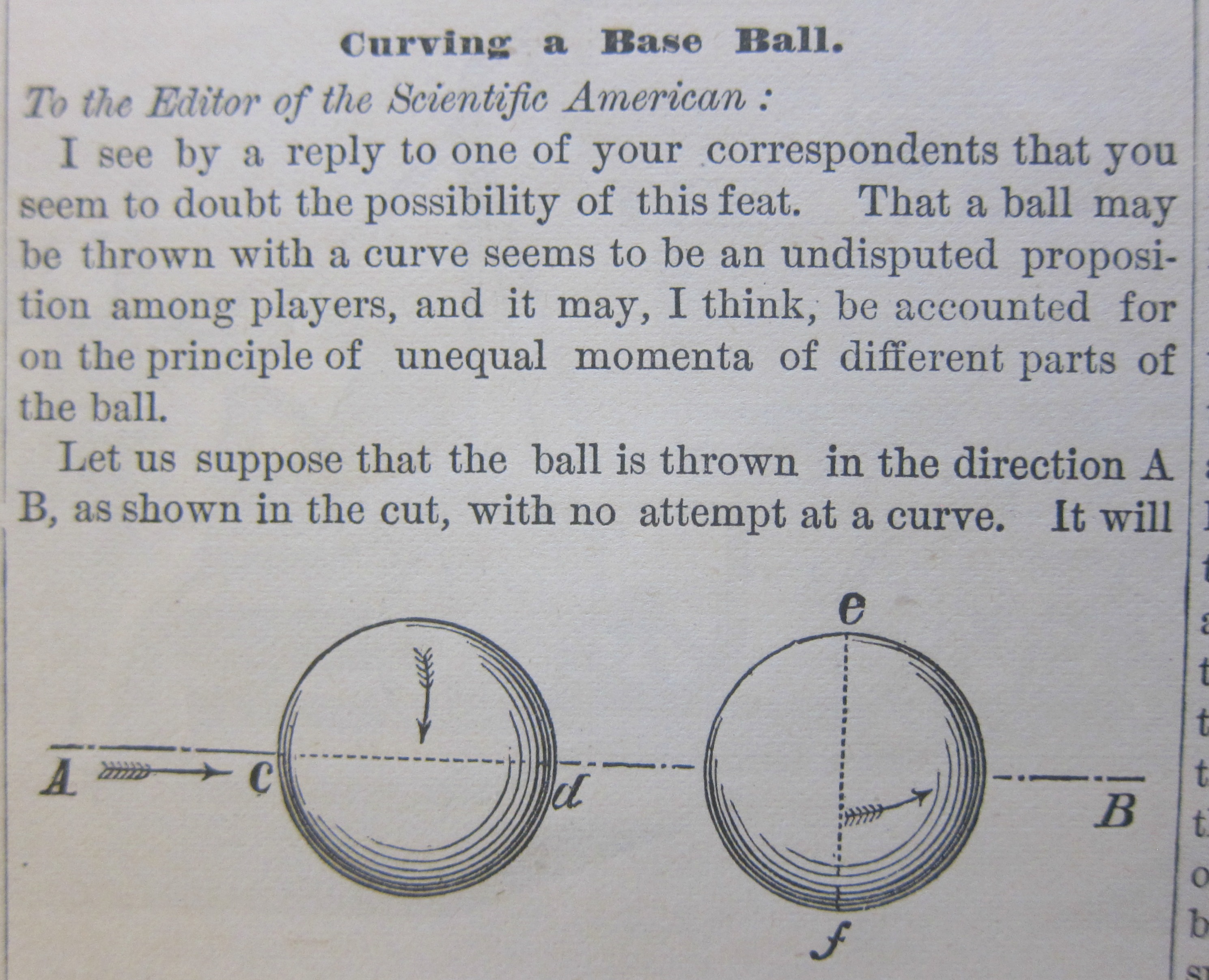
    Ah, the mechanics of curving a baseball as found in the summery summertime pages of  Scientific American, August 18, 1877, page 100. The author, an “H.C.”, admits that they might not be correct, but they’re going with it anyway, at least at this time. 

    Also I should point out that “curveball” appears in print for the first time only two years earlier, at least that is so by the Oxford ENglish Dictionary: 

    • “Curveball. Baseball. A delivery in which the pitcher causes the ball to deviate from a straight path by imparting spin.”
    • “1875   Providence (Rhode Island) Evening Press 4 Oct.   Both sides batted heavily and by the close score made an exciting game. Macullar played worthy of a professional, and the tricky Bancker sent in his curve balls with telling effect.”

    And as long as we’re at it, the chronology of first appearance publications of baseball-related things, according again to the OED, include the following: baseball, 1845; baseball player, 1856; baseball game, 1857; baseball bat, 1858; shirt, 1860; cap, 1865; team, 1869; diamond, 1871; glove, 1884; and baseball fan, 1885. Odd, no, that “baseball fan” appears 40 years after “baseball”? 

    Sci Am Curve Ball BAseball

    ·Posted by :

    ·in:


  • Found Art: Found Documentary Photos in an Obscure Publication (1931)

    JF Ptak Science Books   Quick Post

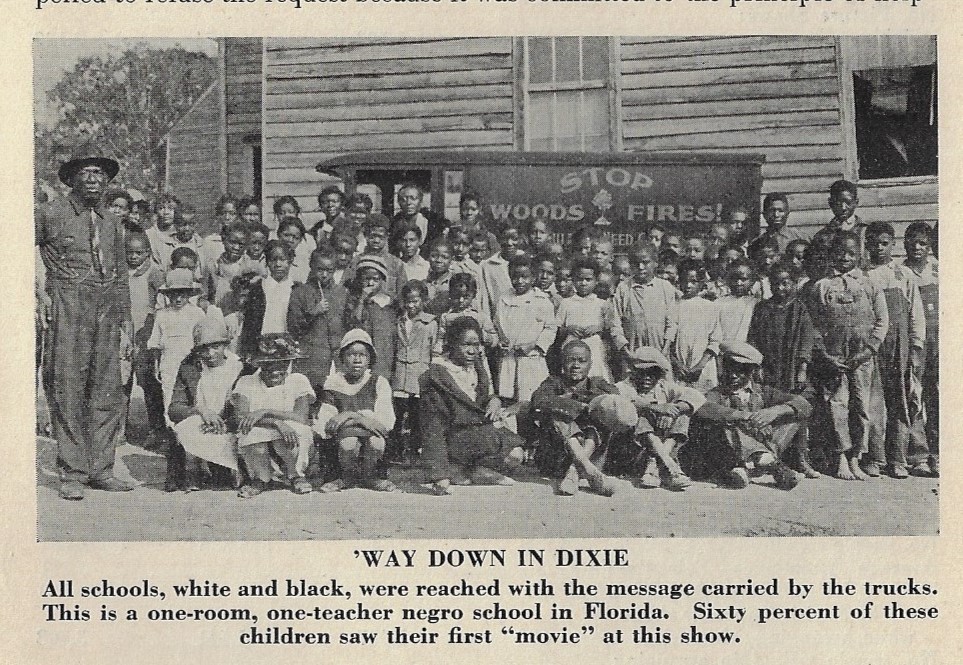
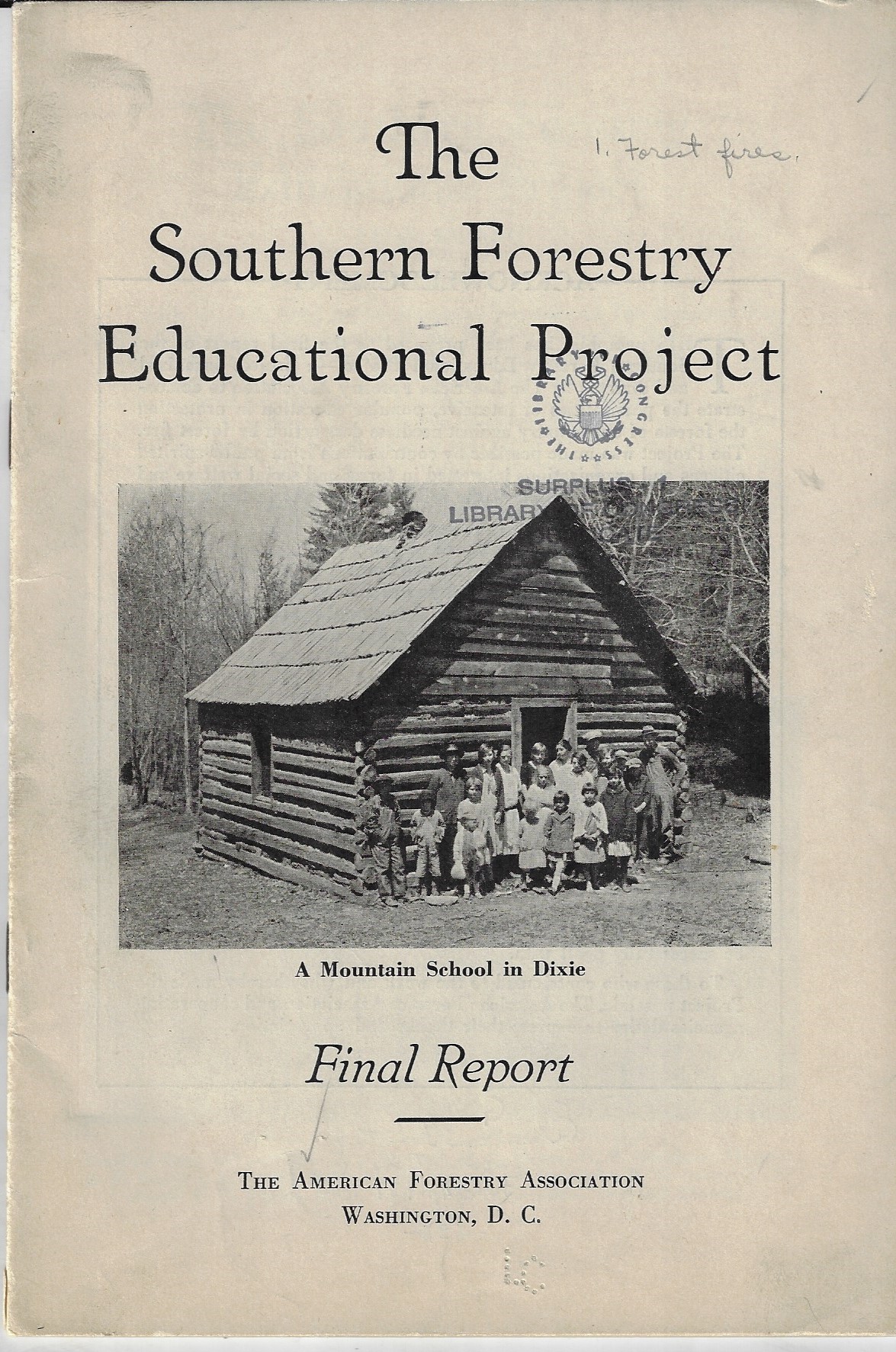
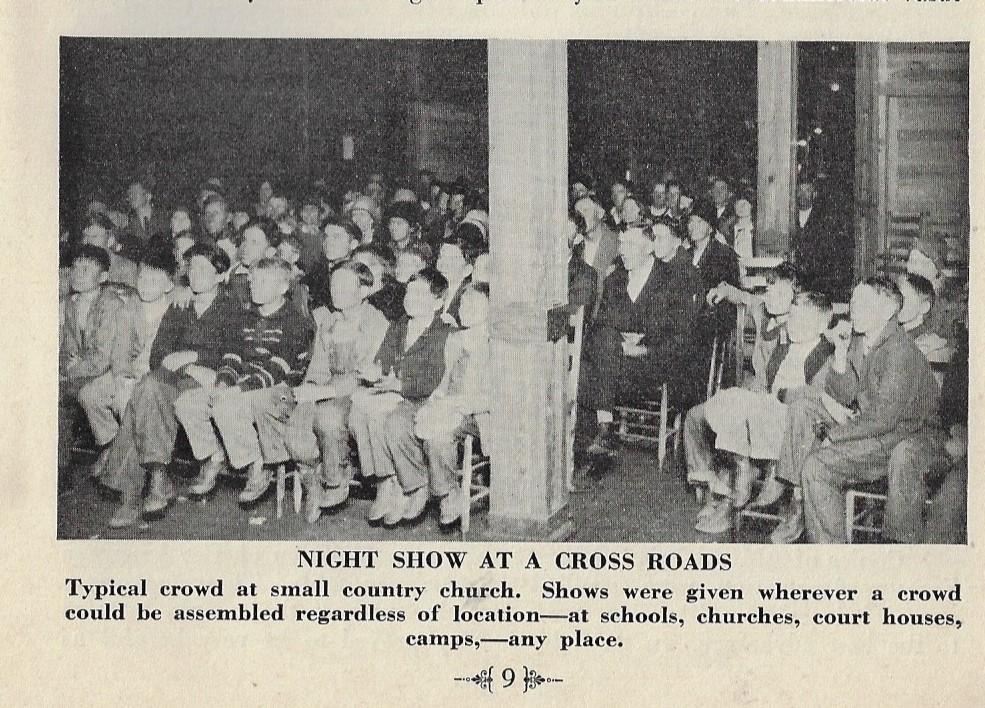
    The catalog description for the slim 1931 pamphlet,  The Southern Forestry Educational Project Final Report (American Forestry Association of D.C.) 1937, doesn’t exactly make the generally-curious reader generally curious. As it turns out it packs a lot of data and info into its thirty-two very tight and crisply-written pages–better yet are the photo illustrations, which were a real surprise, and have for the most part nearly every measure of what documentary photography would become in just a few years under the Farm Security Administration. American Forestry sent trucks out into the deep parts of Mississippi, South Carolina, and Georgia to host community meetings in which there were lectures and movies on forest use, maintenance, and fire prevention–for many first movie experience. All tolled from 1928 through 1931 there were 7,370 lectures and “picture shows” given to some 1.1 million attendees, which sound like pretty big numbers to me.  

    [The analysis shows that of the 4,606 picture shows only 504 were given at “Negro schools”; of the 2,764 lectures 1,200 were given to audiences at schools for African Americans.]


    Forest Service Dixie _3_
    Forest Service Dixie _3_

    Forest Service Dixie _3_


  • When the Words Feel Like the Bad Paper They’re Written On–Trashing Frederick Douglass (1895)

    JF Ptak Science Books  

    1895 was a great big year in science–there were major contributions by Cantor, Poincare, Ramsay, and Perrin, among others, though the biggest of them all was the semi-accidental discovery by Roentgen of X-rays, a monument in the pursuit of further/deeper.

    My own little 1895 discovery last night may be a well-established bit but was unknown to me, and it proved to be the opposite of further/deeper. I was trying to squeeze some life out of what looked like a pamphlet as dry and brittle as the bad newsprint it was made of:  History of the General Assembly of North Carolina, January 9-March 15, 1895, Inclusive (printed by E.M. Uzzell in Raleigh, 1895), which sounds just flat-out anti-interesting (especially with the very specialized time period).  It turns out that the 160-page work is written in a easy, journalismo sub-Menckian way, with a nod to humor here and there and a dose of familiarity, a good narrative style that was useful and breezy.

    And as I hunted for some sparkly point in the daily comings and goings of the legislature, I ran right into the dark void.

    The hole was a short report, “The Douglass Infamy”, which was an infamy of its own. Over the few pages of the article/review it discussed the  “humiliation of the white people of the south” caused by the General Assembly of the legislature choosing to suspend and adjourn their meeting out of respect  for Frederick Douglass, who had suddenly died during the session. The author referred to the action as “an offense against the dignity and sentiments of this proud State” (“State” is capitalized, “Negro” is not),  Douglass to as “the miscegentionist” straight-away after condemning the act of respect due the man, and was an “…author of many malignant and untruthful aspersions on the whites”,  and referred to his as “an inferior race, incapable of civilization except for that under the whites”.  Closing down the government was a “humiliation to white people” and disgusted some legislators to the point where they denied that the action had taken place. I think this was because it elevated Douglass to a level of equality, which just would not do: “The whites of North Carolina…regard any approach by the Negro to social equality with…abhorence [sic]”. 

    The was a significant amount of hateful nonsense in this entry, railing against Douglass, who in their view wrote terrible untruths about white people and who was “also guilty of miscegenation”, having married a white woman.  

    “Thoughtful Democrats who have looked beyond the present moment and who have preferred to bear such party ills as they had, if such there were, rather than fly to others they knew not of, predicted that the fusion with Republicans of any considerable number of those who were formerly Democrats meant Republican domination, and that Republican domination meant, in one form or another, negro [sic] domination. The Douglas incident reveals the animus of that party and is a menace of its aims. (After the official declaration of the Fusionists, the General Assembly did not adjourn in honor of the birthday of Robert E. Lee, a legal holiday, but did adjourn out of respect for the memory of Frederick Douglas.)”

    Finding this article was not surprising, really, though it was unexpected to some degree; there were a few other bits in the pamphlet similar to this, so the article did not stand alone. The part that is so amazing is that it the “Douglass Infamy” was just part and parcel of a documentary and interpretive  report on the action of the state legislature for a few months in 1895; and yet, there was this hateful business, taking up as much space and brain waves as noting that it was a cloudy day.  
    ·Posted by :

    ·in:

    — —

  • “Separate Cinema”–100 All-Black Movies for Rent, 1944

    JF Ptak Science Books Quick Post

    Negro Movies _1_.jpg copy

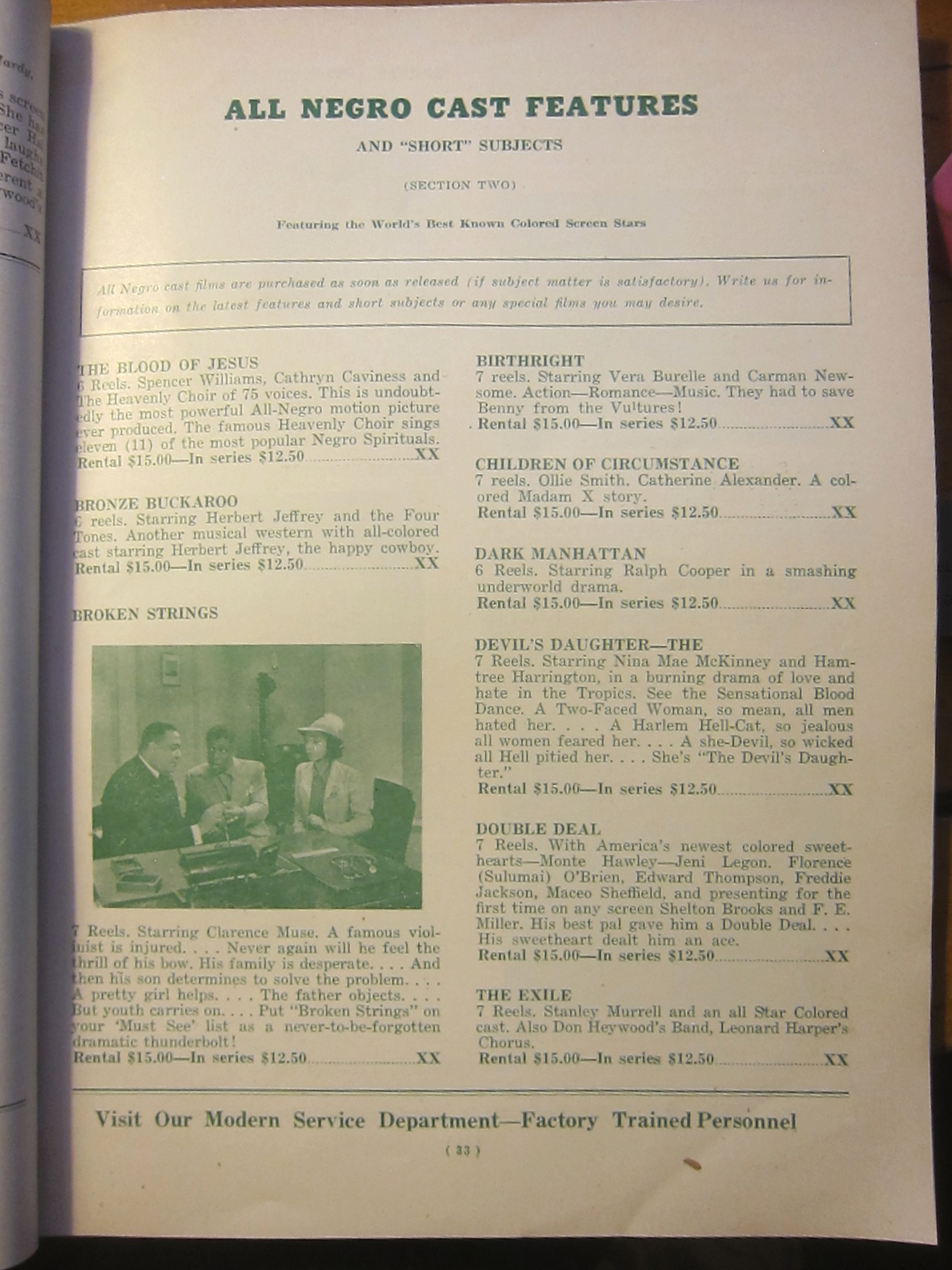
    This is well outside what I usually write about here, but I could not resist sharing this interesting find.  “All Negro Cast Features” is a five-page section in a 150pp film distributor catalog from 1944, listing 100 all-Black movies for rent. I know very little about this genre of film-making, but in checking out some sites dedicated to the subject I found that only about a third of the hundred were mentioned—which of course sparks curiosity and interest.  

     [See the wonderful “Separate Cinema” site from whom I borrowed the phrase in the title to this quick post at http://www.separatecinema.com/exhibits_vintageyears.html (with posters!); also the IMDb/Afro-Centric Film Collaborative “Definitive List of  Black Movies from the 40’s, 50’s, 60’s, 70’s,” which as it turns out lists only 32 films from the 1940s.]

    The “All Negro” offerings (no films in the catalog are dated) included 37 features ranging from 1931-1944, with ten in the 1930’s and three in the 1940’s. Only 12 of these are referenced in full on the Separate Cinema site, with four others tangentially mentioned and dated. There are then two pages  of shorter, movies including: Short Subjects (14 films), “1-Reel All-Negro Cast Subjects (16 films), “Features with Prominent Negroes…” (4 films), “Cabin Kid Comedies” (8 1-reel films), “Musicals” (9 1-reel), “Joe Louis Fights” (9 1&2-reel films), and “Spice of Your Program” (3 2-reels).

    Some of the descriptions for the feature films are spare, some not, though even the quick descriptions of some of these movies are captivating–for example, for Harlem is Heaven (1932), the entry reads “Bill Robinson, the dark cloud of joy with Eubie Blake’s orchestra”.  On the other hand, the description for Marching On reads “the picture that leaves you gasping” without any reference to it being one of the very few films dealing with African American military life during WWII.  

    In any event someone out there in Interwebtubelandia may find this list useful or supplementary.

    All of the images of the text are expandable:


    Negro movies _5_

    ·Posted by :

    ·in:


  • Churchill and the Conservatives Abandoned–an anti-Labour Pamphlet of 1946

    JF Ptak Science Books  Quick Post

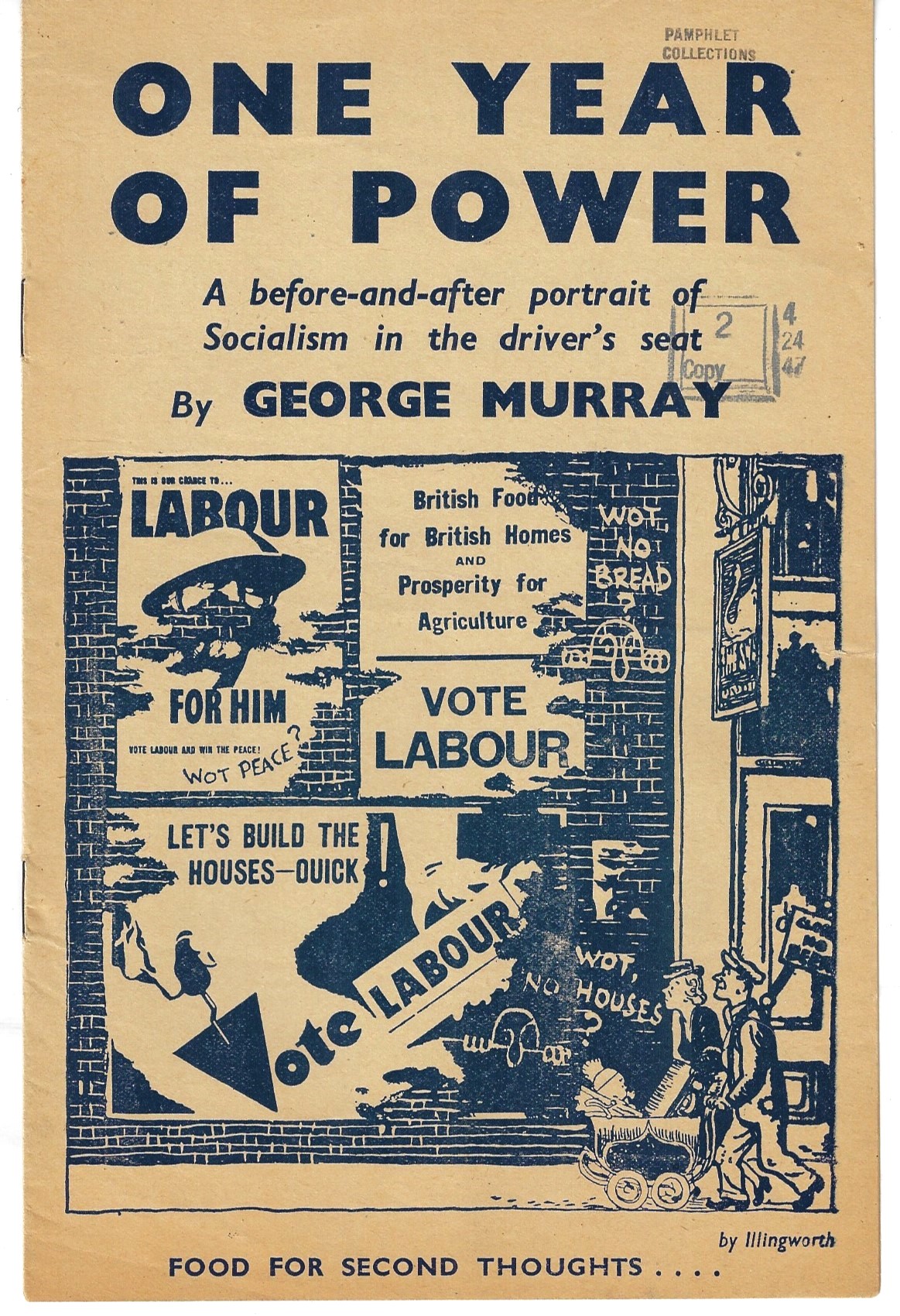
    Books covers one year of powerEven though Churchill was enormously popular in the public mind (well over 80% approval rate in 1945…I guess the question would have been what was up with the remained who disapproved?) the Conservatives and Churchill with them were utterly swept away from power in the general election of the summer of ’45, in the heights of victory in Europe and before the war in the Pacific was not yet ended. Clement Attlee was in charge as head of Labour—he was very skilled and competent and accomplished, though these characters were not manifest in his public persona, hardly a Churchill who shone through and through. It all made sense, in its way, though it was a shocking turn of the screw in the U.S. That’s not to say that the Conservatives weren’t shocked, though at least there was an understanding on that turn of affairs came to be. I doubt that was the case in D.C.

    In any event, this pamphlet shows the vestiges of political posters for the ’45 election a year or so later, promises that in their future looked not-so-good what with rationing still going on, a problematic economy, housing issues, battle weariness, and so on. The pamphlet was written by the Conservatives who tried to remind voters that Labour’s labour has been lost, and one should return the privilege of government to the Conservatives. That wouldn’t happen for almost another 10 years, when they and Churchill made their return in 1955.

    The cover is very striking, and makes a clear point.

    (It seems this is a rare pamphlet–I can find only one copy accounted for in WorldCat/OCLC, and that in the British Library.)

    ·Posted by :

    ·in:

    —

  • 10,000 Windows Filled with Cigarettes (1938)

    JF Ptak Science Books   Quick Post

    American tobacco _3_

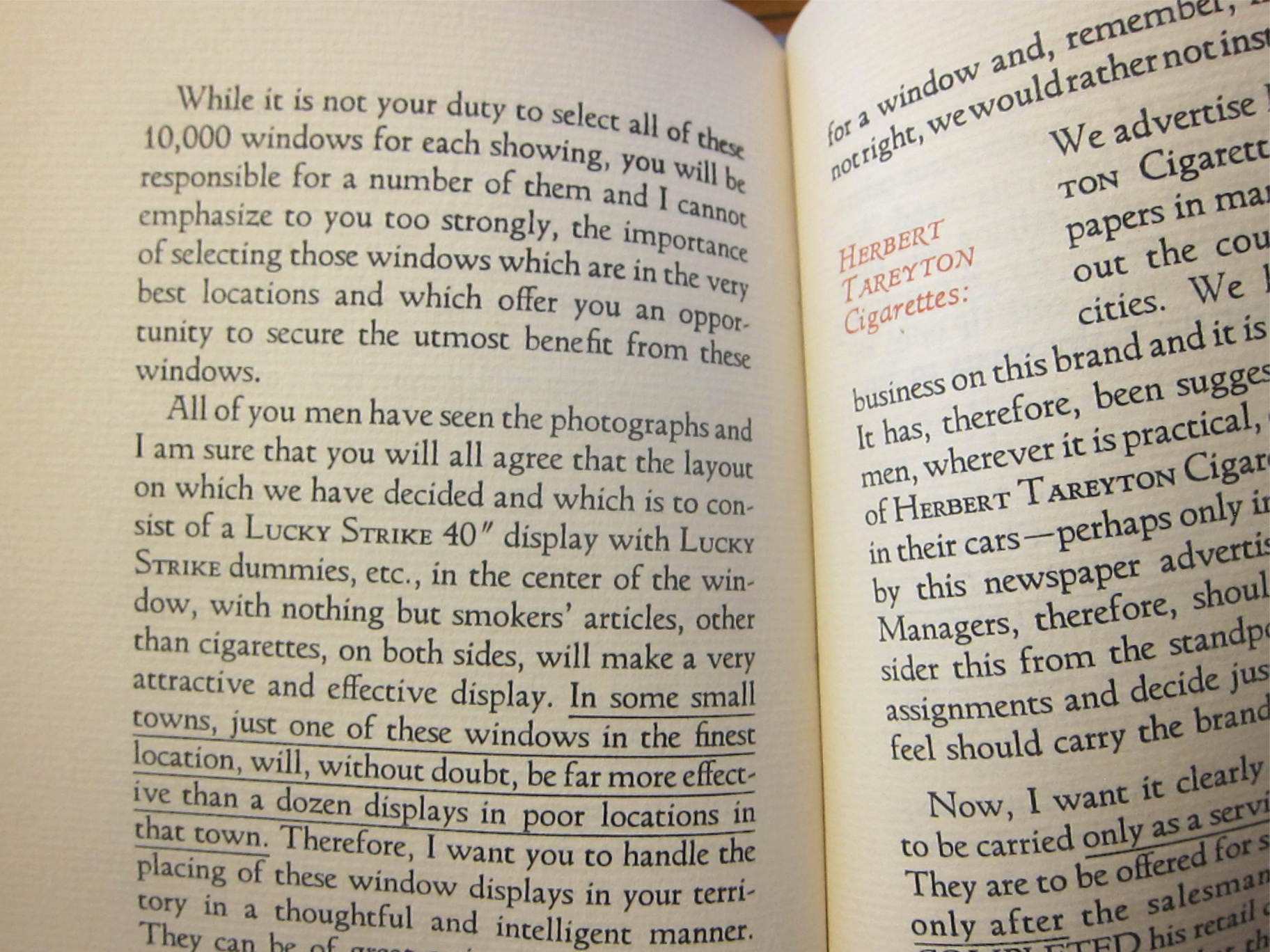
    Vincent Riggio (1878-1960) was a classic rags-to-riches story: Sicilian-born, lower East Side, quit school to work, opened barber shop on 117th, etc., and by 1947 was one of the highest paid execs in the country at $484k/yr., heading up sales for the American Tobacco Company.(Its hard to translate this wealth, even after fiddling with CPI—at the time though 30 million of the 39 million families in the US Census for 1950 made less than $5k/yr.)

    Anyway Riggio wrote a Christmastime book1 in 1938 on “Sales Organization” for the ATC, a piece of boosterism and a how-to for sales of cigarettes and the beauty they represented. One part that stopped me was the instruction on filling “10,000” windows in high-traffic areas with ciggie displays.  There were 93 cities in the US with 100k or more population in 1930 (105 in 1940, 50 in 1910, and 68 in 1920) so even if the windows concentrated on the big cities that’s 100 big windows (think classic giant window displays busy intersection) per each of the 100 cities. That’s in addition to massive amount of print ads and radio/sporting event sponsorships. (And remember the print ads used movie stars, doctors, lawyers, Santa, sports figures, and so on, plus the combination of the cigarette with the possibility of expressive manhood AND sexual allure.) These folks got their message across, which was too bad. 

    And for the record ATC was founded in 1890 by Buck Duke, and was one of the original 12 companies2 comprising the first index for the Dow Jones averages (1896). ATC was busted3 in 1911 as a monopoly, after which it became a simple oligopoly.

    Notes:

    1. Riggio, Vincent. American Tobacco Company, Sales Organization. Printed by ATC on fine laid paper. 7”x5”, 61pp. Embossed cloth.  I can’t find this in WorldCat/OCLC.  

    2. The twelve companies included American Cotton Oil, American Sugar, American Tobacco, Chicago Gas, Distilling & Cattle Feeding, General Electric, Laclede Gas, National Lead, North American, Tennessee Coal & Iron, U.S. Leather preferred, and U.S. Rubber.

    3. United States v. American Tobacco Company, 221 U.S. 106 (1911), “…which held that the combination in this case is one in restraint of trade and an attempt to monopolize the business of tobacco in interstate commerce within the prohibitions of the Sherman Antitrust Act of 1890.”–Wikipedia


  • A Remedial Introduction to “Politics” for Newly-Enfranchised Women in the U.K. (1918)

    JF Ptak Science Books Quick Post

    Books covers to women voters detail

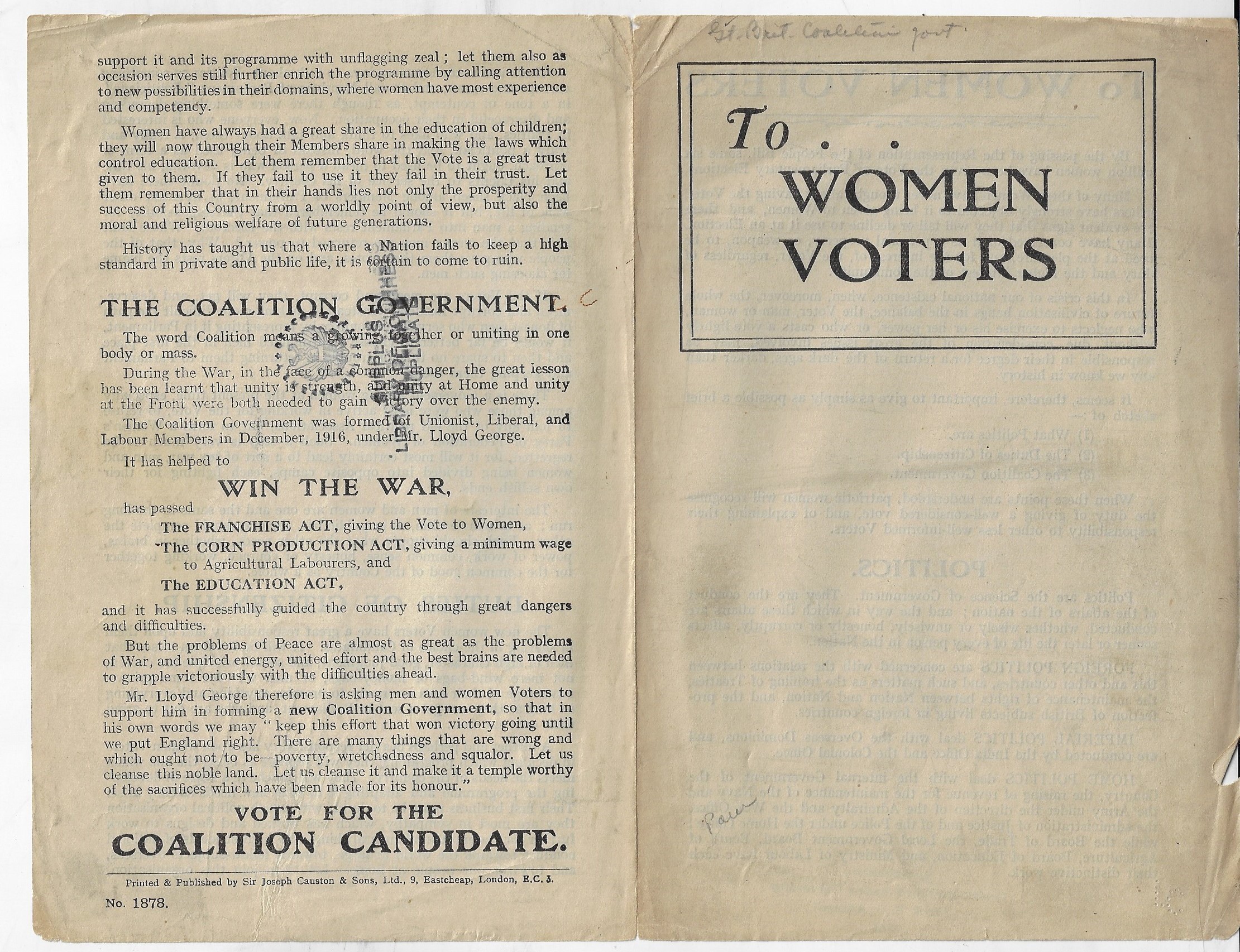
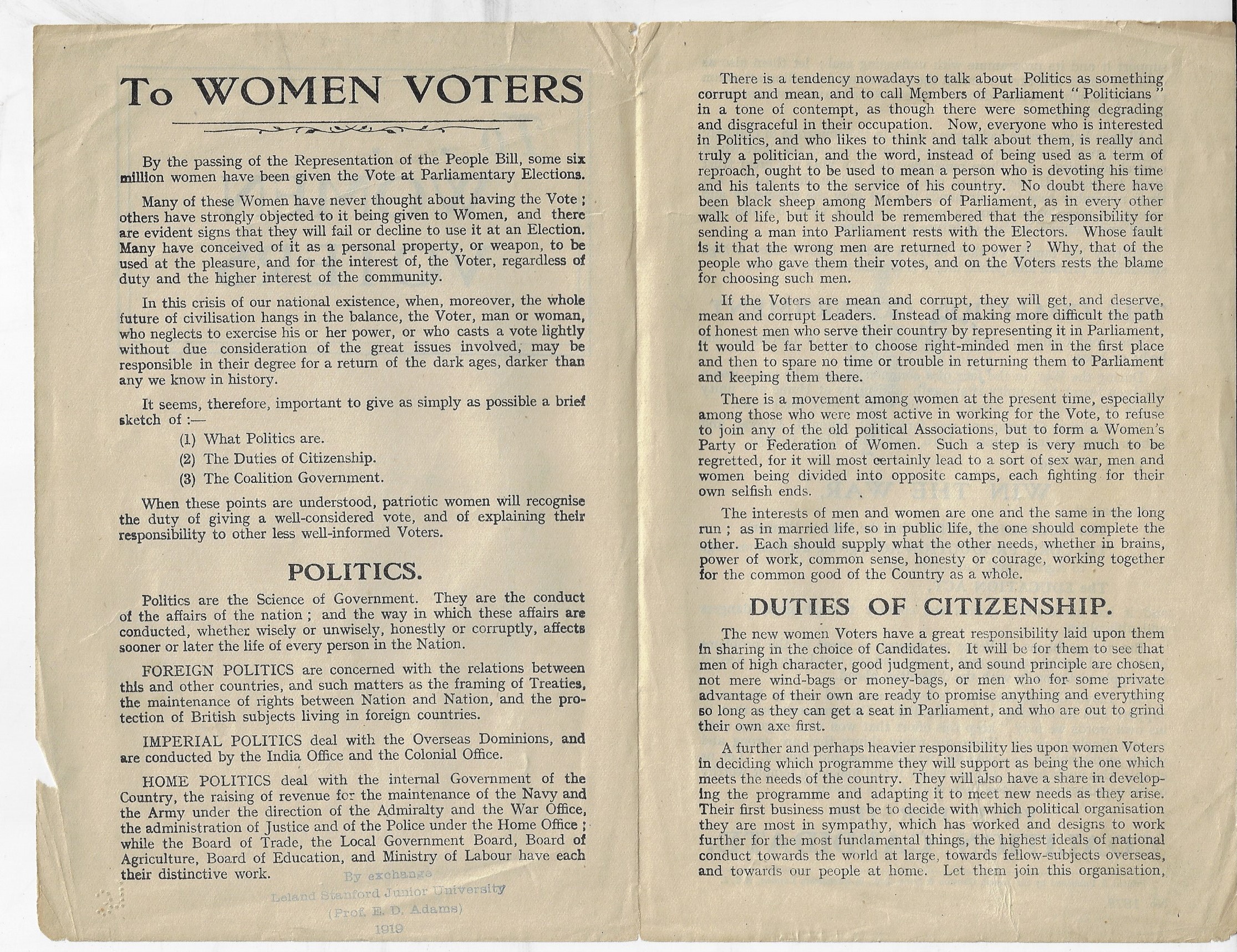
    To Women Voters1—a short and thin-lipped tearsheet printed by Sir Joseph Causton (viz Midsomer!) of London–was printed in 1918 for the Lloyd George U.K. Coalition Government.  (The coalition government of Lloyd George lasted until 1922 when it was replaced by that of Bonar Law.) It was printed in response to the Representation of the People Act of 19182, which enfranchised a certain set of women to the vote. This pamphlet was a very remedial introduction to the most basic ideas of government,  defining the subjects of “Politics”, “Duties of Citizenship”, and the “Coalition Government”, mostly in the service of having the women who could vote and would do so to vote for the Lloyd George ministry. The writer made a brittle assumption that women knew nothing about government and politics, and proceeded accordingly.

    I’ve reprinted the pamphlet below. 

    Notes:

    1.  8.5” x 5.5”, 4pp (one sheet folded in half).  Provenance: from the collection of Prof. E.D. Adams to Leland Stanford Jr University, and then the Library of Congress. The LC surplus stamp is on back cover, while the small Stanford stamp is at the bottom of page 2.  

    2. “The Representation of the People Act 1918 widened suffrage by abolishing practically all property qualifications for men and by enfranchising women over 30 who met minimum property qualifications. The enfranchisement of this latter group was accepted as recognition of the contribution made by women defence workers. However, women were still not politically equal to men (who could vote from the age of 21); full electoral equality was achieved in Ireland in 1922, but did not occur in Britain until the Representation of the People (Equal Franchise) Act 1928.”–Wikipedia

    Books covers to women voters

    Books covers women voters inside

    ·Posted by :

    ·in:

    —

  • A Beautiful Apocalypse (1508)

    JF Ptak Science Books  Quick Post

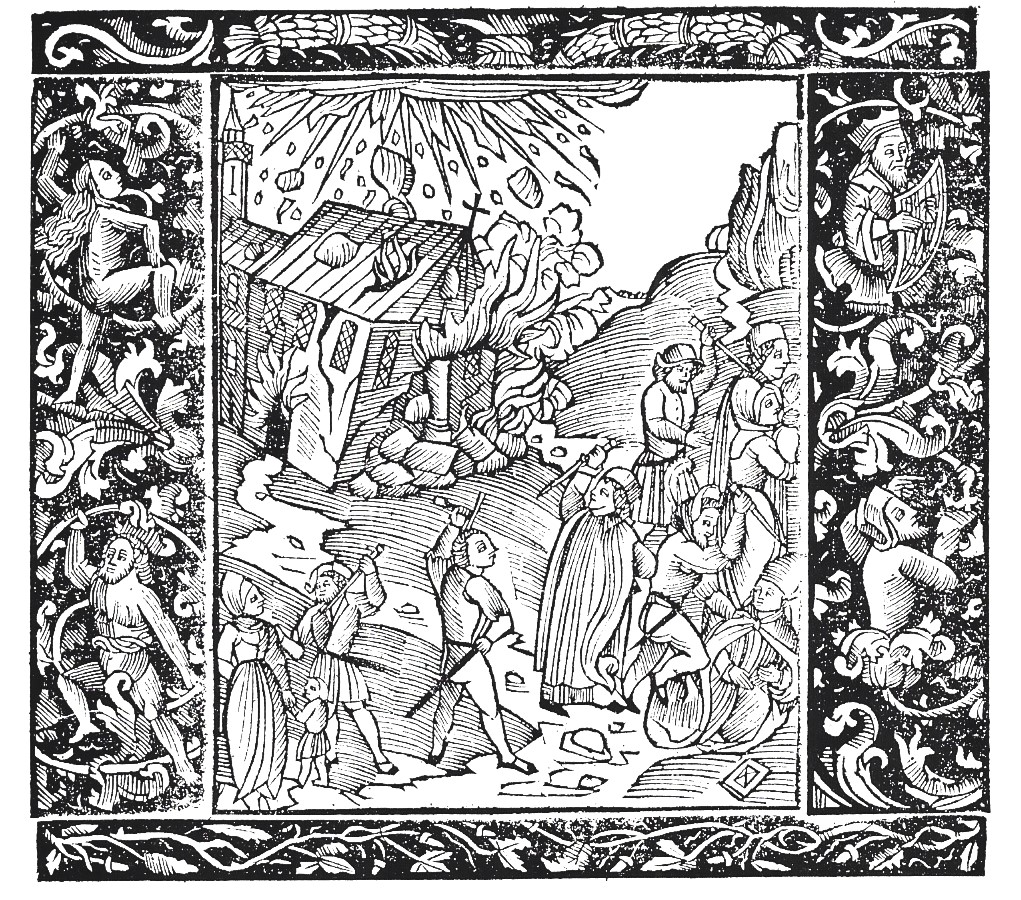
    This vision of The Apocalypse doesn’t look overwhelmingly apocalpse-y, to me, but the message was put across to the viewer that something bad was happening, what with the hail and brimstone and lightning and fire being visited upon the dissolving church in the background and the murdered clergy in the foreground. The woodcut appeared in Joseph Gruenbeck’s Speculum naturalis coelestis & propheticae visionis, printed in Nuremberg in October 1508, being a short (18 leaves) prognostication on the fate of humankind and its wicked ways. It is a very orderly fall from grace, but a fall nevertheless, and the reader no doubt was reminded of the waiting ring of fire. 

    Apocalypse beautiful


  • Teepees and Petroleum Companies, 1885

    JF Ptak Science Books  Quick Post

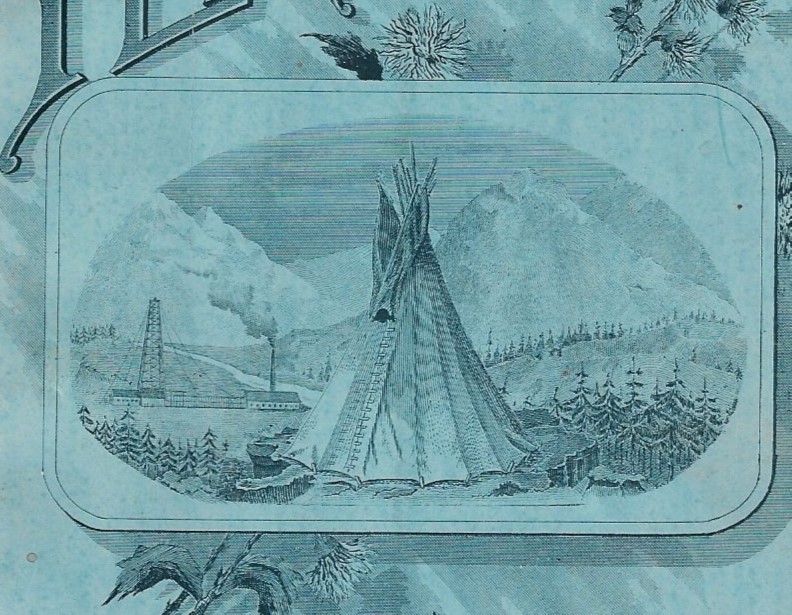
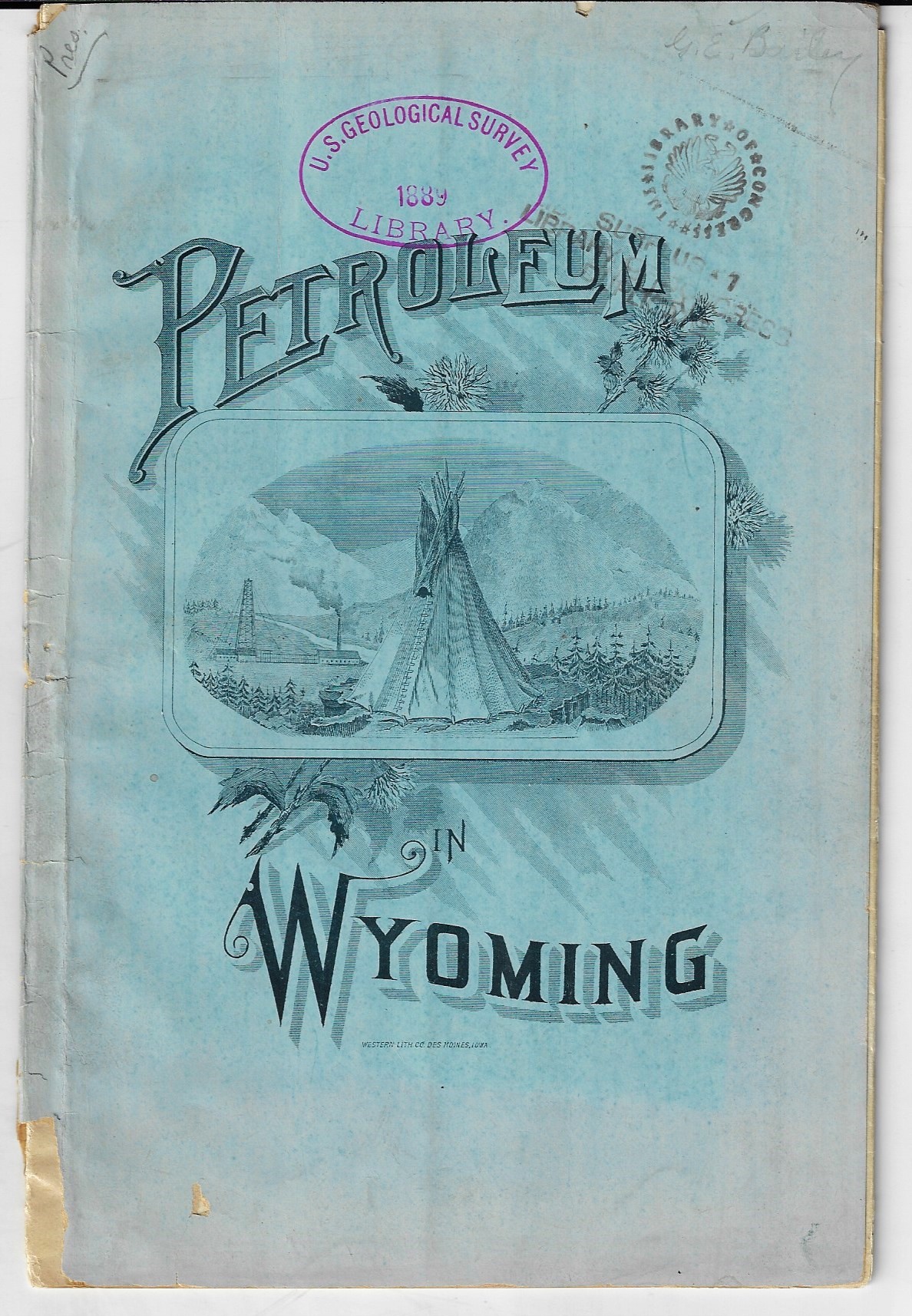
    Wyoming _2_I was working on this 1885 pamphlet1 on petroleum in Wyoming territory, and was stopped by the cover illustration. As you can see, the cover shows a teepee (which would be about right seeing that most of the numerous Indian tribes there in the territory before White incursion were nomadic)—behind it though we see oil derricks, which I am sure was not the case, unless the derricks were on Indian land. In 1880 the (non-Indian) population of Crook County was 239, which “jumped” to 2,300 in 1890, (then to 6k in 1910 where it has stayed about constant since). In 1890 the Indian population in all of Wyoming was 2,063 (or thereabouts, according to the U.S.1890 census special volume Indians Taxed and Indians Not Taxed), and of that figure nearly the entirety of the population–1,861–were on reservations. And according to the census report of the 189,000 reported Indian population in the country 133,000 were on reservations, while another 50,000 were living in Indian Territory which did not in the government’s mind count for being on a reservation, making for something like 5,000 Indians not on reservations or I.T. territory in the entire U.S. and territories. So, picturing the teepee set before a petroleum industry scene was exceedingly and vapidly prosaic.

    WyomingNotes:

    1. Gilbert Ellis Bailey (former State Geologist of Wyoming). Petroleum in Wyoming Territory and special report on the Stockade oil district and the property of the Lakota oil and coal mining company in Crook County, Wyoming. No publisher or place of printing is noted. No date (though it is certainly before statehood in 1890); Stanford guesses 1885.  8.25”x5.75”, 19pp, with a small folding map of the county.  Printed wrappers. Provenance: U.S. Geological Survey Library, gifted to the Library of Congress in 1921. One copy only (Stanford) located by WorldCat.  


  • Beer Vs. Wine, 1828

    JF Ptak Science Books  Quick Post

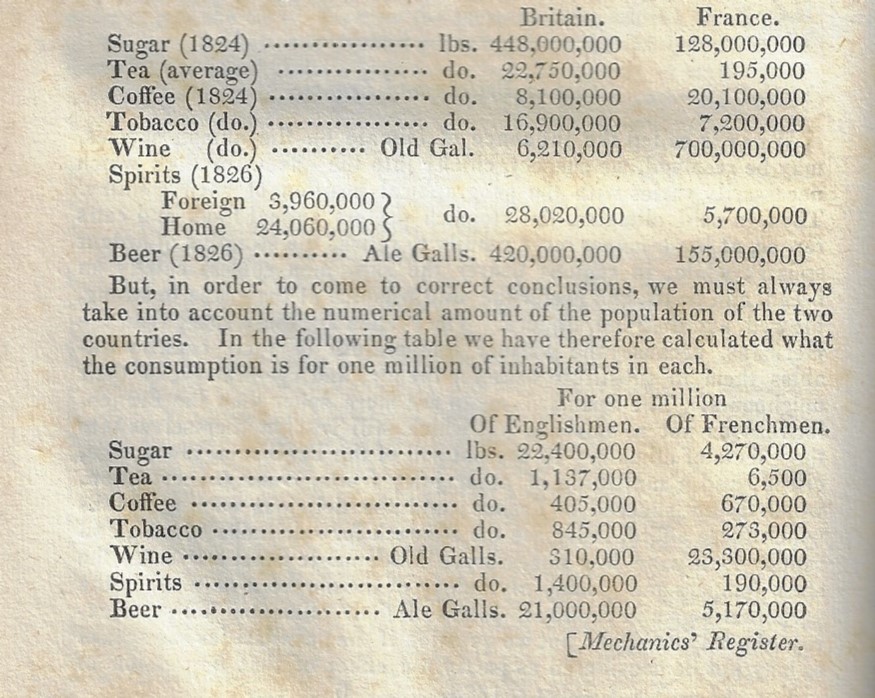
    Here we go: I found this fascinating little table in the article “Diet in England and France” in the Journal of the Franklin Institute for July, 1828. I think that the table displays what seems to be common knowledge about consumption in the two cultures, though it also provides some interesting numbers (“compiled from authentic documents”) to back everything up.  The first section displays gross numbers, while the second breaks it down to consumption in terms of per capita. The Brits drink far less wine than the French, though the French drink even less (by an order of magnitude) of tea than the Brits. 

     JFI 1828 Diet