A Daily History of Holes, Dots, Lines, Science, History, Math, Physics, Art, the Unintentional Absurd, Architecture, Maps, Data Visualization, Blank and Missing Things, and so on. |1.6 million words, 7500 images, 4.9 million hits| Press & appearances in The Times, Le Figaro, Mensa, The Economist, The Guardian, Discovery News, Slate, Le Monde, Sci American Blogs, Le Pont, and many othr places… 5000+ total posts since 2008.

Category: Medicine, History of

  • “Cocaine, the Princess of Perdition” (1939)

    JF Ptak Science Books  Overall Post 5139
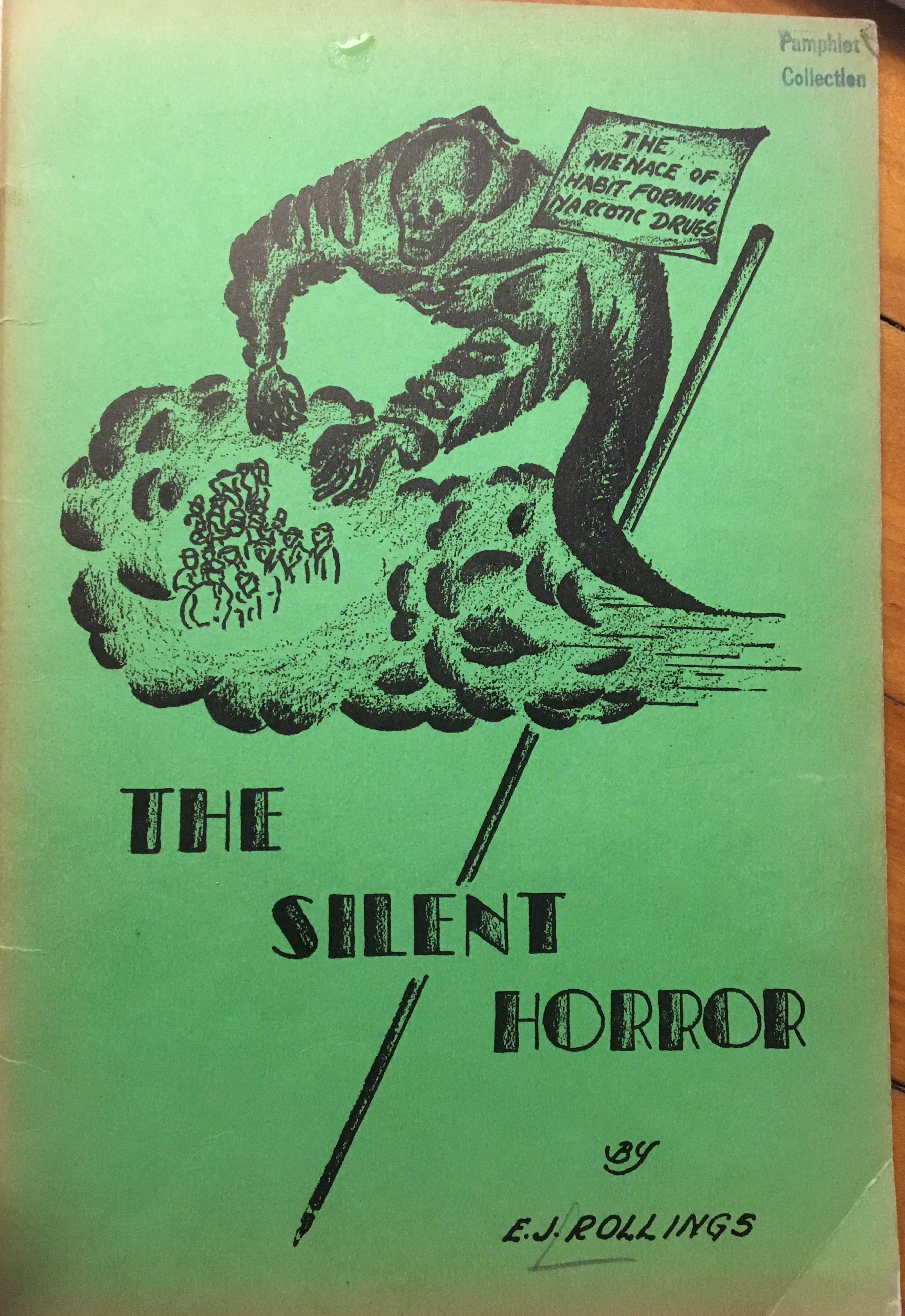
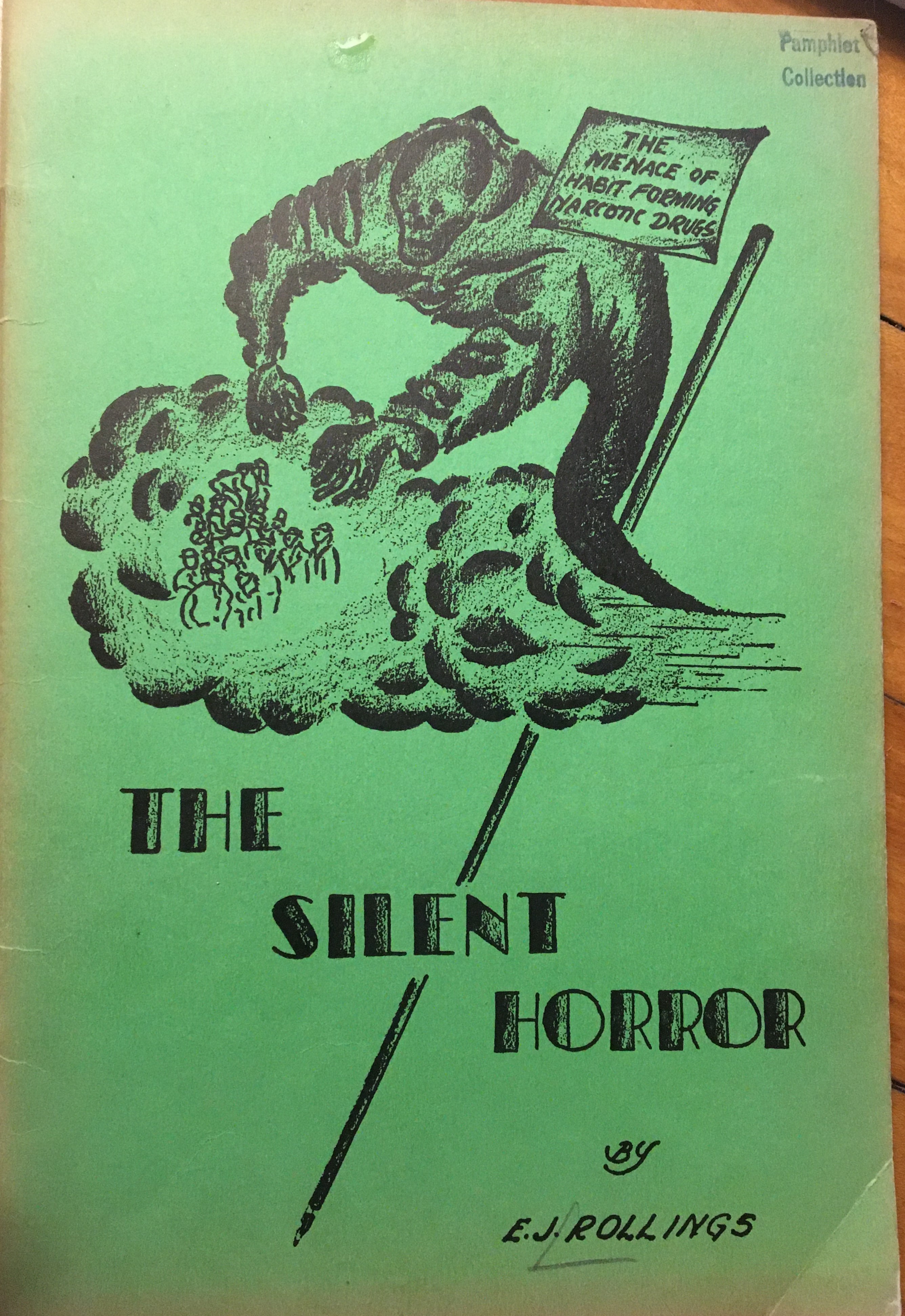
    IMG_2037 (1) Elmer James Rollings’ The Silent Horror (1939) is a two-fisted introduction and appraisal of narcotics published in Wichita, Kansas by the Defender Press, 1939. (It also seems that this pamphlet is pretty rare–there are no copies of the work found in WorldCat.) 

    Rollings contributed at least four other narcotics-related works (“Your Girl or My Boy May be Next”, “Marijuana—the Weed of Woe”, “Junk, Junk Peddler and Junkers”, “Perils of the Poppy” and “I Saw Him Die”.) There were a few other short works non-drug-related, including something on cowboy songs and also a book on bible prophesy.  

    The major chapters of The Silent Horror deal with the shades of narcotics: ‘Opium, the King of Dope’; ‘Crown Prince, Morphine’; ‘Cocaine, the Princess of Perdition’; ‘Marijuana, the Dutchess of Despair’; ‘the Dope Peddlers’; and ‘Addicts’.
    Here’s an excerpt:
    “An eighteen-year-old boy in a Midwestern city smoked two “reefers” and an hour later choked his sweetheart to death because she refused his shocking, lustful advances, born in a marijuana-crazed brain… A sixteen-year-old boy shot his mother and father to death with his father’s shotgun after smoking several “Mary Anns” given to him by a new friend whose acquaintance he made by chance. He could neither explain nor remember the killing when the effects of the drug had worn off and sobbed himself into hysterical grief when told of his crime. And so, on and on, runs the record of thievery, forgery, banditry, kidnapping, brutal murder, degeneracy, and rape, all chargeable to this paralyzer of conscience and inflamer of depravity — Marijuana! “

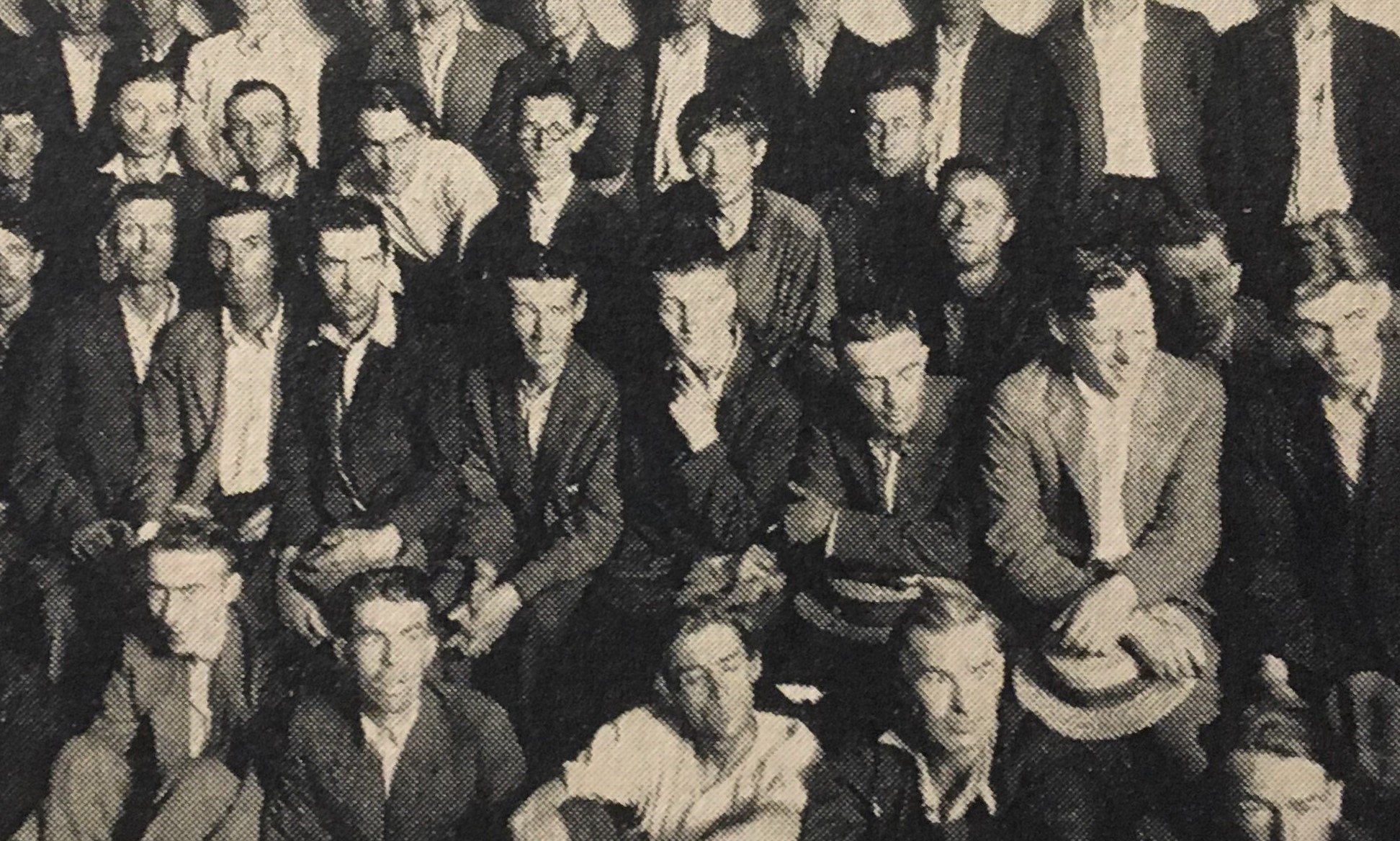
    Here’s a detail of one of the photos–this one has a caption stating that 60 addicts were picked up in 60 minutes, though Mr. Rollings declined to say where this all took place:
    IMG_2036


  • Subduing Insanity with Narcotized Sleep: Mental Illness Treatments in 1846

    JF Ptak Science Books (Earlier post, expanded)

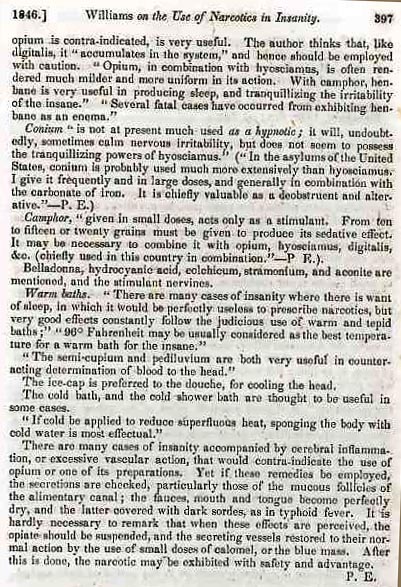
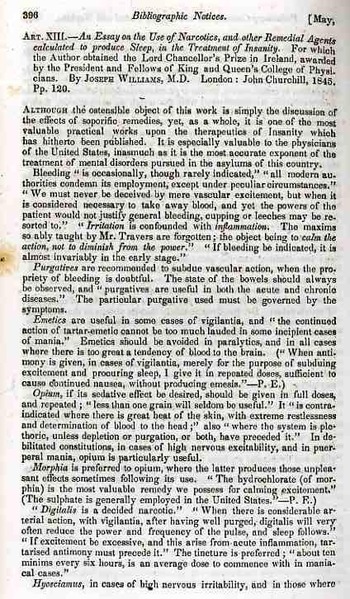
    Drugs for insanity _1_This book review on the use of narcotics to induce sleep in treating the insane appeared in the New York Journal of Medicine for 1846.  The book, An Essay on the Use of Narcotics, and other remedial Agents calculated to produce Sleep in the Treatment of Insanity…., was written by Joseph Williams, M.D., and was published in London in 1845.  The theory behind the sleep treatment was that the basic mechanism of insanity was “cerebral inflammation” or “excessive vascular action” in the brain—inducing deep sleep, evidently, was a good way to combat the over-active brain.

    The article itself comes at an odd time in the history of the treatment of the insane.  It came almost 40 years after the establishment of  McLean Hospital (first known as the “Asylum for the Insane,” a division of the Massachusetts General Hospital), which opened on Oct. 1, 1818, and was the first hospital dedicated to the treatment of the insane in the U.S.  It came 70 years after the great advances of Benjamin Rush, who elevated the “Mental Patient” from chains on the floor to the status of medical or nervous illness or disease.  The use of narcotics over this period seems to have surged and waned.  In 1879, in an article in the New York Times, the reputation of the Asylum for the Insane on Ward’s Island in NYC was considered—and one of the high points was that it had (largely) discontinued the use of narcotics. (There were still problems, of course, what with the asylum being overcrowded, housing 1100 in an institution meant to house 700, and where the chores and even nursing positions were staffed by the inmates, who were feed on 32 cents a day.)  As late as 1921, though, Jacob Alter Goldberg notes in his Social Aspects of the Treatment of the Insane, that there was a new, sharp increase in “toxic narcotic” treatments of the insane.  Of course, I guess one could replace “narcotic” with some sort of other misplaced treatment, like shock therapy, or Freudian mélanges, or something.  Each age must necessarily have their entry in the encyclopedia of embarrassments

    In this article we find sleep assaulted by the use of the following: purgatives (“to subdue vascular action when the propriety of bleeding is doubtful’), emetics, opium (to be used “in cases of high nervous excitability and in puerperal mania”), morphia (“the most valuable remedy for calming excitement”), hyosciamus (“to produce sleep, tranquilizing the irritability of the insane”).  It is weird to see that the last sentence in the description of hyosciamus reads “some fatal cases have occurred from exhibiting henbane as an enema”. 

    A narcotic enema?  Still to come in the review is conium (“I have used it frequently and in large doses…it is chiefly valuable as a deobstruent and alternative”, followed by camphor, Belladonna, hydrocyanic acid, colchirum, stramonium aconite, and others.  “Warm baths’ makes an appearance (“90 degrees may be considered to be the best temperature for a warm bath for the insane”), as do cold baths, and the applications of ice caps. 

    Drugs for insanity _2_

    I’m not so sure about what to make of it all, the sleep treatment of insanity I mean—after all, Joseph Lister only makes his epochal pronouncements on cleanliness in the operating theatre 15 or so years after this paper, which seems today to be the most rudimentary thing that one could do in treatment in the surgical room, so treating extra blood in the brain through drug-induced sleep doesn’t seem all that far away from the realm of possibility back there in early Victorian England.

    I don’t think I’ll forget the toxic narcotic enema any time soon, though.  Or the word “deobstruent”. 

    ·Posted by :

    ·in:


  • “Castration vs. Vasectomy in the Feebleminded as a Surgical Problem” (1941)

    JF Ptak Science Books  Post 2886

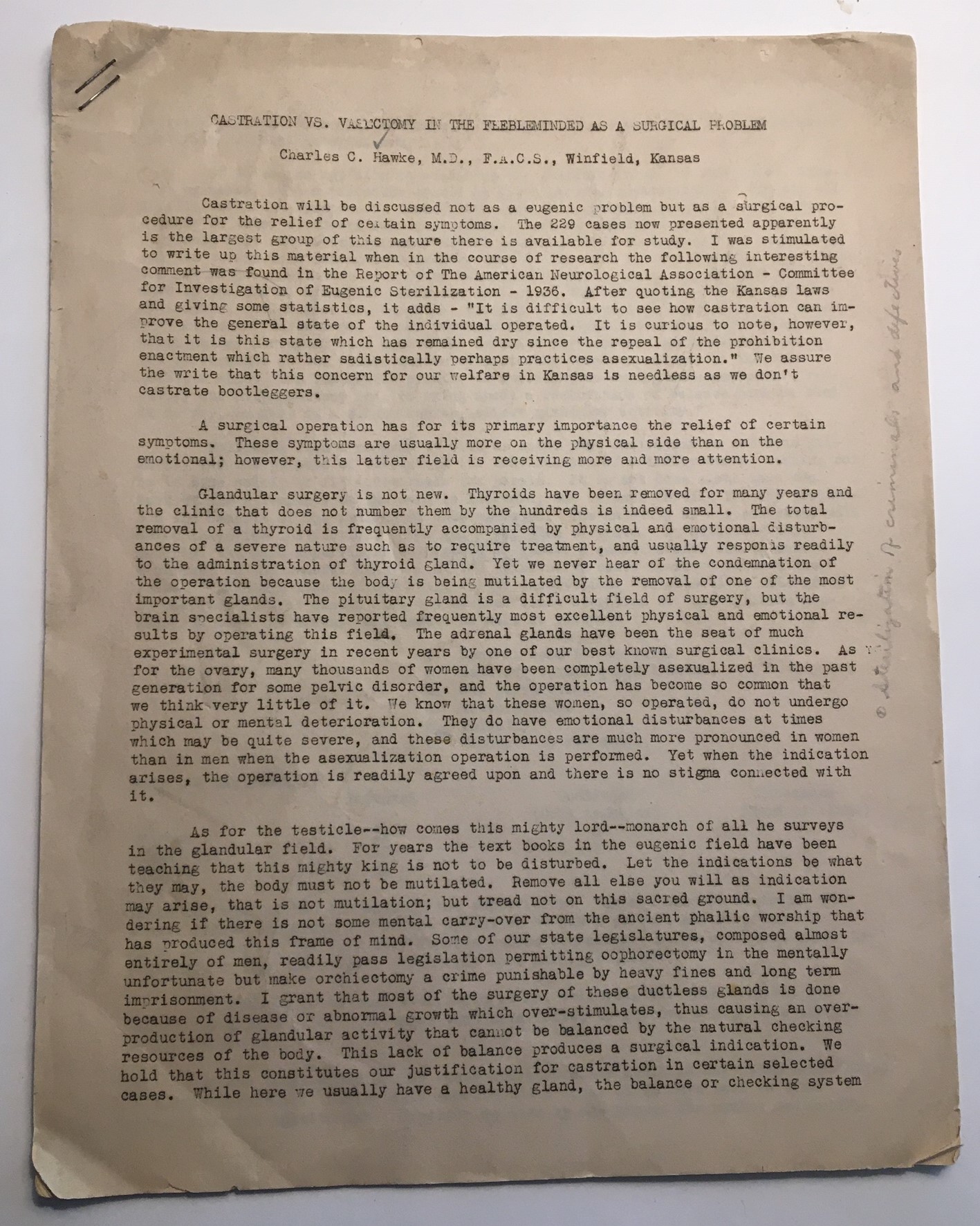
    This is an issue that you don’t hear every day…and offhand it seems to be a little late in the asking by 1941. But it wasn’t too late, unfortunately, and the question was a debated one in some halls of practicing eugenic and mental health academe. This is the title to a paper1 written by Dr. Charles C. Hawke (M.D., F.A.C.S.) while superintendent of the Kansas State Asylum in 1941, and it entailed a discussion of the efficacy of the enforced sterilization practice–a procedure under law that was basically discontinued as a medical/surgical response to mental issues in 1950 (in Kansas). 

    Castration Hawke _1_Dr. Hawke wonders—somewhat facetiously to my reading—about the reluctance of including testicles in the field of “glandular surgery”, noting that “text books in the eugenic field” teach that “this mighty king is not to be disturbed”, along with a few other purplely examples. He quickly establishes the castration (and ovariectomy) as well as vasectomy and salpingectomy may be the way to stabilize “the unstable group” (in institutions), “be they idiot, imbecile or moron” and that the procedure should “be given serious consideration”.

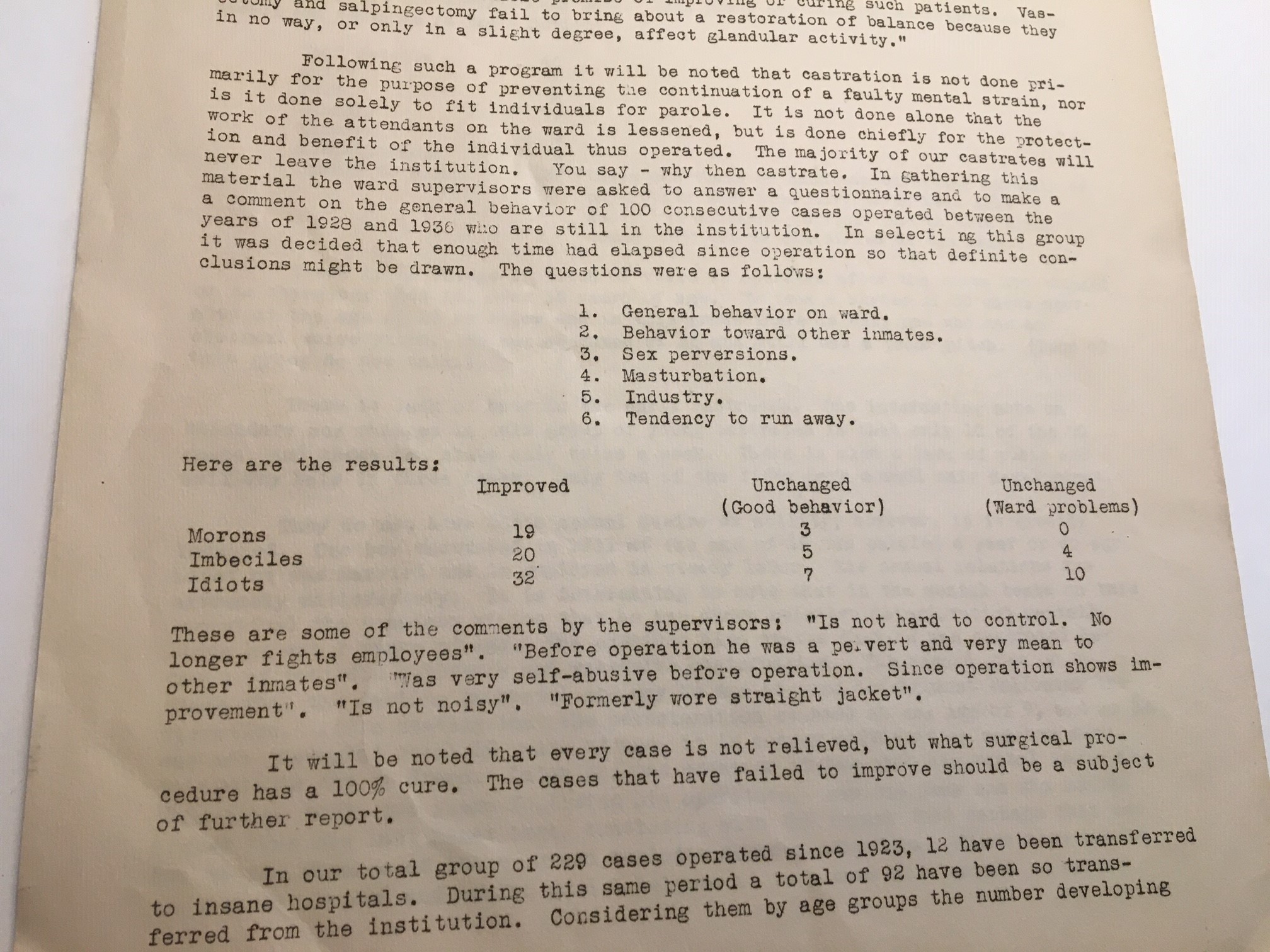
    He states that “the majority of our castrates will never leaves the institution. You ask—why then castrate[?]” He doesn’t seem to answer this directly, but does provide some evidence (below) that the behavior of 71% those castrated and confined does improve. It is not 100%, Dr. Hawke notes, and adds the corollary “…but what surgical procedure has a 100% cure [sic]”.

    There are other reports of successes in castration, including a long paragraph of Dr. (F. Hoyt) Pilcher, (Superintendent of the Kansas State Asylum for Idiotic and Imbecile Children) who began his work in the early 1890s. There is also a review of the 1917 (and 1928) laws passed by the Kansas legislature on “asexualization”. It seems that the state can uphold recommendations from medical officials recommending castration; the person in question can register a “protest” (“which are rare”). These laws extended its reach into “state penitentiaries, the boys’ reformatories, state hospitals for the insane, and the state hospital for epileptics, the state home for the feebleminded and the state industrial school for girls…”

    Castration Hawke _2_

    It is quite a document of those eugenical times.

    Notes:

    1. Charles C. Hawke (M.D., F.A.C.S., Winfield, Kansas).  Castration vs. Vasectomy in the Feebleminded as a Surgical Problem. 12 leaves (including a 17-item bibliography. Mimeographed. Stapled. GOOD+ copy. This copy’s provenance: “Gift from the author, 1941” in pencil notation on the back of the first leaf, with the LC rubber stamp on the rear leaf.  WorldCat records only ONE copy (Tozzer Libray, Harvard), so as a single-issue “offprint” it is a rare thing.

    2. For a deep review see: Cean T. Collins, “CHILDREN OF SORROW: A History of the Mentally Retarded in Kansas”, in Bulletin of the History of Medicine, Vol. 39, No. 1 , 1965, pp. 53-78

    ·Posted by :

    ·in:

    —

  • A Note on Graphical Display and a Mechanical Heart, 1876

    JF Ptak Science Books  (Expanded version of an earlier post)

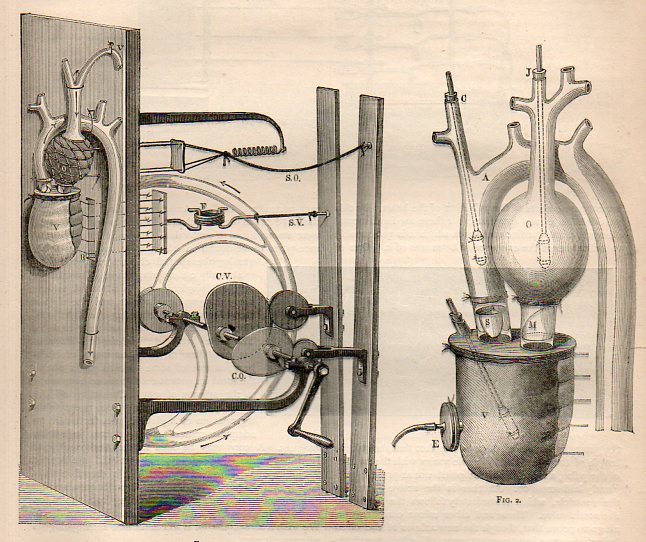
    Marey heart _2_This quick note comes as the result of a short chase on the detection of the pulse and the ability to determine death–as far back and even before Pliny life was determined by the audible heartbeat, which is where the trouble began, because one can still be very alive with a faint heartbeat. This was a major concern when dealing with folks who were thought to have expired, because in the mid-19th century and before the instruments necessary to make a careful and accurate appraisal of whether the heart was still working were yet finely developed.  Laennec’s stethoscope appeared around 1816, but as much of an improvement as it was this instrument awaited considerable refinements before a truly solid identification of a non-working heart could be established. The gaps in the determination of the arrival of death led to mortuaries where the supposed-dead were left to themselves at room temperature for three days, awaiting the ultimate determination of death which was putrefaction (as in the Munich and Frankfurt Leichenhaus and the Vienna  Zentralfriedhof). Earlier in the history of the determination of death methods were quicker and more brutal (if the patient was still alive) involving bellows-driven tobacco-smoke enema,  as well as tongue pulling and nipple twisting. 


    Marey heart _3_This led to Etienne Marey (1830-1904), a versatile experimenter and premier instrumentalist who was a scientist, physiologist, and motion-picture/chronographer pioneer, who in the 1880’s created what was essentially the world’s first moving-photographic “slow motion” device. One iteration of Marey’s apparatus was basically a long series of ganged cameras recording a motion for a  simple task at a given time frame and presented on a continuous strip of photographic paper, sort of like a motion picture with the camera speed set at three frames per second. The resulting images were phenomenal and showed people for the first time the exactness of all manners of simple motions–motions that no longer looked so “simple” once all of its aspects could be studied from captured photographic evidence.  Even the act of hopping over a small stool or bending to pick up a bucket of water were enormously revealing in a way like Robert Hooke’s Micrographia displayed the great detail and complexity of the seemingly simple fly.

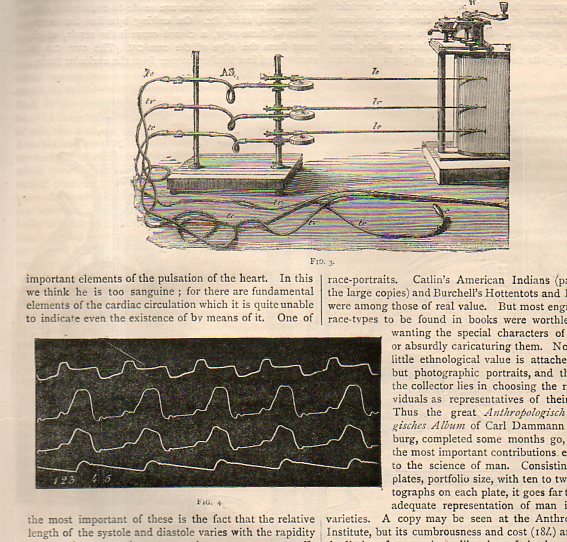
    Aside from being one of the founders of cinematography, the other aspect of Marey’s interest in capturing and manipulating time was in medicine, where by the time this article of interest in this post was published in 1876 he had already established himself as one of the greatest cardiovascular physiologists.  What we find in this review in Nature (Thursday, January 6, 1876) of Marey’s Physiologie Experimentale  (Paris, 1876) was the editor’s keen interest in the mechanical heart Marey had constructed to show the actions and functions of the heart–the first time, the article notes, that all aspects of the action of the heart were exhibited correctly in one model. 

      Of particular interest was the recording device for the pulse of the heart, which was one in a series of devices such as that improved upon, something Marey himself had done with the first-introduced sphygmograph (“pulse wrtier”) of Karl von Vierdodt in 1854.  The 1875/6 Marey instrument made major advancements in continuous graphical registration in instruments of continuous noninvasive arterial responses.


  • High Realism in Anatomical Art: the Skull (1872)

    JF Ptak Science Books   Quick Post

     Anatomy--braun--

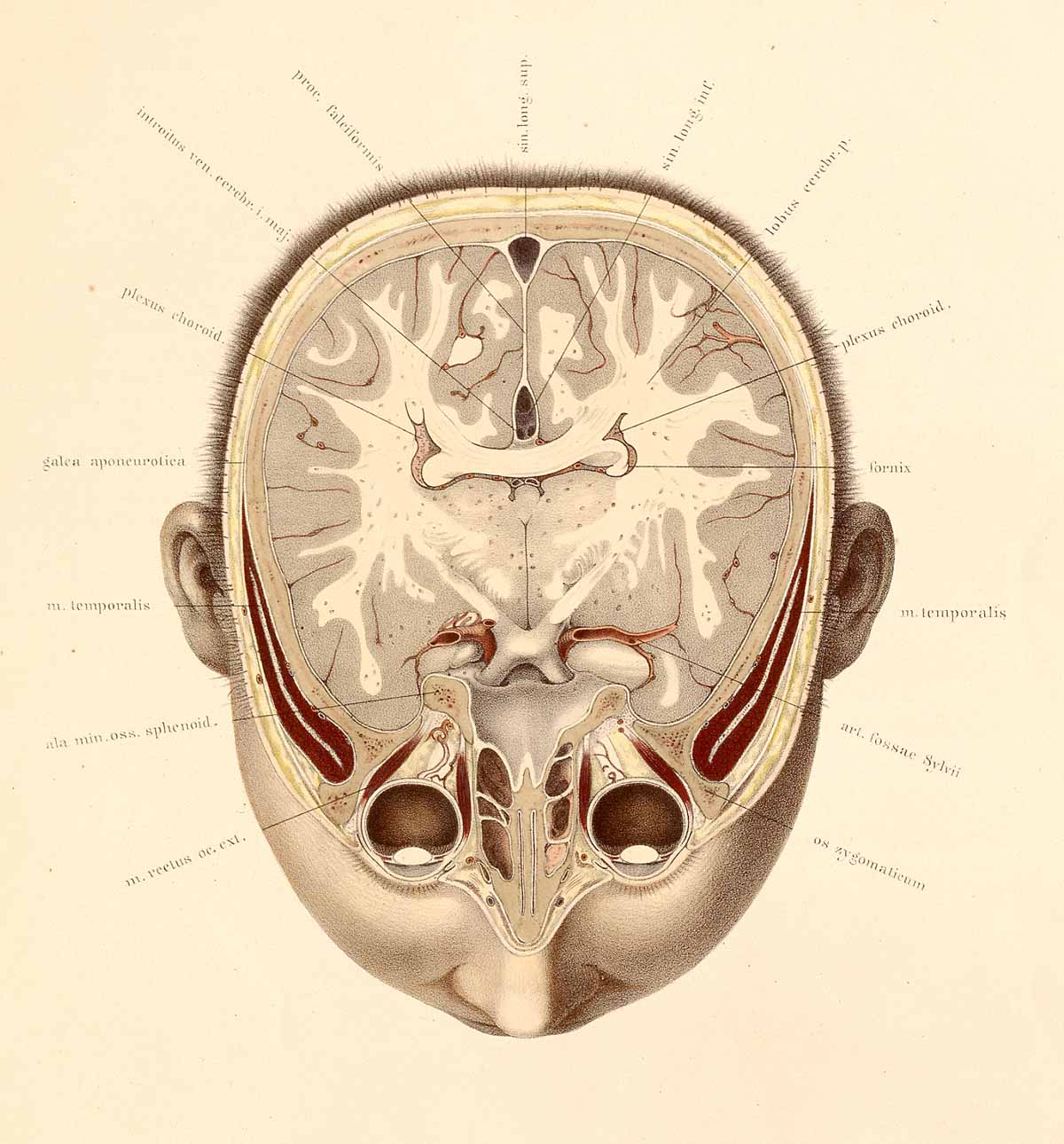
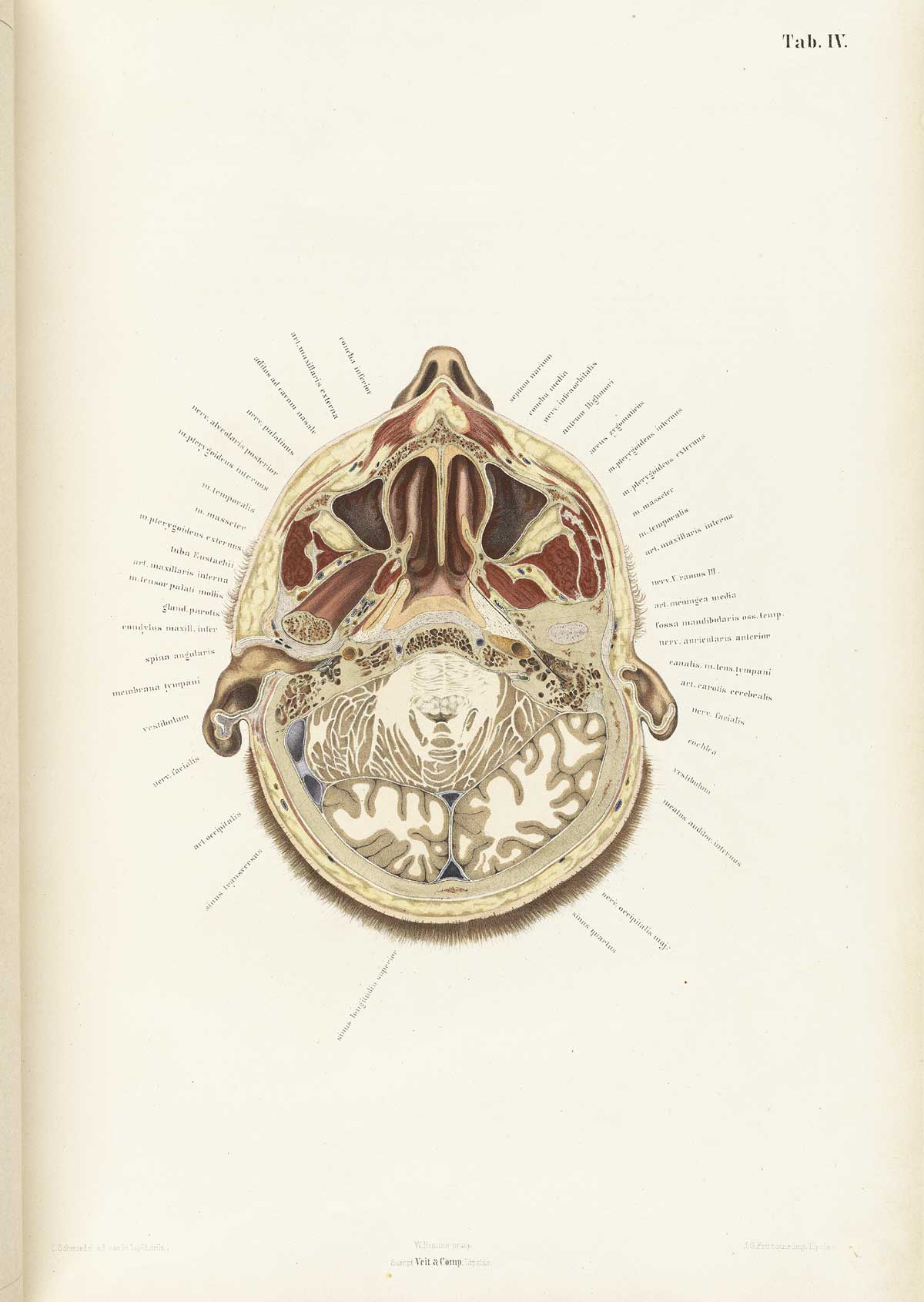
    The collaborative work of anatomist Wilhelm Braune (1831-1892) and artist C. Schmiedel (fl. mid-1800s) produced a singular work,  Topographisch-anatomischer atlas nach durchschnitten an gefrorenen cadavern…(published in Leipzig in 1872), which was an outstanding example of high-realism in the art of anatomy. This book is pretty much right-to-business, with no extraneous bits as had appeared in anatomies for centuries. And even though these practices had pretty much expired by the first quarter of the 19th century, Braune/Schmiedel was ever more so detailed and simple–their design was fabulous, and their detail light and exceptional. 


    Anatomy braune04[Source: National Library of Medicine.]

    They also made use of sliced frozen sections of cadavers, which seems to give their work that crystalline touch.  The first image looks at the brain from top-to-bottom, while the second reverses the view, which is in itself somewhat unusual, even in 1872. 


  • One of the Earliest X-Rays of “Dots”: Medical Imagery, 1896

    JF Ptak Science Books  Quick Post--History of Dots series

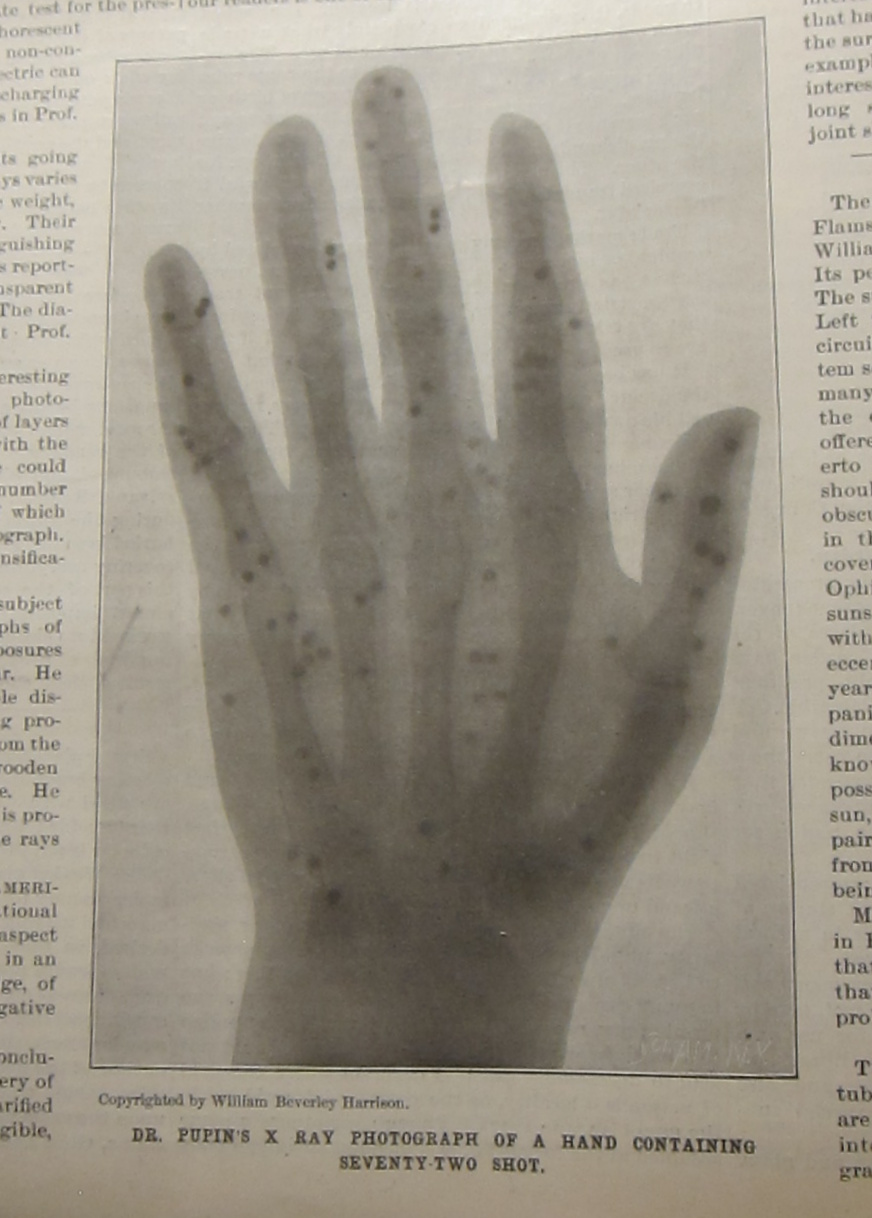
    In the long line of the history of “firsts” in photography are a number of sub-categories, and subs- to those subs, an example of which is scene in the pages of Scientific American for 1896. Here we have the history of photography=>medical photography=>clinical applications of X-rays=>X-ray photographs=>X-ray photographs of gunshots, or some such thing. Anyway, here in the March 21 1896 issue of the great magazine is one of two articles on the X-ray, the second of which features what may be one of the very earliest–if not the earliest–images made of a human limb peppered with rifle/field canon pellets. This comes only two months or so following the discovery and first imagery using  X-rays by Wilhelm Roentgen (1845-1923) made November 8 1895, the experimental results published soon after on January 8 1896 in his paper “Ueber eine neue Art von Strahlen” in the Würzburg Physico-Medical Society.

    The interest in X-rays was spectacular, with more than 1000 papers published on the subject in 1896 alone. This is understandable given the revolutionary nature of the announcement plus the relative ease and simplicity of equipment necessary to produce results.  The Roentgen paper was translated and printed in Nature (for the first time in English) almost immediately on January 23 1896, and it was the very next issue in which advertisements appeared for the relatively cheap necessaries (Crookes tubes etc.) for interested parties to produce their own X-rays at home. Absolutely everyone was interested in this discovery. (For the Scientific American there were 9 articles on the X-ray for January-June, 1896, with the first appearing on February 3; for July-December there were 33.) 

    The image below was made by Columbia University’s Michael Pupin, and was one of the earliest general clinical uses of the new discovery, following what was probably the first medical use (at least in the U.S.) by Frank Austin (Dartmouth) in February 1896. The extraordinary development had an epochal impact on medicine, as now for the first time in the history of the planet a person could see inside a person/living being without cutting them open and poking around.  The X-ray was soon put into use on the battlefield six months later, at about the same time that some of the pioneers (E. Thomson, Morton, Tesla) began to report exposure burns (as some of their photographic exposures using X-rays were 20 minutes long…) 

    (By the way this is the man for whom Pupin Hall was named–this place became ultra famous in my mind, anyway, for the seminal work done their in cutting edge areas by Peagram and Fermi and Urey and Rabi and Dunning, among many others. Also Pupin was awarded the Nobel Prize for Literature in 1924 for his scientific memoir/autobiography, a highly unusual feat for such a subject.) 

    Sci Am 1896 x-ray


  • Full Text Psychological and Intelligence Tests (1941)

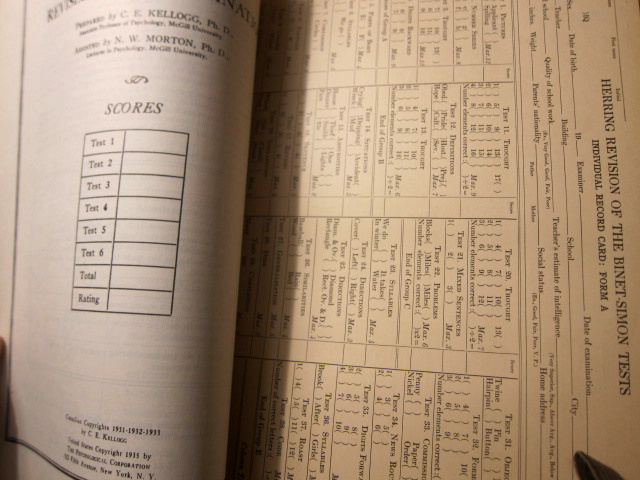
    Manual of the Psychological Tests and Procedures in Use at the Neuro-Psychiatric Institute of the Hartford Retreat. Published by the Neuro-Psychiatric Institute of the Hartford Institute, the Institute of Living, Founded 1822. Printed by the Hartford Retreat, 1941. Offset printed, 11” 8”, ca. 125pp. Staple bound, with original wrappers. Condition: very good condition, save that the rear wrapper is missing. NO COPIES are located in WorldCat/OCLC. Provenance: Library of Congress, with their 6mm “LC” perforated in the front wrapper, deaccessioned in the Pamphlet Collections sale. $450

    A covering letter for the publication—coming from the psychiatrist -in-chief of the Hartford Retreat—states that “this descriptive booklet has been prepared to enable the members of the Medical Staff to have full information concerning the facilities and services offered by the Psychological Division”. Evidently staff was supposed know the tests and their details and so the tests in their full text were bound together.

    This is an extremely interesting and possibly in-house collection of 25 different intelligence tests, personality inventories, diagnostic tests, and a few other miscellaneous exams and tests. Each test is an obvious stand-alone, and I was surprised to see them all together—in general the entire test seems to only rarely be reproduced in full. Included in the publication are:

    [A] Intelligence Tests: (1) Terman-Binet; (2) Otis Self-Administrating Test; (3) Kuhlmann-Anderson Test; (4) Weschler-Bellevue Scale; (5) Army Alpha; (6) Army Beta; (7) Arthur Performance Scale; (8) Herring Revision of the Binet.

    [B] Personality Inventories: (9) Bernreuter Personality Inventory ; (10) Colgate B-2; (11) Colgate C-2; (12) Pressey X-O Test; (13) Thurstone Personality Schedule; (14) Neymann Kohlstedt Test.

    [C] Diagnostic Tests: (15) Jung Free Association Test; (16) Babcock Test; (17) Shipley-Hartford Retreat Test for Mental Impairment; (18) Bolles, Rosen and Landis Performance Tests.

    [D] Miscellaneous Tests: (19) Terman M-F Test; (20) Specific Interest Tests; (21) Educational Achievement; (22) Steinquist Mechanical Aptitude Test; (23) MacQuarrie Mechanical Ability Tests; (24) National Safe Drivers Test; (25) Moral Judgment Test.

    All of these are listed in the preface of the document and are complete and present. There is a listing for “Rorschach Ink Blot Test” though that test is not present, and it seems as though it was never bound (i.e. “stapled) with the rest of the tests. (There is a small penciled “x”next to this entry, which leads me to believe that it was just never included with the assembly.)

    Hartford _2_


  • 10,000 Windows Filled with Cigarettes (1938)

    JF Ptak Science Books   Quick Post

    American tobacco _3_

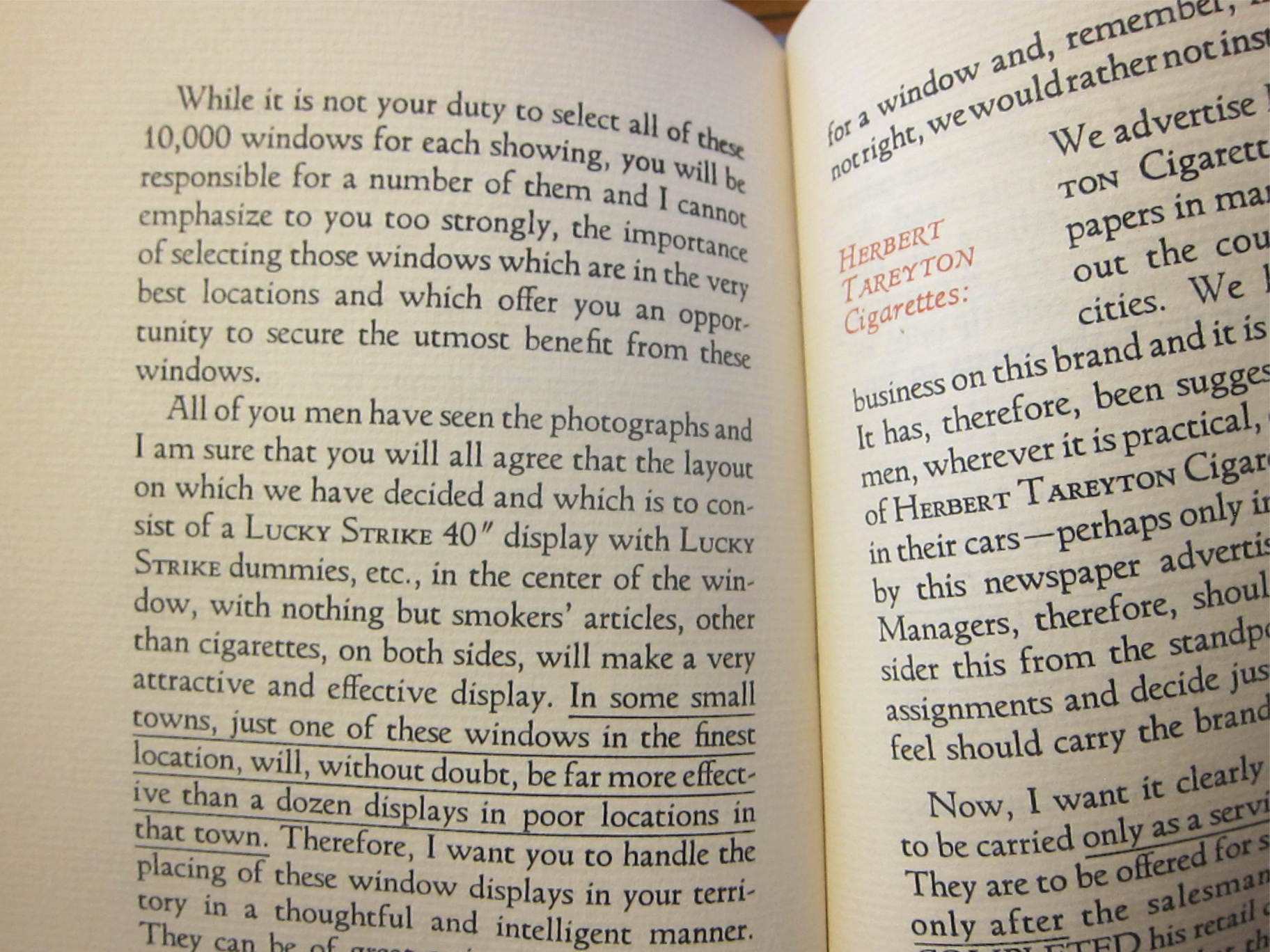
    Vincent Riggio (1878-1960) was a classic rags-to-riches story: Sicilian-born, lower East Side, quit school to work, opened barber shop on 117th, etc., and by 1947 was one of the highest paid execs in the country at $484k/yr., heading up sales for the American Tobacco Company.(Its hard to translate this wealth, even after fiddling with CPI—at the time though 30 million of the 39 million families in the US Census for 1950 made less than $5k/yr.)

    Anyway Riggio wrote a Christmastime book1 in 1938 on “Sales Organization” for the ATC, a piece of boosterism and a how-to for sales of cigarettes and the beauty they represented. One part that stopped me was the instruction on filling “10,000” windows in high-traffic areas with ciggie displays.  There were 93 cities in the US with 100k or more population in 1930 (105 in 1940, 50 in 1910, and 68 in 1920) so even if the windows concentrated on the big cities that’s 100 big windows (think classic giant window displays busy intersection) per each of the 100 cities. That’s in addition to massive amount of print ads and radio/sporting event sponsorships. (And remember the print ads used movie stars, doctors, lawyers, Santa, sports figures, and so on, plus the combination of the cigarette with the possibility of expressive manhood AND sexual allure.) These folks got their message across, which was too bad. 

    And for the record ATC was founded in 1890 by Buck Duke, and was one of the original 12 companies2 comprising the first index for the Dow Jones averages (1896). ATC was busted3 in 1911 as a monopoly, after which it became a simple oligopoly.

    Notes:

    1. Riggio, Vincent. American Tobacco Company, Sales Organization. Printed by ATC on fine laid paper. 7”x5”, 61pp. Embossed cloth.  I can’t find this in WorldCat/OCLC.  

    2. The twelve companies included American Cotton Oil, American Sugar, American Tobacco, Chicago Gas, Distilling & Cattle Feeding, General Electric, Laclede Gas, National Lead, North American, Tennessee Coal & Iron, U.S. Leather preferred, and U.S. Rubber.

    3. United States v. American Tobacco Company, 221 U.S. 106 (1911), “…which held that the combination in this case is one in restraint of trade and an attempt to monopolize the business of tobacco in interstate commerce within the prohibitions of the Sherman Antitrust Act of 1890.”–Wikipedia


  • The Mystery of Suggested Promise–an Advertisement for Electrical Cure of Diseases (1885)

    JF Ptak Science Books

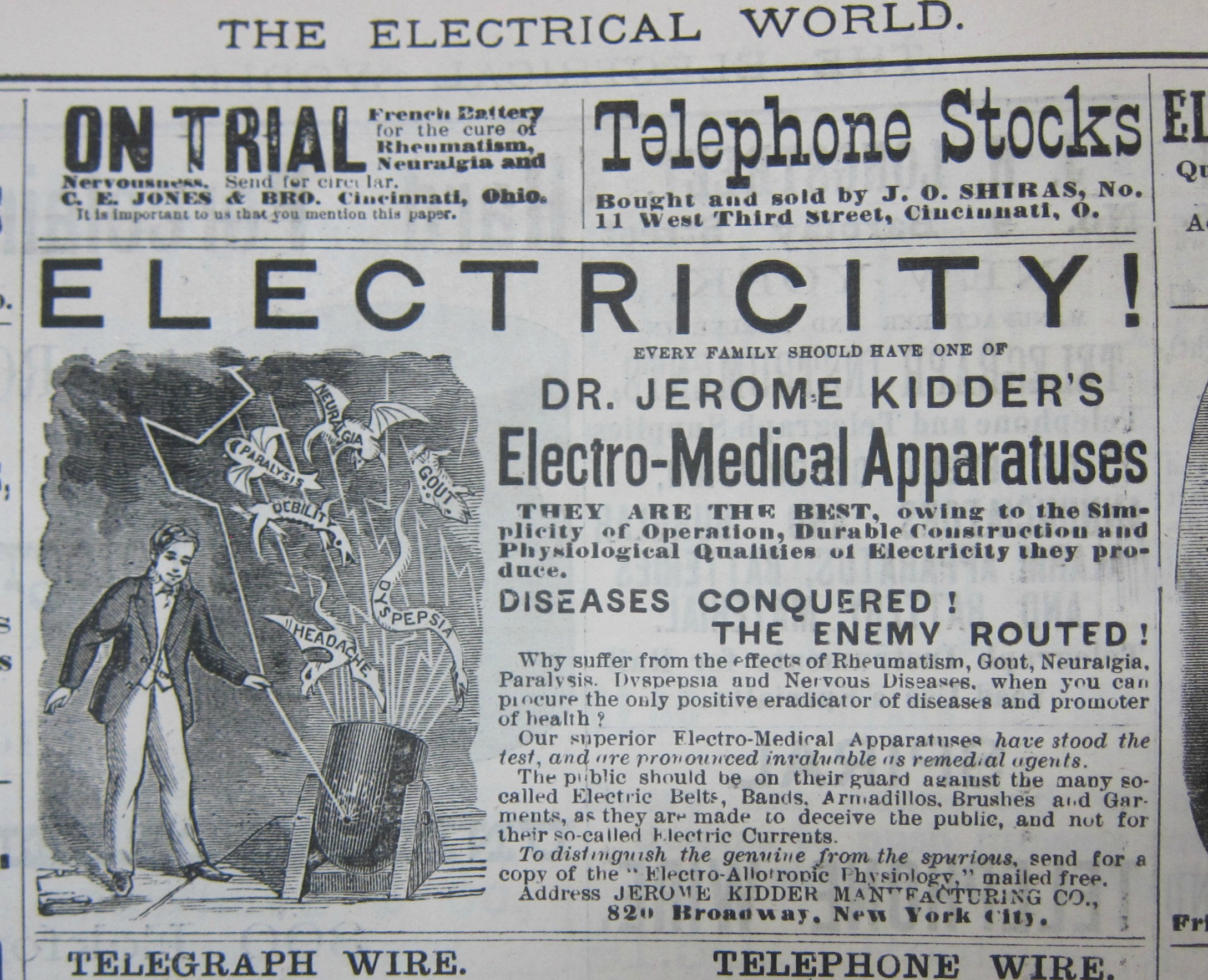
    I’m stepping right into the middle of this one–there’s a ton of material before and after this ad appeared in 1885 on the invention of the idea of curative factors of applying electricity in medical pursuits. It goes on to day of course but now the electrical stimulation will actually help rather than just simply electrically remove the money from your wallet. This ad happened to catch my eye while looking for telephone ads in the 1885 volume (#4) of Electrical World, mainly because of the graphics of the inventor, Dr. Kidder, happily satisfied and nonchalantly controlling a lightning bolt ignite the charge of a mortar–why a mortar, I don’t know. (There’s a slim chance for mortar-and-pestle, the mortar here being a siege weapon and the pestle being lightning issuing some sort of electrical wonder “pharmaceutical”, but I think that’s overthinking the image.) In any event the electric charge to the mortar spears various diseases and complains (including neuralgia, gout, paralysis, debility, dyspepsia, and headache) with electrical bolts/something, offering a cure to the afflicted with lightning speed. 

    Electricity Electrical world 1884 vol 4  electro medical

    I’m not sure of Jerome Kidder’s background as there are at least two I’ve found online that could be him, so I’ll just continue on personal history in ignorance. Seems to me though that he must’ve known that whatever it was he was peddling just didn’t work. 

    ·Posted by :

    ·in:

    —

  • Dickensian Details in a Pamphlet on Randall Island’s Pauper Children, 1876

    JF Ptak Science Books  Quick Post

    Here are a few things I learned from a ten-minute graze through a pamphlet1 describing the conditions and circumstances of the almshouses facilities on Randall’s Island (NYC) in 1876. Randall’s Island was pretty far removed from the great bustle of Manhattan and Brooklyn in 1876, having plenty of people to keep and incarcerate at a distance somewhat safely removed from polite society as well as the great unwashed. Today the island is mostly a collection of sports facilities, about an equidistant mile from Riker’s Island and the Guggenheim, as the crow flies.) 

    In any event, the bits and pieces that gave some insight into what was going on there are interesting:

    • Most of the children sent to this place (a collection of at least 12 buildings) were done so “by choice” by their parents, and most of those parents promised to pay for the fees to keep the child/children. Evidently fewer than 50% actually wound up paying. Most of the parents resorting to this were near or in a state of pauperism, and could not afford to keep their child, 
    • There were 91 girls, aged 8-14, housed in the “Large Girls’ Department” ; they were tended by one paid assistant and up to eight women from the alms-house and work house.
    • “Large Boys’ Department”: no mention of number, but drill master lives with them, plus 3 boys designated as monitors, and six females from the work house.
    • “Small Boys’ Department”: 136 children, tended by 5-6 women, one of whom received wages with five others being paupers or criminals sent from Blackwell’s Island. (Blackwell’s–now known as Roosevelt Island–was a skinny island about a mile south of Randall’s in the East River.  It served to host the first Lunatic Asylum for NYC and was also the country’s first mental asylum and also housed prisons, from which I assume the “Blackwell’s” helpers came.) 
    • “Infants’ Department”: 72 children aged 2.5-5, tended by 6 females, 5 from Blackwell’s.
    • The children on reception were dressed in blue gingham, white linen aprons and slept on straw beds and pillows, with food cooked by steam in six large cauldrons, mostly by inmates from Blackwell’s. I saw twice that children were released from this facility in the clothing in which they arrived, though there was no mention of what happened if that clothing was outgrown, as 50% of the children stayed here for about two years. 
    • Nursery Hospital held 769 between 2 and 16, most between 5-10
    • There were 1115 children on Randall’s, the near-majority placed there by their parents who promised to pay for care (half did), mostly Irish or “unascertained” ancestry;
    • Occupations of fathers “Unascertained”, mechanics, laborers, and 1 professional
    • Most had other family members in the same institution or Blackwells
    • Female (employed) helpers were mostly 30—40, widowed, and overwhelmingly Irish.

    There’s a lot more–actually a whole lot more considering the pamphlet’s brevity, including a description of schools and trade houses that were supposed to help prepare the kids for life in NYC once they reached the age of sixteen. Overall from my quick reading I was left a little hollow and tired, thinking about all of those kids, crammed together, many of them with continuing illnesses, eating steamed-everything, performing work tasks in stiff gingham, sleeping on straw, and attended by not many people at all, and most of those were convicts or fellow almshouses/poorhouse residents. 

    Notes:

    William P. Letchworth. Extract from the Ninth Annual Report of the State Board of Charities of New York, relating to PAUPER CHILDREN, New York County. Albany, Weeds, Parsons, and Company, 1876. 9×6”, 25pp. Original wrappers. Nice copy. Provenance: Library of Congress, with their surplus/duplicate rubber stamp on front and rear wrapper. Old vertical fold through-and-through. Includes a folding plan: “Diagram of Nursery and Nursery Hospital Buildings belonging to the Children’s department of the Almshouse of New York on Randall’s Island.”

    ·Posted by :

    ·in: