A Daily History of Holes, Dots, Lines, Science, History, Math, Physics, Art, the Unintentional Absurd, Architecture, Maps, Data Visualization, Blank and Missing Things, and so on. |1.6 million words, 7500 images, 4.9 million hits| Press & appearances in The Times, Le Figaro, Mensa, The Economist, The Guardian, Discovery News, Slate, Le Monde, Sci American Blogs, Le Pont, and many other places… 5000+ total posts since 2008.

Category: Medicine, History of

  • The Magnetic Sleep Doctor and the Shelf-Life of Dream Images

    JF Ptak Science Books LLC  Post 382
    0-blog---Nov 19 sleep082

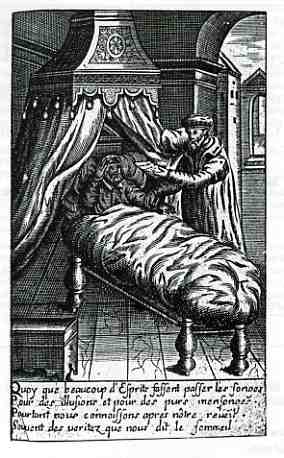
    This interesting and semi-bizarre image shows a doctor of magnetism (and necrologer and astrologer and several other things) conspiring at the edge of science and the heart of all things dark to adjust the dreams of the formerly sleeping man.  The patient is awakening and the doctor is doing, well, things that I don’t understand:  suffice to say that he was trying to assuage good dreams for the other man via the secrets of magnetism.

    The mysteries of sleep and the dreamworld were hotbeds of investigation from all sides, and there is a fairly deep publication record on the subject for the 1550-1700 period. This image comes from Le Palais du Prince du Sommeil, ou est enseignee l’Onriomancie autrement l’Art de Deviner par les Songes, printed in Lyon by Jean Pavhlhe in 1670, and written by the spectre-like M. Mirbel, whose history and biography are just about non-existent. 

    The idea of approaching sleep and dreams via magnetism is unusual even in the very unusual history of unusual ways of adjusting dreams–the interpretation of dreams is evidently closely related in mysterious and bendy ways, almost as convoluted and soft as the physical means used to induce them. 

    The history of big dreams and dreaming in general is far bigger than the issue of fixing them, and much paler, considering the vast range of imagery.  Jung (Memories, Dreams, Reflections), Havelock Ellis (World of Dreams), Freud (oy vey), Shakespeare (“we are such stuff…”), Leonardo, Joseph (and the Pharohs), William Blake, Solomon and of course Daniel, and then on and on into the night.

    Daniel’s
    dreams (as in The Book of Daniel) were gigantic and full, and there
    have been many others who have recorded their dreams in the history of
    literature and religion.  I must say though that the dream of King
    Prasenajit (the ruler of Kosala,  located on the northeast of modern
    Uttar Pradesh, India), a disciple of Buddha, had a dream in ten parts
    which troubled him greatly, and when you look at its elements you can
    see why:

    -Three jugs set in a row, one put against the other.
    The first and the last of the jugs are mutually exchanging the vapours
    of the liquids that are contained in them, vapours which never descend
    in the empty jug situated in the midst.
    -A horse that swallows the food concomitantly through the mouth and through the anus.
    -A tree full of flowers.
    -A tree full of fruits.
    -A man who is knitting a rope. Behind the man there is a sheep. The owner of the sheep eats the rope knitted by the first man.
    -A fox lying down on a bed made of gold, and eating out of golden vessels.
    -A cow suckling her own calf, against the law of nature.
    -Four
    oxen that arrive, bellowing, from the four corners of the horizon. They
    are rushing upon each other, in order to start fighting, but all of a
    sudden they vanish, right before clashing their horns together.
    -A pond surrounded by slopes. Its water is turbid in the offing, but clear near the shore.
    -A huge torrent, entirely red.

    This would give anyone pause, even more so if you were a disciple of the Buddha.  None of these images fit into my dream dictionary (especially the horse one), but perhaps they are deeply related to the times and not transferable over the centuries.  Which is an interesting way of looking at a particular time and understanding a bit of it that doesn’t normally sink into the public record–the expression of dreams might tell a little more about the time and place than about the person.  This sort of made-up historiographic (?) approach reminds me a little of snooping around old Domesday books and business/city directories, looking at the sorts of jobs that were common once upon a time and now slipped away into the tar pit.  So to with dream imagery?  Perhaps like just about everything else, dream images may well have a shelf life.  (I was going to reference Twinkies as an example contrary to this, but I understand that a new something-or-other has been added to it/them to make it so that these fine products will actually go bad after a while, rather than like before, when it could be counted on the cockroaches nibbling on them into eternity following the death of Dr. Strangelove.  Perhaps a former-chemist/librarian out there knows what this ingredient is and will share the knowledge?)

                                                                                             :

    Blog--magnetic dreamsFor example, this 18th century directory for what dream images may
    “mean” are mostly foreign to the general experience, I would say.  On the other hand, to attach meaning to the importance of dreaming about stealing pepper may be a little quixotic, but much less so than interpreting it as a harbinger f melancholy.  I know that to even mention the business of pepper theft in 1650 tells us a lot about its importance and why it would’ve been stealable and can tell us something about the foods of the time, trade, commodities and such.  Thinking about it in terms of a predictive element may not be as fruitful…


  • “Getting it” Backwards: Sanctorius’ (1676) Medical Invention, Spongebob, and the Alaskan Bull Worm

    JF Ptak Science Books   Post 309

    Alaskanischer_stierwurm
    By virtue of my children I think that I can safely say that I am now a stone-cold expert on Spongebob Squarepants, and if I tried just a little I could use it to reference just about anything. (This is also the case with The Simpsons, though I really didn’t need much excuse from my older daughter, Emma, who was/is a fan, to watch them.)  In one episode of SBSP, Sandra “Sandy” Cheeks, the underwater deep-sea-diver-outfitted “land” squirrel and close friend of SB, decides that since she is from Texas she can do anything, and attempts to wrestle the enormous Alaskan Bull Worm which has invaded their home of Bikini Bottom and taken her tail.  (I’m horrified to find that someone has transcribed the hundreds of SB epsiodes, god help them. And just for the record and to show I might be as removed as these folks, I’ll point out that in addition to getting most of Sandy’s tail, the worm also eats the “Welcome to Bikini Bottom” sign, a wheelbarrow, the homework of two children, the butt of a fish (twice) and most of SpongeBob’s pineapple house. There.)  So yadda yadda yadda she finds herself wrestling the worm in a cave against SB’s ignored and interrupted warnings.  She subdues the huge beast, and announces her victory.  SB gently corrects her, saying that what she was wrestling was just the tongue of the worm, and that the cave was its mouth, and that it was waaaaay bigger than Sandy had ever imagined.  The whole thing dawns on her slowly, [Sandy: “Ohhhhhhhh. This is the tongue, and… (trailing off) the whole thing… is the… worm. (freaks out) RUN FOR YOUR LIFE!!! “(she and SB sprint away; the worm growls angrily, chomps down, and chases after them)]   SO.  So Sandy just misses the big picture that was staring her square in the face, concentrating on the one detail she thought she could recognize and handle.

    From recognized oversight comes epiphany!

    1blog_oc_t11sanctorious811

    And such is the case with my reaction to the wood engraving here, concentrating on the use of the apparatus and how out of proportion its physicality was with its function.  And until I started reading about it I missed its monumental importance completely, concentrating as I was on the thing I thought I knew. 

    I was having a wide swipe at a man who is seen by nearly all authorities as being the founder of the physiology of metabolism.  The man is Santorio Santorio* (1561-1636, and who was also known as Santorio Santorii, and Sanctorius of Padua), and the image is from his Medicina Statica, or, rules of Health, in eight Sections of Aphorisms…English’d by J[ohn] D[avies], printed in London for John Starkey in 1676. (this is a reprint of the fourth edition of 1737, following the first edition of 1614.)  For many years Sanctorius weighed and measured just about everything that went into his body and everything that came out of it.  One of the principle instruments used by him in this process is the famous weighing chair, which was (seemingly) laboriously suspended from a device in the floor above the dining room.  the net effect of all of this (as we see in the illustration) was that, after eating began, once the chair touched the floor it was the signal to stop.

    What I was missing in this, what I didn’t put together and what I didn’t ask myself was where did this apparatus fit in the history of this sort of thinking?  The more substantial question yet was what other sorts of machines were employed in determining metabolism in humans?  The answer to the second question is “none”–this is the first time that a machine was used in this sort of analysis. Actually, it is the FIRST man-machine interaction of any sort in the history of medicine. And the answer to the first question is that this was the first time that data had been collected and analyzed  such a longitudinal and coherent fashion. 

    So I missed the whole thing, making fun of this enormous piece of machinery that would be used to tell someone when to stop eating, wrestling the Alaskan Bull Worm’s tongue in my own little cave.

    * According to the great bibliography of Garrison and Morton on the history of medicine, “Sanctoris was the founder of the physiology of metabolism.  He introduced into physiology exact methods of measurement, pulse counting, temperature determinism, and weighing”.


  • Classic in the History of Surgery (1833) and its Reviewer Who Hated Surgical Tools

    JF Ptak Science Books LLC Post 211

    Blogaugust_22_blasiusdet425

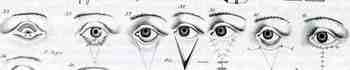
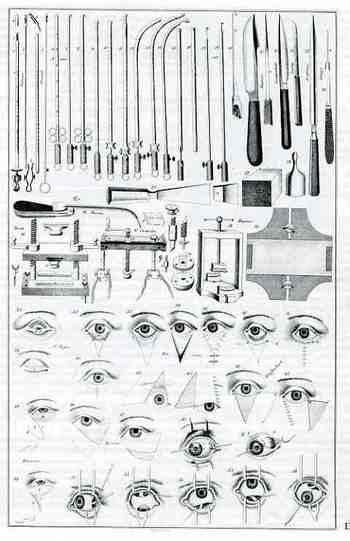
    The medical doctor and 19th century hero of modern plastic surgery, Dr. Ernst Blasius, published a remarkable work in 1833. Ajnurgische Abbildungen oder Darstettung der Blutlgen Chirurgischen Operationem, u. a. w. Akiurgicol Figures, (or Representations of the Bloody Surgical Operations, and the Instruments devised for their performance, with Illustrative Text.) was a careful, historically grounded, masterful textbook, illustrated with 50 engravings of procedures and—perhaps most famously—surgical instruments. It is considered a foundation work of the 19th century, especially in regarding to procedures to the eye, and especially for the development of modern plastic and reconstructive surgery.
    Blogaugust_22_blasius424

    As important as this book was, it received a very singular, peculiar and anonymous  review in the Edinburgh Medical and Surgical Journal, Exhibiting a Concise View of the Latest and Most important Discoveries in Medicine, Surgery, and Pharmacy (1836, volume 44, pp 539-544).  The reviewer (somehow, in ways that I cannot know or understand) found the illustrations of the instruments to be an abomination.

    Recounting that the surgeon’s “art” is a simple response to the inability to actually cure something with medical treatment—the reviewer states that the surgeon simply cuts things out.   He then makes a statement that I think is unique to my experience, saying that the gorgeous and painstaking illustrations of surgical instruments were calculated to repel the student “with an appearance both formidable and something repulsive.”  He continues: “If, however, this publication, by exhibiting instrumental surgery in its most complicated, formidable, and repulsive character, may damp the ardour of the surgical aspirant, it is also, by presenting all the various forms with which instruments have been endowed, useful in showing the surgeon the very height of the evil which he has to encounter. By placing before him such numbers and varieties of instruments, it may enable him to choose that which, upon mature consideration, seems best calculated for the proposed purpose.”   The unnamed reviewer does acknowledge the great understanding and historical grounding and command of deep literature, as well as the surgical techniques that Balsius presents in the book, and even goes so far as to describe them as “unrivaled”.  But he keeps returning to the illustrations, and particularly the images of the instruments, which he just simply cannot tolerate.  He ends the review saying that it would be a huge benefit to republish and translate the Balsius in English, and, given that opportunity, a great many of the instrument illustrations should be left out. “The explanatory descriptions, by which these illustrations are accompanied, show extensive and accurate knowledge of the literary history of operative surgery. All the operative methods and their peculiarities are carefully explained; and whoever studies this work cannot fail to understand thoroughly the merit of the different methods proposed for accomplishing each operation. This leads us to think that a republication in this country,! with a translation of the explanatory details, would be extremely useful ; and, in such circumstances, the number and variety of the instruments represented might be greatly diminished, while the anatomical figures and the views of operative processes might be retained.”

    The hatred of the surgical tools images is almost incoherent—especially since they were of such high importance, and that the book was being reviewed by a doctor for doctors and in a medical journal

    .


  • Straps, Forceps, the Chamberlens and the Subjugation of Women

    JF Ptak Science Books LLC Poat 157

    Blogonbstetrics271
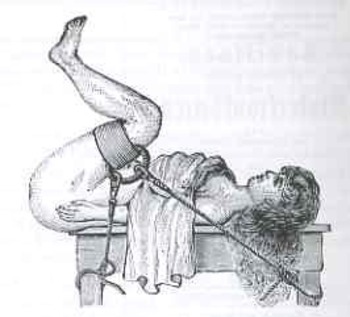
    I’m really not sure about how to interpret this image.  At first glance I thought it was part of a delivery procedure, but it turns out that this was the rigging for a woman undergoing a gynecological examination.  The woodcut appears in the first volume of Sammelband von 7 Kleinschriften zu gynakologischen Spezialthemen, 1858-1901, and more exactly in the contribution by Ludwig Neugebauer on an examination with a “speculum bivale l’ecarteur vaginal a trios branches…”  published in 1884.  I know that the prissy prejudices brought about with the coming of Queen Victoria in 1837 still had another 17 years to go at this point, which could explain why, perhaps, a doctor would want an aid in helping a woman maintain an examination position without him having to touch his patient, but, well, just look at the massiveness of the restraints!  Also, the woman’s arms are *inside* the ropes—not down, not holding the ropes, but inside the binding, restrained.  Either way, it isn’t good, treating the woman—in either case of pregnancy or obstetric examination—as the inferior vessel.

    This is also part of a long history of the subjugation of women—the medical aspects of that indoctrination were perhaps somewhat more heinous than the social/legal/ethical/pedagogical/moral constituents.  This illustration, even coming at the end of the Victorian era and approaching the dawn of encroaching bits of equality for (white) women, is a fair example of their subordinate status.

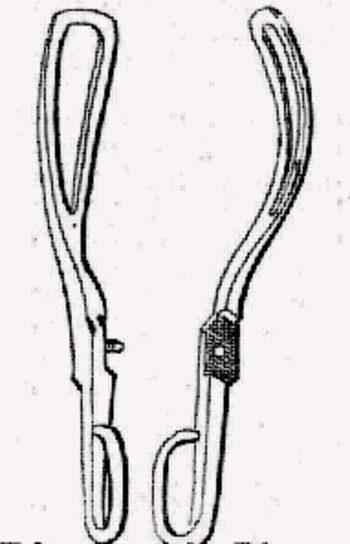
    I just happened upon this picture during the course of my business day—a random image compiling these thoughts.  If I were to try and choose another example of the medical aspect of the subjugation of woman I think that I would choose the story of the Chamberlen family.  For several generations, beginning around 1680, this family of medical doctors practiced a secret—their secret—in delivering breeched babies.  Breeched babies are those who were born feet first, which was usually a death sentence for both the child and the mother.  Patriarch William Chamberlen invented a device that would greatly aid in delivering babies in this position—the forceps.  And evenForceps
    though everyone today knows what these things are, the Chamberlens kept them a secret from the inquisitive medical world for more than a century.  Their instrument was shrouded—literally!—in secret(s), used under cover, with ceremony, conveyed to the delivery area in a box and brought out with no witnesses.  The Chamberlens felt their invention to be their own, for their own particular use and monetary gain, and the rest of the world be damned, and at least three generations (grandfather, father, son) kept the family secret. If their family could not be in charge of such a delivery then there would be no use of their extraordinary invention.  This of course would save their income from being chipped away by other physicians or midwives or whatever competent person could be found to utilize the forceps—their economic gain coming at the cost of (savable but imperiled) pregnant women who would either pay the Chamberlens for aid in their breeched births or, well, probably die.     To what degree this revolting behavior damaged other people can not be calculated. I’m not even sure about how to translate this into something more recognizable—would it be like Robert Koch keeping his isolation of Bacillus anthracis (1877), or  tuberculosis bacillus (1882) a secret?  Or Wilhelm Roentgen shrouding his discovery in secrecy somehow? (I know, I know, this is impossible.)  Or isolating a secret, proprietary cure for cancer?

    There is a large part of me that believes that if the Chamerlens had figured out something like this that affected only men, a silver bullet for something or other, that their secret wouldn’t stayed a secret for 100 hours, let alone 100 years. 


  • Subduing Insanity with Narcotic Induced Sleep: Mental Illness Treatments in 1845

    JF Ptak Science Books Post 153
    Blogdrugs_crazy254
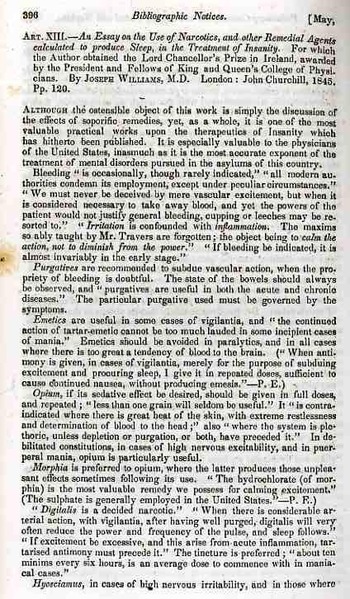
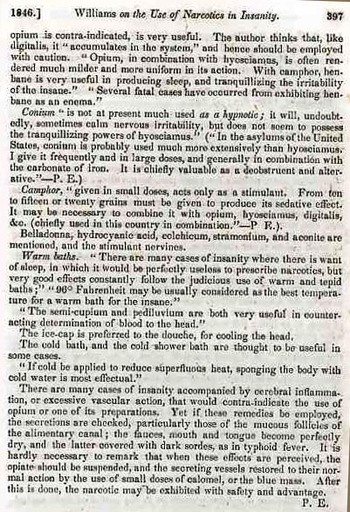
    This book review on the use of narcotics in treating the insane appeared in the New York Journal of Medicine for 1846.  The book, “An Essay on the Use of Narcotics, and other remedial Agents calculated to produce Sleep in the Treatment of Insanity….”, by Joseph Williams, M.D., and published in London in 1845.  The theory behind the sleep treatment was that the basic mechanism of insanity was “cerebral inflammation” or “excessive vascular action” in the brain—inducing deep sleep, evidently, was a good way to combat the over-active brain.

    The article itself comes at an odd time in the history of the treatment of the insane.  It came almost 40 years after the establishment of  McLean Hospital (first known as the “Asylum for the Insane,” a division of the Massachusetts General Hospital), which opened on Oct. 1, 1818, and was the first hospital dedicated to the treatment of the insane in the U.S.  It came 70 years after the great advances of Benjamin Rush, who elevated the “Mental Patient” from chains on the floor to the status of medical or nervous illness or disease.  The use of narcotics over this period seems to have surged and waned.  In 1879, in an article in the New York Times, the reputation of the Asylum for the Insane on Ward’s Island in NYC was considered—and one of the high points was that it had (largely) discontinued the use of narcotics. (There were still problems, of course, what with the asylum being overcrowded, housing 1100 in an institution meant to house 700, and where the chores and even nursing positions were staffed by the inmates, who were feed on 32 cents a day.)  As late as 1921, though, Jacob Alter Goldberg notes in his Social Aspects of the Treatment of the Insane, that there was a new, sharp increase in “toxic narcotic” treatments of the insane.  Of course, I guess one could replace “narcotic” with some sort of other misplaced treatment, like shock therapy, or Freudian mélanges, or something.  Each age must necessarily have their entry in the encyclopedia of embarrassments
    Blogdrugs_crazy255 . 

    In this article we find sleep assaulted by the use of the following:  purgatives (“to subdue vascular action when the propriety of bleeding is doubtful’), emetics, opium (to be used “in cases of high nervous excitability and in puerperal mania”), morphia (“the most valuable remedy for calming excitement”), hyosciamus (“to produce sleep, tranquilizing the irritability of the insane”).  It is weird to see that the last sentence in the description of hyosciamus reads “some fatal cases have occurred from exhibiting henbane as an enema”.  A narcotic enema?  Still to come in the review is conium (“I have used it frequently and in large doses…it is chiefly valuable as a deobstruent and alternative”, followed by camphor, Belladonna, hydrocyanic acid, colchirum, stramonium aconite, and others.  “Warm baths’ makes an appearance (“90 degrees may be considered to be the best temperature for a warm bath for the insane”), as do cold baths, and the applications of ice caps. 

    I’m not so sure about what to make of it all, the sleep treatment of insanity I mean—after all, Joseph Lister only makes his epochal pronouncements on cleanliness in the operating theatre 15 or so years after this paper, which seems today to be the most rudimentary thing that one could do in treatment in the surgical room, so treating extra blood in the brain through drug-induced sleep doesn’t seem all that far away from the realm of possibility back there in early Victorian England.

    I don’t think I’ll forget the toxic narcotic enema any time soon, though.  Or the word “deobstruent”. 


  • Great Cases of Understatement in Scientific Discoveries—Lister, Bell, the Wrights and Philo Farnsworth.

    JF Ptak Science Books LLC  Post #75

    Some of the fundamental discoveries and their announcements in the history of science have come with great fanfare—and some have come with barely a notice.  Granted their impact would not be felt for some time to come, but, still, there are some fabulous champions of understatement.
    Lancet

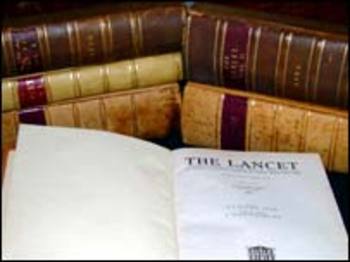
    Joseph Lister (1827-1912) came quite close in 1871 to the discovery of penicillin—as had Louis Pasteur (1822-1895), Jules Francois Joubert (1834-1910) and William Roberts (1830-1899)—but his research in this area was abandoned when he wasn’t able to identify the agent in the mold he found in urine which inhibited further growth of bacteria; he then proceeded with  his discoveries in the antiseptic procedure in the operating room (sanitizing the instrument and the surgeons) instead  Lister’s great work seems exceptionally simple and obvious to us here in the present, but it wasn’t back then, which is why he was the first to do it, saving the lives of thousands of people by increasing their chances of serving surgery by reducing the chances of infection (caused by the surgical procedure itself).  Yet his initial announcements, couched in reflective Victorian drama less scientific prose, never really hinted at the greatness which lurked just below the surface of his announcement, “Antiseptic Principle of the Practice of Surgery” in Volume 90, Issue 2299 of The Lancet published on 21 September 1867.  It actually took a number of years for physicians to react positively to Lister’s phenomenal discovery, called by Dr. Henry Morris, ‘probably second only to Pasteur’s contribution to the saving of human lives’.
    Blogunderstatebell_2

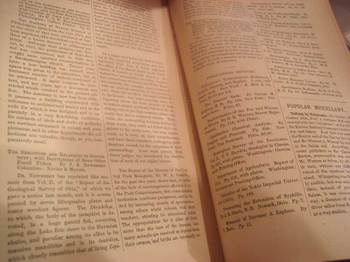
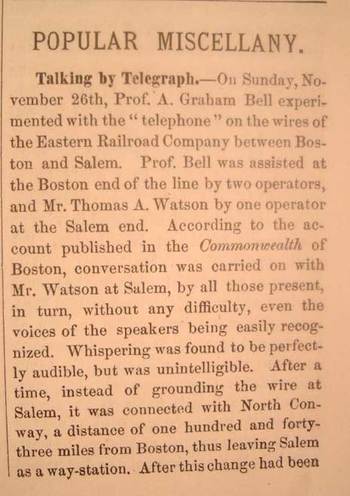
    One of the earliest mass popular announcements of Alexander Graham Bell’s invention of the telephone is in The Popular Science Monthly for February 1877—though you’d be a little hard pressed to find it off-hand in this 130pp issue.  Following twelve articles (including George Beard on “The Physiology of Mind Reading” and Chamberlain’s “Nature and Life in Lapland”), and following seven pages of literary notices, and following another five pages of “Popular Miscellany”, one may find the slight reference to the telephone.  (Pictured here is the two-page spread in which the Bell story is announced—don’t be careless, or you’ll miss it.)
    Blogunderstatebelldetai

    The article, or notice, is called “Talking by Telegraph”, and recalls the Sunday of 26 November in 1876 when Bell’s invention is first revealed, using parenthesis (“telephone”) when referring to the instrument.  The story is less than 200 words long and is tucked away in almost total obscurity.  There is no mention of its possible use or importance. 

    Such was also the case with the announcement of the Wright Brothers’ first successful powered flight in 1903.  The announcement in Scientific American was far less than auspicious, given two paragraphs almost at the end of the weekly issue in the automotive and aviation section.  Actually their earlier successes in unpowered gliding flight in 1901 were treated with similar nonchalance in the Scientific American as well as other popular magazines (of LIFE-like stature in those times), including a fleeting reference in the Illustrated London News and the Illustrierte Zeitung (Leipzig).  It took almost no time at all following the Scientific American publication for the rest of the thinking world to react with proper enthusiasm to their spectacular accomplishment. 

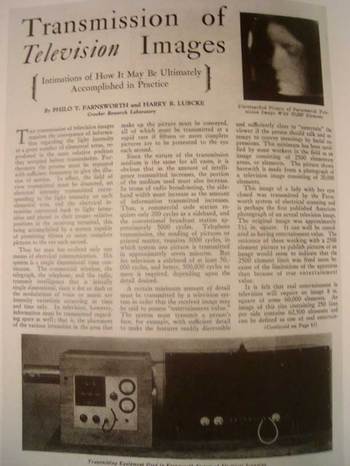
    Our last example here is that of Philo T. Farnsworth (1906-1971), inventor of the first all-electronic television, owner of a spectacularly geeky first name, and one of Time Magazine’s 100 Most Influential Americans of the 20th century
    Blogunderstatephilo

    Perhaps some of the downplay of Farnsworth’s annoncuement and achievement was diluted by the longish list of precursors to his invention—the electro-mechanical television for example was the object of the work of Alexander Bain, Paul Nipkow, Aleksandr Stoletov, Karl Ferdinand Braun, Boris Rosing, Herbert E. Ives, and John Logie Baird, while even the electronic television was nearly completed by Boris Rosing, Alan Archibald Campbell-Swinton, Kalman Tihanyi, Vladimir Zworykin and Kenjiro Takayanagi.  Nevertheless the achievement of the 23-year old boy wonder still found an enormous pinnacle of understatement, all things being equal.  In the article by Fasrnsworth and Harry R. Lubke, “Transmission of Television Images”, in Radio, December 1929, the authors describe their breakthroughs, particularly with what they called their “image dissector”, which differentiated them from the major aspects of the Zworykin invention.   With photographs of the invention as well as the successful televised transmission, the authors go on to say that the transmission of moving pictures “could well be considered as having entertainment value”.  Indeed.  There was some patent litigation ahead, particularly involving Zworykin and RCA, but by 1935 Farnsworth prevailed, though somehow not economically.


  • An Alphabetical Return to Fat:1920’s Fat (Reduction) Scams; Fat Soap, Strychnine Pills, and Sugar

    JF Ptak Science Books   Post 107

    Blogfatobesity_cures132
    Quackery in general has survived in spite of itself over many fields, not the least of which is astrology and creation science, cult religions and
    walking-with-the-dead.  In the U.S. in the 1910-1925 period however there was a attempt at investigating the most outrageous frauds in the medical profession by the American Medical Association, and of the many sorts of quacks and frauds-liver cures, neuralgia miracles, electro-vibrator hair restorers and lump removers, anti-droopy happiness pills, cocaine nervous system remedies, and so on-what I’d like to look at right now is concerned with “flesh reduction”, or, fat cures. 

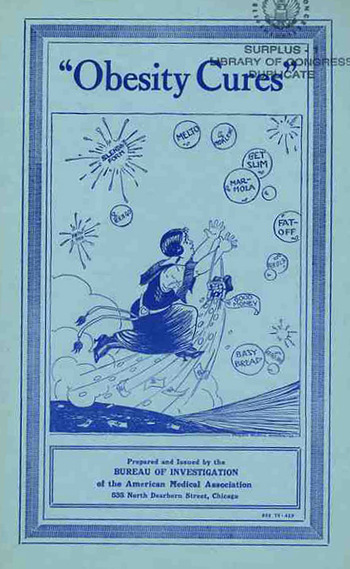
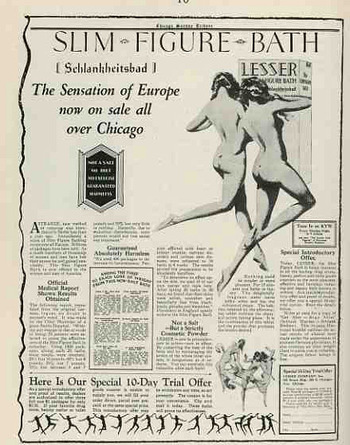
    According to the AMA (in a 1934 retrospective) the chief stimulant to the obesity industry was the rise of womens’ fashions.  I think that the reasoning might wind itself around the growth of expendable money in the American rising middle class, where Americans, in general, had more money to spend on the non-essentials than any time in the history of the country.  That leads to more consumables, and that leads to more advertising, and that leads to more idealized images of what people should look like, and that leads to wanting to look like that, and that opens the door to scammers who offer a way to get to the not-actual ideal without effort and for little money.  And so in the ’20’s there was a spike in quack remedies for obesity, as there was little or no control over the content of what was being sold nor the claims about what the product did, medically speaking-there was general protection from fraud, of course, but the medical compliment for establishing what that actually was wasn’t quite yet in place. 

    There is a veritable alphabet (soup) of mondo bizarre cures that the AMA attacked and ripped apart during the 1920’s, publishing the findings of their labs on the ingredients of the cures and the possibilities of whether any of the hundreds (thousands?) of these things worked at all. 

    And what the AMA found was really pretty remarkable-lots of water, sugar, tartar, tinctures of useless this and that, desicated liver, seaweed, salt, lemon, and that sort of thing, none of which had any value for weight reduction whatsoever..  A major ingredient, for some reason, was focus vesiculosus, also known as bladderwrack, sea-wrack, kelp-ware and sea-oak-there was no indication of why this ingredient was so popular, especially since it was used in some farms as a pig feed to make the animals fat.
    Blogfat_slim_chicago133
     

    So, aside from the pig-fattening ingredient for human “flesh reduction”, we’ll have a quick alphabetical tour of some of the outrageous (and bizarrely-named) products and their components promising hope and physical happiness to the woman of 1925. (Let’s note that the following are just locally-applied or ingested cures-there’s an entire universe of external applications and devices that were used to solve the problem of fat.  For example, the Violet Ray Machine claimed that in addition to obesity it would cure “Problems with circulation of the blood, the heart’s action, bumps of the funny-bone, germ infections, weakness, the waste of the body, congestion, impaired physical development, pains and aches, complexion and skin diseases, facial and body blemishes, hair loss, headaches, inflammation of joints, muscles, nerves, Atrophy, circulatory disorders, constipation, deafness, goitre, high blood pressure, arteriosclerosis, insomnia (sleeplessness-Brain Fag), indigestion, dyspepsia, neuritis, nervousness, hysteria, melancholia, neurasthenia, neuralgia, obesity, pain, paralysis, prostate gland problems, scalp diseases, falling hair, dandruff, asthma, anemia, bronchitis, catarrh, hay fever, rose fever, colds and other inflammations of the upper air passages, and, of course, cancer.”  This quote with thanks from the Museum of Quack Meidcal Therapy Devices

    And so to the consumable and applied quack fat cures:

    A

    Absorbit Reducing Paste-one of my favorites.  This was a nighttime sleeping paste
    which was composed of 44% lard as well as beeswax, oil and milk.  After slathering
    yourself in this oily, waxy, milky fat cocoon (the sheets!) you were also supposed
    to ingest an accompanying night aid pill, which was 24% sulphur and 61% sugar.  So
    not only would you be oily milky waxy lardy, you’d also be stinky and, at the end of
    it all, hyper. 

    Allmans Anti Fat Anti Pon (?)).  According to its label, it was a “powerful and
    entirely harmless specific”, which the AMA revealed to be composed of citric acid,
    water and food coloring.  Sounds like Kool Aid. 

    Arbolone tablets.  These guys were made of desiccated thyroid, starch, lime and sugar.

    B

    Basy Bread was a “anti growth” bread which turned out to be just a course wheat bread

    C

    Clark’s Thinning Salts was almost entirely washing soda.

    D

    Dalloff’s Time Pills were made of lavender and bearberry.

    E

    Elfin Fat reducing Gum Drops (continuing its spectacular name by saying it was a
    product of the Pep-Giving Product Co., Inc.), was actually one of the only items
    that might have contributed to weight loss, if only for the fact that in addition to
    consuming its drops made of laxative and sugar you were supposed to adhere to a
    pretty regimented, difficult exercise routine.  Big sweat and potent laxative does
    in fact produce weight loss.  Maybe not a good weight loss, but aa weight loss
    nevertheless. 

    Elimiton (!) was a product made of caffeine and rhubarb.

    Every Woman’s Flesh Reducer promised a new figure with their mixture of Epsom salt
    and camphor.

    F

    Fatsoff, a soap product that you washed with, was not surprisingly made of soap.
    Fayro was another soap and washing flesh reduction “package” that asserted that by
    using their secret flesh reducing salve (i.e., “soap”), you would “open your pores
    to let the blood cells sweat off fat”.  I could just about see the AMA guy who was
    writing their description of this thing slamming his pen and screaming.

    Some other F’s included Fells Reducing Tablets (which were milk), Figurroids (salty
    baking soda), Floradona (sodium thiosulphate, the photographer’s “hypo”), and Folt’s
    Reducing Soap (which was, again, soap). 

    G

    Get Slim was a vile purgative of sugar, tartar and baking soda, plus perfumes.

    H

    Hall’s Tablet Triturates were ginger and a big shake of chalk; Hargreaves Reducing
    Wafers (bread and liquorice).

    J

    J.Z. Obesity tablets–were the same product as Absorbit which was the same as
    Zobeide (minus the ox mucus). 

    L

    LaMar reducing Soap (“to wash away fat”) was soap.

    M

    Marmola, “a thyroid-containing obesity cure” was composed of cornstalk, borax, baking
    soda and tartaric acid, with a special “constipation agent” (?), as well as a lot of
    salt. 

    Morlene would reduce goitersm neck fat, bust size and tumors, somehow, with the
    application of its cleansing elements (soap).

    N

    Neutroid seems to have been the most lethal of the hundreds tested, contaning bad
    dollops of magnesium carbonate and iodol, and was taken internally (where external
    application could prove fatal). 

    O

    Oil of Korein was pretty nasty stuff, containing sassafrass and about 75% petrolatum
    (a semi-solid mixture of hydrocarbons, or petroleum jelly), though it also offered
    some really good advice on foods to avoid if you didn’t want to actually gain
    weight. 

    P

    Phy-thy-rin was a calcium and sugar coated pill of iodine and dried thyroid, with
    plenty of sugar, and liquorice. 

    R

    Rusell’s Anti-Corpulent {reparation was a powdered added to water that would
    effectively produce orange Kool-Aid.

    S

    Sangra Bath Salts was perhaps the most outrageously simple, being just colored bath
    salt.  Slendaform (“just gently rub it in, and watch yourself get thin”), was a
    half-pound jar of oil of turpentine, white vinegar and milk curd.  Slyphine, which
    crowded its ads with tremendous claims to be “Absolutely The Best Weight Reducer
    Ever Discovered” and other very shouty claims (by somehow “attracting surplus
    fat”), was simply borax and talc. 

    V

    Dr. Vincent’s Anti-Stout Pills contained a pretty sounding mixture of aloes, jalap,
    cloves and bladderwrack.

    Y

    Mme. Yale’s Fertilizer Tablets-I’m not sure about the real use of “fertilizer”
    here.) was actually one of the earliest of these frauds to be attacked by the
    government, being charged with fraud by “misbranding” in 1909, as federal chemists
    could find no connection between weight loss and its sole ingredients of sugar,
    charcoal and cream of tartar. 

    Z

    Lastly, we offer Zobeude, which was just Absorbit Reducing Paste relabled for
    British consumption, though it seems to have contained an added ingredient of
    “purified ox bile”.  We are told in Bruce’s Materia Medica of 1884 that “Purified ox
    bile has the composition of fresh bile, less the mucus .”

    ·Posted by :

    ·in:

    — — —

  • Maps of Emptying Humans of Blood, II: Johann Stoeffler, 1518

    Blogbloodletting_stoeffler
    JF Ptak Science Books LLC
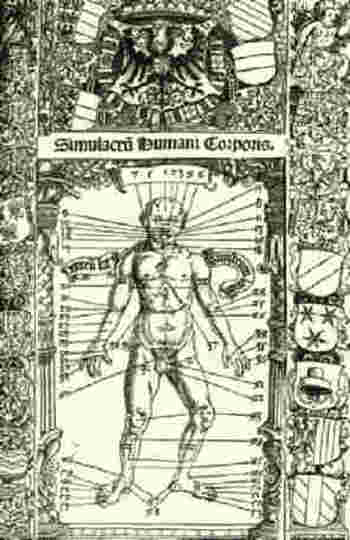
    I couldn’t let yesterday’s bloodletting images pass without reference to this excellent woodcut for Johann Stoeffler’s  Calendarium Romanum Magnum, printed in Oppenheym by the redoubtable  Jacob Koebel, (24 March) 1518.  It is a glorious display (entitled Simulcarum humani corporis) of seasonal (!) purgative and bloodletting locations on the body, meant to accompany a longish essay by Stoeffler on the practice in general.  The bulk of the book, however, had very little to do with this practice and was actually commissioned as a reform to the Julian calendar, provided with the impetus of the Lateran Council (1512-1517).  The result was a series of forty-one  propositions on the calendar and calendar-related practices, including work on eclipses, the zodiac, the occurrence of leap years, the Alexandrine and Roman calendars, the calculation of the occurrence of Easter, and so on, including the seasonal practices of bloodletting. 

    Blogblood_stoeffler_protraitsimbio3

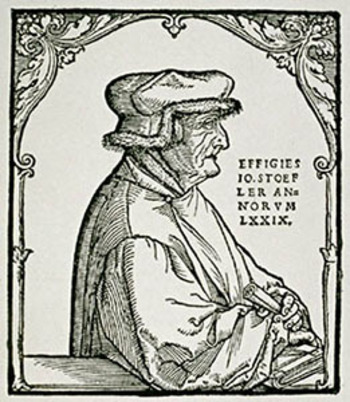
    Stoeffler was an astronomer and map maker, and among his other works are included 1482’s Ephemerides (being allocations for eclipses and astrological events to the year 1518), and the Elucidatio fabricæ ususque Astrolabii, published in Oppenheim in 1513, in which he presents a new astrolabe design and usage that was extremely popular throughout the 16th century.  Later, in 1536, he invented the Stoeffler quadrant, publishing on it in On artful measurement of all sizes, planes and declines in length, height, breadth and depth (1536), and which became a staple instrument in the surveyor’s intellectual and practical arsenal.   (Stoeffler’s portrait is on the right.)


  • Maps of the Human Condition–Bloodletting, the Missing Man, and a 16th century MASH; Fabrizzi and Gersdorff.

    Blogmissing_man041_3JF Ptak Science Books LLC
    A Map of Man’s Ability to Replace Himself, 1610-1723

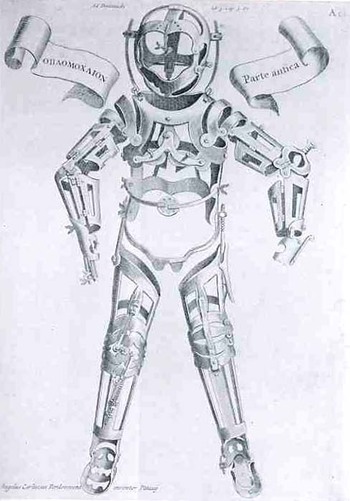
    This woodcut of applications and applicators to injured humans, lacking the human, waiting for the human, the missing human, was made by Hieronymous Fabrizzi (or Jerome Fabricius, 1537-1619), and found in his Opera Chirurgica, printed in 1723.  Even though this is a pretty straight-forward image, it strikes me as a little odd, a little off,  looking a bit like inhuman trappings, the entrapments of a human waiting to be built, an artificial skin with artificial bones.  It was much less than that, and in its way, much more—it was a statement of the advances of medicine in the 16th century, a map of the ability of man to replace himself; a map of the artificial man. Perhaps the image of our own artificial man, showing our ability to replace organs, bone, skin, limbs, etc.may come to look to the people of the near future the same way that we here in the present look back on Fabricius’ mage. 

    A Map of Getting Wounded

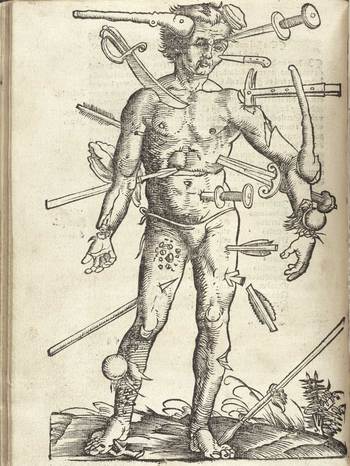
    This map of the wounded man was a very popular, much reproduced

    Gersdorff_p21v_3image, seeing publication in many works since it first appeared in
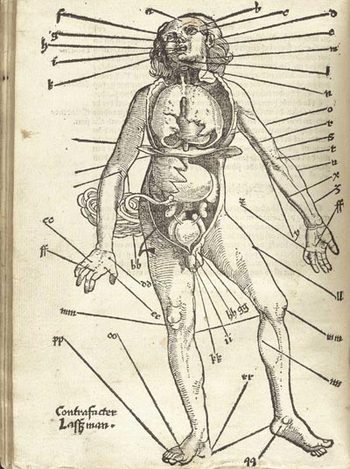
    Johannes de Ketham’s Fasciculus Medicinae,  printed in the year Columbus set sail for India.  It was a battle map, really—a battle for the human body, showing the effects of what happened to that body when someone tried to erase its existence.  The image is graphic, realistic and fairly gruesome, and highly useful.  It was accompanied by instructions on how to deal with all of the trauma, and to save the man thus that he could fight again.  In its way, this might be the earliest issue of M.A.S.H.  This woodcut, as the next, appeared in Hans von Gersdorff. Feldtbüch der Wundartzney (printed in Strassburg, by  H. Schotten, in 1528).

    A Map of Letting the Blood out of the Human Body.

    Well, it really wasn’t like that, not how I mean by by snippy modernist viewpoint looking back on medical history with no contextual appreciation.  Bloodletting was an approach to healthfulness, as blood was seen as one of the four major elements (or “humours”) of the human body that needed to be kept in balance.  This was

    Gersdorffx400jpg_other_2accomplished via the application of leeches or by the more common (and quicker) practice of venesection, or opening a vein to allow the blood to come out. (Let’s reference Steve Reich’s magnificent “Bruise Blood” creation of 1966 at this point—I don’t think that I’ll ever have a better chance to drop a reference to this piece of revolutionary music in regards to venesection again.)  Thus this map was map for the practiconers of bloodletting—the physicians, and more probably the barbers and other assistants who would inherit this lesser procedure from the more-busy doctors.  In the history of maps of anatomy and the general practice of mapping the human condition, this woodcut x-ray of the best places to drain human blood would not survive close to the age of modernity, disappearing almost entirely by the 18th century, and becoming much more scarce well before that.
    ·Posted by :

    ·in:


  • Beautiful Title Pages 2—Living Skeletons and Anthropomorphic Shells

    Blogunusual_design_elements0322
    JF Ptak Science Books LLC
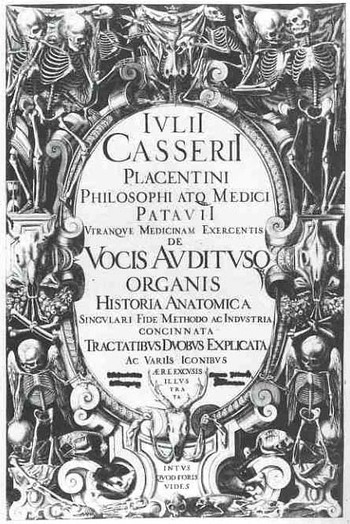
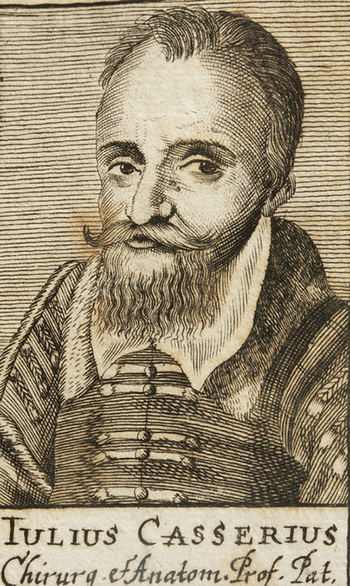
    The first title page here belongs to Guillio Casserio (c.1552-1616), De Vocis Auditusque Organis historia anatomica singulari fide methodo…, 1600-1601, an absolutely gorgeous illustrated monograph on the vocal organs and organs of hearing in man and animals. Casserio, a superb anatomist (and who was also signatory to William Harvey’s doctoral diploma from Padua in 1602), set the standard for accuracy and beauty in copperplate anatomical illustration just as Vesalius had set the standard for woodcut illustration.

    Casserio_1
    I cannot recall a title page illustrated with so many skeletons, especially so beautifully arranged, and posed in common, breathing, living situations.  Their placement is excellent, along with the other skull and bones—it seems to me as though they could not be re-arranged into a better assortment more pleasing to the eye, much like rearranging Joseph Cornell construction…it just cannot be done. 

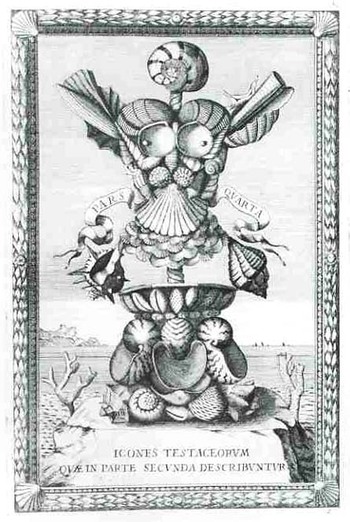
    Another fine example of title page design is Filippo Buonanni’s Museum Kircherianum sive Museaeum A.P. Athanasio Kirchero…printed in Rome in 1709, and it  belongs to the first published effort to catalog the scientific and miscellaneous
    Blogunusual_design_elements031_3

    collection of the vast 17th century polymath, Athanasius Kircher; the collection assembled in the Jesuit Collegio Roman, and assembled by Alfonso Donnimo.  Buonanni  was a student  of and successor  to Kircher at the Collegio  and catalogued the specimens of natural history, scientific instruments, geological items, Egyptian antiquities, and other items brought back to the school via networks of Jesuit missionaries.  His particular strength in study was conchology, and he displayed his knowledge in this intricate arrangement of shells from the collection in the title page.

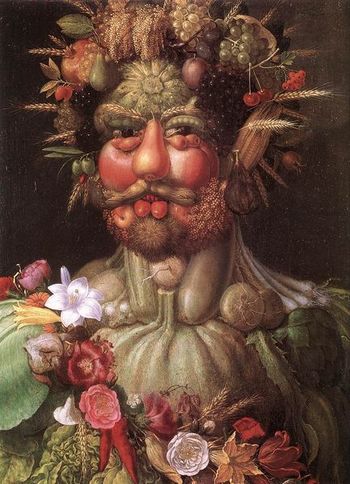
    Arcimboldovertemnus_3I cannot help but think that his artistic vision may have been  influenced by the extraordinary Giuseppe Arcimboldo (also spelled Arcimboldi; 1527-1593), who, one hundred or so years earlier, painted (in his non-conventional works) fantastic portraits and images using fruits, vegetables and other natural objects as the sole source of representation.  On the other hand his influence may not have been so very well known, as many of his works were stolen during war time in the mid-17th century, and he fell rather deeply into obscurity until being revived and resurrected by the Surrealists in the 20th century.  His work was so extraordinary–and this is true at any time in history but especially so during the time that he lived–that it would be impossible not to mention this unique talent in connection with Buonanni.