A Daily History of Holes, Dots, Lines, Science, History, Math, Physics, Art, the Unintentional Absurd, Architecture, Maps, Data Visualization, Blank and Missing Things, and so on. |1.6 million words, 7500 images, 4.9 million hits| Press & appearances in The Times, Le Figaro, Mensa, The Economist, The Guardian, Discovery News, Slate, Le Monde, Sci American Blogs, Le Pont, and many othr places… 5000+ total posts since 2008.

Category: Alphabets

  • A Most Anti-Roosevelt and Anti-New Deal Alphabet (1940)

    JF Ptak Science Books  Quick Post

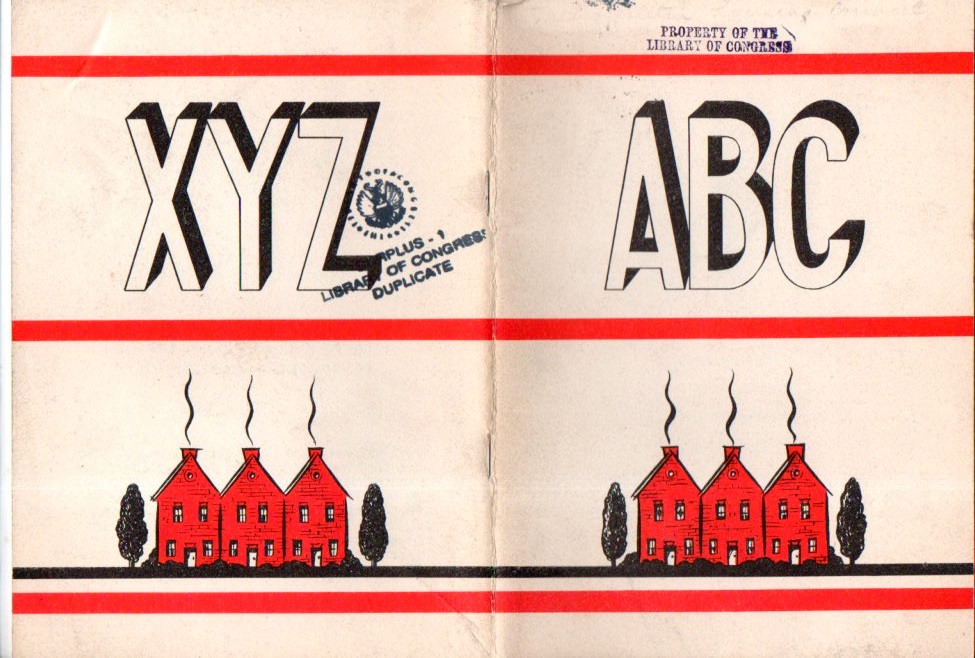
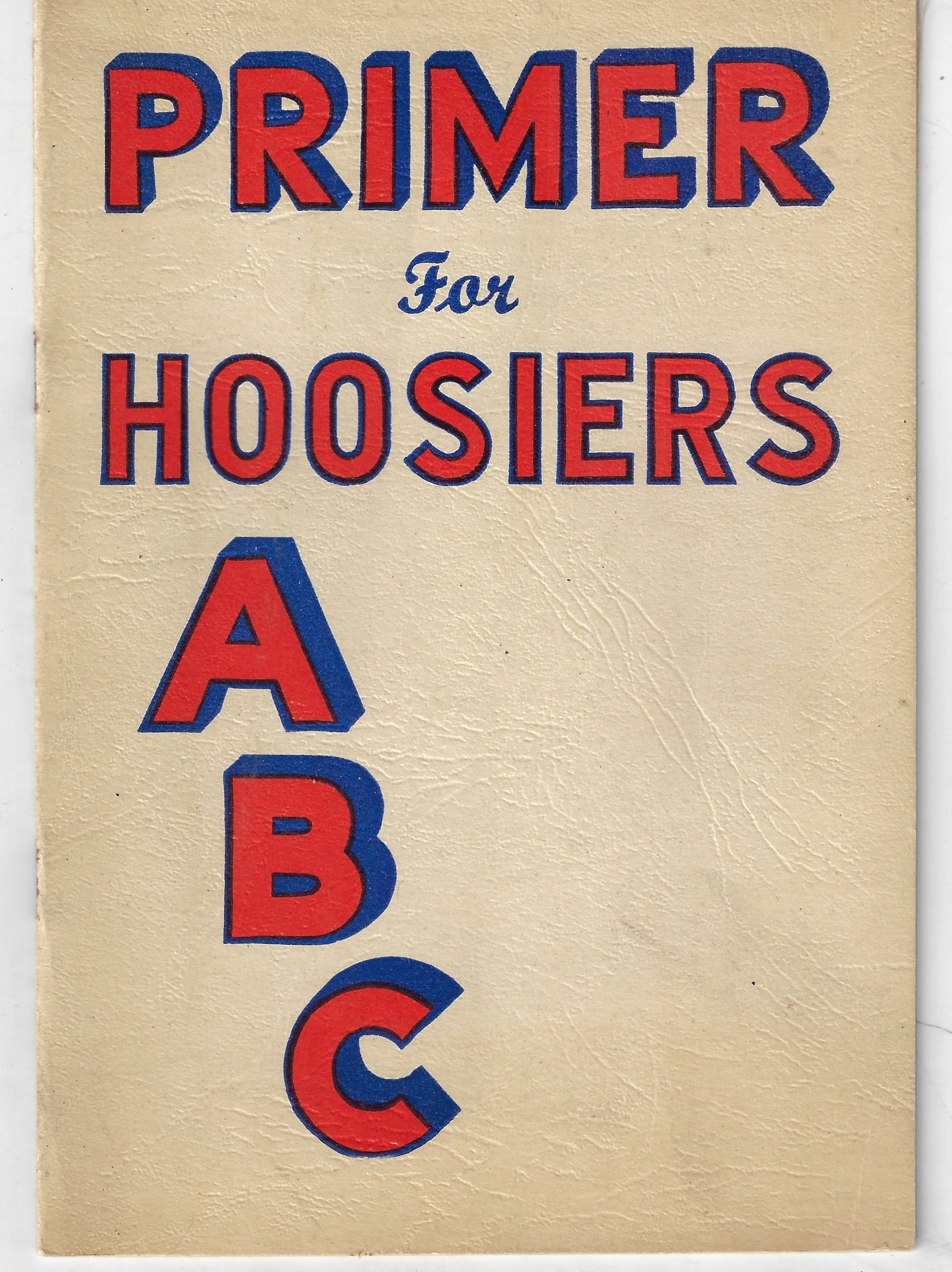
    Primer for HoosiersI’m not often able to make a post in the “Alphabets” category of this blog, though I can today after finding this untempered, bolded, all- and random-capped, exclaimed attack on Franklin Roosevelt and the New Deal. Charles R. Parker’s Primer for Hoosiers, ABC  which was printed for Parker-Daniels Co. of Indianapolis in 1940, is a top-percentile viciously anti-Roosevelt work as there ever was. Parker’s pamphlet was a polemic proclaiming patriot punditry (sorry) for a couple of Indiana politicians while taking enormous and unsubstantiated baby bites into the fringes of Roosevelt (powering into his third term) and the New Deal (which was pretty much folded in at this point). This pamphlet is only ten quick pages, but in it we find descriptions of the president  as a robber, dictator (many times), destroyer, and so on who uses Hitler as a shield and whose policies of chicanery have devastated, menaced, destroyed, and raped the principles and Constitution of the U.S. Overall the writing and style is not far from what we have in the White House, right now.  

    ·Posted by :

    ·in:


  • Glorious Tech: Napier Bones of Words, a Calculating Money, and a Scroll-Fed Typewrtier (1916)

    JF Ptak Science Books   Quick Post 

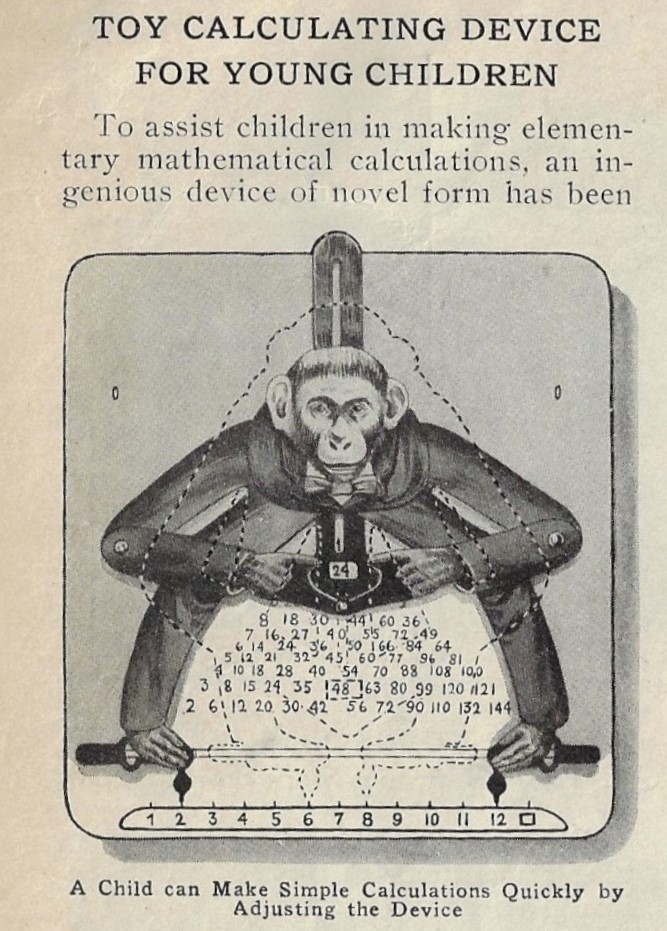
    Pop Mech 1916 toy calculator monkeyI noticed three interesting devices in just a few dozen pages of each other in Popular Mechanics for 1916. The first was a calculating monkey adding machine/toy for kids–this is something I had never seen before and had I been aware of it 30 years ago I certainly would’ve used it in my store. The “toy” is actually pretty sophisticated, as it will add and subtract, multiply,divide, and extract square roots, which was more powerful than any machine I needed at the time for the store.  


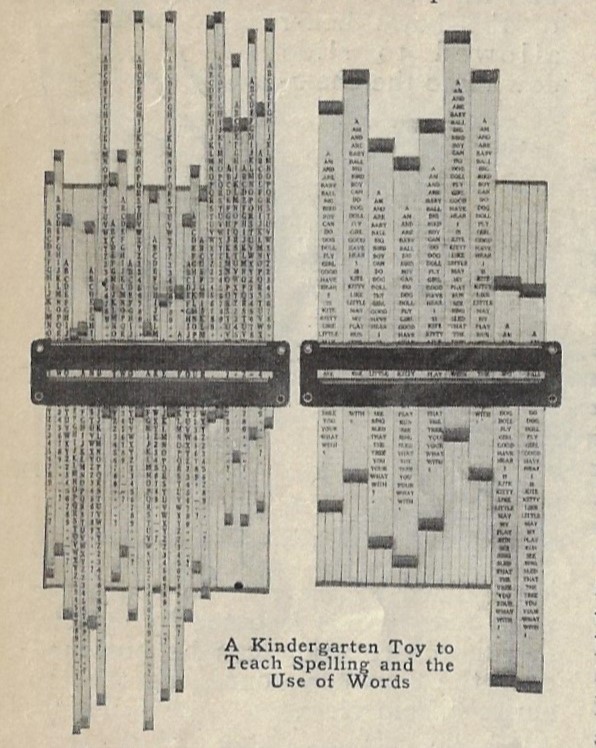
    The next piece of machinery was this Napier’s Bones-like device intended for kindergarten use. The device on the left uses a set of movable wooden strips with the alphabet printed on them; so by sliding the strips you can produce a simple or complex word, the result displayed in the open line of the rectangular piece of wood that holds the whole thing together. On the right is a set of strips with words on therm–used in the same fashion, the child could select a series of words to make simple sentences.  I like these two devices immensely,  (Unfortunately I have no information on this or the calculating monkey.)

    Pop Mech 1916 sliding wooden words

    The third item is a wonderful device, though this one not for kids–it is an electric automatic typewriter, punching out letters from a piano scroll-like master copy fed into a receiving typewriter. (Again, no manufacturing info here, and I don’t know how the typewriter would have responded to page breaks.) 

    ·Posted by :

    ·in:

    — —

  • A First Alphabet of Missing “Firsts” in Art

    JF Ptak Science Books   Quick Post

    Keeping track of the first time something appears in a reproduced form is an interesting and perhaps useful exercise…well, it is at least diverting and occasionally helpful in connecting a few other disparate bits. I’ve wondered about some of this throughout the course of the blog, like the first time the Sun appears with a smiling face, and the first appearance in print of the spectrum of a star other than the Sun, or the first appearance of a portrait of Einstein (or Newton, or Goedel, or Feynman, or FDR), and so on.

    Sitting in the airport parting lot and waiting on the arrival of a plane (and after seeing a very unexpected flyby of a number of Sikorsky Super Stallions) I thought about what might be unusual objects and when it was that they first appeared in art, and organized them alphabetically. For example, when did an Adding machine of any sort make an appearance in a work of art? A Barking dog? A Crutch or cane, and then a broken crutch or cane?  A Dinosaur? (Or dead horse?)  An Eclipse? A Fork? (Also the representation of human Frailty?) A Girl, a House on Fire, an Incision, a Jail?  When does a Kitchen appear (though this may be one of the easiest to answer)? Where do we find the first Library depicted in art, or the first Microscope? When does the first Nighttime scene appear? How about the first image in art displaying the law of Octaves, or Pi, or a Quagmire, or a Ripple in a stream? And when does the first Stirrup show up, and the first Signature of an artist, or the first Toothless Smile? And what about leafless Trees, and Underwater scenes? When do we see the first Visions or dreams enter the artistic landscape, or the first Wire, or Yawn, or the number Zero? 

    So there you have it. If you have any answers to these questions, please do share, as I don’t have the answers (though I have some guesses, or approximations of a time period).  Probably there are some quickish responses for the first signed artwork, and the first appearances of the fork, and stirrup, and microscope. We’ll see. 


  • An Alphabet of City Planning: “G” is for “Garbage” (1936)

    JF Ptak Science Books  Quick Post

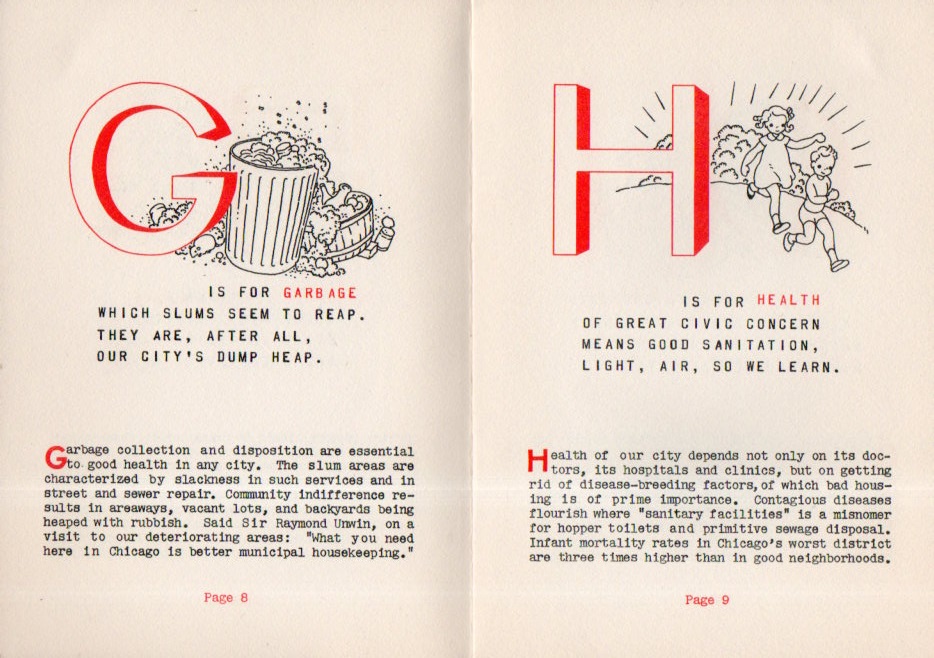
    I am pretty certain that this is the only semi-antiquarian alphabet of city planning that I have seen1. And of course I am compelled by the “Garbage” entry, as one should be.

    “May [this book] help you to look for and to see in this city of ours more than you have ever seen before. May it assist you in making this  a better place in which to live, to the end that Chicagoans will not fear the memories of home they give their children.”–preface.

    Notes:

    1. ABC. “Words and design by Arthur Bohnen, assistance of Elizabeth Blair, illustrations by Ethel Schacherer.”  7×5″, 26pp. “This publication is distributed to its members by the National Association of Housing Officials.” 1936–WorldCat   Only four copies located in WorldCat OCLC: Chicago PL, NYPL, Canadian Centre for Architecture, Columbia University.  


    ABC of housing192

    G is for GARBAGE

    which slums seem to reap.

    They are, after all, 

    our city’s dump heap.  

    ABC of housing193


    Here are a few of my favorite entries:


  • An Almost-Alphabet of Apocalypses

    JF Ptak Science Books   Post 2754

    “Just as psychoanalysis reconstructs the original traumatic situation in order to release the repressed material, so we are now being plunged back into the archaeopsychic past, uncovering the ancient taboos and drives that have been dormant for epochs… Each one of us is as old as the entire biological kingdom, and our bloodstreams are tributaries of the great sea of its total memory.”–The Drowned World, J.G. Ballard,1999, p. 41.

    Is there really a need for a plural of apocalypse? There is, of course, even if it is a word that is supposed to spell out the end of times–there can be more than one apocalypse, and they can happen at the same time, although given my very limited knowledge of the scifi genre I don’t know of any books addressing dual/multi-combative apocalypses. (And here I’m not talking about one apocalypse generating all manner of associated badness, but a second, completely unrelated, apocalypse.) 

    So in trying to understand the nature of apocalypse storytelling I decided to make a very abbreviated  overview of a vast literature of the end of times/apocalypse/technocaust/end of the world themes.  This is just a short working list, really, and includes only short stories or novels, and to keep it relatively crisp I’ve chosen the artificial delimiter of an alphabet of apocalypse types.  In many cases there is just one example (where there could be hundreds, so please don’t fault the list for completeness because that would take years of assembly and understanding). The same goes for the categories of apocalypse–I’m certain I not included the majority of them, though I think that this is a good start (There are no movies or television shows listed independent of a text, so Soylent Green will show up but under Harrison’s Make Room! Make Room! I think that tv shows/movies etc  must be enormously outnumbered and the scale of orders of magnitude by the print media.) 

    Also–the list is a little heavy with Wells, Christopher, Aldiss, Heinlein, and Ballard; this simply because I’m a little familiar with these writers. Further caveat: this list is highly individualized. I only have a very mild and occasional grip on a very limited number of books in this genre, so if I’ve missed some great classics for any category, or buckets-full of possible apoca-categories, don’t be surprised as you’re now armed with this warning–this is only a pushing-off point. So, the list:

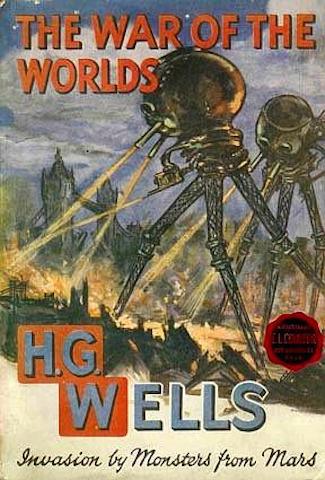
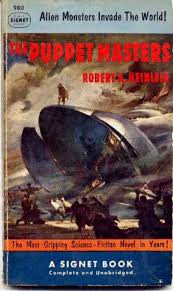
    Alien Invasion:  the great initiator, H. G. Wells, The War of the Worlds 1898; Edgar Rice Burroughs The Moon Men 1926; Robert A. Heinlein, The Puppet Masters, 1951. There were other earlier incarnations of extra-terrestrial visits, especially if you considered religious/mythological aspects, though in literature it was far less common–like Swift’s mathematicians of Laputa (in Gulliver’s Travels… 1726) and Voltaire’s titans in his Micromegas (1752). For the modern era though it is Wells who seems to create this idea. 


    Apoca war of the worlds Apoca--heinlein puppet
    [Flavorwire has a selection of 15 different covers for The War of the Worlds, here.]

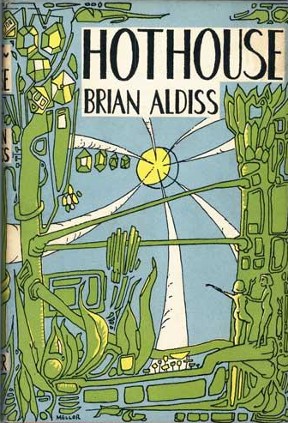
    Botanical endgame virus destroying all plant life:  John Christopher, The Death of Grass.  On the opposite end is the 1962 novel  Hothouse by Brian Aldiss, where the plants take over everything.

    Apoca--aldiss hothouse

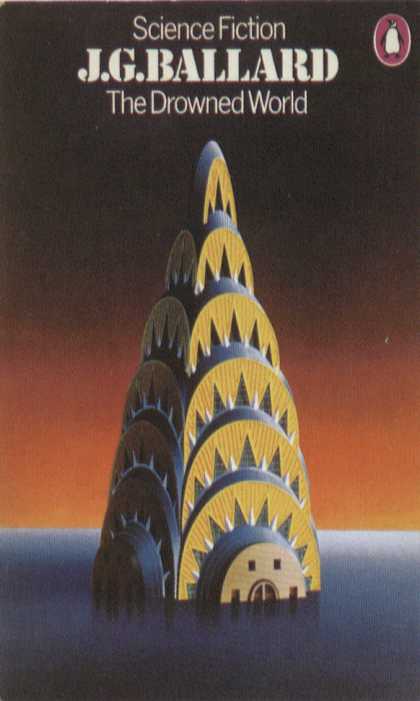
    Climate Change: apart from the state of global warming as we know and deny it now,  The Drowned World  by J.G. Ballard from 1962 is perhaps the best and most well-known adventure in this field. In this book in 2145 solar radiation has shrunk and mostly melted the polar ice caps, which is a lot of water, and has turned most cities into architectural swamplands of vertical mangrove. Conversely Ballard wrote the novel The Drought  in 1964 about all of the water on earth drying up. (As a kid the Ballard cover was a great favorite.)

    Apoca--ballard drowned world


    ·Posted by :

    ·in:


  • One Word, Three Un-hyphenated (?!) F’s in a Row!

    JF Ptak Science Books   Post 2746

      Luftfff

    I just came upon this fine word, which for a moment challenged my probably under-corrected vision, and saw that it contained three consecutive f consonants! On a Saturday, cranky with a fever and stiff(f) neck, this was a superb BLAST! Or “blast”. Or “b”. Anyway the word is Luftschifffahrft and it occurs in the title of a pamphlet by Wenzel Kotzauer, Die Luftschifffahrt und ihre Zukunft, printed in Vienna in 1895.

    The forty-page pamphlet is about the future of air flight and as fixed-winged aircraft rather than airships, noting in particular the 1894 Hiram Maxim “aeroplane1”. The Maxim machine was prodigious, and was mainly built for testing purposes—it weighed 3 to 4 tons, carried two steam engines that generated 180hp (!) and had pushing props that were 17.5′ in diameter, making the thing a beast-and-a-half. It was fixed to a very wide two-track system to keep it from lifting off the ground when the engines were running—or to keep it from careening around out of control. In any event, Maxim’s dream machine didn’t make it very far and was dismantled after a few years. (He also attempted an unsuccessful return to heavier-than-air flight in 1910.)

    But back to the three Fs. “Luftschifffahrt”, which translates basically to “airplane” or perhaps “aeroplane”, and thus the title is about Airplane/ship/aeroplane Travel in the Future. Or thereabouts. It is a technical work, with much on the actual “aeroplane”, which in its first use were the wings, and here there is much discussion on their size and shape.

    What most interests me though are the repetitive consonants. They just don’t seem to happen in English, naturally, without being hyphenated. (Using the word “un-hyphenated” again I just want to point out its terrific irony!) The word appears with fewer letters as “Schifffahrt”, which is simply “shipping”.

    The most obvious hyphenated candidate for me is “cross-section”, which I use often in this blog, though I can’t kill the hyphen and pulling the two words together as it makes it look like overstuffed snake-sausage: crosssection. As smaller snake is the person who sees a seer is not a seeer, and Scrabble-challenged words like “zzz” and “brrretc” definitely do not count, noooo sir.

    Anyway: fff.

    Notes:

    1.  In general at this time “aeroplane” referred to the wings/airfoils of a plane, not so much as an aircraft itself.  Mostly, it seems. The Oxford English Dictionary says that the first use of the word in this sense occurs in 1866, with a useful explanation of it found two years later:

    All of the following come from the Oxford English Dictionary:

    “Aeroplane”

    1868   3rd Ann. Rep. Aëronaut. Soc. 36   He had turned his attention to the wing and to the sustainer, or what he might call the aëroplane.

    1894   O. Chanute Progress in Flying Machines 237   This main aeroplane..is trussed and stiffened in every direction by wire stays.

    1905   G. Bacon Balloons 111   What are called ‘aeroplanes’—large flat surfaces, light but rigid inclined at a suitable angle to the horizon.

    Aeroplane=aircraft/airplane (as a noun) comes at about the same time:

    1868   Eng. Mechanic 24 Apr. 91/2   We have yet to see the ‘aëroplane’ with buoyancy sufficient to sustain 150 lb., or with apparatus sufficiently light and portable to make headway on an ‘air plane’… Supposing an aëroplane to have raised itself, if it reared out of equilibium it and the occupant would come to grief.

    1873   D. S. Brown in 8th Ann. Rep. Aëronaut. Soc. 17   I think this [sc. impetus] will be more requisite with respect to the aëroplane than any other vehicle.

    1873   Ann. Rep. Aëronaut. Soc. 20   Mr. Bennett introduced an Aëroplane invented by a Frenchman, to be worked by a screw by motive power derived from elastic springs.

    Finally, “airplane” as a noun comes into existence, or nearly so, in the early part of this past century:

    1906   Sci. Amer. 29 Dec. 487/1   Air-plane is a much better word than aeroplane. It is as good etymologically, and much better when it is spoken.

    1907   Westm. Gaz. 19 July 4/2   It is this ease of going against the current, with no motive force in evidence, that is..the despair of the aeronauts with their air-planes.

    1917   N.A.C.A. (U.S.) Rep. Nomencl. Aeronaut. 31   Airplane..This term is commonly used in a more restricted sense to refer to airplanes fitted with landing gear suited to operation from the land. If the landing gear is suited to operation from the water, the term ‘Seaplane’ is used.


  • An Alphabet of -Ocracies

    JF Ptak Science Books    Post 2740

    The other day former CIA director John Brennan (2013-2017) dug up the word kakistocracy from its dirt nap to describe the Trump government. I had never heard of the word before, and so went to the Oxford English Dictionary to look it up. While there, I wondered how many other “-ocracies” and “-cracies” there were that have fallen completely off the RADAR, and it seems there are a lot—just about enough for a full alphabet, with dozens of “extras”. (See https://blog.oxforddictionaries.com/2016/07/18/words-ending-with-cracy/ for a 60-word list, a longer list with shorter descriptions.)  

    Adhocracy.   “A flexible and informal style of organization and management, characterized by a lack of bureaucracy. Also (depreciative): bureaucracy characterized by inconsistency and lack of planning.” 1970.   A. Toffler Future Shock vii. 113   We are..witnessing the arrival of a new organizational system that will increasingly challenge, and ultimately supplant bureaucracy. This is the organization of the future. I call it ‘Ad-hocracy’.

    Androcacy.  “The rule or paramount influence of money.” 1868   Pall Mall Gaz. 23 May 11.   The disease of argentocracy.”

    Angelocracy. “A government by angels. 1685   J. Scott Christian Life (1700) II. ii. vii. 320.   Those angelocracies or angelical governments of countries and nations.”

    Barbarocracy.  “Government or rule by barbarians, as that of Italy by the German emperors. 1866.   C. C. Felton Greece, Anc. & Mod. II. xi. 486   Better fitted to live under a constitution than under a barbarocracy.”

    Bestiocracy.   “The rule of beasts. 1863   Times 21 Nov. 8/5.   The English farmers, being..members of a vile bestiocracy, living among the beasts of the field, and even employing men to serve the beasts.”

    Chrysocracy/ chryso-ariˈstocracy.  “An aristocracy of wealth. [Is there an aristocracy of poverty? I guess so…i.e. Tramp Kings, that sort/] 1885.  E. C. Stedman in Cent. Mag. 29 511.   Even our ‘chryso-aristocracy’ he thinks is bettered by the process.”

    Demonocracy.   “Government or rule by demons; a ruling body of demons. Now chiefly in extended use (with punning contrast with democracy) referring to cruel or wicked political regimes . 1755, J. Maud Doctr. Endless Torments i. v. 83.   The House of Cain..may..not improperly be said to have put itself under a Demonocracy, where the implacable Adversary to God and Man, was the limited Tyrant.”

    ·Posted by :

    ·in:


  • Some Good Letters

    JF Ptak Science Books   Quick Post

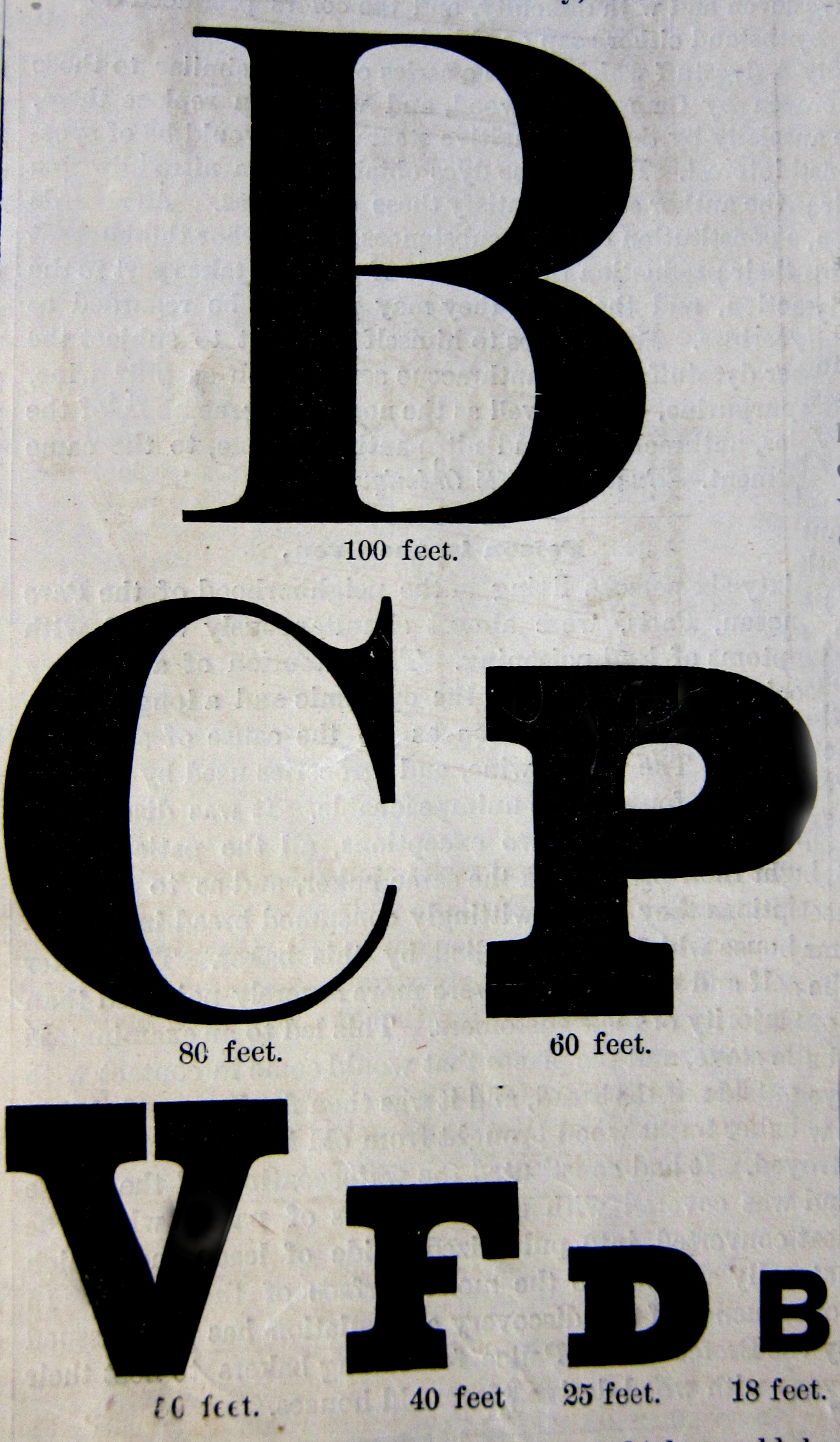
    Eye exam

    I found a small notice in the September 18, 1877 issue of Scientific American on employing the following chart for an eye exam–and I just liked the big B and thought to share it.  (The original measures 1.5×2.5 inches.)  That’s it!

    Optical exam

    ·Posted by :

    ·in:


  • An A to Z-ery of Love and its Associative Bits: the Map of Matrimony, 1879

    JF Ptak Science Books   Post 2568

    Rhinoceros nunquam victus ab hoste cedit–the rhino never turns away defeated from the enemy

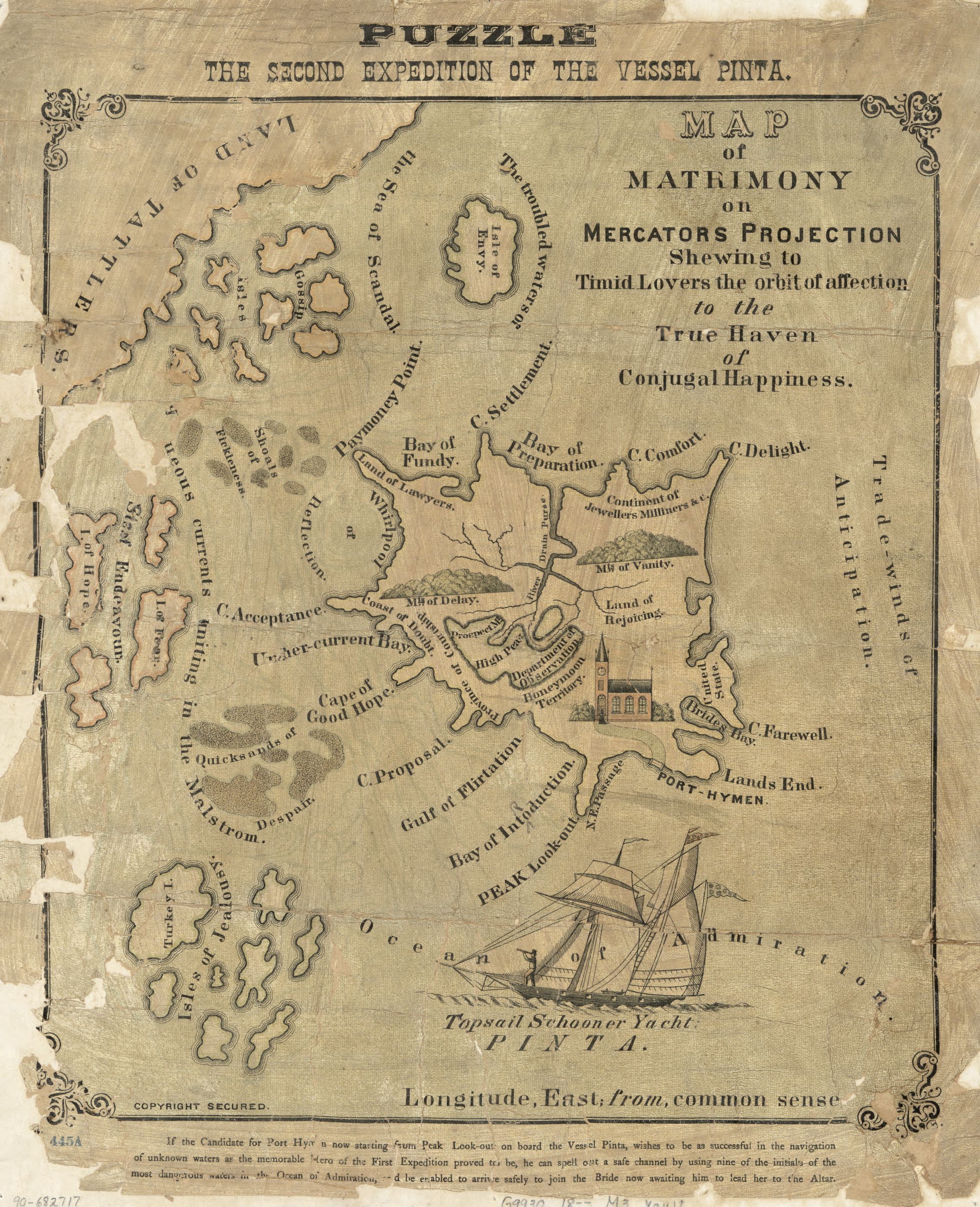
    And so we begin a look an an allegorical map1 of matrimony with an allegorical statement comparing marriage to a rhino–this is a first for me, and it may also be an original application of the epigram to (human) marriage.  I guess in the mind’s eye this looks as though it might be so, given there’s really no possibility of dealing with a charging rhino weather the Big Boy is charging in happiness or fear, anger or love–it is just going to get you.

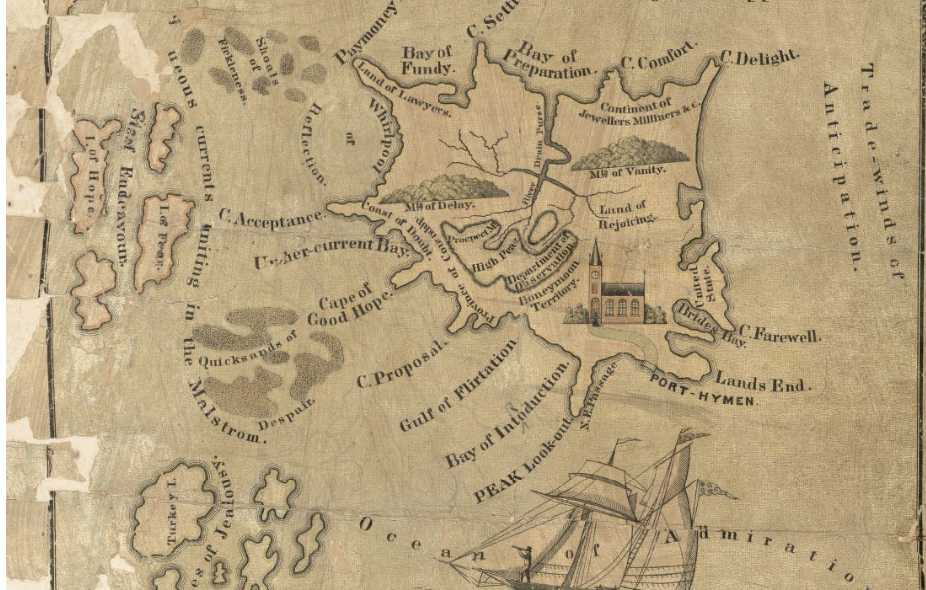
    The map has a little more guile than this, enumerating the good points of marriage along with some of the bad–surprisingly these states nearly fill an alphabet, which is pretty unusual given that there are only about 50 states and it covers 17 letters (with nothing at all for the last four letters). 

    And so the carto-geographical indulgence of the alphabet of marriage: Acceptance, Cape of; Brides Bay; Comfort, Cape of; Delight, Cape of; Envy Point; Fickelness, Shoals of; Hope, Cape of Good; Introduction, Bay of; Jealousy, Isle of; Lawyers, Land of; Observation Point; Paymoney Point; Reflection, Whirlpool of; Scandals, Sea of; Tattlers, Land of; Undercurrent Bay; Vanity, Mount of.  


    Map of Matrimony[This is clearer when expanded. Source:  the Library of Congress http://www.loc.gov/resource/g9930.ct003856/]

    And the full version:

    Map matrimony large

    Notes

    1. Map of Matrimony on Mercators projection shewing to timid lovers the orbit of affection to the true haven of conjugal happiness. (In upper margin: Puzzle : the second expedition of the Vessel Pinta.)


  • 1066 And All What?

    JF Ptak Science Books Quick Post

    1984

    I picked up another Book-with-a-year-for-a-title book today, Eric Burn’s 1920, the Year that Made the Decade Roar (Pegasus, 2015).  This series has a special interest in our house, and something I’ve paid attention to for a long time.  For me, I’ve enjoyed finding Big Years for the History of Stuff, mainly in the history of science and technology and arranged some mental data around them. (Years when tons-of-stuff happened, like 1543, 1859, 1932, 1939, 1948.) So naturally seeing 1920 made me think of the scitech achievements for that year, and frankly there was only one that popped into my head:  Robert Goddard’s “Methods of Reaching Extreme Altitudes”, one of the few big papers that uses the word “extreme” in the title.  There’s another effort by A.A. Michelson late in his career where he measures the diameter of a star other than the sun for the first time. And then there’s the coming of Richardson Numbers with Lewis Fry Richardson (a long-time favorite of mine, along with Goddard)–so there are several major and near-major papers for a year that I haven’t thought about too much, especially in the social area, where this books takes place, so it should be an interesting read.

    There’s a good hundred+ titles of books that are years–the ones I can speak to and suggest include the following (chronologically listed, of course):  1215 (Danzier), 1861 (Goodheart), 1913 (Ham), 1919 (Dos Passos), 1919 (Klingaman), 1939 (Overy), 1945 (Beevor), 1945 (Dallas), 1968 (Kurlansky), 1984 (Orwell), 1985 (Burgess), and 2001 (Clarke). For some reason there’s nothing here for 1066. 

    It seems as though there are at least 26 years of the 20th century that have a book dedicated to them–and probably there are more.  It would be an interesting collection to see them on two shelves! (The years that I can see offhand include 1900, 1912, 1913, 1914, 1916, 1919, 1920, 1923, 1929, 1932, 1933, 1934, 1939, 1940, 1941, 1942, 1945, 1948, 1954, 1959, 1960, 1967, 1968, 1969, 1984, 1985.)

    Movies with years-as-titles is another story…

    ·Posted by :

    ·in: