JF Ptak Science Books Post 2532
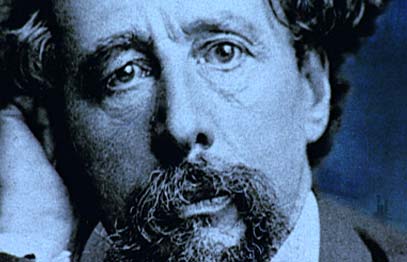
I was thinking about the opening line from Dicken’s Tale of Two Cities, yesterday, one of the author’s great books, and probably one of his greatest sentences, period.This longish, single-sentence opener is 115 words long and punctuated with 16 commas, most of which are in the first half of the sentence, and all of which seem to work together like a piece of music. It is lyrical, and sweeping, and tells the story of everything and nothing.
So I decided to round up all of Dickens’ opening sentences for all of his books, and place them alphabetically, just for the sake of comparison.
And here we are to begin, the beautiful opening sentence of a Tale of Two Cities, published almost at the same time as on the Origins of Species, in 1859:
“It was the best of times, it was the worst of times, it was the age of wisdom, it was the age of foolishness, it was the epoch of belief, it was the epoch of incredulity, it was the season of Light, it was the season of Darkness, it was the spring of hope, it was the winter of despair, we had everything before us, we had nothing before us, we were all going direct to Heaven, we were all going direct the other way–in short, the period was so far like the present period, that some of its noisiest authorities insisted on its being received, for good or for evil, in the superlative degree of comparison only.”
And by the way, TOTC has a great ending line, as well:
‘It is a far far better thing I do, than I have ever done; it is a far, far better rest that I go to than I have ever known.”
I was going to add ending sentences to this list but this time, before looking all of it up in Gutenberg, I tried finding the list online, already completed—and there it was, on the literary/writing blog of Brett James, http://brettjanes.com/charles-dickens-last-sentences. It turns out that Brett James also has a list of opening sentences, too, with his listed chronologically—I would have done the same if I didn’t already have a bunch of posts on alphabets and the alphabetization of stuff. So it is unnecessary to reproduce that list here—just follow that link to James.
And so to the list:
American Notes, 1842
“I shall never forget the one-fourth serious and three-fourths comical astonishment, with which, on the morning of the third of January eighteen-hundred-and-forty-two, I opened the door of, and put my head into, a ‘state-room’ on board the Britannia steam-packet, twelve hundred tons burthen per register, bound for Halifax and Boston, and carrying Her Majesty’s mails.”
Barnaby Rudge, 1841
“In the year 1775, there stood upon the borders of Epping Forest, at a distance of about twelve miles from London–measuring from the Standard in Cornhill,’ or rather from the spot on or near to which the Standard used to be in days of yore–a house of public entertainment called the Maypole; which fact was demonstrated to all such travellers as could neither read nor write (and at that time a vast number both of travellers and stay-at-homes were in this condition) by the emblem reared on the roadside over against the house, which, if not of those goodly proportions that Maypoles were wont to present in olden times, was a fair young ash, thirty feet in height, and straight as any arrow that ever English yeoman drew.”