A Daily History of Holes, Dots, Lines, Science, History, Math, Physics, Art, the Unintentional Absurd, Architecture, Maps, Data Visualization, Blank and Missing Things, and so on. |1.6 million words, 7500 images, 4.9 million hits| Press & appearances in The Times, Le Figaro, Mensa, The Economist, The Guardian, Discovery News, Slate, Le Monde, Sci American Blogs, Le Pont, and many othr places… 5000+ total posts since 2008.

Category: Industrial & Technological art

  • The Costs of Television Sets, 1946

    JF Ptak Science Books   Quick Post  Overall Post 5144

    • Q: “What kinds of programs will there be on television?
    • A:  “All kinds” (“The commercials will be unlike radio.”)

    IMG_7485I was initially attracted to this oversized pamphlet for its A-Bomb cover–using this sort of imagery was a thing in advertising in the Cold War years…pervasive, even. It was not uncommon to see this sort of image used to sell bubble gum, kids’ toys, motel rooms, laundry cleaners, and just about everything else (plus, of course, firecrackers).  This pamphlet though was a bit different from the others, as I expected that given its contents it would’ve been published around 1950. Wrong!  This work hit the streets in 1946, about a year after Hiroshima and Nagasaki, and very early on in the history of public television. Television (and facsimile transmission) exited around the edges of public awareness for a few decades, but television as a relatively common form of amusement with not-terrible accessibility was very new in 1946.  So I wanted to share a few of the useful bits that I found in this short (24pp) and oversized pamphlet, the primary one being a survey of costs of television sets listed by manufacturer.
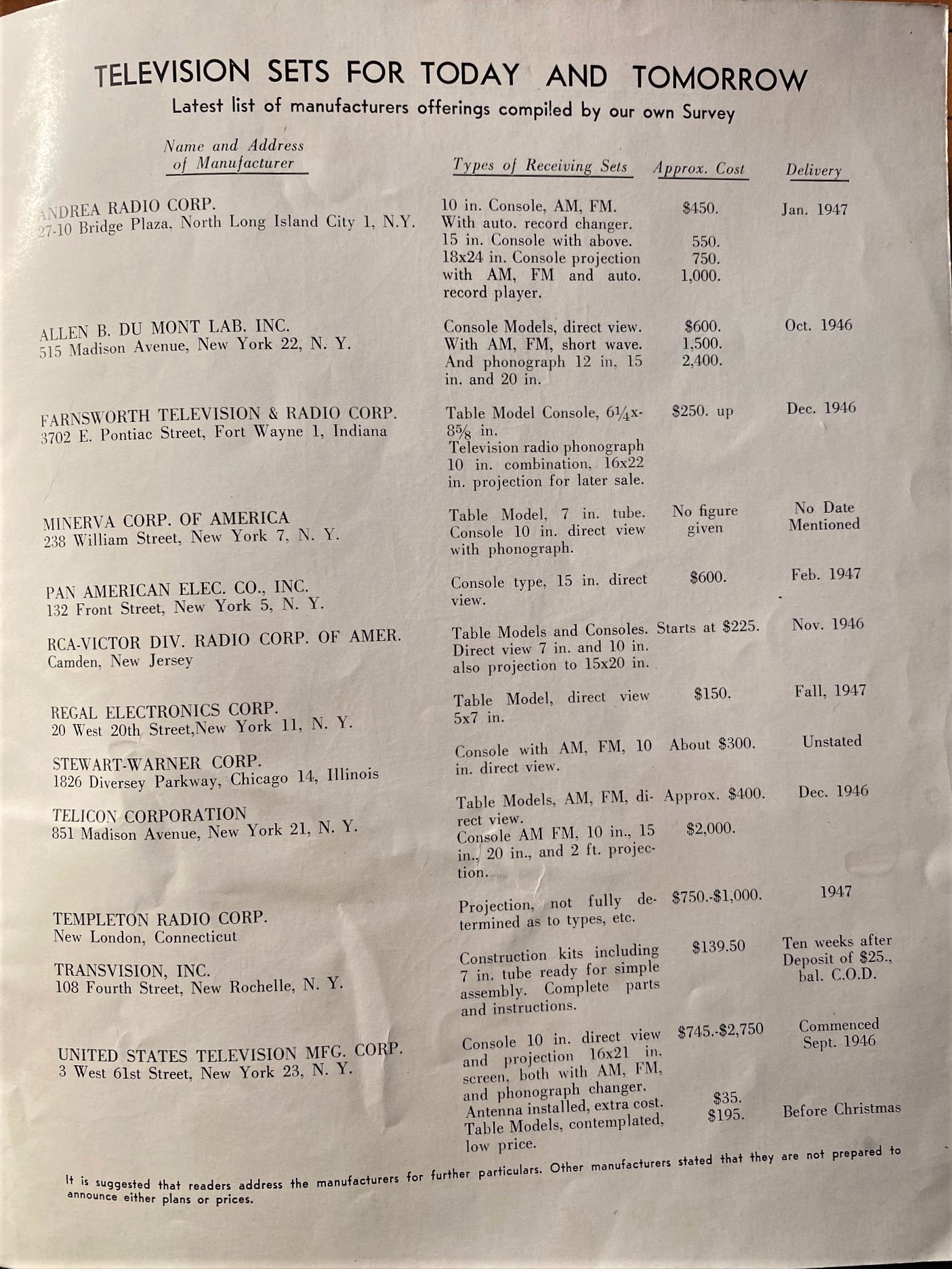
     

    IMG_7483As you can see, the tv was not a purchase to be taken lightly by the average US citizen in 1946.  There’s only a couple of sets listed here under $200,  with the average cost (not including the relatively substantial fee for the aerial and aerial placement) coming in at more than 10% of the average yearly income. (The average income in 1946 was about $2600, or about $39k adjusted for inflation using the Bureau of Labor Statistics inflation calculator as a base.) The average salary in 2020 was about $56,000, or about $7k in 1946 dollars. That isn’t as rosy as it might seem, given that the average person could expect to spend about double their income on a house–a standard that does not carry forward to today. Toss in healthcare and education, and that 7k comes rambling down. Hm. Another way of looking at this relative costliness of a tv set in 1946 is that it was about 10% of the cost of the average new car–given that the new car cost today in 2021 has jumped over the $50,000 mark (?!), 10% of that would buy a boatload of television sets.  

    And there you have it–a little peep into the history of the future of television. (I should mention one interesting paragraph in which David Sarnoff reveals the remote-controlled bomber, outfitted with “television eyes” that would only be used in not-peacetime.)
  • A Plate Full of Eyes (1851)

    JF Ptak Science Books   Quick Post   Overall Post  2529

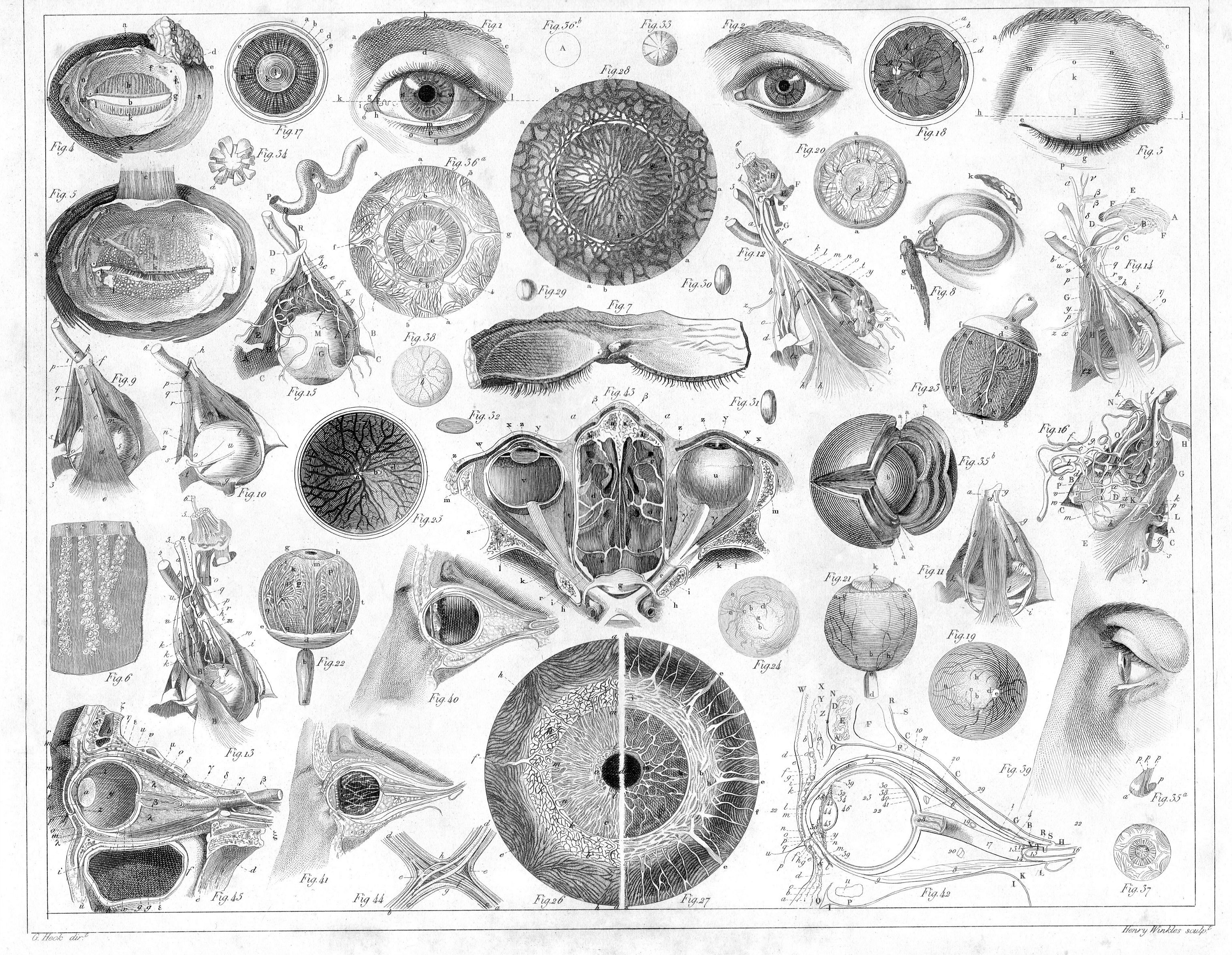
    J.G. Heck wrote and compiled a fascinating and complex work entitled The Iconographic Encyclopedia of Science, Literature and Art, which was published in the U.S. for the first time in 1851 in Spencer Baird’s translation from the German.

    EYEs _1_

    [Detail–60mm in the original.]

    The key to his work is the amount of data displayed on each of the 500 engraved plates illustrating this work and the way in which it is arranged.  The design and layout of the 30,000 items on these 500 plates was a work of genius, and for my money it is easily the best-presented complex means of the display of data and objects that was published in the 19th century.  

    The image above is from one engraved plate featuring 43 aspects of the human eye–beautifully arranged, and somehow fitting perfectly on the 9×11″ sheet of paper.  It is a work of real design engineering.  

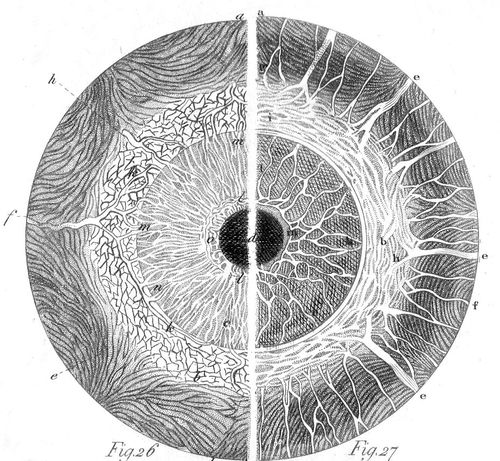
    The image above is a detail from:

    EYe_2_


  • If the Borg Skipped Around in a 3-Trillion-Ton Cube of Coal…(1913)

    JF Ptak Science Books  Quick Post   Overall Post 5133

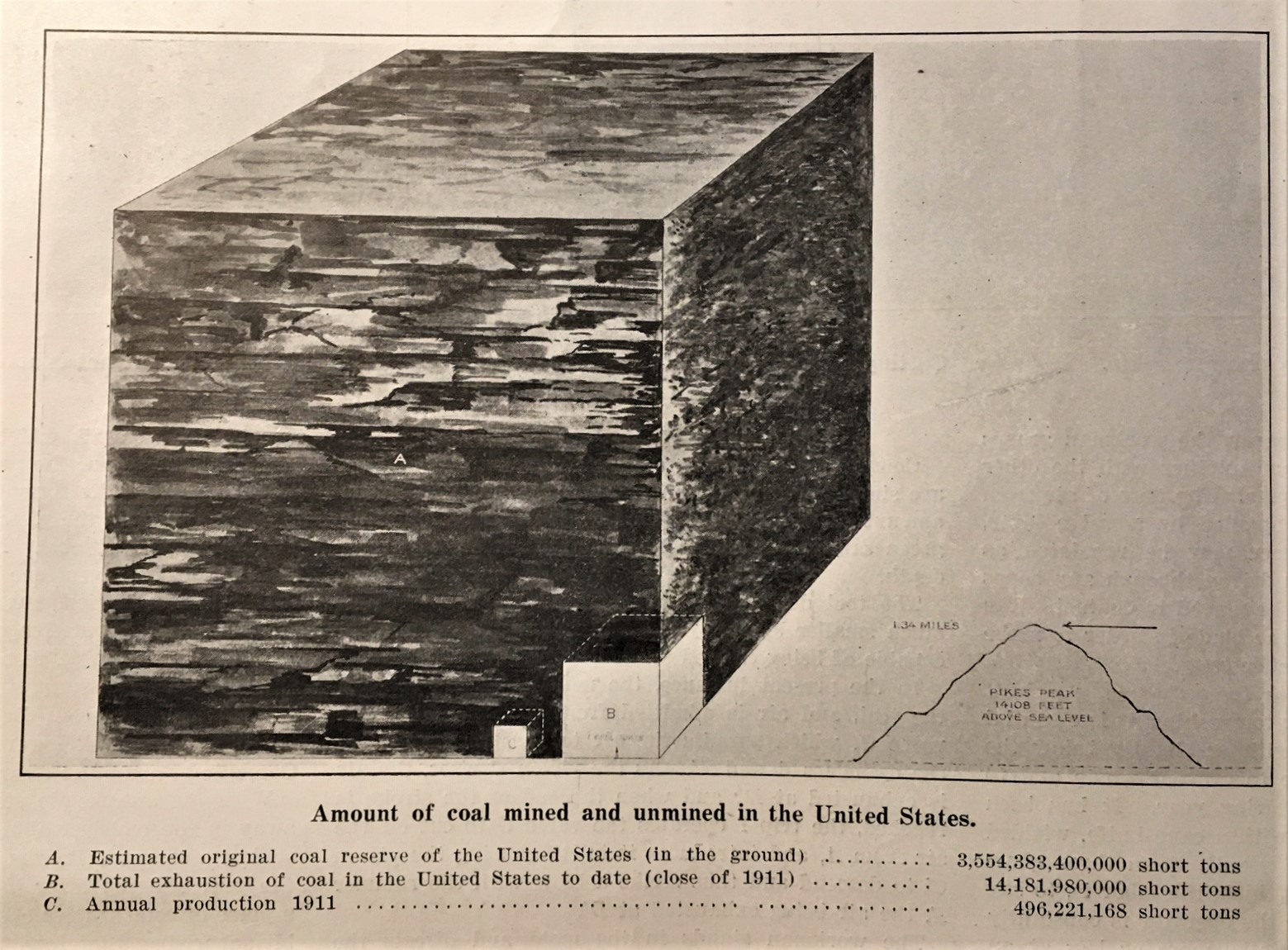
    This is an arresting and somewhat intimidating (1913) image1–a gigantic Borg-like cube of all of the Earth’s coal. It was made to show the vastness of the U.S. coal reserves, and that no matter how much was burned, that there was an absolutely overwhelming quantity still remaining.  The larger of the two cubes at the bottom of the Megacube indicates the amount of coal extracted and used through the course of human activity in what would become the United States, and the block to its left is total production for the year 1913. The thing is that the current numbers pretty must jibe with those of 1913, or at least they do in scale.  The total coal reserve now stands at 254 billion short tons compared to 3.5 trillion in 1913, while the extraction in 20192 was 728 million compared to about 500 million in 1913.  Overall there’s a much wider population and usage base for coal now than in 1913 by about 45%, meaning there’s much less demand for coal as an energy source. I don’t know offhand about the discrepancy between the original 1913 figure for total reserves now might but I’m pretty sure that we didn’t gobble up 3 trillion tons of the stuff.  Probably it was just an inaccurate guesstimate, as we’d have to had used 30 billion tons of coal every year for 100 years to account for the difference of reserve and extraction.  Anyway, it is a great image and artistic display of quantitative data.  

    Notes:

    1. R.H. Byrd “Fuel Production in the Unites States, Present Consumption and Future Supply” July 5, 1913, Scientific American, page 10.  

    2. Current data pulled from US EIA and Statistical Review of World Energy (British Petroleum) websites. 


    IMG_2289


  • A New Category: Techno-Naive Art (1924)

    JF Ptak Science Books  Quick Post  Overall Post 5131

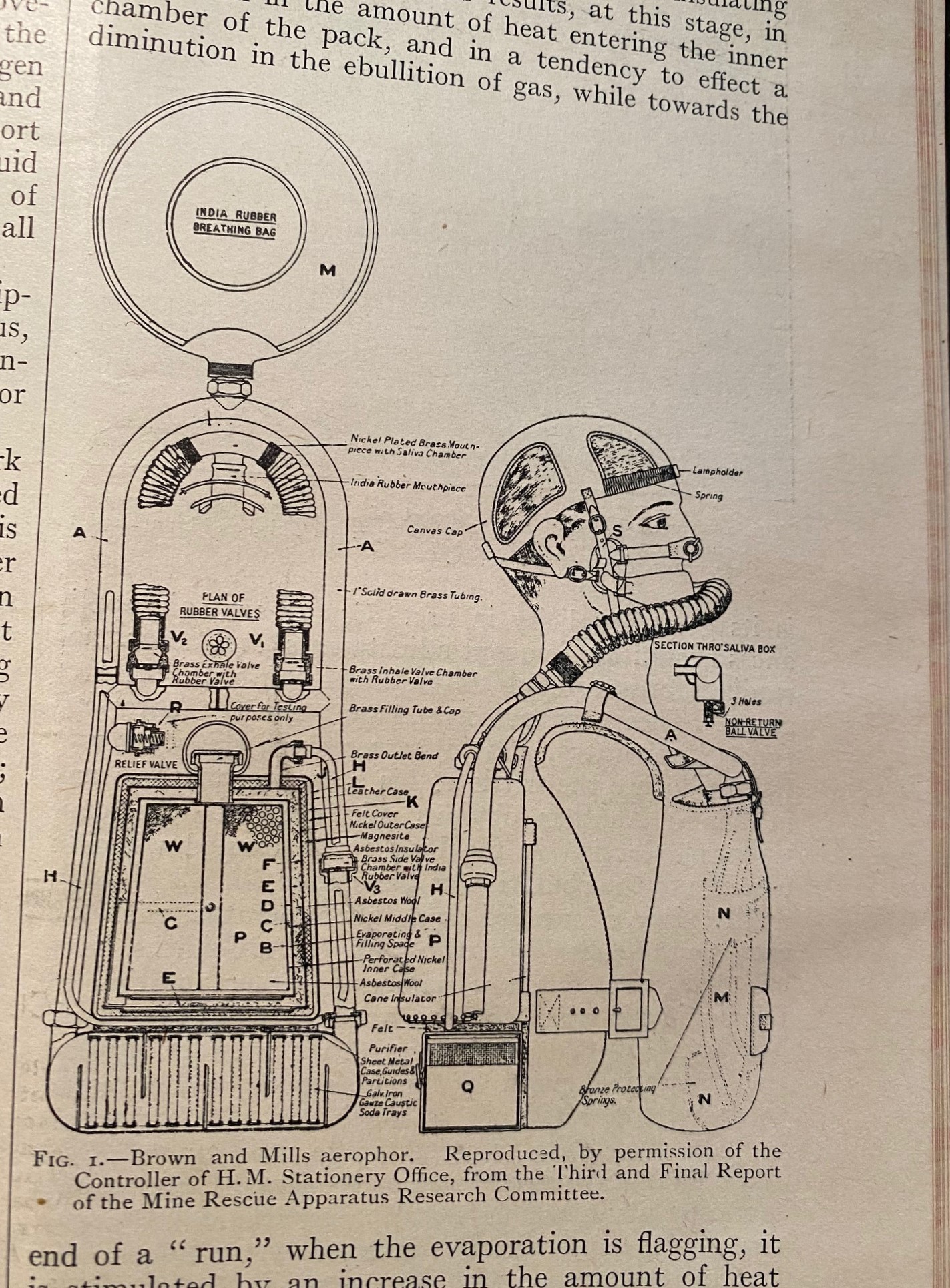
    IMG_4792What a fantastic drawing! I don’t mean to diminish this invention at all, though I must say that I was attracted to the article for the very 1950’s comic book naive and technical (Techno-Naive!) quality of the illustration.  Maybe it is just the subject’s profile that has thrown me into this new spin. 

    That said, this invention was conceived for the rescue of miners and for oxygen-deprived mining, and is known as the Brown & Mills Aerophor, which was “a liquid air respirator for mine work and rescue”.  I found this in the pages of Nature, 11 October 1924, p. 543.

    Brown and Mills evidently worked and improved an earlier idea and design by Col. Cuthbert Blackett (1910), which this citation from Wikipedia: “The Blackett’s Aerophor is a nitrox semi-closed-circuit rebreather with liquid gas storage made in England from 1910 onwards for use in mine rescue and other industrial uses. It was used until the 1950s. “Aerophor” is from Greek αεροφορος = “air-carrier”. Its breathing bag was on the chest, of rubber, in a strong leather case. The other parts were in a backpack. It had two corrugated breathing tubes coming out of the backpack. Its duration on a fill was 2 hours. “


  • Measuring Things with the Woolworth Building–Inverted

    JF Ptak Science Books   Quick Post

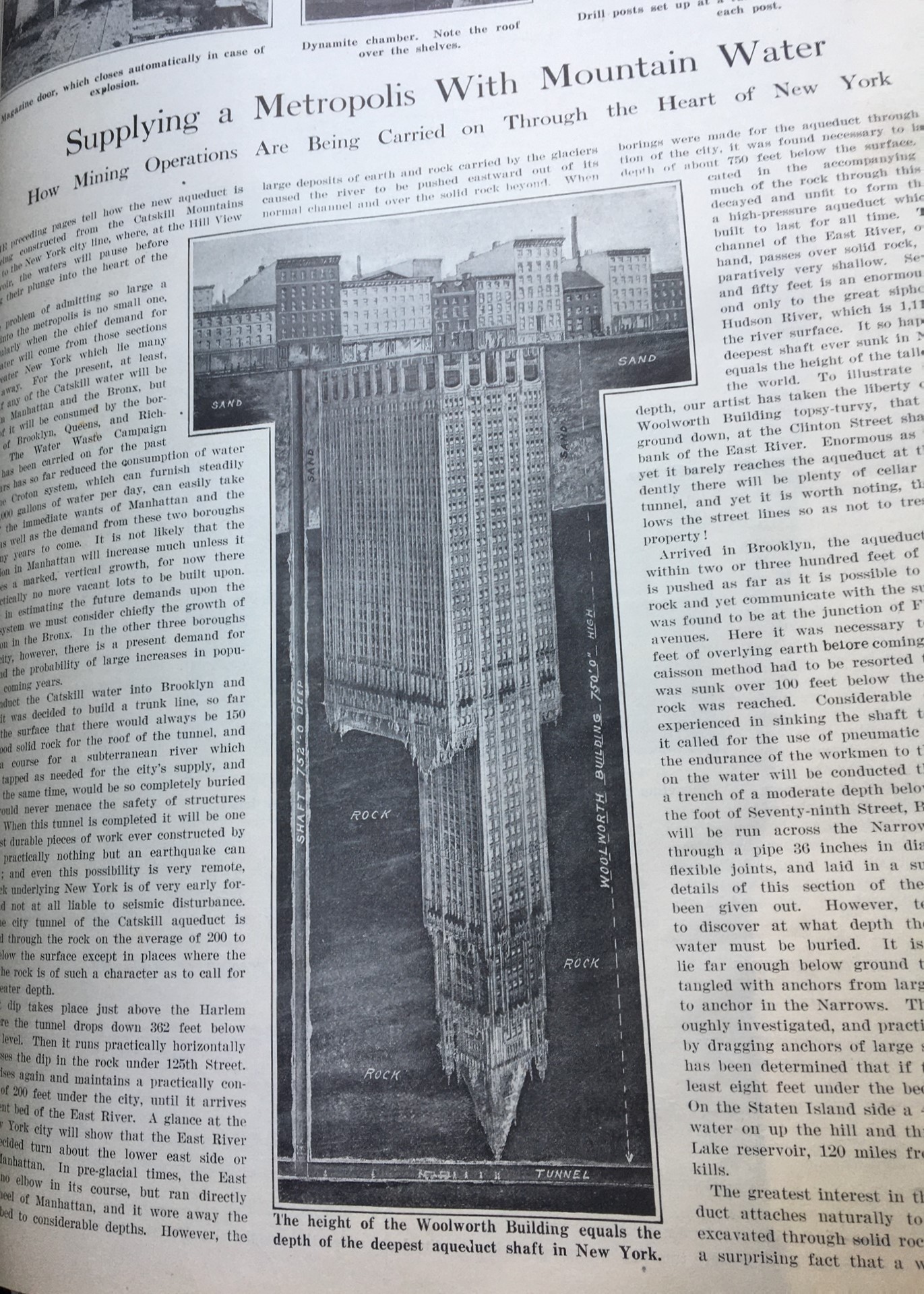
    I’ve made a dozen (or two?) posts on this website on measuring things with other thigs. And by that I mean instead referring to something in terms of measurement units like miles or tons or other standards, the item in question is measured against some well-know object for a side-by-side comparison. These units of measurement do seem a little odd, but they really have a capacity to humanize inescapably difficult numbers by putting them in context with a known entity, like Trinity Church. In the past I’ve seen graphical/comparative displays of information the Eiffel Tower, gargantuanly-oversized bread, enormous nails, collections of beef, miles of soldiers, Hoover Dams, Eiffel Towers, mountains, 400′-tall cars, train gangs, and such. Today’s new entry is the newly-built Woolworth Building in NYC from a 1913 issue of Scientific American.  The Woolworth Building got quite a bit of ink as it was the world’s tallest structure (for a few months, anyway) so it was a pretty well-known phenomenon by the summer of 1913.  This entry is a little more unusual in that it used the Woolworth upside down to show the great depth of tunnels being built under Manhattan:

    IMG_2314

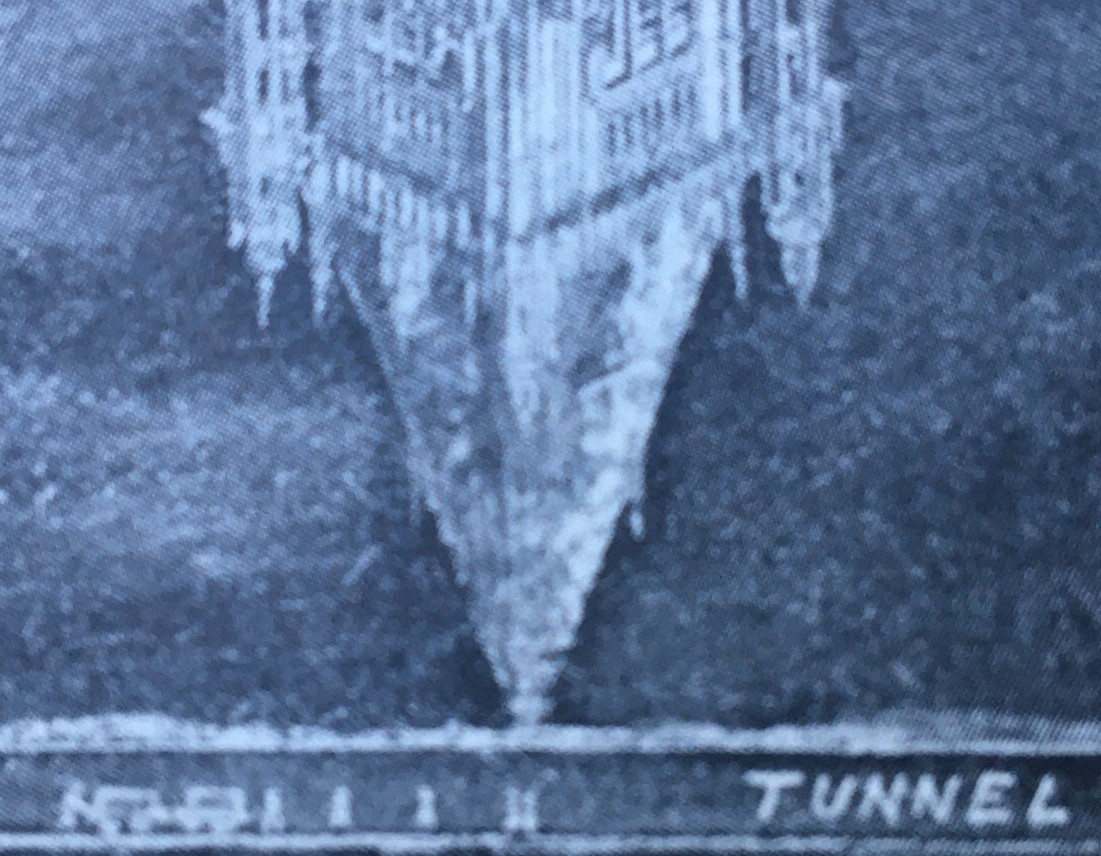
    And a closeup of the figures at the bottom/top of the building, showing human workers and a cart:

    IMG_2315

    This is a striking image that really does gets its message across.  


  • Found Poetry for a Disintegrating Machine from 1877

    JF Ptak Science Books  Quick Post

    I’ve made a number of posts here about the Found-poetry in indexes, title pages, instruction booklets, maps, and some other places. The moment may escape the poetry, but the poetry doesn’t escape the moment.

    IMG_2064What?

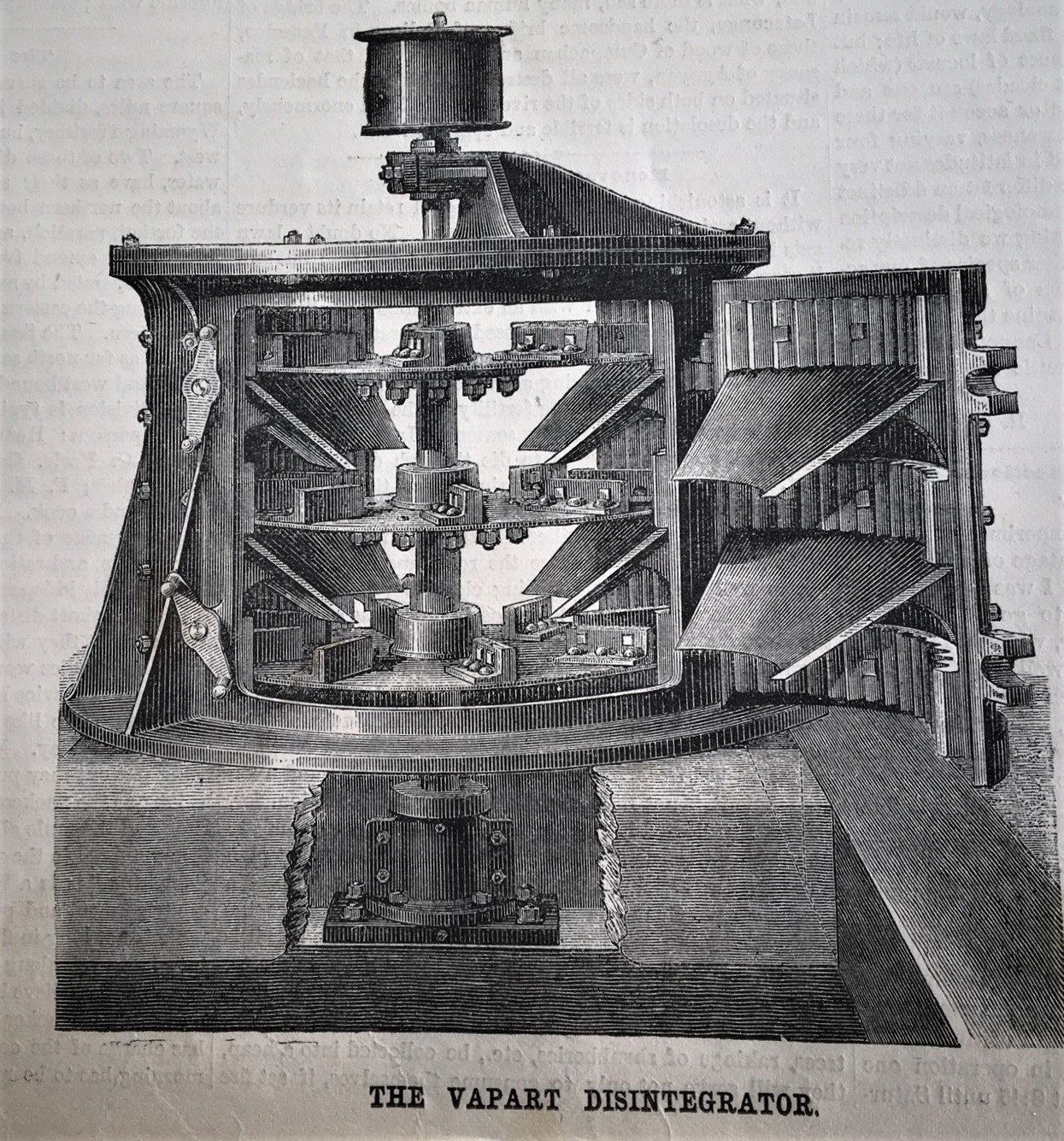
    That’s correct. Anyway, here’s another example from Scientific American for July 31, 1877, discussing and explaining the operating practices of the Vapart Disintegrator. We’re not discussing Star Trek here, just a crunching tearing shredding pulverizing way of grinding and/or destroying things.  The machine was big, and heavy, and torquey, and had a lot of big metallic teeth.  Here’s part of the description of how the device works. poemetized (all text original, spacing and punctuation not):

    Disintegration Can Be Carried To Any Desired Extent 

    I.

    The material to be disintegrated

    is fed 

    in from the top and

    falls 

    upon the upper disk,

     and the quick rotation of the latter drives the material 

    forcibly against the corresponding 

    toothed 

    segments.

    II.

    From here it falls down 

    the inclined plates, 

    and is delivered 

    on the middle portion 

    of the second disk,

    where the same operation is repeated on it, 

    as well as on the bottom disk,

    whence it is delivered 

    into a hopper

    below. 

    III.

    The disintegration can be carried to any desired extent.


  • The Ineffable Beauty of Gutters (1867)

    JF Ptak Science Books  Quick Post

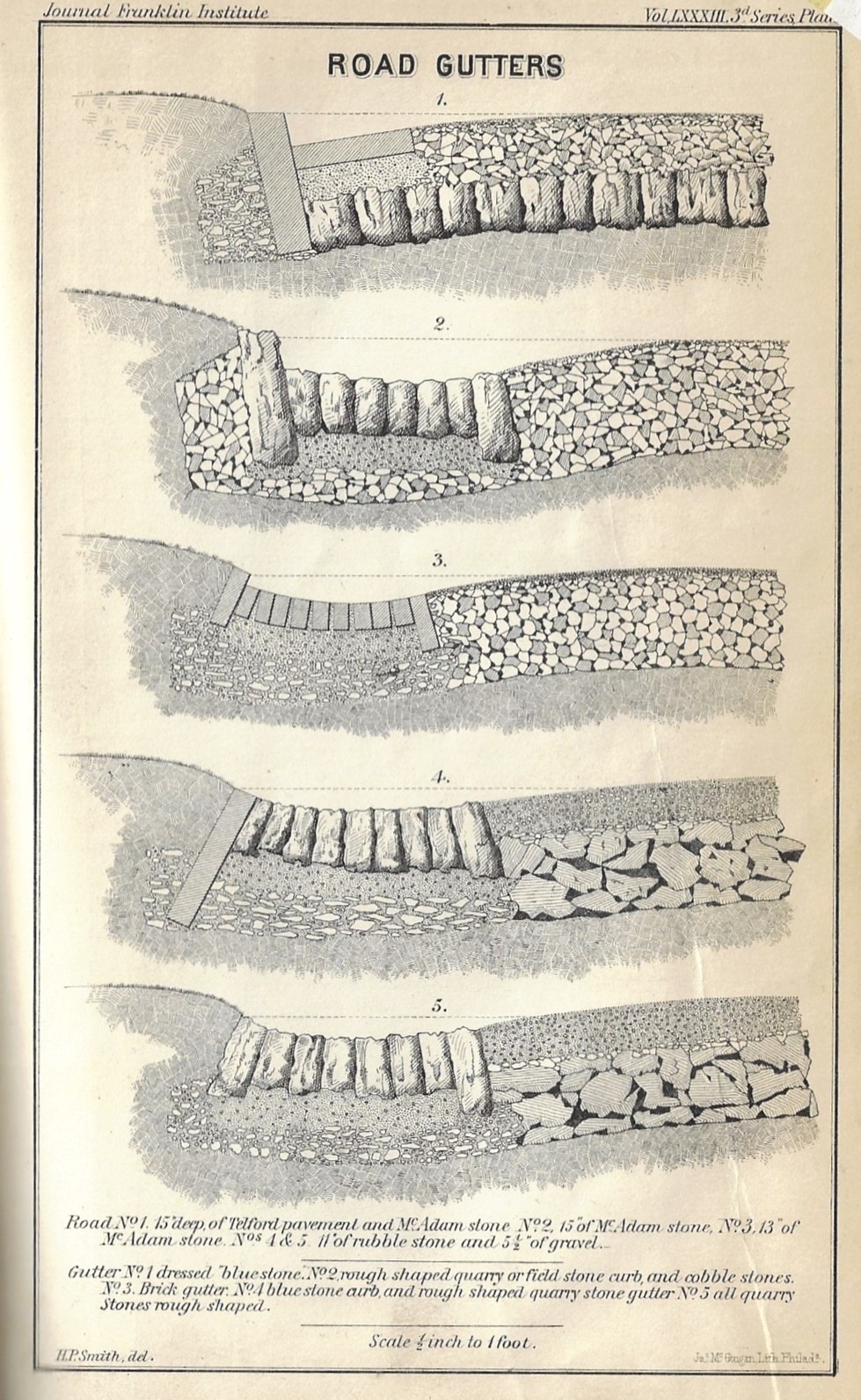
    This is really an ultra-quick post, as I just wanted to share this delightful and lovely image of profiles of different sorts of gutters.  I do recall seeing images like this on occasion, here and there, over the last few decades, though I think that they were either about Roman construction or cross-sections of streets in Paris and London.  In any event, these profiles are from a paper written by supervising engineer of the construction of New York City’s Central Park, and they are a delight to look at. 

    JFI 1867 road gutters


  • Adventures in Electronia: Another Electronic “Brain” (1944/5)

    JF Ptak Science Books   Quick Post

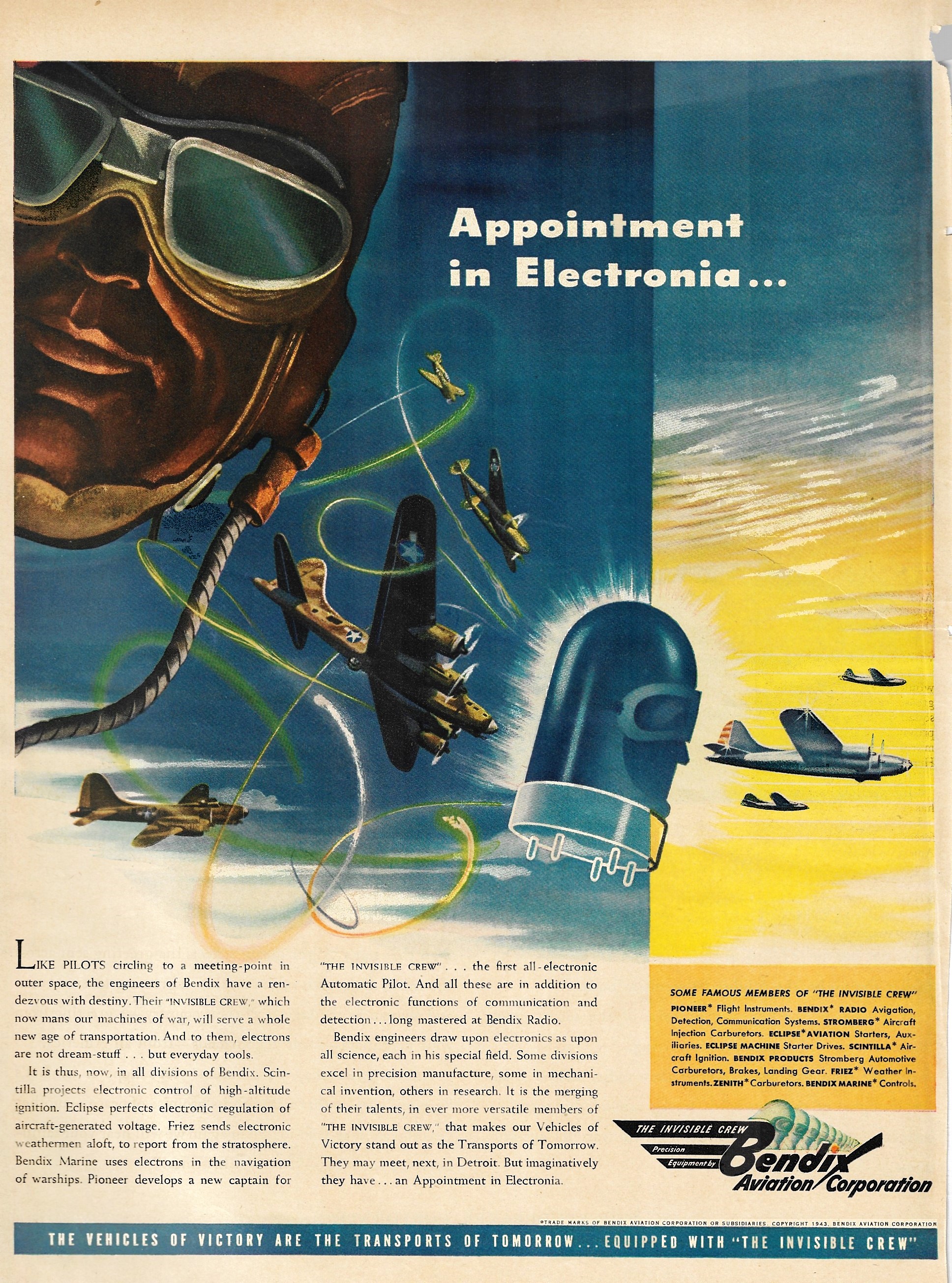
    Only a few days ago I made a post featuring the tides of war taking place inside a RCA electronic tube/valve, and just this morning I shared an unusual image of a proto-robot with a si-fi-ish view of the “robot’s brain”–it is probably high time that these mechanical/electronic brain human-as-machine images be collected. A good number of them are unintentionally anthropomorphic, but the majority (as in this case) are not.  The current image (from an issue of LIFE magazine ca. 1944) invites us into “Electronia”, a world apart from the carbon-based world at war, electronic innovations by the Bendix Aviation Corporation that essentially became “the invisible crew”. The fact of the matter is that this was largely correct–the tech innovations that were taking place in 1943/4 were fantastic,and were being undertaken at a pace and scope that was incredible. The text of the ad highlights some of the integral electronic advancements made by Bendix, and the graphics depict some of the latest aviation advancements that would help crush the Luftwaffe and Imperial Air Force (what seems to be a P-51, a P-38, and a B-17G,  plus on the right some new bomber and what seems to be two jet aircraft). Marshall Admiral Yamamoto was correct when he hypothesized that attacking and declaring war on the U.S. would lead to the destruction of the Japanese military and the defeat of the empire given the spectacular potential of U.S. industrial and technological capacity, and this ad shows just one small aspect of the advances that Japan could not possible counter–and I believe that at the time this ad appeared Yamamoto was already dead, a casualty of war and to U.S. ingenuity in breaking many of the Japanese ciphers and codes. 

    Electronic brain LIFE 1944


  • Found Sci-Fi: Proto-Robot Head (1866)

    JF Ptak Science Books  Quick Post

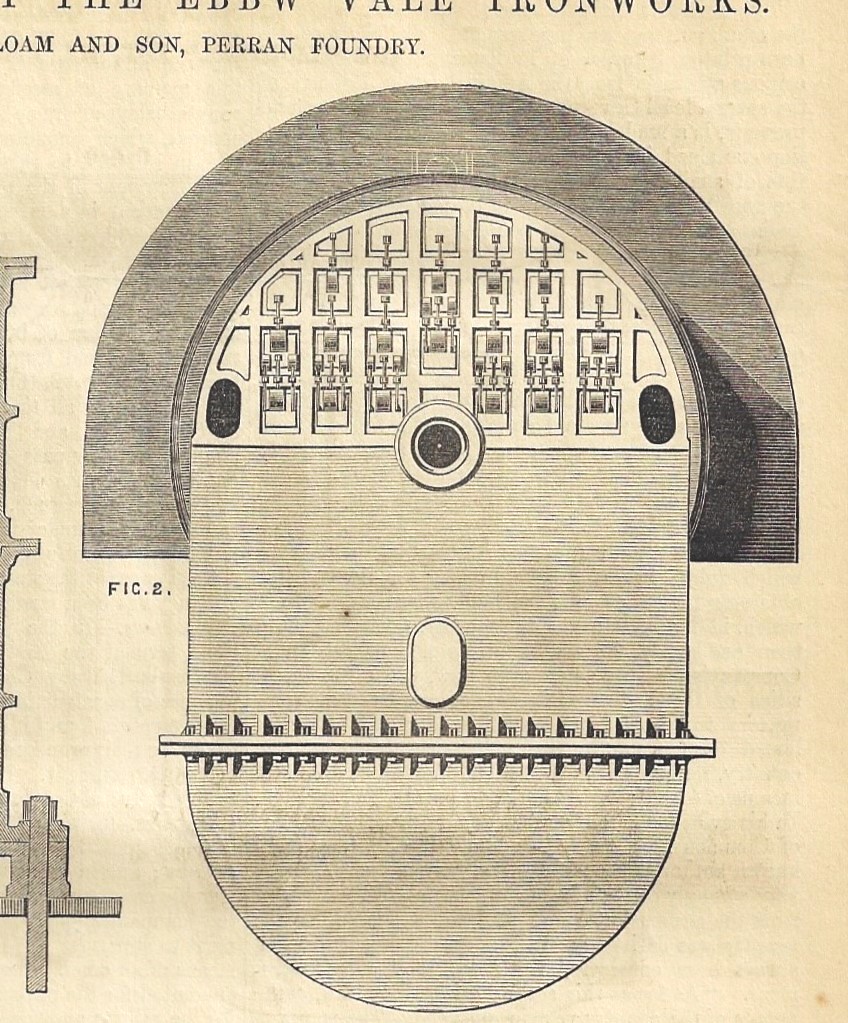
    Anthropomorphic images make their sudden appearances now and again in technical illustration, though they do less so when they surprise the viewer with a simultaneous endo/exo view of the “head” of such pre-vizualization robots. The image here is the view of a plan of “the Darby Blowing Engine at Ebbw [sic] Vale Ironworks” and appears in the second volume of Engineering, September 7, 1866.  The engraving bears a faint resemblance to the Iron Giant, giving both an internal and external view of the workings of the head. Anyway, that’s what I see in it…

    Engineering 1866 proto robot


  • Unusual Shading/Shadows (1866)

    JF Ptak Science Books  Quick Post

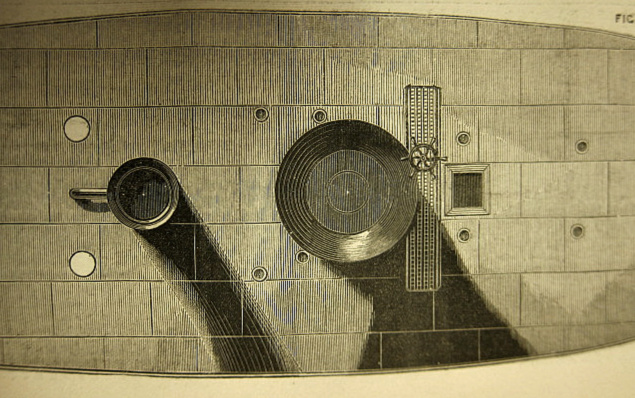
    I’ve made a number of entries on this blog of beautiful/odd shadow practices in antique mechanical and technical drawings, though not so for a while. Today’s entry comes from a stout volume of Engineering (volume 2) 0.for 1866 and comes in an illustration for the U.S. Navy torpedo boat, the Spuyten Duyvil. The boat’s name seems like a bit difficult to maneuver, except if you’re Dutch, though it is far-better sounding than the original name, which was Stromboli.  In any event this was a torpedo boat that saw a little bit of service right at the end of the Civil War–mostly on the James River in Virginia, it seems–and was a torpedo boat. (The “torpedo” at this time was more like a mine than a powered underwater “missile” that we’d think of in these terms today.)  The chief attraction for me for these images though is a bit wholly unnecessary to understanding the boat or its workings, and that’s the shadowing for the exhaust stacks, which to me seem a little unusual, though quite lovely. And so the sharing…

    ENgineer 1866_2_