A Daily History of Holes, Dots, Lines, Science, History, Math, Physics, Art, the Unintentional Absurd, Architecture, Maps, Data Visualization, Blank and Missing Things, and so on. |1.6 million words, 7500 images, 4.9 million hits| Press & appearances in The Times, Le Figaro, Mensa, The Economist, The Guardian, Discovery News, Slate, Le Monde, Sci American Blogs, Le Pont, and many other places… 5000+ total posts since 2008.

Category: Industrial & Technological art

  • A Tunnel Long in the Making (1881)

    JF Ptak Science Books   Quick Post

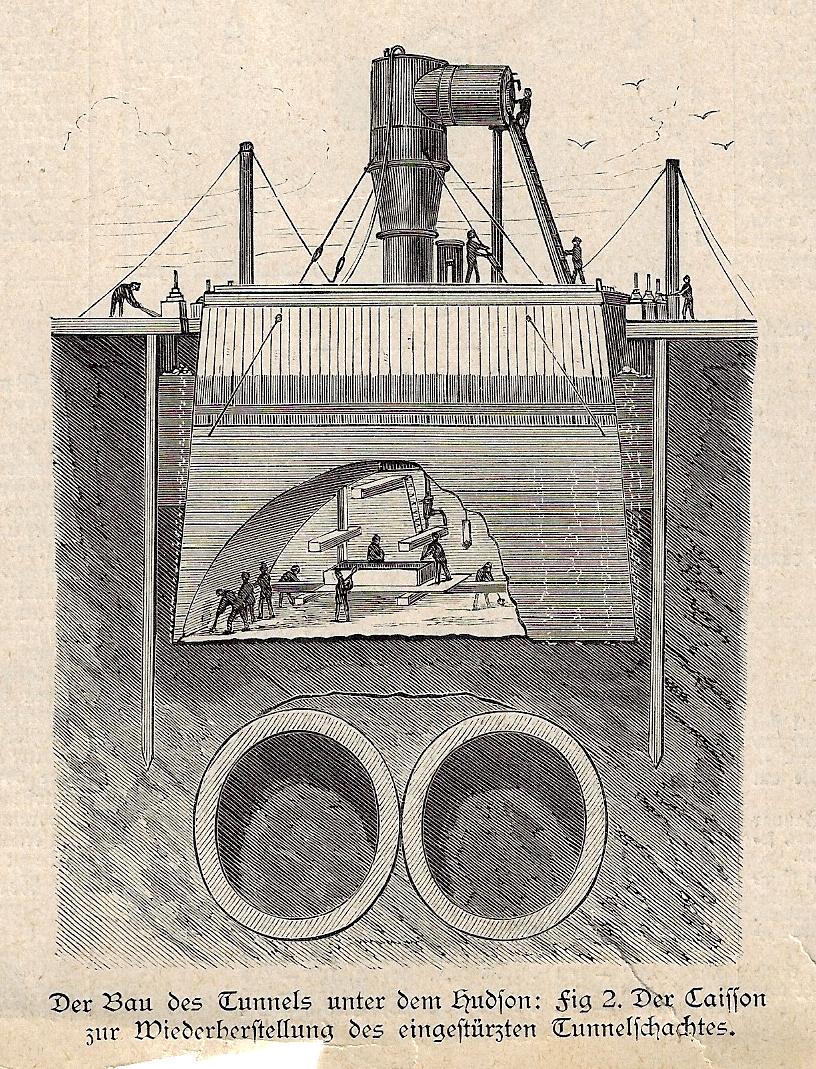
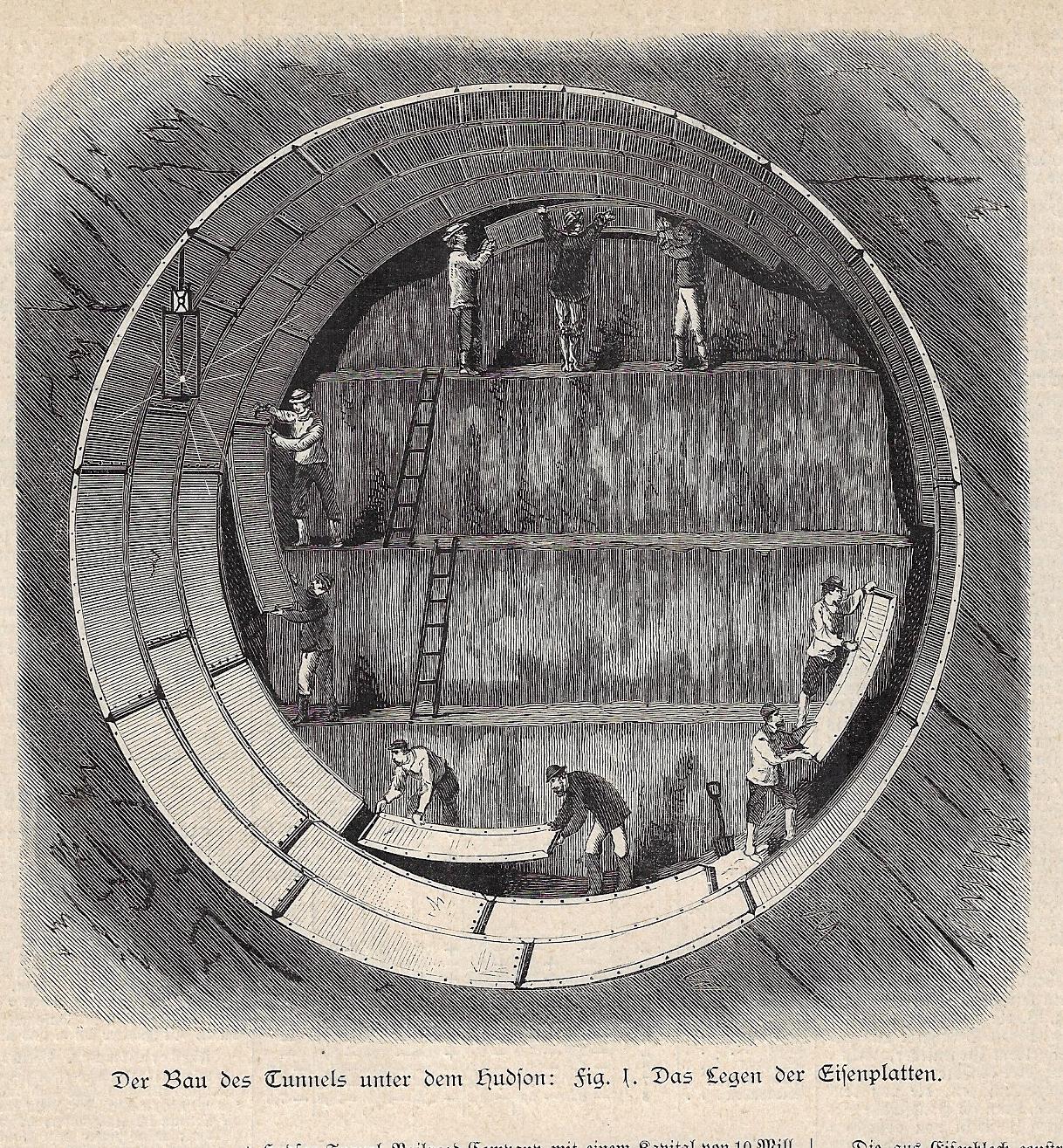
    This is an interesting addition to the collection (though not designated as a category) of several dozen cross section/tomographic/cutaway technical and medical illustration posts to this blog, though this one has a more complicated and perhaps more tragic history than most. It depicts work being done on the ill-fated Hudson River tubes, which began life as a project in 1874 with construction starting in 1878; unfortunately there were at least three different companies that undertook the difficult project before going bust, and there was also one major disaster in 1883 in which more than 20 workers were killed.  The project got underway for the final time in 1899, and was opened to traffic in 1908.  In the top image workmen are installing a shielding that would later be abandoned, working I think via one electric spark lamp at upper left; below we see a casson in which a number of laborers were, that being sunk lower and lower as the excavations proceed.  

    These two images are about-life size from when they appeared in Illustrirte Zeitung (Leipzig), on 29 January 1881–though they no doubt appeared a few months earlier in Harper’s Weekly or Scientific American or some such.  
    Cross section tunnel Hudson 1881


    Cross section tunnel Hudson 1881 _2_


  • Mechanization Taking Command in a Robotic Carpark (1921)

    JF Ptak Science Books   Post 2656

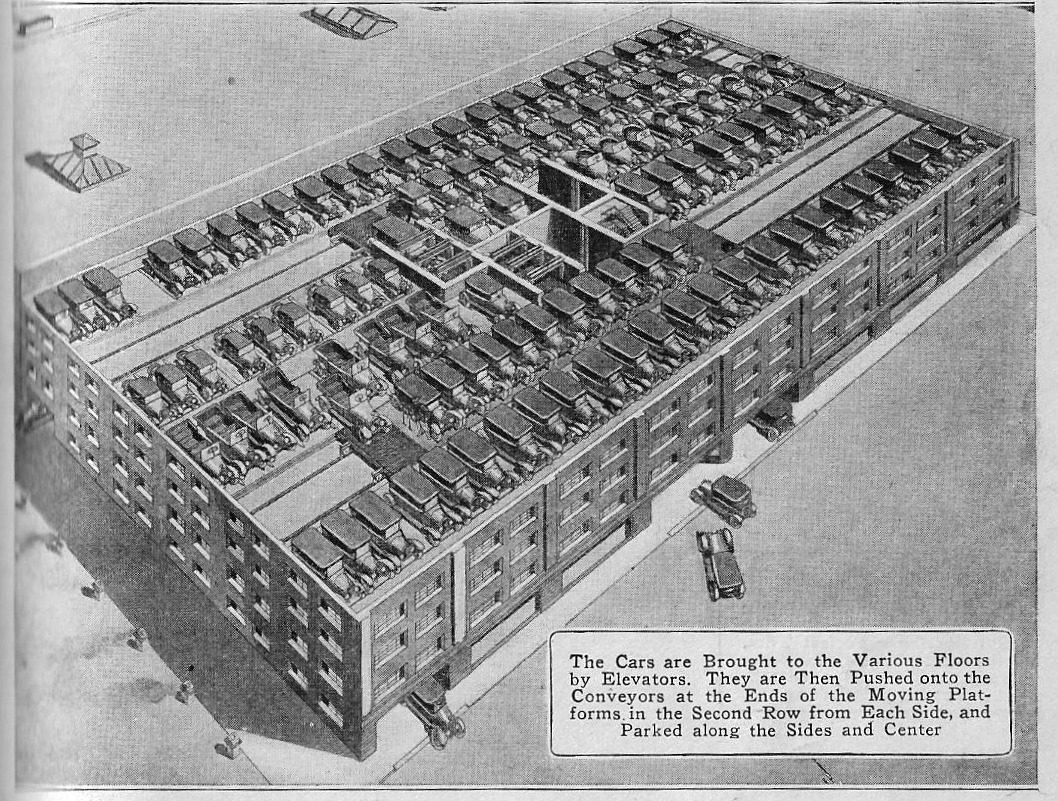
    There are many instances of assembly-line manufacturing before Henry Ford, but none were nearly as complete and extensive and done on such a large scale as the principle and practice he established in 1913.  The idea became generalized and (to a degree) fashionable, and the practice started being implemented in many other business wide and narrow.  To a certain extent that applies to this parking garage proposal that appeared in Popular Mechanics in December 1921. the effect of this idea here is the introduction of the building-as-robot, though the idea in this form didn’t yet exist, nor did the term “robot”. In any event the building took care of the customer’s car once the car had been driven in–attendants would drive the car to an access point for a conveyor and perhaps an elevator, and deliver the car to its designated slot, much in the same ways some libraries operate in storing some of their more obscure books.  

    I guess that “Taylorism” works its way in there, too. Frederick Winslow Taylor (born in 1856 but dead already at this point by six years) introduced a study of business in his Principles of Scientific Management, and that was a synthesis of humans with their environment and tasks to produce a more business-harmonious utilization by increasing the workers’ productivity  via time/use studies, making the worker more a part of the business machine, and in a sense a Borg-like part of a techno-human robotic industry.  Among other things Taylor discovered to the hatred of hundreds of thousands of laborers that the short-handled shovel (villainized in the Song “Big Rock Candy Mountain”) was the better tool to use in many shoveling tasks even though the thing itself is a back-breaker that no worker would choose to use.  Anyway, int eh history of robots, both of these bits deserve some attention. 

    Pop mech carpark 1921

    [Source, Popular Mechanics, December 1921, vol 36, p 751.]


  • A Warehouse of Locomotives: Baldwin Works, 1884

    JF Ptak Science Books   Quick Post

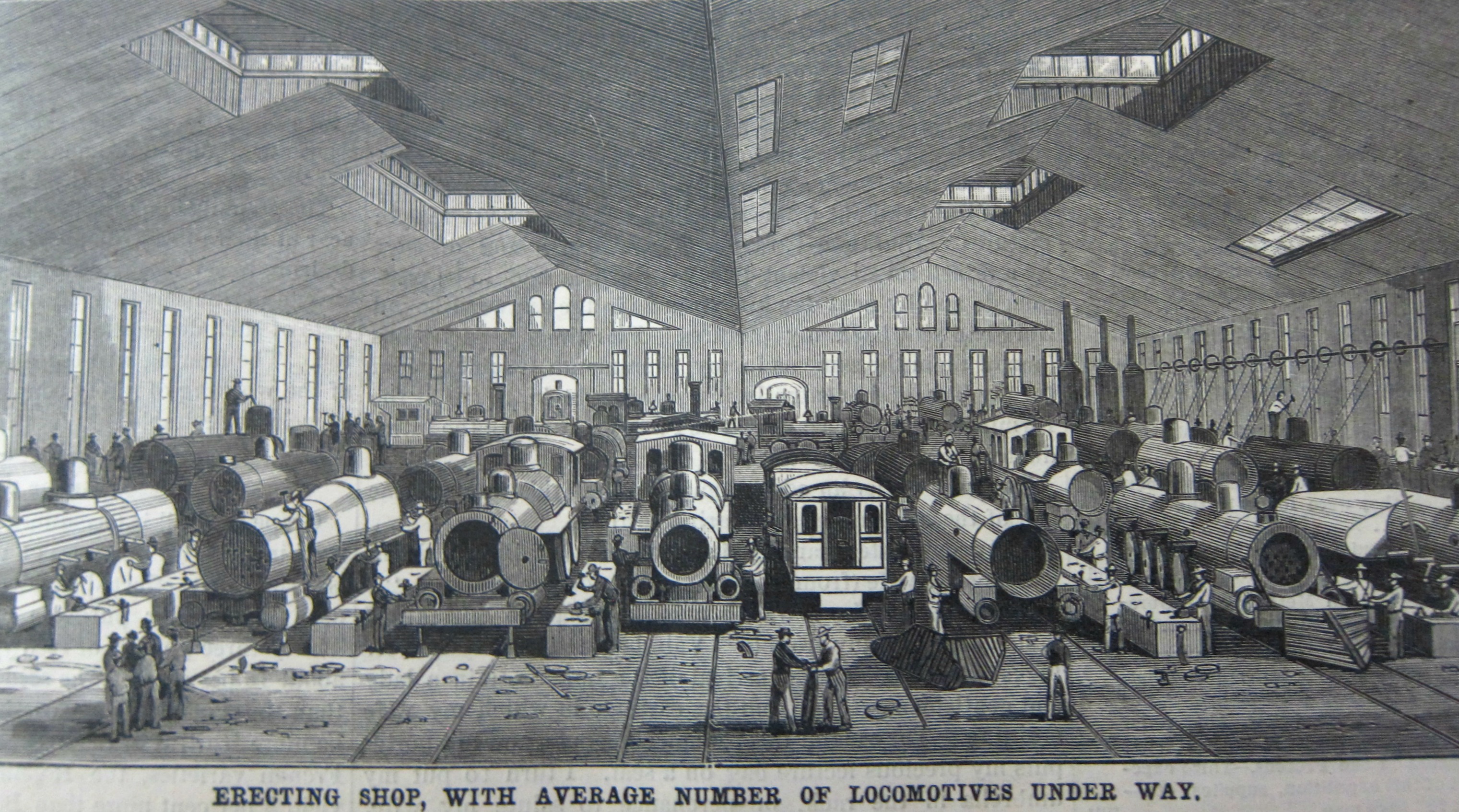
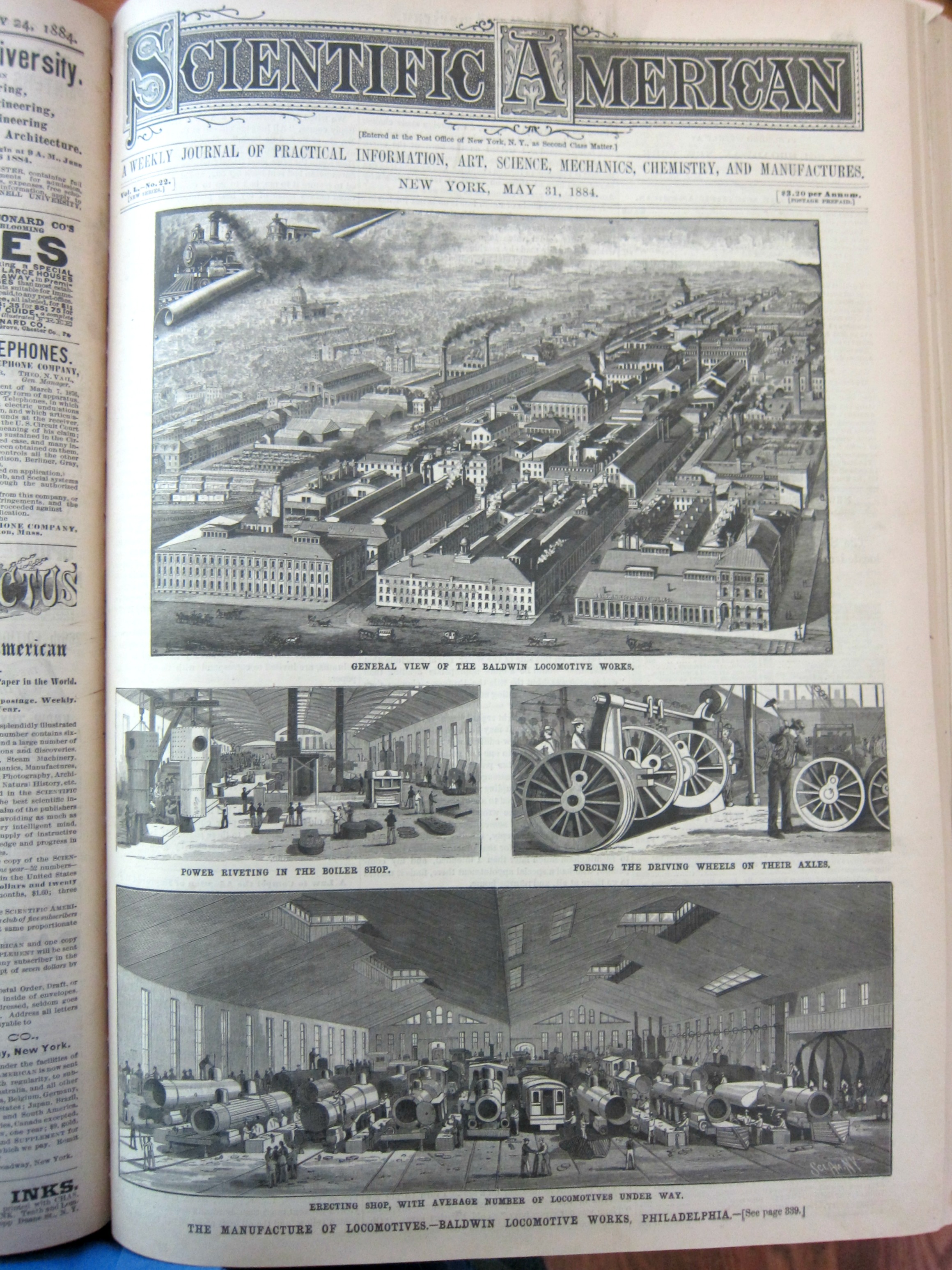
    There’s a definite real-or-imagined synesthesic olfactory reaction to this image–for me, at least.  The ceiling seems a little low for what’s going on inside this building, and none of the skylights seem to be open, and the windows in the walls don’t seem to be letting much air in, which means that there is probably a high order of oil and carbon and other hammering smells going on here, locomotives being assembled/fixed check-to-jowl. It looks to be about 12/15 locomotives in one stage of completion or another in this structure, which means that there must’ve been 100-200 engineers and workmen in there too.  The Baldwin Works–pictured here in a detail of the front page of the Scientific American for May 31, 1884–is shown at a very strong point in U.S. railroad development, and there’s nothing quite like an image like this that spells out “work” than something like this. 

    Locomotives Baldwin SI 1884


    Locomotives baldwin SI 1884


  • An Elegant-Looking Torpedo Boat, 1887

    JF Ptak Science Books

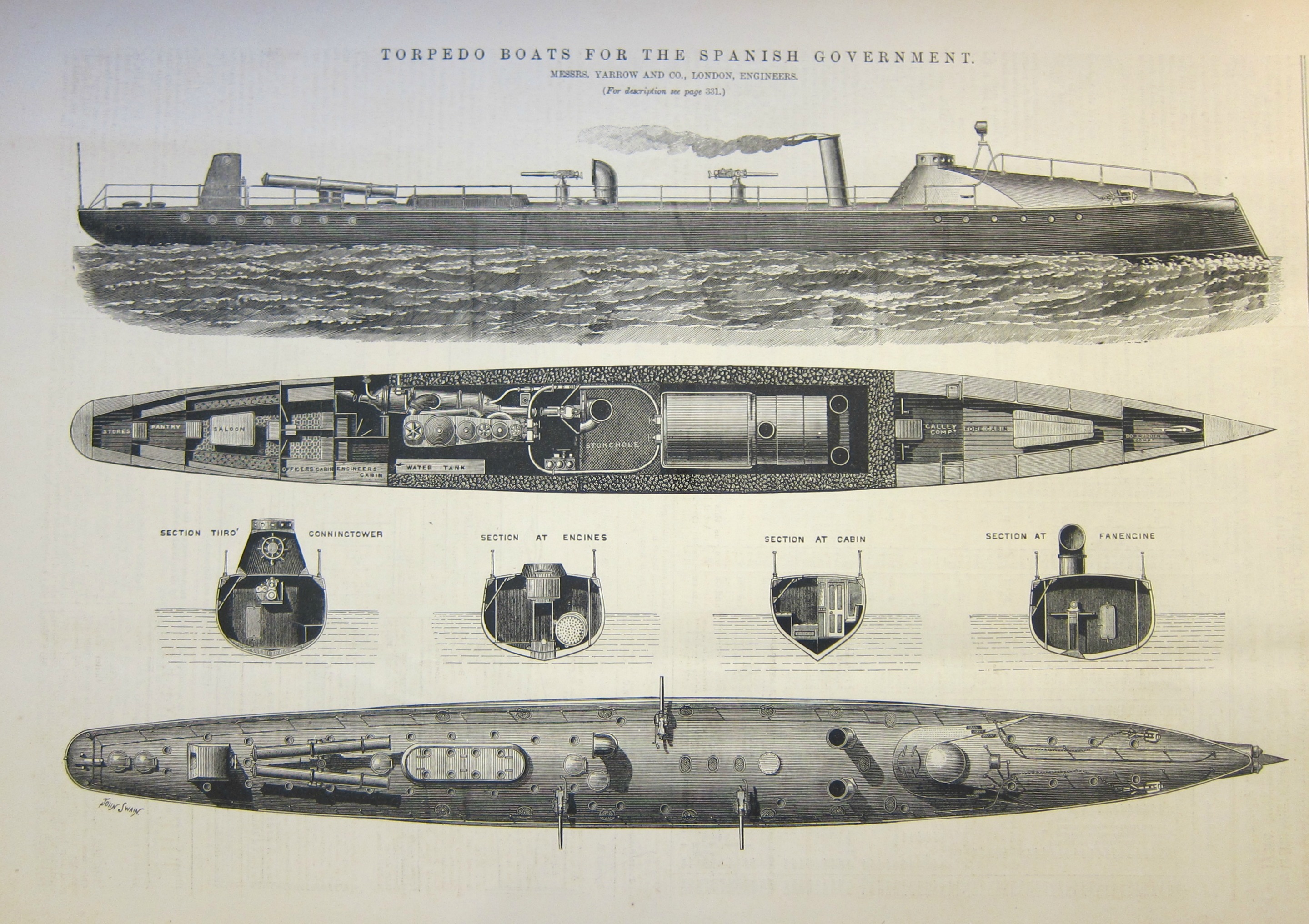
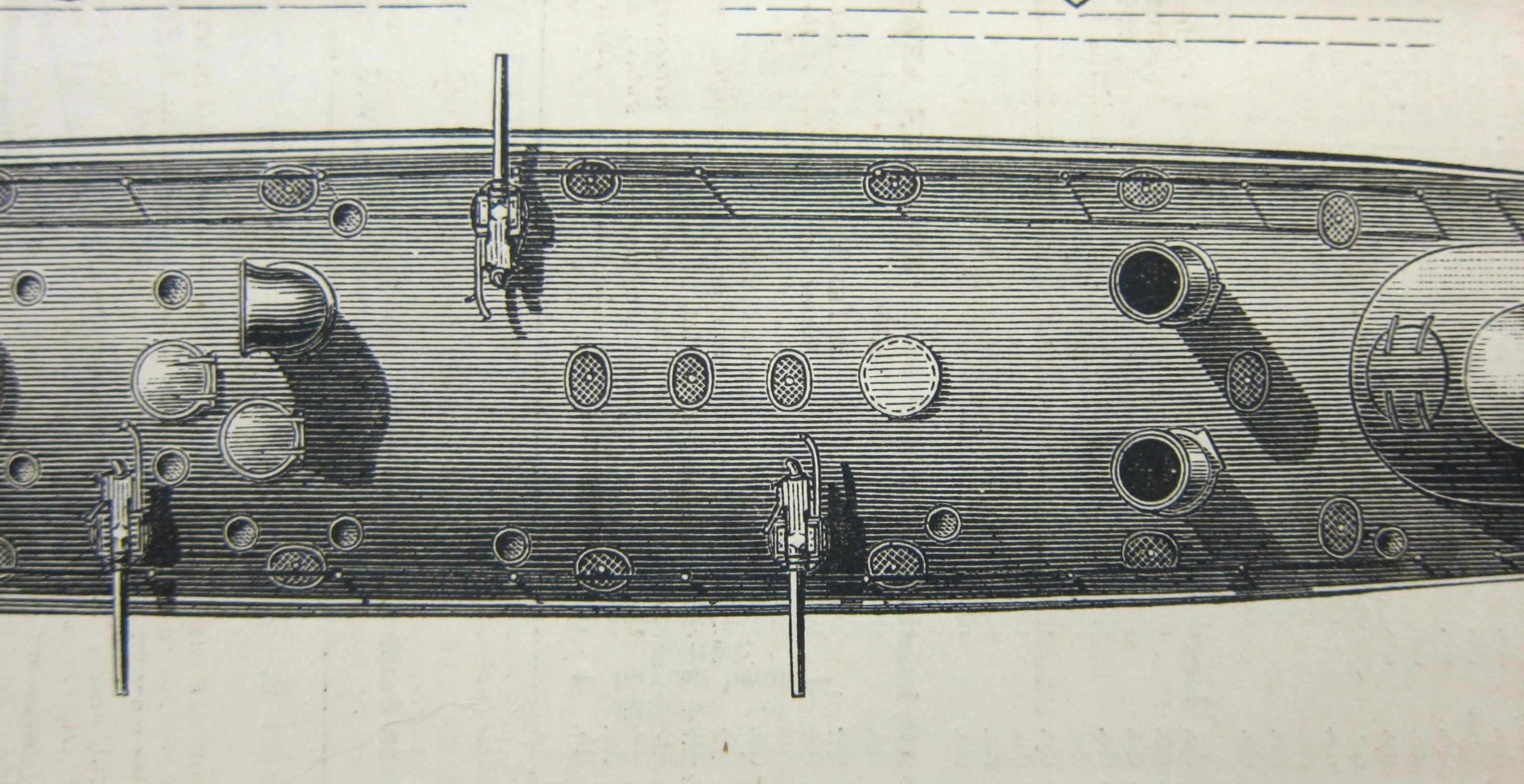
    This is the design for two sister torpedo boats, created by Yarrow & Co. (Poplar, East London) in 1887 for the Spanish government. The torpedo boat was not a terribly-new idea by this point, the first “modern” version of the craft built in 1875 (HMS Lightning), with earlier versions launched during the U.S. Civil War (like the CSS David). The designs shown here are for the Azor and the Halcon,135′ of attack-capacity (with 1600 hp), certainly making them high consideration for the folks on the receiving end, leading to the development of the torpedo boast destroyers to protect the big battleships and hunt the torpedo boats, and idea that would lead to “destroyers”. In any event, I found the image attractive and interesting, and thought I’d share it:

    Engineer 1887 torpedo boat

    [Image will become clearer when expanded/Source: The Engineer, October 21, 1887.]

    Engineer 1887 torpedo boat detail


  • The Majesty of Gears and Bolts–the Poe Locks, 1896

    JF Ptak Science Books   Quick Post

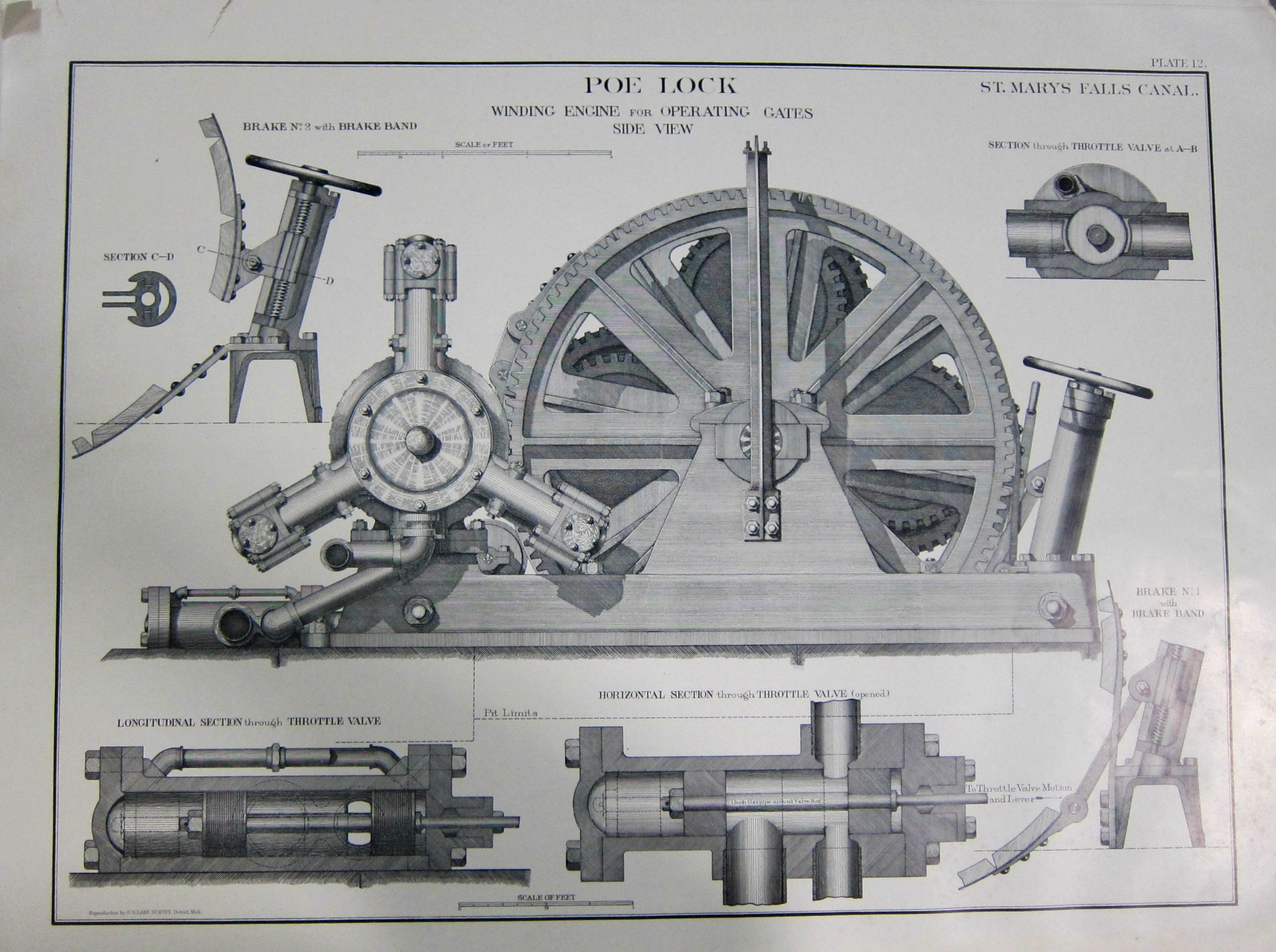
    The Soo Locks at Sault (the “soo” of “Soo”) Ste. Marie are the four parallel locks that connect Lake Superior with Lake Huron and thus the rest of the Great Lakes–the Poe Locks, designed by O.M. Poe, are on of the four, and when it was completed in 1896 it was the world’s largest. At 800’x100′ they were enormous, and controlled the displacement of a lot of water, and the illustrations below show some examples of the meat of the engineering that controlled that process.   I have these loose engravings from an unfortunately unidentified source (though they are from a U.S. Lake Survey,between 1898-1909) and decided to share them because of their deep engineering beauty.  They are fantastically-rendered objects, filled with steam and grease and huge amounts of The Heavy Stuff, all of which display a remarkable feat of engineering.  

    The images are clearer when you click and expand….

    Poe Lock Winding Engine


  • Cross Section of a German U-Boat, 1915

    JF Ptak Science Books  Quick Post

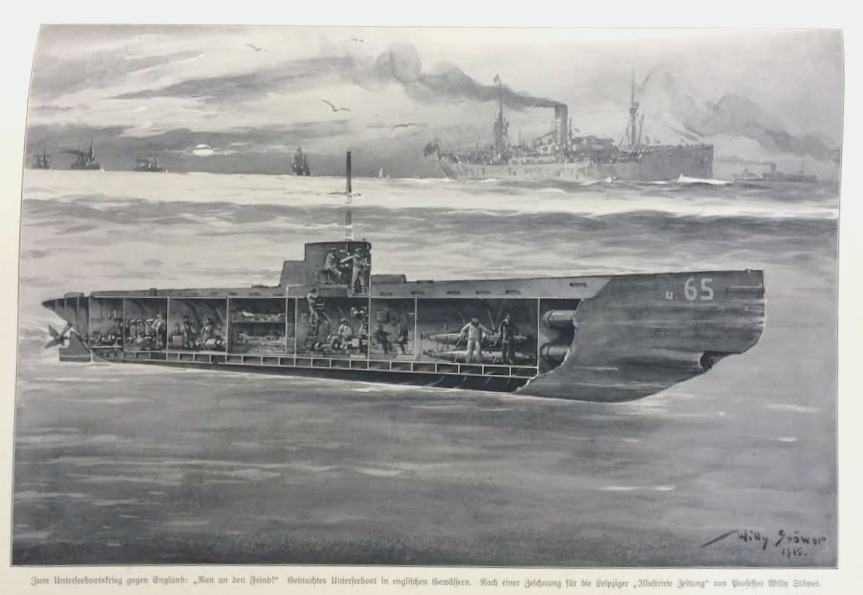
    I have paged through the entire Illustrirte Zeitung for the war years 1914-1918 and I’ noticed a number of naval works by the illustrator and painter Willy Stower, but I do not recvall offhand any other cross sections, which is why the image below struck me so. Stower’s (1864-1931) drawing appears in the September 7, 1915 issue of the magazine, and depicts one of the early German U-Boats.  [Evidently the U-65 began its career in 1916, and registered at 226′–this rendition doesn’t look like it would be as big as this, and I’m not sure then what we are looking at…] 

    Submaruine WWI _1_


  • Pistol- and Rifle-Cameras, 1884

    JF Ptak 

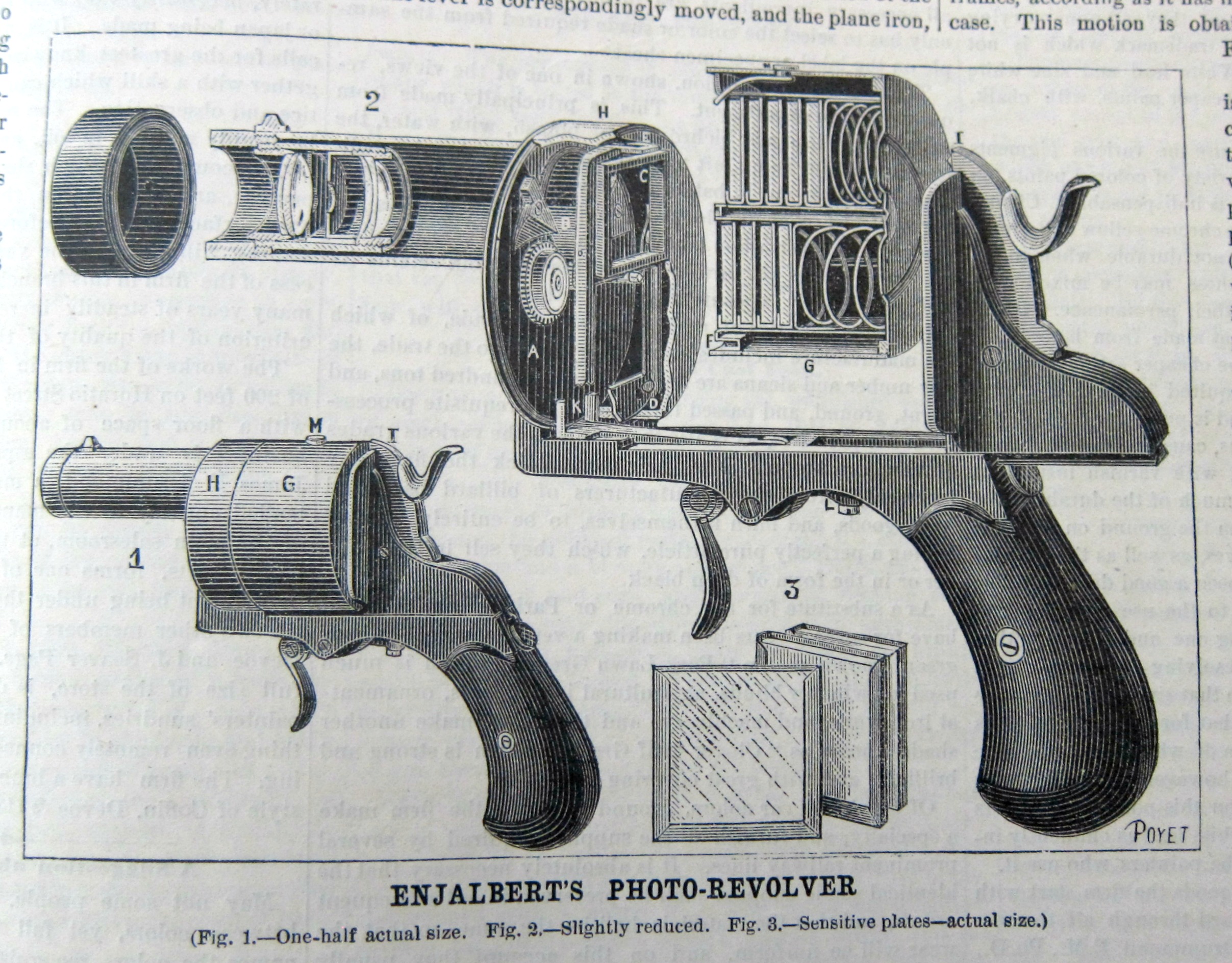
    There is an origin certainly for the reference to “shooting” fil or “shooting” a movie and such, and I think that it is fair to say that the following two illustrations of photographic innovations will explain that origin.  The first is E. Enjalbert’s “photo-revolver”, a woodcut and explanation of which appeared in Scientific American (“”A Photographic Revolver for Amateurs” ) May 17, 1884.  It really is an ingenious thing:  the lens of the camera was located in the barrel (#2) with the camera apparatus in section “H”; the photo-sensitive plates (life sized at #3), are both pushed forward and down with the action of the trigger/hammer.  It is a snappy design. On the other hand I don’t think I’d want to actually use the thing in an urban environment, as there might not be time for an explanation that “this is a ….”. 


    Inventions revolver camera

    (From the signature at bottom right of teh wood engraver this was no doubt published earlier in La Nature.)


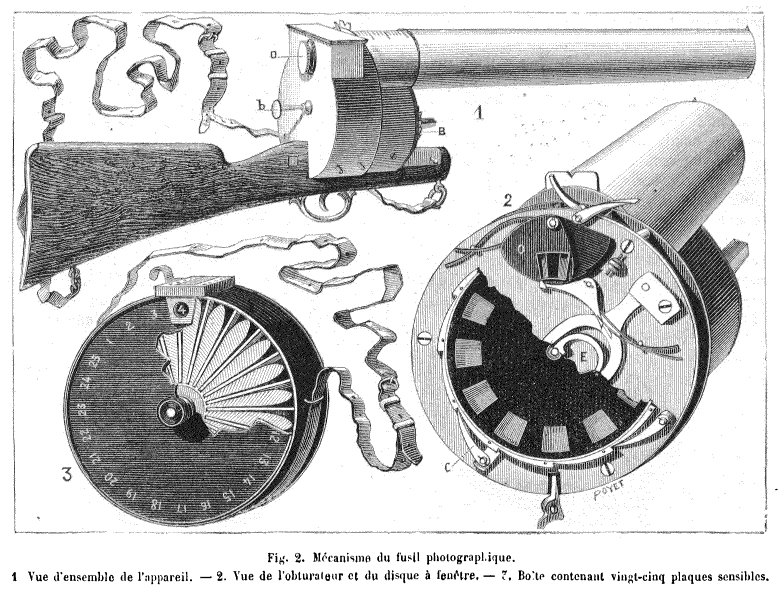
    And then there’s the great Etienne Marey’s “Fusil Photographique”, as it appeared in La Nature in 1882, which was an early and significant step in the development of cinematography, though again a highly problematic and time-invasive explanation out in public might escape the user:

    Invnetions camera rifle

    If there was any debate on the origin of the above-mentioned phrase, this might sway it.  


  • A City on a Mis-named Martian Moon, 1927.

    JF Ptak Science Books  Quick Post

    Ganymeade detail

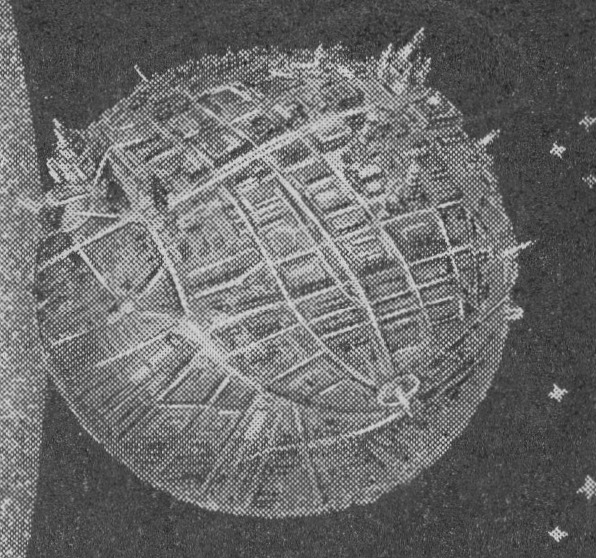
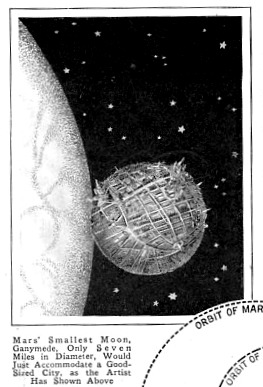
    This fine image from Popular Mechanics (January 1927) imagines the Martian moon “Ganymeade”, mentioning that it is only 7 miles around, and could hardly host a large city, which the artist imagined in this free-for-all concept piece.  I like the idea of putting the size of the moon in perspective like this–I must say that I’ve never seen one quite like this. But first, the magazine identifies the Martian moon as “Ganymede”, which is actually a Jovian moon. The moons of Mars are Phobos and Deimos (the names meaning panic/terror and terror/dread), and they are 13.8 miles and 7.8 miles, respectively. They were discovered in 1877 by Asaph Hall at the National Observatory, and there wasn’t a “Ganymede” between them–weirdly and wonderfully, though, their existence was imagined by non other than Jonathan Swift, who had his Laputan astronomers discover two moons in Gulliver’s Travels in 1726. But no  Ganymede.   As it turns out, Ganymede is the largest moon in the solar system, and is nearly the size of Mars, so maybe that is where the confusion started.  

    Anyway, this is a great image: 

    Mars city516


  • Data Visualization and Enormity (1917)

    JF Ptak Science Books Quick Post

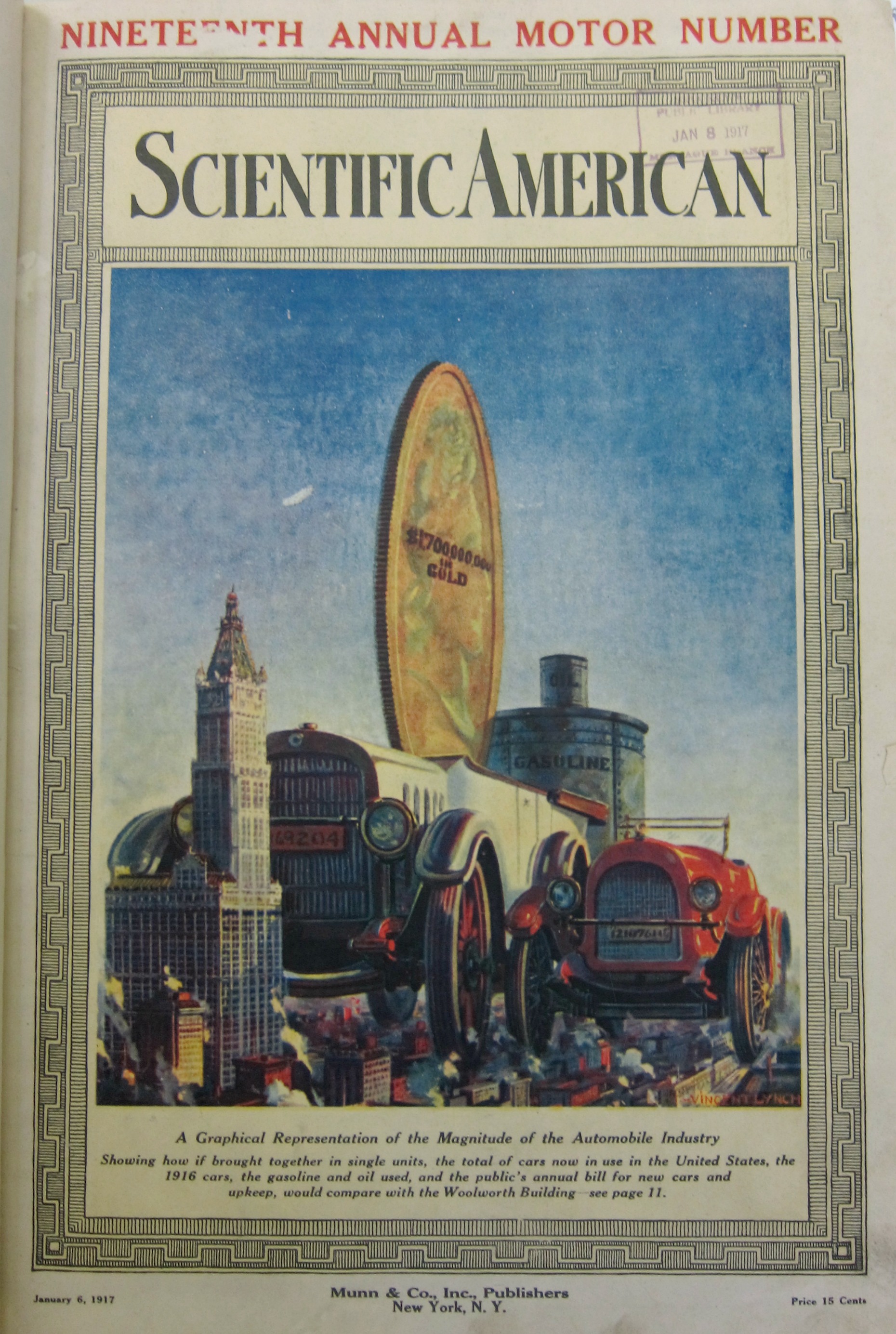
    Continuing what has become a series of posts from 1917 (all this prompted by looking for early mentions of the first use of a tank in battle during WWI) we come to The Enormity section. There are others to come, but there is something extra here in measuring production in terms of tall buildings–in this case, the Woolworth Building. In 1917 this was the world’s tallest building, and was so from 1911-1930, with 53 floors and 792′ high, its neo-Gothic greatness replaced by the Bank of Manhattan (928′) and then by the Chrysler Building, followed by the Empire State Building, and then the World Trade Center, and so on, which I mention just to put the Woolworth into perspective as a famous building capable of being used as a standard of measure.  What our graphic from the Scientific American (January 6, 1917) as to show is the enormity of the newish American automobile industry. The large car is supposed to represent the amalgamation of all cars built in the U.S.–the striking thing about the graphic for me is the second car, which is the production for only the year 1916.  In the background we see an enormous gold coin for the annual expenses of the car industry, and further back still the enormous cans of gas and oil used annually (which I guess were configured in terms of volume of the Woolworth Building). All-in-all, the visualization got its point across pretty effectively.  

    Dataviz automobiles 1917


  • The Dawn of the Robots

    JF Ptak Science Books   Quick Post 

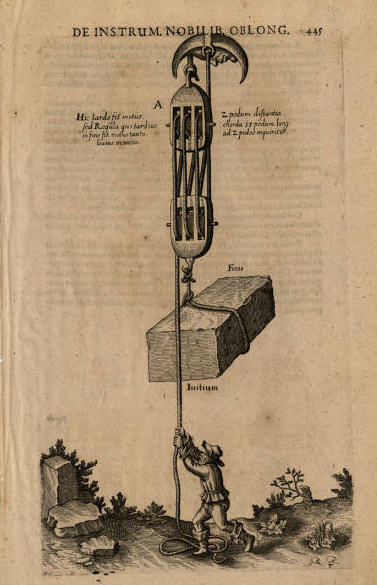
    Well, this is not anywhere near the first image of a pulley, not anywhere close–I don’t even know when that might have appeared in a manuscript in the 9th century or whatever–but it is certainly a very attractive gang of pulleys.  It occurs in Robert Fludd’s (1574-1637), Utriusque Cosmi . . . Historia (1617), and in it I see Hero/Heron of Alexandria (10-70 ACE), who I always associate with the pulley, and of course with his famous inventions, which in some respect are early forms of ‘robots”. In this image, the pulley-robot of some complex means is operating the “drive element” and producing (still) the necessary energy to produce change. And–this is a fine image.

    Fludd pulley

    [Source:  University of Utah,http://content.lib.utah.edu/cdm/compoundobject/collection/naturae/id/1587/show/1265/rec/1]