A Daily History of Holes, Dots, Lines, Science, History, Math, Physics, Art, the Unintentional Absurd, Architecture, Maps, Data Visualization, Blank and Missing Things, and so on. |1.6 million words, 7500 images, 4.9 million hits| Press & appearances in The Times, Le Figaro, Mensa, The Economist, The Guardian, Discovery News, Slate, Le Monde, Sci American Blogs, Le Pont, and many other places… 5000+ total posts since 2008.

Category: Industrial & Technological art

  • 1000-Year Panorama of British Naval History (1942)

    JF Ptak Science Books   Quick Post

    “Keep then the sea which is the wall of England, and then is England kept in Gode’s Hand, so that fore anything that is without, England were at peace withouten doubt.”

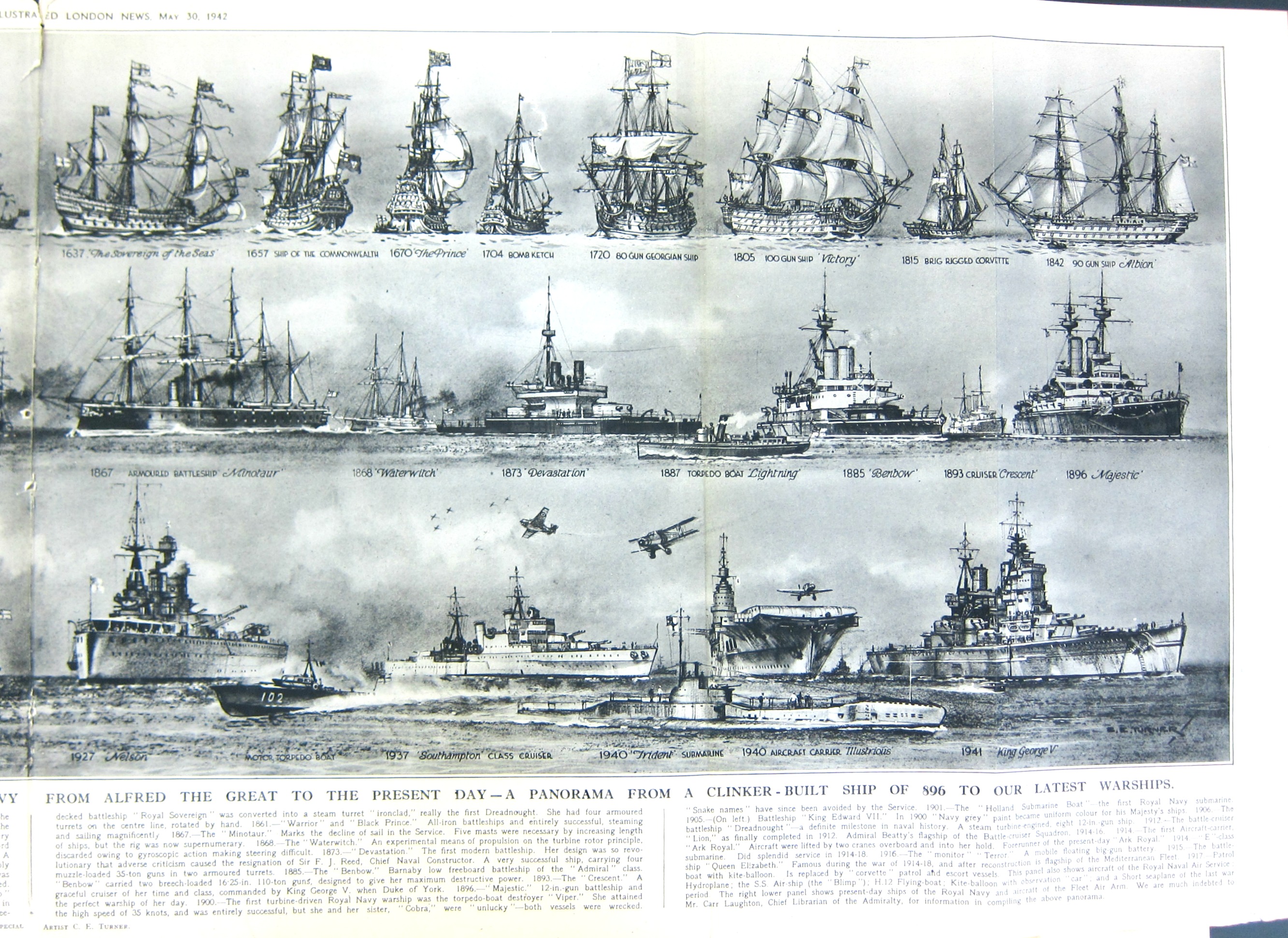
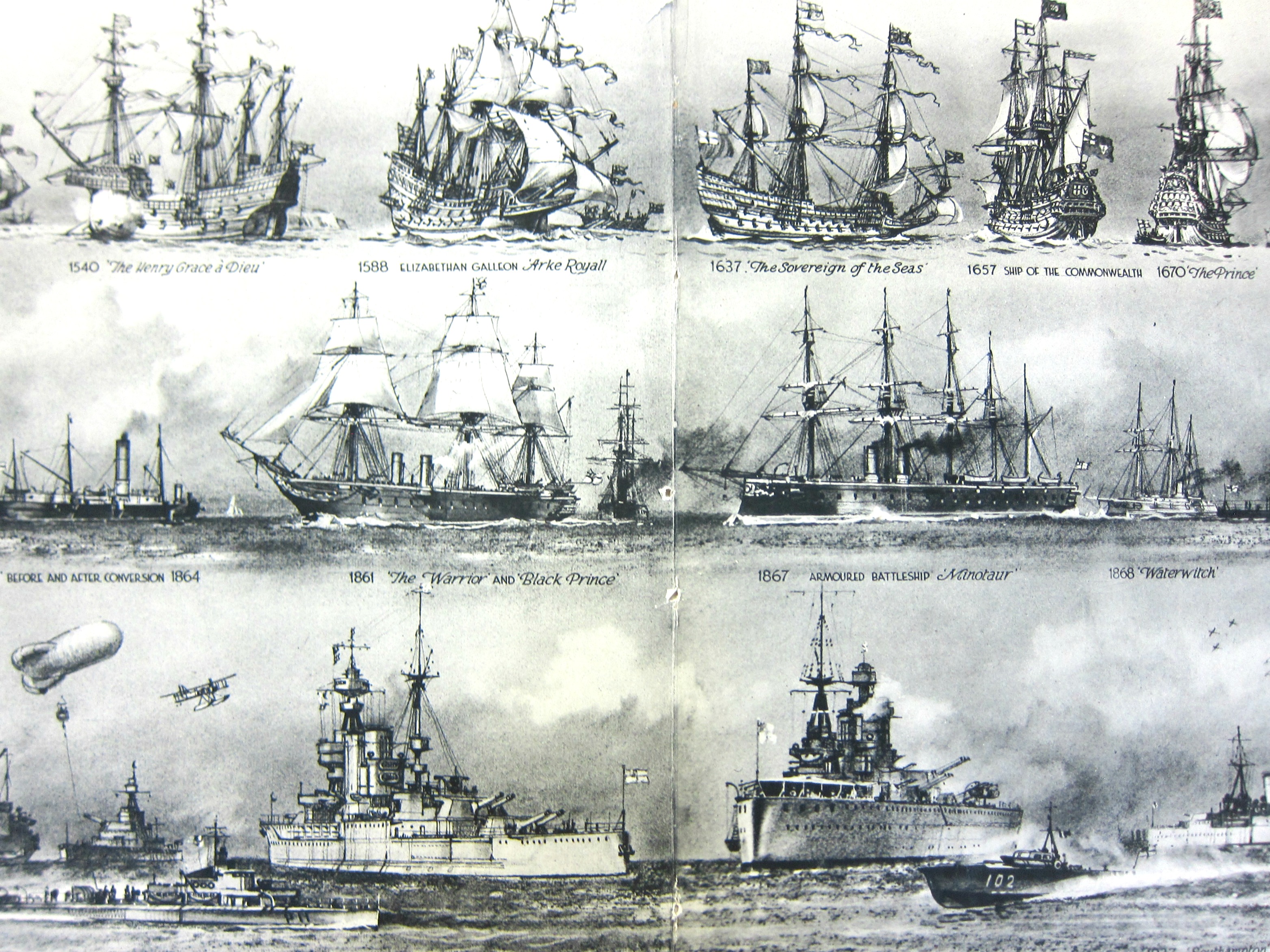
    This fantastic three-foot-long panorama was published as a folding centerfold for the Illustrated London News Supplement of May 30, 1942.  By the middle of 1942 I think it was pretty clear that Germany could not hope to compete with the U.K. in the production of ships, and especially in the area of submarines, where the Luftwaffe demanded and received the lion’s share of resources necessary for construction. The Battle of the Atlantic was being won, the blockade was working and intact, and the U.S. had entered the war militarily. No doubt it was a good thing for the reader’s of this popular magazine to be reminded of their stellar naval history at this point of the war. There are 45 ships and boats on this panorama, ranging from the times of Alfred the Great to the King George V.

    The following images are very expandable:
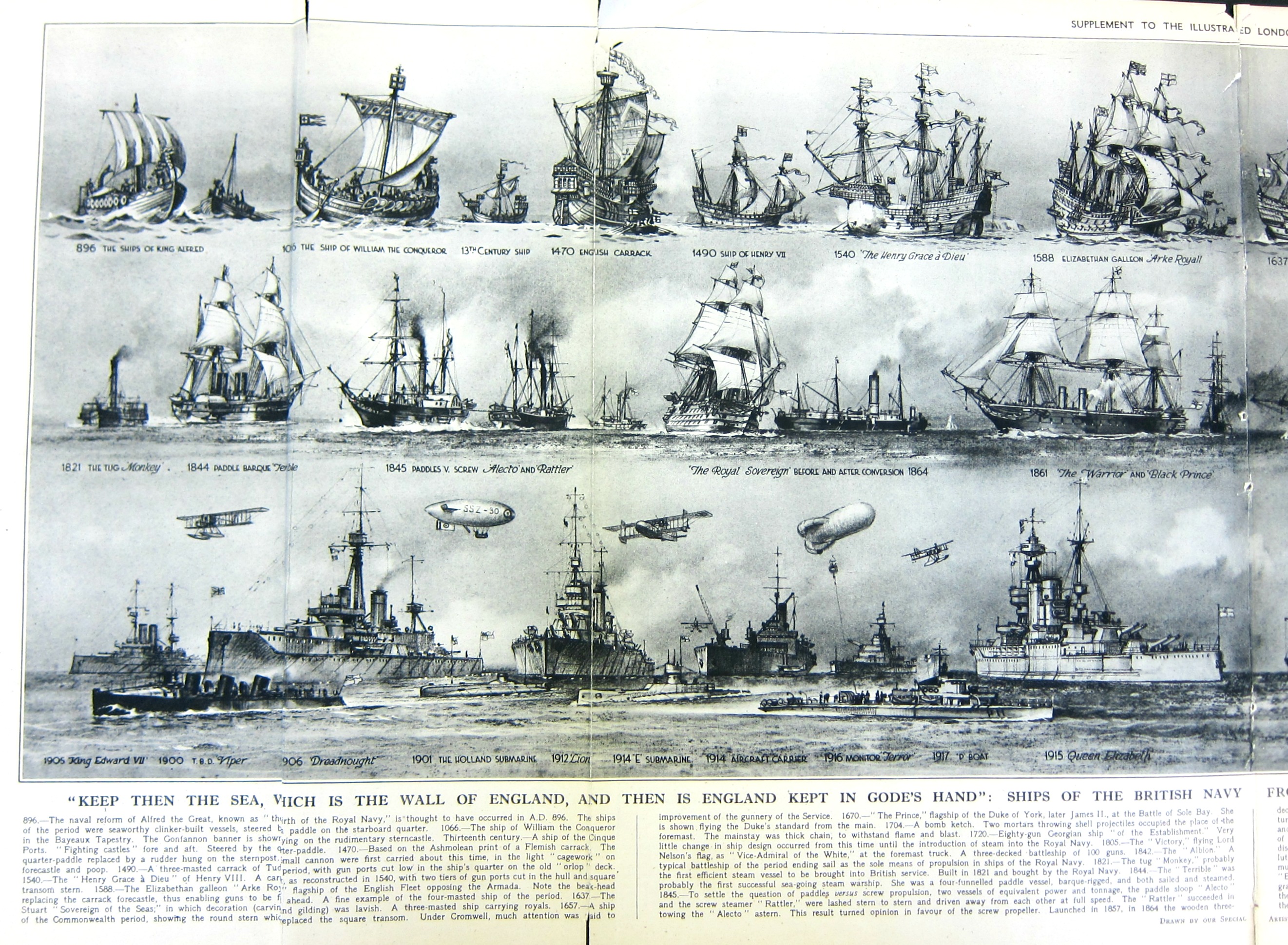
    ILN HMS History left panel

    ILN HMS history right panel


    The center section:
     

    ILN long chart HMS


  • You Are There: Dive-Bombing Pilot, 1935

    JF Ptak Science Books 

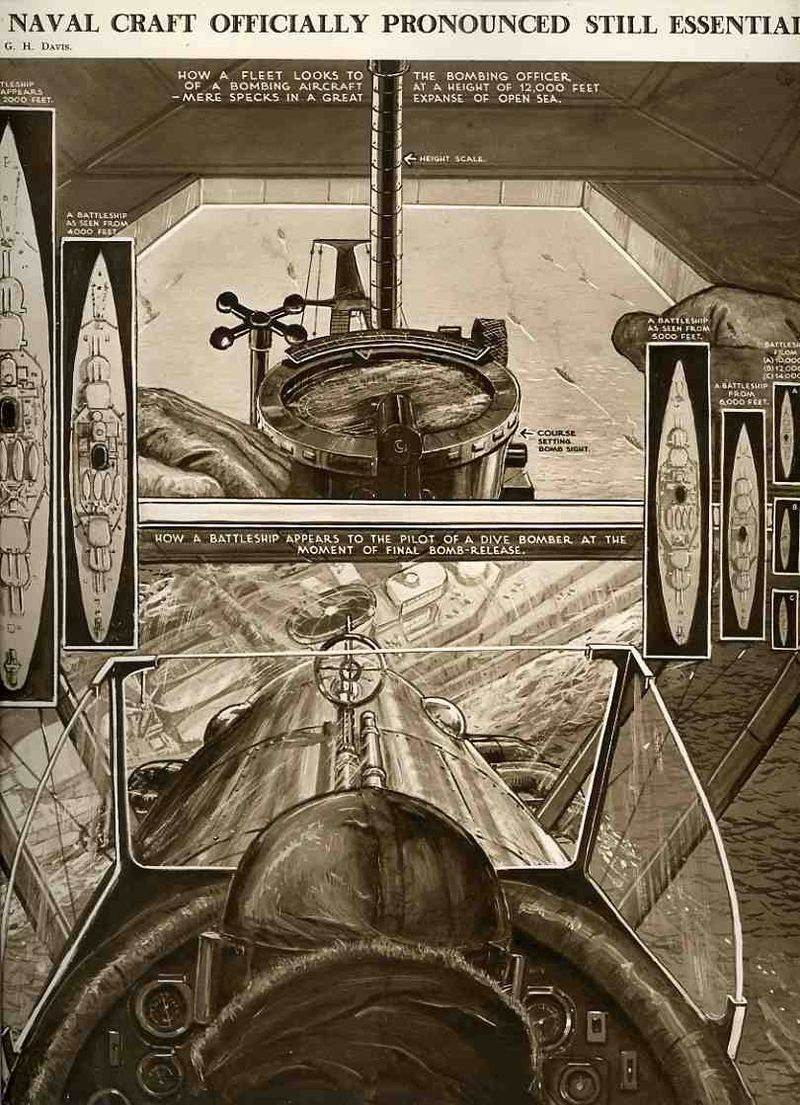
    In my experience popular images prior to WWII that put the reader inside of the picture– giving them the same view as the observing, principle member of the picture–are very uncommon.  Honestly, they just don’t happen very often, and I wish that I had paid more attention to them over the years before I realized they were as rare as they were. Such is the case with this extraordinary and action-packed picture in which the reader is hosted just behind and slightly above the head of the pilot of the aircraft dive-bombing the battleship.  It appears in The Illustrated London News for 7 November 1935, and it must have been captivating for the readers, being given the sense of closing in at great speed on the ship.  There are actually eight other smaller perspective images embedded in the image as well. The largest of these (at top) places the viewer directly inside the subject, giving them the feeling of how it looks like to the bombing officer of the aircraft as it approached the fleet. The other five images shows what the battleship looks like from different height from the inside of the aircraft.  Perhaps this doesn’t look like much to us today, but at the time, I can assure you, these images were exceptionally uncommon offerings of a personal perspective that few readers had ever experienced.

    00-blog-Oct 21--aircarft attack892


  • A Beautiful Saw, 1877

    JF Ptak Science Books    Quick Post

    I found this ad on the back page of the last issue of the Scientific American before that of December 29, 1877, which carries the announcement and description of the invention by Thomas Edison of the groundbreaking  “talking phonograph”.  In any event, the saw image is beautiful:  

    Saw Sci American 1877 detail

    And the full ad:

    Saw Sci American 1877


  • An Interesting Design for an Optics Advertisement, 1918

    JF Ptak Science Books   Quick Post

    Josef Rodenstock (1846-1932) started his company, “G. Rodenstock” in 1879, manufacturing and selling mathematical, physical, and optical instruments–it survives to this day. This advertisement for the optics branch of the company appeared in the July 1, 1918 issue of Illustrirte Zeitung (Leipzig)–it is rather small in the original, but very effective; I couldn’t pass it  by without sharing. 

    German eyeglasses


  • An Escher-Like Non-Escher Architectural Image

    JF Ptak Science Books  Quick Post

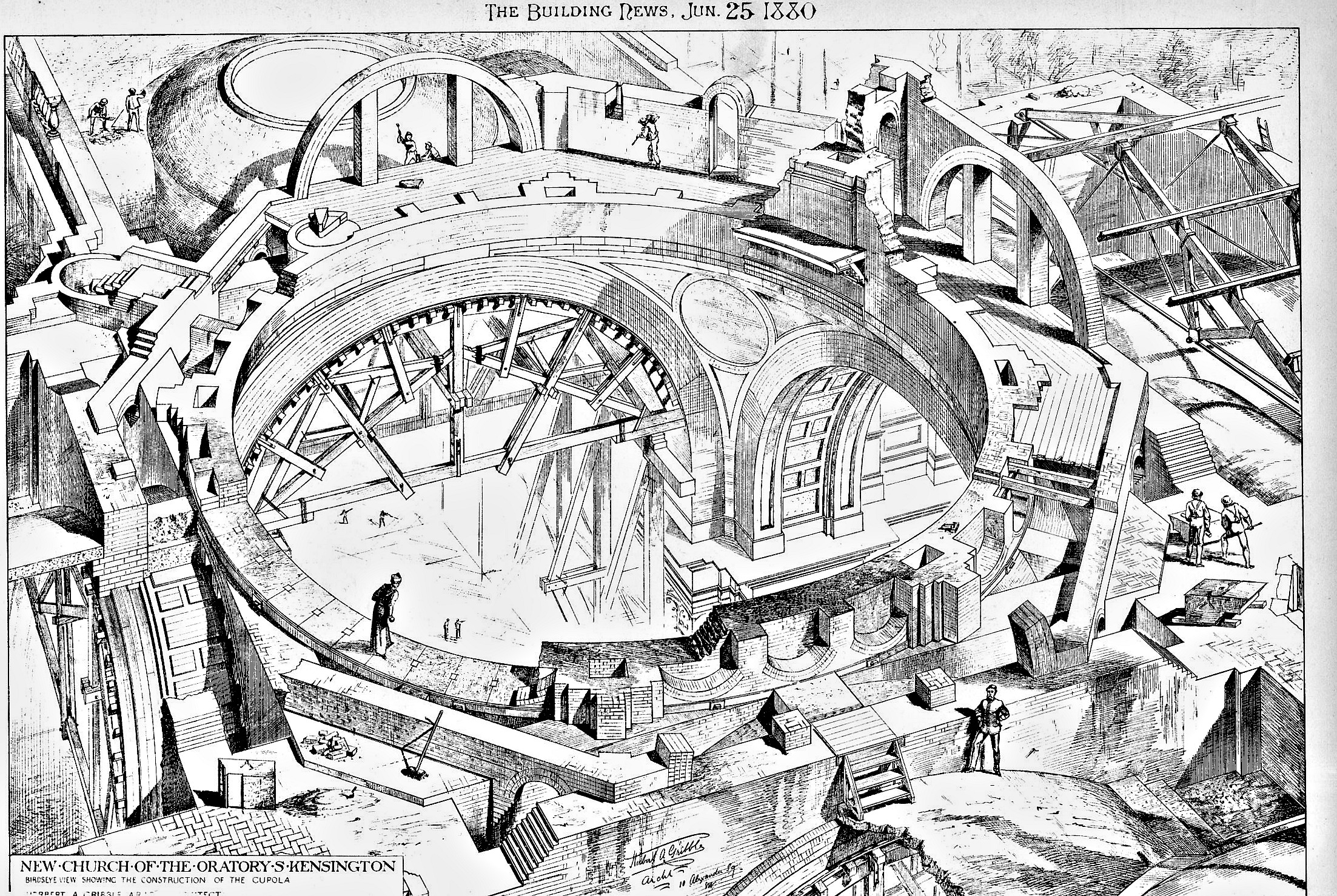
    This image really lifted itself from the page–it is from 1880 and has to me a very heavy scent of M.C. Escher to it.  This would be a very “found” aspect of pre-Escher (1898-1972), but it does have an indefinable quality to it that seems very 20th-century. What we are seeing here is a perspective of the construction of the “New Church of the Oratory of South Kensington” (known as the Brompton Oratory), but I think given the various stages of completion of the structure the whole of it takes on a spherical, three-dimensional quality, and has a somewhat impossible-looking aspect, as though from multiple viewpoints. I think we’re looking down through the naive, and though it is supposed to be representating a three-dimensional figure it seems profoundly not so. 


    Escher architecture463

    [Source: The Building News, June 25, 1880; Herbert Gribble, architect.]

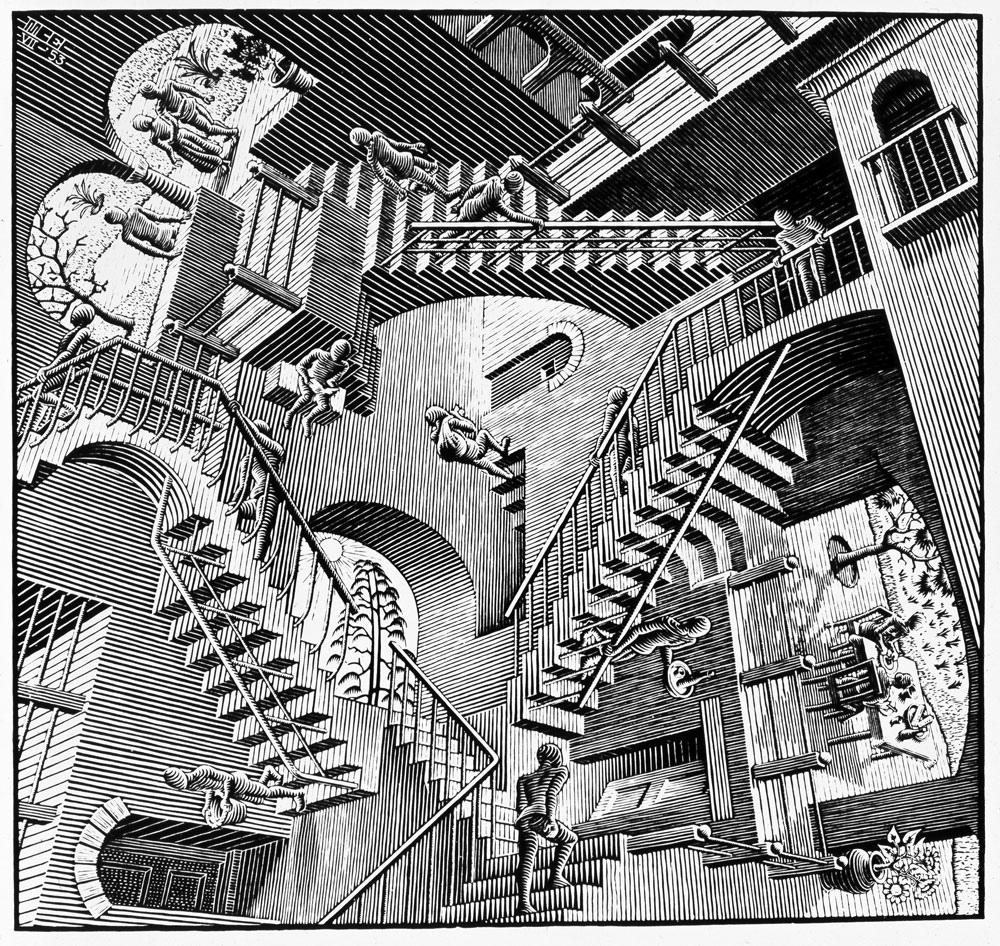
    What it reminds me of directly is Eshcer’s  relativity, from 1952:

    Escher relativity

    I know that what I’ve said about the Building News image is reaching, and it wasn’t dealing with unusual geometries, or tessellations, or the oddish curved perspectives of Escher, but, well, it does somehow have that quality.  

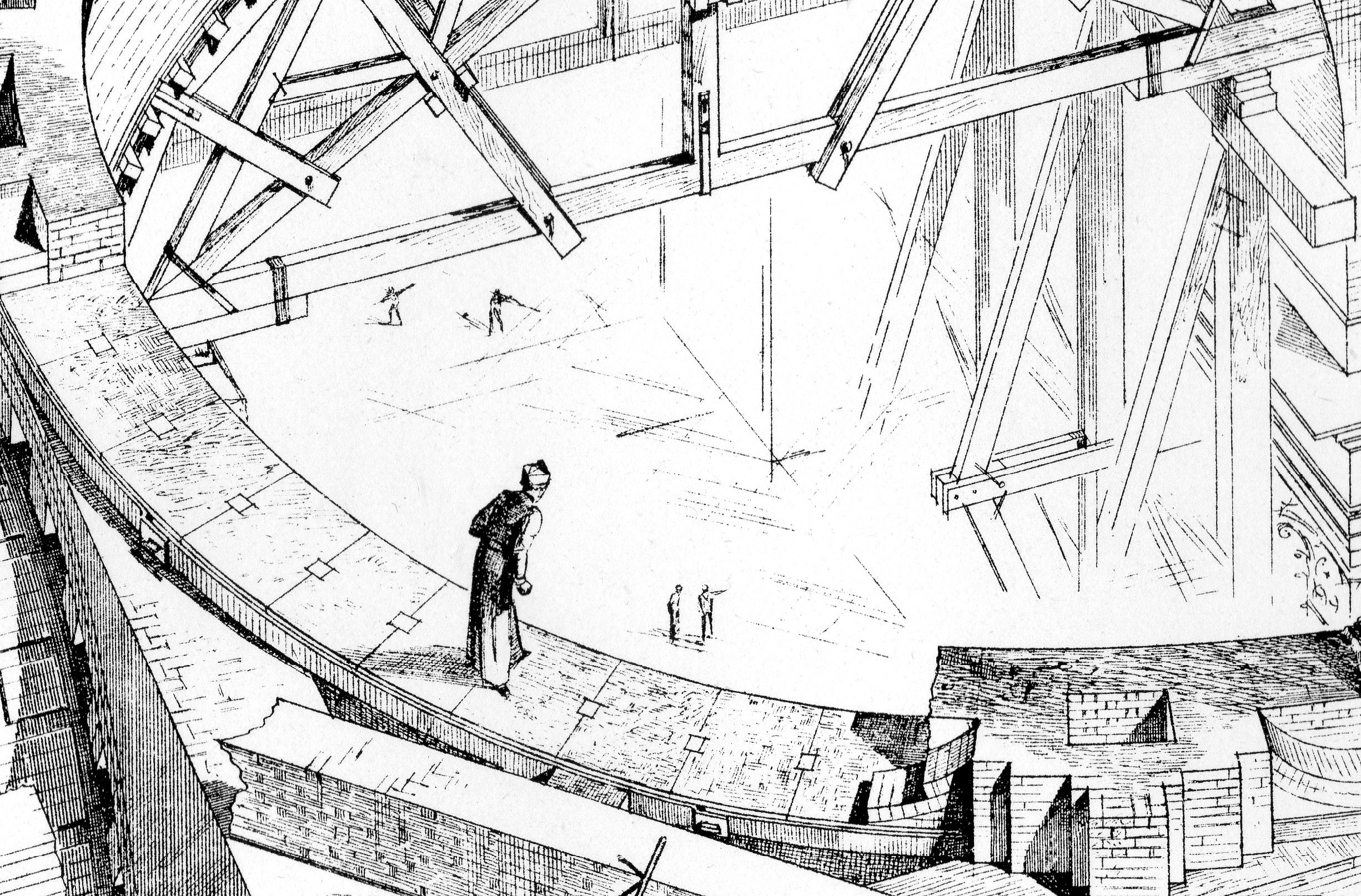
    And an interesting detail:

    Escher architecture464


  • A Fine Locomotive Schematic, 1928

    JF Ptak Science Books  Quick Post


    Roundhouset1 

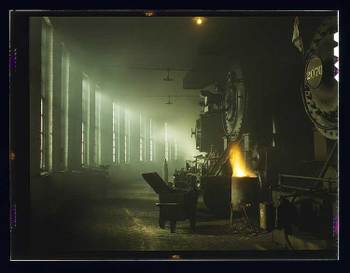
    I’ve admired this image for quite some time, finding it in the Library of Congress’ collection of the Historical Section of the Farm Security Administration (FSA) color photographs.  It is anonymous, unfortunately, but since there were really only 23 or so staff photographers for this gigantic undertaking (including Esther Bubley, Marjory Collins, Mary Post Wolcott, Arthur Rothstein, Walker Evans, Russell Lee, Jack Delano, Gordon Parks, Charlotte Brooks, John Vachon, Carl Mydans, Dorothea Lange, and Ben Shahn, ten of which are truly monumental names in the history of 20th century American photography) I think that we could guess that it was done by the hands of a master.  It seems as though less than 2% of the 163,000 or so photographs made by this section during its eight-year run (1937-1945) were made in color, and I’m glad that this was one of them. 

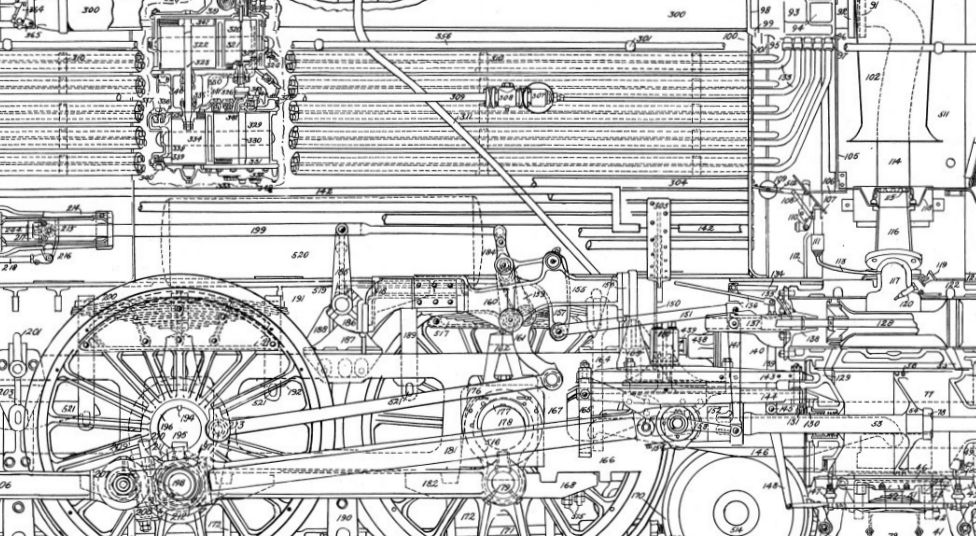
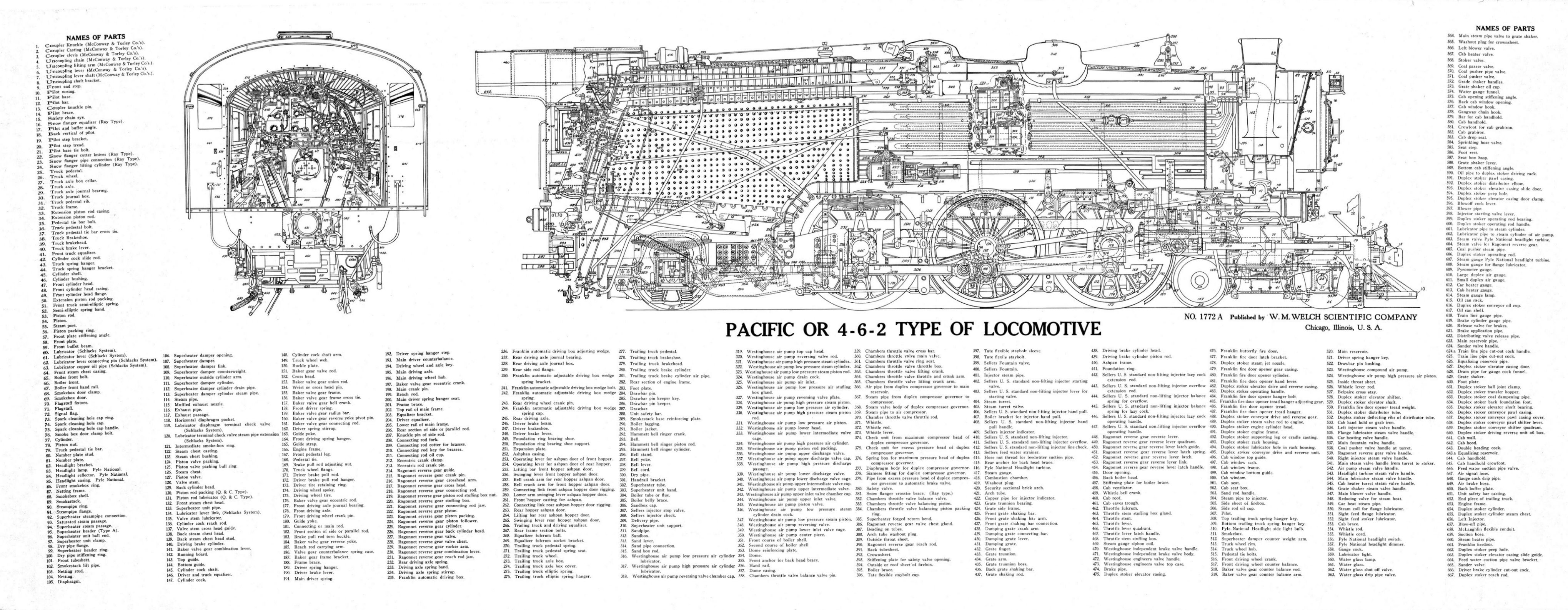
    This photo reminded me of a very detailed, three foot long locomotive schematic that I have in the studio.  It is a wonderful thing, and I’ve included some images of it below, all of which are clickable and very expandable (and clearer).  Here’s the first detail:


    Loco _2_detail

    [For info on the locomotive, see http://www.railarchive.net/alcopacifics/]

    Loco _2

    And the full locomotive, laterally, and large–I couldn’t straighten it out without loss of text, so apologies for the miscue:


  • A Mechanical Night Nurse, 1869

    JF Ptak Science Books   Quick Post

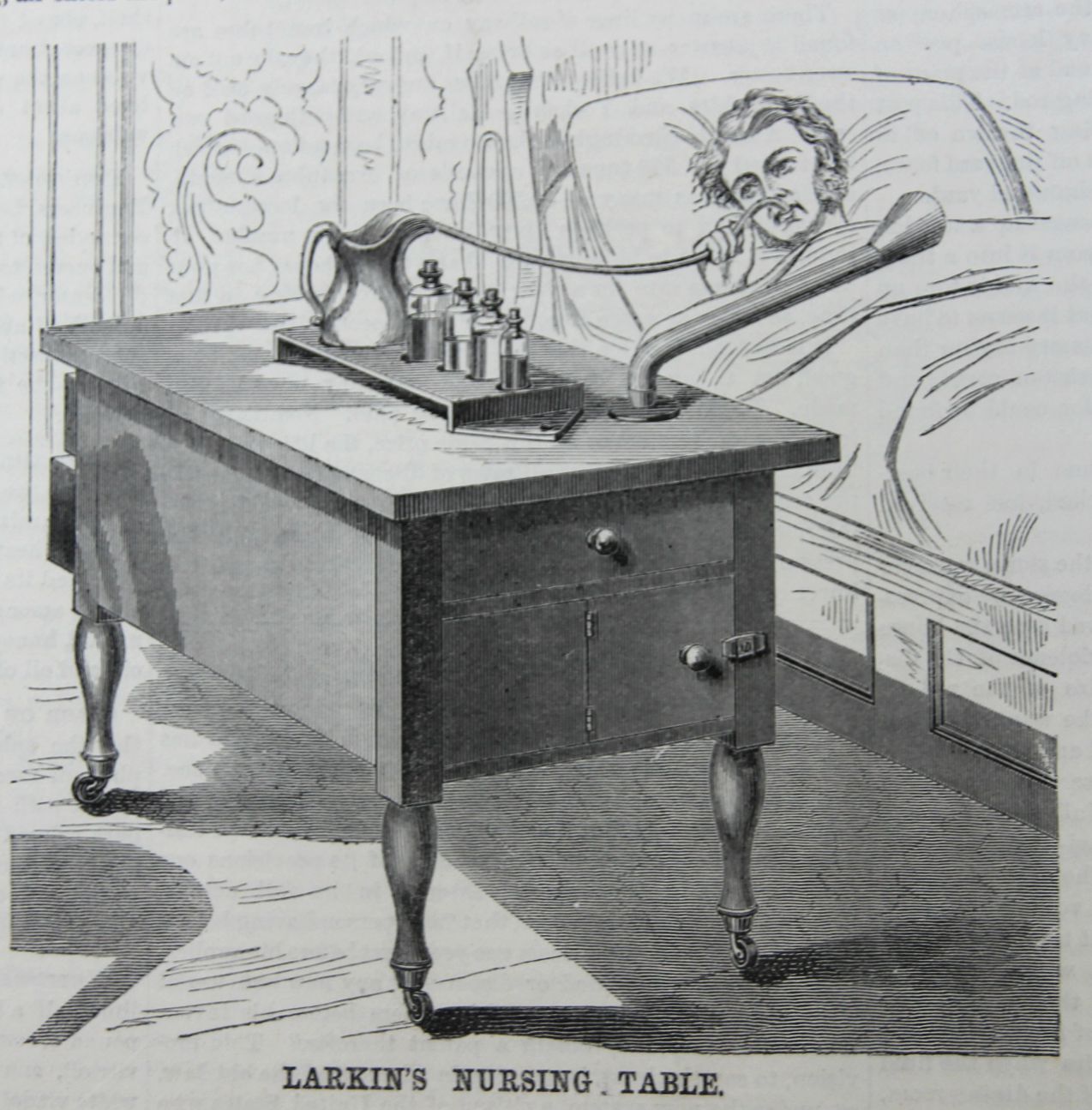
    [This bedside nurse’s aid appeared in the July 17, 1869 issue of the Scientific American.]

    According to the article, “The inventor of this nursing table has endeavored to afford greater comfort to the sick by providing them with the means of supplying in a measure their own wants during the absence of an attendant. In large hospitals the want of something of this kind has been long felt and in many cases its use in private houses would be a great convenience…” Mostly it was a drinking-and-spit-bucket apparatus–still it would no doubt come in handy and loosen the duties of the nurse somewhat.   

    Nursing Table 1869


  • Smoke and Word Balloons, 1531

    JF Ptak Science Books   Quick Post

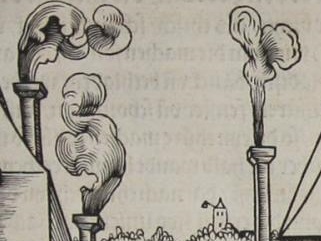
    Rodler detail smoke

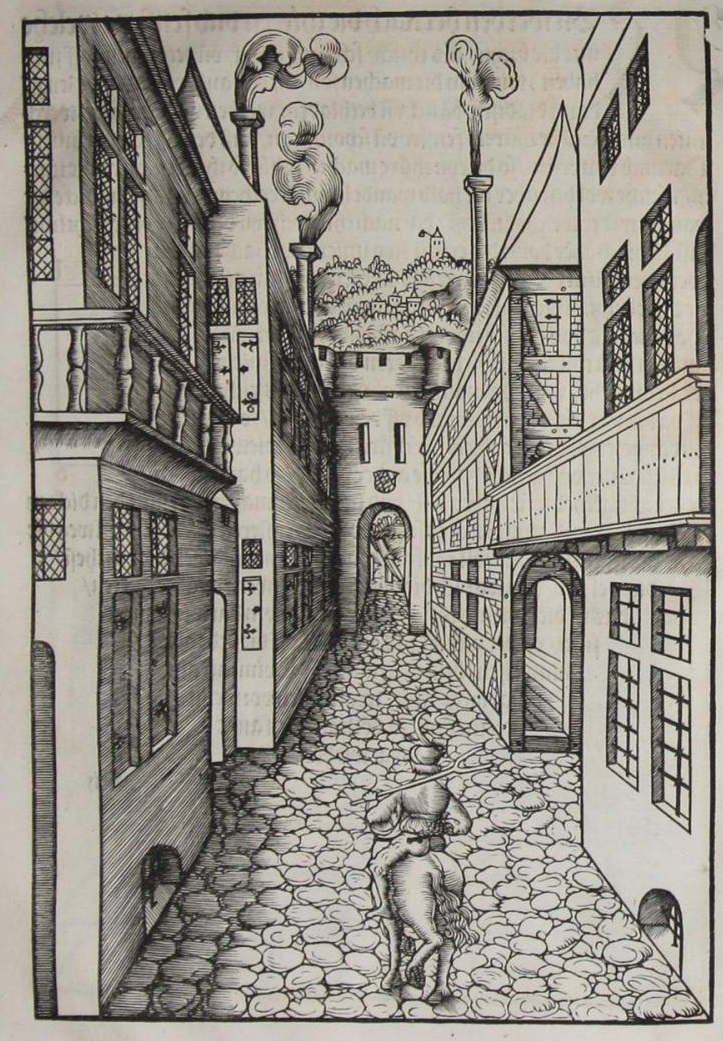
    This work—according to scholars most probably by Johann II of Bavaria1—was published in 1531, the effort of a true Renaissance Man, capable in languages, a scholar, draftsman, scultptor, artist. The book was important in the history of art for introducing the perspective studies of Durer on a grand scale. And in all of this greatest and beauty of this book, I have chosen as my focus for this moment an odd little bit of the book–smoke.  

    Rodler

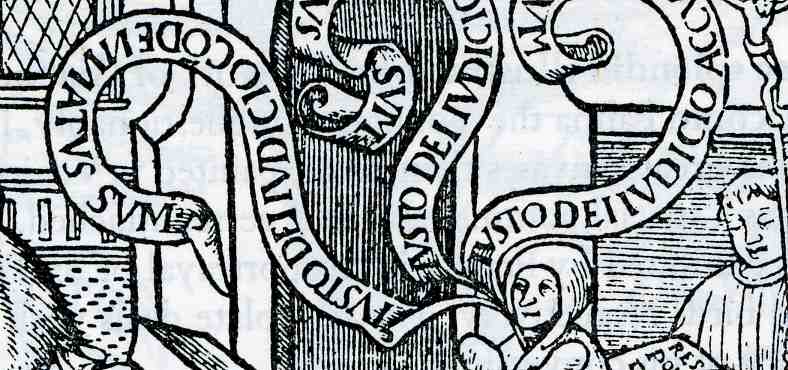
    In this woodcut we see the central figure on a horse working his way down a tight street of crowded buildings in a walled city, a city gate just ahead.  The image was intended to illustrate principles of perspective, but I noticed the smoke and associated it/them with Renaissance (and later) word balloons–they’re not really that closely associated, but are suggestive of one another.  

    Balloon word[Source: https://historyofideasblog.com/thesciencebookstore/2009/02/word-balloons-continued.html]

    There is a certain amount of  poetical attraction to associate images in smoke and words, but I think that is going a little beyond the reasonable scope of analogy.  

    Notes:

    1. Johann II (1492 – 1557), and Count Palatine of Pfalz-Simmern from 1509-1557. And the book’s title:

    Eyn schön nützlich büchlin und underweisung der kunst des Messens, mit dem Zirkel, Richtscheidt oder Lineal. Zu nutz allen kunstliebhabern, fürnemlich den Malern, Bildhawern, Goldschmiden, Seidenstickern, Steynmetzen, Schreinern, auch allen andern, so sich der kunst des Messens (Perspectiva zu latein gnant) zugebrauchen lust haben.

    Published by H. Rodler, Simmern, 1531

    RODLER, Hieronymus ?] / JOHANN II OF PFALZ-SIMMERN


  • Note on an Unusual Version of a Classic Russian Aerospace Text

    JF Ptak Science Books   Post 2527

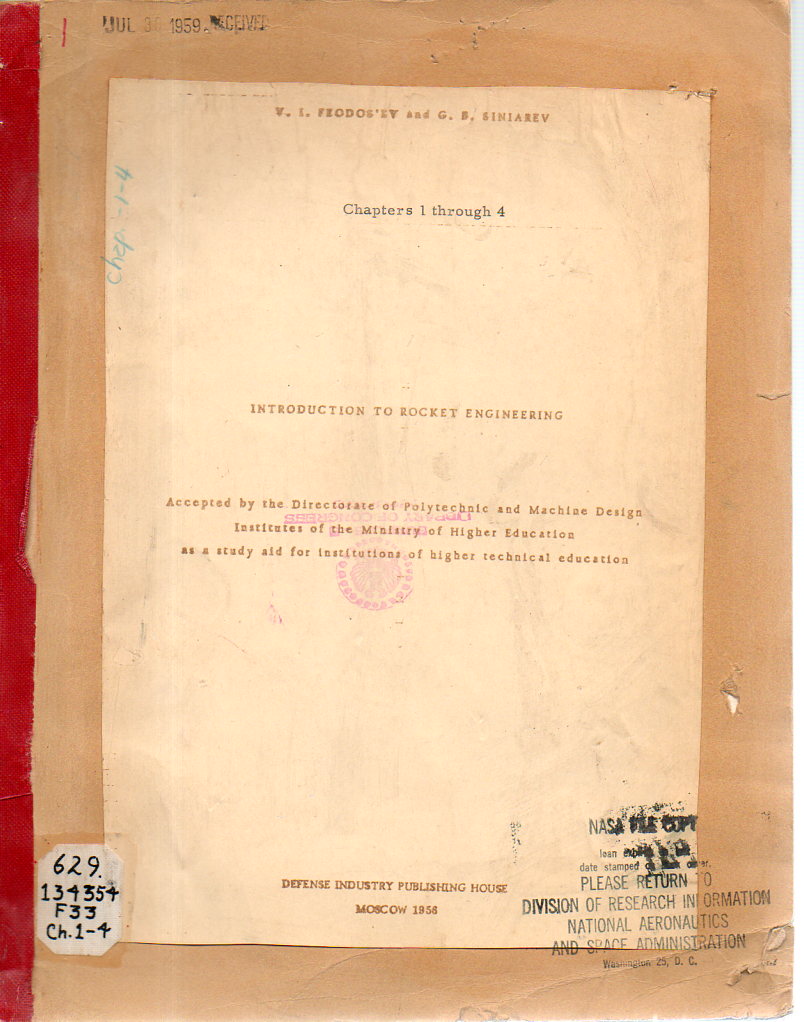
    V.I. Feodosiev (with his two initials looking ironically similar to the V1 that he wrote about) and G.B. Simiarev wrote a classic textbook1 in rocket technology which was published in Moscow in 1958.  Even though it was translated and published in English the following year by Academic Press, the version here seems to have been translated in the same year as its Russian edition. I’ve had some translations-on-demand in the store that were fast-tracked for the particular agency that needed the work, translations that sometimes didn’t appear in English for years afterwards.  In this case the Feodosiev was translated (anonymously) for an undisclosed agency, though this copy wound up in the library of  the NASA Division of Research Information2. It could well be that the work was produced for NASA but frankly there are many other candidates for the point of origin of interest.  This copy is definitely different from the Academic Press translation, so at least two different translations were made of the text.  

    Feodosev Rocket171

    I really don’t have that much to offer here on this edition, except to note its differences from the Academic Press version, though this may be of some use to someone working in this area.  

    • The original is available via the blog’s bookstore, here.

    Here’s an abstract/summary of the work (which has a slightly different title)  by the Academic Press 1959 version of this publication: 

    “Introduction to Rocket Technology focuses on the dynamics, technologies, aerodynamics, ballistics, theory of servomechanisms, principles of navigation instruments, and electronics involved in rocket technology.”

    “The publication first takes a look at the basic relationships in the theory of reactive motion; types of jet propelled aircraft and their basic construction; and types of reaction motors and their construction. Discussions focus on air breathing motors, anti-aircraft rockets, long range bombardment rockets, surface to surface, short range bombardment missiles, thrust of a rocket motor, and operating efficiency of a rocket motor. The text then examines rocket motor fuels and processes in the combustion chamber of a rocket motor.”

    Feodosiev _4_

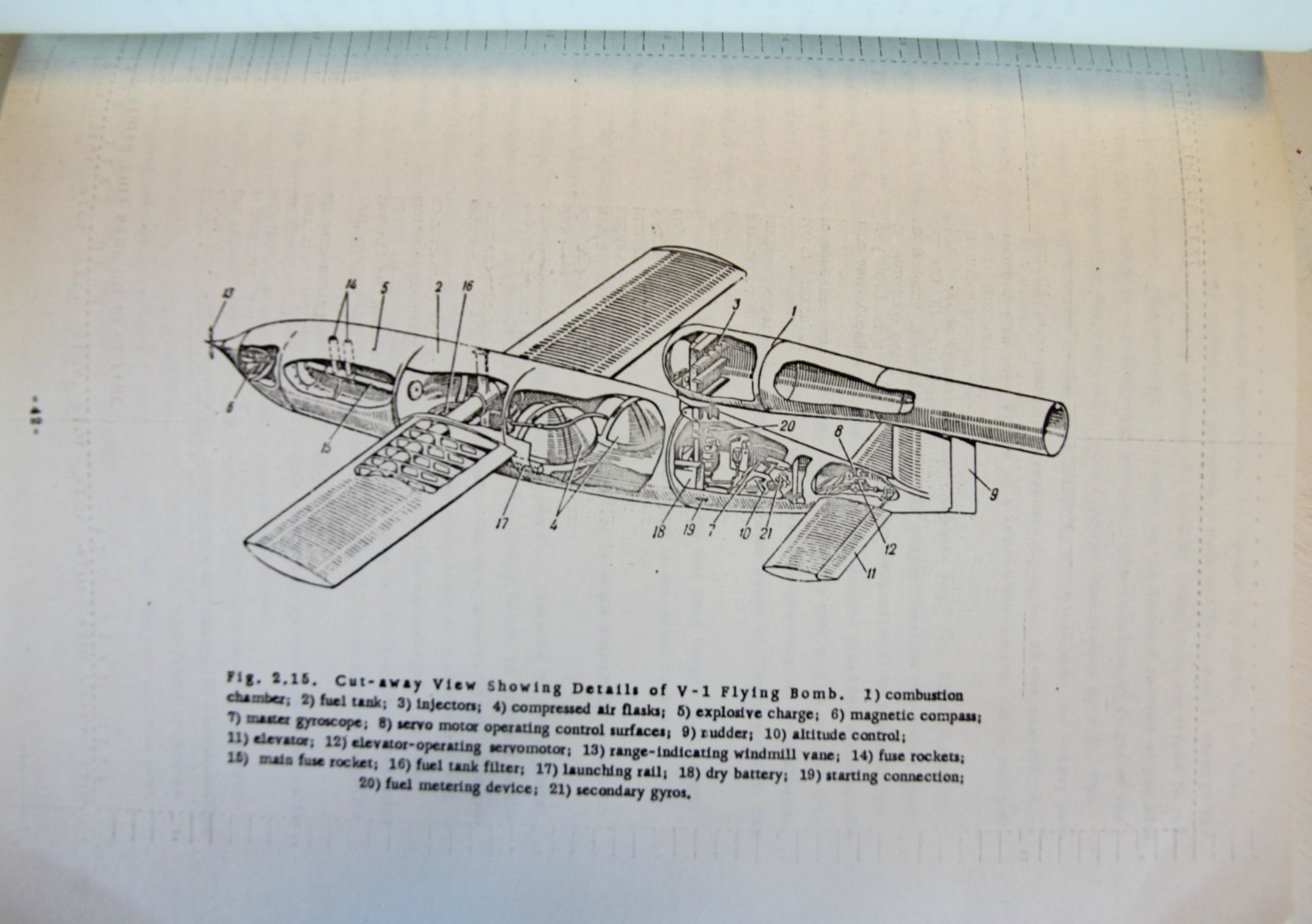
    [V-1, from page 42]


  • Superior Advertising Art, 1911

    JF Ptak Science Books  Quick Post

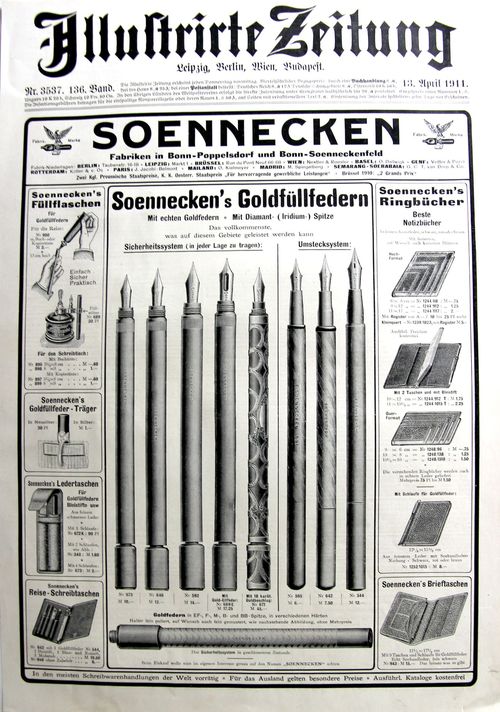
    I really don’t have much to say about this image except that it is a very nicely designed thing, an advertisement for fountain pens produced by Germany’s leading pen manufacturer (Soennecken, established 1875), This full-page/front-page illustration appeared in Illustrirte Zeitung for 13 April 1911.  

    Pens