A Daily History of Holes, Dots, Lines, Science, History, Math, Physics, Art, the Unintentional Absurd, Architecture, Maps, Data Visualization, Blank and Missing Things, and so on. |1.6 million words, 7500 images, 4.9 million hits| Press & appearances in The Times, Le Figaro, Mensa, The Economist, The Guardian, Discovery News, Slate, Le Monde, Sci American Blogs, Le Pont, and many other places… 5000+ total posts since 2008.

Category: Mythology

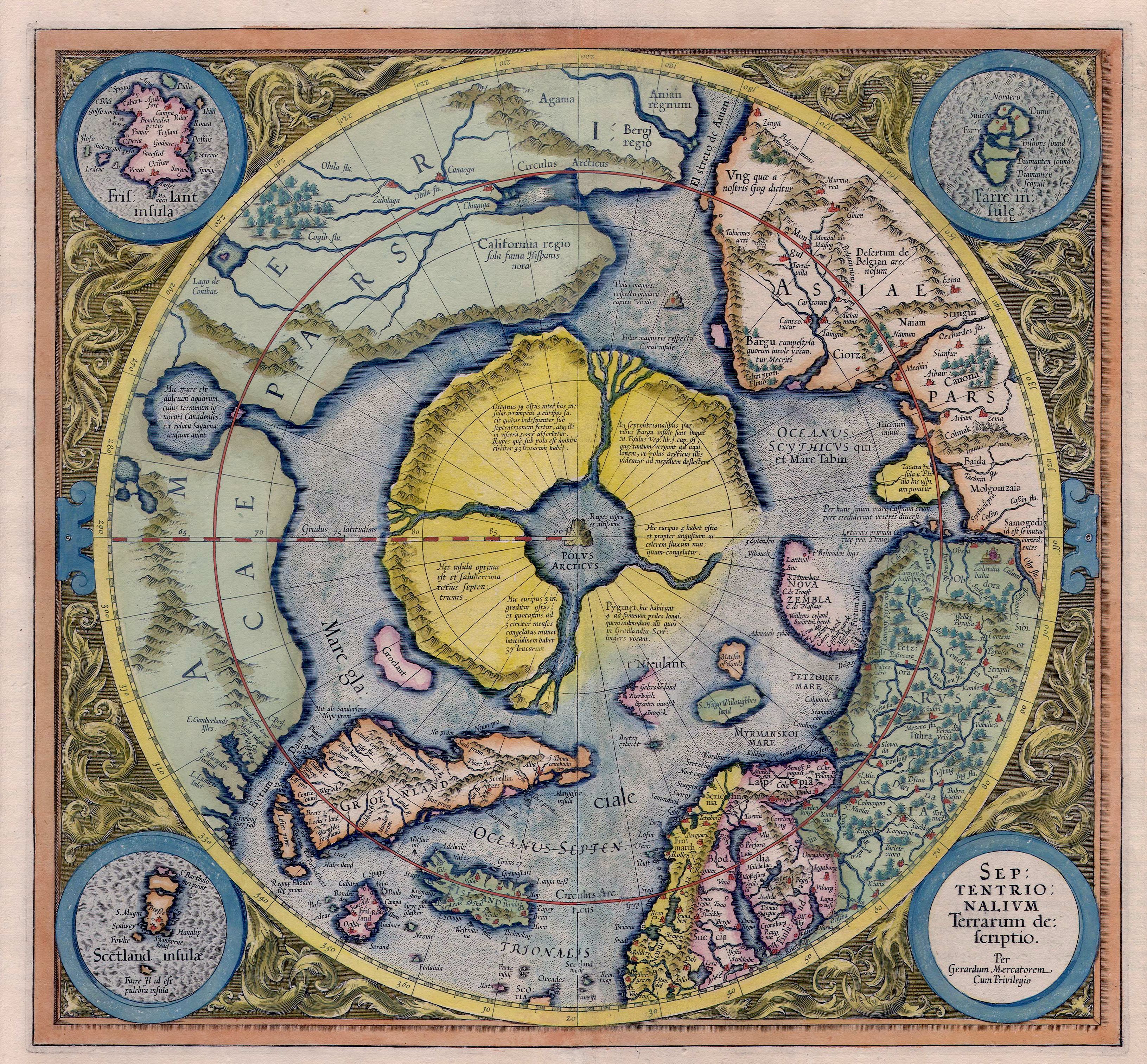
  • The Garden of Eden at the North Pole

    JF Ptak Science Books   Quick Post  Overall Post 5126

    Artic

    (Gerald Mercator, 1596)

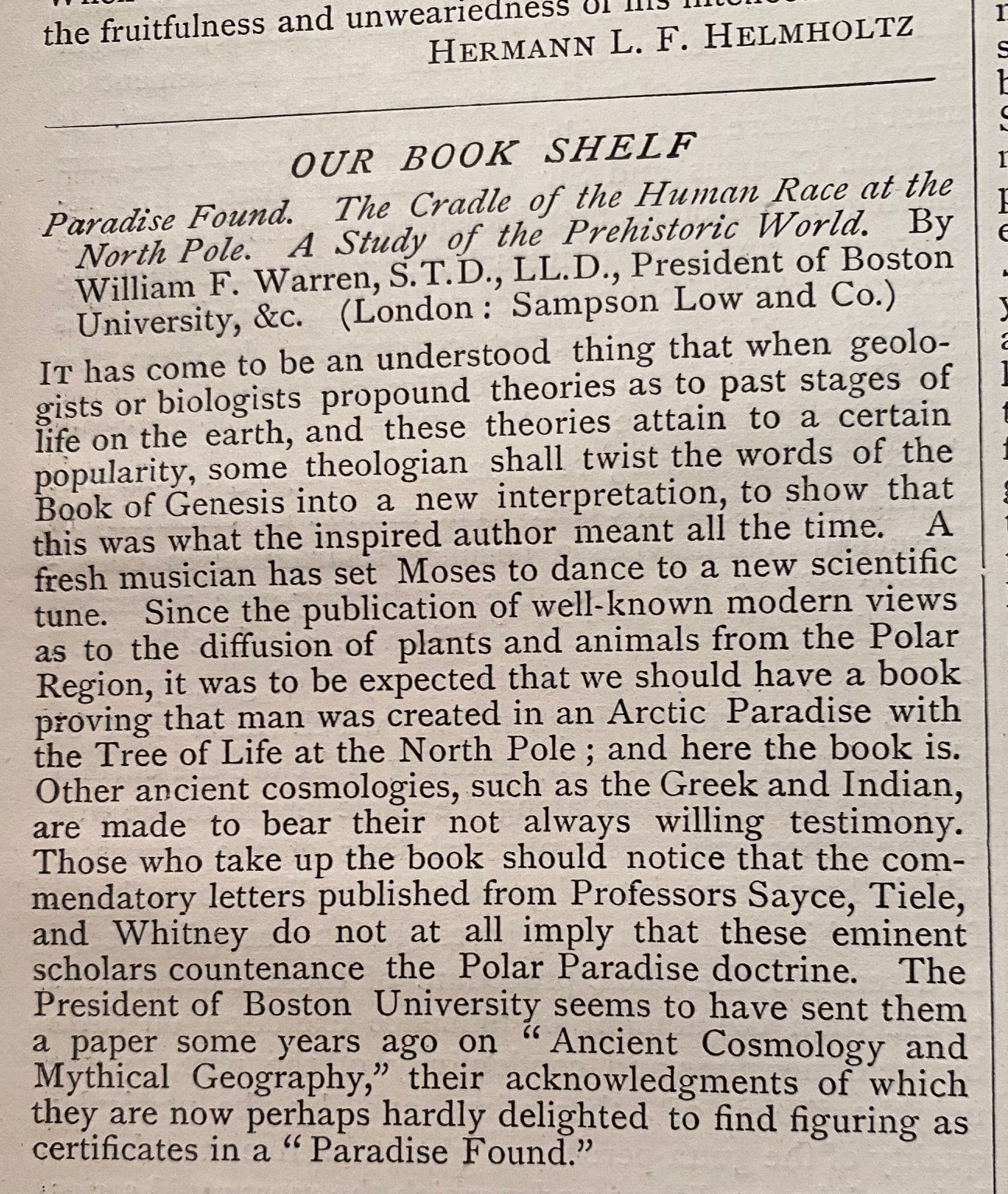
    IMG_5158This is a short, dismissive, stabbing review of a book by a theological and long-established scholar and administrator, William F. Warren (1833-1929). I remember his name from his interesting work on ancient cosmologies (1882), illustrated with examples of the history of all things according to various belief systems and religions. This quick-and-dead arrow of a review (which appeared in Nature on 14 May 1885 p, 28), was directed at his new work Paradise Found, the Cradle of the Human Race at the North Pole..., which as you can guess tries to establish the origin of humans at the North Pole, along with the Garden of Eden and the Tree of Life. And, for that matter, also establishes the Pole as the home of Mt. Maru, the Arthurian Avallon, and so on. There’s a lot that can be said but not by me—there is an attraction to hunting up other mythologies placing some part of great importance to the North Pole as the Navel of the Earth, but I just don’t have the time or inclination. As a matter of fact, I hadn’t known about this work by Warren, and I doubt I’ll know much more than what I am communicating right now—one thing the reviewer doesn’t mention is that the book runs about 500 pages, which is just too much of an investment for yours truly.

    ·Posted by :

    ·in:

    — — —

  • Ancient Myths Modern: the Other Statue of Liberty, ca. 1911.

    JF Ptak Science Books     Post 1887

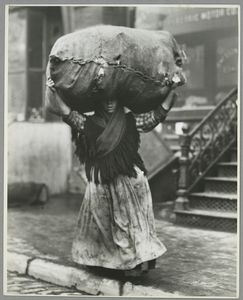
    In working on an alphabet of the occupations of children in 1910/1920 America based on the photographs of the immortal Lewis Hine (and found via looking at other materials on the excellent Retronaut website), I came across this extraordinary image:

    A tenement gleaner, New York C... Digital ID: 416509. New York Public Library

    The detail seems to show lip rings on what I think is a very young woman.  She is very slender (you can see very thin wrists), and is wearing a number of layers of clothes, not the least of which is a long white apron on top of which sit Civil-War-like shawls,  She is stepping into the street, caught mid-stride. It looks as though it is frosty, the sidewalk and steps seem to have a thin veneer of ice  It is cold. And she is carrying an ungainly, heavy burden, which might weigh half of her own weight. And she is young.  And she has no gloves.

    Where did she go?

    Hine--tenement gleaner detail

    It also that Hine–in his notes onthe back of the photograph– identifies her with kindness and grace as a “tenement gleaner”.  (In my notes I was less kind and called her a “ragpicker” I’m a little ashamed to say. Mr. Hine taught me a lesson.) Gleaner.

    Hine documented things that were part of everyday life that made cities like New York what they were, much of which went unnoticed, or scuttled by intentional indifference. People like this made the city run–then as now–and Hine was one of the early photographers in the United States who “discovered” these people and made their standing a cause of his life. 

    Like many other pioneers/artists/social observers, Hine (1874-1940) didn’t fare so well in his later life. After four decades of huge service in photography, people became disinterested in his past/present/future work, and Hine lost his resources. And his house. And then, in a few years, his life.  His personal collection of negatives and prints were given by a relative to the New York Photo League, but they were displaced when the League was dismantled in 1951.  Unsettled, they were offered out to places like the Museum of Modern Art, which rejected the collection. Ultiamtely, fortunately,  the George Eastman House in Rochester, New York, accepted the collection and saved it from the unknown.

    This image easily could have been Atlas, but Libertas seemed better.

    Source:  New York Public Library Digital Collection. “Photographs concerning labor, housing and social conditions in the United States. / L. W. Hine. ” 


  • The Ouroboros and Infinity

    JF Ptak Science Books    Post 1762

    Ouroboros390
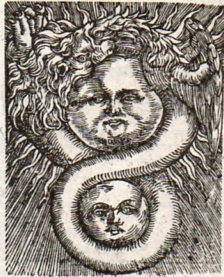
    The ouroboros–and in this particular case, the double, over-and-under ouroboros–is an interesting and ancient symbol.  In my experience, the single unit is to be expected, but the double seems uncommon. The symbol (“oura” or tail and “boros”, eating, in Greek, one who eats one’s tail) stretches back into the dim and dusty past, at least to the Egyptian Book of the Dead, and is Plato’s first living thing–its is the primordial unity, the rebirth of forever, death/life/birth/rebirth, continuing into infinity, the great world soul…a kind of Western equivalent of the Taoist Yin Yang.

    There’s much more to be said about this symbol, especially by such people as Erich Neumann and Carl Jung, but I’ll resist, mainly because it is just too complicated for me to make an intelligent statement. (I’ve tried to read the Great Mother as well as The Origins of the History of Consciousness by Neumann, but only made my way around the edges of the first, and picked through the interesting bits of the later.  Jung is someone I’ve never had much luck with.)

    The first symbol, and a gorgeous one it is, comes from the Theatrum chemicum (1659-1661, and published in six volumes by Lazarus Zetzner in Strasbourg), and shows the combination of what was supposed to be an alchemical highpoint:  the spiritual coming together of sulfur and mercury, elements of what the practioners believed were the basic constituents of all metals and minerals.  And of such stuff miracles were understood to be made, except that of course, they weren’t–the fact that this stuff never worked to produce something more substantial than mercuric sulfide wasn’t due to the theory or practice or thought but to the “fact” that the mercury and sulfur used in the process weren’t “pure” enough.  That said, the Theatrum was a very important work, the largest collection of alchemical works ever gathered and published together–it was also evidently much appreciated by Isaac Newton, who was said to consult it often and who owned the set in his library.

    A more classical appearance of the ouroboros (De Lapide PhilosophicoTriga Chemicum (Prague 1599) compiled by Nicolas Barnaud), depicting a dragon seizing the polarities of its soul, ultimately uniting them: 

    File:Ouroboros 1.jpg

    And in the discussion of the ouroboros and philosophical aspects of infinity it should be mentioned that there is some connection between it and the mathematical symbol for infinity, which seems to arise from (the remarkable and original) John Wallis’ De Sectionibus Conicibus, which was published in 1655.  Wallis employed the old Roman symbol for 1,000 to use for the mathematical infinity, which of course is the ouroboros on its side.  (Wallis it should be noticed was also among the earliest people to put into print the symbol for pi, as well.)

    ·Posted by :

    ·in:

    — — — —

  • An Alphabet of Giants, Part 1.

    JF Ptak Science Books   Post 1250

    “There were giants in the earth in those days; and also after that, when the sons of God came in unto the daughters of men, and they bare children to them, the same became mighty men which were of old, men of renown.” Genesis 6:4-5 (KJV).

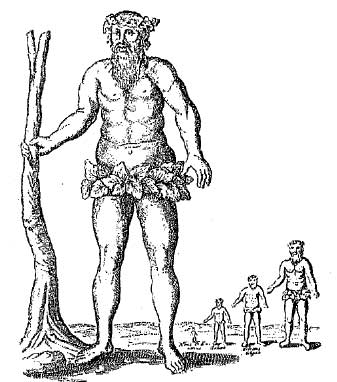
    Our dog Blue is a giant Jack Russell Terrier–mix.  He’s a Jack St. Bernard/Jack Russell–a St. Jack–and at 50+ pounds is either a Giant Jack or a mini St. Bernard.  He behaves like the St. Bernard.  One wonders about the mechanics of the thing–similar to Mr. Gulliver in Jonathan Swift’s A Voyage to Brodbingnag (1727), in which the hero (or anti-hero) though he is disgusted by the gigantic women of the place nevertheless seeks and accomplishes some sort of romantic union with the handmaidens of the giant queen.  And this all puts me in the mind of giants–actually, I’d like to put together an Alphabet of Giants, with this being the beginning. And to start at the beginning is Athanasius Kircher–the incredible Kircher, who produced thousands of pages of excellent analysis and cutting-edge technical/physical thinking as well as hundreds of pages of highly imaginative scientificiana–and his generic giant, featured in Mundus Subterraneus in 1646.

    Giants have certainly been around for a long time, though imaging that imagination is less ocmmmon early on in the history of the illustrated book. 

    There’s no lack of giants in ancient mythologies and legends–the Hindu Daitya, Mohamed’s depiction of a 100-foot-tall Adam, the Greek Antaeus (the children of Heaven and Earth, of Uranus and Gaea), the sleepy Encedladus, the Nephialim, and so on.  One of the most glorious of the big people stories is the  beautifully-named Gigantomachy, in which the gods of Olympus engage in an enormous confrontation with Chaos and Aleyoneus. The “good” (though not very) guys win.

    There’s actually about half-an-alphabet residing just within the Greek Titans (Atlas, Crius, Cronus, Coeus, Gaia, Hyperion, Iapetus, Mnemosyne, Oceanus, Phoebe, Prometheus, Rhea, Theia, Themis, Tethys), but I’d like to expand this if I can. A fuller, more diverse listing of giants and giant-groups follows: Anakim (Jewish mythology, references in the Old Testament), Argus Panoptes (Greek mythology), Bestla (Norse mythology), Cyclopes (Greek mythology), Daityas (Hindu mythology), Epimetheus (Greek mythology), Fachan (Celtic mythology), Gargantua and Pantagruel, Gigantes (Greek mythology), Gog and Magog (Jewish mythology), Goliath (Book of Samuel of the Bible), Hecatonchires (Greek mythology), Iovan Iorgovan (Romanian mythology), John Henry (American folklore), Jotuns (Norse mythology), Kaour (Celtic mythology), Menoetius (Greek mythology), Nimrod (Jewish mythology, OT), Oni (Japanese folklore), St Christopher (Roman Catholic saint),Talos (Greek mythology), Titans (Greek mythology–Atlas, Crius, Cronus, Coeus, Gaia, Hyperion, Iapetus, Mnemosyne, Oceanus, Phoebe, Prometheus, Rhea, Theia, Themis, Tethys), Zipacna (Mayan mythology).

    For the most part I’ve stayed old with these images, except for the 50-Foot Woman, the Giants are generally not from the modern fantasy/sci fi gernre. 

    So, Part 1:


    A. ALICE. John Tenniel’s Alice in Lewis Carroll’s Alice’s Adventures in Wonderland.

    File:Alice par John Tenniel 05.png


    A. Arthur.  King Arthur’s Giant.

    File:Walter Crane King Arthur and the Giant Book I, Canto VIII.jpg

    B.  Beanstalk Giant. Jack and the Beanstalk, John D. Batten 

    File:Page 59 illustration in English Fairy Tales.png


    B. Bunyan, Paul.  By Allen Lewis.

    Frontispiece from Paul Bunyan (woodcut illustration by Allen Lewis)

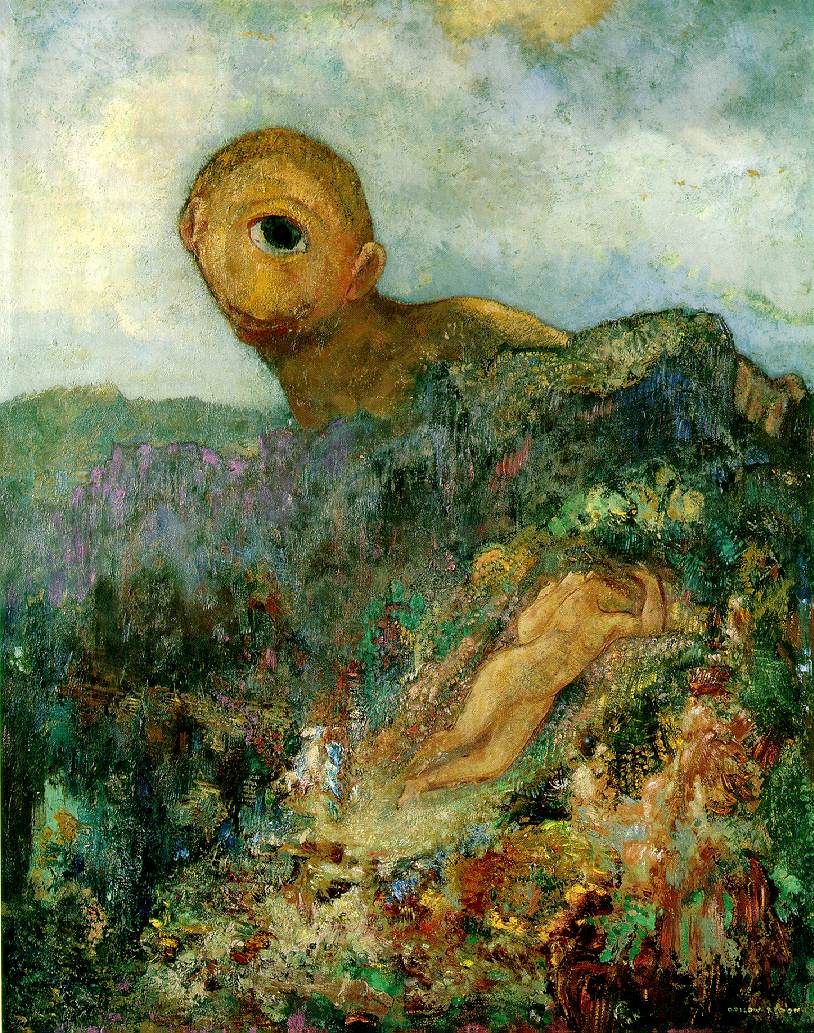
    C. Cyclopes.  By Ordilon Redon.

    .

    File:Redon.cyclops.jpg
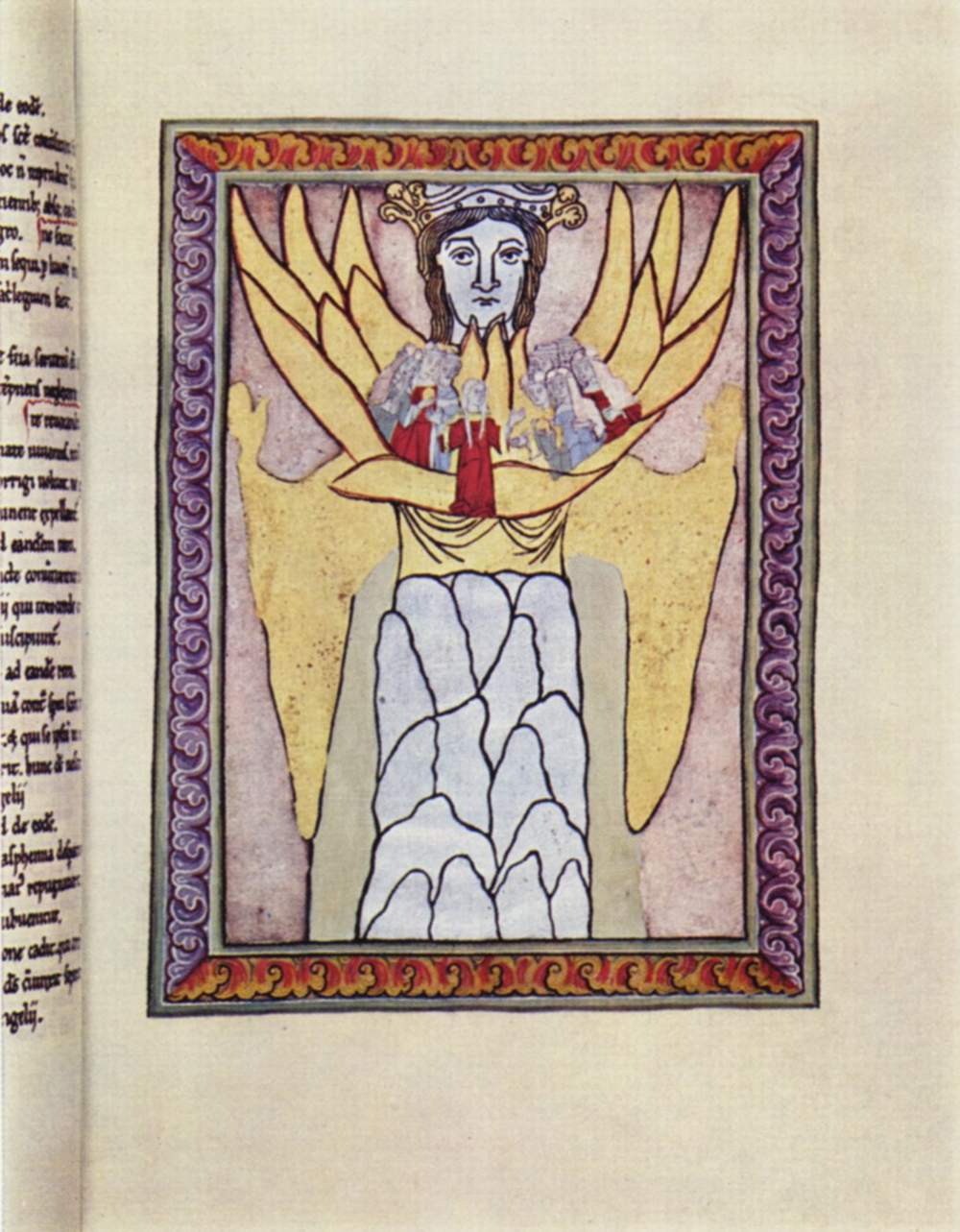
    E. Ecclesia.   “Ecclesia”, or the depiction of Church as the Bride of Christ is a representation of a woman giant, and is seen in  Scivias, by St. Hildegard of Bingen  (1098-1179).

    File:Meister des Hildegardis-Codex 002.jpg

    F. Fatna. The giants Fafner and Fasolt seize Freyja in Arthur Rackham‘s illustration of Richard Wagner‘s Der Ring des Nibelungen

    File:Giants and Freia.jpg


    G. Gargantua
    http://www.gargantua.eu/gargantua.jpg
    G. Gigantomacy.  By Perin del Vagas.

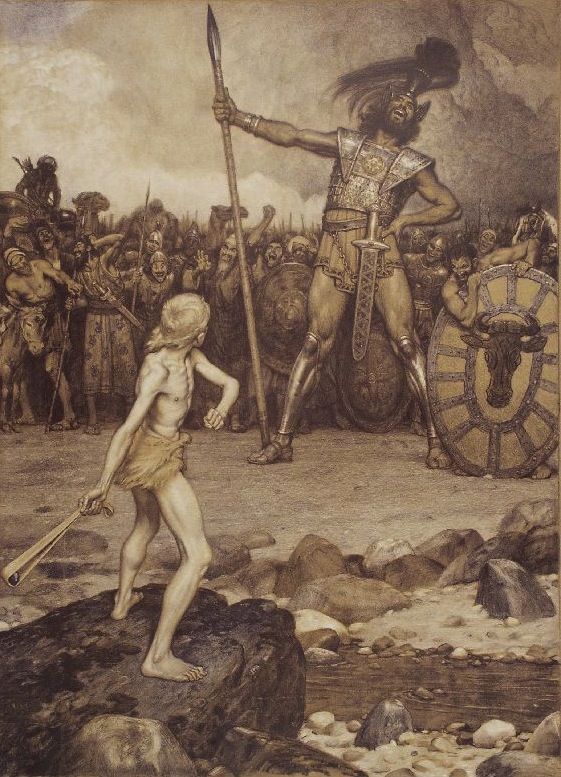
    G. Goliath. Osmar Schindler’s David with Goliath.

    File:Osmar Schindler David und Goliath.jpg

     K.  The Kraken.

    http://bogartswisconsin.com/images/kracken8.jpg

    O. Oni (Japanese folklore.)

    P. Pantegruel.

    http://dramapessoal.files.wordpress.com/2008/01/rabelais-pantegruel-by-francois-desprez-10.jpg?w=460


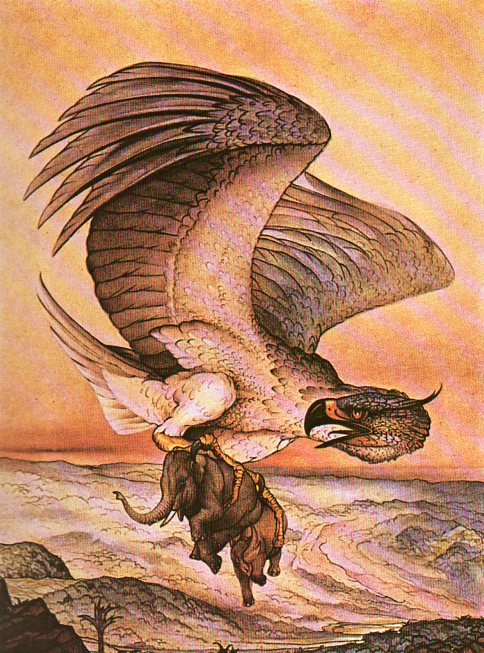
    R.  Rukh.  “The Rukh which fed its young on elephants”, by E.J. Detmold. For The Second Voyage of Sinbad the Sailor from The Arabian Nights, 1924.

    Giant--rokh944

    W. Woman, 50-Foot.

    Women don’t often appear though as giants–at least until modern times.

    Z. Zeus.

    Zeus and three Gigantes, drawing based on the Zeus Pergamon Altar.


  • Popular Culture Images–The Long Road, Allegories of Life’s Stages

    JF Ptak Science Books LLC  Post 969

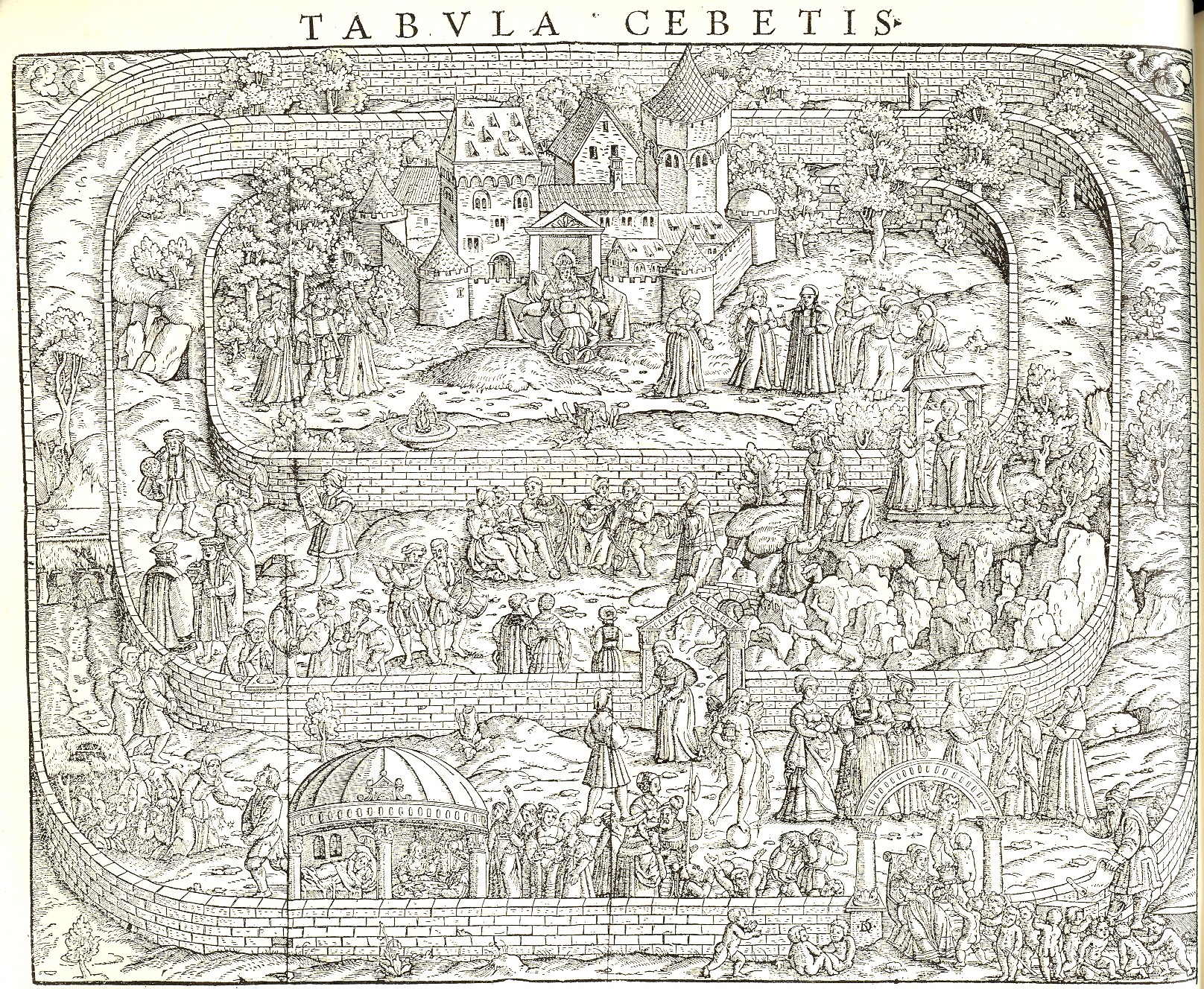
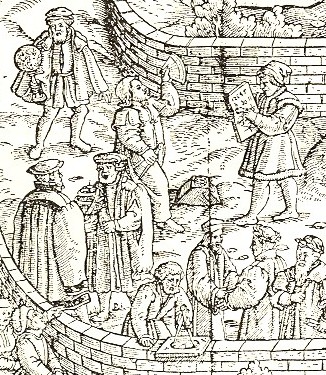
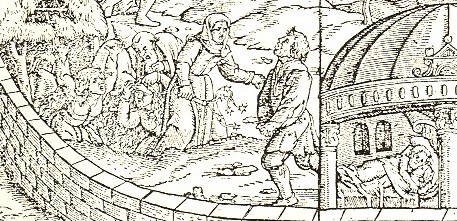
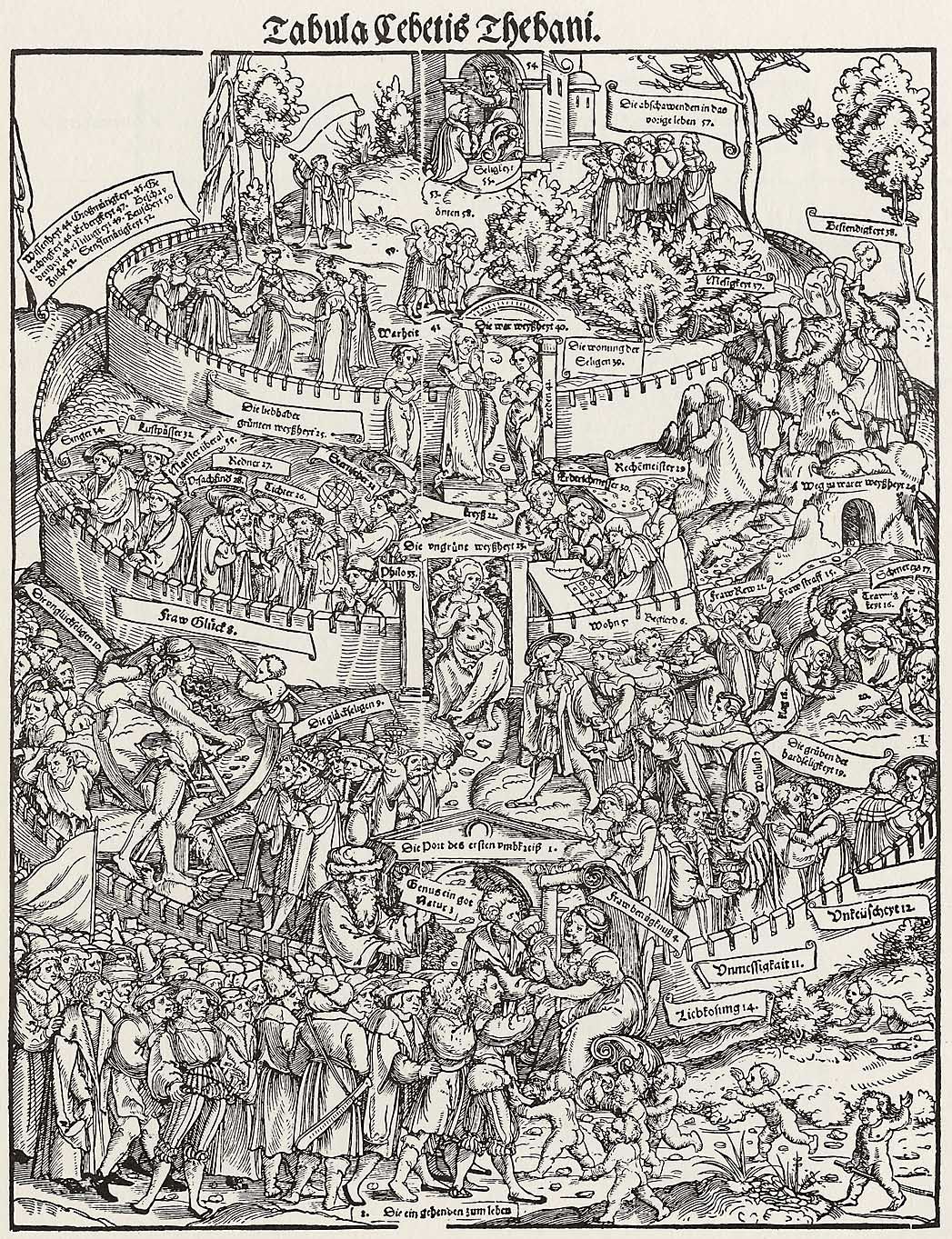
    This remarkable woodcut appears in Epictetus’ Enchiridion (1563), and is one in a long history of images portraying the moral life of humanity.  The longitudinal study of birth, corruption, vice, penance, achievement, want, lewdness, cowardice, sloth, and a penetrating multiple visits of the seven deadlies was intended to show the rough rode that lay ahead of us all on the way to the crowning glory.

    The full image appears below, with details following:

    Mar 9 life

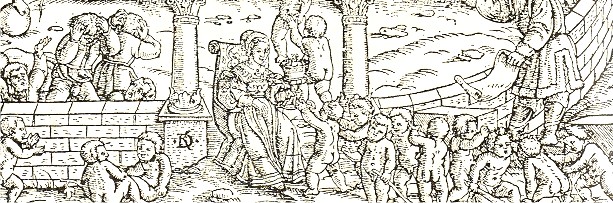
    This is a detail from the lower right, showing the beginning of life, an abundance of babies, with the foot of Fortuna seen at upper left, she observing (or not) the toddlers’ advances along the walls of life. 

    Mar 9 life beginning 

    The achievements of middle life are clearly seen:

    Mar 9 life middle age

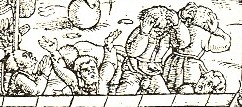
    As are the temptations of immoral life and the sins that await:

    Mar 9 life punishment

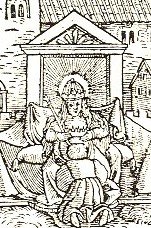
    Unfortunate sinners turned away at the foot of Fortuna:

    Mar 9 life punishmen2t

    And at the end of the journey, following the three concentric walls leading to finality:

    Mar 9 life end2t 

    This image looks a little suspect, but when you look at other woodcuts of the Tubula you can see this action a little more clearly (and from the side)–and what they reveal is Mother Church rewarding the supplicant with a crown.  This is more clearly seen below, in the 1551 versin of teh morality play by Johann Kramer (and published in Munchen);

    Mar 9 tabula

    The interpretations of these images areas varied as each of their characters, the details of which can be explained one way one day, and another the next; the morals and the end-tale stay the same. 

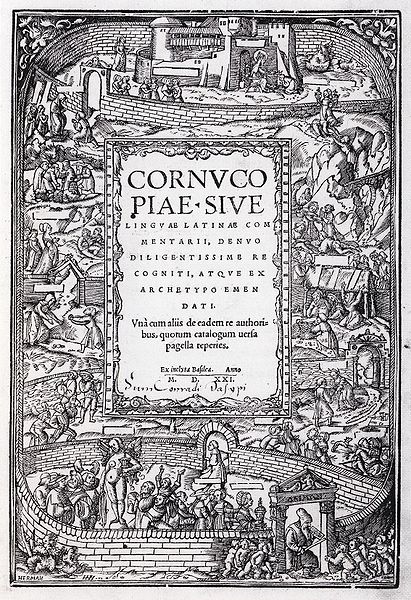
    Another example, this one from 1521 and after a work by Hans Holbein:

    Mar 9411px-Tabula_Cebetis_B,_woodcut_after_Hans_Holbein_the_Younger

    ·Posted by :

    ·in:

    — — —

  • Children’s Games in Art in the 16th & 17th Centuries: van de Venne and Brueghel

    JF Ptak Science Books LLC  Post 503

    0 blog feb 5 van de venne537
    Adrieaen Pietersz vasn de Venne, must’ve been familiar with
    the work of Peter Brueghel.  I’m not
    saying that Brueghel owned the genre of vernacular allegory, but he certainly
    comes pretty close to that.  In any
    event, van de Venne (1589-1662), a Delft artist who produced this illustration which so much reminds me of Brueghel worked
    a hundred years after the great master—(the elder Brueghel belonged to the
    Netherlands Renaissance, and died in 1569). 
    Having been raised in Deflt, studied in Leiden and died in the Hague, I
    suspect it would’ve been impossible not to come under the influence of Peter or
    the others in the Brueghel family collective, though it would’ve been Peter
    (the elder, who was also known as “the Peasant”) who it seems to me lays the
    greatest claim to some of van de Venne’s thinking.    

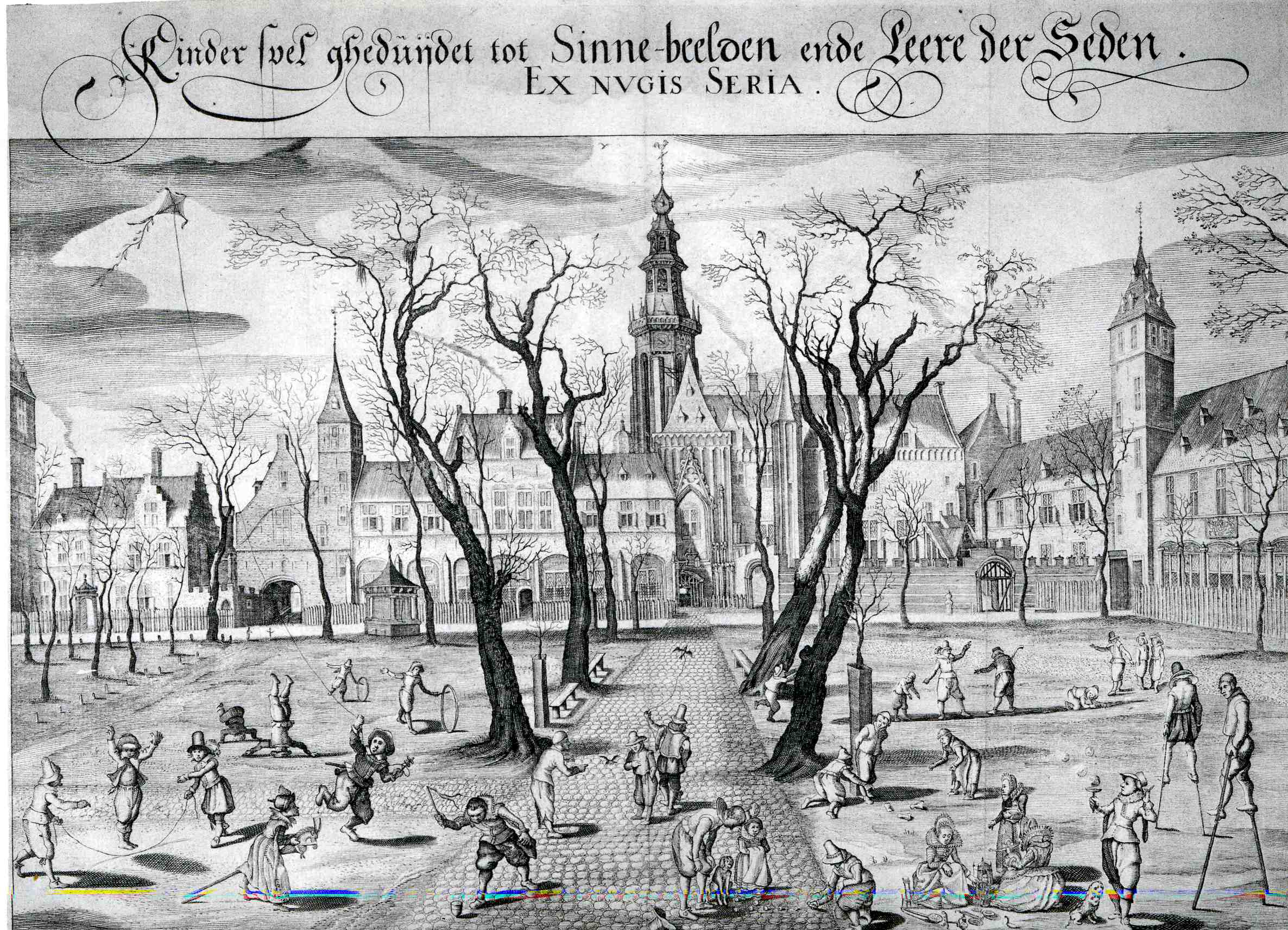
    The subject of van de Vene’s painting (shown here above)  of children’s game is as much a
    parable as it is a recording of games that kids played in the Netherlands in the
    early 17th century.  The
    children are occupying themselves with supreme simplicity, allowing their
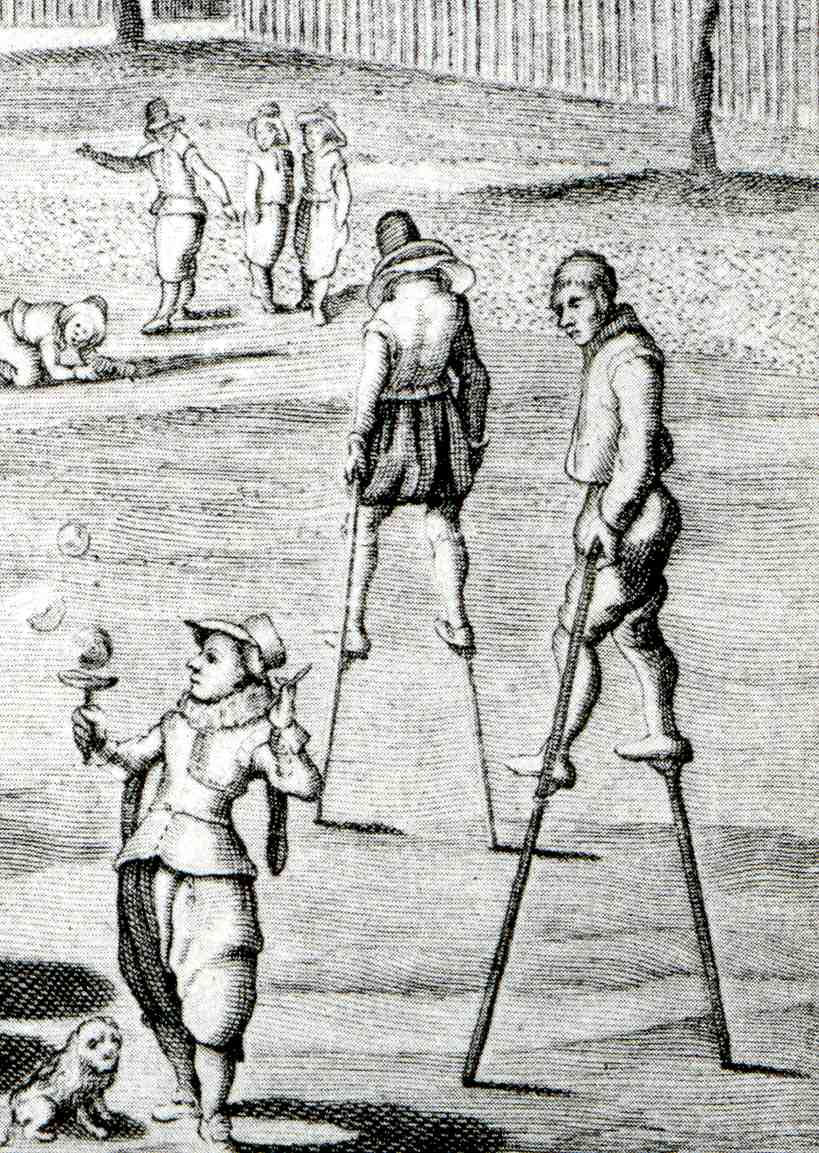
    imaginations to form the areas that the physical toy could not; around them we
    see older folks, walking on stilts, seemingly above all of the childish
    bric-a-brac of living.  I think too that
    the spare trees decorating the walk in front of the square of churches in the
    background are there to illustrate what he saw as the lack of imaginative
    fertility of the churches’ reach into the world of the living.  It seems a pretty harsh painting to me once
    you get beyond the fantastic depiction of children at play.  (This genre, of kids playing, is not a very
    wide one in the history of art, believe me.) 

    I think that when you look at the works of van de Venne and
    then at those of Peter Brueghel, there is a close 0 blog feb 5 van de venne538
    connection, as though the
    later painting was simply an intellectual descendant of Brueghel  This is especially true when you look for
    example  at such Brueghel paintings
    as  Ass at School, 1556, Parable
    of the Sower
    , 1557, Landscape with the Fall of Icarus,
    c.1554-55,  Netherlandish Proverbs, 1559,The Fight Between Carnival and Lent,
    1559, Portrait of an Old Woman, 1560, and Temperance, 1560.  This becomes especially, easily clear when

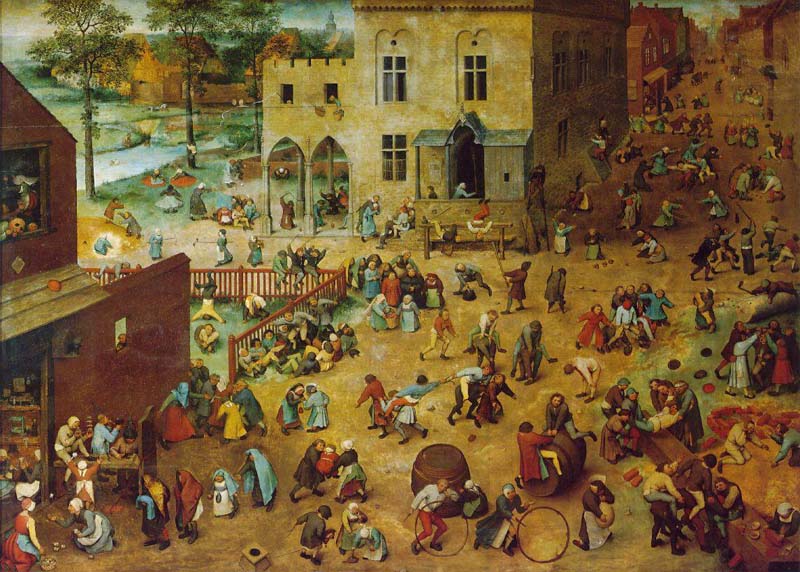
    you see the Children’s Games, Brueghel’s spectacular
    1560 achievement in which 250+ children are shown at play at some 80+ games,
    seemingly taking over the square of this small town.  This is a painting of enormous importance in
    the preservation of time spent at play. Evidently the experts have identified
    almost all of the games being played and toys being used;  the toys are all known, but there are a few
    games that remain a mystery to 21st century eyes. 

    Van de Venne seemed not to have had followers in his footsteps,
    exactly.  He went on in the later quarter
    of his career to specialize in depicting his subject matter in painting in
    various forms of gray, with his principal subjects in his genre paintings being
    peasants, the poor, the maimed, the ugly, the infirmed, the out-of-place, and
    children.  Seems as though this approach
    did not lend itself to the glorious revival of sumptuousness and color that was
    coming to the Netherlands just at the time of van de Venne’s death.  

    And, just  for the record, the Brughel painting:

    Bruegel_games 

    Richard Muhlberger, in What Makes A Bruegel A Bruegel? (New York: Metropolitan Museum of Art and Viking, 1993, pages 15-16)
    tells us that:

    “Brueghel painted an entire town inhabited by about two
    hundred fifty children. At first the image seems to capture a
    holiday, but soon it becomes clear that the painting is meant to be an
    encyclopedia of children’s games. Because most of them are still
    played today, eight-four have been identified, while others not known
    to the twentieth century have yet to be recognized.”

    “Brueghel did not want to emphasize one game above the others. Not
    able to crowd them all up front, he painted them as if looking down at
    them from above so that none is blocked from view. While the distant
    children are smaller than the ones up front, their costumes are still
    bright. No matter where the children are, even in the shadows, Brueghel
    painted them as if they were in the noonday sun… At first it looks as
    though the boys and girls are scattered at random, like jacks thrown on
    the ground. Brueghel knew how to organize large crowds into patterns.
    The figures in the foreground of the painting are arranged in lines
    that fan out from the lower left corner and catch the viewer’s eye
    first. Of course, being formed of children, the lines refuse to be
    exactly straight! The youngsters in the street behind them are placed
    in small groups that form a back-and-forth curving line… Brueghel
    made all of the children’s faces similar. Differences in clothing are
    slight, and not many colors are used. But each child looks like an
    individual because of the way the artist painted bodies: No two are
    alike. After all, it is in the figures’ movements that the viewer can
    tell what games are being played. By focusing not on personalities but
    on the games, Brueghel gave them a universal meaning.”


  • Institutionalized Racism and the Sale of Toys and Music and Frivolities

    JF Ptak Science Books LLC Post 479

    0 blog jan 21 negro393

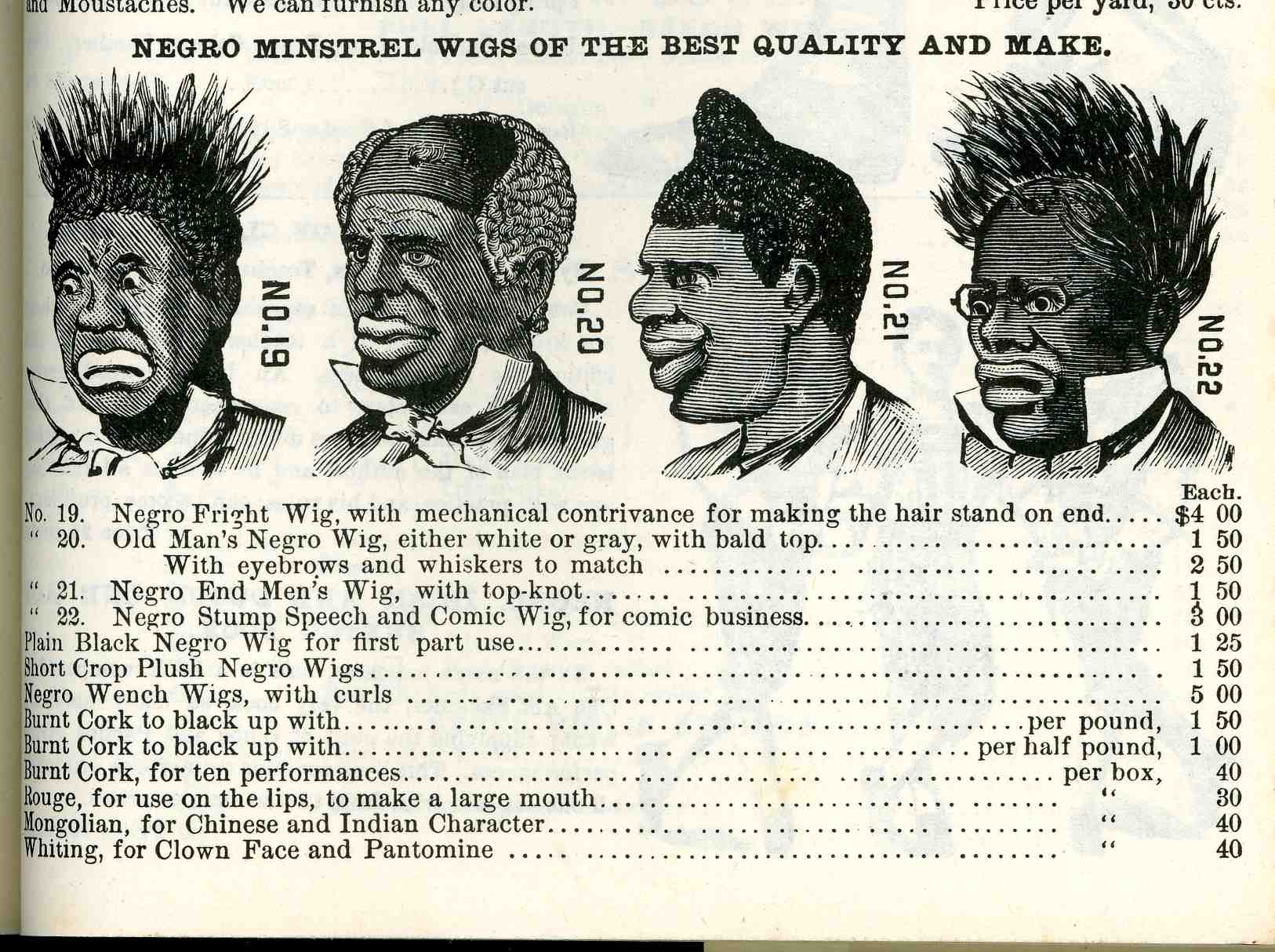
    Leafing my way through a reprint of the Peck & Snyder Out & Indoor Sports and Pastimes Catalog for 1888, looking for baseball equipment and giant bagatelles, I found this stunning advertisement.  I knew of the tragic and long history of this form of “entertainment”, as does everyone, but I must say I never considered the costume end of it.  And here it was.

    The minstrel show, or minstrelsy, appeared as an American invention in the 1830’s–much more so by the early 1840’s.  It depicted  blacks in only the worst possible ways, as shiftless, lazy, buffoonish, stupid, flawed in almost every way, an idiotic race with a musical advantage, relayed in predictable units, accompanied by a developing genre of American music.  The ad here is for the accoutrement of the performers, layers of red rouge and carbon to build on white faces one of the lowest forms of racial archetypes that this country has produced. 

    0 blog jan 21 negro394
    The astonishing thing is that it is just a simple ad in the middle of
    the page of the middle of a catalog for entertainment and sports
    bits–nothing special at all, nothing remarkable to distinguish this
    gaping hole of morality from the games and exercise equipment that
    surrounds it.  And that’s the deep horror of stuff like this, this sort
    of stereotyping that was so lethal and filled with hate, and not making
    a ripple in the awareness of anyone’s sense of correctness: the
    creation of this racial image was so complete that even its most base
    element could appear as an insignificant trifle in a sporting catalog. 

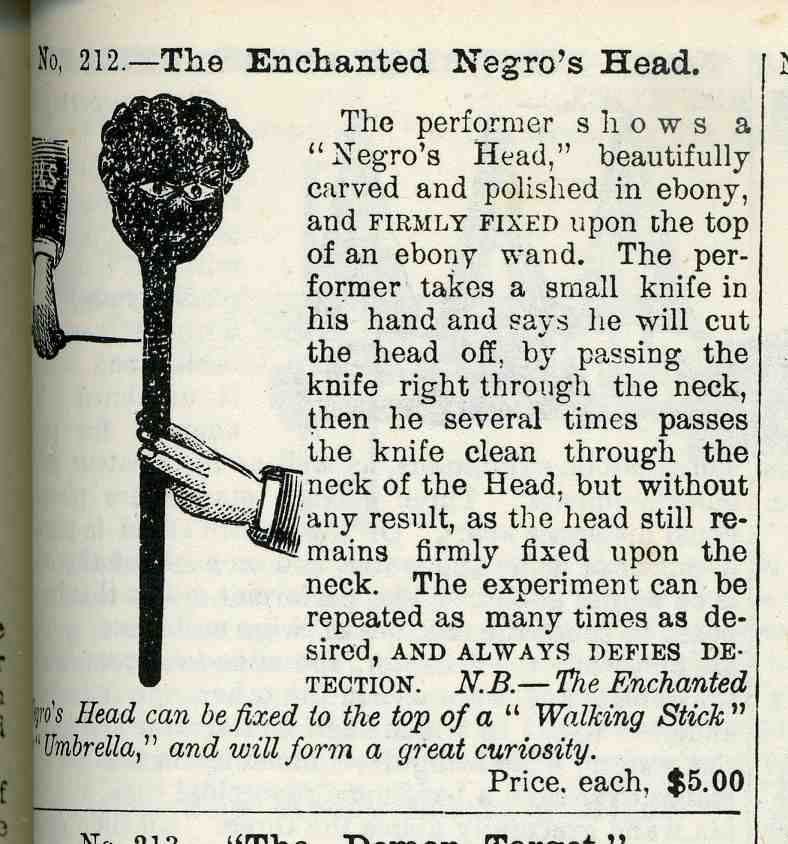
    Even more extraordinary is this ad that appears just a few dozen pages
    later.  “The Enchanted Negro’s Head” was a prop in a magic trick that
    involved drawing a knife across the neck of the black head. “The
    performer takes a small knife and says he will cut the head off”–I can
    imagine the sort of conversation between performer and audience before
    his action is undertaken, getting the audience ready to kill the “Negro
    Head”.  It would not have been pretty.  And that’s not all–once you were done with the “trick” part of cutting off the head, it “(could) be fixed to the top of a walking stick or umbrella….(to) form a great curiosity”.

    These characterizations appeared in uncountable forms in virtually every aspect of social life in this country, finding its insidious way even into something as seemingly innocent as a magic trick. It is the very vast smallness of this racism that make it so terrifically convincing and lethal. Looking at something like this makes me feel the enormous weight of the all that went into the attempted assassination of this race. 

    **My friend Joy Holland–chief of the Brooklyn Room at the Brooklyn Public Library at the Grand Army Plaza in the heart of Brooklyn USA–recently started a wonderful history blog at the library called Brooklynology.  A recent post there talks about a minstrel-related find in their ephemera collection–it is quite interesting; take a look. 


  • Peasant Utopias and Dreamlands: Medieval Hopes to Big Rock Candy Mountain

    JF Ptak Science Books LLC  476
    800px-Pieter_Bruegel_the_Elder_-_The_Land_of_Cockaigne

    The concept of terrestrial, not-Heaven-bound, un-restricted
    non-religious happiness for working folks not viewed as an abomination by
    Christian churches is a relatively new idea.  
    Fun for the rabbleous masses, stuff happening to the far west of the
    east-entrenched Eden*
    (as in the Steinbeck novel), was generally a no-go so far as institutions such
    as the Catholic church was concerned. 
    Medieval geography of imaginary places where happiness dwells included
    the Land of Cockaigne and the Isle of the Blest, places that represented both wish fulfillment and resentment at the
    strictures of asceticism and dearth.

     The peasantry existed in a state of semi-amicable slavery
    under the  thought- and emotional-control
    of the aristocracy and the church, living in fear of their immortal souls
    dancing in the ring of fire for thinking heathenous thoughts, or persecuted by
    the legal entity for being too immodest. 
    “Fun” was a very expensive commodity, and was seen by The Church as
    being too expensive and rare to share. 
    Fun represented a departure from the routine, an affront to the
    teachings of scripture, a lessening of the control enjoyed by all ruling
    classes.  And so Medieval legends such as
    the Land of Cockaigne, with its promises of unbridled eating and gluttony and
    sexual liberty and disobedience was a direct charge against the established
    distribution of power and wealth, and could not be tolerated.  Fun was kept for someone else.
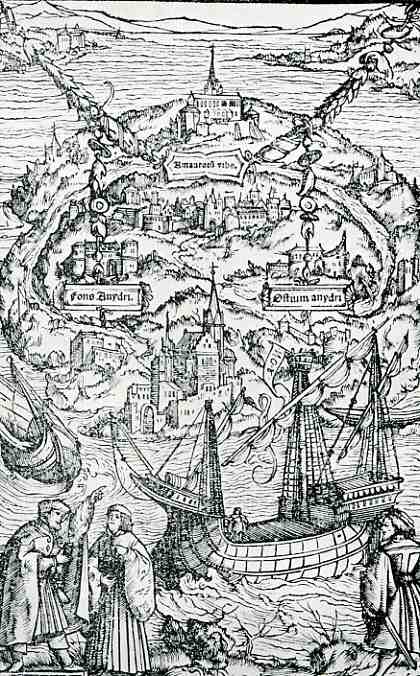
    0 blog jan 20 thomas more390

    Cockaigne—of Middle French derivation, pays de cocaign,”Land
    of Plenty”—
    was an imaginary
    location and a dream, somewhere that was a total relief to the long grind of
    the peasant life.  It was a place “where
    the
    houses were made of barley sugar and cakes, the streets were paved with pastry,
    and the shops supplied goods for nothing” according to Specimens of Early
    English Poets
    (1790), whose author, George Ellis, reprinted a 13th
    century French poem.  In the Land of
    Cockaigne “roasted pigs wander about with knives in their backs to make carving
    easy, where grilled geese fly directly into one’s mouth, where cooked fish jump
    out of the water and land at one’s feet…The weather is always mild, the wine
    flows freely, sex is readily available, and all people enjoy eternal youth…”
    according to Herman Pleij’s Dreaming of Cockaigne (2001).  Another source determines that  “you must eat your way through a mountain of
    porridge to reach the land of Cockaigne

    …where the
    fences are made of sausages, the geese lie ready-grilled on the plates…” 

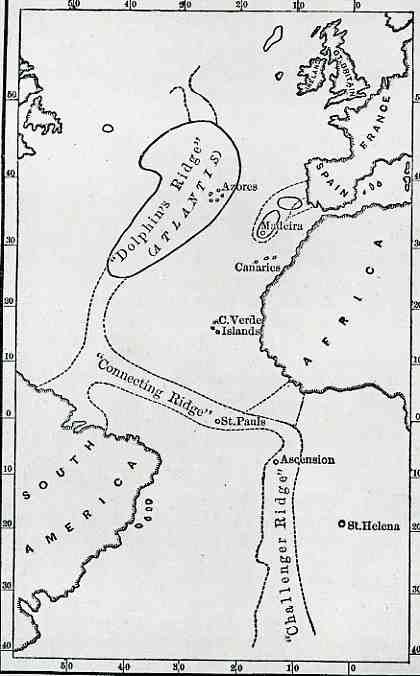
    Atlantis and El Dorado might’ve been fancy sounding places
    to a lot of poor people, but Cockaigne must’ve sounded better by leaps and
    bounds—no piles of gold, no great extravagances, just rewards of plenty to eat
    and drink, and sleep, and some sex.  All
    of these promises existed so far beyond the pale of the Church that even
    thinking about a crust’s-worth of such anti-biblical carnage would send you
    straight to hell.  Which sounds
    terrifically strange to me now because the actions here, in Cockaigne, are
    largely passive (though of course hedonistic), and aren’t vengeful, hurtful,
    spiteful.  It is mainly, well, lazy, full
    of sleep-inducing foods. Bittersweet dreams like this formed for themselves a
    basis of pure hate within the church, mainly because it was taken as a threat
    to the core fundamentals of religions at the time.  It should be said that many of the tellings
    of this legend do have their fair share of anti-clerical runs, nun-hunting and
    monk bashings.  Oopsie!

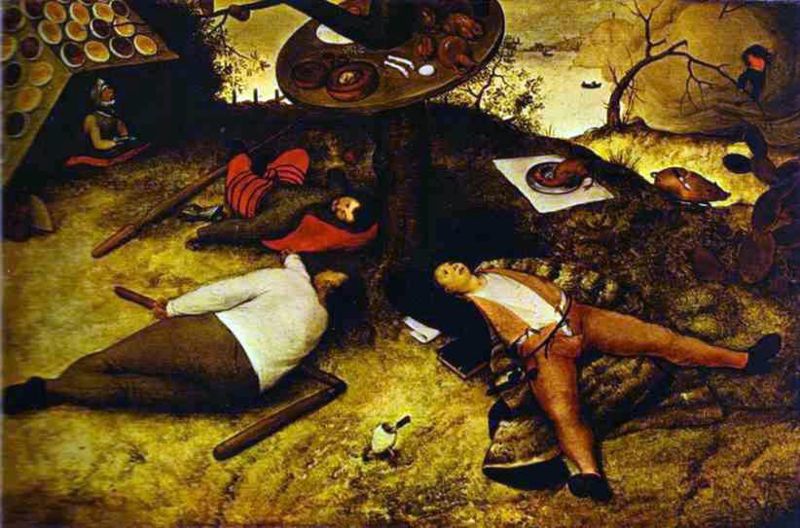
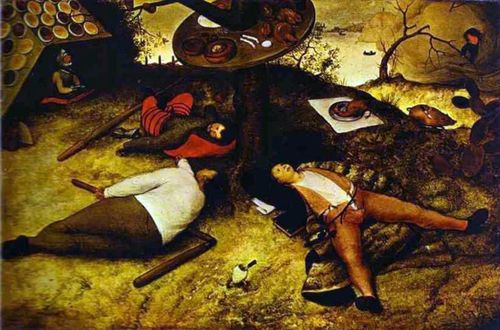
    The Land of  Cockaigne is
    beautifully painted in 1567 by the peasant-dominated mind of Pieter Brueghel the Elder or Bruegel (c.1525 – September 9,
    1569) the
    fabulous  Netherlandish
    Renaissance
    painter.  (In many ways he discovered the common/peasant
    in much the same way as Dickens discovered the working poor of London; of course Brueghel made his discovery
    300 years earlier.  He was also in his
    way a Dickensian for detail:  many of his
    paintings are terrific mélanges of children’s games and folk tales, often
    accurately identifying hundreds of objects of interest in a single work)  He incorporates many of these legends in the
    painting, in addition showing stewed geese flying into open mouths and a
    house-roof made of meat pies.

    The promise of eatable houses and lazy meals and sleeping
    all day to produce evermore profits are many times bounded by rivers of red and
    wine wines, of milk, and of honey. 
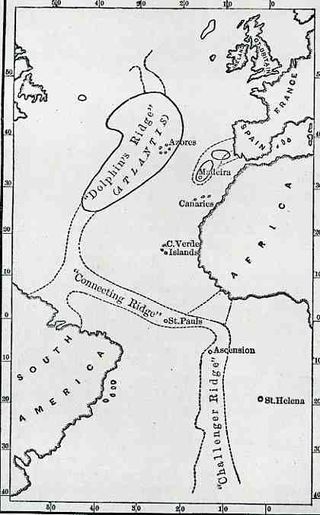
    0 blog jan 20 atlantis389

    These are concepts that have existed for hundreds of years
    in different sorts of peasant paradises, not the least of which is the 20th
    century’s contribution of “Big Rock Candy Mountain”, a song composed by Harry
    McClintock (1882-1957). In many ways this song contains the most simple, most
    heartbreaking of the simple wishes of the American hobo of the Great Depression
    era.  The 26 (or so) wants are spectacular
    in their smallnesses and simpleness (see below for full lyrics of the song):

    (1) a land that’s fair and bright (2) handouts grow on
    bushes (3)sleep out every night
    (4) boxcars are all empty  (5) the sun
    shines every day (6) cigarette trees (7) lemonade springs  (8) bluebird sings (9) all the cops have
    wooden legs (10) bulldogs all have rubber teeth (11) hens lay soft boiled eggs (12)
    farmer’s trees are full of fruit (13) barns are full of hay (14) ain’t no snow (15)
    rain don’t fall  (16) the wind don’t blow
    (17) never change your socks (18)little streams of alcohol come a-trickling
    down the rocks (19) brakemen have to tip their hats  (20) railroad bulls are blind (21) lake of
    stew and of whiskey  (22) jails are made
    of tin (you can walk right out again as soon as you are in) (23) no short
    handled shovels,  (24) no axes saws or
    picks (25) you sleep all day (26) they hung the jerk that invented work.

    These wishes are gathered together as follows:

    Food: Cigarettes, lemonade, soft boiled eggs, fruit trees,
    streams of alcohol, land of stew and whiskey

    Geography:  land fair
    and bright, sleep out every night, sunshine, bluebirds, no snow, no rain, no
    wind.

    Social:  handouts grow on bushes, cops have
    wooden legs, bulldogs have rubber teeth, (railroad) brakemen (who would
    normally throw hobos from the trains) have to tip their hats to the hobos;
    railroad bulls (the railroad cops who would be um pro-active and brutal in
    getting rid of the ‘hobo problem” from the trains);  revolving door jails are made of tin; no axes, saws or picks; and finally, no short-handled
    shovels. 

    Personal:  sleeping all day, sleeping out at night, and not changing your socks.  (Not even a whiff of carnal anything.)

    And of course the hanging of the man who invented the whole
    concept of work.

    I think that in all of these simple dreams, the “short-handled
    shovels” one is the most tremendous, and most heart-breaking.  The short-handled shovel is a backbreaker,
    made for working in stubborn, small holes or tight places.  If you needed to use a shovel on something,
    you’d want to use a long-handled one.  Keep
    in mind that the song didn’t call for no shovels—just a decent one that you
    could work with humanely. 

    The song is beautiful and stands for a wide majority of
    thought in the U.S.
    in the troubled 1930’s.  It is also in
    many ways related to the classic peasant utopias and dreamlands—perhaps it is
    just like Cockaigne, just removed 500 years.

  • The Towering Magnificence of the Porcupine, 1604

    JF Ptak Science Books LLC  Post 359                                            

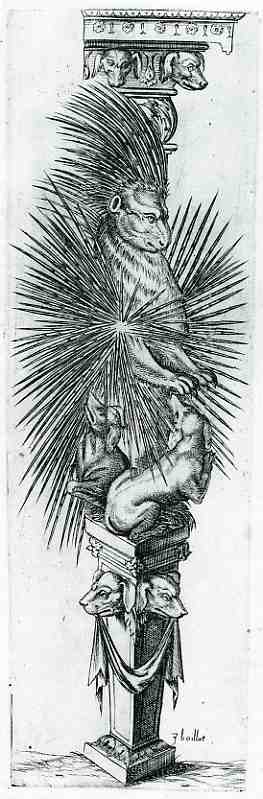
    000-ebay--Nov 4--porcupine995

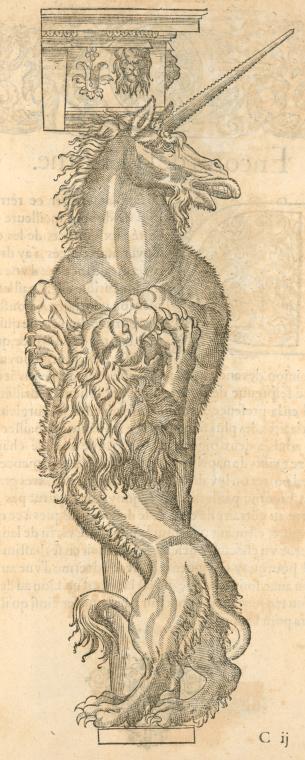
    This is perhaps the greatest monument ever erected to the porcupine–of course it may be the only monument ever erected to the porcupine, but it is undeniably monumental.  This unusual image was published in Strassburg in 1604  in Joseph Boillot’s (1546-1603) sumptuous New Termis Buch (first printed in 1592 as a Nouveaux pourtraits et figures de termes).  It is a bestiary of sorts, a very curious book, offering real and imaginary animals together in alabastered, marblized, memorialized, architectural form, with the  great hope of offering them to fellow engineers and builders for incorporation into the real world.  Or perhaps not, perhaps it was all just done in fun, an exercise, an experience, an artistic creation wrapped inside  the fundus of a great Baroque eyeball.  Unicorn


    The end result is the Boillot produced some extraordinary beasts, wrapping them in extraordinary garments, surrounded by other wonderful animals real and not, and elevated to extraordinary heights.  The powerful unicorn, draped with the vicious but subdued lion; the ass, regal, judicious, pensive, thoughtful, kept in place, or warm, by a dragon. Then of course there is the porcupine, absolutely magnificently appointed with spikes  kept by by dogs, supported at all levels by the creatures.


  • Unexpected Uses of Musical Instruments: War Headdress

    JF Ptak Science Books LLC Post 259

    Blog1sept_13_german544

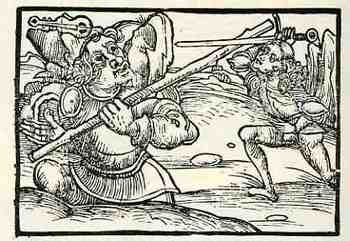
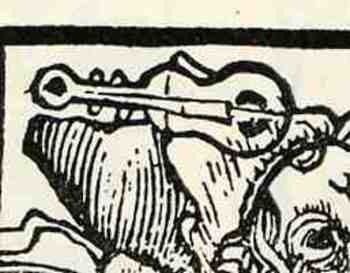
    I don’t mean this seriously, and I’m probably mucking around with a national treasure/iconic figure by even suggesting my flippant title, but I really would like to know what in the world this violin-cello or whatever it is is doing on the head of this figure? Probably ir is just artistic license, meaning that the large-staffed giant (?) would ultimately use music as a weapon (Amphion?); maybe, probably  not.  If anyone knows, I’d love to hear the answer.

    The source of this woodcut is the Heldenbuch, das Heldenbuch mit synen Figuren…, a towering work in the history of German ltierature (or at least early German literature)  printed by Heinrich Gran in Hagenau in 1509.  It is a collection of German epic poetry from the period of the Barbarian Invasions (more sweetly
    Blog1sept_13_german_det545_3
    referred to as the “Migration Period”, or Volkwanderung) ca. 300-700 ACE, and collected in the 13th century.  It is evidently a luxurious ride through German folklore and legend, with dragons, supernatural beasts, giants, scampering and clever warrior dwarfs, spectacular voyages to the East, shining moments of chivalry, and wide fairy lore.  So, if anyone knows the answer, would they please let me know about the very curious use of this musical instrument?