A Daily History of Holes, Dots, Lines, Science, History, Math, Physics, Art, the Unintentional Absurd, Architecture, Maps, Data Visualization, Blank and Missing Things, and so on. |1.6 million words, 7500 images, 4.9 million hits| Press & appearances in The Times, Le Figaro, Mensa, The Economist, The Guardian, Discovery News, Slate, Le Monde, Sci American Blogs, Le Pont, and many othr places… 5000+ total posts since 2008. Contact johnfptak at gmail dot com

Category: Fantastic Beasts and Tales

  • Found-Art in Scientific Journals: an Acoustic Kraken! (1881)

    JF Ptak Science Books   Quick Post

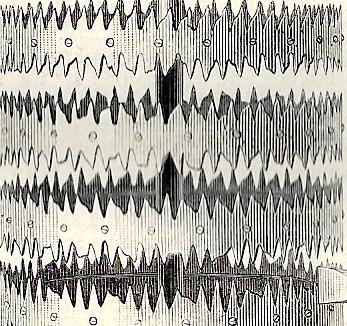
    This does for a moment look like a piece of Found Scientific Art–and I guess it is–reminding me of a multiply-layered steely jaw of some creature, which you can see if you look hard enough. In reality, it was the tonal guts of a wonderful scientific apparatus constructed by Rudolph Koenig, reported in the July 14, 1881 issue of Nature:

    Nature 1881 Konig wave siren detail

    And the full version of the original 3×3″ image

    Nature 1881 Konig Wave Siren

    “Prior to the advent of oscilloscopes and other electronic sound-analysis tools, even seemingly rudimentary tasks of acoustic analysis – determining the frequency of a musical tone, for instance, or making waveforms observable – were not simple jobs  with obvious solutions. It fell to researchers of the time to come up with mechanical devices, often quite clever and sometimes rather complex, to make these investigations possible.” “Though oriented differently [the wave siren]… is similar to the other wave siren shown in this collection, but with more complex wave forms in the undulating rims…”–Bart Hopkin, Instrument Maker, “Engravings of early Acoustical Apparatus”, from his website

    Rudolph Konig (1832-1901) “far and away the most accomplished among makers of [acoustical devices]” (Hopkin, above) was a very highly accomplished and discriminating instrumentalist, scientific instrument maker, and experimentalist. “Koenig will also be remembered as the inventor and constructor of many other beautiful pieces of apparatus for the investigation of acoustical problems, among which may be mentioned his wave-sirens, the first of which was shown at Philadelphia in 1876. His original work dealt, among other things, with Wheatstone’s sound-figures, the characteristic notes of the different vowels, a manometric flame apparatus, a vibration microscope, among others; but perhaps the most important of his researches are those devoted to the phenomena produced by the interference of two tones, in which he disputed the views of Helmholtz as to the existence of summation and difference tones.”–Wikipedia

    “Prior to the advent of oscilloscopes and other electronic sound-analysis tools, even seemingly rudimentary tasks of acoustic analysis – determining the frequency of a musical tone, for instance, or making waveforms observable – were not simple jobs  with obvious solutions. It fell to researchers of the time to come up with mechanical devices, often quite clever and sometimes rather complex, to make these investigations possible.” “Though oriented differently [the wave siren]… is similar to the other wave siren shown in this collection, but with more complex wave forms in the undulating rims…”–Bart Hopkin, Instrument Maker, “Engravings of early Acoustical Apparatus”, from his website


  • The Earth and an Inter-celestial Mjölnir (1951)

    JF Ptak Science Books  Quick Post 

    There is a longish thread through this blog collecting images of The Earth Doomed–that, and the Exploding Earth, or Cracking Earth, or the Earth spinning into infinity; they are joined by other Odd Earth images such as the Earth as a square, or tiny Earth, and so on. They really need to be collected into one category, but if you are interested just use the google search box for the site using “Earth” and survey the image section, which should put you in touch with some unusual bits. This morning I found the image below, which is a great cover in Amazing Stories for a story by Jack Vance (February 1951). Unfortunately I don’t have the time to read it, but I appreciate the artwork, though  I doubt this is Thor’s Mjölnir  as is teased in the title to this post…except that if there was a mega-hammer out there making its way through the not-so-voidy-void it would probably be powerful enough to _________.

    Earth doomed sci fi


  • The Earliest Images of a Giant Attacking NYC?

    JF Ptak Science Books   Post 1950

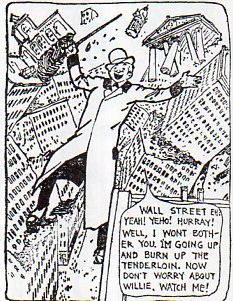
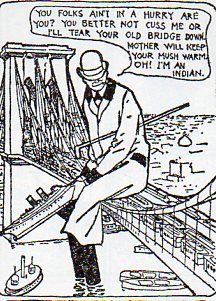
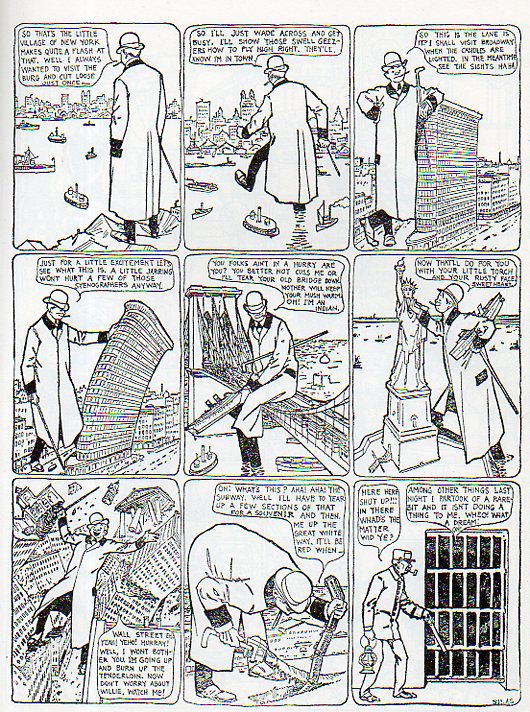
    Mccay new york951
    The revolutionary comic strip generator Winsor McCay had a great 12 months in 1904/1905.  McCay may have been the Einstein of his field, and his
    work I think may still be the standard bearer for high excellence and
    creativity.  It was in 1904 that he began his Dreams of a Rarebit Fiend, which seems to have also launched the main character for the creation of his crowning masterpiece of the medium, Little Nemo in Slumberland, which would premier in 1905. (McCay’s work was appearing in two different newspapers in New York in 19041, forcing him to contractually sign his work for Rarebit as “Silas”).  
    Nothing had really quite been seen like that before, two newspaper
    strips that were filled with vision and elegance and weirdness and the
    bizarre, beautiful stories illustrated on one sheet of paper, of great
    imagination and a wide stretch of subversiveness. They so captivated the
    readers of the time that McCay went off on illustrative lecture
    circuits, found movie (in their relative infancy) versions of his work,
    and performed in vaudeville venues along with Charlie Chaplin and W.C. Fields.

    Mccay new york952
    What is different in Rarebit from McCay’s other work seems to be its new material from strip to strip–there’s no recurring characters–unlike Nemo, which has storylines that continue for periods of weeks–and there is a great reliance on message than in the usually-beautiful artwork that is found in Little Nemo. Rarebit tells a social story, and is capable of satirizing political and other issues; this is almost never the case in Little Nemo. 

    Mccay new york950
    There’s also the appearance of giants in –this one, in particular, we see a New York City stomper of varying heights. The giant seems tallest when standing on the New Jersey palisades; when he gets to Daniel Burnham’s Beaux-Arts  Flatiron/Fuller building–which had just been completed a few years before this strip–he rises above it by about 1/4, making him about 400′ tall.  When he gets to the Statue of Liberty, which is about 305′ from ground to the base of the torch, making the giant somewhat shorter than earlier, tough he seems his mightiest when sitting on the center span of the Brooklyn Bridge, this portrayal making him seem considerably taller than the earlier 400′, as the height of the bridge from tower to river is about 276′).    I’m not altogether sure of how early NYC-attacking giants come in in the literature, though there are plenty of other appearances of giants in the history of myth and literature (including the Cyclops, Eoclesia, Paul Bunyan, Fatna/Fanolt, Gargantua, Goliath, Orin, the Kraken, Rukh, Zeus, and so on, all of whom come before our Wall-Street-Wrecking giant rarebit fiend. (I wrote earlier in this blog on an Alphabet of Giants, here).  There is an 11-minute movie (The Pet, 1921) by McCay featuring a city-attacking giant, which may actually be the first movie featuring a gigantic-anything distributing mayhem on a city:

    Its unclear to me why a person should have nightmares from the seasoned
    cheese slathered toast that it is rarebit–it seems fairly innocuous,
    unless of course it is weirdly seasoned or the cheese is bad.  But this
    is Cartoonlandia, which means anything is possible.

    Notes

    1.  The strip ran from September 1904 to 1911; it appeared in different papers and under different title for a few years from 1911-1913, and then once again revived under a different name in bits and spurts from 1923 to 1925. 


  • Steampunk Anatomy–Cancer Holes, Nut and Bolts, Oil, Outer Space Belly Shirts and Heavy Things of the Future

    JF Ptak Science Books  Post 1269

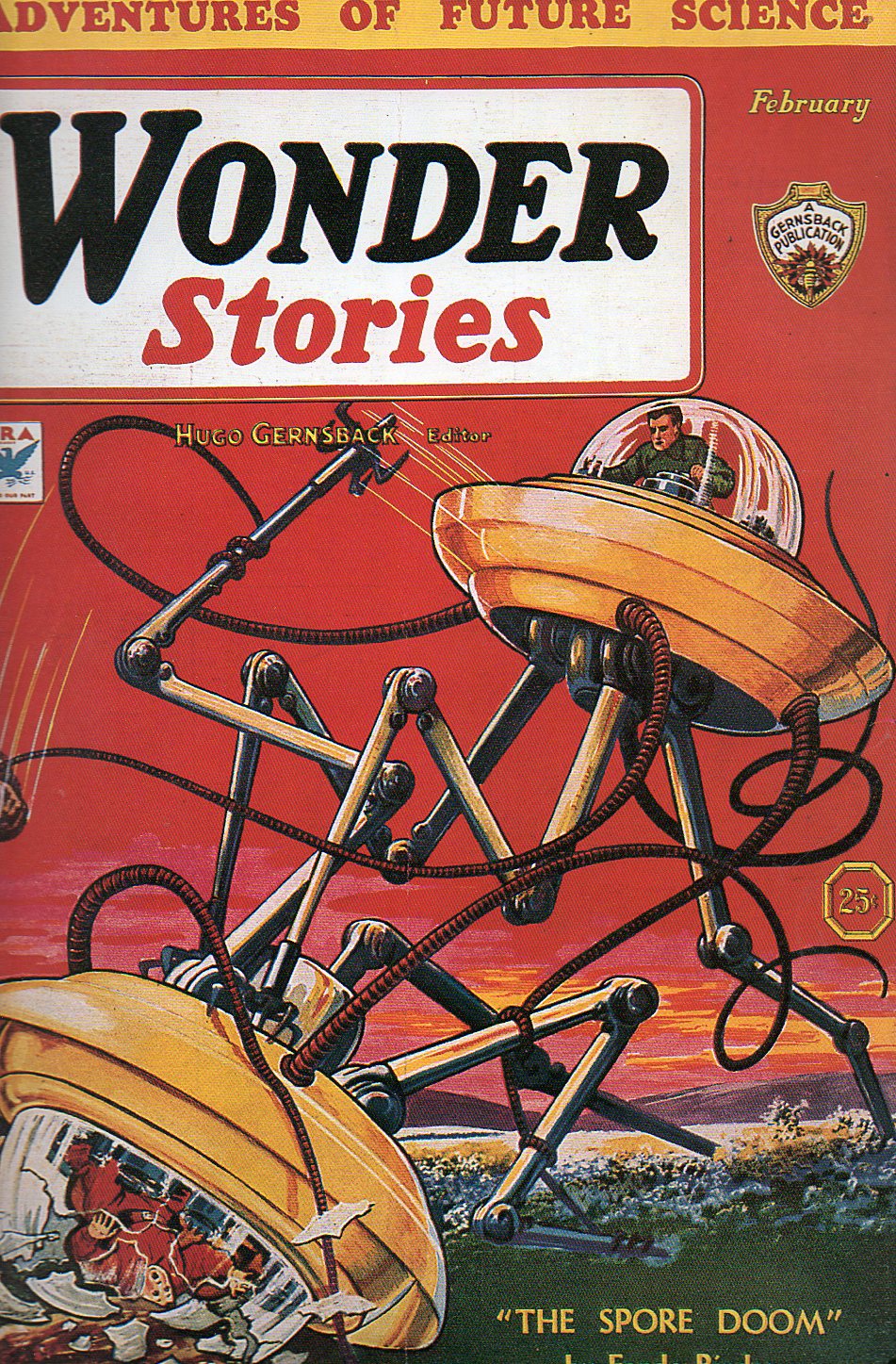
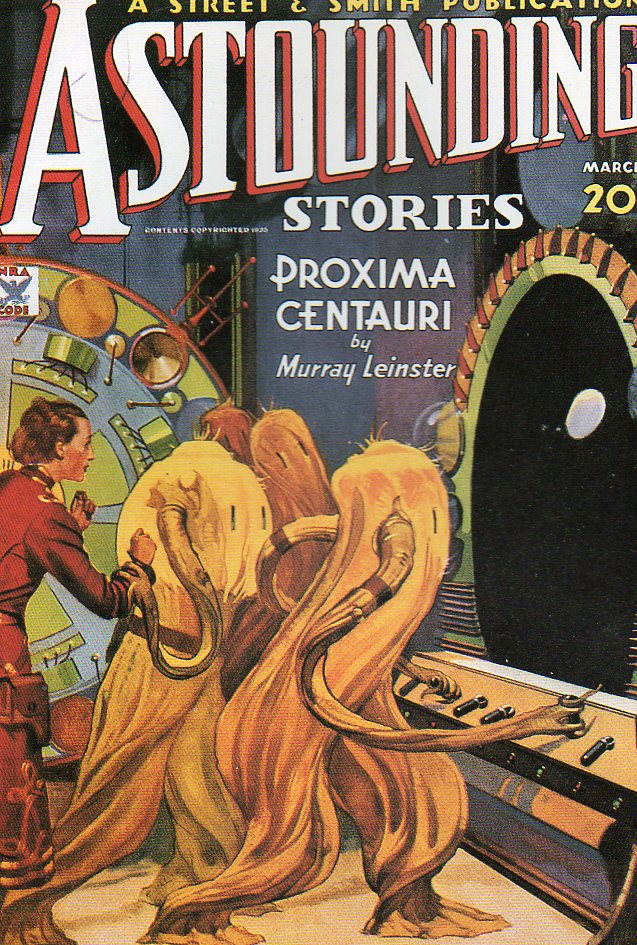
    What is it about science and the future and how the scifiction of the past (pre-1950’s) almost never could encapsulate the superior scientific innovation and discovery of its near future?  It is marvelous and wickedly magnificent to look at some cover art and illustration for the pulp and not-so-pulpy science ficton, images that not only have a certain look and feel, but also a smell, a particular bookstore/basement pulp-paper-not-exposed-in-forty-years smell.

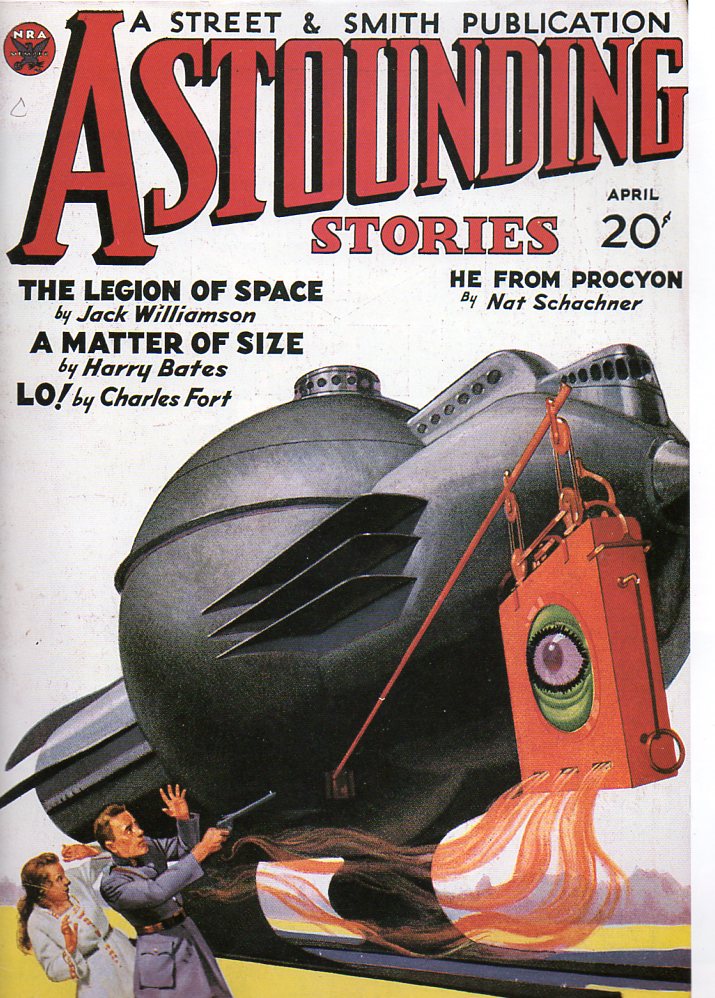
    Steampunk Eye–that enormous ship, governed by a long, long pole with a small box witn an eye in it, being raised and lowered on pulleys:

    Steampunk a077

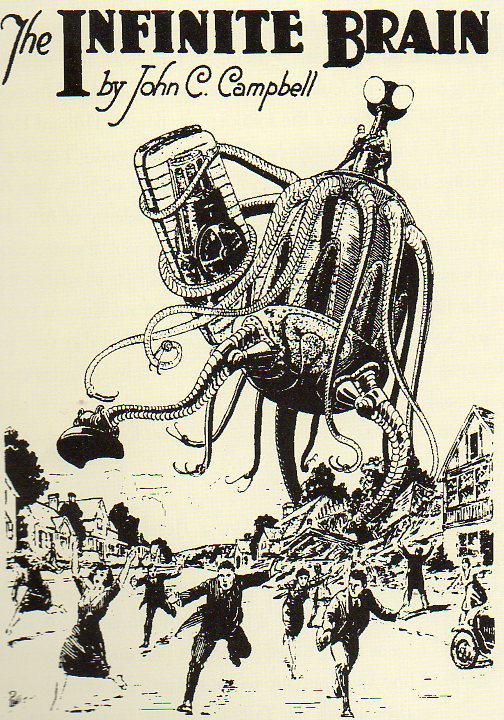
    The Steampunk Gigantic Enormous Stupendous Infinite Brain (also notice that folks are fleeing, running for their lives, witt heir arms thrown high into the air, running like SpongeBob SquarePants–its hard to run like that):

    Steampunk brain084

    Steampunk Lust:

    Steampunk lust085

    Steampunk Addiction & Cancer Hole:

    Steampunk cancer hole088

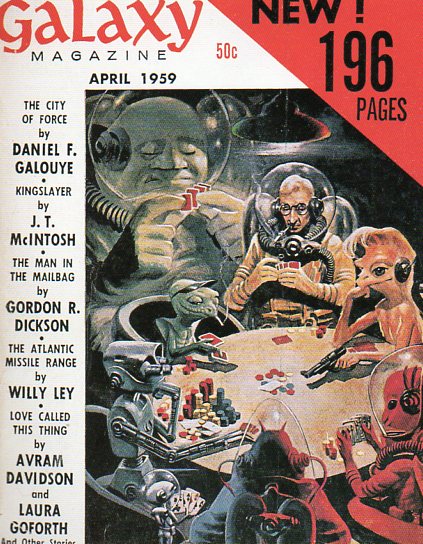
    And the Philip -Morris contribution for smoking in alien space:

    Steampunk cancer hole089
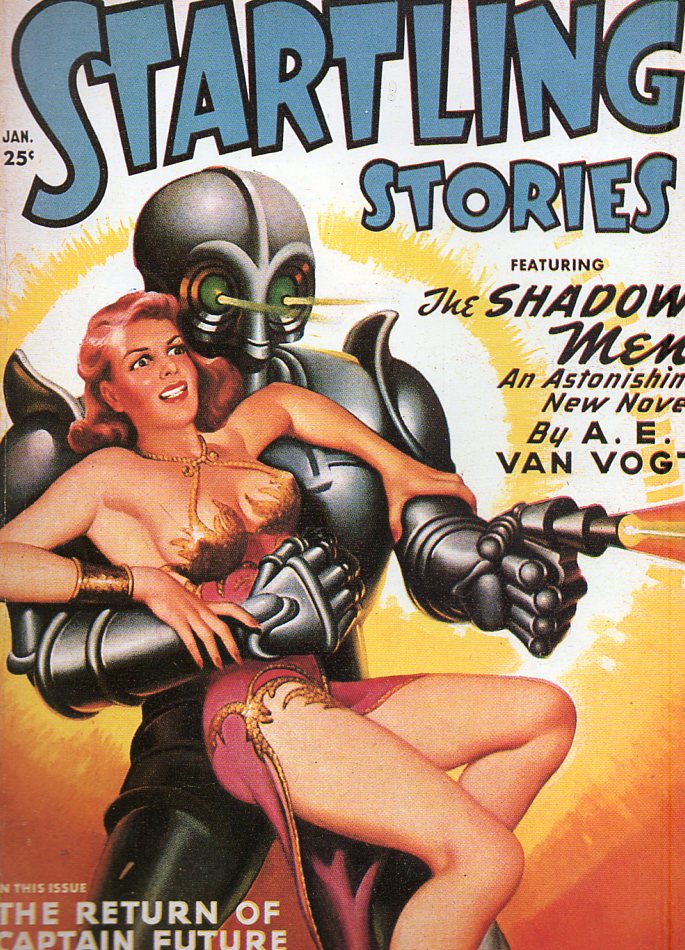
    Steampunk Humano-Robot Replicant:

    Steampunk human robot081

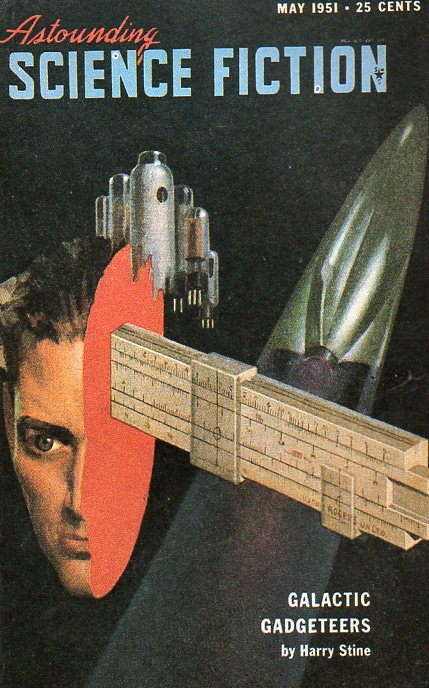
    Steampunk Thinking (the slide rule really didn’t give out until around 1970):

    Steampunk calculating086 Steampunk Legs:

    Steampunk legs083

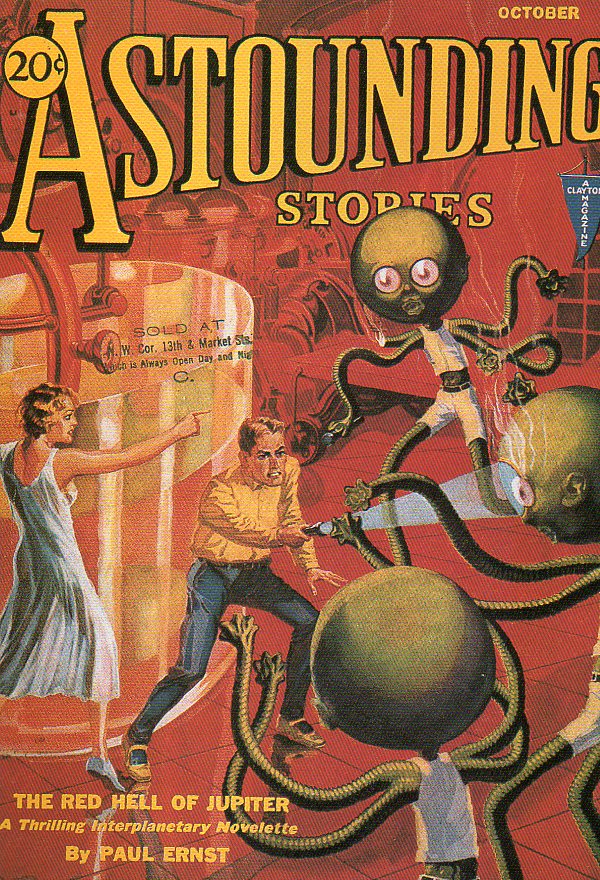
    Steampunk Abs:  humans are surrounded by arm-waving large-headed belly-shirted aliens, the man using a flashlight for defense )burning the alien eye even though they’re all in bright light) while the woman points really hard:

    Steampunk abs090
    Steampunk Hair–and with all of that vast technology and futurismo, there are still unruly locks here and their:

    Steampunk hair082
    Electro/Steampunk Body Replicator

    Steampunk body replicator087


  • Peasant Utopias and Dreamlands: Medieval Hopes to Big Rock Candy Mountain

    JF Ptak Science Books LLC  476
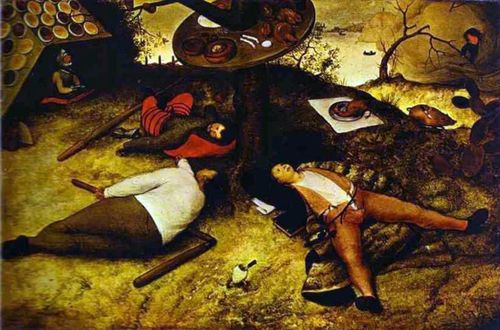
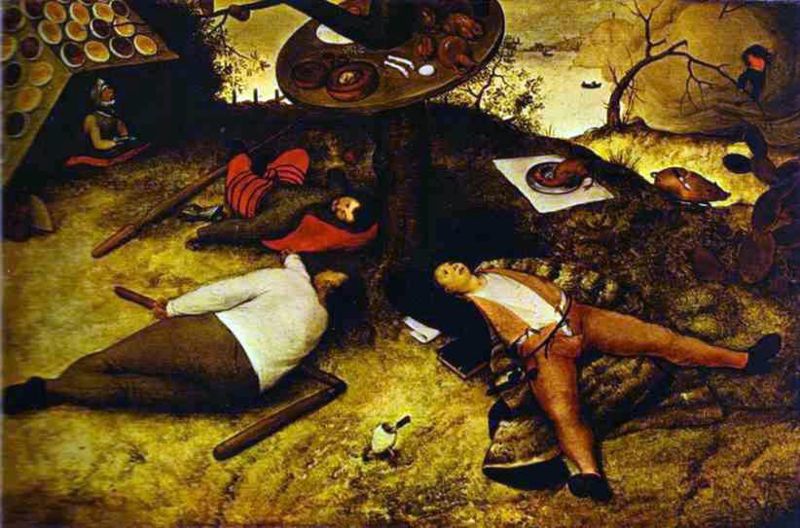
    800px-Pieter_Bruegel_the_Elder_-_The_Land_of_Cockaigne

    The concept of terrestrial, not-Heaven-bound, un-restricted
    non-religious happiness for working folks not viewed as an abomination by
    Christian churches is a relatively new idea.  
    Fun for the rabbleous masses, stuff happening to the far west of the
    east-entrenched Eden*
    (as in the Steinbeck novel), was generally a no-go so far as institutions such
    as the Catholic church was concerned. 
    Medieval geography of imaginary places where happiness dwells included
    the Land of Cockaigne and the Isle of the Blest, places that represented both wish fulfillment and resentment at the
    strictures of asceticism and dearth.

     The peasantry existed in a state of semi-amicable slavery
    under the  thought- and emotional-control
    of the aristocracy and the church, living in fear of their immortal souls
    dancing in the ring of fire for thinking heathenous thoughts, or persecuted by
    the legal entity for being too immodest. 
    “Fun” was a very expensive commodity, and was seen by The Church as
    being too expensive and rare to share. 
    Fun represented a departure from the routine, an affront to the
    teachings of scripture, a lessening of the control enjoyed by all ruling
    classes.  And so Medieval legends such as
    the Land of Cockaigne, with its promises of unbridled eating and gluttony and
    sexual liberty and disobedience was a direct charge against the established
    distribution of power and wealth, and could not be tolerated.  Fun was kept for someone else.
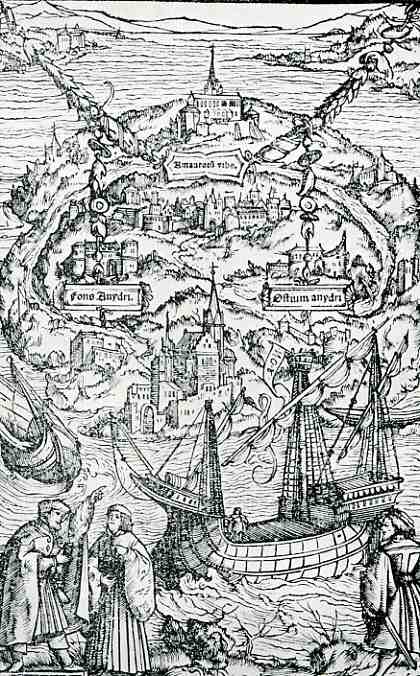
    0 blog jan 20 thomas more390

    Cockaigne—of Middle French derivation, pays de cocaign,”Land
    of Plenty”—
    was an imaginary
    location and a dream, somewhere that was a total relief to the long grind of
    the peasant life.  It was a place “where
    the
    houses were made of barley sugar and cakes, the streets were paved with pastry,
    and the shops supplied goods for nothing” according to Specimens of Early
    English Poets
    (1790), whose author, George Ellis, reprinted a 13th
    century French poem.  In the Land of
    Cockaigne “roasted pigs wander about with knives in their backs to make carving
    easy, where grilled geese fly directly into one’s mouth, where cooked fish jump
    out of the water and land at one’s feet…The weather is always mild, the wine
    flows freely, sex is readily available, and all people enjoy eternal youth…”
    according to Herman Pleij’s Dreaming of Cockaigne (2001).  Another source determines that  “you must eat your way through a mountain of
    porridge to reach the land of Cockaigne

    …where the
    fences are made of sausages, the geese lie ready-grilled on the plates…” 

    Atlantis and El Dorado might’ve been fancy sounding places
    to a lot of poor people, but Cockaigne must’ve sounded better by leaps and
    bounds—no piles of gold, no great extravagances, just rewards of plenty to eat
    and drink, and sleep, and some sex.  All
    of these promises existed so far beyond the pale of the Church that even
    thinking about a crust’s-worth of such anti-biblical carnage would send you
    straight to hell.  Which sounds
    terrifically strange to me now because the actions here, in Cockaigne, are
    largely passive (though of course hedonistic), and aren’t vengeful, hurtful,
    spiteful.  It is mainly, well, lazy, full
    of sleep-inducing foods. Bittersweet dreams like this formed for themselves a
    basis of pure hate within the church, mainly because it was taken as a threat
    to the core fundamentals of religions at the time.  It should be said that many of the tellings
    of this legend do have their fair share of anti-clerical runs, nun-hunting and
    monk bashings.  Oopsie!

    The Land of  Cockaigne is
    beautifully painted in 1567 by the peasant-dominated mind of Pieter Brueghel the Elder or Bruegel (c.1525 – September 9,
    1569) the
    fabulous  Netherlandish
    Renaissance
    painter.  (In many ways he discovered the common/peasant
    in much the same way as Dickens discovered the working poor of London; of course Brueghel made his discovery
    300 years earlier.  He was also in his
    way a Dickensian for detail:  many of his
    paintings are terrific mélanges of children’s games and folk tales, often
    accurately identifying hundreds of objects of interest in a single work)  He incorporates many of these legends in the
    painting, in addition showing stewed geese flying into open mouths and a
    house-roof made of meat pies.

    The promise of eatable houses and lazy meals and sleeping
    all day to produce evermore profits are many times bounded by rivers of red and
    wine wines, of milk, and of honey. 
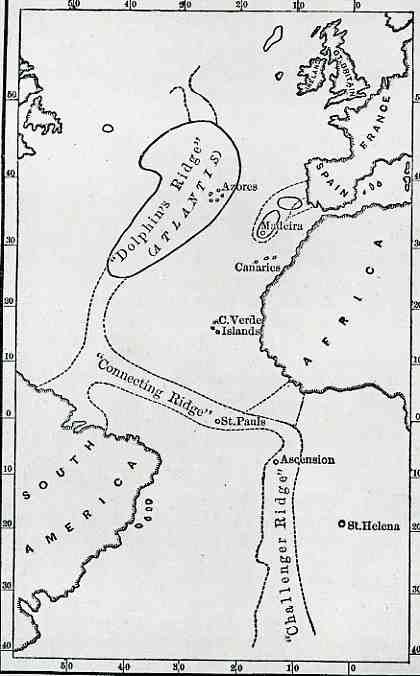
    0 blog jan 20 atlantis389

    These are concepts that have existed for hundreds of years
    in different sorts of peasant paradises, not the least of which is the 20th
    century’s contribution of “Big Rock Candy Mountain”, a song composed by Harry
    McClintock (1882-1957). In many ways this song contains the most simple, most
    heartbreaking of the simple wishes of the American hobo of the Great Depression
    era.  The 26 (or so) wants are spectacular
    in their smallnesses and simpleness (see below for full lyrics of the song):

    (1) a land that’s fair and bright (2) handouts grow on
    bushes (3)sleep out every night
    (4) boxcars are all empty  (5) the sun
    shines every day (6) cigarette trees (7) lemonade springs  (8) bluebird sings (9) all the cops have
    wooden legs (10) bulldogs all have rubber teeth (11) hens lay soft boiled eggs (12)
    farmer’s trees are full of fruit (13) barns are full of hay (14) ain’t no snow (15)
    rain don’t fall  (16) the wind don’t blow
    (17) never change your socks (18)little streams of alcohol come a-trickling
    down the rocks (19) brakemen have to tip their hats  (20) railroad bulls are blind (21) lake of
    stew and of whiskey  (22) jails are made
    of tin (you can walk right out again as soon as you are in) (23) no short
    handled shovels,  (24) no axes saws or
    picks (25) you sleep all day (26) they hung the jerk that invented work.

    These wishes are gathered together as follows:

    Food: Cigarettes, lemonade, soft boiled eggs, fruit trees,
    streams of alcohol, land of stew and whiskey

    Geography:  land fair
    and bright, sleep out every night, sunshine, bluebirds, no snow, no rain, no
    wind.

    Social:  handouts grow on bushes, cops have
    wooden legs, bulldogs have rubber teeth, (railroad) brakemen (who would
    normally throw hobos from the trains) have to tip their hats to the hobos;
    railroad bulls (the railroad cops who would be um pro-active and brutal in
    getting rid of the ‘hobo problem” from the trains);  revolving door jails are made of tin; no axes, saws or picks; and finally, no short-handled
    shovels. 

    Personal:  sleeping all day, sleeping out at night, and not changing your socks.  (Not even a whiff of carnal anything.)

    And of course the hanging of the man who invented the whole
    concept of work.

    I think that in all of these simple dreams, the “short-handled
    shovels” one is the most tremendous, and most heart-breaking.  The short-handled shovel is a backbreaker,
    made for working in stubborn, small holes or tight places.  If you needed to use a shovel on something,
    you’d want to use a long-handled one.  Keep
    in mind that the song didn’t call for no shovels—just a decent one that you
    could work with humanely. 

    The song is beautiful and stands for a wide majority of
    thought in the U.S.
    in the troubled 1930’s.  It is also in
    many ways related to the classic peasant utopias and dreamlands—perhaps it is
    just like Cockaigne, just removed 500 years.

  • The Towering Magnificence of the Porcupine, 1604

    JF Ptak Science Books LLC  Post 359                                            

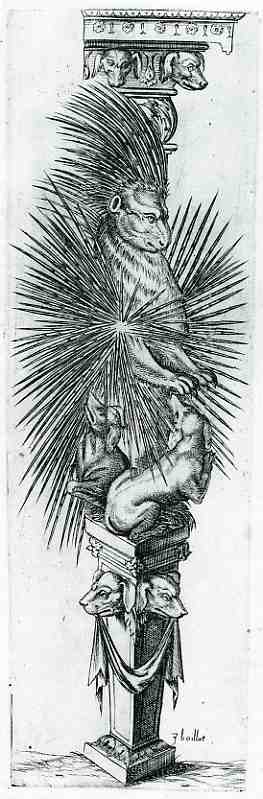
    000-ebay--Nov 4--porcupine995

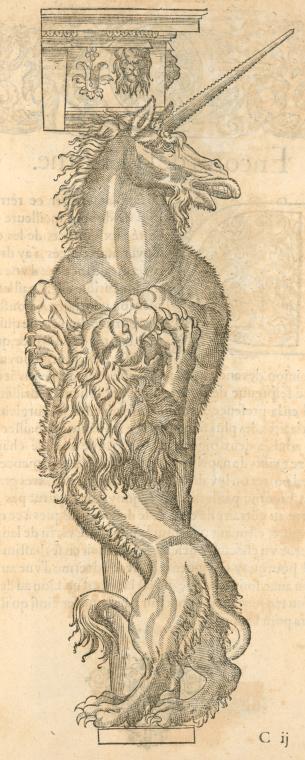
    This is perhaps the greatest monument ever erected to the porcupine–of course it may be the only monument ever erected to the porcupine, but it is undeniably monumental.  This unusual image was published in Strassburg in 1604  in Joseph Boillot’s (1546-1603) sumptuous New Termis Buch (first printed in 1592 as a Nouveaux pourtraits et figures de termes).  It is a bestiary of sorts, a very curious book, offering real and imaginary animals together in alabastered, marblized, memorialized, architectural form, with the  great hope of offering them to fellow engineers and builders for incorporation into the real world.  Or perhaps not, perhaps it was all just done in fun, an exercise, an experience, an artistic creation wrapped inside  the fundus of a great Baroque eyeball.  Unicorn


    The end result is the Boillot produced some extraordinary beasts, wrapping them in extraordinary garments, surrounded by other wonderful animals real and not, and elevated to extraordinary heights.  The powerful unicorn, draped with the vicious but subdued lion; the ass, regal, judicious, pensive, thoughtful, kept in place, or warm, by a dragon. Then of course there is the porcupine, absolutely magnificently appointed with spikes  kept by by dogs, supported at all levels by the creatures.


  • Unexpected Uses of Musical Instruments: War Headdress

    JF Ptak Science Books LLC Post 259

    Blog1sept_13_german544

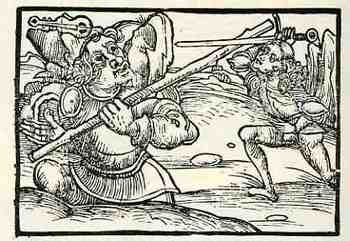
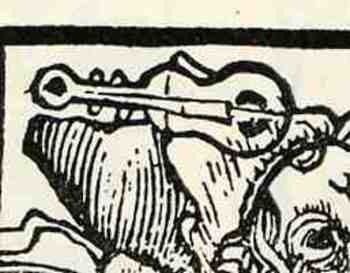
    I don’t mean this seriously, and I’m probably mucking around with a national treasure/iconic figure by even suggesting my flippant title, but I really would like to know what in the world this violin-cello or whatever it is is doing on the head of this figure? Probably ir is just artistic license, meaning that the large-staffed giant (?) would ultimately use music as a weapon (Amphion?); maybe, probably  not.  If anyone knows, I’d love to hear the answer.

    The source of this woodcut is the Heldenbuch, das Heldenbuch mit synen Figuren…, a towering work in the history of German ltierature (or at least early German literature)  printed by Heinrich Gran in Hagenau in 1509.  It is a collection of German epic poetry from the period of the Barbarian Invasions (more sweetly
    Blog1sept_13_german_det545_3
    referred to as the “Migration Period”, or Volkwanderung) ca. 300-700 ACE, and collected in the 13th century.  It is evidently a luxurious ride through German folklore and legend, with dragons, supernatural beasts, giants, scampering and clever warrior dwarfs, spectacular voyages to the East, shining moments of chivalry, and wide fairy lore.  So, if anyone knows the answer, would they please let me know about the very curious use of this musical instrument?


  • Alphabetical Renaissance Bestiary: Edward Topsell’s “Four Footed Beasts”, 1607


    JF Ptak Science Books LLC  Post #130

    Alphabet 1:  An Alphabetical Renaissance Bestiary

    Edward Topsell (c. 1572 –1625),  English cleric (C of E) and antiquarian who played at being a naturalist was creator, writer and semi-inventor of the History of Four-footed Beasts (1607).  Actually, Topsell wasn’t a naturalist at all, not whatsoever, but did cobble together bunches of facts, true and otherwise, to assemble this fantiScience work from 401 years ago.  He relied mainly on much earlier writers like Albertus and Gesner (Historia Animalium) and transcribed their findings whole cloth, for good or for ill.  He made no pretensions about being a scholar in this area (though he did probably take his M.A. from Christ College, so he was a scholar, but of other things), and wrote his caveat: “I would not have the Reader… imagine I have … related all that is ever said of these Beasts, but only [what] is said by many”.

    I’m really just interested in the images right now and not with the entire aspect of Renaissance zoology (even though Topsell occurs in the early 17th c I think his manner still classifies him with the rest of the Renaissance). In the hulking bulk of his considerable effort Topsell tries to convey three essential aspects of animals to the readers of his work, what he calls his three holy uses: sacrifice, visions, and reproof and instruction.  In his descriptions Topsell tries to remind the reader of the uses of the animal described in sacrifice, and how to interpret the animal when seen in a vision or dream.  Pretty standard I think, even viewing Topsell outside the offices of “historian”.  The interesting bit though is from the third part–reproof and instruction–where he attempts to have the reader regard the animal for the insight and education it could provide for the human viewer.  That’s the part that strikes me as “modern”, or at least thoughtful, especially when considering the fantastic and terrific descriptions that are woven through his questionable tapestry like wide threads of glittering gold. Some of these nuggets include the statements that weasels give birth through their ears, and lemmings graze in the clouds, and elephants worship the sun and the moon and become pregnant by chewing on mandrake; those, and many others, not the least of which include further factual descriptions of Gorgon, the Sphinx, the Manticore, the Lamia, the Winged Dragon and the Unicorn.

    The real treasure here is the illustration–right or wrong or both, they are gorgeous, powerful, and sumptuous. 

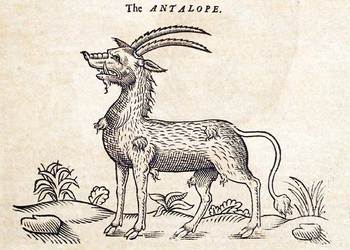
    We present here an Alphabetical Bestiary Based upon Topsell’s The History of Four-footed Beasts and Serpents, 1607.

    Antelope
    Topsellanatalope


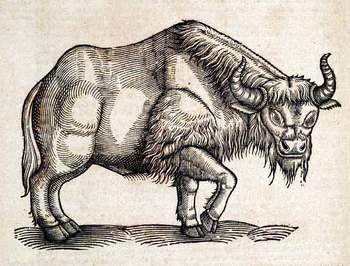
    Bison

    Topedllbison


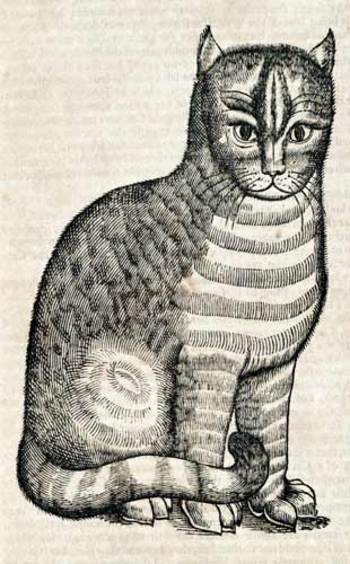
    Cat
       Topsellcat_2


  • Pre-Columbian American “Exploration”–St. Brendan, the Island Whale, and All That

    JF Ptak Science Books LLC   Post #99
    Blogamericabrendan
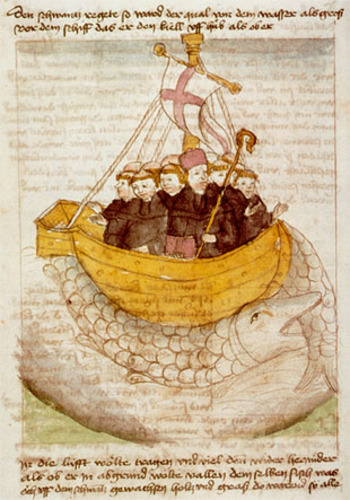
    The pre-Columbian voyages to the Garden of America– by the Phoenicians, the Vikings, the Irish, the Greeks (Euphemus the Greek navigator in the 2nd century ACE) the Welsh (Madoc), the Chinese (as found in the Shan Hai King or Shanhai Jing, adapted, enlarged, engorged fictional classic some 3,000 years old), the Japanese and English–mostly have frothy, creamy icings over a rich, textured legend.  One of the frothiest belongs to Saint Brendan, the Irish priest (of Clonfert or Bréanainn of Clonfert , c. 484 – c. 577, called “the Navigator”, “the Voyager”, or “the Bold”) whose voyage to America was particularly enhanced and layered as he arrived on the back of a whale sometime in the 530’s. His legend has him  exploring some of the high Texas country, though the Texans and most other won’t have him, be he one of the twelve apostles of Ireland or not.

    Blogamrewicabrenadan_manu

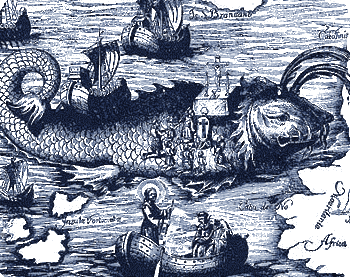
    Part of the problematic part of this Irish myth of North American exploration is Jasconius, the enormous fish/whale/island that Brendan made camp upon.  He and his followers (sometimes numbered in the 30’s, and other times in the 60’s), actually celebrated Easter on its back and only disturbed the creature after lighting afire on its back to prepare a meal.  I’ve always loved this engraving of St. Brendan celebrating Mass on the back of the beast, his trusty ship parked on the hindquarters of the accepting creature.

    There are other instances of adventurers or the lost mistaking a fish for an island and landing on it—this occurs in the tales of Sinbad, the Adventures of Baron von Munchhausen and also in the fibbing world of Pinocchio.  St. Branden’s is the only instance however of using a fish/island in an effort to reach America.