A Daily History of Holes, Dots, Lines, Science, History, Math, Physics, Art, the Unintentional Absurd, Architecture, Maps, Data Visualization, Blank and Missing Things, and so on. |1.6 million words, 7500 images, 4.9 million hits| Press & appearances in The Times, Le Figaro, Mensa, The Economist, The Guardian, Discovery News, Slate, Le Monde, Sci American Blogs, Le Pont, and many other places… 5000+ total posts since 2008.

Category: Outsider Logic

  • Found-Art in Scientific Journals: an Acoustic Kraken! (1881)

    JF Ptak Science Books   Quick Post

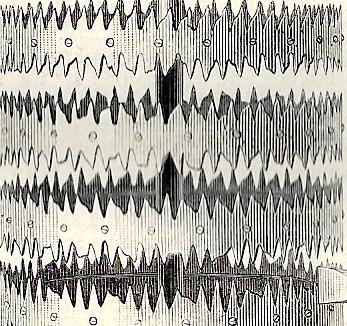
    This does for a moment look like a piece of Found Scientific Art–and I guess it is–reminding me of a multiply-layered steely jaw of some creature, which you can see if you look hard enough. In reality, it was the tonal guts of a wonderful scientific apparatus constructed by Rudolph Koenig, reported in the July 14, 1881 issue of Nature:

    Nature 1881 Konig wave siren detail

    And the full version of the original 3×3″ image

    Nature 1881 Konig Wave Siren

    “Prior to the advent of oscilloscopes and other electronic sound-analysis tools, even seemingly rudimentary tasks of acoustic analysis – determining the frequency of a musical tone, for instance, or making waveforms observable – were not simple jobs  with obvious solutions. It fell to researchers of the time to come up with mechanical devices, often quite clever and sometimes rather complex, to make these investigations possible.” “Though oriented differently [the wave siren]… is similar to the other wave siren shown in this collection, but with more complex wave forms in the undulating rims…”–Bart Hopkin, Instrument Maker, “Engravings of early Acoustical Apparatus”, from his website

    Rudolph Konig (1832-1901) “far and away the most accomplished among makers of [acoustical devices]” (Hopkin, above) was a very highly accomplished and discriminating instrumentalist, scientific instrument maker, and experimentalist. “Koenig will also be remembered as the inventor and constructor of many other beautiful pieces of apparatus for the investigation of acoustical problems, among which may be mentioned his wave-sirens, the first of which was shown at Philadelphia in 1876. His original work dealt, among other things, with Wheatstone’s sound-figures, the characteristic notes of the different vowels, a manometric flame apparatus, a vibration microscope, among others; but perhaps the most important of his researches are those devoted to the phenomena produced by the interference of two tones, in which he disputed the views of Helmholtz as to the existence of summation and difference tones.”–Wikipedia

    “Prior to the advent of oscilloscopes and other electronic sound-analysis tools, even seemingly rudimentary tasks of acoustic analysis – determining the frequency of a musical tone, for instance, or making waveforms observable – were not simple jobs  with obvious solutions. It fell to researchers of the time to come up with mechanical devices, often quite clever and sometimes rather complex, to make these investigations possible.” “Though oriented differently [the wave siren]… is similar to the other wave siren shown in this collection, but with more complex wave forms in the undulating rims…”–Bart Hopkin, Instrument Maker, “Engravings of early Acoustical Apparatus”, from his website


  • A Lovely, Interesting, and Semi-Outsider Piece of Logi (Radio, Wireless, and TV Ciphers, Codes, Language (1936-1937)

    JF Ptak Science Books  Post 2891

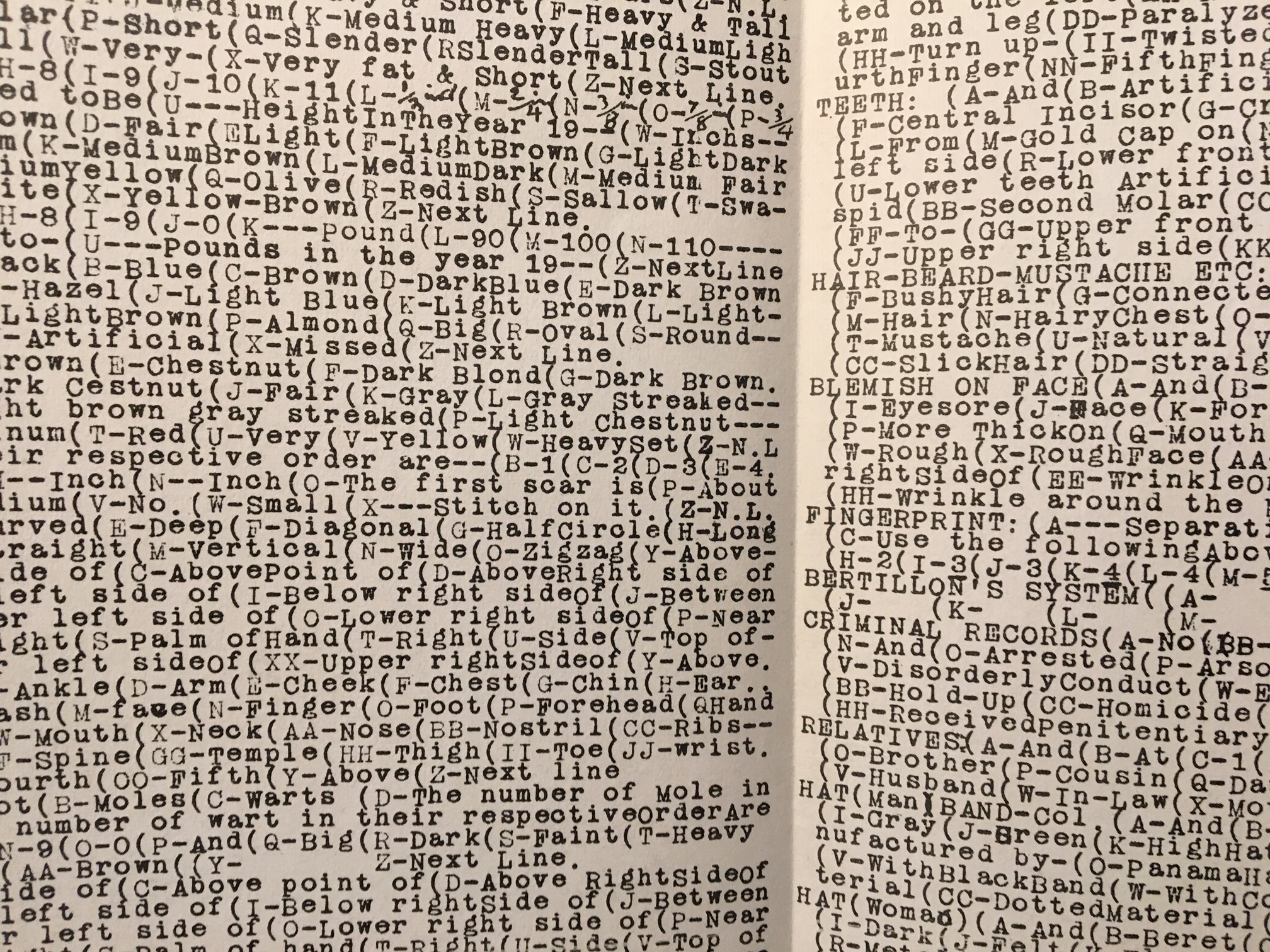
    Carlo Spartari created some interesting if not enigmatic approaches to transmitting thoughts and information via radio back in the mid 1930’s. The first example of his work—nowadays I think mostly forgotten and I imagine pretty obscure—is his book on a new radio language entitled: Spartari Radio Language, Sirela: Spatari Radio Language: A Word-of-mouth Code Easily Understood by Listeners of Many Nationalities Without Need of Memorizing for Use in International Radio Broadcasting, which was evidently self-published in 1937. (“SIRELA” I assume would stand for something like “Spartari International Radio Elementary Language” or something along these lines.

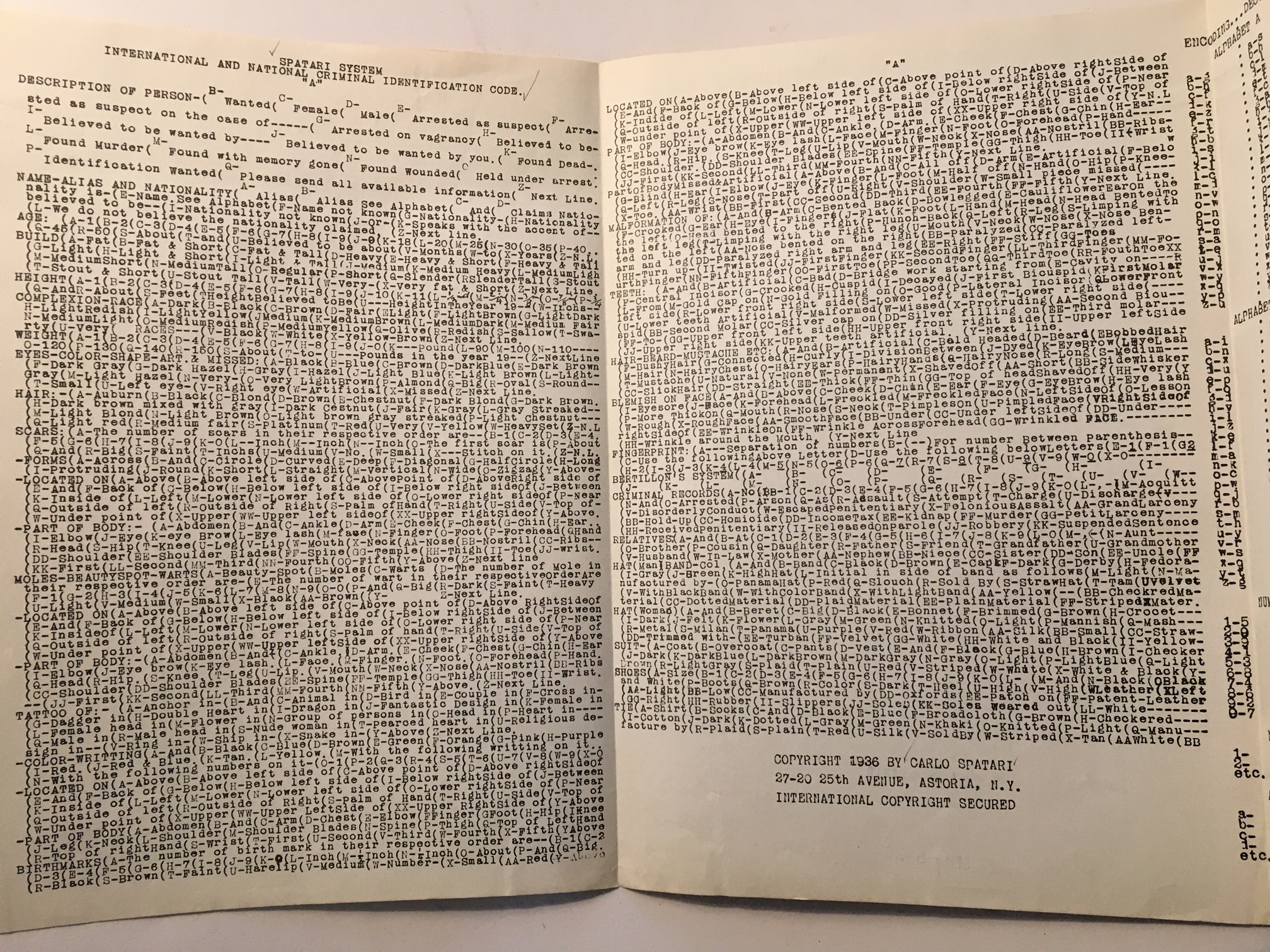
    Taken out of context and working with the text as a visual element, these works seem to me to have more than a heavy touch of an Outsider artistic quality. I find them to be sort of beautiful in their own complex ways:

    IMG_1650

    If nothing else it is easily the tallest book (18”) on radio codes and ciphers that I have seen, Carlo Spartari invented a rather clever and interesting radio language. It was based upon the seven musical notes of the diatonic scale–DO, RE, MI, FA, SO, LA, and SI—which took no translation to understand, and the notes of course are pronounced in about the same way, everywhere,   as la  Italiano. On the one hand it seems to me to be whimsical, and on the other, it seems brilliant. That’s the problem sometimes with challenging new ideas—they can be excellent almost as easily as they can be meshugina.

    This work was accompanied by another, the Spatari International and National Criminal Identification Code, which are basically two very compacted sheets entirely filled with a cipher capable of describing a rather wide variety of appearances of a person with a relatively short number of words. If time was an element in a criminal pursuit, then the Spartari code could perhaps have proved invaluable to law enforcement folks, whereby a lot of data can be transmitted in a short, alpha-abbreviated message via radio or wireless. There are codes to describe the following characteristics of the person of interest: name, alias, nationality, build (“fat/fat and short/fat and tall”), weight, eye color, hair, scars (and their various forms and locations), moles, tattoos, birthmarks, malformations, teeth, hair/beard. Fingerprints, relatives, g\hat style, shoes, tie, and suit, all of which can be described in some detail in the code.

    IMG_1649

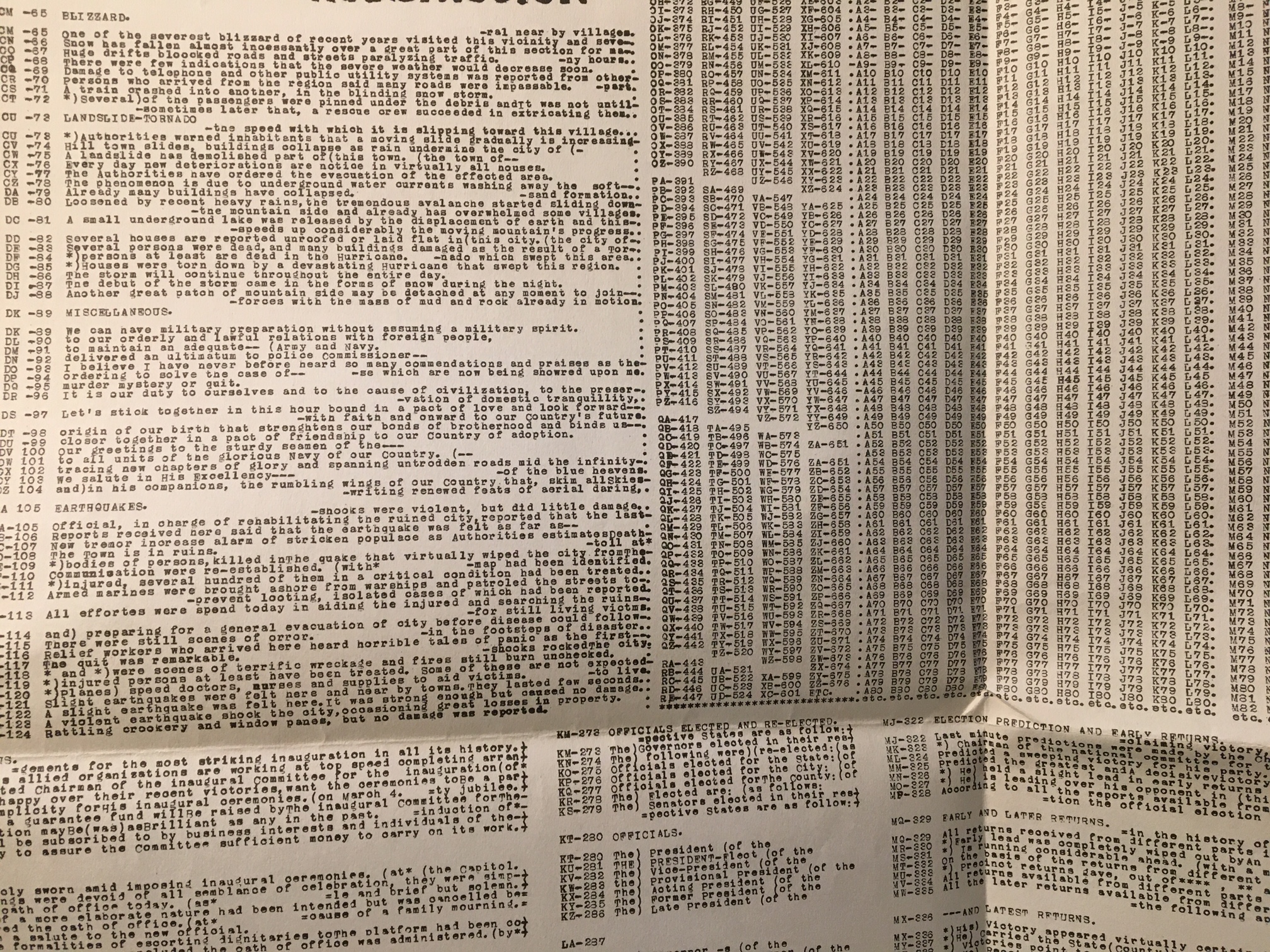
    That said, they are using radio here, so, it might be almost as easy to just say what it was needed to be said rather than worry about a time-saving cipher. It really seems like this would be more valuable used in conjunction with the third part of this publication, which is Spatari Television Code for Facsimile Transmission. Certainly in this instance where time and space were critical then the abbreviations and associated ciphers used by Spartari would do well in fax transmission more so than spoken language.

    IMG_1652

    “Back in 1905 a young musician was so impressed by the fact that the language of music is universal, that he decided to develop a language based on music. The result is the Spatari Radio Language, an ingenious system of speech based on the notes of the musical scale, capable of being understood by anyone, regardless of his native language, and requiring no study of grammar, vocabulary or syntax. The entire language consists of only the seven notes DO, RE, MI, FA, SO, LA, and SI, and the symbol BO. Capable of being combined into nearly a million different words or groups, these symbols can be pronounced on sight, and easily written down as soon as heard. The “secret” of the language is that each group of symbols represents an entire thought, or sentence. It is not intended that anyone memorize the symbols, as they can be written down as heard, and found quickly in the Spatari dictionary later.”–World Radio History online, Radex

    Also see Jerome S. Berg, On the Short Waves, 1923-1945: Broadcast Listening in the Pioneer Days of Radio.


  • Found Perspective Art (1868)

    JF Ptak Science Books  Quick Post

    Johannes Vredeman de Vries (ca.1527-1604, “The King of Architects” among the Dutch, at least), in his dedication to the reader (“To the Studious Viewers of Optics”) in his great classic on perspective writes:

    Vredman“My eyes and mind took pride
    In Sacred Optics. Thereunto allied
    was a fructifying labor,  forty years
    I plied this art devoutly, Here appears
    a doctrine worn by time. That art is famed
    For trustworthiness which trusty rules have framed…
    This art, which guides the eye and soothes the brain,
    with images, but never cheats the sight
    with lying views…”

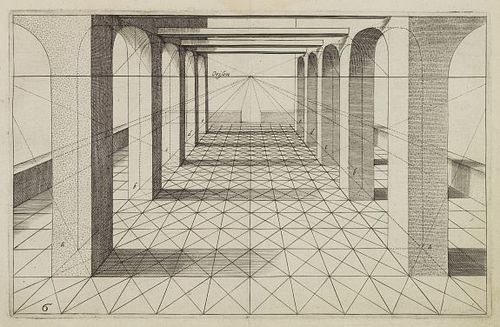
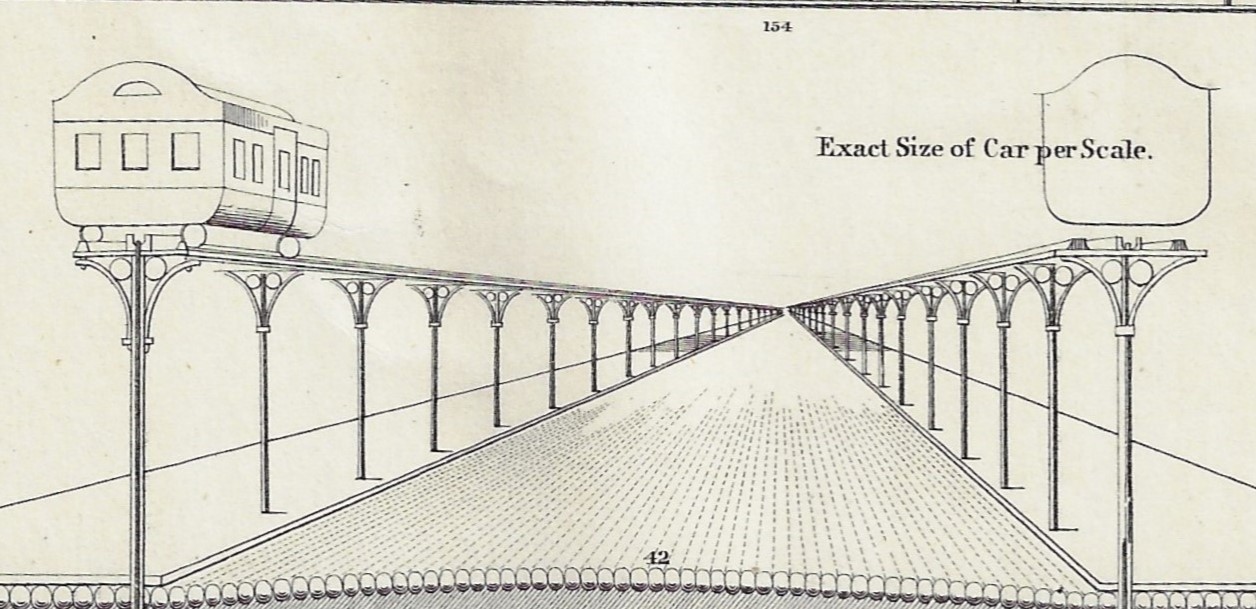
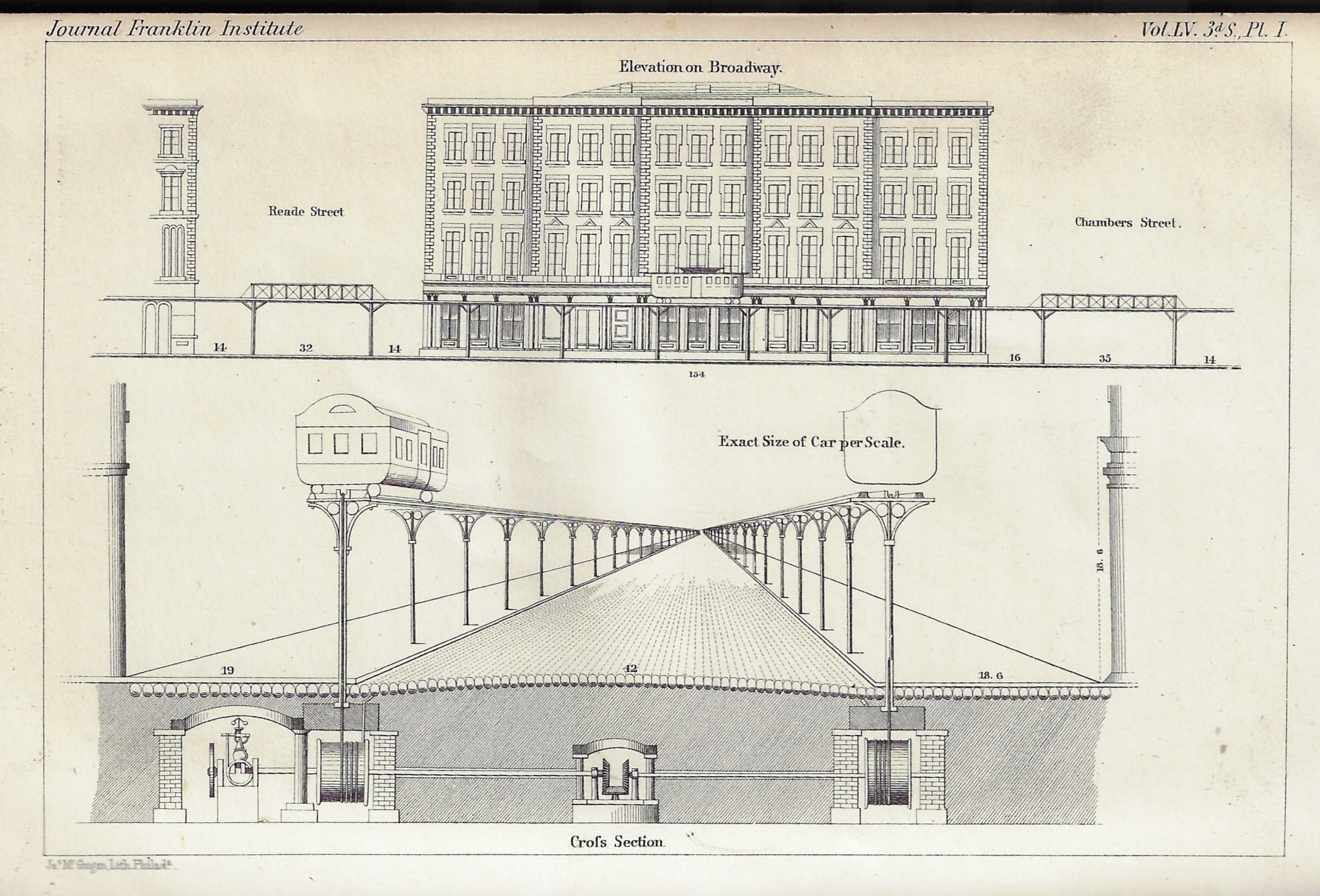
    Anyway, it was he who popped into mind when I came across this noteworthy image in the 1868 volume of Journal of the Franklin Institute.  It is a lovely piece of Found Art, the perspective part of which looks to be not so correct, the vanishing point appearing on a horizon only 500′ away. But no matter, I may be wrong, and the point of all of this is the “found art” aspect, which I think is very strong, and lovely. 

    JFI 1868 railway vanishing point _2_

    [Detail] The image appears in “West Side and Yonkers Elevated Patent Railway” and comes right after a long and heavy mathematical treatment on transferring power on belts and pulleys.  

    JFI 1868 railwaY vanishing point


  • Edgar Allan Poe and Science: on the Infinite and Being It *and* the Big Bang Found in “Eureka”?

    JF Ptak Science Books    Post 2803

    I heard about Edgar Allan Poe’s “prose poem”,  Eureka, an Essay on the Material and Spiritual Universe (1848) , and its mystical relationships to scientific bits and bobs, but not much more than that. Looking at it it must’ve looked high-inspired Outsidery back in the day, the language and created references being somewhat impenetrable, and sometimes insufferable, except that it is was a piece of highly creative writing. The book was not well-received at all when published–the public reception was terrible, and it must’ve been a blow to Poe as hr thought that this was the best work he had ever done, and ever could do.  The pity is that he would be dead at age 40 only months later. The book is terrifically mysterious and probing, theologico-sci-fi-osohpy enthrallingly not-science science, and almost the entire audience he wrote for mostly hadn’t yet been born.

    • Link to the text of Eureka: http://www.gutenberg.org/files/32037/32037-h/32037-h.htm

    There’s an endless amount here that is interesting, if not obscure and obscured—much of what I find interesting is also heavily endowed with double-inscrutable jargon, though I think I can make out the meaning but for the words. [Caveat: that said, I’m no Poe guy whatsoever, though I do like his work, particularly the “Marginalia” series–which puts me in mind of Walter Benjamin’s The Arcade Project–but in general I’m just a general reader of the man with no expertise whatsoever.]

    To start this walkaround in the science in Poe I did a very simple word search: I looked for “Newton” (25 hits), followed by“Newtonian” (19 hits). Then came “God” (42), “particle” (23), “word” (71), “gravity (35), “love” (3), “mass” (38 ), and “soul” (20), and some others, none giving me the skeleton key I was looking for. (I haven’t read the whole book and didn’t have the time for it given that I only spend about an hour on each one of these blog posts.) I found my prize with “atom” (147 hits!) and read the appropriate sections, and that got me to where I wanted to go, or at least close to it.

    It begins with a rough entry:

    • “What I wish to impress upon the reader is the certainty of there arising, at once, (on withdrawal of the diffusive force, or Divine Volition,) out of the condition of the atoms as described, at innumerable points throughout the Universal sphere, innumerable agglomerations, characterized by innumerable specific differences of form, size, essential nature, and distance each from each. The development of Repulsion (Electricity) must have commenced, of course, with the very earliest particular efforts at Unity, and must have proceeded constantly in the ratio of Coalescence—that is to say, in that of Condensation, or, again, of Heterogeneity”
    • “Thus the two Principles Proper, Attraction and Repulsion—the Material and the Spiritual—accompany each other, in the strictest fellowship, forever. Thus The Body and The Soul walk hand in hand.”–pg 80

    Poe then goes on to describe the formation of the Solar System (which he estimates to the limits of the revolutions of newly-discovered Neptune to be “6 thousand million miles” which is very close to being correct) as the result of the meeting of two not-diametrically-opposed atoms, which nearly join together, and start spinning around each other, joined by other atoms, and so on, until an enormous uncohesive mass is form after which a collapsing takes place to form the planets as we know them. 

    •  “For ages, this mass of matter has been undergoing condensation, until at length it has become reduced into the bulk we imagine; having proceeded gradually, of course, from its atomic and imperceptible state, into what we understand of visible, palpable, or otherwise appreciable nebulosity….”–pg 85

    This is all some pretty interesting thinking for a man with no science background, sitting in a room.

    We did get to “Ultimately individual consciousnesses will collapse back into a similar single mass, a “final ingathering” where the “myriads of individual Intelligences become blended”, (pg 132) which does have a sort of Black Hole appeal to it.

    And then backtracking a bit I came upon this, 

    • “Let us now endeavor to conceive what Matter must be, when, or if, in its absolute extreme of Simplicity. Here the Reason flies at once to Imparticularity—to a particle—to one particle—a particle of one kind—of one character—of one nature—of one size—of one form—a particle, therefore, “without form and void”—a particle positively a particle at all points—a particle absolutely unique, individual, undivided, and not indivisible only because He who created it, by dint of his Will, can by an infinitely less energetic exercise of the same Will, as a matter of course, divide it. “–page 30

    I then came to what I think I was looking for, to a sort of Big Bang, or a cosmology that at least entertains some Big Bang bits:

    • “The assumption of absolute Unity in the primordial Particle includes that of infinite divisibility. Let us conceive the Particle, then, to be only not totally exhausted by diffusion into Space. From the one Particle, as a centre, let us suppose to be irradiated spherically—in all directions—to immeasurable but still to definite distances in the previously vacant space—a certain inexpressibly great yet limited number of unimaginably yet not infinitely minute atoms.”(pg 31)

    Lemaitre is still far off in the distance at this point, as are Gamow/Alpher/Herman–none would be born for another 50-60 years or so. But here we have some very probing thinking in an area that has something to it,  that can call on the prequel to the Big Bang, all rolled up in an enormous cosmotheology by a poet/writer/editor back in the year of revolutions, 1848.

    Poe knows that he is way out on a limb here, I imagine, and perhaps he was even being heretical: “I design to speak of the Physical, Metaphysical and Mathematical—of the Material and Spiritual Universe:—of its Essence, its Origin, its Creation, its Present Condition and its Destiny. I shall be so rash, moreover, as to challenge the conclusions, and thus, in effect, to question the sagacity, of many of the greatest and most justly reverenced of men.”

    Here’s where the “heresy” part might come into play, with endless god-beings in infinite space, even before existence existed

    • “…a still-existent Being existed—one of an absolutely infinite number of similar Beings that people the absolutely infinite domains of the absolutely infinite space”) who wades through eternity absolutely compacted and expanded, I guess ( “…a Divine Being, who thus passes his Eternity in perpetual variation of Concentrated Self and almost Infinite Self-Diffusion” ). And it is in that compacted part that all beings are created in their consciousnesses, and that eventually all of that will be molded into one big ball of being (“Think that the sense of individual identity will be gradually merged in the general consciousness—that Man, for example, ceasing imperceptibly to feel himself Man, will at length attain that awfully triumphant epoch when he shall recognize his existence as that of Jehovah.”)

    And now off to the finishing bits, the closing paragraphs on p 143:

    • “for pleasure and for pain:—but the general sum of the sensations is precisely that amount of Happiness which appertains by right to the Divine Being when concentrated within Himself. These creatures are all, too, more or less conscious Intelligences; conscious, first, of a proper identity; conscious, secondly and by faint indeterminate glimpses, of an identity with the Divine Being of whom we speak—of an identity with God. Of the two classes of consciousness, fancy that the former will grow weaker, the latter stronger, during the long succession of ages which must elapse before these myriads of individual Intelligences become blended—when the bright stars become blended—into One. Think that the sense of individual identity will be gradually merged in the general consciousness—that Man, for example, ceasing imperceptibly to feel himself Man, will at length attain that awfully triumphant epoch when he shall recognize his existence as that of Jehovah. In the meantime bear in mind that all is Life—Life—Life within Life—the less within the greater, and all within the Spirit Divine.”

    I hope I haven’t done a disservice here to Mr. Poe, or that I’ve gotten things terribly wrong–this is how it reads to me. Poe’s writing is dense and light at the same time, even transcendental–and so to try and nail a piece of writing like this to the floor it hovers above may be the entirely wrong thing to do.



  • Outsider Logic: The Healing Properties of Color (1930)

    JF Ptak Science Books  Quick Post    Part of the Outsider Logic series

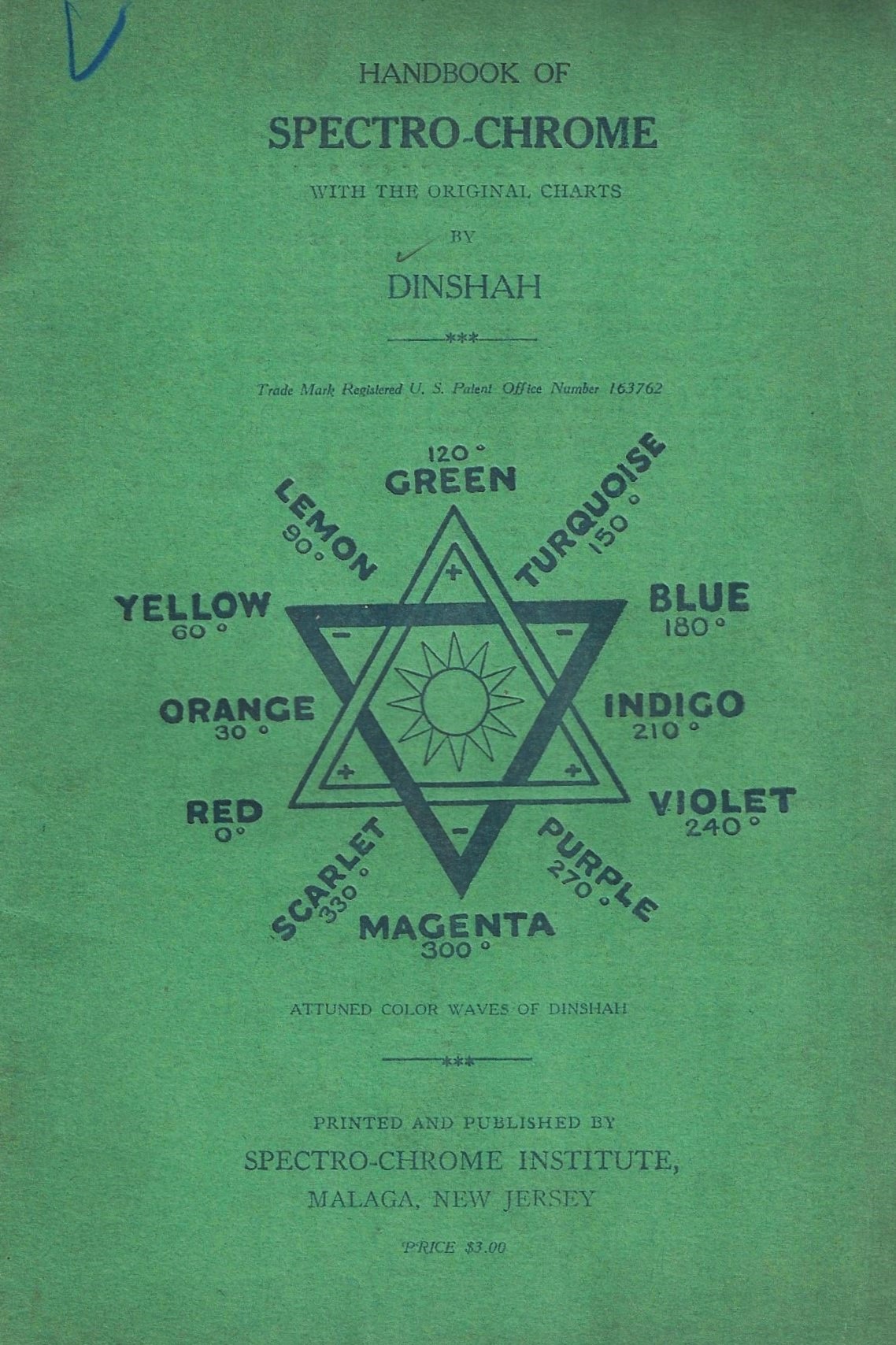
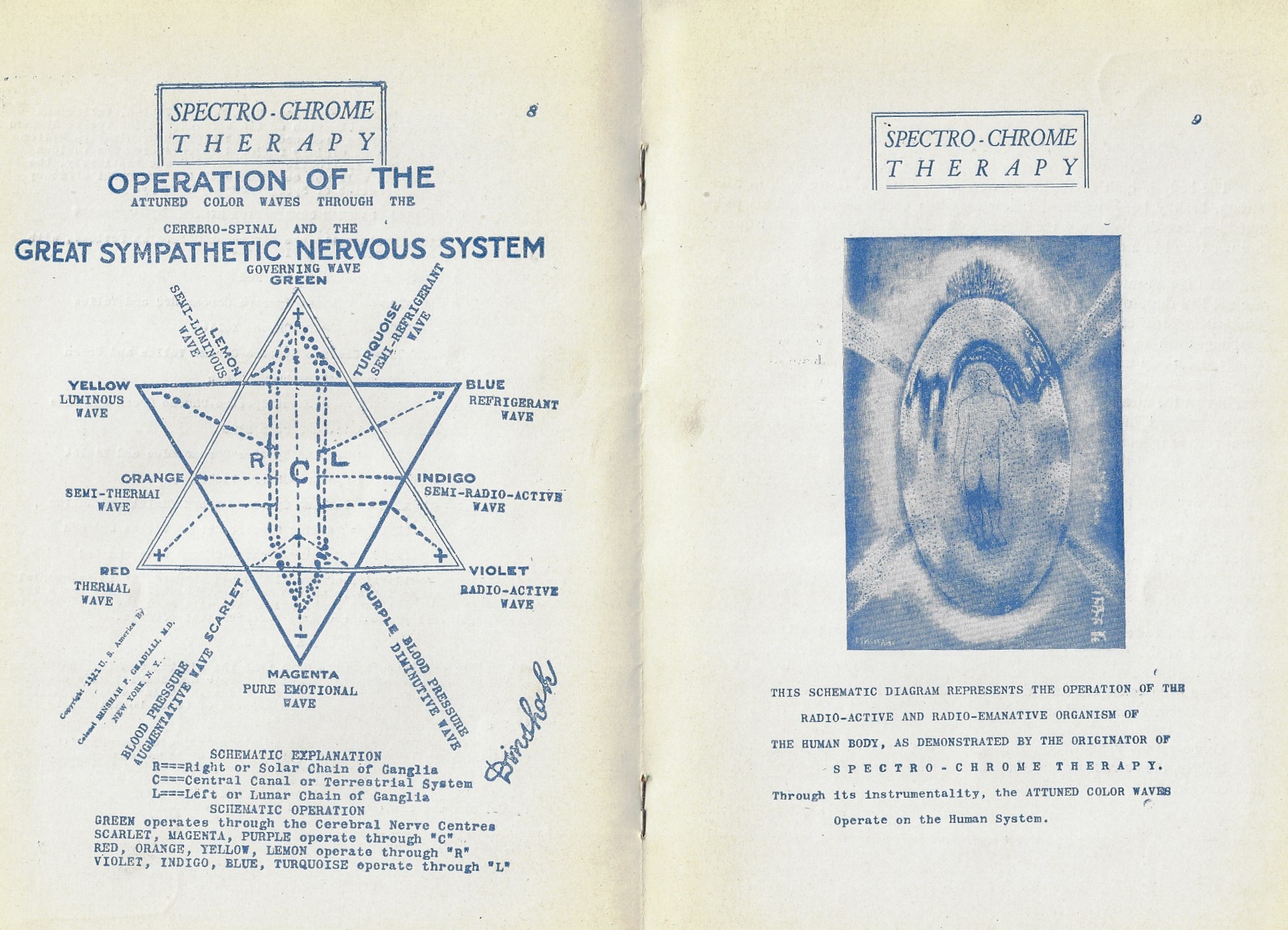
    Spectro-chrome _1_ cover 1930Aha. Here we have a curious piece of multiple fakery of color combinations presented in blue-and-white. It was written by Col. Dinshah P. Ghadiali in 1930 in support of his system of projecting color on people to cure them of an encyclopedia of ills which all happen to be color-induced from color “disturbances”. In short, Ghadiali (who claimed to be “M.D, M.E., D.C., Ph.D., LL.D, &c.”) insisted that, for example,  the body consisted of oxygen, hydrogen, nitrogen, and carbon, which were “colored” blue. Red, green, and yellow, somehow. Sicknesses were imbalances of the color of the components of the body, and the “spectro-chrome” system would project the deficient light and who-knows-what-else to do impossibly mysterious nothing and everything to everything and nothing. The one thing Dinshah was successful at was selling his very expensive projector (for $90 to $650 dollars)–diligent enough in his promotion and his key to cancer and scrofula that he sold a million dollars worth of his worthless trickery.

    Maybe he believed in this tripe, and maybe not. I include a couple of examples of the artwork of the author to include in my series on Outsider Logic:

    Spectro-chrome _2_

    ·Posted by :

    ·in:


  • On Brain Light, Clairvoyants, and the Uselessness of X-Ray Photographs

    JF Ptak Science Books  Post 2703

    • [The principles of light and color: including among other things the harmonic laws of the universe, the etherio-atomic philosophy of force, chromo chemistry, chromo therapeutics, and the general philosophy of the fine forces, together with numerous discoveries and practical applications, by Edwin Dwight Babbitt (1828-1905) chromopathologist and psychophysician, and published 1896.]

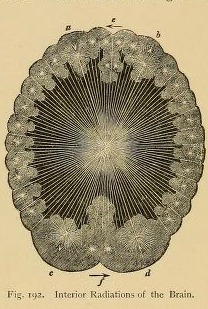
    Brain light detailI must admit to only knowing this book by two dart throws–one that landed on page 495 (with its remarkable image) and then the other on page 56-0, very nearly the end of the book–and sometimes that is all you need, especially in this case, where all you really need is the title.  The author of this mega-themed title and the book that wrapped around its axle seems to promise something having to do with color/light therapeutics, or something, and I was pulled in for perhaps some entertaining pre-non-representational artwork, but I never got that far, stabbing away as I did in the copy on the Internet Archives, finding myself with a light-filled neuroanatomy drawing, and it s explanation.  Whatever the creative light that was reputedly displayed in this image had its existence and purpose proved by clairvoyants, which I don’t often see too often in 19th century anatomies or physiologies.  Anyway, they were there, consulted (either near or far), and the case made, and thus the curtains drawn. I did like the drawing, though.

    When I went to see how the book closed out, I found an addendum on the “so-called Roentgen or X Rays”, which the author says he discovered and wrote about in the first edition of this work back in 1878. He makes some complimentary remarks about the work of Crookes and Edison in this field (the x-ray being discovered in 1895), but then goes on to fuss about the unnecessary use of photography with the x-ray, finding it gratuitous and wasteful. Using your eyes in real time and not a photo was his choice, and that was that, the author ending by saying “I am done with the photographic end of it, entirely”, which no doubt places him in a highly restricted group of people looking at the future of the x-ray.  

    [Image source: Full text: https://archive.org/details/principlesofligh00babb]

    The explanation of the image of brain light:

    ·Posted by :

    ·in:

    —

  • Mysteries of Science: Atomic Power and Scotch Tape (1946)

    JF Ptak Science Books  Quick Post   Outsider Logic series

    Tomic power adhesive tape _1_485

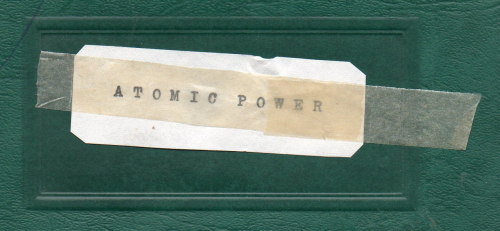
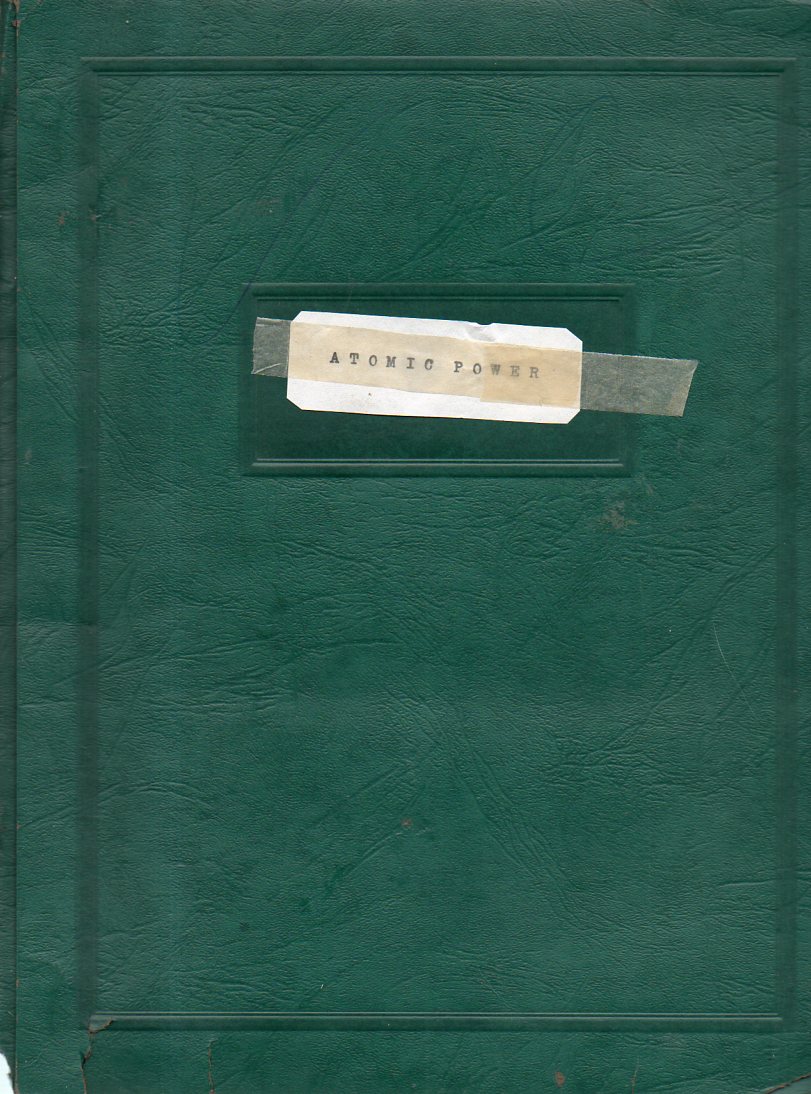
    About two miles from my house stands a sign for a housing development called “Solar-Vista”, and right next to it is the street sign, which is “Shadow Valley Drive”–somewhat ironic, I’d say. That’s what came to mind when I saw the cover of this self-published screed atomic power called Atomic Power–it just struck me as as little M. Hulot-ish to have the typed piece of paper attached with band adhesive tape to the cover of the missive. That, and the title strip has fallen off.  It seems perfect, in its own, odd, way.


    Tomic power adhesive tape _1_484


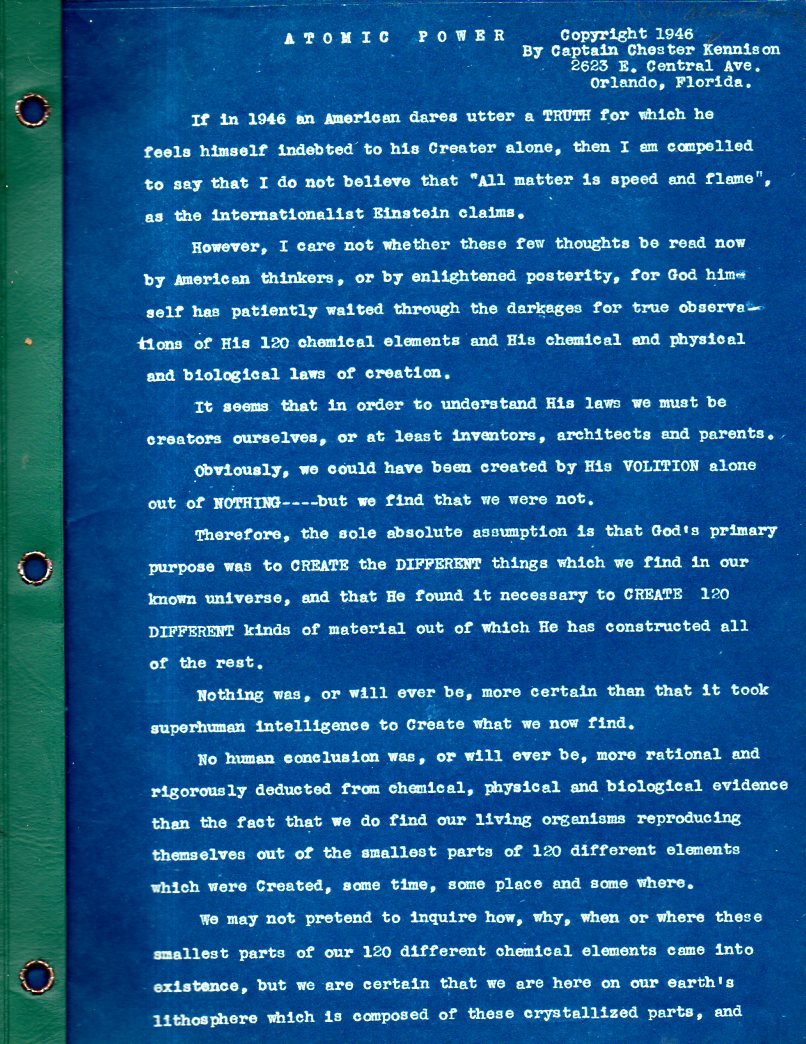
    Here’s the first page of the work–I have one of the copies that were submitted to the Copyright Office and then sent over to the Library of Congress, and after decades was deaccessioned, and then came to me.  The author tried tro make some sort of point, but it is lost on me, though I didn’t make it but only two pages into the 24-page blueprinted work.  (And yes, “Scotch Tape” is a couple of decades older than atomic power.)


    Tomic power adhesive tape _1_487


  • The Medium is the Mess.

    JF Ptak Science Books  Quick Post

    Quack economic remedies221

    This is an interesting pamphlet (printed ca. 1933/4) that makes a lot of good points in what seems to be our current post-salient world, except that the author’s presentation makes it all look kooky, borderline, Outsider-y, and therefore dismissable.  But the good points are there, and no doubt a lot of the numbers seem as though they can be true–it is just that the presentation is about as actionable as listening to some guy sitting in a shopping cart under the overpass and wearing cardboard box signs while delivering his message in bolts of screams–the medium really can be the message, or the mess.  And this is just a mess, true or not, which was too bad.  

    (This is another one of those pamphlety works that seem as though they were very popular–and perhaps so, except that its popularity did not translate into any sort of existing longevity–there is only one copy of this work located in WorldCat/OCLC, and the only two online references to the pamphlet are for the listings for in the the library found by WorldCat.  So, popularly, this work is no longer “around”. It is interesting to note that for the few dozen Google hits on “Quack Economic Remedies” there are several referring to presidential programs, with those including a wide range of politics, and include Obama, Nixon, and Wilson.)

    ·Posted by :

    ·in:

    —

  • Outsider Logic, Part 17: Monkey on the Brain

    JF Ptak Science Books   Quick Post

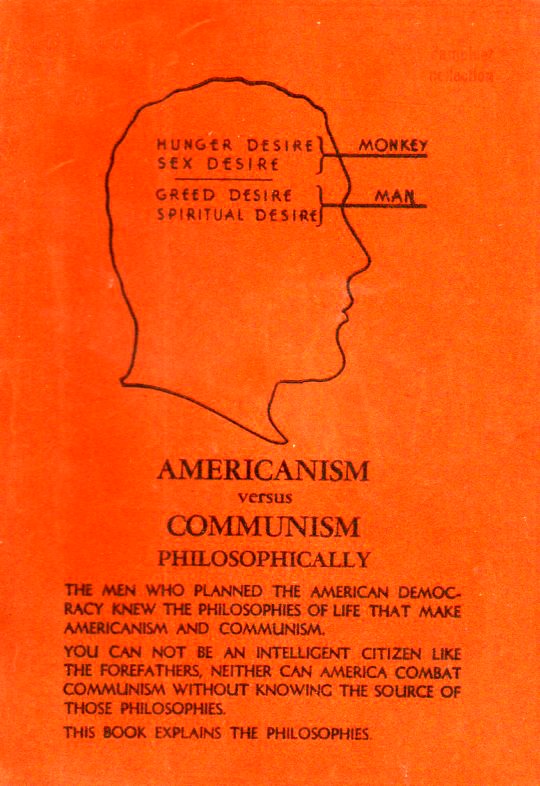
    There are hundreds and hundreds of pamphlets like the one below in the store’s Outsider Collection–honest work that somehow has gone a little astray, or over-the-side, or reached too high, or fell too low, or some such thing. Sometimes I read in the work a little, and sometimes not–the present pamphlet is in the later category, which means I really have no idea what the author is channeling, except that I know it is fairly evangelically religious and capitalist. I don’t know why the human head profile is on the cover, and I also don’t know what it means. But no doubt it was something encapsulating, something representative to the work as a whole, otherwise it (probably) wouldn’t be there. If I was 25 years old I might stop to read the 193-page work a little; but I’m not, so I won’t.

    (P.S.: the covers are velveteen.)

    Americanism vs communism130


  • Poemsuicdramauraliterature–Outsider Literary Work (1947)

    JF Ptak Science Books   Quick Post    Outsider Logic series

    Here’s another remarkable find for the sub-category of this blog’s thread on Outsider Logic/odd books:

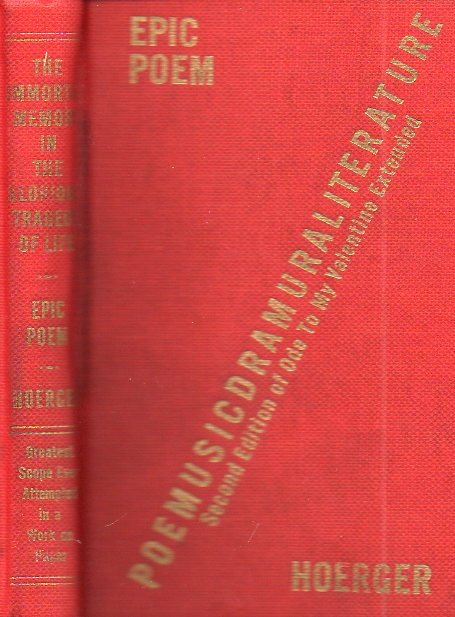
    Odd book371

    It is self-published, and tiny, and bound in a red cloth that surprisingly has the title stamped on its spine. The title begs attention, and then the text begs comprehension–and that’s okay, as this is someone’s proud work, and it is entirely possible that I have missed the object of the experience. That said, the construction, illustration, literary undertaking, and poetical wanderings are occasionally extremely surprising–and if “surprise” and revealing an insight that you’d never have had on your own is the point of writing, then I’d have to say that this experiment was successful.

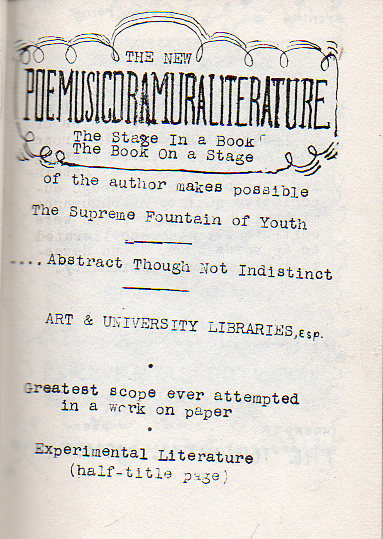
    I won’t go into the story line too much because it escapes me. As a sample though I will illustrate the title page, which is remarkable and small found-miracle even on its own, a shining element of shining elements in the history of odd title pages, and which will give some insight into the possibilities of what follows:

    Odd book372

    The author notes with no pomp and no modesty that his is the “greatest scope ever attempted in a work on paper”.  And what he meant was at least on little paper, because this book measures 3.5×2.5 inches, and one quarter of that is set aside for ample margins which flesh the work out to 88 pages.  The title and subtitle are mysterious, as with everything else–even the final parenthetic note at the bottom of what is actually the title page (“half-title page”) gets an eyebrow-raise. 

    But as the author says, this is “experimental literature”, and perhaps judgment of this work should be unresolved, as the experiment might still be underway.