A Daily History of Holes, Dots, Lines, Science, History, Math, Physics, Art, the Unintentional Absurd, Architecture, Maps, Data Visualization, Blank and Missing Things, and so on. |1.6 million words, 7500 images, 4.9 million hits| Press & appearances in The Times, Le Figaro, Mensa, The Economist, The Guardian, Discovery News, Slate, Le Monde, Sci American Blogs, Le Pont, and many other places… 5000+ total posts since 2008.

Category: Books–Great Cover Art

  • “Cocaine, the Princess of Perdition” (1939)

    JF Ptak Science Books  Overall Post 5139

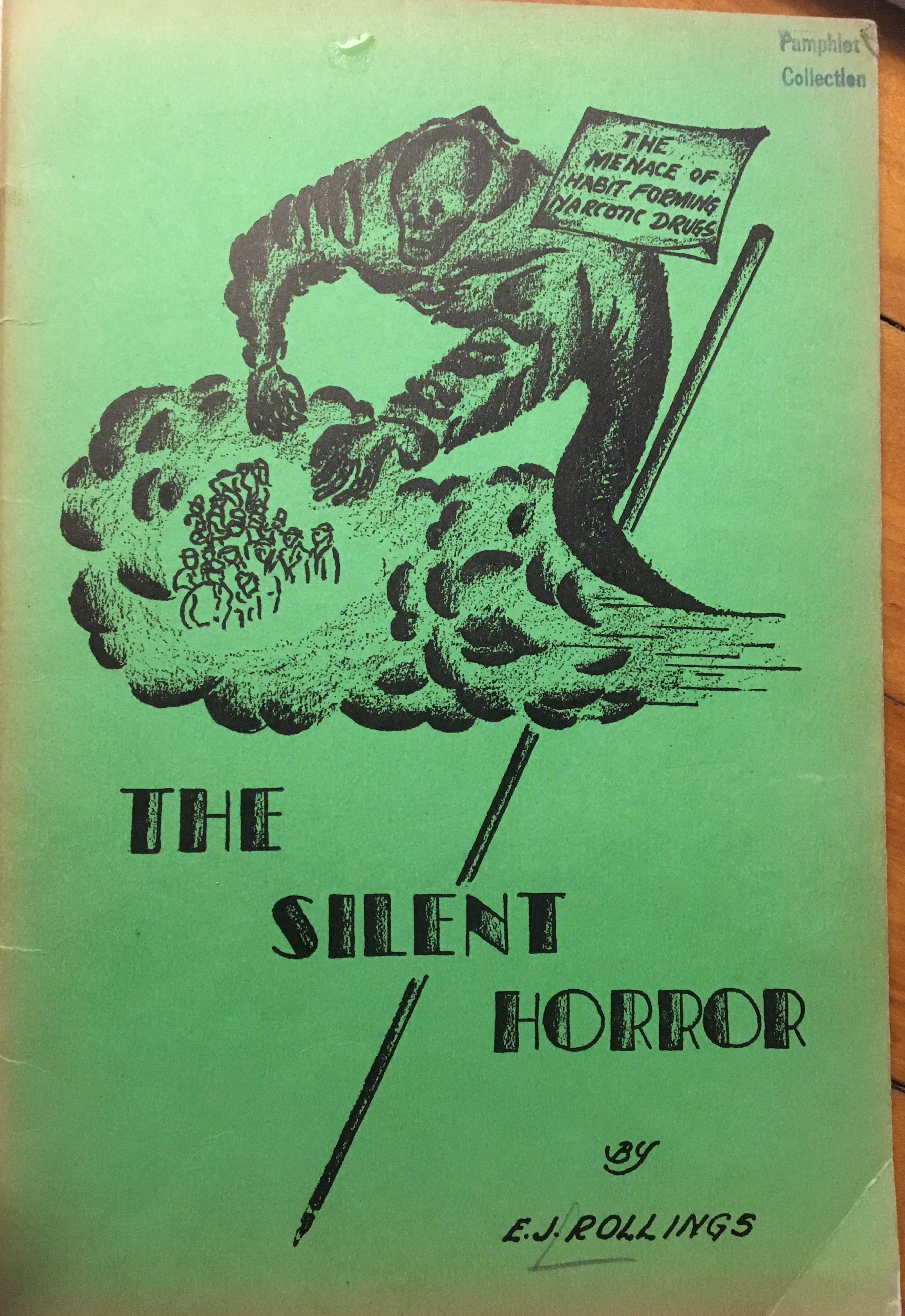
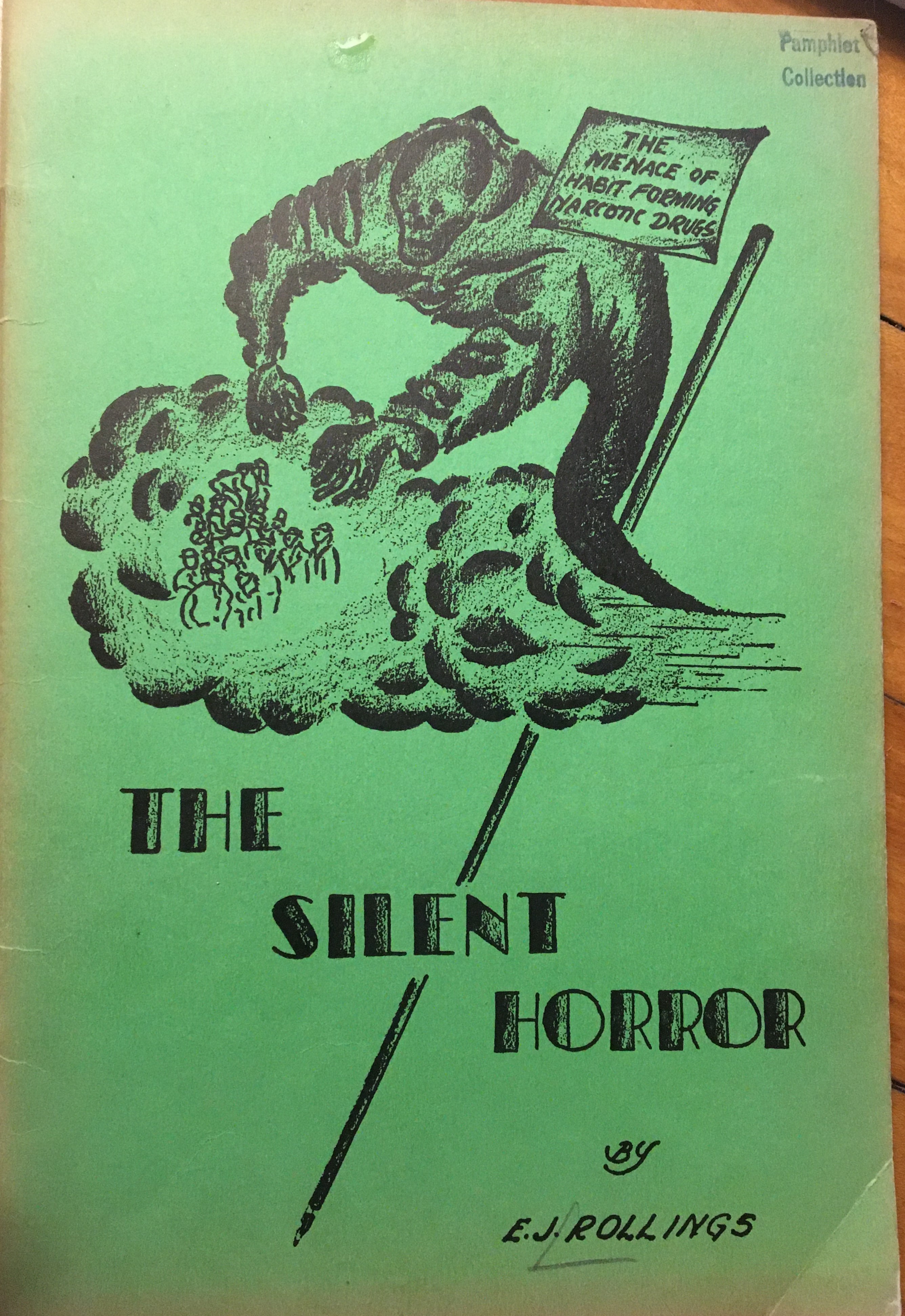
    IMG_2037 (1) Elmer James Rollings’ The Silent Horror (1939) is a two-fisted introduction and appraisal of narcotics published in Wichita, Kansas by the Defender Press, 1939. (It also seems that this pamphlet is pretty rare–there are no copies of the work found in WorldCat.) 

    Rollings contributed at least four other narcotics-related works (“Your Girl or My Boy May be Next”, “Marijuana—the Weed of Woe”, “Junk, Junk Peddler and Junkers”, “Perils of the Poppy” and “I Saw Him Die”.) There were a few other short works non-drug-related, including something on cowboy songs and also a book on bible prophesy.  

    The major chapters of The Silent Horror deal with the shades of narcotics: ‘Opium, the King of Dope’; ‘Crown Prince, Morphine’; ‘Cocaine, the Princess of Perdition’; ‘Marijuana, the Dutchess of Despair’; ‘the Dope Peddlers’; and ‘Addicts’.
    Here’s an excerpt:
    “An eighteen-year-old boy in a Midwestern city smoked two “reefers” and an hour later choked his sweetheart to death because she refused his shocking, lustful advances, born in a marijuana-crazed brain… A sixteen-year-old boy shot his mother and father to death with his father’s shotgun after smoking several “Mary Anns” given to him by a new friend whose acquaintance he made by chance. He could neither explain nor remember the killing when the effects of the drug had worn off and sobbed himself into hysterical grief when told of his crime. And so, on and on, runs the record of thievery, forgery, banditry, kidnapping, brutal murder, degeneracy, and rape, all chargeable to this paralyzer of conscience and inflamer of depravity — Marijuana! “

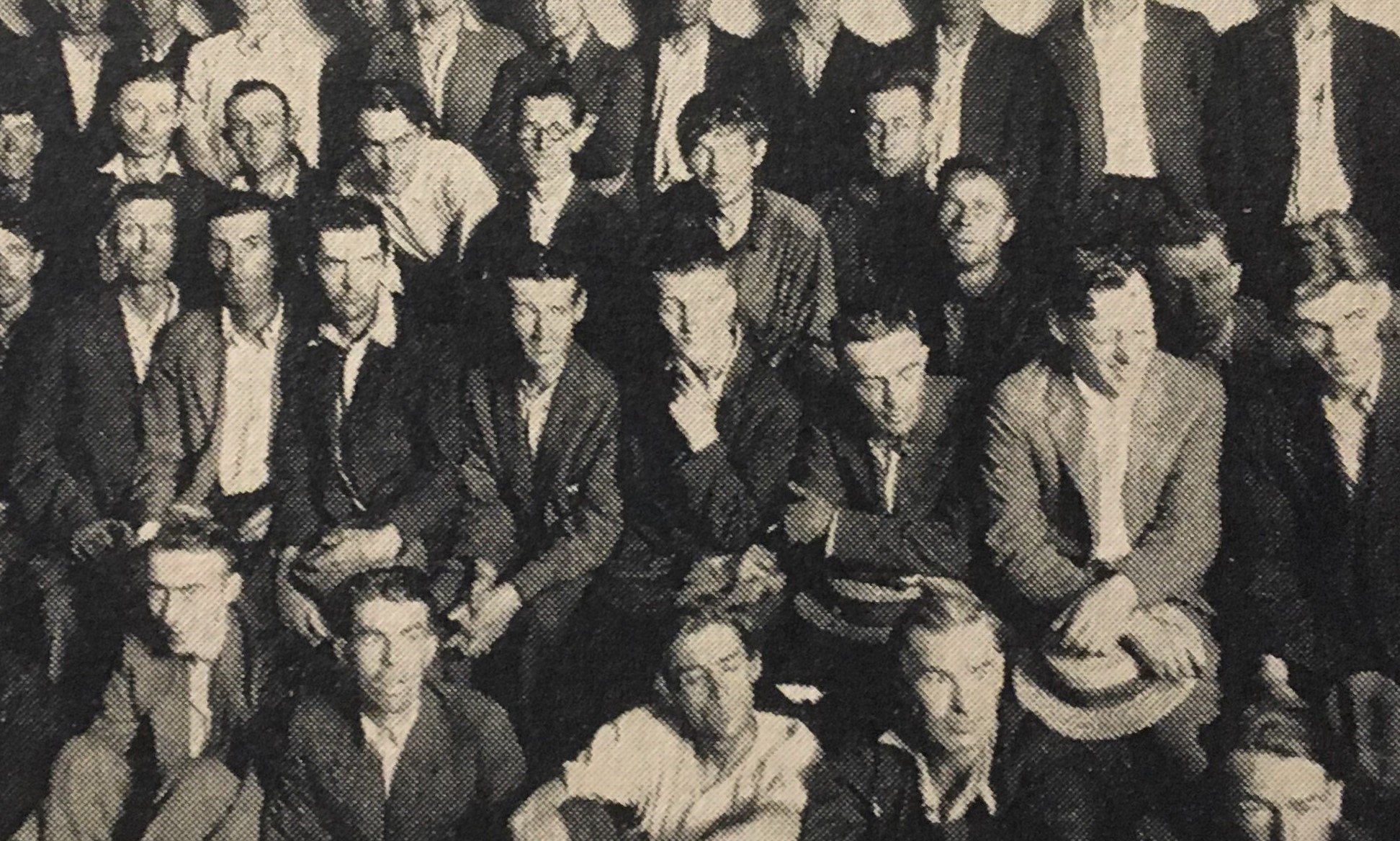
    Here’s a detail of one of the photos–this one has a caption stating that 60 addicts were picked up in 60 minutes, though Mr. Rollings declined to say where this all took place:

    IMG_2036


  • Ancient Books and Manuscripts, Writing, and Writing Instruments

    JF Ptak Science Books   Quick Post

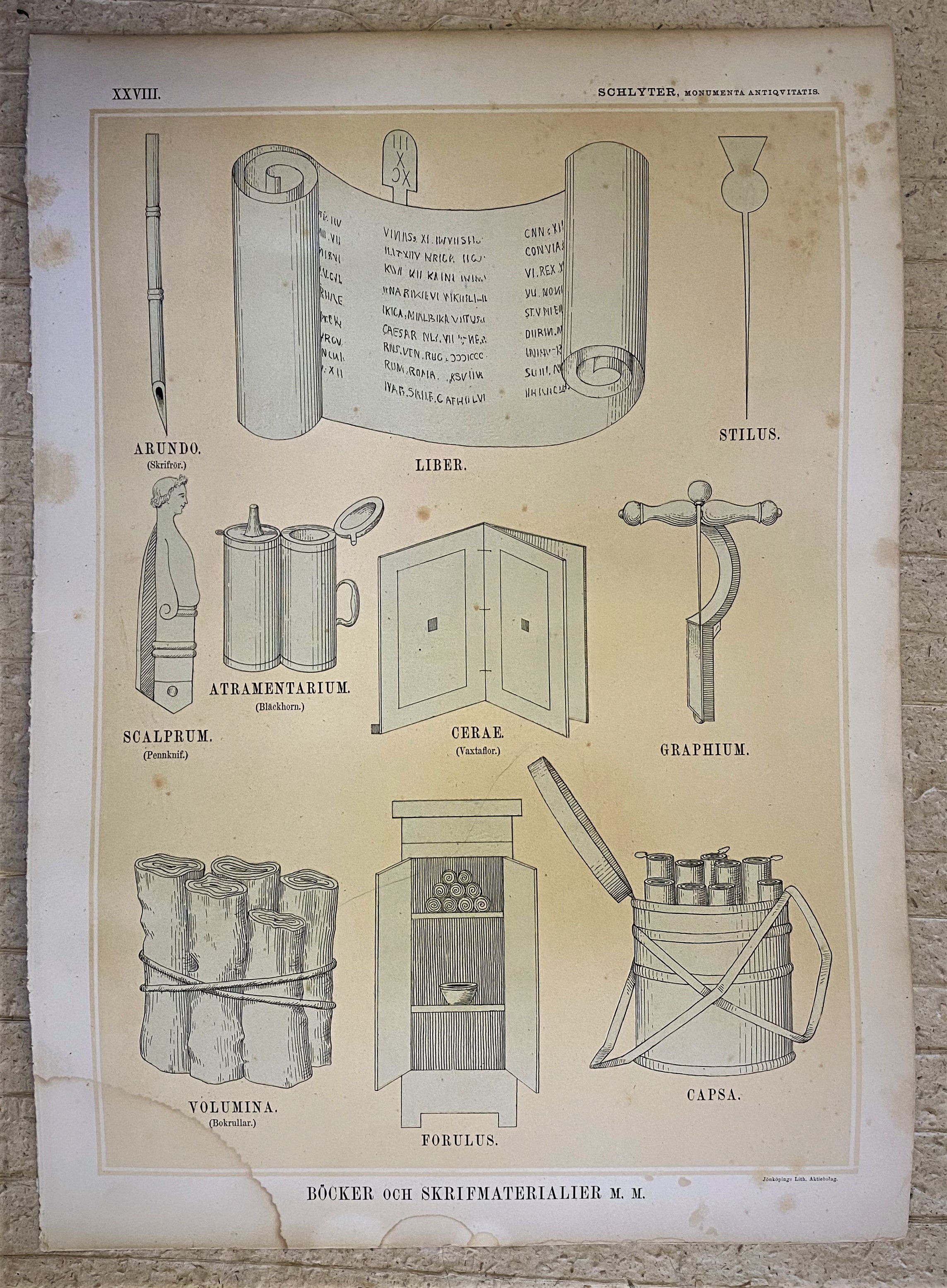
    Just a quick note about this fine and explicative image: it is a lithograph in color from Gustavus Ragn Schlyter’s Monumenta Antiquitatis, printed by Junkopings Lithografica in 1876.  It is rather large (19″x14″) and the work (on Greek and Roman antiquitiies) it is found in is scarce, as only four copies (two in Denmark, and one each in Sweden and Texas) are found in the librarians’ standard cataloguing tool, WorldCat–and the book turns up almost not at all in google and other appropriate searches…its absence is a little curious.

    In any event I found the bits and pieces of recording information to be interesting, so I went ahead and identified them for anyone who is curious about the segments of “book” production from 2000 years ago.  

    Identifying the elements of the lithograph:

    • Liber—literally, “book”, in this case being a Roman scroll written on papyrus.
    • Cerae—(from the word for “wax”), was similar to the Greek tryptich, a kind of primer that was composed of three hard surfaces, the interiors of which were covered in wax so that they could be reused many times.
    • Stilus—“stylus”, was used to incise figures in the wax Cerae, while the opposite (and flat) and was used to basically erase and smooth the wax.
    • Arundo—a filament of a hollow-core plant, used as a quill would be used.
    • Scalprum—a small cutting instrument
    • Graphium—another form of stylus.
    • Atramentarium—an inkwell (the inks being made of a mixture of carbon soot, resin, wine dregs, and cutdefish ink).
    • Volumina—a collection of scrolls or texts, “volumes”.
    • Capsa—a holder for volumina, the attendants of which were called “capsanii”.

    IMG_3145


  • The Beauty of Simple, Tiny Windows (1940)

    JF Ptak Science Books  Quick Post

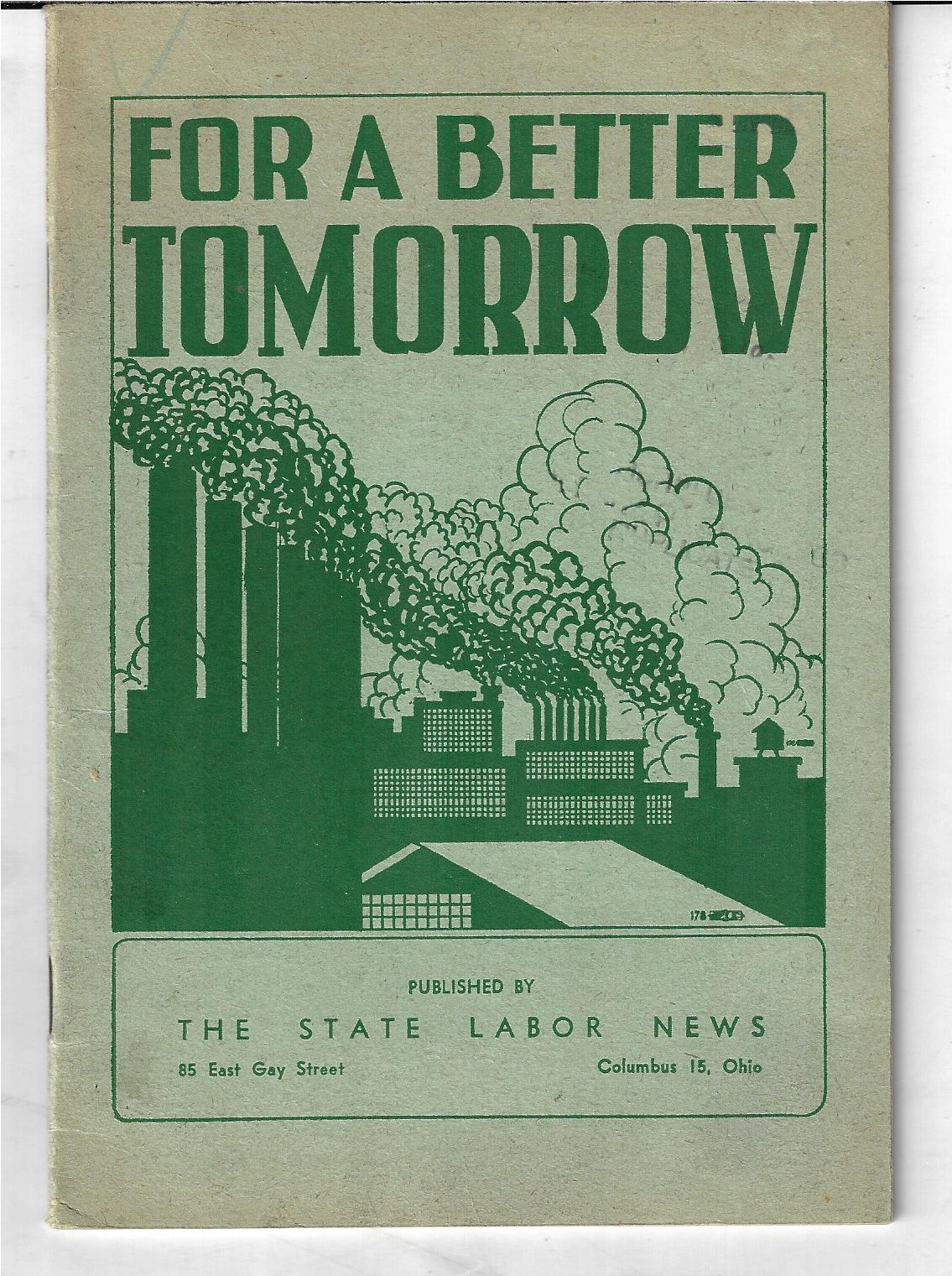
    Here’s another of my Quiet-Likes in cover design of pamphlets: simple representations of industrial/factory scenes with smoke and windows! This example is the cover of For a Better Tomorrow, published by the State Labor News (East Gay Street, Columbus, Ohio), 1940:

    Books Covers better tomorrow (2)


    ·Posted by :

    ·in:


  • Radical and “Socialistic” Ideas of 1939 Mainlined, Mainstreamed, and Main-Streeted

    JF Ptak Science Books  Quick Post

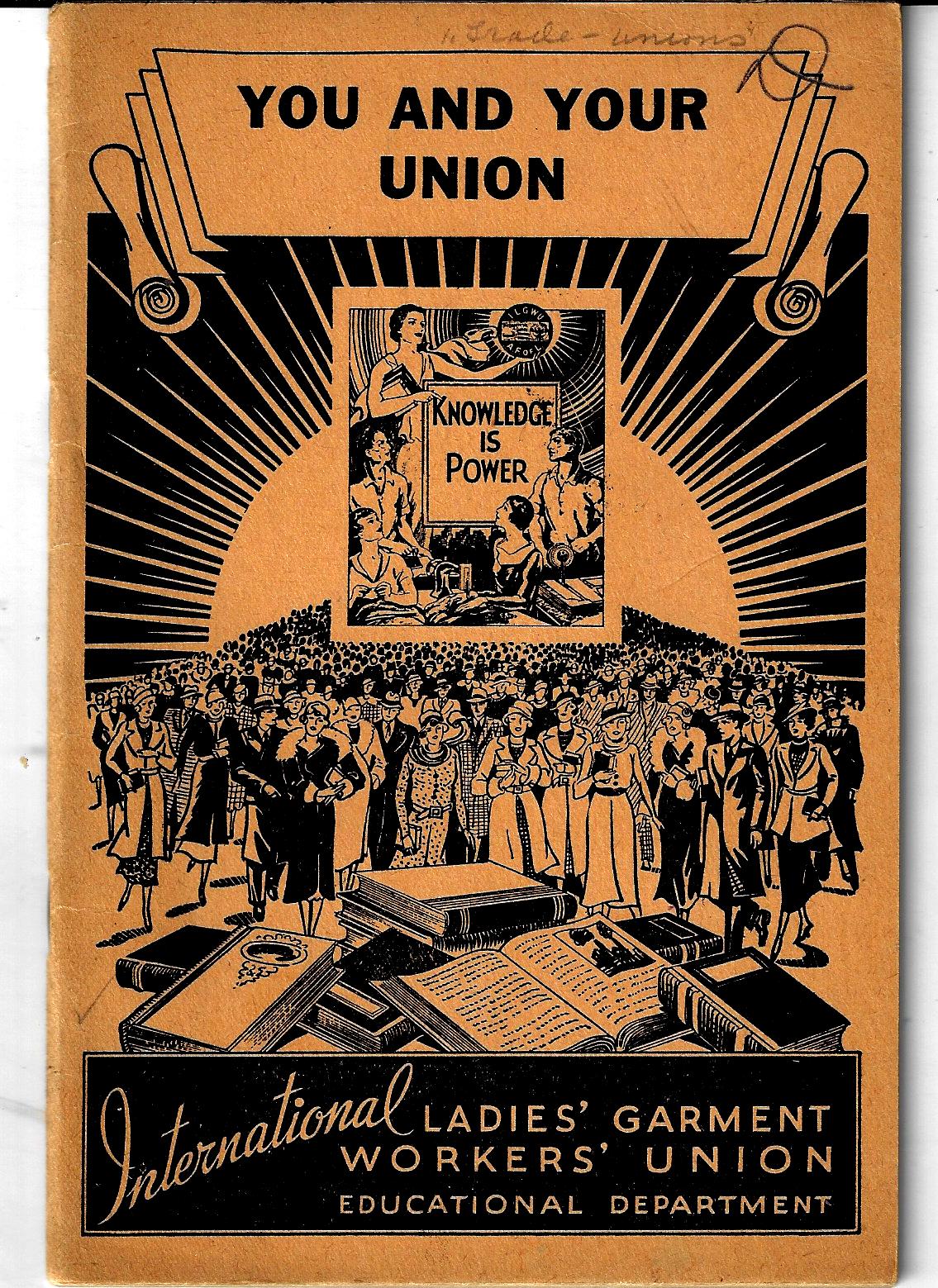
    Books cover ILGWUHere’s another very striking cover for a pamphlet embracing   once-radical semi-socialist pseud-Commie agendas that are today a de rigueur part of our social existence. This is a pro-Union, pro-educational work presented by the International Ladies’ Garment Union (education Department) to its members, getting them up to speed on the major issues of the day. Many of these battles fought by the union were bitterly opposed by industry and (sometimes) the government were for programs and agencies that many take for granted, and something utilized by everyone no matter the political leaning, the bright shining “Socialist” aluminum coating for the future long gone as these programs have become “normalized”.  Some of the issue addressed by the pamphlet were whether or not women could join a union or a labor movement (though 1940 seems a little on the late-ish side for these questions), the necessity of unemployment insurance, social insurance, maternity insurance, old age security, health insurance, and safeguards on the working life of children under 14 years of age.  

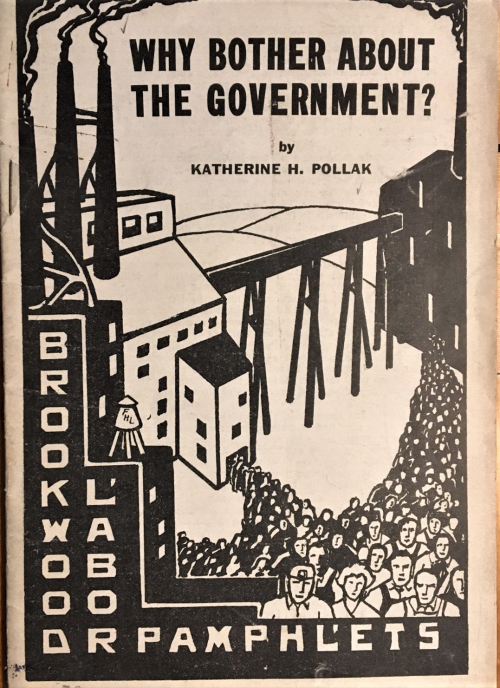
    That, and I also liked the design, the giant parade of women coming from out of the rising Sun.  I’m partial to these mass/crowd images on pamphlet covers–you don’t see them terribly often so when you do the work really stands apart. Here’s another example I wrote about in August 2020, Katherine Pollack’s 1932 Why Bother About the Government, the third installment of the Leftist Brookwood Labor College pamphlet series. It is a bit of a Socratic polemic about the problems and advantages of government, owners of the means of production, workers, and labor organizers…coming down firmly in the square of very-pro forces of organized labor:

    Books covers why bother the government


  • Capitalism as the Destroyer of Youth

    JF Ptak Science Books  Quick Post

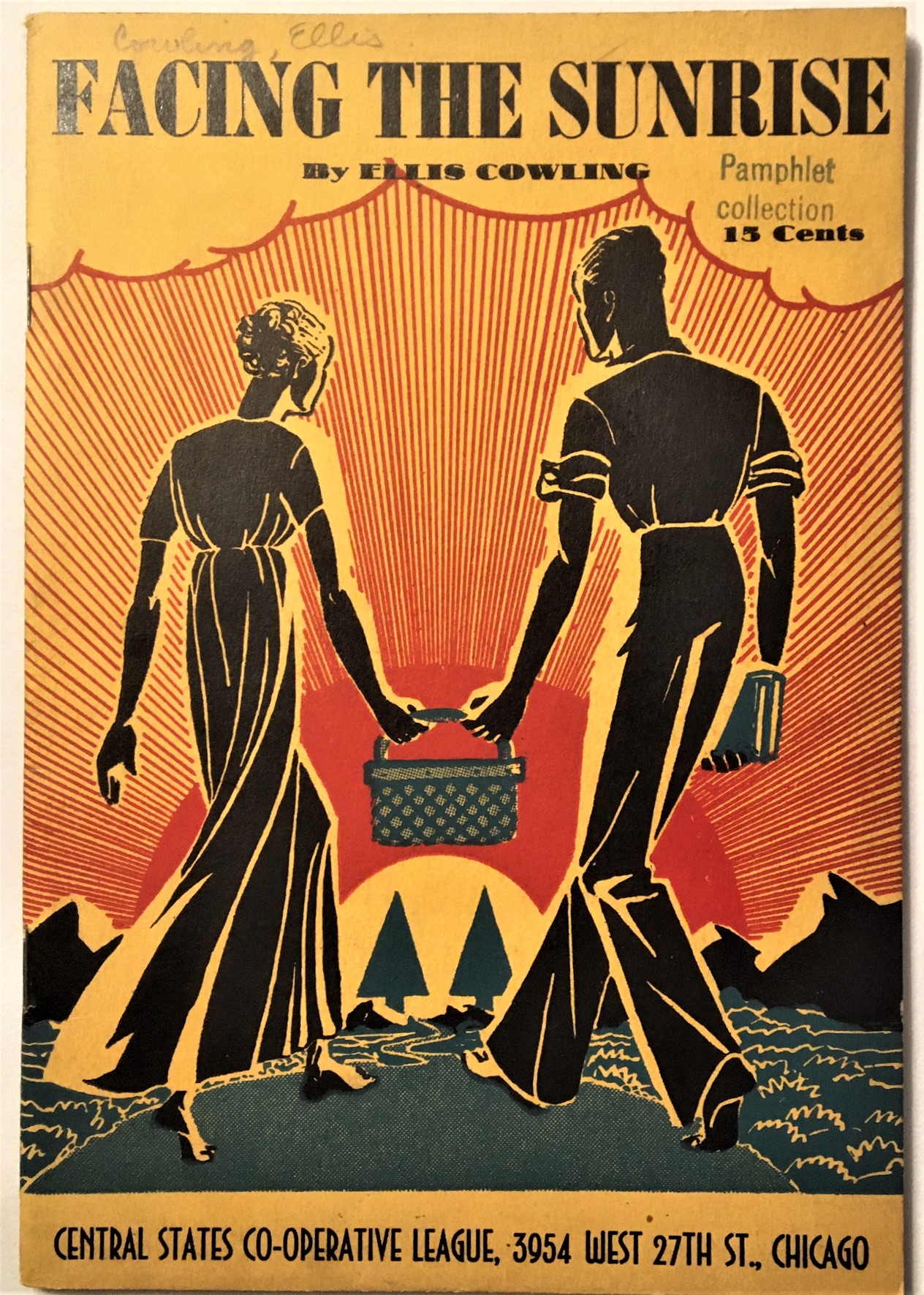
    I just couldn’t resist sharing the cover design for this 1937 pamphlet, as Dick and Jane walk into the purifying light of an atomic sunset.  Well, not quite that, as they were walking the other way into the Purity-of-Essence of a Communist/Cooperative deep red sunrise:

    IMG_2039

    The Cooperative Movement indicts Capitalism for the first half of the pamphlet:

    • Education: “capitalism is robbing youth both of its chances for education…”
    • Romance: “With other things it wrecks, Capitalism is wrecking marriage and home life”. 
    • Good Time: “Modern civilization is not  giving youth what it wants”. 
    • Art: “…increasing insecurity of our times simply means that youth’s chances of being artistically creative are growing less and less”.
    • “Profit system”: “Youth facing life under capitalism does not have a very cheerful outlook”.

    On the other end of the equation, the Cooperative movement promised abundance, increases employment, makes romance and good time possible, encourages creative effort, and advances practical Christianity.  It was 1937, and the Great Depression had its downs and ups but mostly down, deep into 1937/8/9, and people were looking for solutions everywhere. The New Deal may have been part of that, though by 1937 it was mostly being taken off-the-books, and there were plenty of conservative and more-rightist Republicans and Dixiecrats who thought of the FDR acronymic programs as just this side of Socialism–which is all fine and good, though those guys should also remember that FDR did more to save Capitalism than just about anyone in this country, ever. So: yin-yang.


  • Simple Sublimity: Images of Disappeared Common Objects. Traffic Lights from 1936.

    JF Ptak Science Books  Quick Post

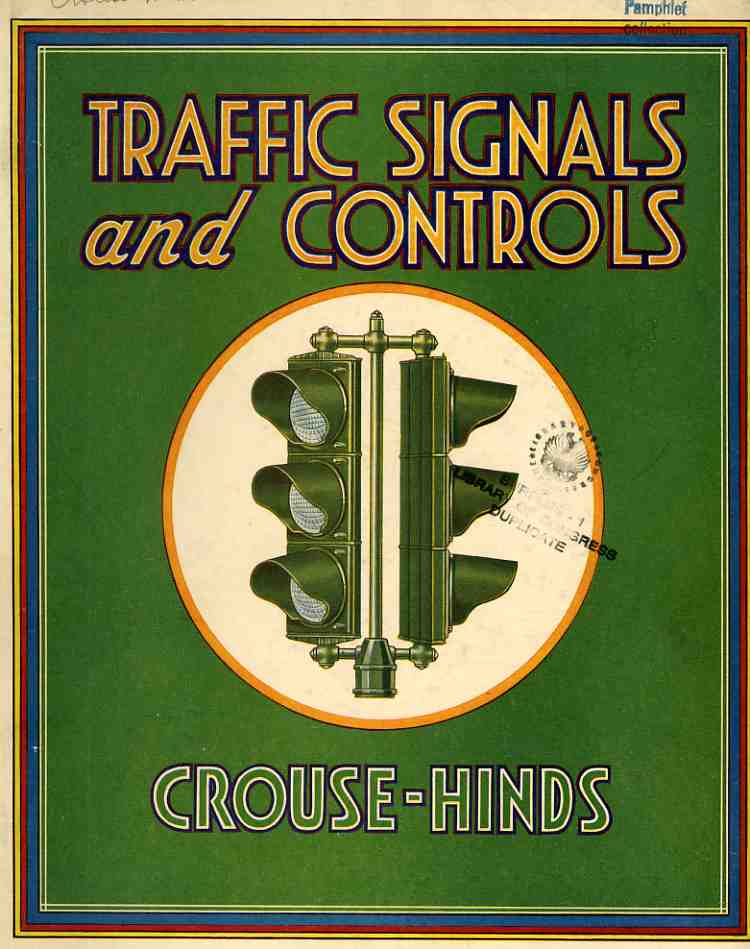
    Traffic lights _1_These images are about as basic as it gets for the common, everyday, overlooked objects from the disappeared past.  They come from the Course-Linds manufacturer’s catalog for traffic lights and other control systems called, yes, Traffic Signals and Controls, published in Syracuse (NY) in 1936. It is a beautifully designed catalog—excellent illustrations laid out perfectly on their pages, with all of the data you’d ever need to order these things for your municipality. 

    What I find so fascinating about the images here is that they depict ubiquitous objects that today would today—given their ephemeral nature—be exceptionally difficult to find. 
    Given this catalog, today they are not.


  • Fiction vs. Fact–on the Vastnesses of Creation (1870)

    JF Ptak Science Books  Quick Post

     Books covers the universe pouchet“When, at the very outset of our studies, we cast a 
    glance upon creation, we are astonished at its
    vastness, and we see that none of our fictions
    attains the sublimity of its proportions."

    This is the opening salvo from the first
    section of this delightful little book by
    Felix-Archimede Pouchet (1800-1872),
    The Universe: or, the Infnitely Great
    and the Infinitely Little
    , which was
    published by Scribners in 1870.

    ·Posted by :

    ·in:


  • Russland (Nazi Propaganda, 1936)

    JF Ptak Science Books  Post 2822

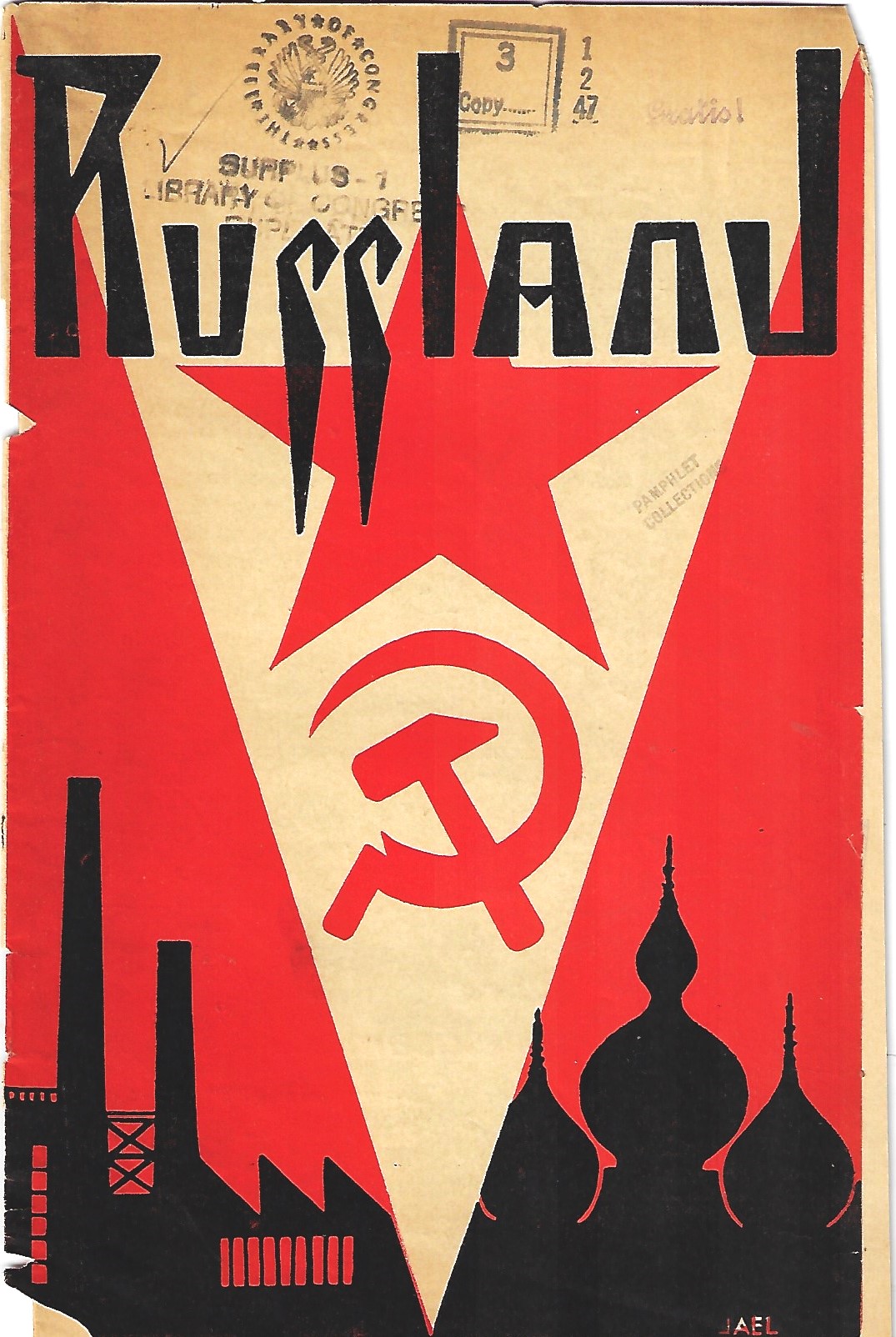
    This is a nasty piece of Nazi anti-Soviet/Communist propaganda, published as #43 in a series called “Silvaniadruck” in 1936. It is a nonstop attack on the Soviet system and also on the Russian people. The pamphlet is only 24 pages long but it certainly feels like more, especially if you could weigh vindictiveness and diatribe. It is composed of 12 sections ranging from the new economic policy of the country, to the right of the Soviet citizen, religion, family, church, and education, and the period of 1918-1921, though the sections I wanted to try to read and share were on the Famines (“der Hunger”) and the “Terror.“

    Books covers russland


  • A Crowd of Smiles (1945)

    JF Ptak Science Books  Quick Post 

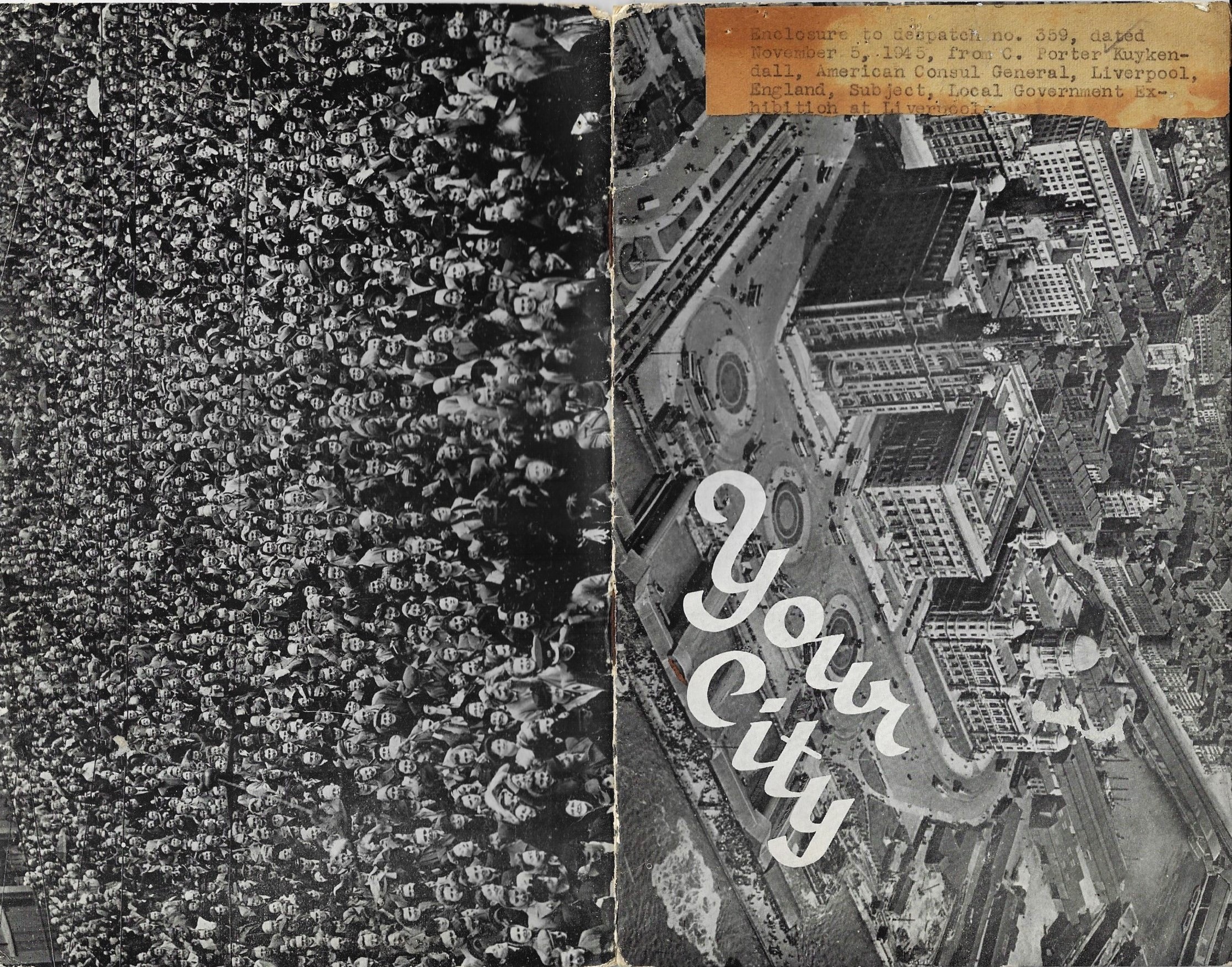
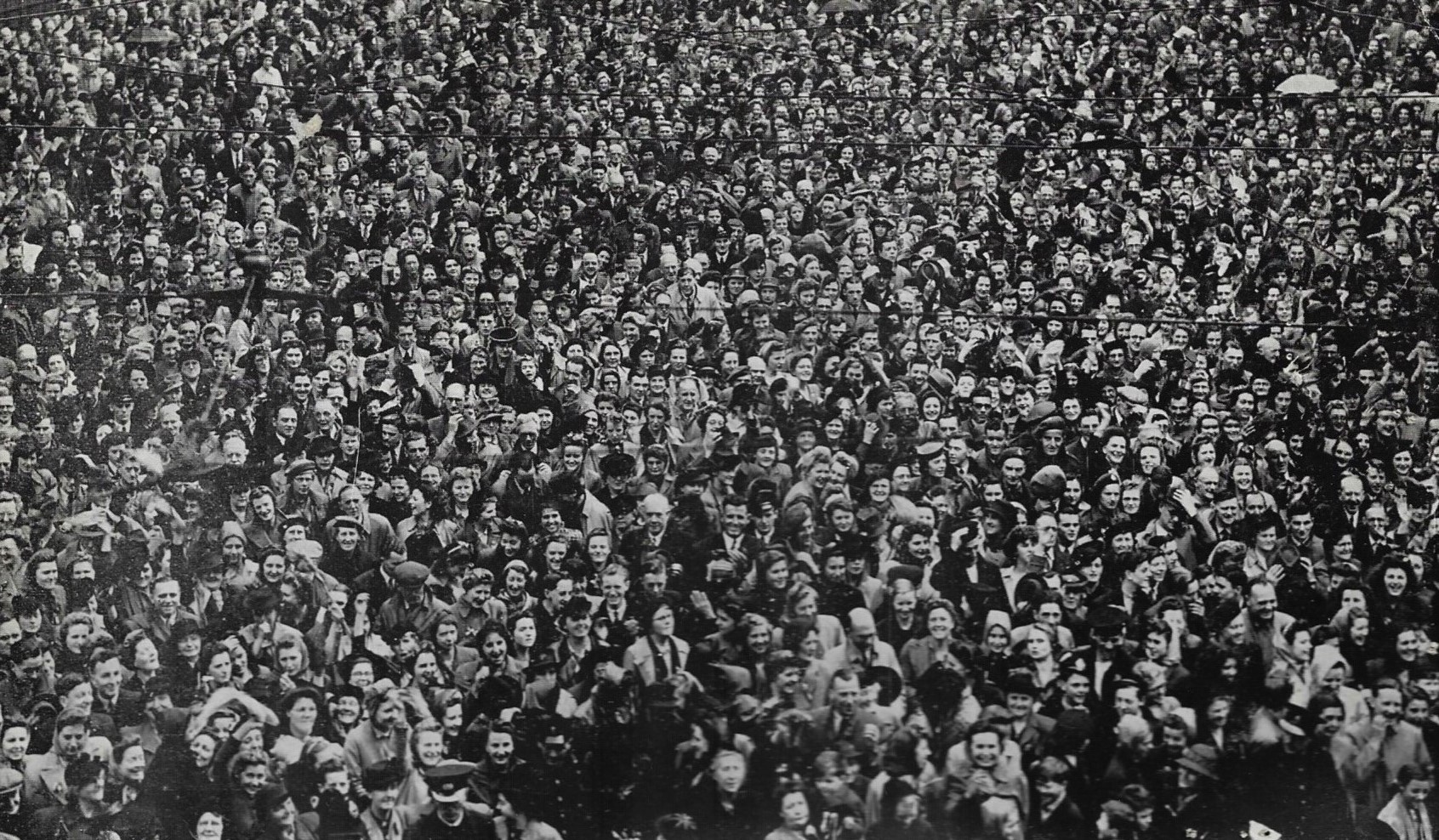
    I’ve written a number of posts on this blog on dense crowd imagery in photographs–parades, armies, union marches, protests, celebrations, work environments, and so on,not the least of which are the famous Weegee million-person-Coney-Island beach scenes.  (All of these are findable via the Google search box at right.)  Today’s installment is the back cover of a small pamphlet called Your City, a Handbook for the Citizens of Liverpool, which is a short guide to the nuts-and-bolts of living there. The remarkable thing about the dense crowd photo is that so many of the people are smiling, which to my experience is not a common thing. Since this pamphlet was published in October 1945 my guess is that the crowd formed in celebration for the end of WWII in Europe or Japan, resulting in this photograph of 2,000 smiles.  

    Books covers your city crowd detail

    Books covers your city crowd detail

    ·Posted by :

    ·in:


  • “America Asleep” (1923) and “Awake and Act” (1935)

    JF Ptak Science Books  Post 2700
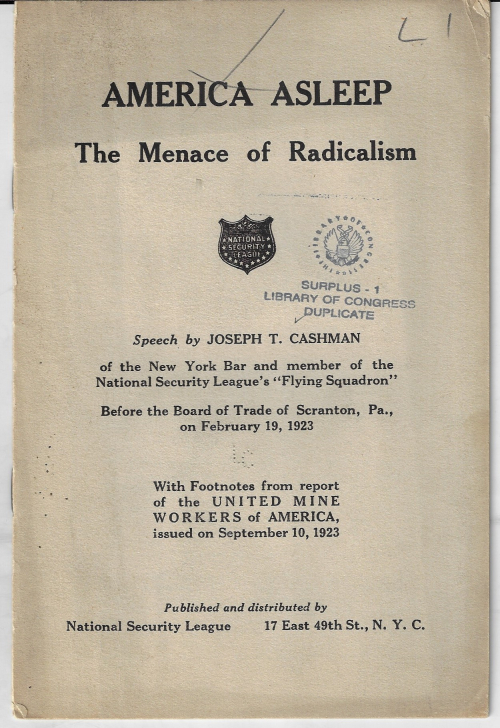
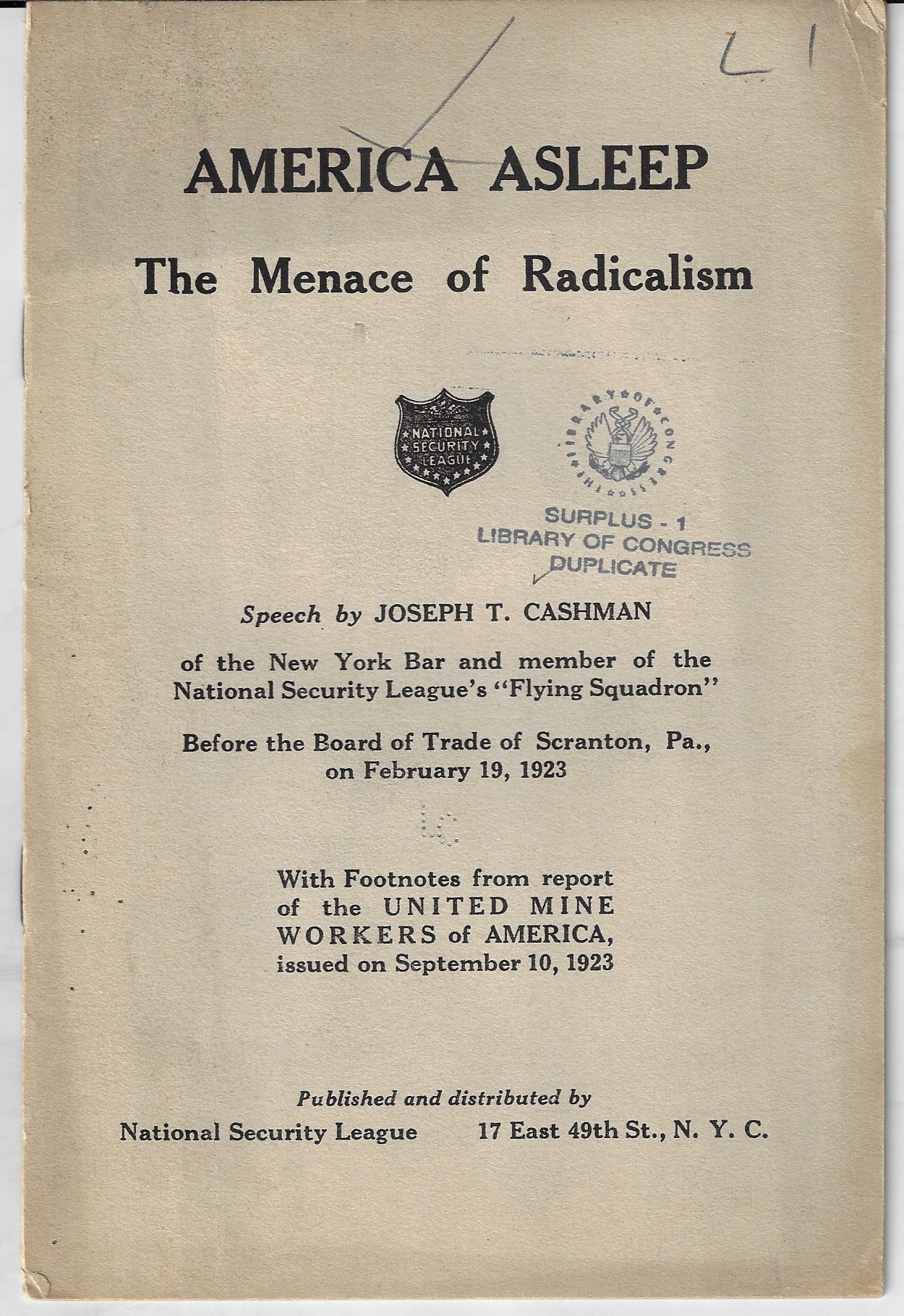
    Books covers america asleepThe “radicalism” that was a menace to America outlined in this slim pamphlet by the attorney Joseph T. Cashman (died in 1936 at 59) launched into the public consciousness in Scranton, Pa., in 1923, was Communism. Communism came in many flavors, and the author, as a member of the National Security League1, outlined some of them finding Commies in the United Mine Workers and the American Civil Liberties Union, to name two. The UMW was taking orders from the Third Internationale, which was also on its way to take over other trade unions. Then there was the larger issue of national security that was the base concern of the National Security League, which evidently went a little overboard with their issues, at one point in 1918 accusing the entire state of Wisconsin of treason.

    So, the “asleep” part is the USA not paying attention to the Communists taking over the unions newspapers, and having an influx of immigrants who were not American enough who were destined to cause trouble to our way of life, and for not recognizing that teaching foreign languages in school would lead to division, and so on. For them what was going to save the country was uniformity, obedience, pledges of all sorts (like the Lusk Law in New York where teachers had to swear to their piety, patriotism, an wholesomeness), mandatory military service, and a vast increase in military funding to secure our borders. Welcome to 1923.
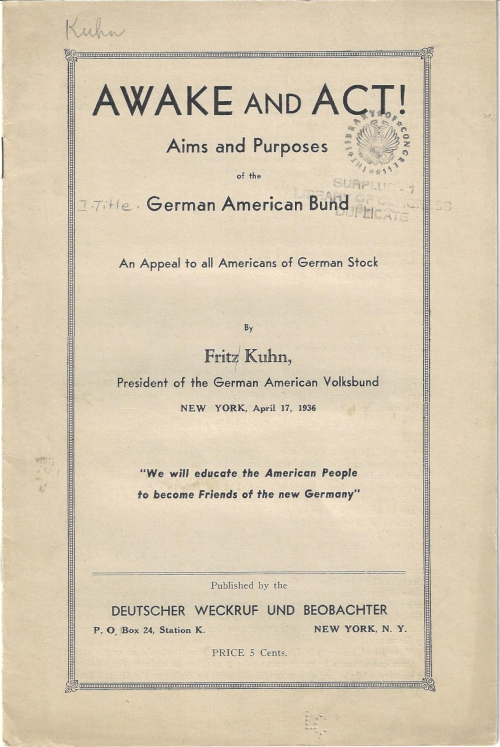
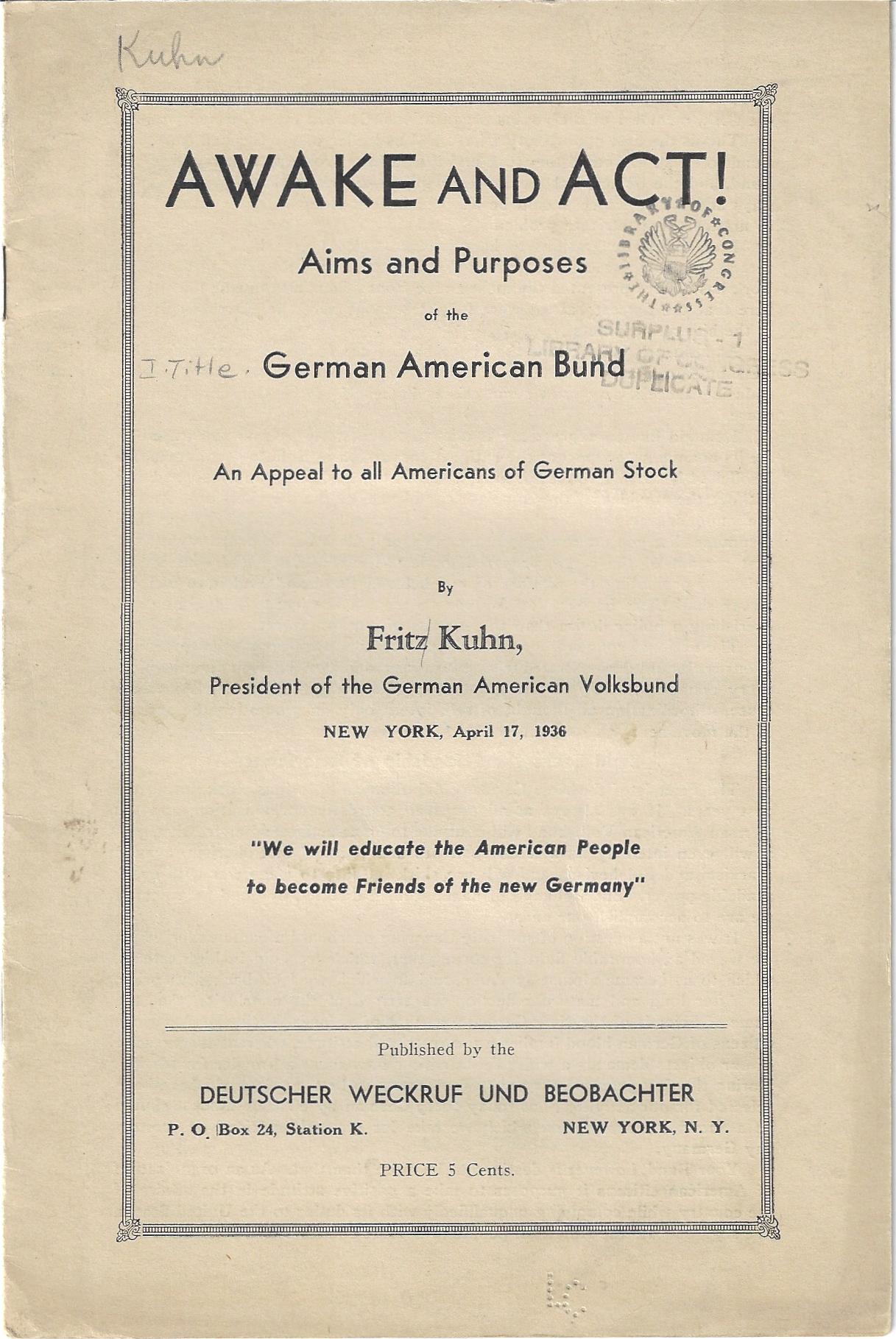
    Books covers awakw and actIn other news, there’s this pamphlet from 1936, a miserable message from a miserable man, telling the U,S, to wake up…and become National Socialists. 

    Fritz Julius Kuhn was president of the German American Volksbund and a nasty, hateful character who worked in service of National Socialism in the United States. He wound up in trouble and in jail for mishandling funds, and once the U.S. got into the war, he found himself arrested as an enemy alien and sent to spend time in the interment camp on Ellis Island. He was kicked out of the country, and then arrested again by U.S. Occupation Forces and sent to Dachau in 1947 as part of the Denazification effort of Gen. Lucius D. Clay. Of course Dachau wasn’t the Dachau of Kuhn’s idol, so he unfortunately did not experience the camp of his intentions. He died in 1951, and that was that. Provenance: the Library of Congress, the pamphlet being a gift from the Bund.

    In 1936 Kuhn wasn’t yet interested in taming the U.S. for the Nazis, though he was interested in protecting it from the greatest evil of mankind–Communism.. Actually, it turns out to be Bolshevism, but the controlling power to this is”the war battalions of the Jewish capitalists of the stock exchange” which was “the international (J)ewish attack of world Marxism”, which he said is what was attacking Germany, presently. There’s a lot more of this rhetoric in the pamphlet…actually, that is all there is in it, this sort of language, written by a non-native speaking chemist walking in Hitlerian glory and not all that smart. He was smart enough though in his rants, and tirades, and his anger was such that he was able to get 20,000 people to attend a rally at Madison Square Garden in 1939 where amidst his adjectival malignancies he ranted against “Franklin Delano Rosenfeld” and his “Jew Deal”, much like the language used in someone else’s beloved Ezra Pound’s traitorous broadcasts from Italy during the war. This was the straw that broke the stinking fascist’s back, though, terminally pissing off Mayor Laguardia who went after Kuhn’s taxes and found fraud and embezzlement. And so off he went.  But not before ruining the memories of those people who witnessed their friends become engorged by his wrath and hatred, a ruined man with ruinous ideas who ruined people. 

    Notes:

    1. “The National Security League (NSL) was an American patriotic, nationalistic, nonprofit, nonpartisan organization that supported a greatly-expanded military based upon universal service, the naturalization and Americanization of immigrants, Americanism, meritocracy, and government regulation of the economy to enhance national preparedness. Many of the programs advocated by the NSL, such as a unified national defense agency, an interstate highway system, universal conscription, English as the official language, and a unified national budget, were highly influential. Although the organization had declined before it finally folded in 1942, many of its ideas would become national policy in the United States.”–Wikipedia