A Daily History of Holes, Dots, Lines, Science, History, Math, Physics, Art, the Unintentional Absurd, Architecture, Maps, Data Visualization, Blank and Missing Things, and so on. |1.6 million words, 7500 images, 4.9 million hits| Press & appearances in The Times, Le Figaro, Mensa, The Economist, The Guardian, Discovery News, Slate, Le Monde, Sci American Blogs, Le Pont, and many other places… 5000+ total posts since 2008.

Category: Books: Great & Lost in the Dust

  • Found-Poetry in a Technical Work on Bubbles (1896)

    JF Ptak Science Books  Quick Post   (Overall Post 5118) 

    Bubbles “The water of those wellis sprynge vp with grete bobles.”–W. Caxton tr. Myrrour of Worlde ii. xxi. sig. h4   OED

    Rummaging again through the eminently-rummagable early years of Nature1 I found a lovely little article on the physics of bubbles. The language to me seems delightful, and it comes from the first part of a very long opening paragraph of the paper:

    “He has studied the behaviour of big bubbles and of little ones,

    of bubbles in large and small tubes,

    of bubbles of air in a liquid,

    and of one liquid in another,

    of bubbles in heavy land in light liquids,

    of bubbles in liquids of various degrees of viscosity

    and with various degrees of surface tension at their surfaces.”

    • [IMAGE: “THAUMATROPE for showing the formation and oscillation of drops.” From C.V. Boys’ Soap Bubble and the Forces Which Mold Them, 1896.]

    In spite (or because of) the fact that bubbles are serious things, they are wonderfully named and as C.V. Boys points out in his fantastic Soap Bubble and the Forces Which Mold Them (1896), they are as magnificent as they are simple: “I do not suppose that there is any one in this room who has not occasionally blown a common soap-bubble, and while admiring the perfection of its form, and the marvelous brilliancy of its colours, wondered how it is that such a magnificent object can be so easily produced”.

    Bubbles have a long history in experimental physics2 and continue to work their magic today–when I googled this title I came up with only three pages of hits, including the following, which in their own little way beg to be read:

    • “Film thickness measurements in liquid–liquid slug flow “
    • “Effects of Bubbles on the Hydraulic Conductivity of Porous Materials “
    • “Bubble deformations and segmented flows in corrugated microchannels at large capillary numbers “
    • “Bubble transport through constricted capillary tubes with application to resin transfer molding”
    • “Transport of bubbles in square microchannels”
    • “Step-Wise Velocity of an Air Bubble Rising in a Vertical Tube Filled with a Liquid Dispersion of Nanoparticles”

    From the 1894 article:

    “EVERY student of physics has observed the motion of bubbles in tubes. Which of them has not used a big bubble to show the little ones their duty in clearing out the air when filling a barometer tube? Who has not spent his time and patience in whisking a spirit thermometer to drive a bubble out of the column? Mr. Trouton has recently communicated to the Royal Society the result of some researches on this subject. He has studied the behaviour of big bubbles and of little ones, of bubbles in large and small tubes, of bubbles of air in a liquid, and of one liquid in another, of bubbles in heavy land in light liquids, of bubbles in liquids of various degrees of viscosity and with various degrees of surface tension at their surfaces. From this enumeration it is evident that the number of different magnitudes involved is very great, and at the start it seemed almost hopeless to disentangle the effects due to each. The first matter to observe was that, as in other cases of fluid motion, two cases must be distinguished. These are the cases of slow motion and of quick motion. When the motion is slow the viscosity of the liquid causes the flow to be very simple. It entirely stops all whirling and swirling, such as is seen in the water behind a boat. When the motion is quick, on the other hand, the flow is very complicated. Whirls and swirls are set up, and the resistance is increased, owing to the increased energy that has to be communicated to the whirling and swirling liquid for each centimetre that the bubble moves. The slow kind may be described as viscous flow, and the quick as turbulent flow. The most interesting point observed in connection with the turbulent flow was that it was sometimes possible to increase the rate of flow by increasing the viscosity…”

    Notes:

    1. “On the Motion of Bubbles in Tubes”, in Nature, a Weekly Illustrated Journal of Science, 8 February 1894 (vol 49 no. 1267)/ I should point out that Nature back then was almost entirely readable by almost anyone—nowadays of course it is a vastly different story; I stopped my subscription a while back when I found out that I wasn’t understanding even the titles of some of the papers….

    2. “I have freely made use of the published work of many distinguished men, among whom I may mention Savart, Plateau, Clerk Maxwell, Sir William Thomson, Lord Rayleigh, Mr. Chichester Bell, and Prof. Rücker. The experiments have mostly been described by them, some have been taken from journals, and I have devised or arranged a few. I am also indebted to Prof. Rücker for the use of various pieces of apparatus which had been prepared for his lectures.”–C.V. Boys, Soap Bubble and the Forces Which Mold, 1896.
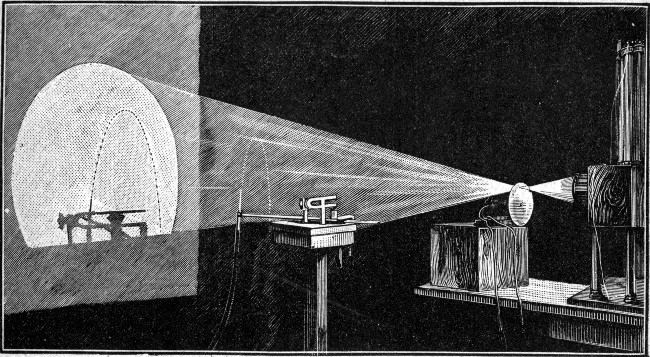
    Front“Experiment for showing by intermittent light the apparently stationary drops into which a fountain is broken up by the action of a musical sound.”–from the Boys book.  

  • Ancient Books and Manuscripts, Writing, and Writing Instruments

    JF Ptak Science Books   Quick Post

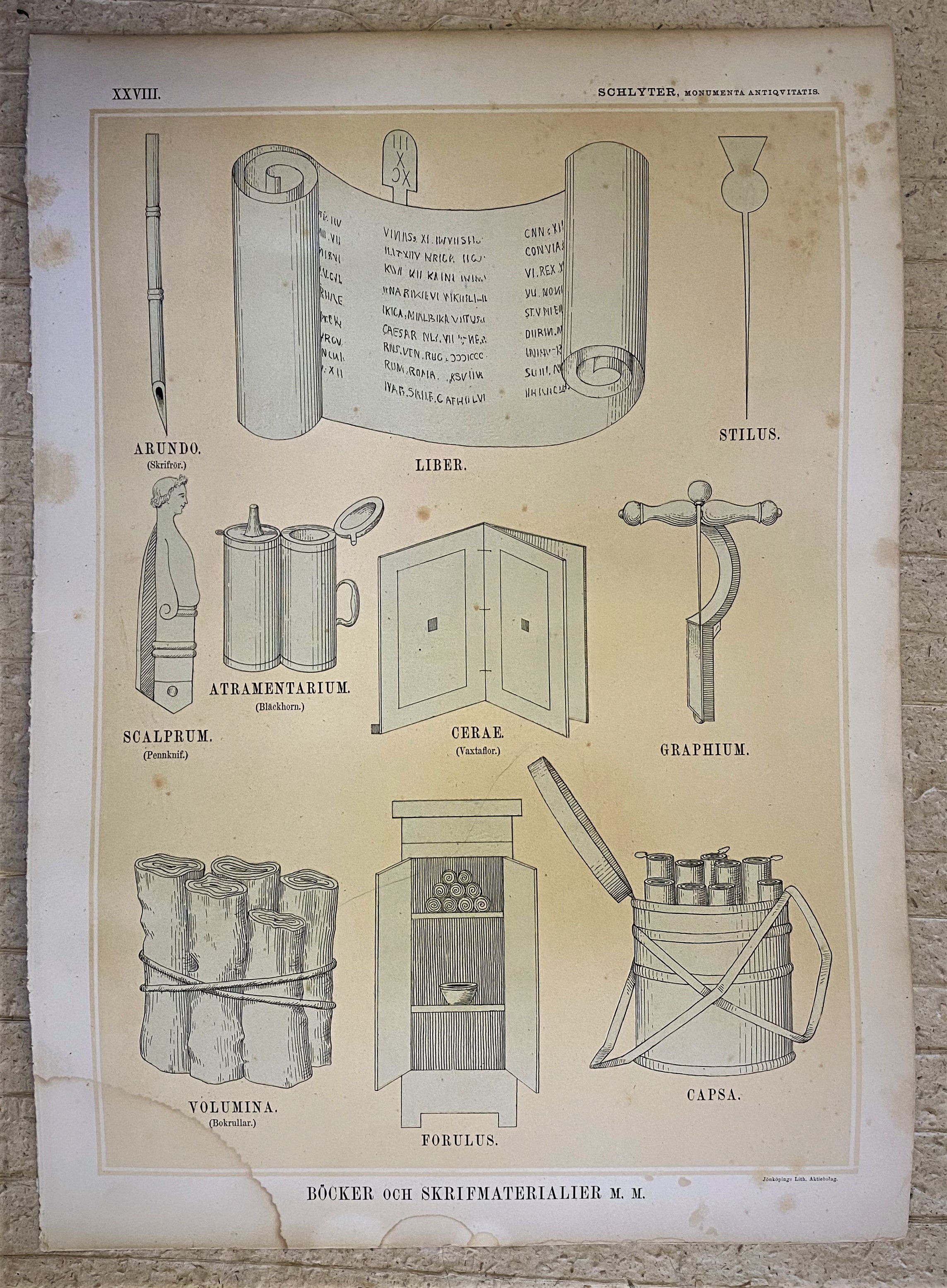
    Just a quick note about this fine and explicative image: it is a lithograph in color from Gustavus Ragn Schlyter’s Monumenta Antiquitatis, printed by Junkopings Lithografica in 1876.  It is rather large (19″x14″) and the work (on Greek and Roman antiquitiies) it is found in is scarce, as only four copies (two in Denmark, and one each in Sweden and Texas) are found in the librarians’ standard cataloguing tool, WorldCat–and the book turns up almost not at all in google and other appropriate searches…its absence is a little curious.

    In any event I found the bits and pieces of recording information to be interesting, so I went ahead and identified them for anyone who is curious about the segments of “book” production from 2000 years ago.  

    Identifying the elements of the lithograph:

    • Liber—literally, “book”, in this case being a Roman scroll written on papyrus.
    • Cerae—(from the word for “wax”), was similar to the Greek tryptich, a kind of primer that was composed of three hard surfaces, the interiors of which were covered in wax so that they could be reused many times.
    • Stilus—“stylus”, was used to incise figures in the wax Cerae, while the opposite (and flat) and was used to basically erase and smooth the wax.
    • Arundo—a filament of a hollow-core plant, used as a quill would be used.
    • Scalprum—a small cutting instrument
    • Graphium—another form of stylus.
    • Atramentarium—an inkwell (the inks being made of a mixture of carbon soot, resin, wine dregs, and cutdefish ink).
    • Volumina—a collection of scrolls or texts, “volumes”.
    • Capsa—a holder for volumina, the attendants of which were called “capsanii”.

    IMG_3145


  • What is the World’s Most-traveled Book?

    JF Ptak Science Books    Post 2778

    What is the world’s most traveled book? This question came to mind after I received an order for a book that had been sent to me from Florida after it arrived there from London, sending it off to someone in Baltimore. Does it go back to London after that and continue its travels?

    Is the Most Traveled Book (MTB) a category of book, or a single title, or a single copy of that title? Is it thousands of people moving the book, or is it just the single book making the trip? If it was just a title, then the number of miles packed on Stephen King books traveling back and forth to the beach or wherever by millions of people over several decades would probably outweigh the travel of all of Homer on a galactic scale. My preference is for the single copy scenario. Also: I’d like this to be a published book rather than not, simply because the boundaries get a bit too misty for me.

    Dr strangelove code bookThe closer we come to the present time, the easier it would have been for a book and a person who might have been traveling with the book, to travel. It increases the chance for people to travel with a book, and with the invention of the middle class, it would encompass more people the chance to come in contact with books and travel with or send them. And of course it is the mode of transportation and the creation of parcel post that would add orders of magnitudes of miles to category—for example you could receive a book from London and send it out to Tokyo where it might be sent to Wellington all in two weeks. In 1822, raking in that sort of mileage would have been nearly impossible for almost all circumstances. No doubt books were carried to Botany Bay from London and then back again, perhaps over and over as the property of the ship’s surgeon or some such, but that would be years worth of travel.

    Maybe it was books carried by people who were professional travelers or at least traveled a lot, like Napoleon or Alexander going to “work”.

    Is it a travel book, like Herodotus, Sterne, Twain, Stark, (or even Kerouac who had the words right in the title?), Xenophon…Cervantes?

    Perhaps it was literature—no doubt Shakespeare, Dante, Sophocles, Euripedes, and Aeschylus have been hauled about for pleasure. What about professional books? I doubt that copies of Newton, Galileo, Copernicus, and so on have traveled very much on their own (though the ideas contained in them are probably among the best-traveled of that sort), but I suspect that anatomies (Vesalius, Gray) have some miles in them. There are no doubt other reference books like that that could have traveled save for their size (like Audubon, which could have been useful in the field but which would have needed their own caravan). There are unliekly titles that have made their way around the world (like Darwin’s Lyell making the long trip on the Beagle), but that book ended its travels when Darwin got home.

    And what about military strategy books like Lao Tsu, Sun Tzu, Clausewitz, Thucydides? If in the field their owners could have lugged them far and wide, passing them along after enforced/sudden “retirement” or when their usefulness ran out.

    What might establish the peripheries of this question are books that keep intact a belief system, or way of life, a secret-or-not codification of a state of well-being? A Bible? Alcoholics Anonymous? Probably that is the first place to visit, the religious book, though offhand it seems that the travel of this sort of book wouldn’t transcend one owner. The Bible and company are enormously popular books and have been printed no doubt in terms of billions of copies, so they have a much better chance of being the leader of the category by sheer numerical possibility. On the other hand some of them were tremendously popular but relatively short-lived, like the “Little Red Book”, which was carried by most Chinese for decades, though I doubt that the work as an inherited object was inter-generational.

    Maybe the best traveled book simply comes down to one that belongs to an aircraft pilot of 40 years’ experience who has been flying with a single title because that is what they had with them on their very first flight, and has become a good luck token. Perhaps it is a King book, or Robert Pirsig; and maybe it is The Cat in the Hat which was an intended gift for a child, the pilot keeping the original as a charm for a successful first flight, and giving away another copy of the book, and so it has made thousands of flights. Maybe the book is never actually read—its just an icon.

    Or perhaps it is an instruction booklet on the reading of nuclear codes and attack plans that has been basically airborne since 1960. This is far less romantic than a Dr. Seuss book, but more, well, “practical”.

    And maybe the most traveled book is less-traveled than the most-traveled map?


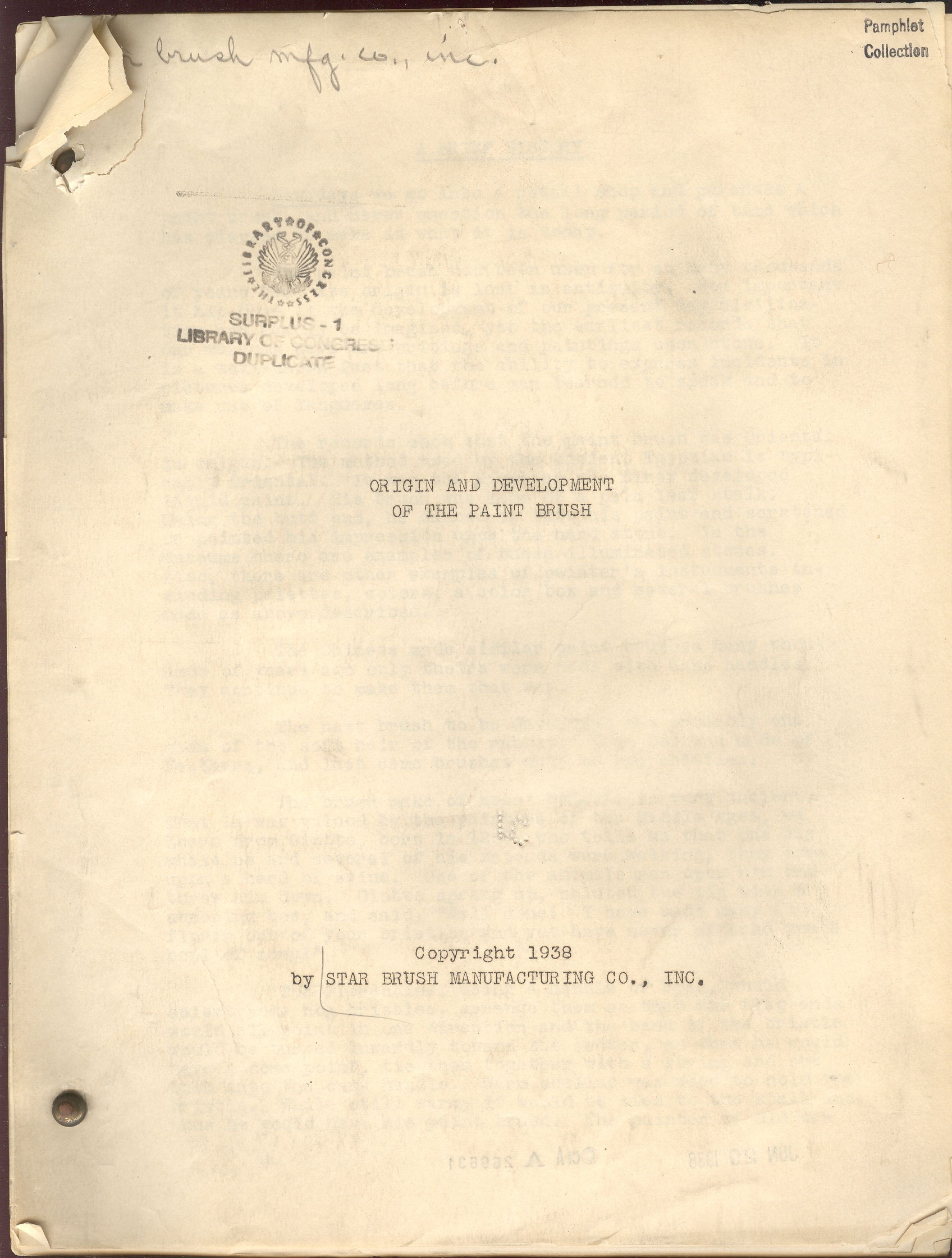
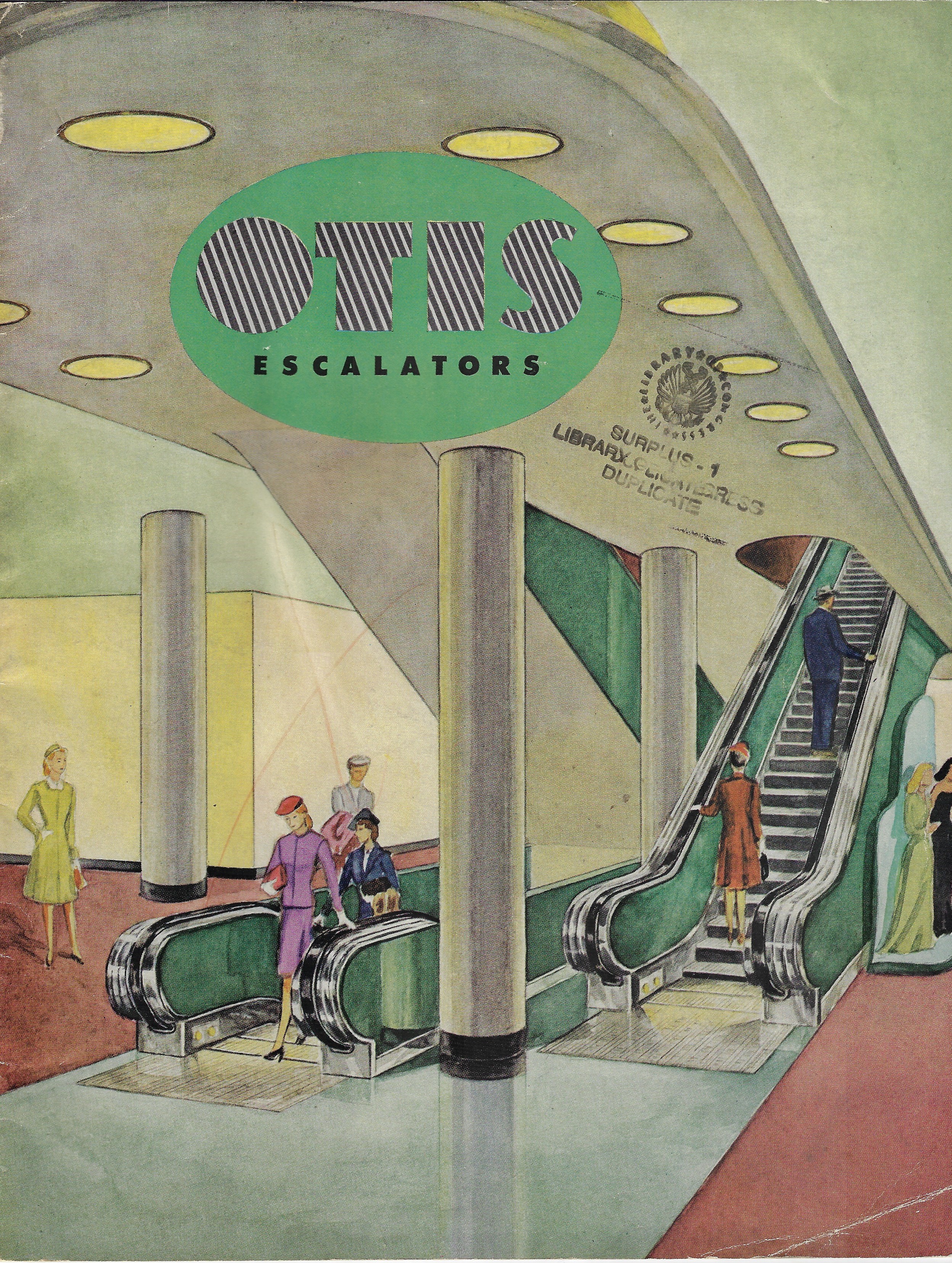
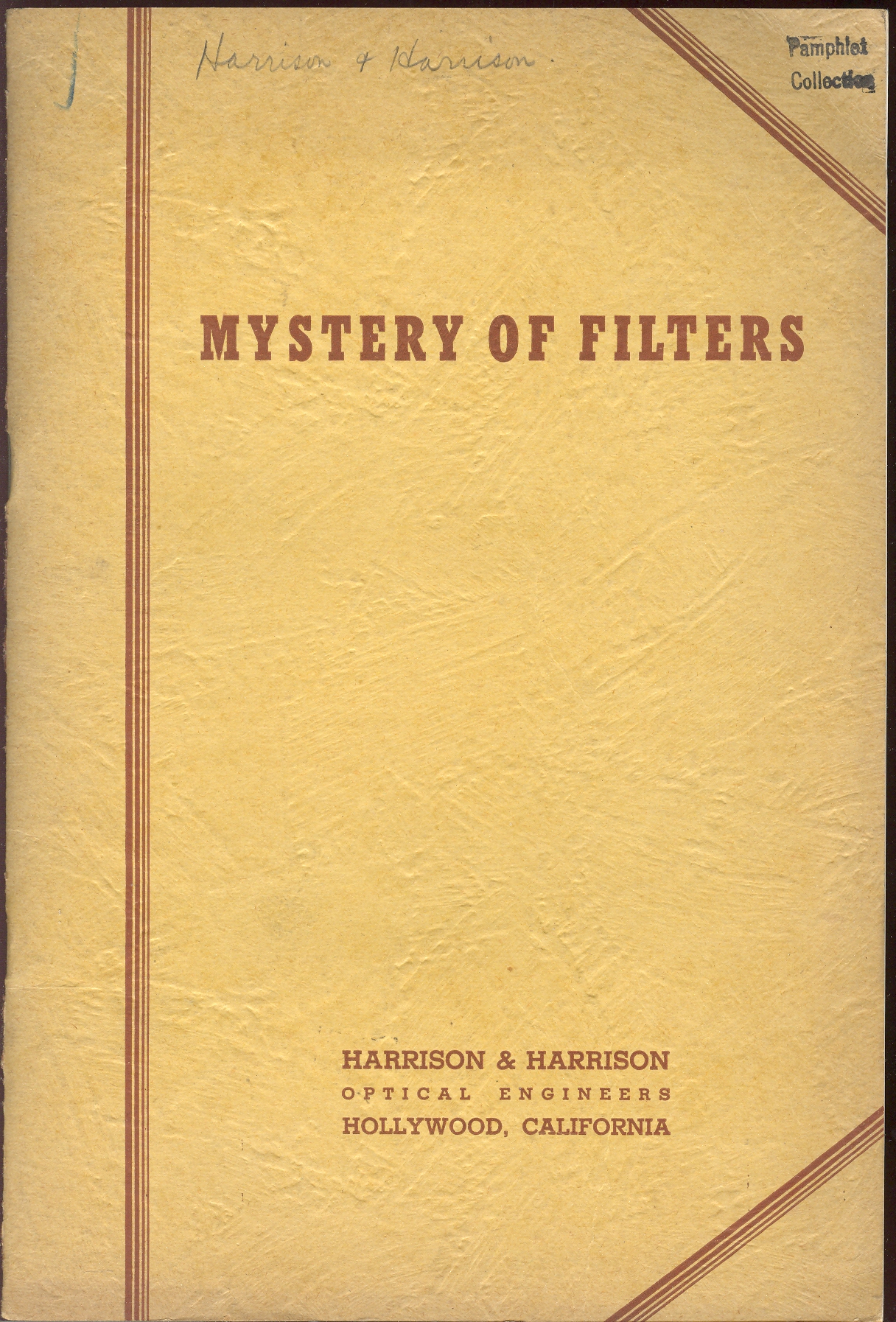
  • The Mundane Glory of Pig Bristles, Hooking, and the Mystery of Filters–Pamphlet Covers, 1930s

    JF Ptak Science Books  (Expanding on an earlier post)   Blog Bookstore  

    Books covers origin paint brushI wonder what is was like to be a traveling salesman hauling around hundred-pound barrels of pig bristles?

    We don’t really find out the answer to that question in Origin and Development of the Paint Brush (1938), but that remarkable, far from the maddening crowd question does present itself in the text.  And that is why I love pamphlets like these.

    Spending my professional life with the book, and being a reader, I’ve come into contact with and have been exposed to a good, solid, Big  Number of books, a Big Book of Big Numbers of books.  And so when the unusual creeps in or is stumbled upon, they shine like little novas in my book-sky.  And the ones that shine with their own special light are the titles come in three favorite flavors:  the Sublime Mundane, Outsider Logic, and Fantastic (and Impossible).  Today’s selection are from the first category, and exhibit titles and texts that look like non-luminous and uni-dimensional but turn out to be anything but mundane.

    Earlier in this blog I’ve written on pamphlets entitled Flagpole Painting, School Safety Pioneers, Fortunes to be Made with Frogs, Where are the Dead?, How to Repair a Zipper, Mud’s Romantic Story, Soap in Everyday Life, The Fine Art of Squeezing, Salt Salesman’s Manual, Know Your Groceries, The Book of Envelope Facts (and others), and they’ve all shown a terrific inner quality that is completely hidden by their so-sleepy and yet strangely-compelling titles.  Like the paint brush history pamphlet.  Here are a few other new examples:

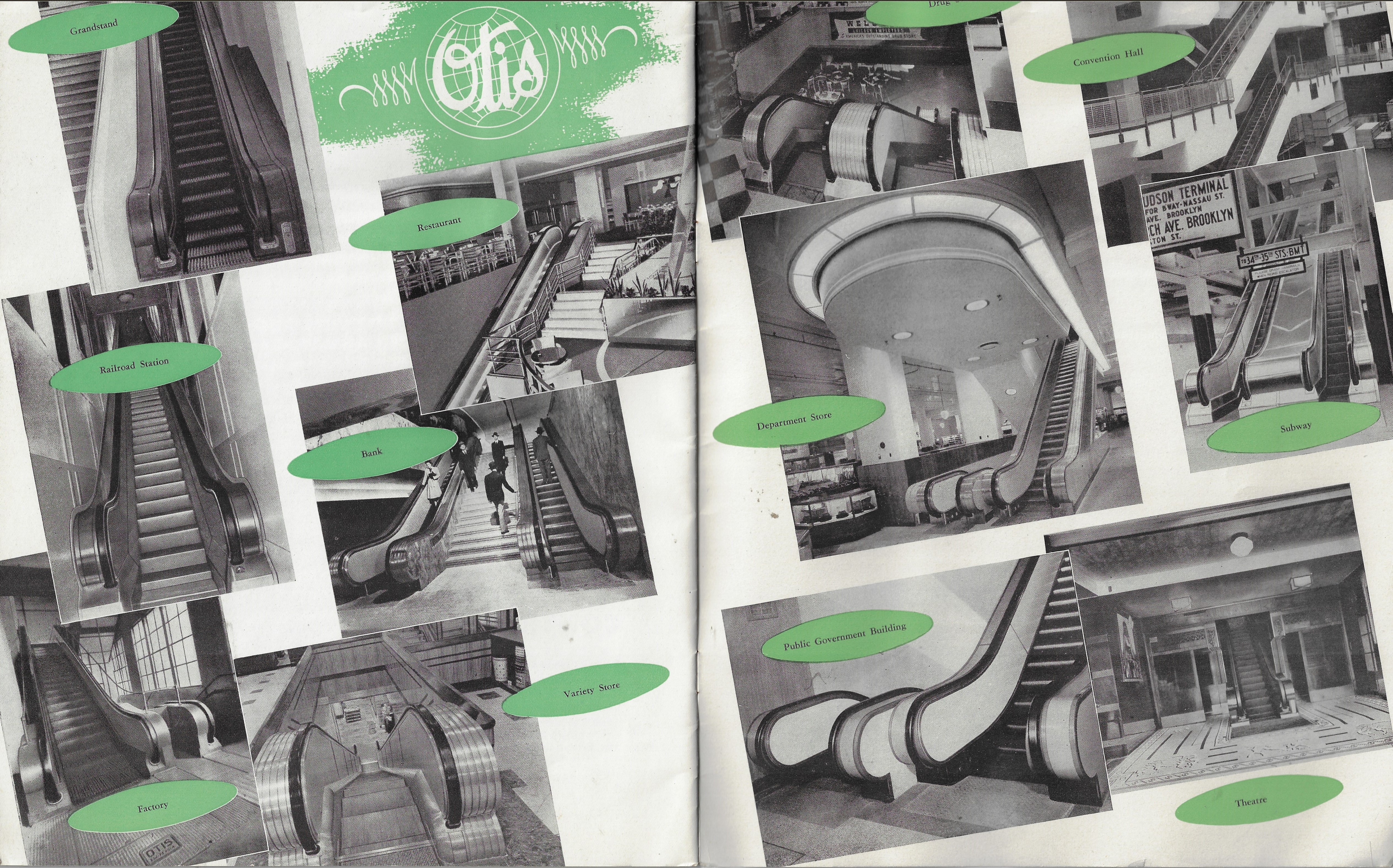
    The Otis Elevator pamphlet (1947) is efficiently designed beneath its semi-bizarre cover, floating in odd typeface, completely lifeless design, mannequin humans, and washed-out pastels.  The Chinese coloring book style of its covers hides a superior content, complete with schematics and beautifully supplied with photos of elevators long-since removed from sight and memory. 

      Books covers otis

    Books covers otis _2_

    The Hooking pamphlet is not about its obvious contemporary counterpart, but is a luminous, luxurious introduction and stylizer to the science of hooking large objects to cranes via giant hooks and chains, and especially about how to keep yourself from being  crushed by tons of steel not hooked properly. 

      Books covers hooking

    The Mystery of Filters charm is wholly in its title and cover design, its text describing nothing but camera filters.  It is still a cool cover, nonetheless.

      Books covers mystery filters

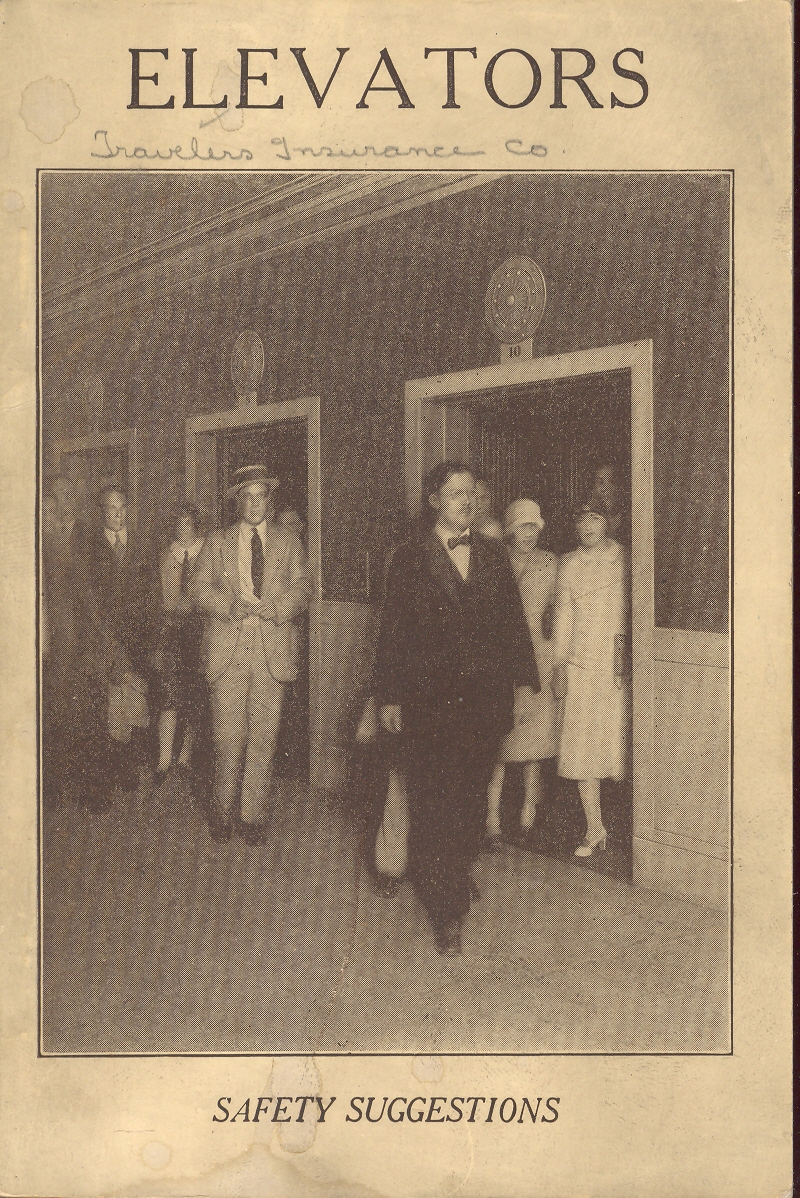
    Elevators, published by Travelers’ Insurance Company, tried to protect themselves a little further by ensuring safe practices of elevator operation, mostly in industrial settings.  This was published in 1926 and was already in its seventh printing from its inception in 1913 when the elevator was just in its second decade of popular, relatively widespread usage. The haven’t-given-this-cover-design-a-moment’s-thought hides a thorough (and bland) treatment of elevator safety; too bad, the cover photosnap-art promises something more.  Its not there, except for this beautiful photo of an industrial elevator op with a tie.

    Books covers elevators

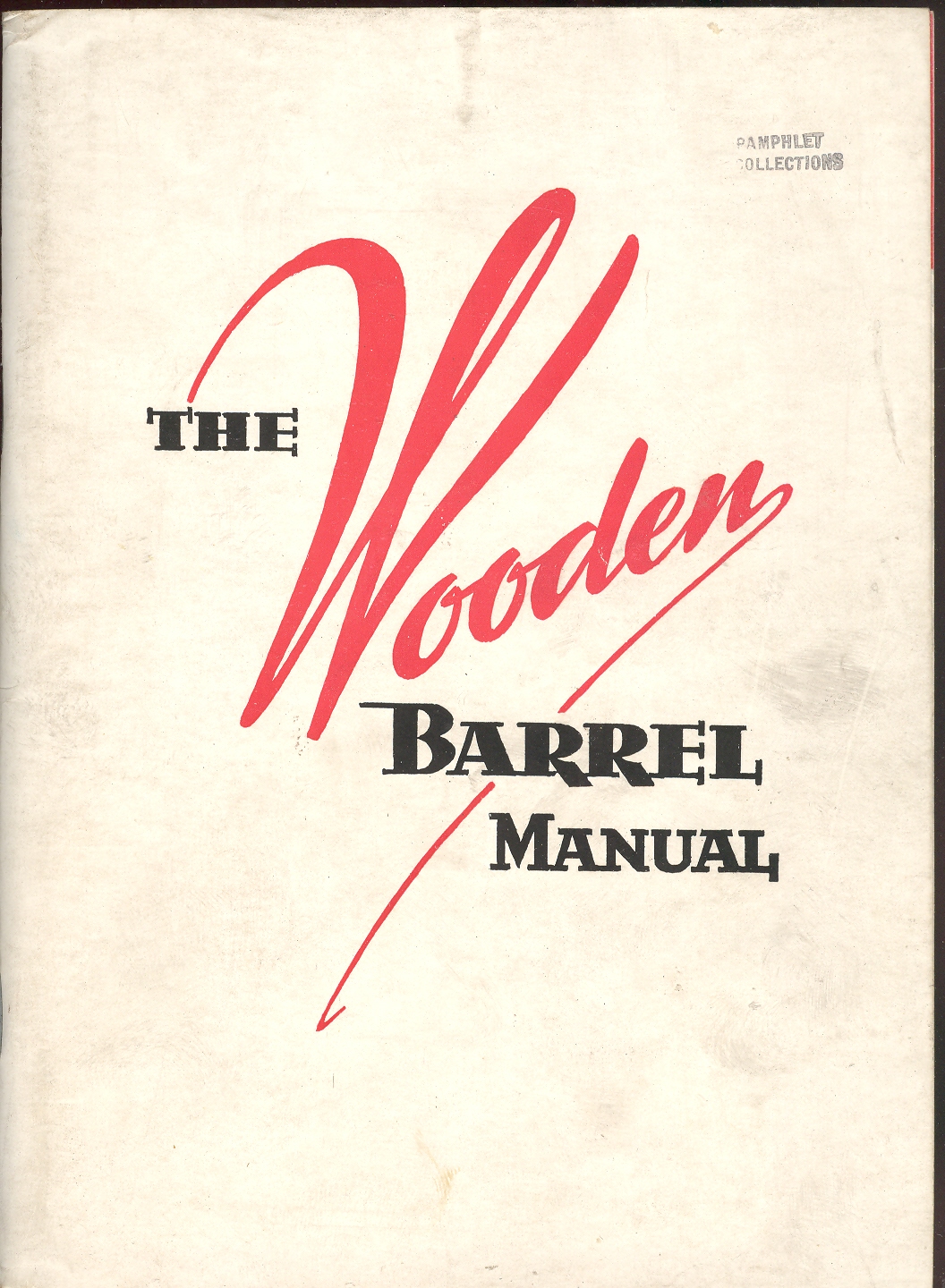
     And coming back to wood barrels that are not necessarily filled with pig (or wild boar) bristles but with something else less advanced comes this manual on making wood barrels.  Everything is there, everything you’d need to make a barrel (and a good one at that), and I admire this sort of fantastic dedication to what is essentially (to our modern mind) mundane—except that it is as dry as well-cured barrel wood.  But I admire it still,  as I do the Elevator pamphlet, because, well, they’re done right.

    Books covers wooden barrel


  • Found Book Art: Franklin at Sea, 1787

    JF Ptak Science Books  Quick Post

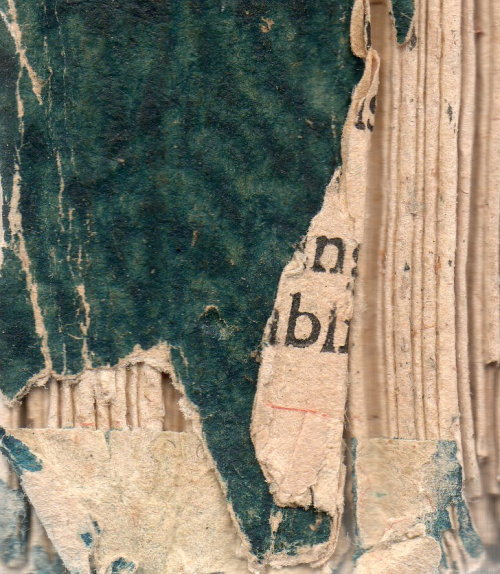
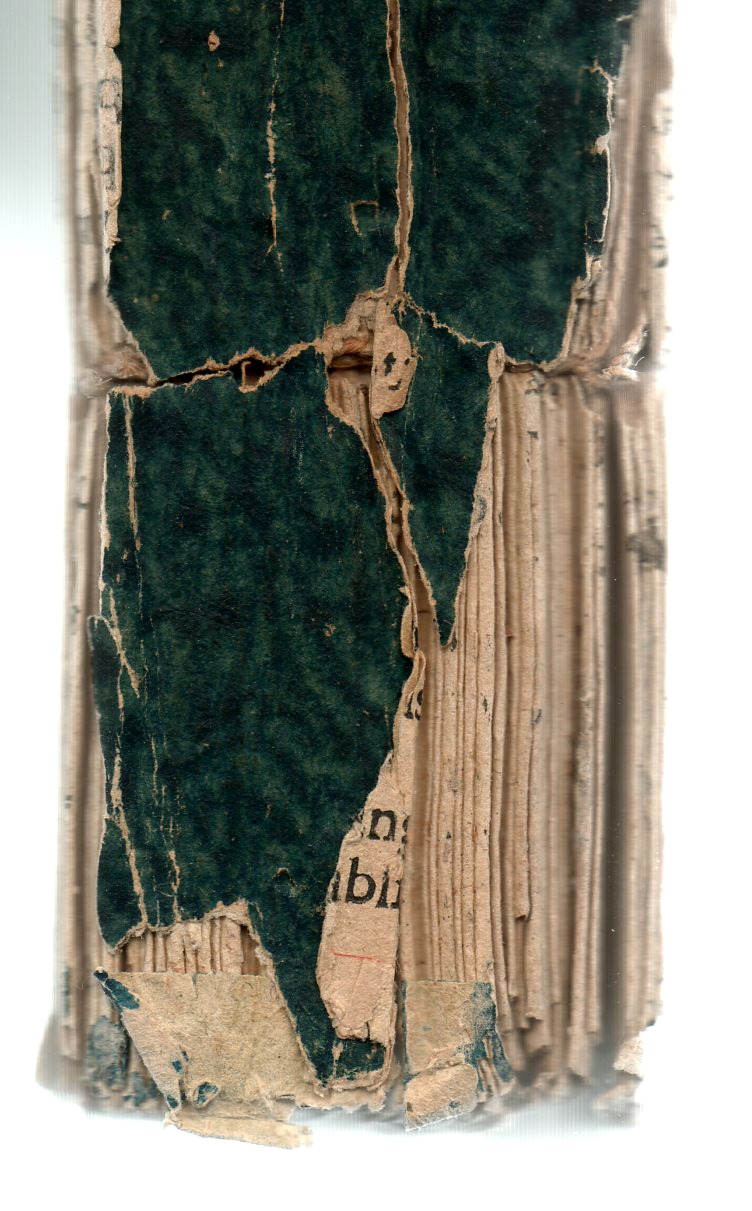
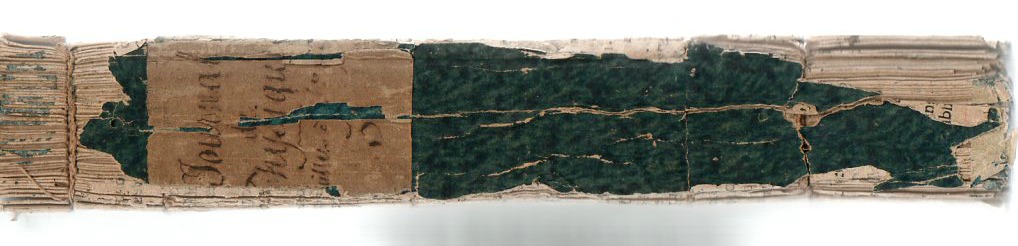
    One of my favorite bits to compose for this blog is the Found Book Art series–which is odd because there isn’t even a category for it. Maybe there are a dozen of these in the 4500 posts here, so there aren’t many, though there could be,..I guess I could do one a day, but that might take the special flavor away for me. In any event, I like them; I’d probably like them even more if I hauled out one of the microscopes and did some close work on them.  For today, though, I’m just looking at this pretty spine of the journal Observations sur la Physique sur l’Histoire Naturelle et sur les Arts of 1787 which contains a seminal contribution1 by Ben Franklin on the Gulf Stream.  

    Franlin bookart634


    Franlin bookart633

    These are details of:

    Notes:

    1. Suite de la Lettre de M. Benjamin Franklin, a M. David le Roy, Membre de pluisseurs Academies, Contenant Differenres Observations sur la Marine, a three-part series printed in Observations sur la Physique sur l’Histoire Naturelle et sur les Arts, avec des Planches en Taille-Douce.…dedicated to M. Le Comte d’Artois, and edited by l’Abbe Rozier, J.A. Mongez, and M. de la Metherie, in the issue for July-December 1787, volume 31, and Printed in Paris at the Bureau of the Journal de Phyique, 1787.


  • Spheres of Recognition: the Portable Gym and Expulsion from Eden

    JF Ptak Science Books   Quick Post

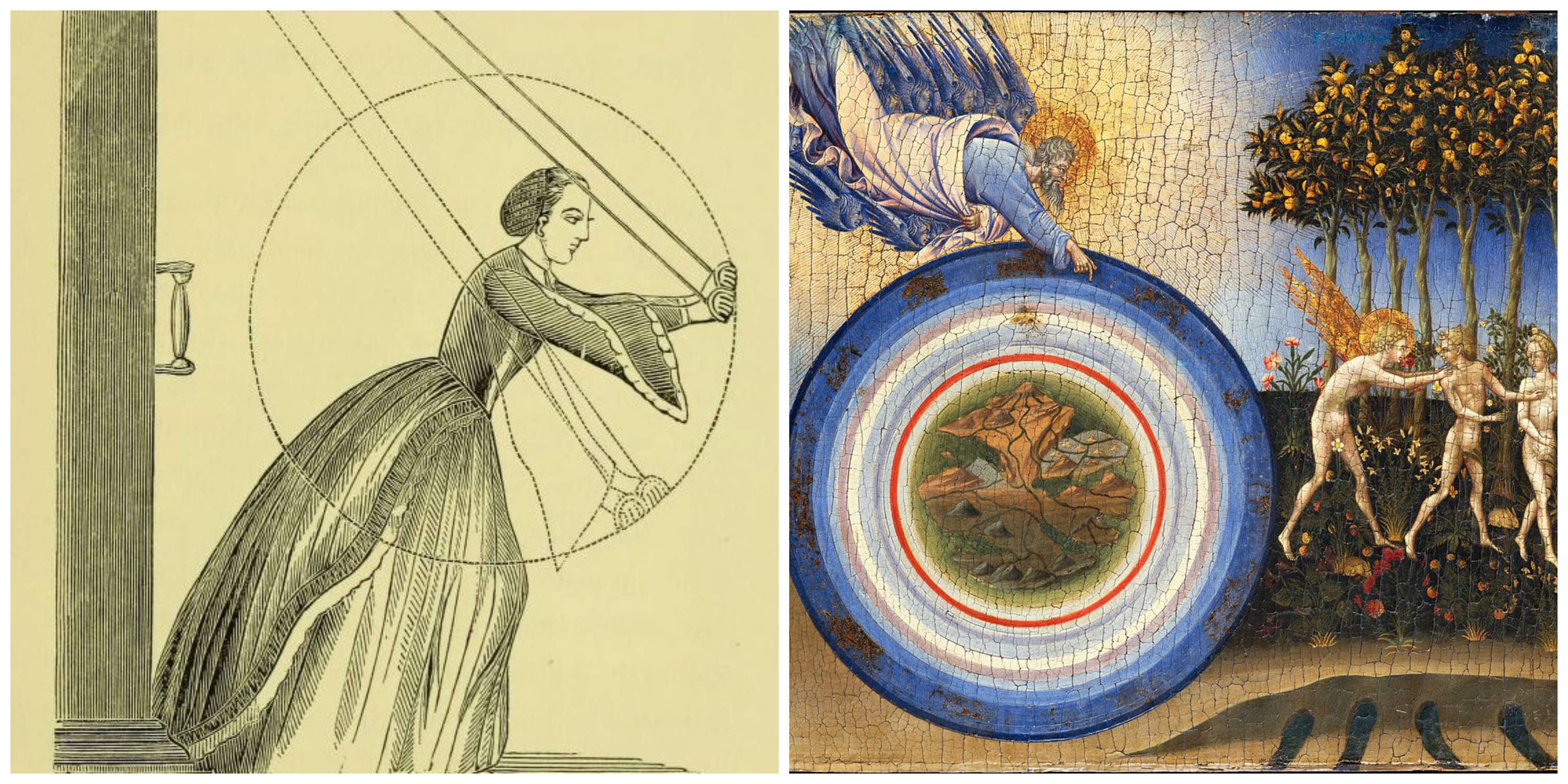
    Spheres

    There was some immediate shock of recognition1 in seeing this image, not for its exact earlier-appearing twin, but in the sense of the spherical delivery of something. In this case, it is a Victorian woman and the depiction of her movements in exercise–but what I remember and associate with this is the Sienese Giovanni di Paolo, and his depiction of the monumentalist giveth-and-taketh cycle of the creation of Eden and the epic fall of humanity and its expulsion from it.  Di Paolo put a lot of history into that one image, the perfection of Paradise and the disposal of Adam and Eve, all via the intercession of the creator of the universe, with is hands of the sphere of being. (Talk about building a wall….).  

    The image of the exercising woman is found in a delightful book used in the banner of  Chloe Roberts (@) a web producer for the Wellcome Library (http://blog.wellcomelibrary.org/) collection and which is available in full in a very nice copy at Internet Archive, here: The portable gymnasium : a manual of exercises, arranged for self instruction in the use of the portable gymnasium, by Gustav Ernst, London 1861: https://archive.org/details/b20399789  Image source for the di Paolo:  https://de.wikipedia.org/wiki/Giovanni_di_Paolo#/media/File:Creation-and-the-expulsion-from-the-paradise-11291.jpg

    Notes

    1. And with that phrase comes other immediate recognitions, mainly in book form: William Gaddis’ The Recognitions, and Edmund Wilson The Shock of Recognition; both are excellent, and the Gaddis may well be a contender for Great American Novel. 


  • The Anatomy of Creation: the Brilliance of James Ussher

    JF Ptak Science Books   Post 2563

    Ussher

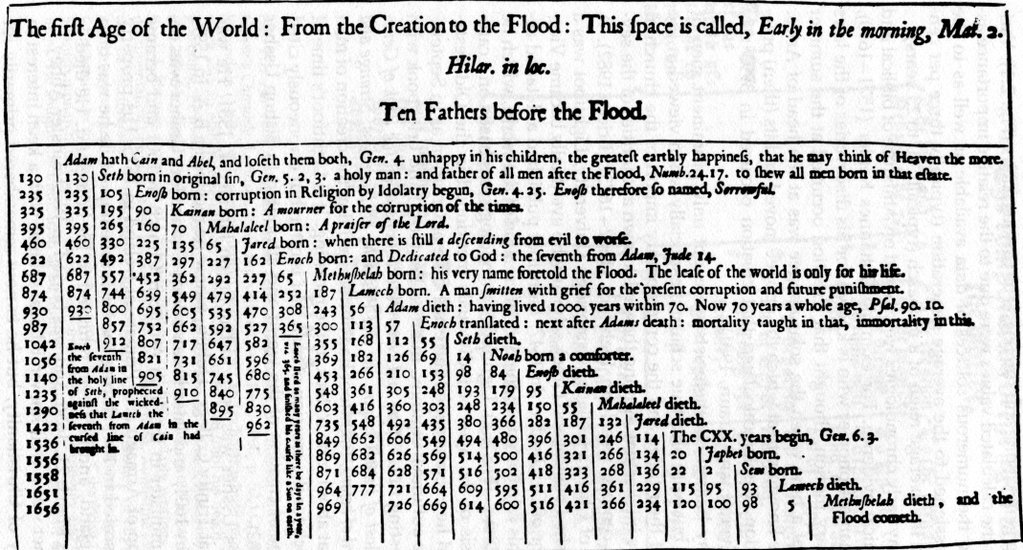
    [Source: undetermined, via Twitter]

    [“Ten Fathers Before the Flood”–what a great title for a book!]

    Dublin-born James Ussher (1581-1656) was born into a well-placed family and achieved high theological orders, being the Irish Archbishop of Armagh and the Primate of All Ireland, and of course a polyglot and scholar above all. What he is remembered most for today–at least outside of Ireland–is his chronology of the world which placed the creation of all things at a very specific time, on the evening of 22 October 4004 b.c.e. (I guess the b.c.e. should be redundant, but it isn’t.) 

    I should point out that I’m writing about this today because Thony Christie (of the excellent Renaissance Mathematicus blog https://thonyc.wordpress.com/) shared a  tweet of Ussher’s table of chronology from Australian Peter Harrison and it brought back memories of dealing with Ussher from years ago.  It is easy now to take a few potshots at the man and his work, daring to think that Ussher could figure this out using Biblical chronology and establishing the date of the creation of all things to an afternoon 6019 years ago.  

    The thing about Ussher is that he was a very smart guy–very.  His work puts me in the mind of Robert Burton and his Anatomy of Melancholy, which is a great and probably unreadable book, filled with a staggering amount of everything. Ussher as it turns out uses the Bible of course but uses a vast amount of secular references as well, reaching out to all sorts of important and obscure sources, some of which have disappeared over the last 470 years.  As a piece of scholarship (he wrote on general history from Gensis to the destruction of the temple at Jerusalem) and the product of the mid-17th century, Ussher’s work (completed evidently in just four years, though how long the overall research took is anyone’s guess) is a tremendous accomplishment. All it takes is a little dip into it (forgetting the modern knowledge of geology etc.) to realize that this is a fantastic work.  

    •  Full text of the Annals of the World appears here: https://archive.org/stream/AnnalsOfTheWorld/Annals_djvu.txt

    In his introduction/epistle Ussher remarks that many of the great historians considered marking the event of creation to be an impossible task, some saying that only divine intervention would lead to the ultimate cause. He cites the preface of Censorinus in his (fantastically titled) Explication of Times Intervals: “If the origin of the world had been known to man, I would have started there.” (Consor. in c. 20.)  And also Ptolemy in his Astronomical Supputations on the impossibility of this knowledge, “To find the details of the history of the whole world or such an immense period of times, I think it is beyond us that desire to learn and know the truth.” (Ptolem. 1. 3.)

    Ussher calmly explains how he did came upon doing it for himself without much fuss: “Anyone can do this who is well versed in the knowledge of sacred and profane history, of astronomical calculations and of the old Hebrew calendar. If he should apply himself to these difficult studies, it is not impossible for him to determine not only the number of years but even the days from the creation of the world. Using backward calculations, Basil the great, told us we may determine the first day of the world.”

    Ussher signs off from the epistle to start his work so: “Other things the prudent reader will figure out for himself. I wish you the enjoyment of these endeavours and bid you farewell.”  Even if you don’t get past this intro you’ll still get a decent understanding of how deep Ussher went, and why he should be remembered for the content of his work in context of his time rather than just that beginning-of-creation date.  

    Notes:

    1. And we wont discuss here the whole end-of-creation thing, which should have come to pass about 11 years ago, if not earlier (if using the calculation of others), as found in 2 Peter 3:8King James Version (KJV) “8 But, beloved, be not ignorant of this one thing, that one day is with the Lord as a thousand years, and a thousand years as one day.” So six days of creation=6,000 years, 4004bce+6k=2004 ace.  

    2. Other early estimates of Creation include:

    • Bede 3852 bce
    • Scaliger 3949 bce
    • Kepler 3992 bce
    • Newton ca. 4000 bce

  • Design in U.S.A-Themed Pamphlets, 1895-1945

    JF Ptak Science Books   Quick Post 

    USA Naive_3_

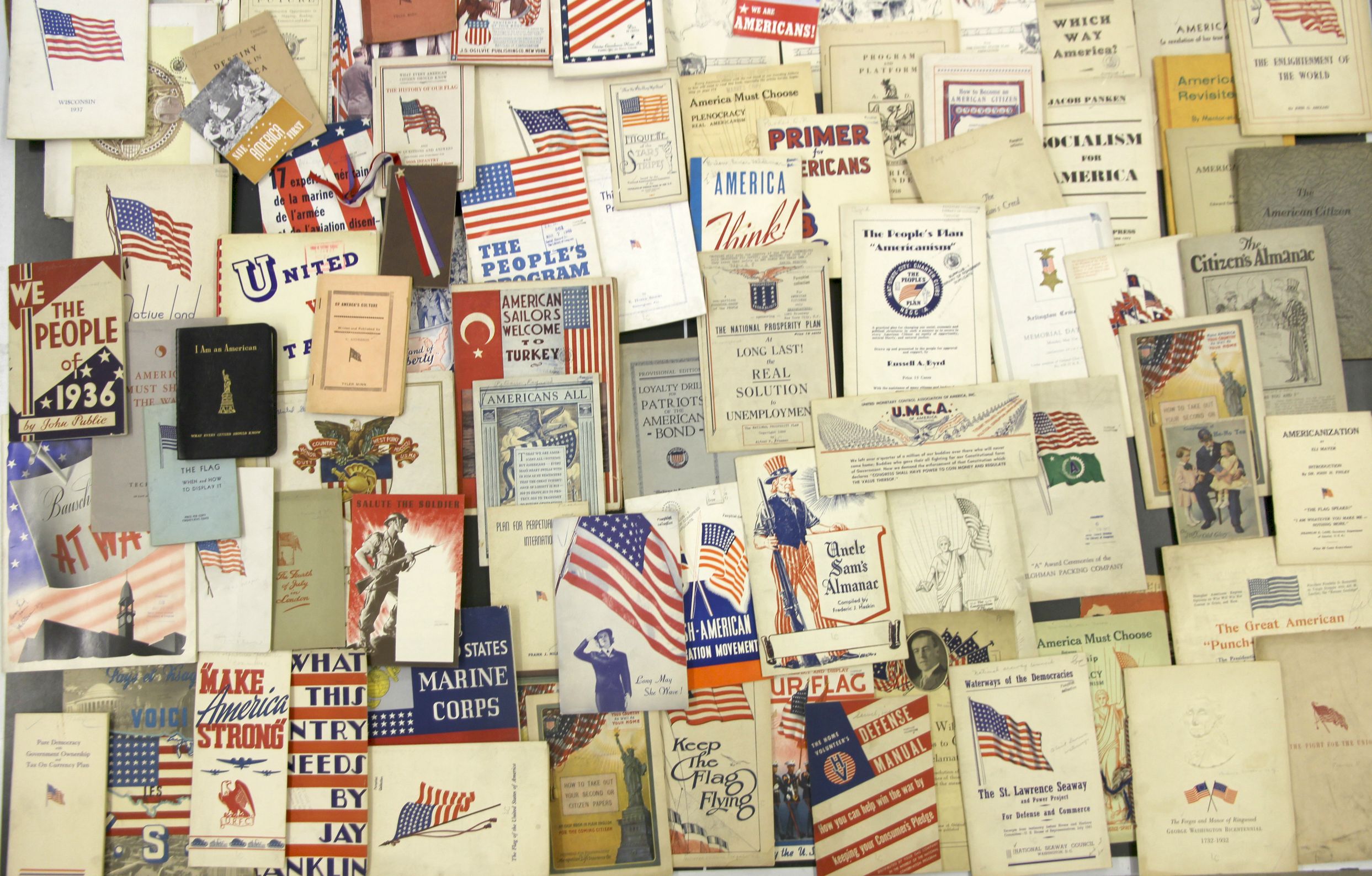
    I’ve written a number of times on this blog on the now-unusual covers and titles and contents (sometimes all three combined) culled from a 90,000-item pamphlet collection. This afternoon I came across a small collection of U.S.A. patriotic (and otherwise) covers, published 1895-1945, most of which have a flag or other patriotic emblems on them.  Some of the 125+ so works are simply patriotic works, some are flag-emblazoned works on economics, some are anti-Commie, some are isolationist, and some are, well, a little meshuga–what they all have  in common is that they either have a flag or the (declarative!) words American/American on the cover.  There’s more to this collection, but this will do for now–I think these would be very interesting, and attractive, displayed properly, and they’d have more than a design-related story to tell. 

    And details:


  • A Remarkable, Outsidery Effort in Economics, 1934

    JF Ptak Science Books   Quick Post

    Outsider depression ms

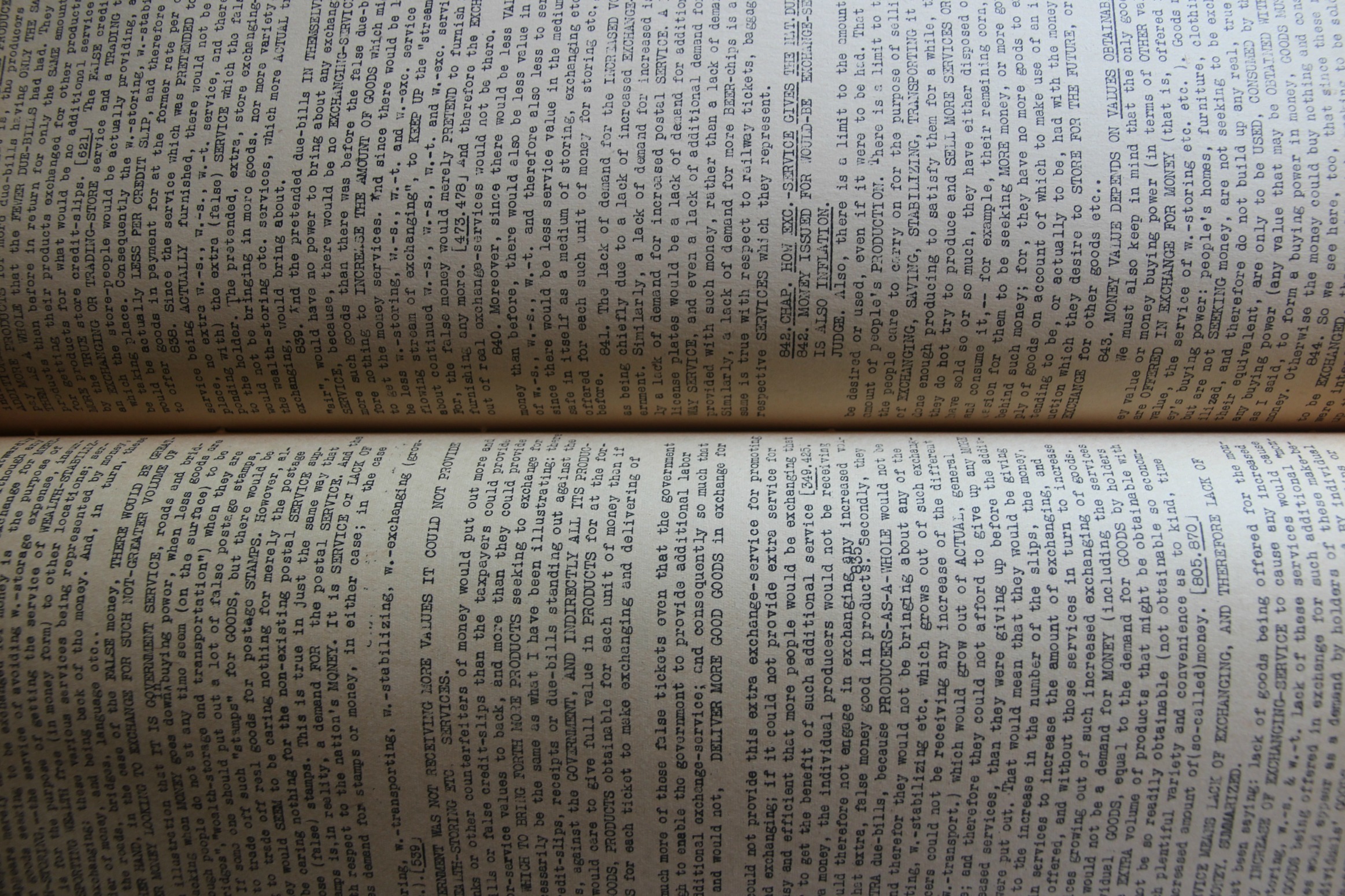
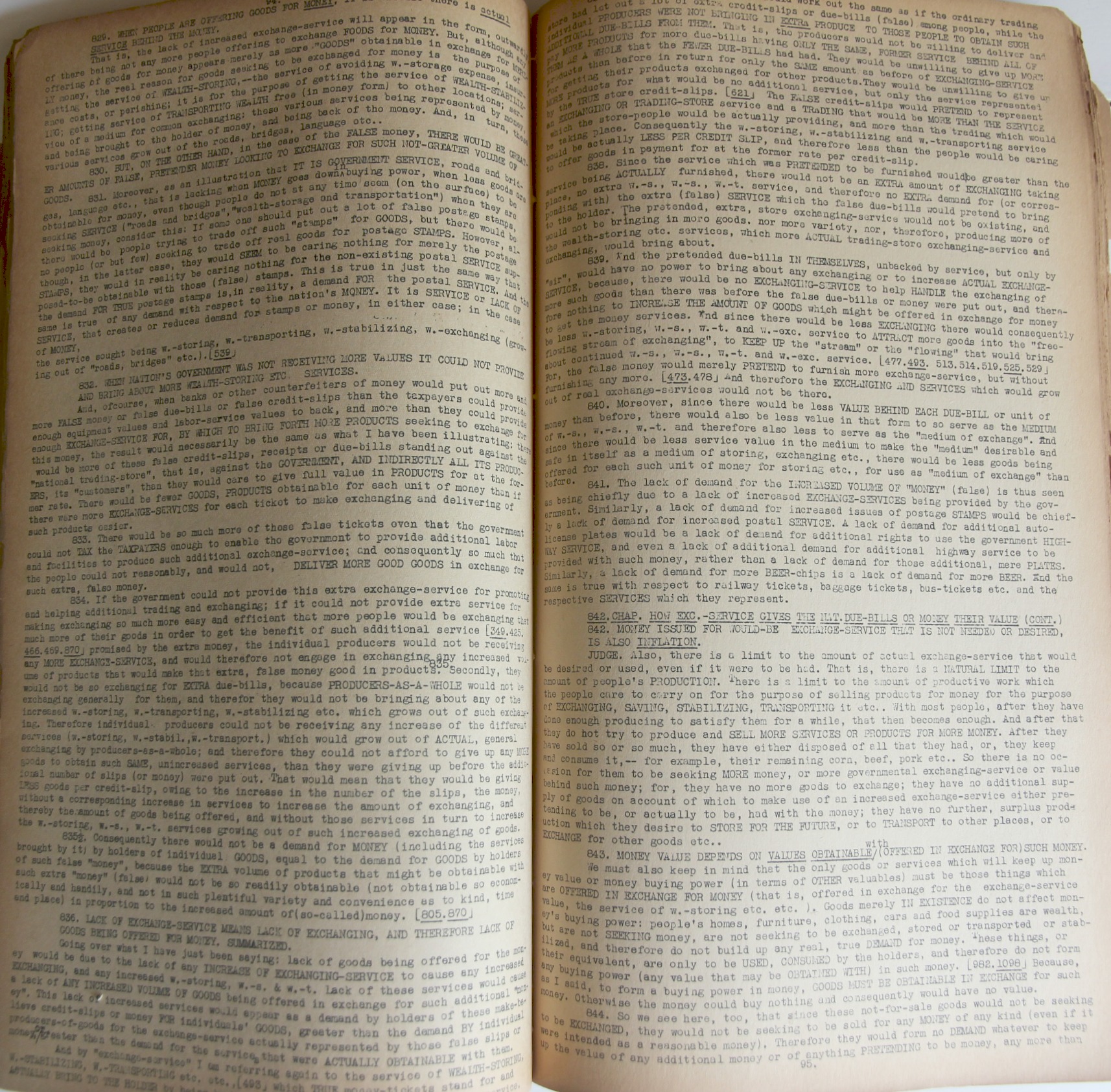
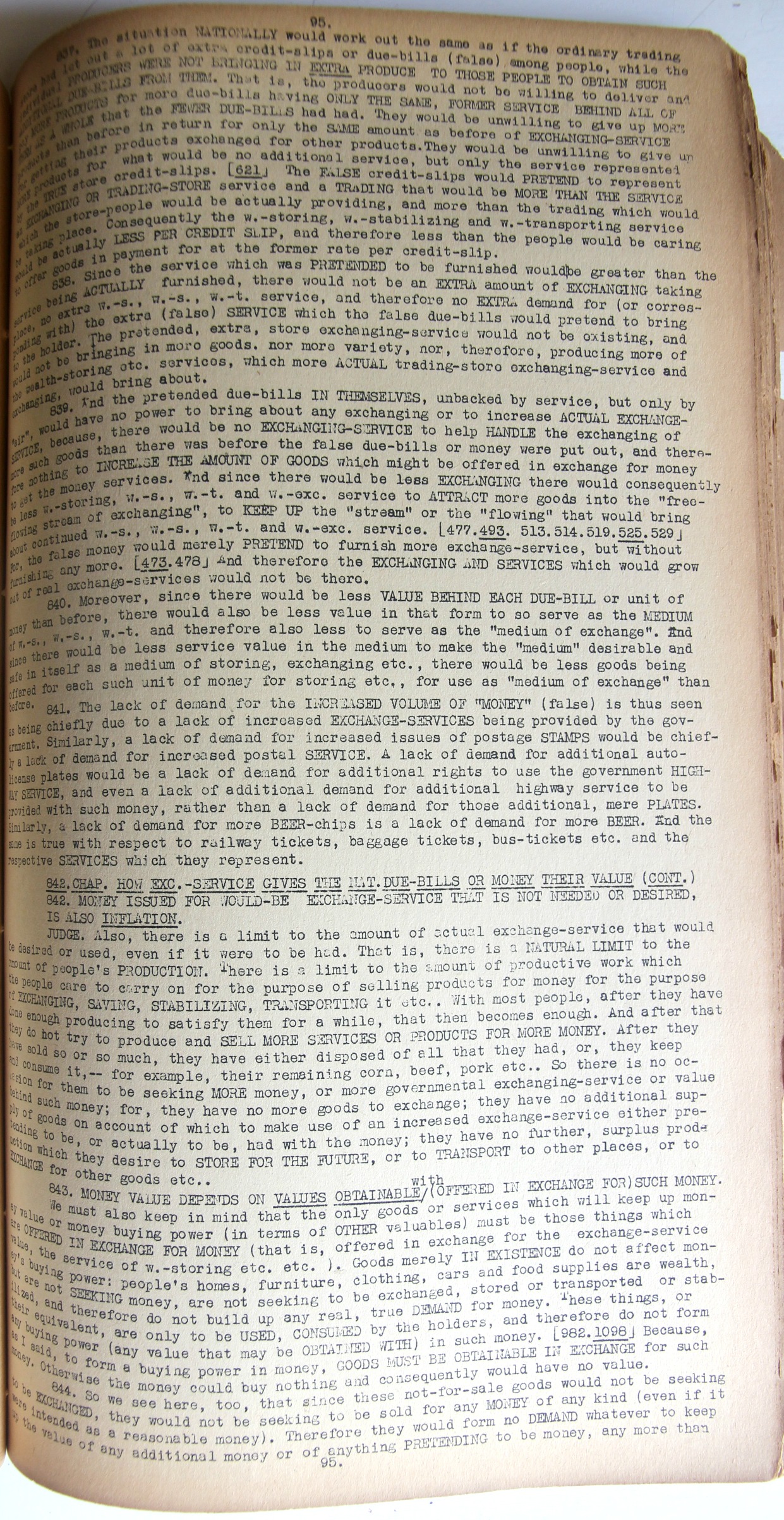
    Hard Times: Cause and Cure, a Bankrupt Farmer and an Honest Judge Talk it Over was written by Tolley Hartwick and published by him in 1934, in the near-height/depth of the Depression.  Hartwick’s work was extraordinary, though perhaps mostly within itself. From what I have read and understand, this may be a semi-private insight into the development of economic systems and the decline of the U.S. economy in 1929.  “Scientific Government/Scientific Taxation/Scientific Money” is the rallying point on the first page of this very long document that claims no title page and but scant  explanation of its origins.  The work is–in an odd and difficult way–an artwork in itself, mostly due to its dense and unrelenting design.  It is 15 inches high and 8.5 inches wide, typed single space so that on the page’s very narrow-margined self there are more than 90 cramped lines of text; and with approximately 15 words per line, that means each page is very heavily worded with something like 1100-1350 words, which is pretty impressive.  And at 210 pages, the document is about 250,000 words long, making it highly combative.  

    Outsider depression ms _2_

    I’ll never come to know what Mr. Hartwick was writing about because of the work’s secret complexities, which is too bad, at least for me.  

    But in its very dense, very full way,  printed on now-crumbling paper, and with a high degree of difficulty to decipher its message, the work presents itself as something larger than what it is–it has a certain look and feel of something very difficult to create, a certain “obviousness” of painstaking longevity that gives it more a feel of an artwork than a book.  

    In any event, I like it. 

    Outsider depression _3_[This may be a unique–with its provenance being the Library of Congress and one of the copyright deposit copies–as I can find no trace of it except for its entry in the Copyright Office publication for materials received in 1934.]


  • The Small Story of Animal Glue, and other Small Stories

    JF Ptak Science Books   Quick Post

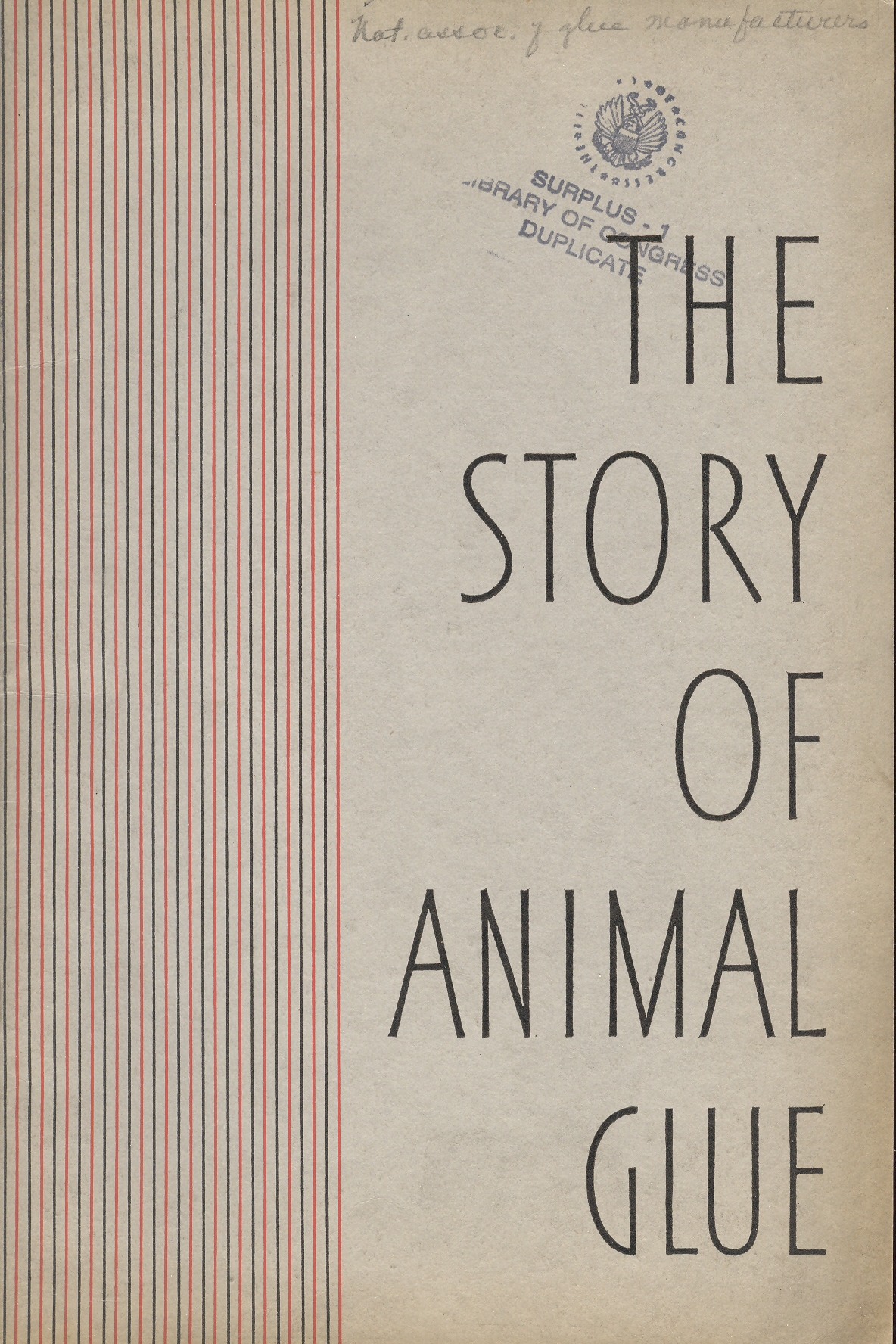
    In my collections of small collections I have a collection of small unusual pamphlets that tell the story of something uncommon. Everything in this sub-collection must have “The Story of …” on the cover; after that, anything goes.  

    This is a small selection, though enough for now…

    + story anim glu + story baggage+ story fertiliz