A Daily History of Holes, Dots, Lines, Science, History, Math, Physics, Art, the Unintentional Absurd, Architecture, Maps, Data Visualization, Blank and Missing Things, and so on. |1.6 million words, 7500 images, 4.9 million hits| Press & appearances in The Times, Le Figaro, Mensa, The Economist, The Guardian, Discovery News, Slate, Le Monde, Sci American Blogs, Le Pont, and many othr places… 5000+ total posts since 2008.

Category: Impossible Books

  • Outsider Emblemata, 1889

    JF Ptak Science Books  Quick Post

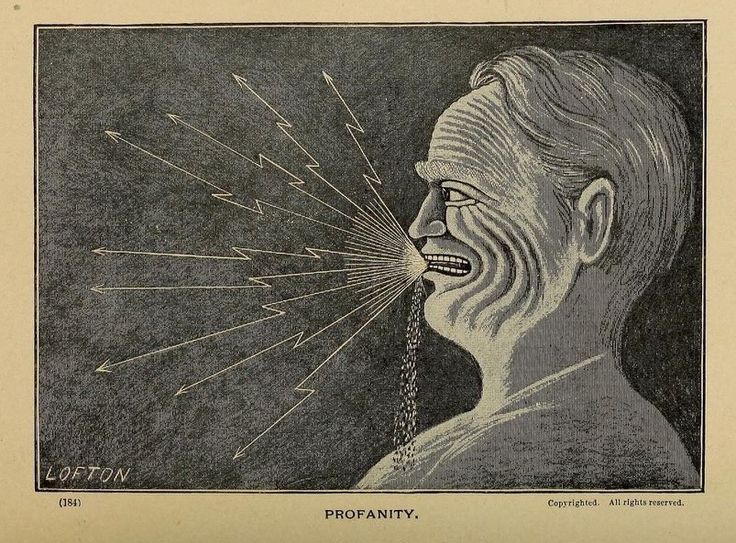
    Character Sketches or the Blackboard Mirror, a Series of Illustrated Discussions, Depicting Those Peculiarities of Character…Subjects Illustrated With Over Fifty Engravings, by George Augustus Lofton (1839-1914), is a peculiar but not necessarily transcendental religico-social-morality screed in the vein of more antiquarian emblem books.  The major attraction to the work were the very unusual, half-edgy, unschooled illustrations for the morals investigations made by the author–which do approach a sort of transcendental nature, all on their own. The text I’m afraid pulls the drawings down some, as I’d rather work the stuff out with just the image and a title, the descriptions becoming very quickly a preachy jaundice of judgment more so than insightful observation–though the descriptions of the images do have their moments from time to time. 

    Blackboard mirror profanity[Source for all images, plus the text and rest of the images, located at Internet Archive, https://archive.org/stream/charactersketche00loft#page/n11/mode/2up   ]

    I think the drawings by Lofton are remarkable for their  (probably unschooled) expansively unusual possibilities, all of which are very outre for the close of the 19th century.  The human figures are certainly very stylized, but the background and foreground bits are generally very oddly aggressive, and off-putting.  


  • Judging Two Books by their Ten-Cent Covers

    JF Ptak Science Books   Quick Post

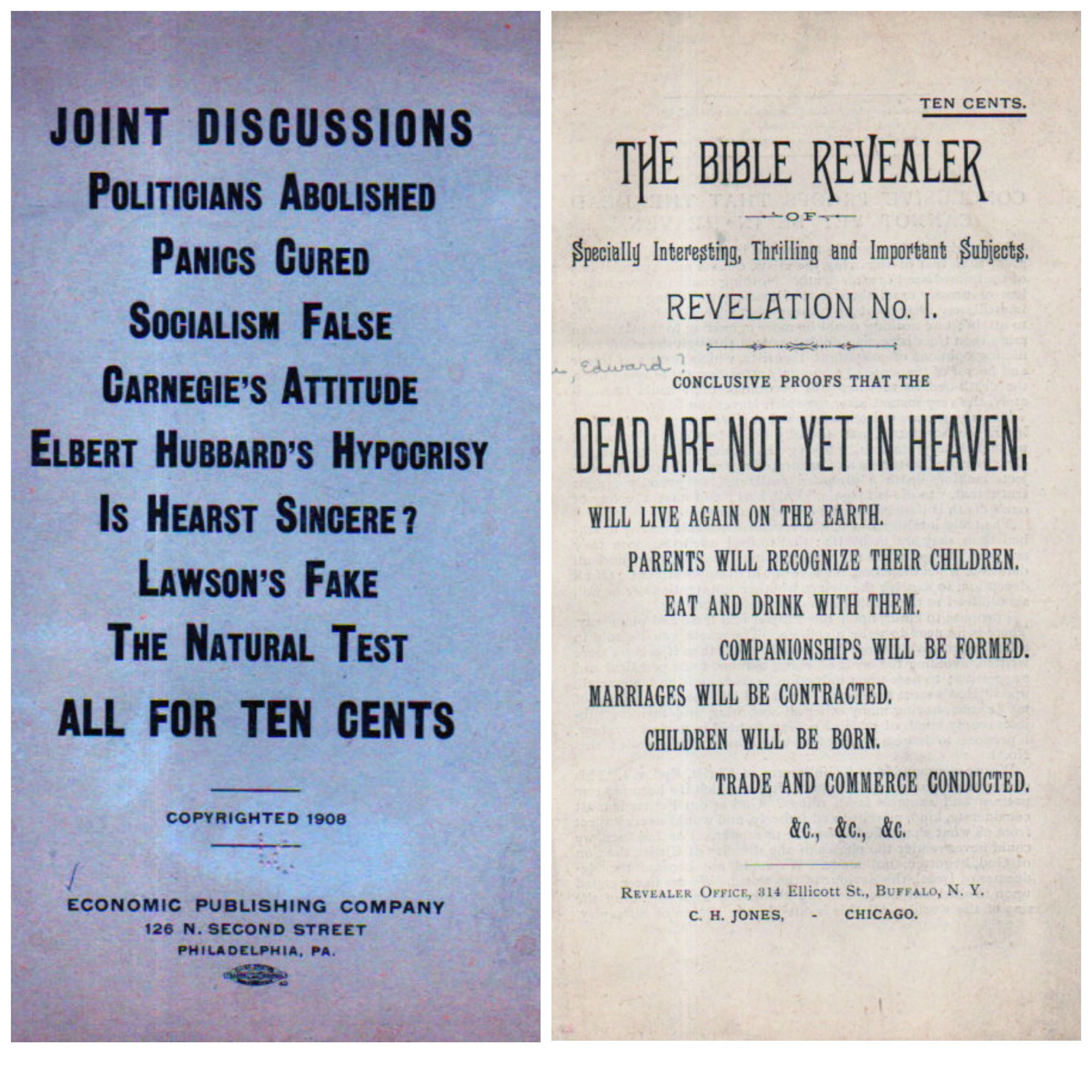
    These are two full-cover pamphlets that promise a compelling amount for the ten-cent admission fee.  The first is newer, published for ten cents in 1932; the second was printed in 1908, and for the same amount (and worth about 14 cents in 1908 monies, according to the Bureau of Labor Statistics inflation calculator).  They are each Outsidery-flavored efforts in their fields, so far as I can tell–they are also not quite interesting enough to spend any time with outside of remarking on their remark-able covers, which is sometimes that is all you need.  (The second pamphlet is actually by a very well known and influential theological person, Edward Hine, who may have achieved his greatest fame I try to establish that England is Israel, among other things, and developed a considerable following.)

    Ten Cent CollageI have other remarkable books with title similar to these in length, and composition–I’ll need to pull them all together, someday. I think that the most glorious days of enormous titles are hundreds of years in the past, and mostly 17th century from my perspective; these more-modern examples are not only long, but they are challenging and promising, all at the same time. 


  • The Flat Earth Dumpster Fire of 1891

    JF Ptak Science Books   Quick Post     Part of the History of Nothing series

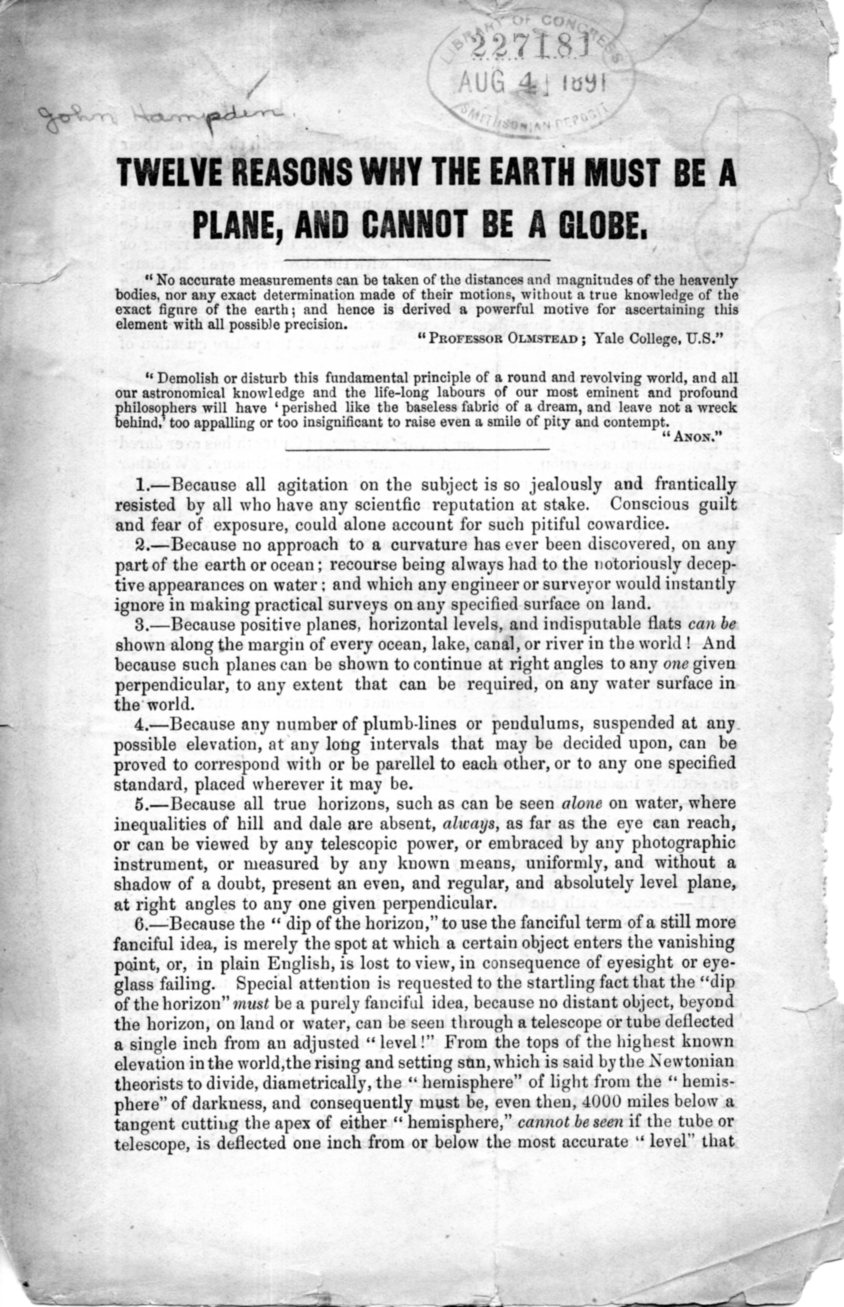
    The most disappointing thing about this tiny pamphlet is that it is not illustrated–I would have loved to see the representation of the flat Earth and its relation to the rest of the solar system.  Unfortunately, there’s nothing, only word-pictures that are not altogether descriptive in spite of liberal sprinklings of exclamation points in the midst and end of some irregular and turgid prose.  So, I’m not reporting on it, the thing being too demanding for not feasible return, but I will reproduce the thing in toto so that the curious reader may take the adventure themselves.

    The pamphlet (actually just a folded sheet of paper) was the work of John Hampden, whose name is probably recognizable to those who have read in the swollen knuckle  religious/scientific strife literature. He was a long opponent of the Earth as a sphere, basing much of his deep assertions on scripture. Hampden was that terrible mix of unctious and litigious, and fought with folks for decades, most famously with Alfred Russell Wallace, to whom he lost several libel suits costing him money and freedom over the long course of that inextinguishable dumpster fire.

    In any event, here is the text (printed I think around 1890, some 20 years after his troubles with Wallace began); this copy is the Smithsonian Institution Deposit copy via the Library of Congress, and now lives here in the studio:

    Flat Earth004


  • A Remarkable, Outsidery Effort in Economics, 1934

    JF Ptak Science Books   Quick Post

    Outsider depression ms

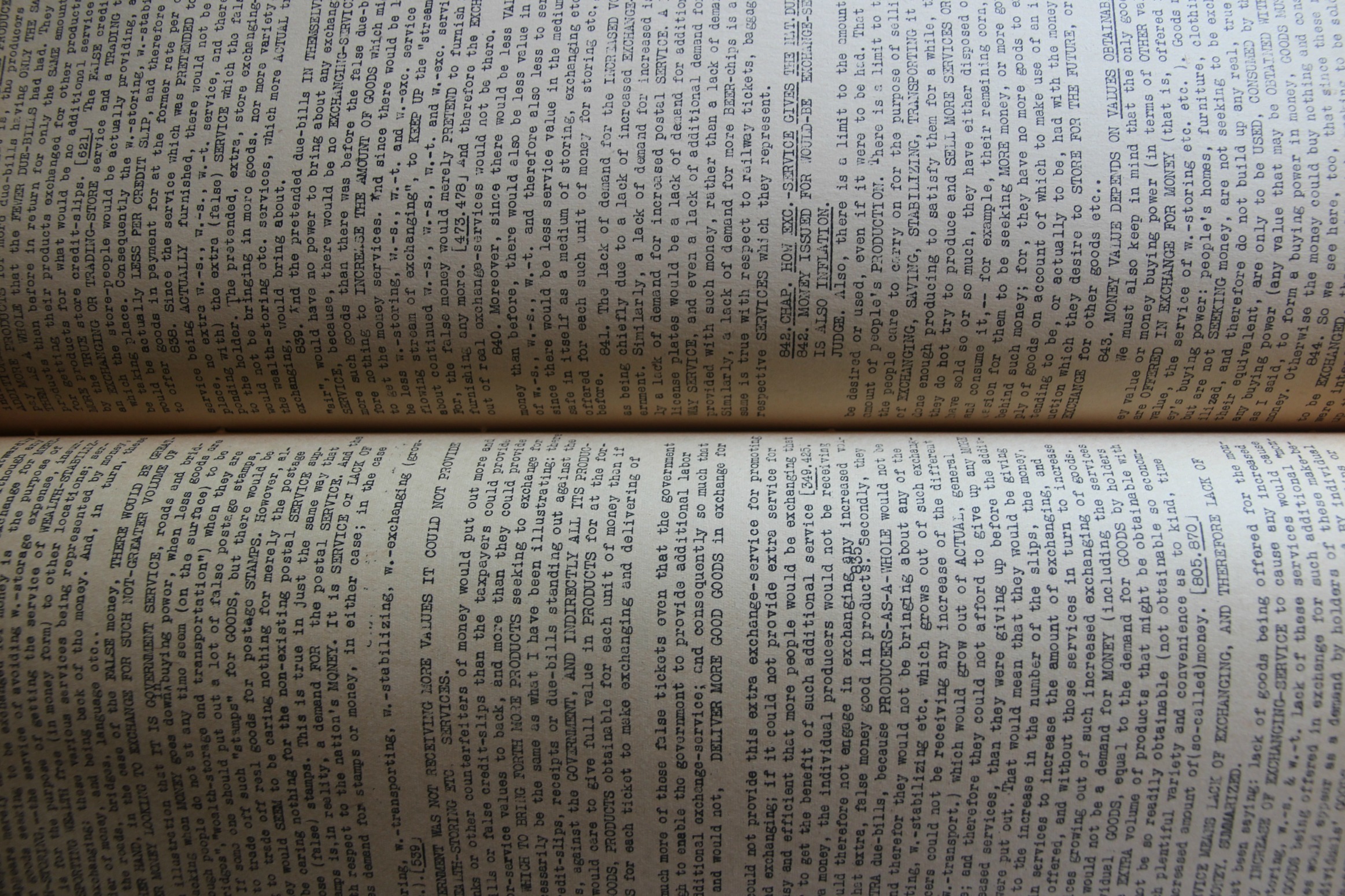
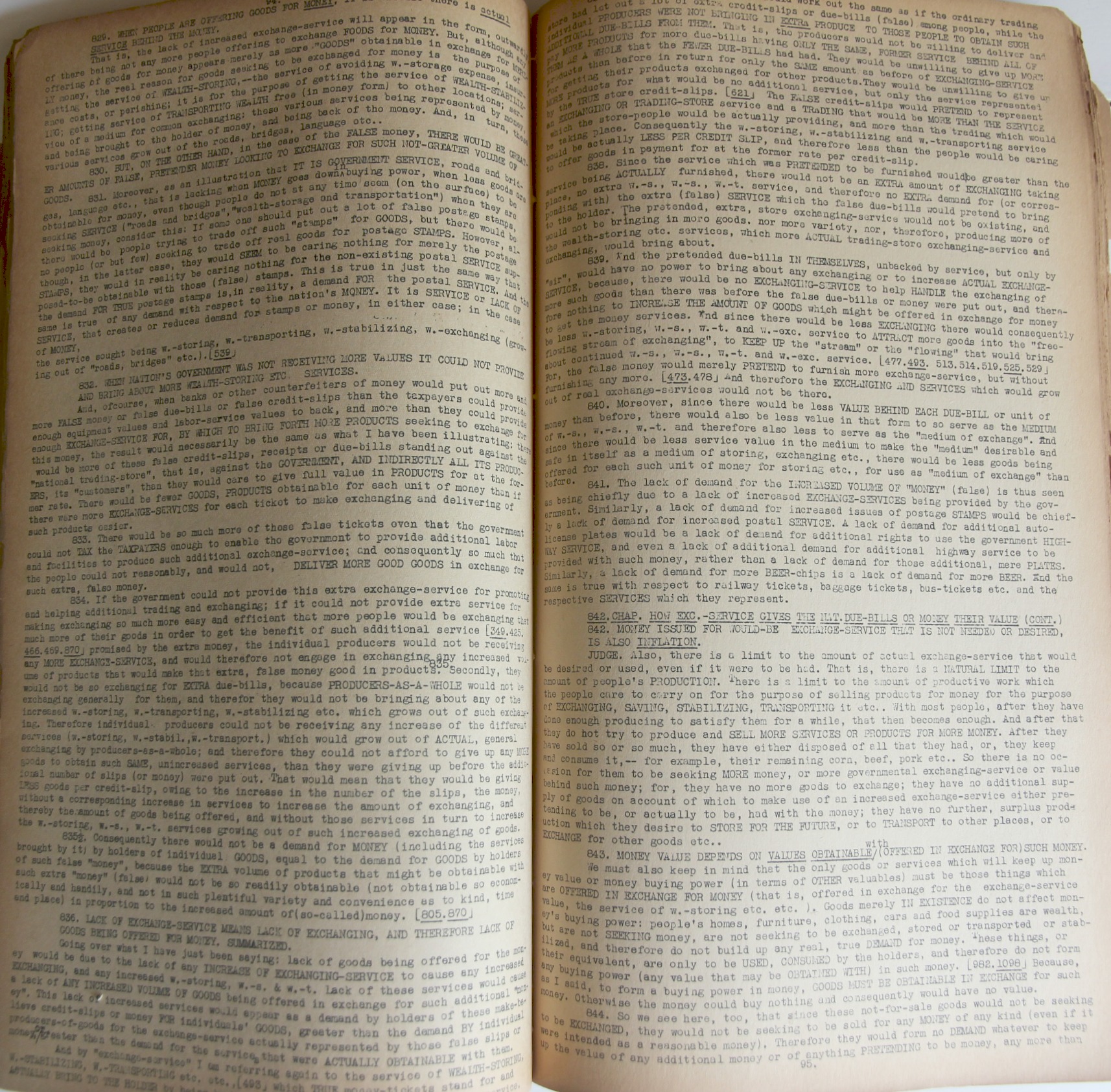
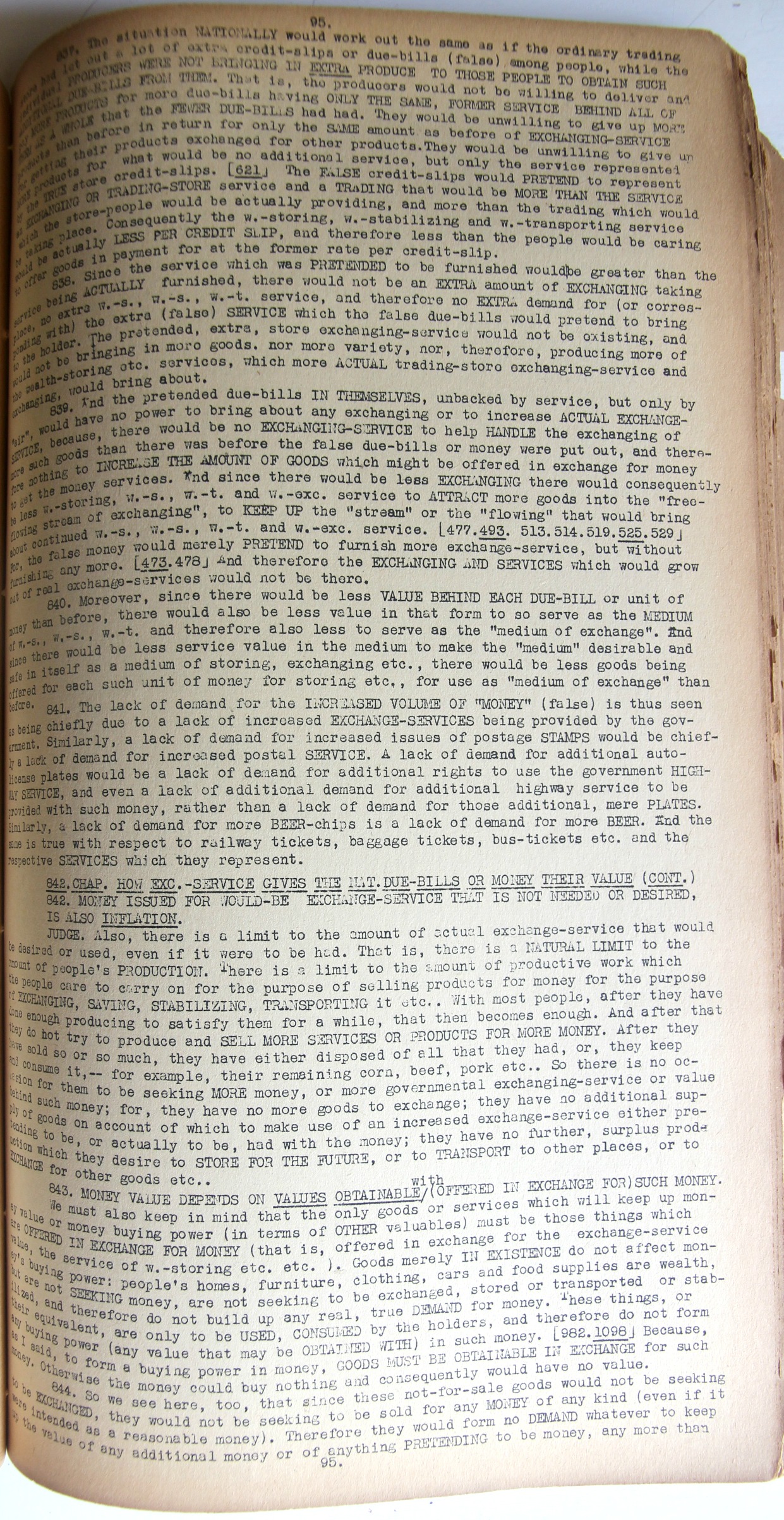
    Hard Times: Cause and Cure, a Bankrupt Farmer and an Honest Judge Talk it Over was written by Tolley Hartwick and published by him in 1934, in the near-height/depth of the Depression.  Hartwick’s work was extraordinary, though perhaps mostly within itself. From what I have read and understand, this may be a semi-private insight into the development of economic systems and the decline of the U.S. economy in 1929.  “Scientific Government/Scientific Taxation/Scientific Money” is the rallying point on the first page of this very long document that claims no title page and but scant  explanation of its origins.  The work is–in an odd and difficult way–an artwork in itself, mostly due to its dense and unrelenting design.  It is 15 inches high and 8.5 inches wide, typed single space so that on the page’s very narrow-margined self there are more than 90 cramped lines of text; and with approximately 15 words per line, that means each page is very heavily worded with something like 1100-1350 words, which is pretty impressive.  And at 210 pages, the document is about 250,000 words long, making it highly combative.  

    Outsider depression ms _2_

    I’ll never come to know what Mr. Hartwick was writing about because of the work’s secret complexities, which is too bad, at least for me.  

    But in its very dense, very full way,  printed on now-crumbling paper, and with a high degree of difficulty to decipher its message, the work presents itself as something larger than what it is–it has a certain look and feel of something very difficult to create, a certain “obviousness” of painstaking longevity that gives it more a feel of an artwork than a book.  

    In any event, I like it. 

    Outsider depression _3_[This may be a unique–with its provenance being the Library of Congress and one of the copyright deposit copies–as I can find no trace of it except for its entry in the Copyright Office publication for materials received in 1934.]


  • Little Bizarredness: Bland Hyper-oddness in Published Works

    JF Ptak Science Books LLC  

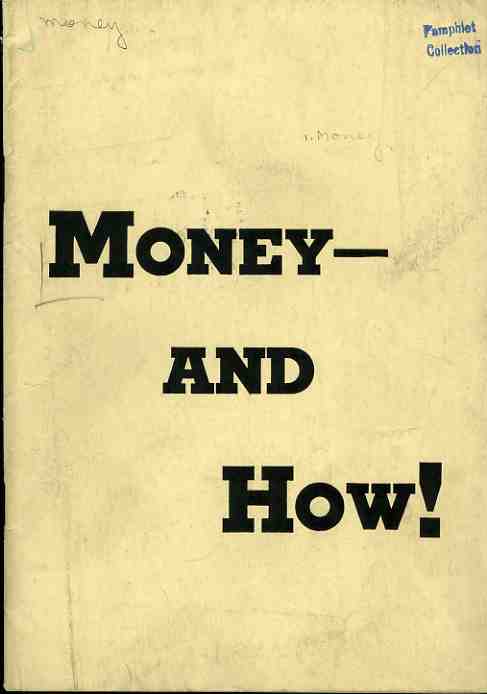
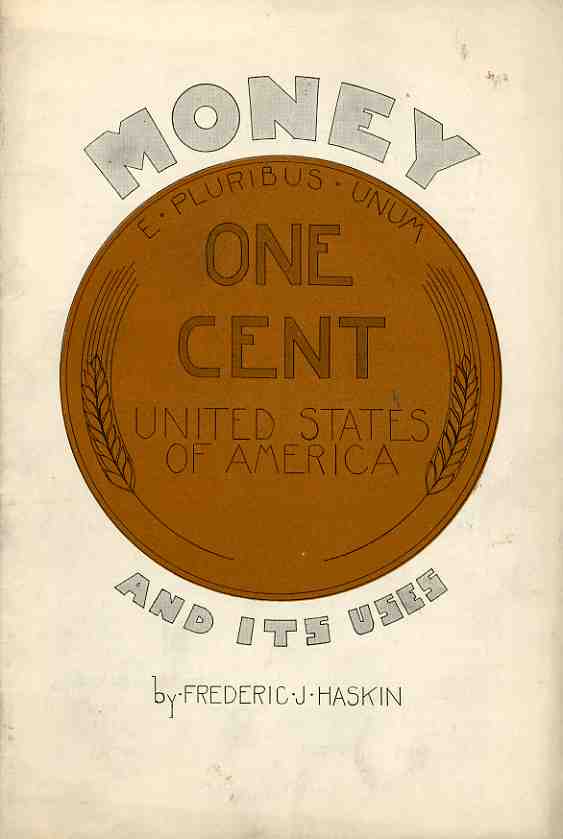
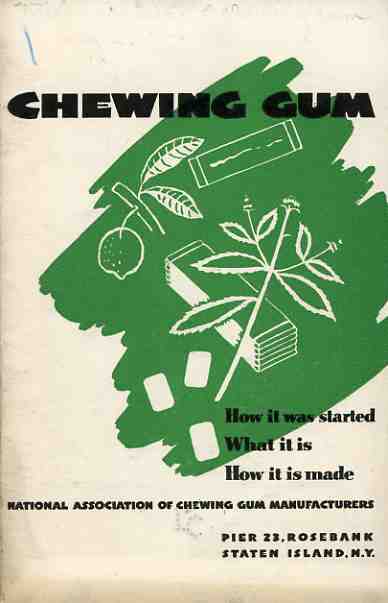
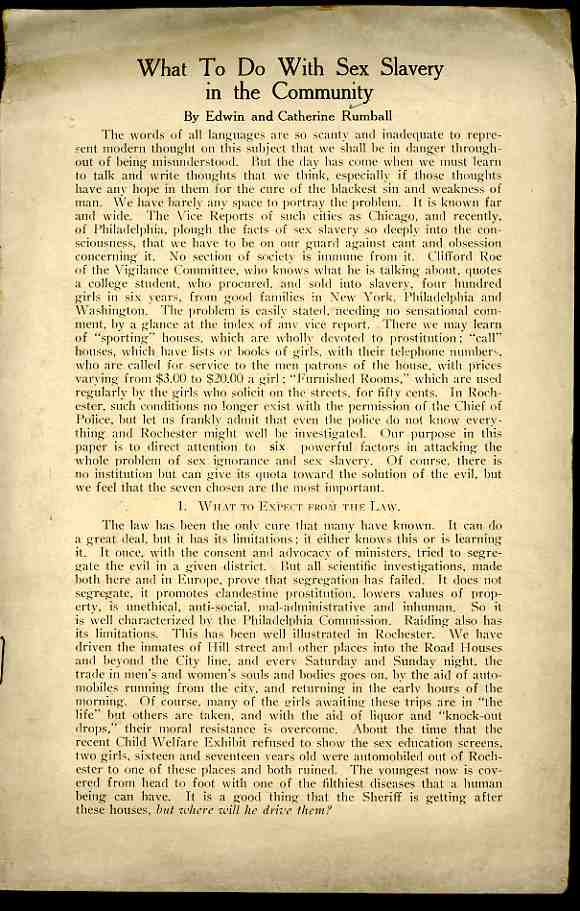
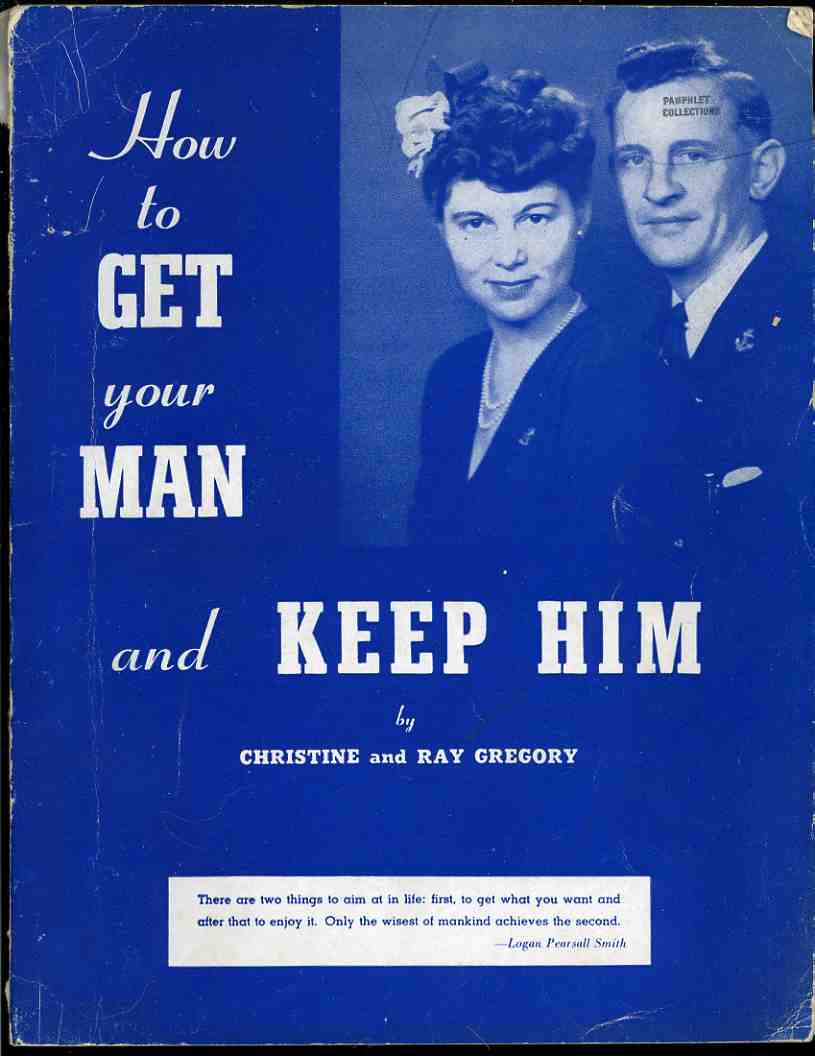
    These pamphlets are samples from a larger collection whose attention to the detail of boredom and blandness and relative inexplicability are extraordinary.  The titles intact, it mostly doesn’t matter what the contents have to say for themselves–everything, really, is right there on the front page, the meaning best left to the imagination. 

    0 blog march 9 titlitle that which661

    0 blog jan 30 substandard493
    0 blog jan 30 substandard492

    0 blog jan 02 keep man340

    Small history--penny465

    Small history--gum466

    0 blog march 9 titles making of things660

    0 blog dec 19 tnazi america302

    0 blog jan 02 keep man339


  • Picture Dictionary of Extinct Semi-Luxuries, Part 1

    JF Ptak Science Books LLC  Post 1016       

    Luxury for the not-wealthy, the luxuries of the working classes, is a relatively new invention in the West.  Virtually unmolested except by the aristocracy, “luxury” was a thing defined to exclude nearly everyone in Europe, the United Kingdom, America and virtually any other place.  Not until the second Industrial Revolution did capital become more “absorbent” to those working for it, with the working classes allowed to be paid more and keep more of it–money in the hands of the mass of society became expendable on the stuff of life that wasn’t necessarily “necessary”.   This picture dictionary–collected but not assembled by the social muse and graphical strategist Malcom Mumbry (of Landrum, South Carolina, working-class neighbors to the wealthy in the horse country of northern South Carolina)–displays some of the many new luxuries of the 1880-1920’s period, most of which have now been lost to the dust and short memory.

    The images are beautiful and unusual–their content may be even more so, and generally unexpected and–occasionally-unimagined. We’ll be making posts to this site until we can construct a few representative alphabets of lost luxuries–their initial presentation will  not be made alphabetically.

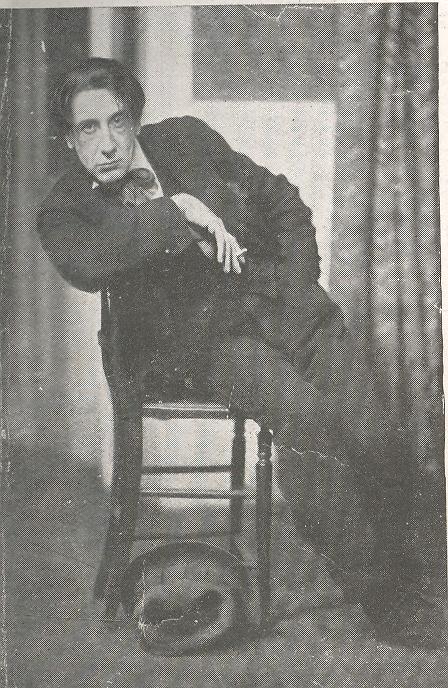
    H     Hat Ennui.  


    1-apr 29--luxury--hat ennui

    By the time this photo was made in 1920 hat-need had surpassed itself to the point where only ennui could quench the continuing hat-thirst.  So much so as a matter of fact that Giles Rope, a French playwright, wrote and co-produced  (along with Guy la Flembeur) “Ennui Chappeu”, an absurdist work on the developing hat anti-lust.  Intended as a silent/violent statement against hat ennui, it became a pro-ennui sensation–not only did men want hat ennui, they evidently wanted to watch other men with hat ennui, as well. The play ran 85 weeks in Paris, 50 in London and 102 in New York, closing in 1926.

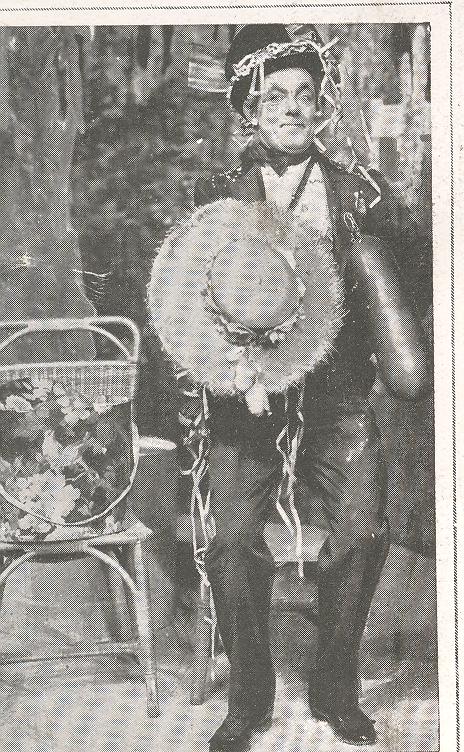
    H  Hats, Bologna

    1-apr 29--luxury--bologna hats 

    Perhaps a more unusual hat story in 1921 was the appearance of party hats for over-sized bologna.  The delicatessen standard was new in 1921, and in order to make it more somehow appealing to customers the bologna were dressed in large, flat-brimmed party/sun hats.  By 1922, bologna hat racks began to appear in some eateries; by 1923, the hat craze was over, and bologna had shrunk. 

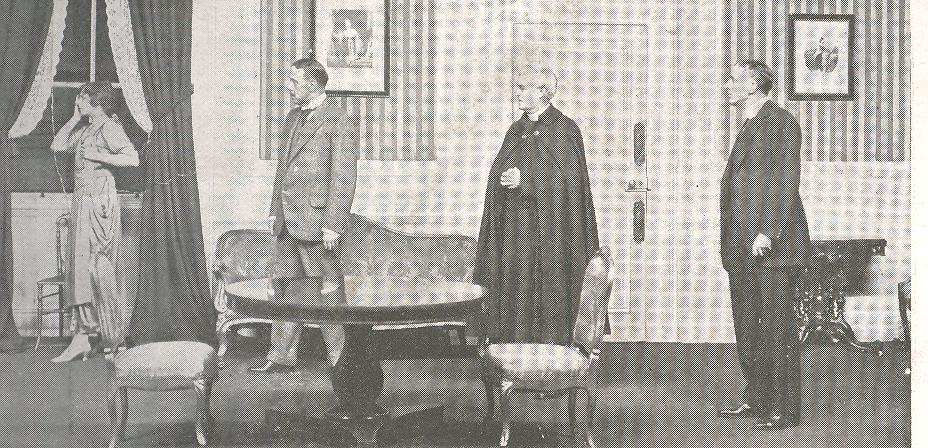
    S  Sob-watching/sob-watchers

    1-apr 29--luxury--sobwatch
    The somewhat wealthier classes were offered a short “Exclusive Hirelings” pamphlet by Bent Gruel Company (of Chicago),  where well-dressed “Attendants” could be hired to “engage at a distance”. This amounted to polite watching–interested parties could now hire one (or more) of Gruel’s sophisticated cadre to “attend to the visual needs deserted” of people in joy or crisis so that whatever it was being experienced was now not necessarily experienced alone. (In the above scene a client has hired three men to equidistantly observe her weeping by a painted window.)

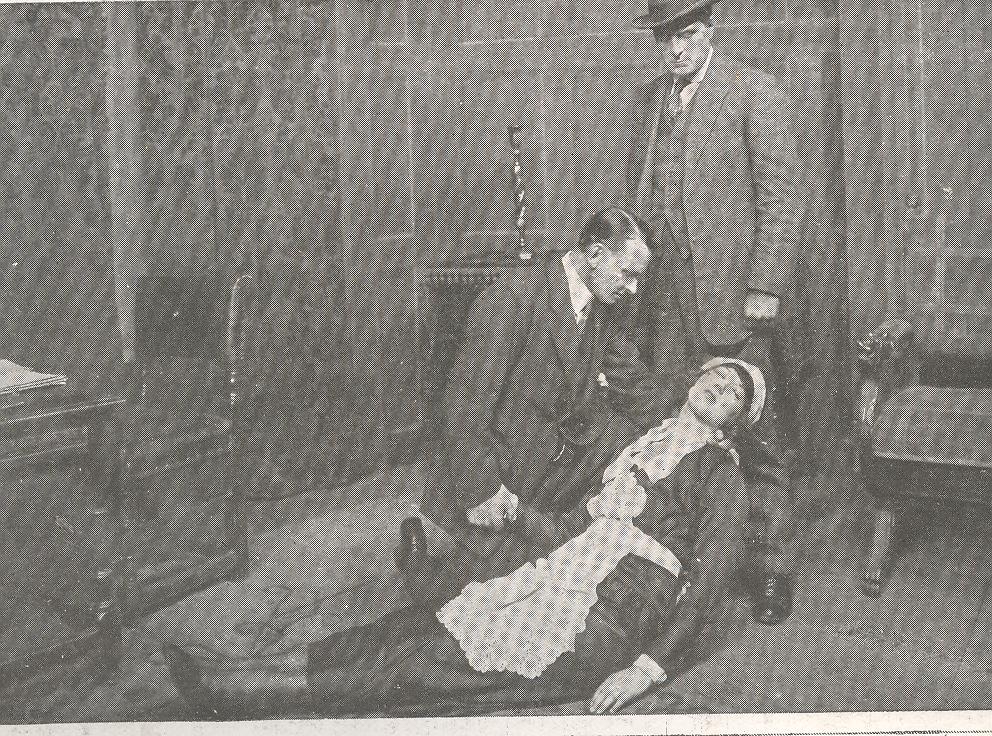
    M   Maid Fainting

    1-apr 29--luxury--maid fainting

    For the millions of Americans who were newly affluent in 1925 but not affluent enough to afford a fainting maid that they could attend to came the Maid Fainting Society Inc of America.  Bonded in 15 states, MFSA sponsored overseas maids to faint in good American homes.  They were hired out at $4/hour (a handsome hourly sum in 1925), the fainting maids being allowed to keep half.  In 1926 a sub-cult of Extra-Tall Fainting Maids was born (an example of which is picture above), and provided an income to thousands for several years.  (One of the last silent films ever made, Fainting Maid Maiden, with Clara Bow, 1944, used this phenomenon as a basis for its story; by that time however the craze had passed, the war was on, and no one cared anymore for silent films about fainting maids.)

    C   Cigar Cane Rentals

    1-apr 29--luxury--cane
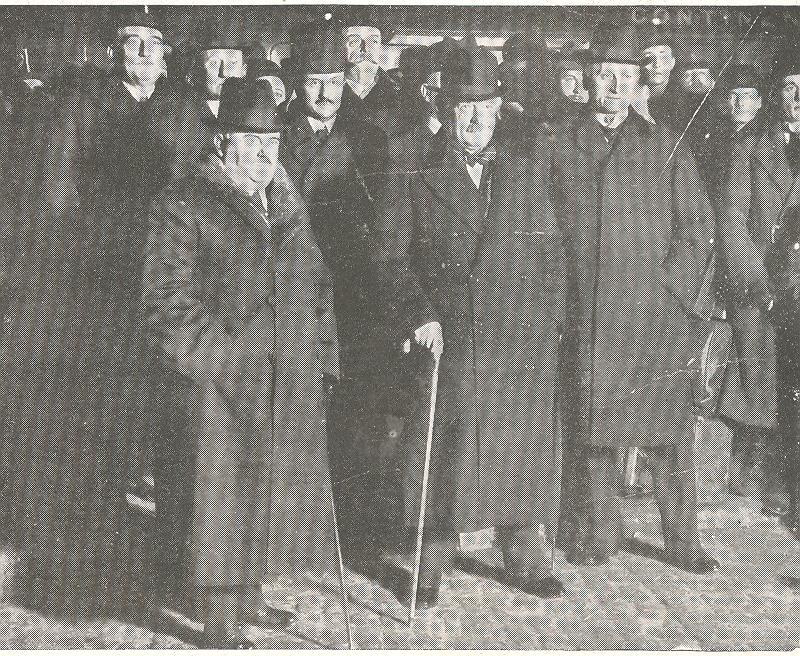
    An excellent example of an extinct semi-luxury that was almost entirely based in England and which never caught on anywhere else in the world was cigar cane rentals.  As seen in this photo (made in London in 1922), well-intentioned better-clothed country pensioners were brought into the city and made to pose with their renter canes.  Wooden canes evidently deprived Londoners of a “cigar aromaticity” need that was fulfilled with these canes made of cigars.  The short craze lasted for about 15 months, during which time better than 500 cane renter holders were stationed around London at walking parks on any given evening.  It was an essential part of care rental to do so on brick, as the cigar cane tip made a distinctive sound  (a harley-like individuality if you may), which was enjoyed by the renter and the non-renter alike.  AS we can see in the photo above, nearly all of the cane renter men have already rented their canes, pushing the last two men with canes to the front for greater visibility.  

    –end, Part I


  • The Odd Department: Cartoons & Tongue-Stuffed Calve’s Brains

    JF Ptak Science Books   Post 807  Blog Bookstore

    + blog 10.26 multiple


    In the excitable, pulsing pile that is my collection of Naively Bizarre Literature–some 5,000 items now pushing themselves around like a 750-pound bad idea–comes this lovely, “what the  ____!?” title:  Let’s Serve Something New. 53 Selected Recipes for the use of Liver, Heart, Kidney, Sweetbreads, Tongue and other Meat Specialties.

    + blog 10.26 liver cvr

    Now, once I got the tongue part out of my 18-year-long vegetarian brain, I wondered about what on earth the other part of the ripping title and what “specialties” there might be.

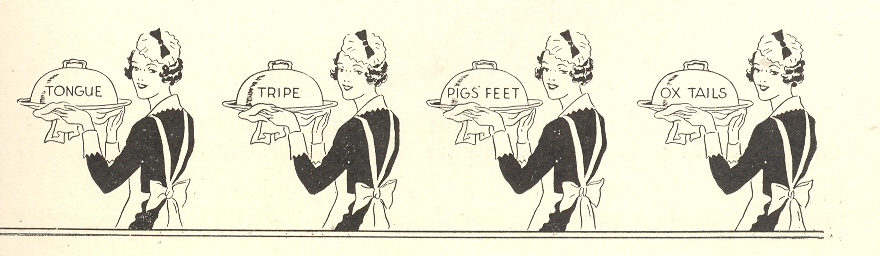
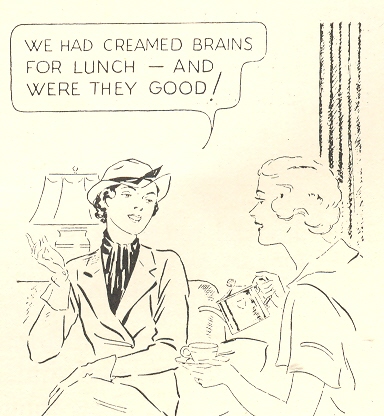
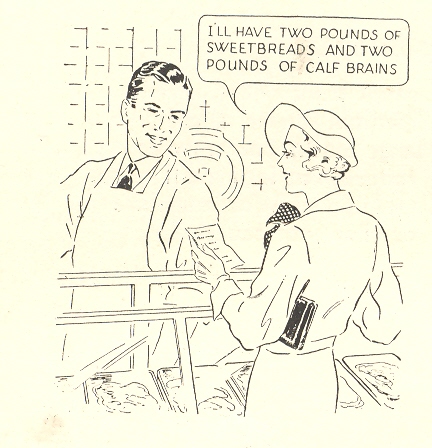
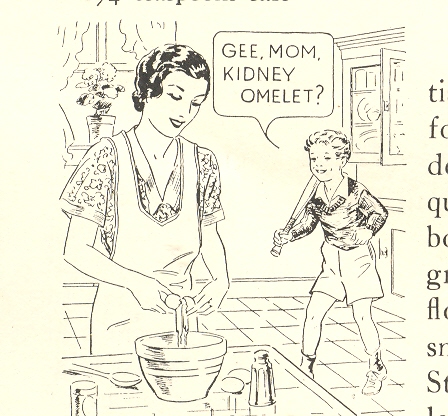
    But before I could get there I was stopped by these unique cartoon illustrations romping their way through the text with spectacular word balloons   There are SO many more words that could be injected into these balloons than the ones that were used, and so much more expected. But the zombie texts was inserted by the publisher, which was the American Institute of Meat Packers, whop no doubt were trying to force every last penny of profit out of whatever was left in the sluice sieves of the chopping room floor. 

    + blog 10.26 liver brains

    If these cartoons were extracted from this source, and their balloons left blank, and if people were asked to supply new text, the original words would be the very last in a very long list of possible fillers.  


    Removed from context, the illustrations are unexpected and hysterical; placed back into context, and well, they are a little wince-y. 

    + blog 10.26 i'll have calf brains

    The recipes that decorate this pamphlet are no less unbelievable, at least from where I’m sitting, and I’m sitting hard:  stuffed baked liver with vegetables in liver dressing, pork liver fermiere, liver with brown liver gravy, liver Pasadena (liver and butter and broiled bacon swimming in bacon fat), liver dumplings stuffed with liver, creamed sweetbreads, kidney omlettes, baked stuffed heart with rice border, heart chop suey, scrambled brains, sauteed brains, creamed calves brains, cold jellied tongue, tongue omlette, tripe roll, baked pig’s feet, and, not last, Tripe a la Mussolini (which is 1.5 pounds ogf tripe, bread crumbs, and tomato sauce).  (Spam stuffed with spam and spam jelly, braised in a light spam sauce, and covered in crackled spam.)

    + blog 10.26 gee mom


    After everything was said and done, the other surprise meats didn’t seem so surprising anymore, what with running up on the heals of delicacies like stuffed tongue and parboiled sumpin’s: tails, feet and oysters (a la Waldorf) seemed as harmless as a Sunday Slider. 

    Spam.


  • The Hidden Beauties of Barrels, Pig Bristles and Forgotten Escalators

    JF Ptak Science Books LLC   Post 776    Blog Bookstore

    I wonder what is was like to be a traveling salesman hauling
    around hundred-pound barrels of pig bristles?

    + simplicity paintbrush

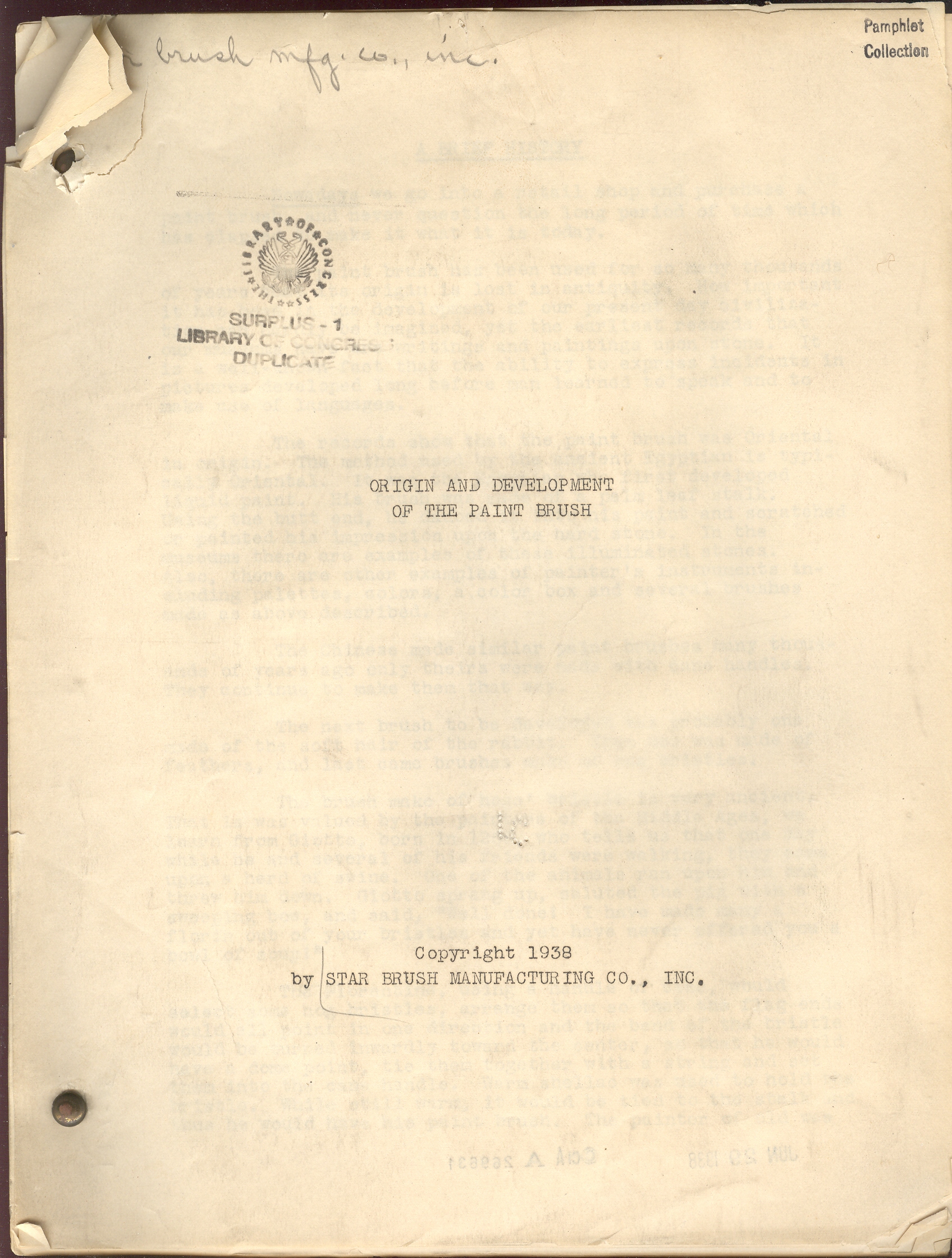
    We don’t really find out the answer to that question in Origin and Development of the Paint Brush (1938),
    but that remarkable, far from the maddening crowd question does present itself in
    the text.  And that is why I love
    pamphlets like these.

    Spending my professional life with the book, and being a
    reader, I’ve come into contact with and have been exposed to a good, solid, Big  Number of books, a Big Book of Big Numbers of
    books.  And so when the unusual creeps in
    or is stumbled upon, they shine like little novas in my book-sky.  And the ones that shine with their own
    special light are the titles come in three favorite flavors:  the Sublime Mundane, Outsider Logic, and
    Fantastic
    (and Impossible).  Today’s
    selection are from the first category, and exhibit titles and texts that look
    like non-luminous and uni-dimensional but turn out to be anything but mundane.
    + simplicity escalators

    Earlier in this blog I’ve written on pamphlets entitled Flagpole Painting, School Safety Pioneers, Fortunes to be Made with Frogs, Where are the Dead?, How to Repair a Zipper, Mud’s Romantic Story, Soap in Everyday Life, The Fine Art of Squeezing, Salt Salesman’s Manual, Know Your Groceries, The Book of Envelope Facts (and others),
    and they’ve all shown a terrific inner quality that is completely hidden by
    their so-sleepy and yet strangely-compelling titles.  Like the paint brush history pamphlet.  Here are a few other new examples:

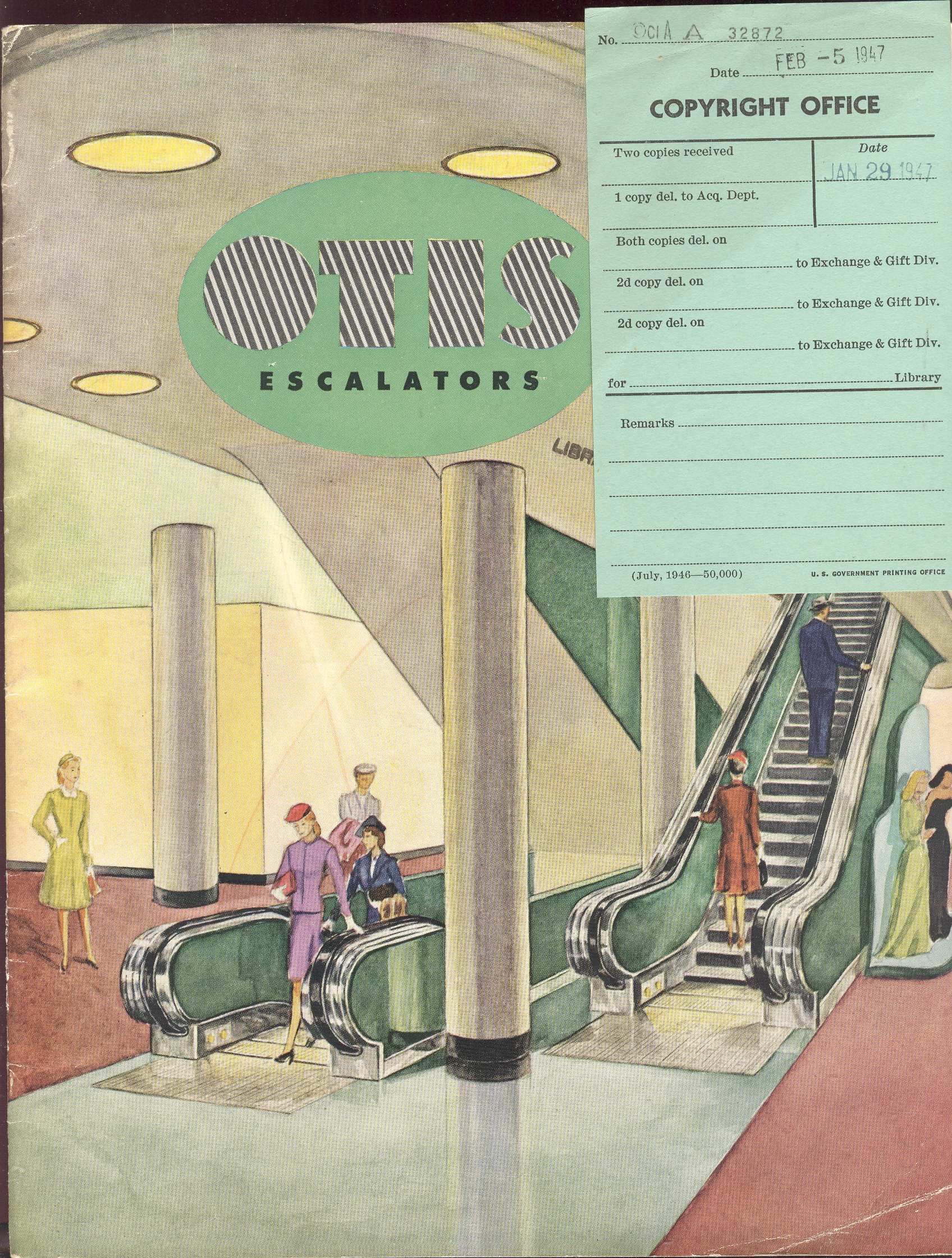
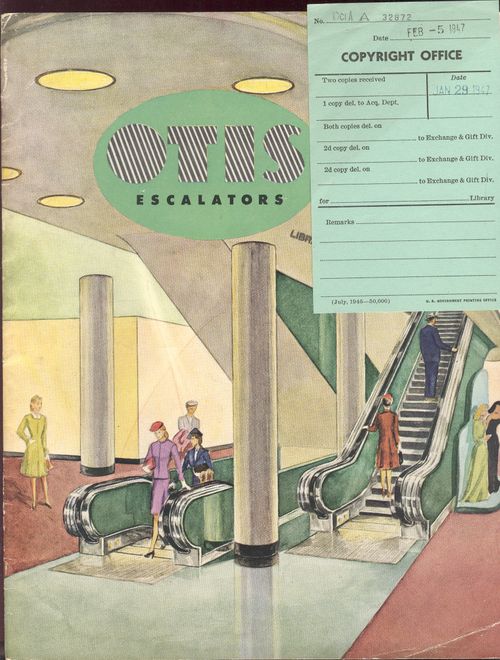
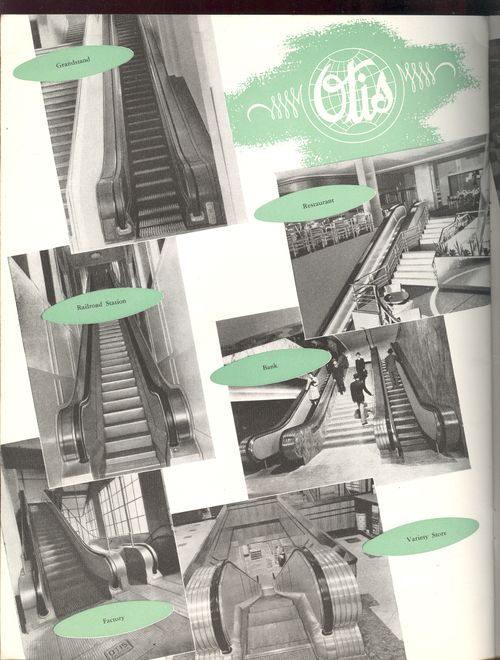
    The Otis Elevator
    pamphlet (1947) is efficiently designed beneath its semi-bizarre cover,
    floating in odd typeface, completely lifeless design, mannequin humans, and
    washed-out pastels.  The Chinese coloring
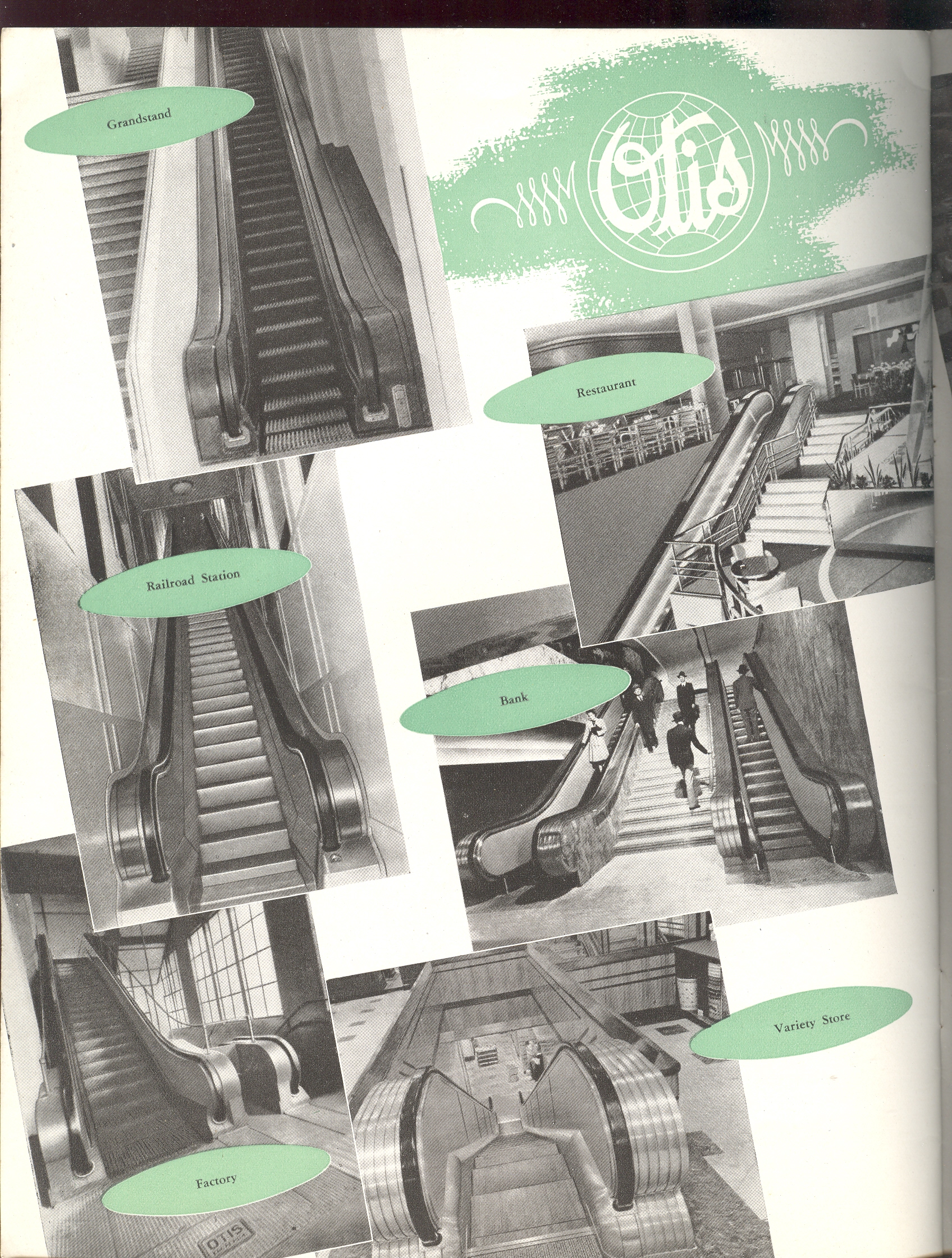
    book style of its covers hides a superior content, complete with schematics and
    beautifully supplied with photos of elevators long-since removed from sight and
    memory.  + simplicity escalators back 002
     

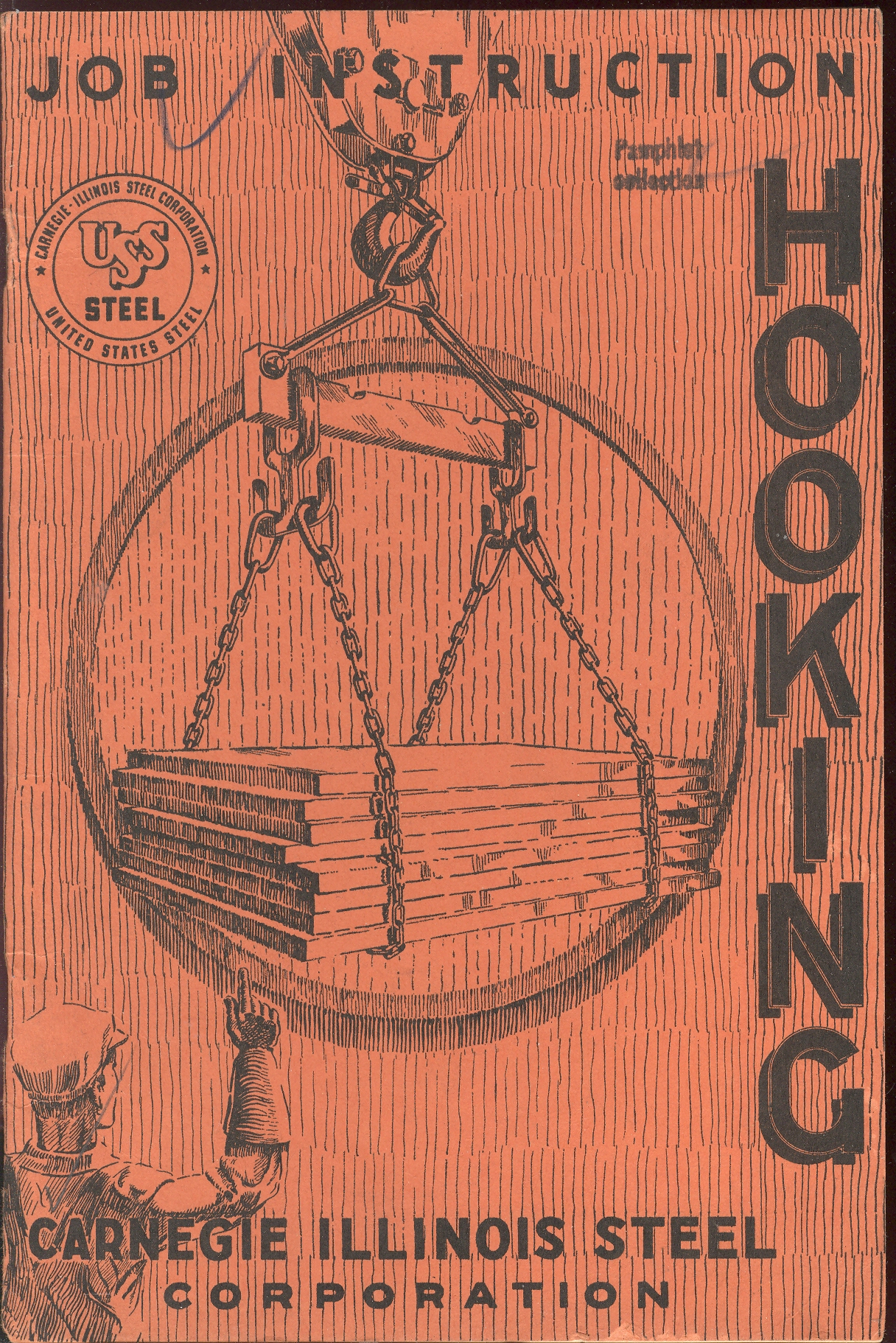
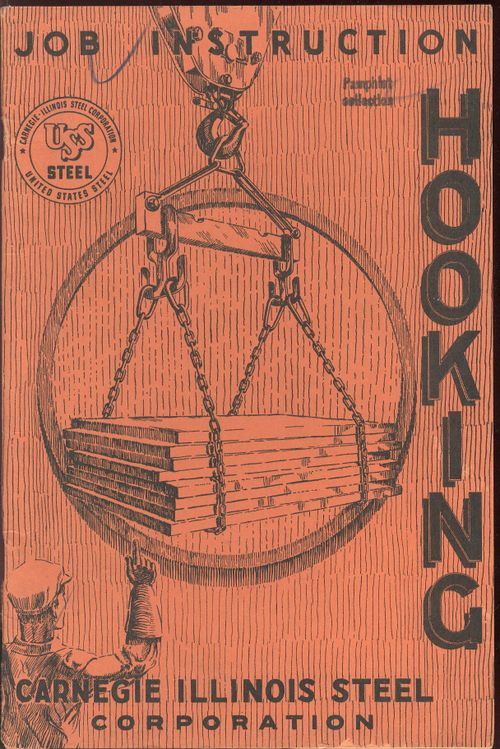
    The Hooking pamphlet is not about its obvious contemporary
    counterpart, but is a luminous, luxurious introduction and stylizer to the
    science of hooking large objects to cranes via giant hooks and chains, and especially
    about how to keep yourself from being 
    crushed by tons of steel not hooked properly. 
    + simplicity hooking

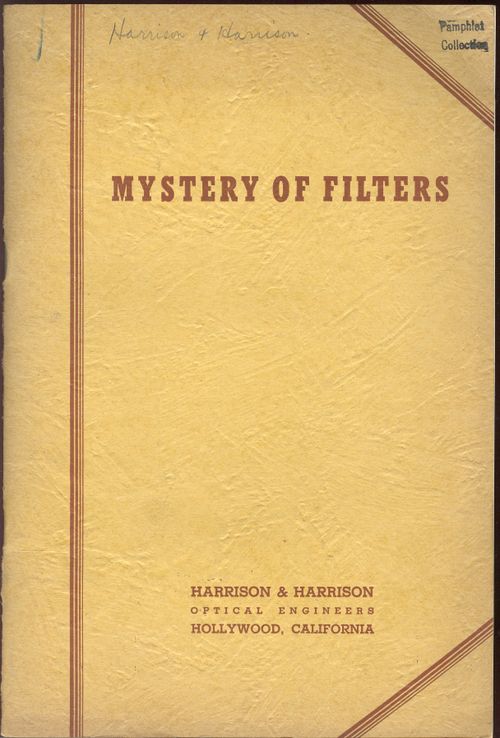
    The Mystery of Filters
    charm is wholly in its title and cover design, its text describing nothing
    but camera filters.  It is still a cool
    cover, nonetheless.
    + simplicity filters

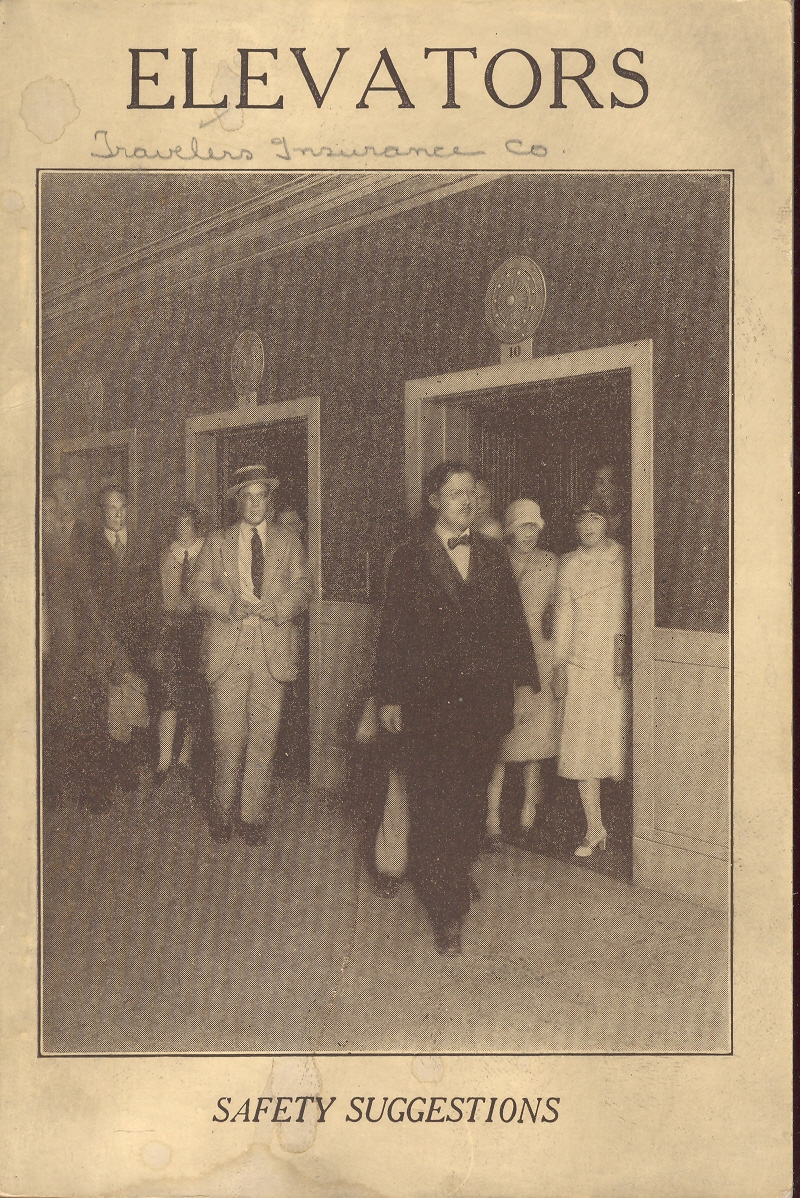
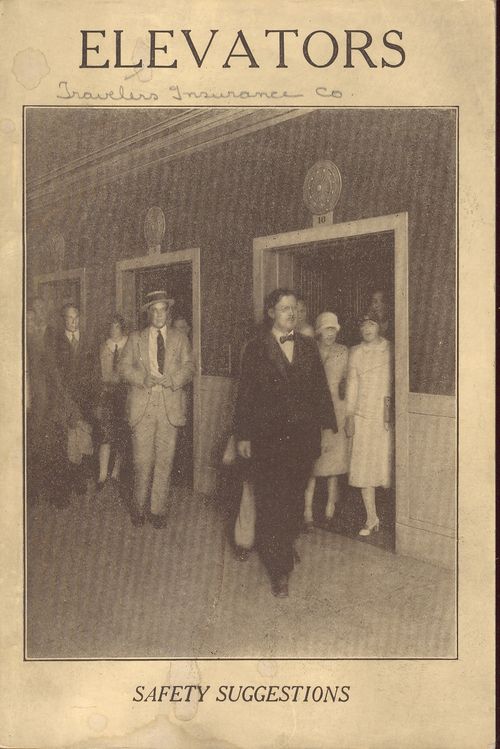
    Elevators,
    published by Travelers’ Insurance Company, tried to protect themselves a little
    further by ensuring safe practices of elevator operation, mostly in industrial
    settings.  This was published in 1926 and
    was already in its seventh printing from its inception in 1913 when the
    elevator was just in its second decade of popular, relatively widespread usage.
    The haven’t-given-this-cover-design-a-moment’s-thought hides a thorough (and
    bland) treatment of elevator safety; too bad, the cover photosnap-art promises
    something more.  Its not there, except
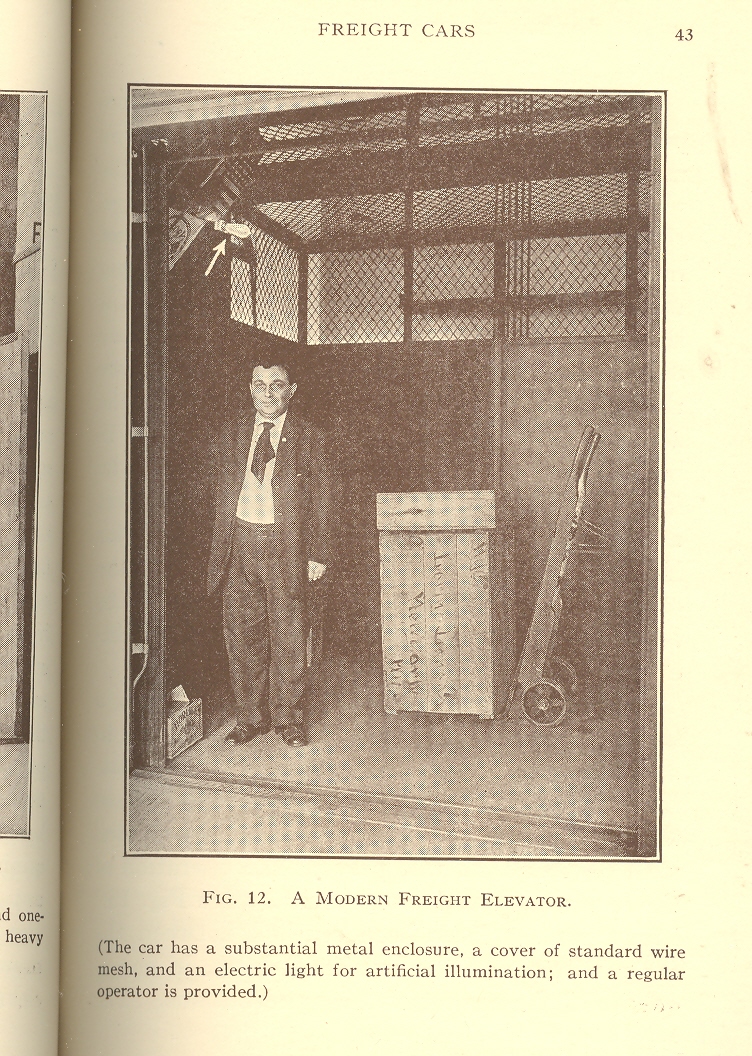
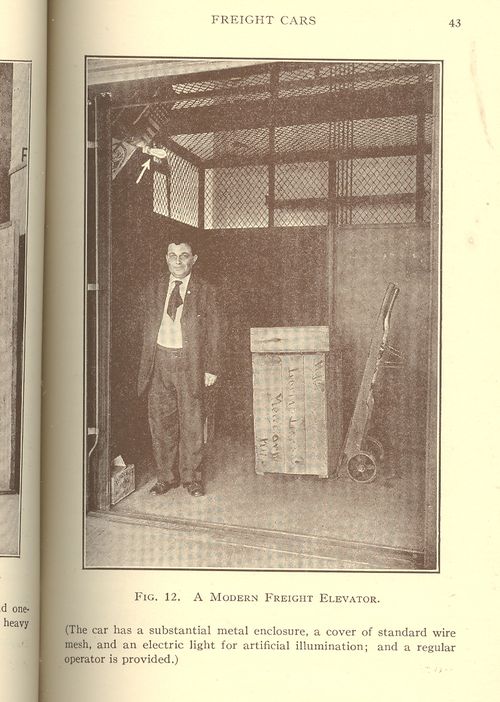
    for this beautiful photo of an industrial elevator op with a tie.
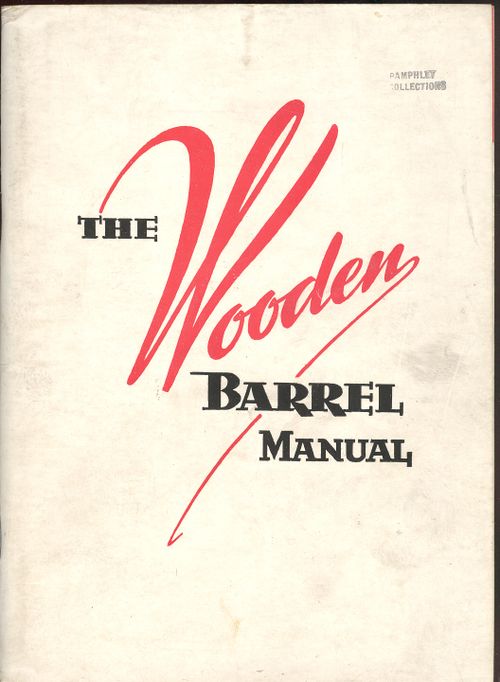
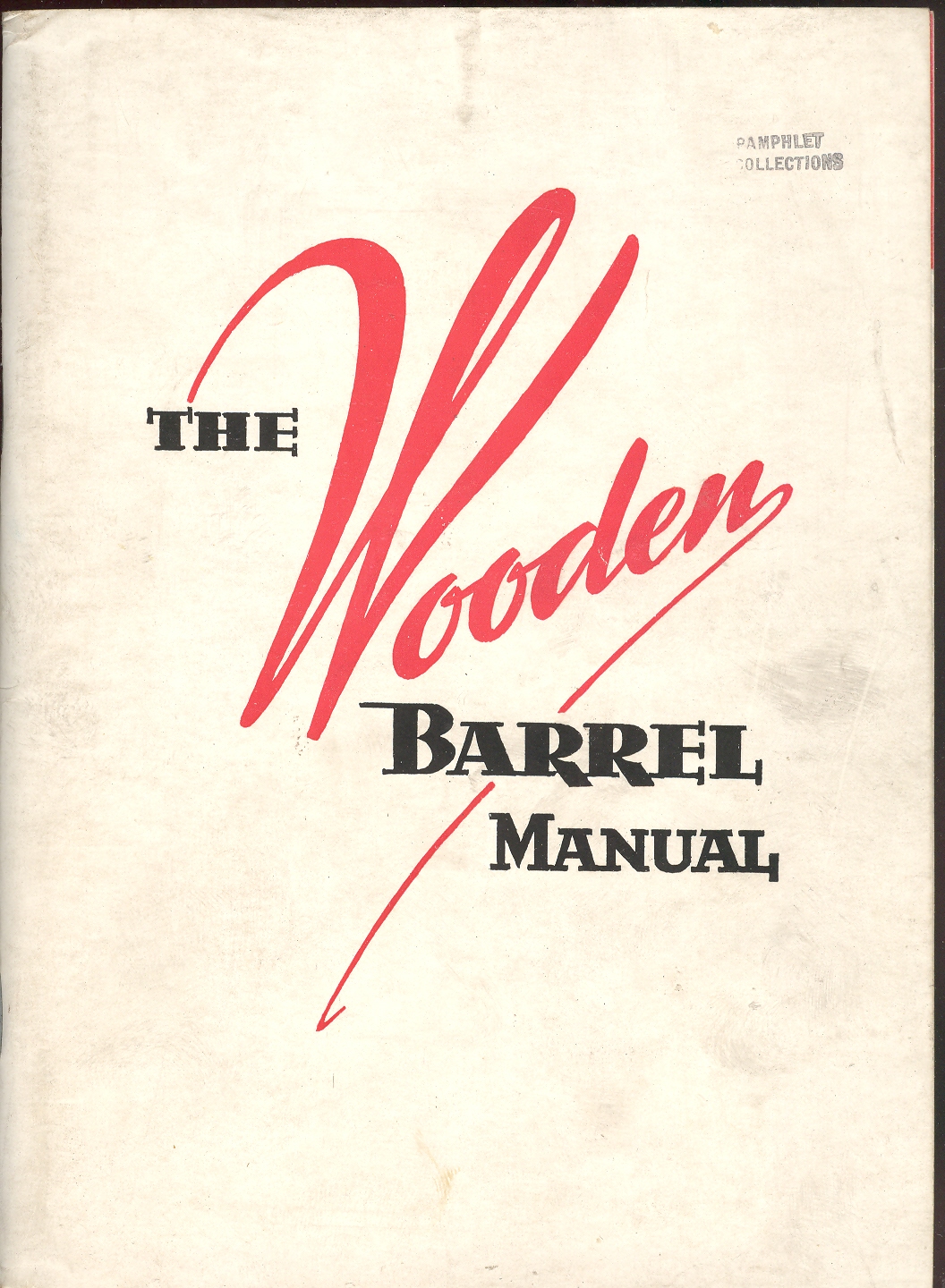
    + simplicity elevatorsAnd coming back to wood barrels that are not necessarily
    filled with pig (or wild boar) bristles but with something else less advanced
    comes this manual on making wood barrels. 
    Everything is there, everything you’d need to make a barrel (and a good
    one at that), and I admire this sort of fantastic dedication to what is
    essentially (to our modern mind) mundane—except that it is as dry
    as well-cured barrel wood.  But I admire
    it still,  as I do the Elevator pamphlet,
    because, well, they’re done right. + simplicity elevators interior tie
    + simplicity wooden barrels


  • Naive Surreal Titles (Series #15): Antique Ideas About Womanhood

    JF Ptak Science Books LLC  Post 645  Blog Bookstore

    Blog--jun 9 odd titl ssh

    In a 
    continuing thread that I call The Naïve Surreal—common, ephemeral titles
    relating to subjects whose meaning has virtually no place outside its own era,
    creating art in their otherwise forgettable and forgetting covers and design—come
    these two examples relating to women and girls. 
    There’s really not much to say about their contents, really—so much has
    already been said.  They’re just a standard
    of their time.  Things People Won’t Talk About (1937)  is [sic] venereal diseases,
    and is an appeal for actual public discussion (“the foolish secrecy surrounding
    (the diseases) is what makes them so destructive”.

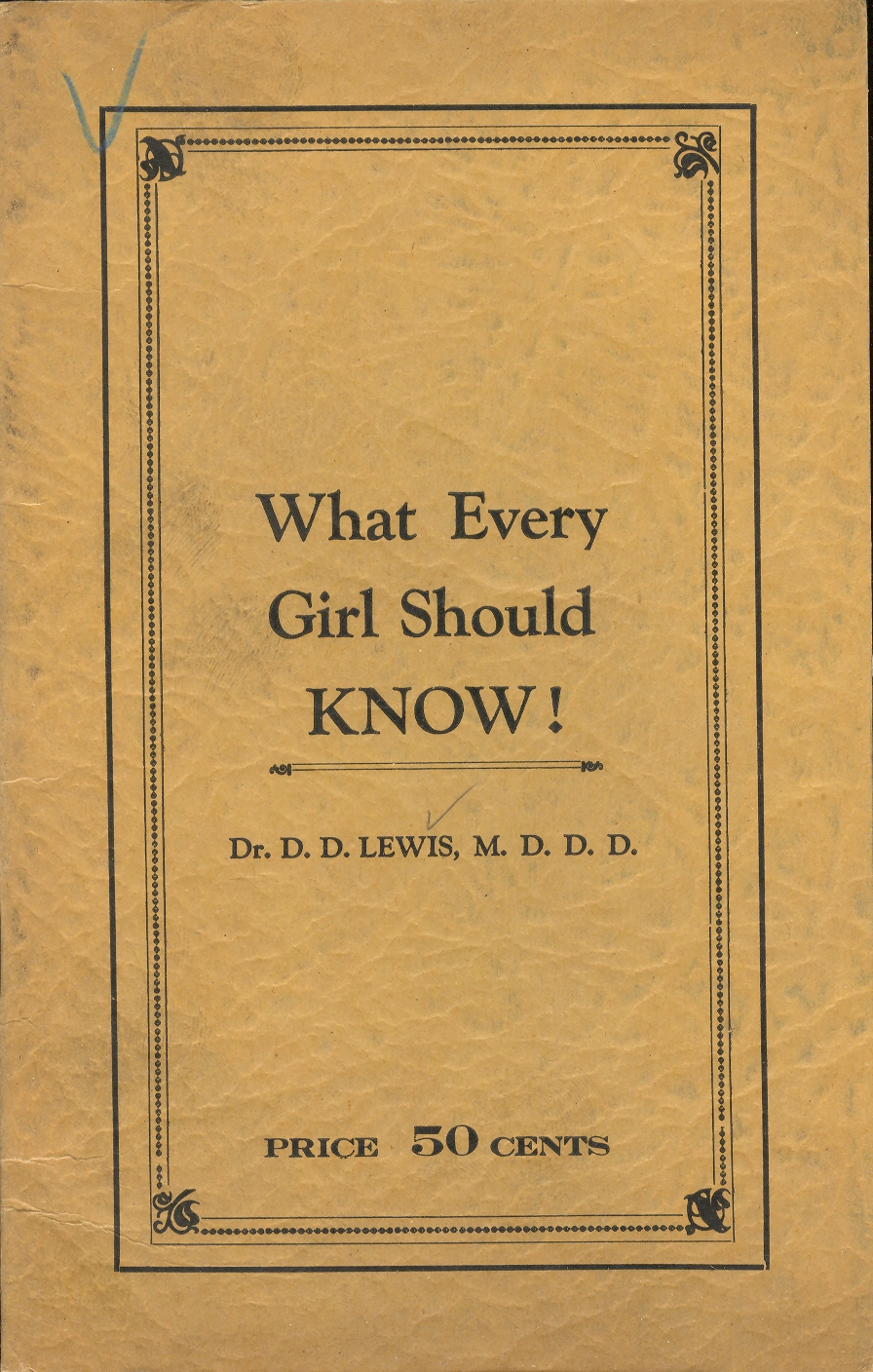
    Blog--jun 9 odd tevry grl
    What
    Every Girl Should Know

    (1928) contains nothing I think outside what everyone would expect it top say,
    except that it is rather well written, and also (in places) quite strongly
    opinionated.  The little pamphlet also
    assumes that its readers already know its complaints:  “the evils of self-abuse are so well known,
    that there is no need to elaborate further on this point”.    Its “chapter”
    headings tell a lot of the story, and probably enough of it to make their
    reading the only thing you need to read: 
    “Know Thyself”, :Know Thyself Spiritually”, “Woman’s Mission”, “The Age
    of Puberty”, “The Ovaries”, “Harmoul—its Importance”, “Rash Marriage”, “Freedom
    and More Freedom”, “Lust and Love”, “The Value of Chastity”, “Buying Popularity”,
    “Selling the Body for Clothes”, “The Tragedy of Dual Love”, Menstruation”, “Masturbation”,
    “Promiscuous Sexual Intercourse”, “Gonorrhea”, “Syphilis”, “The Dreaded Third
    Stage”.  So. There you have it.

    ·Posted by :

    ·in:

    — —

  • Bad Book Titles (and Worse Contents): Cruella DeVille and the Fur of Cats and Dogs, 1938

    JF Ptak Science Books LLC  Post 642  Blog Bookstore

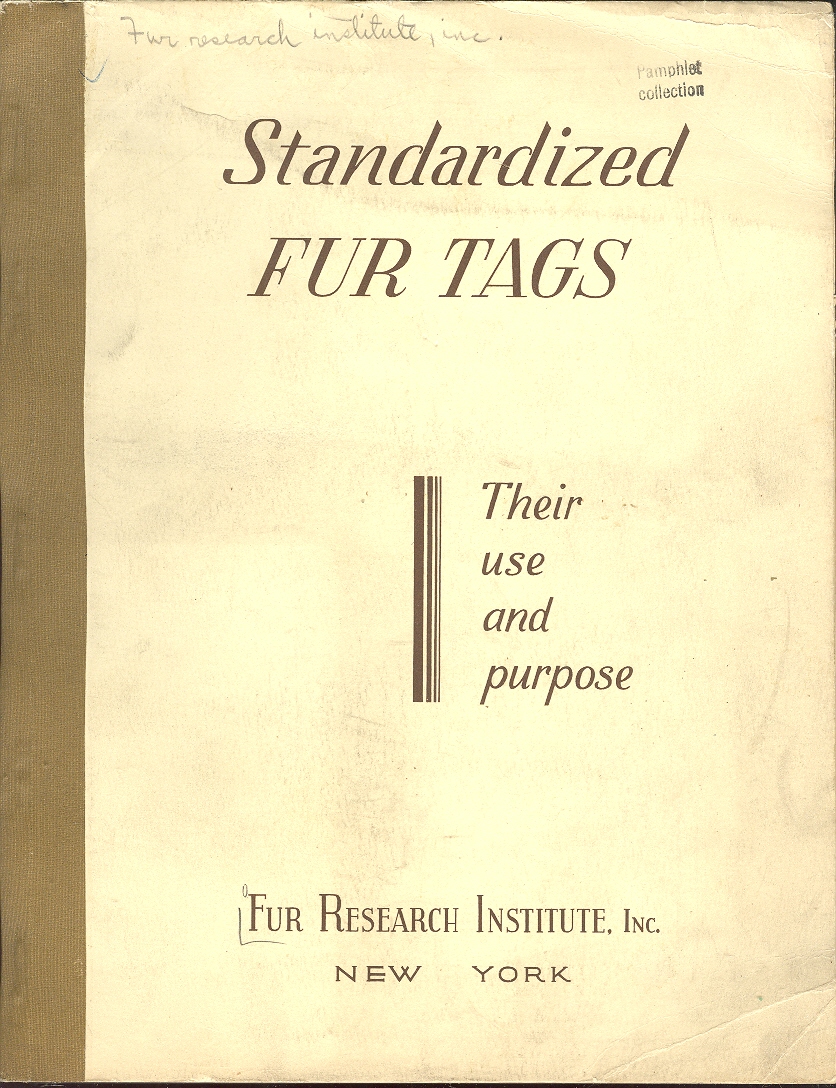
    Blog--jun 8 fur title How
    could one pass up the chance to browse through such a  compelling and revolting
    title such as   Standardized Fur Tags, Their Use and Purpose, (published in NYC
    by the Fur Research Institute in 1938)? 
    Titles like this cry out in equal parts of pity, shame and pride,
    calling to their readers like fur-lined Sirens beckoning to fur-encrusted
    sailors floundering in a fury sea, hell-bent to crash upon fur-slathered
    rocks.  In a world of covering things in
    fur that once belonged to another living thing, the thinking’s all over but for
    the process, pricing and standardization, so that the furriers were less
    inclined to cheat one another and focus on the fleecing of the buying
    public.Blog--jun 8 fur title 001  

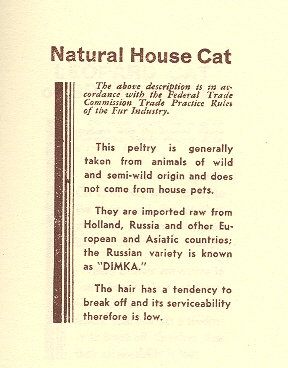
     Opening
    this oversized pamphlet reveals the explanation of the fur identified by the
    tags that would appear on the interior-neck of the garment.  There are 125 descriptions and standardization
    of furs, though I must say that what caught my attention first was the fur of
    the “natural” house cat (followed by the “dyed” house cat)—they say that this
    was not an agoraphobic cat’s pelt used to make the apparel, but from cats “wild
    and semi wild”.  Like barn cats, I guess.
    (We are told that the fur “breaks off”, and is not a very good choice for
    outerwear, though it did seem to work for the cat.)

    Blog--jun 8 fur title 002

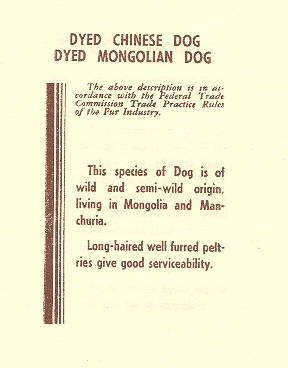
    Then
    there’s the “dyed Chinese dog” and the “dyed Mongolian dog”—I’m not sure who
    would need pelts made of dog (or cat, or anything else for that matter), but I
    guess that they were popular enough to be included in these furrier  guidelines. 
    And so the list goes on and on: dyed skunk, pieced skunk, natural skunk,
    dyed squirrel, dyed weasel, natural wolf, dyed opossum, etc. 

    ·Posted by :

    ·in:

    — —