JF Ptak Science Books Quick Post
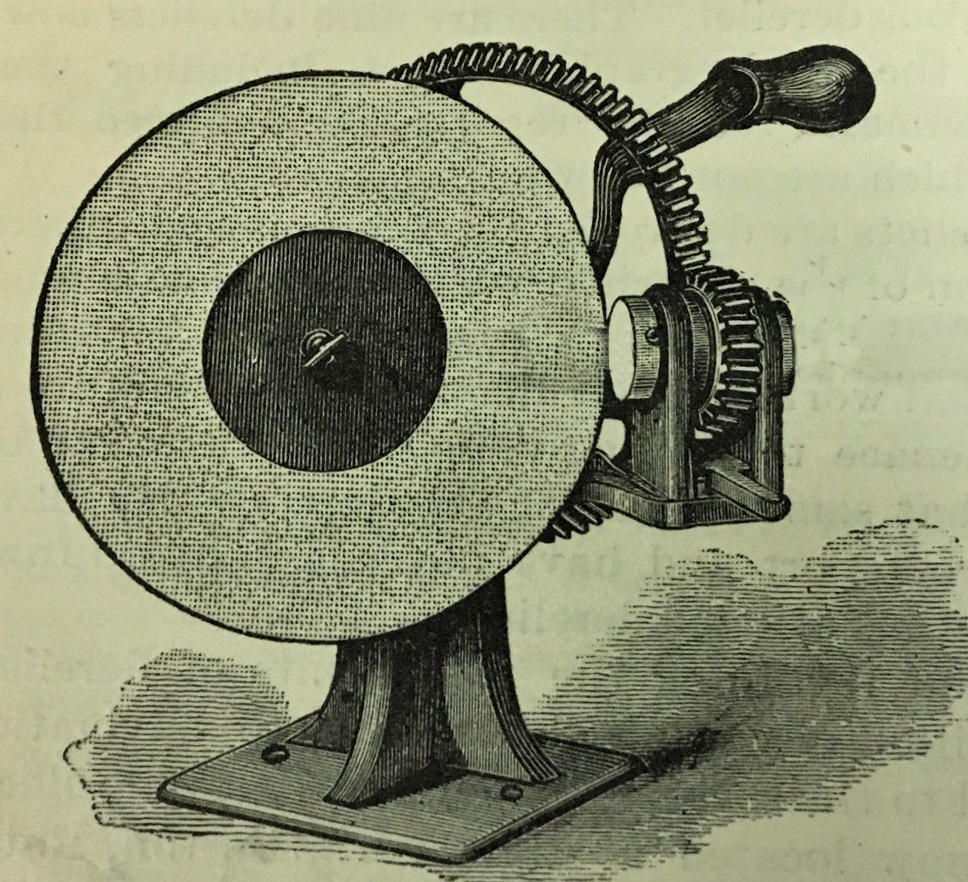
What is it? You’ll be surprised at what this device does, given the gear, and the weight, and the utter simple beauty of the thing.
A Daily History of Holes, Dots, Lines, Science, History, Math, Physics, Art, the Unintentional Absurd, Architecture, Maps, Data Visualization, Blank and Missing Things, and so on. |1.6 million words, 7500 images, 4.9 million hits| Press & appearances in The Times, Le Figaro, Mensa, The Economist, The Guardian, Discovery News, Slate, Le Monde, Sci American Blogs, Le Pont, and many other places… 5000+ total posts since 2008.
Contact johnfptak at gmail dot com
JF Ptak Science Books Quick Post
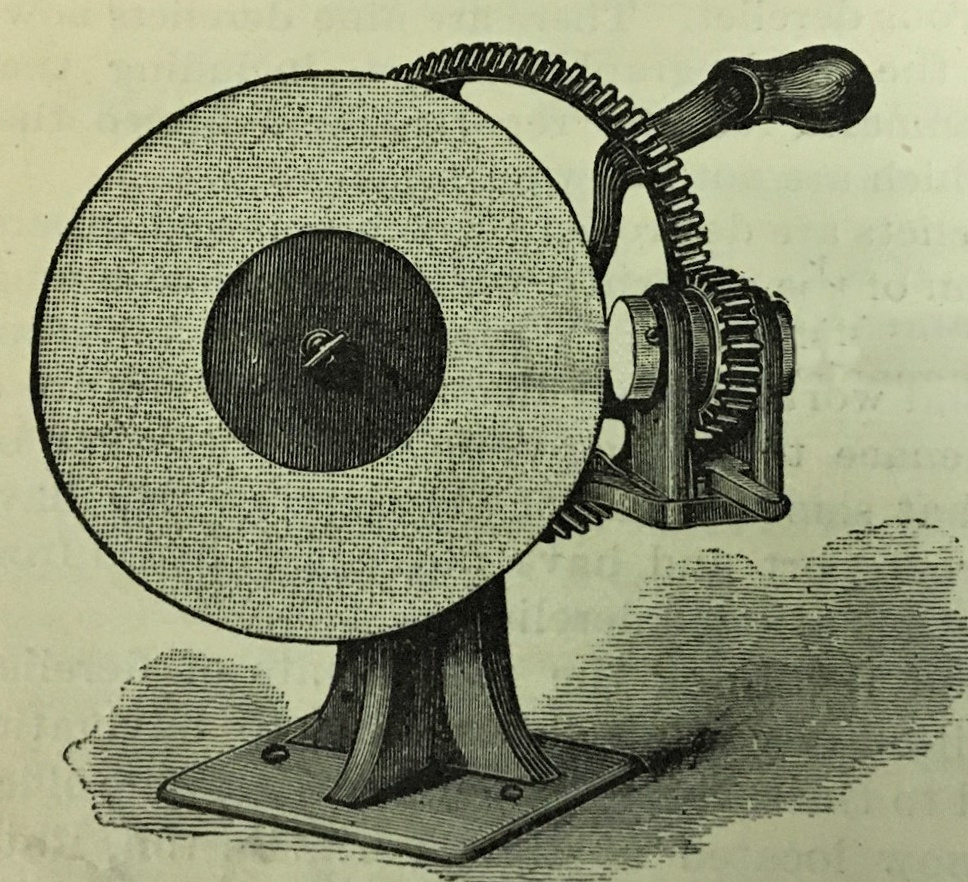
What is it? You’ll be surprised at what this device does, given the gear, and the weight, and the utter simple beauty of the thing.
“A true poet does not bother to be poetical. Nor does a nursery gardener scent his roses.” Jean Cocteau
Maybe so and maybe no, and if not, maybe they should…especially for the poets. But this come from the writer with only the memory of smell for an olfactory sense.
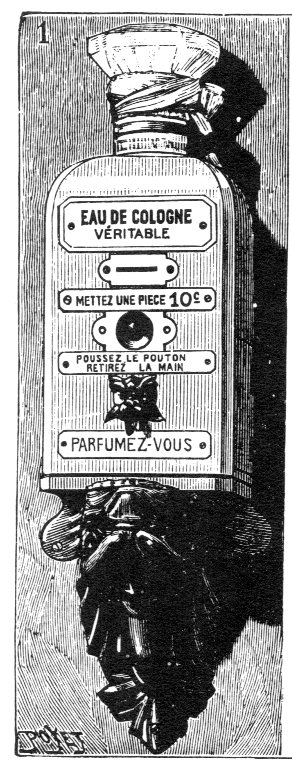
I looked around without success in Walter Benjamin’s Arcades Project to find something relating to this image, which turns out to be a scent dispenser. These buggers were quite popular (at least in France) and used to be hung at entrances to popular venues where patrons could scent themselves with this-and-that for a few pennies. It seems positively Terry Gilliam-ish to me, but that’s what it was.
Source: Scientific American, 1895 (apologies for the skimpy date)
JF Ptak Science Books Quick Post
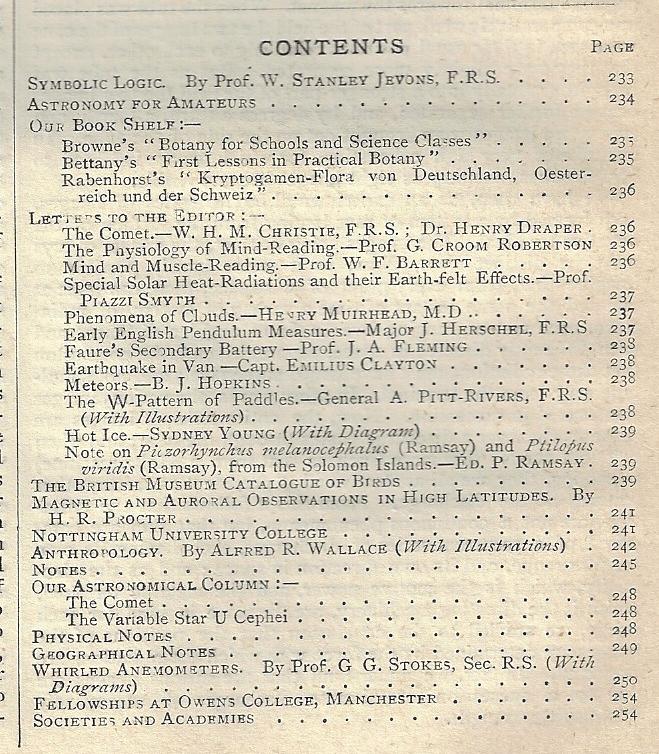
I just finished a short post about the wide-ranging W. Stanley Jevons review of John Venn’s classic book, Symbolic Logic, when I had another look at the contents of the slim issue of Nature in which the article appeared. This Nature is our present-day mega-Nature, but here in 1871 it was only in its 12th year. And even though the issue was only 17 pages long, it was filled with an astonishing range of succinct papers, and heavily seasoned with bits for the generally curious of the high Victorian era. After you read the gentleman’s gentleman high-end astronomer Henry Draper’s paper, you could read “the Physiology of Mind reading” and follow that up with “Mind and Muscle-Reading”. Piazzi Smith followed that with “Special Solar Heat-Radiations and their Earth-felt effects”, with “Phenomena of Clouds”, “early English Pendulum Measures”, and J.A. Fleming’s “Faure’s Secondary Battery”. Papers on earthquakes and meteors, and then the wonderfully enticing “The W-Pattern in Paddles” and of course “Hot Ice”. It all ends up with an extended article by G.G. Stokes’ (a remarkable physicist and mathematician who spent his entire career at Cambridge, the vast majority of that as Lucasian Professor of Mathematics from 1849 until he died in 1903) “Whirled Anemometers”, which occupies about a third of the issue.
JF Ptak Science Books Quick Fanciful Post
On a recent reading graze I found this most interesting image and thought that it could be a number of things besides the thing that it really was:
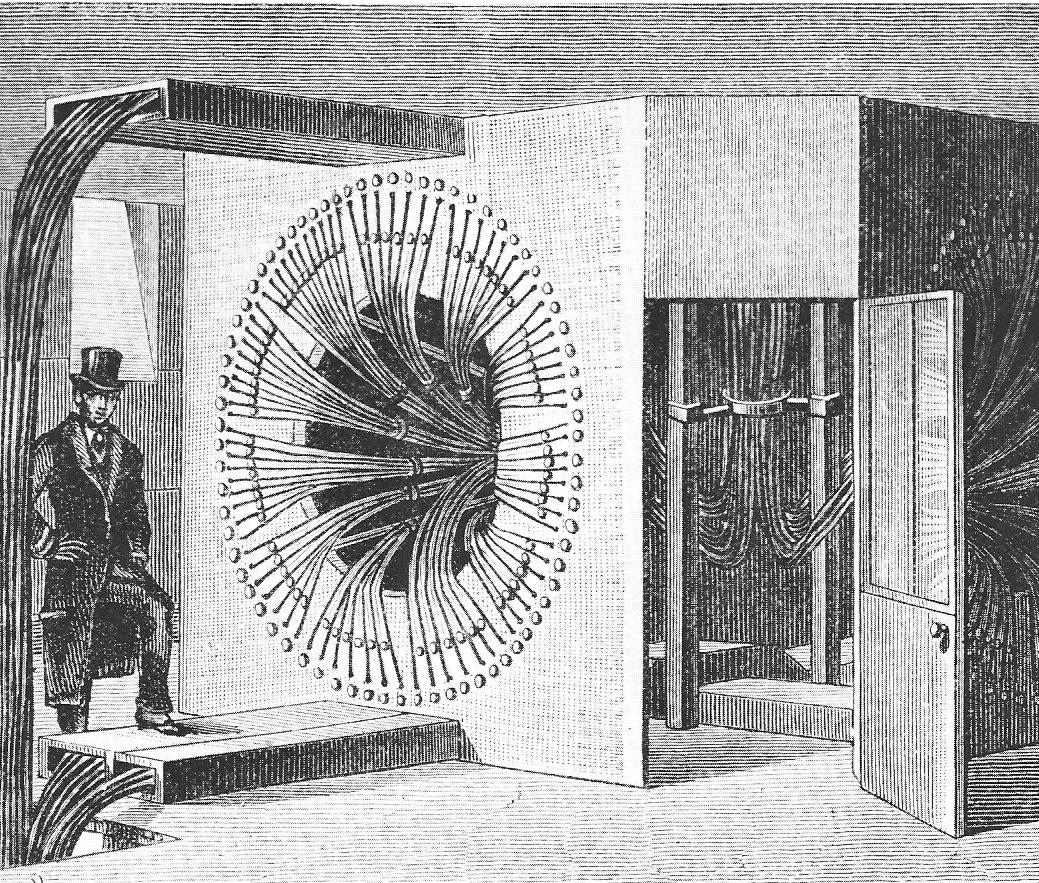
So, what is it?
A) An attempt at a Time Machine. (Stephen Hawking said “[i]t seems there is a chronology protection agency, which prevents the appearance of closed timelike curves and so makes the universe safe for historians”. Feh for our story line and image! We’ll let this stand and say that this would be a Wellsian vs. Thornian time machine.)
B) A Victorian listening device for extreme and well-to-do introverts that allows for the home dweller to stay inside and listen to everything that is going on in the immediate vicinity of their house. The remarkable bit here is that it was discussed that a retired physician, Manbot Fettle Dolp had one of these devices installed at his house in Kensington and actually recorded some 100 Edison cylinders worth of found sounds, an acoustical portrait of high Victorian London that without his effort would have been completely lost.
C) A tailoring device that would automatically record all physical attributes of a customer when they passed through the thing–it turns out that physical anthropologists used the device first to record all body aspect of criminals for a database of “what criminality looks like”, but the results and tests were abandoned after it was determined that the author of the study, Rev. Fitzwilliam Fitz William, was the perfect average of the criminals he measured. Rev. Fitz William said the results were obviously “deeply and irretrievably wrong”, though he did have some thoughts on the redemption of the project when writing from his prison cell twenty years later in Reading Goal.
D) The terminal of a central telegraphic station. (“The requirements of telegraphic communication on a large scale created widespread telegraphic networks. The “nodes” of a network, shown here, involved a respectably large number of circuits.”)
Answer below the “Note”:
Note:
JF Ptak Science Books Quick Post
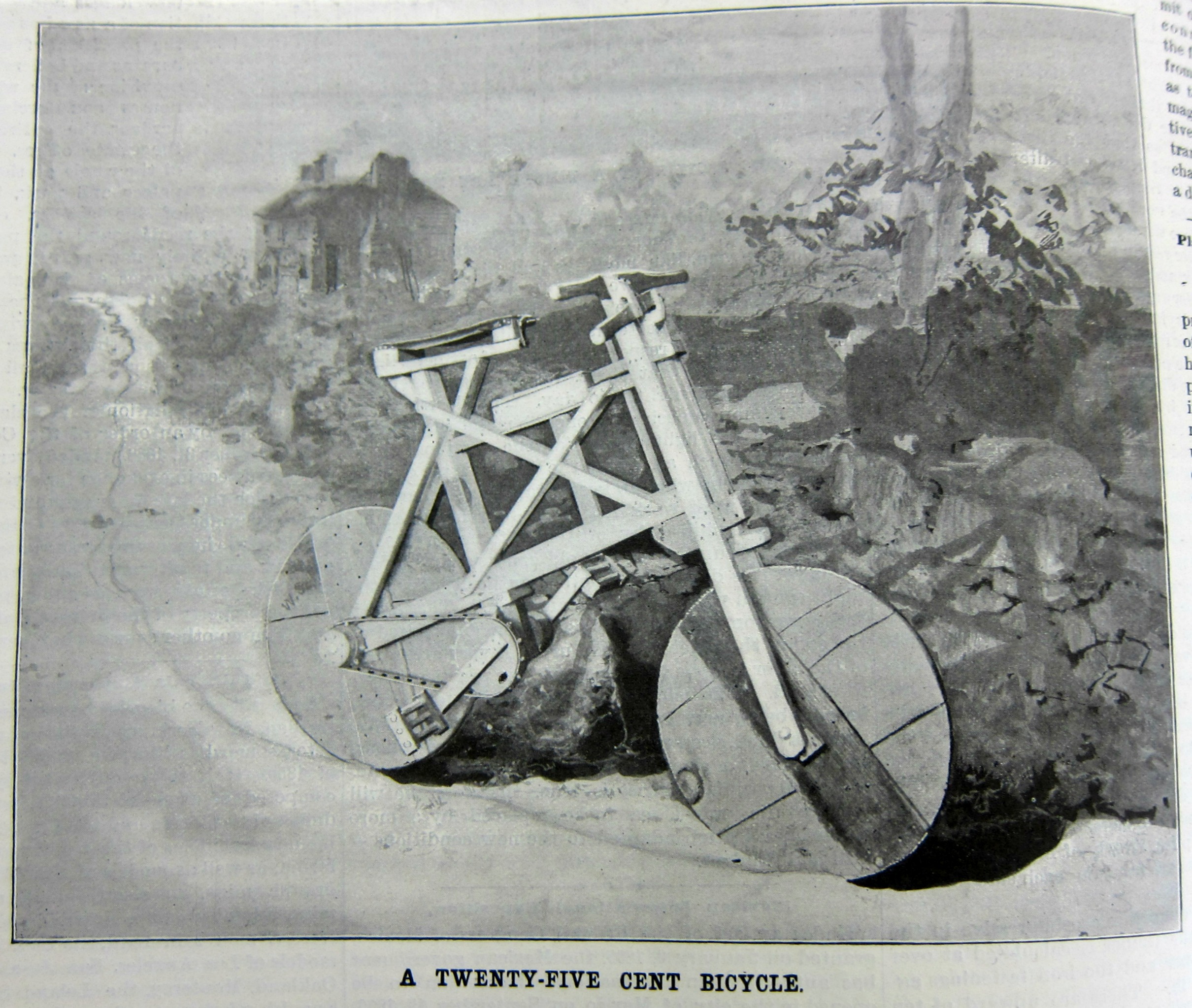
Today I joked with a neighbor that my car was so old that it has wooden seat belts. At least it has seat belts, no thanks to the early (pre-1989) efforts of people like Lee Ioccoca to prevent having them automatically installed, and unlike the Flintstones and Jimmy Rockford and others who had no seat belts at all–it is more like Granny’s rope-belt in the Beverly Hillbillies. Be that as it may, this bicycle is a much better creation than my seat belts. The image appeared in the Scientific American for February 1, 1896, a half tongue-in-check proposal at a time of a great bicycle craze. Even though millions of bicycles were being made, a decent one could cost you $25, which would (according to the Bureau of Labor Statistics inflation calculator) would be about $750-$1000 today–not nothing. So this Modest Proposal on making a bike from bits, found wood, and a quarter.
JF Ptak Science Books Quick Post Daily Dose from Dr. Odd
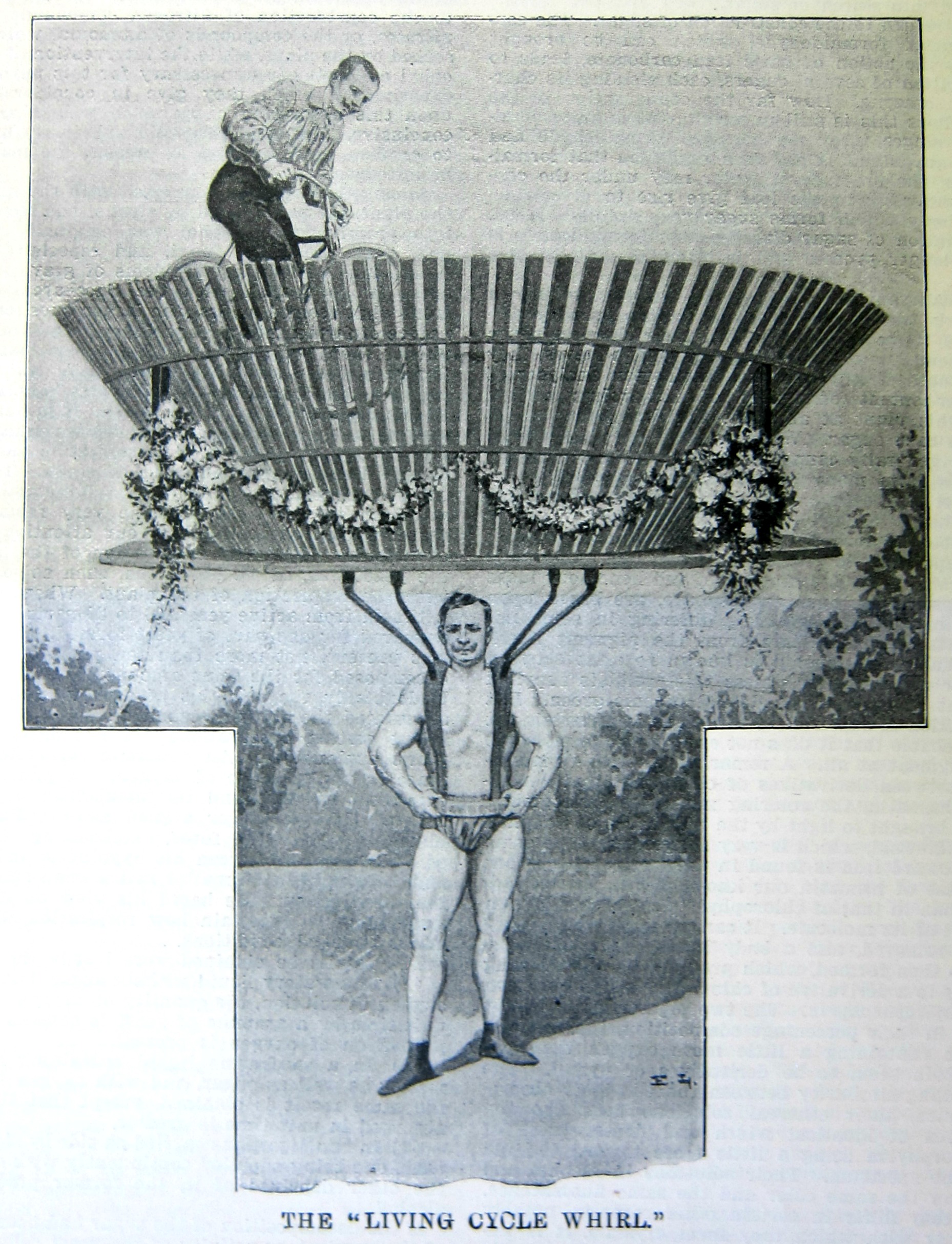
I couldn’t resist a simple post of this image of solo-velodrome–a curious bit for one rider held by one person. The “held” part is certainly unusual and very ambitious, the thing being designed for high amusement–it appeared as part of a show at the Dresden Victoria Salon, and was published in the August 8, 1903 issue of Scientific American.
JF Ptak Science Books Quick Post Part of the History of Holes series
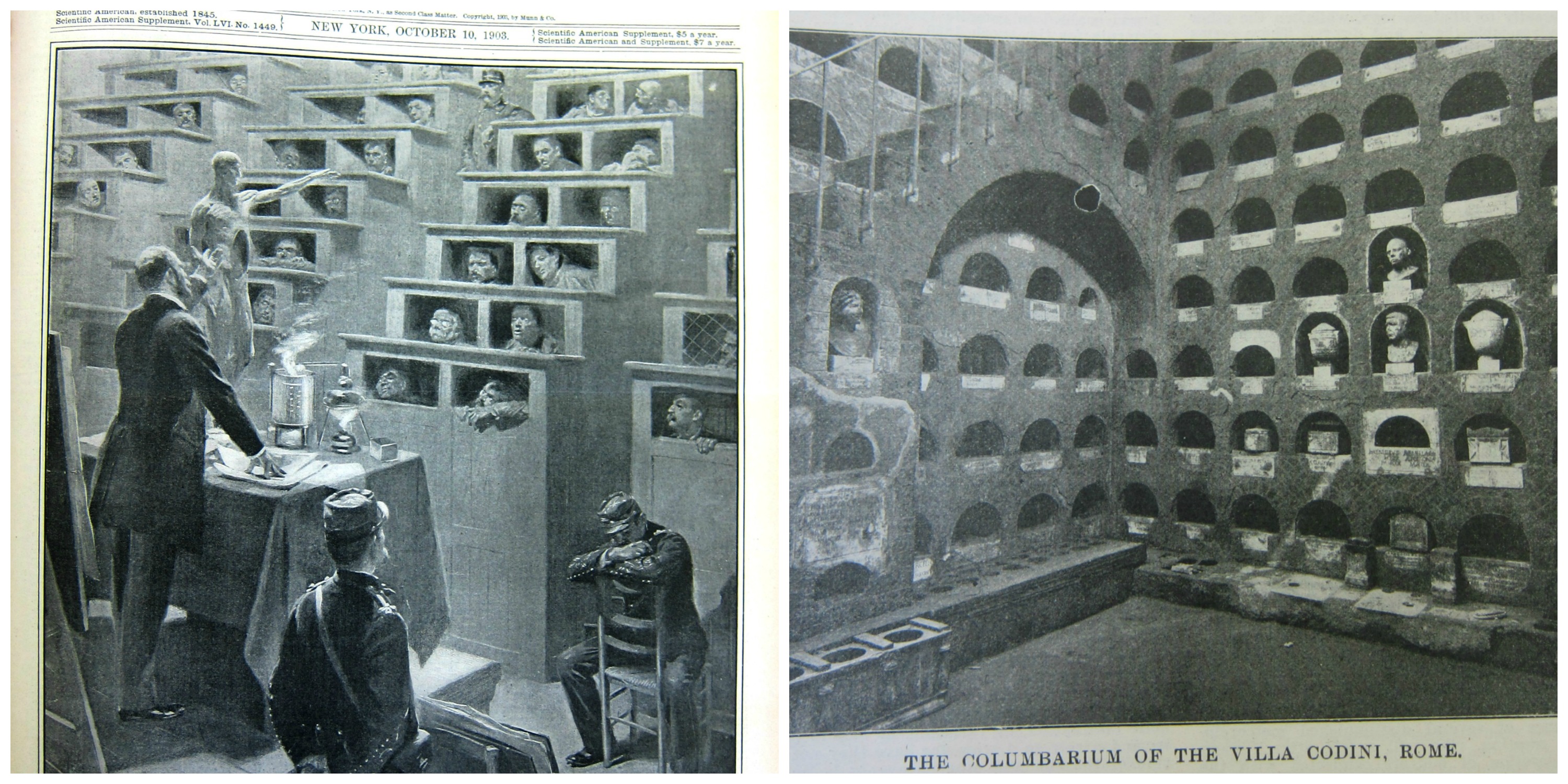
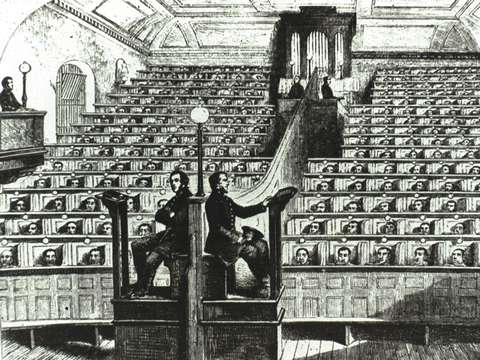
While browsing a volume of the Scientific American (Scientific American Supplement #1453, November 7, 1903) I came across a picture of the Columbarium of the Villa Codini, Licinian Gardens, Rome, and then within a minute I came upon a similar scene just dozens of pages away–a striking likeness, though this time the sculpted openings were for the living. It showed a lecture being delivered to inmates of a criminal sanatorium, hearing about the evils of alcohol, each prisoner stored away in his own little box. “Columbarium” comes from the Latin word (“columba”) for “dove-cote”, and it is easy to see the similarity between the sepulchral images.
There is another image that I’ve saved but which has no reference for origin. It depicts prisoners in a European institution attending a Sunday service:
·Posted by :
·in:
JF Ptak Science Books Quick Post
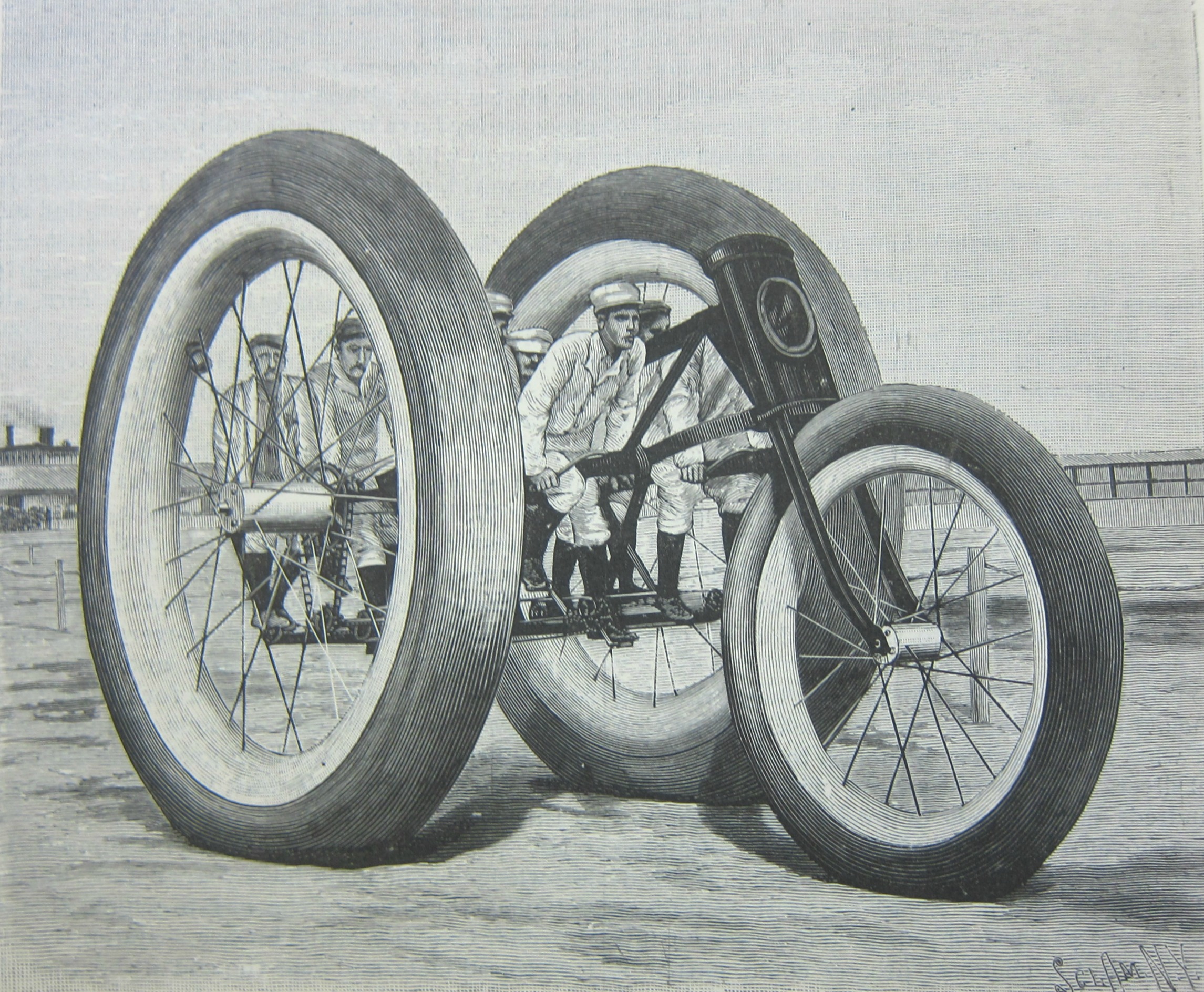
SO–this is either a very large tricycle with average-sized crew, or an average-sized trike operated by tiny people. Since it appeared in the November 11, 1896 issue of Scientific American–which had a very very slight leverage on humor–I report here that this was indeed a very large tricycle. As a matter of fact it required a crew of eight to operate, and weighed in at about 1500 pounds. It was actually constructed, as this crew peddled it around the Boston area for a 125-mile jaunt. Why this was done–other for the sake of doing it–I do not know. It seems someone just made a Big Thing, coming (as the short description in the issue says) “in this age of ‘big things’ “.
JF Ptak Science Books Post 1936 (expanded)
This post is a part of overlapping categories, including:
 I don’t know if this is an actual Extra Earth that makes an appearance in a Stardust episode, or if it is just a repeated element of design–from what I have seen from Hanks, it could easily be either.
And now on the the rest:
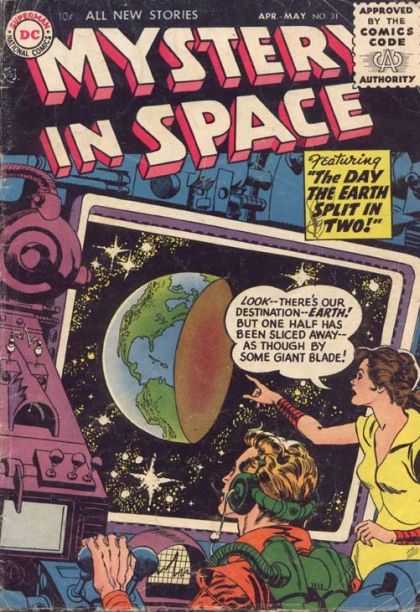
In the eight years or so of collecting information and stories for the odd-bits section of this blog I have never encountered so many choice visual examples in one place for strange/weirdly-imagined/impossible/high-SciFi of the Earth than with the comic book, Mystery in Space. The very dedicated keepers of Coverbrowse.com website have reproduced thousands (?) of covers of pulpily-published science fiction and exotic-thinking comics books, including the home base in which all sixteen-plus years of Mystery in Space live.
JF Ptak Science Books Quick Post Daily Dose from Dr. Odd series
Such is the nature of the small but desperate urgencies that they come at large and ultra-desperate times, actions required of impossible and uneven urgence, responses vaulted into the black hole of needless authority. Or some such. That is the way some of these images looked to me, removed from their context, taking away their stories and supplying one’s own. Urgently.
This post is related in a way to this blog’s series on using a “paper microscope” to find semi-hidden human geographies in old prints–where there are scenes of low drama taking place in the tiny incidental detail of some architectural rendering of some sort. In this case, though, the story is the main image, though the original story has simply been removed. So, our urgencies (top to bottom): the expression of urgent staying-in-bed, despite entreaties and an advancing army; urgent sleeping to ward off an advancing lion, horse, and highwaymen; terrifically urgent sitting, even when being upended and beaten with sticks to make the sitting stop; and, finally, urgent suicide (with backup sword at the ready) to evade capture of an advancing army. The end.