JF Ptak Science Books LLC Post 909
“When [the soul] is firmly fixed on the domain where
truth and reality shine resplendent it apprehends and knows them and appears to
possess reason, but when it inclines to that region which is mingled with
darkness, the world of becoming and
passing away, it opines only and its edge is blunted, and it shifts its
opinions hither and thither, and again seems as if it lacked reason.” Plato, The Republic book. VI, 508d
Plato
dipped deep into the myth/metaphor/parable/analogy/allegory of the cave,
contrasting it with the allegory of the sun, discussing the pursuit of
knowledge real and not-so.
I
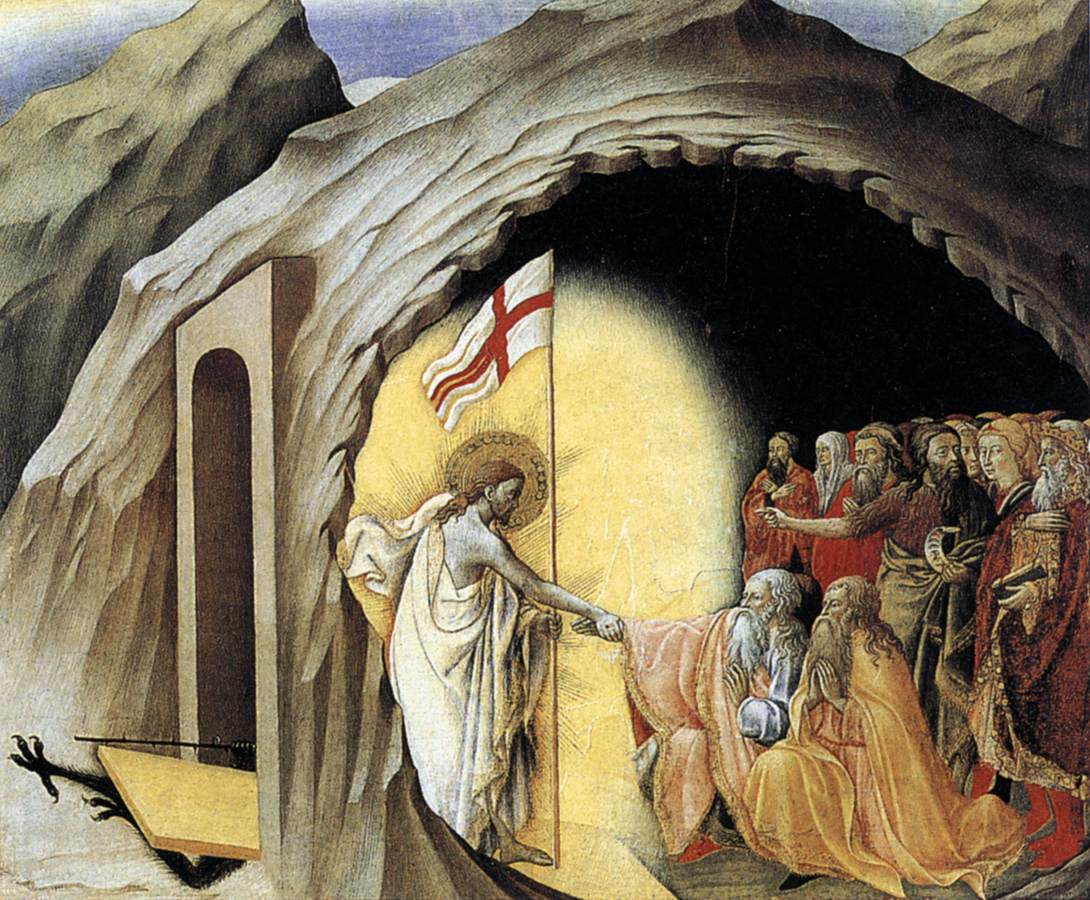
like the idea of the half-displayed, semi-schematic, fade-away disposition of
the cave and how painters dealt with them and their hidden contents in early Renaissance
art.
Its
difficult to show a cave, a dark hole (occurring in all rock types and
topographic situations, btw) that really hadn’t been dealt with scientifically
yet—even if humans had been using them one way or another for thousands of
years.
I’ve
noticed these images time in and time out, and I’ve not really saved them, or
at least I haven’t segregated the odd etched or engraved images, though they
are all here somewhere, so I can add to this post from time to time. The image that I’ll use tonight comes from
Harvard’s
Osservanza (Sienese school, fl 1430-1450, manuscript illustrator). It is a popular image, “Christ in Limbo”,
though of the others working in this genre we see Christ generally at the
entrance to a tomb/cave-like place, standing just outside of the doorway (as with Mantegna, Durer, Pacher, Fra Angelico and others). The Master of Osservanza gives us an
exquisite cutaway view of the cave of limbo, showing both the outside and the
inside, which is an uncommon and beautiful perspective.
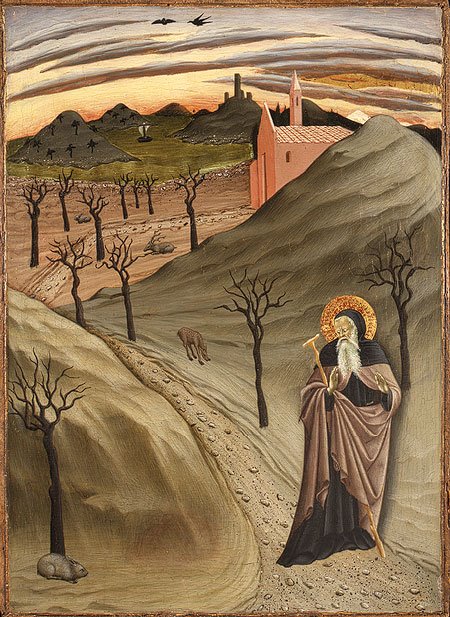
I should add that the tearingly odd “Saint
Anthony Abbot Tempted by a Heap of Gold”, also painted by the Master of Osservanza (ca. 1435) depicts the least-likely-of-all-saints-to-be-tempted-by-gold reacting in horror to, well, nothing. Nothing at all. We see him reacting to what used to be there, but which for some reason was removed, painted-over at some dim point in the dusty past, for reasons that I do not know. (And so the painting could easily move into my Blank and Empty Things series.) But the desert landscape is so sparse and the sky so surreal with bent clouds that it is easy today to overlook the gold entirely.
[I know there’s SO much more to this business with the caves–I just wanted to get this post started before it all went down the thought-hole.]