A Daily History of Holes, Dots, Lines, Science, History, Math, Physics, Art, the Unintentional Absurd, Architecture, Maps, Data Visualization, Blank and Missing Things, and so on. |1.6 million words, 7500 images, 4.9 million hits| Press & appearances in The Times, Le Figaro, Mensa, The Economist, The Guardian, Discovery News, Slate, Le Monde, Sci American Blogs, Le Pont, and many othr places… 5000+ total posts since 2008.

Category: Manuscripts

  • Maps: “Through the Meander of the Rockish Creek”, 1842

    JF Ptak Science Books   Post 2634

    Back when I had an open shop I would occasionally have surveyor customers who would come in after hauling themselves back to our civilization, telling stories of doing some re-survey of some piece of land in the out-yonder and finding old heart of pine stakes from a 19th c survey still in place and just very slightly off from where the modern surveying tools would place them. These guys held these earlier surveyors in high regard, as they did hard work and did it very well, using relatively rudimentary tools (optics, chains, measures) in sometimes very difficult conditions and doing a splendid job of it.  

    These stories came to mind just this afternoon again while cataloging an 1842 manuscript map made by Britton Hood, Jr., who was the son of a surveyor Hood Sr. who worked through the late 18th c and into the middle 19th. The family was in Wayne County, and it looks as though the son stayed their, at least according to a hint or two on this map. Although the location is not identified the major feature is, and the “Cabin Branch” of the map may be the “Cabin Branch” creek that is south-central Wayne County, south of Goldsboro. 

    The very attractive part of this map of course are the landmarks used by the surveyor, and as is very often in these cases, the “landmarks” tend to be simple trees and stumps and such.  Of course is you identify a starting place and base all of the landmarks upon that, then virtually anything can be used, so long as it is referenced to something. 

    This leads to the found-poetry of the Hood map:
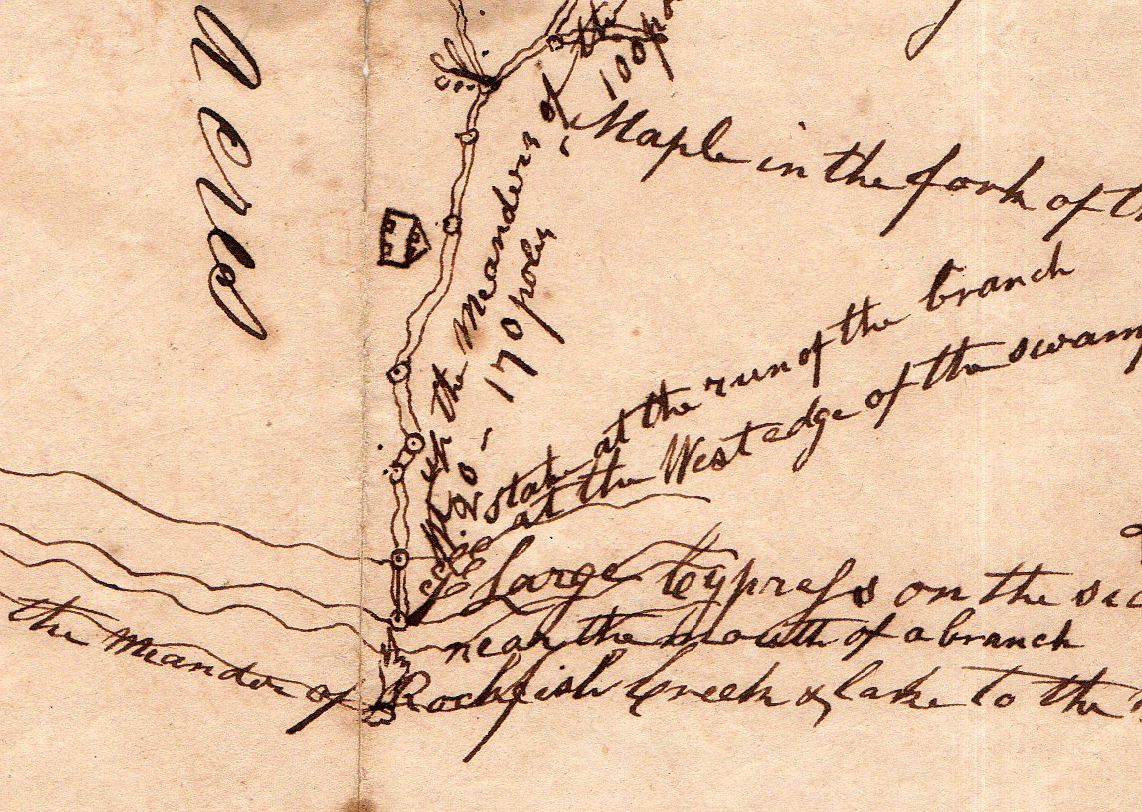
    Britton Hood725

    Some of the then-essential and now-delightful boundary markers for Hood’s 770-acre survey include:

    • Maple at the fork of the branch
    • stake at the turn of the branch
    • pine at the west edge of the swamp
    • large cypress at the edge of the swamp
    • through the meander of the Rockish (?) Creek
    • Lightwood stump
    • small pine
    • pine
    • large dead pine
    • stake
    • pine at the prong of the NW branch
    • and of course a pine, pine, and small pine, among other things.

    The map in full (the original measuring 6×7″):
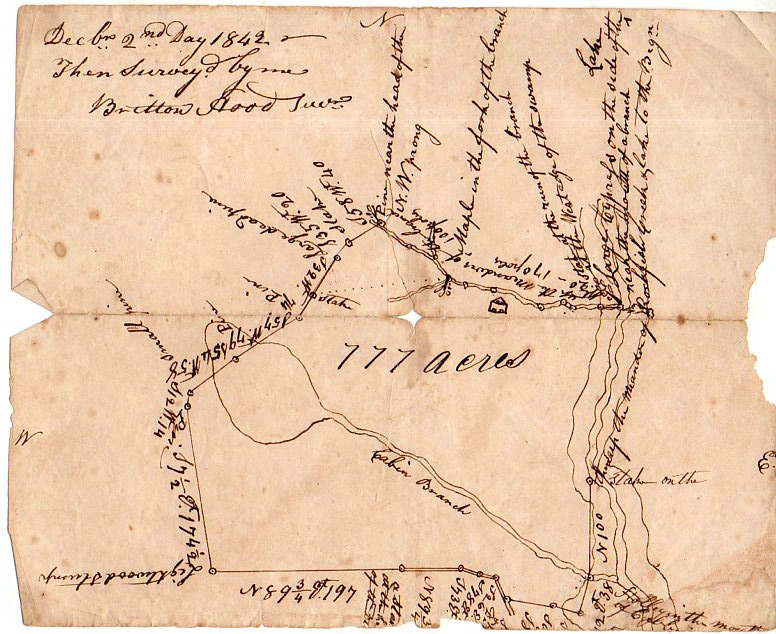
    Britton Hood724


  • “Hannah Coles her Book”, 1816: Manuscript Copy Work

    JF Ptak Science Books   Quick Post

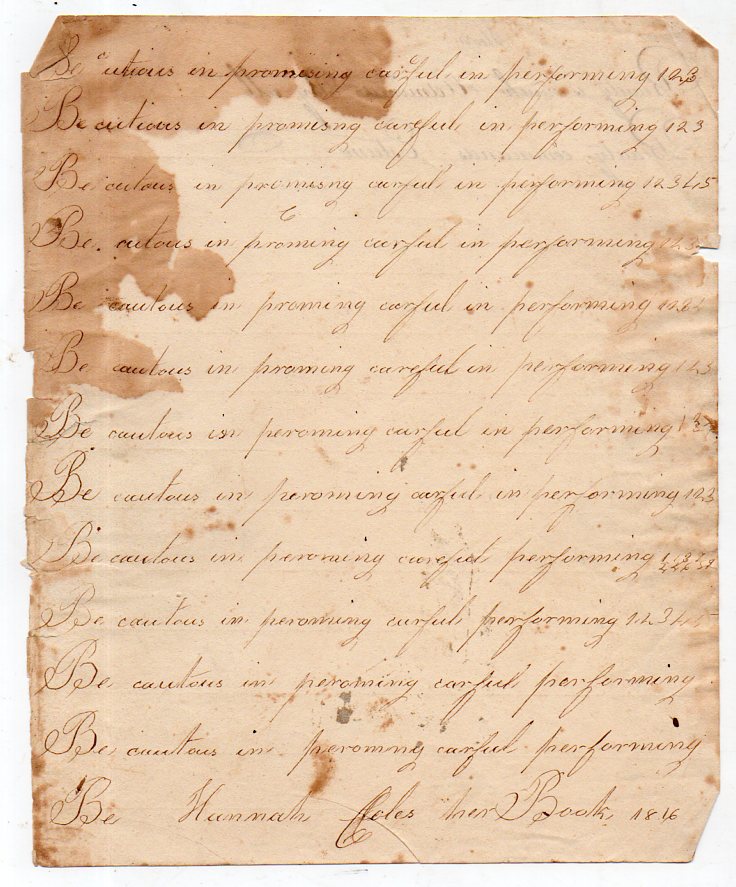
    Be cautious in promising careful in performing.

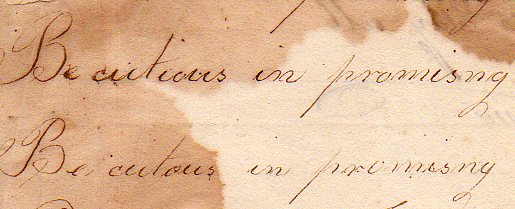
    Manuscript--be cautious015That is the advice that Ms. Hannah Coles (of Connecticut) was writing over and over again, practicing her penmanship, back there in 1816.  Good advice. And beautiful. 

    Manuscript--be cautious016

    ·Posted by :

    ·in:


  • On Noses Falling Off: a Medical Manuscript from ca. 1800

    JF Ptak Science Books   Post 1965

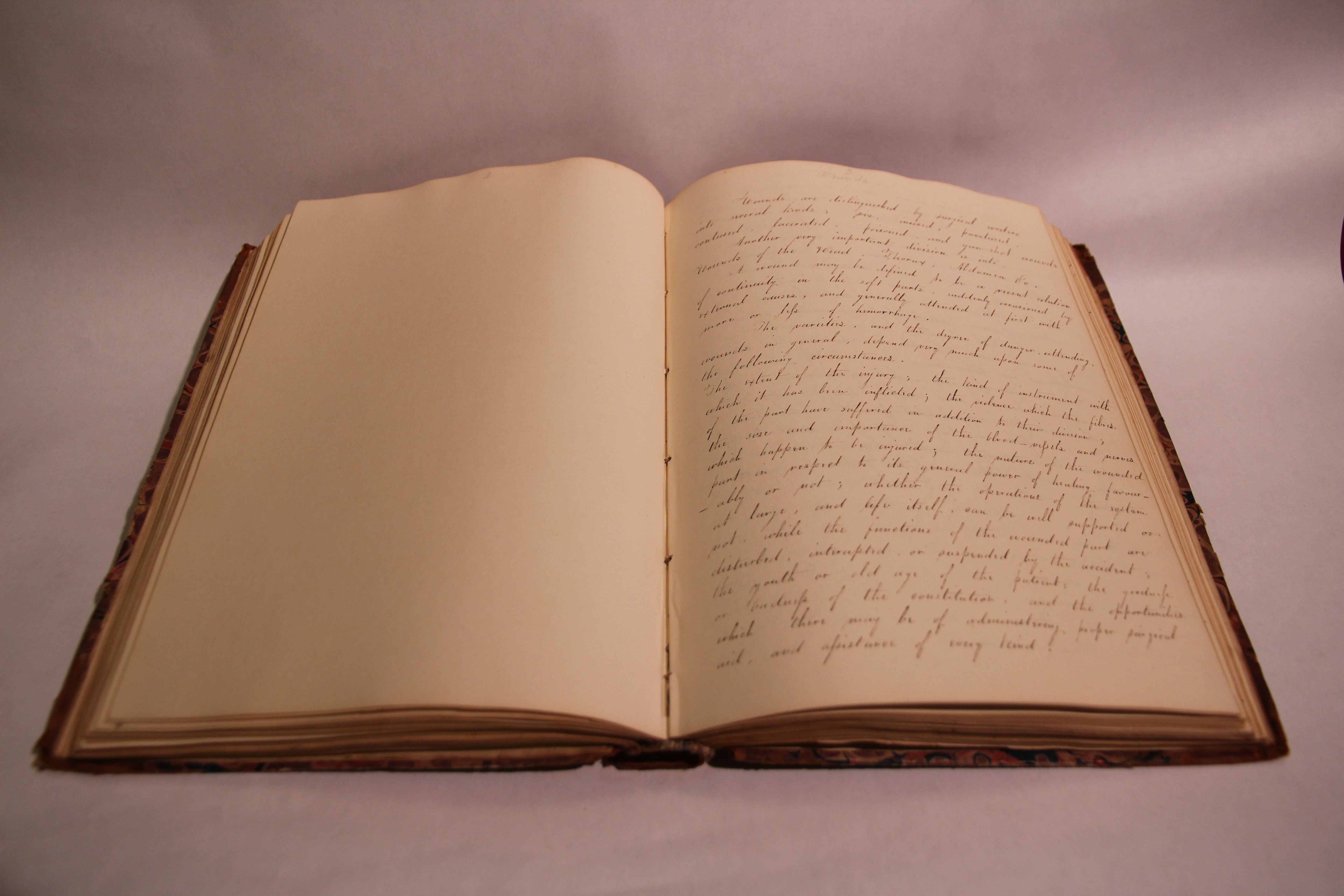
    I dealt finally with something that I had overlooked for a long time:  a medical manuscript written at about the turn of the 18th century, somewhere in the first decade or so, 1800-1810.  Its a nicely written, neat journal, but with no identification for the writer or for the time, or place.  Reading it through somewhat gives me the impression that it is a lecture book more so than a student’s notebook–it is certainly something in the professional arena, though, and not a work put together by an amateur. 

    Medical manuscript open
    The work is interesting and is dedicated mainly to suppuration and ulcers and fever and wounds (including a longish section on gunshot wounds). In the middle section of section dedicated to wounds is a section on wounds and incision, and there begins a short, three-page consideration of what we know today as rhinoplasty.  And it is in this section that the author includes a then-famous and somewhat bawdy poem on plastic surgery–specifically, a failure in the surgery of one of the early founding surgeons in the field. 

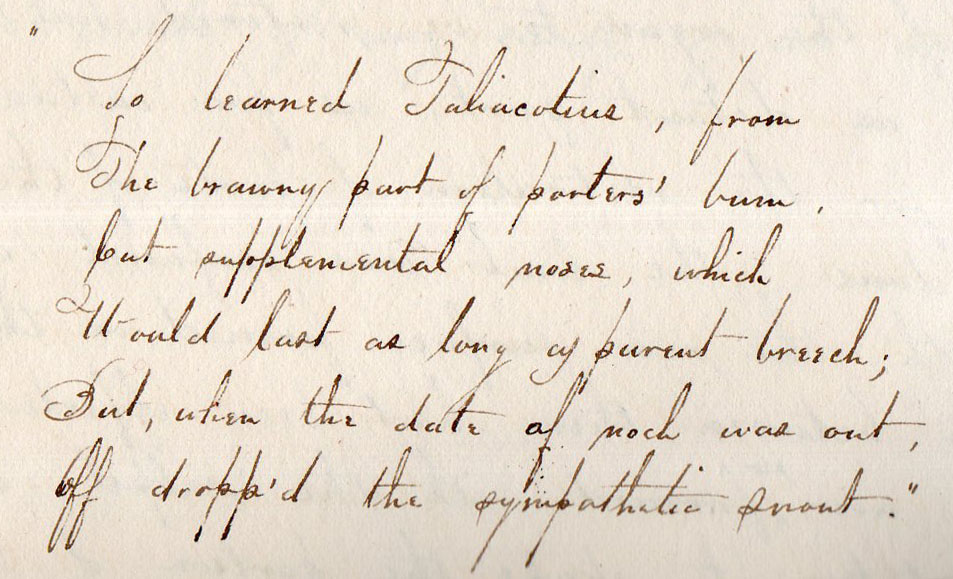
    The quote is from Samuel Butler’s popular and appreciated poem, Hudibras, and goes so:

    To learned Taliacotius

    the brawny part of porter’s bum,

    cut  supplemental  noses, which

    would last as long as parents breech,

    but when the date of nock was out

    off dropped the sympathetic snout…  

    –Samuel Butler, Hudibras, Canto 1, volume 1, page 89.  Source for full text via Google Books, here, the annotated and edited version by Zachary Grey, published in London in 1806 following the  initial publication in 1674-1678.  

    Medical manuscript detail
    The author referred to the mocking Butler’s (in his mock-historical-epic) stab at the Italian surgeon Gaspar Taliacotius (1546-1599), who at the very least wrote about surgical procedures that would restore the appearance of lost noses and other body parts, and this mainly in his Chirurgie Nota, in the second edition of 1597.  He may have claimed to be the first at this particular surgical procedure, though he wasn’t (with a number of other medical folks reporting on it, including the great Vesalius who did so almost 50 years earlier); and he also clai8med to have performed the procedure, though perhaps he actually didn’t.  No matter for right now–the treatment was extraordinary, and during this period was utilized by a number of different doctors with varying degrees of success.  Butler, on the other hand, had a pretty low opinion of the practice, and our unidentified author carried forward Butler’s sentiments in his notes. 

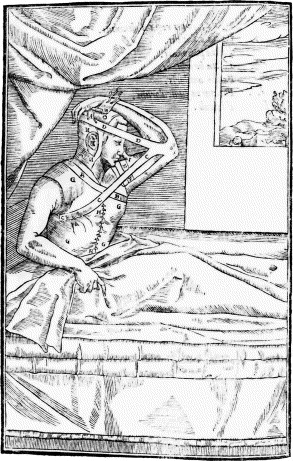
    Here’s an image of the Taliacotius procedure:

    Medical manuscript nose
    Illustration from Tagliacozzi’s De Curtorum Chirurgia per Insitionem., plate 8, depicting the “Italian method” of total nasal reconstruction. 

    It should be noted that there was a statue of Taliacotius dedicated in the medical school at Bologna where he taught–a full, standing sculpture, with the doctor holding a nose in his hand.

    Anyone interested in purchasing this medical manuscript can read about it in more detail, below:

    ·Posted by :

    ·in:

    —

  • An Alphabet of Illness, 1895

    JF Ptak Science Books  Quick Post  


    Follow Me on Pinterest

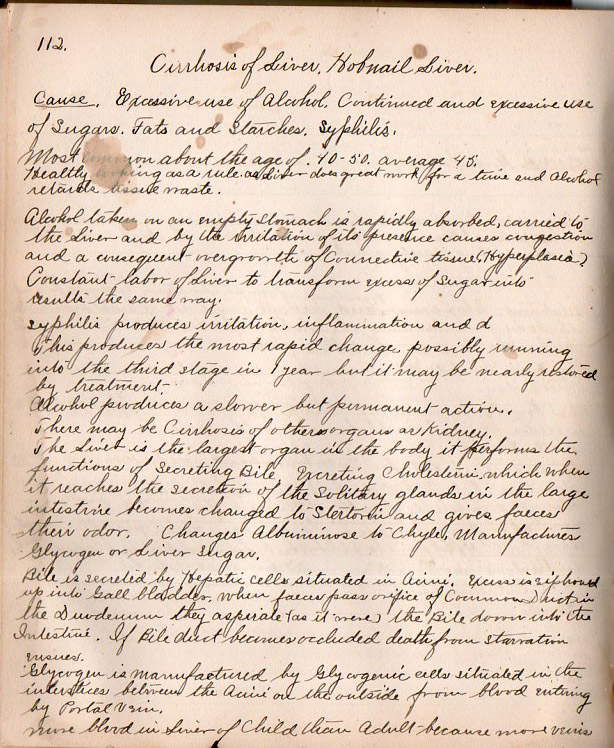
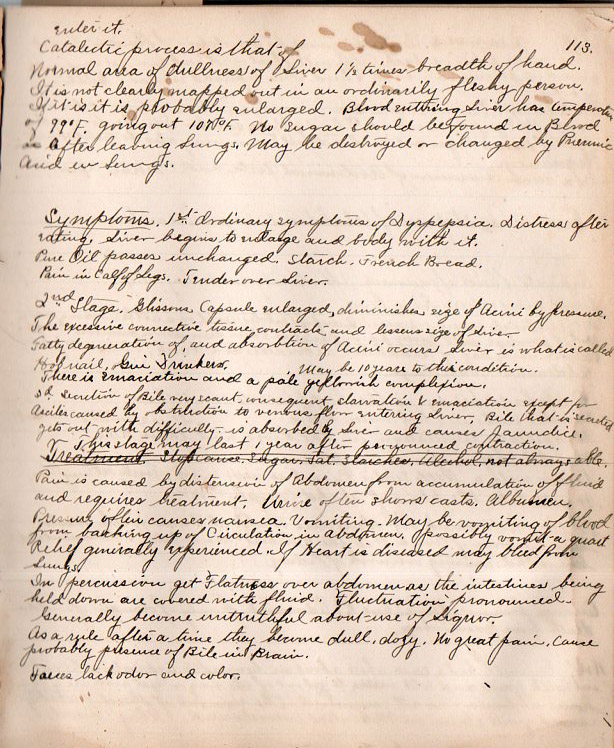
    Manuscript 1895055
    I uncovered an interesting manuscript, a student’s set of observations and notes, written in America at the end of the 19th century.  The notebook–and I think clearly not a lecturing book–is interesting for what it has to say about its subjects, and in the selection of the subjects themselves.  There are 223 pages, with approximately 22 lines per page, 8 words per line, making 176 words per page or about 25,000 words in the manuscript.

    Manuscript 1895056
    [This manuscript is available for purchase at our blog bookstore, here.]

      The categories included here are

    Asthma

    Bright’s Disease

    Bronchitis, capilary

    Catalepsy

    Cholera morbus

    Coma

    ·Posted by :

    ·in:

    —

  • Recording the Commonplace from the Viewpoint of a Child, 1868

    JF Ptak Science Books   Post 1966     Part of the series on Antique Children’s Art


    Follow Me on Pinterest

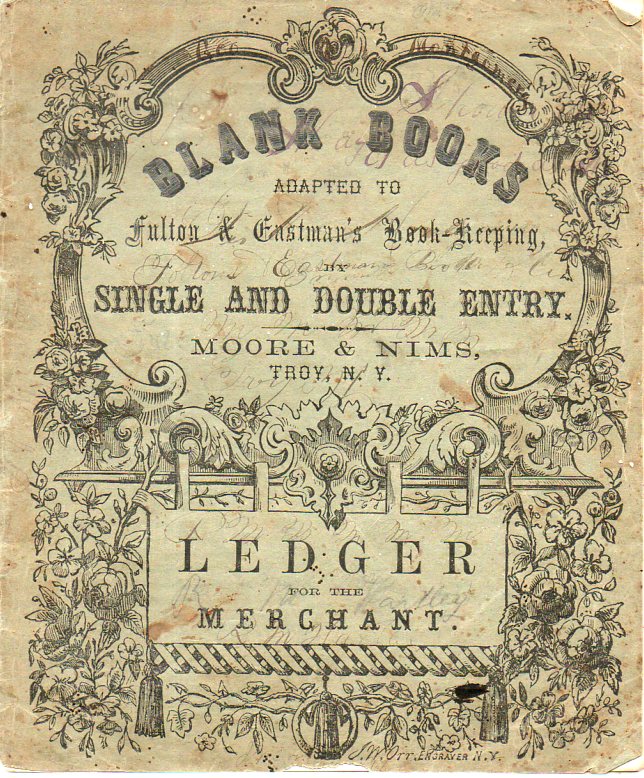
    Manuscript--blank book022
    It is difficult to find children’s art from the 19th century–original work, printed work, published work.  Very difficult–perhaps even more so for the published work than the manuscript.  It is easy to understand why:  first, the children would need access to paper and pencil or pen and ink–items that had some cost, that were not inexpensive, not available to the vast majority of children. Their work was ephemeral, produced on slate, or in horn books, or in charcoal on a wall, or in dust.  Then, if the children did manage to record their creativity, then it would have to survive a generation of possessionship within their own lifetimes–to survive from the first part of the 19th century, the paperwork would have to survive five generations or more, 150+ years of house cleanings.  Tough odds.

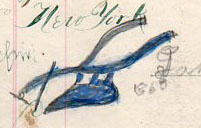
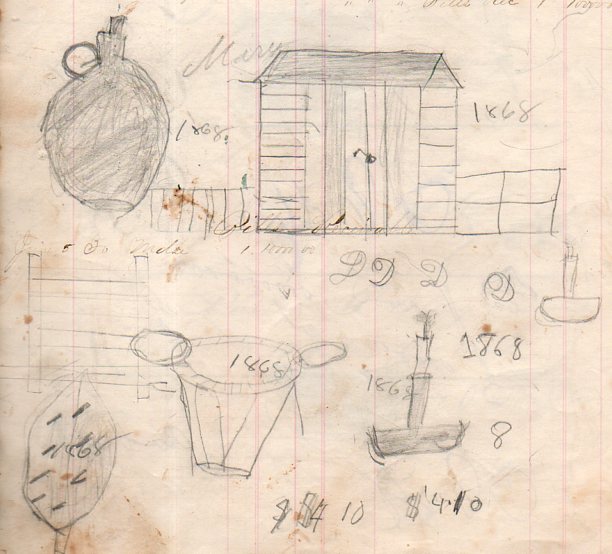
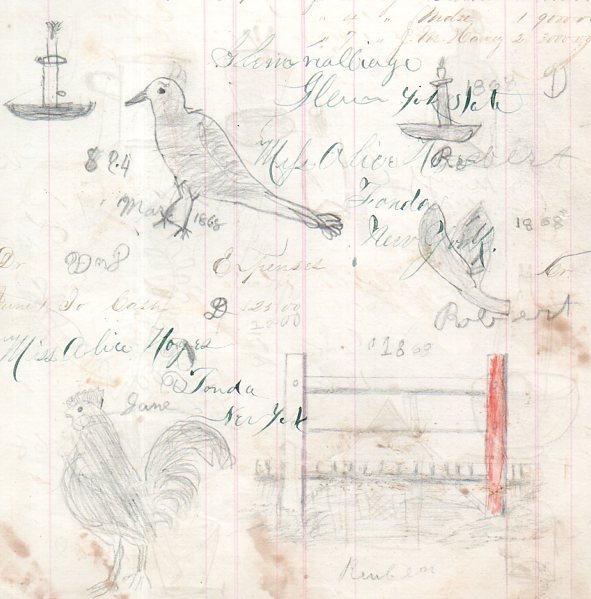
    Manuscript--blank book017One way that this artwork survives is accidentally, as in the case below. Scribbles, notes, sketches, finding their way into ledgers and notebooks and works for children–the book closed, placed on a shelf, and perhaps forgotten. Put away in a trunk, saved in an attic, stored.  And then, finally, found again after a century or two.  Opened, the book of seeming nothingness is loaded with, well, everything.  In this glorious example, ironically titled Blank Books, the books are anything but, now.  This notebook was intended as a Ledger for the Merchant, and there was a bit of that done…but at some point, the ledger became a practice book, a tablet. And from the looks of it, from the scribbled date in practice signatures over the ledger columns, that change took place around 1868.

    And in the blank spaces of the ledger and notations appear all sorts of everyday things, the sort of stuff that might be invisible to an adult because we take it for granted–perhaps not so with children, who might be fascinated by these objects because they have only been cognizant human beings for a few years.  (It never fails to amaze me when I look at the photographs that our daughters made when they were three or four, wandering–and I could write “wondering”–around the house with a digicam.  The images they recorded were things that were mostly part of the background hum of everyday life for me, except that their pictures were made at their eye level and gave a new meaning to these objects, for me.)  What the child/children recorded in this dead ledger were common objects in 1868.  Perhaps they are of a forgotten commonness.  Whatever the case, it gives these objects a renewed interest to the observer of the future and our present simply because a child saw fit to draw them in the limited space in which they could draw. 

    Manuscript--blank book019

    Manuscript--blank book020

    ·Posted by :

    ·in:

    — —

  • The Sublime Antiquarian Art of Children, Part I

    JF Ptak Science Books   Post 1224

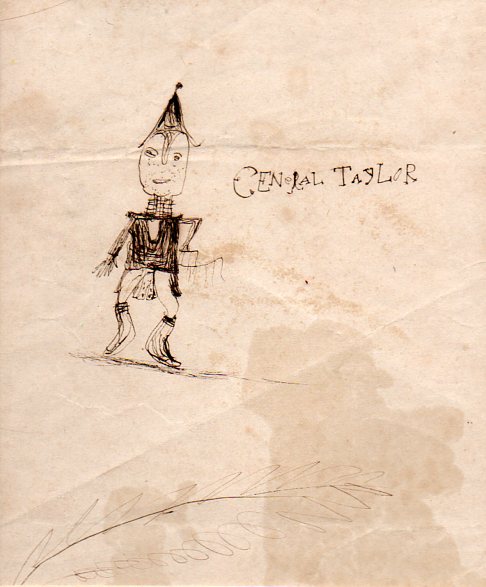
    Children's art--3846
    Among my favorite places in Washington, D.C.–a place where I lived for 29 years–are its cemeteries; in particular Rock Creek Cemetery, but more specifically, Congressional Cemetery.  Congressional is a big place, tucked away, sort of, away in Southeast D.C.–that is if you can tuck away a 30-acre piece of land. Congressional is an odd place, filled with many interesting people; its filled with their actual remains, and also their memories. There are many folks who have been interred in spirit in the cemetery, in cenotaphs; there are also many who have been laid to rest their temporarily, in the Public Vault, until conditions (in the old days) improved to have their remians received in their final resting place. 

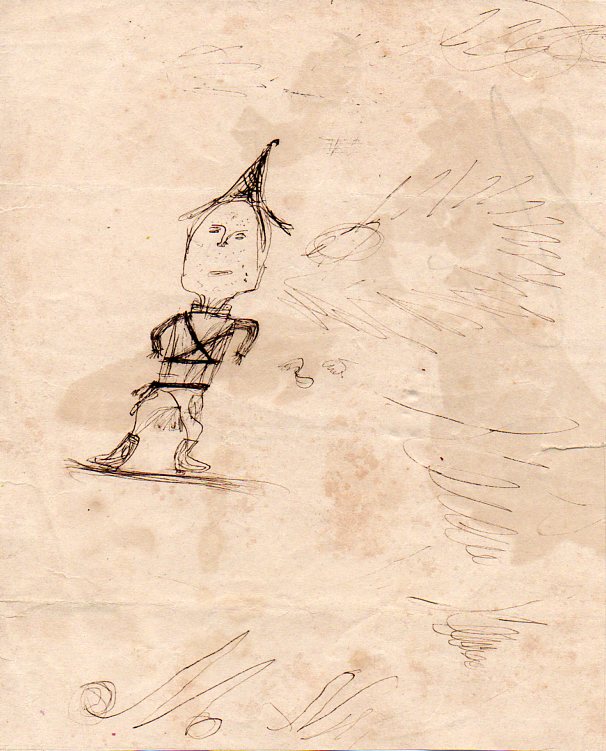
    Children's art--2845
    Among those in the temporary funeneral housing were JQ Adams, William Henry Harrison, Dolley Madison, and Zachary Taylor. It may be one of the great vaults in the history of our country, a small place holding great people.

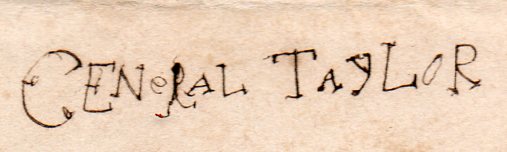
    President Taylor.  General Taylor.  That’s why I’m here right now.  He’s the subject of these magnificent efforts by an unnamed child.  The boy, or girl, drew these images on the back of a section o fmap that was printed in about 1845-1850, just about at the time that Taylor was at his greatest height–a general, a famous militaryu leader, about to become president of the United States without ever having been elected to any office.  He was a gigantic figure at the time, and no doubt occupied some piece of mind of the artist who rendered him, The General.

    I came to collecting childrens’ art in a roundabout way–not so much “collecting” per se as in “finding” them.  They’re difficult things to locate.

    First of all, materials were scarce.  Paper, pencils, ink–these were not common things for kids to own in the 19th century, especially more in the middle and early parts of the century.  These items were expensive, especially if you were a kid in a working-class family who didn’t have much of anything at all, anyway. In addition to a real crunch, a severity of absence, of the basic materials, the art that was made had to survive the artist’s own hands.  And then it needed to survive being culled from family clutter for a generation. And another. And another. And another. And four more.  150 years of parents clearing out the clutter is a lot to survive. 

    And so there doesn’t seem to be much left.

    I find them in flyleaves of old textbooks and such.  Its not as though there is are websites devoted to such things–at least not until now.

    And so I’m selling two of the three portraits of The General that I own.  I’m keeping one.  They just feel superb, to me.

    If you’re interested in owning one, visit the blog bookstore, here.  I’m developing now a site for nothing but pre-1900 kid art. 

    The artwork of children is a gorgeous thing, even when the children are not your own.  Its not that there is a sense of a certain charm, or charms–the words are just too weak. The vocabulary is more in the realms of the work being sublime, far more so than anything else.

    Children's art--1844


    ·Posted by :

    ·in:

    — —