A Daily History of Holes, Dots, Lines, Science, History, Math, Physics, Art, the Unintentional Absurd, Architecture, Maps, Data Visualization, Blank and Missing Things, and so on. |1.6 million words, 7500 images, 4.9 million hits| Press & appearances in The Times, Le Figaro, Mensa, The Economist, The Guardian, Discovery News, Slate, Le Monde, Sci American Blogs, Le Pont, and many other places… 5000+ total posts since 2008.

Category: Children’s Art

  • On the Beauty of Antique Art Made by Children

    JF Ptak Science Books  Post 2785
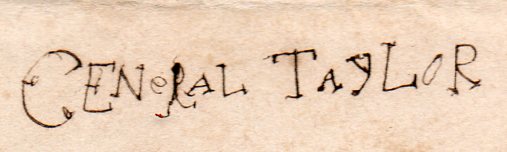
    Children's art--3846
    Among my favorite places in Washington, D.C.–a place where I lived for 29 years–are its cemeteries; in particular Rock Creek Cemetery, but more specifically, Congressional Cemetery.  Congressional is a big place, tucked away, sort of, away in Southeast D.C.–that is if you can tuck away a 30-acre piece of land. Congressional is an odd place, filled with many interesting people; its filled with their actual remains, and also their memories. There are many folks who have been interred in spirit in the cemetery, in cenotaphs; there are also many who have been laid to rest their temporarily, in the Public Vault, until conditions (in the old days) improved to have their remains received in their final resting place. 
    Children's art--2845
    Among those in the temporary funeneral housing were JQ Adams, William Henry Harrison, Dolley Madison, and Zachary Taylor. It may be one of the great vaults in the history of our country, a small place holding great people.

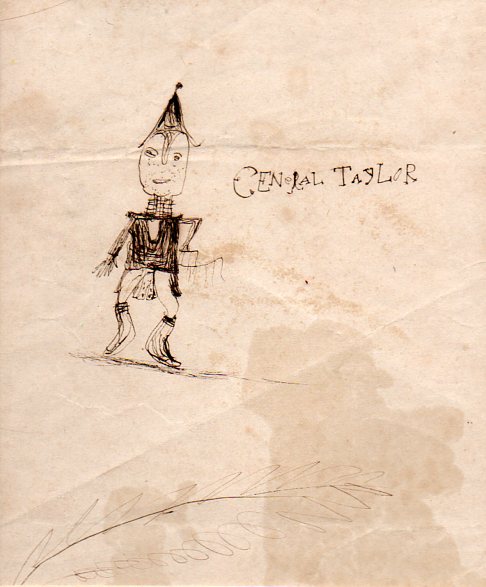
    President Taylor.  General Taylor.  That’s why I’m here right now.  He’s the subject of these magnificent efforts by an unnamed child.  The boy, or girl, drew these images on the back of a section of map that was printed in about 1845-1850, just about at the time that Taylor was at his greatest height–a general, a famous military leader, about to become president of the United States without ever having been elected to any office.  He was a gigantic figure at the time, and no doubt occupied some piece of mind of the artist who rendered him, The General.

    I came to collecting childrens’ art in a roundabout way–not so much “collecting” per se as in “finding” them.  They’re difficult things to locate.

    First of all, materials were scarce.  Paper, pencils, ink–these were not common things for kids to own in the 19th century, especially more in the middle and early parts of the century.  These items were expensive, especially if you were a kid in a working-class family who didn’t have much of anything at all, anyway. In addition to a real crunch, a severity of absence, of the basic materials, the art that was made had to survive the artist’s own hands.  And then it needed to survive being culled from family clutter for a generation. And another. And another. And another. And four more.  150 years of parents clearing out the clutter is a lot to survive. 

    And so there doesn’t seem to be much left.

    I find them in flyleaves of old textbooks and such.  Its not as though there is are websites devoted to such things–at least not until now.

    And so I’m selling two of the three portraits of The General that I own.  I’m keeping one.  They just feel superb, to me.

    If you’re interested in owning one, visit the blog bookstore.

    The artwork of children is a gorgeous thing, even when the children are not your own.  Its not that there is a sense of a certain charm, or charms–the words are just too weak. The vocabulary is more in the realms of the work being sublime, far more so than anything else.
    ·Posted by :

    ·in:


  • A Child’s Manuscript Map of the U.S.A., ca. 1875-1880

    JF Ptak Science Books  Post 2274

    It is difficult to find children’s art from the 19th century–original work, printed work, published work.  Very difficult–perhaps even more so for the published work than the manuscript.  It is easy to understand why: first, the children would need access to paper and pencil or pen and ink–items that had some cost, that were not inexpensive, not available to the vast majority of children. Their work was ephemeral, produced on slate, or in horn books, or in charcoal on a wall, or in dust.  Then, if the children did manage to record their creativity, then it would have to survive a generation of possessionship within their own lifetimes–to survive from the first part of the 19th century, the paperwork would have to survive five generations or more, 150+ years of house cleanings.  Tough odds.

    That is why it is also a little special when I come across larger manuscript works that have survived against these odds. 

    Maps US ms

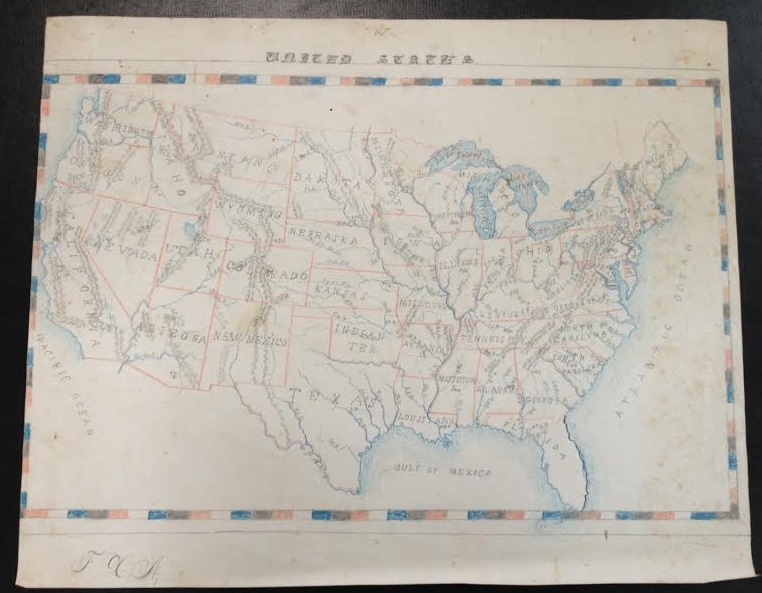
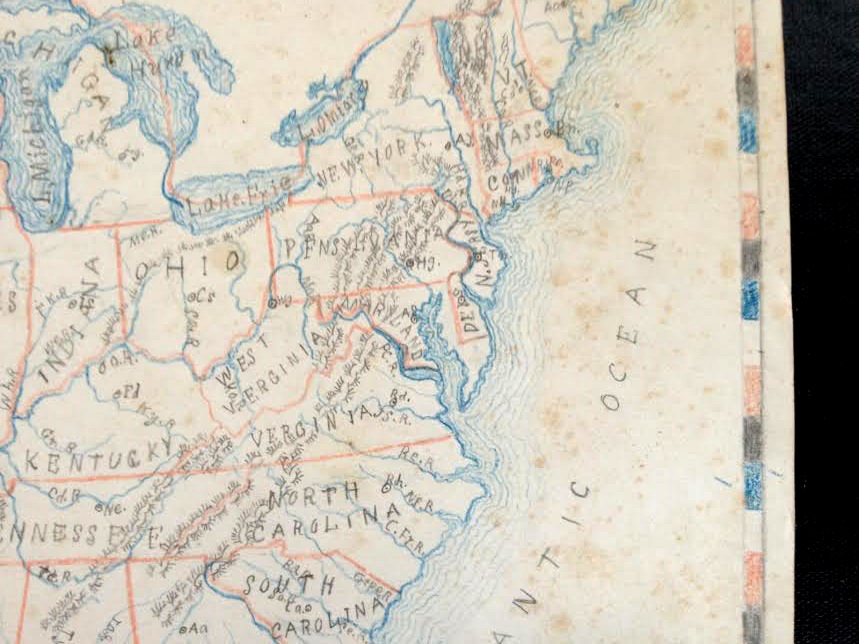
    This map of the United States isn’t so simple as it seems–although there are no major cities located in any states, many rivers are, as well as mountain ranges.  The coastlines get a very nice treatment with recessive blue lines, giving the map a certain dimensionality, and the lettering of the states is also distinctive, with the terminals of the letters in the state names ending with dots or lines.  

    Map US ms det

    I’d guess that the map was done around Centennial time, 1876 to the mid-1880’s, the biggest clues being the inclusive of Wyoming (which sets a date after 1868) and the large Dakota Territory, which would become North and South Dakota in 1889.  

    As maps by kids go, this one is fairly large at 12×15″–it is about the largest single sheet artwork that I have in a 150-odd pieces of antiquarian children’s art collection…also I wonder about how the kid in 1880-whatever got her/himself such a large piece of paper to work with, as it seems to me to be not a simple task.  


  • A Fantastically-Lettered Letter, 1868

    JF Ptak Science Books   Quick Post

    CHild Art NEw Bedford184

    I’ve mentioned on this blog a number of times that I like to collect antique art done by children–art, doodles, letters, that sort, mostly from before 1900.  This material is difficult to find, mainly because it was difficult to produce when it was being done given the relative scarcity of paper and pencils/pens/etc., and then having to survive moves and cleanings and generational changes for 100 or 200 years, so from my experience not that much survived.

    CHild Art NEw Bedford183

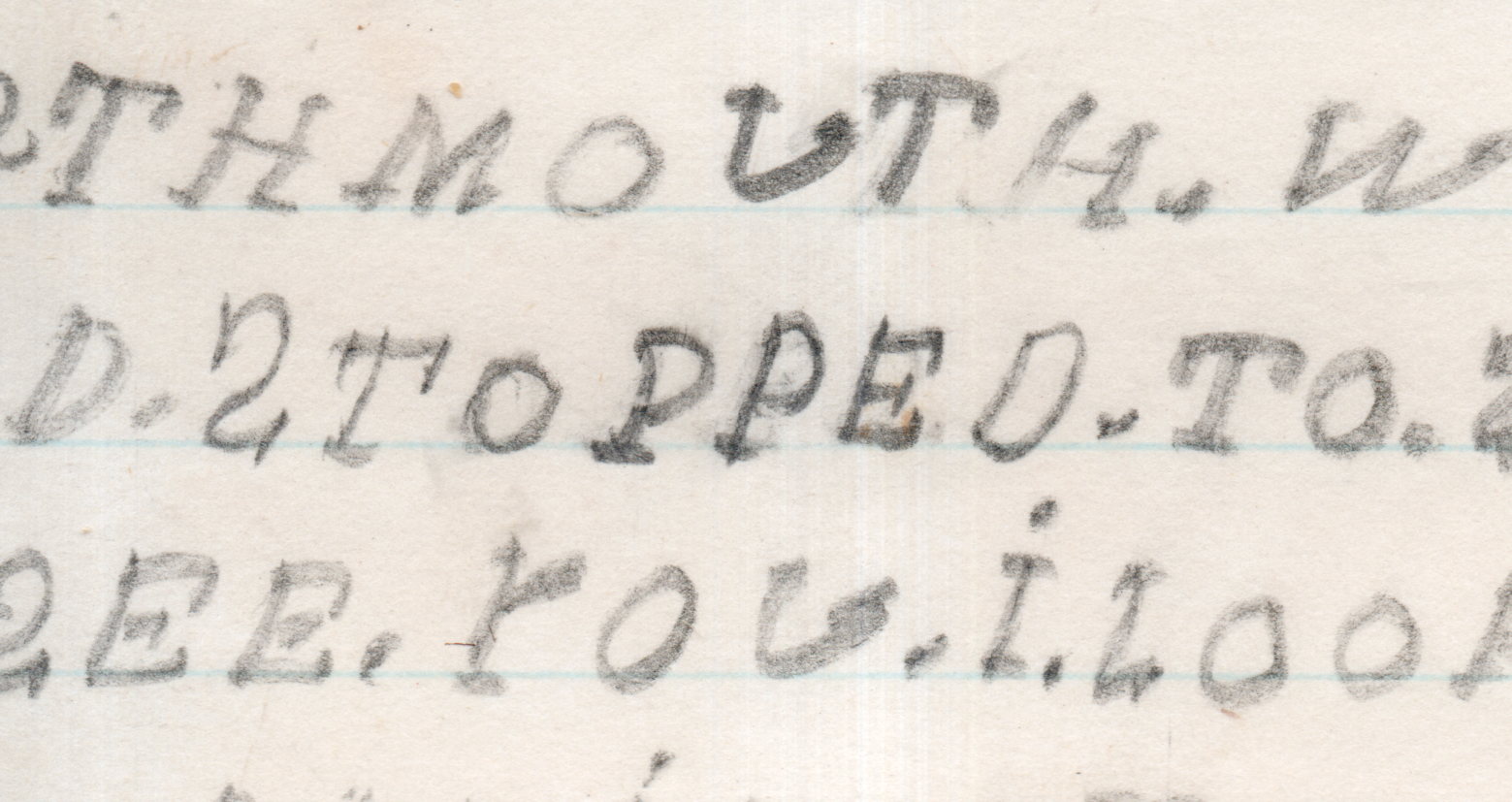
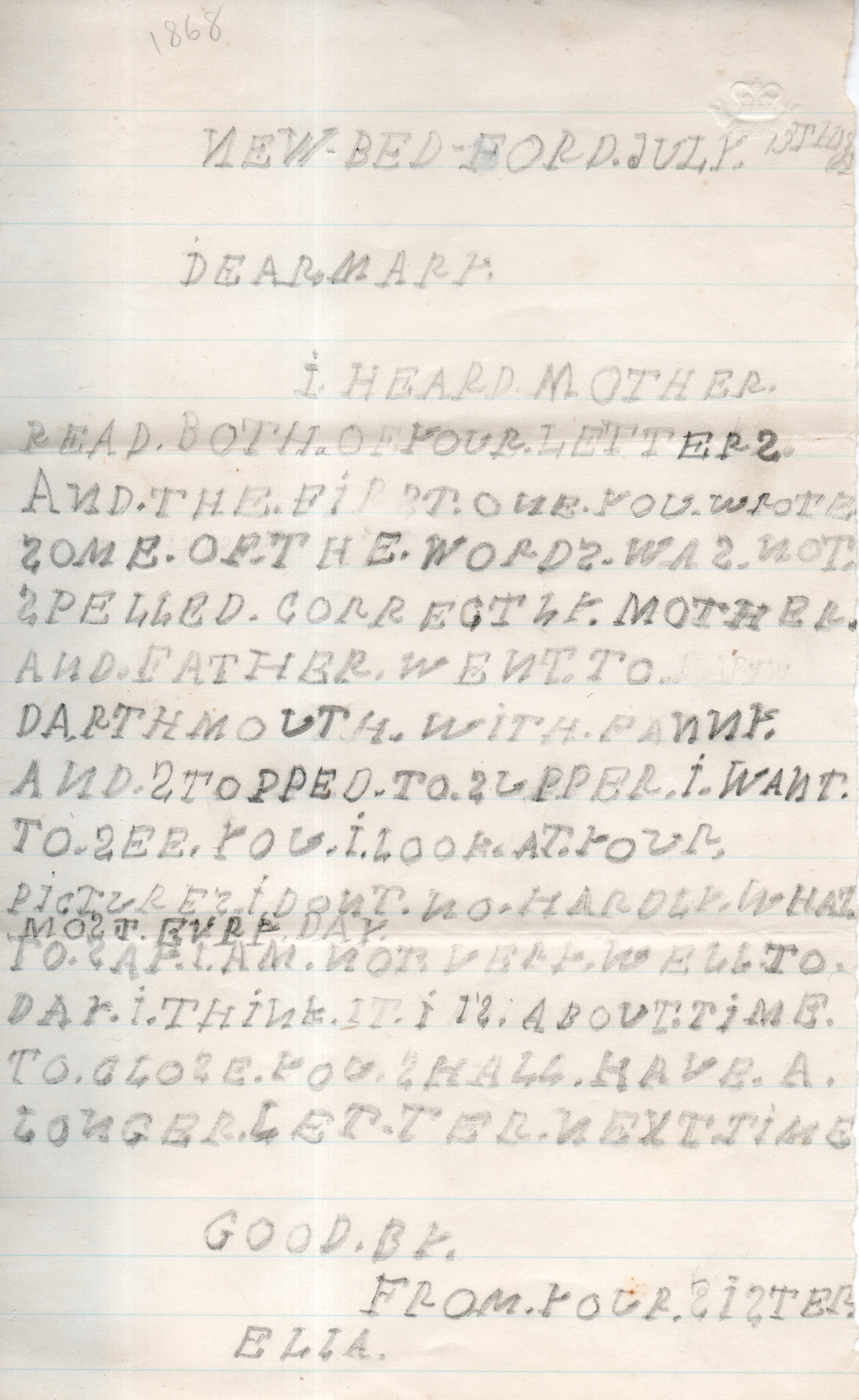
    Today’s sample is a letter from 1868, and the lettering, the handwriting, is very intense, and labored, and very very deliberate while at the same time being written very slowly.  You can tell about the speed when looking at the lettering under magnification–there are a lot of twists and turns in the formation of the letters and words such that could not be made if you were writing fluidly or quickly.  This was slow going.  

    Ella, the writer, was probably quite young. She used the period quite a bit, mostly in-between words, but also used it as a mark to show beginning and ending points in some letters. She also used lines and slashes to help her form the letters that she had probably just learned not to long before she wrote this letter.

    The effort is superior, and no one could fault little Ella in her brave attempt.  

    ·Posted by :

    ·in:


  • Remarkable Doodles by a Very Young Charles Darwin

    JF Ptak Science Books   Quick Post

    Darwin ms childhood detail

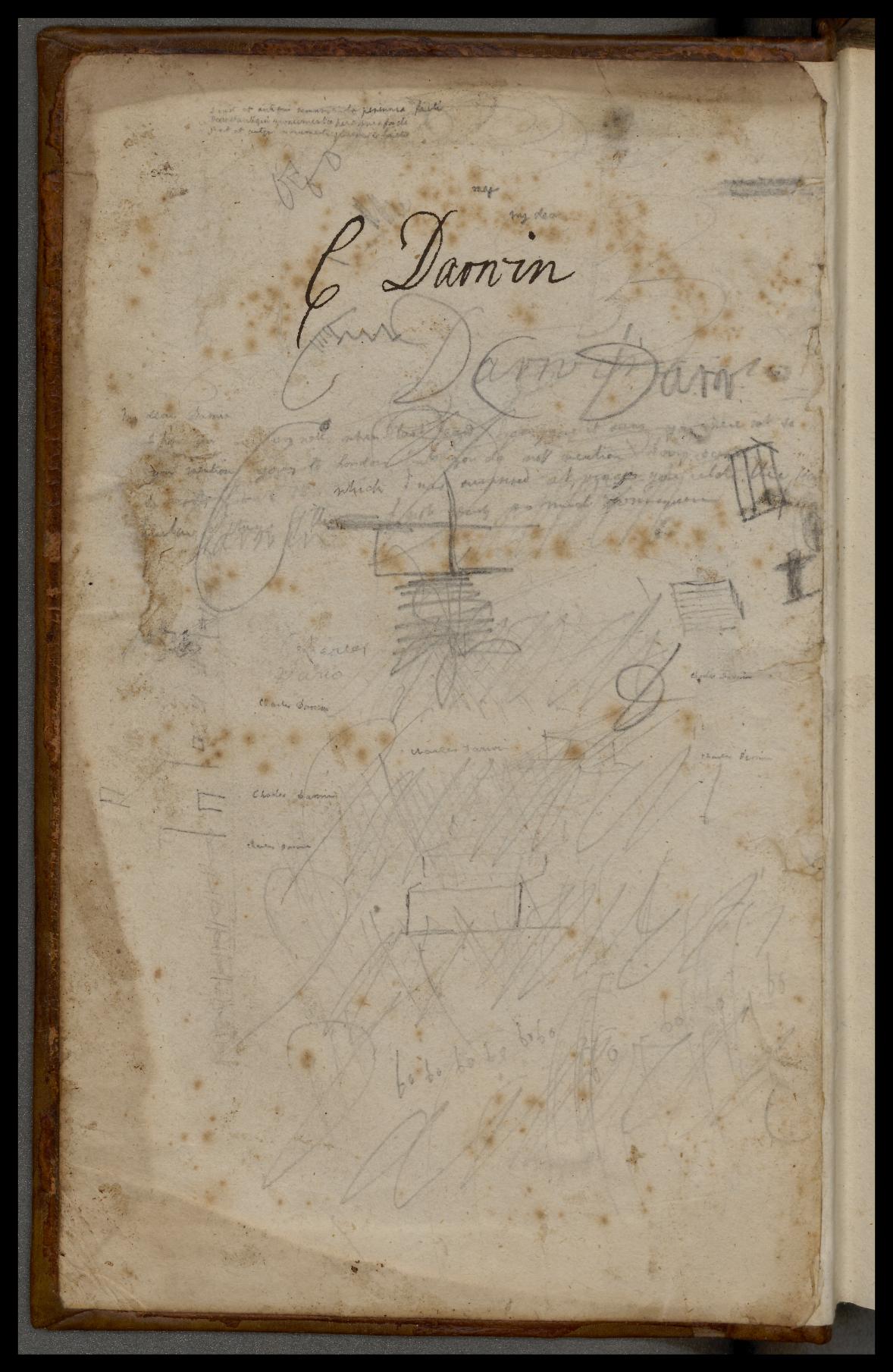
    I came upon these volumes unexpectedly on the Internet Archives via the Biodiversity Library website–the Charles Darwin library section. No doubt these are very well known to people more familiar with Darwin than I, but, well, I have never seen them before, and I think they’re fantastic. 

    Darwin ms childhood[Source: Internet Archive/Darwin’s Library, contributed by Cambridge University, https://archive.org/details/darwinslibrary?&sort=-downloads&page=4]

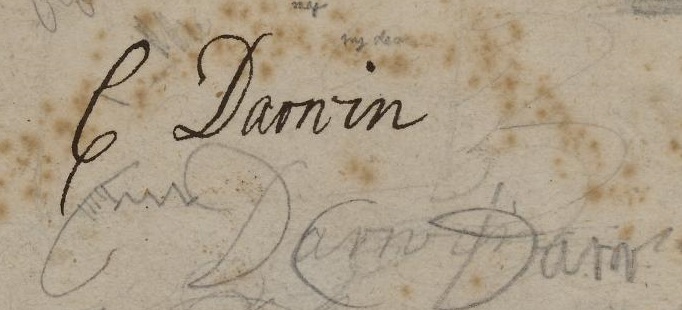
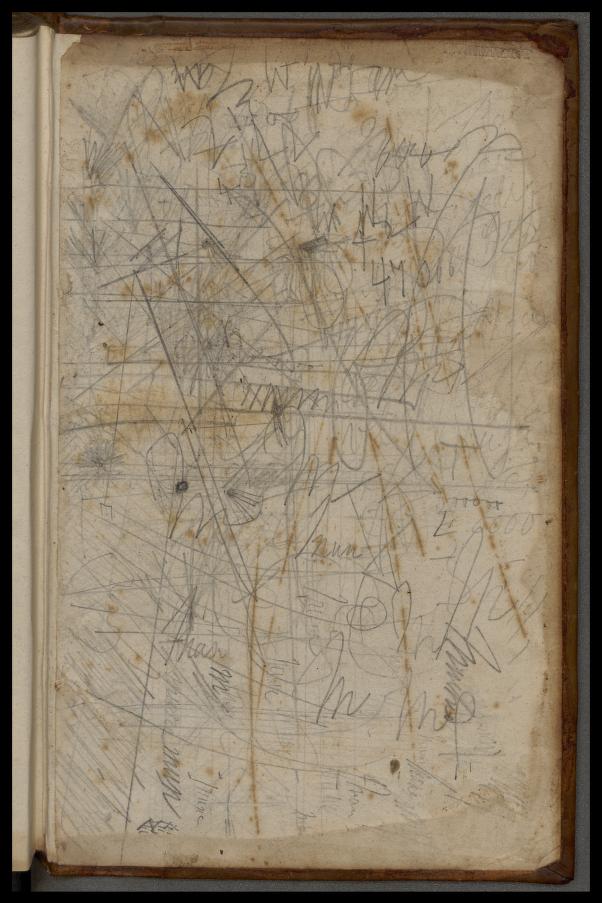
    The book:  A sketch of modern and ancient geography for the use of schools, by Samuel Butler, published in 1818, was the copy owned by Charles Darwin. the front and rear free endpapers are rather covered with the doodles of the young Charles Darwin, who among other things practices his signature with his young hand. It vividly shows that Charles Darwin was a child just like every great person was, once upon a time, and shared similar practices and characteristics of any other young human being.  

    Please note: the images are much more expandable at the Biodiversity website.  

    Darwin ms childhood 2

    [Source: Internet Archive/Darwin’s Library, contributed by Cambridge University, https://archive.org/details/darwinslibrary?&sort=-downloads&page=4]


  • The First Image of a Child’s Art in a Painting? (1515)

    JF Ptak Science Books   Post 2426  

    Part of the Children’s Art series

    Caroto

    I’ve written a number of times on this blog on art created by children–actualyl antiquarian children’s art, art made by kids from, say, before 1900.  That, and the depiction of kids’ art in work by painters through the centuries but before the last one. The second seems to be much more uncommon than the uncommon first category. For many good reasons, artwork made before (an arbitrary) 1900 seems to be fairly scarce, and when you to to <1850, scarcer yet, particularly when you remove the work of the privileged classes.  For the majority of people unused paper was not a common thing, certainly nothing as it is today when you can get a ream of paper for virtually nothing; in the 1850s, a child with access to paper and the means to express themselves on it would certainly have been a restricted minority.  

    As a “collector”of sorts of antique art by children most of what I have as doodles and artwork drawn on the blank pages of books, or their covers, or in ledgers,  really more like  kidlife marginalia, expressions of creativity on whatever paper was available.  It seems to me that the majority of kids would not have had much access to these means of production, especially if their major outlet for writing in school was slate and chalk.  Add to this difficulty the fact that the artwork would have to have survived the whims and taste and etc. of four or five and more generations of moves and house cleaning and so on, and the chances of childhood art’s survival become thinner and thinner. 

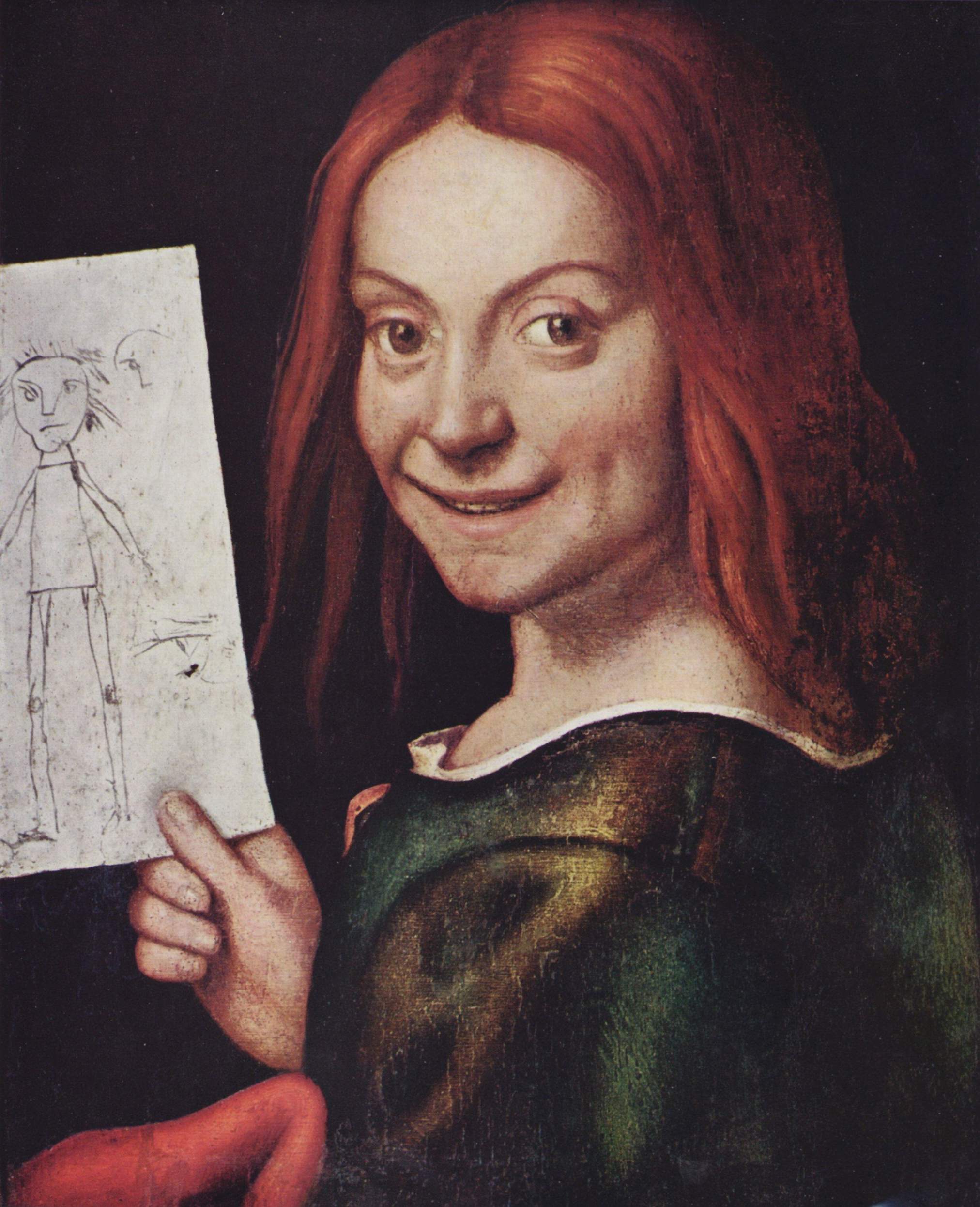
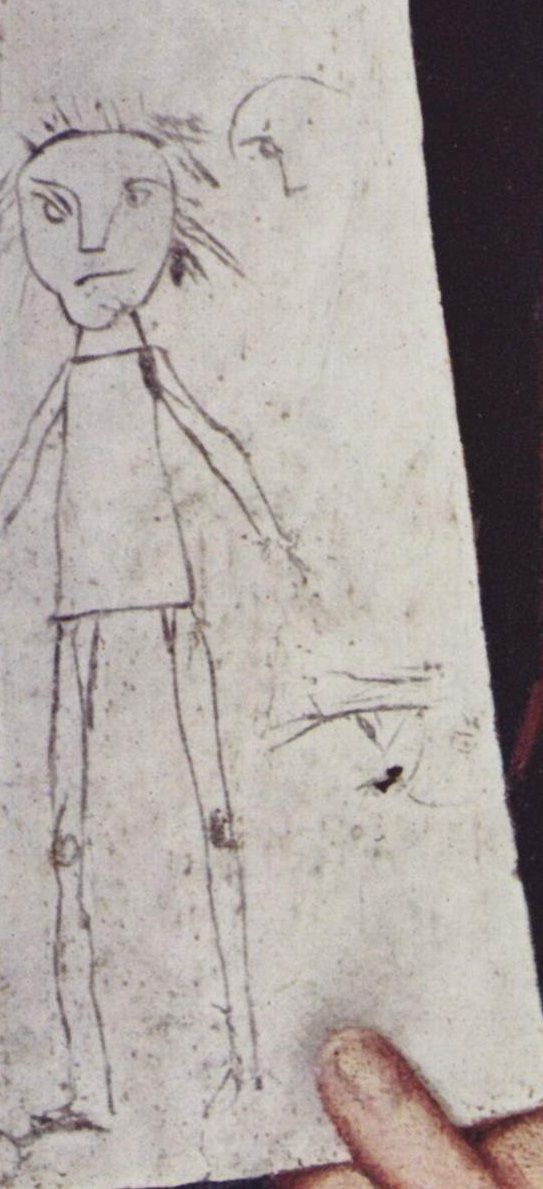
    This all comes up again because today for the first time I have seen this fantastic painting by Giovanni Francesco Caroto “Portrait of a Young Boy holding a Child’s Drawing” (Ritratto di Fanciullo con Disegno,), painted around 1515. I’m certain that I’ve never seen any artwork earlier than this and in an article that I saw in The Independent the author claims that this is the first artwork to depict a child’s artwork. It is a remarkable thing, seeing this drawing so proudly displayed by the child. Also it is not common to see someone in portraiture at this early stage with such a big toothy smile!  

    It is also incredible how in nearly all cases in recovering art by children that they basically look pretty much the same, for thousands of years. Perhaps with the vast majority of children performing artworks they all have about the same facility to reproduce what they were feeling or seeing, and so the continuing historical sameness.  

    This is no less than a great classic in the history of art by children.


    Notes


    I’ve researched this painting a little and don’t care too much for what I’ve found in some cases, in the interpretation of the painting–just a little unsettling with an uncomfortable fit. In one instance Harry Angelman, the identifier/discoverer of Angelman’s Syndrome1, saw this painting while in Italy and was much taken with it and associated the child with the children ad the disorders that he was studying.  In other cases there are associations drawn between this painting and Jean Dubuffet’s Art Brut, which is another direction that I really don’t care for too much.  

    1. Angelman Syndrome:  “is a neuro-genetic disorder characterized by severe intellectual and developmental disability, sleep disturbance, seizures, jerky movements (especially hand-flapping), frequent laughter or smiling, and usually a happy demeanor.”

    Caroto detail

    For some interesting reading in the history of childhood:   

    The classic by Philippe Ariès, Centuries of Childhood: A Social History of Family Life (London: Jonathan Cape, 1962)

    Lawrence Stone, The Family, Sex and Marriage in England 1500-1800 (London: Weidenfeld and Nicolson, 1977)

    Linda Pollock, Forgotten Children: Parent-Child Relations from 1500-1900 (Cambridge: Cambridge Univ. Press, 1983)


    ·Posted by :

    ·in:

    —

  • Recording the Commonplace from the Viewpoint of a Child, 1868

    JF Ptak Science Books   Post 1966     Part of the series on Antique Children’s Art


    Follow Me on Pinterest

    Manuscript--blank book022
    It is difficult to find children’s art from the 19th century–original work, printed work, published work.  Very difficult–perhaps even more so for the published work than the manuscript.  It is easy to understand why:  first, the children would need access to paper and pencil or pen and ink–items that had some cost, that were not inexpensive, not available to the vast majority of children. Their work was ephemeral, produced on slate, or in horn books, or in charcoal on a wall, or in dust.  Then, if the children did manage to record their creativity, then it would have to survive a generation of possessionship within their own lifetimes–to survive from the first part of the 19th century, the paperwork would have to survive five generations or more, 150+ years of house cleanings.  Tough odds.

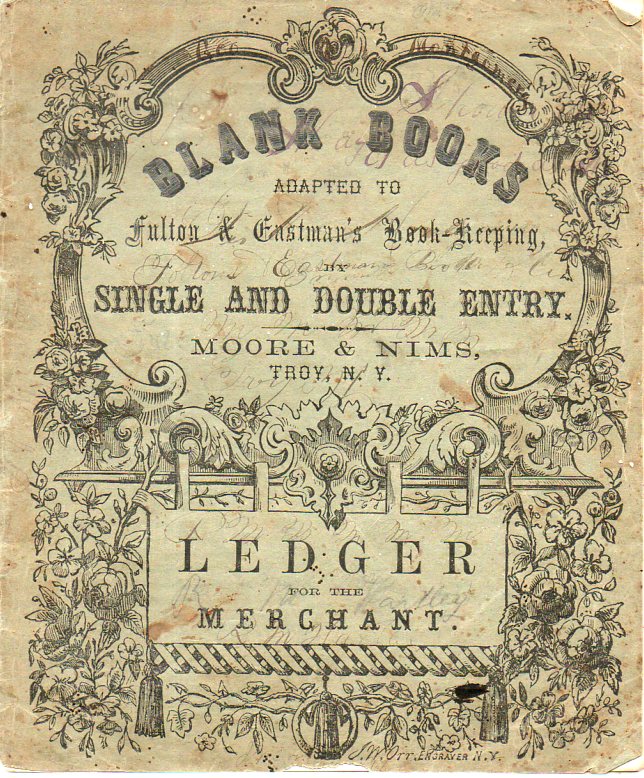
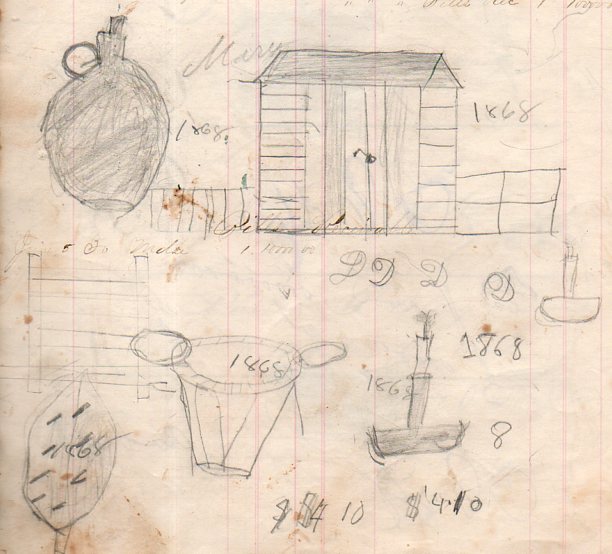
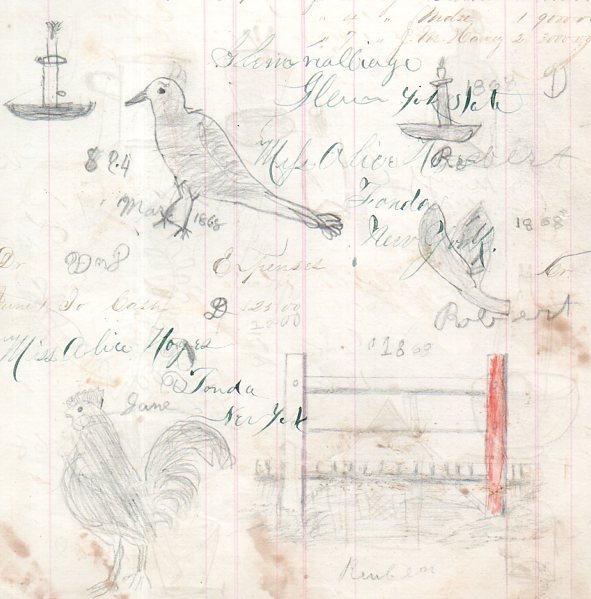
    Manuscript--blank book017One way that this artwork survives is accidentally, as in the case below. Scribbles, notes, sketches, finding their way into ledgers and notebooks and works for children–the book closed, placed on a shelf, and perhaps forgotten. Put away in a trunk, saved in an attic, stored.  And then, finally, found again after a century or two.  Opened, the book of seeming nothingness is loaded with, well, everything.  In this glorious example, ironically titled Blank Books, the books are anything but, now.  This notebook was intended as a Ledger for the Merchant, and there was a bit of that done…but at some point, the ledger became a practice book, a tablet. And from the looks of it, from the scribbled date in practice signatures over the ledger columns, that change took place around 1868.

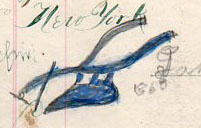
    And in the blank spaces of the ledger and notations appear all sorts of everyday things, the sort of stuff that might be invisible to an adult because we take it for granted–perhaps not so with children, who might be fascinated by these objects because they have only been cognizant human beings for a few years.  (It never fails to amaze me when I look at the photographs that our daughters made when they were three or four, wandering–and I could write “wondering”–around the house with a digicam.  The images they recorded were things that were mostly part of the background hum of everyday life for me, except that their pictures were made at their eye level and gave a new meaning to these objects, for me.)  What the child/children recorded in this dead ledger were common objects in 1868.  Perhaps they are of a forgotten commonness.  Whatever the case, it gives these objects a renewed interest to the observer of the future and our present simply because a child saw fit to draw them in the limited space in which they could draw. 

    Manuscript--blank book019

    Manuscript--blank book020

    ·Posted by :

    ·in:

    — —

  • Wicked Polly Reveals the Sameness of Names, 1827

    JF Ptak Science Books  Quick Post

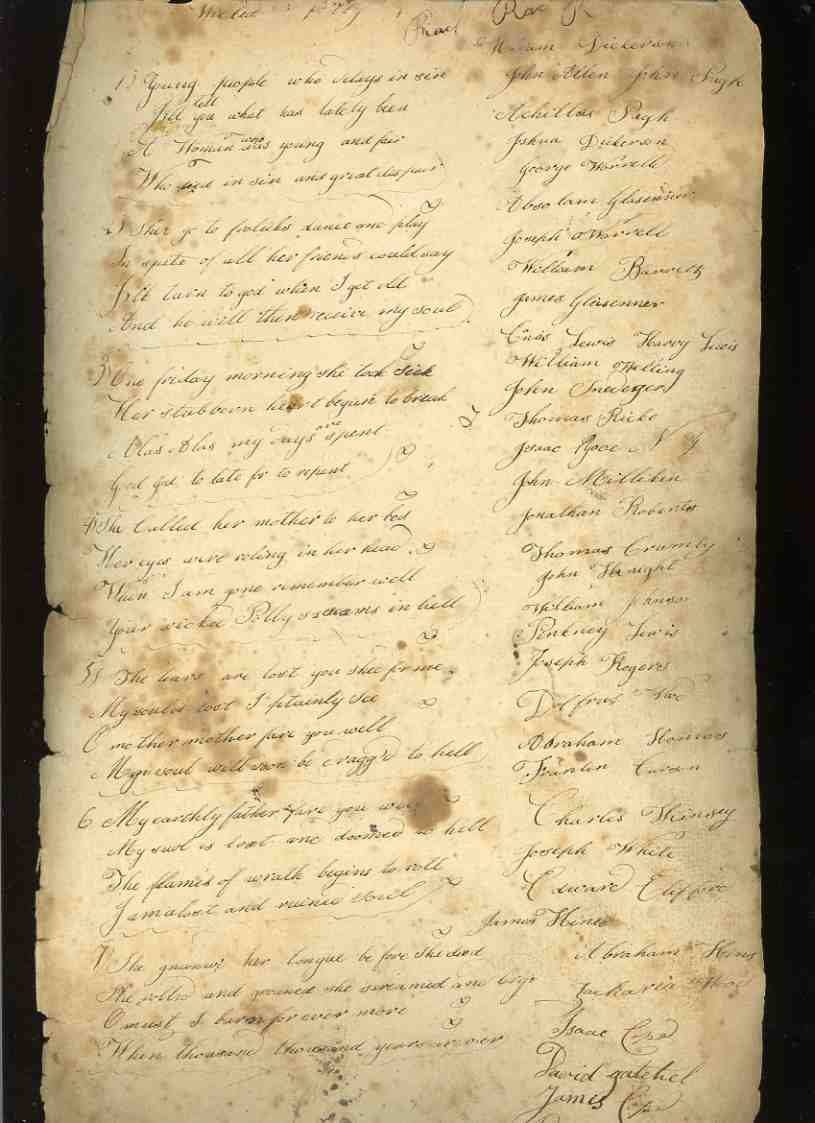
    00-blog-Oct 22-polly908 In my collecting of antique children’s art (that is, art produced by children from 1880 and earlier) I’ve stumbled across a number of interesting other associated, relateable,  things.  One such item is this manuscript copy–from 1827–of a much older children’s warning/lesson poem, called “The Lamentable Story of Wicked Polly”, a scare-the-kids-to-death kind of poem, instilling (and installing) a very healthy dosage of the wrath of god, a falling away from the just Jesus, and the regretably-late realization on the everlasting pain of sin.  A rosey children’s lullaby it is not.

    [The lyrics are below; click on the images for a more legible resolution.]

    But the side interest here is literally at the side, a perhaps revealing bit of marginalia in which the copyist has recorded the names of 54 children (I imagine).  Are these names the names of classmates, other children in school, kids in town?   There are 26 girls and 28 boys; the girls, as it turns out, have 9 different names; the 28 boys have 18 different names. I wonder why?  The girls have the following names (and with the number of holders):  Ann (7), Ekiza (4), Mary (4), Hannah (3), Sarah (3), Mary (3), Jane (2) and then one each for Lydia, Sidney and Maria. 

    The boys have more imaginative names:  most popular are William (4) and John (4); this is followed by Joseph (3), James (2), and Abraham (2).  The rest of the names are single-uses, and include: Achilles, Joshua, George, Absolom, Enos, Thomas, Pinkney, Charles, Edward, Zachoria, Isaac, Dening and Reason.  This is a small and unexpected sample, but it is interesting nonetheless–I don’t even have an explanation, just this observation. 


    ·Posted by :

    ·in:


  • An Orchestra of Child Prodigies, 1876

    JF Ptak Science Books   Quick Post 

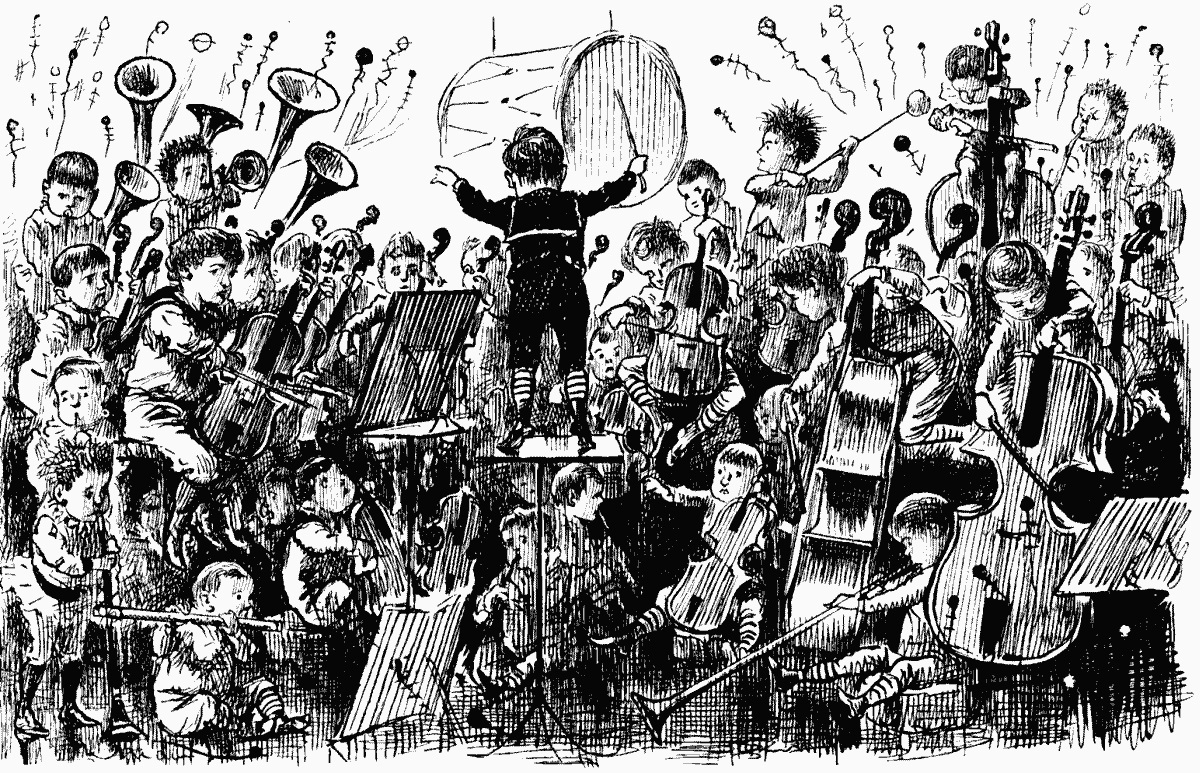
    I am not sure that I have ever seen an image of an orchestra composed entirely of children, so I reprint this, found in the pages of an 1876 volume of Punch Magazine.

    All child orchestra

    “THE YOUNG PEOPLE’S ORCHESTRAL CONCERT.” ALL INFANT PRODIGIES.

    ·Posted by :

    ·in:


  • A Note on the Rarity of Published Artwork of Children pre-1900

    JF Ptak Science Books  Quick Post

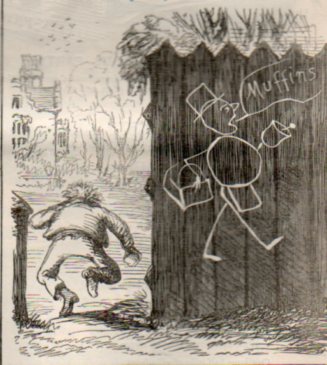
    I’ve written a number of posts in this blog about the great scarcity of the antiquarian published art of children (here) and couldn’t help but make a quick post of this very recent find.  It occurs in the page of the August issue of the London Punch, and even though graffiti, this is definitely the artwork of a child, crept into the page of a popular journal.  And as I say in a number of early posts, this work is really quite rare. 

    Children art232

    ·Posted by :

    ·in:


  • Another Example of Antique Artwork by Children, 1888 (though not really)

    JF Ptak Science Books   Quick Post   [Part of the antiquarian art for/by children series.]

    Kid art840 –The Sublime Antiquarian Art of Children, here.     

    –An Image Addition to a Series of Posts on the Antiquarian Publication of Artwork by Children, here.

    –The Great Rarity and Sublimity of Antiquarian Artwork by Children, here. 

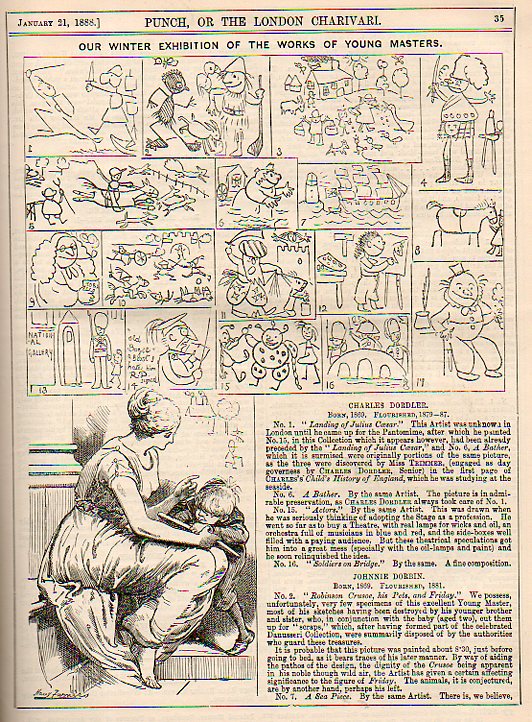
    I’ve written a number of posts to this blog on what I find to be a rare aspect of illustration–antiquarian publishing of artwork by children.  As explained in some of the earlier pieces (linked above) it seems to me that artwork made by children appear generally by chance, although this work starts to make a few appearances in late 19th and early 20th century pedagogical works on how to teach children in school and the layout of the classroom. But in general, the work just didn’t see much light of day in the publishing world.

    Kid art841
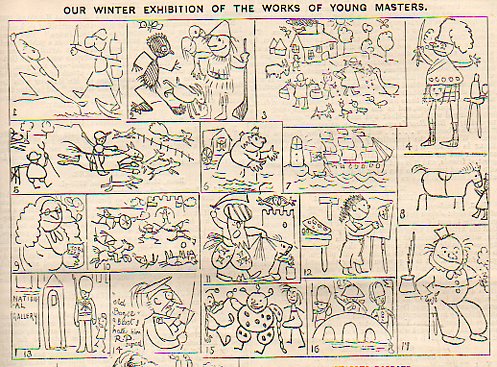
    This image, found in the 24 January 1888 issue of Punch, or the London Charivari magazine, comes close to the issue, but not really–I’m sure that the work is that of one of the magazine’s full-time illustrators.  But the fates are in this image’s favor simply for bringing attention to the art of the very young.  I particularly like the image at bottom, with the small boy working hard at whatever is on his paper in the lap of his muse, with drawing graffiti on the wall over his head. 

    The key to the images, below:


    ·Posted by :

    ·in:

    —