A Daily History of Holes, Dots, Lines, Science, History, Math, Physics, Art, the Unintentional Absurd, Architecture, Maps, Data Visualization, Blank and Missing Things, and so on. |1.6 million words, 7500 images, 4.9 million hits| Press & appearances in The Times, Le Figaro, Mensa, The Economist, The Guardian, Discovery News, Slate, Le Monde, Sci American Blogs, Le Pont, and many other places… 5000+ total posts since 2008.

Category: Children’s Art

  • The History of Children, 3/7: Books, Book-Making and Booksellers

    JF Ptak Science Books  Post 1287    Continuing the post 1285

    “Taking the Scarecrows out of Wisdoms Gardens”

    This is Part 3/7 of John Comenius’ great work, the first illustrated instructional to children, first written in 1676 and then translated into English in 1726–it is from this translation that all of the images (below) are taken.  This is the second of seven installments on introducing 17th and 18th century children to wide ideas, the other sections including: Part 1, Occupations; Part 2, Anatomy; Part 3, Books and Book Arts; Part 4, the Sciences; Part 5, Morals and Philosophy; Part 6, Games and the Arts; and Part 7, the Military.  

    The work itself: John Amos Comenius’ Orbis Senfualium Piélus: Omnium Principalium in Mundo Rerun/ &f m Vita АШопит,  translated as Pictura et Nomenclatur, the Visible World, or A Nomenclature, and Pictures of all Chief Things that are int he World, translated into English by Charles Hoof…1726.

    The purpose of the book, writes the translator in the introduction of the 1726 12th edition, is:  

    To entice witty children to it, that they may not conceit a torment to be in the school, but dainty/are., For it is apparent, that children (even from their infancy almost) are delighted with Pictures, and willingly please their eyes with these fights: And it will be very well worth the pains to have once brought it to pafs, that fcare-crows may be taken away out of Wifdom’s Gardens…”

    Even at this early stage of publishing books for children it was easily recognized that children learn better when eased into their subject with pictures.  This is not so far off the mark with the moderns, and in its own way a precursor to the Dick and Jane and Dr. Seuss books–not so much for subject matter, but for the very act of putting a book into the hands of a child and getting them comfortable wit the idea of reading.  It seems to me that this is by far the most important lesson-the actual content at tis point is secondary to the act of holding a book.  


    [merged small][merged small][graphic]

    The Ancients nvrit /яTables done over with wax ivith a hrazen Poitrel, i. ivith theJharp end, i. ivhereofletters ivereengraven, and ruhhed out again with the hread end, 3.

    Afterwards they writ Letters with a fmall Reed, 4.

    We ufe a Goofe-quill, 5. the Stem, 6. of which tue mabe with a Pen-knife, i7. then ‘wt dip the Neb in an Ink-horn, 8. which is ßopped wit h aStopple, 9. andiiie put our Pens into /rPennar, 10.


    [merged small][ocr errors][graphic][merged small][merged small]

    makttjfik a Paper-mill, 4. of Linen nigs, 5. fiampedto Malh, 6. ‘which heing taken up in Frames, 7. . he fpreadetb into Sheets, 8. andfetteth them in the Air that they may he dried.

    1 vsenty -ßve cf thefe make a C¿iure, д. t•wenty Squirts a Ream, 10. and ten of thefe a Bale of Paper, 11.

    That iwhich is to laß long is written on Parchment, 12

    [merged small][ocr errors][merged small][graphic][merged small][merged small]

    taketh them out one hy owe,and according to the Copy,(•which he hath faßened hefore him in a Viforum, 2.)compofeth •words in a Compoíing-ftick, 3. tilla Line he made; he putteth thefe in a Gaily, 4. till a Page, 6. he made, and thofe again in a Form, 7. and he locket h them up ., •. in Iron Chafes, 8. •with Quoins, 9. leß they Jhould drop out, and putteth them underthe Prefs, 10. Then the Prefs-man heateth it ever •with Printers Ink, hy means of Balls, 11. fpreadeth upon it the Papers put in the trinket, 12. •which heing put under the Spindle, 14. on the Coffin, 13. and prejfed down -with a Bar, 15. he maieth to taie mprejjton.


    [merged small][merged small][graphic][merged small][merged small][merged small][ocr errors]

    [merged small][graphic]

    In times paß they g hued Paper to Paper, and rolled them up together, into one Roll, 1.

    At this day the Book-hinder bindeth Rooks, ivhilß he ivipeth, 2. ever Papersßcrpt in Gum-water, and then foldeth them together, 3.

    hec.teth ivith a hammer, 4.. J hen ßitcheth them up, ç. prefj’eth them ii a Prefs, 6. .ivhich hath tivo Screws, 7. glueth them on the hack, cutteth off the edges ivith a round Knife, 8. and at laß comer et b them ivith Parchment o/Leather, 9 maketh them handßme, andfetteth on Clefps, 10.

    Olim agglutinahant Chartam Chartae,. convolvetiantque eas in unum Volumen, 1.

    Hodiè Compaclor compingit Lihros, dum tergit, 2. Chartas niaceratas aqua glut tnef я, deinde complicat, 3. rr.alleav, 4.tum confuit, 5. cemprimitPrtlo, 6. quod hahet duos Cochlea!, ~. conglutinat dorio, demr.rginat rotundo Cuttro, 8. tandem veftit Membrana, vel Corio, д. efTormat, Scafiigit Unchndcs, 10.

    A Book

    [merged small][ocr errors][merged small][graphic]

    A Book, as to its outtuard Shape, is either in Folio, i. er in Quarto, i, in Oitavo, 3. in Duodecimo, 4. either made to open Side-ways, ç er Long-ways, 6. ivith Bra2en Clafps, 7. or Strings, 8. and Square-boflês, 9.

    Within are Leaves, 10. nvithfwo Pages, fometimes divided ivith Columns, 11. and Marginal Notes, 12t.

    [ocr errors][merged small]

    [merged small][ocr errors][graphic]
    [ocr errors]


    [ocr errors][ocr errors][merged small][ocr errors][ocr errors][graphic]

    7 he Study, 1. ii a place -where a Student, 2 apart ftоm Men, fttteth alene, addicted to his Studies, ‘whilji he readelh Booki, 3. luhith heing within hit reach be laytth open upon a Deflc, 4 andpickttb all theheß things out of them into hit ozvii Manual, 5.  cr market h them in than  with a Daih, 6. cr a little Star, 7. m the Margin.


  • History of Children, 2/7–the First Illustrated Rendering of the World for Kids: Anatomy

    JF Ptak Science Books  Post 1286    Continuing the post 1285

    “Taking the Scarecrows out of Wisdoms Gardens”

    This is Part 2/7 of John Comenius’ great work, the first illustrated instructional to children, first written in 1676 and then translated into English in 1726–it is from this translation that all of the images (below) are taken.  This is the second of seven installments on introducing 17th and 18th century children to wide ideas, the other sections including: Part 1, Occupations; Part 2, Anatomy; Part 3, Books and Book Arts; Part 4, the Sciences; Part 5, Morals and Philosophy; Part 6, Games and the Arts; and Part 7, the Military.  

    The work itself: John Amos Comenius’ Orbis Senfualium Piélus: Omnium Principalium in Mundo Rerun/ &f m Vita АШопит,  translated as Pictura et Nomenclatur, the Visible World, or A Nomenclature, and Pictures of all Chief Things that are int he World, translated into English by Charles Hoof…1726.

    The purpose of the book, writes the translator in the introduction of the 1726 12th edition, is:  

    To entice witty children to it, that they may not conceit a torment to be in the school, but dainty/are., For it is apparent, that children (even from their infancy almost) are delighted with Pictures, and willingly please their eyes with these fights: And it will be very well worth the pains to have once brought it to pafs, that fcare-crows may be taken away out of Wifdom’s Gardens…”

    Even at this early stage of publishing books for children it was easily recognized that children learn better when eased into their subject with pictures.  This is not so far off the mark with the moderns, and in its own way a precursor to the Dick and Jane and Dr. Seuss books–not so much for subject matter, but for the very act of putting a book into the hands of a child and getting them comfortable wit the idea of reading.  It seems to me that this is by far the most important lesson-the actual content at tis point is secondary to the act of holding a book.  

    [graphic]

    Septan Mtaies Hominis. A Man is ßrjt un Infant, 1. j Homo di primum Infasts, 1.

    tien

    [ocr errors]

    [merged small][merged small][ocr errors][ocr errors][merged small][graphic][merged small][merged small][ocr errors][ocr errors][ocr errors]
    [graphic]
    [ocr errors]
    [ocr errors]

    [merged small][graphic][ocr errors][ocr errors]

    a Tongue and Palate,
    and Teeth, 16.
    in the Cheek-hone.

    A Man s Chin
    is covered ivith a Beard, 14.
    mnd the Eye
    {in •which is the White
    and the Apple)
    •with Eye-lids,
    and an Eye-hrow, 15.

    The Hand heing clofed, is a Fift, 17. heing of en ira palm, i8, in the midß is the hollow, 19. of the Hand i the extremity is the Thumh, 10.iviehfour Fingers, the Fore-finger, 2s. the Middle-finger, гs. the Ring-finger, 23 and the Little-finger, 24. .

    In every one are three ]o\ms, a. h. C. and asman knuckles, d. e. f. ivith a nail, 25.

    [ocr errors][ocr errors][ocr errors]

    [merged small][graphic]

    In the Body are the Skin .nvith the Membranes, the Fleih ivith the Mafcles, the Chanel;, .,

    the Griffles,
    tie Bones andthe Boweli.

    The Skin, i: heing puttV ef, the Fleih, 2. appeareth, vol in a continued lump, Lut heing diftnhuled, es it ‘were in ßufi puddings, fuihuh they callMukks, ivhireof1here aie reckoned four hundred and five, heing the Chañeis cf the Spirits to move the Members.

    The Bowels are the inward Members:

    As in the Head,th.rBrains, 3. heing compajfed «bw with a Skull, and

    In Corpore funt Cutis cum Mimhranis, Caro cum Mufcults, ..’

    Canales,
    Cartilagines,
    Oßi & Vecera.

    Cute, 1. detraíla,
    Ca”o, 2. appaiet,
    non continua raafsâ,
    fed dil.tributa,
    tanquam in farcimina,
    quos vocant Mu/tules,
    quorum numerantur
    quadringenti quinque,
    canales Spirituum,
    ad movendum Memhra,

    Vijcera funt Memhra interna:

    Ut in Capite, Cerehrum, 3. cire umda tum Crem», Sc

    [ocr errors][ocr errors][ocr errors][graphic][merged small]

    The Arteries currying Blood from the Heart;

    4’he Veins returning the Mood to the Heart}

    The Nerves carrying Setife and Motion throughout the Body from the Brain.

    You jkallßnd thefe three, 1. t’very inhere joined together.

    Beßdes, from the Mouth into the Stomach it the Gullet, 2,

    the way of the meat and drini, and-hy it to the Light!, the Wezand, 5. for hr.athing; f cm the Stomach to the Arfe it a great Gut, 3. to purge out the Ordure; from the Li-ver to the Bladder, the Ureter, 4. for making ‘wJter. .

    Tie Bones are in the Head, the Skull, 6. the ttuo Cheek-bones, 7. with thirty tTvo Teeth, 8. Then the Back-bone, 9. the Pillar of the Body, tonfifling of thirty four turning Joints, that the Body may hend itfelf

    The Ribs, re. ,uihereof there are twenty four.

    The Breaft-bone, 11. the five Shoulder-blades, ii. the Buttock-bone, 13.. the bigger Bone in the . Atta, 15. *W/¿/kfi’crBone inthi Arm.

    V-Л ù •;

    vi;

    [ocr errors][ocr errors][merged small]

    [merged small][merged small][merged small][merged small][graphic][merged small][merged small]

    Mußcal Типа.

    The Nofe, 3. fcenteth fmelh and ßinhs.

    The Tongue, 4. •with the reef of the Mouth taßet Favours, •what is fweet or hitter, keen or hiting, four or каф.

    The Hand, 5. hy touching difcerneth the quantity and q: ality of things; the hot and cold, the moifl and dry, She hard andfft, the fnooth and rough, the bsavy and light. The in•ward Sen fes are three. . The Common Senfe, 7. under the forepart of the head, afprehendeth i

    t/.ings taken from the oufward Senfes.

    The Phantafye, 6. under the crown of the head, judgeth ofthefe things, t hinket h and drcameth

    The Memory, 8. under the hinder part of the head, layeth up every thing end fctcbeth them out; it Ufethfome, and this is forgetfulnefs.

    Sleep, is the reft of the Senfes.

    [ocr errors][ocr errors]

    [merged small][graphic]

    The Soul is the Life tf the Body, oie in the ivhole. Only Vegetative in Plants;

    Withal Seníltive in Animals;

    And alfo Rational in Men.

    This confifteth in three things;

    In the Underftanding, wherehy it judget h, and underßandethy – a thing good and evil, or true, or apparent.

    In the Will, •whereby it choofeth, and deßreth, tr rejeéleth, er mißiketh a thing knovn.

    In the Mind, •whereby it purfueth

    Anima eft vita corpoiii, una in tota.

    Tantum Vegetativa In Plantis;

    Simul Senßtinsa in Ahímalibus J,

    Etiam Rational is in Hernie/i

    liaec coniiftet in trihu»;

    In Mente (Intelleflu) qua cognofcit, & intelligit, honum ac malum, vel verum, vel apparent»

    In Voluntate-, qua eligir, Sc concupifcit, aut rejicit, & averfatur cogniuim.

    In Animo, quo prpfequituv

    [merged small][merged small][merged small][graphic][merged small][table]


  • The Sublime Antiquarian Art of Children, Part I

    JF Ptak Science Books   Post 1224

    Children's art--3846
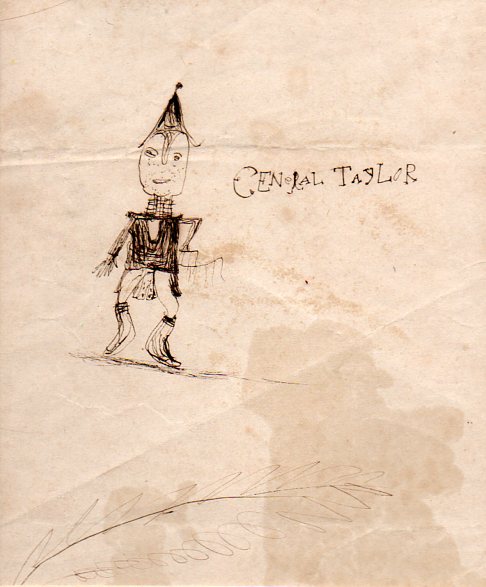
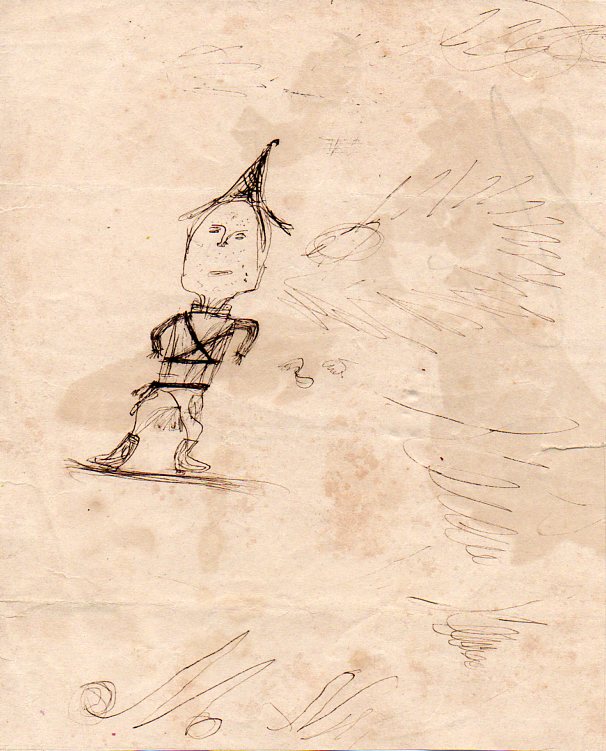
    Among my favorite places in Washington, D.C.–a place where I lived for 29 years–are its cemeteries; in particular Rock Creek Cemetery, but more specifically, Congressional Cemetery.  Congressional is a big place, tucked away, sort of, away in Southeast D.C.–that is if you can tuck away a 30-acre piece of land. Congressional is an odd place, filled with many interesting people; its filled with their actual remains, and also their memories. There are many folks who have been interred in spirit in the cemetery, in cenotaphs; there are also many who have been laid to rest their temporarily, in the Public Vault, until conditions (in the old days) improved to have their remians received in their final resting place. 

    Children's art--2845
    Among those in the temporary funeneral housing were JQ Adams, William Henry Harrison, Dolley Madison, and Zachary Taylor. It may be one of the great vaults in the history of our country, a small place holding great people.

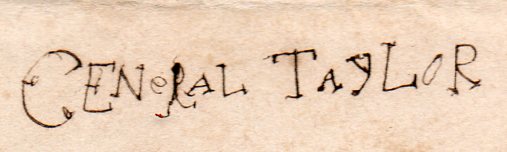
    President Taylor.  General Taylor.  That’s why I’m here right now.  He’s the subject of these magnificent efforts by an unnamed child.  The boy, or girl, drew these images on the back of a section o fmap that was printed in about 1845-1850, just about at the time that Taylor was at his greatest height–a general, a famous militaryu leader, about to become president of the United States without ever having been elected to any office.  He was a gigantic figure at the time, and no doubt occupied some piece of mind of the artist who rendered him, The General.

    I came to collecting childrens’ art in a roundabout way–not so much “collecting” per se as in “finding” them.  They’re difficult things to locate.

    First of all, materials were scarce.  Paper, pencils, ink–these were not common things for kids to own in the 19th century, especially more in the middle and early parts of the century.  These items were expensive, especially if you were a kid in a working-class family who didn’t have much of anything at all, anyway. In addition to a real crunch, a severity of absence, of the basic materials, the art that was made had to survive the artist’s own hands.  And then it needed to survive being culled from family clutter for a generation. And another. And another. And another. And four more.  150 years of parents clearing out the clutter is a lot to survive. 

    And so there doesn’t seem to be much left.

    I find them in flyleaves of old textbooks and such.  Its not as though there is are websites devoted to such things–at least not until now.

    And so I’m selling two of the three portraits of The General that I own.  I’m keeping one.  They just feel superb, to me.

    If you’re interested in owning one, visit the blog bookstore, here.  I’m developing now a site for nothing but pre-1900 kid art. 

    The artwork of children is a gorgeous thing, even when the children are not your own.  Its not that there is a sense of a certain charm, or charms–the words are just too weak. The vocabulary is more in the realms of the work being sublime, far more so than anything else.

    Children's art--1844


    ·Posted by :

    ·in:

    — —