A Daily History of Holes, Dots, Lines, Science, History, Math, Physics, Art, the Unintentional Absurd, Architecture, Maps, Data Visualization, Blank and Missing Things, and so on. |1.6 million words, 7500 images, 4.9 million hits| Press & appearances in The Times, Le Figaro, Mensa, The Economist, The Guardian, Discovery News, Slate, Le Monde, Sci American Blogs, Le Pont, and many other places… 5000+ total posts since 2008.

Category: Calculating

  • A Very Early Quantitative Scale for Classifying Smoke (1899)

    JF Ptak Science Books   Quick Post

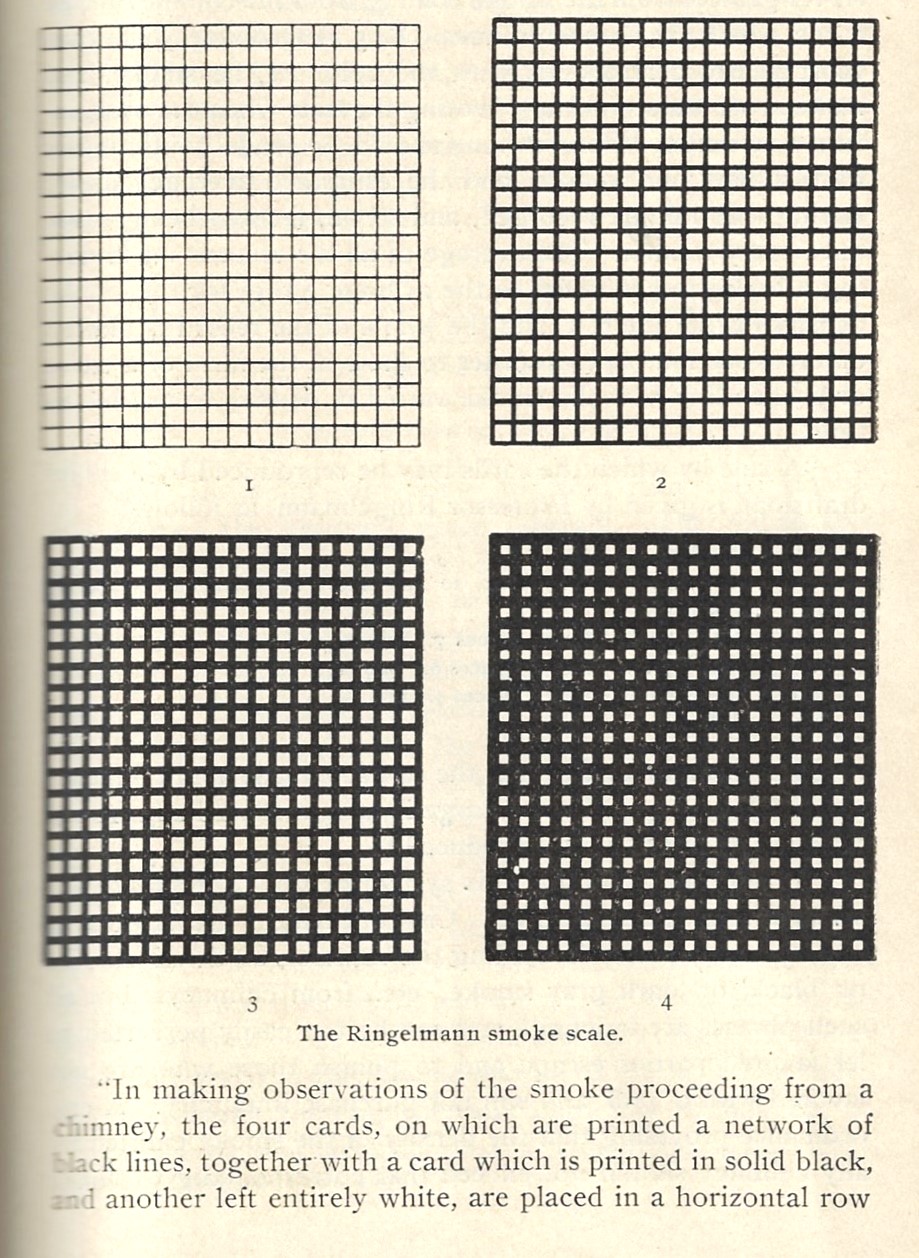
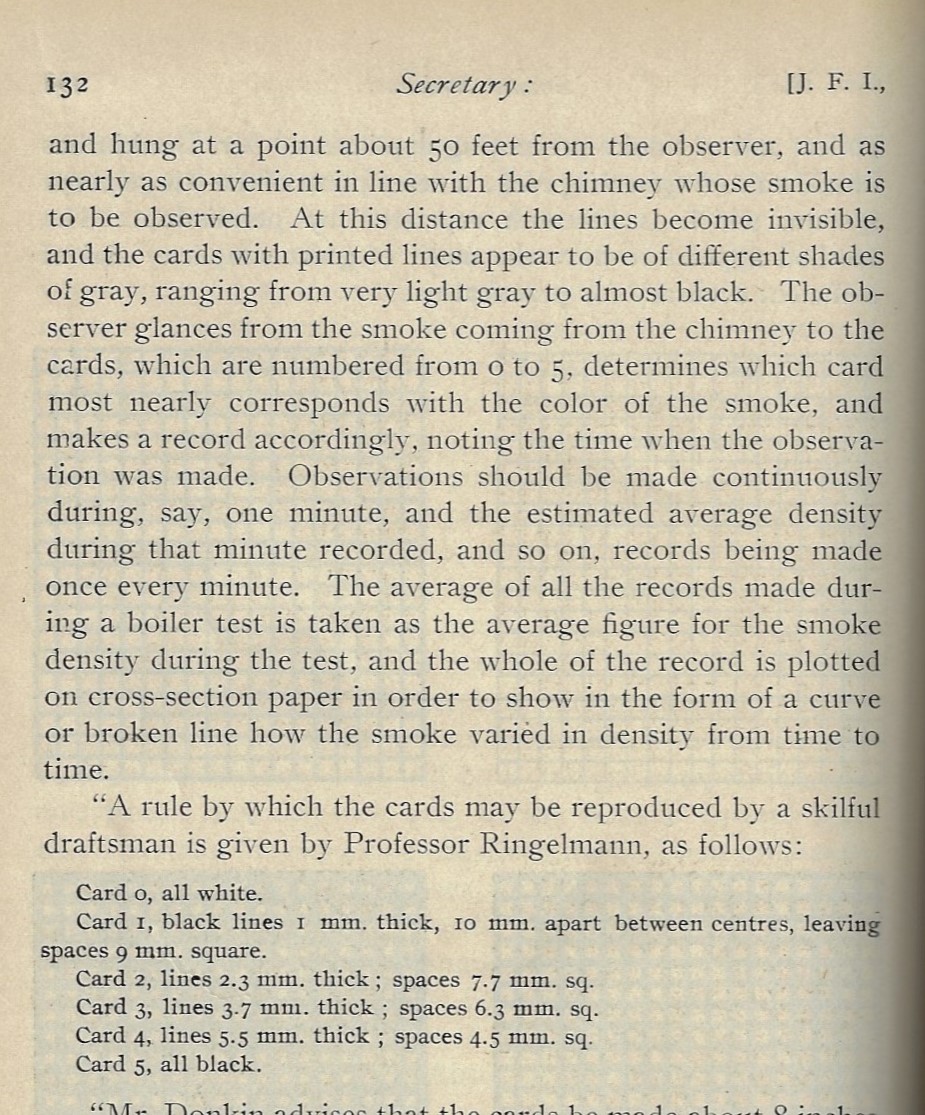
    This is one of those things that you’d probably not properly think about until you had to do so–a quantitative measuring device to classify smoke (or visible emissions). In a way it reminds me of Mr. Howard who was the first to classify clouds in a scientific way in 1803–surely you’d think that the great classifiers like Aristotle & Co. would have done this over the centuries, but evidently the moving floating mountains escaped scientific classification until relatively recently. Is the same true of the cloud’s distant cousin, smoke?  And what about classifying fog? I don’t have the answers to this tonight as its too late to figure it out right now, but I’ll return with the answers and correctly update this post. In the meantime, please find below the last part of a two-part article that appeared in the Journal of the Franklin Institute1 in which the organization and classification of smoke by Max Ringlemann is discussed and explained. It seems as though there is a slightly earlier publication of the scale in Engineering News in 1897, though I haven’t yet (again!) found the original article by Ringlemann himself.  (“In 1897 architectural engineer Maximilien Ringelmann developed smoke charts to allow observers to contextualize observable smoke into a scale of known gray. Lighter smoke indicated fewer particulates and more water, while the darkest of smoke was of grave concern. The charts were posted outside of factories, providing a very public method of environmental monitoring and awareness.”–Science History Institute, https://www.sciencehistory.org/ringelmann-smoke-charts.)

    It is interesting to note that a paper published by the Bureau of Mines of the U.S. Department of the Interior in 1967 employed the Ringlemann scale pretty much as we see it below.

    There is also an interesting article that addresses the use of the Ringlemann scale in regards to discussion of air pollution: 

    • “ Dark smoke – an introduction to air pollution control (smoke) regulations “(PDF). Hong Kong: Environment protection department, Hong Kong. Retrieved 31 August 2018.

    JFI 1899 Ringelmann smoke scale _2_


    JFI 1899 Ringelmann smoke scale _2_

    Notes:

    1. William H. Thorne, “The Smoke Nuisance and its Regulation…”, JFI, February 1898, vol 145, pp 401-442 and pp 17-59 (same volume, different number).  


  • Great Calculators: Mental and Metal and back to Mental

    JF Ptak Science Books     Expanding Post 2739

    Two months ago I wrote on a paper that I found in a mid-century engineering journal (Minutes of Proceedings of the Institution of Civil Engineers with Abstracts of the Discussions) on the fantastic mental arithmetician George Parker. When I went to retrieve the volume to look for a different paper (on Fresnel lenses for lighthouses) I  flipped the pages to then end of the book to read through the index, and my thumb stopped on a page with a running header, “Mechanical Notations”. And lo and behold, the very familiar title was indeed a paper on a report to the Institution on Charles Babbage (1791-1871) and his “mechanical notation”, given by his son Henry P. Babbage (1824-1918).

    Well.  Babbage over the years proposed several different difference and analytical engines which indeed could be considered the first stored program Turing-complete computers. Never quite being able to get to the end of one project, and no doubt discovering along his various ways even better and more substantial designs (as well as int he pursuit of future money to build not “version 1.0” or “1.1” but “3.0”), Babbage tried within the limits of available technology to produce his heroic beast. His “mechanical notation” appears in full force in his diagrams for the design of his analytical engine, and it is there that we see his self-derived shorthand and symbols that produced and still-produce evident budgets of unknowns. The thing is, with these mechanical notations, is that they were part of a user manual, and the user manual was actually left unwritten and chiefly unexplained. And that is a problem. 

    In any event this paper by Henry Provost Babbage makes some attempt in outlining the notation, though for me it is done without success. This is further complicated by almost none of the notation presented in illustration. There were other and earlier illustrated papers (including some by Babbage himself) that stretch back at least to 1821–but this explanation of the notations leaves me a little on the outside. 

    And so we moved from the mental calculator George Bidder to the great metallic calculating engines of Charles Babbage, who takes us back to the opening biological/mental part of engineering thought via his manual-less manual, where his instructions and explanations of the interactions of thousands of perfectly manufactured precision gear works is printed but the key to which is left locked in Babbage’s head.  

    _____

    Here’s the part of the post that led to the discovery of the Babbage, both of these papers as I said appearing in the same journal volume: 

    George Parker Bidder (1806-1878) gave a lecture (without notes) explaining to the audience at the Institution of Civil Engineers in 18561 his interior practices and habits in performing absolutely prodigious and complex arithmetical feats entirely in his head. He was among the first tier of performing human calculators (like Zerah Colburn, b. 1804) mental calculations enchanted large audiences from the stages, answering seemingly impossible questions with accuracy and speed. It is in the 1856 paper (which Martin Gardner refers to as “historic2” and “valuable”) that he relates some of the practices which clarify his process–for example, one large element was that he would keep one fact in his head at a time, until it was finished, and then move on. Of course for people who did not have anything even remotely resembling this impossible ability, the information is interesting, though I have no idea how useful it may be…unless you were already a savant, that is.  Some things are just not to be known by mere mortals. Like the probably-apocryphal story of someone asking Hans Bethe how Richard Feynman had solved–on his feet–some impossible something, and Bethe responds: “First he thinks very very hard….and then he gets the answer”.) Something like that. 

    In any event, here’s the article, reproduced by Devonshire Perspectives website. My own copy is in a tightly-bound volume from the proceedings, and no doubt I would have broken the spine trying to copy the thing. That said, if anyone wants to buy this volume, it is for sale–this is a book selling site, sorta, after all.  

    The full lecture by Bidder:

    https://www.devonperspectives.co.uk/georgebidder/OnMentalCalculation.pdf

    Notes:

    1. Bidder, George Parker. “On Mental Calculation”, in Minutes of Proceedings of he Institution of Civil Engineers with Abstracts of the Discussions, volume XV, Session 1855-6, London, published by the Institution,  pp 251-280 in the 534pp volume. 

    2.  Gardner, Martin. “Mathematical Games”, in Scientific American, 216/4, April 1967, p. 117. 

    Also, I found an interesting biographical treatment of Bidder:

    • Bidder, George Parker. Mental Arithmetic. A short account of George Bidder, the celebrated mental calculator: with a variety of the most difficult questions, proposed to him at the principal towns in the kingdom, and his surprising rapid answers, etc. by George Parker BIDDER Rapid Calculator and Engineer., 1821

    It seems as though there was a separate edition of this 1856 lecture tens years later, published by Clowes:

    • Bidder, George Parker, and Institution of Civil Engineers (Great Britain). On Mental Calculation. Edited by Charles Manby. London: Printed by W. Clowes, 1866.

    And another printing somewhat later:

    • Bidder, George Parker. On Mental Calculation. London: Printed by W. Clowes, 1886.

    ·Posted by :

    ·in:

    —

  • Dreams of Chalkboards Past: French Schoolroom Tools, 1860

    JF Ptak Science Books   Quick Post


    Schoolroom France _2_


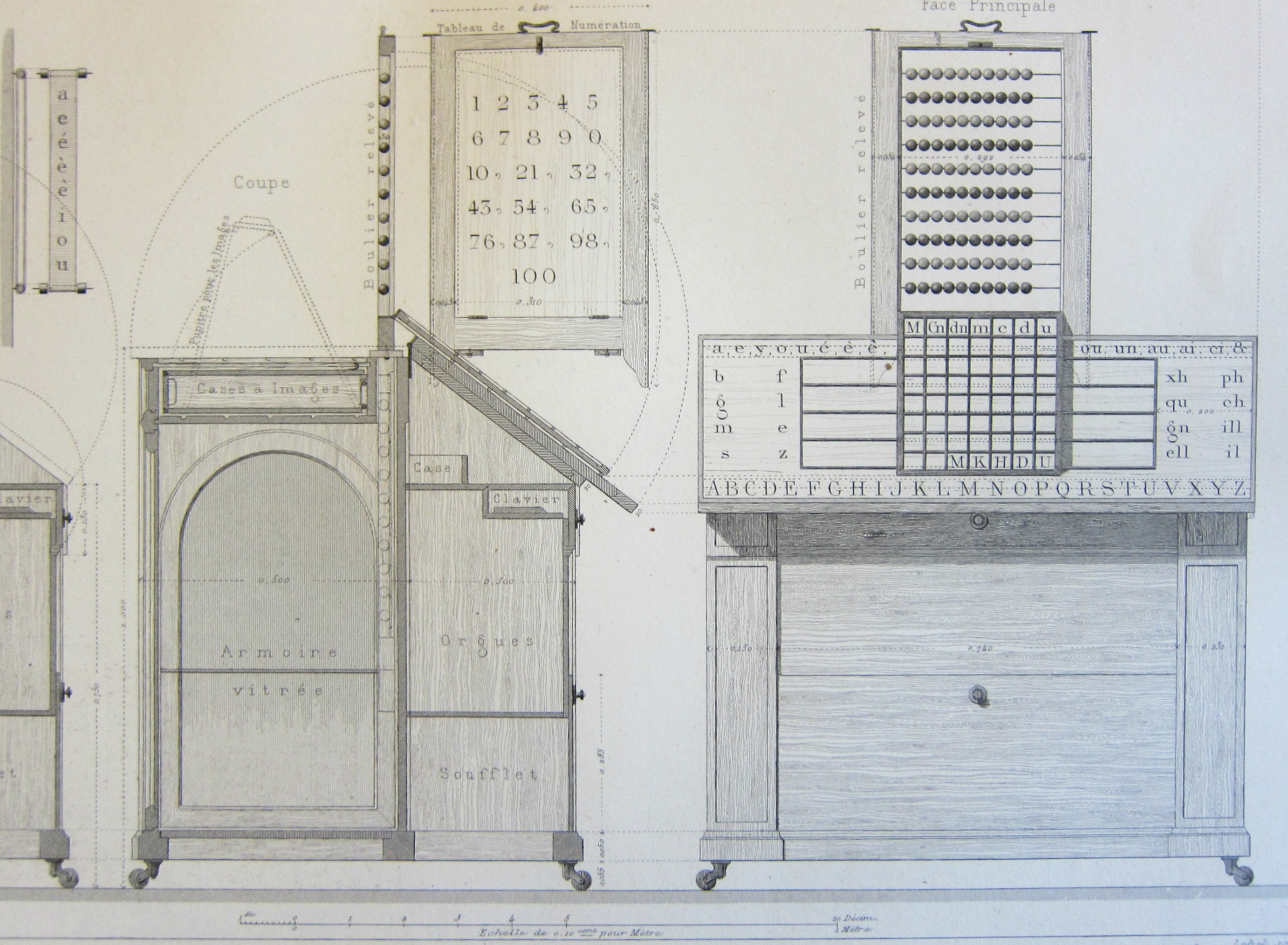
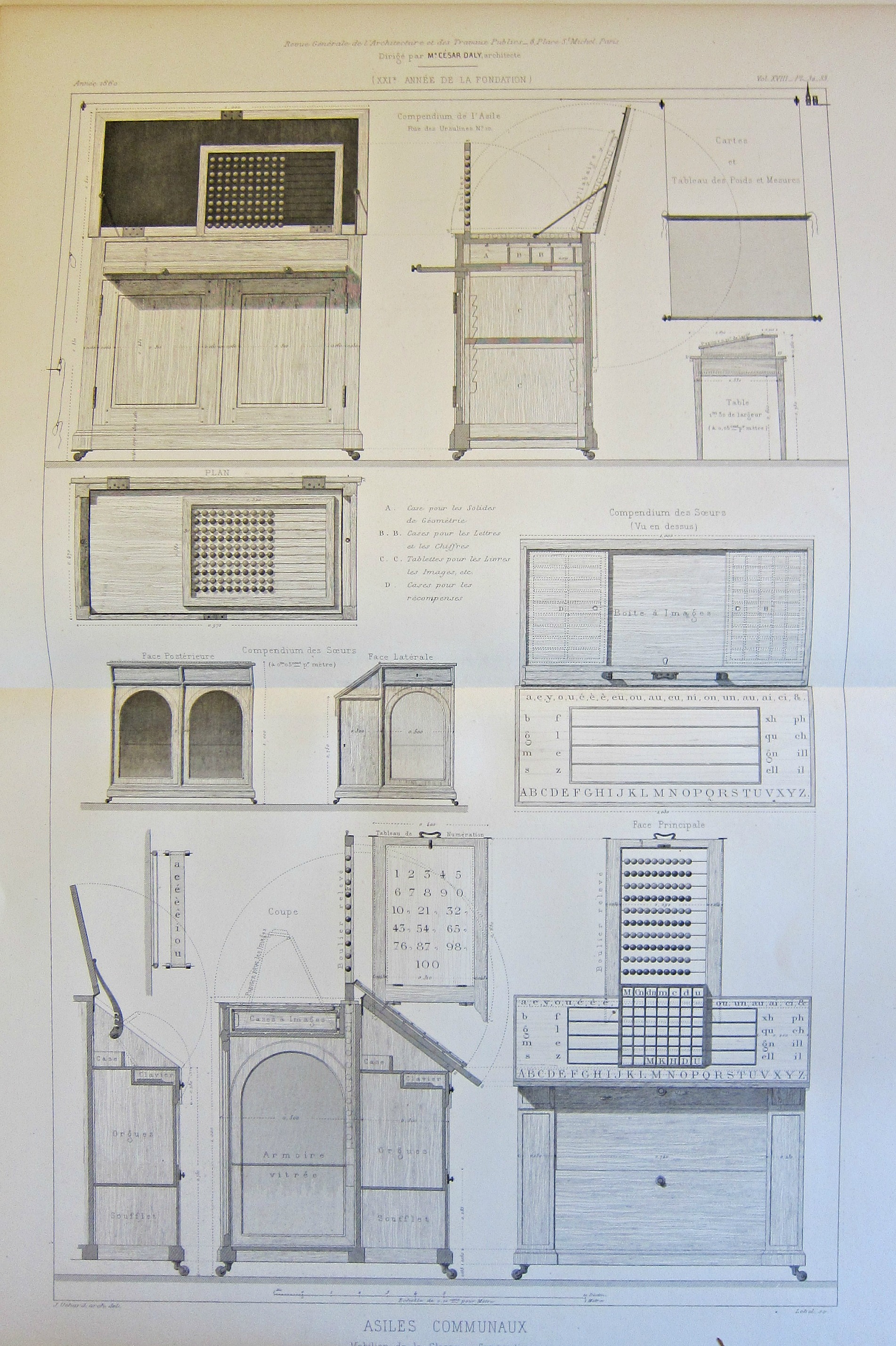
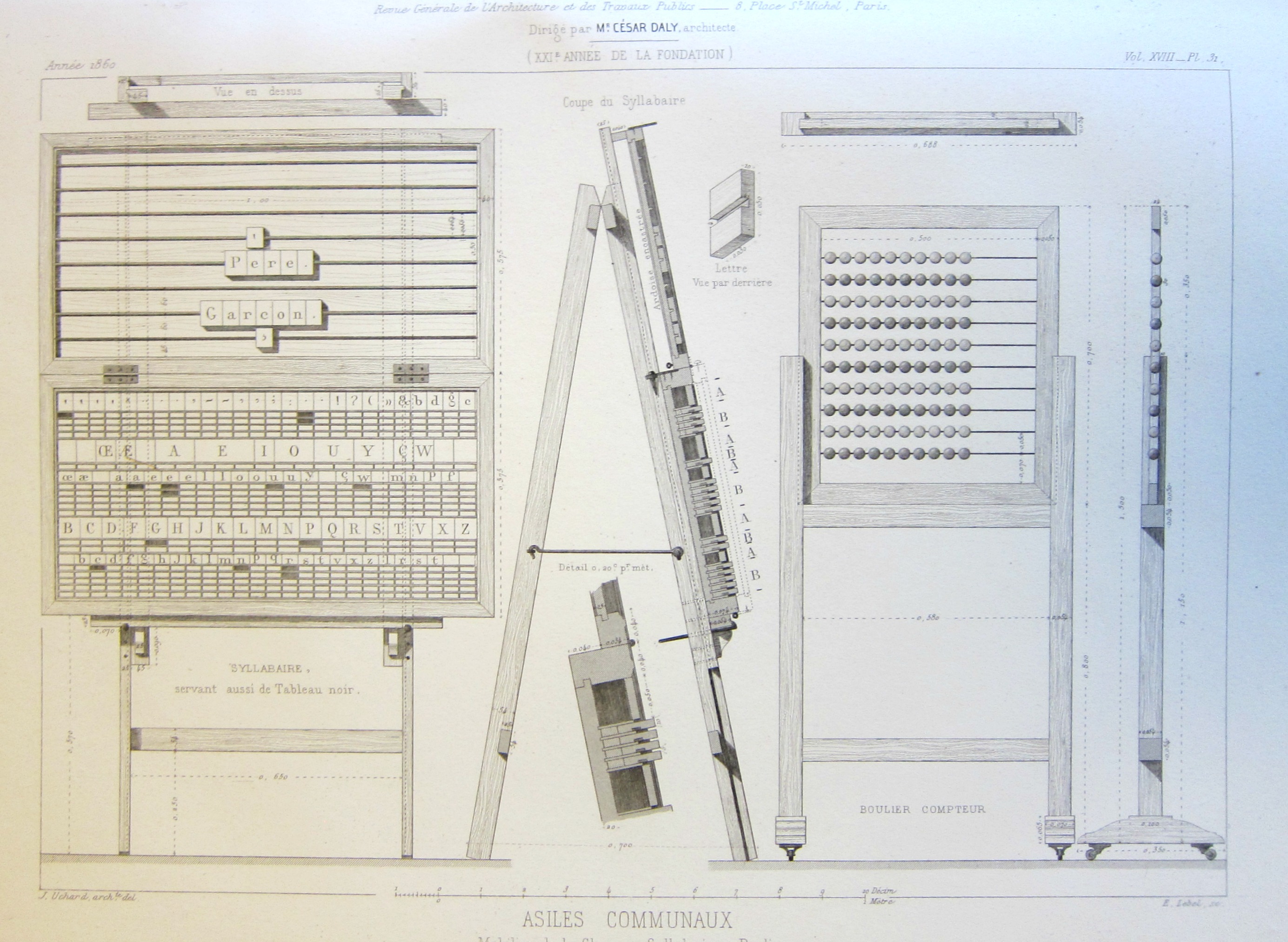
    I think it would be lovely if–in addition to tablets and laptops–kids in school would be doing work generating chalk dust, and physically moving wooden disks with letters/words on them, and producing that wood-over-metal sound manipulating counting beads on metallic rods. There’s just something that goes on in the brain, I think, when you are able to touch something while learning—chalk on a board, fingers on a wooden peg or on pencil to paper, and so on. The pre-nostaligia for that memory is found for me in images like those that follow–beautiful engravings of teaching instruments and tools for elementary schools in France in 1860.

    The engravings are the work of the prodigiously talented and very busy Caesar Daly, who in addition to writing and editing books also edited the journal Revue Generale de l’Architecture et des Travaux Publics, des architects des ingenieurs des archeologues des Industriels et de Proprietaure, these images coming from volume XVIII, printed in 1860, in the section “etablissements d’instruction primaire”.


    Here’s a big double-page plate, about 13×20″ in real life: 

    Schoolroom france _3_

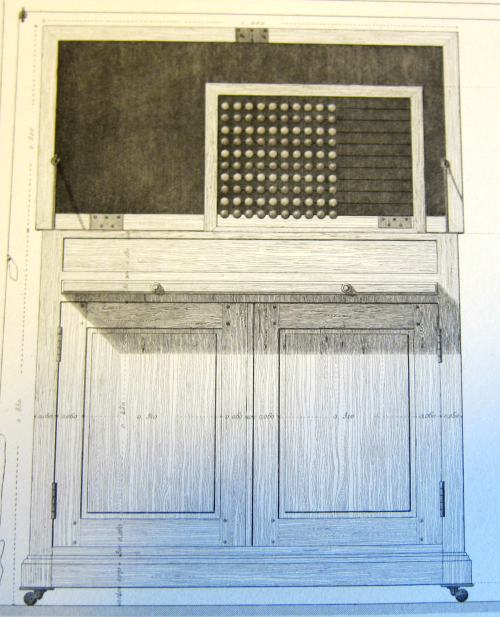
     And a detail of the counting beads in the upper left:

    School room France

     And a spelling board, with another larger counting board (the letters are stored horizontally in the bottom half of the large wooden board):


    Schoolroom France _5_


  • Finding Sameness, 1919

    JF Ptak Science Books   Quick Post

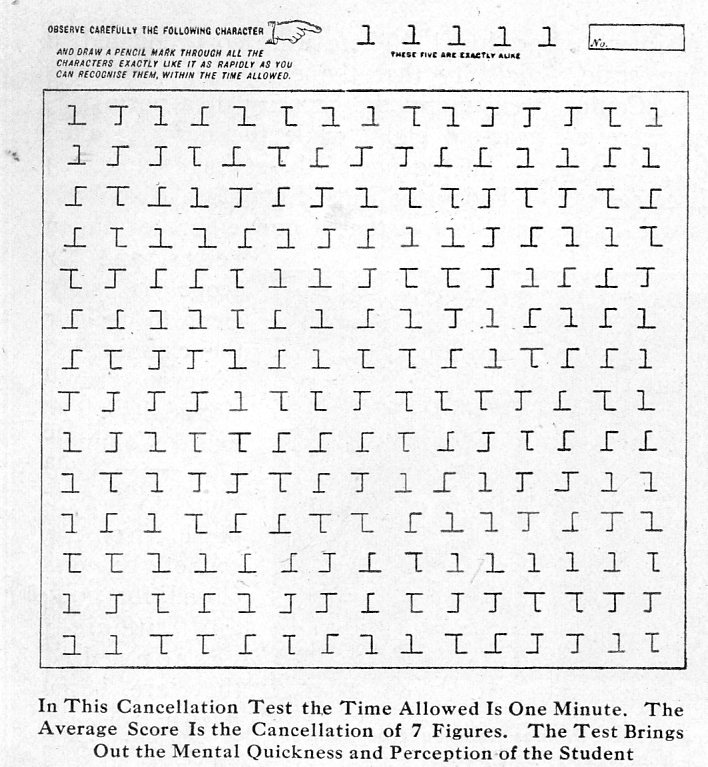
    I just found this unusual image in the page of the scarce journal Illustrated World for June 1919.  At first glance it attracted my attention for the design, and then I thought it was utilizing a Sumerian bill of sale–it turns out to be part of an intelligence test.  The subject is asked to see how many of the figures pointed out in the top line (and repeated five times) are repeated in the diagram. This is a lot easier than what I thought the test was, which was looking for five-times-in-a-row repeating symbols–after finding a few symbols repeated four times in a row and not five, I read the directions, and the test was much simpler, esp since someone had already gone through and marked out a bunch.

    IQ test451

    The cover story for this month was “electrocuting Whales”–and we don’t need to go there. 


    ·Posted by :

    ·in:

    —

  • The Business-End of a 120′-Tall Fall

    JF Ptak Science Books  Quick Post

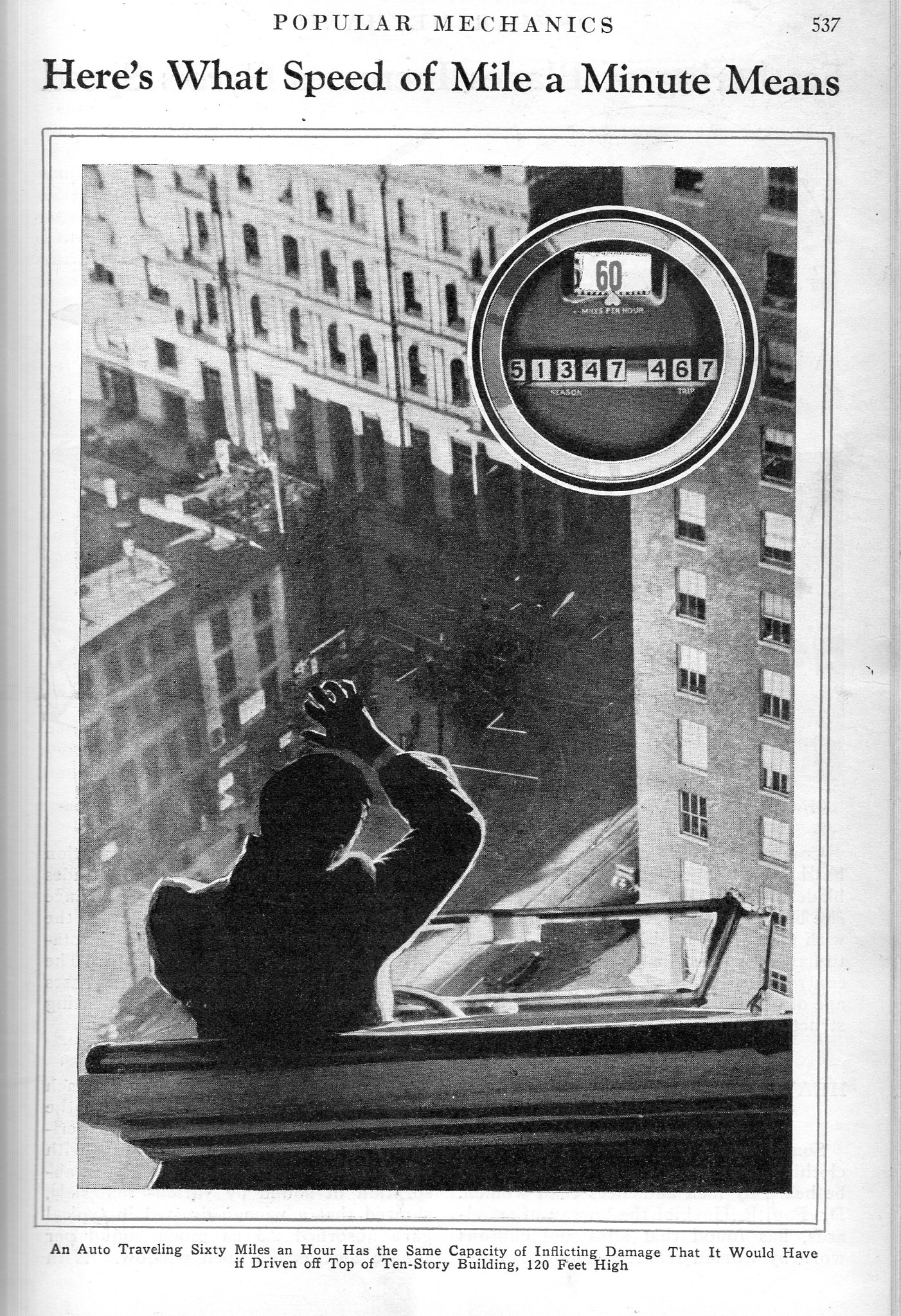
    It might have made it more exciting for the readers to know that the fall would’ve taken about 2.73 seconds from 120′–I think the results are pretty much exactly the same whether the 60mph man was in a car or not so far as the effects of the sudden stop at the bottom goes.  In any event, it was an effective way of relating the dangers of ultra-auto-speed in 1932.

    60 mph268

    [Source: Popular Mechanics, April, 1932, p. 537.]


  • Troncet’s Arithmographe, the “Instant Calculator” (1892)

    JF Ptak Science Books  Quick Post

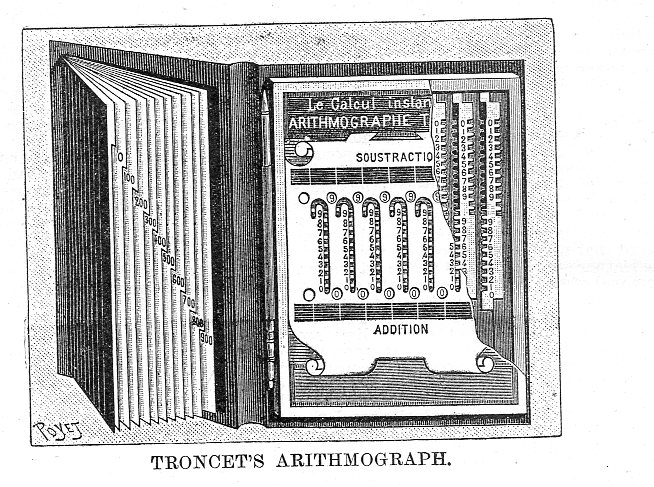
    I came upon a short notice in the Scientific American (January 30, 1892) for Louis-J. Troncet’s ingenious and very popular instant-calculator. It was a small and powerful machine  (10x6cm) that Troncet had patented in 1889, and was issued in a small book-like folding case, with the accordion folding bit containing multiplication tables. It was quick and easy to use, sold for a few dollars, and became a cheap arithmetic staple for decades. 

    Troncet arithmometer430(I’m pretty sure that the image that appeared in Scientific American, above,  was the one used in the article by G. Mareschal, “Calculateur mecanique instante,”  in La Nature,  in 1890 (pp. 307-308).

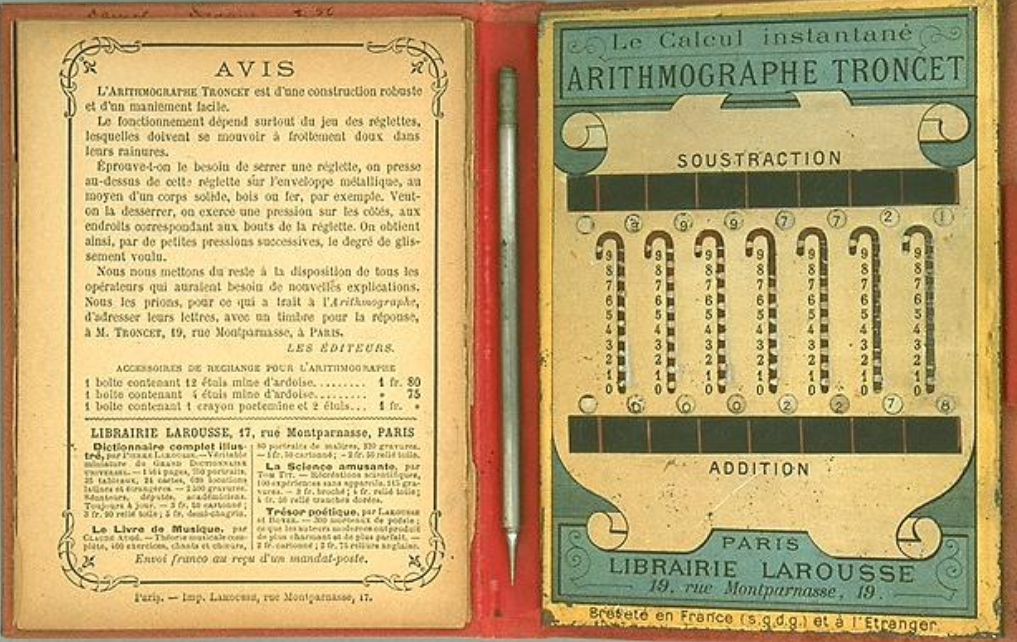
    Here’s a color image of the Troncet at the National Museum of American History:

    Troncet in color two

    [Source: http://americanhistory.si.edu/collections/search/object/nmah_690248  For another visit with the Troncet see the History of Computers site  http://history-computer.com/CalculatingTools/Gadgets/Troncet.html]


  • Sound Landscapes of Lost Acoustics

    JF Ptak Science Books   Quick Post

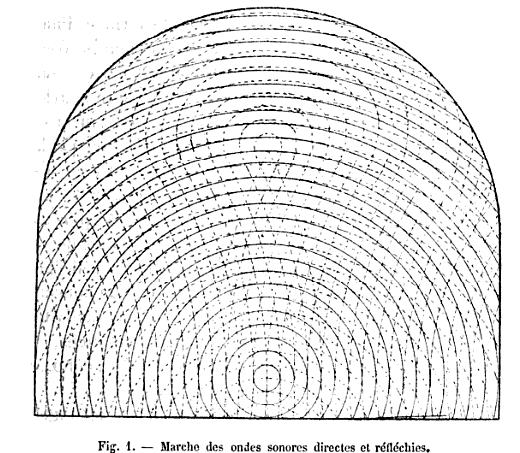
    There’s a LOT of artistic license in this title, but I like the idea of these acoustical plans as containers of what things sounded like in the halls and auditoriums that no longer exist. This is a big leap of faith given that the work that went into these images was conducted before the first truly scientific/mathematically rigorous architectural acoustics existed.  But I like tot think of them as reconstructions of sound in a particular environment. The drawings are also beautiful, inn their way.

    Image source: Theodore Lachez,  Acoustique et Optique des Salles de Reunions, printed in Paris in 1879. This is the second edition, with 116 text illustrations in the 518pp–these are almost entirely images of plans or elevations of music halls (for the study of seating and the room’s acoustics, etc.).  This edition also contains sections on the acoustics of “sales de debats parlementaires” and an examination of the “singular and curious” acoustics of the new Paris opera house. 

    The book is for sale on the blog’s bookstore; and/or you can have a look at it in full text online, here, at Google Books: https://books.google.com/books?id=MjoIAAAAIAAJ&pg=PA315&source=gbs_selected_pages&cad=3#v=onepage&q&f=false

    Acoustics


  • The False Card Catalogs for the Library of Babel

    JF Ptak Science Books  Post 2538
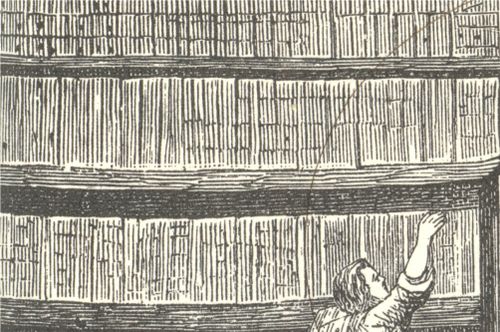
    Books

    “Cataloguing is an ancient profession; there are examples of such “ordainers of the universe” (as they were called by the Sumerians) among the oldest vestiges of libraries.” ― Alberto Manguel, A History of Reading (and also translator of Borges and co-editor of A  Dictionary of Imaginary Places, a book worthy of high consideration as the The Book that you could have with you on a desert island.)

    • [On the other end of the infinite library, see an earlier post here on “The Library of One Book”, here: https://historyofideasblog.com/thesciencebookstore/2009/10/the-library-of-one-book.html]

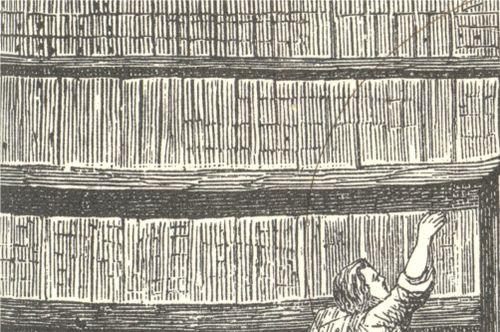
    In Jorge Borges’ “The Library of Babel” (published in 1944 and translated into English in 1962) we find that an infinity, or a universe, or a heaven, is declared to be a sort of endless library, stocked with hexagonally-shaped rooms books filled with books, all the same size, with the same number of characters. The rooms are endless, as are the books, which are written in every conceivable language and containing 29 necessary elements (including the alphabet, and the period, comma, and very interestingly concluding with the space). There are endless varieties of possibilities, and the place is staffed by librarians who have interests and obsessions from, well, A to Z, or Az^Z^Z^Z to ZA^A^A and so on, until we run out of time.  (Others have done some smart thinking on Borges’ great thought experiment/short story, and have estimated the size of the library in terms of stacked orders of magnitude beyond the atoms of the universe–but you can find all of that stuff elsewhere with a quick google search.)

    And then there’s this sample fro Borges on what sorts of books make up the library:

    “…the detailed history of the future, the autobiographies of the archangels, the faithful catalog of the Library, thousands and thousands of false catalogs, the proof of the falsity of those false catalogs, a proof of the falsity of the true catalog, the gnostic gospel of Basilides, the commentary upon that gospel, the true story of your death, the translation of every book into every language . . .”

    Here’s how you arrange an infinite library: you don’t.

    The books are not sorted to any sort of classification, only collected to the point that they are together.

    The many seem to be written in indefinable languages. Some of the librarians spent their time pursuing the holy grail–since all books that could ever be published would be present here, which theoretically include an index to library, or some sort of organizing principle.

    But since there was no verifiable organizing principle at play here, the library was useless as a “library”, though for the individual bits, it was perfectly fine. The structure though just turned into a long, endless, shelf.  This might explain why the caretaker/librarians of the place are so desperate.

    I cannot recall a mention of a card catalog, which I guess could be as all-powerfully impossible as the library, given that the library is not-classifiable. This is particularly true when you consider that there must also be a catalog of the arrangement of all possible false catalogs of all possible false books in the library, in addition to the true catalog. Perhaps the cards from this catalog would take up all of the space in the universe that would bump up against our own.  

    On the other hand, the logician W.V.O. Quine has written in a short piece that the Borges library is finite, because at some point there will come a time that all that can be written or will be written has been written:

    “It is interesting, still, that the collection is finite. The entire and ultimate truth about everything is printed in full in that library, after all, insofar as it can be put in words at all. The limited size of each volume is no restriction, for there is always another volume that takes up the tale — any tale, true or false — where any other volume leaves off. In seeking the truth we have no way of knowing which volume to pick up nor which to follow it with, but it is all right there.”

    He reduces this argument elegantly but completely without the humor of Borges, and says that all that is known can be represented in two symbols from which everything else can be derived–a dot, and a dash. He writes: 

    “The ultimate absurdity is now staring us in the face: a universal library of two volumes, one containing a single dot and the other a dash. Persistent repetition and alternation of the two is sufficient, we well know, for spelling out any and every truth. The miracle of the finite but universal library is a mere inflation of the miracle of binary notation: everything worth saying, and everything else as well, can be said with two characters.”

        “The ultimate absurdity is now staring us in the face: a universal library of two volumes, one containing a single dot and the other a dash. Persistent repetition and alternation of the two is sufficient, we well know, for spelling out any and every truth. The miracle of the finite but universal library is a mere inflation of the miracle of binary notation: everything worth saying, and everything else as well, can be said with two characters. It is a letdown befitting the Wizard of Oz, but it has been a boon to computers.” [Quine’s “Universal Library” is found at Hyperdiscordia, here: http://hyperdiscordia.crywalt.com/universal_library.html]

    Quine’s approximation cuts way down on the size of the library, which evidently would not fit in the known universe, which opens the gates for Heaven, which I think doesn’t depend on such restrictions–unless of course it was too big for that, which means believers would be in trouble, and none too happy with being kicked out of paradise to make space for a book.


  • Saunderson’s Computer for the Blind (18th Century)

    JF Ptak Science Books 

    Blogblindsaunderson_calc

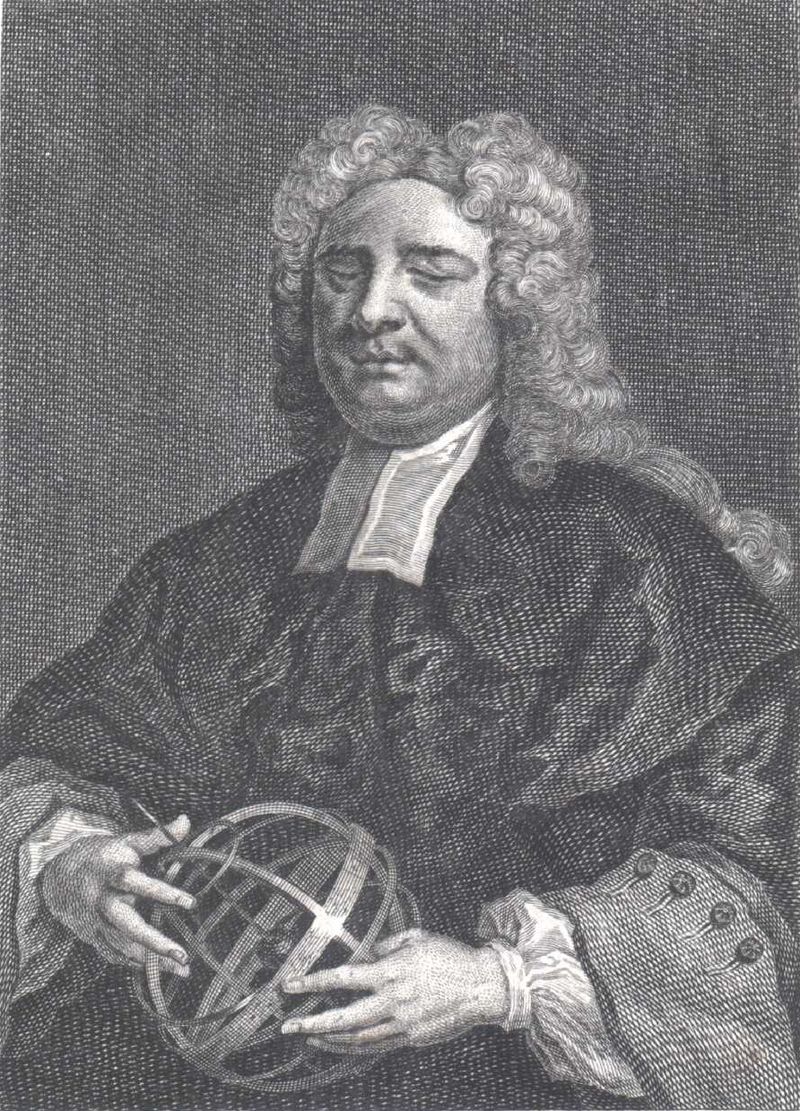
    Nicholas Saunderson (1682-1739)  was an extraordinary mathematical talent—he was also blind (from about the age of one), and invented, principally for his own uses, what I think is the first mathematical calculator designed specifically for the use of the blind.  He was supremely gifted and creative, and rose to become the fourth Lucasian professor at Cambridge, succeeding the expelled William Whiston, who had in turn succeeded Isaac Newton—Saunderson also held the post for one of the longest periods of time, 1711-1739.  HE was friend and associate to Newton, Whiston, Roger Cotes, Halley, De Moivre and others during a particularly rich intellectual period in the history of physics and the maths. 

    Blogblindsaunderson_geo

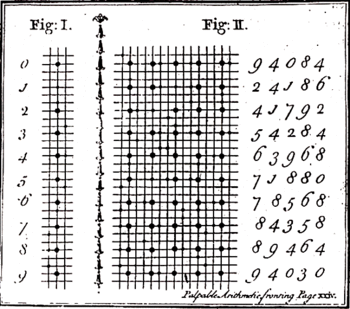
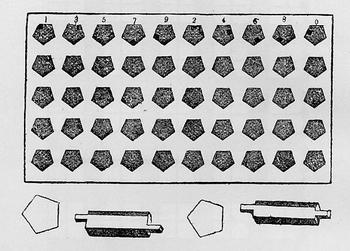
    His calculator was smart and simple, based on a cribbage-board –like device, that was able to perform arithmetical and algebraic functions—it consisted of nine rows and was worked with two pins, the positioning of the pins on the engraved board telling the user their value. (There was another calculator for the blind constructed by Meyer (below, left)  using a sort of reverse principle to the Saunderson model where it was the shape and placement (leaning or not, for example) of the pegs in the hole that annotated value rather than their placement on the board.


    Blogblindparis

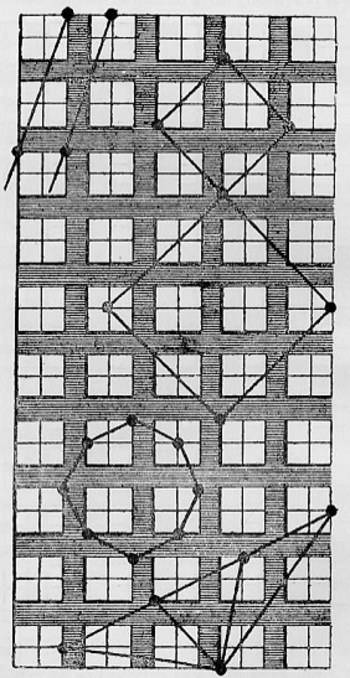
    The Saunderson computer was described in his The Elements of Algebra…,1 published at Cambridge in the first edition just after the author’s death, in 1740.  The device was described in the book by John Colson (who succeeded Saunderson to the Lucasian chair), who commented that it was via the use of the device that Saunderson could compose his treatise on algebra. (At right is another Saunderson-based calculator allowing for the construction and study of geometrical figures).  

    Saunderson portrra

    [Image source for Saunderson portrait: https://en.wikipedia.org/wiki/Nicholas_Saunderson#/media/File:Nicolas_Saunderson.jpg]

    Notes:

    !.  Here’s a link for a later-n-the-century (1792) edition of the Saunders book  via the Internet Archive:  https://archive.org/details/selectpartsofsau00saun

    Also see MacTutor History of Mathematics biography of Saunderson, here: http://www-history.mcs.st-and.ac.uk/Biographies/Saunderson.html

    ·Posted by :

    ·in:

    —

  • The $1/64,000th Dollar Question

    JF Ptak Science Books  Quick Post

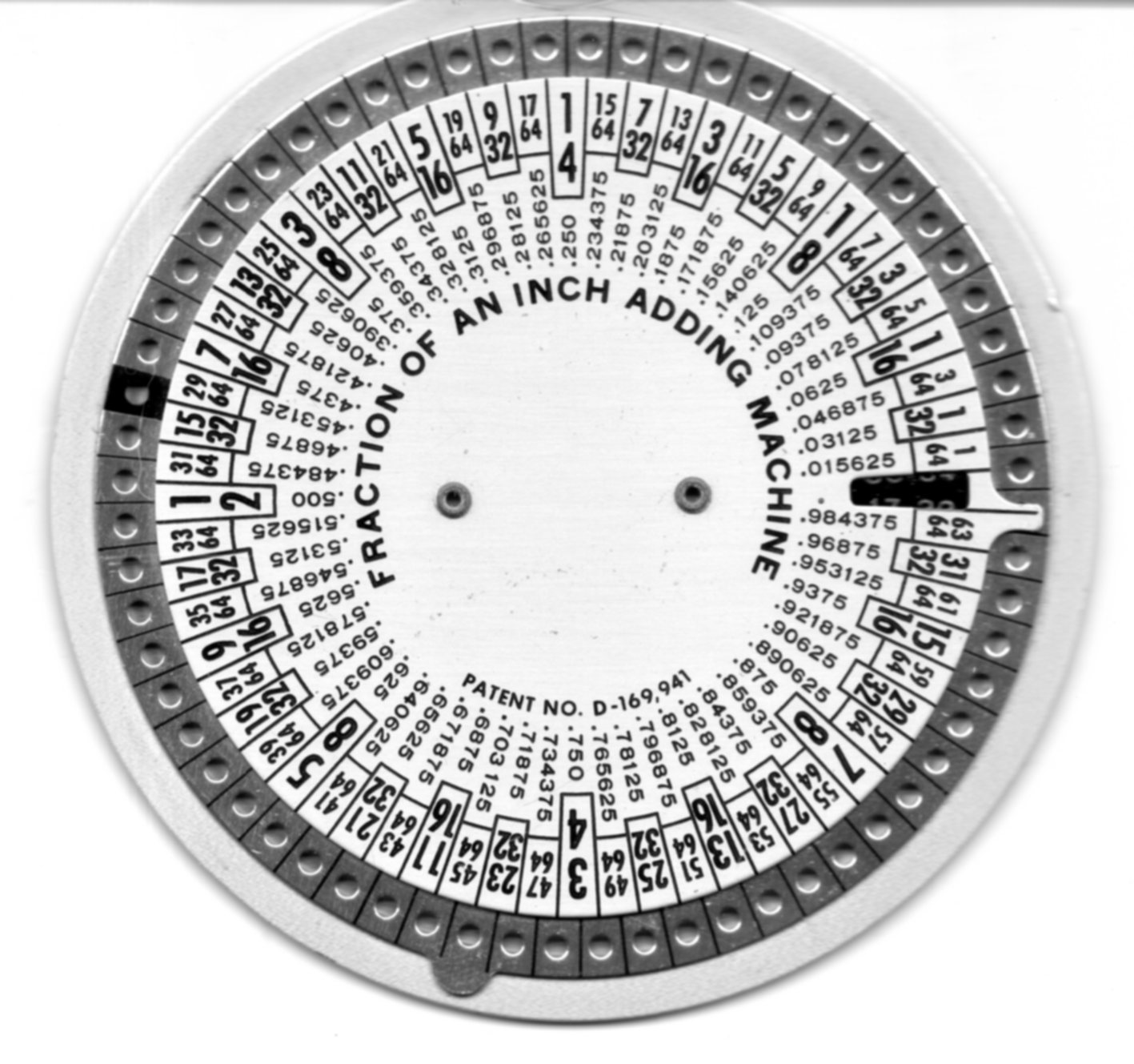
      Fraction adding machine010

    There’s a box in the studio that is filled with all manner of antique and semi-antique adding/calculating/etc. instruments, from slide rules to blast effects of a nuclear weapon to air speed to the gas mileage for a 1959 Rambler.  Some are wood, some metal, but my favorites I think are those made of paper (a large revolving baseball from 1961 for calculating world series records is my favorite in that area….that, or the radiation measurer made of paper to place alongside A Body Part to check on its incremental-or-not growth following nuclear detonation).

    The there are the little bits that maneuvered the little bits, as seen in this uncovered little gem, the “Fraction of an Inch Adding Machine” (shown above).  It was patented in 1952 by K.P. Jaeger (http://www.google.com/patents/USD169941), and is stamped   “Sheradco, Inc., Detroit” on the reverse of the metal plate. 

    It does a relatively simple task as stated–adding diverse fractions–and it does so quickly; as a matter of fact, it is far quicker than you can do it online, even with a converter. This is basically two steps–you put a pen or pencil head in the outer ring hole for the first fraction and move the dial clockwise until you come to the stop; then you do the same for the next fraction, and the result is instantly displayed. For operations above 1, you just need to keep track of the whole numbers yourself.  Unfortunately it doesn’t teach you anything about fractions, but neither does your digital calculator teach you about anything calculating. 

    This is just a smart and pretty instrument that works very nicely indeed, and I just wanted to share it. 

    [I did find a lovely post on how to make your own!  It also provides a pdf of base plate and the rest of it as well:  http://www.evilmadscientist.com/2007/make-your-own-1952-fraction-of-an-inch-adding-machine]

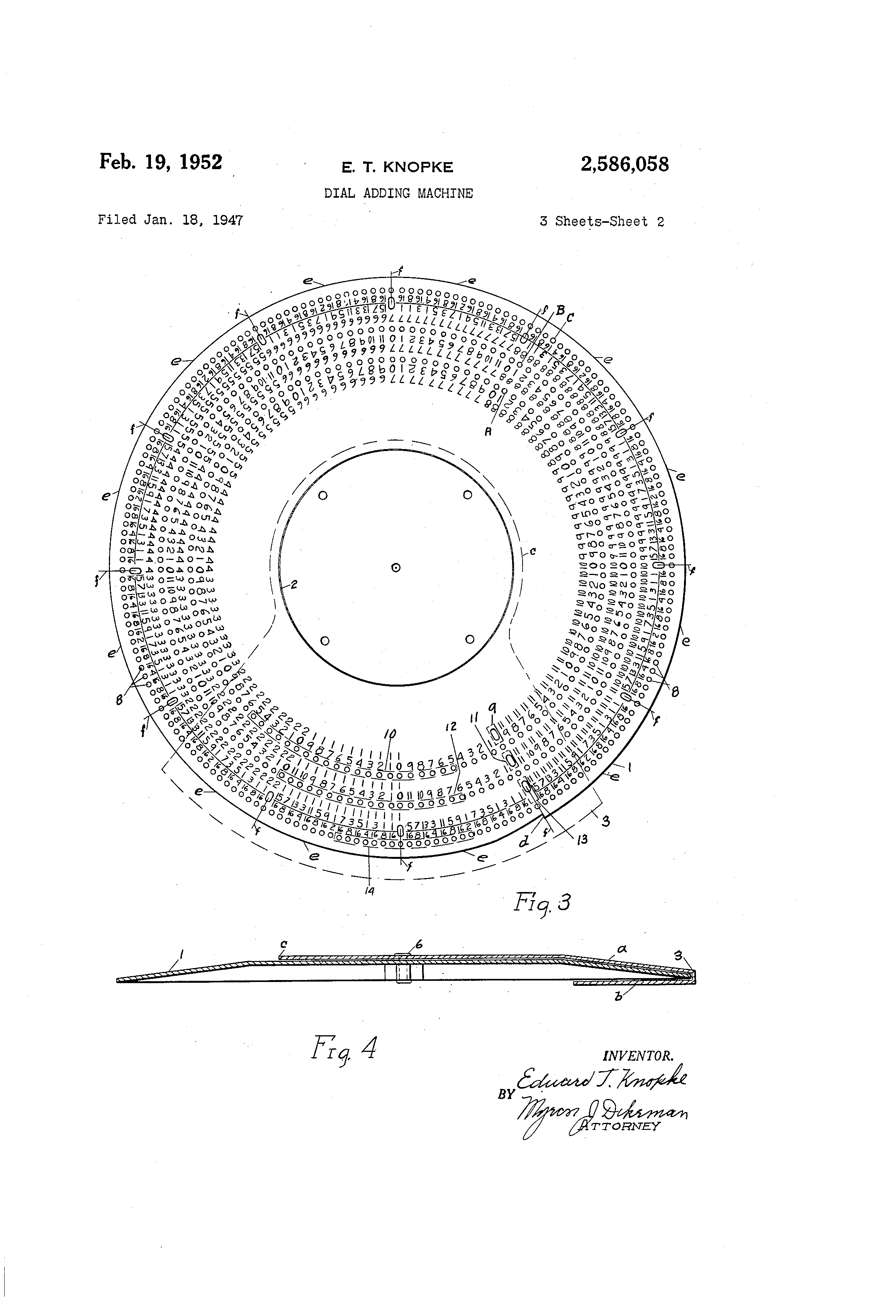
    While looking for it on Google Patent Search I bumped into some other similar devices, and I just wanted to take a moment to note the beauty of the possibility of their interior base dials. Just one sample here for the moment: the “Dial Adding Machine” of E.T. Knopke, 1952, which is so full of numbers and potential and mathematical poetry:

    Patent--adding machine dial

    [Source: Google Patents]

    Feb. 19, 1952 E. T. KNOPKE 2,586,058


    ·Posted by :

    ·in: