A Daily History of Holes, Dots, Lines, Science, History, Math, Physics, Art, the Unintentional Absurd, Architecture, Maps, Data Visualization, Blank and Missing Things, and so on. |1.6 million words, 7500 images, 4.9 million hits| Press & appearances in The Times, Le Figaro, Mensa, The Economist, The Guardian, Discovery News, Slate, Le Monde, Sci American Blogs, Le Pont, and many other places… 5000+ total posts since 2008.

Category: Calculating

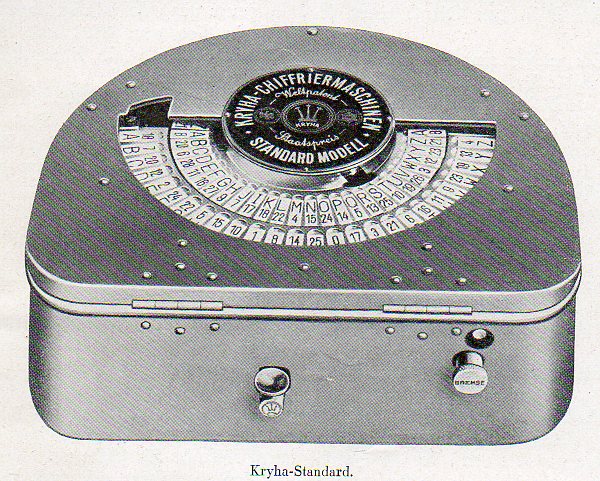
  • The Kryha Cipher Machine. 1929 [Quick Post]

    JF Ptak Science Books  Post 1169

    [I wrote an earlier post on this blog on ciphers here: Books of Shadows—”Trithemius, Bacon, Porta, & Falconer vs. a Make-Believe Derrida on How to Make Something Unintelligible. Secret Writing and Ciphers”.]

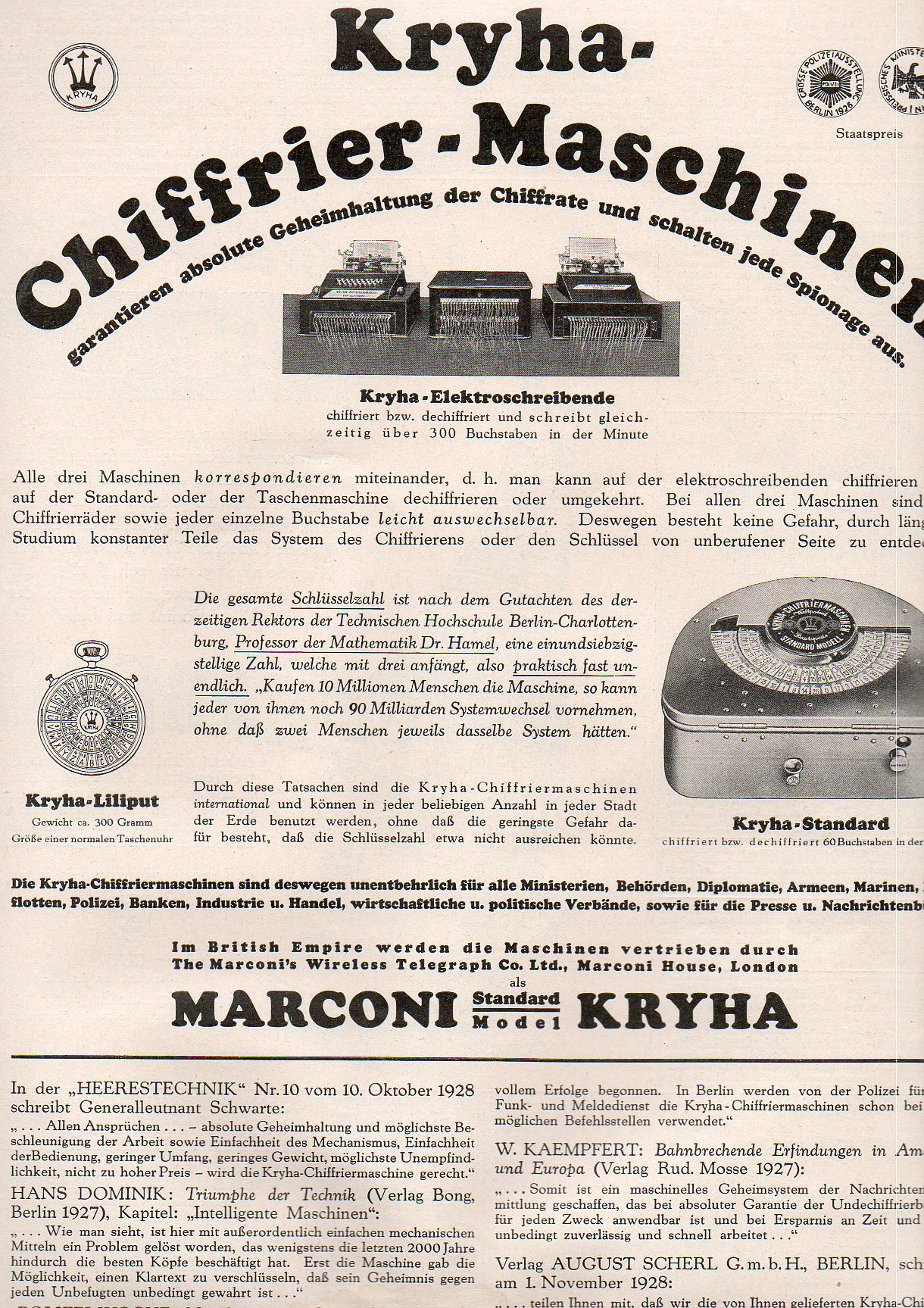
    The Kryha ciphering/enciphering machine was invented by Ukranian Alexander Kryha (d. 1955) and was capable of coding about 350 characters a minute.  It was used to enforce secrecy in business transactions, and was used in conjunction with (at least) Siemens telegraphic equipment.  I found these images (except for the patent drawings) of the Kryha machines in several issues of the Illustrirte Zeitung (Leipzig) for 1929, all of which are unusual and evidently not findable as good copies online–and so I’m simply reposting them here.

    Kryha big527

    Kryha  529


  • Footnotes in the Future–Swift, Lull, Borges and the End of Writing

    JF Ptak Science Books   Post 1155

    “The most ignorant person at a reasonable charge, and with little bodily labor, may write books in philosophy, poetry, law, mathematics, and theology, without the least assistance from genius or study.”   Jonathan Swift, in Gulliver’s Travels

    “Hell is the kingdom of the animal that swallows up the memory of all things… Between life and death there is no destiny except memory. Memory weaves the destiny of the world..”  Carlos Fuentes, Terra Nostra

    “A people without history/ is not redeemed from time, for history is a pattern of timeless moments” — T.S. Eliot, Four Quartets.

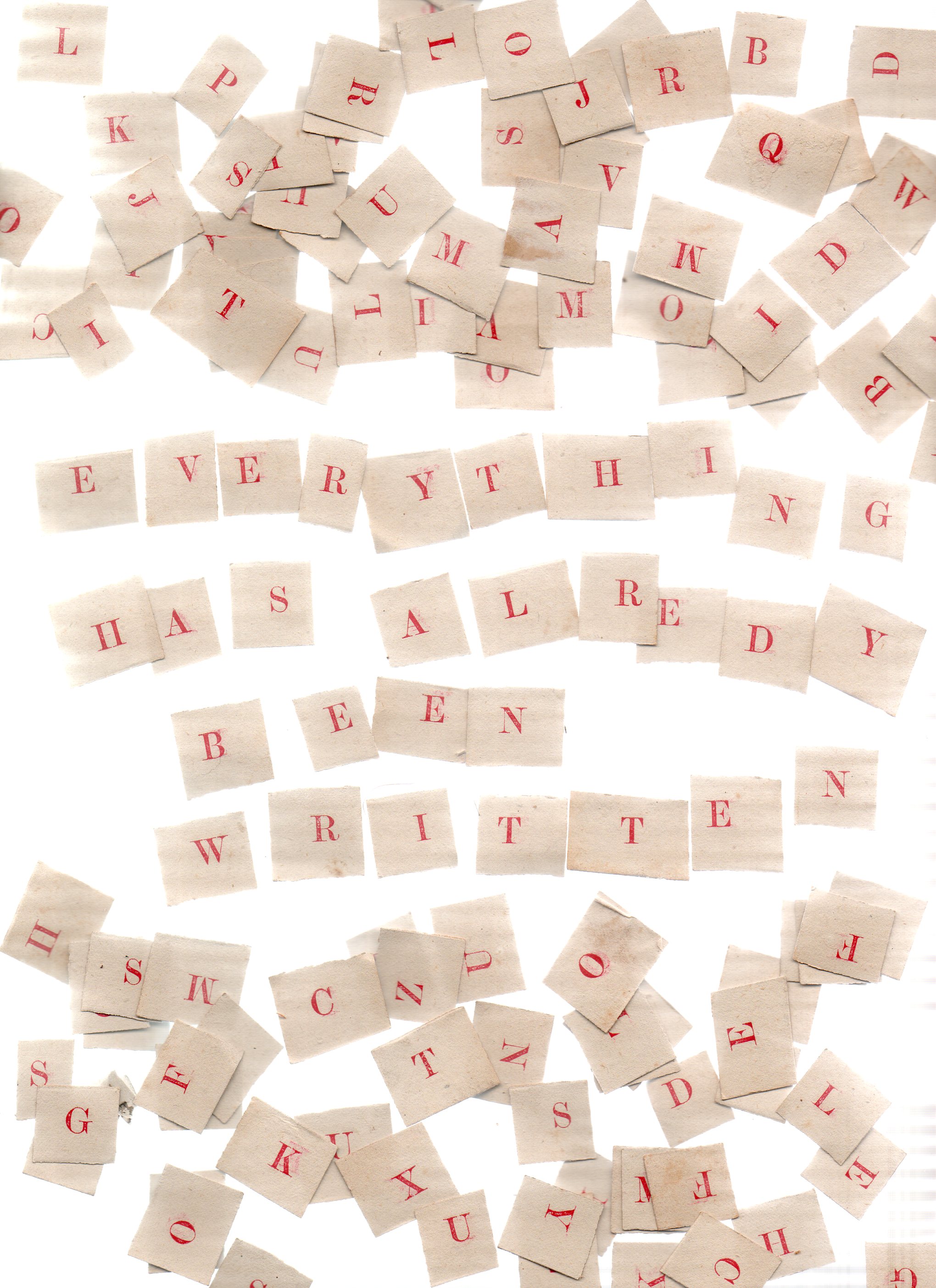
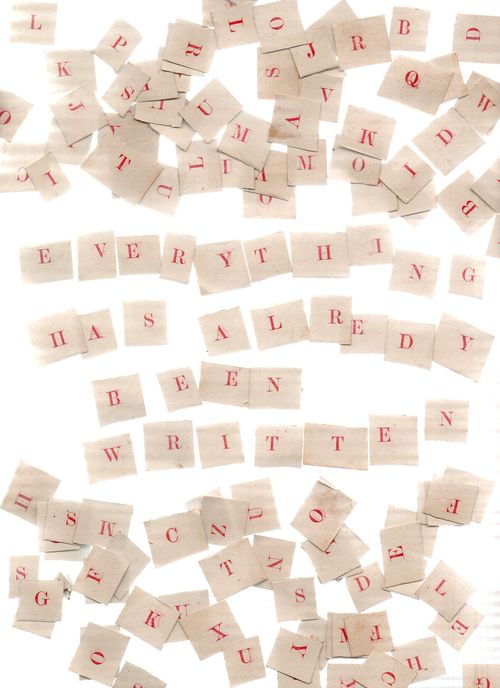
    The future history of writing–it will tell us–was already written before it was written.   In the future, when everything that can be written has been written and everything spoken has already been spoken, perhaps the first footnote in the history of already-done things will be to Jonathan Swift.  The experience belongs to us through Lemuel Gulliver1, who after surviving two trips (one to Lilliput in which Gulliver is twelve times the size of
    Written468

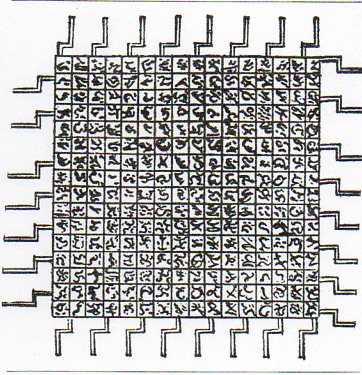
    everything else, and the second to Brobdingnag where he is one-twelfth the size of everything) comes to a third (of four2) in the land of Laputa.  It is here where he encounters a conversation machine that, when cranked, produces anything and everything, the known and unknown, the original and the copied, and have the thought and spoken
    word belong to the manipulator of the machine.  Everything that can be said is in that box, waiting to come.  The 20′ square was occupied by cubes with words on their sides, with 40 cranks and 40 handles and 40 operators to manipulate the mechanical vocabulary and associated scribes to record anything that made sense, and would be the springboard of “knowledge”operating without a manual or an intelligent primum mobile. (The image of the machine–which bears some resemblance to an integrated chip–appears in the third edition of Swift’s book, and as you can see is not a well-drawn thing, missing a row and a column and a crank here and there. A fuller description is found below.)
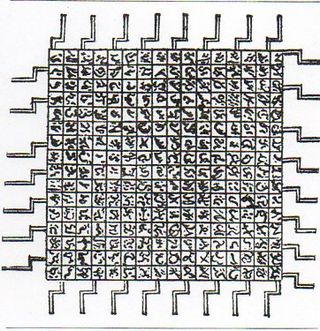
    Writtenc machine470

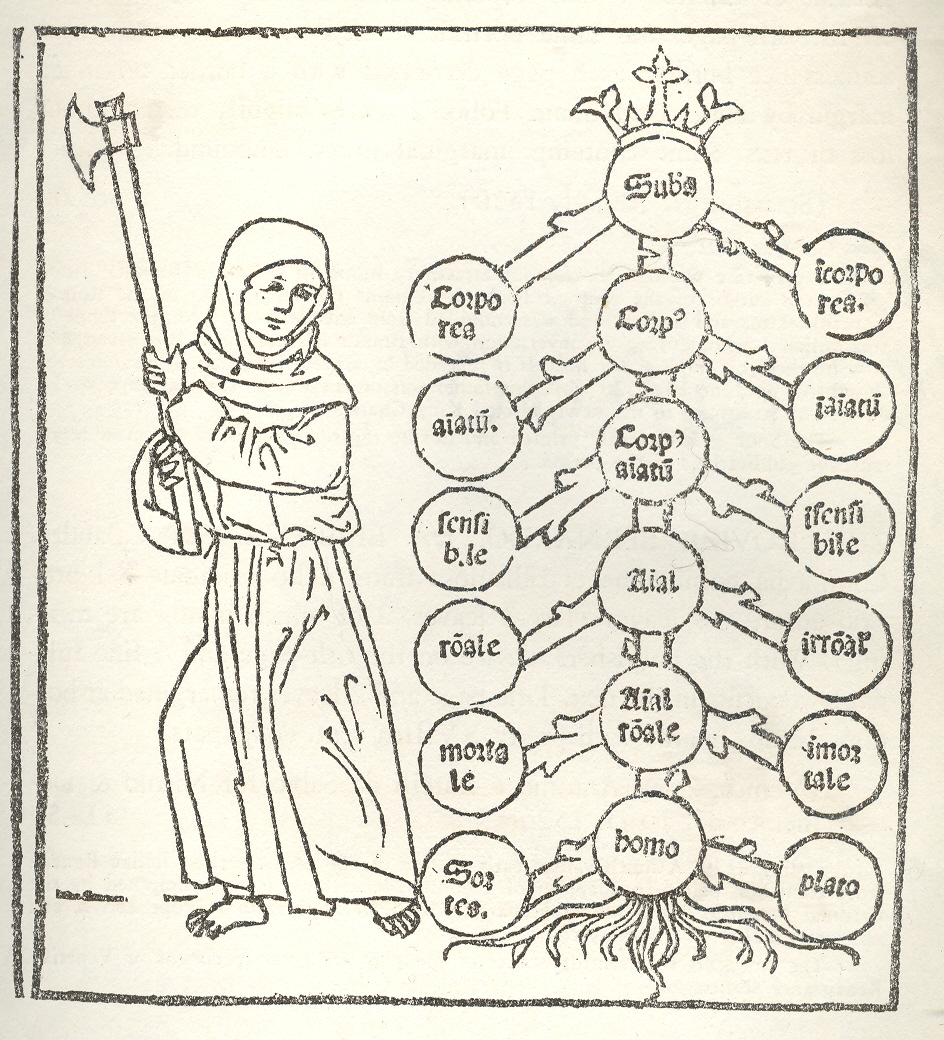
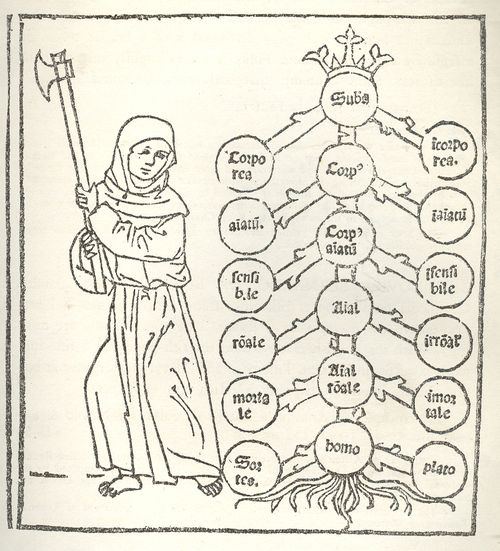
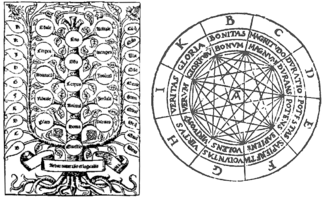
    The idea of a universal knowledge or an expanding, forever-library is very old, particularly if you expand the concept a bit to include Aristotle and the Tree of Porphyry3.  While not exactly a generator in the sense of Jorge Borges’ Library of Babel or the Swiftian machine, the ancients did 1--logic treeproduce very interesting, elegant, beautiful ways of story information and ordering information.  The Tree of Porphyry is far more concise–an abbreviation-compared to the infinitely expanding hexagonal rooms filed with books and attendant librarians in the Borges’ universe.  Or the Ars Magna/Thinking Machine of the 13th century Ramon Lull (also known as Ramon, Raimundo and Raymond, Raimundus and Raymundus Lull, Lully and Lullus and Lulio), the ultimate organizer of how sentences can be made and knowledge produced/uncovered (particularly if you want to please the logic of the church and the Creator), and which was almost certainly known to Swift (and which was also written about, described and worried-over by Borges4).  There are many other early figures in this category to be sure (Lewis Carroll, William Jevons, and even in a way Mr. Venn, not to mention Leibniz and his calculator,  and the changes in scientific method and (English/Dutch) mathematical concentration on applied mathematics of the 17th century that made thinking about the industrial revolution possible)), but that would be left to (at least) a longer post.  (The Lull wheel, below.)
                               

    How long will it take to digitize everything that has ever been written, or recorded, or composed? Several generations? Ten?  It may well come to pass in shorter time than we think; and when you compare this control of recorded human history to the centuries that will follow in developing “computers”, how can we possibly know what will become of all of it?  In the coming centuries and their attack on intelligence, when in the future the brain is a harvest of the computer, perhaps intelligence finally submits, and everything that can be done has been done, the progress of humanity snubbed to a stub. Or expanded exponentially.  It is such a tough call to make…

    Notes:

    1.  Jonathan Swift, Travels into Several Remote Nations of the World, in Four Parts. By Lemuel Gulliver, First a Surgeon, and then a Captain of several Ships.  1726.

    2. The third voyage was Part III. A Voyage to Laputa, Balnibarbi, Luggnagg, Glubbdubdrib, and Japan. The fourth finds humans as pets/inferiors in the island of the Houyhnhnms, a land of intelligent horses.

    3. The “tree” was a diagrammatic creation of a 3rd century Syrian mathematician/logician/philosopher named Porphyry who– much taken with Aristotle (and with the Categories in particular)– developed a systematic approach to the organization of thought in diagrammatic form.

    4. Borges J. L. (1999) ‘Ramon Lull’s thinking Machine’ in The total library: non-fiction 1922-1986 (Edited by) Weinberger, E., trans. Allen, E. Levine, S. J., and Weinberger, E. London, Penguin, on pp 155-160.

    It is interesting to note that Lull, who gave up everything to follow his calling into the church (and who was antagonized by the belief that his very act of missing his left-behind life to be a sin against god’s choice of him to follow his “career path”) was demonized by the church soon after his death, his works prohibited reading for hundreds of years.  He was resurrected in 1958 though on a path towards sainthood, a doctor of the church.  

    A description of the Swift machine:

  • A New Perspective on Multitudes of Soldiers

    JF Ptak Science Books LLC  Post 1019

    Yesterday while trying to entertain our six-year-old ,
    sitting in a small waiting room to an office with nothing to do, I estimated
    the number of holes there were in the boring acoustic ceiling tiles. A short
    distraction later I realized that if each one of those holes was a dollar bill,
    that the national deficit would require those titles to be laid out over an
    area roughly the size of D.C. and Alexandria
    (about a hundred square miles).  That
    sort of brought some perspective to what trillions of dollars might mean, but not
    really—it was still too weird and vast a number.

     
    1--may 5 medals 01

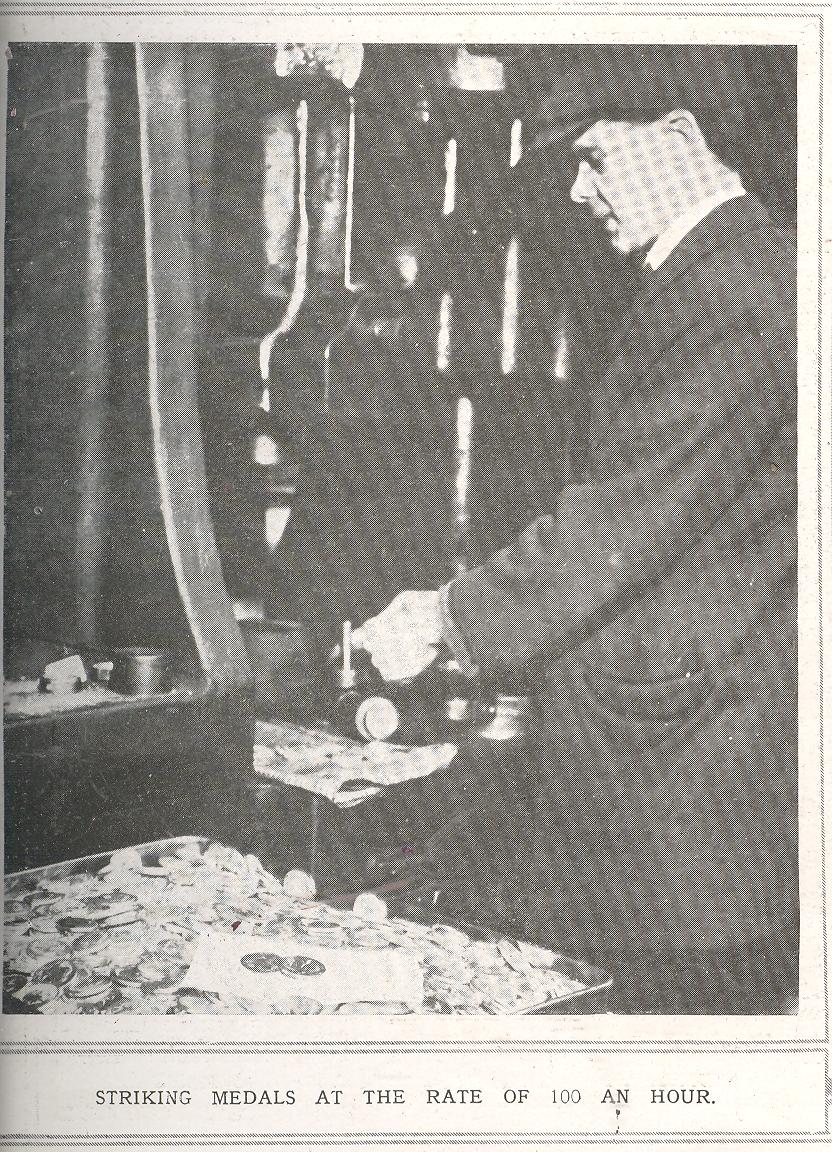
    I had the same sort of feeling seeing this picture essay
    (yesterday as well) on soldiers and war. 
    The photos appeared in the July
    1 1920
    issue of the Illustrated London News and spoke of the new
    management of manufacturing British war medals. 
    The vastness of the casualties of that war are well known, but somehow
    this story seemed to put the big numbers into a more understandable
    perspective.

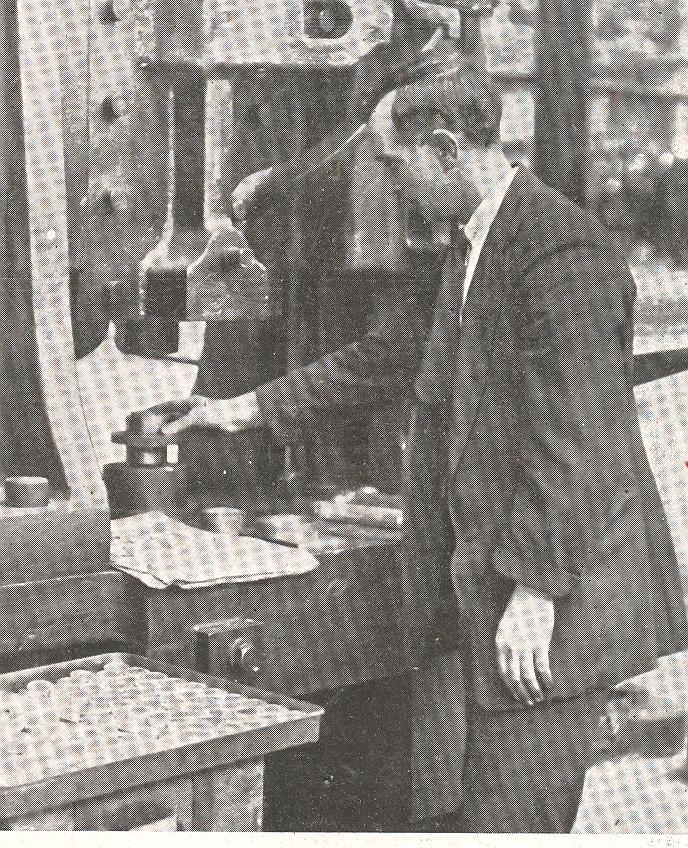
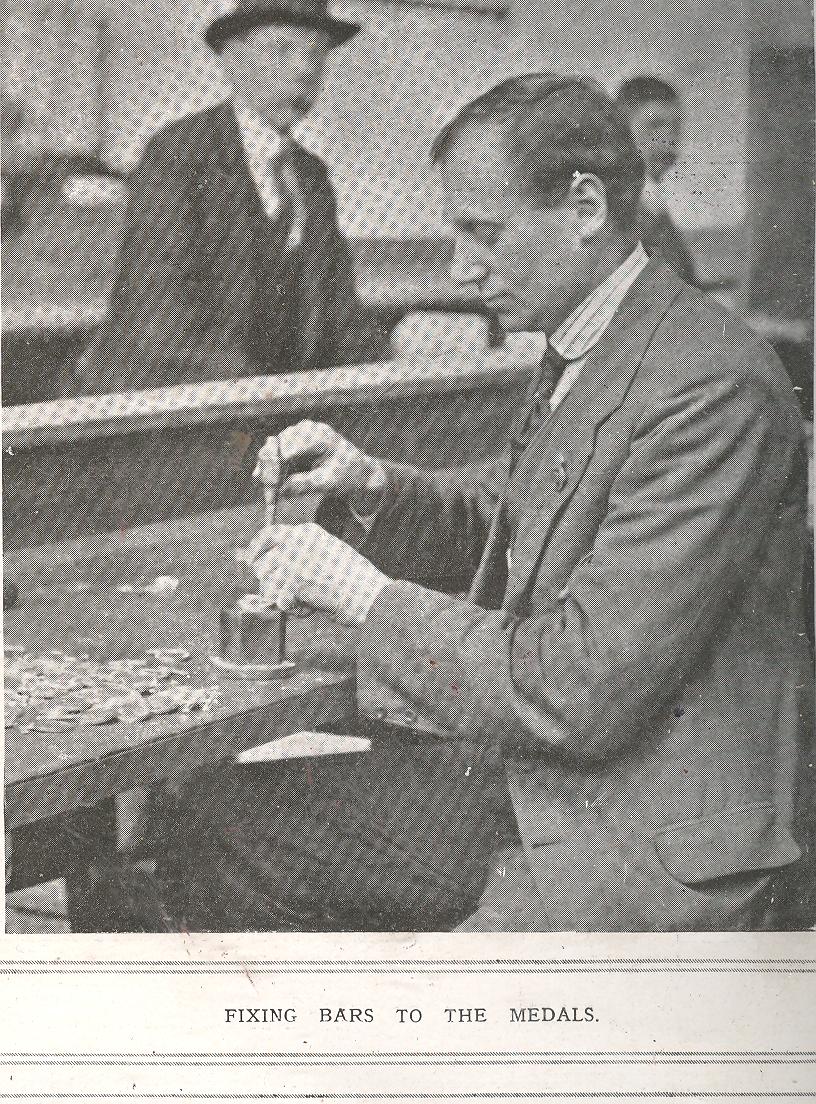
    I learned that there were 300 men who worked full-time on
    producing these medals, making about 67,000 a week–in 1920, two years after
    the end of the war.  Not only that, since
    the Royal Mint and the Royal Ordnance Factory would be working jointly on the
    project, the Army Council expected production to increase to 120,000 medals a
    week.  That’s six million medals a
    year. 


    1--may 5 medals 01b

    It seems extraordinary that even after the fighting that
    production levels would need to be so high. 
    But there were millions who fought, and so these 300 workers would still
    have to work for several more years to produce enough medals to honor those who
    fought in WWI.

      
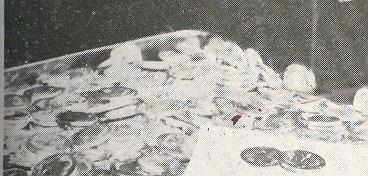
    1--may 5 medals 1

    I read somewhere—a citation now long lost—that in America every Purple
    Heart that has been given out since 1945 was struck in that same year.  This  mountain was made in preparation for the
    hundreds of thousands of soldiers who were expected to be made casualties in
    the Allied assault on the Japanese homeland in 1945/6—a figure that would come
    close to half of the total number of 1.6 million Purple Hearts that have been
    awarded since 1932


    1--may 5 medals 2

    ·Posted by :

    ·in:

    — — —

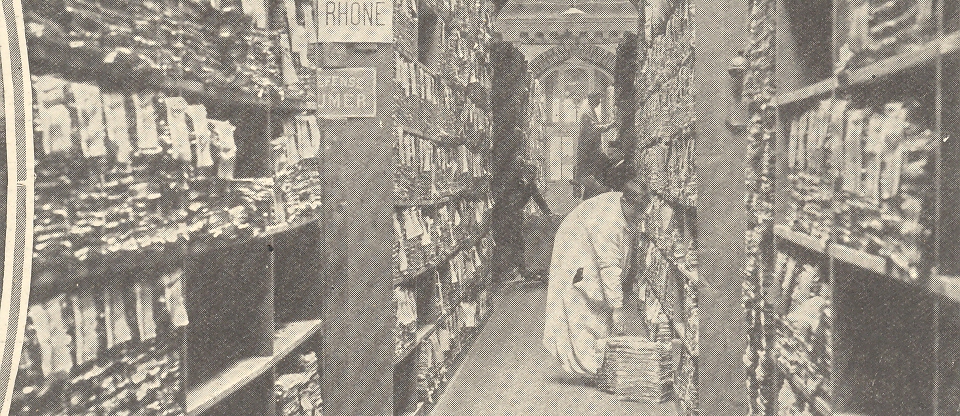
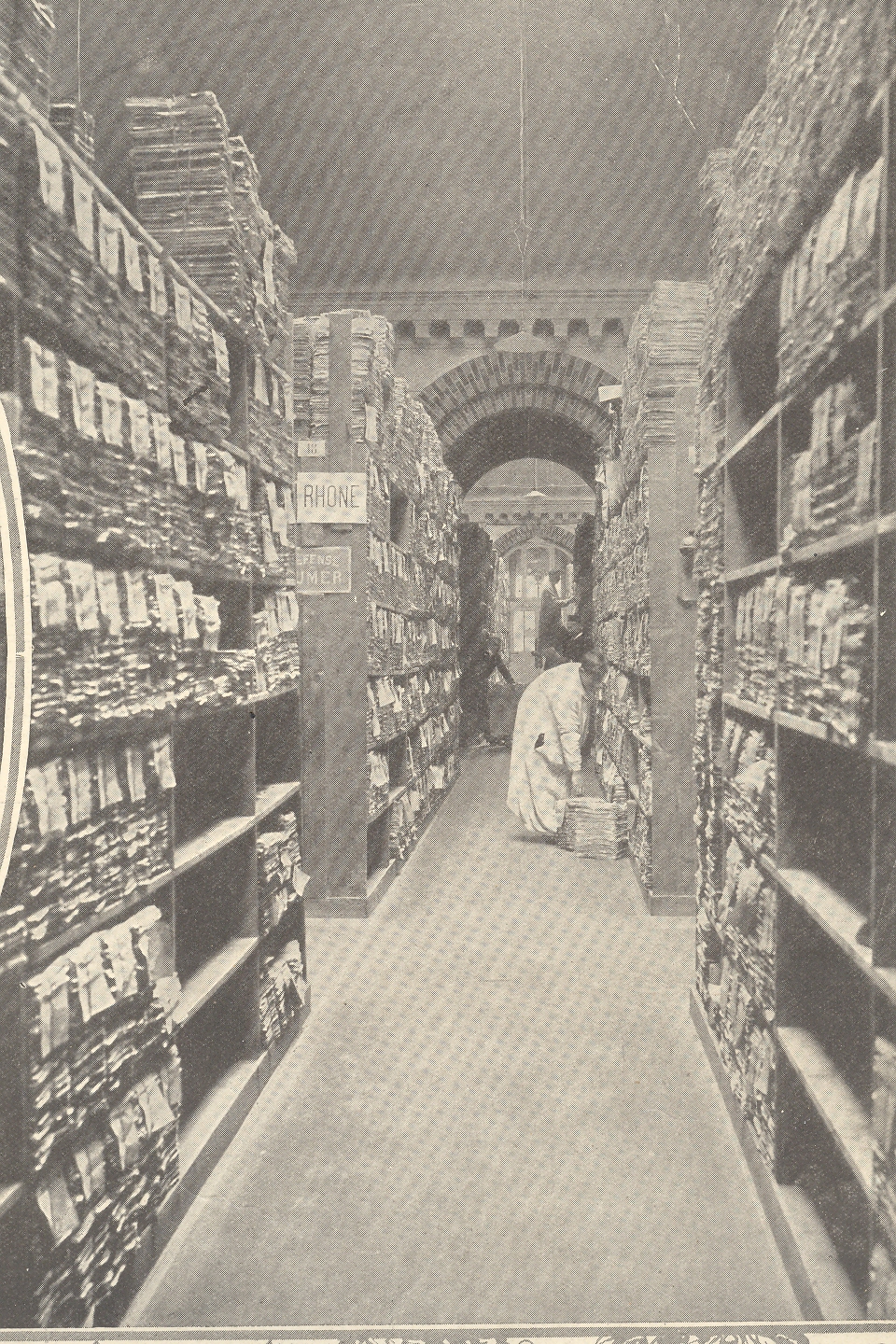
  • The Data Mine: the French Census of 1911 and Storing Numbers on Paper

    JF Ptak Science Books  Post 835 

    Today’s post on the tabulating office of the French 1911 Census seems quite natural following yesterday’s of the reading-and-writing (French) fireproof man…

     ++ blog ++ nov 16 french census 3 001

    Like many other countries, the French were certainly not playing to the technological audience in conducting their census of 1911, the physical, tabulating part of it looking much as it did in the 1880’s.  Granted, the United States was dragged somewhat into the new high-tech age of tabulating for its 1890 census, but it was absolutely and clearly shown that the Herman Hollerith machines and methods were vastly superior to those previous used, giving the government extraordinary new insights into the way in which the country functioned—a Hubble Telescope-like impact for those interested in more and more-manipulable data.   


    ++ blog ++ nov 16 french census 3

    What interests me in these photos are the endless stacks of paper, and what I imagine was the quiet of the job of the paper-stack-classifier, all of whom seem to be heavily dressed…I guess that you couldn’t keep a dry heat around exposed paper like that for fear of (a) well, possible fire and (b) drying the documents out and making them fragile and unusable.   

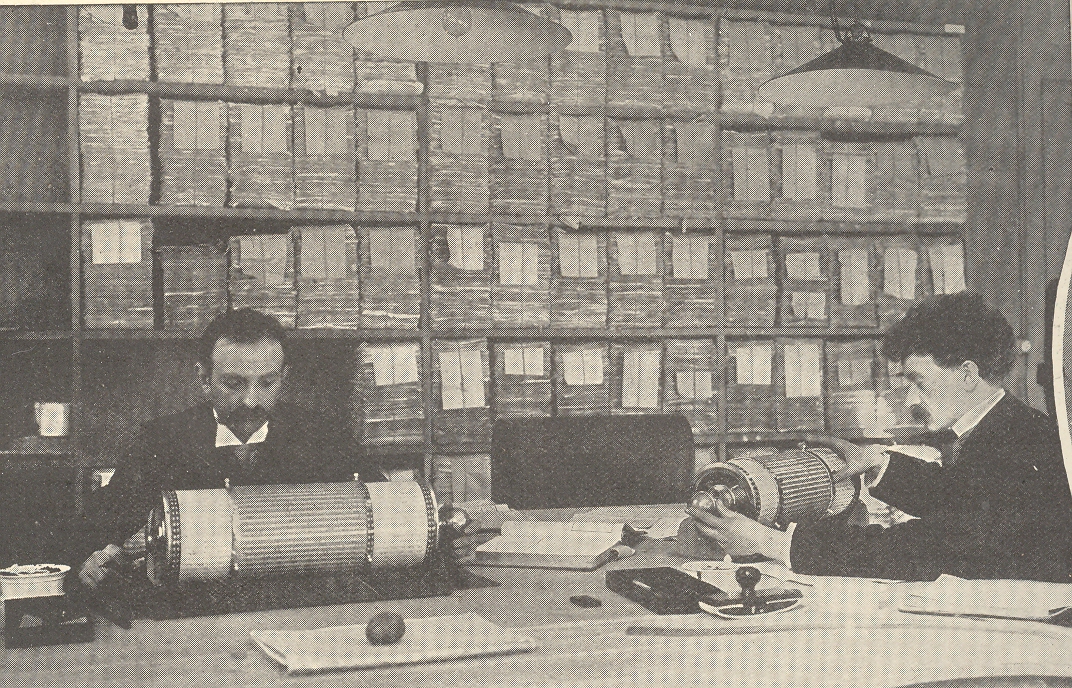
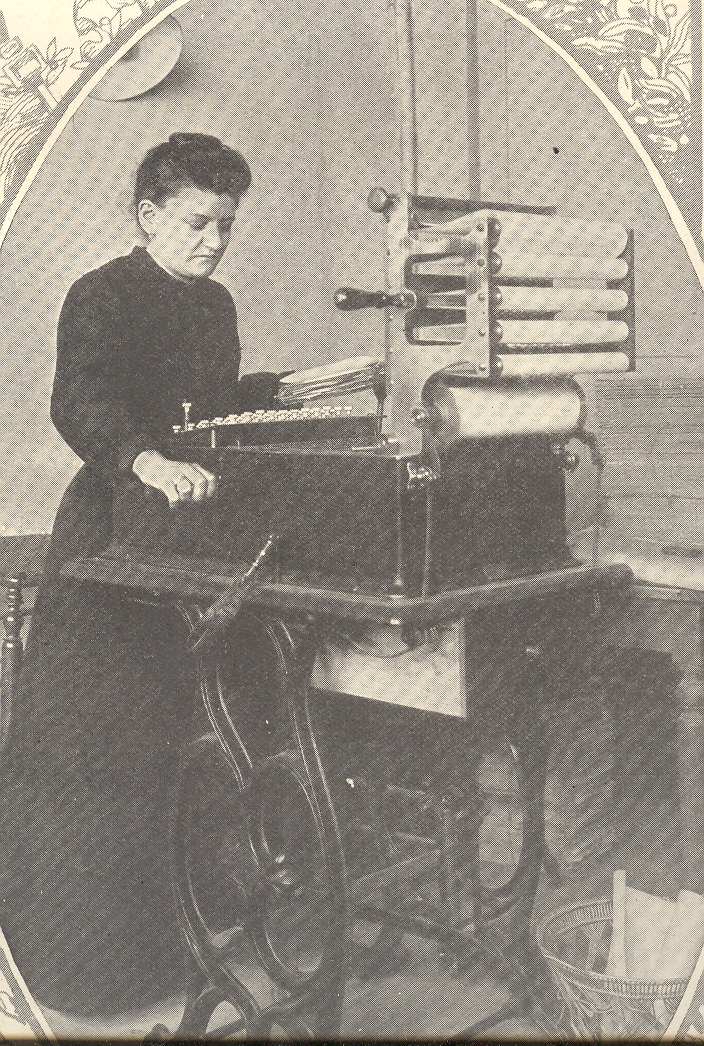
    The image below shows two men using the Thacher Calculating Instrument, a large, cylindrical slide rule1.     

    ++ blog ++ nov 16 french census 1


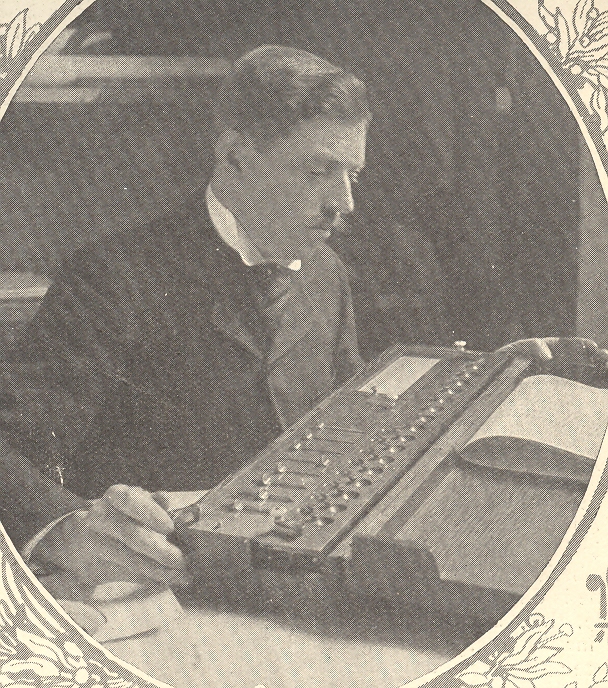
    This man is using an arithmometer, invented  by Charles Xavier Thomas de Colmar in 1820.  It was employed, as we can clearly see, well into the 20th century even though it had been far superseded.   

    ++ blog ++ nov 16 french census 4


    The U.S. government, on the other hand, wasn’t so much taken by the astronomical range of new statistics that flowed from the Hollerith machines as it was the astronomical bill for their use.  The 1880 census had cost about $6 million and took 9 years to tabulate; the 1890 census using the Hollerith machines cost $10 million and took seven years.  The main focus of many in government was the cost differential—not the incredible amounts of new controllable information.  The rent of the Hollerith machines was only $750,000 for the conduct of the entire census, so the differential must’ve been in the extra utility costs (for electricity, for example, which was used for the first time to run the tabulators) and for the small army of statisticians and data entry people.  Be that as it may, the government was not amused, particularly when Hollerith figured that he had actually saved the government $5 million.    The two parties left each other grumbling, though the roar of the trickle down from the Hollerith success drowned it out.  The tabulating system was quickly exported, and large private concerns in the U.S. saw a savior in the system that would soon rescue them from the sea of paper in which they were beginning to drown.   The Hollerith company did very, very well for itself, and soon merged with three other companies (in 1911) to ease the burden of success.  The resulting company was called the Computing-Tabulating-Research Company (CTR), which after a short while became the International Business Machine Corporation (IBM).  


    ++ blog ++ nov 16 french census 2

    Image source:  The Illustrated London News, 11 March 1911.  

     Notes:

    1.The following description is from the wonderful SlideRuleMuseumsite;

    “Thacher’s Calculating Instrument – Patented in 1881 by Edwin Thacher. Originally made by W.F. Stanley, in London, but, by 1897, Keuffel & Esser had taken over production. an 1884 instruction book notes, “The original rule in use is 12 inches long, with radii of II and 5 1/2 inches, the divisions of which are cut by hand, copying from a machine divided plate. In the present instrument the radii are 60 and 30 feet, the divisions of which are printed directly from machine divided plates. Those plates contain over 33,000 divisions, calculated to seven places of decimals from Babbage’s tables by using a common multiplier, every line being subjected to correction for error of screw and temperature variations, so that possibly every line center is within .0001 inch of its true place.” The instrument consists of a cylindrical slide, which admits of both rotary and longitudinal movement within an open metallic framework of 20 equidistant triangular bars. The bars are connected to rings at their ends which admit rotation within standards attached to the base. Upon the slide are wrapped two complete logarithmic scales, each of which is divided into 40 parts of length equal to half that of the slide. The parts follow each other in regular order around the cylinder, and the figures and divisions which constitute any part of the right are repeated on the left, one line in advance. By the rotary and longitudinal movement of the slide any of its divisions may be brought opposite to or in contact with any division on the fixed scales. The divisions on the upper lines are transferred to the slide by means of a pointer fitting over the bars, which is also convenient for retaining the position of any division on either line while the slide is being revolved into the required position. Near the commencement of each scale on the slide is a heavy black mark designed to catch the eye.”

    ·Posted by :

    ·in:

    —

  • Big Mathematics 1816: Manuscript Notes and Found Math Art

    JF Ptak Science Books LLC  Post 757  Blog Bookstore

    In my science bookstore business one of my principle interests is antique manuscript notebooks in the sciences.  It is a pleasure to see someone working through a problem, or finding what the writer thought to be the most interesting point in a lecture on a particular subject, and to read the occasional doodles and see the timely gloss every now and then.  I’ve had notebooks from an advanced and very careful student for a course given by the great Robert Bunsen that was filled with hundreds of pages of what the master was trying to communicate to his pupils.

    ++00++ 9.16 math

    There’s also a  series of notebooks from the spectacular period of Cornell physics history (1948-1949), including 6 notebooks of classes with Richard Feynman, including several hundred pages from his 1948/9 course in advanced quantum mechanics, which included (a very early) use of the Feynman diagrams.  The thing that makes these observant, advanced notes taken during Feynman’s classes have more than a pedagogical interest (which is substantial and enough on its own)—they have a capacity to show the logic behind the man’s thinking and how he presented his ideas over a period of some months.  Also, and curiously, notebooks like these seem to have not survived. 

    Then there’s the notebooks taken by the team of Charlotte and Fritz John when they were pursing doctoral degrees at Goettingen (1929-1933), until forced to leave with the enforcement of the Nazi laws against non-Aryans.  Goettingen happened (and happens) to be the seat of a long, great mathematical heritage, home of Felix Klein, Emmy Noether, David Hilbert and Bernhard Riemann (among many others).  The notebooks—some two linear feet of them—represented four years of advanced interactions with some of the finest mathematical minds in Germany.  I was told by Mrs. John that they were required to take such full notes—but let me tell you, these notebooks were typed transcriptions of the daily handwritten notes, compiled over the course of a class, and then bound.  They are beautiful, and go far beyond my concept of “required”.  Mrs. John told me the story of the class notes that she and Dr. John took while taking a course with the great Hermann Weyl (who had taken his doctorate under the iconic David Hilbert, and who was also forced to flee Goettingen because his wife was Jewish):  everyone of course was required to take extensive notes during the day and work on them during the night, turning them in the following day for appraisal.  She told me that she still vividly remember placing their notes on a long wooden table at the front of the class, and then picking that set of note up the next day.  After a month of this, she, said, they became convinced that Weyl was not looking at the notes at all, as everything seemed always to be in the spot that they left it in.  One week they decided to see if the notes were being moved, and placed a hair carefully on the interior page, reasoning that if the notes were reviewed, the hair would be gone.  For a week, the hairs stayed in place.  “And so, what did that mean to you?” 

    ++00++ 9.16 math block

    Mrs. John replied that it really didn’t mean anything, and that they continued to do the notes as they would, and leave them on the long wooden table.  They never slacked off (which I can fully imagine).  She said that they did it for themselves, of course, but also they did it for Dr. Weyl, fully expecting that the day that they missed handing in their notes would be the day that they were looked for by Dr. Weyl.  Plus they were studying with a famous and fabulous thinker, and did not want to disappoint themselves or their instructor. 

    I do enjoy the historic or significant material like this, but I also quite the naïve, homegrown, elementary manuscript attempts by children at doing math or understanding physics.  Cipher books have always been a little hard to find in my field, wit many of them (I think) winding up in the genealogy area), and they just don’t seem to be very much on the findable side of things anymore. 

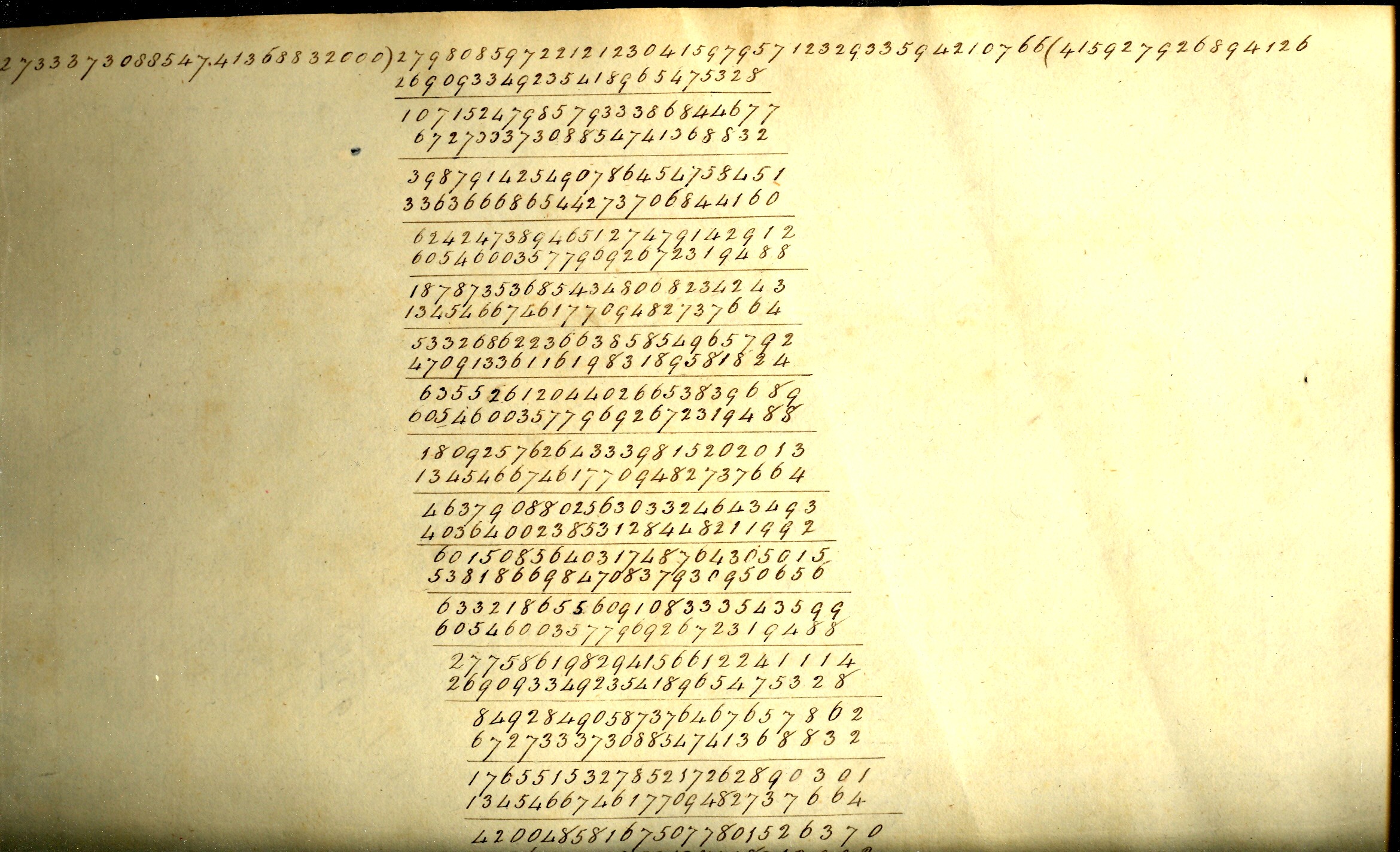
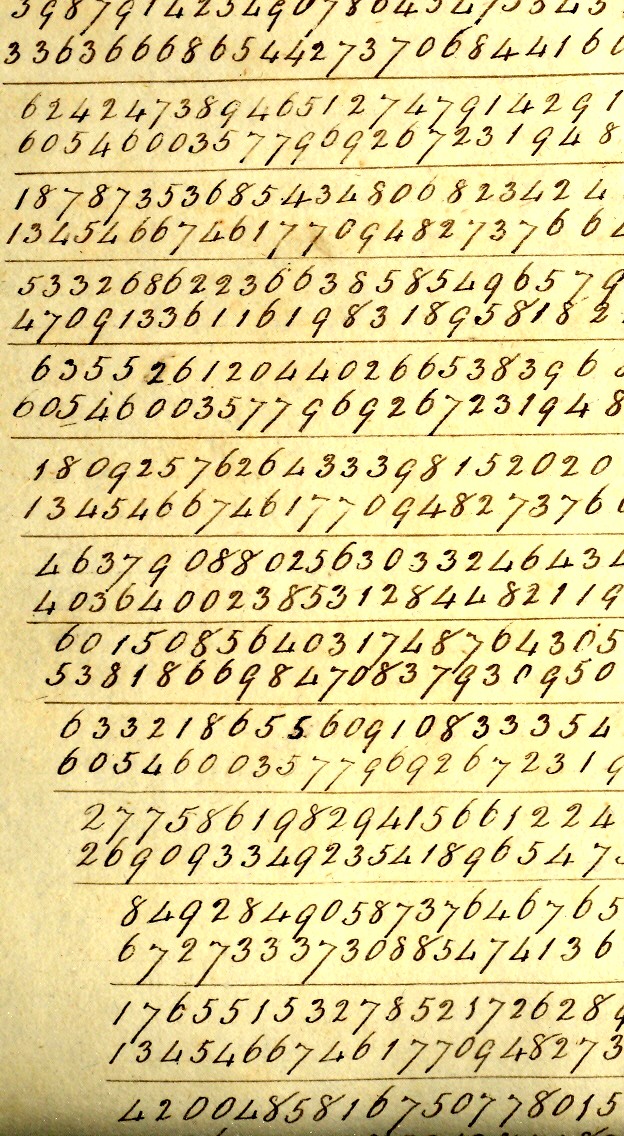
    The example I’ve reproduced here are from an anonymous (but dated 1818) work on different elementary areas of mathematics.  What makes this special to me is the precision of the penmanship and the extreme effort that is being used for a simple display of division.  It would certainly convey the message if the author had used two five-figure numbers to display division rather than these enormous, never-to-be-encountered numbers. 

    ++00++ 9.16 math string

    Surely there were pages and pages of scrap used to get to this point as the operator machined his numbers down, showing us the result rather than the real process.  But what is left to us in this effort is a thing of considerable beauty—the found art of practicing elementary math. 


  • Graphical Display of Quantitative Data: Anti-Submarine Warfare, 1973

    JF Ptak Science Books LLC  Post 661

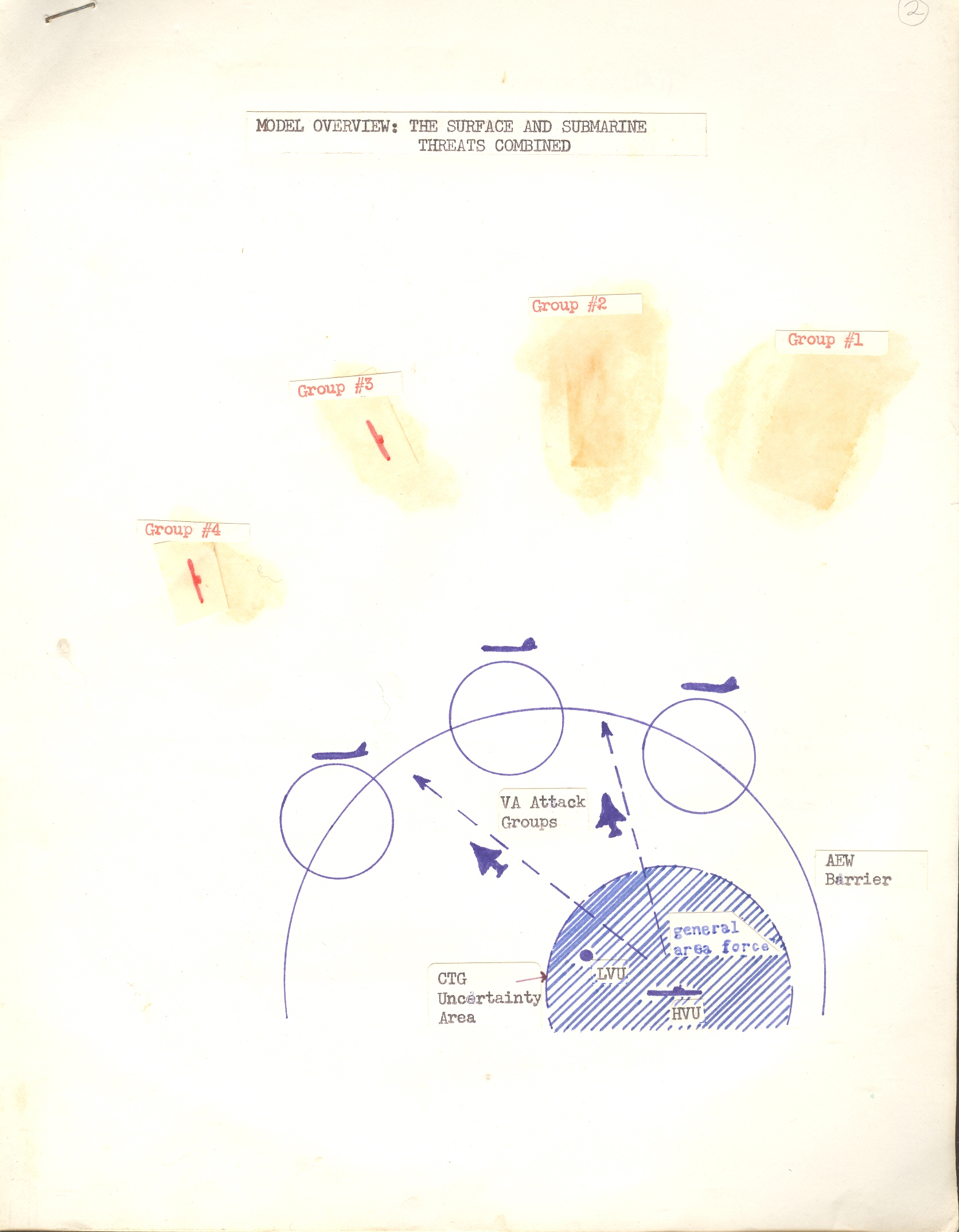
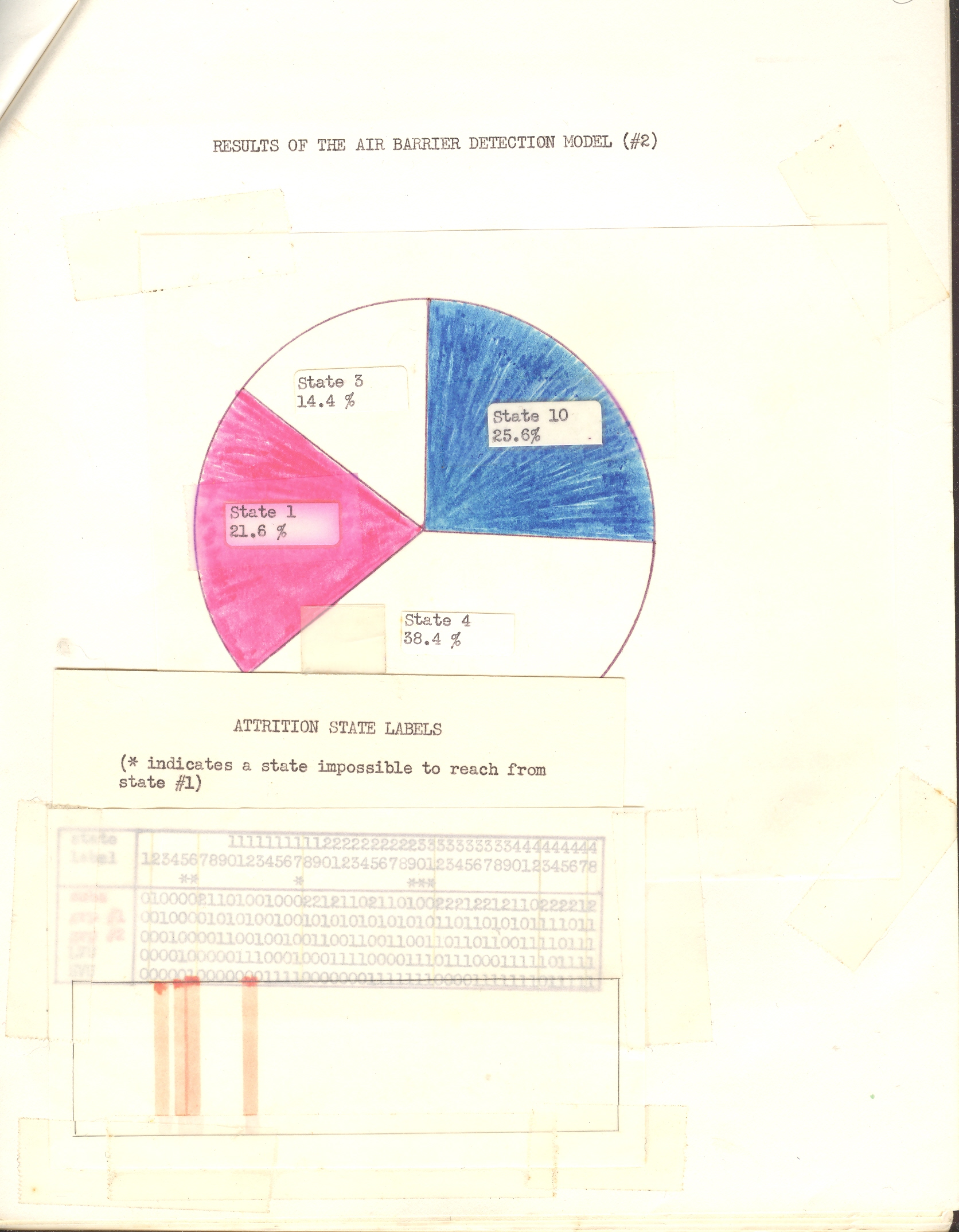
    These original sheets were, it seems, prepared for an illustrated (1973) talk on a statistical model for the detection of anti-submarine warfare threats—unfortunately I’m at a loss to distinguish much of importance here, though I’m sure that someone who is the least bit familiar with defense modeling and simulation would instantly and easily interpret theserelatively simple images.  I’m presenting them here because they are to me an example of excellent presentation, design and logic—a fine symbol for the presentation of graphical information in a pre-PowerPoint past.

    Blog--june 23 luster 1


    The work is that of [redacted], an analyst who seems to have worked in the 1960’s and 1970’s for the thinktank John D. Kettelle Corp of Alexandria, Virginia, a defense contracting firm.  (I’ve included titles  and abstracts of some of his published works in the “continued reading” section, below.)


    Blog--june 23 luster 3  

    These seem to comprise something like author/speaker’s notes for overhead illustrations for a presentation on a computerized system for the receipt and processing (and summarizing?) of tactical intelligence data on the enemy’s intent on locating and destroying submarines.

    What strikes me is the number of cut-outs and paste-ups and such that are part of each slide–every data point, and virtually every notation on each page has been pasted in.  There’s much more to this but these certainly give you a decent idea of the analyst/statistician/programmer/engineer bent over his desk doing surgery on his data. 


  • Hero’s Stairs to Nowhere: an Intolerably Small Look at a Great and Important Book

    JF Ptak Science Books LLC  Post 356

    000-ebay--Nov 1 heron978
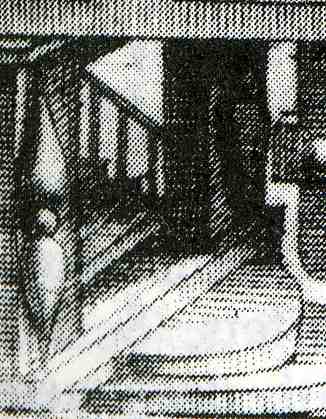
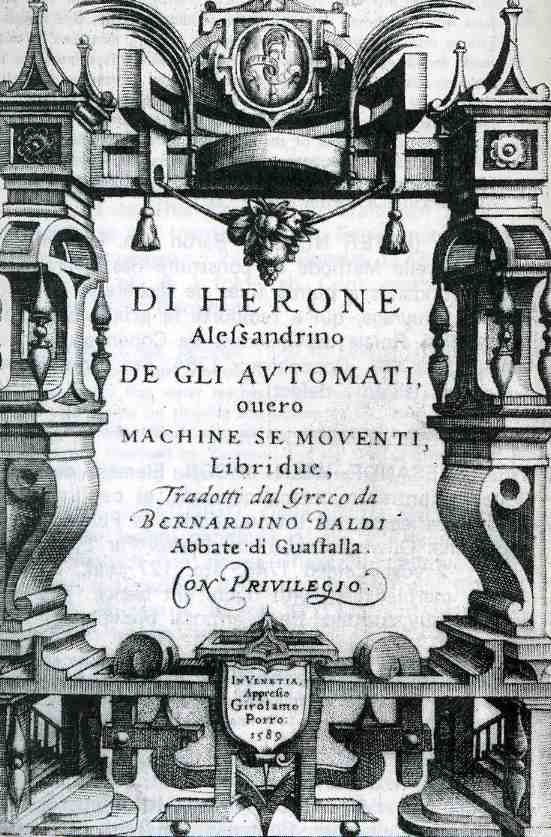
    And so here we have a gorgeous title page for the very first treatise on automata, and the thing I’m focusing on are the stairs in the bottom corners of the design, the stairs that go nowhere.  Maybe its just because of the seemingly flat effect of the perspective that they became so obvious to me, or the  subtle sense of a twisted two-and-a-half dimensions feel to it, the very Escher-y feel of complex, impossible and improbable dimensionality.  For example, the very pre-Baroque ornamentation of this very heavy title page construction seem to bounce between convex and concave, like the background and foreground change place somehow, as it the case of Escher’s trying to find a place between planes of two- and three-dimensional representation.  Although here I’m pretty sure the effect is unintentional; whereas in Escher, the effect is the aim of the art. 

    000-ebay--Nov 1 heron977

    The design and the printing of this large book was the work of the firm of Bernardino Baldi, of Venice, who published De gli avtomati oueri machine se moventi...in Venice in 1589, the original by Her/Heron of Alexandria, who lived ca. 10-70 ACE.   Hero was one of the most exalted of Greeks in the pantheon of ancient experimenters and scientists, an unparalleled inventor and producer of the earliest automatic and robotic devices. Have a look at  the illustrated link to Hero’s fabulous work called Penumatics (below).


  • Palpable Arithmetic: Feeling and Seeing Representations of Numbers

    JF Ptak Science Books LLC  Post 242

    Blog1sept_6_palpable_det516_2”
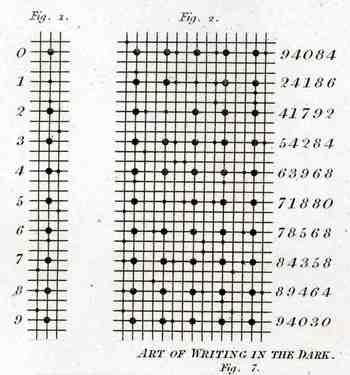
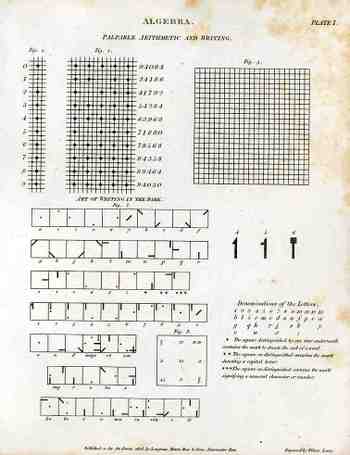
    Palpable Arithmetic”, the sub-heading for the sheet illustrating aspects of algebra for Abraham Rees’ (1743-1825) great if not problematic 45-volume Cyclopedia, is a system that  records and organizes and sometimes calculates using three dimensional objects.

    For example the Egyptians (for one) calculated with pebbles; then there was the ABAX of the Greeks, and the abacus (and also called the mensa Pythagoras) of the Romans (and of the Japanese and earlier still of the Chinese), the scaccarium of the English (via the Norman conquest), and innumerable other systems that performed arithmetic and recording and
    archiving functions via the employment of reeds, notches on a tree or cloth or stick (etc.), reeds, knots, fingers, beans,shells, string, sand, and on and on.  Palpable arithmetic also has a specialized meaning in places as a calculating device in which the numbers are recognized by touch and used by blind mathematicians or other parishioners. (Just for the record, there are a number of eminent blind  mathematicians including, for example,  Leonard Euler (1707–1783, who was blind in the last 17 years of his life), Nicholas Saunderson (who I wrote about in an earlier post), Louis Antoine (1888-1971), Lev Pontryagin (1908-1988.)) 

    An interesting and very large philosophical issue that comes up here with the blind mathemaitican is the concept of image formation and its dependence upon sight for intuition, as with geometry or topology.    Plato for one determined for himself that image formation issues were precognate and the same in sight and non sighted people.  How would you manipulate a geometrical form if you’ve never actually seen one, or how would you extend you spatial imagination of compex forms without a reference? 

    But my main issue here is the image from the hees book.  I’m by the meaning of this particular calculator or recording system–I just can’t tell what it is.  Can you?  If so I’d love to hear from you.

    Note on the Anthropology of Numbers:

    From Levi Leonard Conant’s The Number Concept Its Origin and Development we find these very descriptive definitions of words for numbers, all of which relate to the sort of implement that they were controlling
    their numbers with, or calculating:

    “in Javanese, Malay, and Manadu, the words for 1, which are respectively
    siji, satu, and sabuah, signify 1 seed, 1 pebble, and 1 fruit
    respectively. Words as natural and as much to be expected at the
    beginning of a number scale as any finger name could possibly be. Among
    almost all…the derivation of number words from these sources can constitute no ground
    for surprise. The Marquesan word for 4 is pona, knot, from the practice
    of tying breadfruit in knots of 4. The Maori 10 is tekau, bunch, or
    parcel, from the counting of yams and fish by parcels of 10. The
    Javanese call 25, lawe, a thread, or string; 50, ekat, a skein of
    thread; 400, samas, a bit of gold; 800, domas, 2 bits of gold.The
    Macassar and Butong term for 100 is bilangan, 1 tale or reckoning…”

    The full sheet from the Rees book:

    Blog1sept_6_palpable514_2

    ·Posted by :

    ·in:


  • Digital “Computers” 1450-1750: Memory and Calculating on the Fingers and Hands

    JF Ptak Science Books Post #81  (Expanded)

    Bloghands_memory072_2
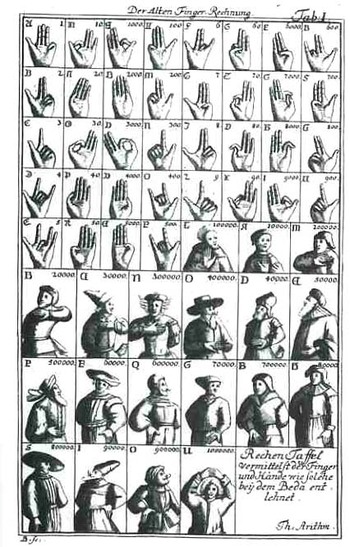
    These lovely images weren’t intended to show people living in the Renaissance and Baroque eras how to actually record data on their hands—they were intended rather as templates to show how they could use their fingers and hands for calculating and as memory devices.  Much like Frances Yates has shown us so beautifully in The Art of Memory and how info and data was stored in imagined and compartmental palaces in the mind (relying upon images), the hands were also used as a theatre of memory in addition to extended calculation. 

    These mnemonic devices were necessary—especially during the Renaissance—because of the general lack of and access to affordable vellums or paper and writing instruments.  Having notebooks filled with memoir or history of calculation was generally not something that was happening for even the not-wealthy but not struggling class.  These mental images were used widely in the areas of religion, palmistry, astrology mathematics, astronomy, astrology, alchemy, music, and other such fields. 
    Bloghands_big074_3

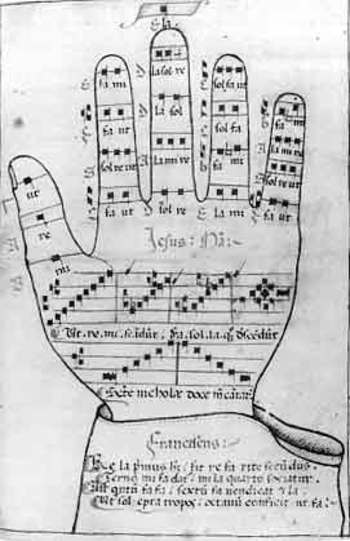
    The first image (from a German manuscript) of the hand-theatre was found and deciphered by Claire Richter Sherman (Folger Shakespeare Theatre) and is religious in nature, an intentional piece of memory for the devoted and for devotions.  The needs of religion were splayed out as the hand was opened and fingers flexed, and working from thumb to pinkie, from finger tip and joint—“do God’s will, examine  your conscience, repent, confess”, and so on, and above all be content with your lowly penitente stature.  If there were 28 of these admonitions or reminders at different points of the hand and you memorized them all, it would be a much simpler time to recall and keep them in order if you merely had to touch a part of your hand where that memory should be to invoke what it was you were supposed to do.  Therefore you could theoretically cast about with your creator with your hands in your pockets—if you had pockets. 

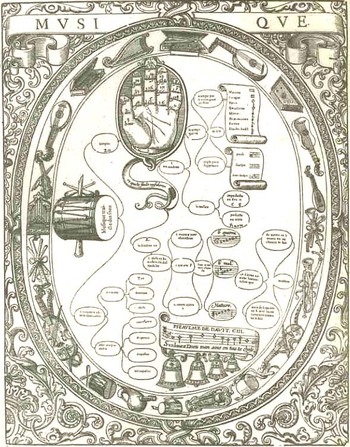
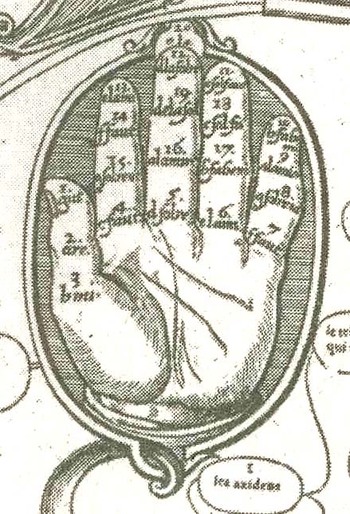
    The next two images (including the enlargement of the hand section) are from a work from 1587 entitled Musique and are attributed to John Cousin the Younger (1522-1597).
    The basic premise for this device—it seems to me—was to be able to order the different chords of 20 different instruments. 
    Bloghands070_2

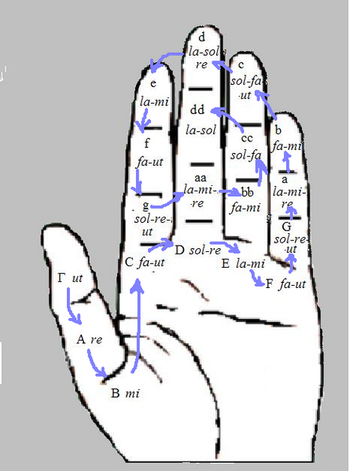
    Another musical hand mnemonic was the Guidonian hand, a survivor of Medieval times, and possibly named after Guido of Arezzo (a musical theorist), and was an aid to singers learning to sight sing.   

    The entry for the Guidonian hand in Wiki explains it use rather well:  “The idea of the Guidonian hand is that each portion of the hand represents a specific note within the hexachord system, which spans nearly three octaves from “Γ ut” (that is, “Gamma ut”) (the contraction of which is “gamut”, which can refer to the entire span) to “E la” (in other words, from the G at the bottom of the modern bass clef to the E at the top of the treble clef). In teaching, an instructor would indicate a series of notes by pointing to them on their hand, and the students would sing them. This is similar to the system of hand signals sometimes used in conjunction with solfege…”
    Bloghands_bodies071

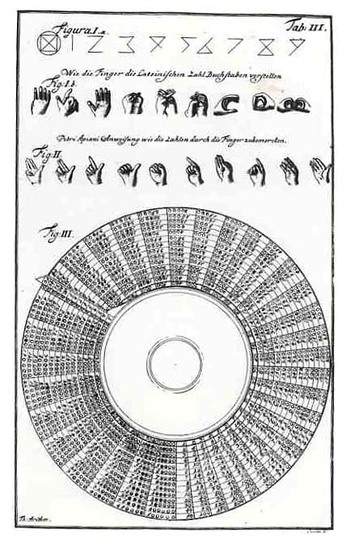
    The final two examples come from Jakob Leupold’s  (1674-1727) Theatrum Machinarum (1724)—this was a complex work involving nine sections and addressed the theoretical  aspirations of engineering (load, flexure, that sort) and its applications to its daily practitioners.  In one section of the book he sought to explain the connections (and correlations) of hand motion and symbolism to the origins of the number systems, carrying it out further still into body language, so that two people conversant in these symbols could talk and bargain between themselves in economic/body terms.  Barbara Maria Stafford, in her Artful Science, Enlightenment,

    Bloghand_guido

    Entertainment and the Eclipse of Visual Education (1994) points out the long history of this tradition, and that it reached far back into misty time:  Leupold knew that Appian, the Venerable Bede, and Aventinus had been fascinated by manuloquio, or natural language with the hands.  He thus linked counting to a global….medium of prearranged gestures…”

    Bloghandguido_2_2


    ·Posted by :

    ·in:

    — — —