A Daily History of Holes, Dots, Lines, Science, History, Math, Physics, Art, the Unintentional Absurd, Architecture, Maps, Data Visualization, Blank and Missing Things, and so on. |1.6 million words, 7500 images, 4.9 million hits| Press & appearances in The Times, Le Figaro, Mensa, The Economist, The Guardian, Discovery News, Slate, Le Monde, Sci American Blogs, Le Pont, and many other places… 5000+ total posts since 2008.

Category: Calculating

  • Drowning in Numbers–Arithmetical Harvesting by Monroe and Texas Instruments

    JF Ptak Science Books  Post 1704

    Monroe numbers lost detail
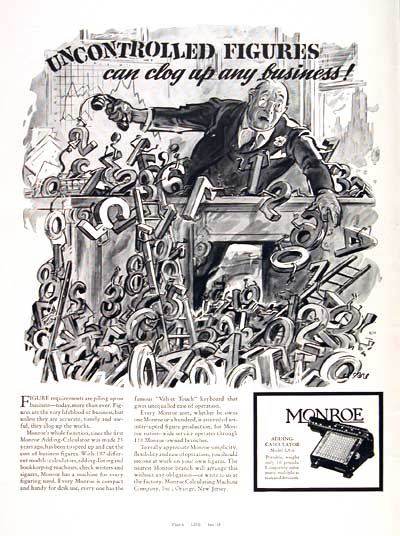
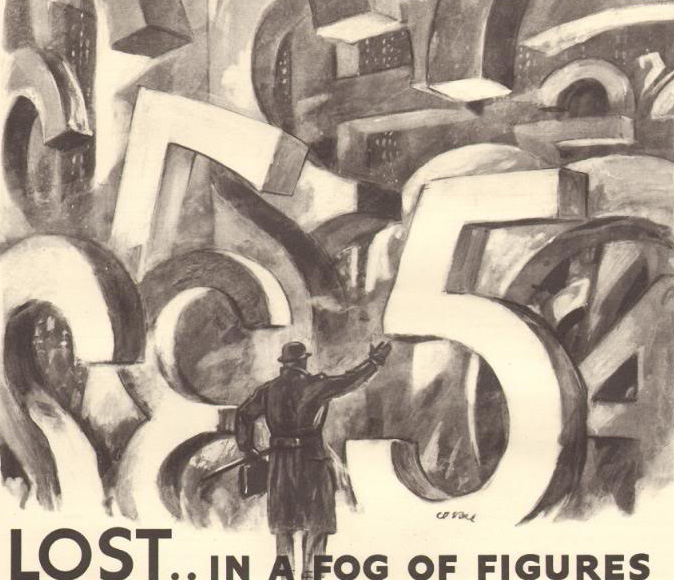
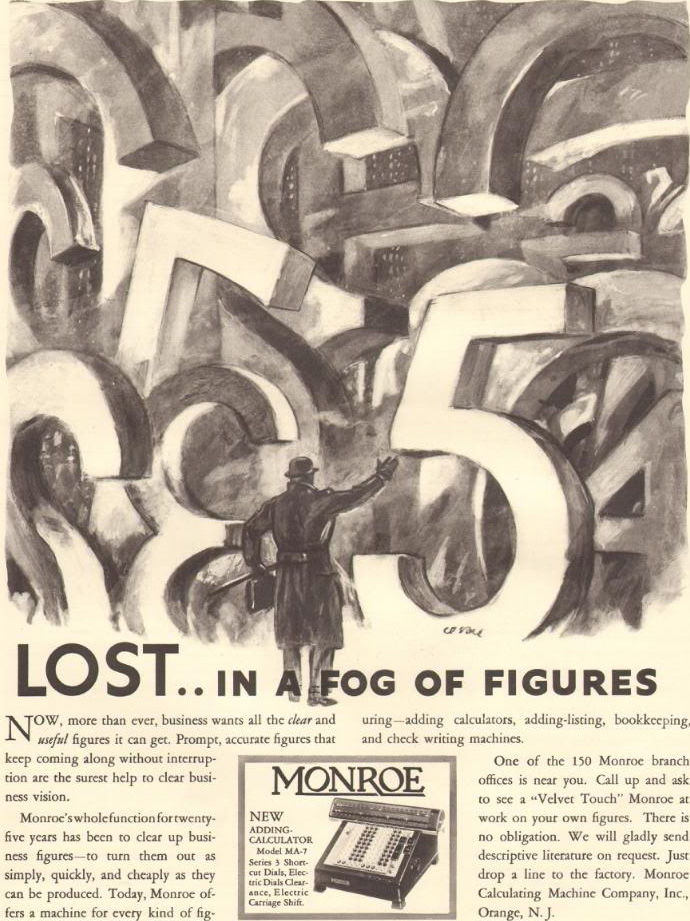
    Monroe numbers lostThe Monroe calculator must have seemed the same sort of inspired salvation to the 1930’s generation as the hand-held Texas Instruments calculator (with paper feed!) that I saw displayed in a glass-domed pedestal at Barnes and Noble in Manhattan in 1973.  Small, compact, and with fantastic calculatign capacity–and expensive.  It was in a very real sense a glimpse into the future.  For the general, garden-variety Monroe, it certainly offered its users a much smaller, tidier machine than some of the brutes of the decade or two preceding it–make no mistake, there were some big bruising accounting Monroes that were truck busters.

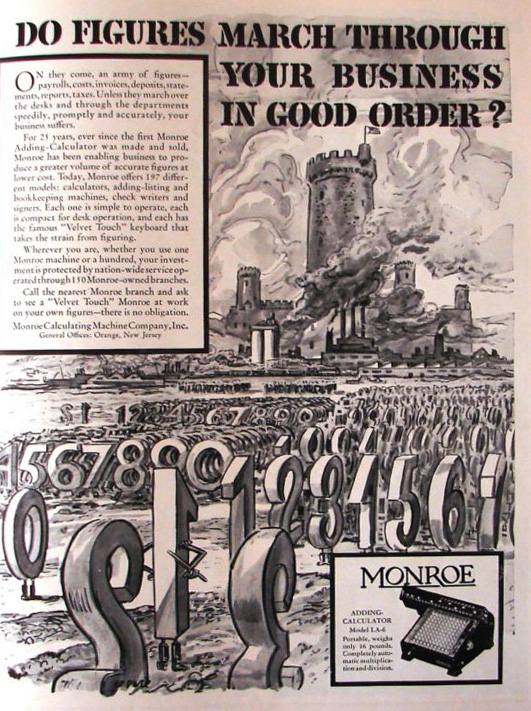
    But the Monroes that appeared in these ads from LIFE magazine in the late 1930’s Monroe calculatorwere certainly populist, and easily transportable.  And they cost about as much (with some smoke/mirrors adjusting for inflation and etc) in 1937 as the $450 TI  cost in 1973. (The TI machine was produced just seven years or so after its first hand-held was introduced–I’m unsure of the 450 price tag, though I think it about correct.  The TI SR-50 without a paper trail cost about $150 in 1974.)

    Monroe is an old company (begun in 1912) company that produced hand-cranked and electromechanical calculating devices.  The Monroe salesman’s handbook that I have here from 1929 shows versions of their machine that were lightweight and versatile (at 38 pounds) to behemoths for insurance companies that were truck-haulable.  Monroe became part of Litton before reappearing again on its own, trying to compete in the hand-held market with its own electronic display calculator–a device that cost $269 in 1972.  Monroe was basically “done” by the 1960’s.

    Monroe numbers marching det
    I think that for most people Texas Instruments is produced hand-held calculating devices–it is of course a vast concern, with a long history that gets catapulted during WWII when the formerly geology-based company gets involved in military electronics.  Fast forward, TI created FLIR and MERA, laser-guided control systems for PGMs (laser-guided bombs/precision-guided munitions), launch and leave glide missiles, and so on. IT was also involved in the earliest work in microminiaturization, producing (by Gordon Teal) the first commercial silicon transistor (1954) and the first integrated circuit (by Jack Kilby) in 1958. And so on.  Its a big, old company.

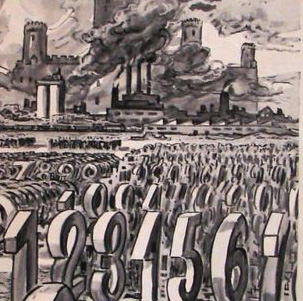
    And as much as each company was offering a similar god-send to their generationally-distanced mathematician/number cruncher, TI simply didn’t have ads like Monroe.  And I’ve always iked to see numbers-on-the-move.

    Monroe numbers marching


  • Bartleby the Computer, 1853-1957

    JF Ptak Science Books  Quick Post

    I was reading Computers and Automation tonight and found this lovely short story in the July 1956 (volume 5, no. 7) issue.  It is a short story written by Jackson W. Granholm (a biographical note on Granholm appears in the ACM notices  here) on the application of a supercomputer put to solving a very particular–and peculiar–problem.

    The story is called “Day of Reckoning”, and tells the tale of the ever-working, highly-dependable-indispensible SUPERVAC being readied to accept the end-all program, readied like the countdown to the launch of Apollo 11 to receive the question, hauling on board into his storyline the other professionals who read the journal for tech reports and info, trying to keep them in his boat with a sci-fi tale based on his own work experience on some big machine at Boeing.

    Finally, we see the question:  “Describe the detailed design of your superior successor!”

    Well of course the SUPERVAC had been working perfectly right up until this time, though with the problem submitted the computer began to behave erratically.  It works for 12 hours or so, blinking and flashing away, until at 10:35 pm the MULL light went out, the solution reached.

    “12 October 1957, 2230 PM PST, 0130 am GCT–PROBLEM 198BC12-XA–RECKON HAVE EXCELLENT POSITION HERE. NOT 2ISH RELINQUISH IT AT THIS TIME. THANKX. ROGER  — PDA**EM –OUT.”

    Overall, SUPERVAC “would prefer not to”.

    [The Melville short story can be found here.]


  • An Episode in the History of Bread Photography: Monumental Bread and Infographics, 1914

    JF Ptak Science Books   Post 1662

    Infographic999
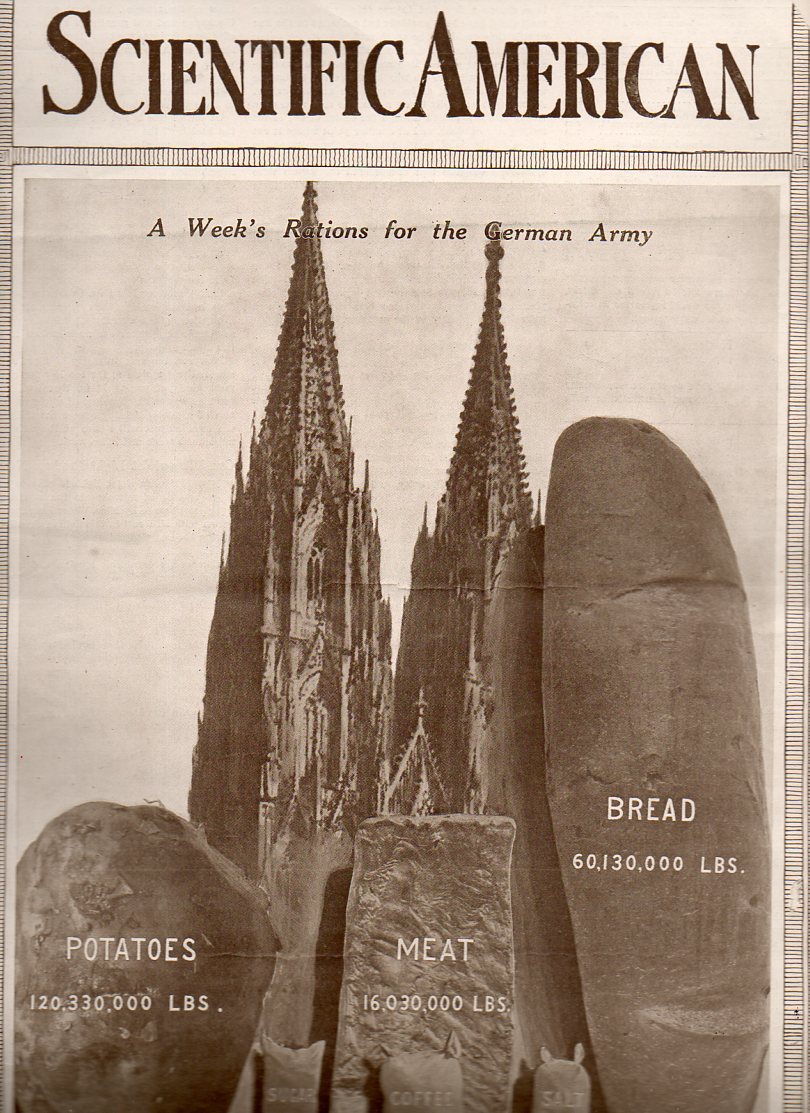
    In the history of pictures of bread, this loaf seems to be about the biggest.  The 60-million-pound loaf is meant to represent a week’s ration for teh newly-fighting German army.  The war, the Great War, WWI, was just beginning when this article hit the newsstands on 22 August 1914.  There wasn’t much yet printed in the Scientific American regarding the war, and it seems as though this was the first cover of the magazine to deal with the new world-ender.  But in the blazes of the guns of August (B Tuchman) the end of the conflict might’ve looked a little close at hand.  I doubt that many would’ve seen the 100,000,000 dead and wounded that would come as a result of the war, at this point just finishing its first month.

    I am not sure why, but the editors of SA chose to think about supply for their first stab at making a cover-comment about the war.  It does give some idea of the sheer numbers of people involved, at least on the German side.  Hoiw this is iterated by a 400-foot-tall loaf of bread, I can’t exactly say.

    (Are potatoes one tenth the density of :”meat”?  The potato sack and the meat chunk look to be about the same size, though the meat bit is less than a tenth of the weight of the potatoes.) 

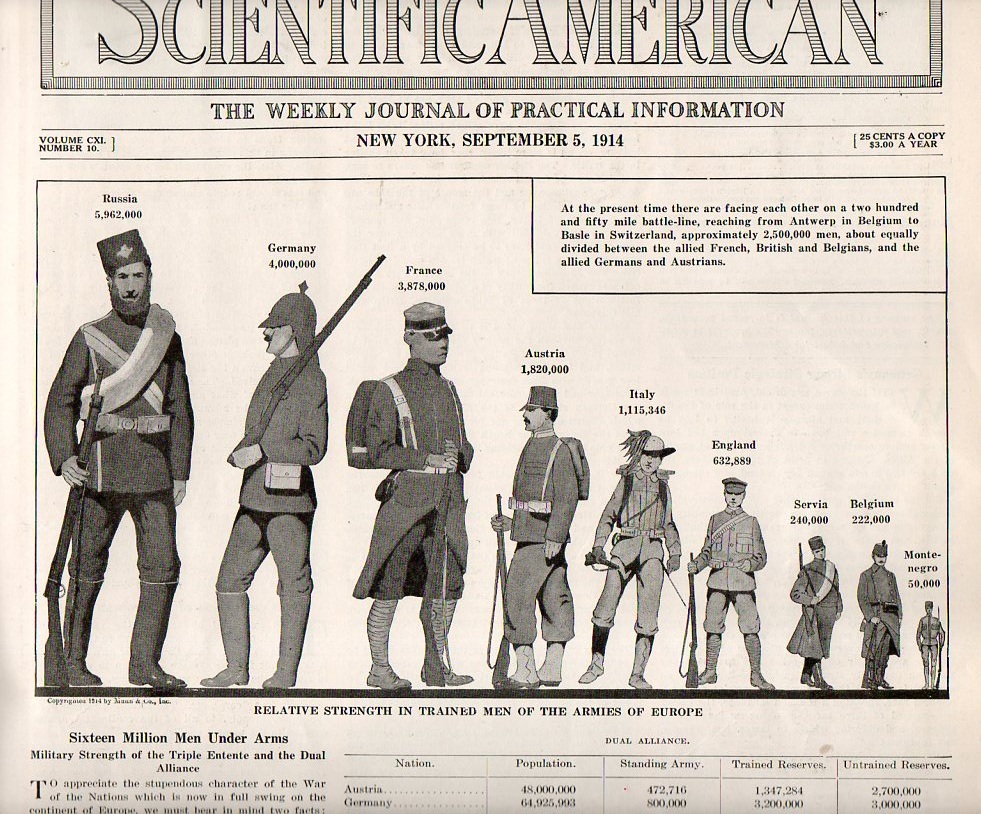
    Two issues later–5 September 1914–we see the following artistic display of quantitative data, a much more effective way of generating understanding on the differences in troop strengths among the waring countries:

    Infographic army size001


    The United States would not get involved in WWI until 1917, and so American statistics were not included in this image.  But if they were, the U.S. Army’s size would be somewhat larger than little Montenegro there at the far right.  Given the American population of 92,000,000, the army was quite small, with barely 98,000 soldiers under arms (half of whom served overseas). (Montenegro’s force of 50,000 was somehow pulled out of a population of 350,000 people–Belgium, with a population of 7 million, had an army more than double the size of that of the U.S.)  Of course this was a peacetime, hands-off army for the United States, and by the end of 1914 President Wilson expanded the standing army to 140,000; by 1918, when the newly-instituted draft1 really kicked in, more than 4,000,000 people would be in the armed services, half of whom would serve overseas. 

    Notes

    1. Beginning in 1917 all males between the ages of 21 and 30 were required to register for the draft/military service, and by September 1918 more than 23,000,000 men had done so.  This was an extraordinary leap from the Army totals for 1914.   


  • The First Personal Computer (?)–“Simon”, 1950

    JF Ptak Science Books  Post 1631

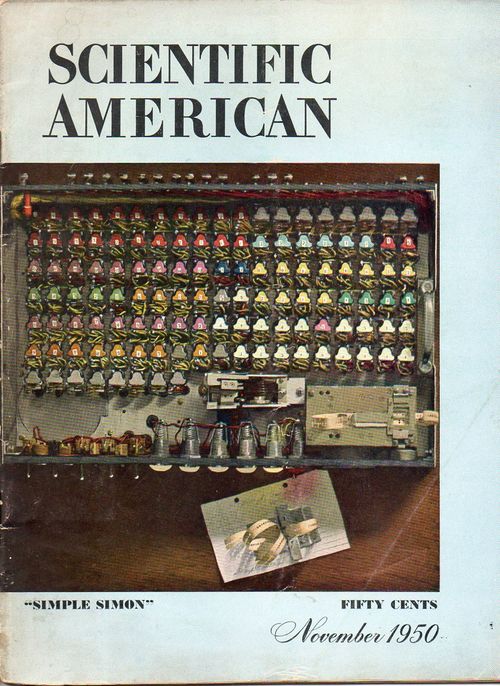
    Berkeley simon915
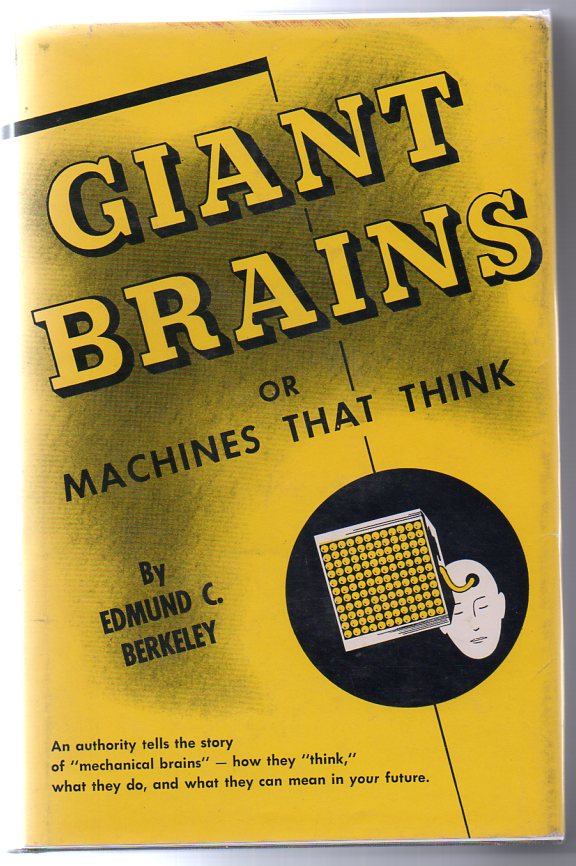
    The first exposure of the American public in general to a “personal computer” may have been in this issue of the Scientific American for November 1950–an article called “Simple Simon” by Edmund Berkeley.  ( Berkeley also wrote a book called Giant Brains, which seems to me to be the first mass-consumption book–written in terns for the general public–on how the computer works, and the design of “how a machine will think”.  Berkeley looks at the MIT Differential Analyzer #2, the Moore School ENIAC, Bell Labs’ General-Purpose Relay Calculator, and the IBM Automatic Sequence-Controlled Calculator.) 

    The Simon was a five-hole paper tape (which was its data entry and memory) 2-bit storage relay-based computer that could use numbers from 0 to 3.  It was extremely limited, but it worked, and it was real.  And affordable.  And a baseline for things to come.   [The original issue of the magazine can be found in our blog bookstore section, here.]

    Berkeley introduced the idea for Simon in Giant Brains:

    “We shall now consider how we can design a very simple machine that will think.. Let us call it Simon, because of its predecessor, Simple Simon… Simon is so simple and so small in fact that it could be built to fill up less space than a grocery-store box; about four cubic feet….It may seem that a simple model of a mechanical brain like Simon is of no great practical use. On the contrary, Simon has the same use in instruction as a set of simple chemical experiments has: to stimulate thinking and understanding, and to produce training and skill. A training course on mechanical brains could very well include the construction of a simple model mechanical brain, as an exercise…”–Edmund Berkeley, in Giant Brains, 1949, p. 22

    In the Scientific American paper Berkeley introduced the machine and how it functioned; he also described three  three outcomes for Simon:

    First: “Simon itself can grow.  It possess all the essentials of a mechanical brain…”

    Second: “It is likely to stimulate the building of other small mechanical brains.  Perhaps the simplicity and relatively low cost of such machines may make them attractive to amateurs as the radio set and the small telescope.”  [The “low cost” in 1951 was $600–equal to about $3000 today.]

    Third:  “It may stimulate thought and discussion on the philosophical and social implications of machines that handle information…”

    Berkeley finishes the three-page article with the following paragraph, looking into the not-too-distant future:

    “Some day we may even have small computers in our homes, drawing their energy from electric-power lines like refrigerators or radios … They may recall facts for us that we would have trouble remembering. They may calculate accounts and income taxes. Schoolboys with homework may seek their help. They may even run through and list combinations of possibilities that we need to consider in making important decisions. We may find the future full of mechanical brains working about us.”

    BERKELEY, E.C. (1950). Simple Simon in Scientific American, No. 183, November 1950, pp. 40-43.

    Giant Brains221


  • A History Blank, Empty and Missing Things #77–Blank Enumerators in Sand, Pebble and Dust Computers

    JF Ptak Science Books   Post 1512

    Reisch c
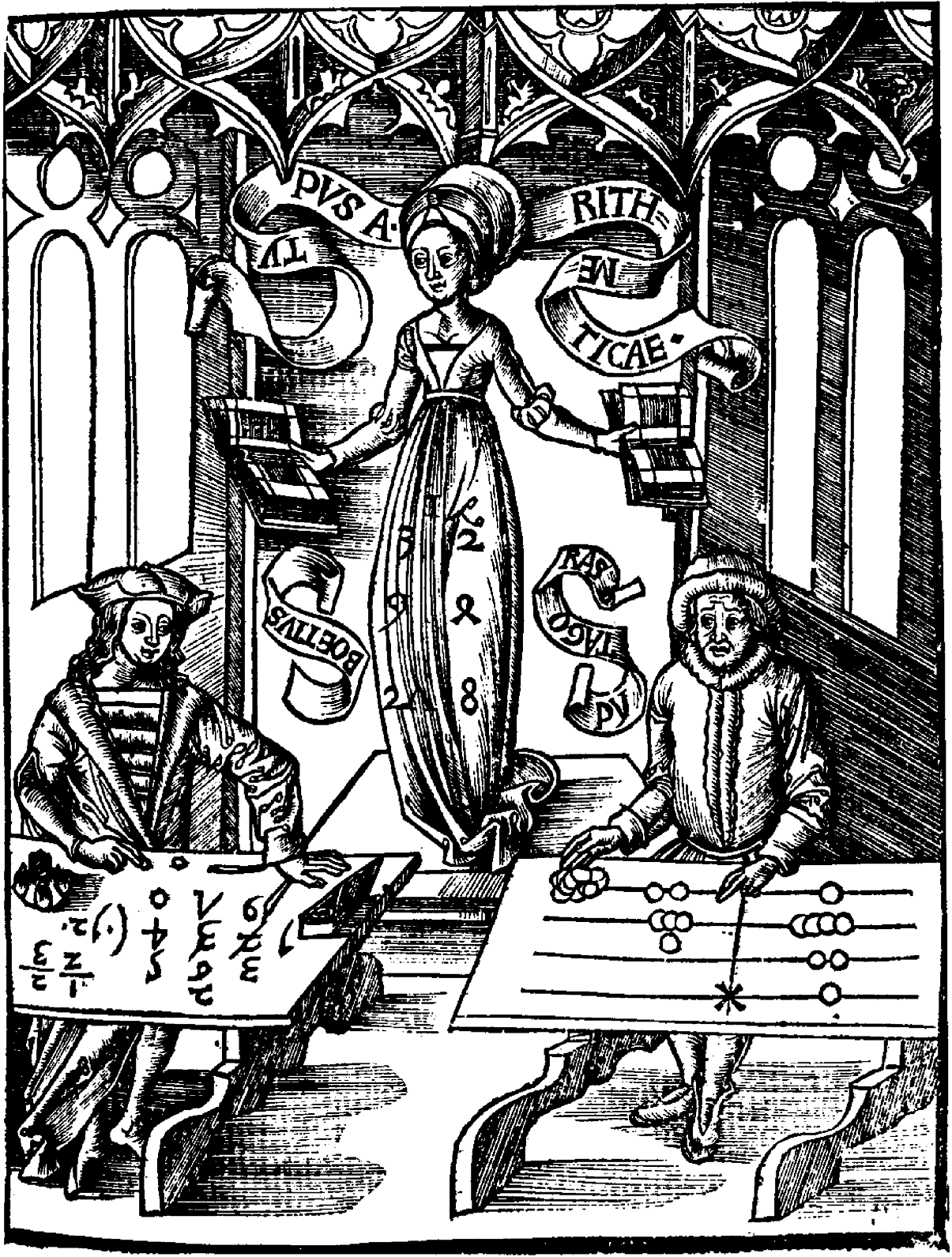
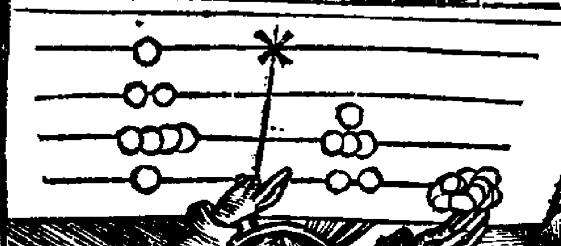
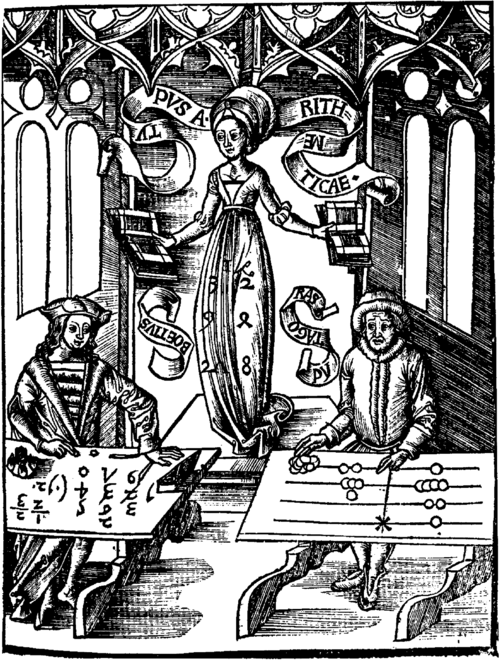
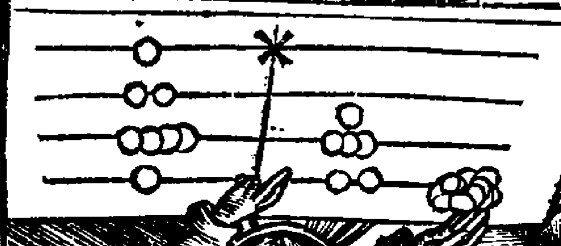
     This is a short note on the blank nature of the “checkers”, the place-holders, the missing numbers, of ancient computing machines,  the counters (jetton, or jeton1) used in early/ancient arithmetical reckoners, the material pieces used to aid in addition and multiplication “devices”. These bits were sometimes pebbles or shards of pottery or rocks, and placed on the ground with a grid drawn in dust, or in sand, or on any surface that could hold a line.  There are fancier and more permanent types of these instruments, as we see in the right side of this iconic woodcut image from a 1503 universal compendium of knowledge–a simple wooden table with incised counting lines, with the jettons being blank disks.

    The book that this  beautifully-illustrated counting board is found is in Gregor Reisch’s  Margarita Philosophica,  and depicts (amidst much else in the greatly humanist volume) representations of the mathematicians Boethius and Pythagoras working math problems on the given tools of their day. (The Reisch book is remarkable: it is basically a Renaissance encyclopedia of general knowledge, divided into twelve books:  grammar, dialectics, rhetoric, arithmetic, music, geometry, astronomy, physics, natural history, physiology, psychology,  and ethics.)  We can see in his expression that Boethius, on the left, is rather enjoying himself, knowing the superiority of his system of counting, which was the the Hindu-Arabic number notation–he definitely has a sly, self-appreciating smile on his face.  Pythagoras, working with the old counting table, definitely looks worried, or at least unhappy, unsettled.  Never mind that Pythagoras (570-495 b.c.e., none of whose works exist in the original, another sort of entry in our Blank History category) was at a definite disadvantage in the calculating department, being dead and all that for hundreds of years before the Arabic notation was more widely introduced in the West, probably being introduced by Pisano/Fibonnaci in the 12th century.  But it does fall to Boethius, the smirker, to have introduced the digits into Europe for the very first time, deep into the history of the Roman Empire, in the 6th century. 

    The numerical stand-ins in the Reisch book with which Pythagoras worked were blank, coin-like slugs used as placeholders, and would be used in place of rocks or pebbles or whatever other material was at hand. It is interesting to note that the Latin expression, “calculos ponere”, which basically means “to calculate”or “to compute”, is more literally translated into  “to set counters” or “to place pebbles” (upon a counting board) or to set an argument2,  which is exactly what some of the Roman daily reckoners would do at their work. And also used, in this case, by the unhappy Pythagoras. 
    Reisch

    Here’s a small close-up of the blanks:

    Reisch b
    The problem that the Pythagoras-person was working on (flipped 180  degrees) shows him adding the numbers 1241 and 82.  A jetton occupying the the top of the mark on the counting board, counting as one unit of 1000; followed by two units of hundreds; four tens; 2 on the ones.  The other number interestingly keep one jetton in between two lines, signifying an easy wade of enumerating 5 of any one kind, in this case depicting 8 tens units, coupled with two ones., thus making the number 82.)
    Reisch d

    For an excellent explanation of the many and varied methods of ancient calculations see the article by Steve  Stephenson3 on how ancient computers worked, found in the IEEE Global History Network site,  here. 

    It is a simple observation, but interesting to me nevertheless, that there was so much about these early counting systems that even though extremely useful they were also highly ephemeral–the counting boards being  inscribed in dust or sand or dirt, the counters/numerical placeholders being blank disks or pebbles or pottery shards–and so so much of the counting world depended on so little.

    Notes

    1. I should point out that these markers seem to have been decorated more often than not–its really just those items that appear in the Reisch book that I am addressing.   On jettons, in general, see here ;  also,  Jetons, Their Use in History.

    2. See Jen  (1998, April 25). “Roman Counting Instruments”, in The Math Forum at Drexel University. Also see Karl Mennigner’s  (1969) Number Words and Number Symbols: A Cultural History of Numbers, a big, academic/coffee table book on the history of numbers.  Also in general, see: Barnard, Francis Pierrepont, (1916). The Casting-Counter and the Counting-Board, A Chapter in the History of Numismatics and Early Arithmetic. Oxford University Press, London.

    3. This is a deep and nicely-explained effort looking at the development and different sorts of these instruments, as well as how they functioned.  Regarding the Reiwch woodcut, Stephenson says:

    1. Pythagoras has his abacus oriented with a vertical median line;
    2. The lines are equally divided so the same number of jettons can be accommodated on either side of the median line;
    3. The top horizontal line is marked with an X, (perhaps) to indicate the unit line; and
    4. On the right side of the abacus is a jetton in a space, all other jettons are on horizontal lines.

    On pp.313-314, Prof. Barnard describes and quotes from Legendre, François, 1753. L’Arithmétique en sa perfection, Paris, pp. 497-528, Traité de l’arithmetiqué par les jetons:

    It was permissible to set and to work the jettons of the sum without using the spaces [between lines], … But it was much more convenient to anyone who was expert at the practice, and less confusing to the eye, to reduce the number of jettons by using the spaces.
  • Standardizing Precision and Beautiful Technical Prints: Ramsden’s Dividing Engines

    JF Ptak Science Books   Post 1452.223221 and a quarter

      Ramsden386

    I like the idea of having something called a Dividing Engine–perhaps it would divide seeds, or complex problems, or simple problems, or perhaps it would divide division. 

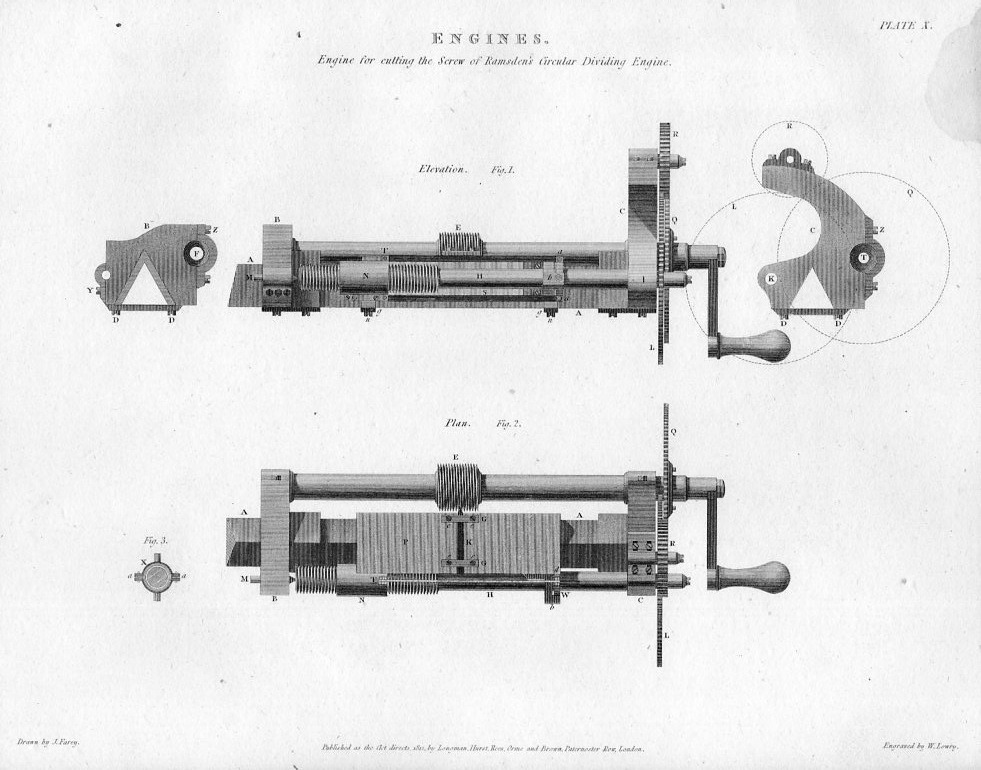
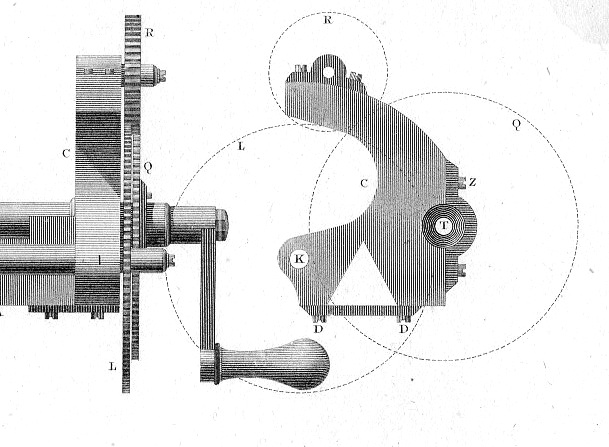
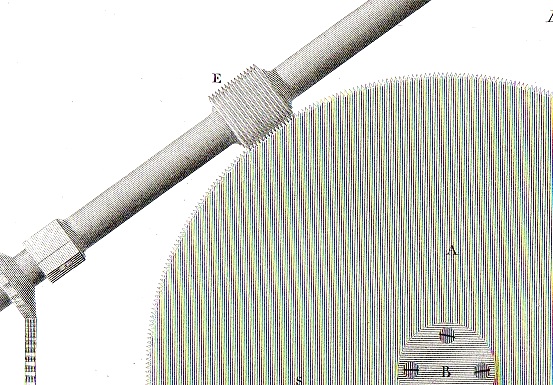
    What it really refers to here is a precision tool that whose effects were extremely wide felt but about which we don’t really hear about today.  This is the dividing engine of Jesse Ramsden,and Englishman who invented a circular instrument that would incise precise values on precision instruments like surveying compasses, delineate the linear and circular scales of measuring instruments used in astronomy and navigation,   Before Ramsden, the engraved marks on instruments would have been made by each individual manufacturer, each of those depending on marks that they made in the past, generations of such things in a line, over and over, a quite individualized effort, necessarily dependent upon the precision of each manufacturer. In 1777 Ramsden produced an instrument1 of exception precision that was correct and fine and dependable2. [The image above was found in Abraham Rees’ monumental Encyclopedic Dictionary…, and is entitled “Engine for cutting the screw of Ramsden’s Circular Dividing Engine” and was published in 1814.  Below is a detail of the plan for the winding of the gear works. In order for his machine to work at such a high degree of accuracy the component parts must also have been of a very high calibre–to that end Ramsden developed what is essentially the modern screw cutting lathe from which he manufactured the gear works for his Straight and Circular Dividing Engines.3]

    Ramsden387
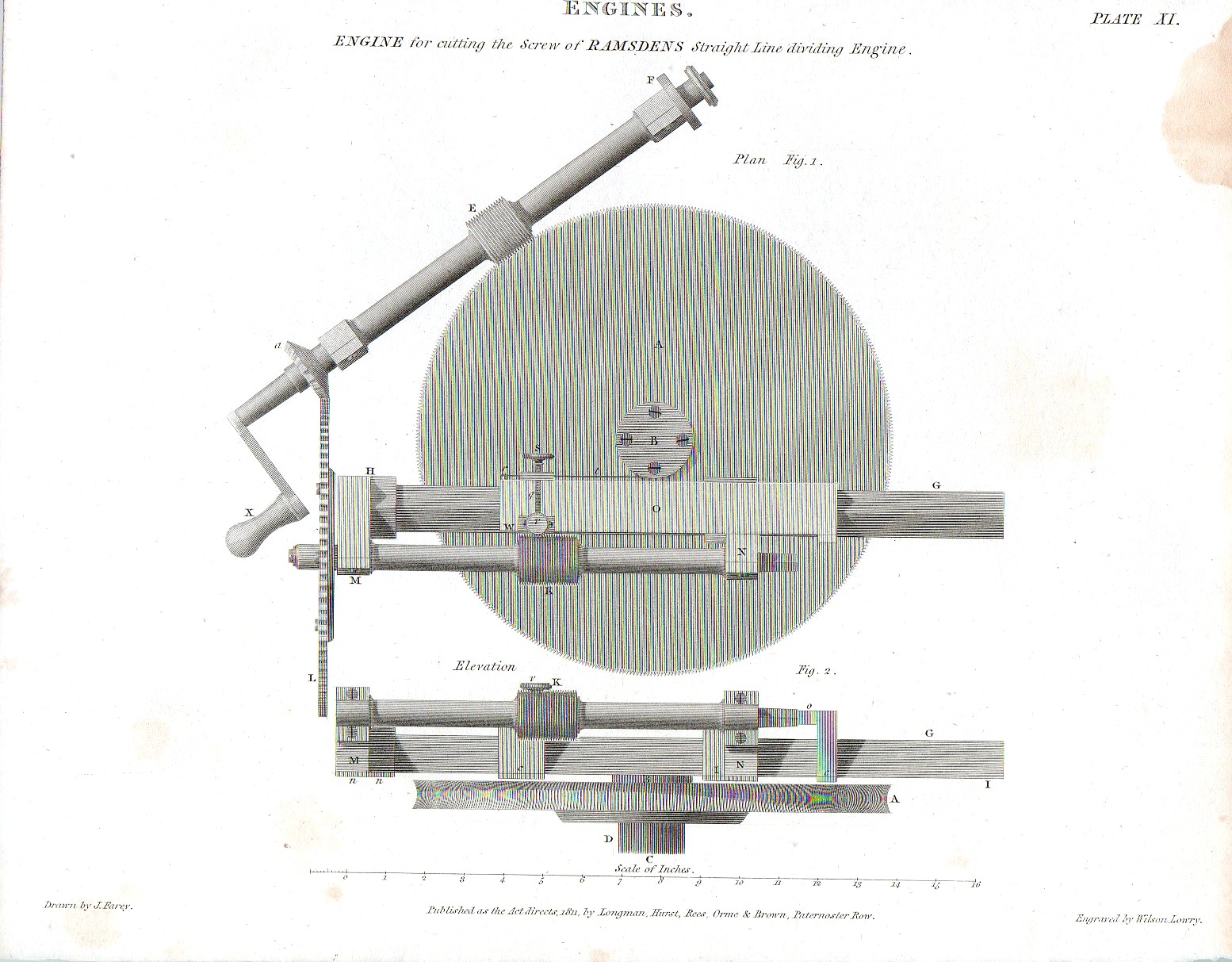
    And then there was the “Engine for cutting the Screw of Ramsden’s Straight Line Dividing Engine”, which is an absolutely gorgeous piece of drawing.  A person could crawl all over this image in varying degrees of microscopic inspection and find all sorts of beautiful internal images, a large example appears here:

    Ramsden388

    And its fantastic detail:

    Ramsden389

    Basically though Ramsden’s inventions were key additions to the developing scientific technologies of the Industrial Revolution, integral improvements necessary for integral improvements. 

    Notes:

    1.  He published a Description of an Engine for dividing Mathematical Instruments in 1777.

    2. “The dividing engine was simple to operate. The instrument being divided was fixed to a large wheel on top of the engine. When the treadle was pressed, the wheel and the instrument were turned through a fixed angle. Then with the right hand, a cutting tool guided by a system of swinging links was used to mark the instrument scale. The process was repeated until the complete scale had been divided. Although this was many times faster than hand-dividing, it was backbreaking work having to lean over the engine to work on a small instrument.”-“Dividing Engine.” Smithsonian National Museum of American History. americanhistory.si.edu/collections/navigation/object.cfm?recordnumber=694508

    3. From WIki–“The first truly modern screw-cutting lathe was likely constructed by Jesse Ramsden in 1775. He appears to have been the first person to put a leadscrew into actual use (although, as Leonardo’s drawings show, he was not the first person ever to think of the idea), and he was the first to use diamond-tipped cutting tools.[2] His device also included a slide rest and change gear mechanism. These form the elements of a modern (non-CNC) lathe and are in use to this day. Ramsden was able to use his first screw-cutting lathe to make even more accurate lathes. With these, he was able to make an exceptionally accurate dividing engine and in turn, some of the finest astronomical, surveying, and navigational instruments of the 18th century.


  • The First Photo Inside of the Information Revolution–the Transistor, 1949

    JF Ptak Science Books  Post 1370

    Transistor 066

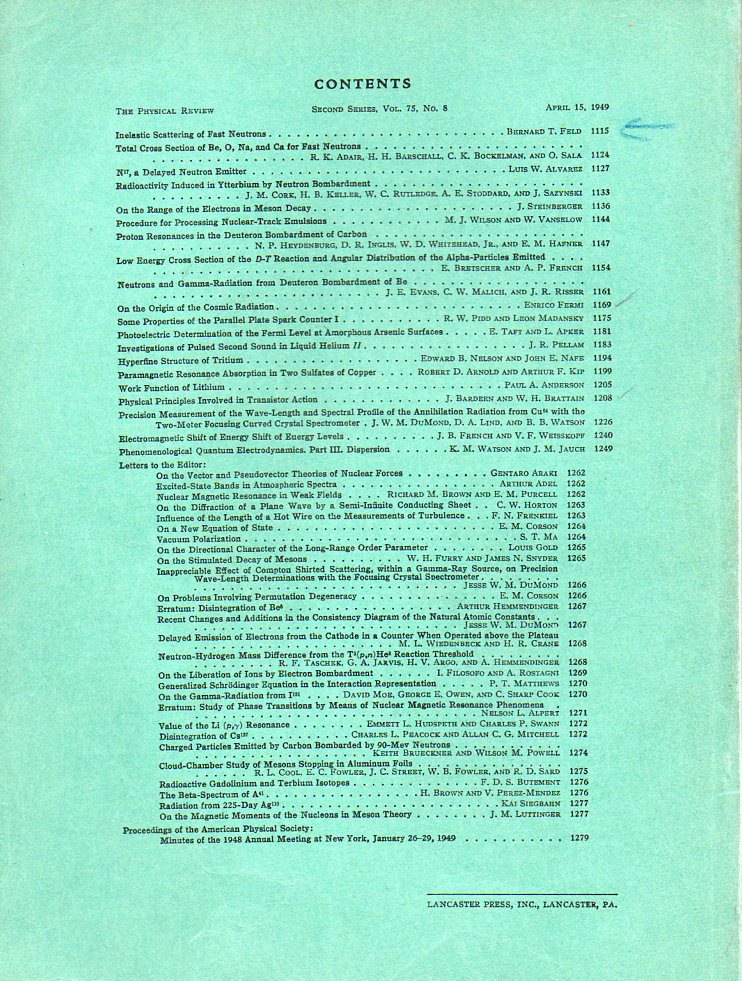
    One of the things I love about working my way through old scientific journals is when I find the issue that I’m looking for and scroll down the list of contributors to find the significant article that I want.  Long list, usually; and then, after making my way through 30 or 40 lines of tight type of the index I find it. [This by the way is one of those experiences that is being replaced by the digital library.]   Even though the paper on pp 1208 through 1226  of the 15 April 1949 issue of The Physical Review looks like any other, it is today seen as revolutionary. The entry for “Physical Principles Involved in Transistor Action” by John Bardeen (two-time Nobel in physics) and Walter Transistor 064 Brattain (Nobel ’72) shows up about halfway down the index, sandwiched in some very good company (Enrico Fermi’s “Origins of Cosmic Radiation” and a number of others), and does not show up bolded, or highlighted, or with an asterisk.  Such is the nature of publication in the academic journal world, everything delivered with equal weight. (The original publication is available for purchase here at our blog blookstore.)

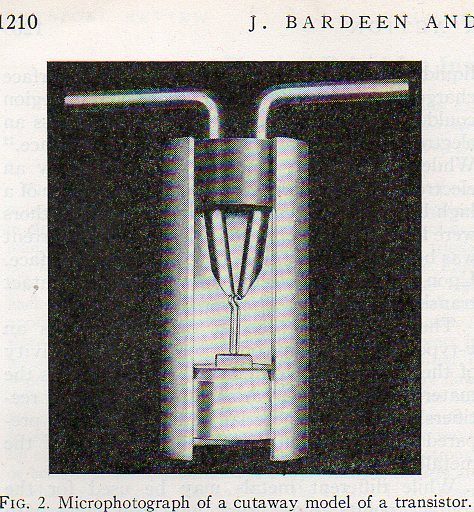
    It makes me wonder though how it would’ve felt to open this journal for the first time back there in mid-April ’49, turning to page 1210 to see the microphotograph of the cutaway of a model of the transistor.  This was the defining technical publication on the transistor1, which was the first massive step towards microminiaturization and the explosive new growth in the computer, allowing far more powerful machines to be designed in far less space, in far less amounts of time, and on and on.  It is one of the first steps in the Information Revolution, moving the computer from massive racks of electronic tubes to more simple, elegant, nimble and by-far faster circuit boards with transistors (and resistors, capacitors, inductors, diodes, etc.) to make an electronic circuit.  This would be the standard for computer construction, only supplemented by Jack Kilby (TI)  and Robert Noyce (Fairchild Camera) in 1958/9 with the integrated circuit, where transistors are made smaller still and produced in groups on circuit boards rather than individually.

    The photo above shows a cutaway of the transistor, and is the first time it was published–the first photo of what was one of teh 20th century’s greatest inventions. 

    Transistor 065

    Notes

    1.  The paper was published simultaneously in the Bell System Technical Journal; Bardeen and Brattain were with the Bell Labs.  The Bell journal also contained another revolutionary paper in the same volume, Claude Shannon’s “Communication Theory of Secrecy Systems”, which is one of the most important early papers on electronics and cryptology.  (We also have a copy of this classic paper for sale at our blog bookstore site.)


  • Selling and Costing-Out Digital Computers, 1959–When “Computers Didn’t Sell Themselves”

    JF Ptak Science Books   Post 1296

    “Computers do not as yet sell themselves.”–Lehman, 1959

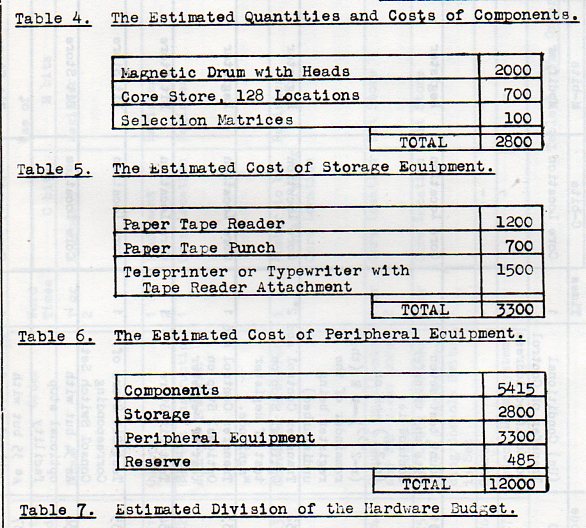
    Computer--lehman223 Question:  what had 1000 transistors, 5000 diodes, 2000 resistors and 1000 capacitors, a team of ten and took 18 months to build?  

    Answer: an inexpensive, $12,000 digital computer in 1959.  

    Mind you this is legions better than what was happening in the mid-1940’s, with teams of hundreds and costs in the many millions, and much better than in the early 1950’s, when these numbers were of an order of magnitude greater.

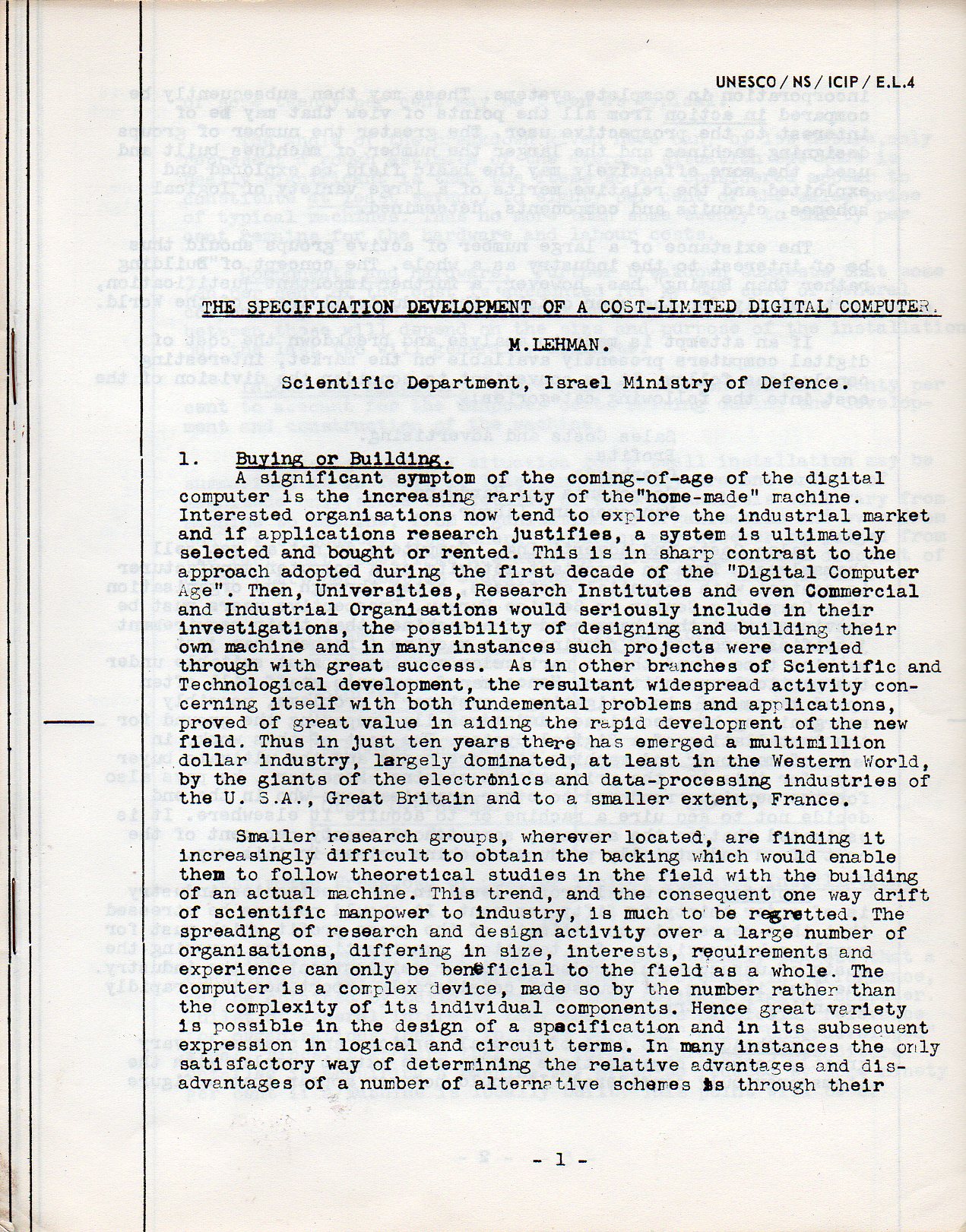
    It seems to me that this short 1959 paper is at the upper end of a beginning concern–costing -out the price of a digital computer for second-tier interests.  “The Specification Development of a Cost-Limited Digital Computer” (by M. Lehman of the Israeli Ministry of Defense, and available here for purchase) was written for those businesses and schools with a definite low-end budget, the upper range of which was set by Lehman at $12,000 for “peripherals, hardware and programming  (or about $125,000 in 2010 dollars, sort of1). This figure was also exclusive of maintenance outside of the cost (at 15-20% of the construction costs overall) of designing and building the machine.

    This was some new thinking on providing lower-cost digital computers to a new market:  “in just ten years there has emerged a multimillion dollar industry largely dominated….by the giants of the electronics and data-processing industries…”.  Lehman was saying that there was a new opportunity for business to supply computers to “smaller research groups” who were “finding it increasingly difficult to obtain the backing which would enable them…to build an actual machine”.  There were other ways of doing it, and Lehman laid out the basic understanding of that procedure.  

    Lehman’s leading quote for this post was accurate–computers needed to be “sold”, as in salesmen and businesses actively engaged in contacting clients who would (“might”) benefit from having computeriaed part of their business. The computer manufacturer’s “staff will often spend many months investigating customer’s problems, possibly reorganizing his techniques and generally preparing teh ground for the installation of a Digital System…”

      Computer--lehman224

    (The figures in the right column are indeed dollars.)

    Lehman was doing some groundbreaking work here at the end of the ’50’s, still far ahead of the time–and probably a full generation–where computers didn’t necessarily have to be shown as being ‘needed” let alone
    “necessary”.  The computer would be “selling itself” on the low-end of the market soon enough, but really not until the Reagan years when it was beyond question that the computer could be used by virtually any person or business–at affordable rates.  

    Notes

    1.  Sort of, indeed.  Straight CPI translation would put this figure at about $125,000, but the other cost of things in 1959 compared to 2010 is a different structure.  Sure, it might cost out to 125k, but that $12k in  1959 could’ve been traded for a decent working-class house in a big city; you couldn’t trade that $125k for the same thing today, no way, no how.  


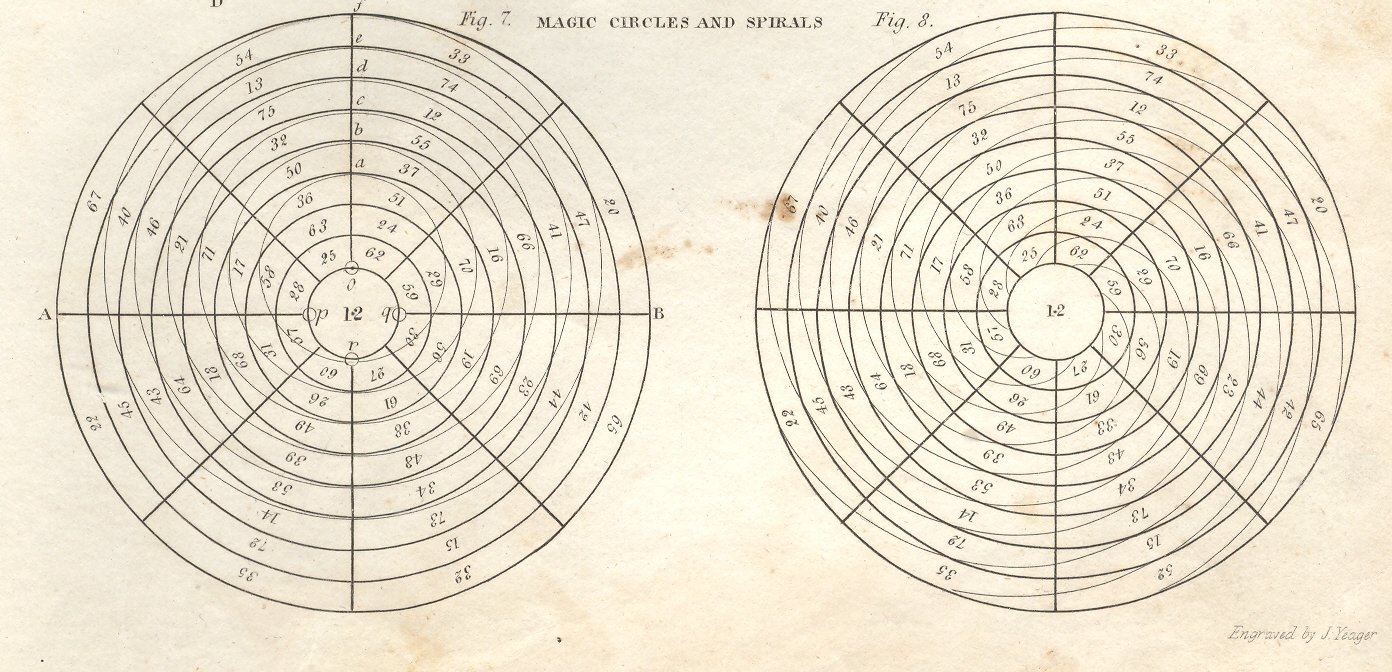
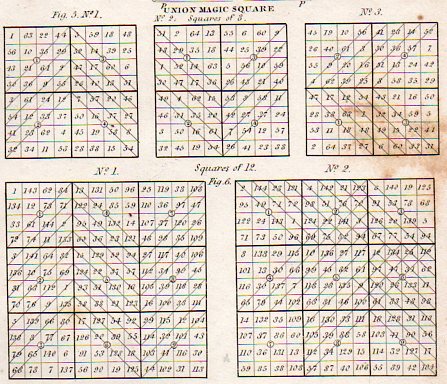
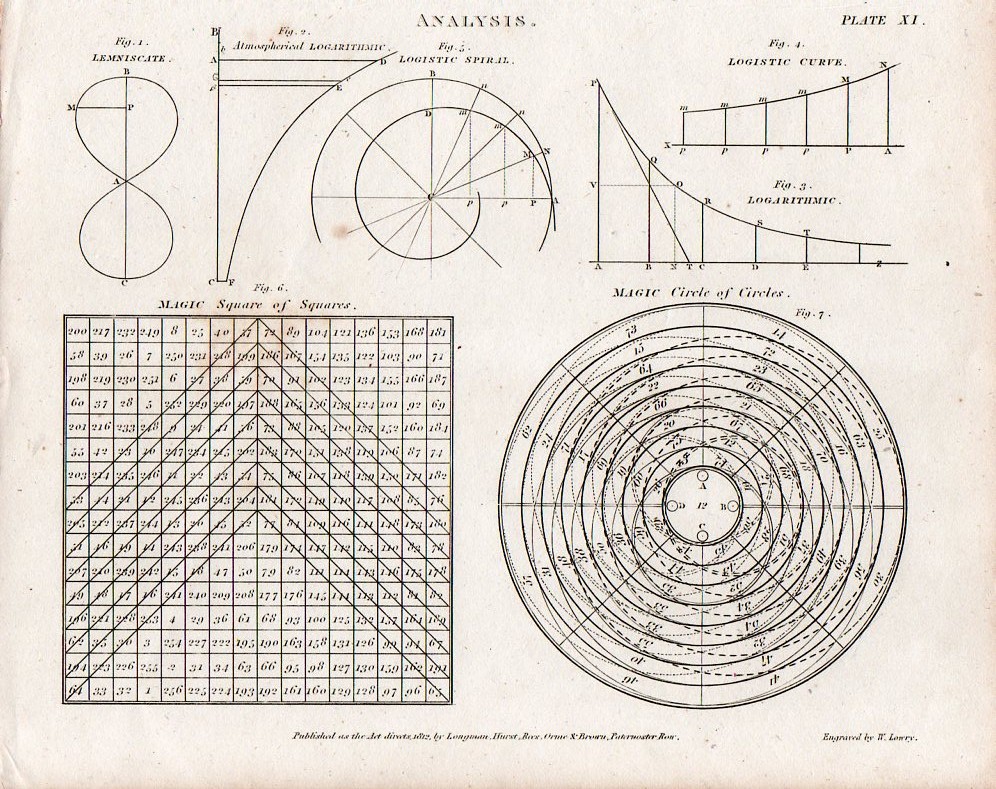
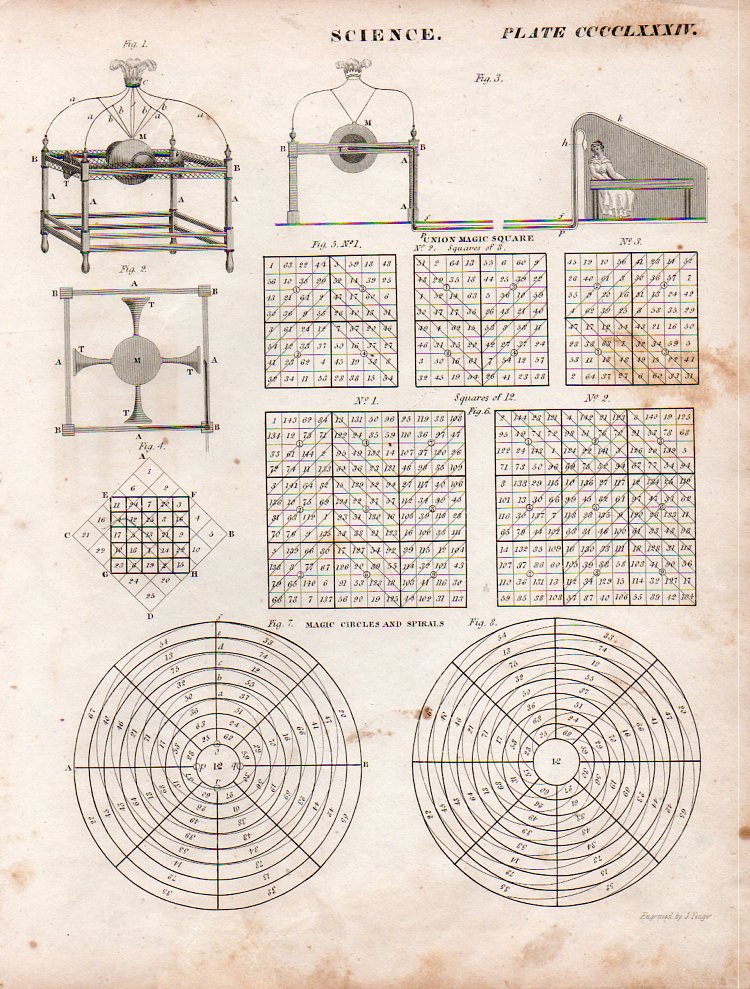
  • Logic Trees, Magic Squares, Magic Circles and Magic Square of Squares

    JF Ptak Science Books LLC  Post 1238

    [Associated posts: The Mother of all Renaissance Logical Graphs, The Knight’s Tour, Porphyry and Boethius and Census Art and the Display of Quantitative Data, 1860.]

    Magic square and circles det sq881
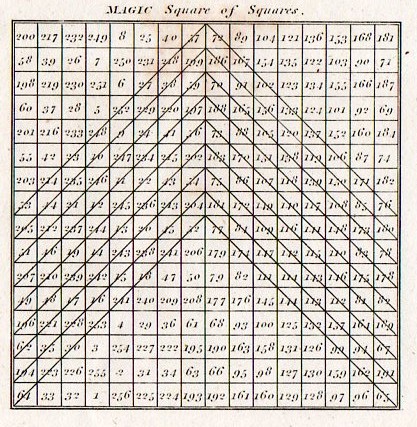
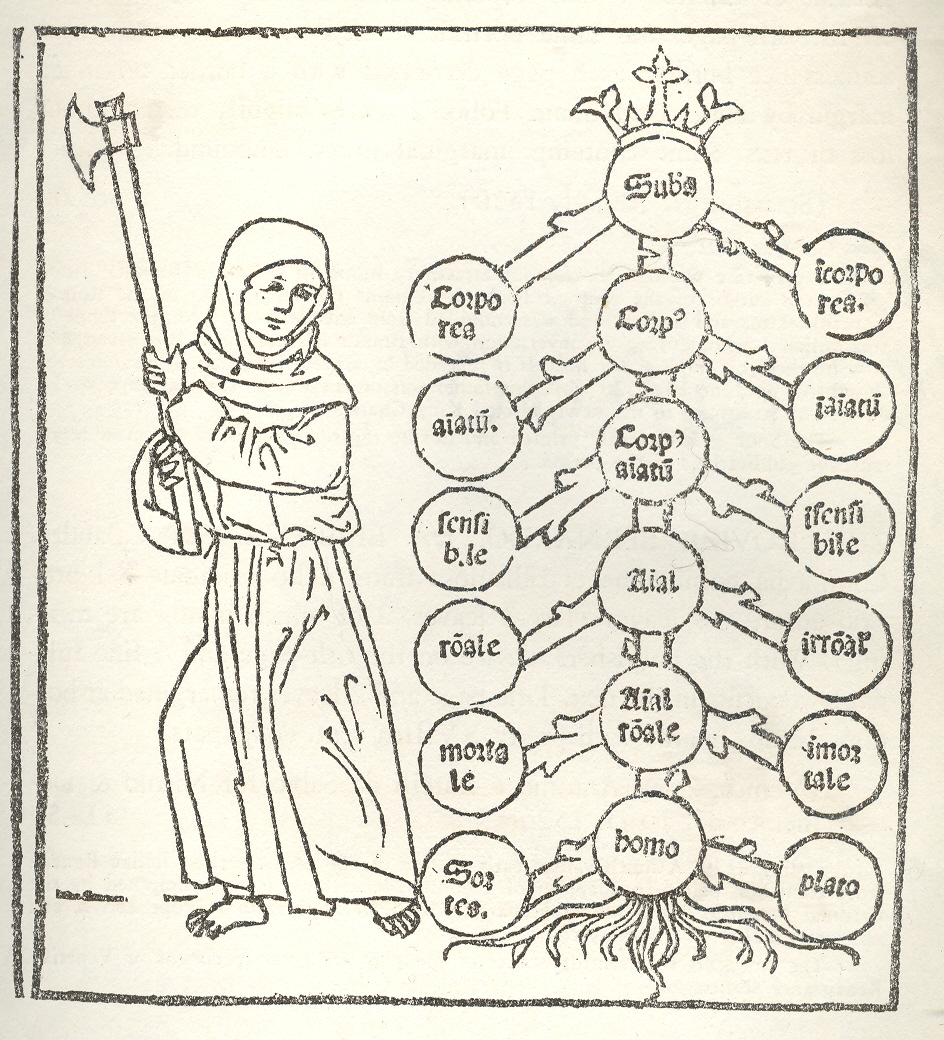
    Well now:  I don’t know what the provocation or inducement is here to hurtle this axe-swinging monk to attack Porphyry’s Tree1, though it would be interesting in a forensic sort of way to know what the tree’s section might reveal. The “tree” was a diagrammatic creation of a 3rd century Syrian mathematician/logician/philosopher named Porphyry who– much taken with Aristotle (and with the Categories in particular)– developed a systematic approach to the organization of thought in diagrammatic form.1--logic tree

    What’s inside a tree of logic and memory?  Is there a  xylem-y/phloem-y stuff besides a three-dimensional representation of the structure of organizational thinking?  Or is the 2-dimensional rip a fatal blow to other dimensions, and like Eddington’s Turtles, it’s a simple slice of Flatland all the way down?  

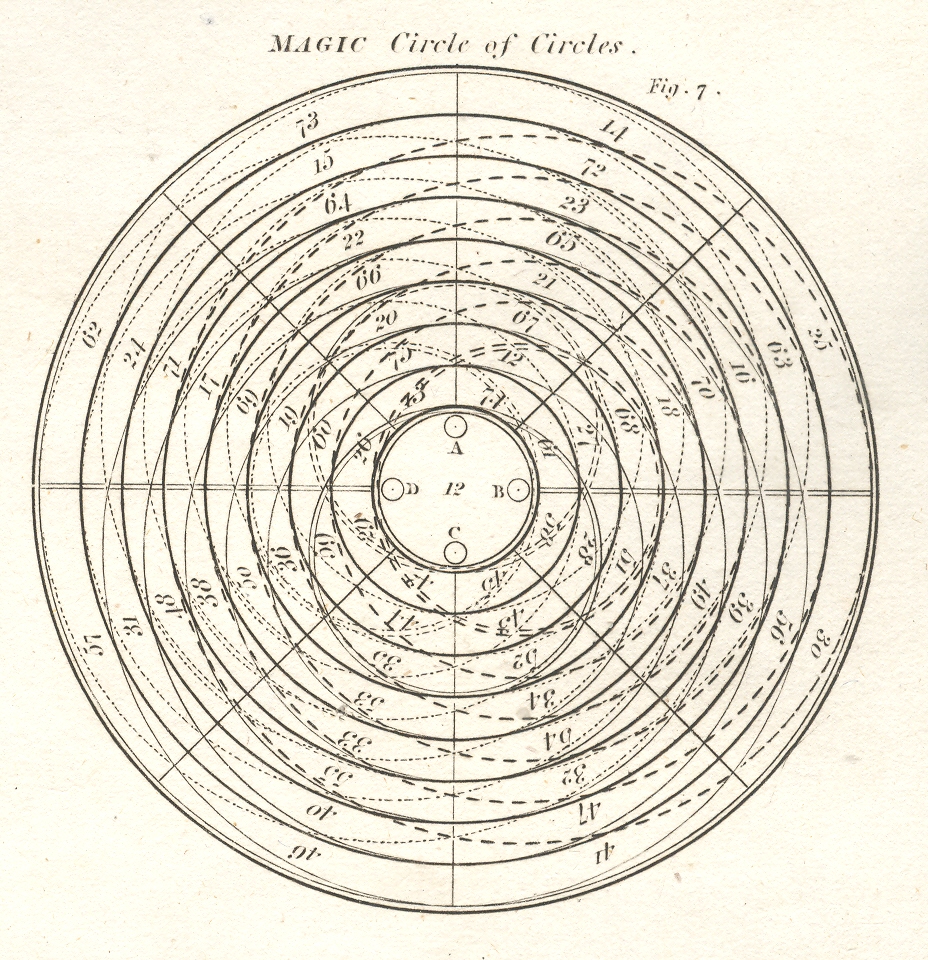
    Perhaps Porphyry’s tree rings would look like this, a magic circle or spiral, which would make some sense, and would bring to bear an associated use of turtles—or tortoises, I should say.  It turns out that perhaps the very first use of the magic circle, rolling back its origins through the Islamic world to India and to Persia and then to Japan,  and then finally to China where, in about 2000 BCE, the magic square appears in an image with the Emperor Yu,  inscribed on the back of a tortoise.

    1--logic tree magic circle 

    1--logic tree magic cricles

    [Magic circle source:  Abraham Rees Encyclopedic Dictionary , printed 1805-1815. The originals are available from our blog bookstore.]

    Magic squarezz and circles det883

    Magic square and circles880
    Magic squarezz and circles882

    Notes:

    1. This image appears in the rare Destructio sive eradicatio totius arboris Porphirii : magni philosophi ac sacrae theologiae doctoris eximii Augustini Anchonitani ordinis fratrum Heremitarum Sancti Augustini, cũ quadã decretali eiusde, published in 1503.


  • A Do-It-Yourself Paper Digital Computer, 1959.

    JF Ptak Science Books    Post 1210

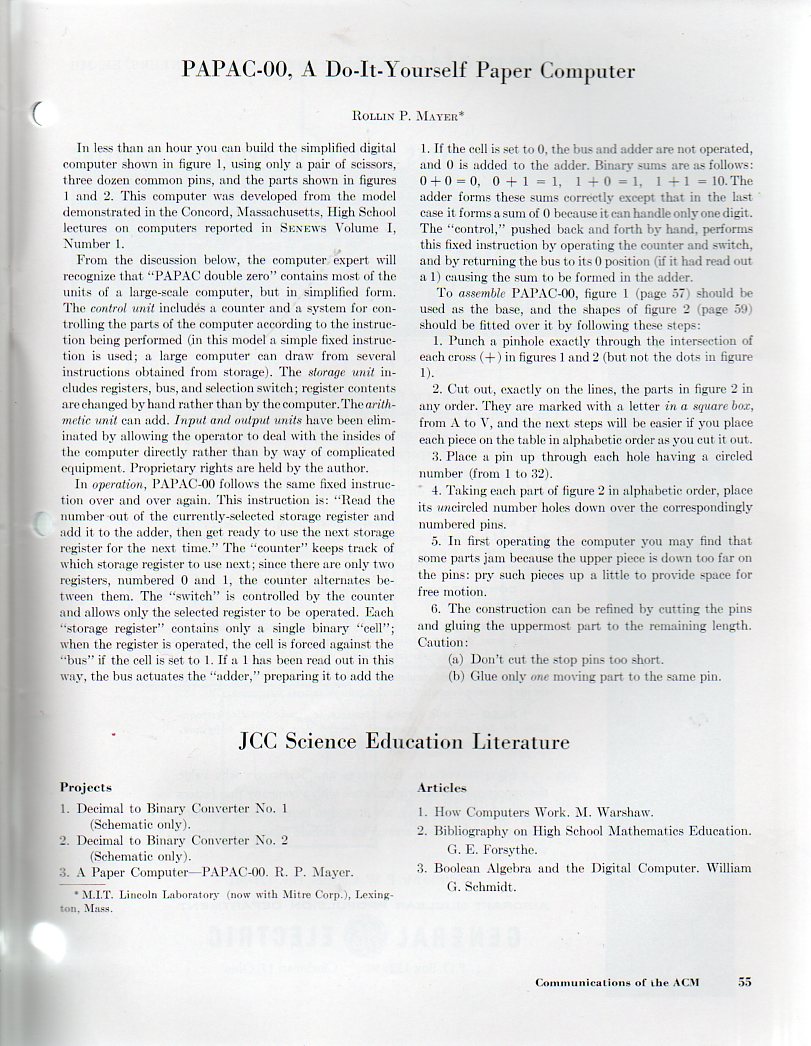
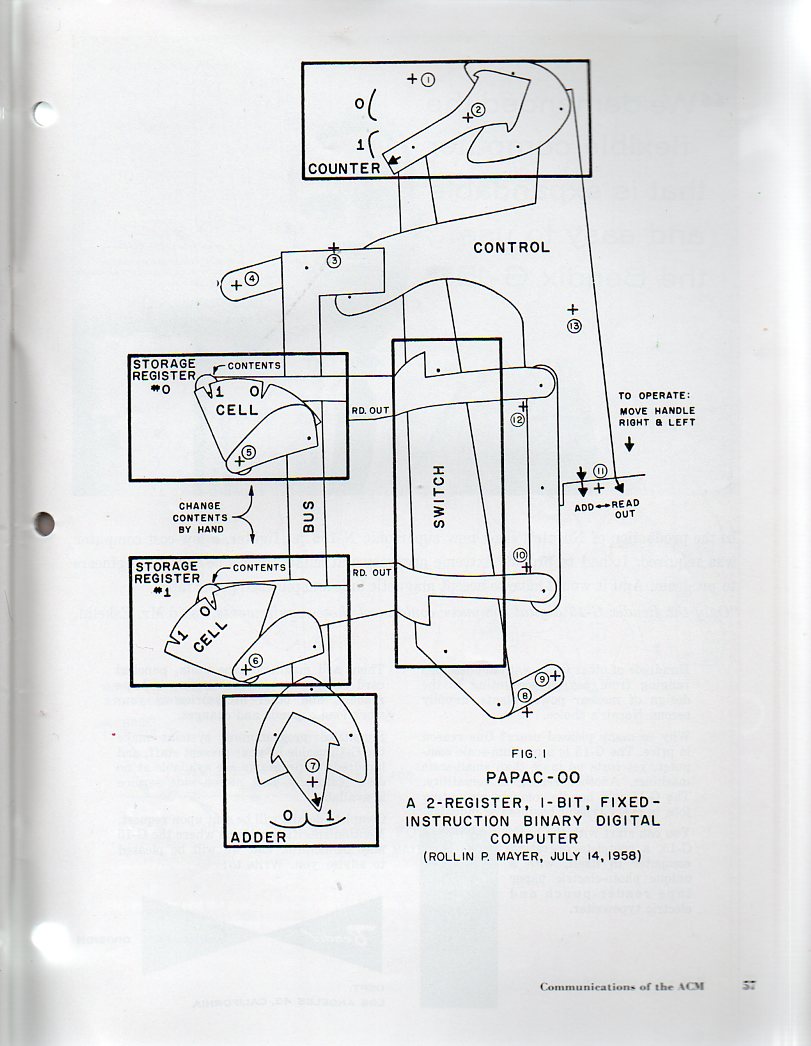
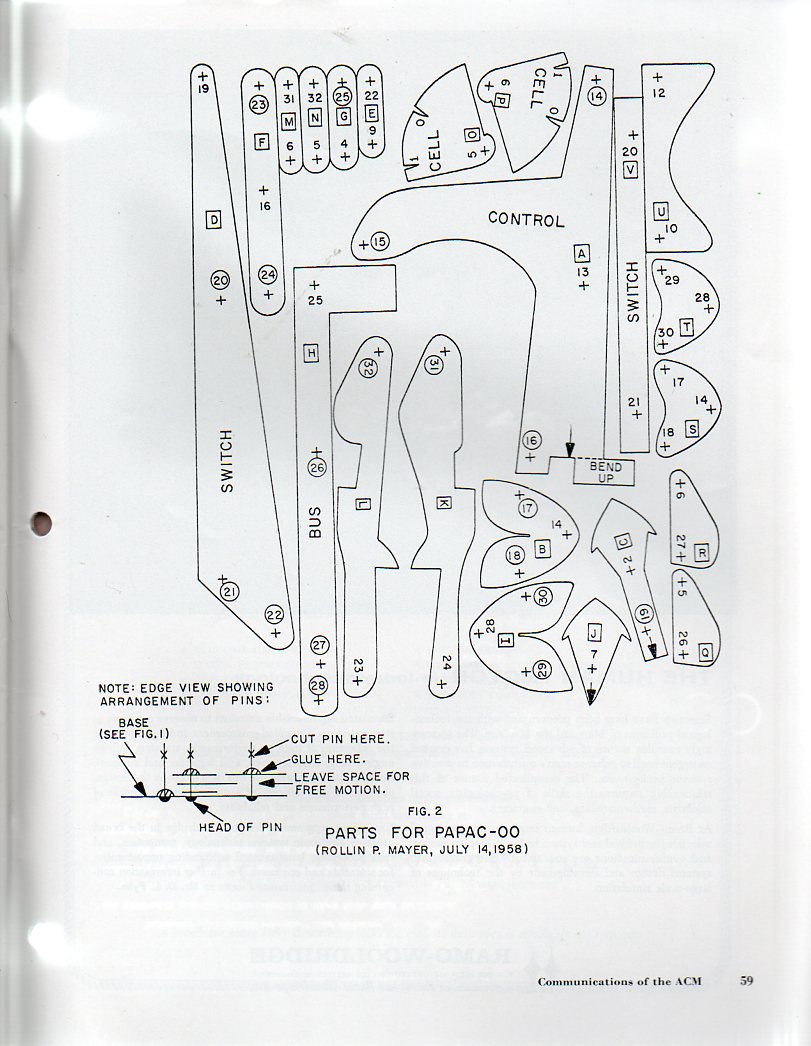
    Computer, paper832 This wonderful cut-away and paste-up template for a digital computer comes to us from the Communications of the Association for Computing Machinery, volume 2, issue 9 for September 1959.  The PAPAC-00 is a “2-register, 1-bit, fixed-instruction binary digital computer” and was submitted to the journal by Rollin P. Mayer (of the MIT Lincoln Lab).  There’s a hunk of me that wants to make this thing really big–cut out the individual pieces and then crash them out to 50″ widths, pasted on found bits of cardboard packing from the neighborhood frame shop, and then piece the thing together as the world’s largest pre-1960 1-bit paper computer.  Or maybe not.  In any event I thought to share this with readers here who might actually print out these templates and try to construct the thing themselves–warning: you’ll need t be able to cut pins in order to make the model work properly. Computer, paper833

    Mayer also wrote an interesting article on including children in the scope of the computer industry…in 1956–something I find to be a very early piece of thinking on Little Humans and Big Computing.  His abstract identifies the three main points of his paper: “(1) That the digital computing field needs, and will continue to need, not only more people who are capable of designing and programming digital computers, but more people who understand the basic limitations and potential uses of digital computers; (2) that the computer industry should take an active interest in providing a basic computer training to the largest number of people, in addition to more extensive training to those who show an interest in designing and programming computers; and (3) that the typical 12-year-old youngster has the interest, skill and basic knowledge necessary to build and understand simple working models of practically anything”. –“A proposal for training youngsters in digital computing techniques” in Proceeding ACM ’56 Proceedings of the 1956 11th Annual Meeting.

    Lastly I should also mention that in this same monthly issue (which ranged all of 52 pages) was an article by Julien Green, “Remarks on ALGOL and Symbol Manipulation”, a three-page paper that comes from the near-dawn of the ALGOL (short for ALGOrithmic Language). (It can be argued that the beginnings of ALGOL were about 1955, but for the sake of simplicity here I’ll note that the first committee appointed to study the matter for the ACM was in September, 1957, and the first group to formalize it met at the ETH Zurich in 1958, producing the language’s first version, known as ALGOL 58.  Julien Green was a member of the 13-person panel that created the ALGOL 60that met in Paris in January 1960.   And so the Green paper did appear within the first few years of institutional study in America, and it was written by one of the six American members of the ALGOL 60 team.)

    Computer, paper834