A Daily History of Holes, Dots, Lines, Science, History, Math, Physics, Art, the Unintentional Absurd, Architecture, Maps, Data Visualization, Blank and Missing Things, and so on. |1.6 million words, 7500 images, 4.9 million hits| Press & appearances in The Times, Le Figaro, Mensa, The Economist, The Guardian, Discovery News, Slate, Le Monde, Sci American Blogs, Le Pont, and many other places… 5000+ total posts since 2008.

Category: Blank and Empty Things; A History of

  • The Big Bang Monkey and “Gasoline Alley”

    JF Ptak Science Books  Overall Post 5111   Part of the series A History of Blank, Empty and Missing Things 

    Concevons qu’on ait dressé un million de singes à frapper au hasard sur les touches d’une machine à écrire … [translation: Let us imagine a million monkeys typing haphazardly on typewriters …”1
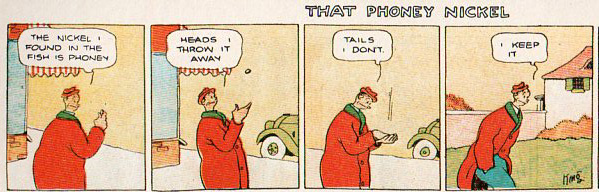
    Gasoline alley723[Gasoline Alley, 1931]

    There are some ideas that leave me with a powerful sense of nothing.

    To me, “nothing” can be very important–especially in writing and speaking and action, doing or saying nothing has been the important and the correct thing to do.  “Nothing” isn’t necessarily an ending, and, just a period or a coma, can just be a placeholder for something that is developing.  There can be long nothings and short one, forever- and micro-nothings, and nothing that is nothing for almost nothing.  Nothing can be implied, insinuated, broadcast and defined, though self-defined extended nothingnesses (like John Cage’s  4’33”) is a tricky thing to make happen with success. 

    The ideas that leave me with a sense of nothing are interesting things.  And there are a lot of them. When I can remember them they are in my nothing file, waiting for nothing–or something–to happen.

    This is the sense I had when (years ago) I was trying to explain randomness to our 10-year-old daughter and her 11-year-old cousin, sitting out in a park, looking at stuff.  Somehow I reached into the past and pulled up the infinite monkey theorem, and tried to make that interesting, but just couldn’t do it. Maybe it was the difficulty of super-large numbers, or the fascinating but incomprehensible thought-threats of Borges and his infinite library, but I was left with nothing.

    It is Borges who writes a lovely piece on the history of producing everything from nothing, appearing in his “The Total Library” in 1939 (and then again in “The Library of Babel” in 19412), reviewing machines and such of spectacular randomization that could produce the whole of what we recognize as what we know. 

    Emile Borel wrote on it in 1913, finding the possibility of one million monkeys pounding away at one million typewriters.  In his wonderful work, The Math Book3, Cliff Pickover looks at 250 big ideas in the history of mathematics and gives each of them one page only for presentation and explanation.  He approaches the infinite monkey theorem by looking at one monkey wailing away at one typewriter, striking the keys, and analyzing how long it might take for the one monkey to produce one line from one book.  The line is “In the beginning…” at the beginning of one great nothingness, from the Old Testament, a 56-object sentence (including punctuation and spaces) and, Pickover reasons, that if there is a 93-character keyboard, then this monkey will have a 1/9356 possibility times 10100 of getting it right, and that if it worked for 24 hours a day striking one key every second then it will have used all of the time in the present universe–the Big Bang Monkey.

    All I got back were big stares, and a big sense of nothing in my gut.  It reminded me of the cartoon featured above, a toss-off sub-cartoon in a panel of the Gasoline Alley series.  Did he actually look at the coin?  Did he just decide to keep it?  And why keep a phony nickel? And who counterfeits nickels, even during the Depression?  What is the outcome of the panels–just some guy walking down the street with a nickel in his pocket.  Something may have happened, but it was a lot of nothing. 

    I know that I should have a bigger sense of what Felix Edouard Justin Emile Borel and Jorge Francisco Isidoro Luis Borges were writing about and in many ways I do, but in the end I know that I am left with nothing.  But I have it in my pocket.  

    Notes

    1. Émile Borel (1913). “Mécanique Statistique et Irréversibilité”) J. Phys. 5e série 3: 189–196.

    2.  Jorge Borges,  “La biblioteca total” (The Total Library), Sur No. 59, August 1939. Translated by Eliot Weinberger, in Selected Non-Fictions (Penguin: 1999)

    3.  Clifford Pickover, The Math Book, (2009), Sterling, page 328.
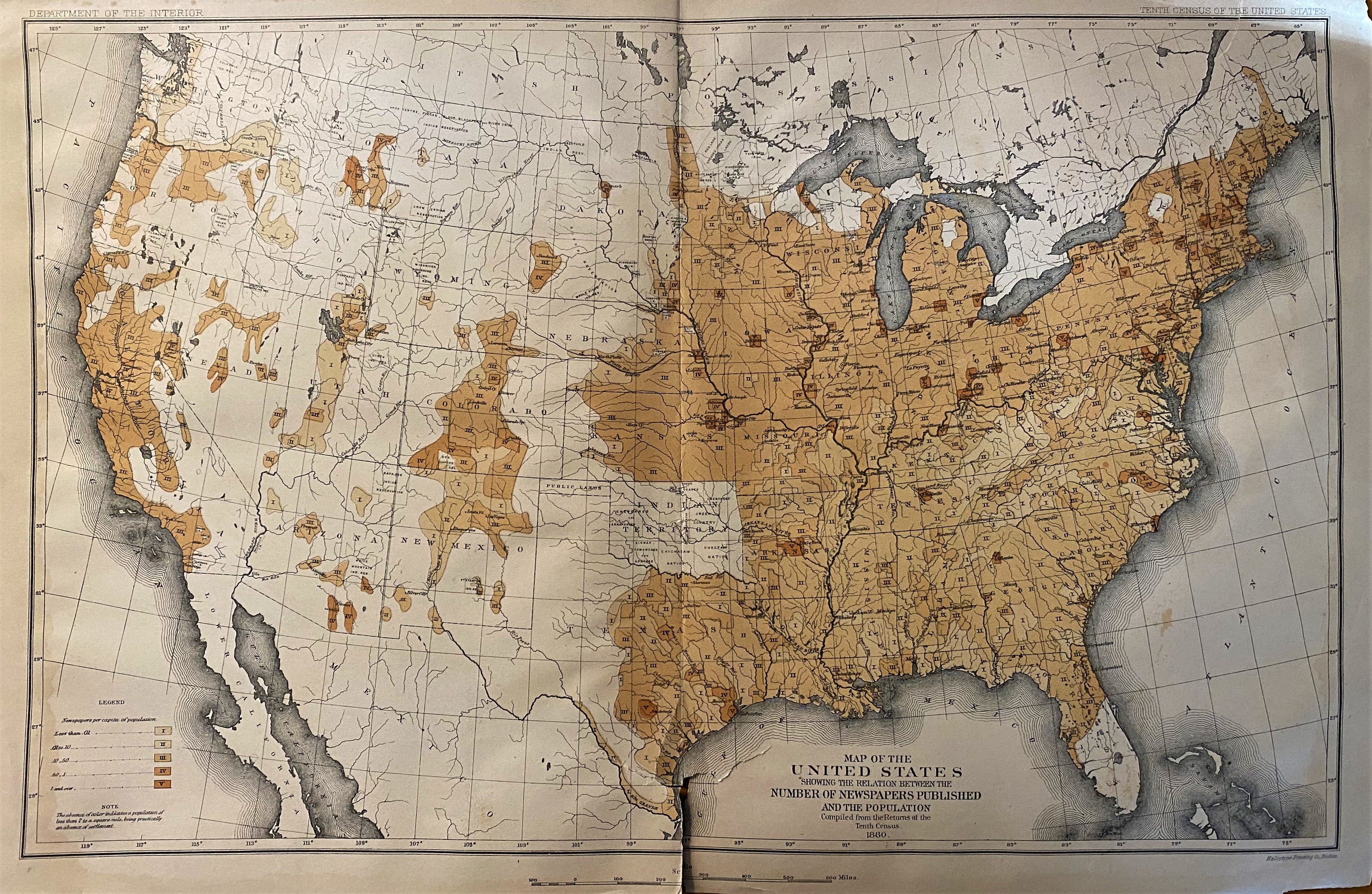

  • Another Episode in the History of Blank and Empty Things

    JF Ptak Science Books   Quick Post (A small but useful part of the History of Blank and Empty Things series)

    This wide expanse of white and unmodified map space exhibits the more-or-less total absence of daily (or weekly) newspapers in the West and Far West of the U.S. in 1880.  The measure of the gradient colors depict the “newspaper per capita of population, the “absence of color indicate a population of less than two people to a square mile, being practically an absence of settlement”. making up about a third of the country.  

    Source: History and Present Condition of the Newspaper and Periodical of the United States, by S.N.D. North, U.S. Tenth Census Report (1880), printed 1884.  

    IMG_2885


  • Silhouettes of Soon-to-be-Ghosts: Representation of the Vichy Fleet, November 1942

    JF Ptak Science Books  Quick Post

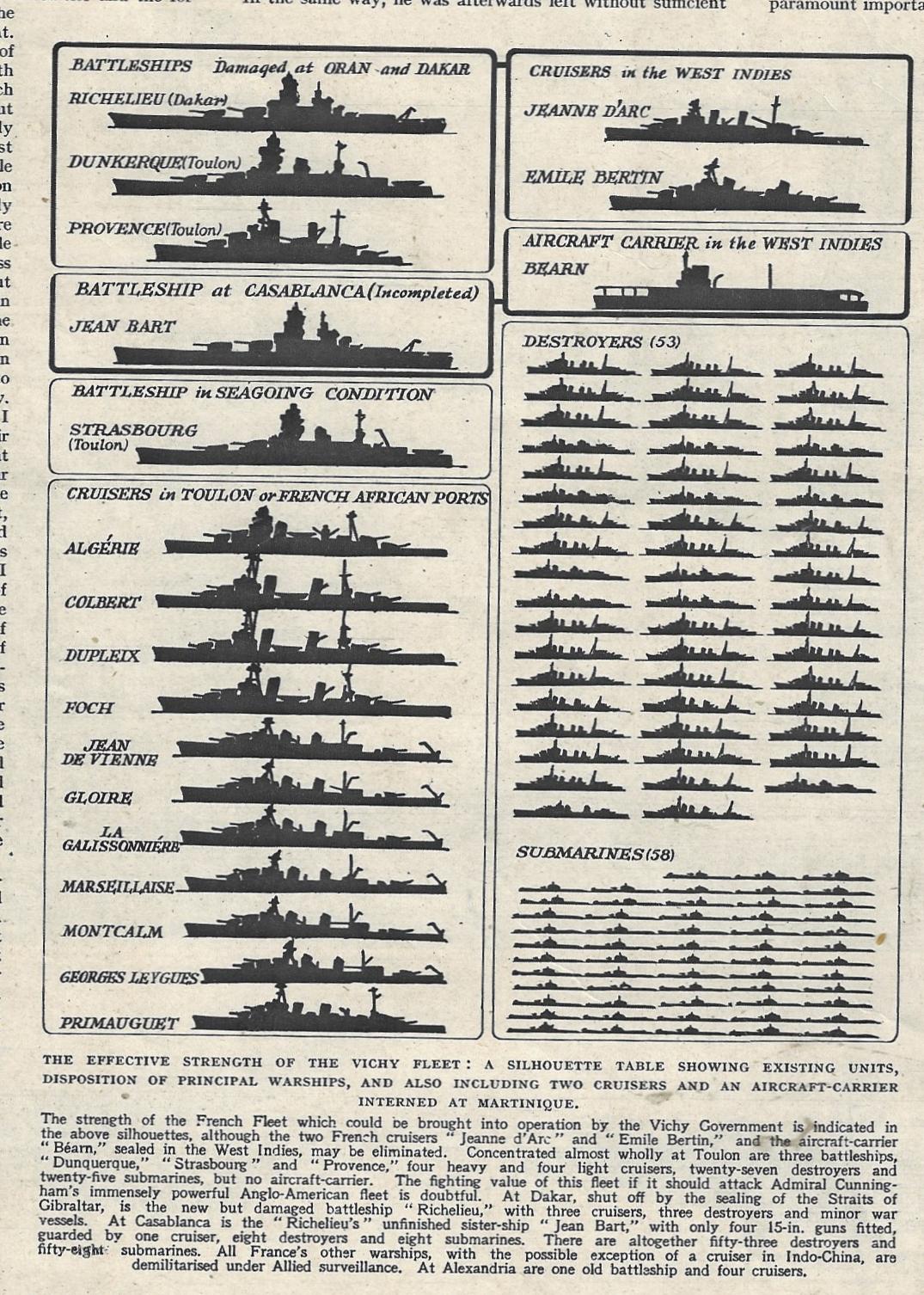
    The resistance of France to Nazi domination and rule and to the French collaborationists in Vichy began with the fall of France. Following the 10 May-21 June 1940 Battle of France, and the 22 June 1940 Armistice which effectively gave Marshal Petain control of the southern regions of France (the Nazis keeping all of northern and western France that bordered the Channel and the Atlantic) the battle for retaking France began. One of the large moments in this struggle came on 27 November 1942 when much of the remaining French/Vichy fleet was scuttled at  Toulon (east of Marseilles).  Rather than have the navy be taken by the Germans, 77 vessels were destroyed at anchor. 

    This graphic is found in the Illustrated London News for 14 November 1942 and depicts the Vichy fleet just two weeks before the scuttling action. The great majority of what is depicted here in silhouette (excepting those shown to not be at Toulon) were destroyed–silhouettes against their immediate future, the shadows of a ghost fleet. 

    ILN 1942 Vichy fleeet


  • The Varied Endings of Human Life on Earth AND the Coming of the Bug People (1877)

    JF Ptak Science Books  Post 2894

    IMG_2077“The Fate of the Last Man”is an interesting and unsigned romp into the deep future of the ending of the human species from the 31 May 1877 issue of Scientific American. It is very exceptionally long-term, looking into the future of up to a billion years hence–which is a captivating thing all on its own, using that kind of a number in the late 19th century. (Also it is interesting to note that even after all that time the author doesn’t have humans flung to one place or another in the galaxy–after all, deep space flight had already been established in fiction for hundreds of years by this point…not commonly so in literature, but definitely there.)  In any event the author works their way into the first of ten examples of Last Man scenarios describing that after epochs the mountains will get worn down with the solid matter flowing into the oceans, which fill the oceans, causing the continents to become islands, the islands to shrink, and so on until there is nothing there but water and a bit of the world’s tallest peak with some guy sitting there on it, until even that is consumed, and our Last Man drowns.  

    As it turns out, the ten scenarios include the last man [sic] dying and the species becoming extinct by drowning, being gassed, gassed and/or blown up, “sunstruck”, suffocated, “burned up”, frozen, crushed, “killed by the crash of orbs”, and then, finally, at #10, we are surprised that “there will be no last man”.  Its a nice piece of thinking, and pretty creative; recognizing that I’ve quoted some of the descriptives for how the end will come.  

    The surprise ending part is this: almost everyone dies, though there is a self-replicating survivor that will be a BugMan of some sort and start the whole “human” thing all over again.

    [The image above and left has nothing to do with the article, but I had to include it because it is so fabulous and it appears in the same year of the SciAm as this article…and it comes close to being some sort of BugMan, or Lobster-something.]


  • A Tragic Map of an Empty Place (1825)

    JF Ptak Science Books  Post 2893

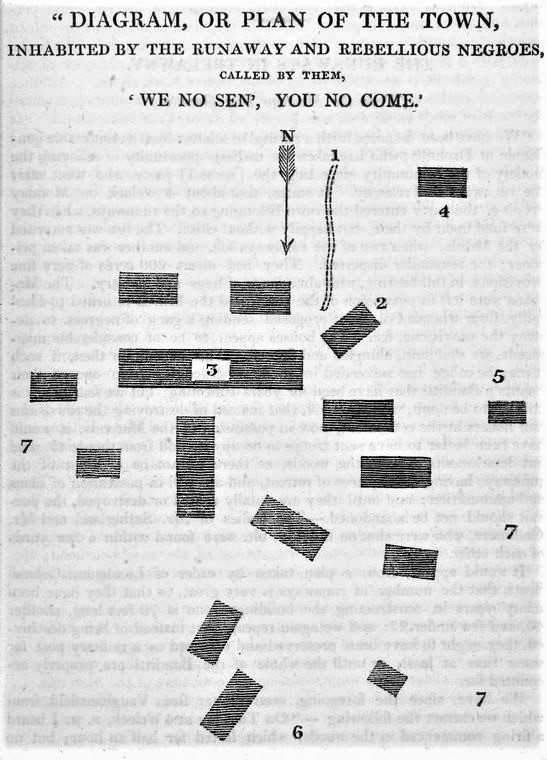
    Nypl.digitalcollections.510d47da-7455-a3d9-e040-e00a18064a99.001.wIn the history of maps of blank, empty, and missing places this map1, published in 1825, is one of the hollowest, and saddest of 19th c US-centric image: it is a heartbreaking map of an empty, abandoned village of peacefully-living runaway slaves in Jamaica, in about 1825.

    The name of the town, extraordinarily, was “We No Sen, You No Come”.  It meant, basically, that the slaves living there would not leave their town, wouldn’t seek anything from the outside, would not interact, would not interfere; in return, they didn’t want anyone visiting, coming to them. interfering in any way; just wanted to be left alone, to live.  And from the account of this supportive, understanding and sympathetic publication, that is exactly what these people had done for eleven years.

    [Image source–please see Notes below]

    But then something happened.  The owners of the enormous estate wanted the “banditi runaways” gone.  The slaves evidently had 200 acres under domestication, hidden in the far reaches of an enormous 100,000 acre estate.  The “hunting party” left heavily armed, accompanied by 250 troops, as well as “confidential and baggage negroes”.  (The term “baggage negroes”, as impossible as it might seem today, was a well-worn, heavily used term through the 18th and mid-19th centuries.)  They approached the small town and encountered a very slight resistance, something like a guard, and killed them.  Retreating somewhat after the initial attack, the scouting party returned, and then found the village completely empty.  (Some reports say that there was more limited fighting, with casualties on both sides; some say that there were more slaves killed.) After whatever happened happened, though, the return to the little village found it abandoned, with everything still in place.  The members of the village had “disappeared”.  Or at least I hope that they did, and didn’t get “disappeared”, men, women and children all, as in the famous Floridian “Negro Fort” case and Andy Jackson.  Perhaps these people were fortunate to actually escape. 


  • Aether Ennui (1927)

    JF Ptak Science Books  Quick Post

    IMG_1822 (1) (2)IMG_1822 (1) (4)

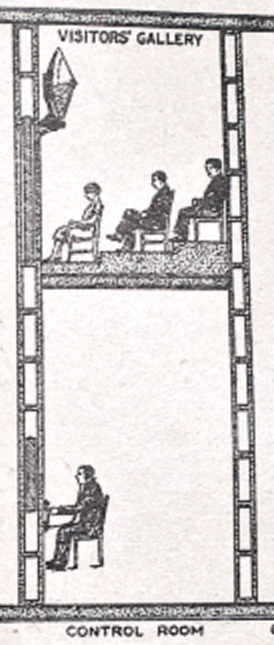
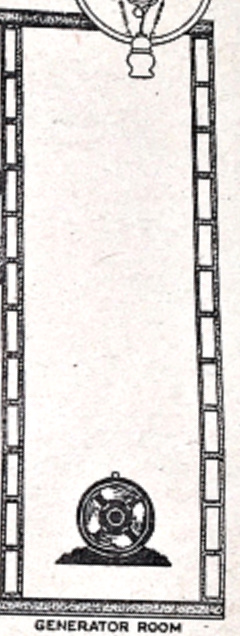
    This story on the new Roxy theater appeared in Radio World in 1927, and it caught my attention with its peculiar empty space and loneliness in elements of the article’s image. 

    Even though we are reading about a new state-of-the-art performance and broadcast facility, a story filled with hope and possibility of another brand new stage opening, the imagery has that certain varnish of vague ennui.

    There is also a lot of space, open space,  over-strong areas of nothing, flat, forbidding, and perhaps even a little cold and frightening. It does fit rather nicely into my collection of images and idea in the History of Blank, Empty and Missing Things series on this blog.   

    I’ve included the full illustration below.  


  • Reading the Shadows of the Great Depression (Herbert Hoover’s copy) 1930

    JF Ptak Science Books  Quick Post (Part of the series on Blank and Missing Things)

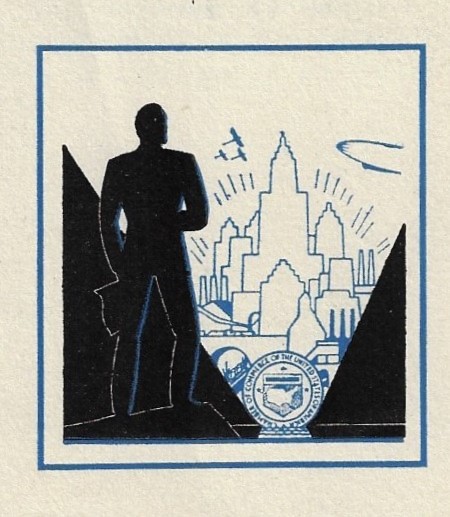
    Books covers chamber commerce 1931There’s something unusual here about the bibliographic marginalia, the White House library, and the Great Depression.  My attention was initially distracted by the design on this pamphlet, decorating the cover of the National Chamber of Commerce’s report from their 1930 annual meeting. Its an interesting piece of (small, 1″x 1″), the suited person emerging from a dark geometry into the brightness of a close-by shiny city.  Business Talks it Over is the title of the pamphlet, and they did indeed talk stuff over, with topics like “America’s Economic Balance” “Stabilization of Business”, “Government and Business”, and so on. Unfortunately the pamphlet claims victory over the Depression that was just turning into the Great Depression, only fourteen months into a near-decade-long economic crisis. The pamphlet states: “…as a business nation…has so successfully met the challenge of a recent serious crisis…”, ending the report on a happy and alien note that didn’t yet exist.

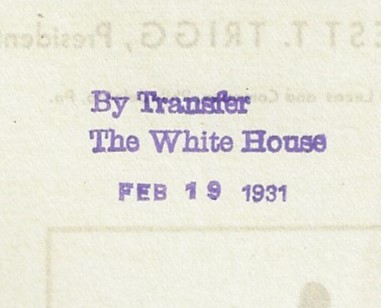
    Books covers chamber commer 1931 white houseThe odd bit, though, is that my copy of this pamphlet was in the White House library, no doubt sent to president Herbert Hoover sometime late in 1930–it wasn’t there for long. It was discarded by the White House on 19 February 1931–for what reasons, I don’t know. Did Hoover ever see this? Impossible to say, and it really doesn’t matter. The symbolism is all that remains, this report (no matter how flawed) needed to be discarded, skinny as it is, taking up no shelf space to speak of–off it went. This is similar to the bullet-proof resiliency of the federal government to becoming involved in any strong way with resolving the Depression. Hoover was on his way to becoming ignored and forgotten, with his re-election getting boot-stomped nine months later.  Then came the beginning of the Great Resolve, with FDR no longer the sphinx of Hyde Park, exploding into the Hundred Days action in March, 1932.  Anyway, I know I’m forcing this story, but sometimes shadow reading can actually lead to something.  


  • A Lovely and Lonely Plainness, by Margaret Bourke-White

    JF Ptak Science Books  Post 2814

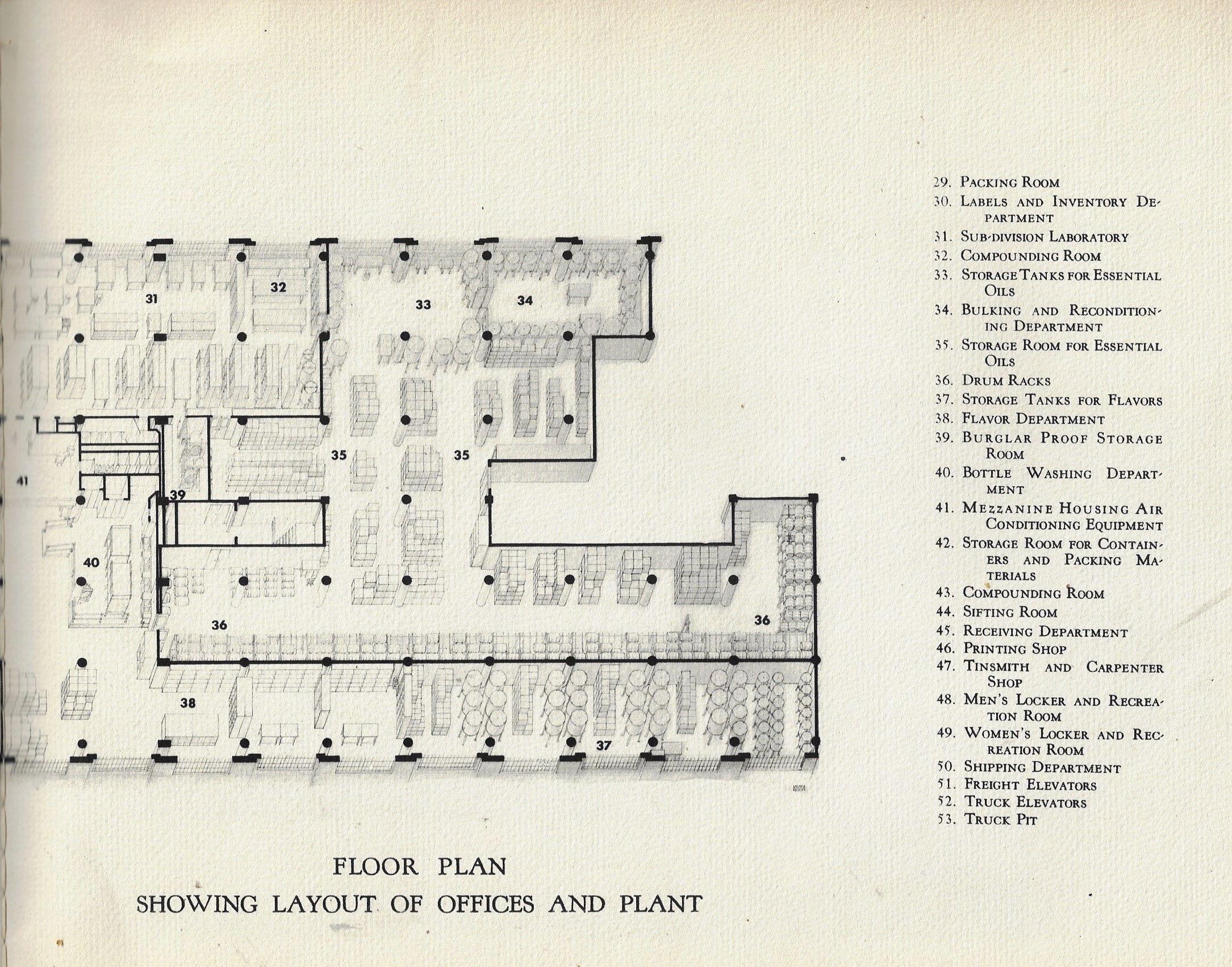
    I happened upon some photographs by the great Margaret Bourke-White yesterday in a most unexpected place–an upper-end oversize pamphlet advertising the perfume and oils business of Fritzsche Brothers of NYC. No disrespect to Fritzsche–which was in its 65th year of business–but it was a surprise to see the work of a pioneering and iconic photographer like Bourke-White in such a relatively common setting. Of course photographers need to pay the bills, too, and I’m sure that Bourke-White was well paid for her ultra-competent and accomplished business and industrial assignments. She was probably very well paid considering that she already had a national audience, being the first photographer for the new Fortune magazine, with her photo essays appearing there beginning in 1930. 

    The Fritzsche pamphlet was published in 1937, just a year or so before she made her first LIFE magazine cover.  She had a tremendous run between 1935-1950, and seemed to be everywhere, seeing everything. She was the first U.S. war photo-correspondent covering WWII and Korea; she was at concentration camps in 1945 and with Stalin in 1944 and Gandhi in 1949, and was a superb documentarian of the human experience during the Great Depression–even her first assignment at Fortune found her making photographs of the bank vault at the First National Bank of Boston coincidentally on the evening of Black Tuesday, 1929. 

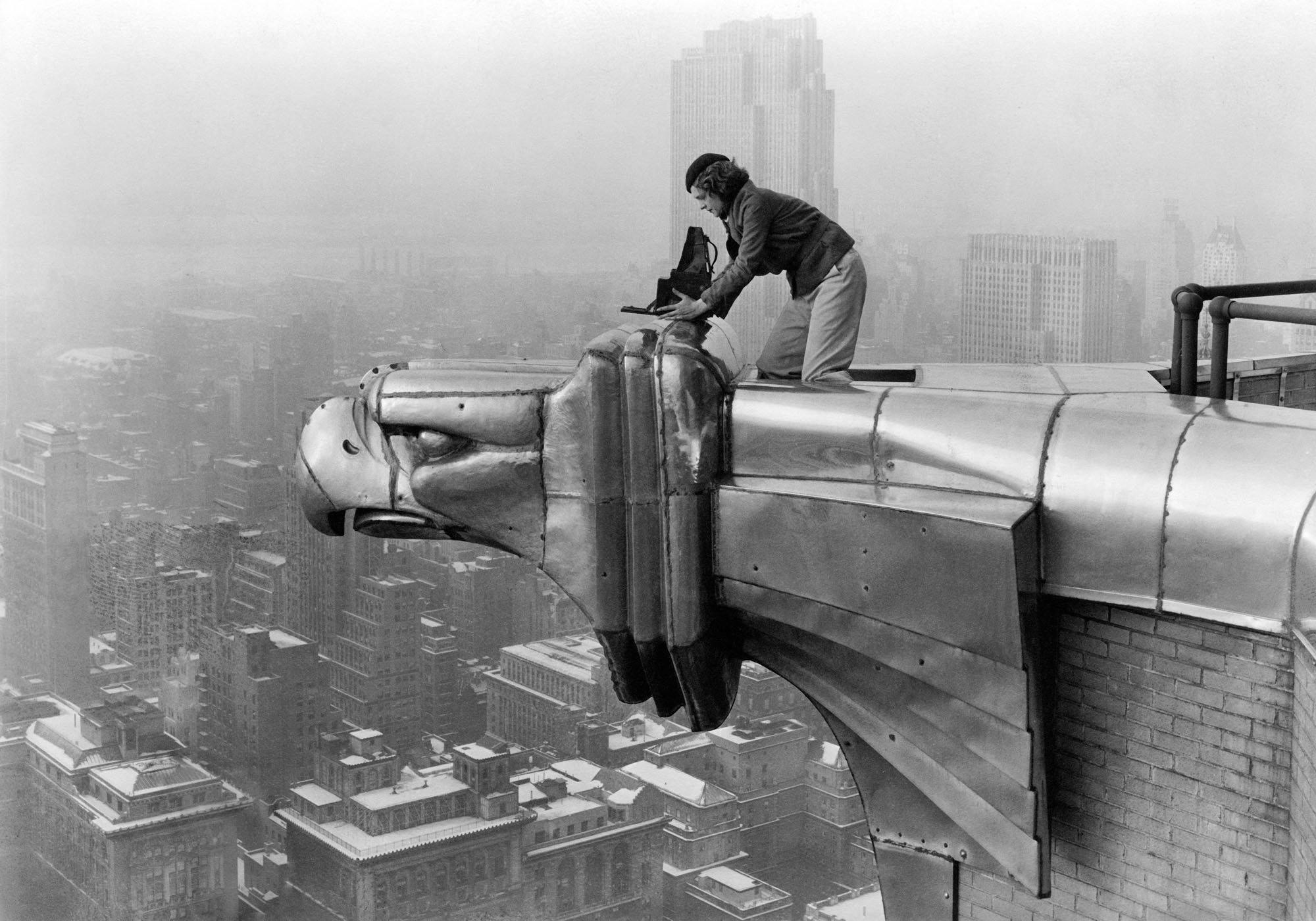
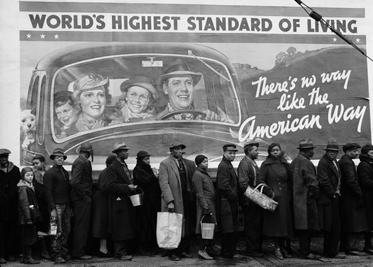
    Here’s a photo of Bourke-White at work (from her first-photographer-at-Fortune-magazine days). and one of her most recognizable works made during the Great Depression:

    Bourke-white _1_ atlantic

    Bourke-White _2_ Kentucky flood wikicommons


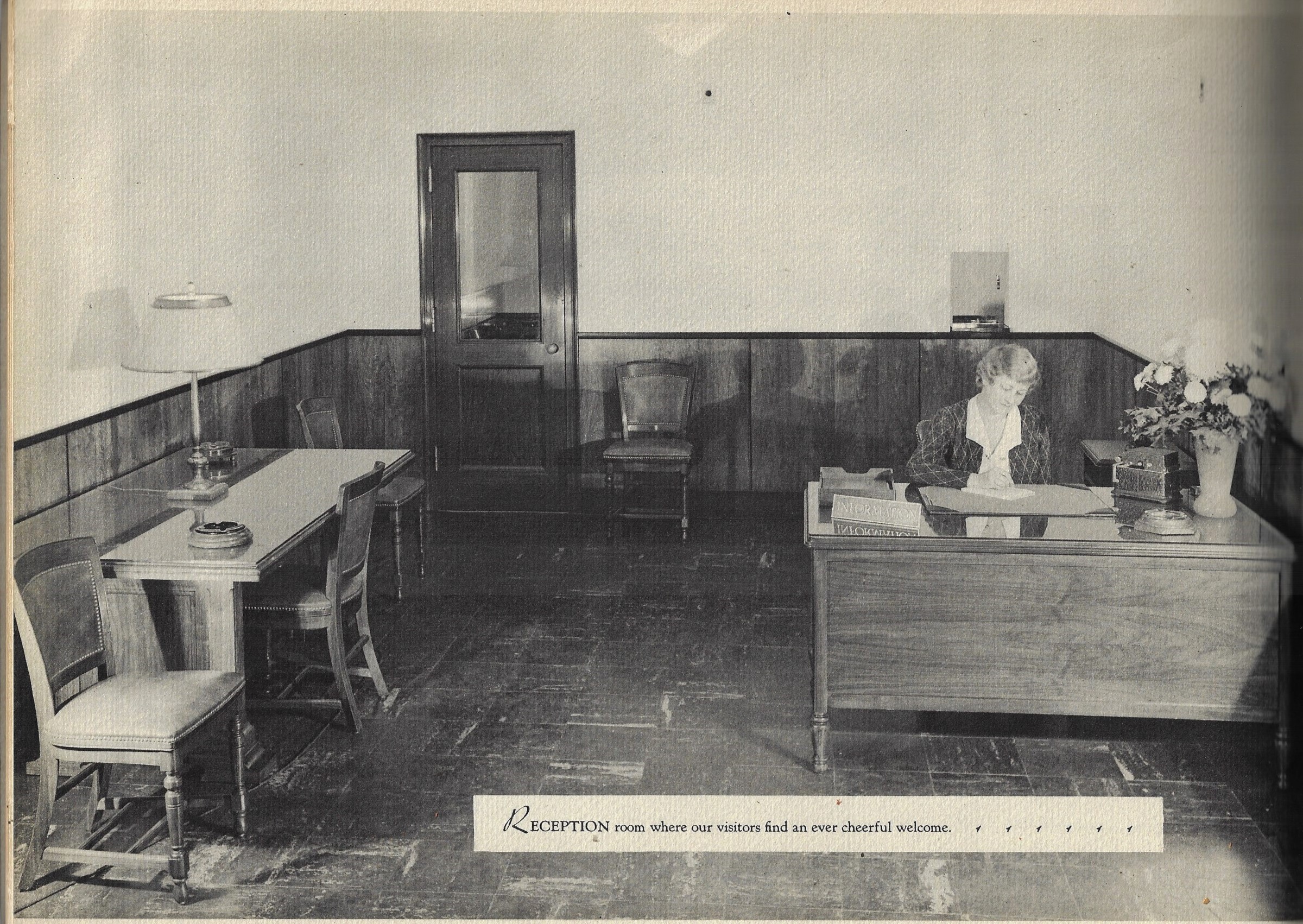
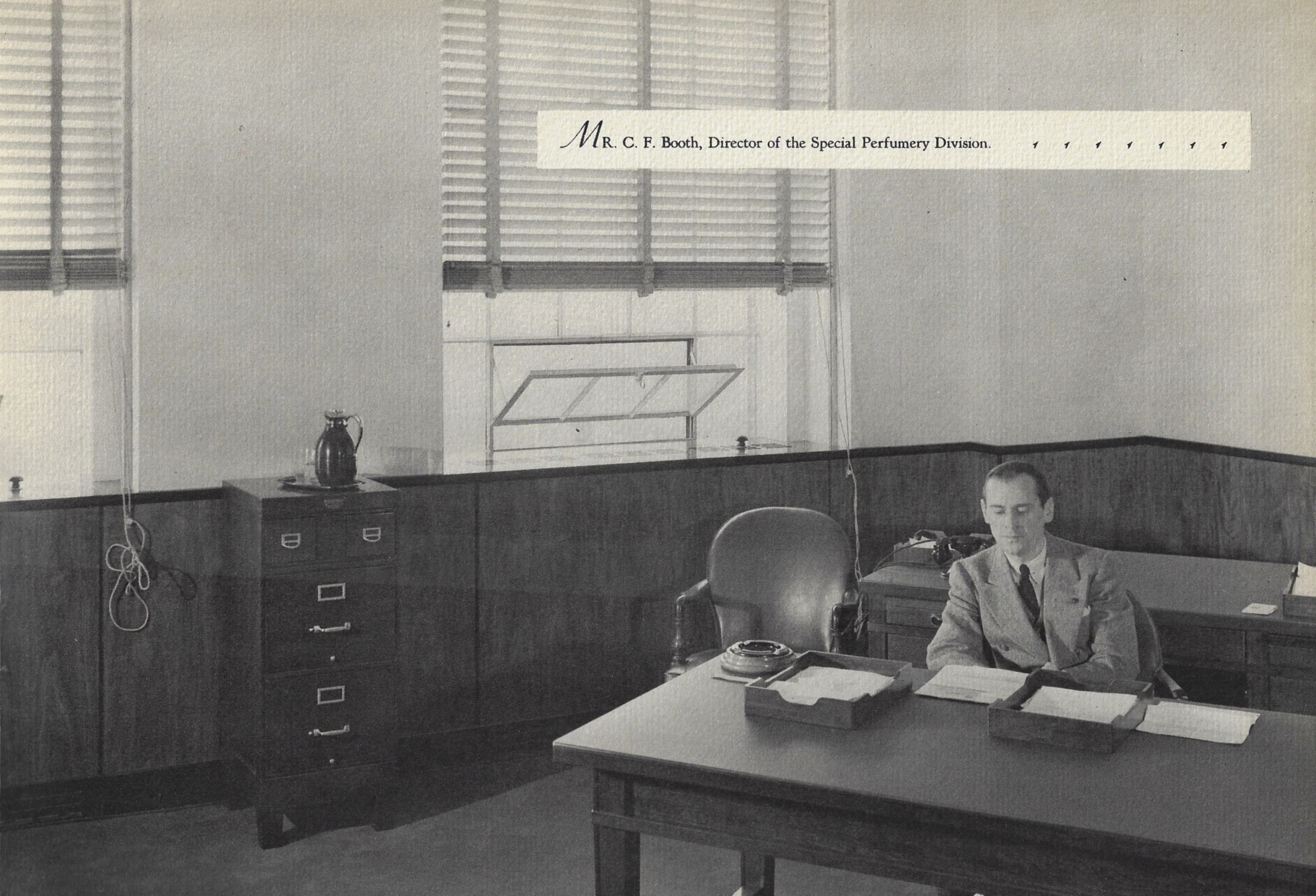
    And then here she was in the relatively bland pages of the Fritzsche promo, making images of reception areas, loading docs, labs, a library, some VP studiously at work at a small desks…however when you look closely at the rooms she was working in you can appreciate that it was a difficult assignment, and that lighting was a problem, though it was one that she solved.  The odd thing is that everything in these photos is sort of the same, that a general blankness/blandness has taken over, all of the people with similar expressions, and then something else…that in this very large collection of offices there’s absolutely noting on the walls except for an occasional clock here and there. Other than that exception, there are no wall decorations. Given that the company is chemically decorating the air around people, it strikes me as a little odd that the physical surroundings was such a collection of nothing.  Here’s the reception area as an example of the environment’s assertive blandness:

    Fritzsche _3_

    There are 22 such photos of hollow spartanness, well-lighted. And very tidy.

    Here’s another:

    Fritzsche _4_

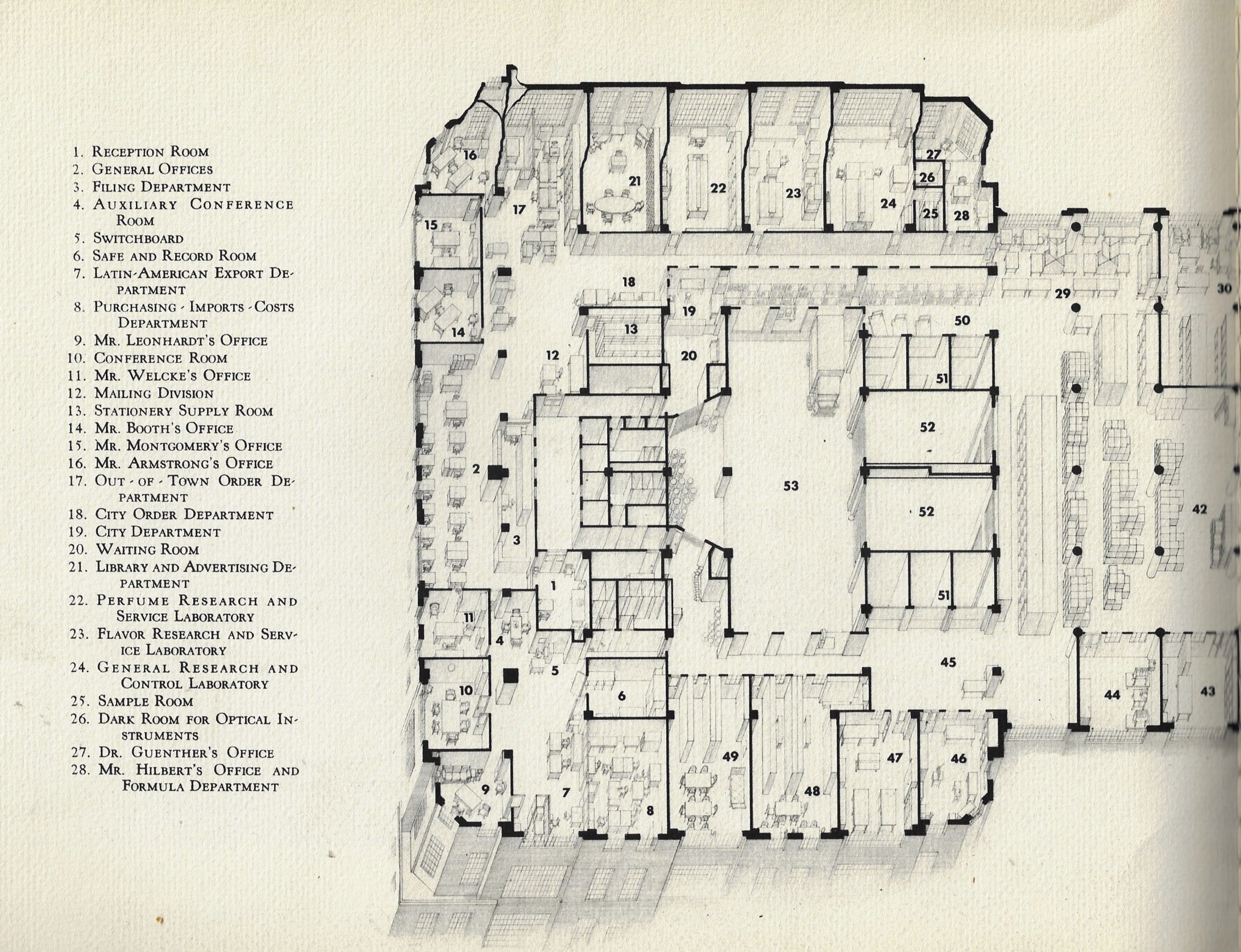
    The blank walls become even more oppressive when you consider the number of walls in the place: 

    Fritzsche _2_

    Fritzsche brothers _1_


    I guess Bourke-White did as well as could be done with what there was…


  • On Dr. Frankenstein and a Female Creation

    JF Ptak Science Books    Post 2705 

    Why did Dr. Frankenstein create a male and not a female being? I guess it would be easy to slip into a rolling piece of guesswork as to why the good doctor took on what he referred to as feminine Nature to substitute himself for the job and bring forth yet another male.

    It is perhaps a little odd that Mary Shelley took this route, given her proto-feminist-founding mother and anarchist father, but then again her novel was published in 1818 when she was all of 21, which means she probably wrote it in her ‘teens, which means there was only so much time at that point to have given much long thought to the rights of women ideas. Or not—this is purely speculative. In any event, I liked the idea of the question.

    Victor Frankenstein did indeed nearly create a female being, and was half-way or so there. He wasn’t a fan of this thinking earlier on in the novel, as we hear him addressing his Monster:

    • “Abhorred monster fiend that thou art the tortures of hell are too mild a vengeance for thy crimes. Wretched devil you reproach me with your creation come on then that I may extinguish the spark which I so negligently bestowed…” (By the way, “sparks” is what brought the Frankenstein’s creation to life, this being an early heyday of electricity, though “spark” is mentioned only three other times in the book.)

    His creation pleaded with him for companionship, but old Dr. Vic thought better of the idea and destroyed “her”, ripping the new creation literally limb from limb. It is an unpretty story, though the case made to the doctor from his “monster” is excellent, and I include a good selection of the dialog below.


  • From the Department of Blank, Empty, and Missing Things: Mathematicians (1934)

    JF Ptak Science Books  Quick Post

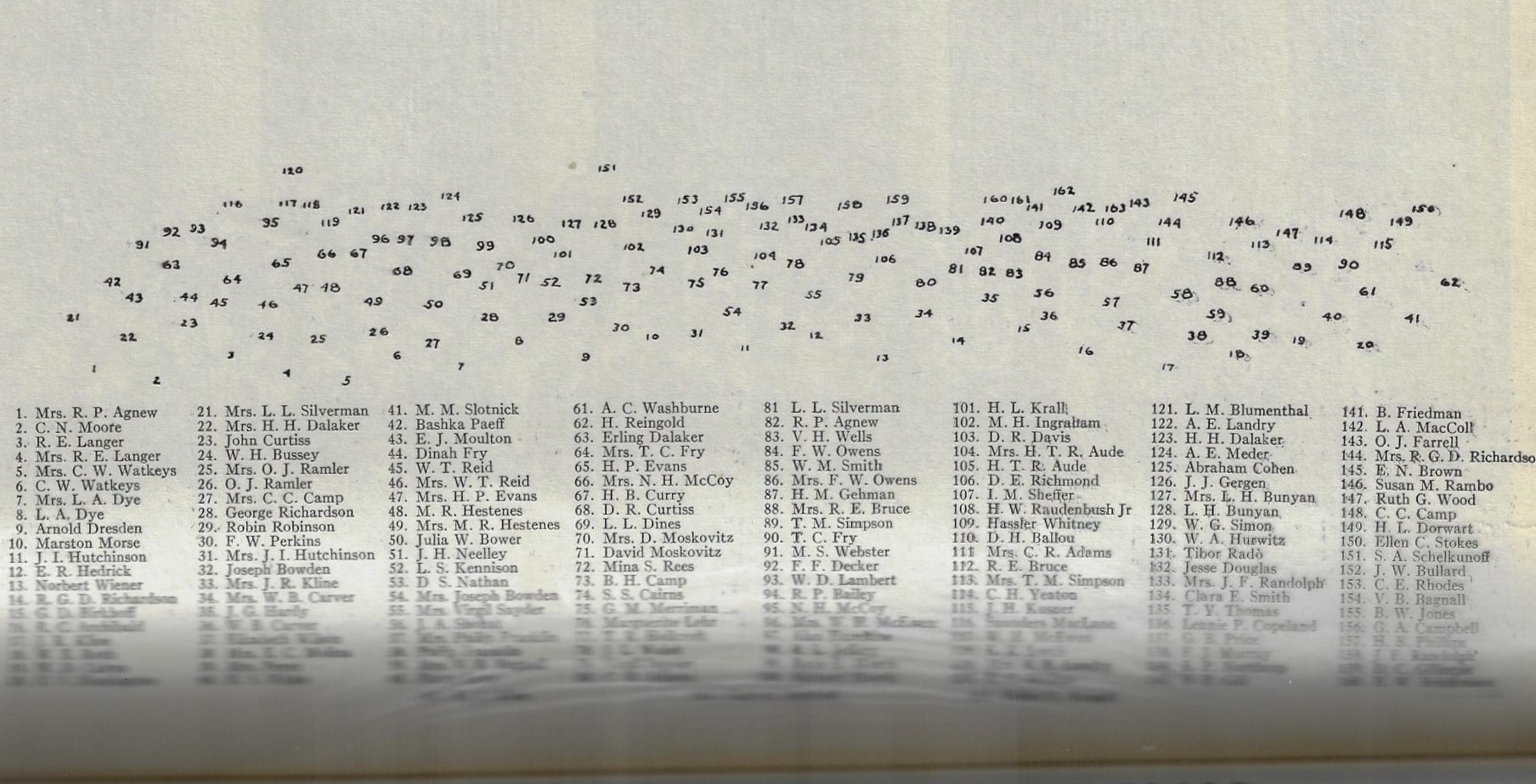
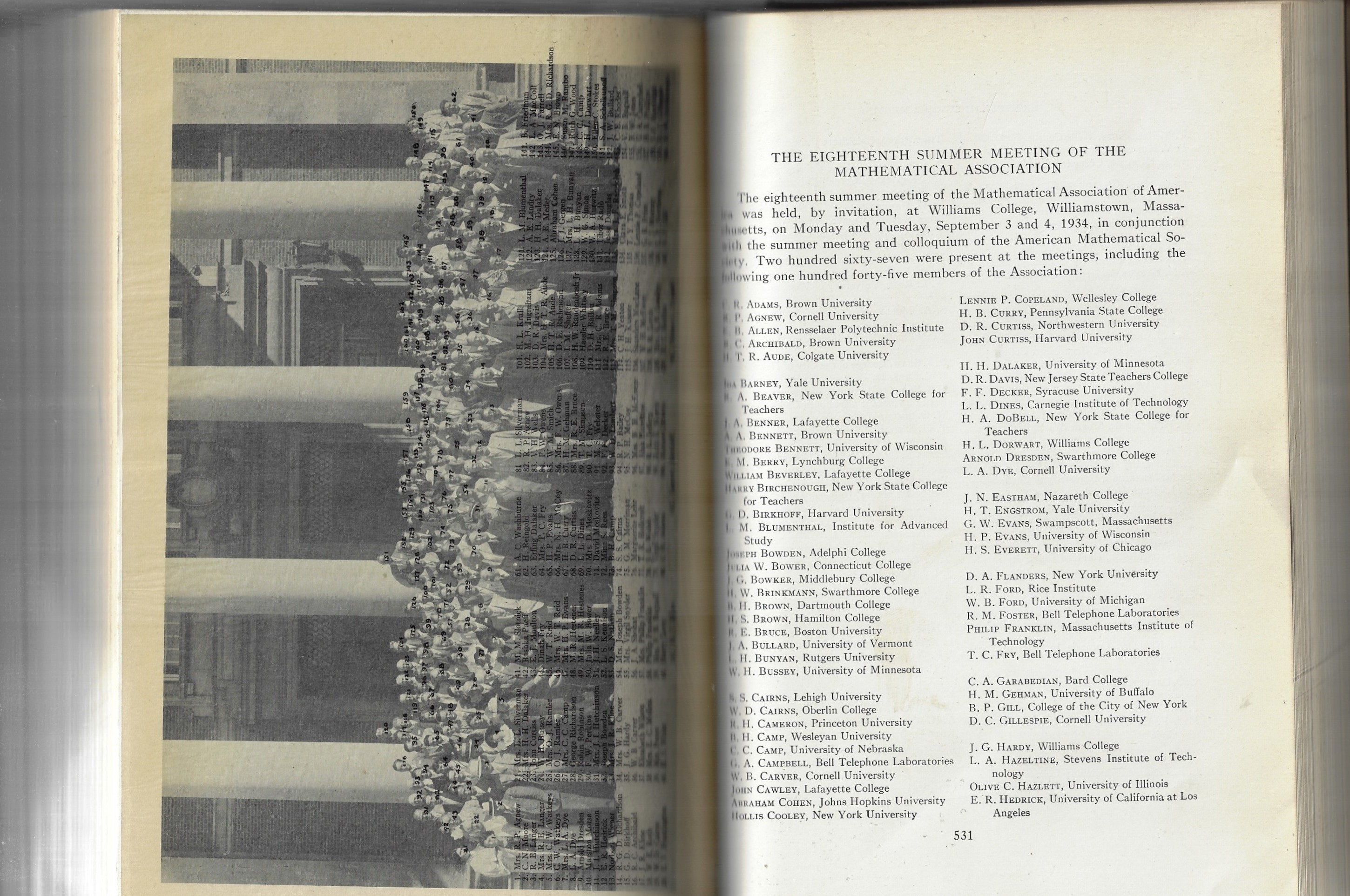
    There is a longish thread on this blog about Blank, Empty, and Missing Things: faces, ethics, beginnings, ends, causes, effects, insight, wisdom, clouds, blood, smoke, rain, depth, height, and so on.  There are also several posts that look a lot like today’s entry–one was for astronomers, and another for mining execs from the 19th century, which was a particularly peculiar image because the head outlines had no faces though most did have moustaches and beards.  Today’s bit is for mathematicians attending the 18th summer meeting of the Mathematical Association of America in 1934, and I found it somewhat ironic that there would be no outlines of the bodies at all, just numbers. Perhaps this is more appropriate than ironic.  In any event, here’s the glassine overlay:

    American MAth Monthly 1934 group photo _2_ blank

    [Source: American Mathematical Monthly, volume 41, 1934.]

    And the two page spread with photo and the glassine in place:


    American MAth Monthly 1934 group photo _2_ blank