JF Ptak Science Books Post 2893
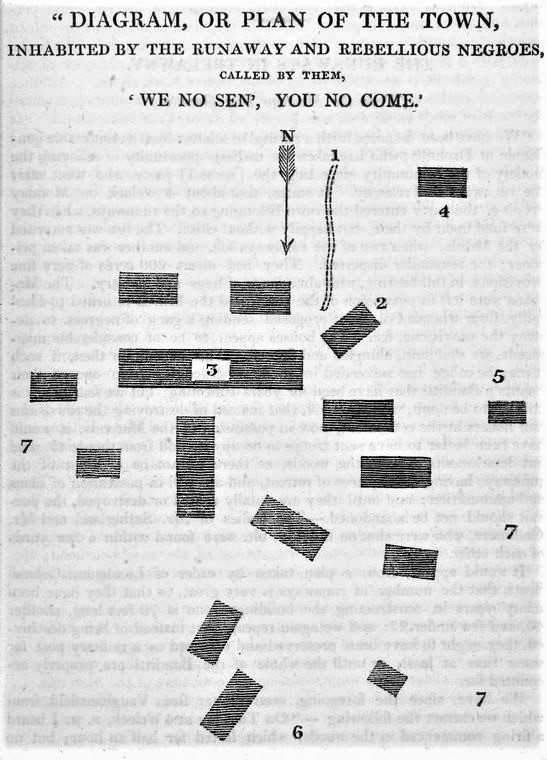 In the history of maps of blank, empty, and missing places this map1, published in 1825, is one of the hollowest, and saddest of 19th c US-centric image: it is a heartbreaking map of an empty, abandoned village of peacefully-living runaway slaves in Jamaica, in about 1825.
The name of the town, extraordinarily, was “We No Sen, You No Come”. It meant, basically, that the slaves living there would not leave their town, wouldn’t seek anything from the outside, would not interact, would not interfere; in return, they didn’t want anyone visiting, coming to them. interfering in any way; just wanted to be left alone, to live. And from the account of this supportive, understanding and sympathetic publication, that is exactly what these people had done for eleven years.
[Image source–please see Notes below]
But then something happened. The owners of the enormous estate wanted the “banditi runaways” gone. The slaves evidently had 200 acres under domestication, hidden in the far reaches of an enormous 100,000 acre estate. The “hunting party” left heavily armed, accompanied by 250 troops, as well as “confidential and baggage negroes”. (The term “baggage negroes”, as impossible as it might seem today, was a well-worn, heavily used term through the 18th and mid-19th centuries.) They approached the small town and encountered a very slight resistance, something like a guard, and killed them. Retreating somewhat after the initial attack, the scouting party returned, and then found the village completely empty. (Some reports say that there was more limited fighting, with casualties on both sides; some say that there were more slaves killed.) After whatever happened happened, though, the return to the little village found it abandoned, with everything still in place. The members of the village had “disappeared”. Or at least I hope that they did, and didn’t get “disappeared”, men, women and children all, as in the famous Floridian “Negro Fort” case and Andy Jackson. Perhaps these people were fortunate to actually escape.