A Daily History of Holes, Dots, Lines, Science, History, Math, Physics, Art, the Unintentional Absurd, Architecture, Maps, Data Visualization, Blank and Missing Things, and so on. |1.6 million words, 7500 images, 4.9 million hits| Press & appearances in The Times, Le Figaro, Mensa, The Economist, The Guardian, Discovery News, Slate, Le Monde, Sci American Blogs, Le Pont, and many other places… 5000+ total posts since 2008.

Category: History of Goodbye

  • From Children’s Games to the Lake of Fire: Fun and Hell by Mr. Bruegel (Alpha & Omega, Part I)

    JF Ptak Science Books  Post 2834a

    Somehow I was drawn to take a close look at Pieter Bruegel (the elder’s) massively complex painting, The Triumph of Death (painted ca 1562), in which people were skeletonized by skeletons, killed in fantastic grotesqueries. No doubt I found my way there thinking about COVID-19, and the 1918 Influenza Pandemic, and naturally to the time of the London plague and then the Black Death, winding up on Bruegel’s bitterblack doorstep. In the painting’s many nooks and crannies and its deep minutiae, there is no regard for hope to be found, no possibility of god’s grace to comfort and possibly save the doomed, nothing by the delivery of myster-horrories leading to the lake of fire.
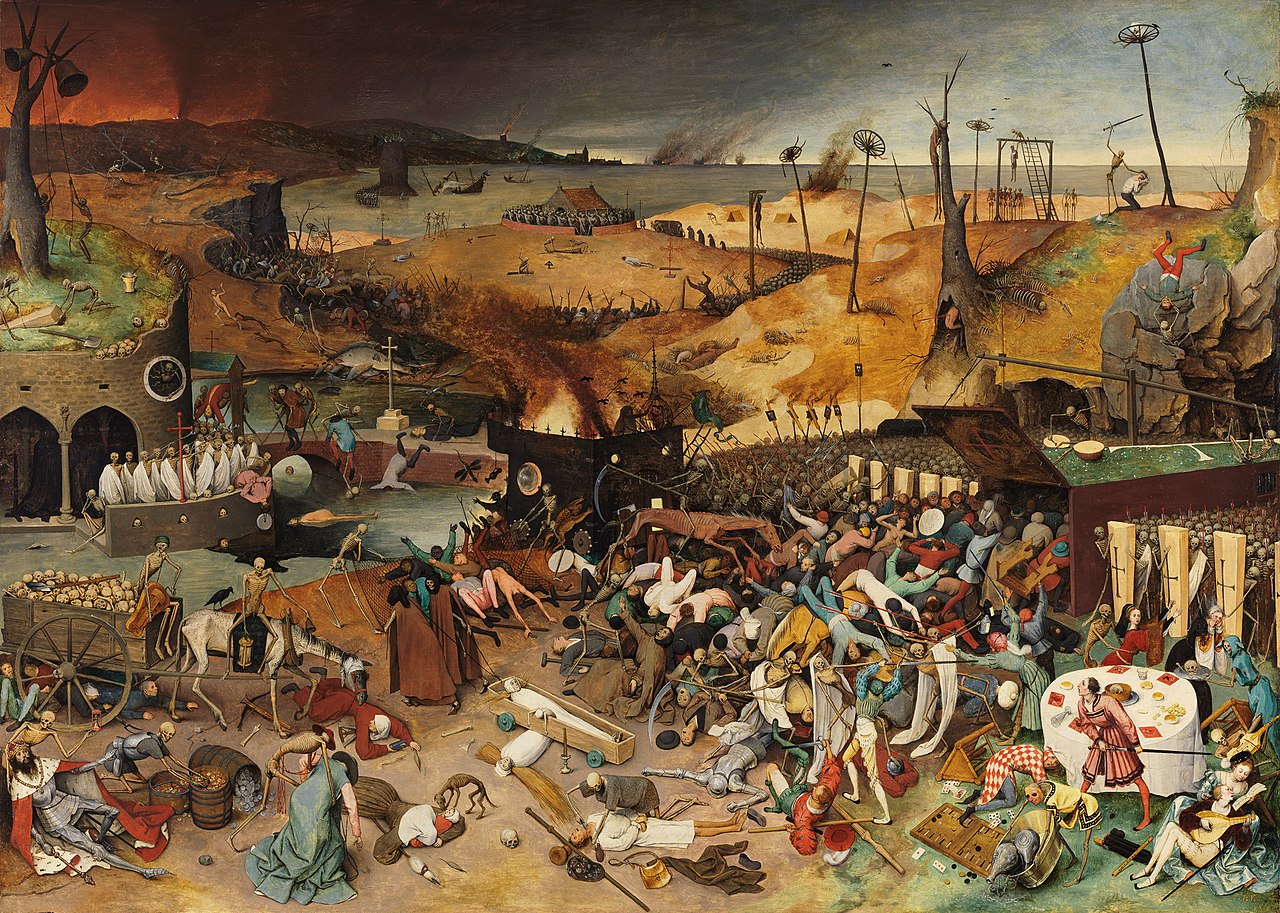
    Bruegel triumph of death

    There is just so much going on in this painting, so many scenes that you’d expect to see an overall narrative, except that there is none, just hundreds of people being taken by Death and its skeleton minions, led off to the gate of Hell. There are dozens of individual passions being crushed and morals observances being made, but they all seem to stand apart and clear.

    I did a quick survey to see if there was an overall census of this apocalypse, but I didn’t find one, surprisingly, which probably means I didn’t look hard enough. That said I thought it would be quicker to make my own scan of what is going on in the painting, starting in the near-center, where we see the spiked opening of the cave of Hell, surrounded by the armies of the dead. In the foreground is a very bad litany of very bad things, people being hanged and burned and drowned and stabbed and knifed and strangled broken on the wheel, those looking out to a deeper field of burning houses and a burning armada, everything burning or set to burn—everything was on fire, leading to the place where the fire was on fire.

    Continuing the survey in the image’s far left-bottom, we see a king in his finery being shown an empty hour glass; to his left a skeleton in armor poking around in bags of gold and silver coins, while just nearby is a cardinal being led to eternity by a skeleton wearing a cardinal’s hat. Further on we see a very strong denial of the absence of mercy, in this case a starving dog nibbling on the face of a dead baby still in its dead mother’s arms, and this right next to someone being overpowered and having his throat slit.

    Behind the king there is a skeleton crew operating a wagon full of the dead—one of the skeletons plays a hurdy gurdy while the other sits daintily astride the starving horse pulling the dead crate. Nearby people are being gathered in a net—like, well, people being led of to hell in a net—which seems a better end than what is going on around them, a diatribe of death by hackings and assorted other nastiness.

    On the opposite side of the painting from the king, on the far right corner, is a pair of, what, friends or something singing and playing, completely oblivious to the larger scene and even to the lute-playing skeleton leering and hovering over them. To their left is particularly disturbing figure—a skeleton wearing a human face with no eyes is tipping over a brazer filled with flasks, this taking place next to an upset backgammon board and a fallen deck of cards.

    Rounding it all out, in the center of the painting, we finally see Death itself, riding a red horse, horse of war, the symbol of fire, of blood, and one of the four horses of the apocalypse. Death charges on, and in this horrible commotion leads his hundreds of skeletons into what was probably a generic scene of generic people doing generic things appropriate to their generic-icity, the great an overwhelming triumph over mortals seeming abandoned by their god.

    So, there it is—I just ran out of steam in thinking of a census of what was happening in the painting, settling for a summary. Its just a little too nasty for right now.

    The cure for this painting is to have a look at Bruegel’s superb painting of children’s games, which comes up next.
    ·Posted by :

    ·in:

    — —

  • The Salvation Army as an Emigration Agent (1920)

    JF Ptak Science Books  Quick Post   History of Goodbye series

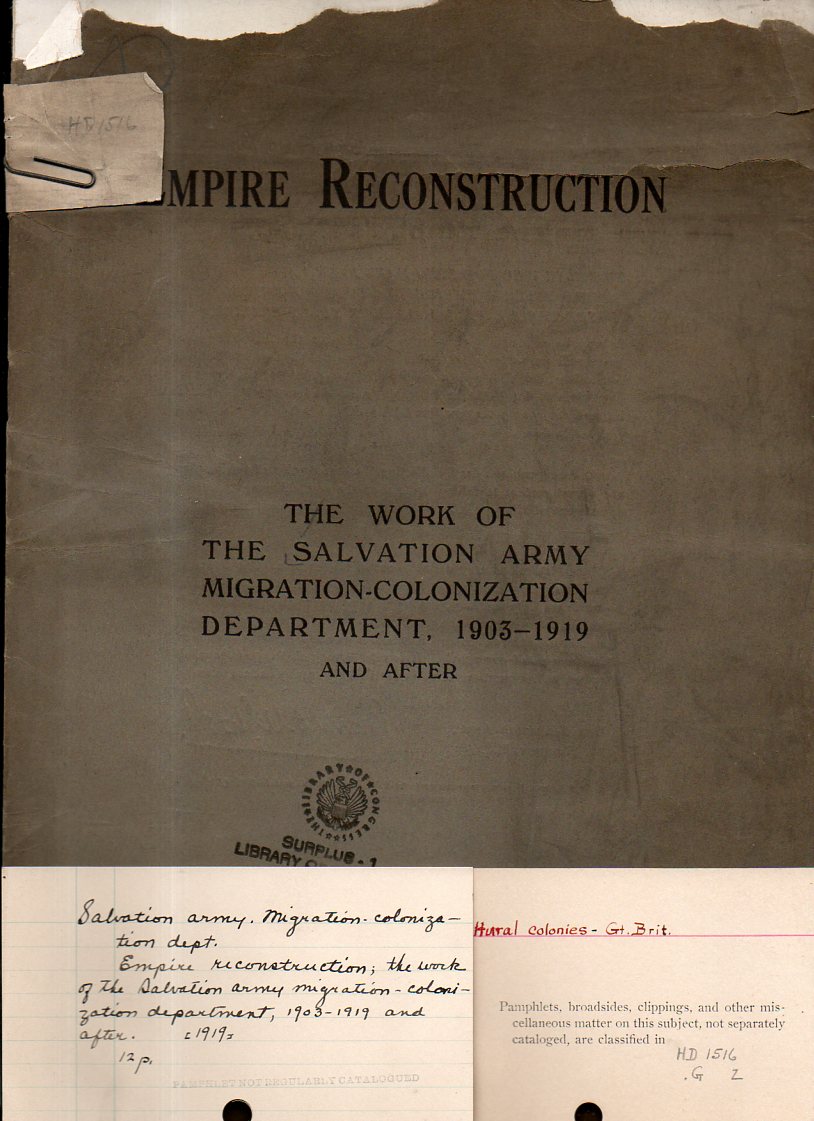
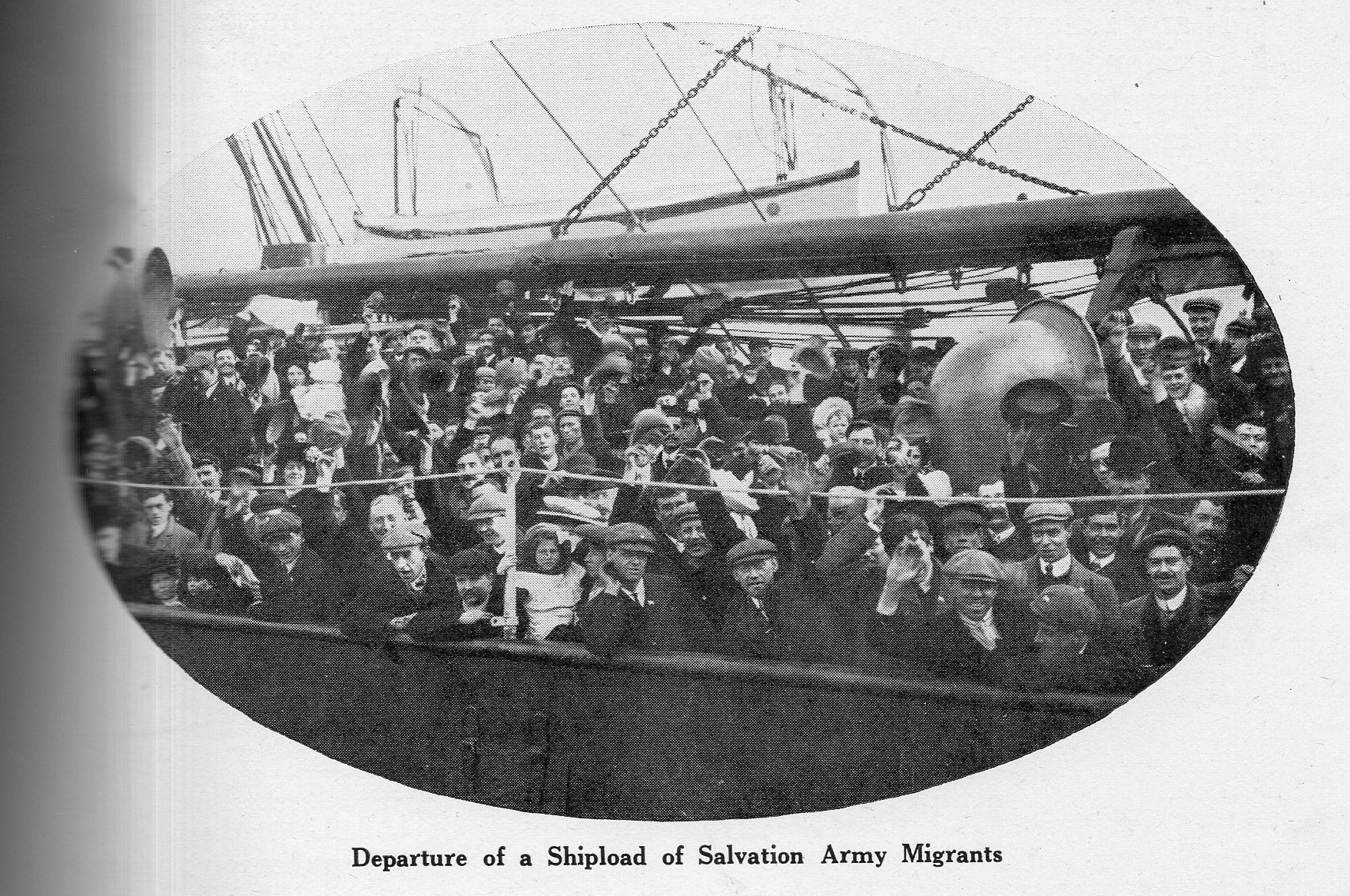
     I had no idea that the Salvation Army was responsible for sending out a quarter million immigrants into the world in just a couple of dozen years. This is a substantial travel program, and a dissemination of potential proselytizers into the far reaches of the Empire’s domain.  And as it turns out, the Salvation Army HQ in London was destroyed during the Blitz, along with the records of this great migration–very little remains of any official records regarding this long effort.

    “The Salvation Army was the United Kingdom’s largest voluntary migration society in the first half of the twentieth century, helping around 250,000 people to emigrate from the British Isles to the British Empire Dominions. Given the wide-reaching impact of this work and the considerable resources The Salvation Army dedicated to it, it is surprising how little evidence and knowledge of it there is now.”–http://www.salvationarmy.org.uk/history/blog12

    Salvation army500


    Salvation army502

     Empire reconstruction. The work of the salvation army, migration – colonization department, 1903-1919 and after. (35x22cm, 12pp, with 12 photographs. Provenance: (Leland) Stanford (Junior) University, from prof. E(phraim).D(ouglas) Adams, then to the Library of Congress, then to me, Only one copy is located in the WorldCat/OCLC, at the Bibliotheque de documentation internationale contemporaine Nanterre).


    ·Posted by :

    ·in:


  • The Floating Cemetery of Piet Mondrian

    JF Ptak Science Books   Quick Post

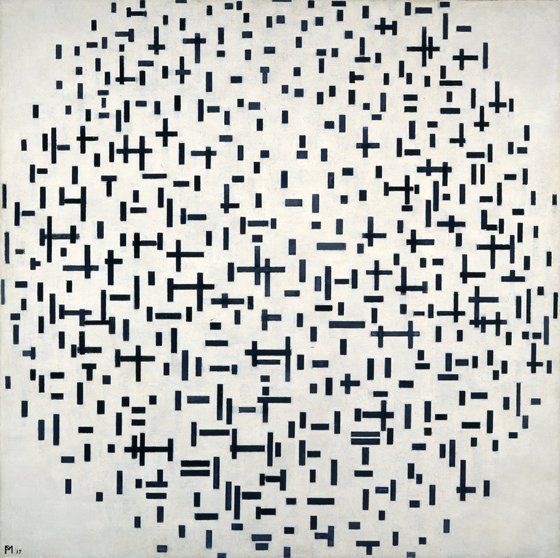
    Mondrian graveyard

    [Source: illustration from Piet Mondrian, Life and Work, edited by Cees W. de Jong, Abrams, 2015.]

    I just wanted to open up this idea–I mean, I’m not an art historian, and the title doesn’t intend to insert this speculation in Mondrian’s mind as he painted this, but his Composition in Line  (1916, oil on canvas, 42×42″)  does to me look like a military graveyard.  After he got stuck in the Netherlands following the beginning of WWI he entered into a very creative and morphing phase of his creative artistic life.  His very recognizable primary color geometries of art start to appear in his notebooks in 1909, and geometric forms begin to appear in the skies and backgrounds of his representational landscapes and portraits (outside his Cubist mode) beginning at least in 1908, so to say that the war influenced very much in his creative spirit directly is probably wrong–but it doesn’t stop me from seeing The End of the Battle in these works.  

    Keeping to this theme, his Composition 10 in Black and White (1915, oil on canvas, 32×42″) looks a little like a trench map:

    Mondrian trenches

    [Source: illustration from Piet Mondrian, Life and Work, edited by Cees W. de Jong, Abrams, 2015.]

    Again, there’s no evidence to support these work as having anything to do with the war–they just suggest themselves to me, especially given the date.


  • Found Poetry Going into Nothingness (Gestapo Prison, 1944)

    JF Ptak Science Books   Post 2565

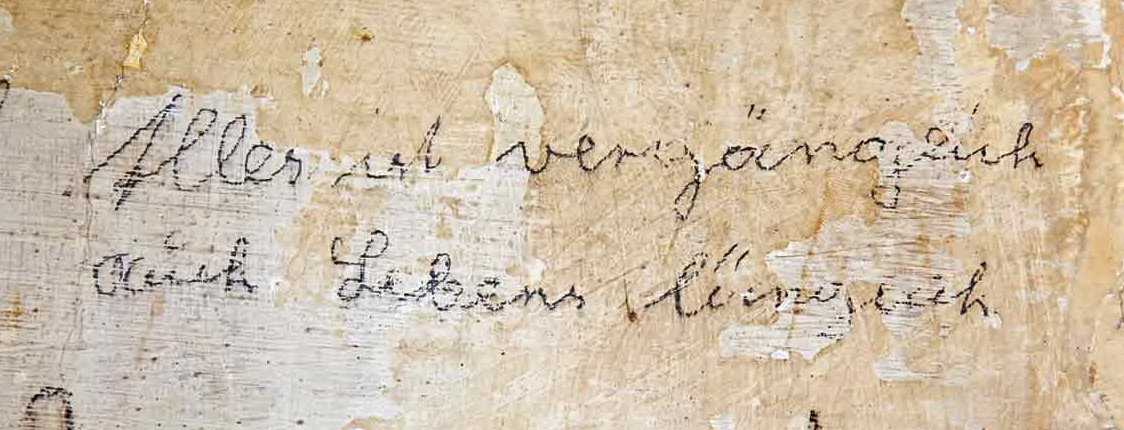
    El-De House inscription

    “Everything is transient–even a life sentence.” [Image source: http://www.museenkoeln.de/ns-dokumentationszentrum/pages/764.aspx?s=764#!prettyPhoto ]

    So reads the inscription on a wall in one of the cells in the former Gestapo “house prison” at the EL-DE House in Koln. There’s no real telling how many people the Gestapo brought to this place.  There were 10 cells in the basement of the building seized of Leopold Dahmen (the “L.D.” of “EL-DE”), but they could be made to hold many people (some as many as thirty) for interrogation and torture. From there, people were sent off to other Gestapo prisons, or to the Buchenwald sub-camp nearby at the fairgrounds,  or shot in the head, or executed right there in the basement on a mobile gallows built for seven that was stored next to the kitchen.

    The Gestapo negotiated to use the building (Appellhofplatz 23-25, at the corner of Elisenstrasse) and put it to heavy use for the next ten years, arresting and kidnapping social agitators, anti-NSDAP, Communists, Democrats, Gypsies, gays, and others deemed to be detriments to society or threats to the government, where they were questioned, beaten, and then generally sent off to some fatal rendezvous.

    The sizable EL-DE Haus survived the 262 air raids on Koln, including the massive (and first) 1000-bomber raid (May 30-31, 1942).  The majority of its seized occupants did not survive EL-DE Haus.  

    Today the building is an historical landmark in the city, a museum of the Nazi era. Many of the inscriptions etched/drawn on the walls of the cells by their prisoners are still visible and have been preserved–some have been restored (in spite of some being painted over in 1979 in a decision no-doubt being either resistant to understanding and full of malicious thought or being entirely thoughtless).

    The inscriptions are recorded at the museum’s website ( http://www.museenkoeln.de/ns-dokumentationszentrum/pages/764.aspx?s=764#!prettyPhoto) along with numerous photos of the cells and the structure.  

    One is particularly lonely, and fearful, and reads in a way like found-poetry of dread unknowing and anticipation:

    “7/9/44 Thursday, 8/9/44 Friday;

    9/9/44 alone

    11/9/44 Monday, 2 Frenchwomen;

    12/9/44 Tuesday, 13/9/44 Wednesday, one German woman;

    14/9/44 Thursday 15/9/44 Friday  

    Wednesday 18th October 1044 Been here 26 days,

    Thursday 19 October 27 days,

    Friday 28th October 28 days,

    Saturday 21 October  29 days,

     Sunday 22 October 30 days.

    So one month here.”

    Someone was desperate. trying to capture time spent in the dank place, recording an existence, calling time by its full name, every day.  And then off to nothing.  


  • “Picnic” and “Dusty”–Assessment Programs for Bio/Chem Weapons Damage and Radioactive Casualties, 1964

    JF Ptak Science Books   Post 2439

    •  Describing computer programs “Picnic” for biological/chem weapons damage,  and “Dusty” , for radioactive casualties

    While preparing for all eventualities of all-out toe-to-to conflict with the Ruskies it is of course advisable to have ways to figure out what might be left after an “exchange” and how it might be used–but really, the important thing is to be able to have an inventory of the post-apocalypse world so that plans could be made for the next part of existence.

    And that is what the following workbook outlined in part. 

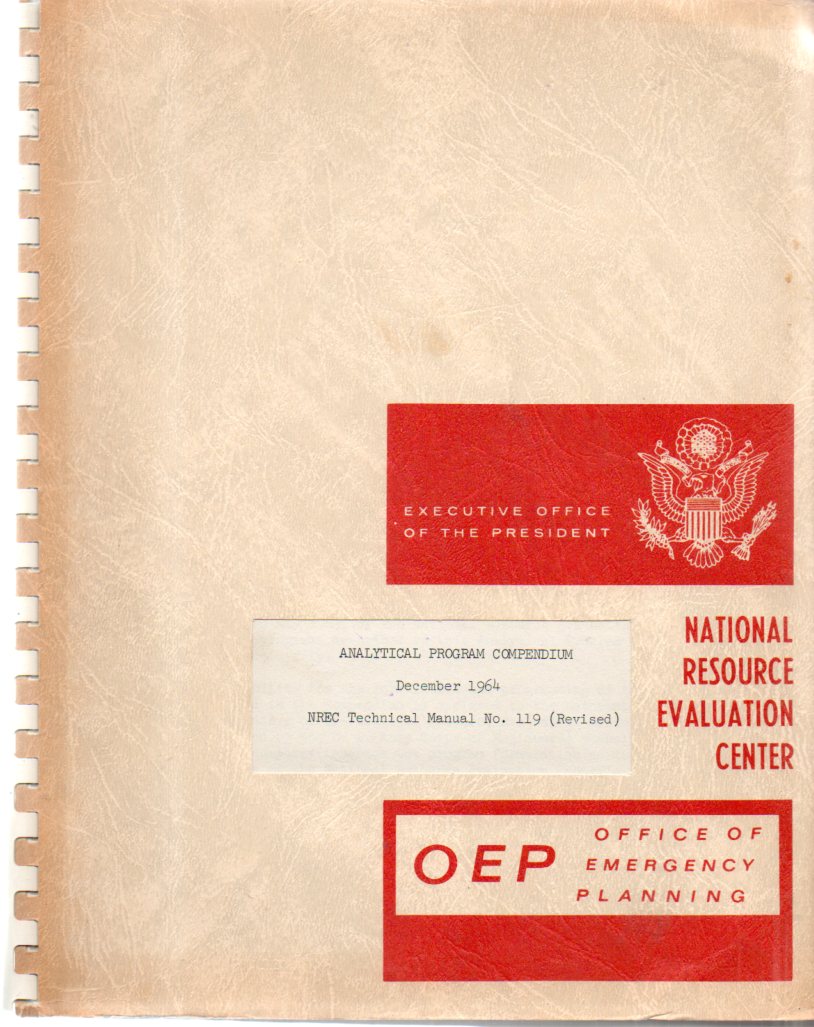
    Mathematics and Computation Laboratory, National Resource Evaluation Center, Analytical Program Compendium NREC Technical Manual No. 119 (Revised)  (December 1964.  11×8″. 92 pp. GVC-bound, with stiff wrappers of the Executive Office of the President NREC/Office of Emergency Planning) holds some of overall answers to the survival issue.

    The preface is signed by Joseph D. Coker, (Chief, National resource Evaluation Center) who writes: “The Analytical Program Compendium gives a brief description of the National Resource Evaluation Center’s current general purpose analytical programs and replaces earlier editions of the NREC Glossary of Damage Assessment Programs. It is intended as a guide for users and potential users of these programs to indicate the various programs that are presently available and those that are being produced. Separate Technical Reports or Technical Manuals are available for the standard operating programs and for a number of those which are in preparation. Reference to these manuals and reports can be obtained in the Bibliography of Publications (Technical Manual No. 121) published by the NREC. The Compendium contains descriptions of the computer programs of a substantive nature.”  

    Nrec 664

    [The NREC and the Office of Civil Defense used the UNIVAC scientific programs USE assembly language and 3600  Fortran.]

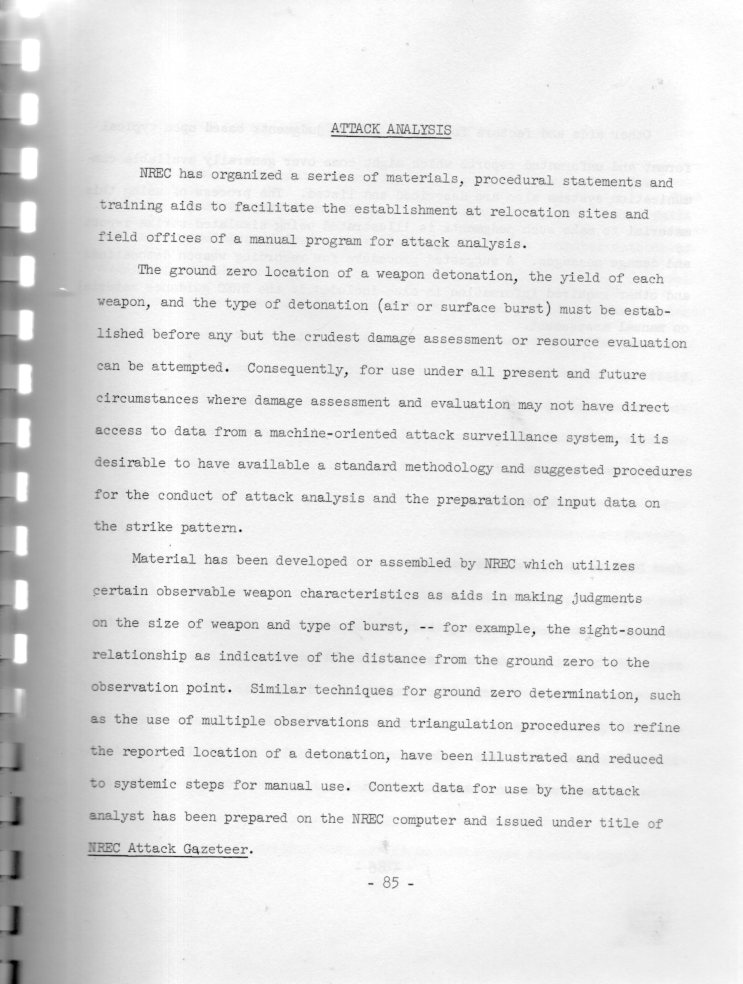
    The list of the contents of the 92-page work is pretty interesting, the book presented in eight sections (or “casualty classes programs”):  (I) Attack Analysis Programs; (II) Vulnerability Analysis Programs; (III) Damage Assessment Programs (Direct Effects, sections dedicated to nuclear shots Dusty III, Flame I, Jumbo III, Streak IV, Dart II, Dart III, Picnic, Ready I.(IV) Resource Evaluation Programs; (V) Economic Analysis Programs ; (VI) Resource Management Programs; (VII) Mapping and Display; (VIII) Manual Procedures for Damage Assessment and Resource Evaluation.

    Nrec 663


    Under section III are described the various other programs computing availability of surviving resources and damages to the rest, and to assess capability and loss. For example:  Weapons Edit III (working on an 1103 AS or 1105 computer) calculates missile availability; Dusty III (fallout intensity “…at weapon oriented points”; Flame I (“computes an estimate of the extent of the spread of uncontrolled fire”) and can compute fire maps; Jumbo III (a casualty assessment program); Attack Environment III (“determines the blast effect from the dominant weapon and combines the separate effects of fallout and from from all weapons that affect each resource point”); Facility Assessment (Namepoint) III ( for physical damage to facilities); Time-Phased Accessibility  (“listing of accessibility of resources in various conditions of damage after an attack”); Population III (summing up casualties in populations after attack; Manpower III (translating population losses into labor losses and how it would affect x,y, and z); Livestock III (keeping tabs on livestock “and livestock products”); Streak IV (‘high speed estimate of blast and fallout casualties, estimates of damage and denial of facilities…”); Picnic (!, estimating casualties from biological or chemical weapons), and a number of other programs. 

    There are some other interesting programs for end game times: Net Inventory (“(a) routine (that) is a balance sheet between supply (inventory and production) and demands (requirements)” and Amounts of Production (“a routine (showing) the production based in facility damage and labor casualties; and of course Survival II, which computes “the total requirements…for regions”.

    Of course it was necessary to figure all of this stuff out so that in the event of The Big One there is a certain control over what is where and what is left and what is needed and so on.  

    The last section helpfully describes programs of manual damage assessment (“developed by agency representatives for use when computer estimates are not available”).

    There is no mention made to where these computers are housed. 


  • Looking at Things: an Iconic Photograph of the U.S.A., April 12, 1945

    JF Ptak Science Books   Post 425 (from 2008) expanded

    0 ebay clark


    [Image made from a private, original photograph; the picture first appeared in Life Magazine, April 23, 1945.]

    Many years ago I went to the house of a man with books to sell.  The house was terrific, with a view of the Potomac and just outside the district line–a hard thing to accomplish in housing in Washington.  The elderly gent’s house was open, airy and basically wallpapered with large format, very big photographs.  Many of the photographs I recognized–and of those, many were iconic images.  I said something simpy/obvious like, “so I see that you collect historic photographs.”  “No, I don’t” he said.  In that moment I thought he was just being a wiseacre with me.

    He quickly said, “I took them”. 

    “Oh my God”, I thought.

    I honestly didn’t know what to say–I had seen so many of them in my life, and so often, that like a lot of things, these images were just there, part of the cultural landscape.  And here was the man who took them.  After I got over my shock and came to a sense or two, I interview hi a little.  The man behind the camera’s name was Ed Clark.

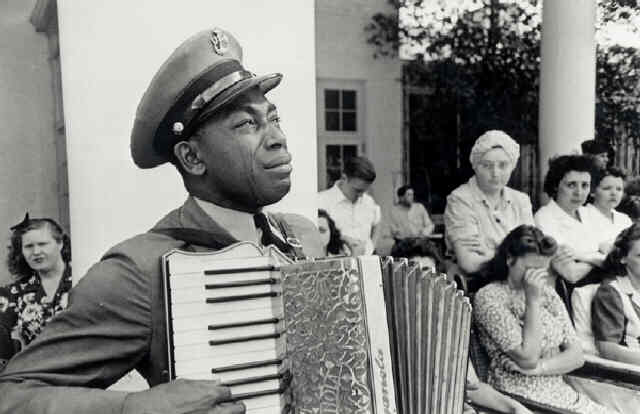
    Ed (1912-2000) was about 80 when I met him, and he was selling some books because he was getting ready to leave DC and head back home to Nashville.  He was very quick with strong recall.  I asked him about his ultra-famous photo of CPO Graham Jackson (1903-1983), preserved forever, who on the morning after Franklin Roosevelt’s death on 12 April 1945 in Warm Springs, Georgia, was playing Going Home  at the portico of Georgia Hall as the president’s casket was being taken to the train for a last ride to D.C.  Jackson was at Warm Springs to perform for Roosevelt as he had many times before when the President died on the 12th, on his 42nd visit there.

    I wondered about where the rest of the crowd was, and particularly, where the rest of the photographers were, at that moment  After all, FDR was about the most famous man in the world, and perhaps the most important, when he died in the last stretch of WWII.  Surely there must’ve been tons more photojournalist there to record the scene of FDR’s body being removed. 

    “There were” Ed said.  I asked him where they were.  He explained that they behind him, which would’ve been in front of him, actually–he was at the rear of the crowd, with every other photographer pointing their cameras forwards, recording the movement of FDR’s body.   Ed said that he turned around (“because that picture was already being made”) and found the rest of the crowd, the people who were already there at Warm Springs, watching from a respectful distance.  And it was at that point that CPO Jackson started to play his accordion, the music being one of FDR’s favorite pieces.  “They weren’t looking the wrong way”, Ed Clark said, “just not the right way”.  And Mr. Clark made the photo that everyone else missed, because they’re faced the obvious.

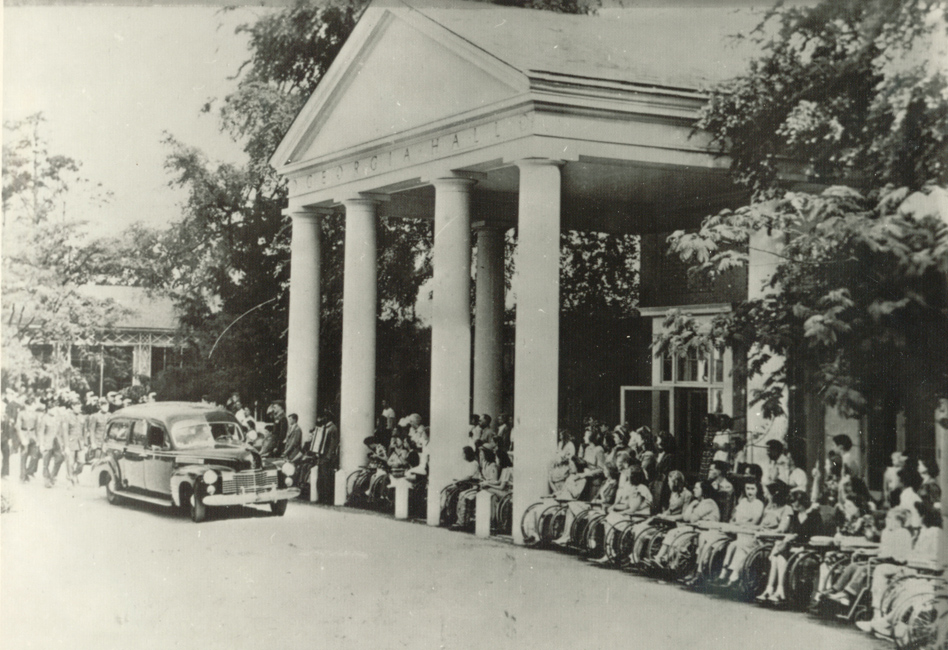
    Another view of Roosevelt’s casket being driven by Georgia Hall in Warm Springs. If you look closely you can see CPO Jackson standing just to the left of the hearse’s front left fender: [Source]:

    FDR Warm Springs


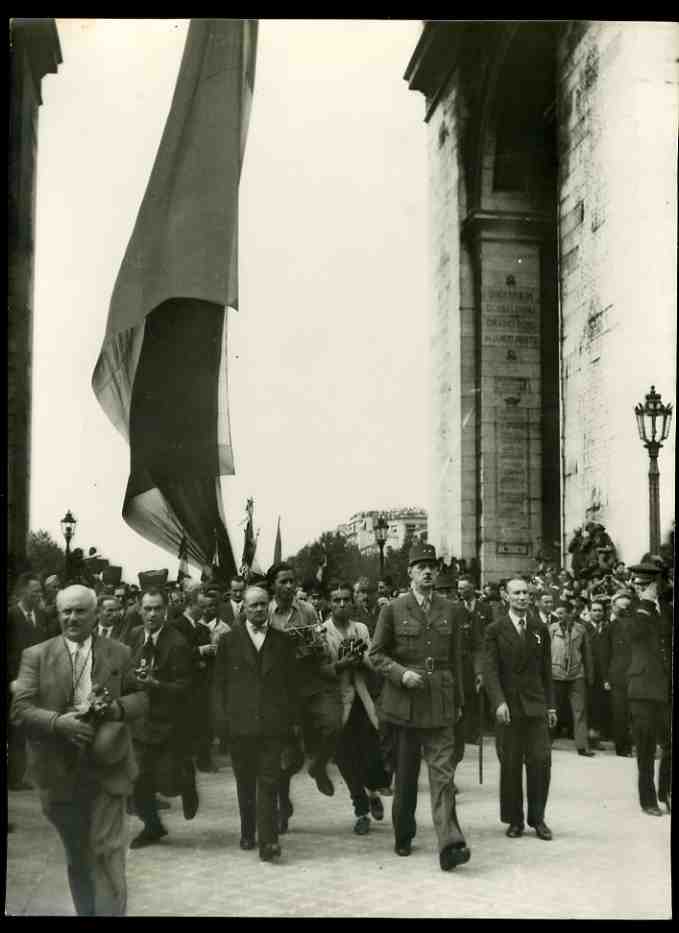
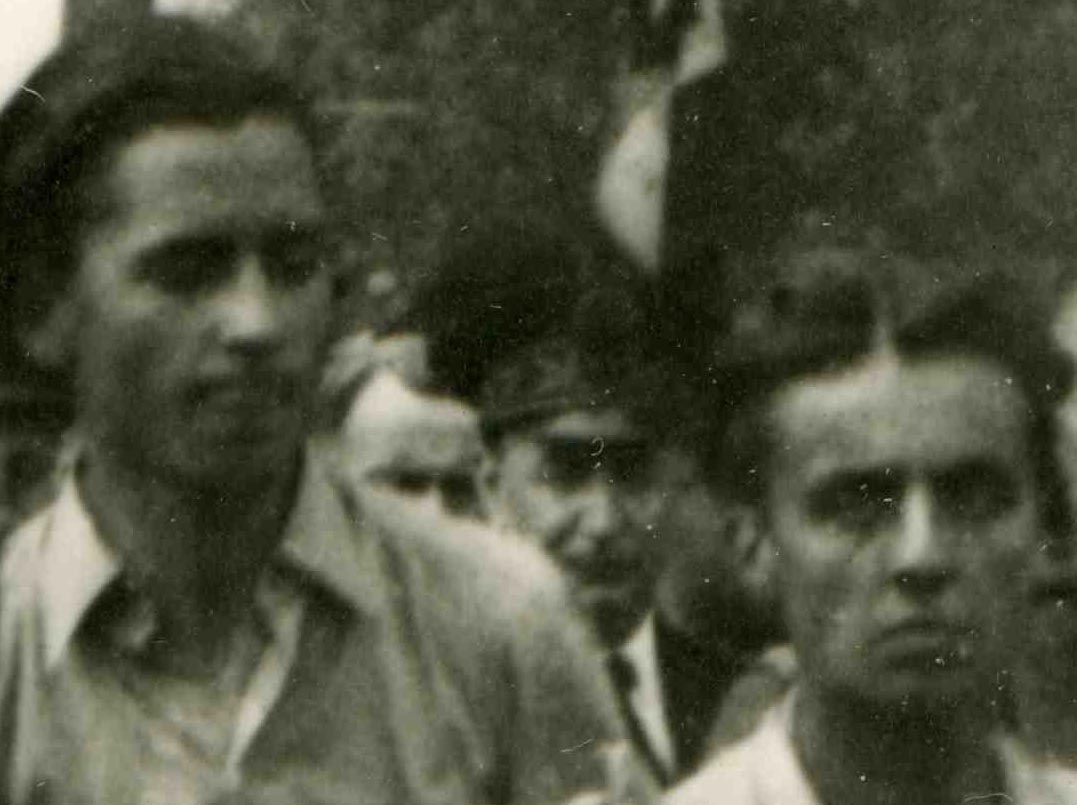
    This second picture captures both the moment and the photographers whop were missing it.  The scene is of course General De Gaulle making his triumphant return to the liberated city of Paris, walking back into the city through the Arc de Triomphe on 25 August 1944.  I am also completely certain that the picture was taken by another LIFE photographer (Ed Clark having worked their for years contributing many photo-stories and covers), Ralph Morse (my original doesn’t have any identification on the back, though it certainly looks like the others Morse made at that moment).  Morse caught De Gaulle in mid stride at the half-way point through the Arc.  And you can see the look of pain in the faces of the other scrambling photographers who must’ve been just coming to the realization that they were in the shot they had been desperately wanting to make since 1940. Their sinking feeling is pretty visceral.

    0 ebay 12 where not to belia260

    Perhaps being in the “wrong” place is just someone else’s perception until you prove them wrong.  After all, there must be some right place right time, wrong place right time, right place wrong time, wrong place wrong time hierarchy, no?–that is, until you’re smart enough to realize that there’s no such thing as “wrong”. 

    0 ebay 12 where not to belia261


  • The End for You is Coming: WWII Propaganda Leaflets

    JF Ptak Science Books

    Propag--25753

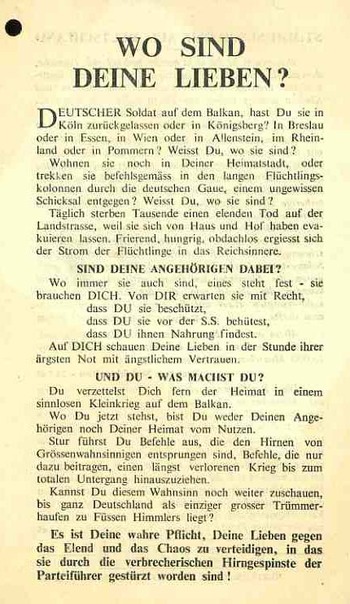
    A part of the payload dropped on German and Japanese forces were not metal and explosive, but paper. Hundreds of thousands of pieces of paper with real and imagined information, tickets to surrender, reminders of the coming of the end of the war, passages to a prisoner of war camp somewhere that would ensure the soldier’s survival of the Blogpropogwhere_are099rest of the war.  Convincing someone to surrender, or making it easier for them to not fight too hard and to surrender, is sometimes easier than to confront and kill them.
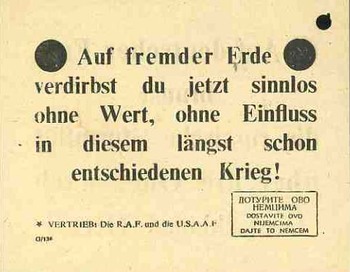

    For the most part these were distributed in a combination effort between the U.S. Army Air Force (USAAF) and the Royal Air Force (RAF), while the other major segment was done by the Supreme Headquarters of the Army Expedition Force (SHAEF) and the 8th U.S. Army.  There pieces of directed information were very persuasive, but of course they were hardly new—not even the delivery system (via aircraft) was an innovation.  

    These leaflets were more or less an “information” service relating factual events and presented in such a way to persuade and convince whomever picked them up that their cause was at this point futile.  In just about every case in the 150 items in my small collection as far as I could determine all of the statements made were indeed correct and accurate.  Leaflets were dropped by the ton during the war that were pure fabrication, intended to confuse the scare the recipient into surrender, deceiving them;  but not these. (For example, a famous use of deception in major confrontations was Operation Quicksilver and the creation of the First United States Army Group (FUSAG), a non-existent fighting enemy that was supposed to distract the Germans while real preparations were underway elsewhere for the invasion of Europe (D Day).
    Blogpropogon_german_soil100  
    There was a distinct threat of terror in many of these leaflets, though the terror would never come from the Americans or Brits—the Russians, however, were another story. (Remember that the U.S. gets into the war at the end of 1941; the British had been fighting since 1939; and the Russians, well, they had been fighting too since 1939 [starting out without chivalry and with cold malice against the Finns], but they did fight against the Nazis once they had been completely deceived by them,  losing 20 million people in the process.  The Germans had much more to fear from them than anything on earth. And rightly so.) The use of terror in propaganda is probably as old as warfare itself—for example the Mongol leader Tamerlane built a pyramid of 90,000 human heads in front of the walls of Delhi to persuade the inhabitants to just forget about fighting, and leave.   The British employed a terror tactic in the use of the Gurkas and their curved and menacing Kukri to great advantage; the Americans had the Phoenix Program in Vietnam (for the assassination of leading Viet Cong and their supporters), and so on, into the sunset. 
    Blogpropogpunctured101

    ·Posted by :

    ·in:


  • History of Dots: Dots of Death, 1937

    JF Ptak Science Books,  Quick Post                                                                         Part of the History of Dots series

    Data visualization traffic  death658

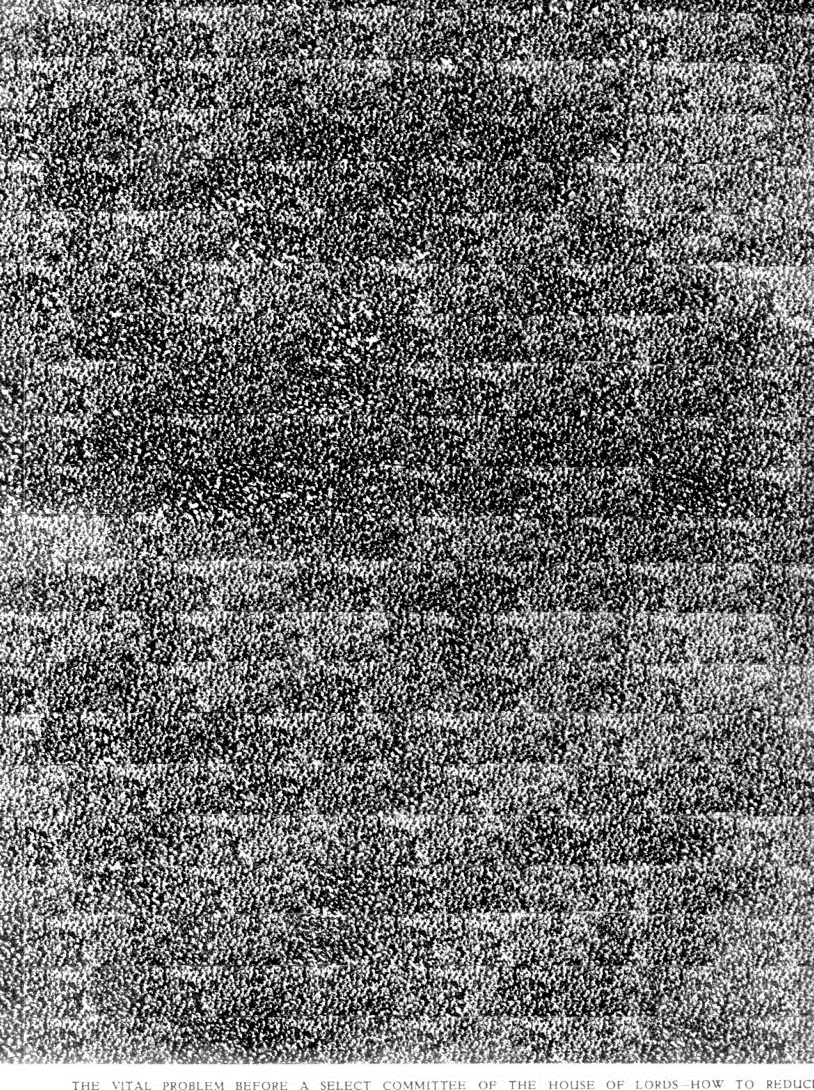
    This is one half of a very impressive, “what the holy heck” sort of photograph–even more so that it portrays the number of people killed in road accidents in England from 1928-1937.  67,100 people were killed–the number of injured was evidently 30 (!) times higher.  This is particularly impressive given that in all of the U.K. 2175 people were killed in 2012 compared to 36,000 for the U.S., which means 3.5/100,000 in the UK and 11.6/100,000 in the U.S. So things have gotten much better now than they were then, with a third of the fatalities for a much larger population. In any even the photo montage was a very compelling image, and was printed in the Illustrated London News, December 18, 1937, page 1110.  

    An extreme detail figuring about 2% of the image: 

    Data visualization traffic  death660

    Another detail, about 1/20th of the image:

    Data visualization traffic  death659

    ·Posted by :

    ·in:

    —

  • An Appeal to the Conscience of the Civilized World–Anti-Lynching 1920

    JF Ptak Science Books   Post 2288

    Appeal213

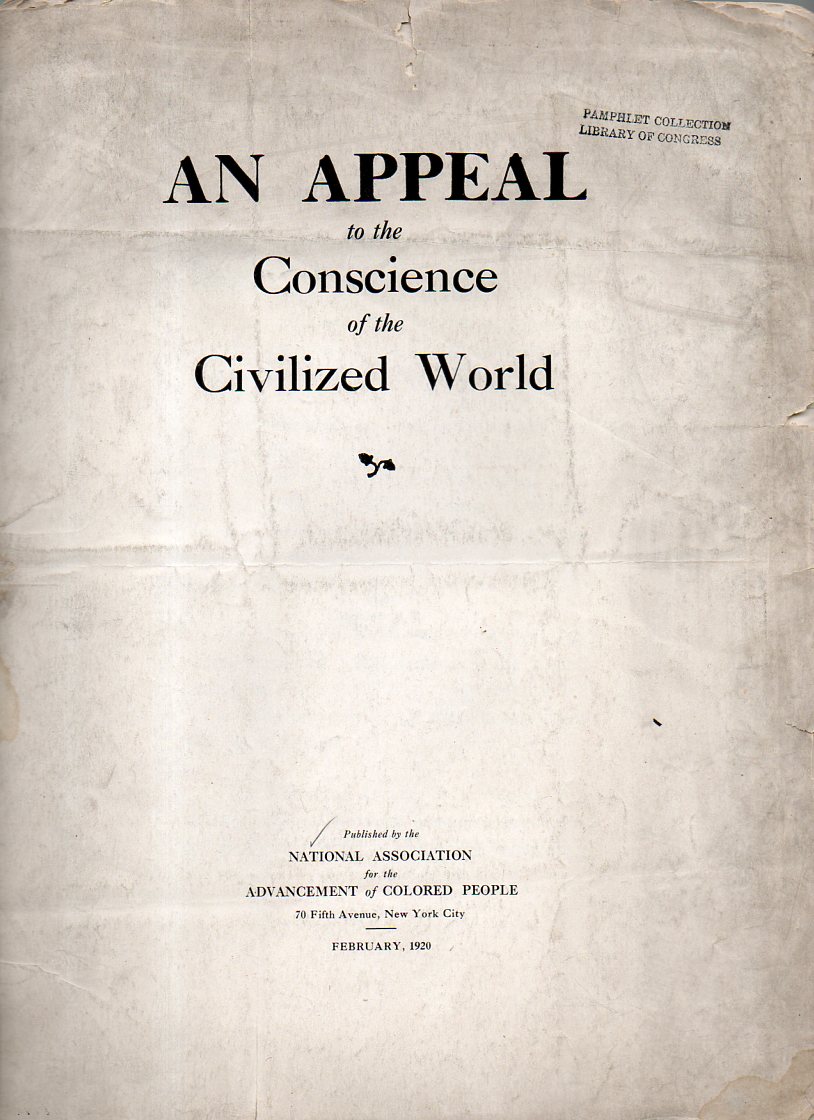
    This truly is an appeal “to the world” for there to be an understanding about what was happening to African Americans in the United States in 1920–and this appeal wasn’t about unequal access to education or jobs or Jim Crow laws or any of the social assaults made on those people; it was more basic than that. It was a statement of how thousands of African Americans were being lynched, and murdered, and burned.  The appeal was extremely basic–to let it be known that these horrors were being committed against a class of people with little capacity to defend itself legally. 

    It is a roll call of terror, listing “barbarous” practices against “colored Americans”, citing 84  persons “murdered or ‘lynched’ . 

    Warning: Graphic material below

    ·Posted by :

    ·in:


  • The Next-Most Obscure Reference to the Beginning of American Involvement in Vietnam, 1954?

    JF Ptak Science Books   Post 1957

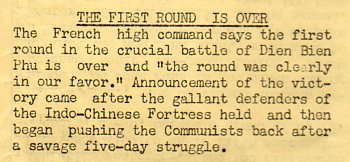
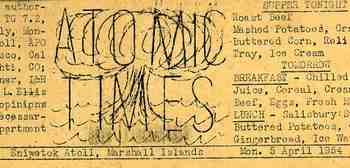
    Five years and 2,200 posts ago, in the young pages of this blog, I wrote a short bit on what might have been the most obscure and removed reference to the American involvement in the Vietnam War, here. It appeared in the 5 April 1954 issue of the Atomic Times, which was a newspaper of sorts produced by the U.S. Army and printed on a mimeographed, single-sheet page, and distributed at
    the tip, or bottom, of a very skinny piece of nearly-circular land far out in
    the Pacific Ocean at Eniwetok Atoll, 5 April
    1954.  The piece of news related to the hoped-for victory of the French Expeditionary Force in the doomed garrison of Dien Bien Phu: “French troops have been
    parachuted into the Indo-Chinese fortress of Dien Bien Phu to join weary defenders in their battle with the Communists. French officials now have a high hope pf a
    French victory, and they say the Communists cannot possibly continue their
    assault unless they receive thousands of reinforcements”. Of course, this was not the case, and the French were badly defeated there, spelling out the beginning of their end in that country and about the earliest beginnings of American involvement in their place. 

    Then a remarkable thing happened. I was reading in a small cache of mimeographed newsletters called The Parry Island Breeze, which was also produced by the U.S. military (Army engineers?) on Parry Island, which was just down the end of the long arm of slender island from Eniwetok in the Marshal Islands group.  This issue (volume 16, No. 5) was released on 6 April 1954, and it was–like the Atomic Times–a legal sheet printed on two sides.  In the second column, for the day following the Atomic Times notice, we see the following:

    Parry Island 2963
    Again! There was no victory in sight for the French at Dien Bien Phu in April, and only misery and heroism and bitterness and death and division lay ahead in the coming month, and then too in the coming decades.

    In the first week of April ,1954, the French garrison was just about conquered–there would be one more month of agony to endure before the Vietminh would claim full victory.

    Atomic_times_detail_masthead159

    After an eight-week siege, the garrison was defeated. Badly. Brilliantly. The French were
    overrun by the Viet Minh forces on 7 May 1954, effectively ending the First Indochina War and the French presence in Southeast Asia came to the end. And here, probably cranked out by hand in the middle of the Pacific Ocean, on a narrow bit of land separating vast collections of ocean, on long narrow strips of earth from which many nuclear tests were conducted, news reached the soldiers and sailors stationed here about the coming French victory in Vietnam.  Of course not even the French knew at the time that the Vietminh army was tunneling its way through the mountains surrounding the garrison, carrying up large cannons in small bits and pieces up through “impenetrable” jungle mountain slopes to install into those tunnels once they breached the other side of the mountain so that they could fire down onto the French.  All of that was yet to come.  In April, there was a certain bit of hope, but I think in reality it was on fire.