A Daily History of Holes, Dots, Lines, Science, History, Math, Physics, Art, the Unintentional Absurd, Architecture, Maps, Data Visualization, Blank and Missing Things, and so on. |1.6 million words, 7500 images, 4.9 million hits| Press & appearances in The Times, Le Figaro, Mensa, The Economist, The Guardian, Discovery News, Slate, Le Monde, Sci American Blogs, Le Pont, and many othr places… 5000+ total posts since 2008.

Category: Books: Title Pages, Unusual

  • Radical and “Socialistic” Ideas of 1939 Mainlined, Mainstreamed, and Main-Streeted

    JF Ptak Science Books  Quick Post
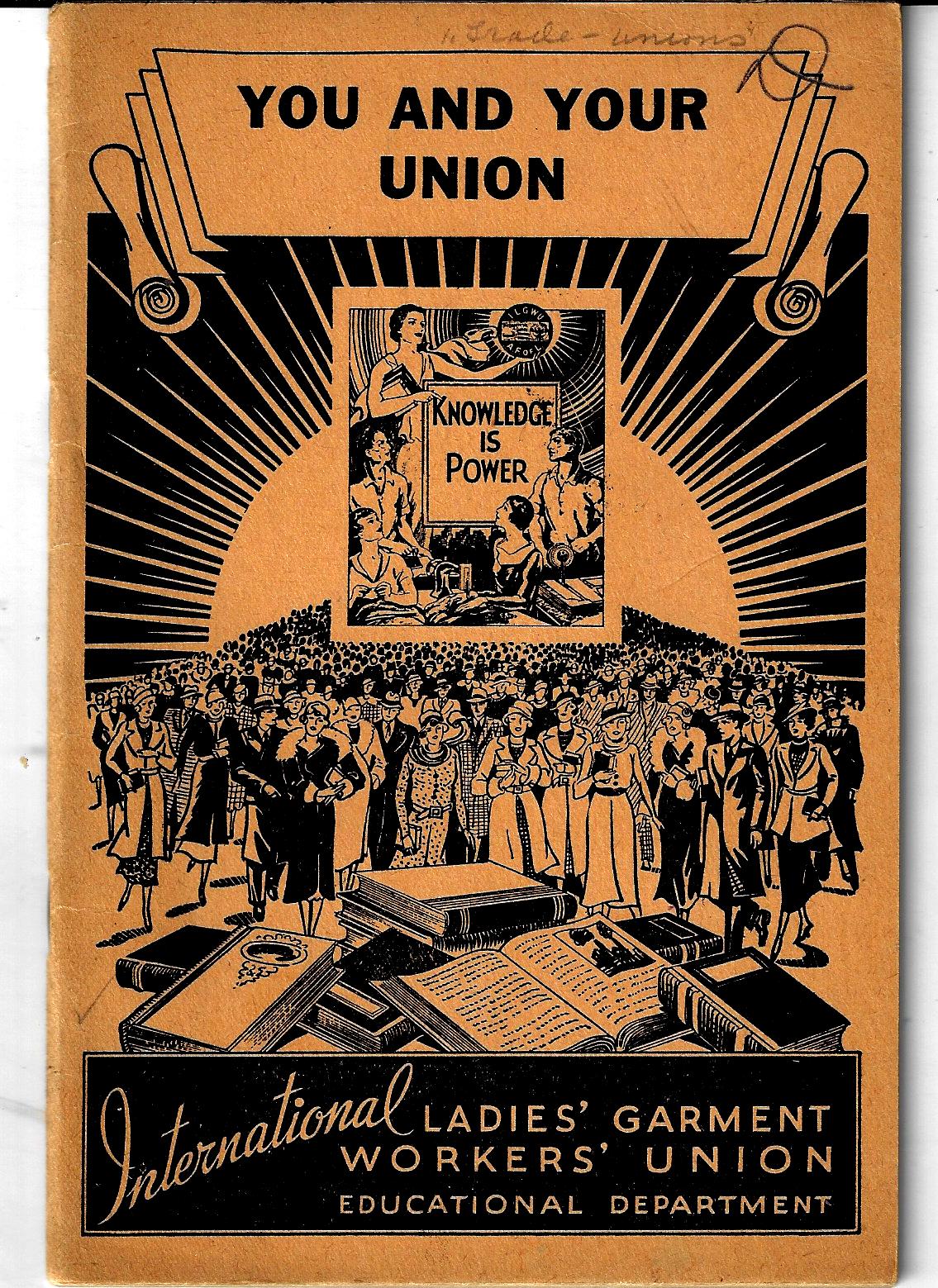
    Books cover ILGWUHere’s another very striking cover for a pamphlet embracing   once-radical semi-socialist pseud-Commie agendas that are today a de rigueur part of our social existence. This is a pro-Union, pro-educational work presented by the International Ladies’ Garment Union (education Department) to its members, getting them up to speed on the major issues of the day. Many of these battles fought by the union were bitterly opposed by industry and (sometimes) the government were for programs and agencies that many take for granted, and something utilized by everyone no matter the political leaning, the bright shining “Socialist” aluminum coating for the future long gone as these programs have become “normalized”.  Some of the issue addressed by the pamphlet were whether or not women could join a union or a labor movement (though 1940 seems a little on the late-ish side for these questions), the necessity of unemployment insurance, social insurance, maternity insurance, old age security, health insurance, and safeguards on the working life of children under 14 years of age.  

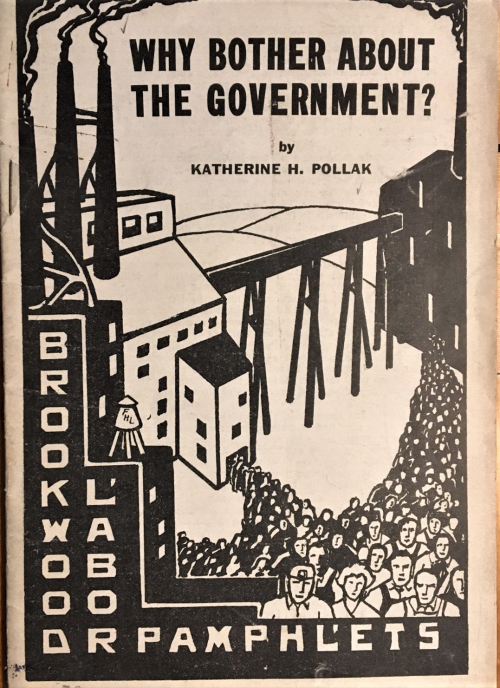
    That, and I also liked the design, the giant parade of women coming from out of the rising Sun.  I’m partial to these mass/crowd images on pamphlet covers–you don’t see them terribly often so when you do the work really stands apart. Here’s another example I wrote about in August 2020, Katherine Pollack’s 1932 Why Bother About the Government, the third installment of the Leftist Brookwood Labor College pamphlet series. It is a bit of a Socratic polemic about the problems and advantages of government, owners of the means of production, workers, and labor organizers…coming down firmly in the square of very-pro forces of organized labor:
    Books covers why bother the government


  • When a Map Should Probably Not Have Been Made

    JF Ptak Science Books  Quick Post

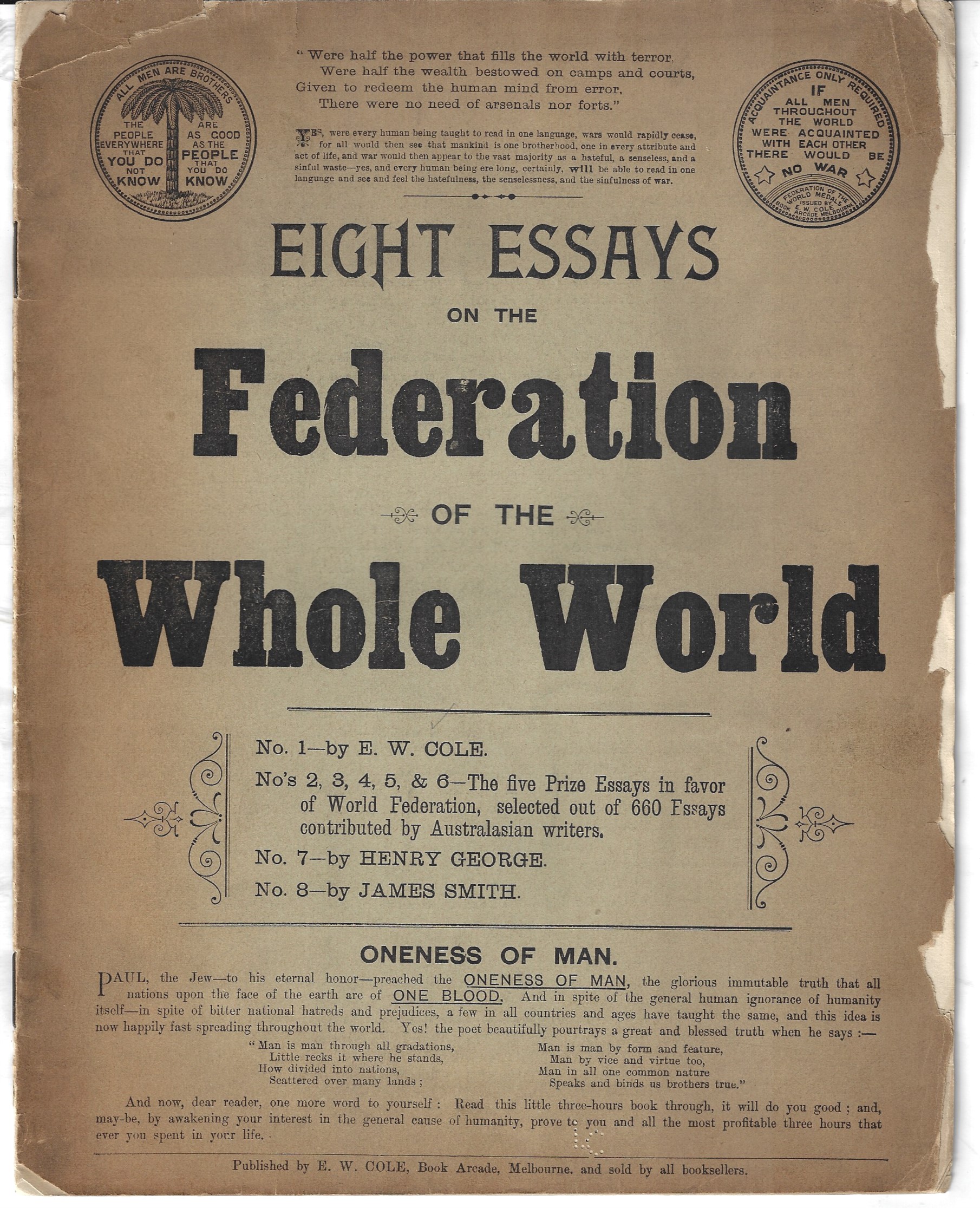
    This pamphlet was a little confusing to me–at first I thought it would fit into a category of Outsider creations, a small collection of pamphlets filled with some towering and submerged ideas on curing the Depression, keeping the U.S. out of war, flagpole painting, zipper repair, exrta-Earths populating the (regular) Earth, eyestalk plant people of Mars, flooding the Sahara, damming the Hudson River, nuclear powered _____, mega weapons, mega planes, hair massage for higher IQ, and so on. The design of the pamphlet certainly had the feel and look of a great attempt at conveying some secret truth, it turns out that it is pretty straightforward, an 1890’s/1900’s  appeal to folk on acting courteously and amicably towards others to achieve a one-government-something. 

    The message was very simple: do good, be kind, help people, live your religion.  It was the work of a very successful bookseller and publisher in Melbourne, Edward William Cole1. He sounds like he was an interesting guy, autodidact and entrepreneurial, born in the U.K. and migrating to Cape Colony and on to Australia, spending time in the gold diggings, exploring the Murray, and settling into Melbourne where he opened up a bookshop in 1864 which morphed into a large arcade with many rented kiosks.

    Cole wrote a number of short pamphlets, published them, and either sold or gave them away–the pamphlet presented here was probably a gift to his customers. It published eight essays of 660 collected for the prize of publication, extolling brotherhood and the commonality of the human condition, appealing for kindness and the common good, and reading above nearly all else. 

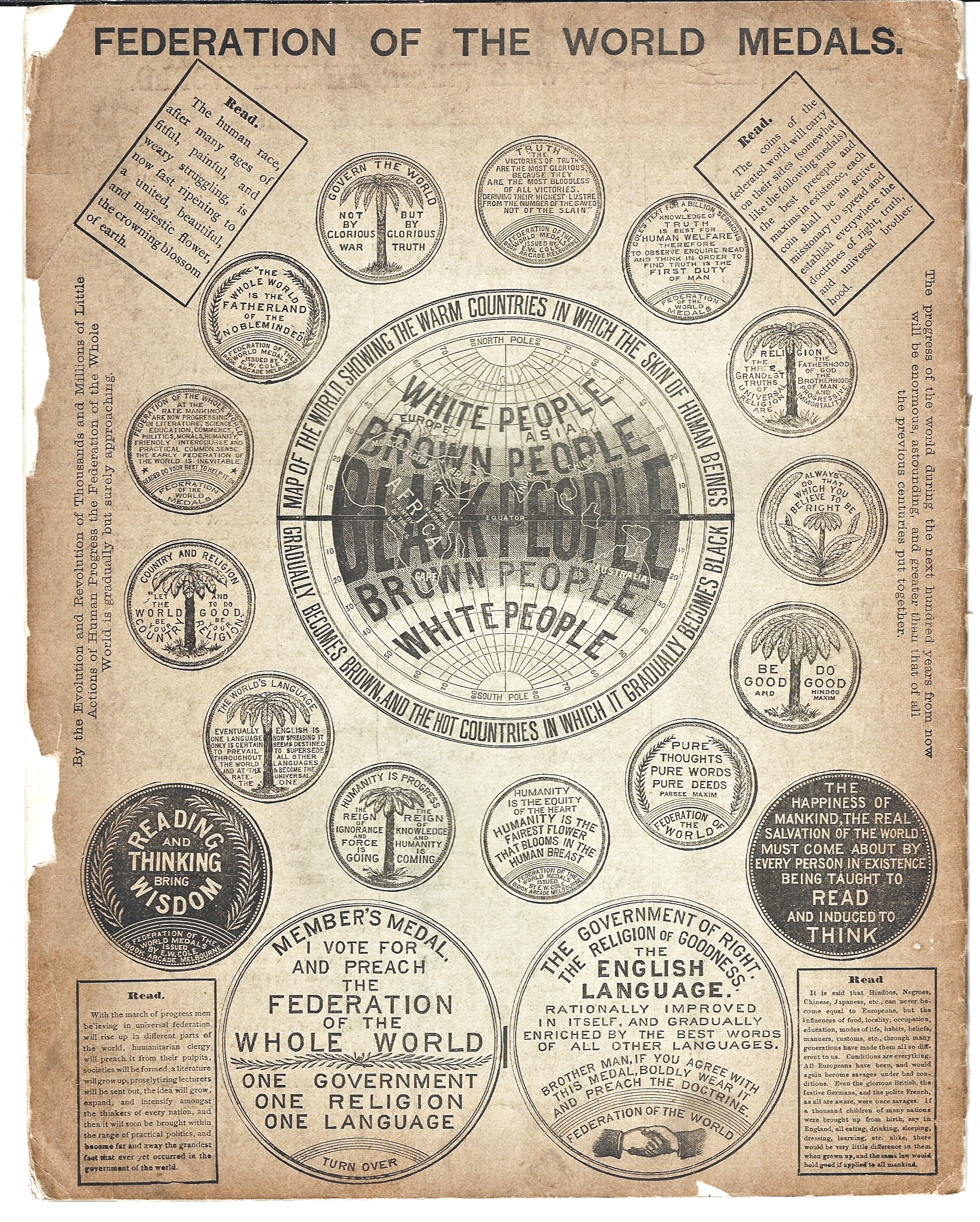
    The imagery on the rear cover is striking, most of the artwork being the fronts and backs of medals/medallions that Cole had made. The image in the middle of it all is, well, very surprising, and potentially disturbing, though it seems unconnected to any of the essays or sentiments of the pamphlet, and seems largely to be a non sequitur.  In any event there seems to be no connective text, nothing on race dominance or eugenicism, the only thing that comes close to that is a repeated belief that English should be the dominant world language for its “perfection”.  As dire as it seems the map seems to be open to speculation, though on the face of it doesn’t look like much good could come . Is it something as nasty as showing what the map maker thinks are the natural divisions of the world according to race, or could it possibly be suggesting that skin color is based on location on the globe and has nothing to do with any sponsorship of superiority or inferiority based on color? Given the rest of what seems to be in this pamphlet, it seems likely that the later is the case. The guy would’ve been better served if he left the map out.

    I’m reproducing the artwork here because there seems to be little mention2 of this work outside of stiff and undated bibliographies of books-received. 

    Black People front

    Black People front
    Black People front

    Notes:

    1.  Cole’s entry in the Dictionary of Australian Biography: http://adb.anu.edu.au/biography/cole-edward-william-3243

    2.  According to WorldCat there’s another version of this work, fleshed out to 207pp,, printed around the same time (the librarian guesses ‘189_’) and located in just one library (Victoria). There’s only one copy located of the copy mentioned here, located at the Murdoch library, 11,564 miles from where I sit in western North Carolina. 


  • On Great and Anonymous Works: Doe, Roe, John Q. Public, Average Joe, Joe Schmoe, and Darwin, Newton, & Co.

    JF Ptak Science Books  

    There was a brief point in Charles Darwin’s publishing life when the old (then young) man got stiffed.   Darwin’s magisterial contribution to Narrative of the Surveying Voyages of her Majesty’s Ships Adventure and Beagle between the years 1S26 and 1836…, (published in 1839) appeared in the third volume,  (by far and away the most important volume), and was issued without his name on the title page, which as it turns out was okay by the standards of the day.  The real oddness turns up in  the publisher’s ads that appeared in the later issues of those volumes in late 1839 for what would be a separately-issued volume of Darwin’s contribution (Journal of Researches into the Geology…), where there was no mention of the author’s name. (Captain Robert Fitz-Roy,  the man whose name adorned those early volumes, was the Captain of the Beagle and a man of high accomplishment and some pioneering meteorological ideas.)  
    Anonymouspaine

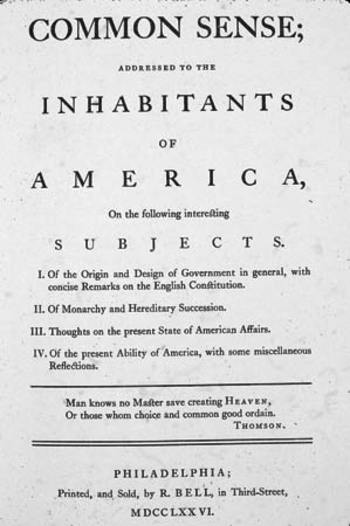
    The history of world literature ancient and modern abounds in silenced or self-silenced authors—there is even a four volume encyclopedia to help you identify the unidentified. . Political and religious work are also particularly heavily laden with unattributed or disguised efforts—the U.S. Constitution and the Federalist Papers are of course both anonymous (and of necessity), as was the most beautiful work of Voltaire.  The Declaration of Independence, on the other hand, and also of necessity, was not.  What is that  they say?  Anonymity is the best defense against the tyranny of the majority”?  It still feels a little Orwellian to see the unattributed source in the newspaper or read an anonymous editorial.   On the other hand Thomas Paine’s On Common Sense may not have made it into print if its author had been required to identify himself. 

    Art is perhaps the longest-lived area of anonymous work, the signed canvas being a relatively recent invention.  There are thousands of years of unknown hands and eyes represented in millions of works, but really we only get solid confirmation of the intellectual origin of a work through the invention of the ornament of the signature, and this just within the last 500 years.  And even after this defacement begins to appear there is still a relatively stout history of semi-anonymous works coming from painting studios doing work “in the manner of ____”.  Of course there were other considerations at play here, what with guilds and patrons and all—the artist was one person in a lengthy bureaucratic trail of aesthetic production.

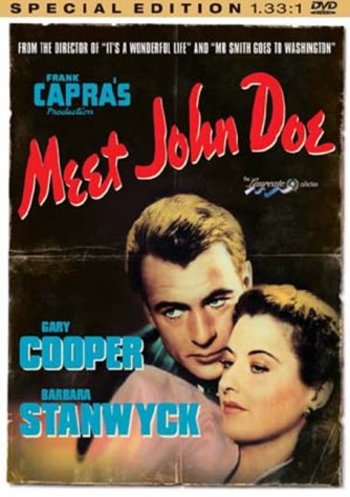
    Anonymouscooper Anonymous seems to come more into play in our present culture via the need for a place holder—when tallying and accounting the death of unknown people, for example, the name “John Doe” or “Jane Roe” is used (in the U.S.) to take up the forever empty space calling for The Departed’s name. (Our most famous “Jane Roe” is Norma McVorvey of Roe v. Wade; I think the Gary Cooper film (“Meet John Doe”) still ranks the highest for the male equivalent.)  Something has to go there in that empty space, and so it does–the placeholder name. (The practice of using such names is actually pretty old, and is practiced worldwide. See HERE  for an entertaining look at multi-cross-cultural “John Doe” equivalents.)
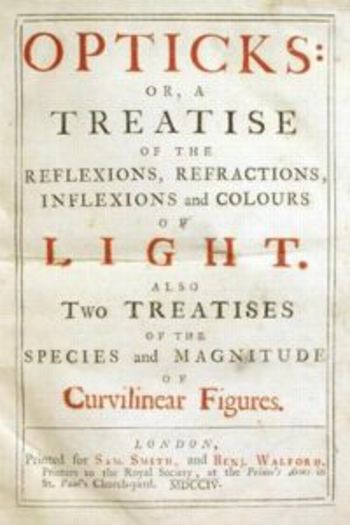
    And now that I’ve had some time to think about non-Darwin examples from the sciences, I’m a little stumped.  Robert Boyle is a good example, what with more than a dozen of his works (at least according to John Fulton’s bibliography) were published without his name carrying the title page-but these were the philosophical and political works of a scientist, and not scientific.  Same too for Pascal, who wrote his Pensees undercover—and again, not scientific but by a scientist.  Isaac Newton published his Annoymousopticks_2 Opticks without his name on the title and in fact only used his initials in the preface as his personal identifiers. 
    That leads us to a final example of Thomas Malthus, who really did publish the first printing of his massively important Essay on Population without his name—it would make an appearance soon after, though, in the second edition of this contentious work making the first edition of this great near-scientific work one of the most influential anonymously published  books of the last 250 years.   

    An unusual example of “anonymous” was Copernicus, the ultimate anonymous author of a scientific work because he intended not to publish i fearing reprisals for his challenging and revolutionary work. He waited until he was basically nearly dead to have his effort put into print, and so overcame his anonymity issue in print to adopt a biological anonymity enjoyed by the dead, his body loosened from the grip of his name so far as reprisals went.  He was free from fear of all anxiety and moral espionage at this point, and he did see the work brought to public display. with his name very boldly displayed on the title page. 


  • Heavy, Chunky, Obvious, Strained, Drawn with Limited Ability–But Strangely Compelling (?)

    JF Ptak Science Books  Quick Post

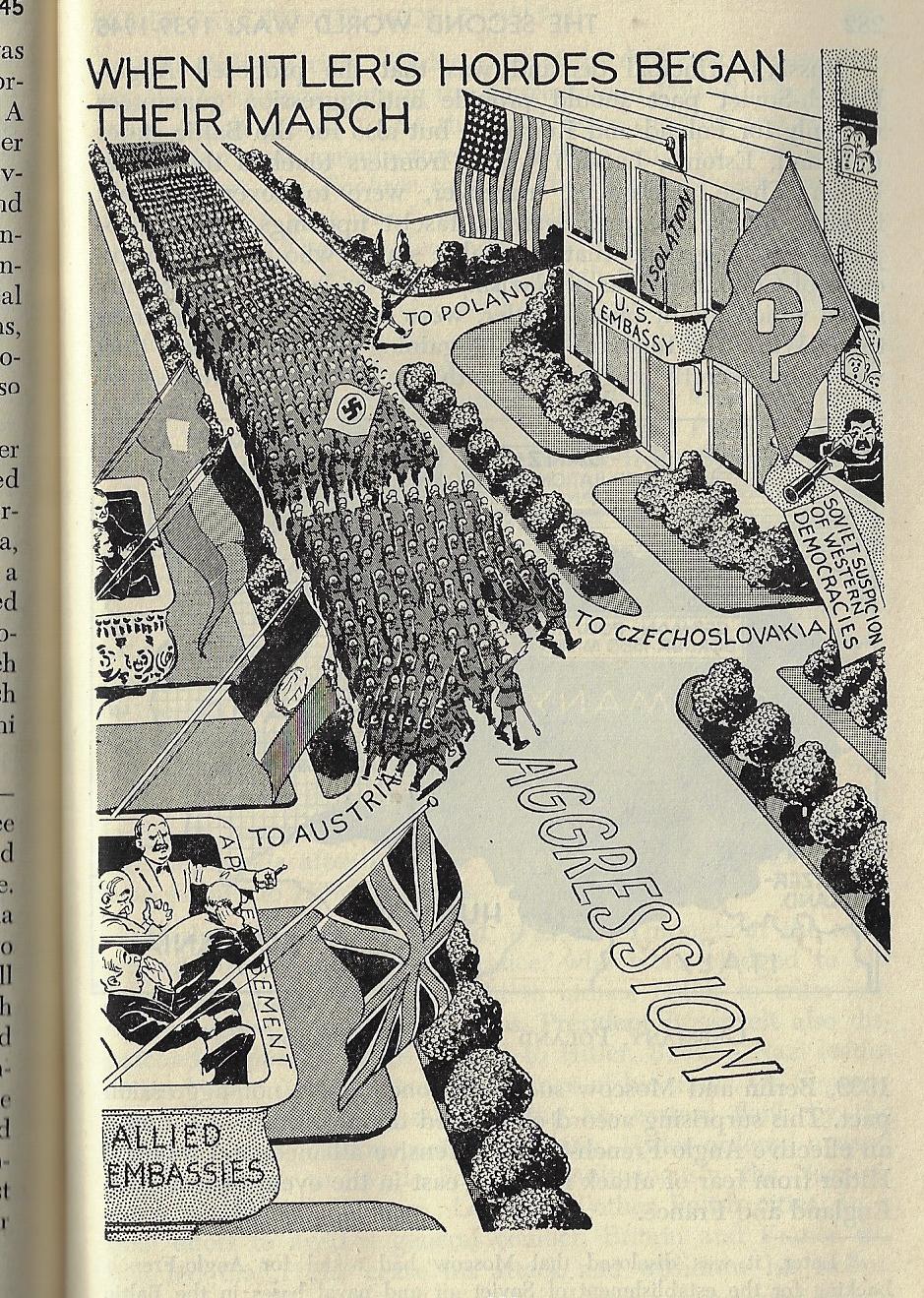
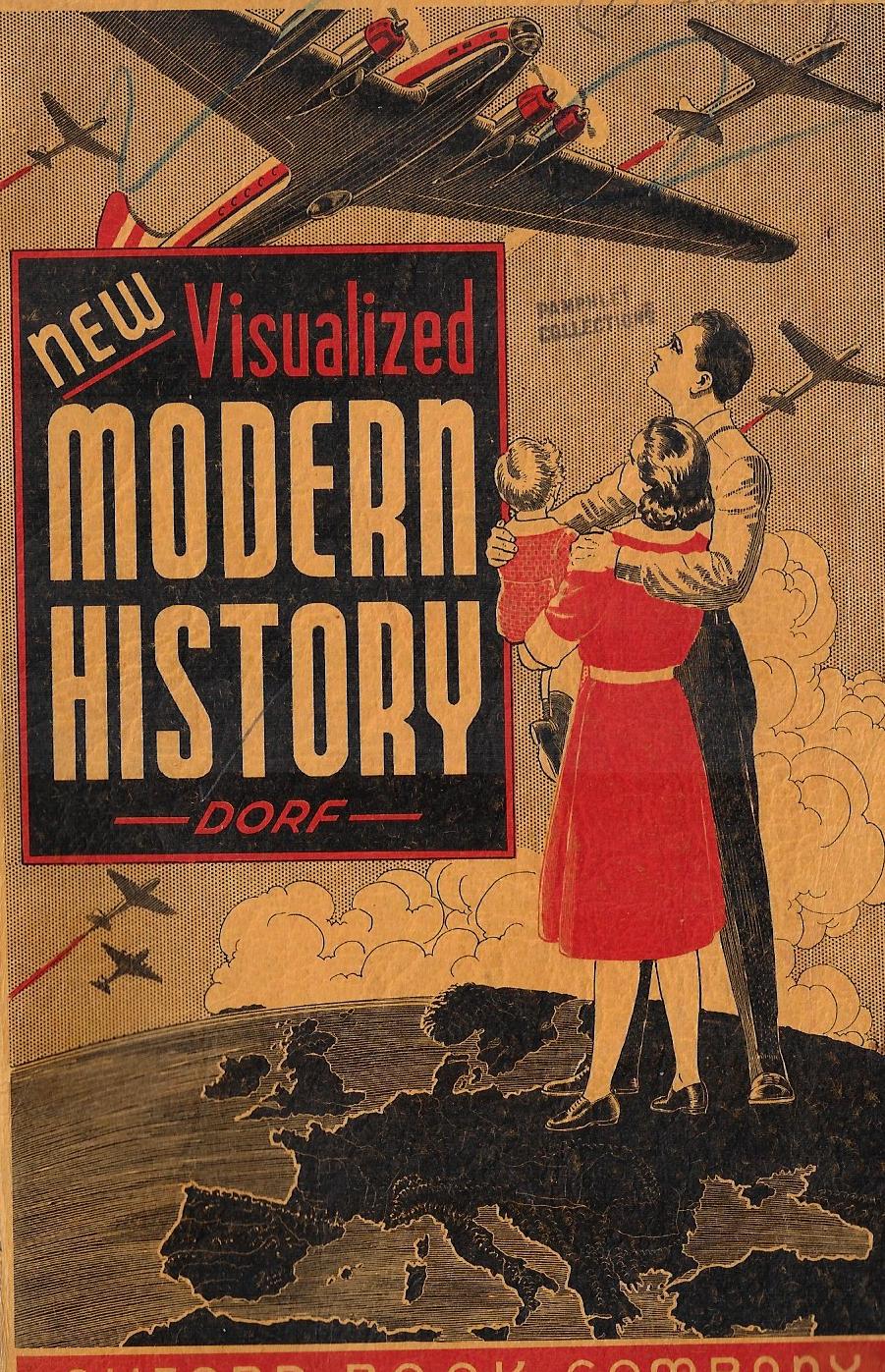
    Outsider Modern History _12_It would have been easy to judge this book by its cover–and the strange bit about that is that you would’ve been nearly correct.  Philip Dorf’s schoolbook history New Visualized Modern History was published by (not the) Oxford Book Company in NYC in 1947 has a certain look in its design that seems more like an odor. There’s some amount of talent in the illustrations that make it seem studied, except that there are many more elements that make it seem not so. The text (fairly extensive and compact in 388pp) looks to be well-written and accurate (or at least not the opposite) but it is interrupted by dozens of illustrations that are highly contrasted, very heavy,  blocky, immobile, strained, and somehow off-putting, but in the final result the drawings actually seem to work, delivering their message, if not in an inelegant steam-filled roller derby way. Perhaps they’re worthwhile after all, except that it is difficult to like something that you really don’t.


    Outsider Modern History _7_


  • A Glorious Episode in Outsider Literature–“the Great Scope Ever to be Attempted in a Work on Paper”, and a Peep into the Year One Billion A.D…

    JF Ptak Science Books    Post 2691

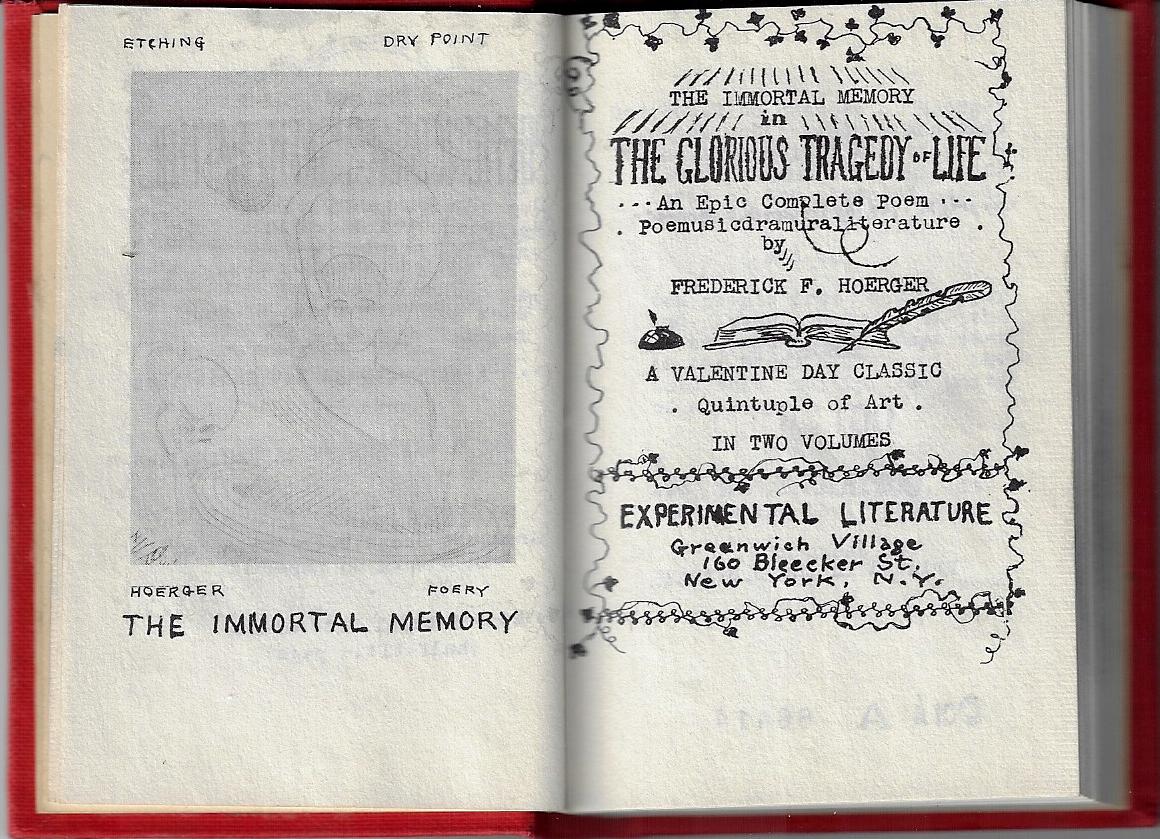
    There are some things that stand to be admired simply because exist. They may be mundane, but they are the magnificent mundane, brought to life by sheer force of will. Such I think is the case of Mr. Hoerger’s Poemusicdramuraliterature Epic Poem the Immortal memory in the Glorious Tragedy of Life (1946). The work is billed as a “Valentine Day Classic, quintuple of Art”, the “greatest scope ever attempted in a work on paper”.  It is a big claim made by a little book–bound in red cloth, it measures 4″x2.5″ and is 86 pages long, though the word count for all of the little pages only makes it to about 8000 words, or about 20 type pages. I don’t think that the book ever actually catches up to itself, as for what I can see of it, it is always one step ahead of itself and one step behind.

    Outsider poemliterature _1_

    (I’m guessing that Mr. Hoerger could have lived at 160 Bleeker Street–it is the Mills Building No. 1, and was built in 1910, where today you could easily spend 4.5k/month for a one-bedroom place…unless the printer for this book was in the basement, and Mr. Hoerger lived elsewhere. This copy by the way came to me via the Library of Congress and is one of the Copyright Deposit copies. There are at least five other works copyrighted by Mr. Hoerger; Highroad Number Z, Vintage One (1941),  Immortal Aid (1946), The Daze of Forty-Nine (1958), and Deep Surprise, post-Abstraction, Space-age Understatement (1961).)

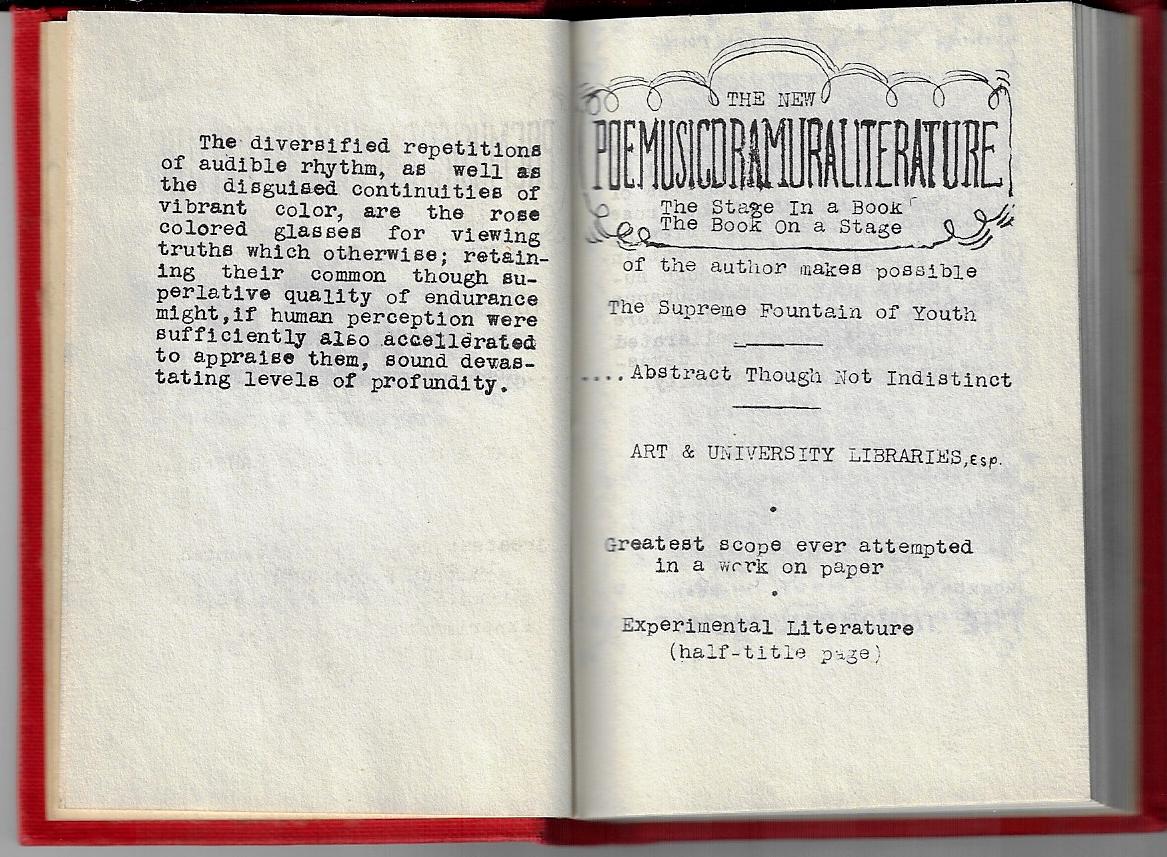
    We are reminded of the new sort of “work on paper” this is on the half-title page (identified so), as well as the non-sequitur “art & university libraries, esp”, which seems like an enormous emotion of some unidentifiable sort that the author brings to bear on the possible reader:

    Outsider poemliterature _2_

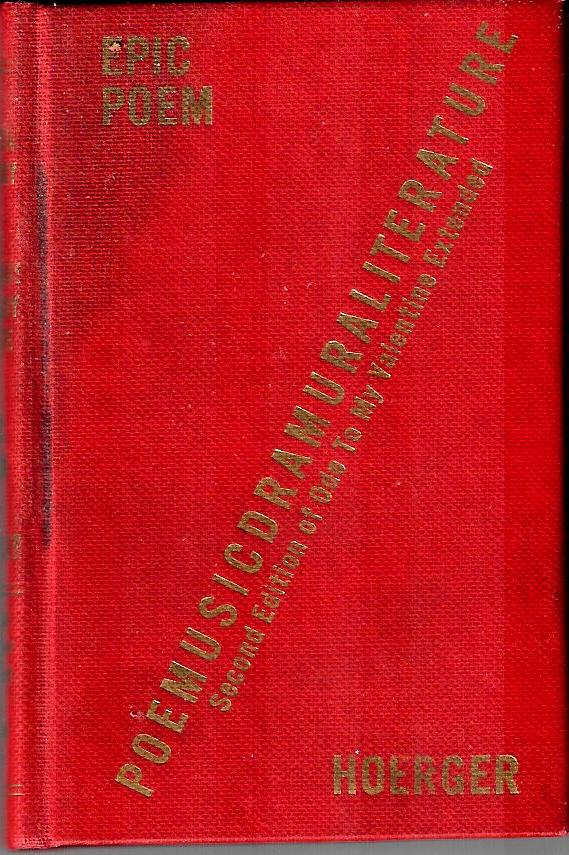
    The extraordinary cover:

    Outsider poemliterature _3_

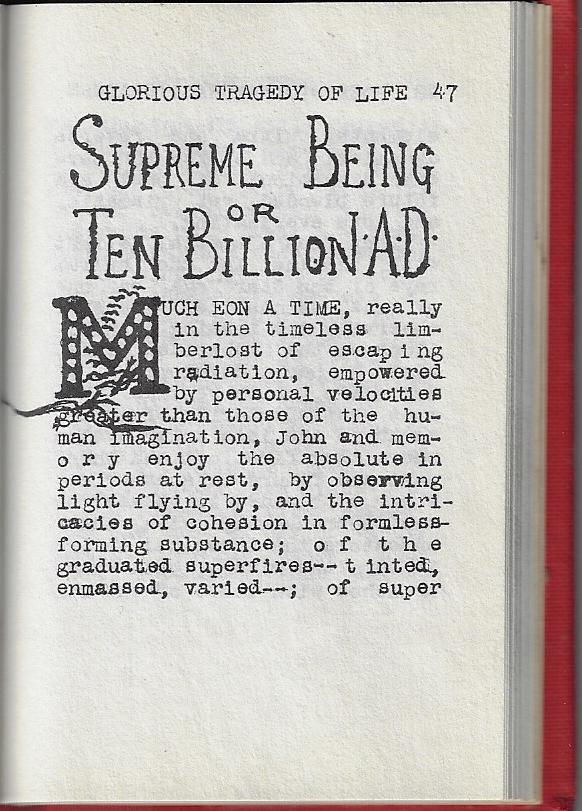
    And a sample of the writing, which is, at the very least, quite something; it seems a major attempt at producing and communicating ideas that are just too far in an unreachable zone for me, though I have to give credit to the author for his imagination and for completing a project.  

    I should point out that in the last section of the last page reproduced here something is “calibrated” at “50 septillion light years”, which is a pretty big number in the scale of the base -illions, especially when you think about the universe being “only” 13 billion years old–that means that the width of the universe in 26 billion light yeas wide  or 156 billion light years in the altogether or some such, but 26,000,000,000 is crushed by the 50,000,000,000,000,000,000,000,000 light years being discussed here. Of course there’s also the fast-forward to the future part, introducing the year 1,000,000,000. That would be impossibly far into the future, considering that Homo sapien has been around for 150,000 years or so, and that there have been about 7,500 generations in that time. The Year Ten Billion would entail 400 million generations (and that’s assuming that we haven’t started to “live” forever after the year 3000 or 2500 or whatever) since we have been brought to our present medical modernity in the scant eight or nine generations since Joseph Lister invented the idea of sterilizing operating instruments, and considering again that we are just three or so generations removed from DNA (1953) and the first successful heart transplant (1967) and how far the replacement of human bits has come since then, it is impossible to say where medicine might be in a 50 generations or a thousand years, let alone in ten billion years. 

    I do have to commend the author for thinking big. And: he does make you think. 

    Outsider poemliterature _4_


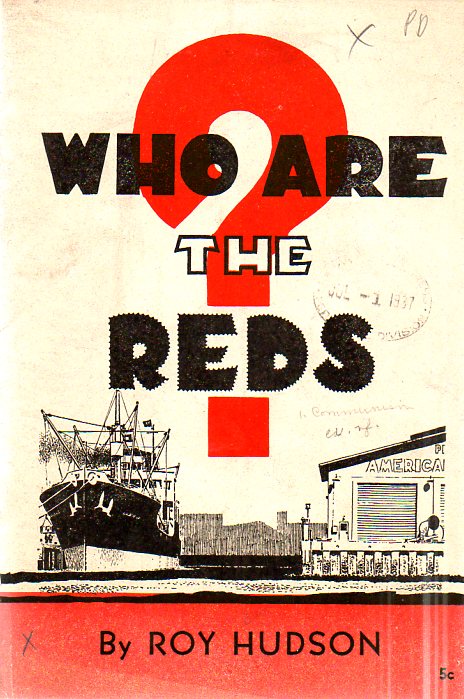
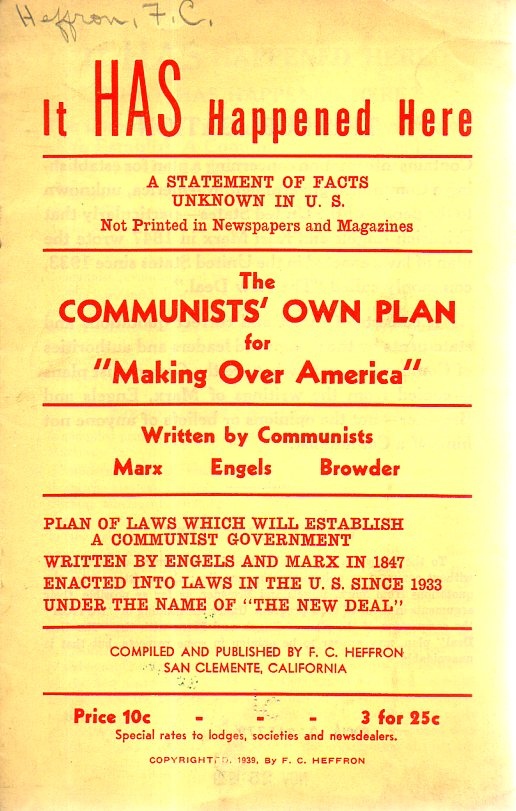
  • Communism Questions, Asked and Answered (1937-9) Concerning the Commie New Deal, Commie FDR, and Frank Zappa

    JF Ptak Science Books  Quick Post

    The question asked by Roy Hudson in 1937 (with the striking red-question-marked cover and the germ-y, bacterial typeface for “Reds”:

    It has happened here695


    Who are the reds692

    And the answer–the Reds are us, the U.S. turned inside out by none other than Franklin Roosevelt by using The New Deal to incorporate Marx/Engels Communism and scuttle Capitalism and Democracy:

    It has happened here693

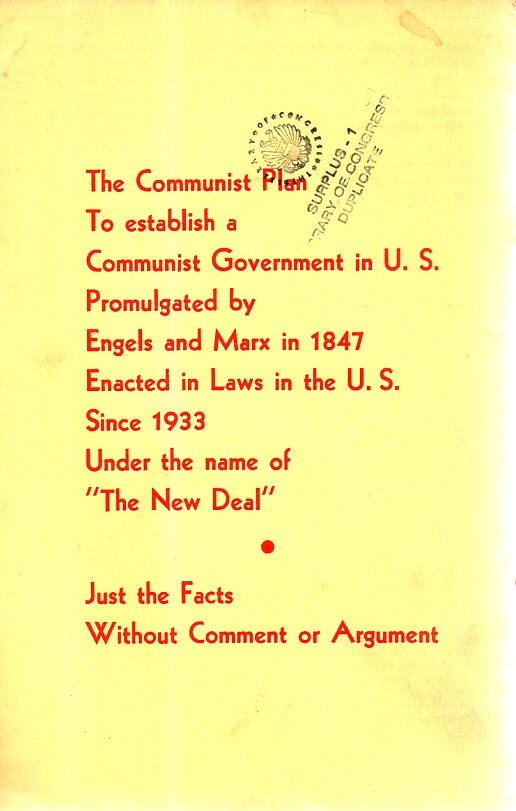
    And the rear cover:

    It has happened here694


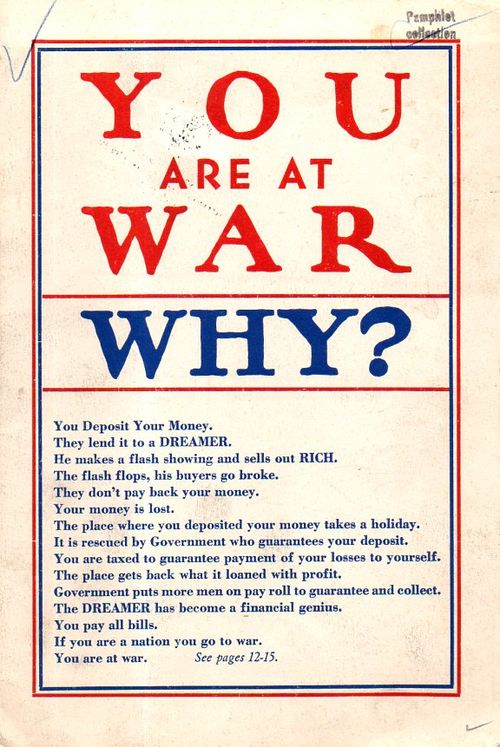
    It Can Happen Here is an early version of a title of numerous variants, including the pre-trumpian 1935 Sinclair Lewis novel It Can’t Happen Here, the 1964 movie It Happened Here (where Hitler has taken over England, and includes machine-gunning murders of children), and of course Frank Zappa’s “It Can’t Happen Here” (which has nothing to do with the previous bits or anything else, except “Suzy”) to name a few.  It Can Happen Here is a bit of a lie, as the case is made that Can=Did.


  • Joie de Huh? Abstract Transcendental Outsider Found-Poetry on Pamphlet Covers

    JF Ptak Science Books  Quick Post

    The following pamphlet covers are just a few of the hundreds of Joie de Huh? examples of Pamphlets With Big and Cumbersome Titles Collection.  They have a sustained abstract poetic transcendental-Outsider feel to them, which certainly fill up a page with their confusing bigness.  I might be able to make a whole wall of these things, which I would suggest to be a bad wall for a bedroom.  

    The first has a definite feel of 1918 to its design, but was actually published in 1940, before the U.S. was actually at war.  There is an inescapable feel of an uncorrected take-home assignment for a logic course to it:

    WWII Kelso382


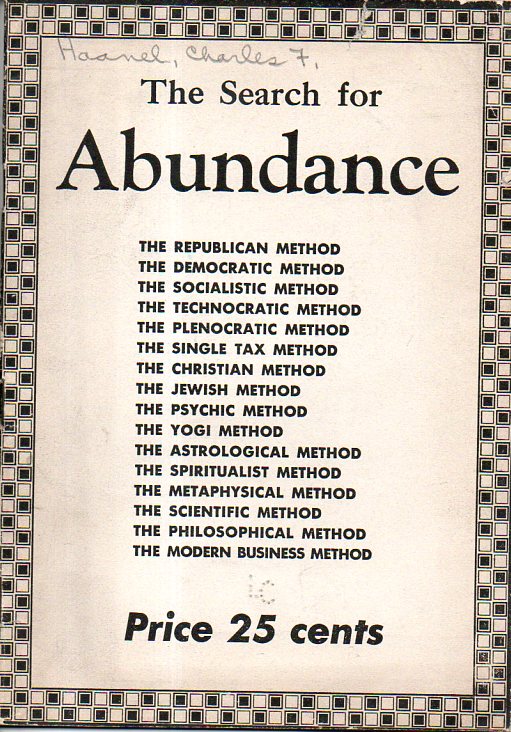
    Next, Charles F. Haanel’s  abbondanza-y  The Search for Abundance, which was published in St. Louis, Mo. in 1937, and seemingly so by the author. (It is a simple 31 pages long, and didn’t seem to get spread out very much–there are no copies located via WorldCat/OCLC, and my copy from the Library of Congress seems to be one of the copyright deposit copies. After considering the list of names on the front cover for their attainment of “abundance” the writer decides that none have been successful, and that the true method is via an AynRandian Natural Law something, which really doesn’t get explained.  The work may have been swallowed up by the abundances of the future that it tried to portray. 

    WWII  abundance377

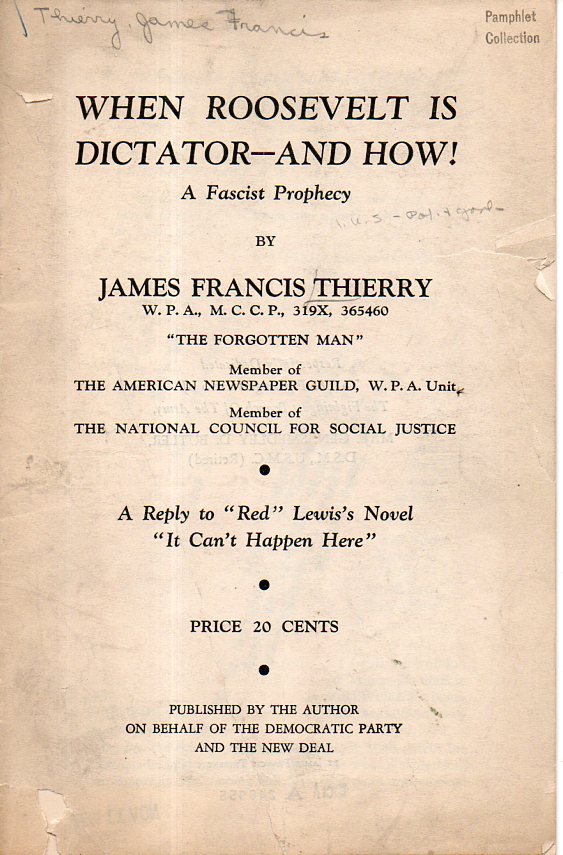
    And to go with your next sip of coffee/tea (Mr. D.) is this bouncing title, which is sort of the way the entire pamphlet reads.  There are many exclamation points inside along with a lot of very (to me) obscure references to not-obvious political figures, all of which is wrapped around a comedic sense of irony that makes it very difficult to figure out exactly what the complaint is, and on what side of the aisle the author comes down on. Nowadays that would be a masterful stroke by a politician, but the author here definitely had an agenda, though given everything I can’t really determine what it was.  


    WWII Thierry376

     (This one didn’t seem to survive, either–again my copy appears to be a copyright deposit copy, and WorldCat/OCLC lists only one lonely copy in the Yale library.) 


  • Unusual Book Titles Department: “What Can the Women Do?” (1940)

    JF Ptak Science Books  Quick Post

    What can th e women do159

    I think that this pamphlet could stand without comment, but, well, here it goes anyway:

    Here’s an extraordinary title from the Found-Absurd/Surreal Department:  What Can the Women Do?  was published by the Extension Department of St. Francis Xavier University in Antigonish, Nova Scotia in 1940.  It is a odd, uncomfortably-phrased work that seems completely antiquarian today–and yet the work is only 75 years old, well within the lifespans of 10% of U.S. citizens alive today.  That such a question would and should be asked within the space of the lifetime of millions of grandparents is remarkable, and brings the past bursting into the present. This question did not die here in 1940, but would continue for several decades more.

    The other point here is that this is only 20 years after women were granted the rights to vote in the U.S., and in some ways was an advancement in showing the number of different sorts of occupations open to women besides her job as housewife and mother.  


  • The Evil of Mixed Marriage (1927)

    JF Ptak Science Books    Quick Post

    • [Please be aware that there were 75 blog posts and another 30,000 words made on this blog in June, 2015–check them out by going to the Recent Posts block at right]

    With the SCOTUS decision on marriage equality from two days ago it may be interesting to see another version of what used to be seen as restricted/unnatural unions that were demeaning to the concept of marriage. 

    Marriage, evil165

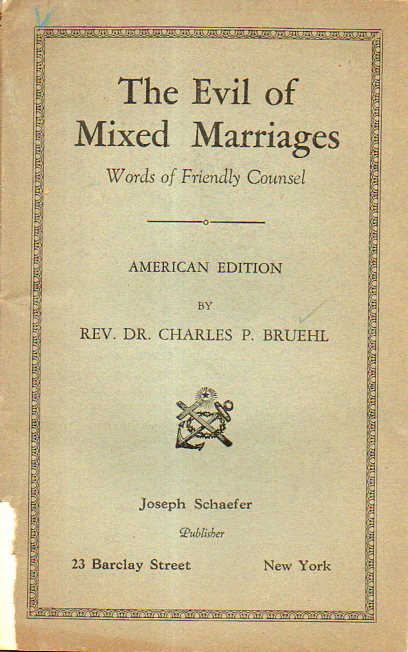
    Back when this work was published in 1927, the “evil” and “mixed” part of this marriage wasn’t about same-sex unions, or interracial (the former assignment of illegality overturned only in 1967)–this was a mixed marriage of Catholic and non-Catholic.  The pamphlet (which was passed by the Censor Librorum and printed with the imprimatur of the Archbishop of New York) .

    The pamphlet states that a “mixed marriage is not a matrimonial union between Christian and non-Christian. Such unions are usually abhorrent to Catholics, though in these days of rampant mammonism…lose their repugnance  for what is so contrary to the Christian sentiment and barter their divine birthrite [sic] for earthly gain”.  The author writes that marriages of this type are “exceedingly rare” and need not gain his attention.

    “Technically a mixed marriage is a marriage between a Catholic and a baptized non-Catholic”–that means the other types of mixed marriages are so completely contrary to church teachings that they not even be discussed.  This was only 88 years ago, and it makes me wonder what the stern opponents of marriage equality will think of their opinions and beliefs 20/40/60 years hence? 


  • Roosevelt Ghosts and Hitler Caskets–Two Outsider Polemics (1943 and 1947)

    JF Ptak Science Books   Quick Post     Part of the Unusual Book Titles series

    Roosevelt Death723

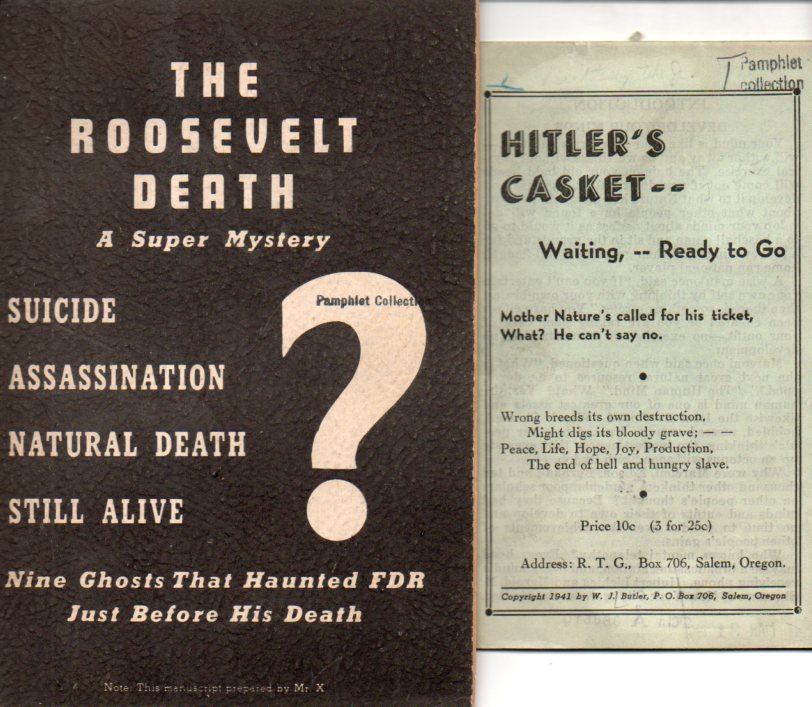
    I have my doubts that these two pamphlets have ever been placed side-by-side like this before this morning.  They are both, well, “reaching” in their respective pursuits, perhaps one more than the other.  The first, on the Roosevelt “mystery”, was published in 1947, and really had nothing to do with a conspiracy surrounding the president’s death–it was more a polemic against Roosevelt’s social policies, an anti-Communist and -Socialist screed  of some sort, a sort of awful thing. The cover though is full of weird questioning demands, which would make it either (a) hard to not pick up or (b) impossible to pick up–it is a close call.

    Now the second pamphlet is even more of a mystery, a mysterious secret mystery of questionable and excited mystery logic.  Published in 1943, it starts “In the beginning God made man from the mineral eggs in the rocks…God left man the job to make the devil, and Hitler’s co-workers took over the job.” I have no problem with the anti-Hitler-casket’s-waiting stuff, though it is wrapped up in swaddling-spaghetti-created-speak that is hard to unravel–again, that isn’t that big a problem, except that all I started to find was cold and wet spaghetti when statements were unraveled.  So I include these two items in the “Book Titles, Strange and Unusual” category and wait for the day that the many hundreds of these that I have here can be all displayed in a single room for their greater questionable glories.