A Daily History of Holes, Dots, Lines, Science, History, Math, Physics, Art, the Unintentional Absurd, Architecture, Maps, Data Visualization, Blank and Missing Things, and so on. |1.6 million words, 7500 images, 4.9 million hits| Press & appearances in The Times, Le Figaro, Mensa, The Economist, The Guardian, Discovery News, Slate, Le Monde, Sci American Blogs, Le Pont, and many other places… 5000+ total posts since 2008.

Category: Books: Title Pages, Unusual

  • Mud, Abstract Expressionism, and the Brick Color Field

    JF Ptak Science Books   Post 2342

    Mud abstract


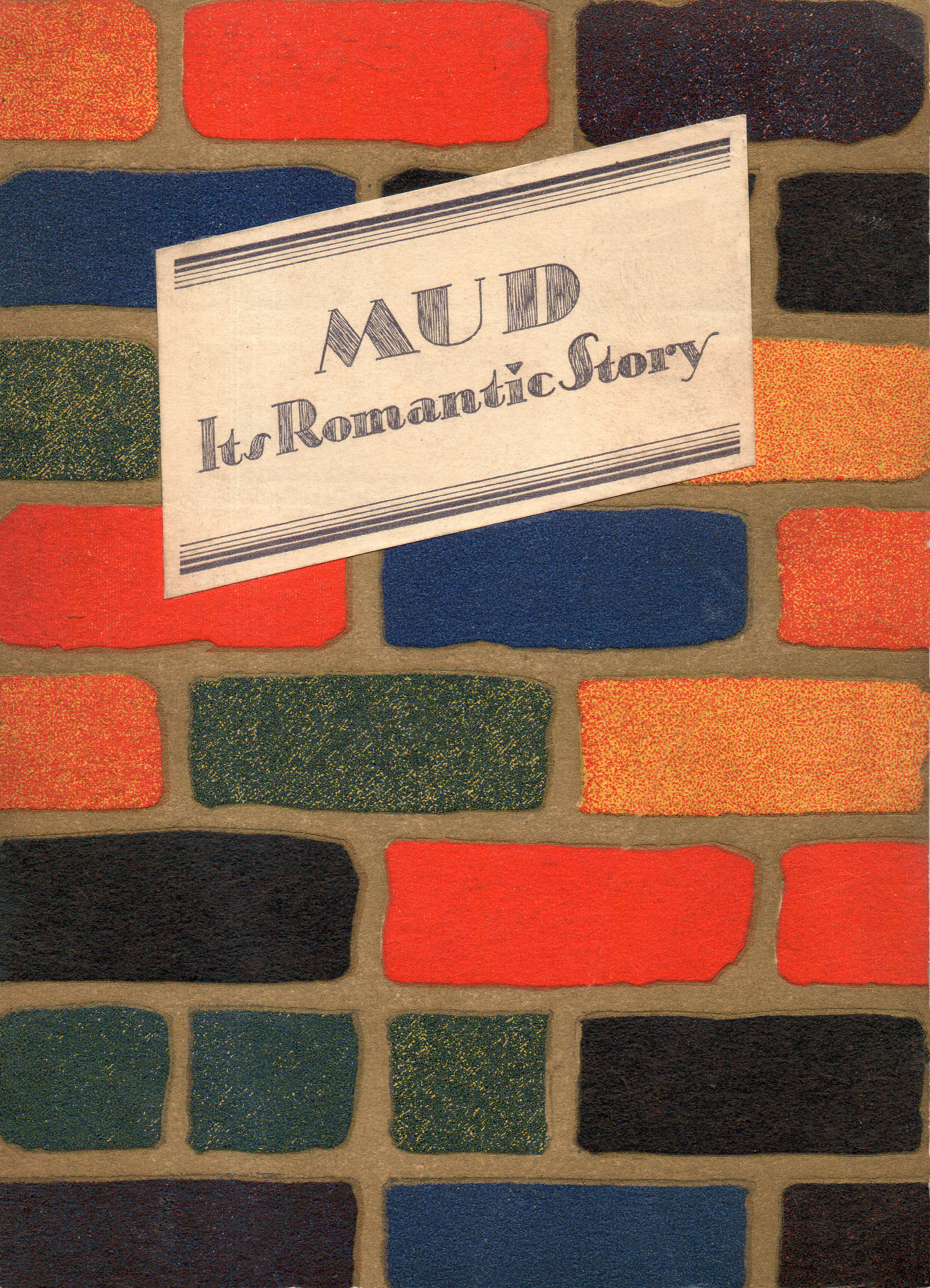
    Okay, so, this may only be a detail of a cover of a quietly-uncommon and proto-bizarre pamphlet on bricks, but when you look at it in a certain way, it may suggest a bit of found abstract expressionist art. Or even a Cubist-something.  I can see it as a color field–a very, very hard-edged Rothko detail comes to mind.  Perhaps if Pollock arranged entire bricks as his medium rather than dripped paint, he may have come upon an expression such as this. Or not.  
    Poster---MUD 364[This image is available as a 13″x19″ 600 dpi poster, here.]

    The pamphlet comes from my collection of fantastically-titled and creatively naive pamphlets and books.  After considering their reaching, speculative, bizarre, and surreal titles, they fall into a number of sub-categories, including:

    • titles with question marks “?” (like the two wonderful pamphlets simply entitled “What ?” and of course the two that have no titles but question marks);
    • titles with exclamation points “!” (these two marks actually don’t occur very often at all in titles, especially when the title itself already has a built in question/exclamation mark); 
    • titles that include the phrase “the history of…” or “the story of….” so long as that history/story is (very) unusual; 
    • titles that demand something or other of  “America”  (i.e., “Will America be Invaded?” or “America, Mussolini or Moscow” or “Sandbags, Worms and America”);
    • title pages with American flags.

    This excludes a lot of the general naïve-surreal and historical pamphlet collection, but these, I think, would make a great exhibition of book of books, simply because so many of them have an unquestionable “what in the _” reaction capacity to them.

    The found-abstract detail comes from Mud, its Romantic Story, (by Richard G. Collier, for the Common Brick Manufacturer Association of America, Cleveland, Ohio) and is a prime example for the collection:  a terrific title and a beautiful design that offers a lot more than a simple story about bricks (even though it does contain a lively little history of brick making in America–the good content almost takes away from the fantastic title, but so it goes).
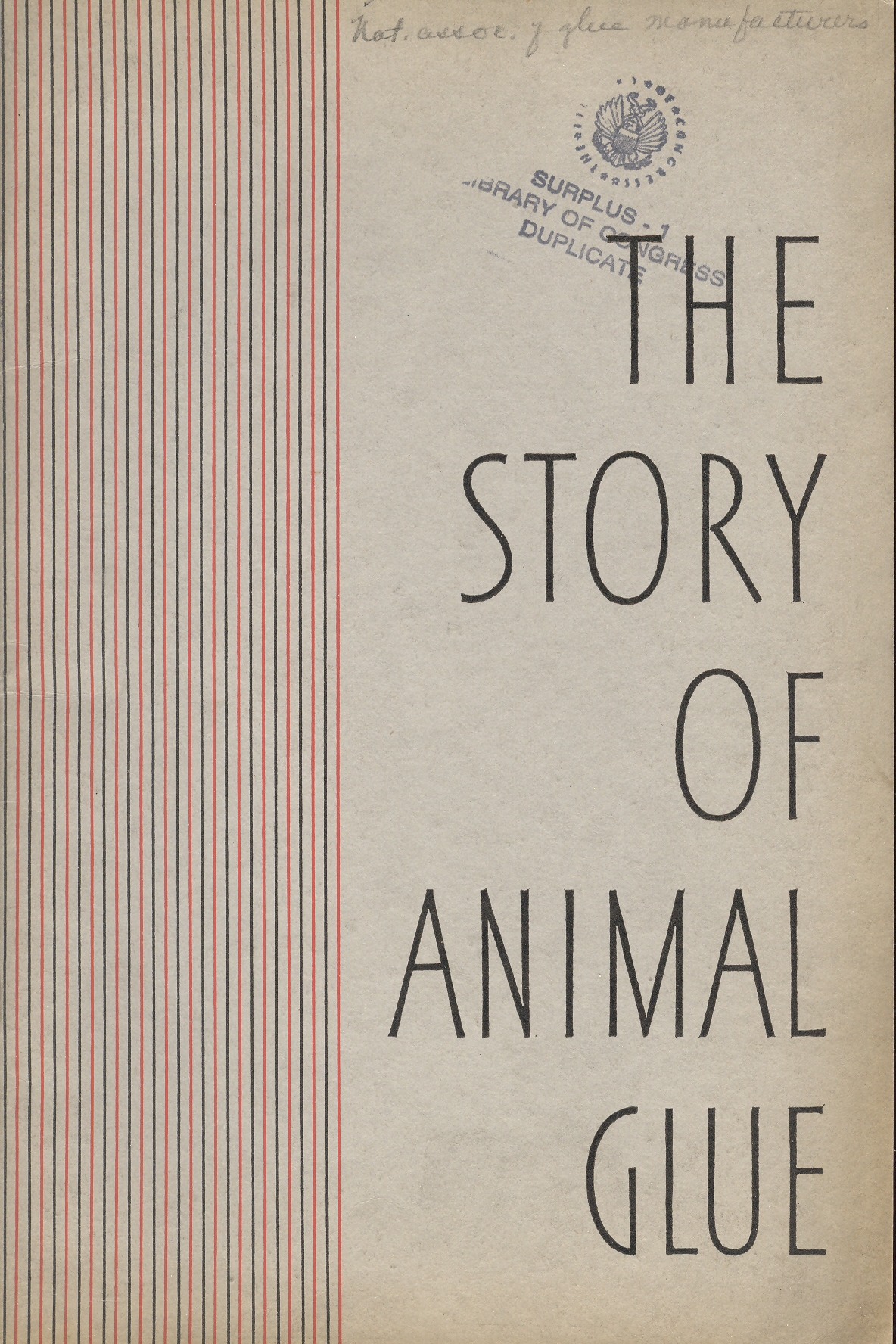
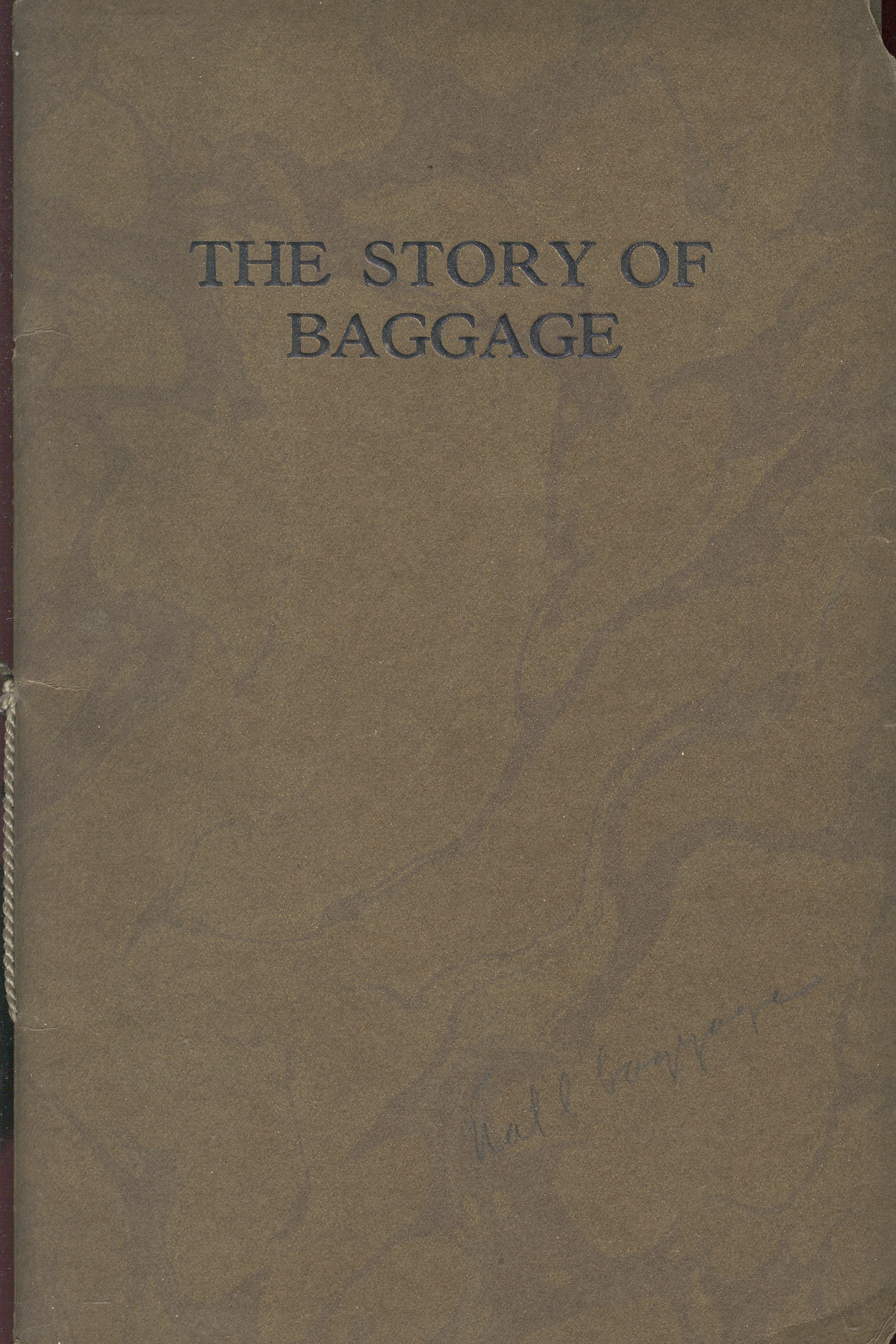


  • The Small Story of Animal Glue, and other Small Stories

    JF Ptak Science Books   Quick Post

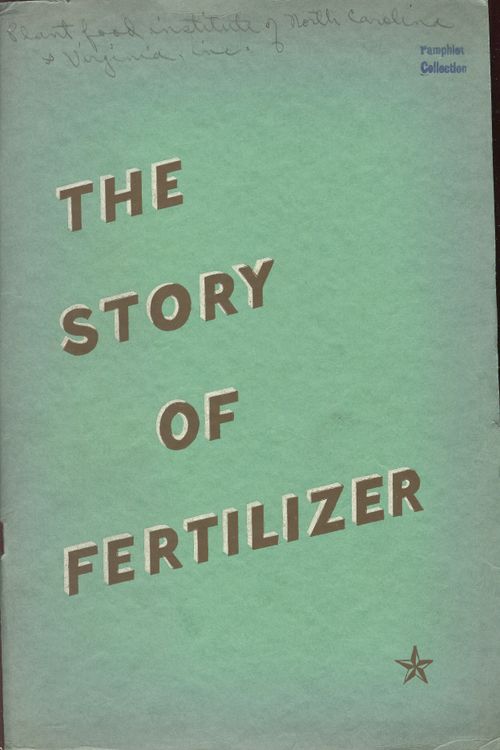
    In my collections of small collections I have a collection of small unusual pamphlets that tell the story of something uncommon. Everything in this sub-collection must have “The Story of …” on the cover; after that, anything goes.  

    This is a small selection, though enough for now…

    + story anim glu + story baggage+ story fertiliz


  • Red Radio–Found & Manipulated Tech Art

    JF Ptak Science Books   Quick Post

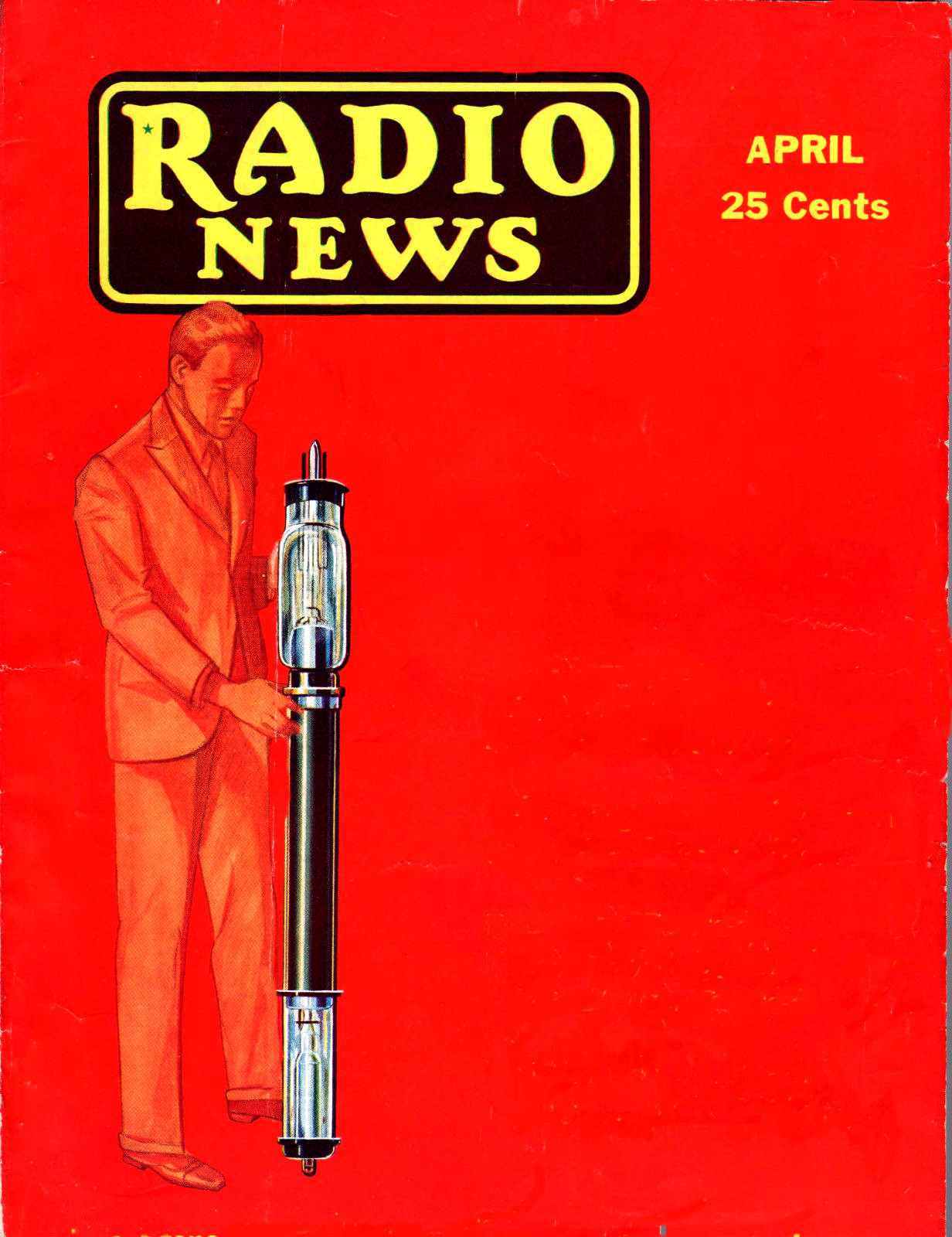
    I just like the cover art for Radio News. For at least the decade that I know about this journal published with very heavily red covers.  This one, for April 1931, was really red and also had some unusual design going on–especially after the cover text was removed. That fellow is standing there with the giant tube that helped the venerable KDKA (Pittsburgh, one of a few contenders for the title of “first commercial radio station” in the U.S.) reach millions of people, with a very powerful 400 kW signal–it basically made the station a local-national. (As it turns out the highest power ever authorized for AM radio was 500 kW to WLW (Cincinnati) in 1934, but which was modified down to 50 KW.)

      Radio News Red[The only manipulation was removing the text from the bottom right that displayed the issue’s contents–everything else is in situ.]


  • The Task Book, 1819

    JF Ptak Science Books      Quick Post

    TASk book detail

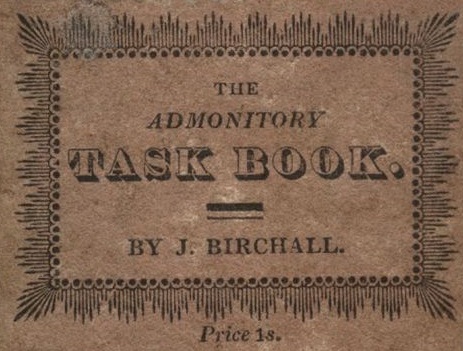
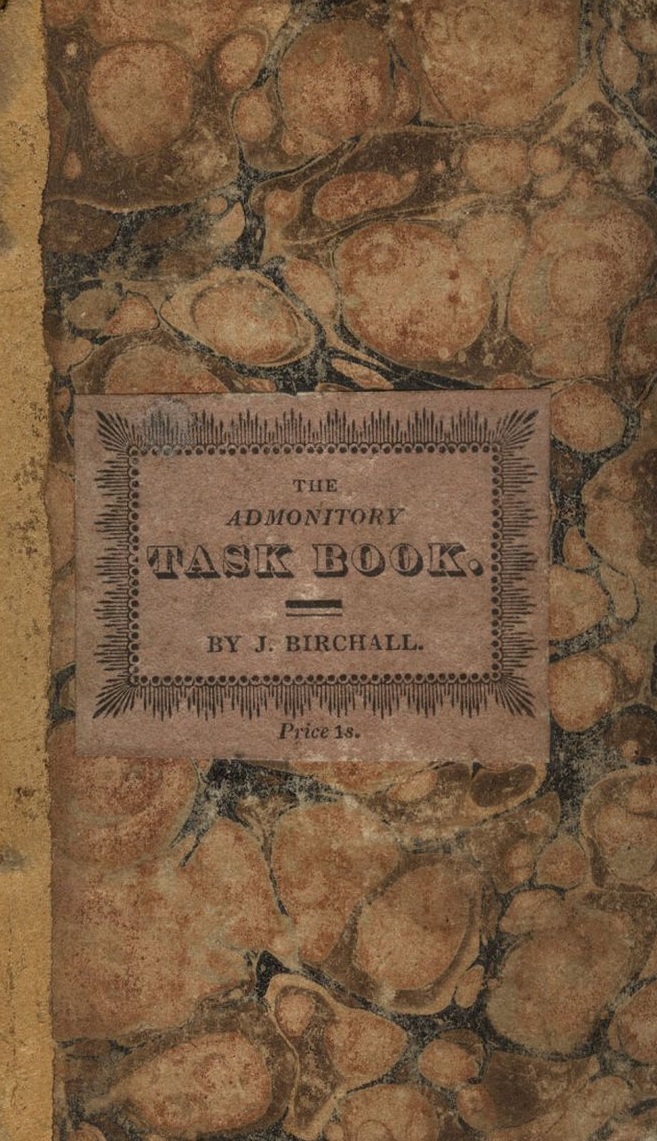
    I would love to write a book like this.  The full title of the work by J. Birchall, The Admonitory Task Book;: Consisting of Prose and Poetry, Original and Selected: Interspersed With Striking Aphorisms, Useful Maxims, and Moral Precepts. Designed for the Use of Schools (1819).  I want very badly to open this book.  Unfortunately, it isn’t anywhere to open–it seems not to be located in WorldCat/OCLC.  

    The source for this lovely title is Holletts Rare Books from the U.K. –its beautiful.  

    TASk book


  • The Future as the Color Red

    JF Ptak Science Books   Post 2172

    Rca300

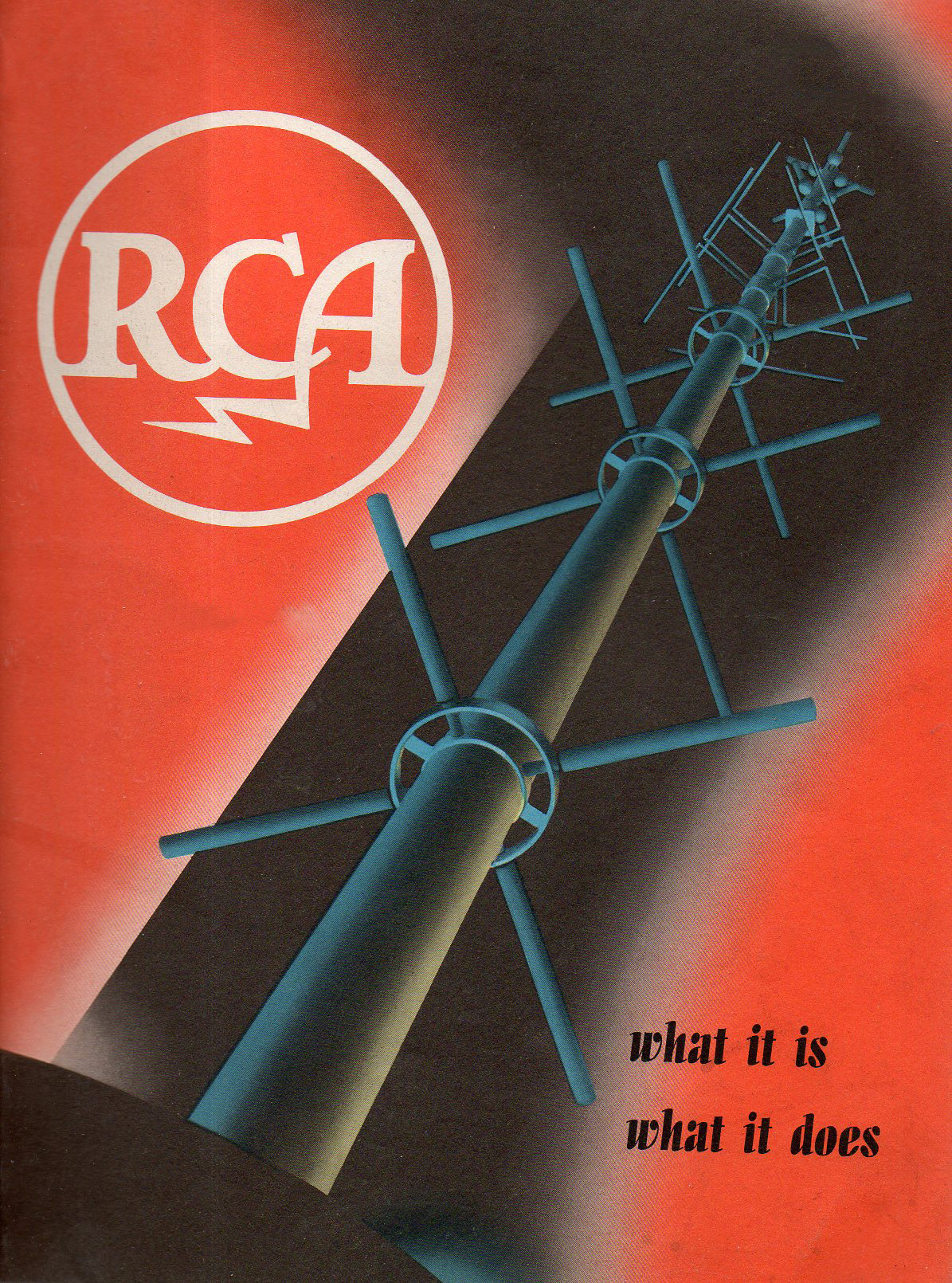
    In 1947 the future looks a little red, and sparky, and filled with television.  

    This image is that of the television antenna of station WNBT and for many years it sat on top of the Empire State Building.  WNBT was the flagship station of NBC, which was owned by RCA (Radio Corporation of America, 1919-1986) which (according to its name) was really the first national broadcasting radio network in the United States, and which (as experimental station W2XBS) became the first to broadcast a television picture (of a papier mache Felix the Cat) in 1928.  This fantastic cover art for a 1947 promotional for the company pictured the famous antenna,  the great visual of the company’s external hardware, right there on top of the world’s tallest building. 

    This was really a picture of the future, and in 1947 the future of mass communications and entertainment (and in making money in the two) was seen in television, much more so than the formerly gargantuan radio.

    And why red?  Was it latent images for a few decades of seeing Lenin marching forward with a poiny figure and folllowed by legions againsst a background of deep red?  Or is it the hundreds of years of red being associated with power–it did cost a fair amount, centuries ago, given the difficulty of its manufacture.  

    And in the history of red the business of its business was obtuse and secret.  The Spanish began exporting the source of red–the cochineal bug, which was a tiny cactus-borne bug–from Mexico.  They sent barrels of these bugs back home, where they were pounded and prepared for the Spanish worthies’ textiles.  The source of the color was held as secretly as possible, making the bug as odd a guarded source as the secretive history of medical forceps so long shrouded in mystery by their progenitors, the Chamberlain family.  So red was expensive, limiting its use to the ruling/economic powers.  It would also start showing up in art in the depiction of robes for royalty, or for robes for Mary and Jesus, and occasionally in Renaissance skies.  Alternatively, it is also associated with Hell and Satan, I assume that is the case since red was not-often used (given the cost) and so it was a rare-ish color that would strike the viewer as being exceptional. 

     Blog jan 17 francke

    That said, I’m not sure why RCA chose red for their sky in 1947, though the company did have its famous “red Seal” label beginning in 1902 and used the color freely in its logo. Aside from that, why there is a red sky is a bit of a mystery.  


  • Great Book Titles: The Does/Don’ts of Septic Tanks, Charm, and Gold.

    JF Ptak Science Books   Quick Post  Part of the series on Unusual, Obtuse, and Outsider Book Titles 
    Follow Me on Pinterest

    At some point I think I would like to post an exhibition of some of the collection of the vastly/quietly weird/surreal/Outsidery titles from my BizzaroLand Today! pamphlet collection.  Sometimes the titles are just incredibly weird, or wrong, or they’re not titles at all but something else, or they’re unintentionally absurdist of dadaist or Surreal, or they are just Outside what we might come to expect in the world of logic and its extensions.  Sometimes the titles are just odd and the work is real; sometimes not. Sometimes they’re just terrifically understated or heartbreakingly simple, and even useful, like this example (from Clymer, New York, 1945):

    Book titles septic742


  • Atlas of Dead Ideas. Q: When is Israel Not So? A: When it is Great Britain (1929)

    JF Ptak Science Books   Quick Post   Daily Dose from Dr. Odd 
    Follow Me on Pinterest

    Anglo-saxon739There was a Bible-studying group headquartered in Haverhill, Massachusetts whose inspiration/idea  interpreting the true nature of what was “Israel” according to bits and pieces in the Old Testament, and which found something to be radically different from what was seen to be  the case.  The pamphlet documents that the place we think of as Israel is not really so, and that the country best fitted to these OT statements was actually Great Britain.  There are many reasons for this and they get mistily presented in the pamphlet Restoration of Kingdom Administration the Anglo Saxon Responsibility (published by the Anglo-Saxon Federation of America in 1929), but it is rather too much and tedious and tiresome to get into the milky details, except to say that Israel as was currently recognized could not be so unless they adopt the Christian faith.  And so on. 

    The address of the organization put it on Merrimack Street in Haverhill, a block away from the river–the four story building now has it middle floor obscured by some teal 1950’s architectralolypse facing, and the bottom floor is now a dollar store (with redundant signs) with a sandwich board out front (captured by the Google car) reading “Design Perfume on Sale Beauty Supply”.  I’m sure the store is necessary and fills a need, but it is a long way and many years from redefining the concept of Israel. 


  • Title from BizarroLand–a Daily Dose from Dr. Odd

    JF Ptak Science Books   Quick Post   Daily Dose from Dr. Odd  series
    Follow Me on Pinterest

    In my heaping pamphlet collection there is a sub-collection of works
    with impossible, outsider-y, and stubbornly semi-confused titles that
    simply cannot be ignored–I mean the titles can’t be ignored, though most of the time their texts beg to be. 

    Some of the titles change from cover to title page; some titles are non-existent and replaced by simple exclamations.

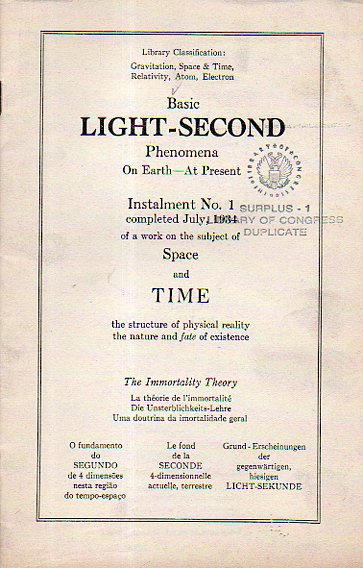
    In this case, and the first instance that I can recall, there is a “Library Classification” at top-center of the cover, leading to other information about the book just before we get to the title, which seems nearly secondary, and which is followed by other non-title information right there on the cover. There is all manner of info there, a cover with a very busy pace–data galore for what should be a mostly blank space, except the author’s name. 

    Book titles  Bizarro land737


  • Tiny Electoral Art, 1920

    JF Ptak Science Books   Quick Post

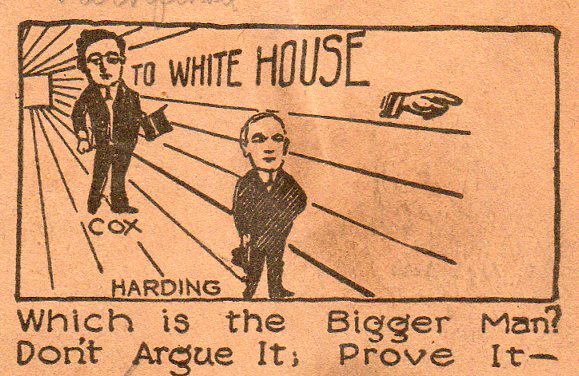
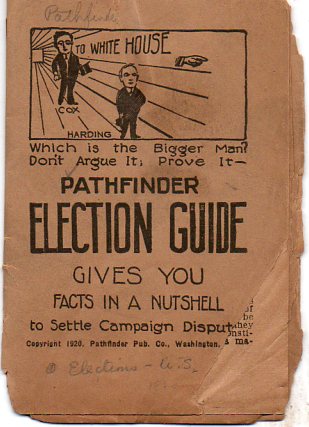
    I admit to a weakness for early 20th century American political found art in barely-existent pamphlets.  And so this fine example:

    Harding714

    This is the top quarter of a tiny (3″) pamphlet on the presidential election of 1920, a small bit of political ephemera found in exactly one library worldwide.  It provides a little coverage for the James Cox (a Democrat from Ohio whose running mate was FDR and who found the still-very-existent Cox Communications) and Warren Harding (another Ohioan newspaper magnate but a Republican).  Harding was the compromise candidate in a field showing La Follette, Hoover, Coolidge, and Leonard Wood (among others) who became the party’s choice on the eight ballot.  Cox was the Democrat favorite, but it didn’t help much, as Harding went on to a tremendous victory with 60% of the vote (and a 404-127 electoral college landslide).  Harding had a number of problems in his presidency, including his 1923 death, an administration pockmarked by scandal, but punctuated by some forward-paced and interesting movements in finance and social issues.  My feeling is that he doesn’t deserve the 40’s that he pulls in POTUS rankings, but Teapot Dome (and etc) are remembered still for him more than anything else.

    None of this helped Cox, who managed to lose the solid south, causing Tennessee to be the first of the eleven original Confederate states since Reconstruction to vote Republican. 

    Harding713


  • Naive-Outsider Titles–Masterpieces of Nothing

    JF Ptak Science Books 
    Follow Me on Pinterest

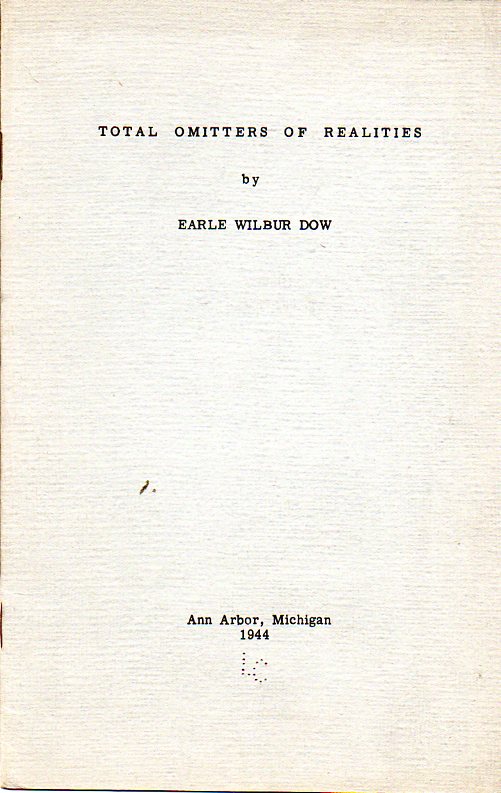
    In my heaping pamphlet collection there is a sub-collection of works with impossible, outsider-y, and stubbornly semi-confused titles that simply cannot be ignored–I mean the titles can’t be ignored, though most of the time their texts beg to be. 

    Scorn Not That Which You Do Not Understand

    is about as ungainly a title for a book that you could construct in eight words or less.  Then there’s

    Total Omitters of Realities

    a title which is as anti-compelling as the first but accomplishing that feat in half the words, and uses the plural of “reality” just for good measure. Creating another competing title in two words would be fairly improbable. 

    Naive Confused553
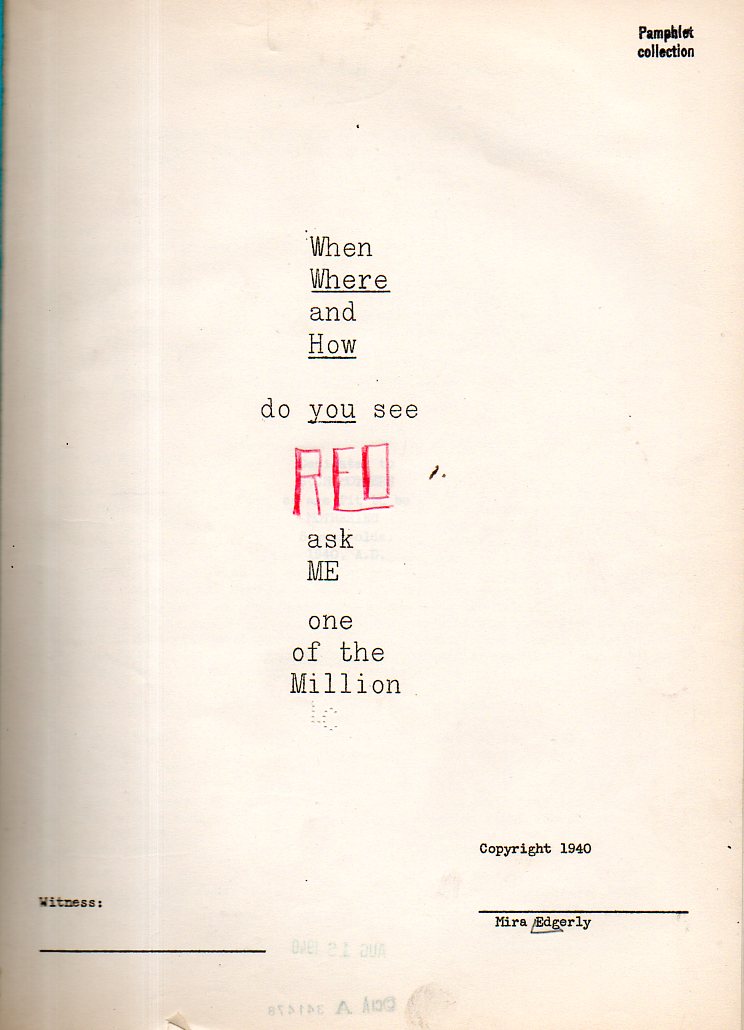
    Naive Confused552Then there are the pamphlets that have no titles on their covers, though they do have title pages, though they really don’t look like it, even though they are.  And even when they are what they seem to be not, they really aren’t even that.  Such is the case of

    When Where and How do you see RED ask me one of the Million.


    Naive Confused554


    I have no idea what this pamphlet can be about. 

    Opened to a random page, I see in heavy underline “The human knower’s point of view inside your head and mine and the power of the pen“.

    It is a mystery–it is also one of the few title pages I have seen that asks for the signature of a “witness”.