A Daily History of Holes, Dots, Lines, Science, History, Math, Physics, Art, the Unintentional Absurd, Architecture, Maps, Data Visualization, Blank and Missing Things, and so on. |1.6 million words, 7500 images, 4.9 million hits| Press & appearances in The Times, Le Figaro, Mensa, The Economist, The Guardian, Discovery News, Slate, Le Monde, Sci American Blogs, Le Pont, and many other places… 5000+ total posts since 2008.

Category: Contraries

  • Extra-Earths Redux (and Turbines in Space!) 1955

    JF Ptak Science Books  Quick Post
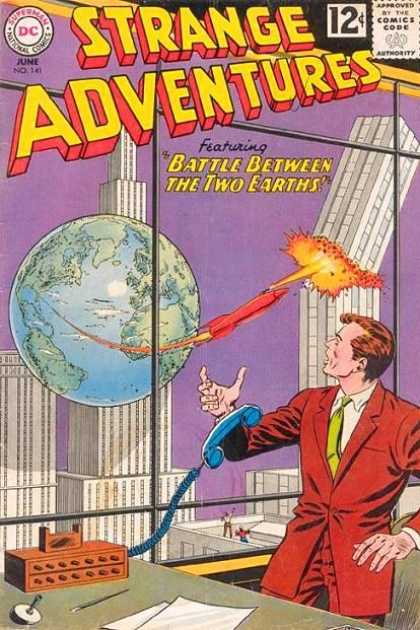
    Extra earth battle of two earths“Extra-Earths”  is a very modest category on this blog with only five posts–they do not take up much space in the bulk of the 2,780 full posts and 2,400 “quick posts”.  The subject rarely comes up, and no wonder! How many times do you see an image of Earth from Earth–and why would this be happening?  Obviously the Earths that I am interested in pop into existence in the science fiction/comics/Outsider Logic worlds. There are some who use “extra Earths” as a unit of measure, as in “the global resources consumed would be the equivalent of an extra Earth’s production” or some such thing–those don’t work for me here, as I am just interested in the visuals of the extra of two Earths.  

    For example, in an earlier post, “The Battle of the Extra Earths: Mini-Extra-Earth Vs. Full-Sized-Standard-Earth (?)”, there is a full-on frontal assault by an Earth-mini, or some such thing (I have not read the story because, frankly, there is only just so much time to burn on these things and I was just interested in the artwork.)

    Today’s example is more-or-less an Extra-Earth and it is close enough for me: this one appears in the September 1955 issue of Scientific American and is a big full page ad for Remington Rand’s UNIVAC. This computer was only about five years old or so at this point and Remington Rand was selling it for computing complex engineering bits, as with that screaming turbine. I assume that the turbine–which is inoperable in outer space of course–is coming from that Earth of the black seas, or something, and that by a very long stretch the UNIVAC has to be somewhere so I guess it could be another Earth. Yes, this really doesn’t fit, but it is close enough for me. (Also the business-end of the UNIVAC is not what looks like a monitor facing the machine’s main component-it is the longish podium-lookng piece opposite that “monitor”, which would be the “supervisory control panel”. 
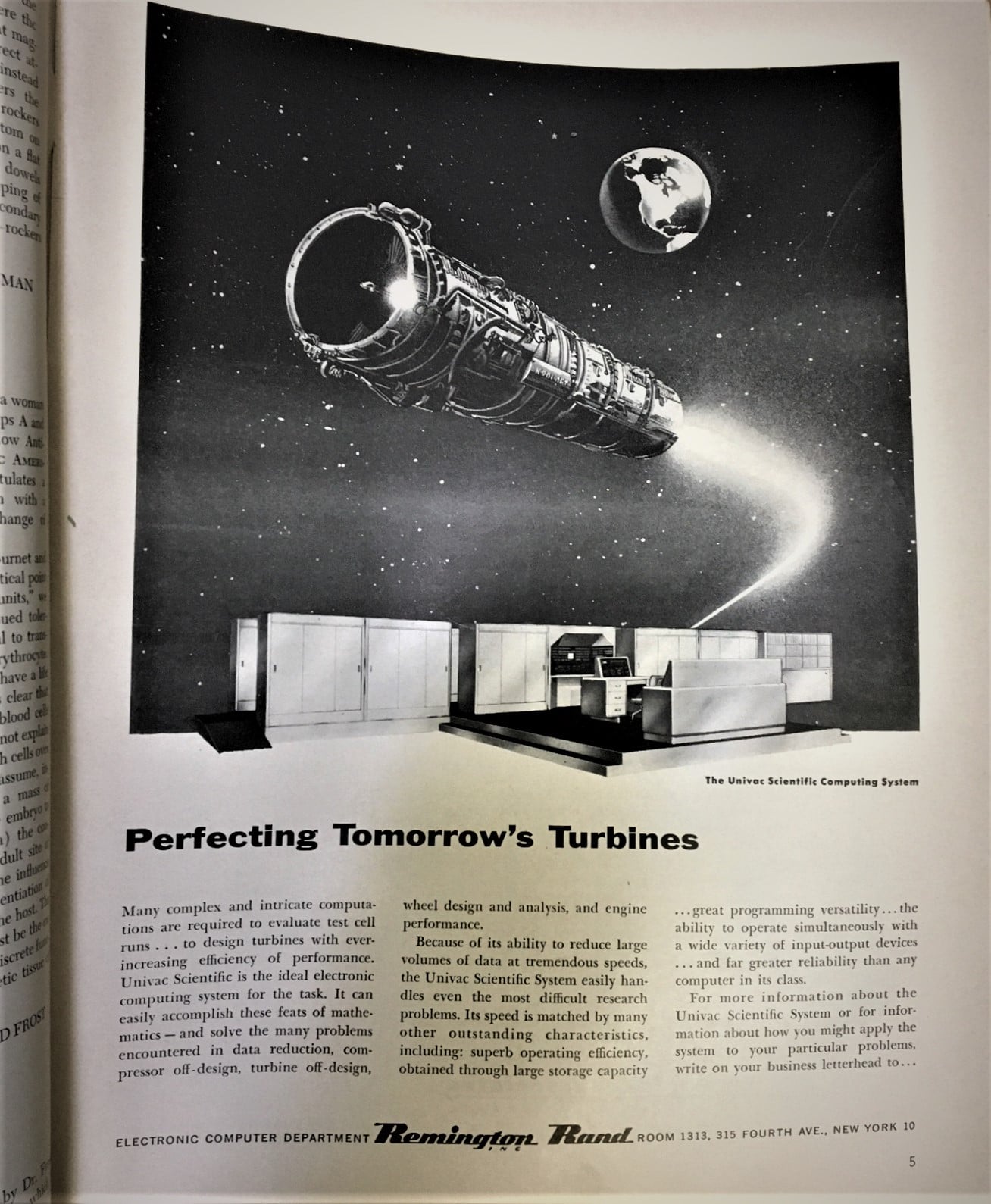
    Sci Am 1955 TUrbine UNIVAC

    I’m told by our son Feliks that there is a “Counter Earth” in the Marvel universe, where there is an “Extra Earth” on the other side of the Sun, neither Earth ever in line of sight to one another…that seems to be another category of its own, too: things that exist but are invisible because they are on the other side of something, like the bizarro story of Nazis escaping to the far side of the Moon. But that’s another story. 

    • To see the other Extra-Earth posts, just enter the term in the site’s Google search box.  
  • A Town for Escaped Slaves–Surrounded by Livestock & Swamp (1862)

    JF Ptak Science Books   Post 2248

    The “Port Royal Experiment” established in 1862 by the Union Army at Mitchelville, Hilton Head Island, Beaufort County, South Carolina for freed slaves was certainly a very interesting  and perhaps life-saving idea for many freed slaves.  Well, the “freed” slaves weren’t really that–they escapes their servitude when the Union Army took control of Hilton Head and surrounding areas early in the war on November 8, 1861.  The island became a staging area for Union forces and was fortified–it also attracted the attention of escaped slaves,m who by 1862 had sought a form of asylum there, numbering around 600.  They were not exactly welcomed to the island, as there were prejudices against African Americans in the Union ranks as well–in fact some needed protection as the lower low-lifes among the Northern ranks stole from the escaped slaves what little they had.  In any event, it was a difficult situation, with no clear way of dealing with the new ex-slave population from a legal.administrative point of view.  These ex-slaves were considered as ‘contraband” of war, and my early 1862–on Hilton Head at least–the solution was found in establishing a town for them.


    Mitchellville

    The town was created by and  named for Kentuckian and Major General Ormsby M. Mitchel–he wouldn’t survive the year, dying of yellow fever in Beaufort S.C., and then buried in Green-Wood Cemetery in Brooklyn (and as it turns out his marker is not far from my mother’s mother’s family.  Furthermore he is the O.M. Mitchel I know from the history of astronomy, his life before the military and before his country needed him.  He wound up at the troubled Albany observatory right before leaving for the war).  

    Mitchelville was necessary and perhaps it was even sufficient for the time–certainly it had its share of trouble during the war, and then with ownership of land issues after the war, and so on. 

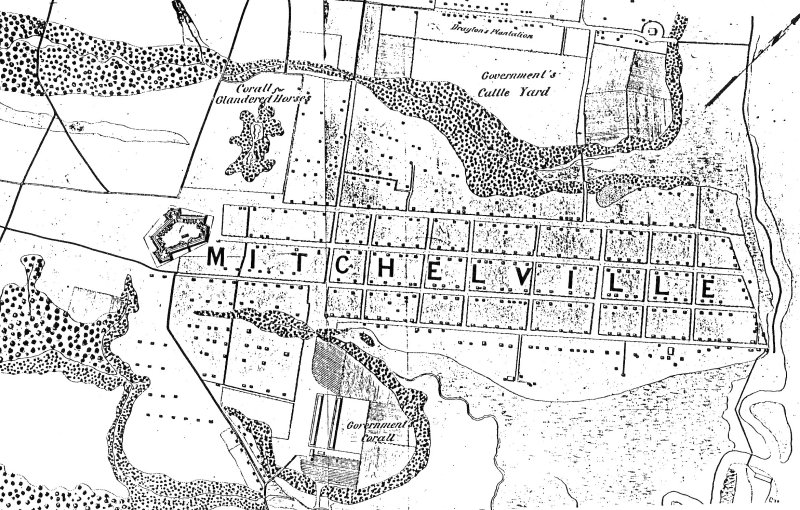
    What struck me about this map was the placement of Mitchelville.  

    It was mostly surrounded by poop.

    Situated on a cotton field–some of the slaves who lived there used to work those same fields for the land owner who directed the Confederate unsuccessful defense of the island–the town had a huge swamp to its south, with a ‘government corall” just west of that; the northern boundary of the town was a large “government cattle yard”, and the to the west was a fort and horse coral.  And then to he east was the ocean.  Hot, swampy, and mostly surrounded by cows and horses, the town doesn’t look particularly appetizing.  On the other much larger hand, the people living there were no longer slaves.  


  • Bizarro-World and the Scourge of Extra-Earths

    JF Ptak Science Books   Post 2143


    Bizarroworld2

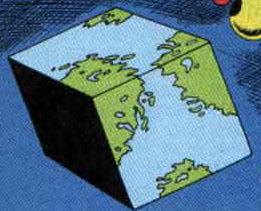
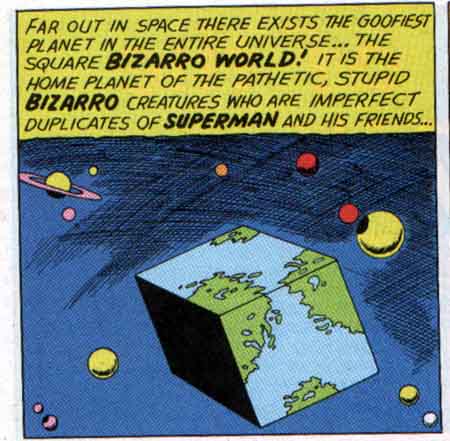
    Nothing quite says “bizarro” like the bizarre1–and there has been plenty of that on this blog.  There have been a number of places that I have identified as Bizarro Worlds, but so far it seems that the only self-proclaimed Bizarro World is this one, from the Superman2 comic book–a place that was the opposite of the Superman-y traits that made Superman Superman.  Somehow to equate bizarreness on this world everything appeared as geometrical shapes with basically no sphere or rounded edges.  (How Braque or Picasso and company would have reacted to this is unclear.) 

    Bizarroworld

    It is evident that Bizarro World inhabits a place in the universe that allows for bizarre things to happen, a sort of bizarrograviation, that also allows for shadow to be cast in space without regard to light source. 

    It is a lovely to addition–if only by this brief note, to a continuing series on Extra-Earths.  This is an Earth, and it is Extra, hence:  Extra Earth.   Some of the other Extra-Earth posts include:

    —Extra-Earth Humano-Alien Souls From Outer Space Repopulate Earth-Hell!!(??),

    —Mondo Bizarro, Science Afflictions and the Dubious Mind—Bad Science, Part 1. NYC in Space (?!)

    —The Battle of the Extra Earths: Mini-Extra-Earth Vs. Full-Sized-Standard-Earth (?)

    and some others, all quite findable on this blog via the Google search at left. 

    I’ve just noticed that these Extra-Earth posts share something else that few of the other 2500+ posts on this site do not:  extra exclamation points!

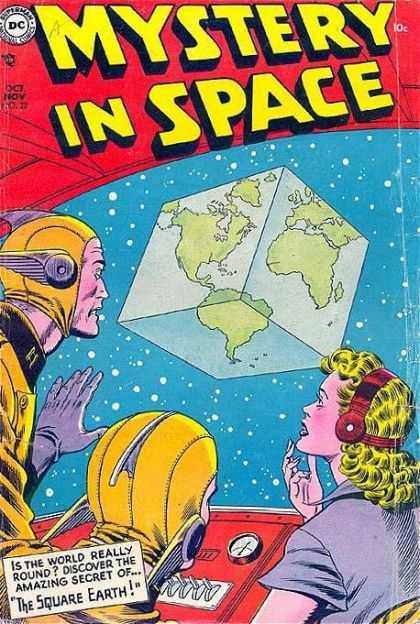
    And to end, I should point out that this is not the first time I’ve encountered a square Earth, bizarro or not:

    Earth strnage cubed earth


    Notes

    1.  “Bizarre”, via the OED: At variance with recognized ideas of taste, departing from ordinary style or usage; eccentric, extravagant, whimsical, strange, odd, fantastic

    • a1648   Ld. Herbert Life,   Her attire seemed as bizare as her person.
    • 1668   Dryden Secret-love Pref. sig. a1,   The ornament of Writing, which is greater, more various and bizarre in Poesie than in any other kind.

    Bizarre quality

    • 1741–70   Lett. Mrs. Carter (1808) 207   The bizarreries which arise from the mixture of good and bad which makes up the composition of most folks.
    • 1828   Scott Tapestr. Chamb.,   Rich in all the bizarrerie of the Elizabethan school.
    • 1844   Foreign Q. Rev. 33 60   Bizarreries.
    • 1858   W. Bagehot Lit. Stud. II. 194   The bizarrerie of Mr. Dickens’s genius.

    2.  “Superman” in the OED:

    A. “In Nietzschean thought (also with capital initial): an ideal superior man of the future who transcends conventional Christian morality to create and impose his own values; = Übermensch n.   More generally: a man of extraordinary power or ability; a superior being. Cf. superwoman n.In later use sometimes influenced by sense 2”

    • 1894   Forum May 302   The ‘cosmic, super-man’ of the future.
    • 1903   G. B. Shaw Man & Superman 196   We have been driven to Proletarian Democracy by the failure of all the alternative systems; for these depended on the existence of Supermen acting as despots or oligarchs.
    • 1909   T. Common tr. F. Nietzsche Thus spake Zarathustra ii. xxvi. 108   Never yet hath there been a Superman. Naked have I seen both of them, the greatest man and the smallest man… Verily, even the greatest found I—all-too-human!
    • 1925   H. V. Morton Heart of London 110   Above the kneeling priests is the Pharaoh, that ancient superman.
    • 1969   G. Jackson Let. 28 Dec. in Soledad Brother (1971) 179   How could there be a benevolent superman controlling a world like this.
    • 2008   K. Hawkins Talk of Town 241   Poor Nick. He’s determined to be a superman and resist emotional entanglements that could cloud his judgment.
    • 2010   M. G. Kendrick Heroic Ideal ix. 161   The Zarathustrian vision of a post-Christian faith rooted in the real world and dedicated to the creation of the superman, inspired a whole generation of radical Russian artists and Marxists.

    B. “With capital initial. (The name of) an almost invincible superhero having the power to fly and typically depicted wearing a tight blue suit with a red cape; a person likened to this superhero.The character first appeared in 1938 in a U.S. comic strip by writer Jerry Siegel (1914–96) and artist Joe Shuster (1914–92) and has since been the subject of radio and television series, as well as numerous films.”

    • 1938   Action Comics June 1   So was created..Superman! champion of the oppressed, the physical marvel who had sworn to devote his existence to helping those in need!
    • 1940   Time 26 Feb. 44/3   Last week Superman took to the air in earnest, as a three-a-week serial.
    • 1958   Times Lit. Suppl. 1 Apr. p. xx/4   The impression remains of a sense of values associated with ‘Superman’ and American comics.
    • 1968   S. Ellin Valentine Estate iii. iv. 142   ‘How the hell did he come to miss me?’.. ‘You’re Superman,’ the first man answered. ‘Bullets bounce off you.’
    • 1980   F. Weldon Puffball 77   ‘Now it’s our turn.’ ‘I don’t want it to be,’ she said, as if he, like Superman, could turn the world the other way.
    • 1995   FourFourTwo Oct. 135/1   Presenting Shearer as a goalscoring Superman seems a bit OTT.
     

  • The Trained Neutrality of Killing

    JF Ptak Science Books   Quick Post

    Siegried Giedion wrote a terrific book called Mechanization Takes Command (and beautifully subtitled ...a contribution to anonymous history) in which he (sweepingly) looks at how mechanization took over from hand production in the life of social and technical world. 

    The book was published by Oxford University Press in 1948, and given that year, Giedion has something very interesting to say about killing.

    After investigating “The Mechanization of Death: Meat” and how over hundreds of years the hammer-to-the-head and skinning that transforms an “animal” into “:meat” turned from human to mechanical hands, he decided that “what is truly startling in this mass transition from life to death is the complete neutrality of the act”.  The animal=meat act and the mechanization of killing removes the “human” element of the act, and that “one does not experience, one does not feel; one merely observes” a killing that is not somehow dying.  He reckons that this experience may in general have made us more capable of desperate act of killing that do no longer seem so desperate. 

    It is a remarkable and early insight into the meat industry from an uncommon and unexpected source.

    Giedion738[Source:  Siegfried Giedion, Mechanization Takes Command, Oxford University Press, 1948, p.246.]

    ·Posted by :

    ·in:

    — —

  • Crowd Series: Fascist/Anti-Fascist Demonstrations, London, 1934

    JF Ptak Science Books   Post 1984    Follow Me on Pinterest

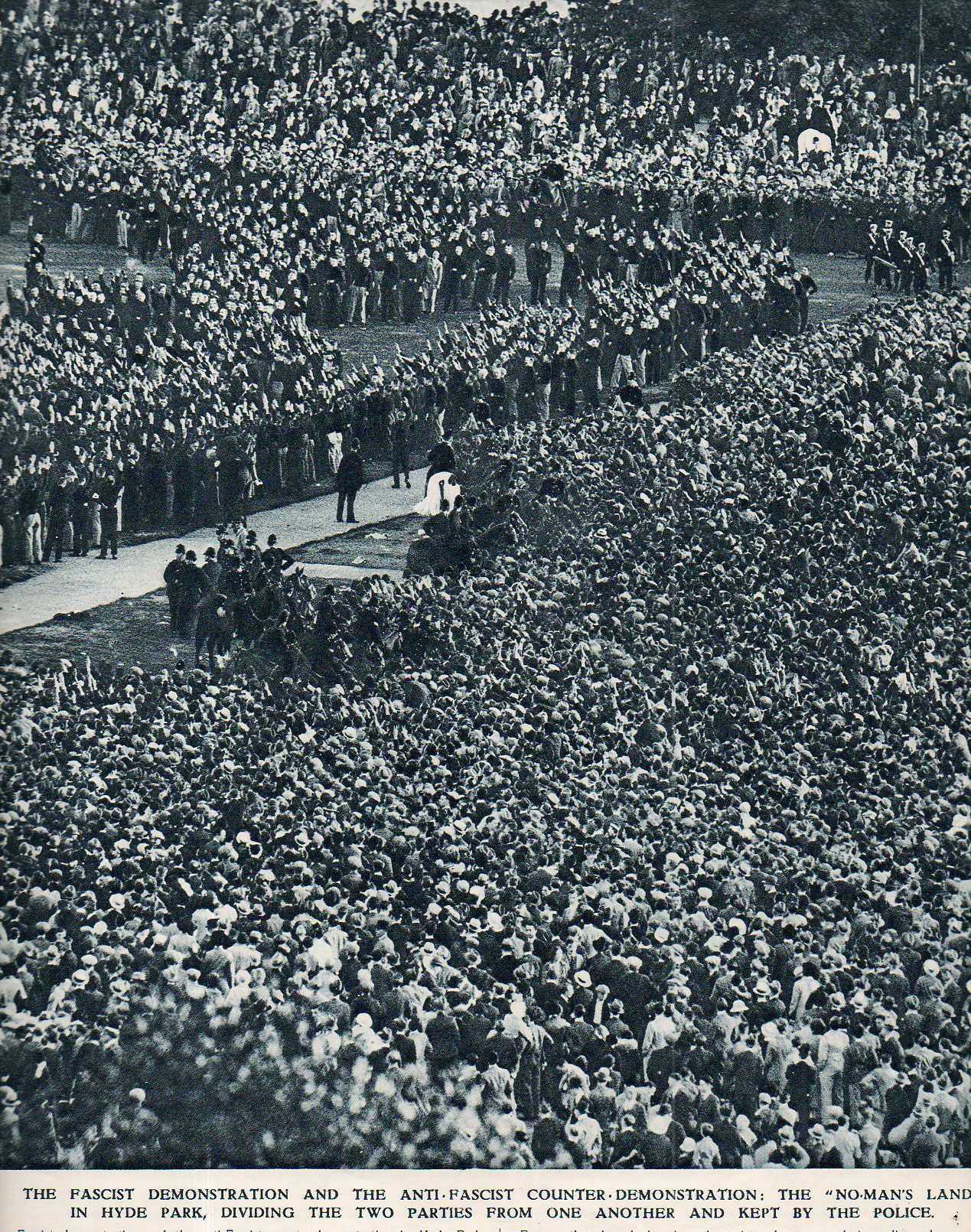
    This remarkable photograph was published in The Illustrated London News on 15 September 1934 and shows the Fascist demonstration in Hyde Park of 9 September. There was an “anti-Fascist counter-demonstration” at the same time, same park–the two sides were divided by the “No Man’s Land” path in the middle, screened by police on each side.  The crowd at the left/middle is the fascist group–easily discriminated by their salute and then their visual sameness, so many of them wearing the signature black shirts. At bottom/right/top is the counter-demonstration group, which is far larger–they were orderly but not having any patience for Hitlerism. 

    Crowds fascist105

    Which is a detail from:

    Crowds fascist104
    [Source: private collection]

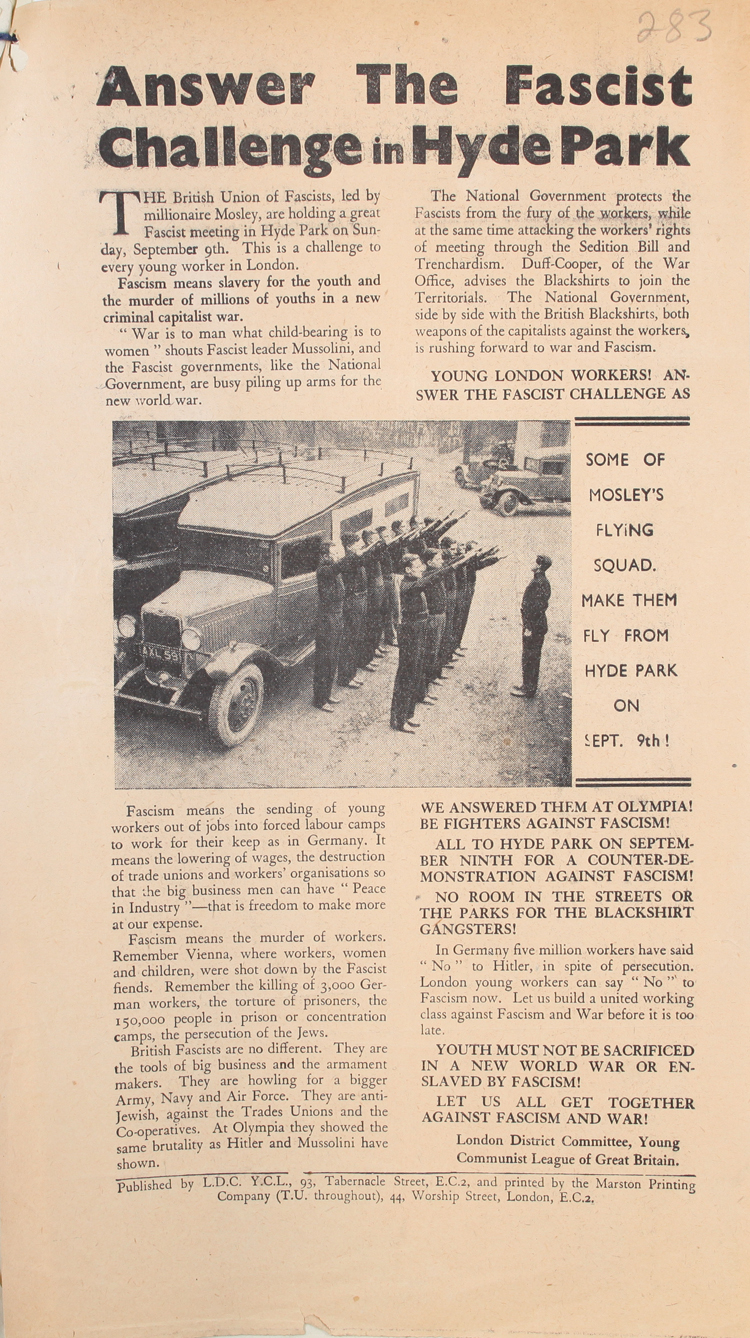
    I found a handbill for one of the opposing groups at the demonstration:  the Young Communist League, which evidently showed up in force.  In the caption of the above photo there is no mention of the party affiliation of the anti-fascists, except to quote witness Will Rogers saying “the Blackshirts were holding one meeting. Two hundred yards away the Communists were holding theirs. And in between was all of London lauhing at the both of them”.  According to a quick search I’m not sure that there were this many communists in all of London in 1934–I assume the anti-  crowd was very mixed.

    (These Blackshirts should not be confused with Albanian/Indian/Italian blackshirts, or German brownshirts (brown maybe because black was traditionally used for Christian Democrats?), or American silvershirts, though some do bear some resemblence. In the other color-shirt-political-affiliation categories there are, for example, the redshirts of Italy, the blue- and greenshirts of Ireland, the goldshirts of Mexico, the greyshirts of South Africa, the greeshirts of Romania, and the blue shirts of Taiwan).

    Fascist demonstration 193
    Source:  British National Archive, here.

    The “Mosley” here Sir Oswald Mosley (1896-1980), founder of The British Union of Fascists in 1932 which in 1936 changed its name to the British Union of Fascists and National Socialists and then in 1937, slimming it down to the British Union, until it was disappeared by the government in 1940 in a ‘defence of the realm action” under Defence Regulation 18B.

    Mosley and his wife were arrested in 1940 and spent a few years in relatively high privilege in prison, a situation granted by Winston Churchill. They lived in their own inner-prison cottage, with a garden and servents.  They were released in great controversy in 1943 and seem to have spent decades in the far right spectrum publishing and promoting questionable and of course distasteful political viewpoints. 

    ·Posted by :

    ·in:

    —

  • Blank & Empty Things Series: Self-Referencing Languages and Babel

    JF Ptak Science Books      Part of the History of Blank, Empty and Missing Things.

    Follow Me on Pinterest


    Blog--14 nov--fantastic arch


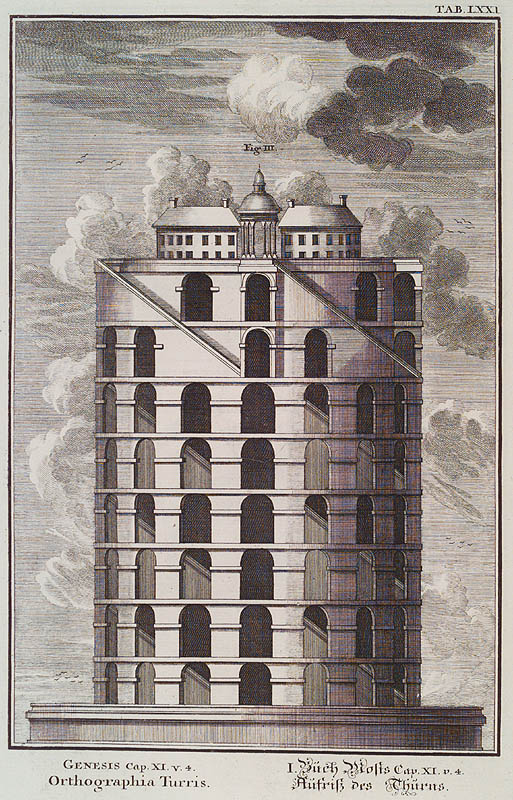
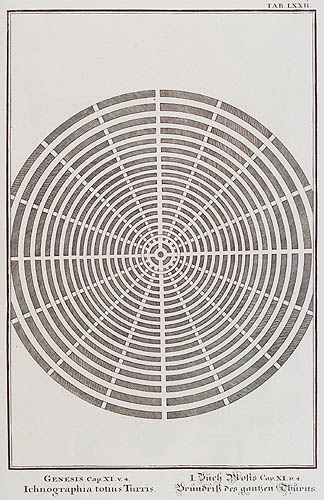
    Returning to Jean-Jacques Scheuchzer’s1 magical, inventive, fact-bending naive-surreal work on universal history based on the Old Testament, I’ve found these two glorious and odd images of the Tower of Babel.  The first (“Genesis Cap.XI.v.4. Orthographia Turris.Mediummetalis”) is terrific, shocking even in its abrupt construction and flat-out stumpiness, because it is one of a very small minority that shows the structure to be canonical, with a little church at top. The enormous stairway is just completely out of proportion to the purpose of the structure, the effort falling into some sort of odd advanced-child category.

    If Italo Calvin’s “Invisible Cities” or (better yet) Jorge Borges’ “The Circular Ruins” were to be illustrated, this image would fit right in.

    The other very unusual bit here, is that Scheuchzer also provides a plan for the city that was to be built around the tower–I’m pretty sure that I haven’t seen references to this before, and the Biblical references to it are no help whatsoever in determining its physical aspects.

    There are probably very few things that could be as blank or as empty as combative, competing, nonsensical and completely self-referential language or communication.  Well, except for Scheuchzer’s very empty town plan locating the tower in an urban setting–a listless place of surrounded circles of nothingness for a place in which everything is said and nothing is understood.  Ground Zero for blank Blog--nov 14--planlanguage.


    Notes:

    Two interesting books that I should mention that address the ideas
    of fantastic/imaginary architecture and decay are C. W. Thomsen, Visionary
    Architecture: From
    Babylon to Virtual Reality,   (Prestel, 1994) ; and  Paul Zucker, Fascination of Decay (Gregg  Press, 1968).

    1.  Kupfer-Bibel, in welcher die Physica sacra, oder geheiligte
    Natur-Wissenschafft derer in heil. Schrifft vorkommenden naturlichen
    sachen, deutlich erklart und bewahrt,
    printed in Augsburg and  Ulm
    by  C.U. Wagner, 1731-1735. Offered in four volumes, illustrated with
    758 plates, it is a magnificent work, if not altogether correct, or
    even near- correct, with an enormously confused pedigree, implying the
    wisdom and text of the Bible (and the old Testament at that) as the
    background for a physical history of the world.


  • Absurd Third–Interesting Absurd, Dadaist Bits Found and Collected

    JF Ptak Science Books    Quick Posts

    These are some images that I’ve bumped into and saved for possible use in a post, but they’ve just not fit in anywhere, yet.  Many of these images were found at the fantastic Fantomatik blog.  

    Greg Segal:

    Absurd aug 3greggsegal7

    Fabulous luxury by Martin Parr:

    Absurd aug 3Martin Parr87

    Absurdist aug 3 bangbang8
    Absurdist aug 3 c
    Absurdist aug 3 d


  • A Note on Alchemy and Gravitation

    Belief systems like alchemy and intelligent design have dialogues of persuasion; the sciences on the other hand explain rather than persuade.

    I’m not sure why this hasn’t occurred to me before, but there is a crucial element of Paracelsian philosophy and alchemy that is sort of correct, in a way. The map of the universe that they sought to drawn on the human body to represent the macrocomos in the microcosmos, the influence of the stuff of creation on our daily life, was correct in a way that they hadn’t suspected. And it was brought about by a man who vigorously pursued alchemy for decades, hoping that it would provide a link to the vast pool of somethingness that he didn’t yet have answers for, as well as the questions he didn’t yet know that he wanted to ask.

    Newton had abandoned alchemy completely by 1696, nine years after the publication of his Philosophiae Naturalis Principia Mathematica, the great “external” influence of the universe coming to bear on humans on earth. The alchemists would be shocked perhaps by this connection, and I’m sure that what they were looking for wasn’t that physical bodies attract with a force proportional to their mass as a consequence of the curvature of spacetime which governs the motion of inertial objects, let alone that it was one of four fundamental forces.

    But the alchemists were on the road to someplace, just not the Royal Road. I imagine too that transmutation must’ve taken it squarely on the chin in 1818, when Berzelius published his findings of the atomic weights of 45 (of 49) known elements, showing that atoms (thank goodness we did not call them “seeds” like some) existed and the elements were entirely different…meaning that the very basis for transmutation was removed, that mercury could never be made into gold, owing to the differentiation of the nature of the elements themselves. That must’ve been a crushing experience, making alchemy a harder persuasion to perpetrate.


    ·Posted by :

    ·in:


  • Contrary Big Crowds Series–a Chaos of Hats and an Order of Heads with No Hats

    JF Ptak Science Books–Quick Post

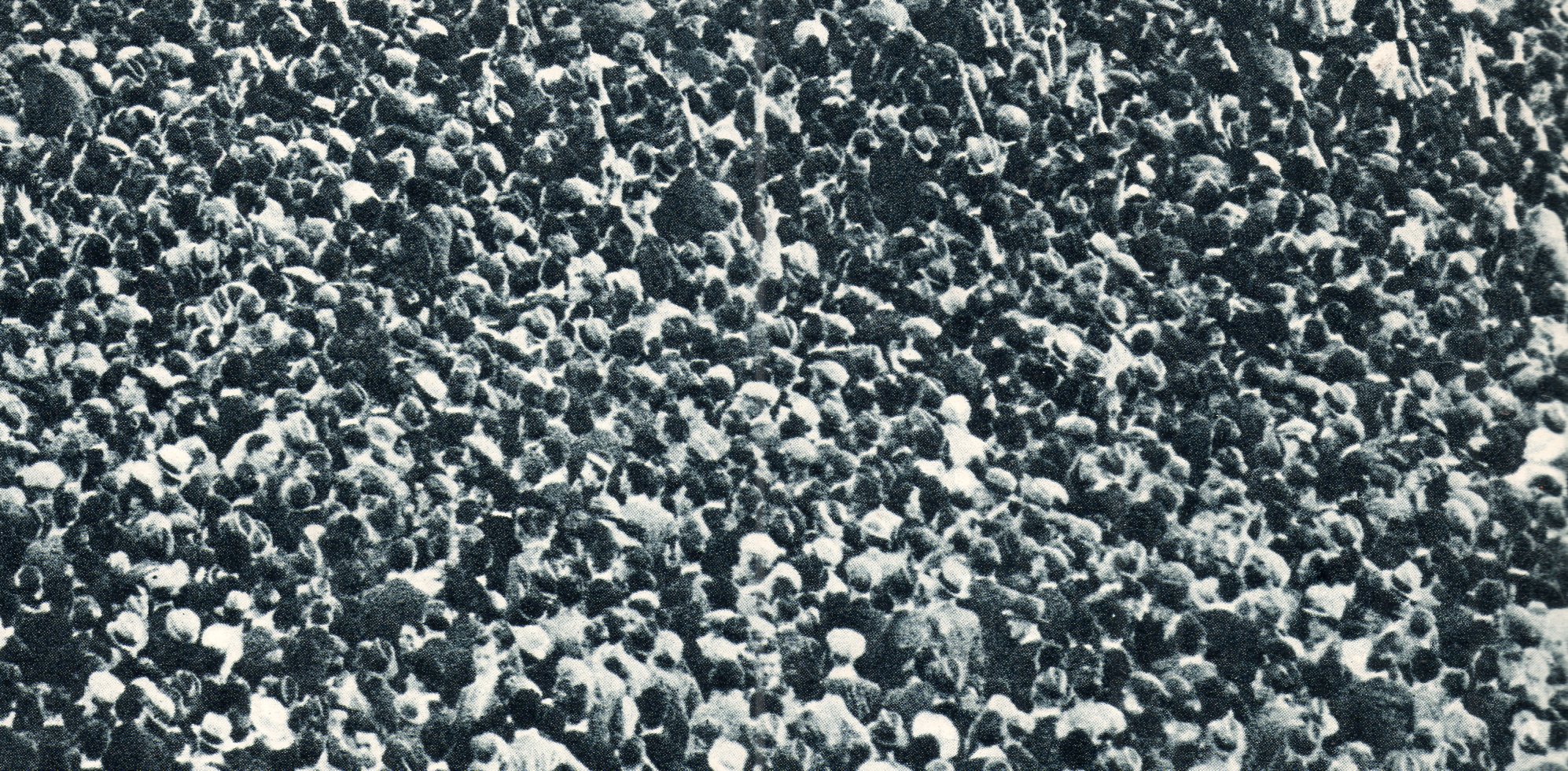
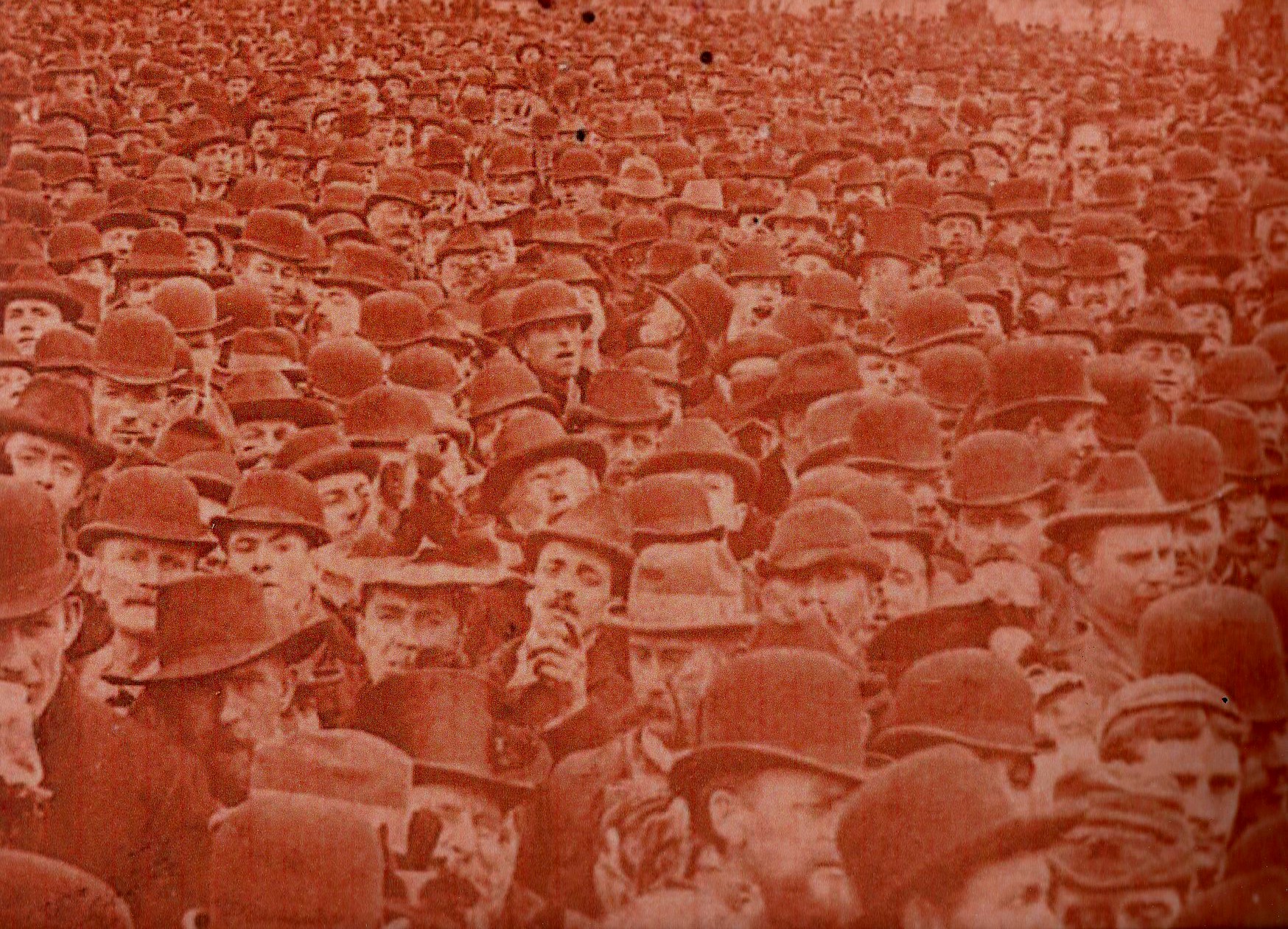
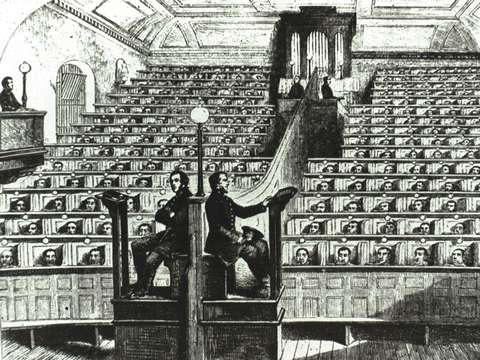
    Coming upon this image of a sea of hats, which in the fine tradition of naming collections of self-similar things-like a gaggle of geese or a murder of crows–a ‘Chaos” of Hats, I needed to find its contrary, and a relatively orderly and ordinary one at that. [I compiled a list of  oddly-named groups in an earlier post here called An Unkindness of Ravens and a Murder of Crows.]

    Hats454

    What better than an Order of Heads?  This image is of a church or social service at Pentonville Prison in 1855.  The penitentiary engraving is real;  but the  truth be told,  the Chaos photo is a manipulated image, about a half of the original of something I made, mainly because I just wanted to see  a very hatty crowd around the man in the middle pointing at the camera. 

    Hats heads

    As it turns out, Pentonville–serving North London loyally since 1816, and still doing so–was the home for a bit of Oscar Wilde and Boy George.  It was also the place where Arthur Koestler began composing his thoughts for his magnificent Darkness at Noon.


  • People Out of Place: Mailrooms and Traffic Islands, Military, 1918

    JF Ptak Science Books LLC Post 824  Blog Bookstore

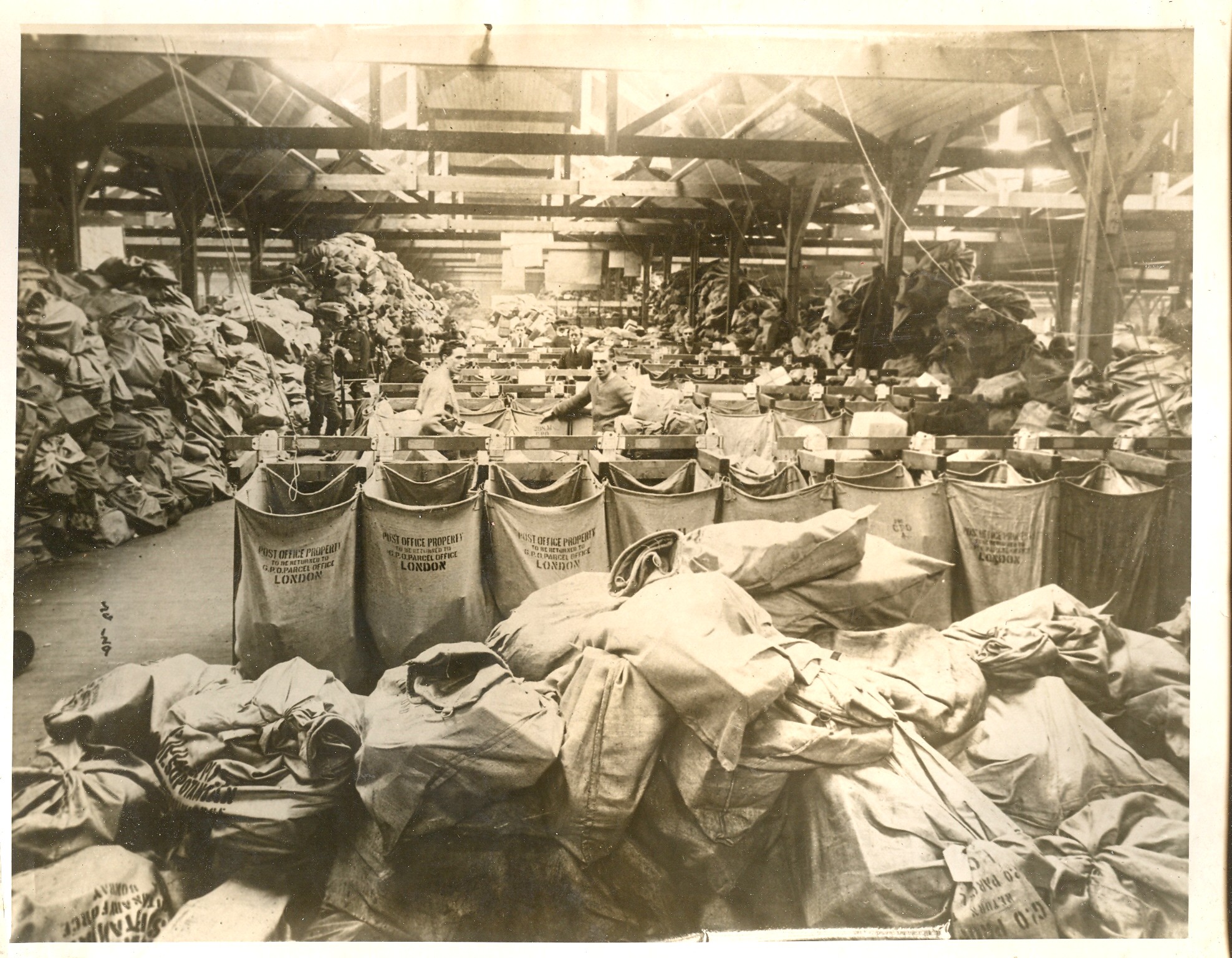
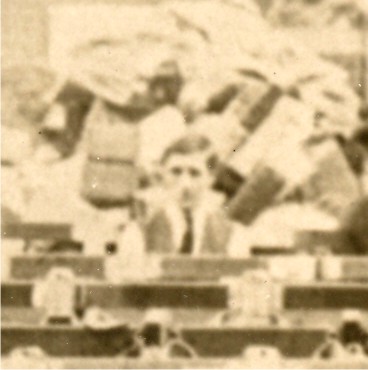
    This is the U.S. Army mail depot at Regents Park, London, braced for and under siege by  Christmastime mail in 1917. It strikes me that there are not a million items in this photo–at this time in the war there were something like 35 million people in the services for all countries dedicated to the war effort, which is approximately half the number that served in total.  If these letters in this picture were bodies, I reckon that there would be five more rooms like this necessary to tell the visual picture of the war dead and wounded.  This aside, I initially focused on the guy in the rear with the white shirt and tie, standing there pretty much overwhelmed by the task of moving all of that stuff…and perhaps with the idea that much of the mound would wind up being undeliverable because the recipient was killed.  I wonder if that mail was returned, or not?

    WWI photo Xmas mail 


    WWI photo Xmas mail detail

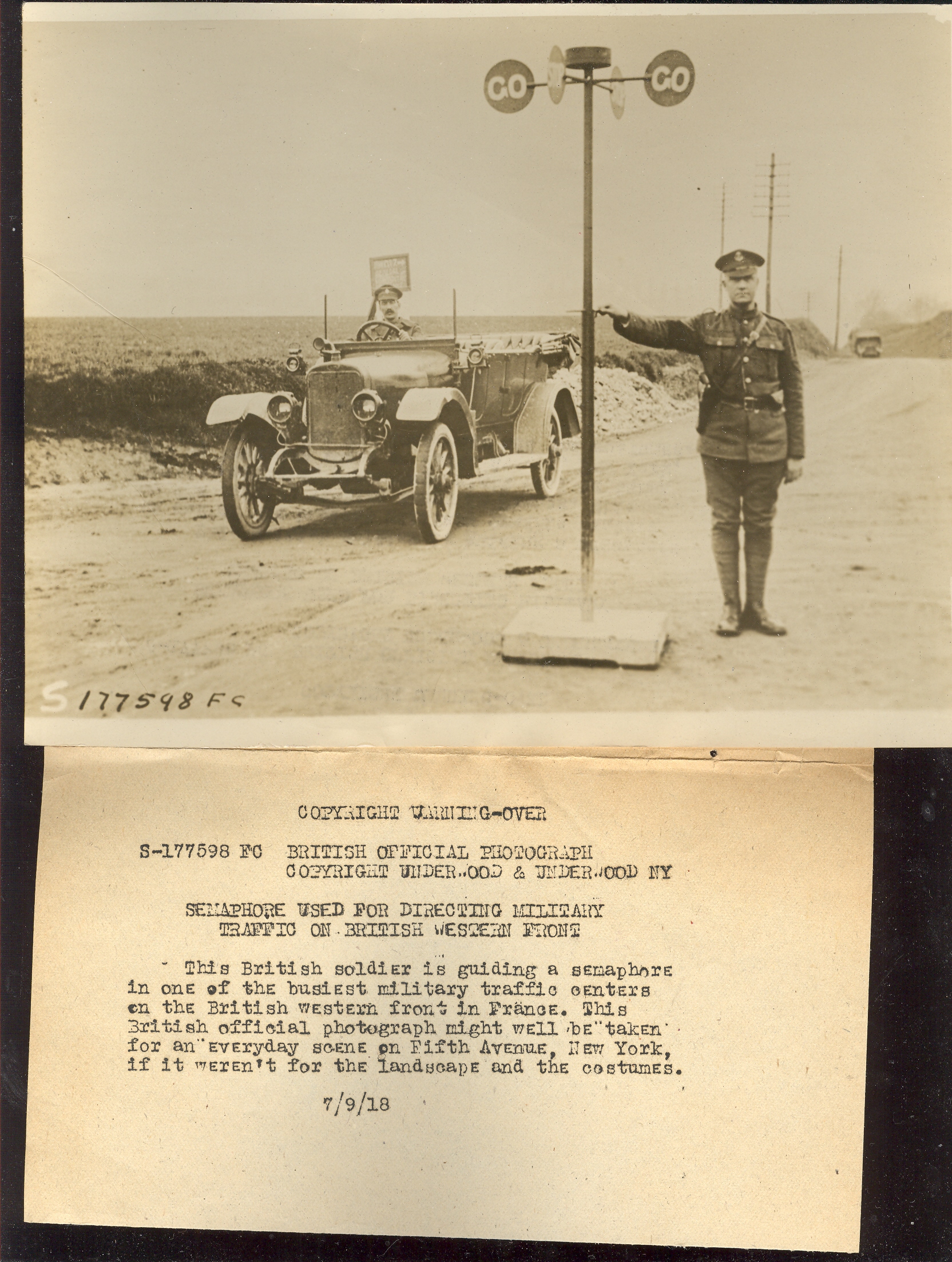
    On the other end of the spectrum is this bizarrely-titled photo of a
    British soldier “guiding” a traffic signal device…the description
    says that this is the busiest intersection in all of British-occupied
    France.  Maybe so, but not at this particular time.  Perhaps the
    photographer should’ve waited a bit to get a different sort of picture
    to make his point, rather than settle for this lonely (if not
    beautifully arranged) situation.

    WWI photo traffic


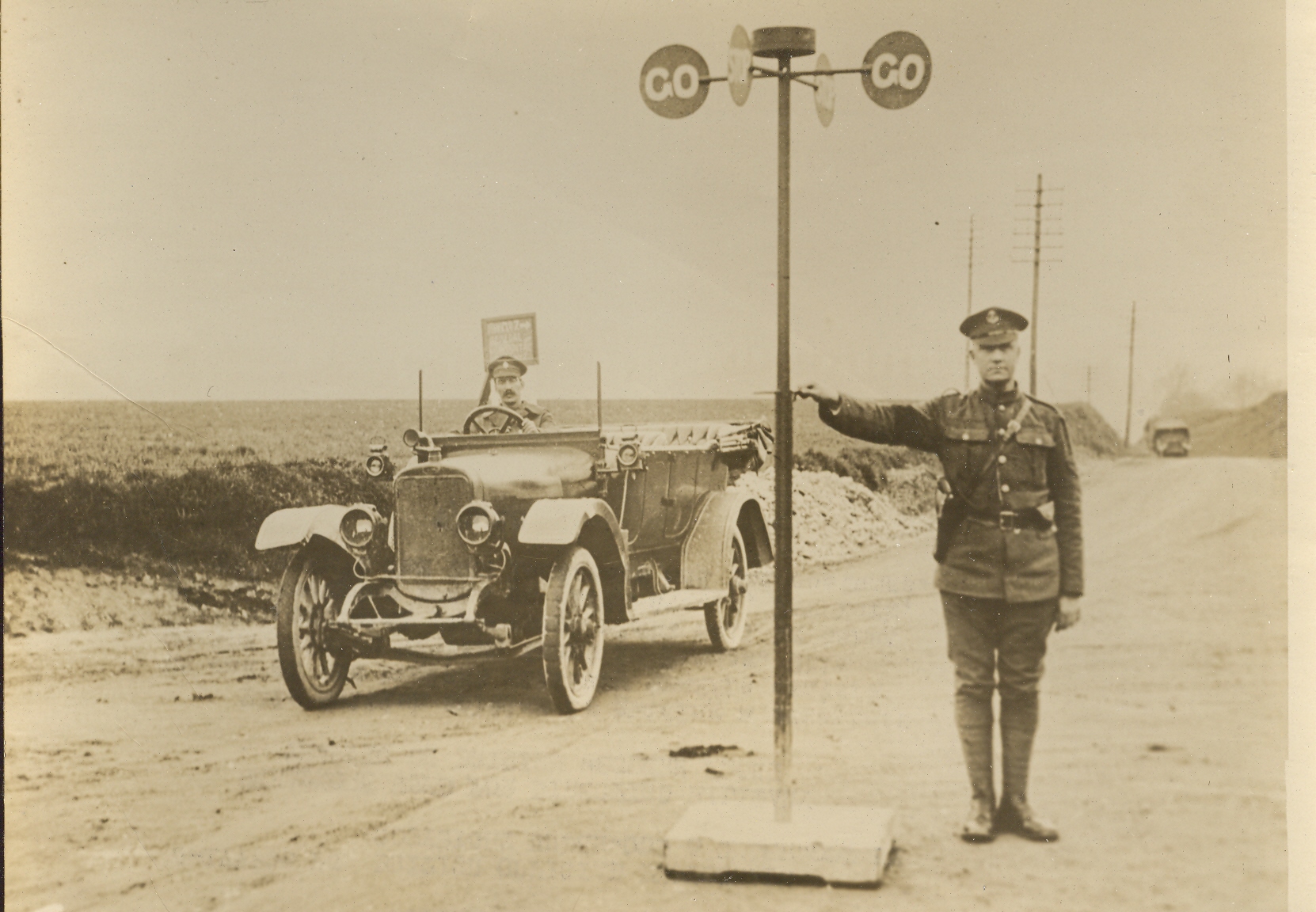
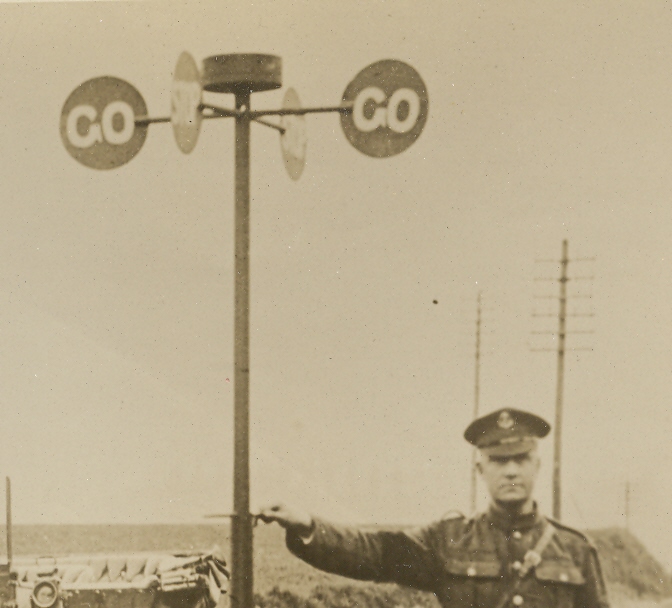
    Here’s the image without the accompanying text, which was supplied for the end-user of the photo by the news service photography supplier. 

    WWI photo traffic detail 

    WWI photo traffic detail 001

    ·Posted by :

    ·in:

    — —