A Daily History of Holes, Dots, Lines, Science, History, Math, Physics, Art, the Unintentional Absurd, Architecture, Maps, Data Visualization, Blank and Missing Things, and so on. |1.6 million words, 7500 images, 4.9 million hits| Press & appearances in The Times, Le Figaro, Mensa, The Economist, The Guardian, Discovery News, Slate, Le Monde, Sci American Blogs, Le Pont, and many other places… 5000+ total posts since 2008.

Category: WORD art

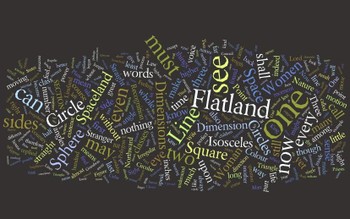
  • Word Art: the Geographical Vocabulary of Edwin Abbott’s “Flatland”

    JF Ptak Science Books   Quick Post  

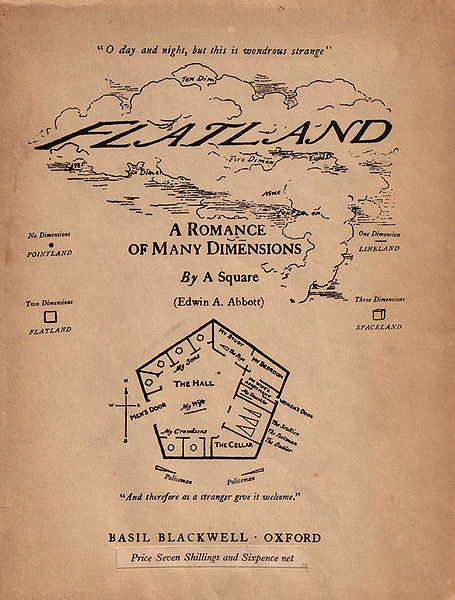
     Edwin Abbott’s slender Flatland, a Romance of Many Dimensions is perhaps one of the best books ever
    written on perception and dimensions, a beautifully insightful book that
    was quick and sharp, and in spite of all that was also a best-seller. 
    Written in 1884 when Abbott was 46 (Abbott would live another 46 years
    and enjoy the book’s popular reception), it introduces the reader to a
    two dimensional world with a social structure in which the more sides of
    your object equals power and esteem.  Thus the lowest class would be a
    triangle (three sides) while the highest (priestly) class would be
    mega-polygons whose shape would approach a circle.  Abbott’s magistry
    comes in explaining to the three-dimensional reader what it was like to
    be in a two-dimensional world.

    Wordleflatland

    Flatland

    ·Posted by :

    ·in:

    — —

  • Looking into the Future, a Little: the Edge’s Survey for 2008

    JF Ptak Science Books LLC  Post  465
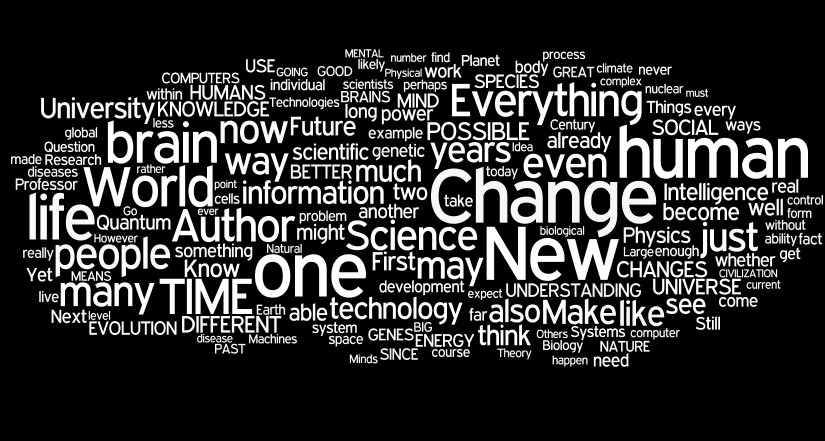
    Wordle--the edge future JPG

    This is a list of wide-thinking thinkers
    ideas about revolutionary scientific changes will come in the next 20-50 years,
    an outline list of the author and subjects appearing below.  There are 157 entries, and I’ve included a
    link to the full text HERE so that the full entry can be read.  I haven’t read them all—the full text runs
    about 150k words—though what I’ve picked around so far looks not terribly inspired
    in spite of the high-pop value of the assembly. 
    I think that if you placed yourself back in time somewhat and viewed these
    from a 1980’s mindset (and upping the 20-50 year timeframe to 40-70 years) the
    ideas start to look very sharp.  But we
    aren’t in the ‘80’s and the ideas for the most part aren’t very big, and some
    of them (I hate to say) are just goofy (and some of these come tagged along
    some very big names). A bit on the project is taken from Newsweek, below  

    I’ve also constructed a Wordle of the entire document to see if anything interesting popped out, though the secret of interest remained hidden.

    NEWSWEEK  Crystal-Ball Time  Newsweek, 31 december 2008 
    By Sharon Begley

    Every December the
    online intellectual salon called Edge, presided over by literary agent John
    Brockman, asks a select (virtual) assembly of scientists to ponder a question,
    such as what they are optimistic about (2007), what “dangerous” ideas
    they have (2006) and what they believe is true but cannot prove (2005). As the
    bell tolls on 2008 and rings in 2009, Edge is unveiling this year’s: “What game-changing scientific ideas and
    developments do you expect to live to see?”


    *KEVIN KELLY
    Editor-At-Large, Wired; Author, New Rules for the New Economy
    A NEW KIND OF MIND
    _____

    *HOWARD GARDNER
    Psychologist, Harvard Graduate School of Education; Author, Five Minds for
    the Future
    CRACKING OPEN THE LOCKBOX OF TALENT
    _____

    TIMOTHY TAYLOR
    Archaeologist, University of Bradford; Author, The Buried Soul
    CULTURE
    _____

    JOHN GOTTMAN
    Psychologist; Founder of Gottman Institute; Author (with Julie Gottman),
    And Baby Makes Three
    LABORATORY EARTH COLONIES
    _____

    ED REGIS
    Science Writer, Author, What Is Life?
    MOLECULAR MANUFACTURING
    _____

    ·Posted by :

    ·in:


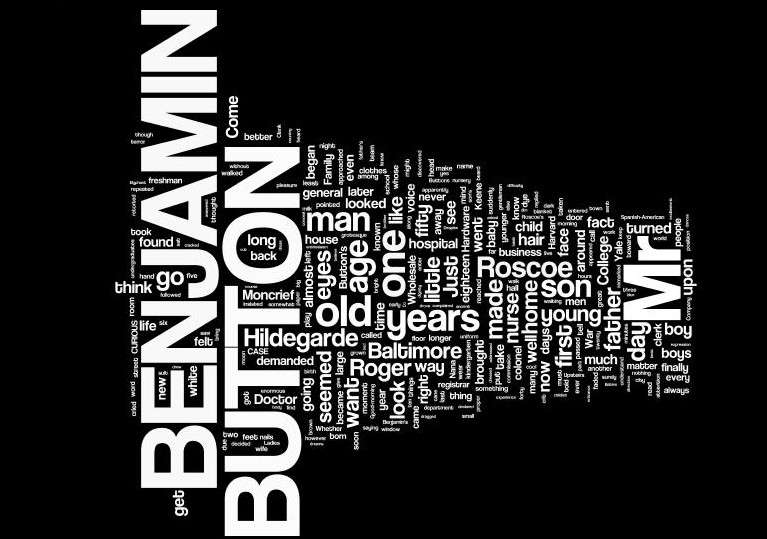
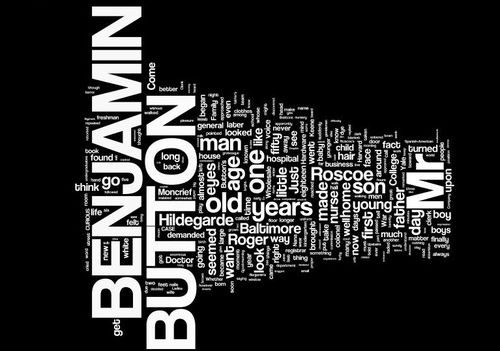
  • The History of the Future, Living Life Backwards, and a Wordle of Benjamin Button

    JF Ptak Science Books LLC  Post 451

    Beginning life with the final kiss of a Shakespearean comedy is far more complex than it is interesting.  The ordeal of Benjamin Button, a current movie based on the 1922 short story by Scott Fitzgerald (found in his collection Tales of the Jazz Age), presents some very curious aspects of the physics of life–especially if it is more than just Mr. Button who gets to live their life out again in reverse.  It also isn’t a very wide genre of literature, so far as I know.  Another good example of a life lived backwards is the book Time’s Arrow, by Martin Amis, who tells the story of a problematic character named Tod T. Friendly. (“Tod T. Friendly” is also “Todt Friendly” or “death friendly, taking a piece of his name from German, which evidently Mr. Friendly was.)  On the other hand, the novel Stuart, a Life Lived Backwards doesn’t make the cut, as Stuart does live his life forwards.  Christopher Homm, (homme?) written by C.H. Sissons in 1965, tells the story of the title character backwards, though his life is lived forwards as well.
    Wordle--button

    (CLICK to enlarge.)

    The idea of the future, or the having of a future, seems like it should be an ancient idea, and it is–though it isn’t necessarily a universal idea.  Mesopotamians, Babylonians, Mayans embraced the idea of vast distances of time; early Christian faith, o the other hand, doesn’t necessarily have a great future, what with time ending at Judgment Day.  Hinduism and Buddhism have a sense of the future, though there is some very problematic circularity involved with it.  The true scientist bits about the concrete possibilities of vast amounts of time extending into the millennia are found in Charles Lyell (Principles of Geology) who in 1830 took up some earlier work and made it possible to think of the age of the earth in terms of millions of years.  Charles Darwin was also a cultivator of the past and possible future, as was Hermann von Helmholtz, who predicted the ultimate age of the sun, meaning that time’s arrow had the possibility of being hundreds of millions of years long.  These were startling, epochal ideas, and all came within a period of thirty years, creating for the world a fluidity of scientific thought such as had never been seen.  The future came to life in the hands of novelists like Jules Verne, H.G. Wells and Aldous Huxley, not to mention the fabulous worlds of Robert Heinlein (who launched his terrific series of articles on the history of the future in the March 1941 issue of Astounding Science Fiction–just a month after John W. Campbell had evidently coined the term in the same magazine.  I can’t leave this without mentioning Edward Bellamy, a great trailblazer in this area of thought, and his work Looking Backwards, which was a view of a socialist utopia live din the year 2000 by an 1887 man who had fallen into a 113-year-long sleep. 

    But the difficult part of multiple people living their lives backwards comes in the multiplicity of changes that would be caused by two actors adjusting their behavior for the “future” based on lives they had already “lived”.  I can’t imagine the implications of the “butterfly effect” when spread across a broader spectrum than just Mr. Button.

    I haven’t seen the movie, but I have now read the Fitzgerald story, and the idea is very disturbing, like coming out of Alzheimer’s to climb right back in again.  The worst of it seems t take place not at the end of the reverse life, but right before–Mr. Button enters Harvard as a genius sportsman with his years of expertise and learning already under his belt–four years later, though, as a senior, he is struggling, his brain and mind slipping away, his knowledge restricted to that of a 16-year old boy.  And it just gets worse from there, though his ability to distinguish his diminishing capacity grows dimmer and dimmer, thankfully, the closer he comes to his cradle grave.  Its a difficult story to read.

    (In a cursory look I don’t see anything interesti9ng with anything read backwards in Mr. Button’s story.)
    ·Posted by :

    ·in:

    — —

  • Skinny II: Morals, Class Warfare & Letting Someone Else Pick up your Dropped Fork

    JF Ptak Science Books Post 406

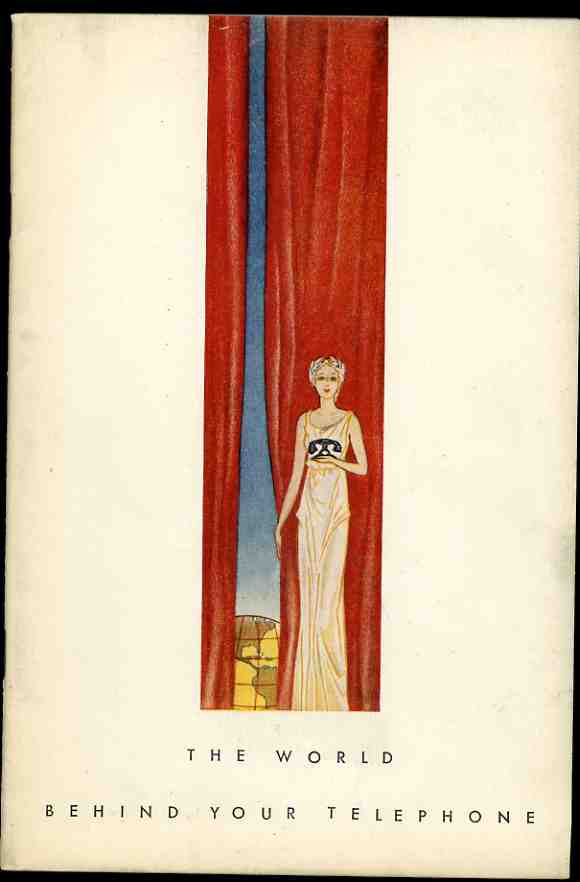
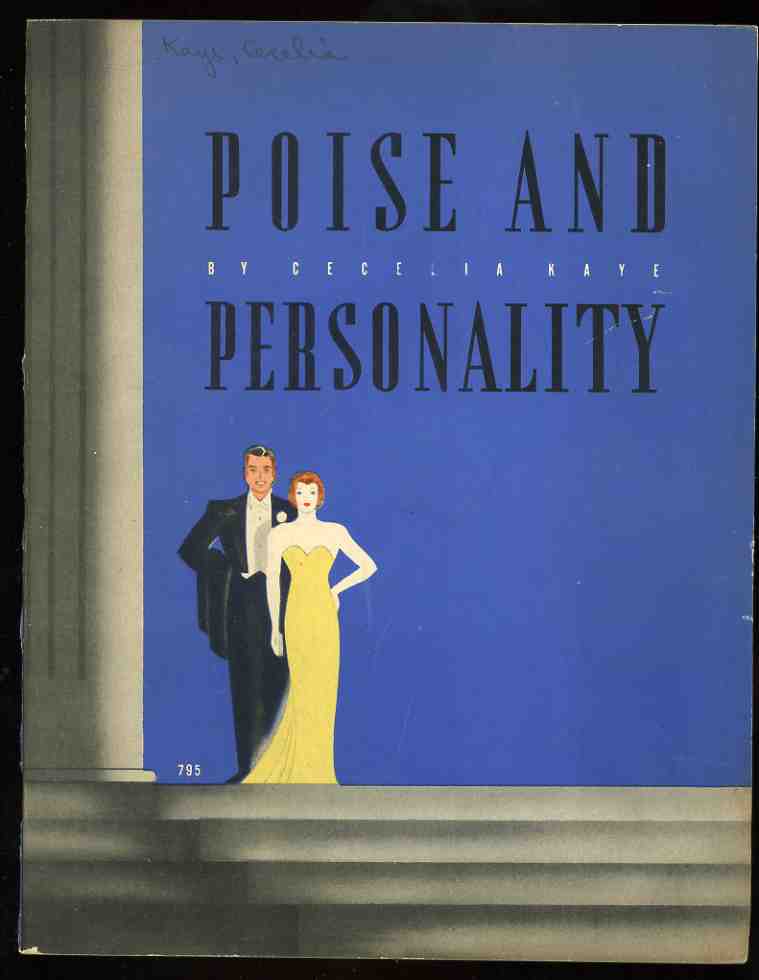
    Yes, these two pamphlets are beautifully designed, real works of production art, speaking elegantly and skinnily to their skinny, elegant times.  The World Behind the Telephone is a straightforward look at the stuff going on behind the scenes that made the telephone “go”–the woman holding the telephone is remarkably tall and angular, holding back the curtain of an even taller and skinnier doorway, beckoning the viewer into the unseen telephonic world.  Poise and Personality features more skinny people, and offers the skinny on some excruciatingly class-conscious tips on expected behavior and the division of the classes.

    0--blog---Nov 29 skinny156

    0--blog---Nov 29 skinny157

    “Social poise does not consist of a mere set of mannerisms” it reads, but beware:  “avoid careless and loose forms, which are in bad taste”.  There are all manner of pinkies-up logics and societal sniffing splayed throughout these pages, from the chapter improbably titled “Preccedence [sic] in Introductions”, to “Sensitivenesses” (“being sensitive is a luxury and the price runs high”), “Inferiority Complexes (“if you are afraid of people, talk to them with a smile…”), “Personality development” (“undoubtedly there is a native something that differs in each of us”), “Poise” (“…people are unhappy because they are nervously conscious of a lack of ability to mix with strangers….consequently they are unable to appear calm and balanced”. 

    Yes, it is a product of its time.

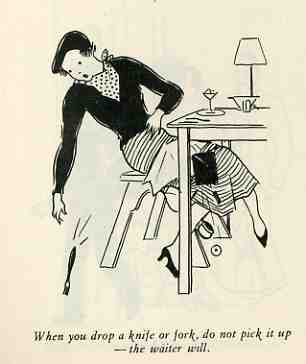
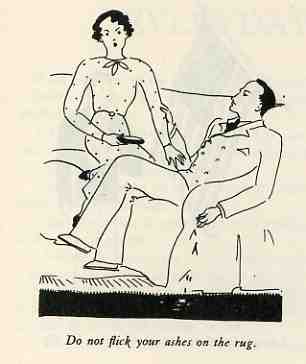
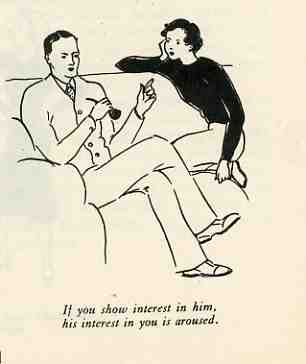
    There are some troubling and insensitive things in here as well, pamphlet being delivered of it times or not.  Letting the waiter pick up your fork is one; do not drop your ashes on the floor is another.  The more subversive ones though are on dating behavior and gender wars, the subjugation of women as it was in 1938 firmly on display.  “If you show interest in him, his interest in you is aroused.” Oh dear sweet creator, the woman is only of interest to the man if she reflects his interesting bits back to him.  Why not have the guy date a mirror?  That way nothing will be lost in all of that wasteful biological differentiation. 

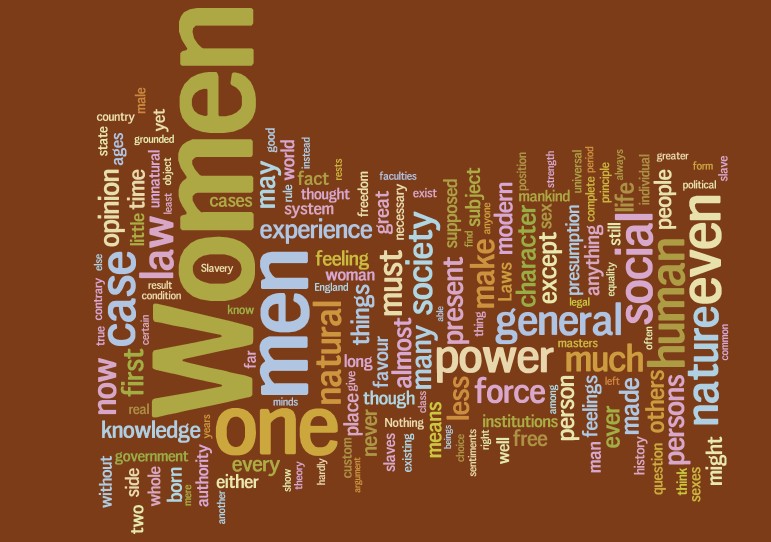
    Here’s an early classic on the subject:  John S. Mill’s On the Subjugation of Women, an oldie but still a goodie. 

    0--blog---Nov 29 skinny158 0--blog---Nov 29 skinny159

    0--blog---Nov 29 skinny160

    Just for good measure, and really not related to this post, I’ll throw in a word map generated by Wordle.net of Mill’s Subjugation of Women (I like how “slavery” happened to pop up in the middle of the “O” in “women”):

    Wordle--subjugationfixed

    ·Posted by :

    ·in:

    — —

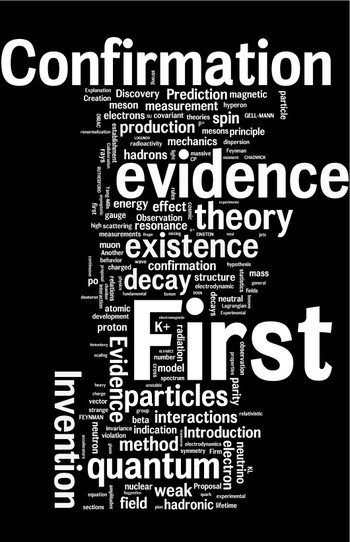
  • Wordle Word Art–Vocabulary from our Particle Physics Chronology, 1895-1995

    JF Ptak Science Books LLC

    Up next in the expanding WORDLErama of creating FOUND WORD ART by dumping text blocks into the glorious WORDLE wonder-engine is my page devoted to the chronology of modern particle physics (1895-1995).  The most often recurring words are the largest, which produces some interesting and unexpected affects and results. 

    If you click on the image it will be larger and clearer.

    Wordleparticle_physics

    ·Posted by :

    ·in:

    —

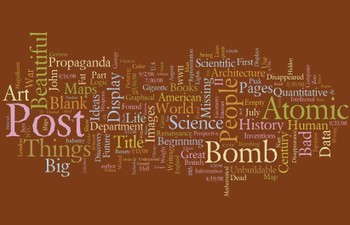
  • Wordle Word Art–Vocabulary from our Atomic Bomb Chronology

    JF Ptak Science Books LLC

    This is the newest installment of Found Word Art engineered by the good folks at WORDLE.:  this iteration uses the text block from my page on the chronology of the creation of the atomic bomb, with the entire thing dumped into the Wordle wonder-engine which produced this piece of art.  I should point out that the size of the word refers to relative appearances of the word in the post. 

    If you click on the image it will get larger and clearer.
    Wordleatomic_bomb_cchronology

    ·Posted by :

    ·in:

    — —

  • Wordle Word Art–Vocabulary from our Nobel Prize in Physics Chronology

    JF Ptak Science Books LLC

    This is the newest piece of sub-art that was produced via the good folks at WORDLE :  namely, it represents the dominant occurrence of a word in a text block on my page of winners of the Nobel Prise in physics via the its size in the one-page WORDLE summary, producing a pretty enjoyable and wholesome (!) bit of art.  It also reveals some interesting pieces of info, like, the most common first names of all of the physicists awarded the Nobel prize (for physics).  There are some little surprises here and there; mainly though its a nice thing to look at. 

    If you click on the image it gets bigger and sharper. 

    Wordlenobel_physics

    ·Posted by :

    ·in:

    —

  • Wordle Word Map of this Blog’s Titles

    How cool is this?  This is a wordle extravaganza applied to the page listing all of the titles in this blog:  about 242 post titles of about 1500 words.

    Check out your own stuff at Wordle.net

    Wordle_titles

    ·Posted by :

    ·in:


  • Wordle Word Art: Einstein 1920 and Poincare 1905, Side by Side–Looking at Two Disparate Approaches to Relativity

    JF Ptak Science Books LLC  Post 254

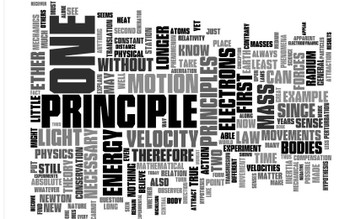
    Okay, okay–this is definitely apples and oranges here, but it is interesting nevertheless, even if I can’t reference the apple and the orange to something that would make sense for both, for something that has shared grounds of commonality.   What we have here is the Wordle version of Henri Poincare’s The Principles of Mathematical Physics (1905,and which I wrote about a little here accompanied by the paper’s full text), which was his quai-popular attempt at explaining a modified version of what some people call his “relativity” paper of 1904 (On the Dynamics of the Electron, which appeared in the Comptes rednus):

    Wordle_poincare

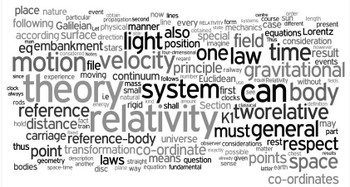
    View this (“contrast” being too hard, too unwieldy, too problematic) along with Einstein’s 1920 Relativity:  the Special and theGeneral Theory, the book in which he makes a full frontal assault of a popular explanation of his special (1905) and general 1915/16) theories of relativity:

    Wordle_einstein_relativity_1920

    Very little in common, no?  It really is just an interesting set of images, really; I’d hate to think of this as anything approaching content analysis or anything besides this that might look like a “serious” attempt at comparing the two.  I think of them in very simple terms, these two Wordscapes–like looking at two rivers, the one meanderingly serene, while the other looks more contentious, robust, challenging.  At the end of it all the robust Einstein river, unlike the beautiful if not sanguine Poincare river, rushes towards a Niagra; the Poincare, not. 

    ·Posted by :

    ·in:

    —