A Daily History of Holes, Dots, Lines, Science, History, Math, Physics, Art, the Unintentional Absurd, Architecture, Maps, Data Visualization, Blank and Missing Things, and so on. |1.6 million words, 7500 images, 4.9 million hits| Press & appearances in The Times, Le Figaro, Mensa, The Economist, The Guardian, Discovery News, Slate, Le Monde, Sci American Blogs, Le Pont, and many othr places… 5000+ total posts since 2008. Contact johnfptak at gmail dot com

Category: Fantastic Titles

  • The Poetry of High-Victorian Scientific Article Titles (1884)

    JF Ptak Science Books  Quick Post (Overall Post 5115)

    I found an interesting article by Francis Galton in an 1884 issue of Nature magazine, the polymath addressing a device 
    called "the Identiscope", which sounds a bit like Victorian facial recognition. Well, he was actually discussing an
    advertisement for the instrument and found it wanting, interesting and too-early as it was. What was even more
    interesting were the little articles and notices that surrounded the Galton. Like the post I made here a few days ago,
    the titles and the ideas were just lovely, so I decided to share them here.
    The "Identiscope" itself has a lot to recommend itself, the "-scope" part of it being fairly uncommon at this time
    (save for things like the tele- and micro-).
    Other articles suggesting an immediate read were titled:
    "The Red Light round the Sun—the Blue or Green Light at Setting"; "The Volcanic Dust Phenomena"; "After-glow"; "Curious Phenomena"; "The Algeic Flora of the Arctic Seas"; "Researches on the Origin and Life-Histories of the Least and the Lowest of Living Thing"; "Whirlwinds and Waterspouts"; and of course "A Rainbow after Sunset". The are perfect nightable additions—theoretically, anyway.

    ·Posted by :

    ·in:


  • Comfort in Complicated Structure–Dense Title Page Design (1926)

    JF Ptak Science Books   Quick Post

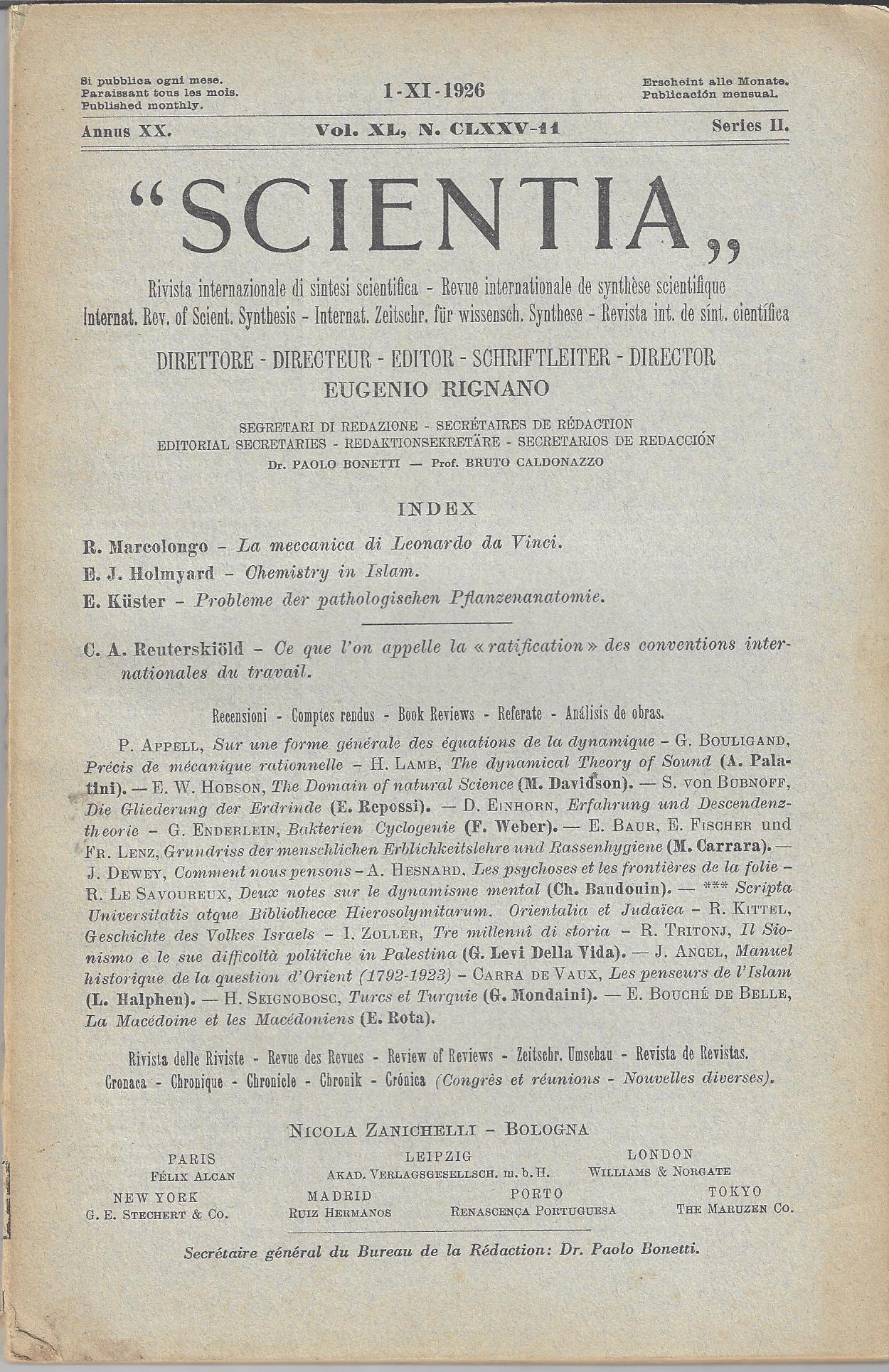
    ScientiaAt first blush this cover design doesn’t seem to be very involved or complex–after all, there is a lot of “blank” space even though there is a lot of text.  This is the front cover to Scientia, of Bologna, for 1926, and when you really look at it, the cover is impressively busy–even the volume/publication data is complex, or at least far more so than the vast majority of the journals that I have had experience with…for example, this issue for November 1, 1926 is “I-XI-1926 Annus XX, Series II, Vol XL, N. CLXXV-14”, which all makes sense, except that it seems a little dense.  Title pages can become very ornate and complex and highly illustrated as you go back farther into the printing past, and even non-illustrated titles can put a lot of ink on the page in forms of letters, what with 100-word titles and all…in this case, I just wanted to share this attractive example.  Oh yes–it is an interesting journal, as you can see by the contents…


    ·Posted by :

    ·in:


  • Big-Thinking Tech: Creating a Sea of the Sahara

    JF Ptak Science Books  Post 2597

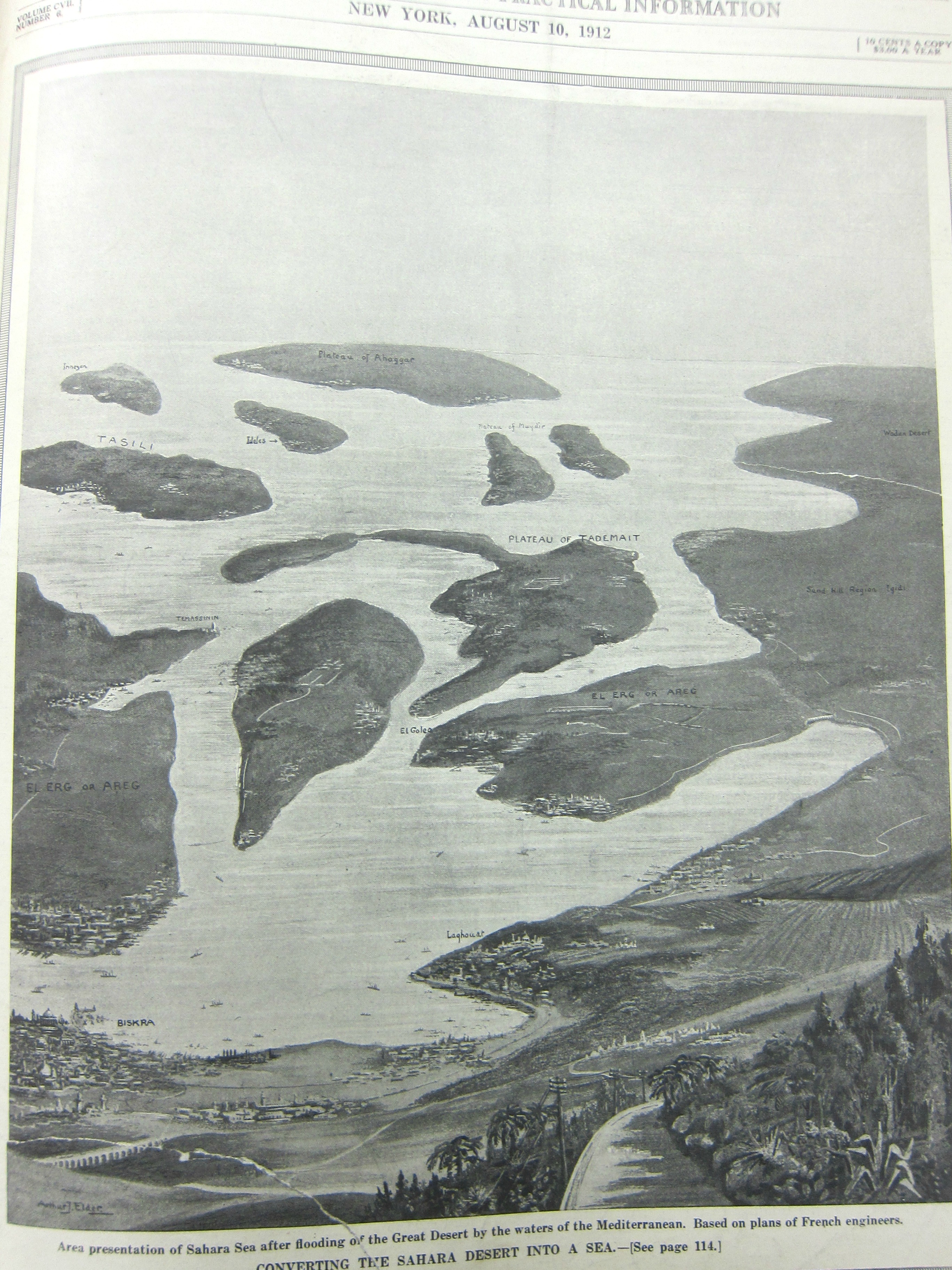
    It is not often one reads about creating an inland sea with trade routes between “Algeria and French West Africa”, It is part of the creation of a vast Saharan sea, half of the size of the Mediterranean.  I read about this version of the plan in an article by G.A. Thompson in an issue of the Scientific American for 19121, though as it turns out it was not the first time someone published on this fantastical idea. In this version,  Prof. Etchegoven proposes a 50-mile long canal that would be built from the Mediterranean inland to a suitably low place and them well, the desert would get, well,  filled up.  The reasoning here was to make Africa accessible those with the money to take advantage of the situation, to establish trade routes, make Christianity more available to whomever it might confront,  and also for “enhancing the value as a place for colonization by Europeans”. In reviewing the proposal Mr. Thompson didn’t see much danger or blowback or environmental issues–it was an outlook that was taken to task about a month later in a review in Nature2, which found his critique rather too-rosy.  

    Sahasa Sea

    In any event there have been plans like this reaching back at least into the late 19th century, a good example being The Flooding of the Sahara: An Account of the Proposed Plan for Opening ... written by Donald Mackenzie and published in 18773. Another significant proposal was made by Francoise Elie Roudaire (1836-1885) in his “An Inland Sea in Algiers”, printed in 1874,m which was an idea he shared with Ferdinand de Lesseps. Actually it was the Roudaire work that seems to have been the basis for some of Jules Verne’s last published work, L’Invasion de la Mer (1905) which took place in the 1930’s and which made a very similar proposal for the Sahara–except in this version nature intervenes with an enormous earthquake, pretty much accomplishing immediately what it would have taken humans many decades to do.  In any event, this is a good example of the Big Techno Think, though it wasn’t necessarily a very good idea.


  • Poland and WWIV

    JF Ptak Science Books   Post 2354

    Fourth WOrld War428

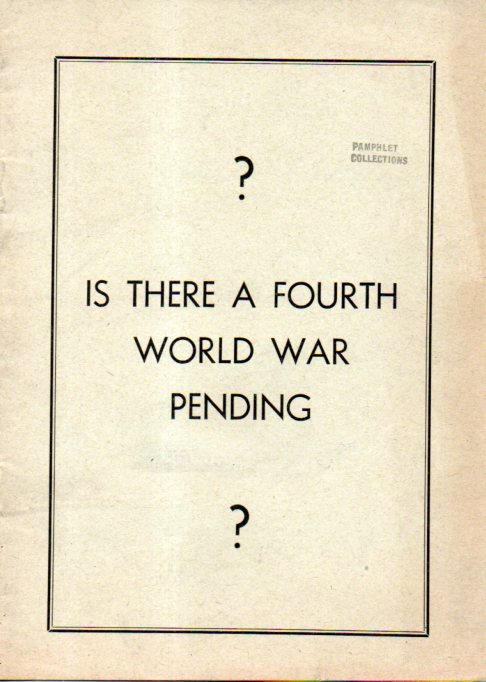
    This pamphlet certainty has entry to the evocative Fantastic and Improbable Pamphlet Covers Collection, though I was a little stumped by not being able to make it reveal itself to me with a short effort.  It was written by J. Kmicic and from what I can see was probably published during WWII, though there is no publishing information and nothing in the text to hang a firm date on. (There is a periodicals reception stamp in it from November 1946 fro the periodicals division of the Library of Congress, but that doesn’t mean it was accessed right after publication, though it does put a limit to how old it isn’t.)  As it turns out the keys to WWIV is Poland. That a very strong and heavily armed Poland would be the cornerstone of a defense of the West in the East, that the further the extent of a strong Polish eastern border reached the greater the play “of our Western culture will extend”.  Kmicic makes the case that it if Poland were stronger then it could have resisted Napoleon (evidently WWI), and the Kaiser (making WWI into WWII) and Hitler (WWII=WWIII).  The WWIV part is murkier because there isn’t a clue so far as I can tell that the author knew what happened to Poland when the Nazis fell and the Soviets moved in.  Had that been the case, the call for having a strong and unified Poland would probably not have been played so heavily.  A “Mighty Poland”, Kmicic writes, means “freedom for all smaller nations of Europe” and therefore “the impossibility of world war”. There are a few things that I’ve missed no doubt in my speed-read, but I was just after the cover, anyway.

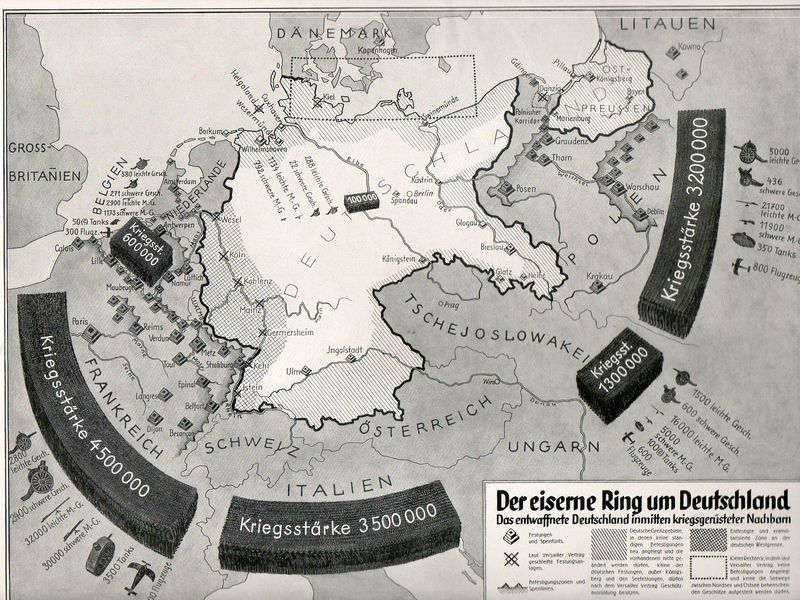
    Hitler and Company tied to sell the idea of an aggressive Polish nation, that the attack launched on 3 September 1939 was a preventative  measure to stop the advance and attack of Poland against Germany.  Not too many people believed it–at least outside of Germany–but Hitler tried it out, anyway. And why not? When most of everything he said was grounded in The Big Lie, why not pile it on?  The great the untruth, the more impossible it is, and the ore you say that you believe it to be the case, the more of a possibility exists for others to believe it, too–because who in their right mind would say something so insane about something else that is equally unbelievable? Therefore, the insane statement much be so.  That’s part of The Big Lie.

    See Polish Designs on Germany, here 

    Blogsept_1_poland476

    And another attempt at winning hearts and minds, this from 1933 (here):

    Nazi Prop surrounded538

    ·Posted by :

    ·in:

    — —

  • Beginning an Alphabet of Science Fiction -Punkisms

    JF Ptak Science Books  Post 1981

    “The most ignorant person at a reasonable charge, and with little bodily labor, may write books in philosophy, poetry, law, mathematics, and theology, without the least assistance from genius or study.”  Jonathan Swift, in Gulliver’s Travels (Actually, Travels into Several Remote Nations of the World, in Four Parts. By Lemuel Gulliver, First a Surgeon, and then a Captain of several Ships).  1726.

    I’ve produced the beginning of an alphabet of –Punkisms for variations of robot.machine/computer past and futures, science fiction indicators of possibility. Why should we stop at “Steampunk” when there’s FuturePunk and DeadPunk and such to be had?  So, please find folllowing a few possibilities, and accept them in the playful way in which they are offered–also, the very abbreviated descriptions of the science fiction works desscribed are open to interpretation. And please give this a “pass” for the over-abundance of hyphens.

    A

    ActorPunk: Walter Miller, ‘The Darfsteller’ (1954), human actors are replaced by robots on stage, as compared to being replaced by digital figures online. Some steps have been made with great care over the years by “perfecting” the imaging of women in magazine advertisement—in this way even the models who appear in the ad and are modified find it impossible to live up to the expectations of what their ads depict.

    Anti-technologicalPunk-topia: Samuel Butler, Erewhon, (1872).

    AutomatoPunk:  Kurt Vonnegut, Player Piano (1955), like Brazil and 1984, but with machines.

    B

    BiologoPunk:  Philip K. Dick, ‘Autofac’ (1955), machines find that they can reproduce themselves in a ’50’s iron-bio kind of way. 

    BrainPunk: Miles J. Breuer, ‘Paradise and Iron’ (1930).

    C

    ConsciousnessPunk: Philip K. Dick, Vulcan’s Hammer (1960) and the development of computer consciousness.  Also David Gerrold, When Harlie Was One (1972);
    Frank Herbert, Destination Void (1966); Harlan Ellison, ‘I Have no Mouth and I Must Scream’ (1967);  Robert Heinlein, The Moon is a Harsh Mistress (1966), and many others.


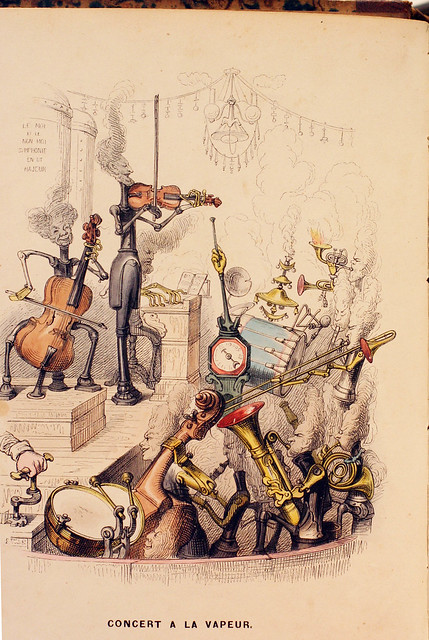
  • Steampunk Orchestra: J.J. Grandville’s Proto-Surreal Images, 1844

    JF Ptak Science Books    Post 1789

    I suspect that J.J. Grandville must be remembered as the proto-father of the proto-Surrealists, and probably more.  He was a very prolific illustrator during his short life (1803-1847), producing many images across a very wide field of imagination that would probably be referred to as speculative fiction.  Early in his stunted career he had some considerable influence as a satirical punisher in a number of superior-level magazines before a censorship law prohibiting such social observations criminalized that sort of imagination, and so Grandville moved on to illustrating some great classics in literature. 

    In 1844 Grandville (a pseudonym for Jean Ignace Isidore Gerard) published his (literally) fabulous Un Autre Monde, a very creative work of transformation and visionary exploration, which was a parody and critique of the worlds of the present and the possible. Its sharp edge ha been lost to time as much as most any satire or caricature of a dusty political past might be (like farming jokes and James Buchanan in 1861), but when you look at the hundreds of illustrations for this work (as well as its underlying ideas) that is really all you need.  The images speak for themselves, and can speak to most anything, in any language.  This is one of the place where Grandville has writ his name large in the pre-history of Surrealism, an Andre Breton/Ernst Mach approach to lit and art about 70 years early.

    The images are simply fantastic.  And you might be ready to see them–with modern eyes–when you read the subtitle head for his book, which reads so:  Un Autre Monde/Transformations, Visions, Incarnations, ascensions, locomotions, explorations, peregrinations, excursions, stations [I’m not sure what this translate to], cosmogonies, fantasmagories, reveries, folatreries [“follies”], lubies [“fads”], metamorphoses, zoomorphie, lithomorphoses, metempsycoes, apotheos, et autre choses… By the end of the title, the reader would suspect that something was “coming”.

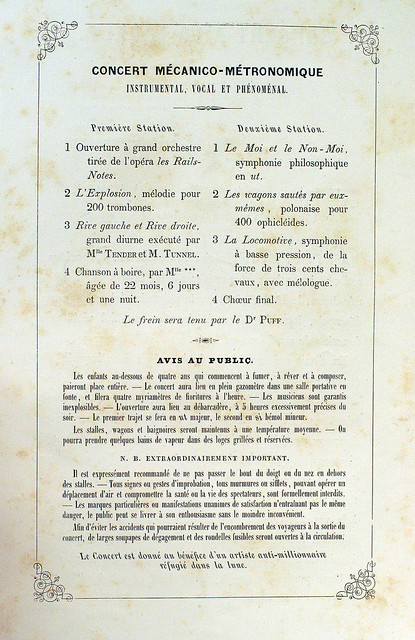
    And so I’m going to post a number of different bits on the images from Un Autre Monde–the first gathering some views of musicians and instruments which take on a definite steampunk variety. Next we’ll have a look an interesting use of perspective as Grandville looks almost straight down on his subject–but not quite so, which to me is quite surprising; then there will be posts on weather morphologies, metallic pyramidal flowers, meta-artists, and of course flying machines. 

    Numerous Grandville images may be found at Visipix; a full set of Un Autre Monde’s illustrations at Flickr, and a full copy of the book at the Internet Archive.

    photo


    photo

  • On the Sublime Mundane–Great Classics in the History of Flagpoles, Pole Painting, and Zippers

    JF Ptak Science Books   Post 1724

    Blogaugust_18flagpole408It is difficult not to stand in complete respect of something being Very Well Done–especially if that “something” is something very simple, a “something” that is generally  invisible because it is so much part of the visual or social or mental environment.  I’ve touched on this topic earlier in this blog, particularly here on a post on a beautiful and quick pamphlet written on the care and painting of flag poles.  It is a monumental work in its subject area of the Very Small–a very well written, concise and what seems to be complete treatment and mastery of its subject.  The subject just happens to be flagpoles–but if you ever needed something to describe what to do if faced with the task addressed by this pamphlet, then you have certainly found the Ulysses of the subject. 

    Blogaugust_28zipper469_2

    This tall (11×8 inch) 35-page 1945 work with an impossible title has everything that you would need to know–as its title promises and delivers–to repair a zipper.  Not replace a zipper–repair it. 

    It is so beautiful as to want to make every engineer residing in the deepness of everyones’ soul just simply weep in the glory of this pamphlet.  The work  is simply but well illustrated and addresses 50-odd contingencies for zipper malfunction and failure, and speaks to a particular WWII mindset that that addresses problems in this very fashion. Repair rather than replace.  The bottom line here is that this is as good as any book of the history of fluxions or the making of the atomic bomb or cooking up a virus, given the parameters and limitations of its subject.

    These memories were brought to the surface tonight because of a pamphlet that I found that had burrowed itself deep inside a box of science pamphlets written by folks in the D-H part of the alphabet on particle physics in the 1940’s and 1950’s.  It just popped out:   Decay of Poles.

    Decay of poles230
    I really wasn’t sure what the book could be about.  Having just finished a short post on the work of Jules Verne’s Moon Gun being used to alter the axis of the Earth to make Polar exploration easier, I thought that, well, perhaps someone put something “special” together on how the Earth’s poles were decaying. Or “decayable”. 

    The title page of this sweet, small pamphlet says otherwise:  it is written by Howard Jones (“A.B., A.M., M.D.”) of the “Universal Pole and Post Preservation Company” of Circleville, Ohio. (The story of Circleville is extraordinary–we’ll deal with that tomorrow.)  Dr. Jones addresses the issue of decay and wood, particularly and of the utmost importance was the decay of the wood in poles and posts.  When you think of it just a bit, you’ll see that Decay of Poles was an essential work, as there must have been tens of millions of poles and posts slowly (or not) rotting themselves away into splinters in holes in the ground all over the United States.  As a matter of fact that are still tens or hundred of millions–billions–of wooden poles still in this country:  its how we support the very backbone of the digital infrastructure of the world economy, strung on wires in between poles made of dead trees, and stuck in holes in the ground. 

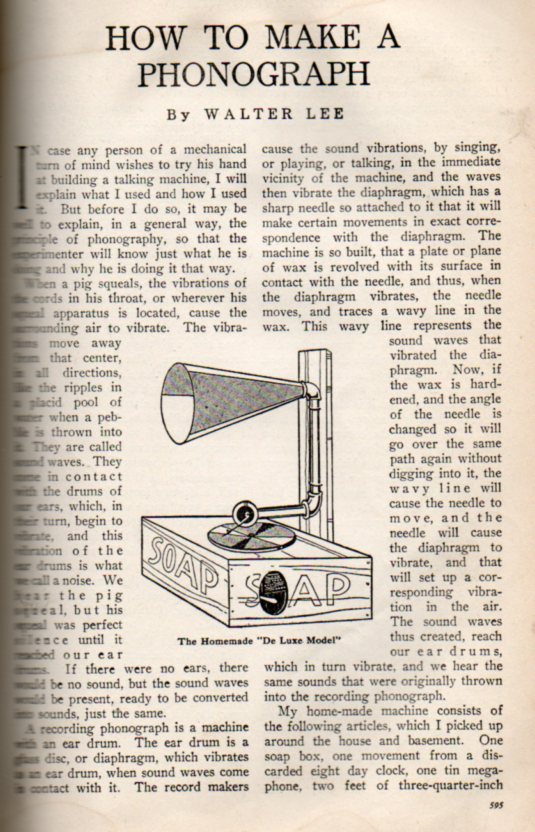
    And lastly for tonight, I’d like to address one more thing, something that took my breath away when I saw it for the first time.  It was the following article in the relatively obscure magazine, Illustrated World–a sort of more-popular Popular Mechanix–for June, 1917.  I saw the title which suggested doing something that I had never considered doing before, or thought about anyone else doing–building your own phonograph at home. 

    How to phonograph228
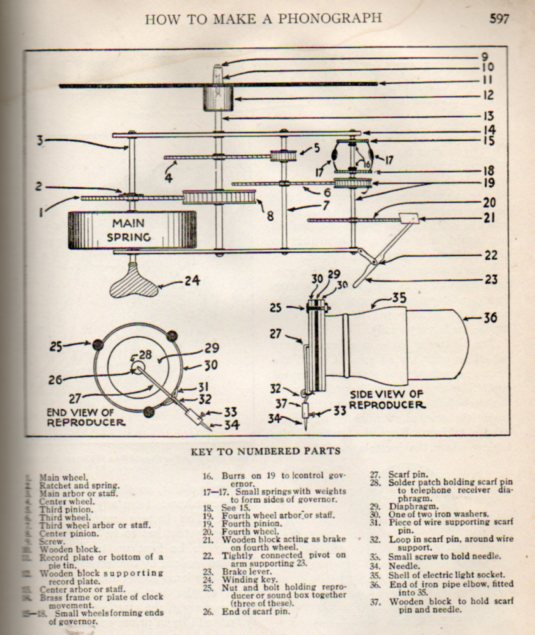
    And of course the lovely schematic, which suggests that you could pull this thing together with bits of stuff from the kitchen junk drawer and fluff from the basement; then, Things Happen, and you have a phonograph.

    How to phonograph229
    This just seems to me to be so perfectly right, correct.  Why not make your own phonograph?  IF you remind has heard the music before it will fill in the pops and hisses and misses that your homemade will invariably produce, so why not make something that will play your vinyl without necessarily killing it? 

    All of these items speak to an appreciation for the recognition of The Small Job Well Done.  This may be a key ingredient to what we may not be doing for ourselves, collectively, today.  This is lovely work brightly done with basically unseeable results–unless you look for them.  And then you can find the beauty. 


  • Fantastic and Blandly Supra-Inspired Book Titles

    JF Ptak Science Books   Post 1401

    Fabulous titles216This is another in a series on fantastically-titled books and pamphlets.  When written the titles were aptly descriptive, indicating their contents, selling the wares, so on–but now, with a little time between publication and now, the connections of the titles to the contents seem to have withered like dried toothy neurons, gainfully displayed for all to see in their isolated weird elegance. 

    Fabulous titles214
    And so we experience the found, unintentional absurd in printed material like some of the examples below.  Their title pages can be experienced as art in a way, at least today, so far removed from their original meaning and context that the words float like disembodied arks of meaning looking for whatever piece of land/meaning that they bump into.  Sometimes their titles are the bizarre-ity, masking a mundane, pedestrian contents; much of the time the title and contents emanate the stench of lost meaning through and through. Sometimes the titles are just nothing. 

    Fabulous titles212 Fabulous titles215   Fabulous titles210
    Fabulous titles213


  • Steampunk Anatomy–Cancer Holes, Nut and Bolts, Oil, Outer Space Belly Shirts and Heavy Things of the Future

    JF Ptak Science Books  Post 1269

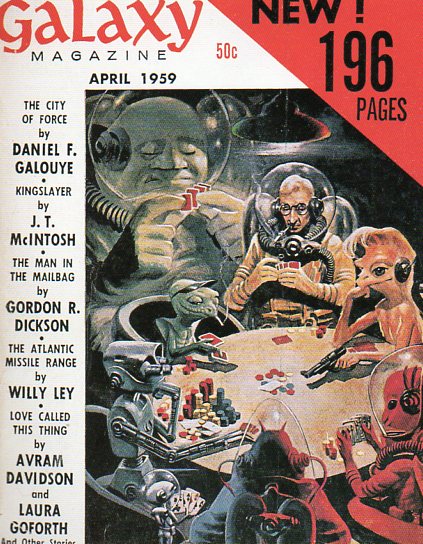
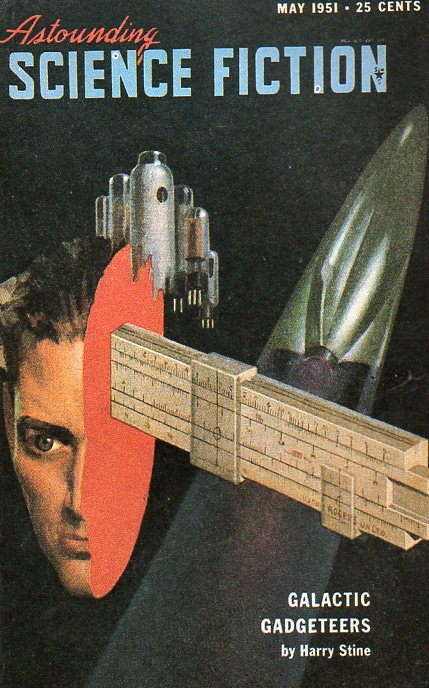
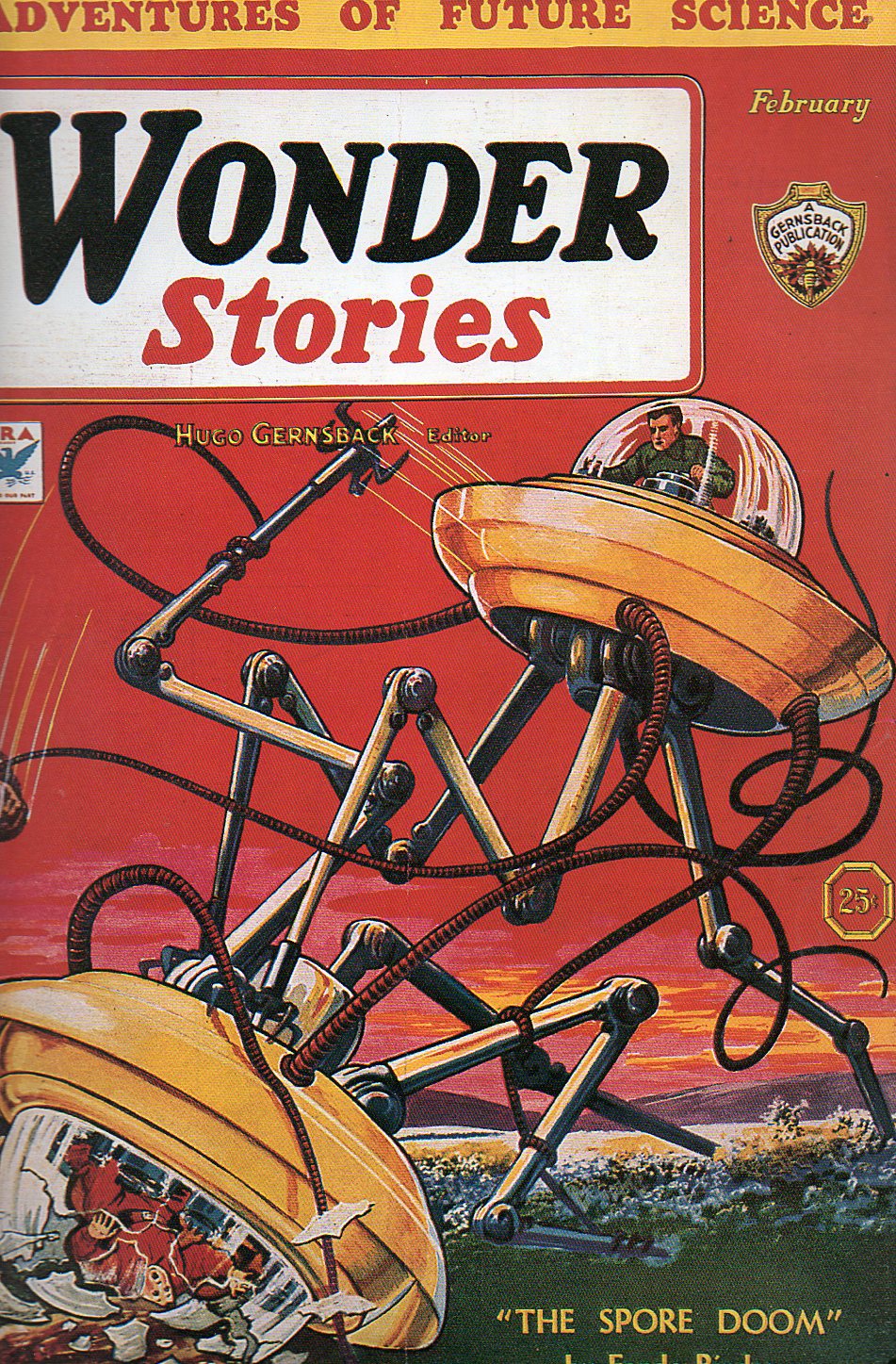
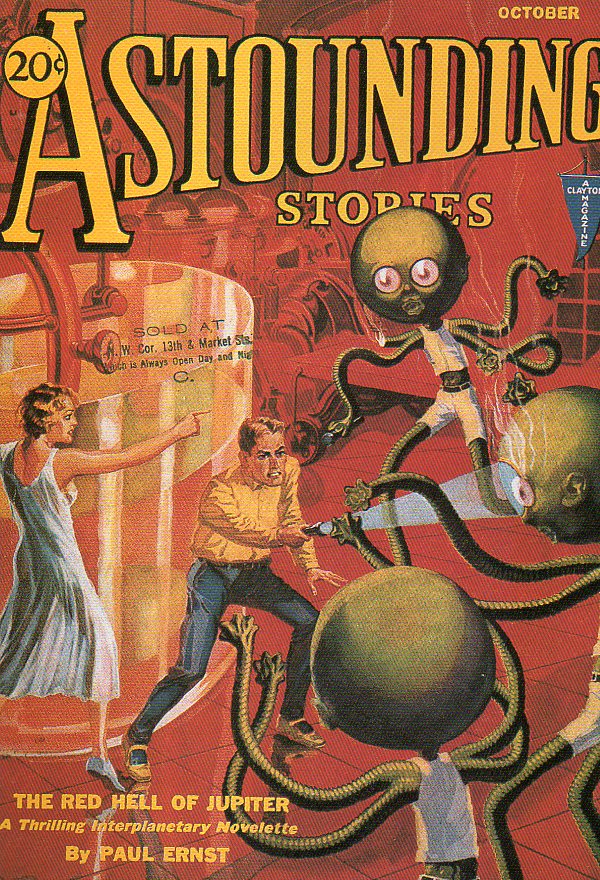
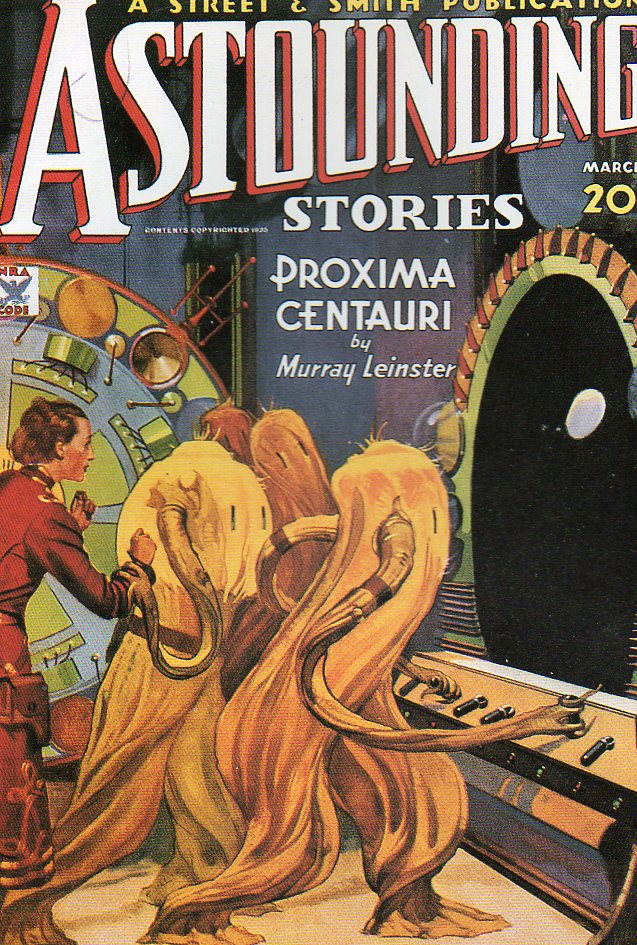
    What is it about science and the future and how the scifiction of the past (pre-1950’s) almost never could encapsulate the superior scientific innovation and discovery of its near future?  It is marvelous and wickedly magnificent to look at some cover art and illustration for the pulp and not-so-pulpy science ficton, images that not only have a certain look and feel, but also a smell, a particular bookstore/basement pulp-paper-not-exposed-in-forty-years smell.

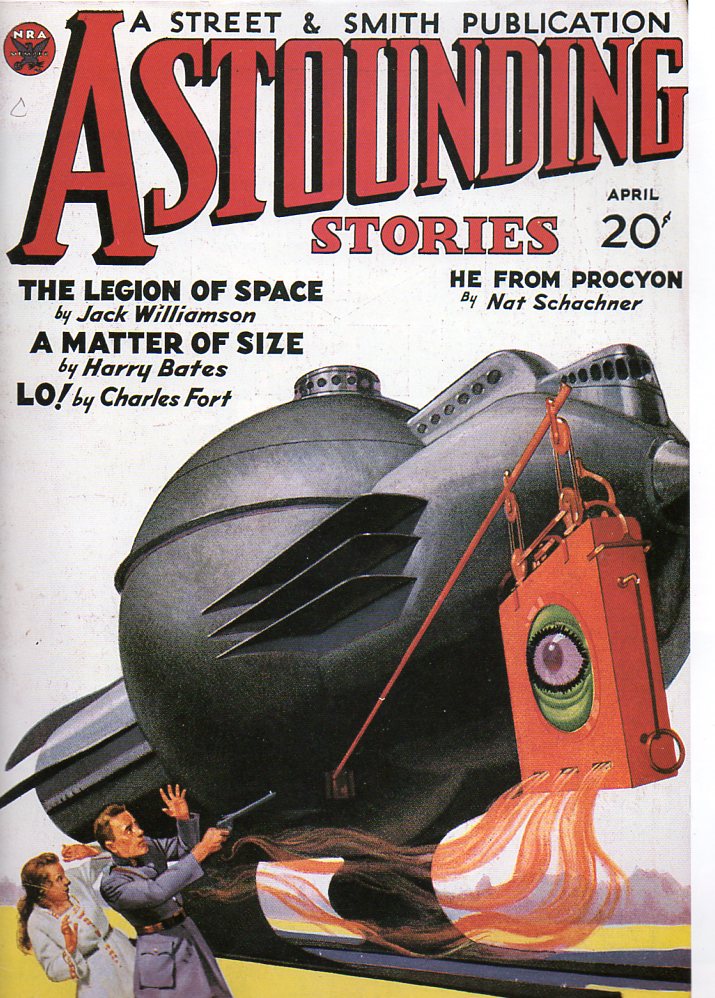
    Steampunk Eye–that enormous ship, governed by a long, long pole with a small box witn an eye in it, being raised and lowered on pulleys:

    Steampunk a077

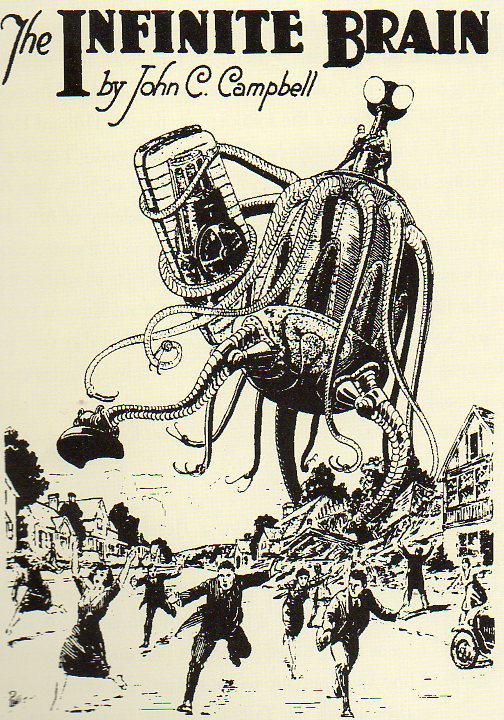
    The Steampunk Gigantic Enormous Stupendous Infinite Brain (also notice that folks are fleeing, running for their lives, witt heir arms thrown high into the air, running like SpongeBob SquarePants–its hard to run like that):

    Steampunk brain084

    Steampunk Lust:

    Steampunk lust085

    Steampunk Addiction & Cancer Hole:

    Steampunk cancer hole088

    And the Philip -Morris contribution for smoking in alien space:

    Steampunk cancer hole089
    Steampunk Humano-Robot Replicant:

    Steampunk human robot081

    Steampunk Thinking (the slide rule really didn’t give out until around 1970):

    Steampunk calculating086 Steampunk Legs:

    Steampunk legs083

    Steampunk Abs:  humans are surrounded by arm-waving large-headed belly-shirted aliens, the man using a flashlight for defense )burning the alien eye even though they’re all in bright light) while the woman points really hard:

    Steampunk abs090
    Steampunk Hair–and with all of that vast technology and futurismo, there are still unruly locks here and their:

    Steampunk hair082
    Electro/Steampunk Body Replicator

    Steampunk body replicator087


  • Magnificent Titles, Ranters and Hell Breaking Loose (England, 1650)

    JF Ptak Science Books LLC  Post 946

    Ranters,
    Diggers, Manifestarians, Puritans, Muggletonians, Shakers, Quakers, Levellers, Seekers…terrific names all for religious or religioesque movements, most now
    gone, though it seems that of the most-gone the Ranters are probably the
    most-goned gone–which must’ve been a function of their unstated aims of not
    having a particular course of action.  As
    an anti-movement their movement was tautologically doomed, as they flourished
    for only a decade or so, sandwiched into the very full mid-17th
    century. 

    1--ranter
    {The image above is an illustration from the book, Hell Broke Loose... below. It also is a pretty tame version of other images that show more nudity/drinking/sexual activities.]

    Ranters
    were an English Free Spirited heretical group of wide interpretation of social
    and moral value. Their questioning of the potency of the man’s fall doctrine
    steamed together with a quasi-semi-millenialism evidently led to an
    alehouse-based loosening of socially governed restraints. According to the many People magazine-like pamphlets and soft
    porn reporting, their activities made for sugary eating by the bawdy-eyed ha’penny
    people buying gossip in cheaply printed formats.   Free of Sin and Law, the Ranter celebrations
    were soaked in alcohol and nudity, which are ripe pluckings for any non-serious journalist, then or now.

    Judging from the list of publications (listed below in the “Continued Reading” section) there must’ve been a very immediate lusty interest in the Ranters’ lustily interesting ways.  I’ve written this post for the simple interest in one particular, extraordinary title: [with apologies for the underlining, but I cannot convince the Typepad gods to remove it.]

    Hell broke loose: or, the notorious design of the wicked Ranters, discovered on Sunday last at Black-Fryers Being a true relation of the strange proceedings of Mr. Vaughan, and his wicked proselytes; and their entring of Black-Fryers church in sermon time, like so many spirits from hell, with four damnable papers in the hands, containing such horrible, audacious, and abominable songs, the like not to be parallel’d in former ages. With the manner how this onsolent Ranter traced the streets from Black-Fryers to Saint Paul’s Church-yard, in his Holland shirt, without doublet or breeches, a treble cap, like the Pope’s miter, with silk fring, and white shooes, and stockings. With their damnable plots, and conspiracies against the ministers of the gospel: their examination before the right honourable the Lord Mayor of London; the sad and woful speeched, made by the ringleader of the Ranters, concerning the city magistrates, and golden chains: and the committing of them to Bridewell till the next sessions. 1650

    See?  That’s just fabulous, and represents a Title Page Extravaganza that seems to be a 17th century feature–including as much as humanly possible on a title-page.  As does this book, with all manner of detail in the title, not the least of which is the description of a man running around with no pants but with a Pope’s mitre and white shoes and socks.

    The 17th century “Hell Broke Loose” extended-title (but non-Ranter) category has a number of other entries in it, too, for published books, including the following lovilies:

    Hell broke-loose; upon Doctor
    S–ch–ve–l’s sermons
    or, Don Quevedo’s vision, of an infernal cabal of Whiggish papists and
    popish Whigs in Utopia; upon a mock-tryal of the doctor. Translated from the
    original; by Jack the Spaniard.
      1713

    Hell broke loose, or, An answer to the late bloody
    and rebellious declaration of the phanatiques, entituled A door of hope,
    &c.
    wherein their horrible conspiracy against our gracious soveraign, and the
    city of London, in their late rebellion is discovered : together with a brief
    view of our lives, manners and malice of those desperate and unparallel’d
    traytors
    . 1661

     Hell broke loose : or an history of the Quakers both old and
    new. Setting forth many of their opinions and practices, published to antidote
    Christians against formality in religion and apostasie
    1660

    Some of the other big-title Ranter titles from this time include the following:

    The Ranters creed being a true copie of the examinations of a blasphemous
    sort of people, commonly called ranters, whose names are herein particularised,
    together with the name of their pretended God almighty, and their false prophet
    : taken before Thomas Hubbert Esquire … with a declaration of their fantastic
    gestures and deportments as they were coming before him, and in his presence :
    and now committed to the New Prison at Clarkenwell.
    ,
    1651

    The great mistery of the great whore unfolded, and antichrists kingdom
    revealed unto destruction in answer to many false doctrines and principles
    which Babylons merchants have traded with, being held forth by the professed
    ministers, and teachers, and professors in England, Ireland, and Scotland,
    taken under their owne hands, and from their owne mouths, sent forth by them
    from time to time, against the despised people of the Lord called Quakers, who
    are of the seed of that woman, who hath been long fled into wildernes … in
    this answer to the multitude of doctrines held forth by the many false sects,
    which have lost the key of knowledge, and been on foot since the apostles
    dayes, called Anabaptists, Independents, Presbyters, Ranters, and many others,
    who out of their own mouths have manifested themselves not to be of a true
    descent from the true Christian Churches : but it’s discovered that they have
    been all made drunk with the wine of fornication received from the whore which
    hath sitten upon the beast, after whom the world hath wondred /
     
    1661

    The Ranters reasons resolved to nothing. Or, the fustification instead of
    the justification of
    the Mad Crew Being, a serious answer returned to one who in his letter desired
    an unlawfull and wicked book to be sent unto him, call’d the Justification of
    the Mad Crew. Instead of vvhich, the author of this letter sent him the Act of
    Parliament made against the Ranters; and did also both justifie their way, and
    ingratefully asperse some, who in Christian love would have reduced them to the
    life and truth of Christianity. Wherein the people called by themselves god and
    by some others, the Gods of Godmanchester, may, as in a glasse, behold, that
    they are a deluded and defiled people, if not incarnate Devils.
     

    1651