A Daily History of Holes, Dots, Lines, Science, History, Math, Physics, Art, the Unintentional Absurd, Architecture, Maps, Data Visualization, Blank and Missing Things, and so on. |1.6 million words, 7500 images, 4.9 million hits| Press & appearances in The Times, Le Figaro, Mensa, The Economist, The Guardian, Discovery News, Slate, Le Monde, Sci American Blogs, Le Pont, and many other places… 5000+ total posts since 2008.

Category: Fantastic Titles

  • The Stench of Creativity: Dante, SpongeBob & Unintentionally Bizarre Titles

    JF Ptak Science Books LLC  Post 927 [Part of the Fantastic Titles series]

    Blog feb 3 patrick Squidward:
    What’s that horrible smell?! [sees steam coming out of SpongeBob’s window]
    Is Patrick thinking again?

    Patrick: [sticking
    his head out of the window]
    I’m making art!

    Squidward:
    Patrick, it smells like something crawled into your brain and died!

    Patrick:
    That’s the creative process at work!

    Like St. Paul warned by
    Archangel Michael, and Dante by Virgil, the visions of the Hell they were
    touring was also stinky, though the robes they held to the noses did not
    prevent them from experiencing the very lofty stench of sin.  Perhaps it was something like the
    crawled-in-and-died stench made by the beautiful Patrick starfish from SpongeBob
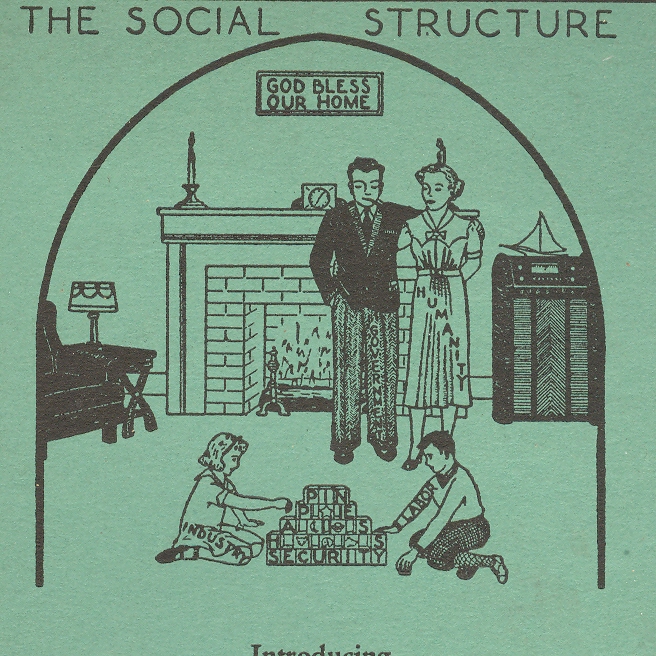
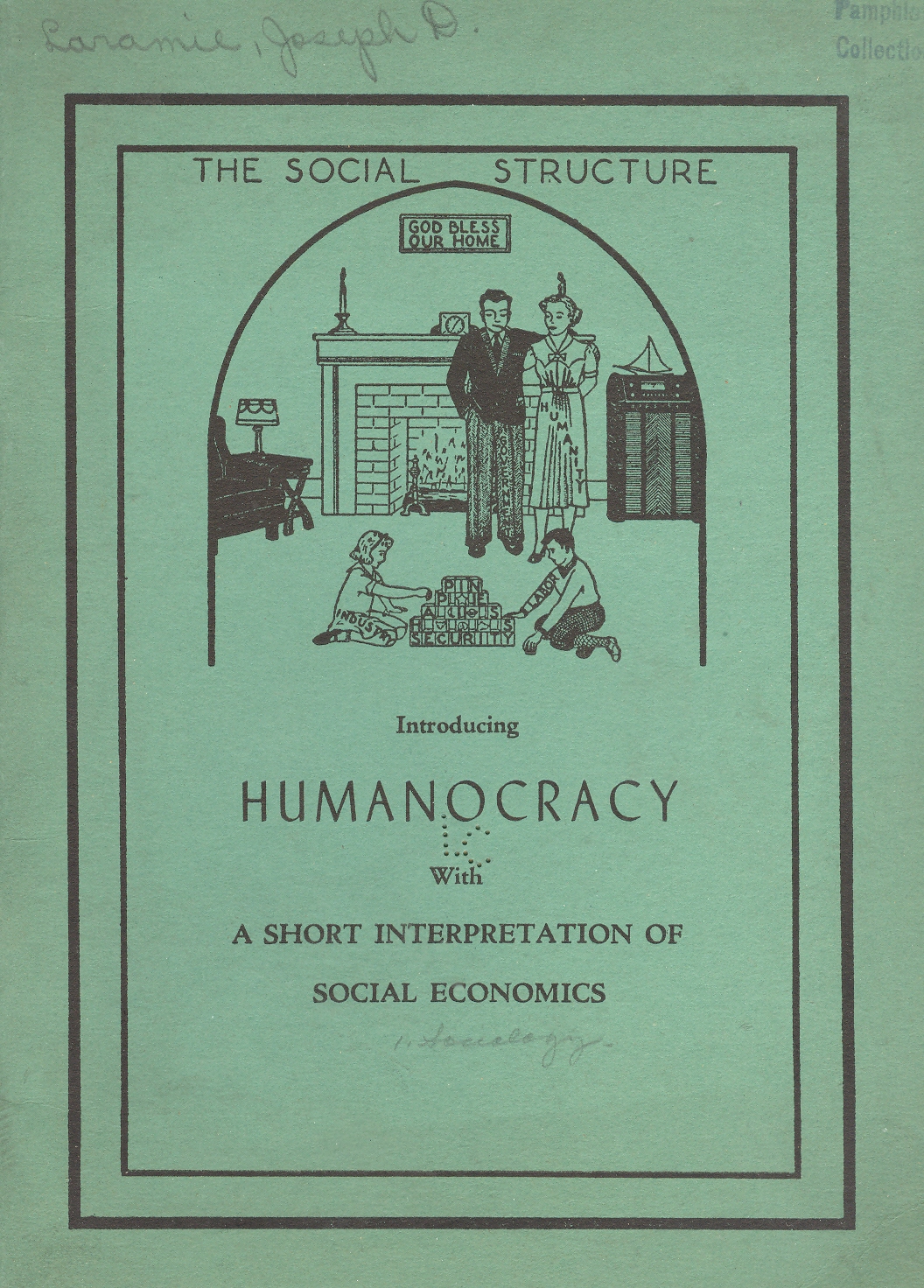
    Squarepants, his brain’s intellectual exuda Blog feb 3 humanocracy detforming a pretty but stench-ridden
    experience.

    And so to with experiencing the found, unintentional absurd–or
    the naïve surreal—in printed material like some of the examples below.  Their title pages can be experienced as art
    in a way, at least today, so far removed from their original meaning and
    context that the words float like disembodied arks of meaning looking for
    whatever piece of land/meaning that they bump into.  Sometimes their titles are the bizarre-ity,
    masking a mundane, pedestrian contents; much of the time the title and contents
    emanate the stench of lost meaning through and through. 

      “… ‘Why us thy mind’, he said,
    ‘so far away, unlike its usual self,
     What are thy wits about, where have they fled?’
     —Virgil yelling at Dante for asking a dumb question outside the City of Dis,. Inferno, XI, 76-78

    Blog feb 3 humanocracy 

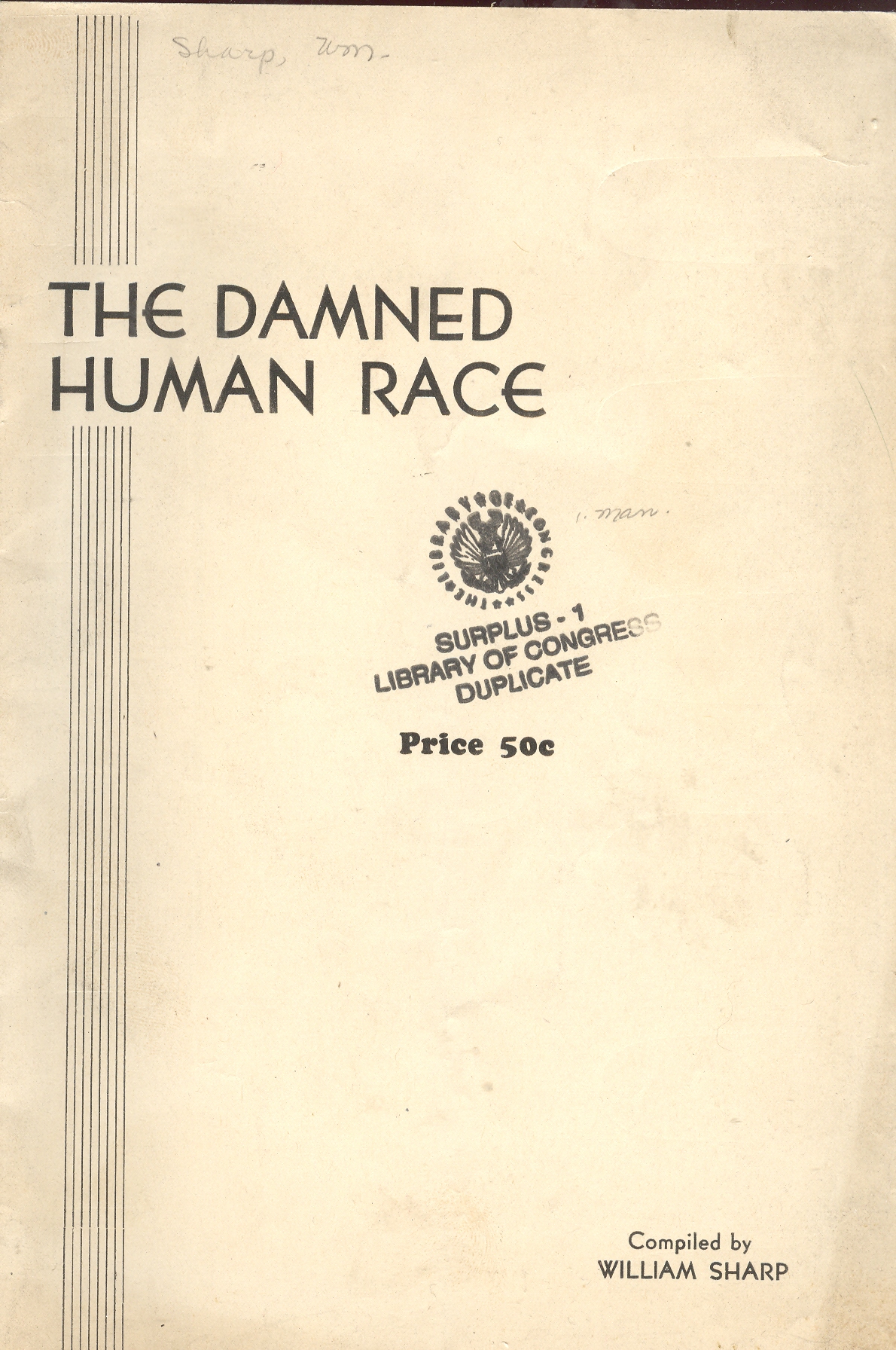
    Blog feb 3 damned human 

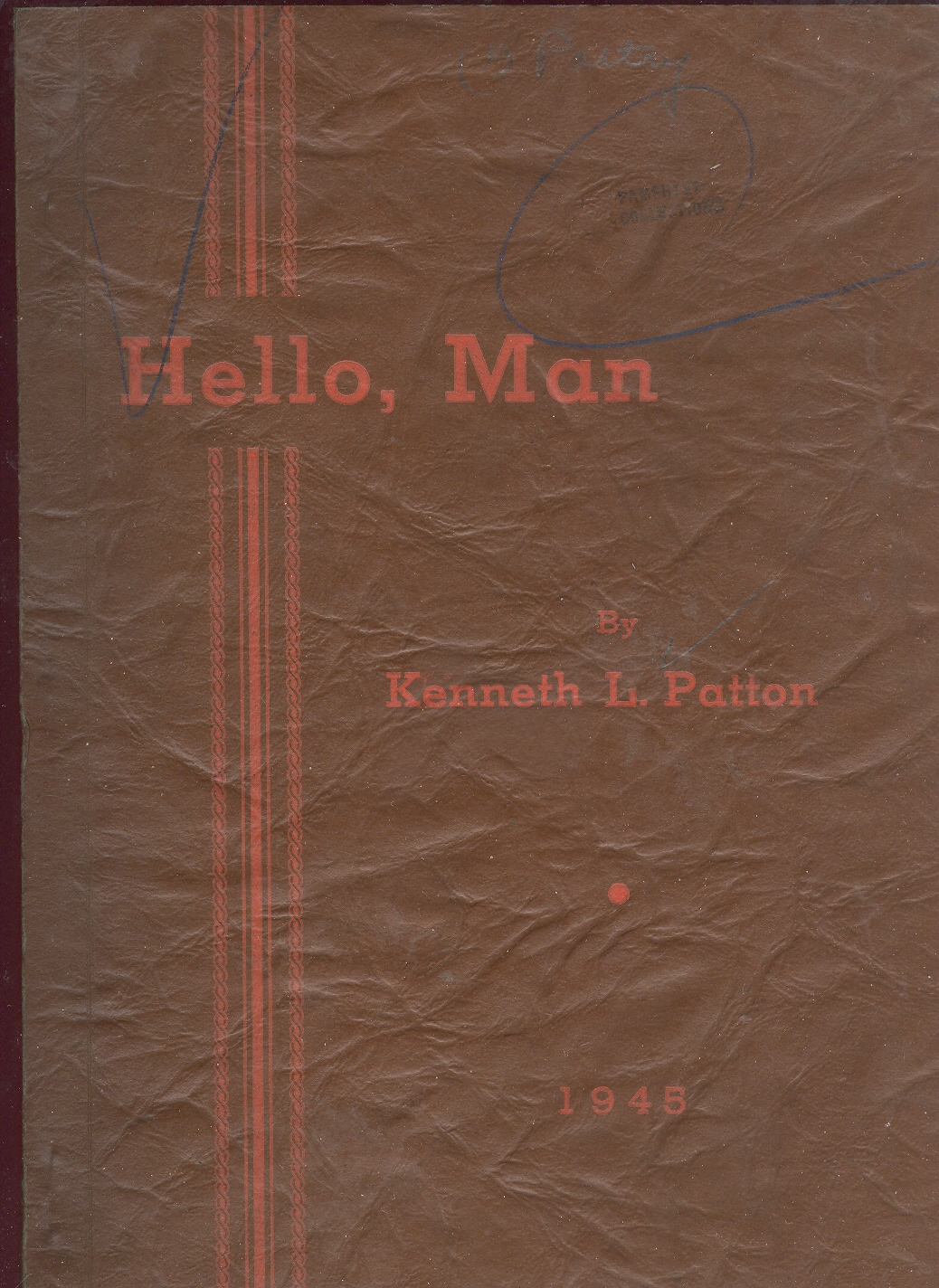
    Blog feb 3 hello man


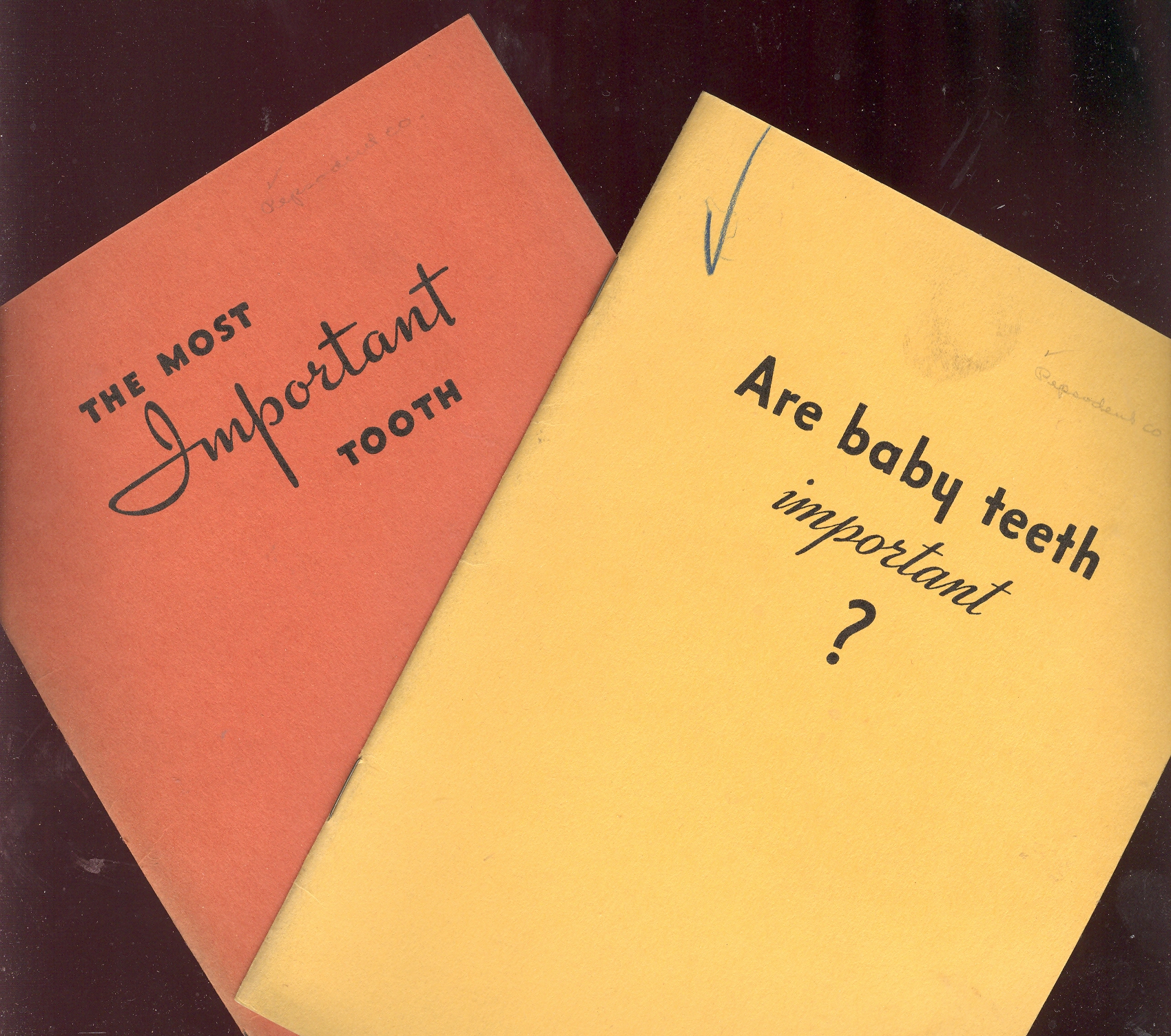
  • Sublime Mundane Pamphlet Titles: “Are Baby Teeth Important?”

    JF Ptak Science Books LLC  Post 874

    One of my favorite categories/threads in this blog is the
    sublime-mundane pamphlet title.

    Envelope Facts, Notes on Reading Aloud, Saturn Has Rings,
    Know Your Groceries, Zipper Repair, Flagpole Painting,The Fine Art of Squeezing, Thirst and two dozen others
    have bobbed to the surface here like antique lobster pots finding their way to
    the daylight after 50 years of the big dark cold—at this point, no one cares what’s inside, sort of– just the very story and
    appearance is good enough. 

     Blog Dec 12 hickory handleSometimes the story and the title of these indredibly-titled beasts are both fascinating, though usually it is
    not the case: the contents of the pamphlets with some of these bizarre titles
    are just a plain slice of Wonder 
    Bread, a big nothingness.  The work on flagpole
    painting is an incredible title—and it turns out that the contents make the
    pamphlet the veritable Ulysses of
    books of its genre, of which it may be the only one. But so it goes.  At least everything that you’d need or want to
    know is in there if you needed or were moved enough to paint a flagpole.  Zipper Repair too is in this category—it
    really is an exhaustive treatment on repairing zippers. 

    Today’s installment of five titles has only one in that first
    category, the remainder being fundamentally eyebrow-raiser titles with somnolent
    contents, exciting and sleepifying in one five-second motion.

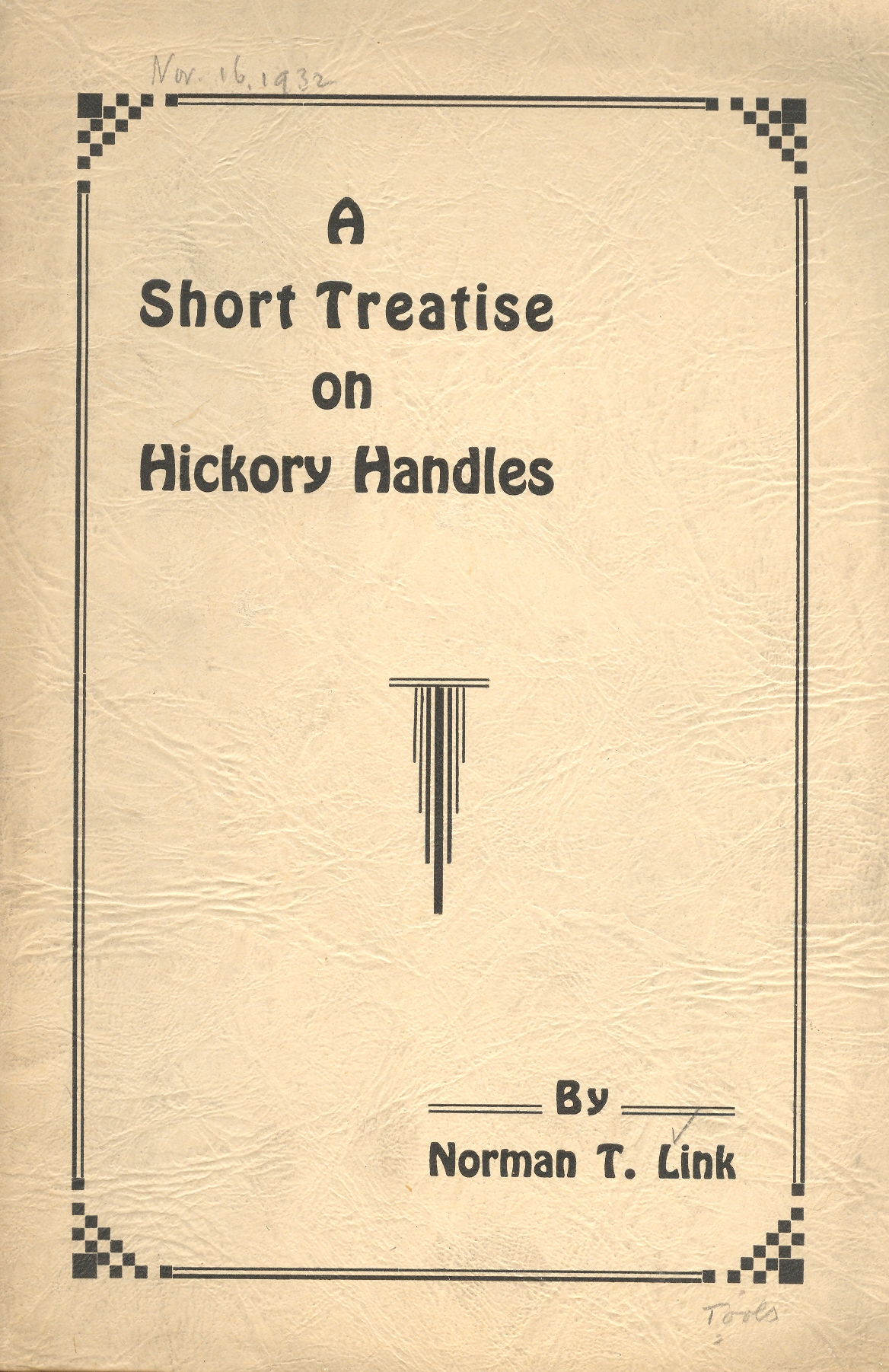
     Blog Dec 12 we need menA Short Treatise on Hickory Handles I am
    sure is still useful to anyone making their own hickory-handled tools.  It is a beautiful work—considered,
    referenced, insightful, well-written and nicely illustrated.  It is, in its own special way, achingly
    wonderful. Not knowing anything about hickory handles I was very surprised to see that their story played out to 30 pages–it was so well written and documented that I read the entire thing.  At one point in time, hickory handles were important.

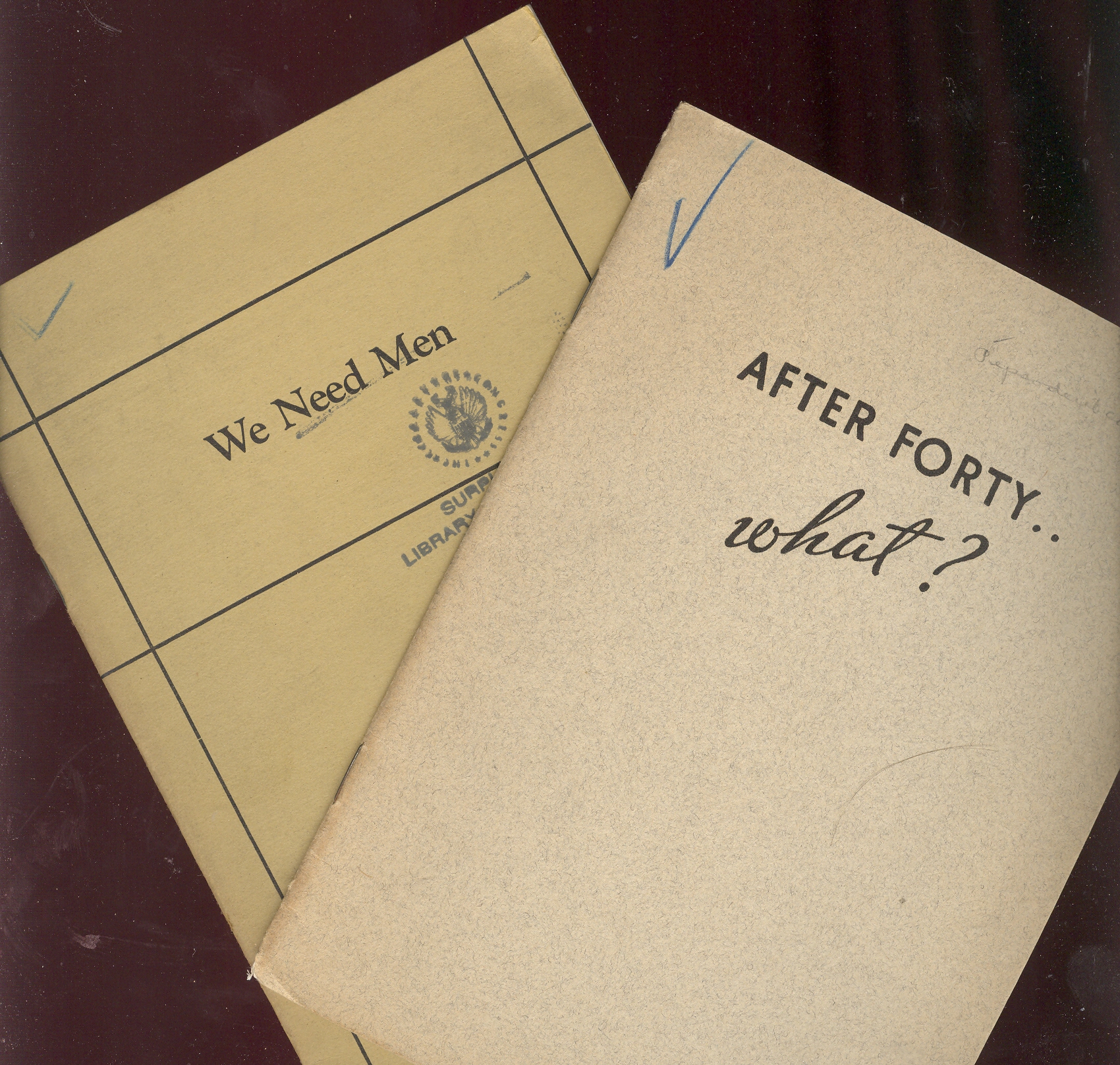
     Blog Dec 12 baby teethThe others are really more bark than bite—but their titles
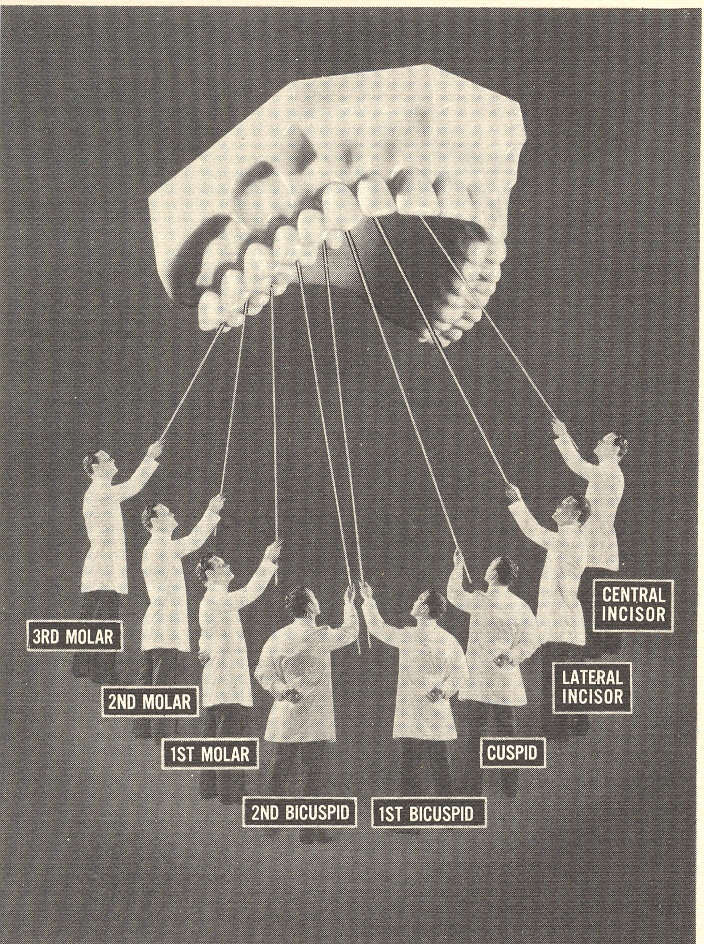
    are just weirdly gorgeous.  “After Forty…What?” held hope, but the 1934 pamphlet didn’t identify 40 as the new 60–it was concerned with (illustrated) tooth decay, and held no daydreams. Ditto “The Most Important Tooth”–I was hoping fo rit to be some one gigantic tooth in a field in Kansas, but I was wrong.  Somehow the six-year-old molar is the most important, the seat of its infection leading to disease throughout the body.  I dunno.  I won’t even go into the other two for fear of spoiling their titled wonders.

    Some other examples:  here, here and here.

    [Where do these odd things come from?] 

    Blog Dec 12 baby teeth weird

    ·Posted by :

    ·in:

    —

  • Mapping the Invasion of America, 1942

    JF Ptak Science Books LLC  Post 873           Blog Bookstore

    [See also Part II of this post, here; and consider a  related post on the Nazi sub-orbital Amerika Bomber]
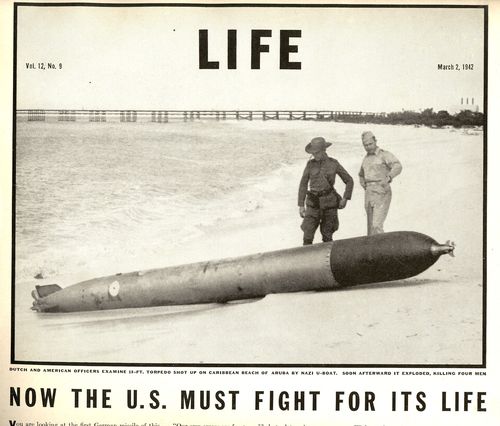
     

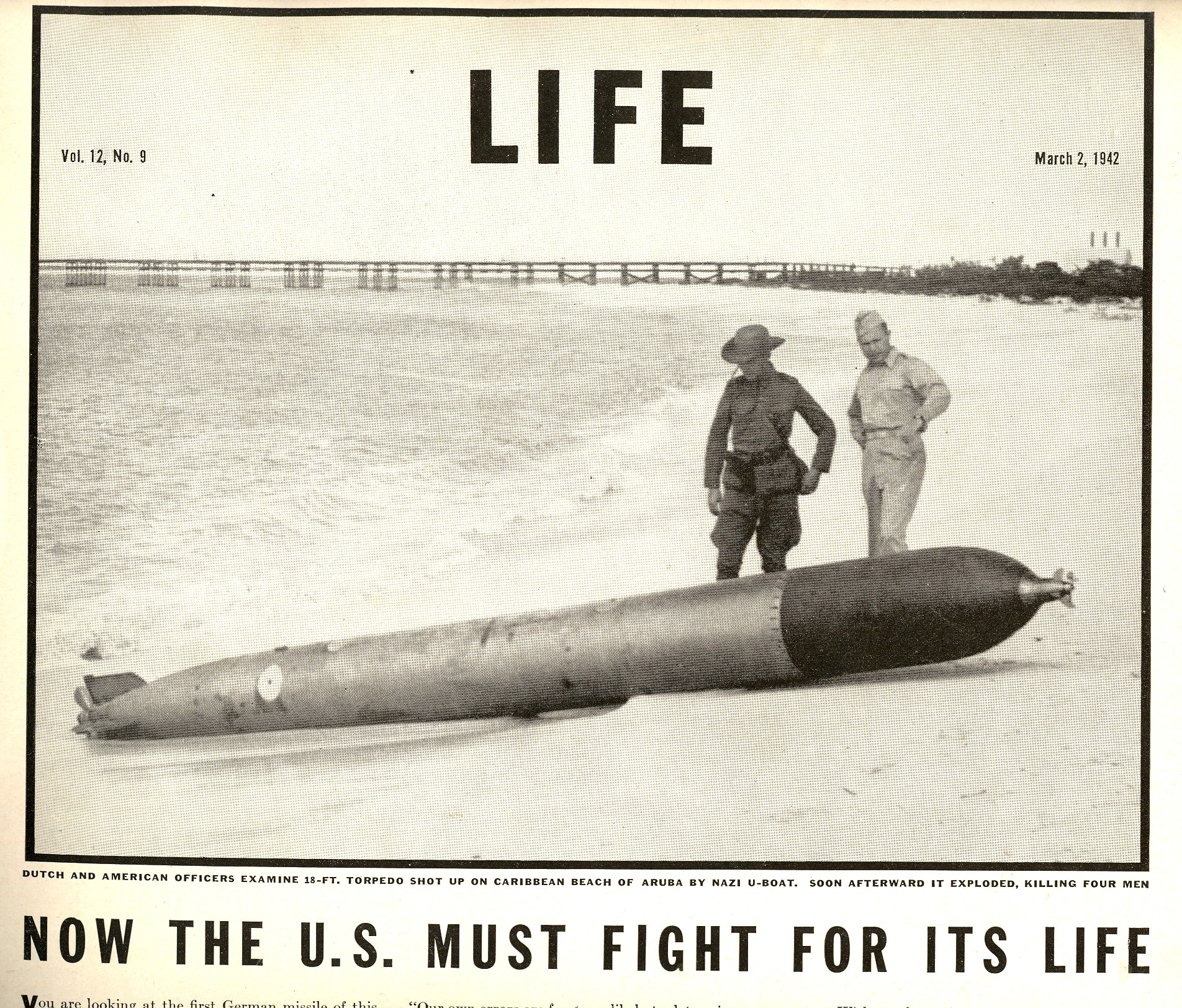
    Blog Dec 12 USA attacked map overview LIFE Magazine issued a wake-up call of sorts to its readership in their 2 March 1942 issue.  I say “of sorts” because even though this hard article (entitled “Now the U.S. Must Fight for Its Life”) must have sorely sobered some of its readers, it started on page 15, following big ads for Listerine, Matrix (women’s shoes, Bell Telephone, Modess, Clapp’s Baby Food, Dot Snap Fasteners, Goodrich Tires, White Horse Scotch, Pompeian Massage  (for shaving), Jack Benny/Carole Lombard’s “To Be or Not To Be”, Colgate, Yardley powder and  Mimeograph, and a few interspersed puff pieces—and a Ginger Rogers cover photo.  But once LIFE paid its bills1, the article got right to business, responding to a February article by sci-fi/novelist Philip Wylie2 on the possibilities of the U.S. losing the war.    
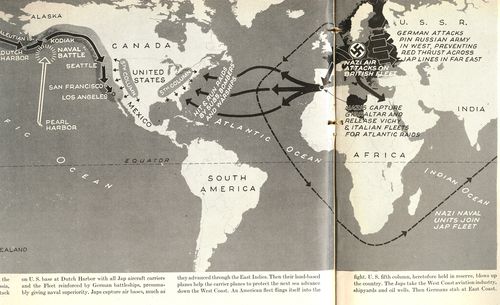
     Blog 12 10 USA map attack 1

    Losing looked like something that could actually happen in pre- war-ready America3.  The war in Europe had been on in earnest since the very end of 1939 (since 1933 in Asia), and the Axis had reached just about the fullest extent of their victories (though there would be more gains in the Pacific to come).  By March of ‘42, we had Bataan, MacArthur leaving the Philippines and the fall of rape of Manila, the siege of Leningrad, Corregidor, Java Sea, the Brits leaving Singapore, Malaya, and so much more.  The Axis powers in Europe were now in control of Austria, Czechoslovakia. Poland, Denmark, Belgium, the Netherlands, Luxembourg, France, Norway, Yugoslavia, Finland, Greece, Lithuania, Latvia, Estonia, and parts of the Soviet Union (Ukraine, Bylorussia, Crimea), and parts of North Africa;  plus the allies of Hungary, Romania, Bulgaria, and Slovakia. There was also Italy, of course, controlling Sicily, Ethiopia and Libya., and of course the Japanese controlled large swaths of China, South East Asia, Indonesia and points in-between.  The overall situation did not look very good. 
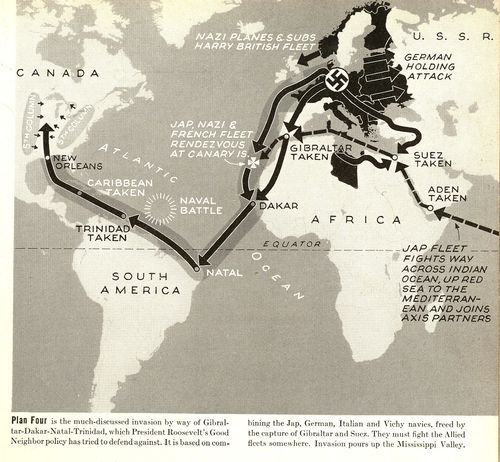
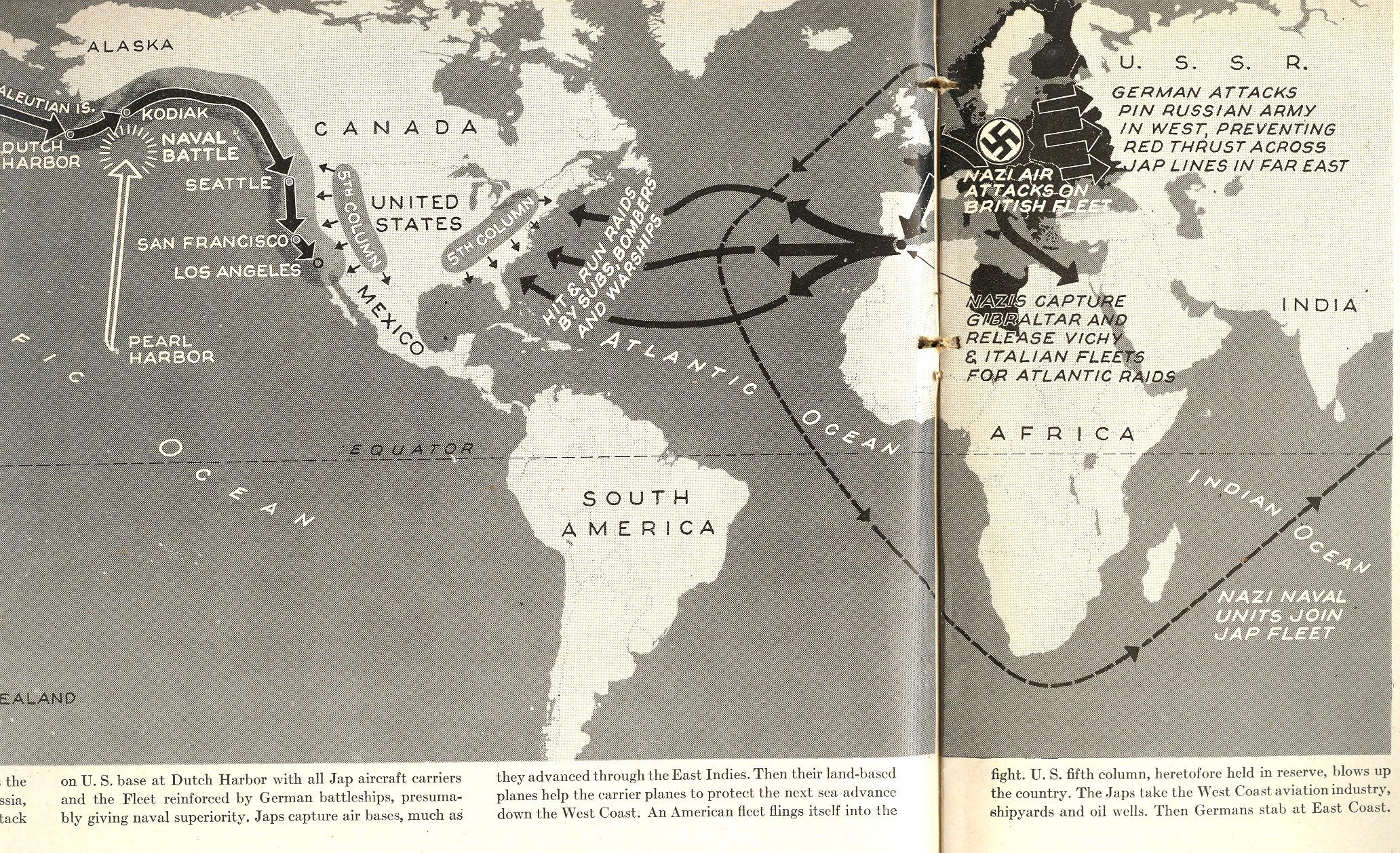
    Blog Dec 12 USA attacked map 2
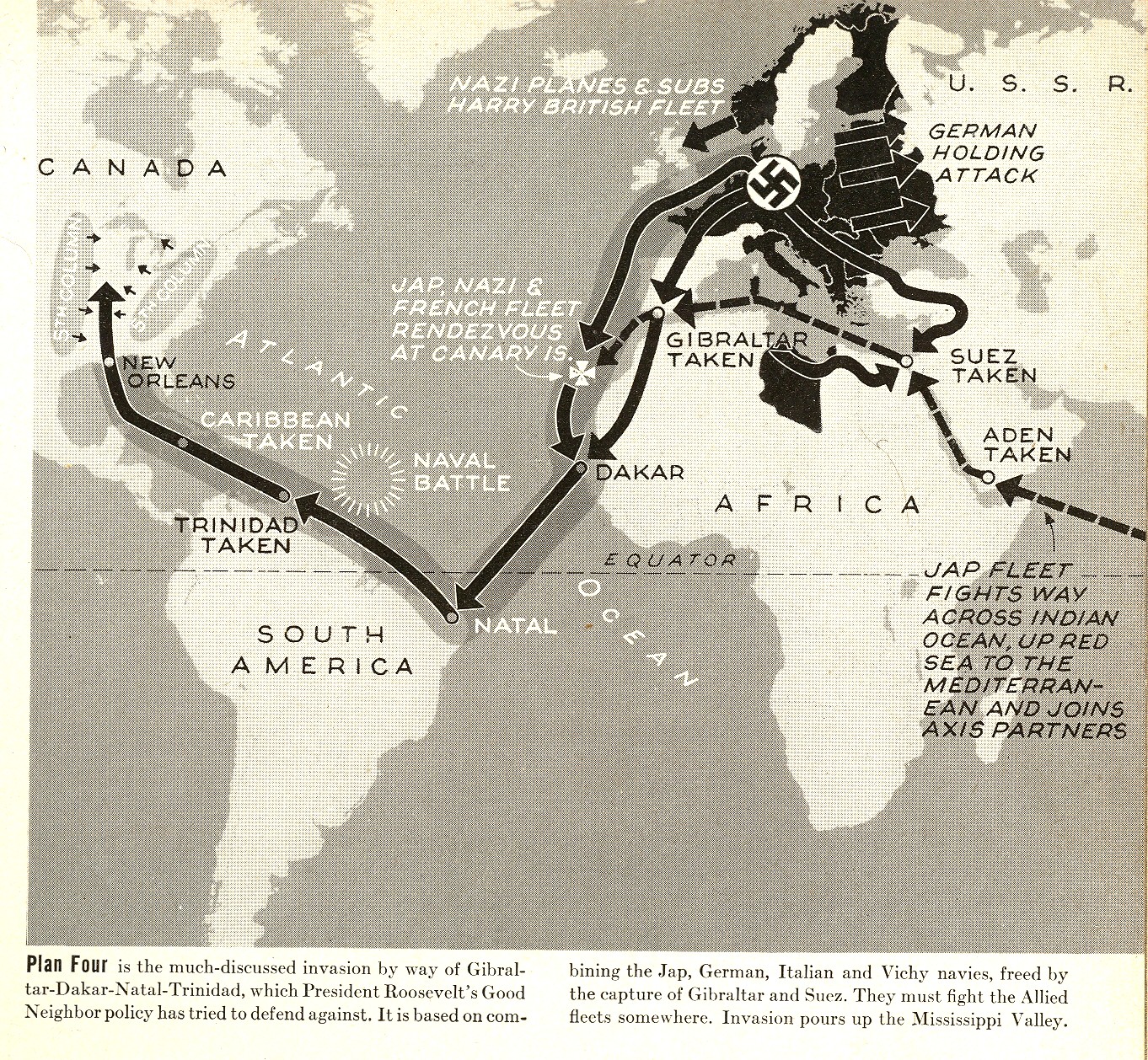
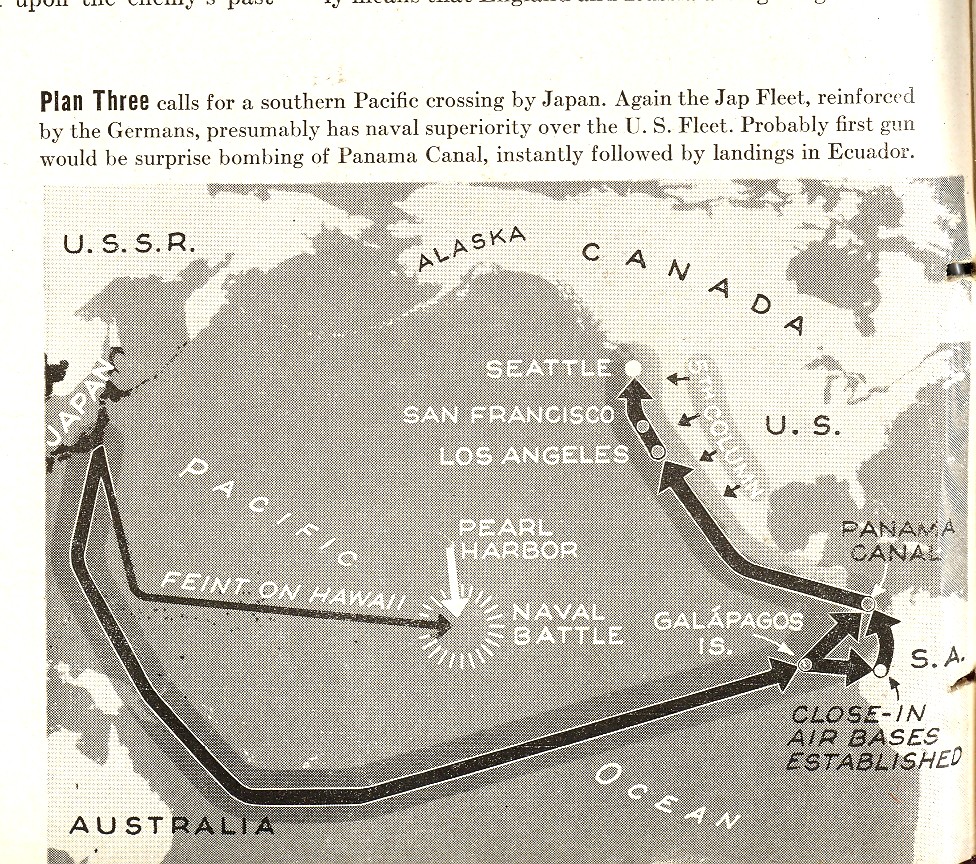
     The following maps appeared in a two-page spread, detailing ways in which the Axis powers could combine their efforts, focus on America, and take over the country.  Maps such as these with arrows being drawn towards America were absolutely uncommon during this time. 
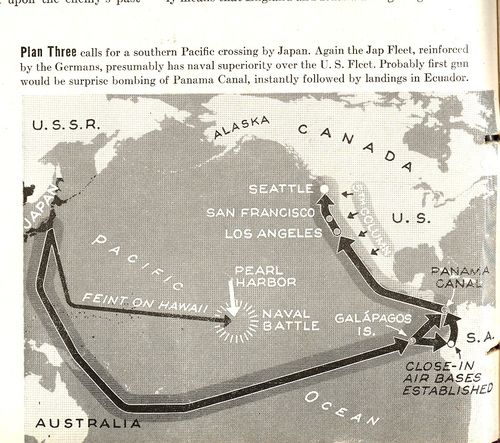
    Blog Dec 12 USA attacked map 3 001

    Notes

    1.This is almost universal SOP for war reporting for almost all media, and which continues today.  The Illustrated London News delivered reports of success and disaster sandwiched between ads for socks and trifles, as did the Illustriete Zeitung (Leipzig and Berlin), the New York Times, and so on.  I remember very clearly as a kid hearing the reading of the daily list of American soldiers killed in Vietnam  on one of the Big-Three networks, somber and intoned, followed instantly by a ad for Coke or Mister Kleen. 

    2 Wylie (1902-1971) was an interesting guy with a wide reach.  In addition to Hollywood-feeding work, interesting fiction, insightful scifi and social commentary, Wylie also provided the inspiration for the creation of Superman (“The Gladiator”, 1930) and Flash Gordon (When Worlds Collide, 1933).

    3.  Once the war machine in the U.S. got into hyper drive I think that it was impossible for this country to be defeated given its population, workforce, industrial capacity, raw materials, and of course scientific superstrucutre.  Also there was also no other country in the world with the necessary (and enormous) components needed to construct an atomic bomb.  This is a simplified statement that seems pretty homespuna dn jingoistic, but the fact of the matter is that the U.S. was the seat of overwhelming  possibilities and capacities. And yes the Nazis had been slowed down mightily with the expense of dozens of millions of Russian lives and the entire British war machine and on and on—I’m just saying that in the end, the U.S. could not have been beaten.  

    MORE maps in the extended section, below:


  • The Story of the Story of ________: Fertilizer, Sponges and Etc.

    JF Ptak Science Books LLC   Post 785   Blog Bookstore

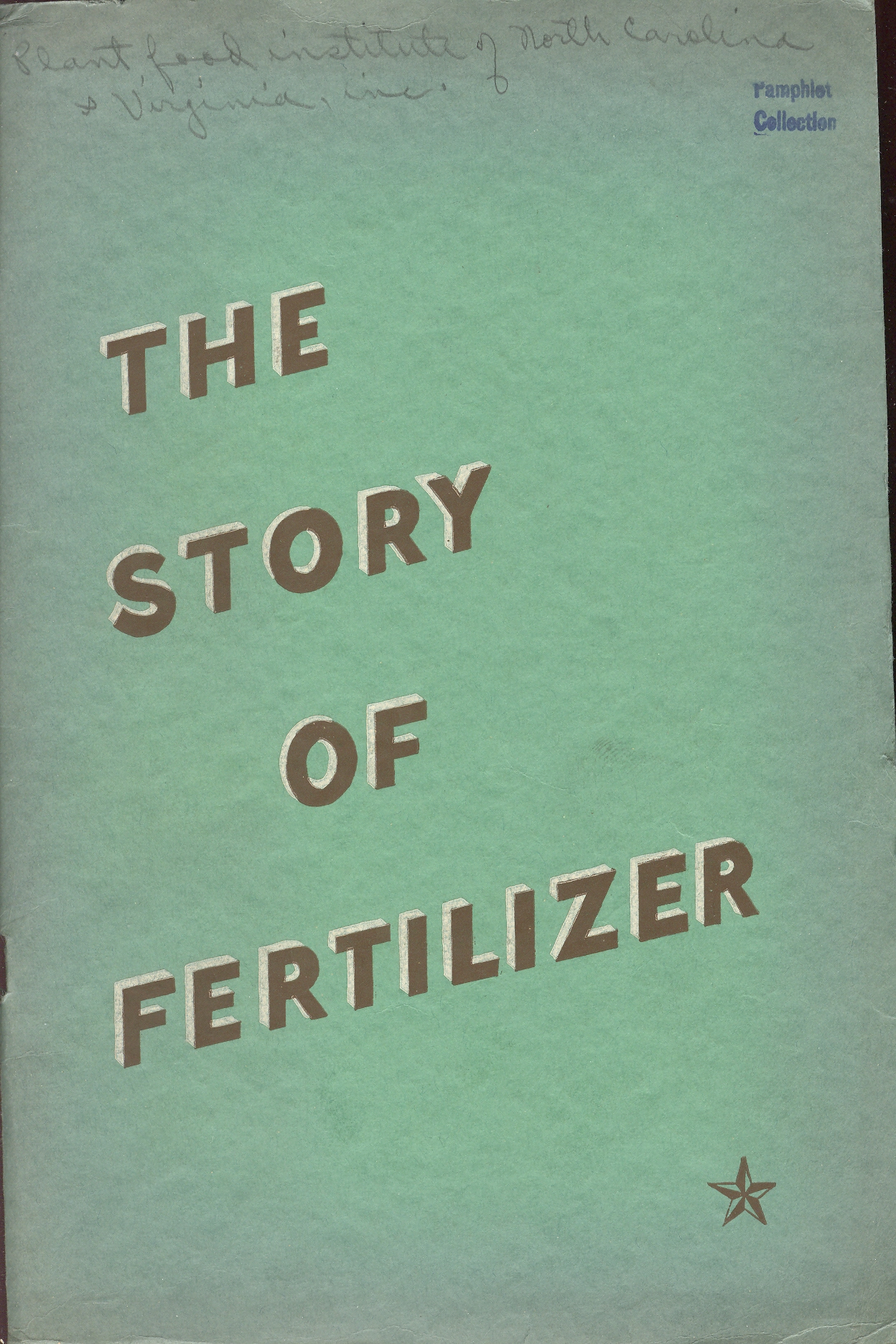
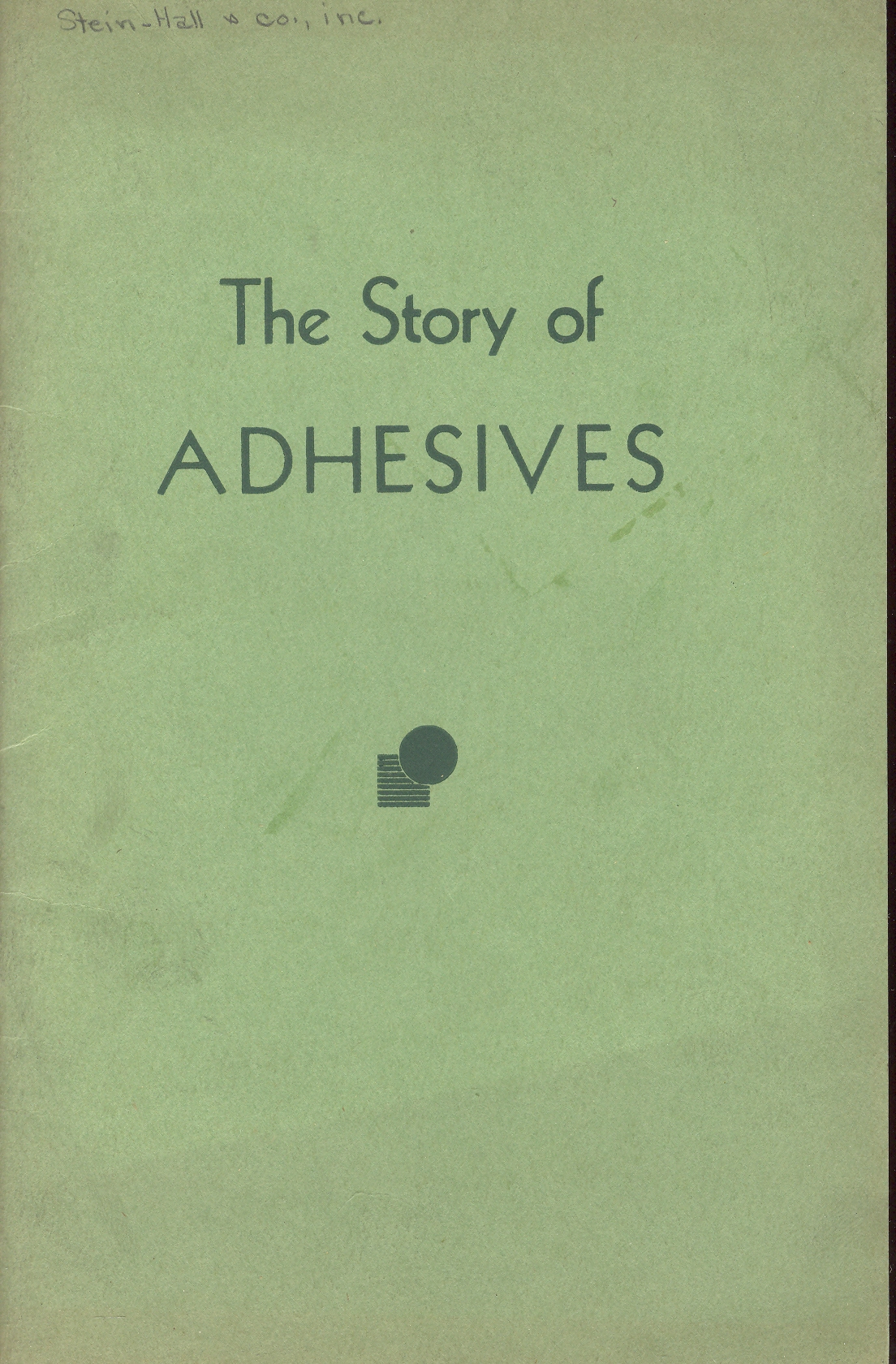
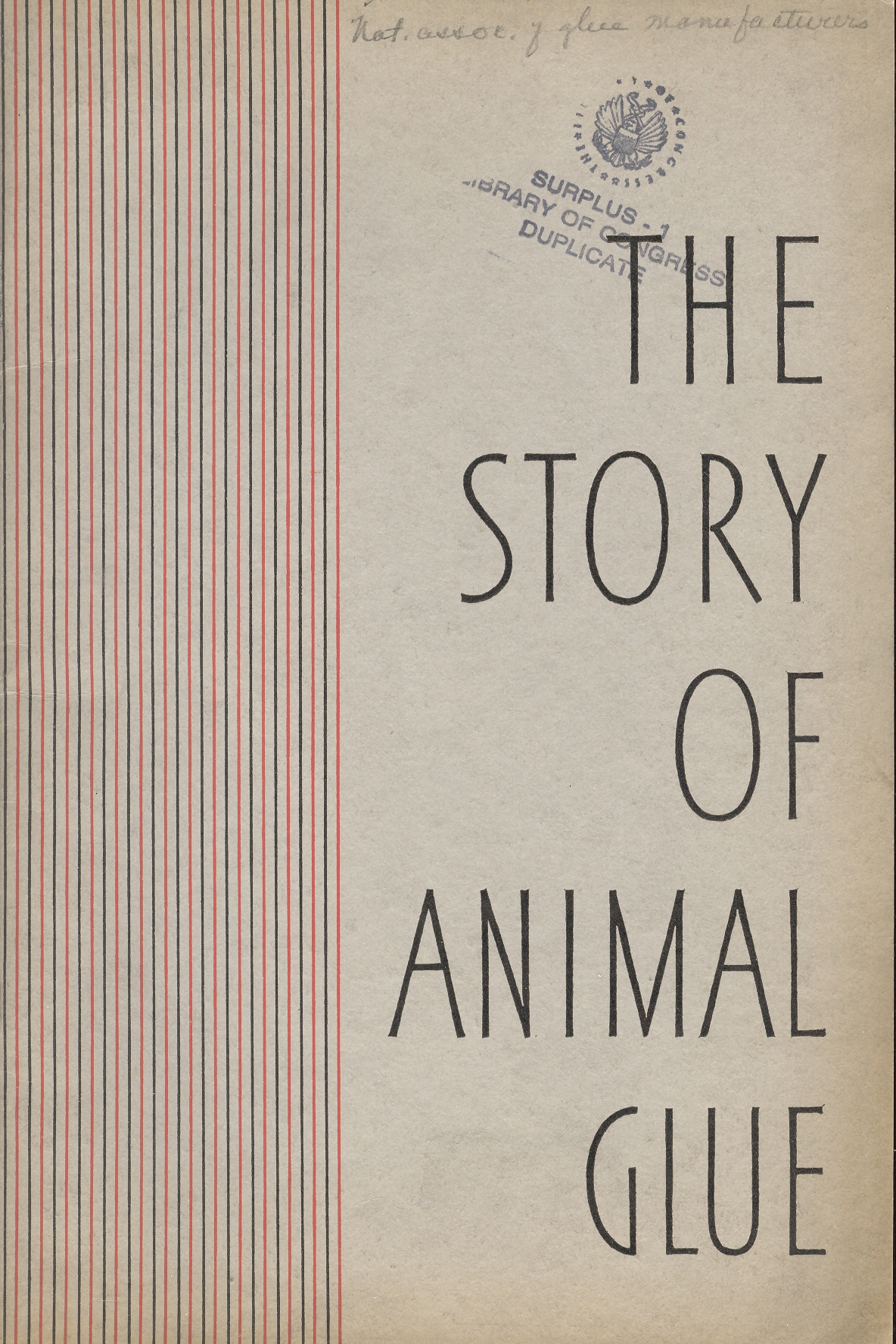
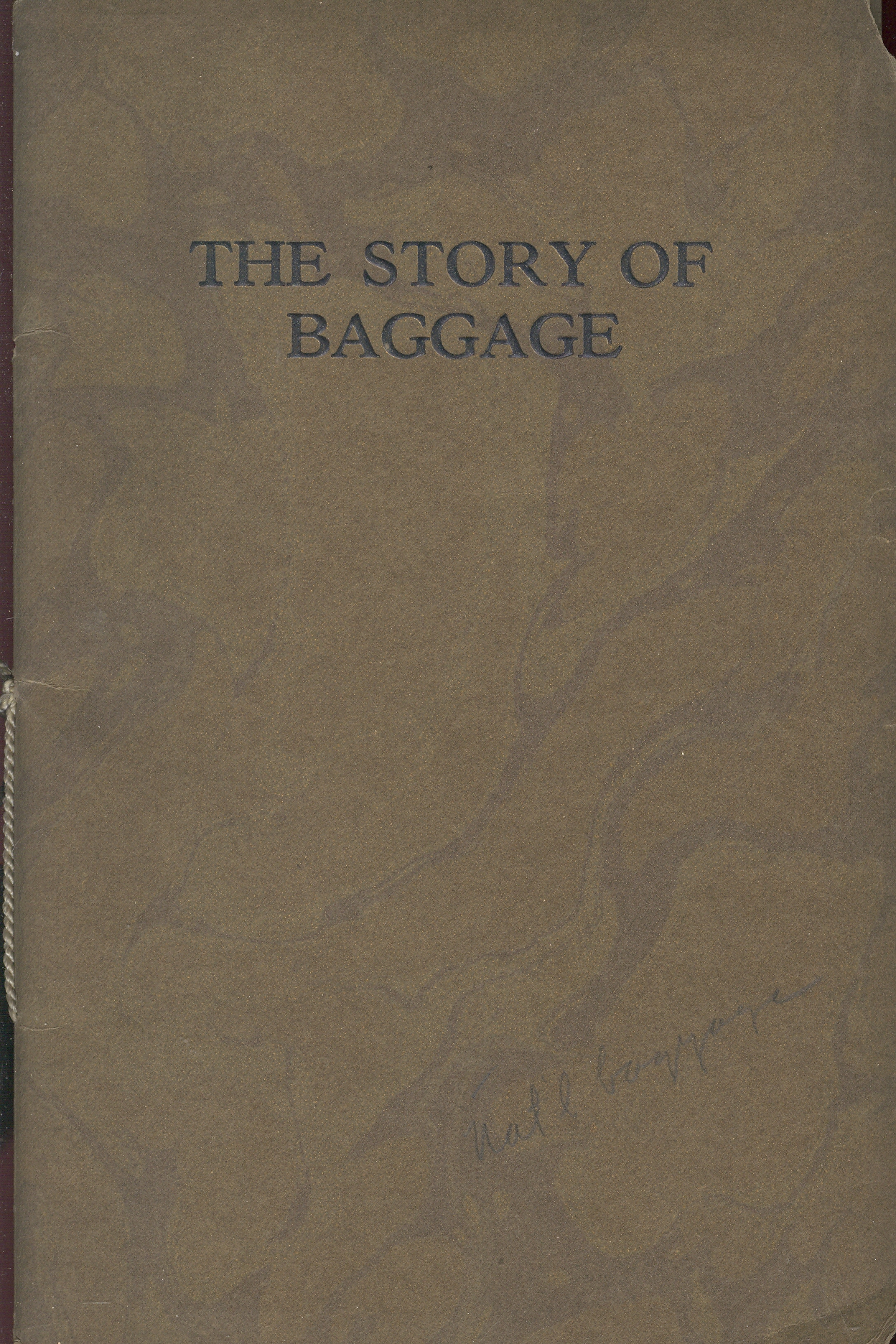
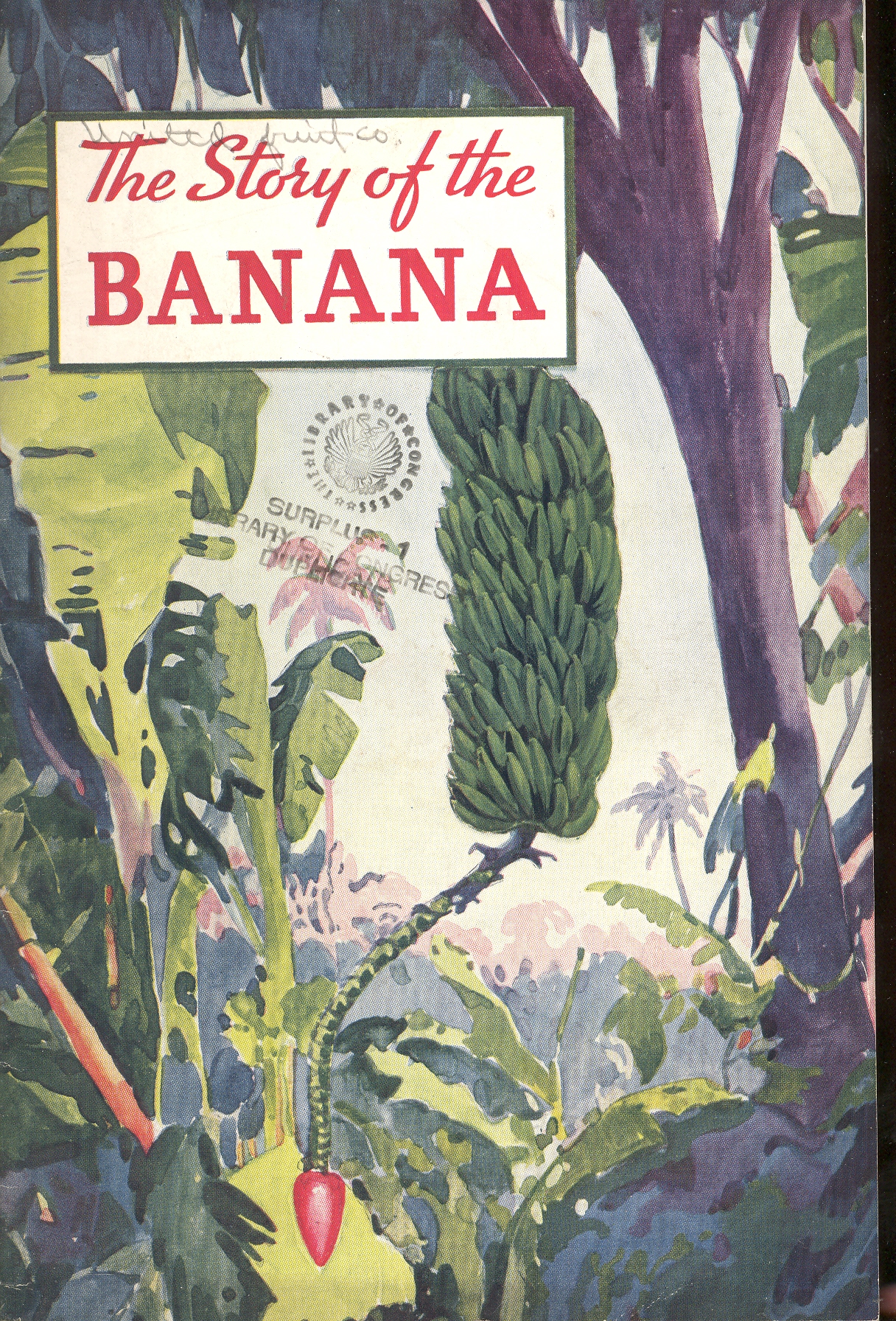
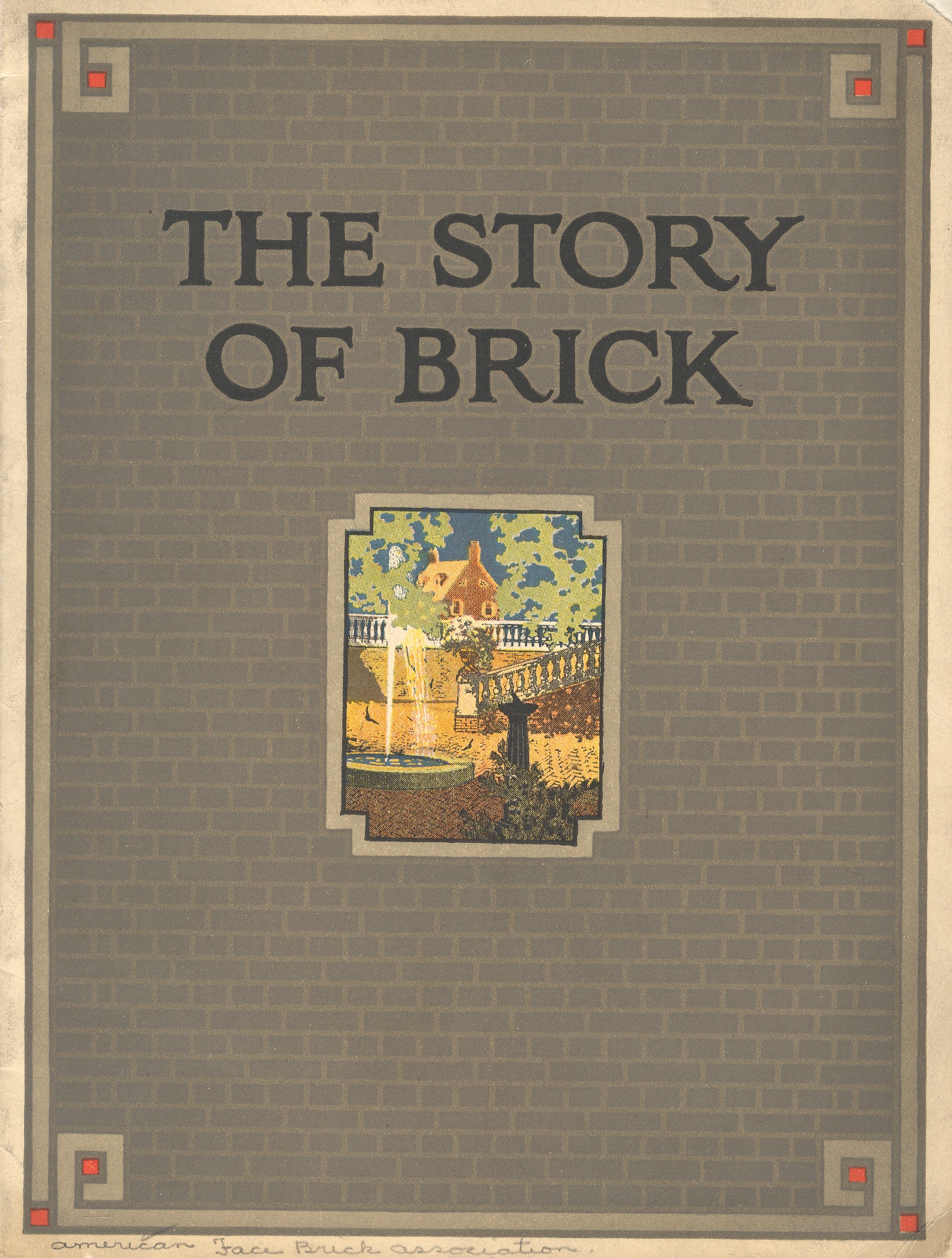
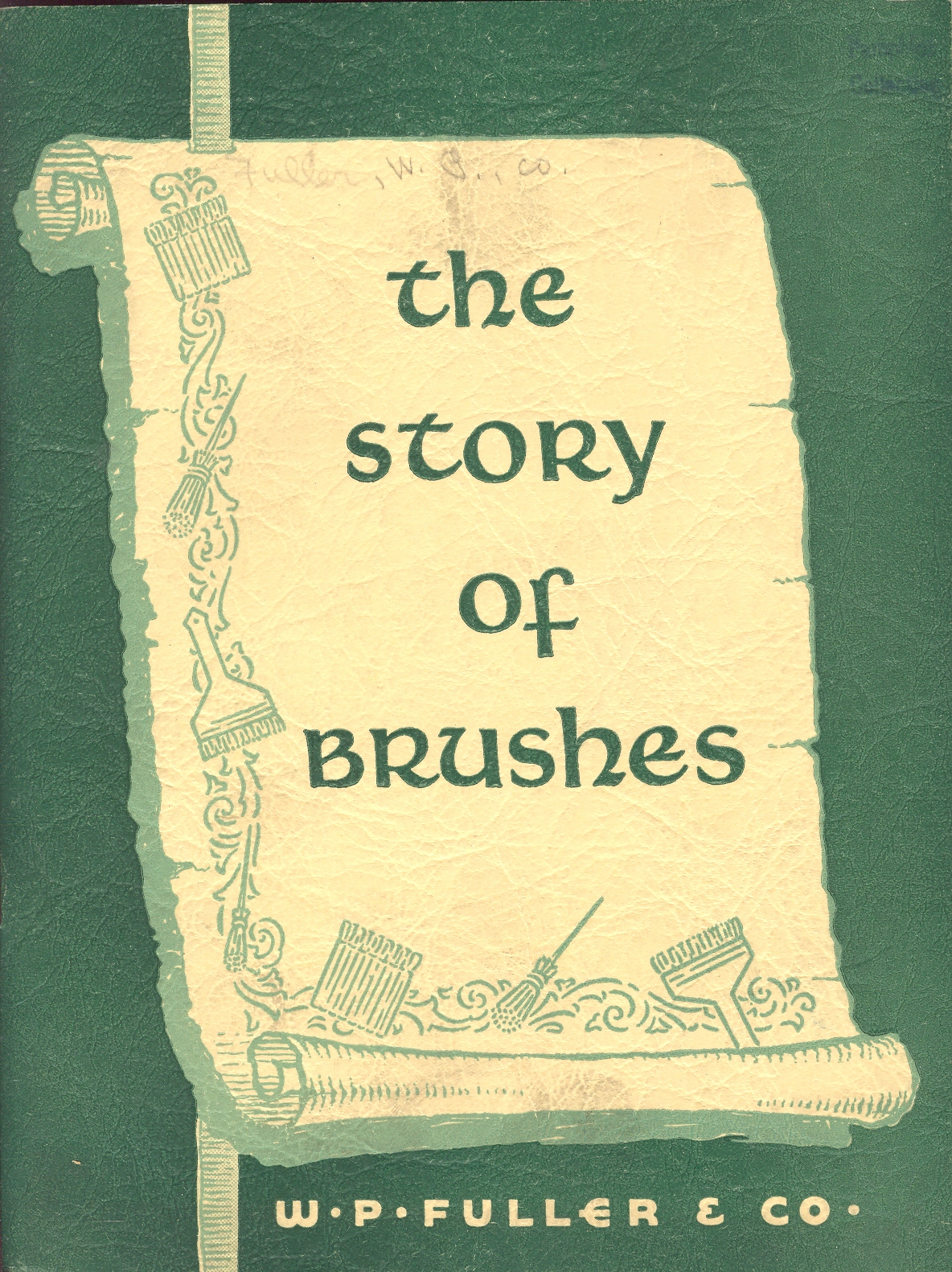
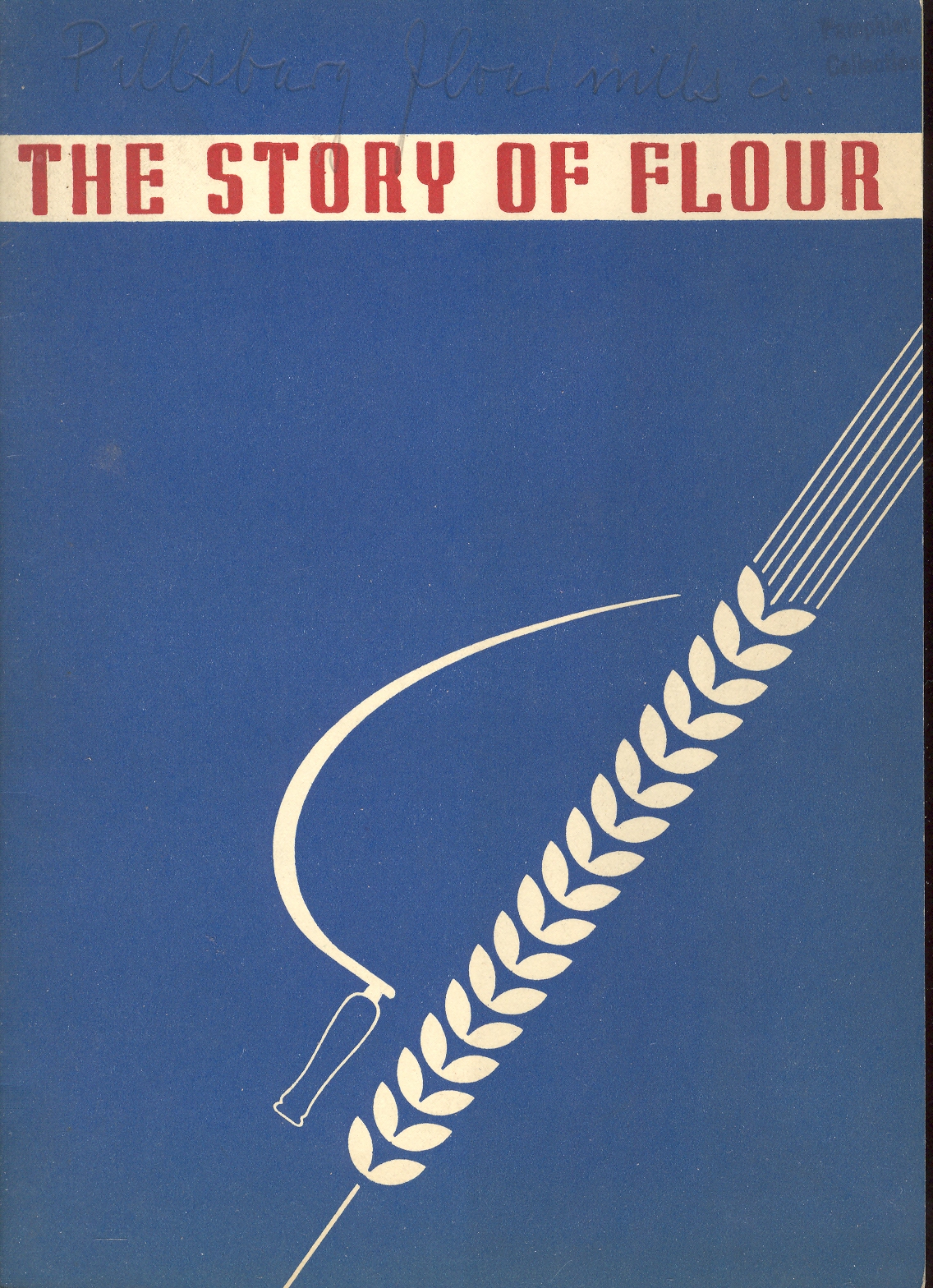
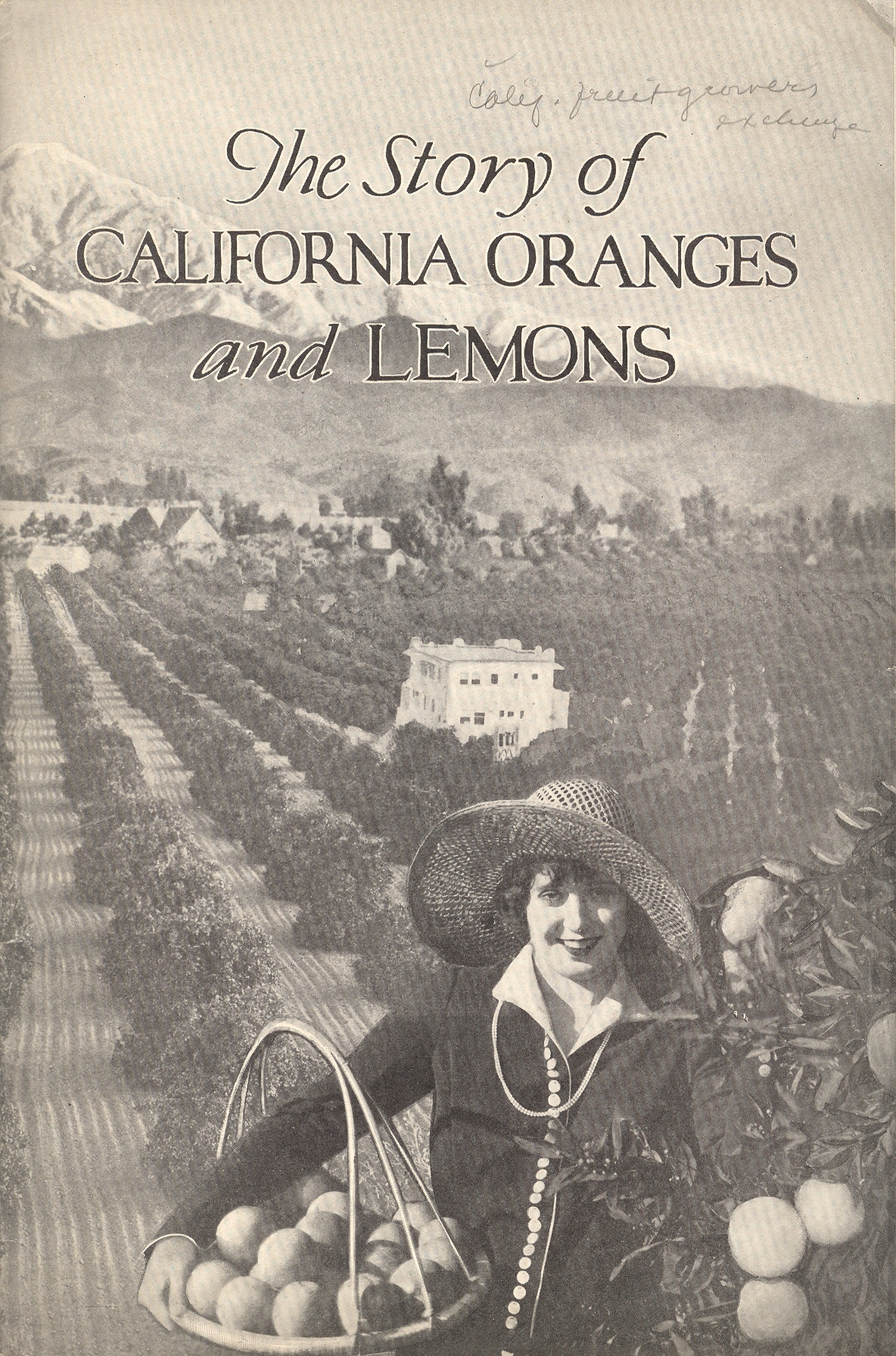
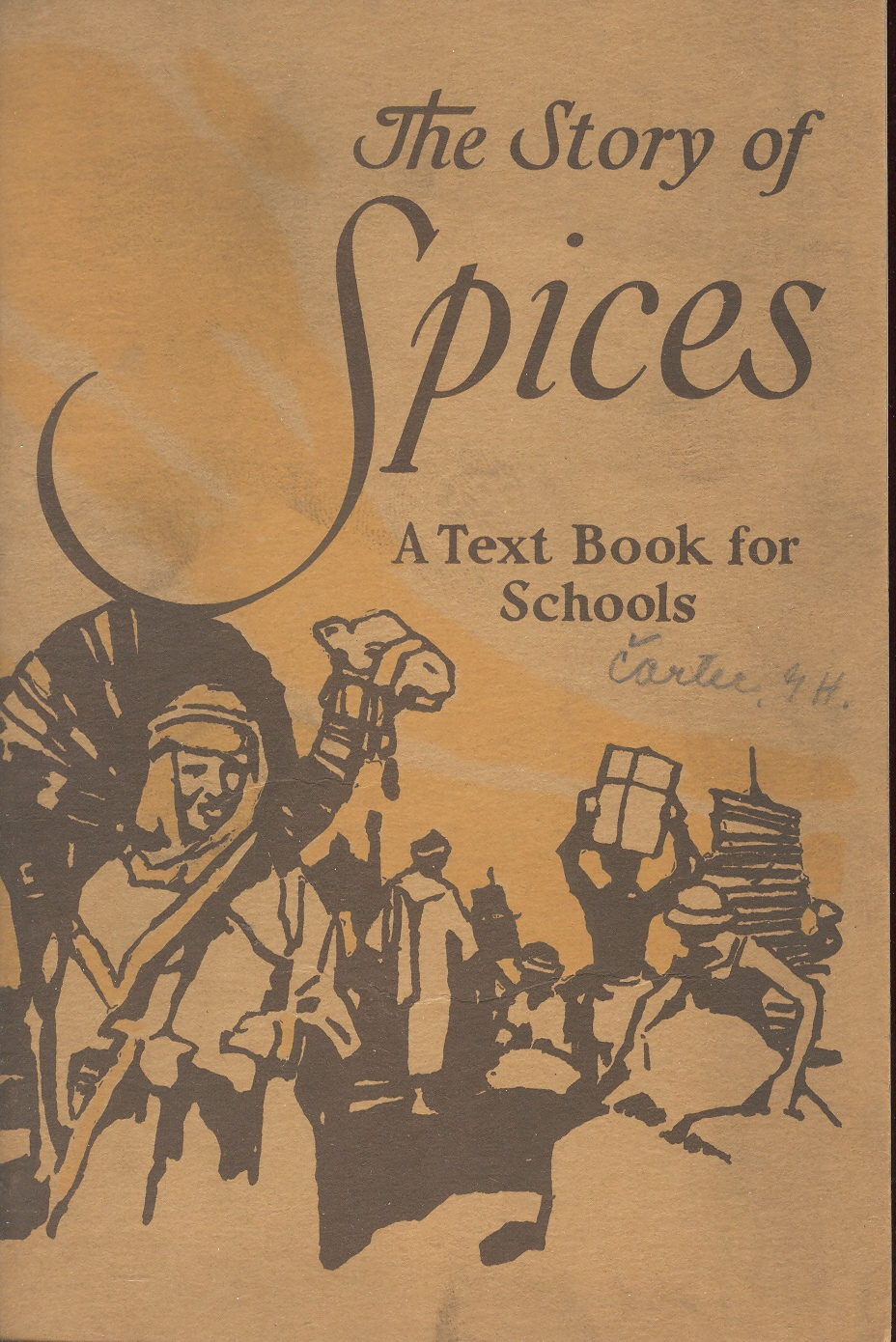
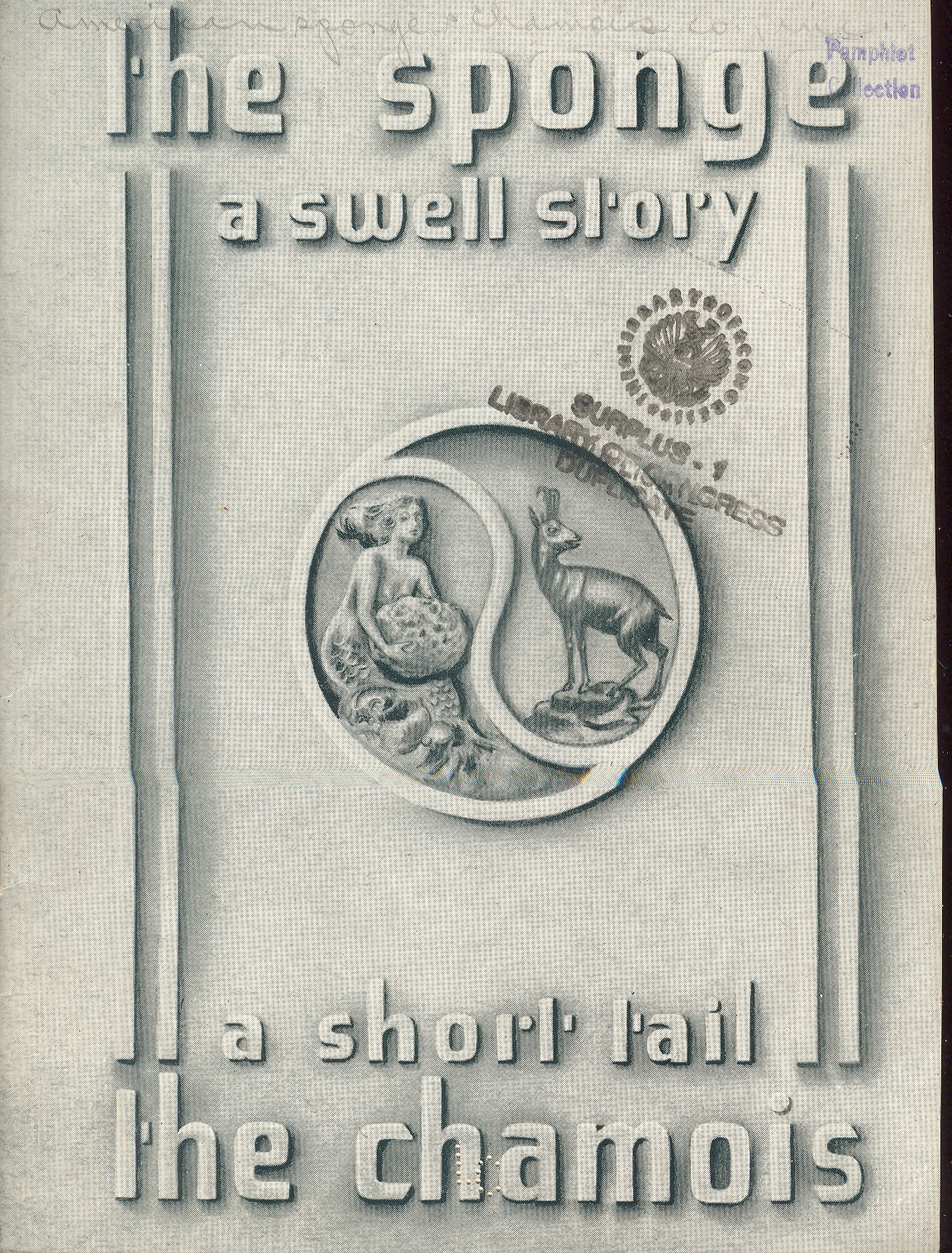
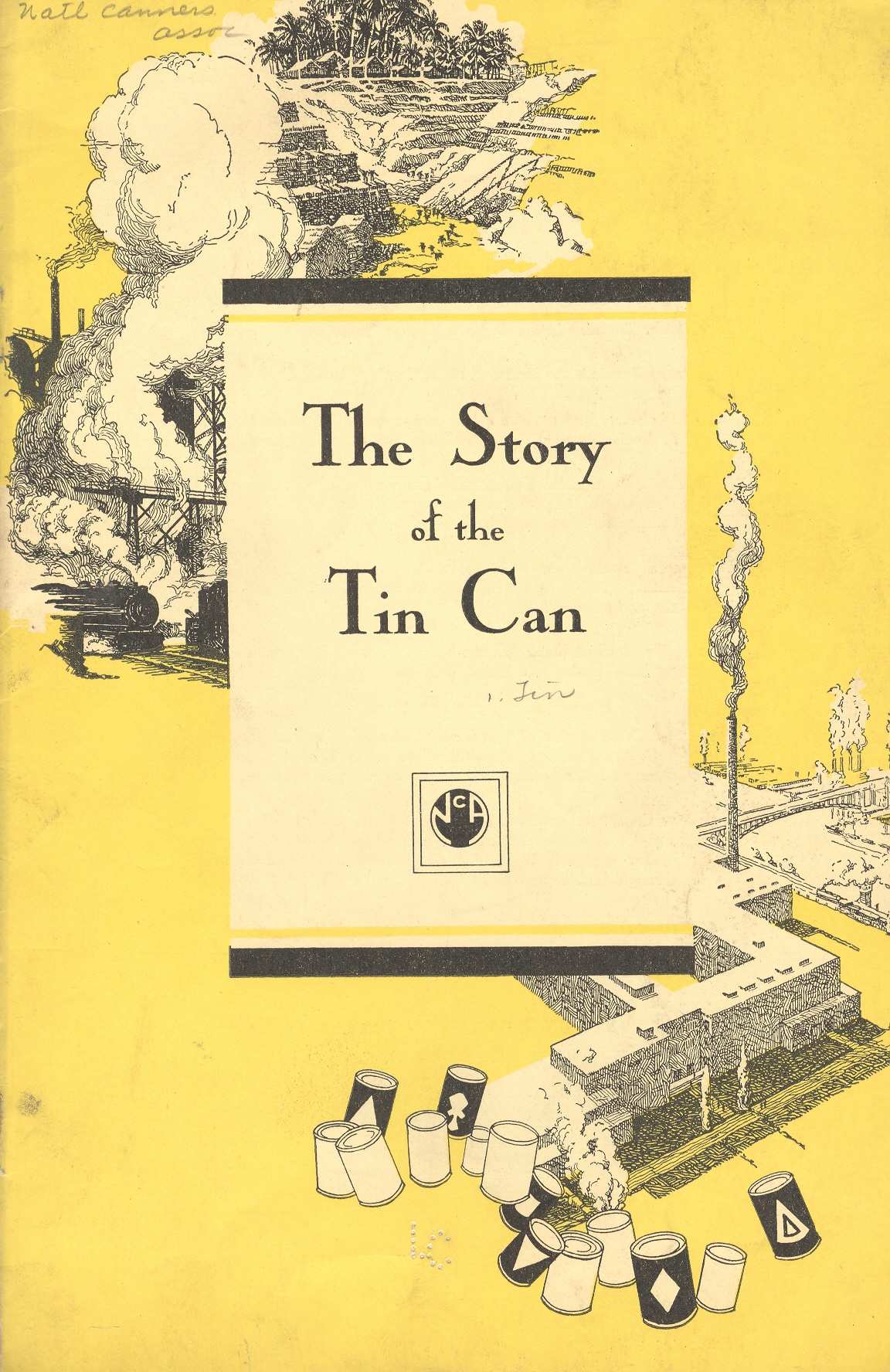
    + story fertiliz  A very small part of a large collection that I purchased of the Library of Congress some years ago (the “Pamphlet Collection”, about 90,000 odd, interesting and almost entirely unrelated in their categorization items) was re-connected by me into a subclass of sweet/odd minor history.  The titles needed to start something like The Story of _____, have an interesting cover illustration, and have the subject material be not-common.

    I discovered that it was easier and more interesting to arrange this ephemeral material according to categories that would make the items interesting in a group, where the whole was greater and more interesting than the sum of its parts.  And so a popular and slightly terrible Sponges, a Swell Story springs to life as a Duchampian illustration, far more interesting than it could possibly be as a solemn and bad history of sponges told in 32 cramped pages.  + story adhesives

    Some other iconoclastic categories in this vein includes pamphlets whose covers have only a printed  “!” or “?” on them,  with the sub-category of mercilessly bizarre and entertaining printed titles with exclamations or questions (like “Better than Dead?” and “Fury!  Money!”). 

    And so I share a few of these The Story of pamphlets–there’s really not too much to say about them beyond offering up their cover images, so I’ll let it go at that.  

    + story anim glu 

    + story baggage 

    + story banana 

    + story brick

    + story brushes

    + story flour

    + story lemons 

    + story nickel 

    + story spice 

    + story sponge 

    + story tin can      


  • Upset in the Belly, Insanity and Murder: a Southern Interpretation, 1831

    JF Ptak Science Books LLC  Post 647  Blog Bookstore

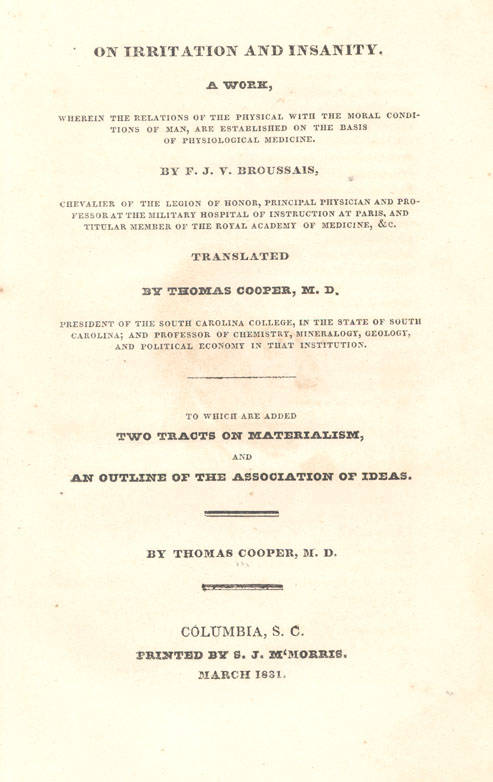
    Thomas Cooper, a merry, upper-educated intellectual called “a
    learned and talented mapcap” by none other than John Adams, wrote from his
    secure chair South Carolina College a translation of a rather individual effort
    in explaining insanity’s connection with moral outrages.  The work, published in Columbia (South Carolina) is called On
    Irritation and Insanity … to which are added Two Tracts on Materialism, and
    an outline of the Association of Ideas

    and introduced an unusual, foreign
    approach to the connection between sanity and malevolence.  Brousssais’ work may not have required such
    attention. 

    Blog--June 12--broussais

    He wrote, for example:

    “The causes of this morbid state consist always in
    irritation of the trisplanchnic apparatus, and especially in that of the
    stomach, acting on the brain.
    [Italics mine] This last viscus, may be such, by its normal
    constitution, as to give a propensity to cruelty ; but in the morbid state it
    is a sense of uneasiness perceived through the whole splanchnic apparatus,
    comprehending the brain itself, which renders ideas of murder predominant in
    spite of reason. This horrible perversion may be considered, as well as that of
    suicide, as a species of chronic anger or hatred, which impels the individual
    sometimes against himself, sometimes against other men or against inanimate
    objects. We have already considered it under a subacute form in furious mania ;
    but in the modification in which we now describe it, it is entirely
    chronic and apyretic. In fact it may be extremely obstinate, and conceal itself
    under the appearances of calm, of joy, of benevolence, until the lunatic finds
    the opportunity of executing his horrible project.”

     I can see these words being written by candle light.

     James Cowle Prittchard early on dispensed with M. Broussais,
    writing  in his A Treatise on Insanity
    and Other Disorders Affecting the Mind
    (published by Haswell, Barrington, and
    Haswell in 1837, just six years after the Cooper translation) states:


    “Such is M. Broussais’ theory of
    these phenomena. It must be allowed that various irritations, and especially
    those in the digestive organs, often give rise to irritability of temper; but
    that any such state as that .which M. Broussais has
    described is a cause, and even the principal cause, of moral insanity, and in particular of that intense excitement of
    malevolent propensity which leads to murder and suicide, is a position which,
    before it can be admitted, requires proof; and no such proof has been afforded
    by the ingenious writer who has advanced this hypothesis. It must be confessed
    that this subject is as yet enveloped in obscurity.”

    As it turns out Broussais recommended courses of bleeding, diet, soothing drinks, applications of cold and mild purgatives to treat insanity.  This went somewhat against the established regimen of treatment (but of different philosophical and theoretical approach to the idea of insanity) of Benjamin Rush, who practiced all of the above but of harsher application and with more force.  Broussais at  least advocated a more temperate approach to bleeding, that it not be “severe”, and that the strength of the insane not be completely diluted by massive exposures to dunking and the cold.  The translator Cooper, however, disagreed with the milder treatments, establishing for the record that the hotter and harsher  temperatures of the South required harsher and colder treatment. From page vi of Cooper’s [reface we read: “The Southern climate of the United States , seems to require more bold and decisive practice, than the Northern climate of Paris or London : then, to us, the therapeutics of Broussais, Begin, Coster, &c. appear feeble; but the principles, founded on the physiology and pathology of the tissues, are undeniable and universally applicable.”

    Such was the spirit of the day.  Broussais is not even a shadow, today:  he tried to establish a connection between gastrointestinal distresses and insanity, and that was seen as futile even by immediate contemporaries. Cooper survives because of his far reach into many disciplines–his treatment of Broussais, well, is memorable for his appeal to treat the insane differently in courts of law because of what he viewed as their diminished capacities. 


    ·Posted by :

    ·in:

    —

  • Naive Surreal Titles (Series #15): Antique Ideas About Womanhood

    JF Ptak Science Books LLC  Post 645  Blog Bookstore

    Blog--jun 9 odd titl ssh

    In a 
    continuing thread that I call The Naïve Surreal—common, ephemeral titles
    relating to subjects whose meaning has virtually no place outside its own era,
    creating art in their otherwise forgettable and forgetting covers and design—come
    these two examples relating to women and girls. 
    There’s really not much to say about their contents, really—so much has
    already been said.  They’re just a standard
    of their time.  Things People Won’t Talk About (1937)  is [sic] venereal diseases,
    and is an appeal for actual public discussion (“the foolish secrecy surrounding
    (the diseases) is what makes them so destructive”.

    Blog--jun 9 odd tevry grl
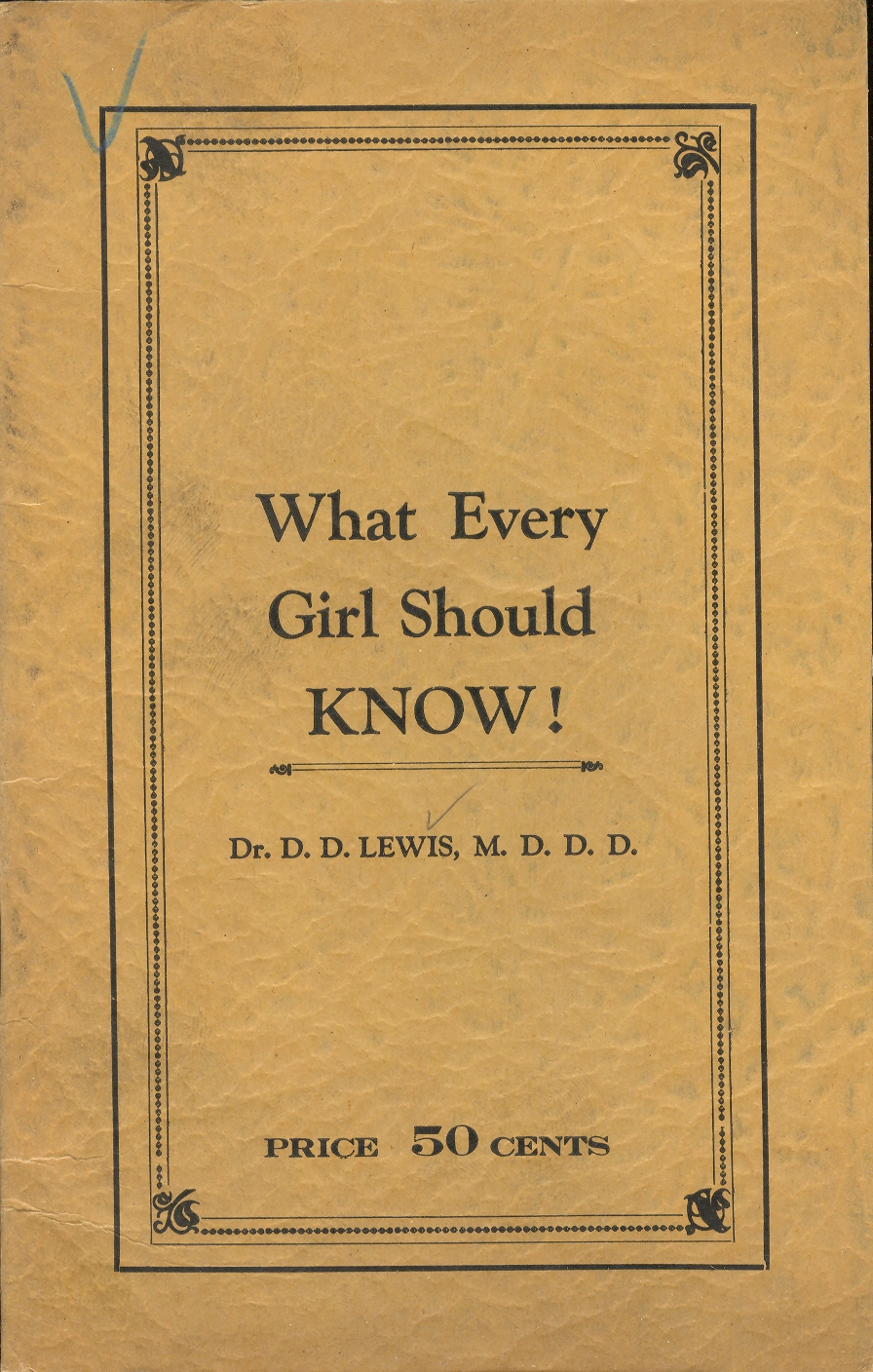
    What
    Every Girl Should Know

    (1928) contains nothing I think outside what everyone would expect it top say,
    except that it is rather well written, and also (in places) quite strongly
    opinionated.  The little pamphlet also
    assumes that its readers already know its complaints:  “the evils of self-abuse are so well known,
    that there is no need to elaborate further on this point”.    Its “chapter”
    headings tell a lot of the story, and probably enough of it to make their
    reading the only thing you need to read: 
    “Know Thyself”, :Know Thyself Spiritually”, “Woman’s Mission”, “The Age
    of Puberty”, “The Ovaries”, “Harmoul—its Importance”, “Rash Marriage”, “Freedom
    and More Freedom”, “Lust and Love”, “The Value of Chastity”, “Buying Popularity”,
    “Selling the Body for Clothes”, “The Tragedy of Dual Love”, Menstruation”, “Masturbation”,
    “Promiscuous Sexual Intercourse”, “Gonorrhea”, “Syphilis”, “The Dreaded Third
    Stage”.  So. There you have it.

    ·Posted by :

    ·in:

    — —

  • The History of the Evil Eye

    JF Ptak Science Books LLC  Post 644

    Fortis imagination generat cassum (“A strong imagination begets the event
    itself”)

     The Imagination of the human heart is evil
    from his youth
    (Genesis
    8.21)*


    Blog--jun 11 evil

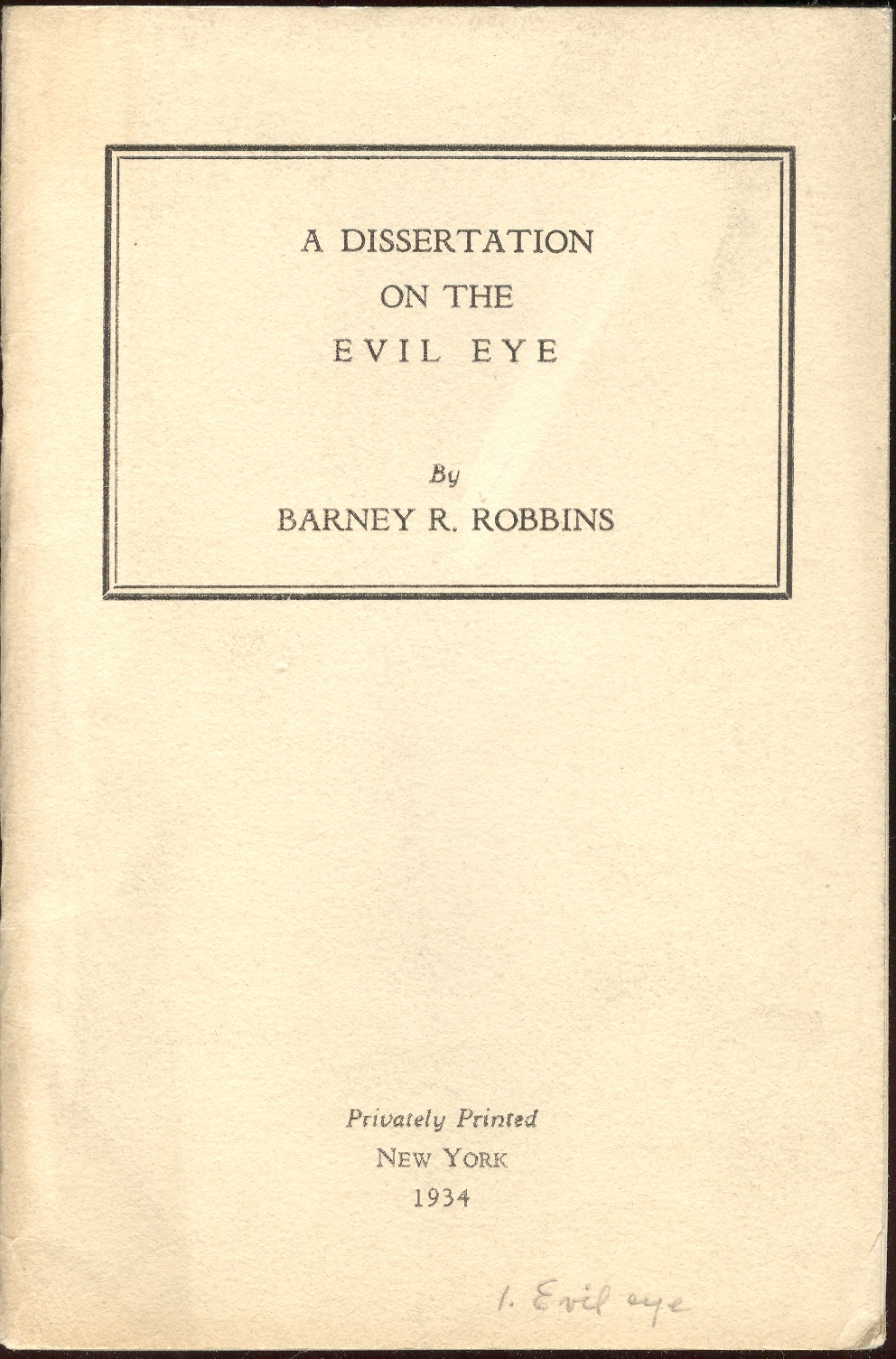
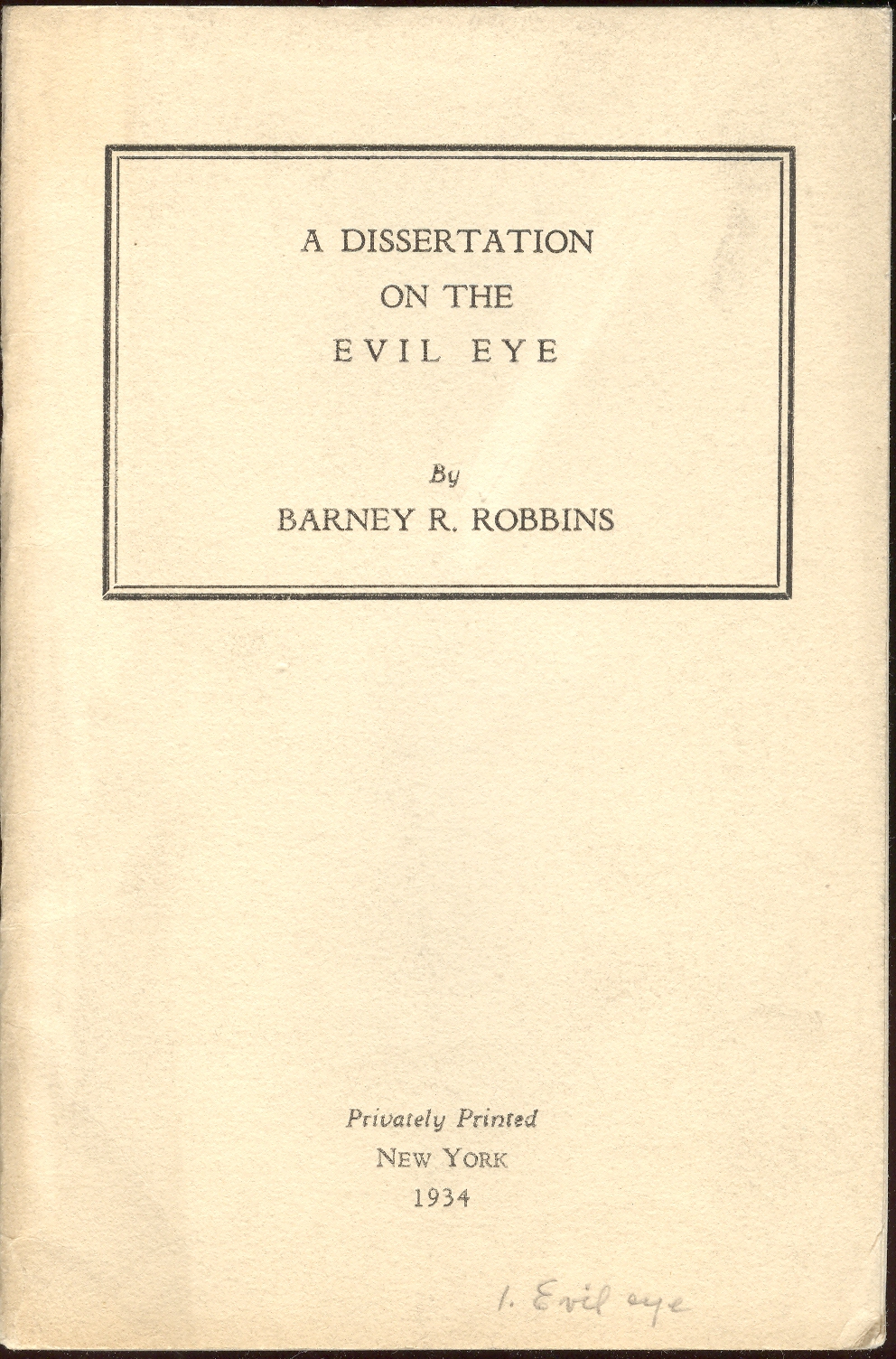
    Barney Robbin’s A Dissertation on the Evil Eye was headed to my category on Icons of Shouted & Mysterious titles—until I started to read it.  It turns out that Mr. Robbins wrote a fine, sort of brightly-written exegesis on the history of evil and its manifestation in the evil gaze—a tough thing to do in 40 pamphlet-y pages and still have lots of references to The Ancients.  He also has a pretty liberal undercurrent towards the authenticity of the Bible, the basis of human history (“our human ancestors lived in savagery during practically the entire existence of the race”), the invention of the convention of privacy in human sexual affairs (and its representation in the OT vs NT), Old Testament superstition, and other varieties of contemporary social mores and their interaction with asceticism and pagan practices. He then deftly slides into the origins of  “the preposterous belief” in and personification/transference of evil spirits, and in religious intolerance of the assumed imagination of the human mind and its role in rapturous misinterpretations of the Bible and the growth of redemptive evil.

    The last fifteen pages are spent solely on the evil eye, and is a pithy statement on how it was “given” in various cultures, and how people protected themselves from it. “They have the plague, and caught it of your eyes” writes Shakespeare in Love’s Labor Lost (V II), and this is the least of it, though Robbins points out that in various cultures you could seal yourself from this ”plague” by spitting, wearing bright colors, collecting and spewing rainwater collected on the 27th of April, cross dressing, keeping a phallic amulet on the body, keeping salt and coal in the pockets of children, blessing wine, blowing smoke into a child’s mouth, and so on.

    Robbins points to Francis Bacon, who wrote: ” It seems some have been so curious as to note that the times when the stroke or percussion of an envious eye does most hurt are particularly when the party envied is beheld in glory and triumph.” And of Robert Heron, who in his travels in Scotland in 1793 wrote : ” Cattle are subject to be injured by what is called an evil eye, for some persons are supposed to have naturally a blasting power in their eyes, with which they injure whatever offends or is hopelessly desired by them. Witches and warlocks are also much disposed to wreak their malignity on cattle. … It is common to bind into a cow’s tail a small piece of mountain-ash wood, as a charm against witchcraft.” And then to Thomas Lupton, who in his Book of Notable Things (1586) wrote : ” The eyes be not only instruments of enchantment, but also the voice and evil tongues of certain persons.”  And so it goes, on and on.  Entertainingly so.

    But there is something of Robbins that doesn’t sit well; perhaps it is his book on the New Testament, or the sniffly jaundiced Immigration and Americanization which form the background for some of the man’s thinking when he veers from liberal interpretations to right-wing political statements.  Out of nowhere comes the following gem:  “Communism is the accursed offspring of the evil eye with all its implications.  It is the collective evil eye of the masses…”

    I think what Mr. Robbins is getting to, ultimately, is the delivery of his belief that savagery has continued for thousands of years and continued to his present, “flourishing long past its day”.  Maybe so.  In any event I found his work to be unexpectedly interesting, and was impressed that he was able to weave such a complicated summation of evil in such a small place. 
    ______
    [Mr. Robbins also lobs in a  few unexpected grenades from the Old Testament, including this healthy reminder from the Book of Proverbs, which he uses in discussing a sidebar he pursues with Noah and the choice of god being evil and 58% alcohol:

    It is not for kings, O Lemuel, it is not for kings to drink wine; nor for princes strong drink; Lest they drink, and forget the law, and pervert the judgment of any of the afflicted. Give strong drink unto him that is ready to perish, and wine unto those that be of heavy hearts. Let him drink, and forget his poverty, and remember his misery no more.]

    *The imagination was also a source of sinful pride (Luke 1:51) and a source for idolatrous art (Acts 17:29), and still present in humans  in spite of the cleansing flood, and in spite of the races of man having been scattered and completely dis-united by Babel.


    It turns out that the Robbins book is rare:  only six copies have been located in OCLC/WordlCat:  Stanford, Harvard, Yale, Chicago, NYPL, Libby Congress (although not the LC any more, as this copy used to be their’s.)

    ·Posted by :

    ·in:


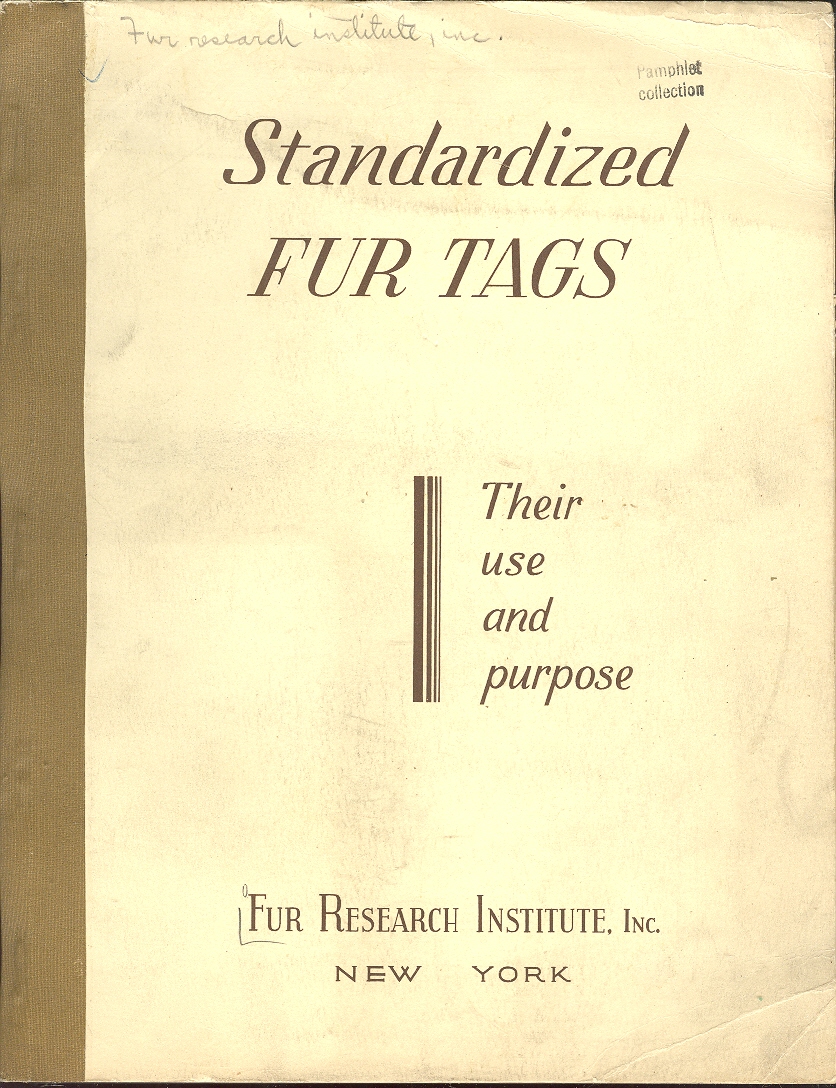
  • Bad Book Titles (and Worse Contents): Cruella DeVille and the Fur of Cats and Dogs, 1938

    JF Ptak Science Books LLC  Post 642  Blog Bookstore

    Blog--jun 8 fur title How
    could one pass up the chance to browse through such a  compelling and revolting
    title such as   Standardized Fur Tags, Their Use and Purpose, (published in NYC
    by the Fur Research Institute in 1938)? 
    Titles like this cry out in equal parts of pity, shame and pride,
    calling to their readers like fur-lined Sirens beckoning to fur-encrusted
    sailors floundering in a fury sea, hell-bent to crash upon fur-slathered
    rocks.  In a world of covering things in
    fur that once belonged to another living thing, the thinking’s all over but for
    the process, pricing and standardization, so that the furriers were less
    inclined to cheat one another and focus on the fleecing of the buying
    public.Blog--jun 8 fur title 001  

     Opening
    this oversized pamphlet reveals the explanation of the fur identified by the
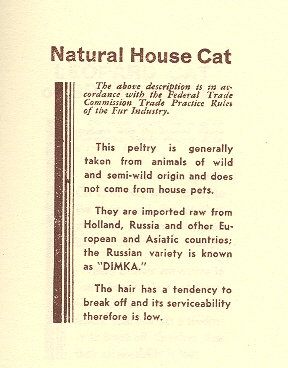
    tags that would appear on the interior-neck of the garment.  There are 125 descriptions and standardization
    of furs, though I must say that what caught my attention first was the fur of
    the “natural” house cat (followed by the “dyed” house cat)—they say that this
    was not an agoraphobic cat’s pelt used to make the apparel, but from cats “wild
    and semi wild”.  Like barn cats, I guess.
    (We are told that the fur “breaks off”, and is not a very good choice for
    outerwear, though it did seem to work for the cat.)

    Blog--jun 8 fur title 002

    Then
    there’s the “dyed Chinese dog” and the “dyed Mongolian dog”—I’m not sure who
    would need pelts made of dog (or cat, or anything else for that matter), but I
    guess that they were popular enough to be included in these furrier  guidelines. 
    And so the list goes on and on: dyed skunk, pieced skunk, natural skunk,
    dyed squirrel, dyed weasel, natural wolf, dyed opossum, etc. 

    ·Posted by :

    ·in:

    — —

  • Bizarre Titles with Real Content: the Fine Art of Squeezing

    JF Ptak Science Books LLC  Post 612   Blog Bookstore

    The Heart is a Lonely Hunter, This Side of Paradise, Revolutions of the Heavenly Spheres, In Praise of Folly, the Divine Comedy,  Pride and Prejudice.

    Sometimes magnificent titles of books deliver magnificent things.

    Blog--may 11--odd 001

    Then there are the uneven, unruly titles hiding great works like Aristtotle’s On Youth and Old Age, On Life and Death, On Breathing; Das Kaptial, On the Origin of Species, Paradise Lost, Brothers Karamazov,  Tractatus Logico-Philosohicus.

    There are badly-titled books that are just bad–we don’t need to get into that right now, wounding the wounded.

    And then sometimes a book title promises a lot and delivers it–but not the “a lot” that you expected.  The Fine Art of Squeezing, god knows, is a title that demands attention.  I thought, well, I’m not sure what I was expecting–possibly it would actually be on squeezing things. (I’ve seen many examples of this sort of bizarre title/content continuity, so I thought it a possibility.)  But  the story here is delivered by the Standard Oil Company of New Jersey and details their properties being nationalized–squeezed–by the government of Mexico in 1938.  It is one of a series of pamphlets, and it evidently sucked up every bit of creativity at Standard Oil:  The Question of Subsoil Rights in Mexico and The Accustomed Practices in Cases of Expropriation and Confiscation are two titles that deliver the contents’ good accurately and dryly.  This singluarly-titled work also has chapter headings that equally lovely and bizarre:  “The Revolutionary Squeeze”, “The Constitutional Squeeze:, “The Concession Squeeze”, “Strangling the Goose “and other fortifies the reader with the possibility of a surreal experience.  It is not, of course–it is a competent and direct summation of Standard’s deal with Mexico. 

    Blog--may 11--odd 003


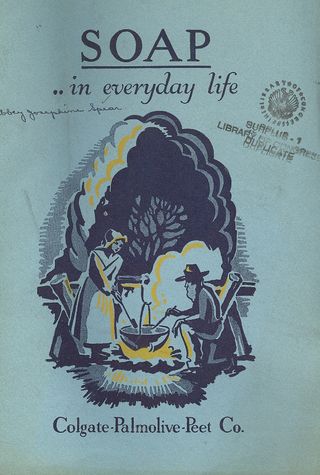
    Soap…in Everyday Life is another one of those lovely naive titles, though it only hides a very accurate and authoritative display of Soap Knowledge, published by the Colgate-Palmolive-Peet Co. The draw to this pamphlet for me stops as soon as you open it.  (It is a happy little soap-making theme on the cover, though.)

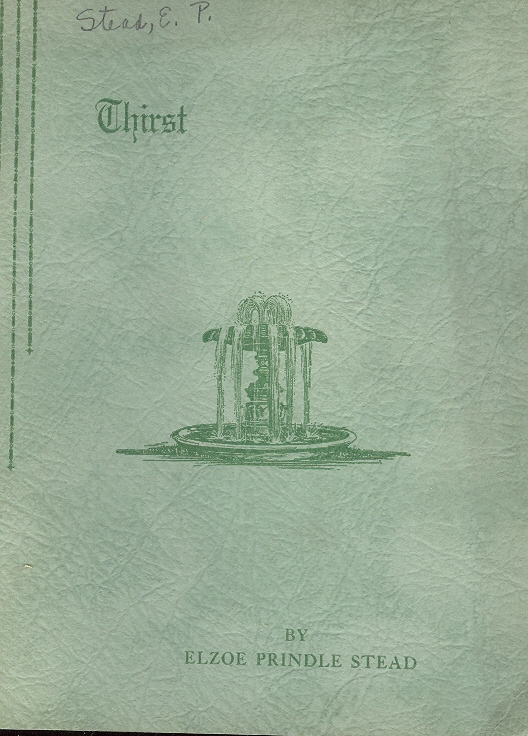
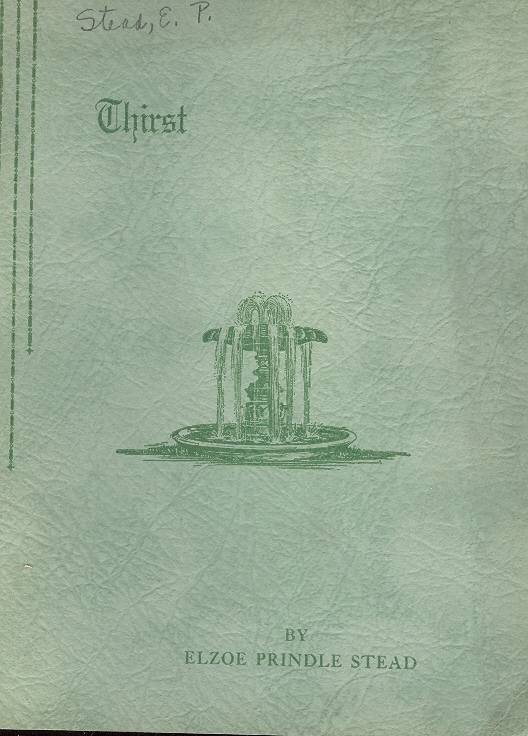
    Thirst is another disappointment–weird title and design, and was written in 1937 (and self-published) by Elzoe Prindle Stead.  The joy of the title is quickly dissolved by the content, with chapter headings such as “Born Once”, “Once to Die”, “Going to Hell”, “For Him of the Second Death”, “Forgotten or rejected Savior”, and “Jesus goes to the Cross.  Its a major proselytizing vehicle which defines itself with the last chapter title, “Why Not”. 
    Blog--may 11--odd 


  • A Short Homage to the Alphanetical Past of Union-Made American Brooms

    JF Ptak Science Books LLC  Post 584
    Blog Bookstore

    I was breezing through what seems to be an innocuous forgotten document:  the 1941 Union Label Catalogue-Directory. It lists the union labels of trades who were part of the American Federation of Labor (AFL), a 32-page pamphlet advising its readers on how to hunt for union-made goods, and to get the union-earned dollar spent with other unions. Even though only 68 years old, the list of unions seems far more antiquarian, the unions and the jobs/workers they protected seemingly from another, earlier time: the Allied Printing Trades, Cigar Makers, Clerks Protective Association, Glove Workers, Hatters, Horse Shoers, Meat Cutters, Pocketbook Workers, Novelty Workers, Sheep Shearers, Stereotypers, Telegraphers, Wall Paper craftsman, and on and on.   

    But it was the broom and whisk makers union label that really struck me. There is something beautiful and sad in this design–the design is lovely as is the idea of the workers who were probably protected by the union; what is instantly saddening is the recognition of the incongruity that such a trade was widespread enough to need protection and organization, and how far gone such industries are. Really gone.  Blog--broom

    Looking through the names on the list of union shops of broom and whisk makers suggests elements for a poem on vanished brooms.  There is of course the Ace Broom Company, and the Acme, and, yes, the American Broom Company; followed by the Amor, Artzcraftz, Baria, Bard, Birminham, Best, Brown, Buckholtz, Burlington, Coleman, Continental, Eagle, Galesburg, Haferman and Hanset, Ideal, Imperial, Lighthouse, Mid-West, Montana, M & M, Mutual, National, Progress, Progressive, Rainbow, Reliable, Rich, Royal, Western, Terre Haute and Zenith.  The “R’s” have the field, hands down. 

    The pamphlet ably describes the design and its color, and where the label appeared on the product.  In the case of the brooms and whisks, it also assured the purchaser that the product was not made by “contract prison labor”.  (I have a prison-manufactured catalog from Angola Prison here that I’ll have to write about some day–published in 1937, it was glossy and thick, offering hundreds (?!) of items for the office and home, but mostly heartpine and heavy oak goods for white collar consumption.  The scale of the operation is pretty surprising to me.)

    I like the whole idea of the handshake, the square deal, the care in the construction of the broom.  I just looks right.  And as you well know a good broom is a thing of beauty–it will do its just correctly and last forever.