A Daily History of Holes, Dots, Lines, Science, History, Math, Physics, Art, the Unintentional Absurd, Architecture, Maps, Data Visualization, Blank and Missing Things, and so on. |1.6 million words, 7500 images, 4.9 million hits| Press & appearances in The Times, Le Figaro, Mensa, The Economist, The Guardian, Discovery News, Slate, Le Monde, Sci American Blogs, Le Pont, and many othr places… 5000+ total posts since 2008.

Category: Tech-Quiz

  • Tech Quiz: an Elevation of an Elevation (1880)

    JF Ptak Science Books   Quick Post

    This is just a lovely little mechanical drawing that I found in the pages of the 5 May 1880 issue of the Comptes Rendus de l’Academie des Sciences and I decided to share it. The Comptes Rendus is a very old workaday maintstay in my job, and I have become very familiar with it over the years, and in its great heyday in the 19th c it published all manner of scientific events over many disciplines, and at the highest level for each field. I’ve never really paid too much attention though to the illustrations in the journal as general “art” as I have done with other journals (like the Annalen der Physik)…why, I don’t know. In any event I was working on a two-part Pasteur paper in this volume and noticed this elevation of a “siphon” for Napoleon’s canal Saint-Martin, which is just about at the center of old Paris. 
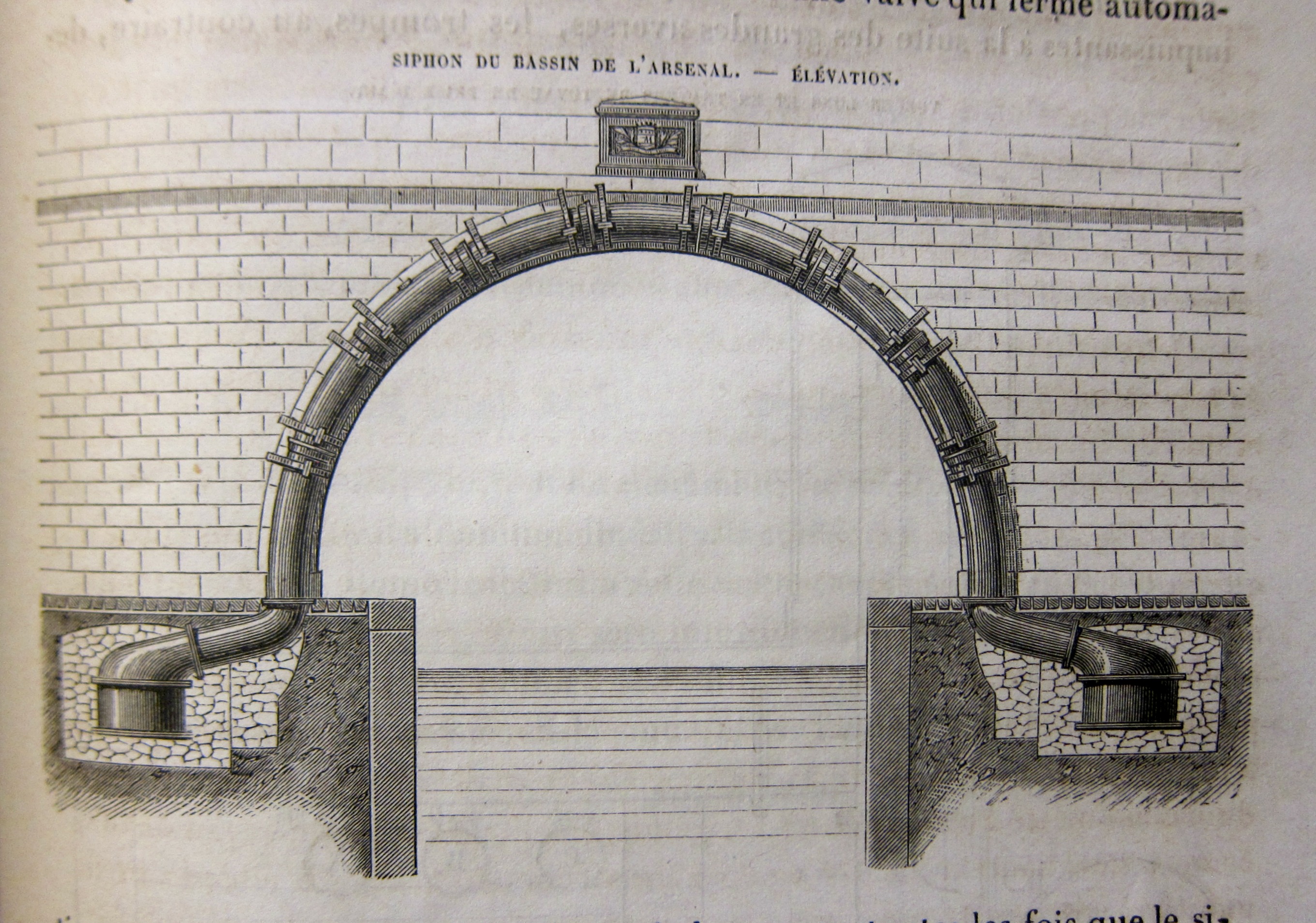
    SciArt CR 1880 Siphon

    The structure does look a little like a headphone, and as pretty as this is, it subject matter wasn’t. This is a sewer line that would allow the sewage and etc. to flow over the canal along the arch of a bridge…which makes this an interesting problem. I mean, it is a necessary and important thing, dealing with waste, and that is exactly what this pipe was all about. 


  • The Department of “What is It?” #5 (1923)

    JF Ptak Science Books      

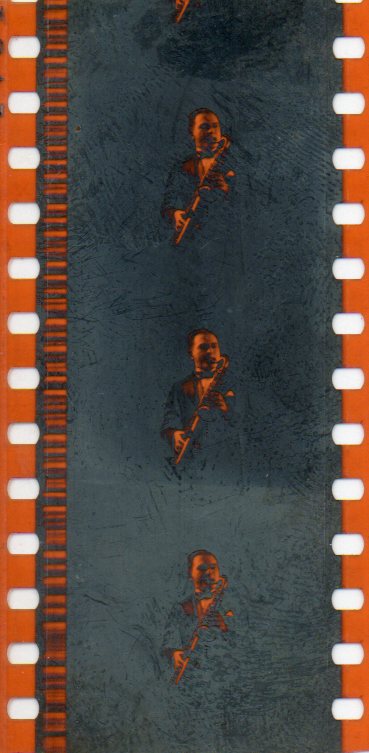
    So, this is clearly film of some sort, and seems to be a picture of something, but a picture of what? This is a positive of a negative, and the major hint here is that the year it was made was 1923. 

    Talkie detail


    Answer below:


  • A Cuirous Display of What-is-It?

    JF Ptak Science Books   Quick Post

    Curious print219

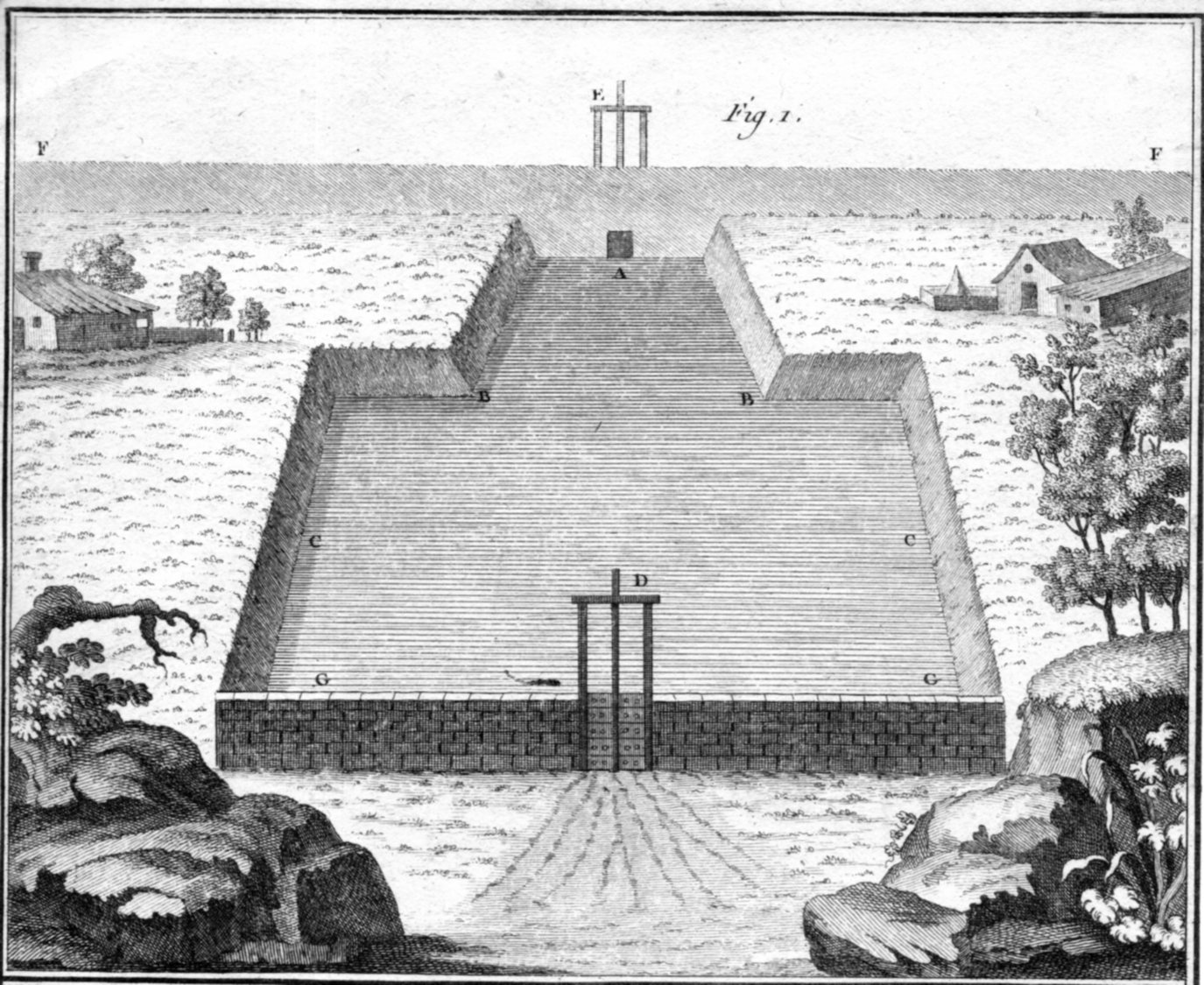
    There haven’t been many entries in the “Tech Quiz” category for this bl, and today’s addition really isn’t all that techy, though it may be–it is definitely a what-is-going-on-here image, though.

    I saved this a long time, and it has been mostly lost in archives more so than found, but here it is–except that I do not have a good hold on the “is” part of that statement. I suspect it is French and late 18th c, which puts it at about the time of the Diderot encyclopedia.  It seems as though this may be a design for some sort of fishing operation–the wall in the background may be a dyke with a sluice (?), or it may be a part of another irrigation system. Most of the structure seems anti-structural per se, the thing being mostly a dug-out, though it does look like there is a wall in the foreground. 

    I am not sure.

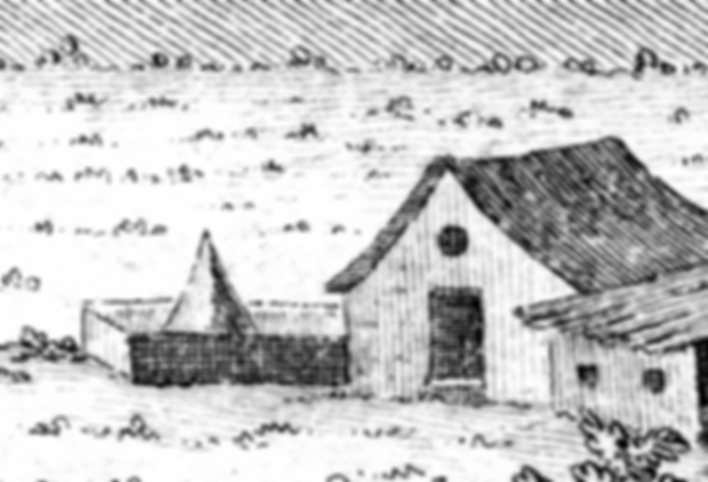
    Also, what is the pyramidal thing in the yard of the building at the upper right?  Everything beyond the drawing of the structure is filler material, and a house would have been as much filler as a house with a pyramid, so why is that pyramid there? 

    Curious print220

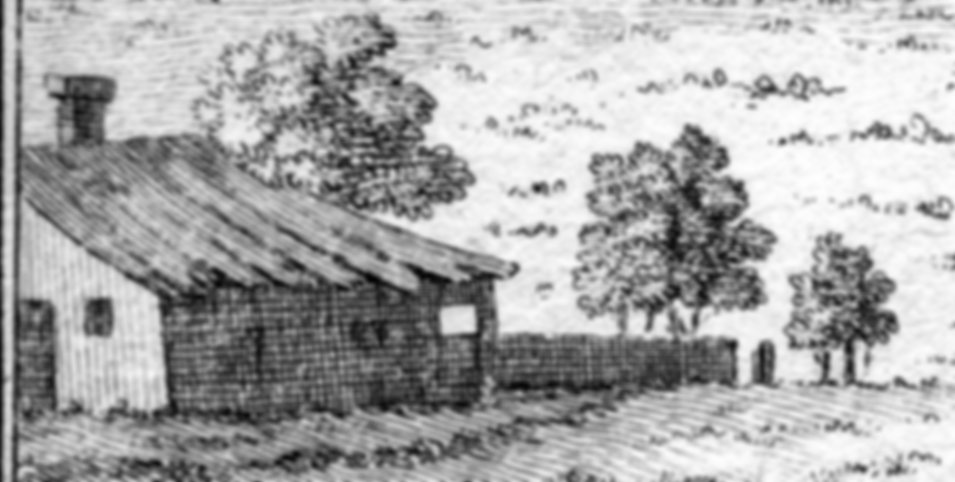
    And what about the other house?  What’s going on with that roof? And what about that post at the end of the fence? It is an open gate, or a solitary post?  What?  These are tiny (1-3mm) details that could easily have been excluded, but they were included for a reason beyond what I can probably know–perhaps it was as simple as the engraver indulging himself with some late night doodles to make the work a little more interesting and to invest it with some personality.

    Curious print221

    Anyway, if the ghost of the anonymous engraver is listening, I would like it to know that we see your “stuff”. 

    ·Posted by :

    ·in:


  • A Picture of Sound, 1923

    JF Ptak Science Books  Post 2350                                                                                              The What is It? series

    Talkie detail


    Talkie383

    [Source: author’s collection] 

    This is a three-frame snippet from what is evidently among the first true talking motion pictures. It was engineered by Lee de Forest (1873-1961, inventor of the first triode vacuum tube, the Audion, in 1906, earning him the sobriquet of “the Father of radio”) and shown in NYC in December, 1923, which was nearly three years ahead of what is commonly thought to be the first ‘talkie”, the Al Jolson vehicle The Jazz Singer (1926).  Although not truly a first/first, The Jazz Singer was certainly the first mass-distributed talkie, and the first monetarily successful one.  The de Forest film was a sound-on-film motion picture, which represented the culmination of efforts to reproduce sound in the movies by many different practices, none nearly as successful as synching up the sound/film so that there was no displacement between the two.  Here wwe see the sound as the horizontal bars running along the left-side of the film, which in effect is the visualization of the medium of the movie industry to come. (The attempts at sound motion pictures are almost as old as the pictures themselves, the earliest version being simple recordings of the audio on a disk, then played along with the showing of the movie in two different systems.  Compared to nothing at all, these advances were very notable, especially if the timing between the two elements wasn’t off by very much.  These of course failed entirely in the face of the sound-on-film advancement.)  

    The breakthrough by de Forest turns out to be one of those stories where the inventor and brains behind the technological advance tries to implement and market the thing themselves, only to fail at the economic aspects of a great invention.  

    Film from the estate of Harold Sunde (1910-1991), who was responsible for the explanation and demonstration of the RCA “Photophone” invention–one of the earliest simultaneous sound-on-film recorders and projectors, and introduced the machine to England and Russia, where true sound-on- film motion pictures were seen for the first time.  

    ·Posted by :

    ·in:

    —

  • Tech Quiz: Oblivious/Careless Chaos-Catcher, 1894

    JF Ptak Science Books   Quick Post      Tech Quiz/What is It? series

    This is an addition to the infrequently-seen What is It? series of this blog…

    Okay, so I’ve given it away in the title–if not for that, this wouldn’t be a very obvious contraption, would it?  

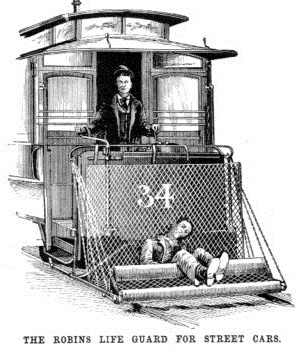
    People catcher detail

    There must have been a lot of people who had a problem with street cars in the 19th and early 20th centuries because in my meanderings through the Scientific American I have seen quite a few suggestions for dealing with the pedestrian vs the heavy moving metal problem. Many of them have to do with the humanified locomotive cow-catcher–that is an apparatus that would somewhat safely scoop up the unfortunate pedestrian before they became very fatally unfortunate.  Here’s just one example, found in the February 3, 1894 issue:


    Pepople catcher380

    Neither the scoopee nor the scooper look pleased.  

    This problem is better illustrated by an early film of street traffic–it is amazing in a way that the orchestration of non-fatalities is so seemingly superb, the coercive element of the destruction of liminal space pretty well hidden in the seeming confusion. 

     [Via youtube, “From trolley, down Broadway and Union Square. Street scenes, stores, crowds, carriages.–Early 1900’s”]


  • An Electrical Thermometer and its Problems (1881)

    JF Ptak Science Books  Quick Post

    [I apologize for the fuzziness at the top of the image here but I couldn’t get the volume of Nature flat enough on the scanner to avoid the degradation.]

    In the wonderland world of early applications of electricity to anything comes this marvelous image of an electrical thermometer from Nature for March 17, 1881.The original image is only about 3″ tall, and I could not resist reproducing it in what is almost a 1:1 ratio. As pretty as it was/is, the implementation was a bit of a picture of a soggy sandwich.

    Electrical thermometer072

    Evidently the platinum screws running up the side of the thermometer (at every 3 degrees, though it could be refined to <1-degree increments), were connected to an alerting operator like a bell or some such thing.  That way, if something was being heated to a certain temperature and the temp changed, an alarm would sound, and the whole process could be viewed remotely.  Why this would be necessary I am not so sure–even the author admitted that the whole thing would be very cumbersome with the large number of insulated wires being tracked into the observing station.  In any event, the image is striking, if not the idea.  

    ·Posted by :

    ·in:

    —

  • An Unusual Look at the World by Lord Kelvin, 1880

    JF Ptak Science Books   Quick Post

     The great Sir William Thomson, Lord Kelvin–one of the leading lights of the physics world of the 19th century and a man who worked deep and wide and over and under and around and through many different fields–contributed the following bit of unusual and interesting thinking. It came at the Swansea Meeting of the British Association (1880).

    ·Posted by :

    ·in:


  • The Most Beautifully Oddly-Named Washing Machine?

    JF Ptak Science Books   Quick Post  
    Follow Me on Pinterest

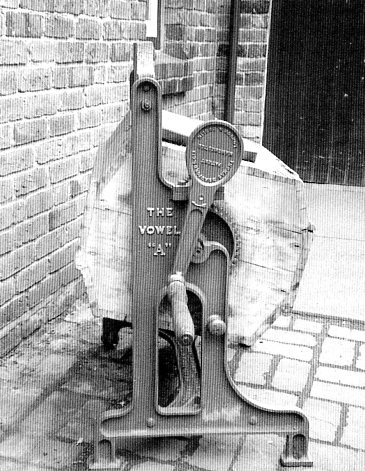
    Washing machines no doubt have been called many things, and they have been named after many great concepts and desires–but I think in the history of naming household appliances, the popular washer produced by Thomas Bradford & Co Laundry Engineers (High Holbron, London and Cathedral Steps, Manchester) in the last part of the 19th century may have had the oddest of them all.   It was the Vowel A–the “Vowel” being the washer and the “A” being the model.  But, still–that was the name of the machine, and it has a definite flavor of the Absurdist to it. Vowel A331

    Which is a detail in:

    Vowel A330
    [Source:  Una Roberston, The Illustrated History of the Housewife, 1650-1950, St. Martin’s Press, 1999, pp 86-87.]

    There was also the Vowel Large E and the Vowel Y–the “A” seems the best of the lot though, for simplicity and symmetry. 

    These washers were evidently great aids in the kitchen delights department, and provided for no disappointment. 

    ·Posted by :

    ·in:

    —

  • Tech Quiz: The Tooth Telephone? (1880)

    JF Ptak Science Books  Quick Post

    This device looks a little suspect, but it isn’t. Well, on first sight of the patent drawing this device seemed dubious and quacky, and since the patent office issued some-number of patents for quackery, it was entirely plausible that this was one of those beasts.  This is the kind of quackery beasty that would latch on to a new discovery or invention and somehow derive and twist the name or concept of the new thing into something fabulous or miraculous (as with the case of  radium suppositories and x-ray massages for the bones).

    The device is a vibrating element to help people with hearing loss hear conversations on the telephone. On reading the patent though it becomes pretty clear that this thing could work, or should work, depending upon the hearing loss of the receiver.  Patented about four years after the Bell patent, there were nearly immediate reports on Mr. Fiske’s invention in Scientific American, The Electrical Journal, and Engineering (seen below). 

    ·Posted by :

    ·in:

    —

  • Tech-Quiz–What is It? (#7, 1893)

    JF Ptak Science Books   Quick Post   [Part of the Tech-Quiz series.]

    Generally with these questions I provide a detail of a patent drawing and from that the application is supposed to be derived.  Here, though, is the full drawing, and is seems pretty straightforward, I think, though the ultimate use of the contraption might not be so obvious.  Or perhaps it is?   What was the intended purpose of this object?


    Answer in the “extended reading” section, below: