JF Ptak Science Books Quick Post
Or is it a round hole fitted around a square peg? And what is it that is patentable about what follows?
Answer in “continue reading”, below:
A Daily History of Holes, Dots, Lines, Science, History, Math, Physics, Art, the Unintentional Absurd, Architecture, Maps, Data Visualization, Blank and Missing Things, and so on. |1.6 million words, 7500 images, 4.9 million hits| Press & appearances in The Times, Le Figaro, Mensa, The Economist, The Guardian, Discovery News, Slate, Le Monde, Sci American Blogs, Le Pont, and many other places… 5000+ total posts since 2008.
Contact johnfptak at gmail dot com
JF Ptak Science Books Quick Post
Or is it a round hole fitted around a square peg? And what is it that is patentable about what follows?
Answer in “continue reading”, below:
JF Ptak Science Books Quick Post
This was a major piece of early thinking on spread spectrum communications and frequency hopping–butter for the bread (or bread for the butter?) of wireless communication–with the piano roll tapes replaced by electronics. The idea didn’t go anywhere in 1942–it did, however, go far, beginning in the late 1950’s. The major name listed on the patent report is a major name, but not in this form, and not in this area–some might find it very surprising to know the more popular version of the inventor’s identity, and the industry in which the inventor worked.
H.K. Markey and G. Anthiel produced this:
Hint: the “H.” stood for
Answer, in continued reading, below:
JF Ptak Science Books Quick Post
This forms the absolute end of something, the “tip” of it, one of two, at the either end of slender cord. Even for this there must be a patent–and there were, evidently, many of them. This is just one, from 1922
Answer in the continued reading section, below:
JF Ptak Science Books Quick Post
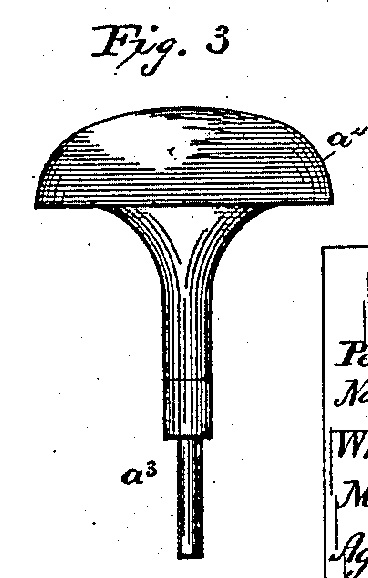
This is one of the most important hole punchers in the history of holes, and also in the history of counting and figuring out what to do with counted things. Do you know who filed this drawing as part of their patent report, and what famous contribution this thing made?
JF Ptak Science Books Quick Post
The original patent for this tube-and-rod design was made at the Danish Patent and Trademark Office in Copenhagen on 28 Jaunary 1958 at 1:58 p.m. The design could be for an associated cooling system for a steam turbine; or for a high-pressure/reactive clutch of passes and cylinders for a water turbine hydroelectric facility; or perhaps it was for a modern prison system utilizing water-filled bars for prison cells that could indicate a possible jail break if any leaking water was discovered, making tampering with the bars an impossibility.
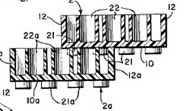
What’s your best guess? (Answer below.)