A Daily History of Holes, Dots, Lines, Science, History, Math, Physics, Art, the Unintentional Absurd, Architecture, Maps, Data Visualization, Blank and Missing Things, and so on. |1.6 million words, 7500 images, 4.9 million hits| Press & appearances in The Times, Le Figaro, Mensa, The Economist, The Guardian, Discovery News, Slate, Le Monde, Sci American Blogs, Le Pont, and many other places… 5000+ total posts since 2008.

Category: Questionable Quidity

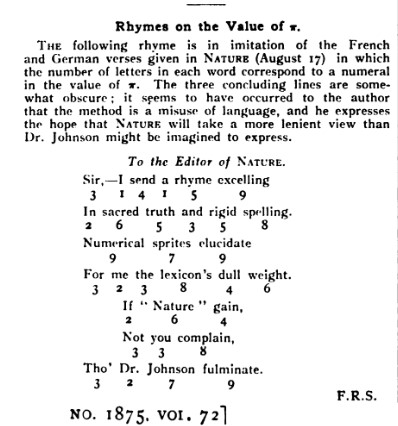
  • Rhymes on the Value of Pi (1905)

    JF Ptak Science Books   Quick Post


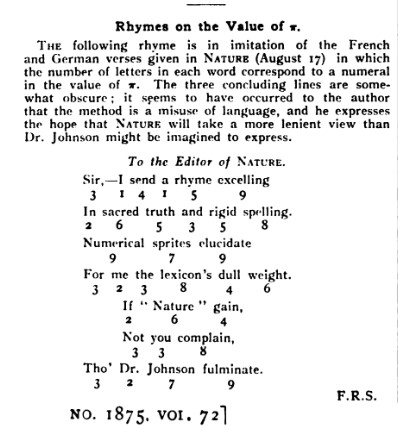
    Nature 1905 Pi rhymesHere’s an interesting little aside from the 1905 issue of Nature–the notice is a great example of what made this one of the most interesting science journals in the modern period, as they were not adverse to including some lighthearted and thoughtful pieces along with their very concise and exacting coverage of science news and discovery.  Here we see a reader contributing a poem based on the value of pi: they used the number of letters in the poem corresponding to the number in pi: so, 3.1415 meant that part of the first line had words of 3 then 1 then 4 the 1 letters/word. This is a little more difficult than it looks, and harder still I think to have something decent come of it as Haiku.


  • Using Darwin to Sell Stuff–an Early Appearance of Marketing Darwin (1877)

    JF Ptak Science Books  Quick Post

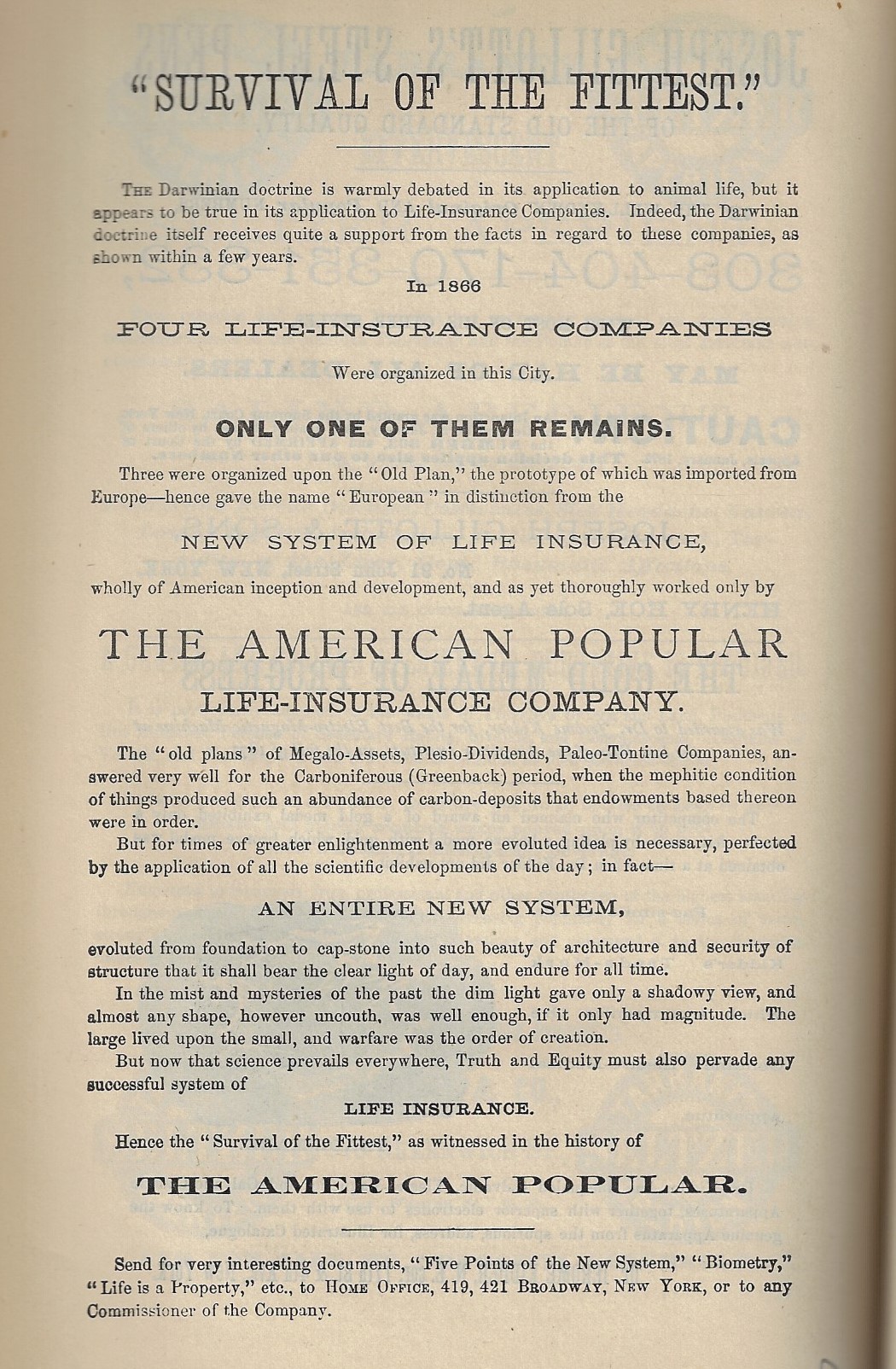
    I can’t be sure of where this stands overall, but it certainly seemed to my reading over the last x-yearsx that using a quote or idea from our Mr. Darwin to sell something in the first decade or two after the publication of On the Origin of Species…. is a rare thing. So seeing this ad in the back of the volume of Popular Science Monthly (1877) was really surprising, as it was taking the phrase we find in Darwin to sell the long-lasting qualities of a life insurance firm.  (Well, the phrase actually starts out with Herbert Spencer as he was influence by OTOOS, writing it to express an idea in economics in his Principles of Biology in 1864; Darwin himself adopts it in Variations of Animals and Plants under Domestication in 1868 and then in the fifth edition of OTOOS in 1869. I’ve included a lengthy quote from the Spencer, where the phrase turns out on page 444.)  I do have a recollection of a drawing in Punch of a crying Mr. Darwin in a quarter illustration promoting kindness to animals or some such…but offhand there’s no memory of using the man/ideas as a sales vehicle before this. Again, that’s not my field so I may be missing a lot–if you know of other ads like this please let me know.  

    Pop Sci Mo 1877 survival fittest full


  • The Voltaic Armadillo, Electric Earth, and Invisible Reverse Double Dandruff: Quack Medical Ads, 1877.

    JF Ptak Science Books  Quick Post  (An entry in the category of Questionable Quidity)

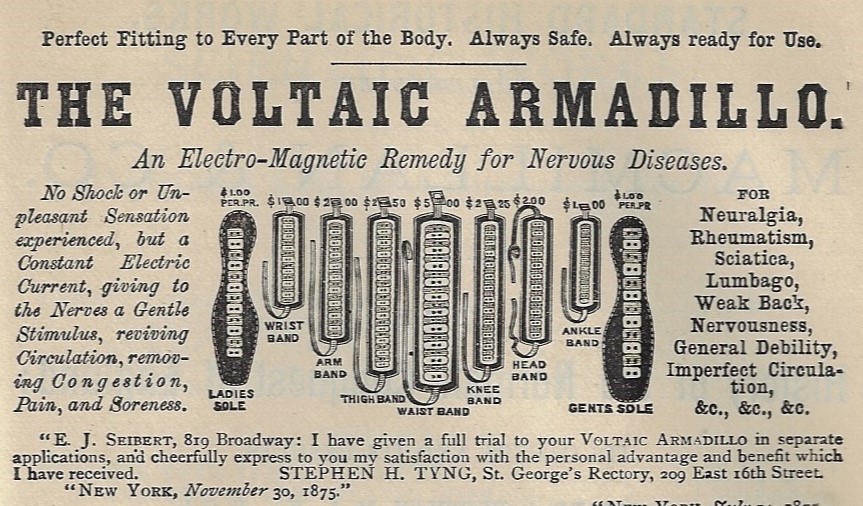
    The Popular Science Monthly (today known as Popular Science) was founded in 1872 and treated all manner of scientific/tech subjects for the general reader–most of the time very successfully, though sometimes not-so-much.  The issue at had for August 1877 had a number of interesting articles, but my attention was stolen away by a pair of ads in the back of the journal. Remember that there were few (if any) regulatory agencies for advertisements on scientific and medical subjects, which means that people were left to their own devices and internal customary ethics, which were sometimes abided and sometimes not.  What I found were two half-page ads for electrical cure-alls, battery-driven devices that were supposed to be a cure and a dependent for just about all things, from dandruff to neuralgia, or the twists or tremors, triple-reverse invisible exuda, marble mouth, inverted feet, and so on. These devices could fix anything because they fixed nothing.  The ads were striking, as you can see:

    Pop Sci Mo 1867 voltaic armadillo detail

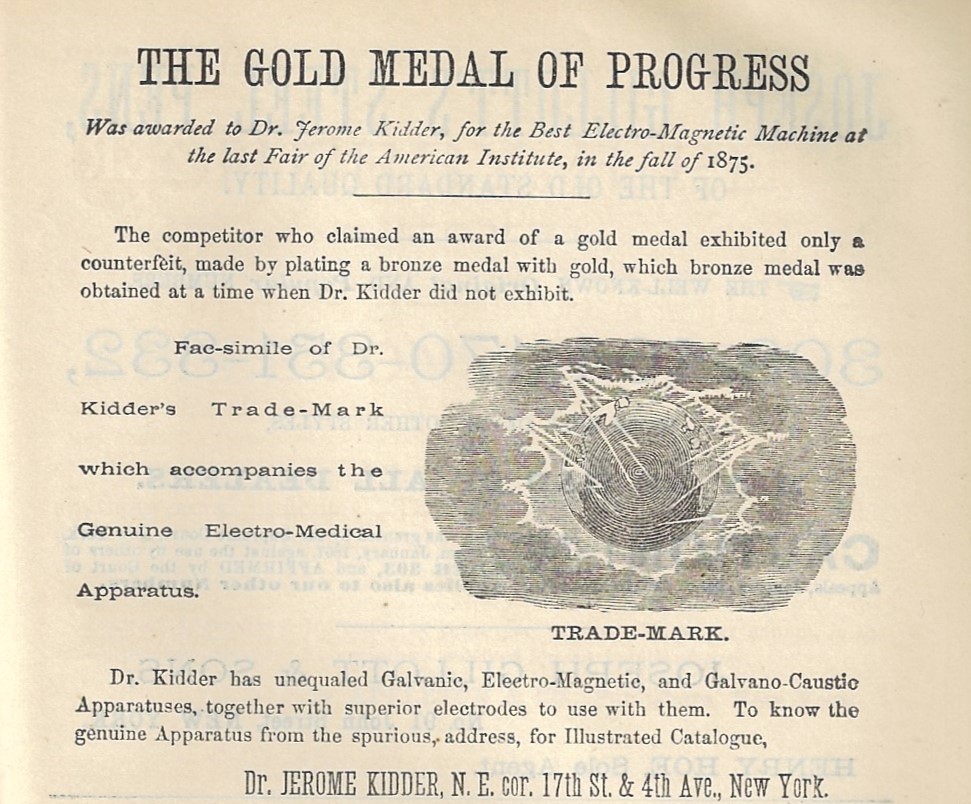
    A few pages away the “galvano-caustic” entry by Dr. Jerome Kidder, who both tried to sell his stuff and protect himself from impostures in the same ad. It was the Kidder trademark of the electrical earth surrounded and beset by a field of electrical-something bits and bobs that attracted my attention:

    Pop Sci Mo 1877 Kidder

    There were other ads in the 1877 volume, though these were the only two of real Charlatanesque sub-virtues.  

    ·Posted by :

    ·in:


  • Questionable Quidity: “A very unexpected feature of war-time has been the decline of insanity” (1918)

    JF Ptak Science Books  Quick Post

    Among the many unexpected sentences that Prof. J.A. Lindsay1 (1856-1931) writes in his article “The Eugenic and Social Influence of the War” (in The Eugenics Review, volume X, No. 3, October 1918) are the following:

    “A very unexpected feature of war-time has been the decline of insanity.”

    And

    “… that war, fruitful though it is in shock cases and neurasthenia, does not increase, but may even tend to diminish, insanity.”

    I’ve included the two long paragraphs in which they occur, below, and also provide a link for the full article.

    Of course this makes no sense as it stands, but there it is.

    Dr. Lindsay’s article is followed straight away by Charles Darwin’s son, Major Leonard Darwin, who wonders about the eugenic survivability of the war in his “The Need for Widespread Eugenic Reform During Reconstruction”. 

    Eugenics as a way of life was in its heyday at this point, though its demise was approaching, and its ideas (for far as establishing it as a field of intellectual study) discredited in the next decade or so, even though the journal The Eugenics Review would survive into 1962. 

    Here are the quotes (bold mine):

    ·Posted by :

    ·in:


  • 10,000 Windows Filled with Cigarettes (1938)

    JF Ptak Science Books   Quick Post

    American tobacco _3_

    Vincent Riggio (1878-1960) was a classic rags-to-riches story: Sicilian-born, lower East Side, quit school to work, opened barber shop on 117th, etc., and by 1947 was one of the highest paid execs in the country at $484k/yr., heading up sales for the American Tobacco Company.(Its hard to translate this wealth, even after fiddling with CPI—at the time though 30 million of the 39 million families in the US Census for 1950 made less than $5k/yr.)

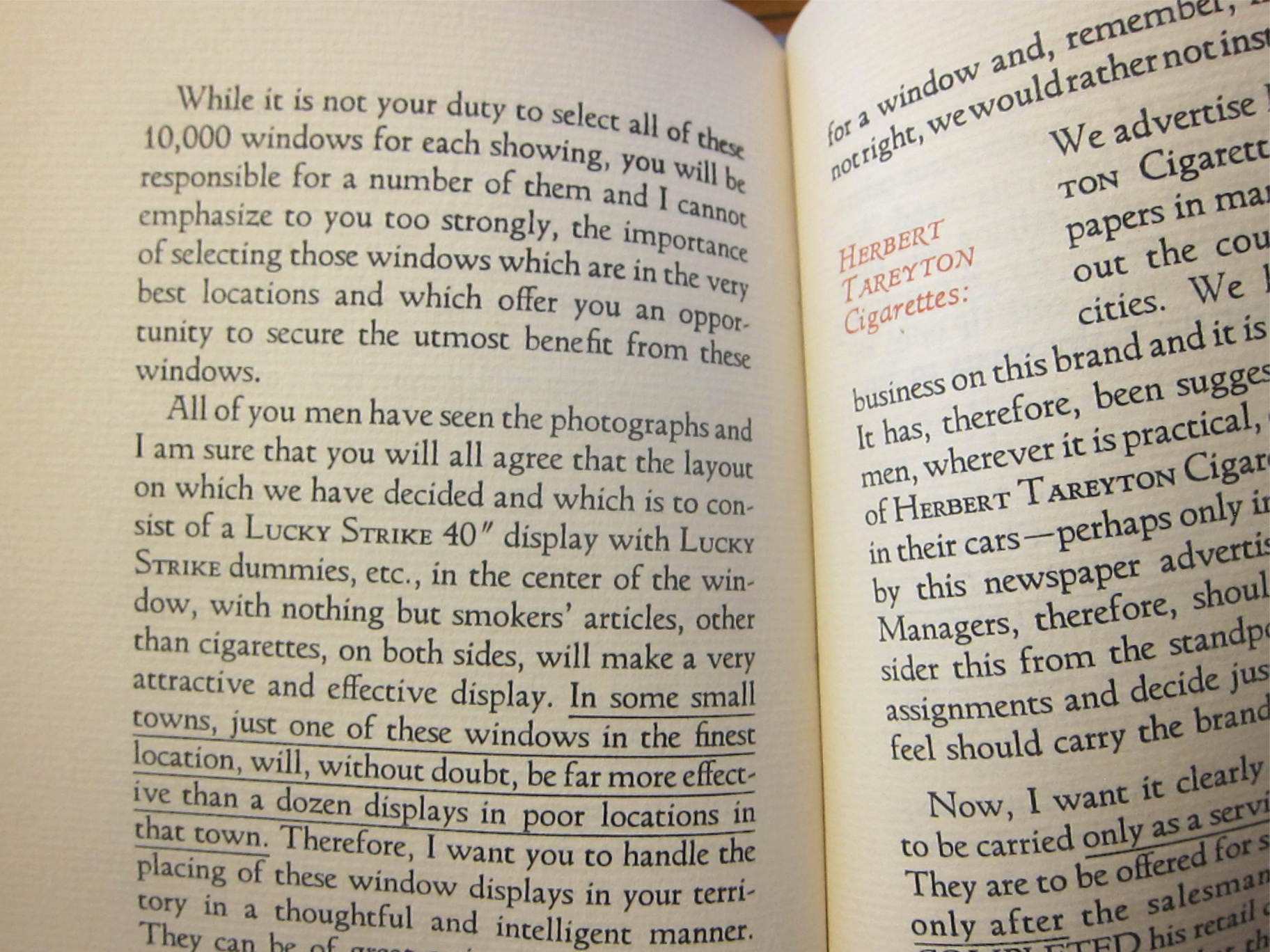
    Anyway Riggio wrote a Christmastime book1 in 1938 on “Sales Organization” for the ATC, a piece of boosterism and a how-to for sales of cigarettes and the beauty they represented. One part that stopped me was the instruction on filling “10,000” windows in high-traffic areas with ciggie displays.  There were 93 cities in the US with 100k or more population in 1930 (105 in 1940, 50 in 1910, and 68 in 1920) so even if the windows concentrated on the big cities that’s 100 big windows (think classic giant window displays busy intersection) per each of the 100 cities. That’s in addition to massive amount of print ads and radio/sporting event sponsorships. (And remember the print ads used movie stars, doctors, lawyers, Santa, sports figures, and so on, plus the combination of the cigarette with the possibility of expressive manhood AND sexual allure.) These folks got their message across, which was too bad. 

    And for the record ATC was founded in 1890 by Buck Duke, and was one of the original 12 companies2 comprising the first index for the Dow Jones averages (1896). ATC was busted3 in 1911 as a monopoly, after which it became a simple oligopoly.

    Notes:

    1. Riggio, Vincent. American Tobacco Company, Sales Organization. Printed by ATC on fine laid paper. 7”x5”, 61pp. Embossed cloth.  I can’t find this in WorldCat/OCLC.  

    2. The twelve companies included American Cotton Oil, American Sugar, American Tobacco, Chicago Gas, Distilling & Cattle Feeding, General Electric, Laclede Gas, National Lead, North American, Tennessee Coal & Iron, U.S. Leather preferred, and U.S. Rubber.

    3. United States v. American Tobacco Company, 221 U.S. 106 (1911), “…which held that the combination in this case is one in restraint of trade and an attempt to monopolize the business of tobacco in interstate commerce within the prohibitions of the Sherman Antitrust Act of 1890.”–Wikipedia


  • Outsider’s Guide to 57 Things that Weaken America (1923)

    JF Ptak Science Books  Quick Post   From the series on Questionable Quidity

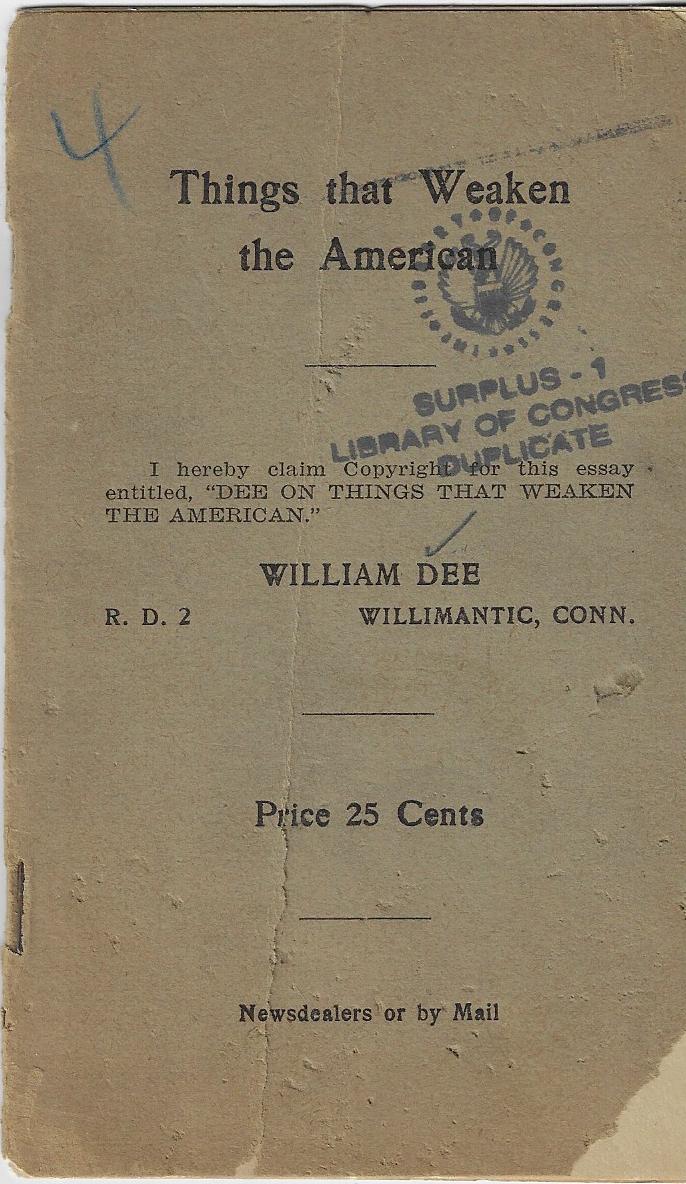
    Books covers things that weaken americaWilliam Dee, of Willimantic, Connecticut, set out in 11 pages his 57 complaints of Things That Weaken America. Some of them are actually more or less relatively maybe sometimes semi-correct with qualifications, others not so, and still many others being most definitely anti-correct. Some bits are straightforward and make no argument or explanation, as with the entries for artificial teeth (“remove them after eating”), tragedies (“avoid them”),  and city living (“is unnatural”). Others are more expansive and inscrutable, as with the entry that rails against a vegetarian diet, ending with the need to sleep alone so that your bedmate does not draw off your vitality with their magnetism.  The short and skimpy pamphlet has a sort of Devil’s Dictionary feel to it, though without the barbed wit and insight and artfulness. Why Mr. Dee stopped at 57, and why he didn’t really address anything that really threatened the United States, I do not know. 

    The writer strikes me more a 19th century person than a 20th c–perhaps he was born in 1863, which means instruction from his parents were probably taken from their 18th c parents, and the sentiments of the newness of the 1880s and 1890s just never gave way to the modern age. And maybe not.

    Here are other examples (spelling, grammar, and etc. as found in the original):

    • City Living: “Is unnatural.”
    • Artificial teeth: the only advice was to “remove them after eating”.
    • Exercise: “Hurtful to those whop are already over-exercised, by 100 times, from modern efficiency.” (?)
    • Night-time work: “Good for night-hawks, but bad for honest workmen. It is another short cut to the poor house.”
    • Steadily Working: “This gives no chance for the workman to rest and become his original self again” In lieu of frequent vacations, “take two hours’ rest at mid day.”
    • Doctors: “Some doctors have been known to keep their patients ill for income.”
    • Choir singing: “People who are not making a living at it should avoid it.”
    • Unfortunate marriages: “Have a reliable physician examine both for perfect health and avoid hell on earth…”
    • Sentimental music: “It weakens the body.”
    • Graduation exercises: “A strain on the strongest and a set-back to others. Unnecessary. Abolish.”
    • Too Ambitious: “Causes too much draft on the vitality.”
    • Public Opinion: “Bad if against you.”
    • Too Much Work: “Four hours in 24 is enough for Ford efficiency. Have frequent vacations.”
    • Vegetarian Diet: “Avoid it.” Also, without explanation: “Sleep alone to be sure that the larger oneis not drawing on your vitality by a more powerful magnetism”. 
    • Weakening Dreams: “Very bad.”
    • Love: “Very weakening. Marry the girl.”
    • Houses: “They should be small to be easy to burn in case they become infected by germs.”
    • Polluted Water Veins: [Too long and odd to transcribe.]
    • Psychological Illness: “Keep away from sick people if you are troubled.”
    • Strains: “Avoid them.”
    • Hard Study: “Avoid as much as possible.”
    • Tragedies: “Avoid them.”
    • Home Talent Shows: “Utterly ruinous to those who work for a living.”
    • Piano and Organ Playing: “Mental and nerve burden. Avoid. Health is better than music.”
    • Love Letter Writing: “Very bad. Marry the girl.”


  • Drinking, Drugs, and the Gold Cure (1891)

    JF Ptak Science Books   Post 2729

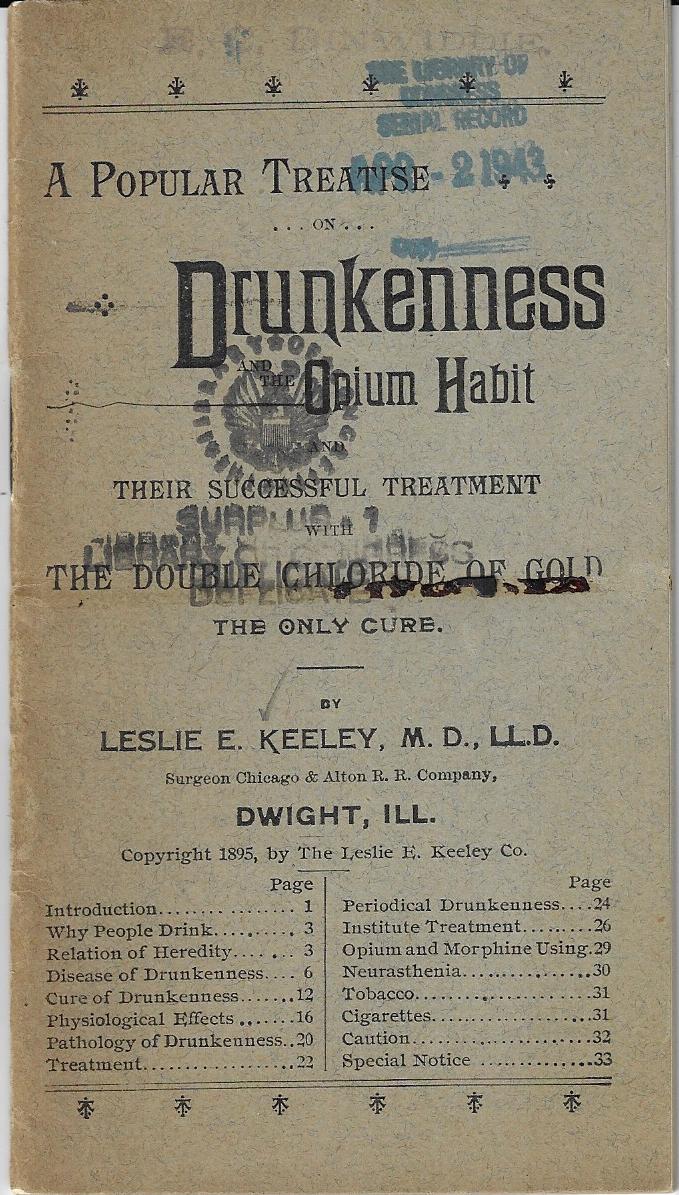
    Gold cureLeslie E. Kelley (1836-1900) was a doctor, lawyer, and a Civil War surgeon who opened his own surgical practice and stayed at it for a couple of decades before coming upon the idea of a cure for alcoholism. Seen through the lenses of his patented gold cure for alcohol addiction I think there is little room other than to see him as a quack1 (if not an uncommon one) in the history of medicine–he was however somewhat significant in this cure venture in that he was an early figure in describing alcoholism as a medical disease. People who stayed for weeks at one of the Leslie’s cure institutes were weened away from drink and given treatments including the double chloride of gold tonic, something that was shown to be “27.55% alcohol plus ammonium chloride, aloin and tincture of cinchona but no gold”. The patients also received dozens of hypodermic injections which were shown to be combination of “sulfate of strychnine, atropine and boracic acid” –(Wikipedia)   

    Dr. Kelley ran a persuasive campaign, with bulging results, with over 90 franchised Kelley institutes by 1893 and gin-blossoming to over 200 soon afterwards (data from Wikipedia).

    (Joe Nickell writes for the Center for Inquiry that “…the result of Dr Keeley’s medicines was to make patients experience fear, confusion, vomiting, and dizziness, among other ill effects” which may have induced or trained them into associating those symptoms with drinking. (See http://www.centerforinquiry.net/blogs/entry/historic_gold_cure_for_addiction/)  The remedy/cure of course did not work–and so far as how this was supposed to work to cure alcoholism, I do not know. The only thing that evidently did work was restricting and then eliminating the consumption of alcohol at the clinics. 

    Kelley claimed huge success; after some time, there was a big difference of opinion on his success rates. It was finally admitted that a large percentage of the “cured “ alcoholics going through his clinics relapsed–though there was an enormous draw-back to this admission. The brilliant and diabolical move from the Institutes’ part was to claim that those who were cured were cured even after relapse, as the return to drinking was a choice rather than the cured medical necessity.Redefining terms (and in this case, all terms) in language suitable to a specific goal is the penultimate defense before failure (the last line being simple denial).

    The last Kelley Institute to close did only in 1966, back in the small town where it all started, in Dwight, Illinois.

    The infallible, never-failing cure was said to also prove indispensable in curing tobacco and opium addiction.

    Notes:

    1. “A 1908 article in the Illinois Medical Journal stated that ‘Leslie Keeley was a common, ordinary quack with a useless remedy which made good by advertising and catching suckers’.”–Wikipedia


  • The Car That Makes the Threat of Atomic Attack “Lose Some of its Menace” (1953)

    JF Ptak Science Books   Post 2687
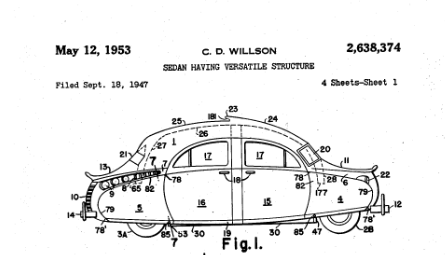
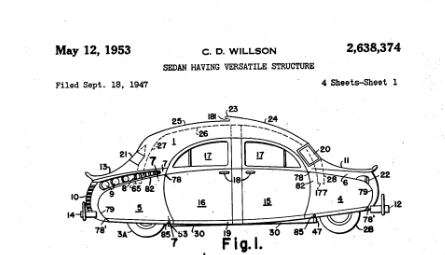
    Patent Atomic bomb car `953When i was a kid I watched a marionette-action show called Supercar–it had a high creep factor to it what with the marionette eyes and mouths and all, but I watched it anyway, I guess, because that was probably the only cartoon being broadcast at that hour. (It was filmed in “Supermarionation”, which utilized electric moving parts in the marionettes in addition to string controls. It was the brainchild of Gerry Anderson, who also brought you Fireball XL5 for which I can still sing the theme song.) And that is what struck me seeing the reasoning for this “atomic bomb car”–it really is just a car with a high creep factor that is outfitted for camping, but it is being sold in the patent as a ways for urban dwellers to survive the coming nuclear holocaust (” our greater areas of human congestion have slowly begun to face the threat of eventual atomic destruction”). Since we find the cost of reallocating everyone and all business everywhere in the US so that there is no real profile for nuclear attack because everything is spread out (or underground), it means that people in targetable cities are more or less doomed because they won’t be able to get out of town when the bombs come.

    [Image source: Google Patents, https://patents.google.com/patent/US2638374A/en]

    The author writes: “It is commonly acknowledged that the physical structures of congested areas are doomed once atomically attacked, The real problem is: how sensibly to save the lives of the inhabitants of cities thus marked for destruction and temporarily house them so that” the business of resistance may go. on in spite of the chaos engendered?”  And since U.S. citizens at the time owned 30 million cars, there was a potential to have 30 million bomb shelters (or  whatever) on wheels. (This is also the first time I have seen the phrase “atomically attacked”.)

    And then this, in classic patentese:  “The primary object of this invention is a practical means of implementing and temporarily maintaining mass diffusion from congested areas threatened with atomic attack, and in a manner related to proved public preferences, to mass production techniques and to prevailing trends”.

    “Yet, once some practical: i. e., simple and economically possible, means is found for making the average car quickly convertible to housekeeping use, then the threat of the atom bomb to our cities loses some of its menace. Once swift mass diffusion is properly implemented, it becomes susceptible to military organization. The city might be bombed, but its population could be saved.

    Anyway, the car is basically a camper, though it is still just a car. I’ve got to give the guy his credit because there are some interesting ways in which seats fold and are made into beds and tables and such.

    There’s enough in this patent to suggest that what we are dealing with is more than a simple salve me fons pietatis, that it is more than just a car with convertible beds that is renamed something like “High Speed Survival Encapsulator and Escape Vehicle”. And the vast dependent clause for the utility of this vehicle to save U.S. civilization is for (1) millions of people to evacuate a high-density location in an orderly fashion and given the time to do that in, and (2) there was no “2”. So, once you get fair warning and make your way out of the city in your bubblecar to the fresh countryside, loaded down with family and water and food and toilet paper for a few weeks and 10 cartons of cigges per person, you’d be on your way to surviving in Tomorrowland.  

    It is a Supercar–it just doesn’t fly, or doing anything particularly special. Probably though you couldn’t fit much else in there because it is already filled to the brim with audacity and hope, and a certain stink. 


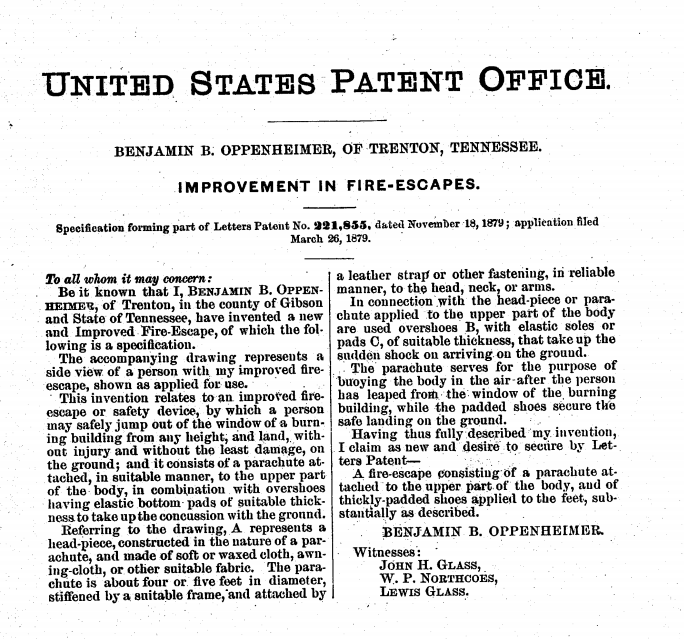
  • Questionable Quidity: the Fire Escape Head Parachute, 1879

    JF Ptak Science Books   Quick Post

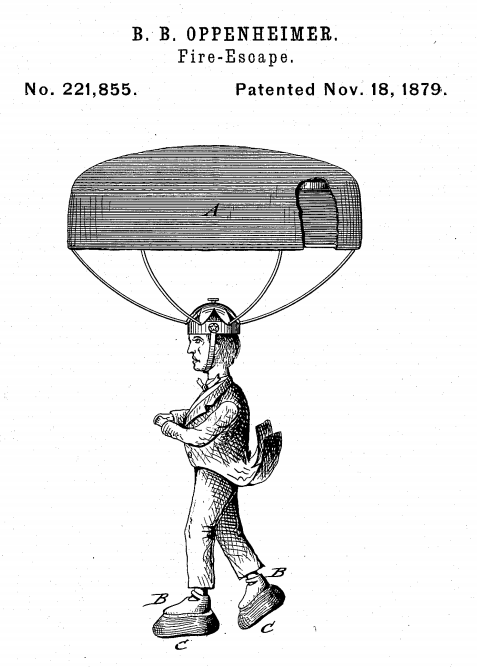
    When I first saw this image I thought, naturally, that it was an unreal real patent; it turns out that Mr. Oppenheimer was a real person and that this patent was a real patent. I doubt that someone would have their necks broken by this device when deployed thinking that it would just pop off–then again, if fastened very securely, it becomes a very cringeworthy thing to think about. The shoes don’t help much.  

    Patent parachute fire escpae _2_

    And the report:

    Patent parachute fires escape

    ·Posted by :

    ·in:

    — —

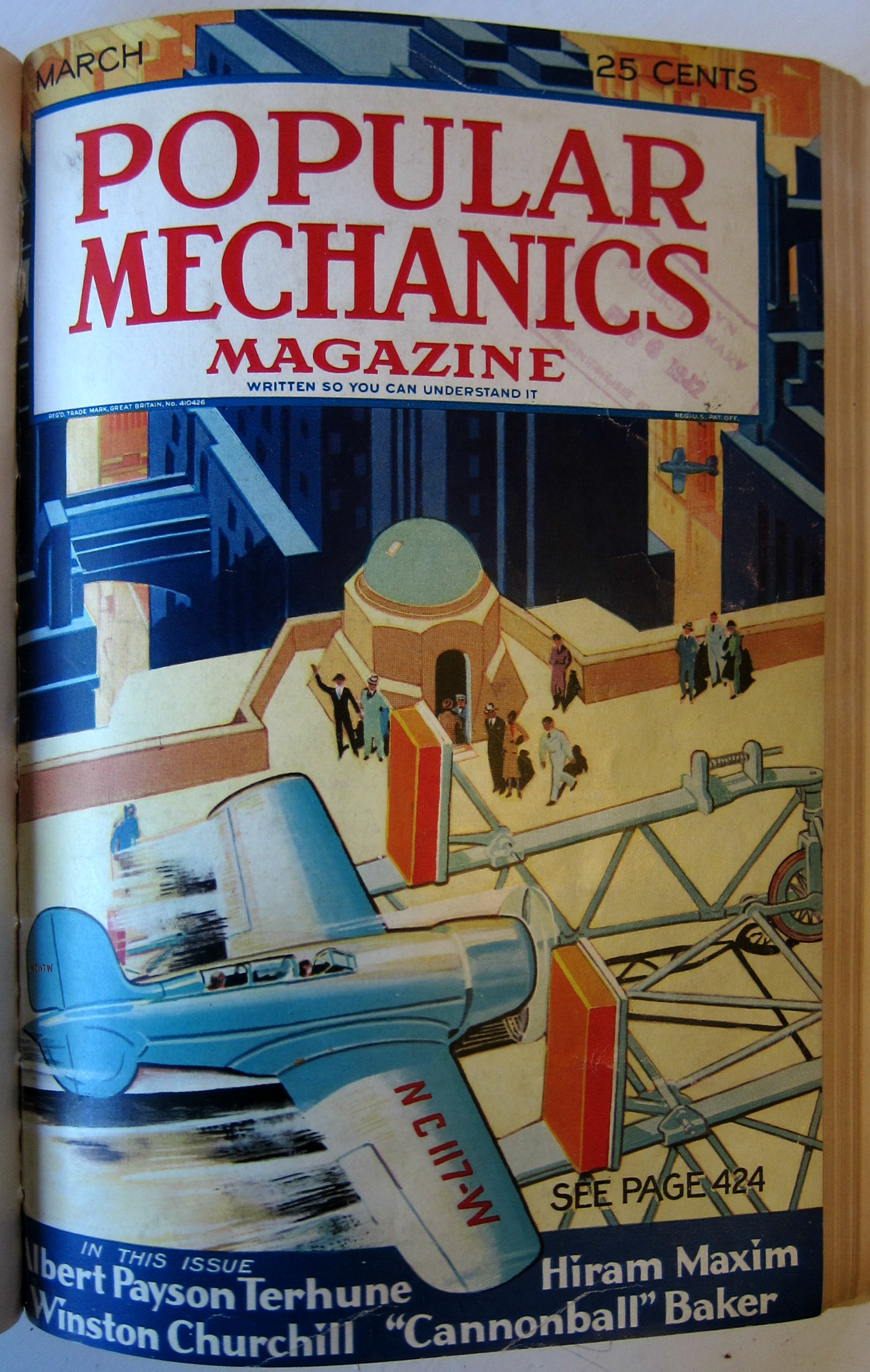
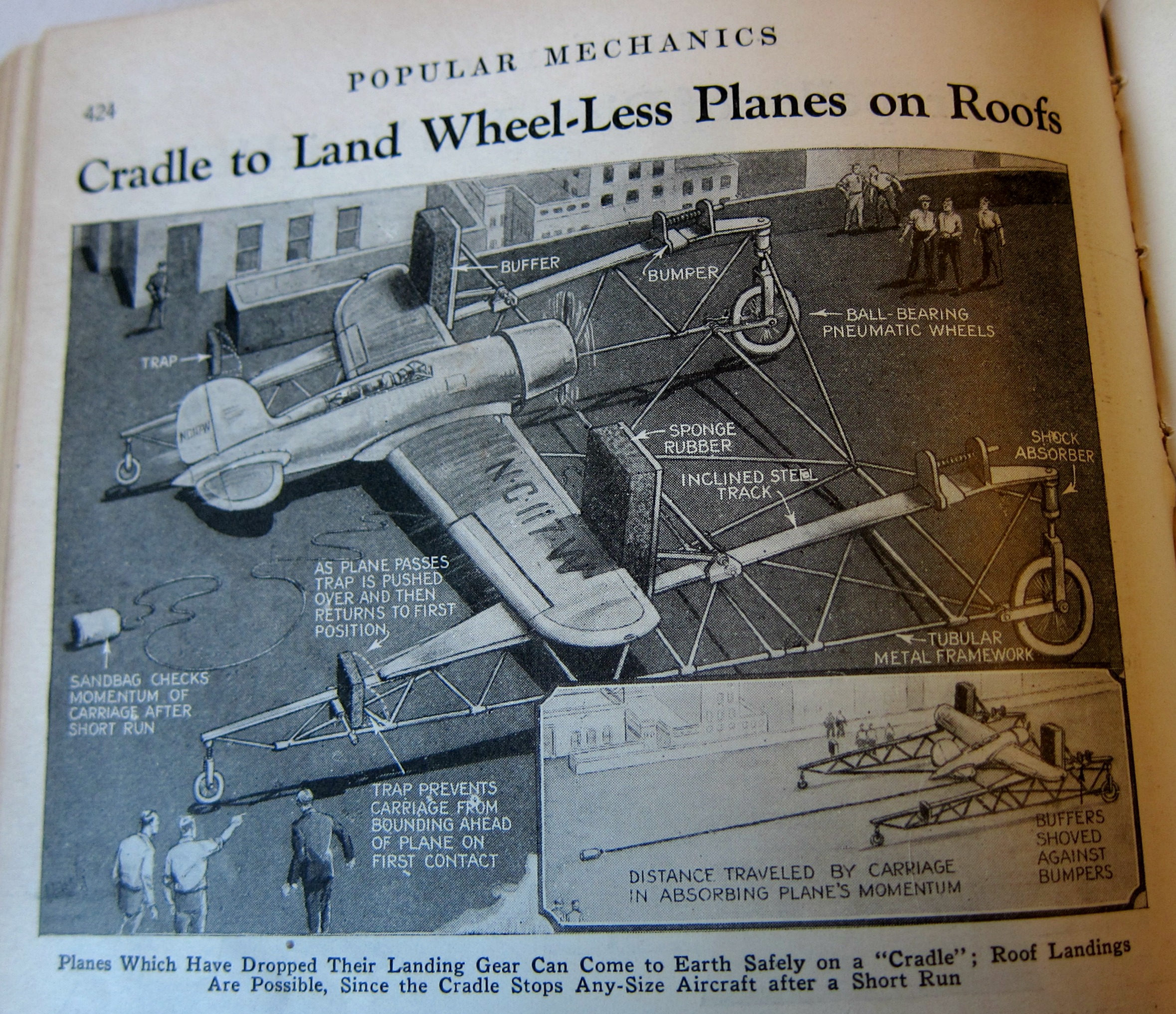
  • Reverse Catapult Landing System for Airplanes, 1932

    JF Ptak Science Books   Quick Post

    There’s a certain attraction to relieving an aircraft of the weight and drag of landing gear–except for the actual “landing” part of the aircraft, which becomes more, well, difficult, without wheels. Except of course when you have an apparatus like that below, something to basically catch the aircraft. For the sake of fuel economy the idea of getting rid of wheels and other landing gear made the cover of this Popular Mechanics issue for March 1932. The apparatus was supposed to be able to (safely) stop an airplane in the space of 40′, which no doubt would have interested the U.S. Navy if such a thing worked with damaging the airplane or the pilot. I really don’t see how the thing could have possibly worked, even with the helpful image in the text of the thing being a “reverse catapult”. Still, publishing such stuff may have given someone an idea for something else–some bit or insight in this apparatus may have come in handy for someone else working on something entirely different, as is sometimes the case with Outsider ideas.

    Reverse catapault b


    Airplane reverse catapault