A Daily History of Holes, Dots, Lines, Science, History, Math, Physics, Art, the Unintentional Absurd, Architecture, Maps, Data Visualization, Blank and Missing Things, and so on. |1.6 million words, 7500 images, 4.9 million hits| Press & appearances in The Times, Le Figaro, Mensa, The Economist, The Guardian, Discovery News, Slate, Le Monde, Sci American Blogs, Le Pont, and many other places… 5000+ total posts since 2008.

Category: Questionable Quidity

  • Join the Young Communist League of Great Britain! (1937)

    JF Ptak Science Books  Quick Post

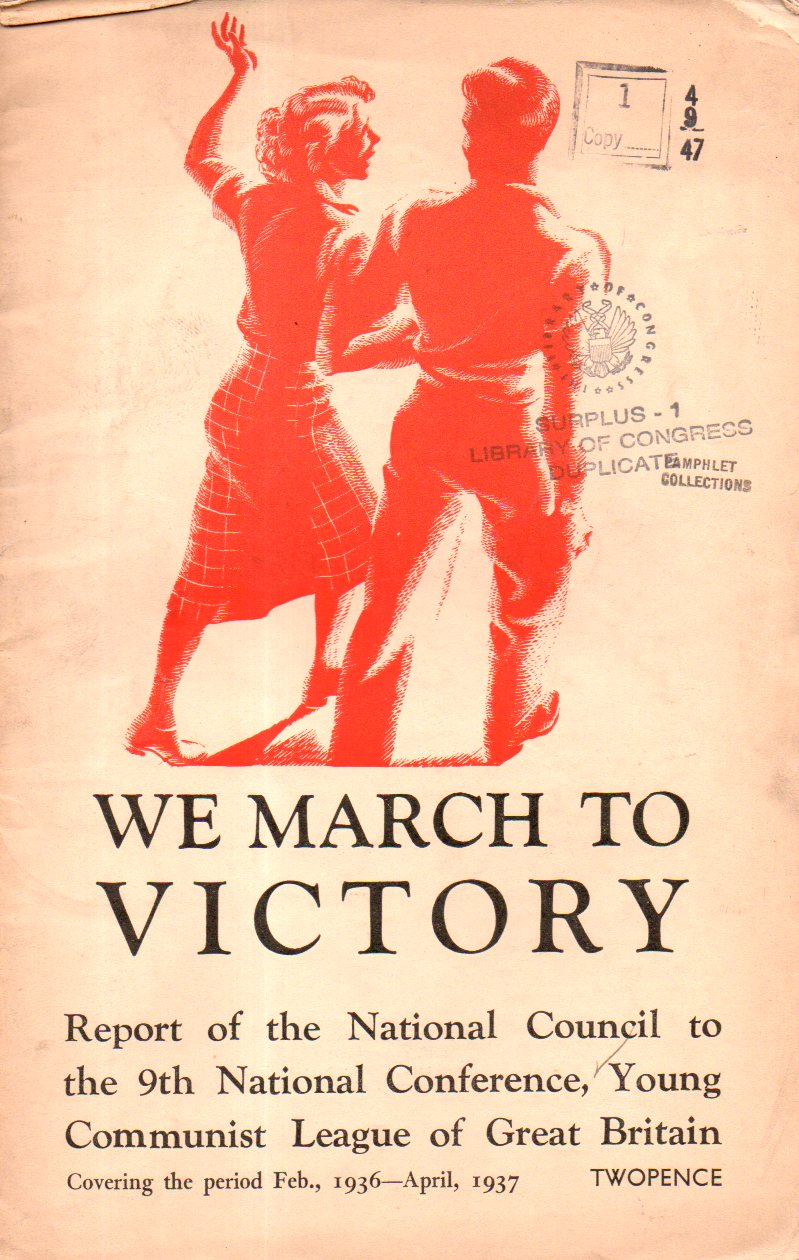
    Oh to be young and free and red! This pamphlet told of the joys and works of the Young Communist League of Britain, a youth version of the Communist Party of Britain.  It was launched in 1922 and somehow survived until 1988.  This pamphlet was published in 1937, which is probably the low point for the Stalinst Soviet Union for the decade of the ‘thirties, which was very low, and enforced-famine-stricken, and murderous, as just about any in the history of worst decades.  There’s a lot in the pamphlet about fighting the Fascists in Spain, and not much more. 

    Communist march to victory142


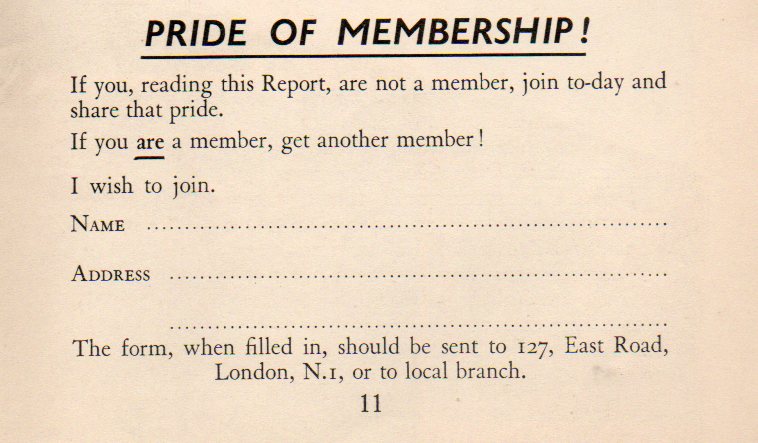
    Become a member today! Be aware to fill in the form before mailing it out! (It looks like today that address is a two-storey apartment building.) 

    Communist march to victory143


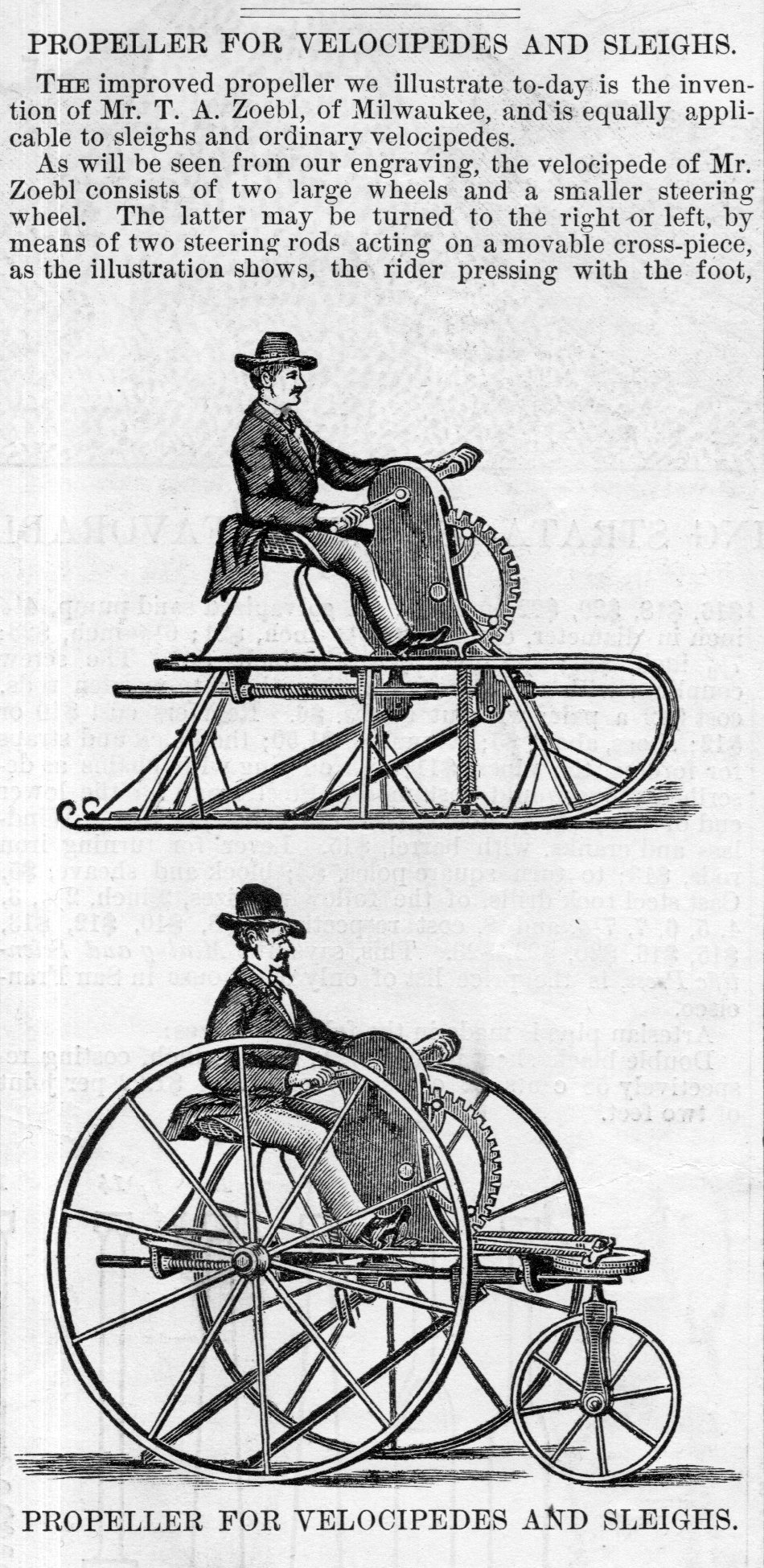
  • A Massively Geared “Tricycle” of 1879

    JF Ptak Science Books  Quick Post

    Propeller bike266

    Looking for illustrations of an enormous horse-drawn rangefinder in volume 7 (1879) issue of the Scientific American Supplement I came across these two unusual images of  a hand-powered sleigh and “bicycle”. The gearwork looks to be about the size of a modern bike wheel, perhaps even bigger–it certainly weighs more, and could weigh more than an entire (good) bike. I don’t really understand how the energy is transferred but it seems to be that the gear drives a toothed rod back and forth that reacts with a springed mechanism that in turn moves the wheels.  It is a huge gearwork, but that vehicle looks awfully big and not-so-mobile to be driven by that and the springs.  On the sleigh the gearwork seems to push a plane of some sort to push the sleigh forward. Even in 1879 there were better and simpler designs for bikes…I don’t know what to say about the sleigh….

    From the SA:


  • The Madonna in Stone, Again (1665)

    JF Ptak Science Books   Quick Post

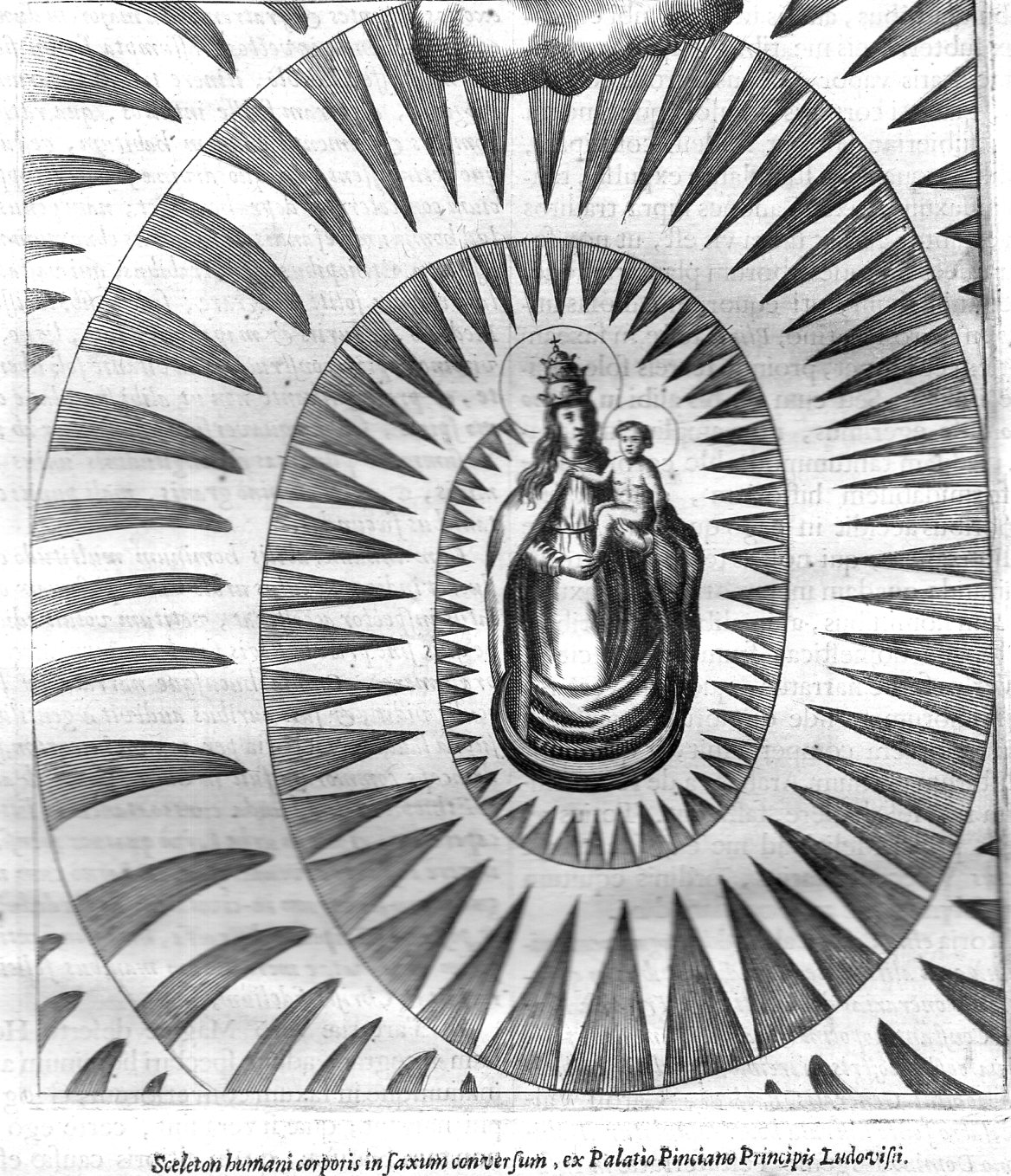
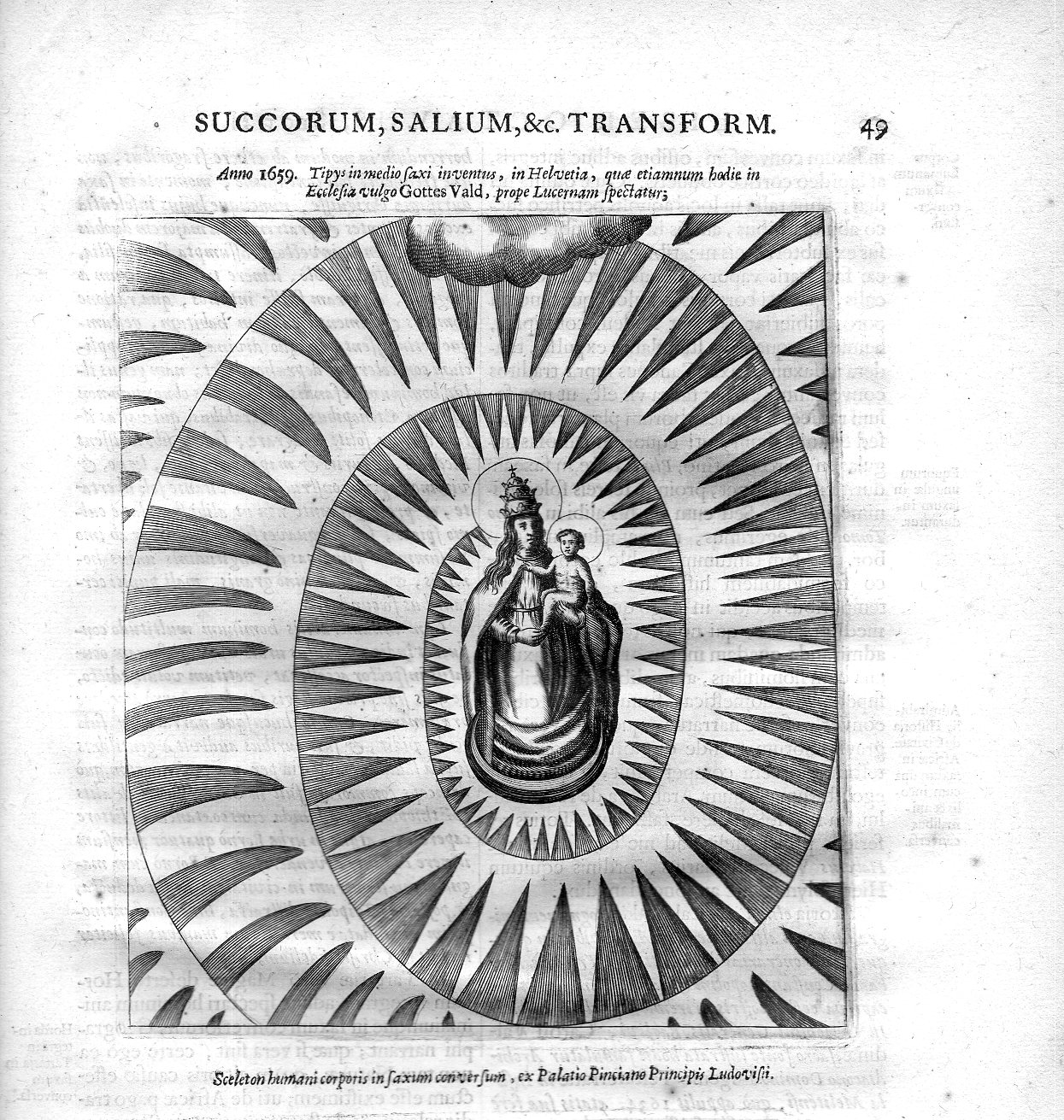
    Continuing this blog’s occasional thread on the great, idiosyncratic, and troublesome Fr. Athanasius Kircher, I report on this spectacular image. It is supposed to be an engraving of a found-image in a piece of agate or some such, showing the Virgin Mary and baby Jesus, surrounded by s curiously radiating display of “light”.  According to one reference the image first appears with Ulisse Aldrovandi (1522-1605) who must have included it with one of the natural histories before it founds its way into Kircher’s Mundus1.  

    The partial description above the print references the Church Grottes Vald (in Lucerne), where this relic was to be found.  

    Kircher 49b059

    And the full sheet, in two parts:

    Kircher 49057And the bottom half that wouldn’t fit on the scanner:

    Kircher 49b058In reality these are simply on the same sheet, uninterrupted.

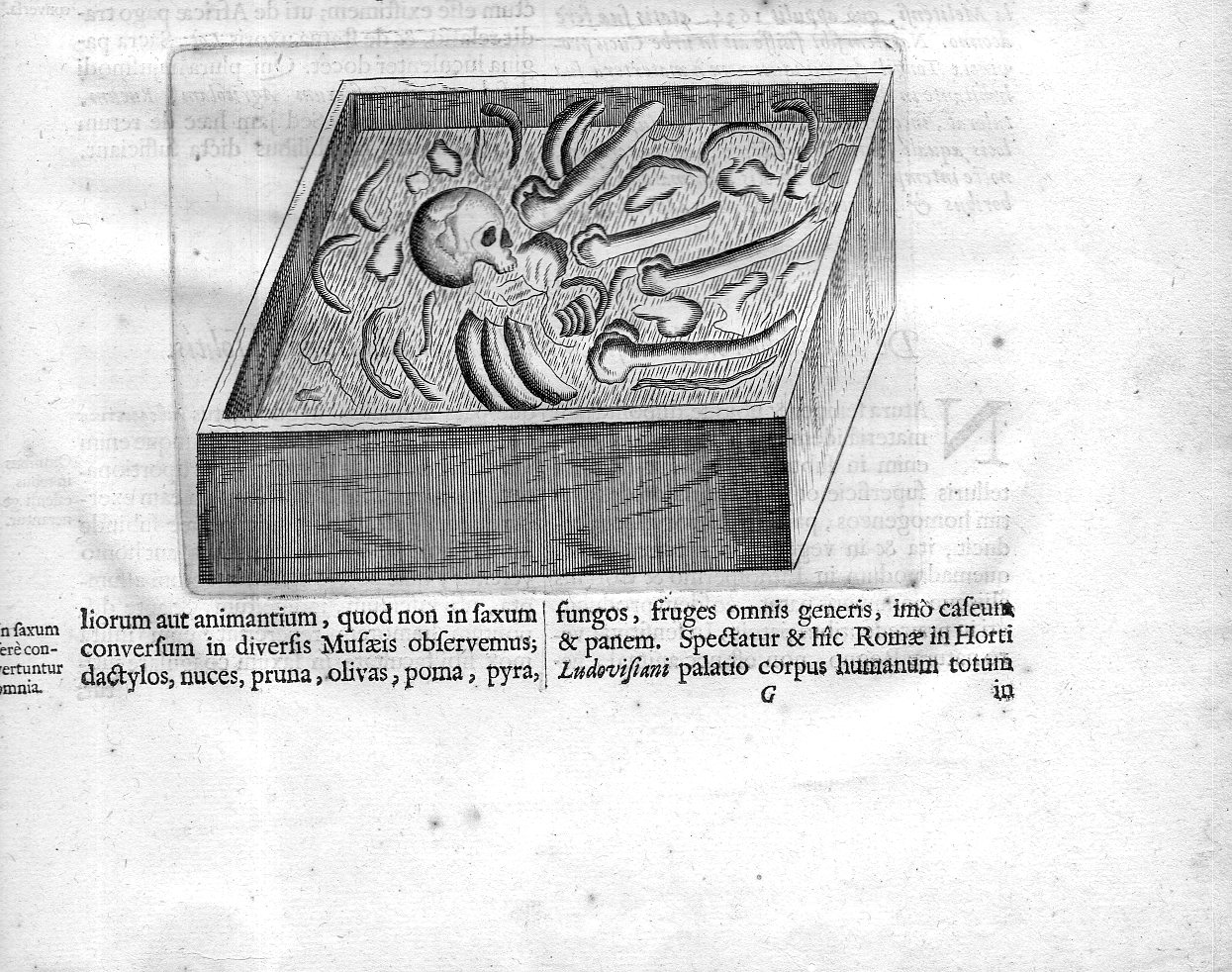
    The second image is identified so: “Sceleton humani corporis in saxum conversum…”2, and refers to what was supposed to be fossilized human remains covered by some sort of fossil -something.  The remains weren’t fossilized, of course, but in 1657, that was the difficult leap that was make. 

    Notes:

    1.  The full title by Kircher (1602-1680): Mundus subterraneus, in XII libros digestus : qvo divinum subterrestris mundi opificium, mira ergasteriorum naturae in eo distributio, verbo [pantamorphon] Protei regnum, universae denique naturae majestas & divitiae summa rerum varietate exponuntur, abditorum effectuum causae acri indagine inquistae demonstrantur, cognitae per artis & naturae conjugium ad humanae vitae necessarium usum vario experimentorum apparata, necnon novo modo & ratione applicantur. Ad Alexandrum VII. pont. opt. max, 1665. 

    2. This image can be seen in full text in a somewhat later edition of the Mundus of 1678 at Heidelburg http://digi.ub.uni-heidelberg.de/diglit/kircher1678bd2/0062 and another series of images at University of Oklahoma, http://hos.ou.edu/galleries//17thCentury/Kircher/1665-det-composites/. 


  • Selling Radium–a LOT of Radium (1925)

    JF Ptak Science Books   Quick Post

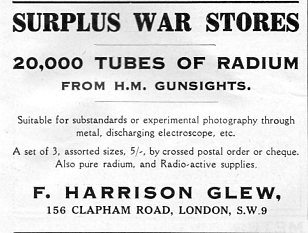
    Welcome to this  piece of historical advertisement!  Of all of the many ads I’ve seen in Nature (spending a fair amount of time in the journal years from 1869-1945) this one (for December 12, 1925) is among the top-percenters causing real pause.  Beginning a few years after its discovery in 1898 (by Marie and Pierre Curie), radium had taken on a life of its own in the public sphere, as being a possible cure for diseases, problematic sexual potential, dull fingernails, luminous watch faces, and such. It entered popular culture and stayed there for decades, right up to being shoveled into firey furnaces that power ant-gravity something-or-there engines in a floating city in a Flash Gordon movie1, and suffered  itself into the public conscience as a redeemer and restorer of youth2.

     [I’ve written before on radium-lust–here, for example: “Radioactive Suppository Sex Aids & Radium Toothpaste: Shining Lethal Nonsense” in 2010 .]  I hadn’t seen an ad however for purchasing the raw material before–let alone 20,000 “tubes” (of undetermined size) of it.  It does make one wonder about storage, and handling.

    Radium836

    Evidently the source of the radium was for gunsights of rifles, to illuminate the sight (or scope?) at night, or in the dark. 

    “How far that little candle throws his beams! So shines a good deed in a weary world.” –Shakespeare, The Merchant of Venice

    Notes

    1. This is from one of the Flash Gordon serials, appearing in 1936.  See here for a good summation and description. 

    2. This was a portable pack of a device called “Saratoga Springs” that utilized water and god-knows-what and radium salts into water that the purchaser would consume. This appeared in Popular Science Monthly for June 1929. 

    ·Posted by :

    ·in:


  • The Plane-Train and the Elimination of Curves, 1894

    JF Ptak Science Books   Quick Post

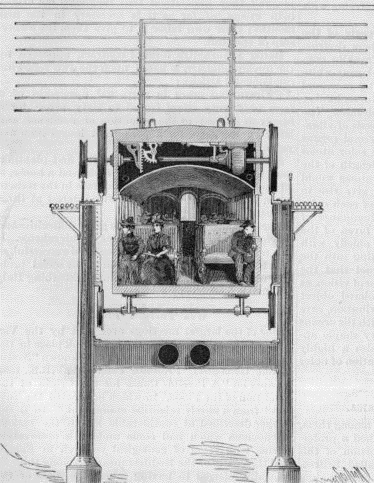
    Plane-train376

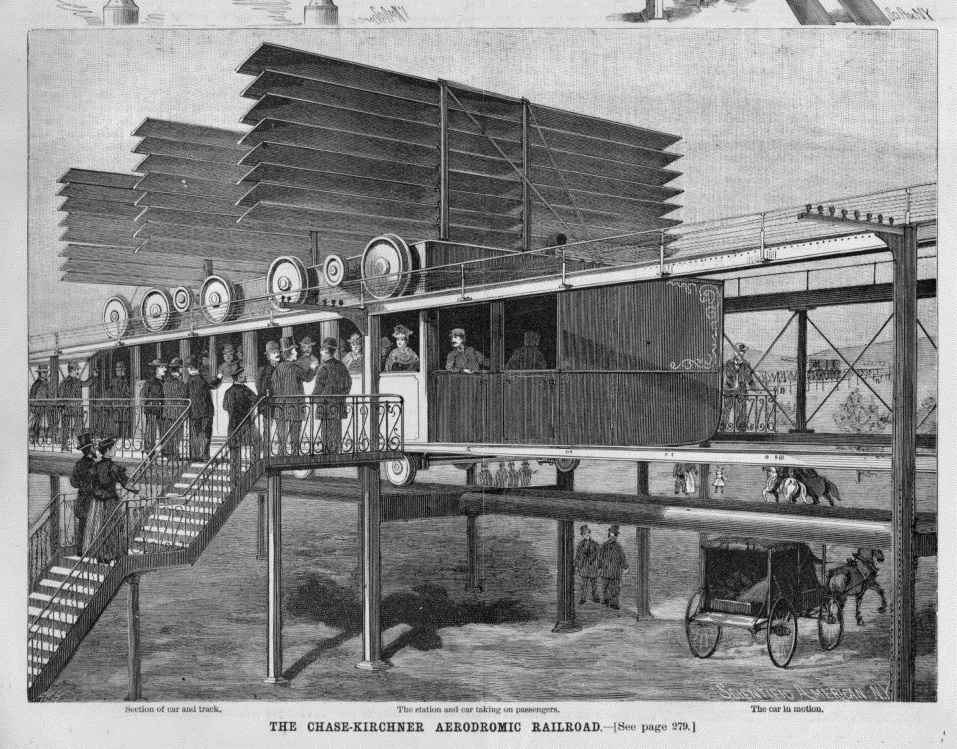
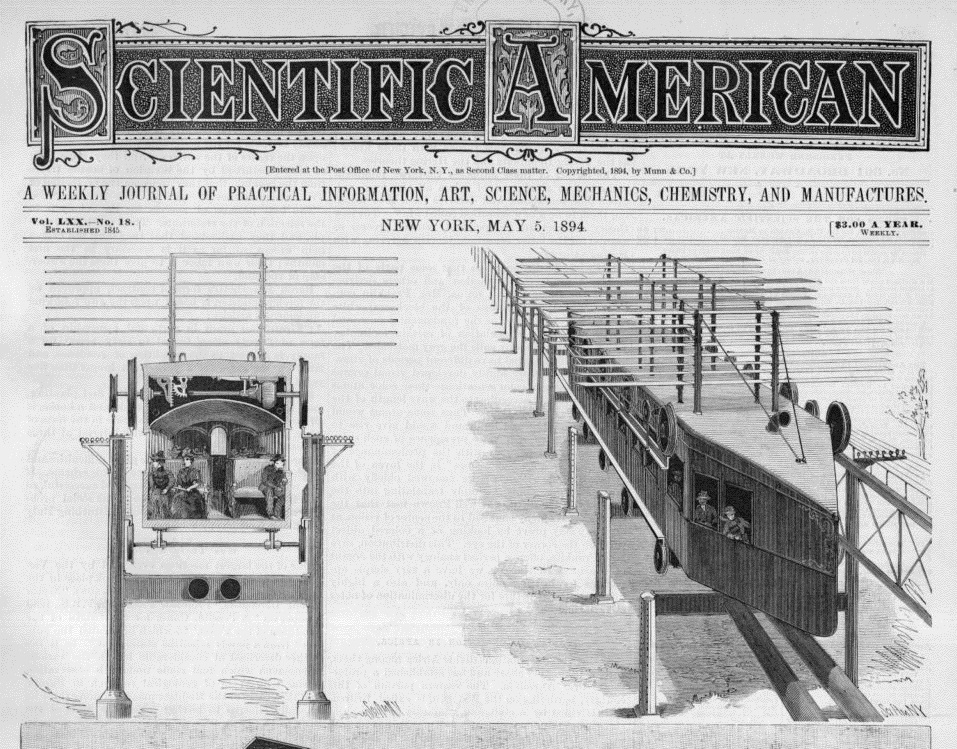
    In the history of transportation there haven’t been many marriages between trains and planes.  There have been proposals for Trains-Boats as we’ve seen in proposals for transporting ocean-going ships on a ganged series of railway cars and pulled  x-number of locomotives across the isthmus of Tehauntapec. I also recall a Balloon-Tramway-Train where hot air balloons were guided along a particular harnessed route 50 feet above the ground for miles and miles.  But the plane-train not found on the covers of Popular Mechanics in the 1930’s and 1940’s is a rare sight. I did spot a fantastic example of one though on the front page of the Scientific American for May 5, 1894. 

    Plane-train377

    It is a splendid beast–electric, under-powered, very heavy, and full of friction.  Somehow the engineers envisioned the train reaching speeds of over 130 mph, and with speeds this great it was essential that all curves be removed from the coast-to-coast rail line, making this a straight shot from coast-to-coast, literally.  (This would have just about doubled the land-speed record for sustained travel by rail, by steam.  I’m not sure what the record was for electric trains, though I’m pretty sure it is safe to assume it wasn’t close to the steam record.)

    The part about removing curves was mentioned twice in the article, so it was definitely not a typo.  The adjustable wings (here called “aeroplanes” which was the beginning of the terms that we now use to describe the whole aircraft) were added because it was felt that they would provide (some sort of) lift to the train. At the very least it was an interesting idea for 1894, and the wings would certainly have served a function of slowing the train down if they didn’t get ripped apart in the process.  

    Plane-train378


  • The Hearing-Aid Chair, 1837

    JF Ptak Science Books   Quick Post


  • Mathematical Sticks & Unmagic

    JF Ptak Science Books  Quick Post

    Just a quick post here on patented mathematical tools using long wooden planks in a sliding frenzy to find displayable answers for 19th century schoolchildren and their addition problems.  I know a good set of Napier’s bone could come in very handy (appearing much earlier on than these instruments), but I’m just not sure what kids could learn from using these tools–like any other calculating device, early or late, they have a questionable quidity so far as appreciating the essence of numbers is concerned.   That said, the drawing for the Meyers’ machine is beautiful, and could no doubt lead to a number of short, noir-y stories.

    Source:  Google Patents, here.


  • Drugs Looking for a Need: Heroin, Thorazine and Etc., in Old and New History

    JF Ptak Science Books    Post 1825  

     Follow Me on Pinterest

    Ads--heroinLooking at old advertisements for the application of new/improved pharmaceuticals can be an experience in search of an explanation. Certainly we recognize the impact of these drugs today for what they really are, the business-end of their basis unmasked.  But at the time–well, at the time, before revelation, there was hope in the use of them. 

    Opium of course has been used for centuries, but it was synthesized first in 1874 by the English chemist C.R. Alder Wright, though that first application went basically nowhere.  The big push came when it was independently re-synthesized and re-discovered by Fleix Hoffmann who was working at the time for the Aktiengesellschaft Farbenfabriken of Elberfeld, Germany, which is todyay known as Bayer, and which was re-named and marketed under the name, “heroin”. 


    Ads--heroin bayer
    Heroin was sold for nearly two decades as a cough suppressant, a safe replacement for morphine, and also non-addictive.

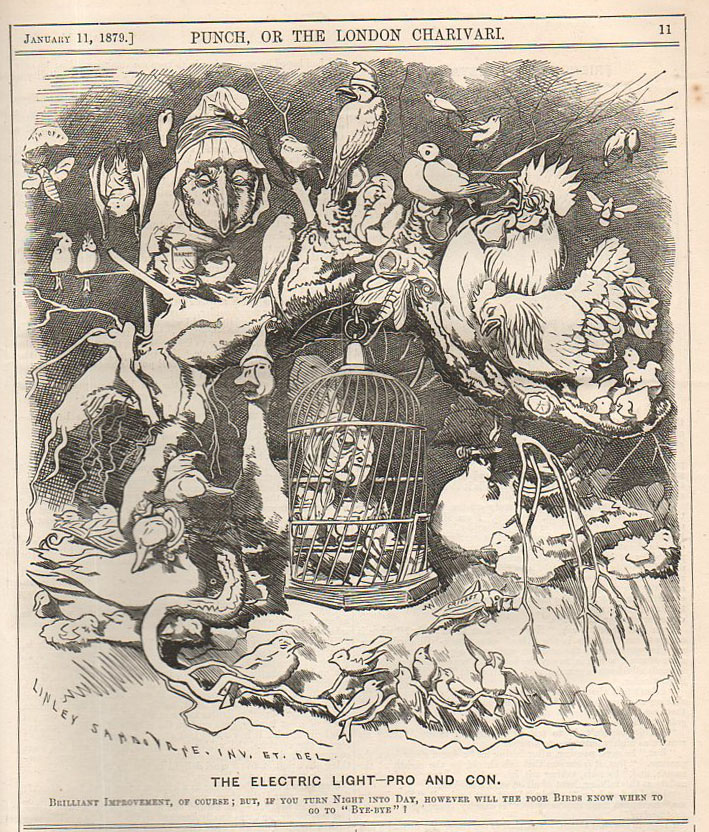
    Narcotics in general however were applied somewhat liberally for complaints of all manner–narcotics not being controlled until 1925, banned by the Single Convention on Narcotics Drugs and the League of Nations (for its signatories, at least).   AS we can see int he detail of this Punch cartoon of 1879, the problems to be brought on by the new applications of electricity (still quite young in its modernistic sense at this time) could be sleeplessness for birds, as the outdoor lights might keep them awake.

    Electricity575

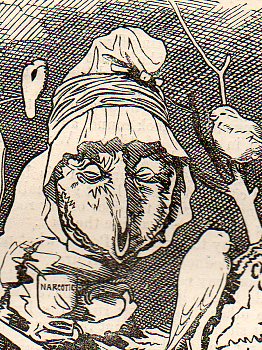
    But in detail, the sleepy old owl might have been dipping a little heavy into one of those bottles with bumps on its sides, its bottle of “narcotics” to help in tracking down sleep:

    Electricity576


  • Get Off the Earth: an Example of Institutionalized Discrimination from 1896 and What it Means Today

    JF Ptak Science Books   Post 1824

    Racism and discrimination are never so more obvious I think than when it is present in everyday bit and pieces of our lives, as gratuitous indulgences, unnecessary except to disparage its target–it is at these times that you can see how deeply something is ingrained in the culture of a place. 

    And an excellent example of this is the transforming/movable puzzle created by the master puzzleteer, Sam Loyd.  He patented the idea of mechanism of the thing in 1896 and published it in the same year, selling millions of varieties of the thing. One of the most successful of the puzzles using the design was called, with a fantastically indelicate title, Get Off the Earth. 

    Working version from the  murderousmaths.co.uk website, here.

    The title would mean less had not the most popular version of the game featured Chinese men who were getting off the Earth, and this of course at a time of indoctrinated, inculcated, adjudicated and legislated, legalized segregation and discrimination.  It was a time of very high Sinophobia, with all manner of advancements against people of Chinese descent:  the Anti-Coolie Laws of 1862, the Pigtail Ordinances (of California) of 1873, the Chinese Exclusion Act of 1882 (renewed in 1892 and 1902), and so on, displayed America’s unease and at times hatred of the Chinese people.  Loyd referred to the men as “warriors”, which I think disingenuous, as the characters hardly have a warrior-like quality to them–they are simply racist.  And they were being made to disappear from the Earth, something many people in this country wanted to happen. 

    According to several web sources, the puzzle was actually used by the William McKinley campaign of 1896 in an effort to out anti-Chinese his opponents2.

    What these objects do for us today is help us think about what “get off the Earth” objects we have in 2012, and how awful they’ll look in the decades to come. The fabric of society has not crumbled under the weight of allowing non-land-holders to vote, or to allow women more equal rights or the right to vote; abandoning slavery did not crush the country, nor did Brown v. Board of Ed, nor did the abandonment of the miscegenation laws.  I can hardly believe that an issue such as Gay marriage will be the great under of the Republic as it has been present in legislation and state constitutional amendments; it will look as bad in a few decades from now as does the Get off the Earth puzzle looks now, or the idea of slavery, or the idea of voting privileges only for the privileged male, or maintaining Jim Crow laws, and so on, on a nd on into the misty night of bad ideas and societal discrimination.

    Notes:

    1.  Nice stories on Sam Loyd and deep on puzzles in general, here.  Sam Loyd’s book of 5,000 puzzles.

    2.  A summary of the McKinley presidential campaign making use of the puzzle to help raise itself in the eyes of the anti-Chinese voters, see here.

    The odd thing is that current sites have referred to the men surrounding the globe (below) as “Chinamen”, or still use the Loyd reference to “Chinese warriors”, and many still hold to the indulgences that this is a simple puzzle and nothing else.  It is hardly that simple.

  • From our Jell-O Department: The Staggering Un-Beauty of Gelatin

    JF Ptak Science Books  Post 1777  [Part of the Bad Ideas series.]

    Jello440“Gelatin is a protein substance derived from collagen, a natural protein present in the tendons, ligaments, and tissues of mammals. It is produced by boiling the connective tissues, bones and skins of animals, usually cows and pigs.”

    Gelatin of course is still around, present in all sorts of things, the Old School equivalent of the coming New School use of cellulose filler in everything–except of course that cellulose isn’t the leftover stuff on the slaughterhouse floor.  Lots of kid foods are made with it–gummy bears are just about all gelatin, all the time, with the exception of the shelf-life lengtheners and coloring.

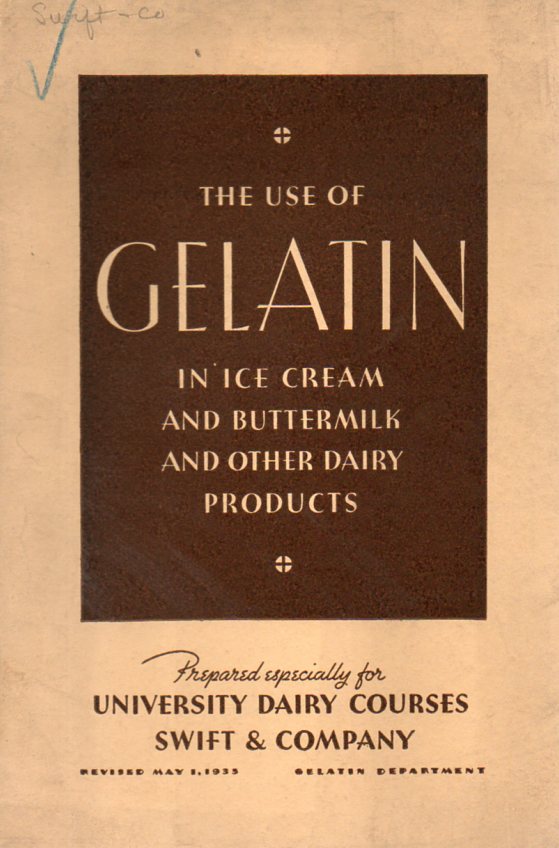
    Jello439The first lively hard-sell pamphlet, The Use of Gelatin in Ice Cream, and Buttermilk and other Dairy Products (1935) was assembled by the “Gelatin Department” of Swift & Company.  Swift (purchased in 2008 by JBS S.A.) used to be the world’s largest processor of cows and pigs and other things with eyeballs and veins and brains, making them into food for human beings.  The company (started in 1855) expanded into other things in the mid-19th century, getting into the insurance and petroleum fields.  It used to own Peter Pan peanut butter, too.  And Playtex, makers of bras and etc.

    I have to give Swift credit though for stating exactly what gelatin is, right there on the first page, in  no-nonsense language. The short (12-page) pamphlet is then given over to a quick sales talk on the uses of gelatin–in chocolate milk, sour cream, cottage cheese, ice cream, sorbet and buttermilk–and how to prepare it.  At first a reader might think that the use of gelatin in the pre-WWII days was not so widespread, until they remembered that this pamphlet was directed at just dairy products.  There was a whole other world of gelatin use besides this one.

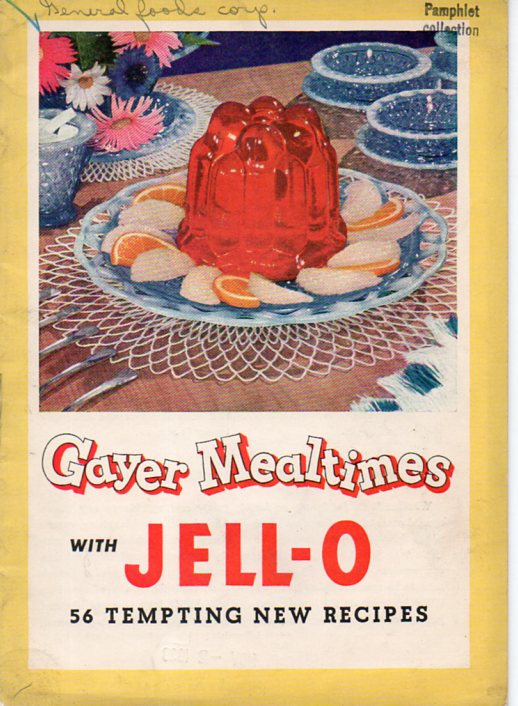
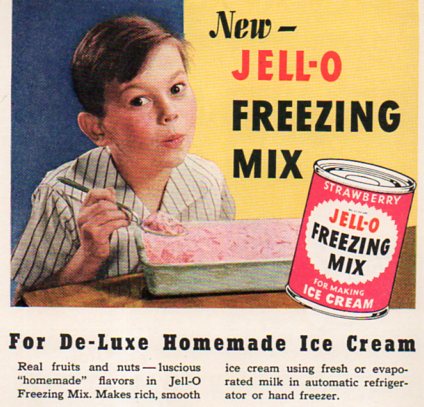
    And that’s been the story of Jell-O, a product of extraordinarily modest and not-pretty means, morphing itself and Jello434the Postum Company over a relatively short period of time (from 1895 to 1925) into the megamonolth:  the General Foods Corporation.  “America’s Most Famous Dessert” got its third (or better) start on life in Le Roy, New York, under the creative hands of Mr. & Mrs. Pearle B. & May Wait (true!), who took sugar, powdered gelatin and artificial fruit flavors to make a concoction May called “Jell-O”.  But her reach was none-too-grand compared to that of Frank Woodward, who bought the company from her and created the demand for this ‘food” and who ultimately created General Foods with it.  (Its an old story:  consumable and saleable product with no consumers:  Marlboro cigarettes started out as a specialized cig for “ladies” and failed; the same cigarette was then re-marketed as a testosterone-laden product and then succeeded beyond all wild expectation, killing millions of its consumers in the process.)  In any event Ms. Wait trumped another New York state resident, Charles Knox,  in the race to develop a pretty and tasty  granulated/[powdered gelatin desert mix.  “Knox’s Gelatine”, originally made with calves’-foot jelly, was a little earlier to the table than Mrs. Wait, but failed to properly develop his product. It also suffered its own “purity” by not having any sugar in it.  

    Jello438
    Plus, there’s the entire aspect of colors-not-normally-found-in-nature inherent in the spectacular nature of gelatin: