JF Ptak Science Books Quick Post
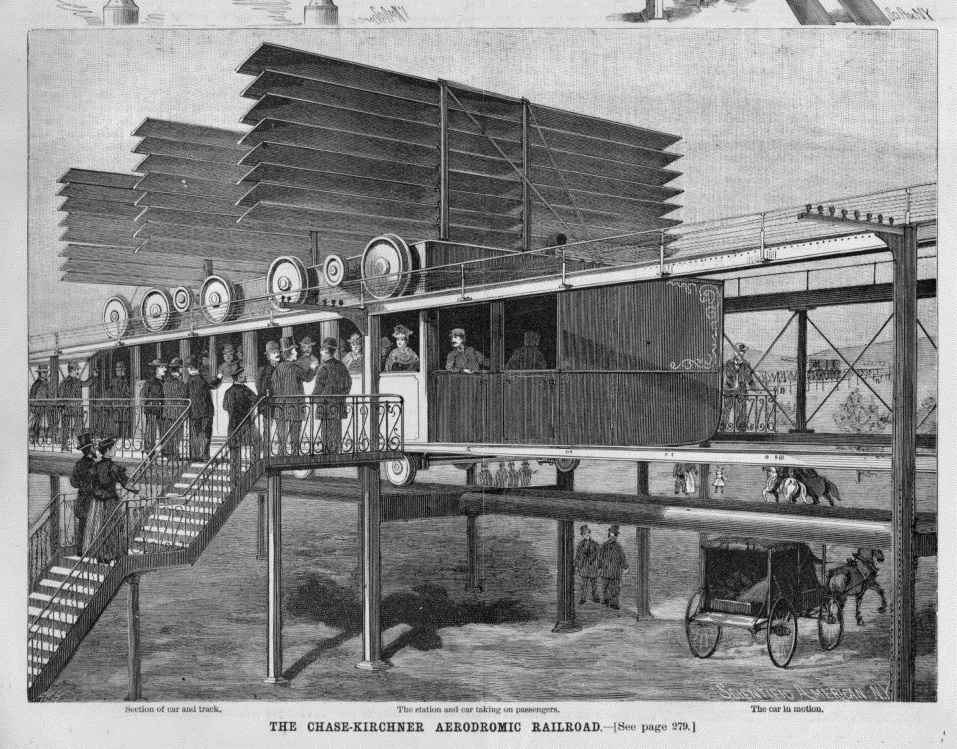
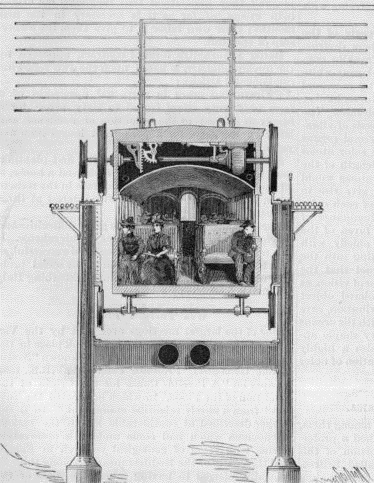
In the history of transportation there haven’t been many marriages between trains and planes. There have been proposals for Trains-Boats as we’ve seen in proposals for transporting ocean-going ships on a ganged series of railway cars and pulled x-number of locomotives across the isthmus of Tehauntapec. I also recall a Balloon-Tramway-Train where hot air balloons were guided along a particular harnessed route 50 feet above the ground for miles and miles. But the plane-train not found on the covers of Popular Mechanics in the 1930’s and 1940’s is a rare sight. I did spot a fantastic example of one though on the front page of the Scientific American for May 5, 1894.
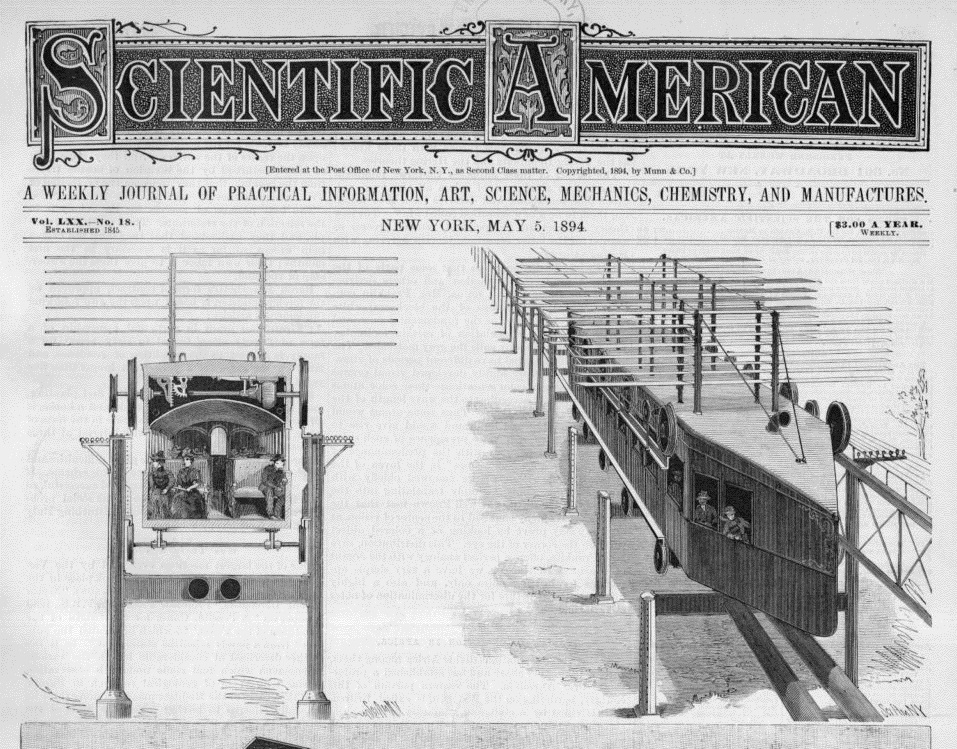
It is a splendid beast–electric, under-powered, very heavy, and full of friction. Somehow the engineers envisioned the train reaching speeds of over 130 mph, and with speeds this great it was essential that all curves be removed from the coast-to-coast rail line, making this a straight shot from coast-to-coast, literally. (This would have just about doubled the land-speed record for sustained travel by rail, by steam. I’m not sure what the record was for electric trains, though I’m pretty sure it is safe to assume it wasn’t close to the steam record.)
The part about removing curves was mentioned twice in the article, so it was definitely not a typo. The adjustable wings (here called “aeroplanes” which was the beginning of the terms that we now use to describe the whole aircraft) were added because it was felt that they would provide (some sort of) lift to the train. At the very least it was an interesting idea for 1894, and the wings would certainly have served a function of slowing the train down if they didn’t get ripped apart in the process.